
A practical business guide for small business owners and Etsy sellers who source, make, or sell nylon fabric products, covering sourcing, pricing, product descriptions, customer questions, and selling smart.
Whether you make nylon bags, activewear, outdoor gear, or sell nylon fabric by the yard, understanding the material you are working with is one of the most practical things you can do for your business. Customers ask questions. Suppliers use technical language. And how you describe a product online is often the difference between a sale and a scroll-past.
This guide is written for small business owners and Etsy sellers who are already working with nylon fabric products, or thinking about getting into this market. It covers sourcing, quality checks, product descriptions, customer questions, pricing, and the selling angles that work. For the full background on what nylon is and how it compares to other fabrics, our complete nylon fabric guide covers that ground. This article is focused on the commercial side.
The Nylon Opportunity for Small Businesses
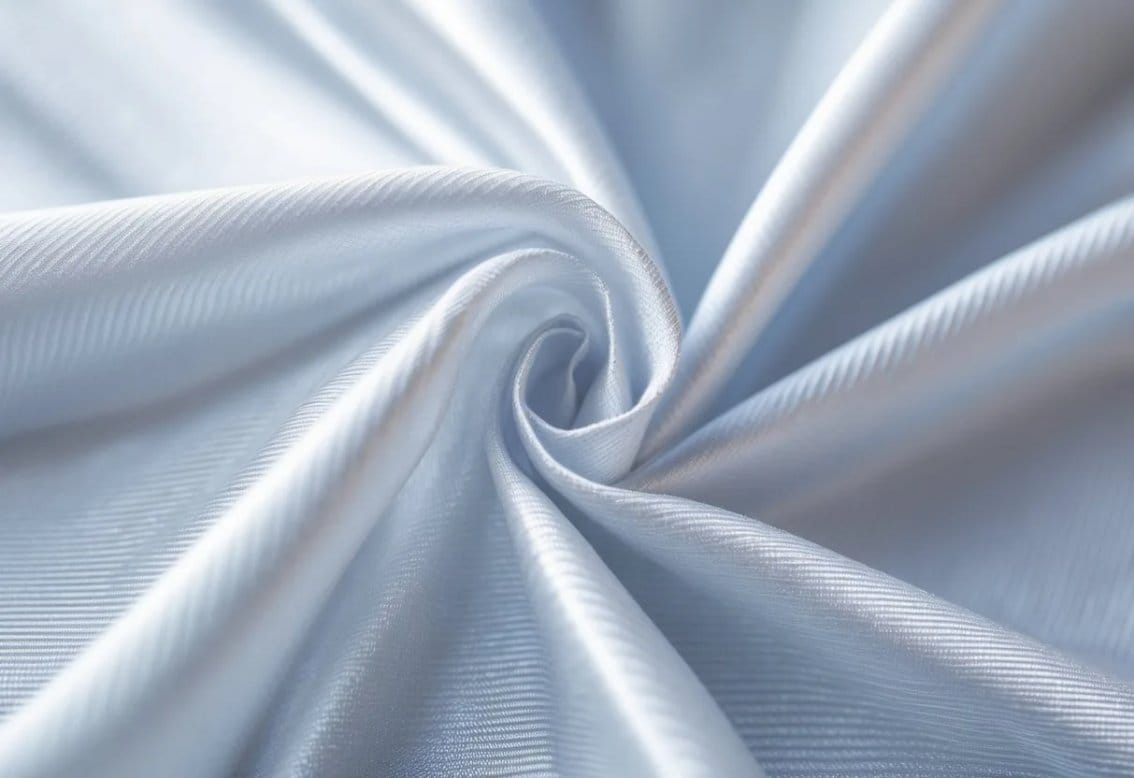
Nylon fabric highlighting the material properties that make it a strong choice for small business product ranges.
Nylon products represent a truly strong market for small businesses. The global nylon fabrics market was valued at approximately $4.5 billion in 2025 and is projected to reach $6.9 billion by 2034, driven by activewear, outdoor gear, bags, and technical apparel.[1] Consumer demand for durable, lightweight, and performance-focused products is growing, and nylon sits right at the center of that trend.
For small businesses, nylon works particularly well because:
- It is available at a range of price points from commodity to premium
- Products made from nylon have genuine durability and performance advantages you can talk about honestly
- There is strong demand across multiple product categories: bags, activewear, swimwear, outdoor gear, and accessories
- Recycled nylon (ECONYL) opens a sustainability story that resonates strongly with today’s buyers
- The fabric’s technical properties give you real content to work with in product descriptions and marketing
The challenge is that nylon is also a broadly used commodity material. What makes a nylon bag on Etsy stand out from one on Amazon is the story behind it, the quality of construction, and how clearly the seller communicates what makes their product worth buying. That communication starts with knowing your material.
Knowing Your Nylon Before You Source
Before you contact a supplier or place an order, you need to know what type of nylon is right for what you are making. Getting this wrong means sourcing a fabric that does not perform as expected, which leads to product problems and customer returns.
| Product Type | Right Nylon | Key Properties to Ask For |
|---|---|---|
| Tote bags and everyday bags | Ripstop (70D-210D) or Oxford nylon | DWR coating, tear resistance, weight |
| Backpacks and heavy-use bags | CORDURA or ballistic nylon (420D-1000D) | Abrasion resistance, denier, coating type |
| Rain jackets and windbreakers | Nylon taffeta or ripstop with DWR or PU coating | Water column rating, weight (GSM), packability |
| Activewear and leggings | Nylon-spandex knit (80/20 or 88/12) | Four-way stretch, GSM, moisture-wicking finish |
| Swimwear | Nylon-spandex (chlorine-resistant) | Chlorine resistance rating, stretch percentage, recovery |
| Accessories (pouches, wallets) | Ripstop or nylon taffeta | Weight, color range, coating |
| Outdoor gear (stuff sacks, tent footprints) | Ripstop nylon (30D-70D), silicone or PU coated | Waterproof rating, packable weight, tear strength |
| Bridal and formal veils | Nylon tulle | Stiffness, transparency, denier, width |
The Denier Number: What It Tells You
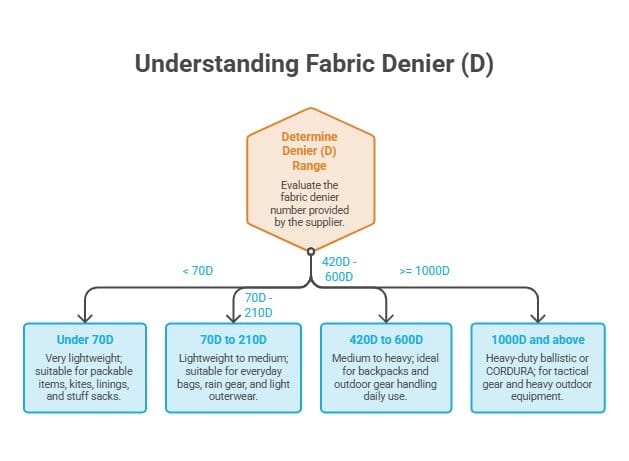
Understanding nylon fabric denier and selecting the right weight for different projects.
When a supplier or listing mentions denier (D), that number tells you roughly how heavy and durable the fabric is. Lower denier means lighter and more packable but less durable. Higher denier means tougher and heavier.
- Under 70D , Very lightweight. Good for packable items, kites, linings, and stuff sacks. Not heavy-duty.
- 70D to 210D , Lightweight to medium. Good for everyday bags, rain gear, and light outerwear.
- 420D to 600D , Medium to heavy. The sweet spot for most bags, backpacks, and outdoor gear. Handles daily use well.
- 1000D and above , Heavy-duty ballistic or CORDURA. For products that need to be truly tough: work bags, tactical gear, heavy outdoor equipment.
Quick tip: When sourcing, always ask for GSM (grams per square meter) in addition to denier. Denier tells you about the yarn; GSM tells you about the finished fabric weight. Both numbers together give you a much clearer picture of what you are actually getting.
Sourcing Nylon Fabric: Where and How
Sourcing nylon fabric from textile suppliers for fashion, sewing and manufacturing projects.
Small businesses have more sourcing options than ever, from domestic specialty retailers to international mills with low minimums. Here is a breakdown of the main channels and what each is best for.
Best for: Technical outdoor fabrics, low-to-medium volume orders, quality assurance, fast shipping.
Seattle Fabrics (seattlefabrics.com) stocks ripstop, CORDURA, ballistic, and coated nylons by the yard with sample packs available. Widely trusted in the US maker community.
Mood Fabrics (moodfabrics.com) carries fashion nylon, nylon-spandex, and specialty varieties. Good for activewear and garment fabrics.
Online Fabric Store (onlinefabricstore.com) has a solid range of nylon by the yard including coated options, with clear denier specifications.
Best for: Bulk buying at reduced cost once you know what you want, recurring production runs.
Establishing a trade account with a wholesale fabric distributor reduces your cost per yard significantly. The 2026 National Independent Textile Sourcing Index reports that independent brands reduce material costs by an average of 42% when switching from retail to trade suppliers.[2]
Platforms like Faire and Wholesale Fabric Direct list multiple suppliers. ThomasNet and Maker’s Row are useful for finding US-based manufacturers.
Best for: Custom specifications, competitive pricing on larger runs, access to a broader range of finishes and colors.
Alibaba connects you with Chinese, Taiwanese, and Vietnamese mills. Many now offer low MOQs (500-2,000 meters per color) for standard in-stock fabrics. Always request samples before committing.
Production lead times from international mills typically range from 8 to 24 weeks depending on location, order size, and whether the fabric is in stock or made to order.[3]
The Sourcing Process: Step by Step
Write a basic spec before you start searching
Know what you need: product type, approximate denier, coating requirements, color range, and whether you need certification (recycled content, OEKO-TEX, etc.). This stops you from being distracted by fabrics that look right but are wrong for the job.
Request samples before ordering
Always. Sample costs from most suppliers are $2-$5 per yard or a flat fee for a swatch pack. That is the cheapest insurance you can buy before committing to a larger order. Wash the sample, test it, and make something small with it if possible.
Verify the spec against what arrives
Weigh a swatch to confirm GSM. Test the coating by running water over it. Stretch it to test recovery. Check color against your standard in the lighting you actually use. What you ordered and what arrives are not always identical, especially on first orders from a new supplier.
Ask about lot consistency
If color consistency matters for your products, ask whether you can order from the same dye lot on reorders. Nylon can vary slightly between production runs. For products where color matching across components matters, this is not a minor point.
Calculate your true landed cost
Add shipping, import duties (if applicable), and any handling fees to the fabric price before dividing by yardage. This gives you the real cost per yard that goes into your pricing. Ignoring these extras is one of the most common reasons small businesses underprice nylon products.
Build a supplier relationship
Once you find a supplier whose fabric consistently meets your standards, treat that relationship as a business asset. Regular buyers often get better pricing, priority on limited stock, and better communication when problems arise.
Trade Shows Worth Knowing
If you are sourcing at any kind of volume, attending a textile trade show at least once is worth the investment. You can touch and compare fabrics, meet supplier reps directly, and discover options you would never find through online browsing. Key US shows include:
- Texworld USA (New York, twice yearly) , major international show with a large range of synthetic and technical fabrics
- The Fabric Shows , smaller, US-focused shows suited to small-quantity buyers and independent makers
- Première Vision New York , more fashion-oriented, good for premium and specialty nylon fabrics
For a broader look at fabric sourcing strategy, Shopify’s guide to sourcing fabric for a clothing line covers the full process including how to work with suppliers on MOQs.[3]
MOQs, Costs, and Managing Inventory
Minimum order quantities are one of the practical realities of fabric sourcing that every small business has to navigate. Here is how to think about them.
Typical MOQs by Supplier Type
| Supplier Type | Typical MOQ | Notes |
|---|---|---|
| US specialty retailer (by the yard) | 1 yard minimum, no true MOQ | Highest cost per yard. Good for samples and low volume. |
| US wholesale distributor | 10-50 yards per SKU | Mid-range pricing. Good for small batch production. |
| International distributor (in-stock) | 50-200 meters | Better pricing. Standard shipping lead times apply. |
| Mill (in-stock fabric) | 200-500 meters | Good pricing. Suitable once you have proven demand. |
| Mill (custom/dyed to order) | 500-1,000+ meters per color | Best pricing per yard but requires significant upfront volume commitment. |
Strategies for Managing MOQ as a Small Business
- Start with in-stock fabric from US retailers until you have proven product-market fit. The higher per-yard cost is worth the lower commitment risk.
- Co-source with other small makers who use the same fabric. Splitting a wholesale order with a non-competing business in a maker group or community cuts your per-yard cost without you having to absorb a full MOQ alone.
- Work with deadstock , end-of-roll or surplus fabric from larger orders. Suppliers like Mood Fabrics and various fabric jobbers sell deadstock at significant discounts. The trade-off is that you cannot reorder the same fabric. This works well for limited-edition products.
- Limit your colorway range early on , offering fewer colors reduces the MOQ burden while you are still scaling. Add colorways as demand proves itself.
Carrying Cost: The Number People Forget
Storing inventory has a real cost. Industry benchmarks suggest that storing inventory for one year costs roughly 10% of its value in warehousing, insurance, and capital tied up.[4] For a small business buying $2,000 of nylon fabric, that is $200 per year in carrying cost before you have made a single sale. Factor this into your decisions about how much to buy versus how much you can realistically turn over.
Calculating your real cost per yard?
Use the Fabric Cost Comparison Calculator to compare the true landed cost of different sourcing options, including shipping and duties.
Quality Checks Before You Commit
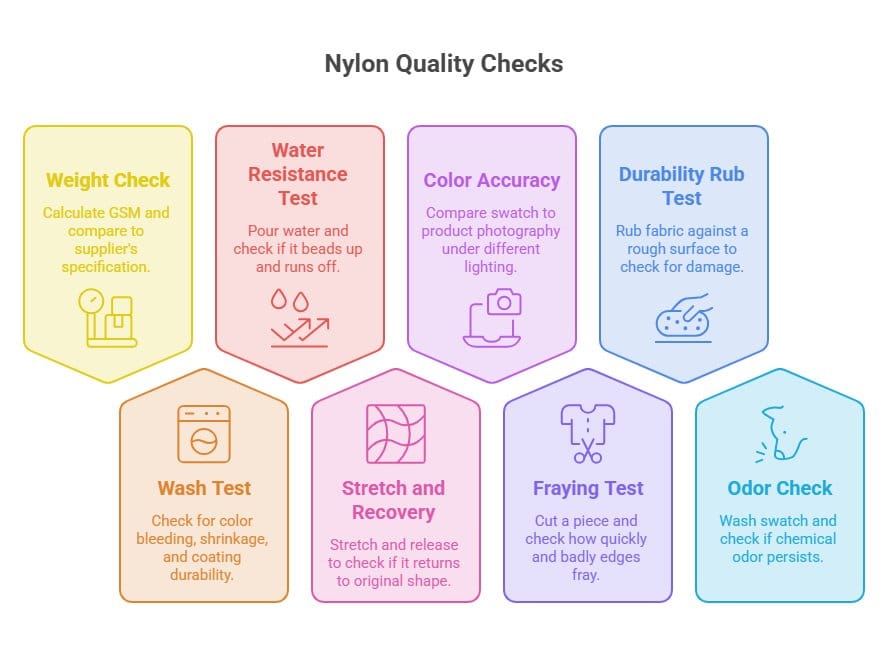
Visual guide to evaluating nylon fabric quality before purchasing or production.
Receiving a sample is not the end of the quality process. It is the start of it. Buyers who implement a systematic swatch-testing process before committing to bulk orders reduce material return rates significantly.[2] Here is what to check.
Weight Check
Weigh the swatch on a kitchen scale and calculate the GSM. Compare it to the supplier’s stated specification. A 10% variance is common; more than that is a red flag.
Wash Test
Machine wash the swatch at the temperature you will recommend in care instructions. Check for color bleeding, shrinkage, and whether any coating or finish holds up. Do this before you commit to bulk.
Water Resistance Test
For DWR or coated nylon, pour water onto the swatch. Water should bead up and run off, not soak in. Press the wet swatch with a paper towel to check if it wicks through.
Stretch and Recovery
For nylon-spandex, stretch the swatch fully in both directions and release. It should return completely to its original shape with no bagging. Poor recovery means the spandex content is too low or the fabric quality is substandard.
Color Accuracy
Compare the swatch to your product photography conditions. Nylon colors can shift significantly under different lighting. If your listing photos use daylight and your product is photographed indoors, the color your customer sees may not match what arrives.
Fraying Test
Cut a piece and check how quickly and badly the edges fray. This affects your construction method and finishing choices. Fast fraying means you need serged edges or heat sealing, build this into your production time.
Durability Rub Test
Rub the fabric firmly against a rough surface (like denim). Check for pilling, surface distortion, or fiber damage. For bag fabrics and outerwear, this matters a lot for product longevity.
Odor Check
Some nylon fabrics have a chemical odor from manufacturing. Wash the swatch and check if the odor persists. If it does, most customers will notice, and complain about it in reviews.
Writing Product Descriptions That Actually Sell

Crafting effective product descriptions that highlight nylon fabric features and benefits.
This is where knowing your material pays off directly. Accurate, specific product descriptions build trust, reduce returns, and help customers find your listings through search. According to a study cited by Like Sew, accurate product descriptions can increase conversions by up to 78%.[5]
Here is what a strong nylon product description should include, followed by a template you can adapt.
The Key Information Customers Need
- Fiber content: State it as a percentage. “100% nylon” or “80% nylon, 20% spandex.” This is the first thing fabric buyers look for.
- Weight: GSM or denier. “210D ripstop nylon” or “180 GSM” tells a knowledgeable buyer exactly what they are getting.
- Width: Always state the usable width in inches or centimetres. “58 inches wide” or “150cm” prevents the most common complaint, buyers expecting more than they got.
- Coating or finish: “DWR coated,” “silicone coated,” “PU backed,” or “uncoated.” This affects what the buyer can use the fabric for.
- Stretch: Relevant for knit nylon. State direction and approximate percentage. “4-way stretch, approximately 60% stretch in both directions.”
- What it is good for: Translate the technical specs into use-cases. “Ideal for rain jackets, bags, and outdoor gear” is more useful to most customers than just “210D DWR ripstop.”
- What it is not good for: Being honest about limitations builds trust. “Not recommended for direct skin contact in warm weather due to low breathability” prevents the return from someone who bought it for summer shirts.
- Care instructions: Include them in the description, not just on a care card. Buyers who know before they buy are more satisfied after they receive.
Product Description Template for Nylon Fabric Listings
Template: Nylon Fabric By the Yard
SEO Tips for Nylon Fabric Listings on Etsy and Google
Your listing title and first line of description do the most work for search visibility. Put your most important search terms at the front. On Etsy, use all 13 available tags and mix broad terms (“nylon fabric by the yard”) with specific ones (“210D ripstop nylon DWR”) and use-case terms (“fabric for rain jacket DIY”).
On your own website, the same principle applies: be specific and use the words your customers actually type. “Where to buy ripstop nylon fabric” and “nylon fabric for bag making” are examples of high-intent searches that specific product descriptions capture naturally without keyword stuffing.
For more on writing product descriptions that convert, Like Sew’s guide to fabric store product descriptions covers the key principles in practical detail.[5]
Answering Customer Questions Confidently

Confidently answering customer questions about nylon fabric products and textile applications.
These are the questions customers ask most often about nylon fabric products. Having clear, honest answers ready, in your FAQs, your product descriptions, and your customer messages, builds credibility and reduces pre-sale hesitation.
| Customer Question | Honest, Useful Answer |
|---|---|
| “Is this fabric waterproof?” | The answer depends on whether it is coated. DWR-treated nylon is water resistant, meaning light rain beads off. PU-coated nylon is more waterproof but not breathable. Neither is the same as a fully waterproofed membrane. Be specific about which you are selling and what conditions it handles. |
| “Is nylon fabric breathable?” | Standard woven nylon is not very breathable. Nylon mesh is more so. Nylon-spandex knit for activewear is designed to wick moisture away but does not breathe like cotton. Be clear about the type you are selling and set expectations about comfort in warm weather. |
| “Is this fabric safe for babies / sensitive skin?” | Nylon is generally safe for most adults. For babies and people with very sensitive skin, natural fibers like cotton are a better choice for items worn directly against the skin. If you sell nylon accessories or outerwear for children, this is less of an issue. Direct skin-contact garments for babies should not be nylon. |
| “Will it shrink in the wash?” | Woven nylon has minimal shrinkage. Nylon-spandex knit may have slight shrinkage, especially in a hot dryer. Always wash cold and air dry or use low heat for best results. |
| “Is this the same as polyester?” | No. Nylon and polyester are both synthetics made from petroleum, but they are different materials with different properties. Nylon is generally softer, more elastic, and more abrasion-resistant. Polyester is typically cheaper and handles UV exposure better. |
| “What weight should I buy for [specific project]?” | Have a simple weight guide ready. Light (under 70D) for linings and stuff sacks; medium (70D-210D) for general bags and rain gear; heavy (420D+) for backpacks and durable bags. Customers who ask this question are engaged and worth the detailed answer. |
| “Can I use this for swimwear?” | Only if you are selling nylon-spandex with chlorine resistance. Standard woven nylon is not suitable for swimwear. Be clear in your listing about whether the fabric is suitable for swimwear or not; this prevents misuse and returns. |
| “Is this recycled / sustainable?” | If you stock recycled nylon (ECONYL or GRS-certified), this is a strong selling point, answer clearly and prominently. If you stock virgin nylon, be honest about it. Customers who ask this question are looking for truthful answers, not greenwashing. |
Pro tip: Add a short FAQ section directly in your Etsy listing description or your product page. Answering the top four or five questions in the listing itself reduces messages, builds buyer confidence, and improves conversion. It also helps your SEO because it naturally includes the search terms people type when they have these questions.
Pricing Nylon Products for Profit
Pricing is where many small businesses leave money on the table or create problems for themselves by going too low. Here is a realistic framework for pricing nylon fabric products.
Understanding Your Cost Structure
Fabric alone can account for up to 70% of a garment’s production cost.[6] For nylon products specifically, other significant costs include hardware (zippers, buckles, webbing), thread, labels, packaging, and your time. Before setting a price, you need to know your true cost of goods (COGS) per unit.
A realistic cost breakdown for a nylon tote bag as an example:
That gives a COGS of approximately $30.50. A sustainable retail price at a 50% gross margin would be around $61. A common mistake is pricing at $35 to stay “competitive” , at which point the business is effectively paying itself nothing for the labor.
Standard Pricing Benchmarks
- Wholesale pricing typically adds 50-100% markup over COGS, resulting in gross margins of 30-50%.
- Retail pricing adds a further 2x to 2.5x multiplier on wholesale cost (known as keystoning).
- For small-batch handmade products, most advisors recommend a minimum of 2.5x COGS as a retail price to maintain viability.
- Specialty and niche nylon products (CORDURA backpacks, technical outdoor gear, recycled nylon items) command premium pricing in the market. Do not benchmark your prices against cheap mass-produced equivalents.
Where Nylon Products Can Command Premium Pricing
Recycled or ECONYL nylon, CORDURA-grade construction, custom colorways, and clear sustainability credentials all justify higher prices. Buyers looking for quality outdoor gear or eco-conscious products are not shopping on price alone. Competing on price against mass-produced alternatives is a race you will not win as a small business. Competing on quality, materials story, and craftsmanship is where small makers find sustainable price points consistently.
Need help with pricing calculations?
The Fabric Durability Calculator and Fabric Cost Comparison Calculator can help you evaluate material value as part of your pricing process.
Where to Sell Nylon Products
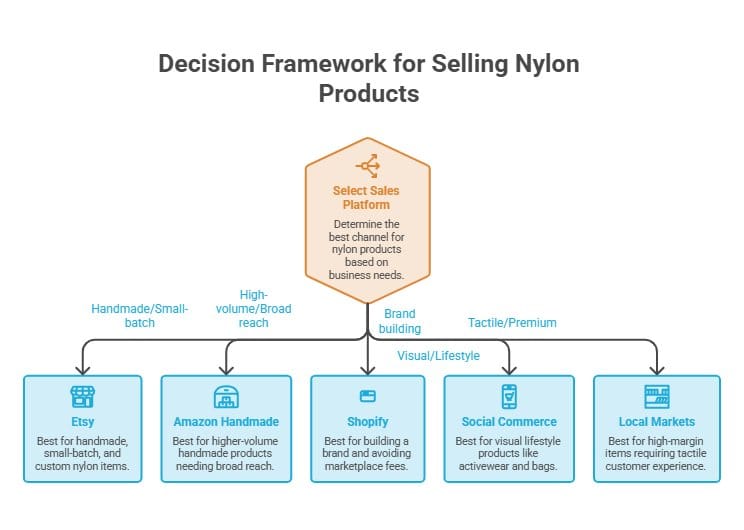
Decision-making guide for choosing the best platform to sell nylon products.
The right platform depends on your product, your volume, and your target customer. Here is a straightforward comparison for nylon fabric sellers.
| Platform | Best For | Key Considerations |
|---|---|---|
| Etsy | Handmade nylon products, fabric by the yard, small-batch items, custom orders | 96M active buyers as of 2025. Strong for makers. SEO through titles, tags, and descriptions. Listing and transaction fees apply. As of 2025, Etsy charges a 6.5% transaction fee plus a $0.20 listing fee per item. |
| Amazon Handmade | Higher-volume handmade products, reaching a broader audience | Much larger audience than Etsy but more competitive and harder to build brand identity. Works better for products with clear functional benefit and strong reviews. |
| Shopify (own website) | Building a brand, repeat customers, growing beyond marketplace fees | Higher upfront investment in traffic generation (paid ads, SEO, social) but no marketplace fees beyond platform subscription. Better for businesses with a distinctive brand story. |
| Instagram / TikTok Shop | Visual products with strong lifestyle appeal: activewear, accessories, bags | Growing fast as purchase channels. Works best when paired with consistent content showing the product in use. Nylon activewear and bags photograph and video well. |
| Local markets and craft fairs | High-margin handmade products where customers want to touch the fabric before buying | Good for premium outdoor gear, custom bags, and specialty items. Nylon’s durability and performance story comes across well in person. Higher time investment but no platform fees. |
For guidance on choosing between selling platforms, our articles on Depop vs Poshmark and Poshmark vs eBay cover the trade-offs across different marketplaces in the clothing and accessories space.
The Sustainability Angle: Recycled Nylon
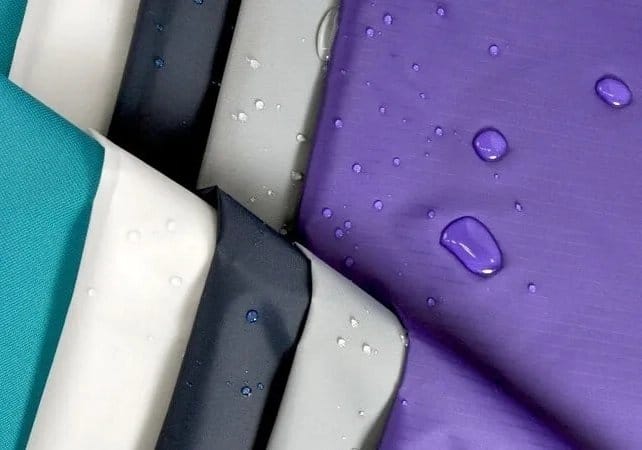
Recycled nylon fabric offering durability while supporting more sustainable manufacturing practices.
Sustainability is increasingly a purchasing consideration for the kind of informed, higher-spending customers that small businesses tend to attract. If you are sourcing or making nylon products, recycled nylon is worth knowing about, not just for its environmental benefits but for the marketing angle it opens up.
What Recycled Nylon Actually Is
The main commercially available recycled nylon is ECONYL, produced by Italian company Aquafil. It is chemically recycled from discarded nylon waste including ghost fishing nets, carpet scraps, and pre-consumer fabric waste. The regeneration process returns the nylon polymer to its original quality, so the finished fabric performs identically to virgin nylon.
This is truly better for the environment: recycled nylon production uses 71-80% less energy, reduces CO2 emissions by 69-76%, and uses 54-58% less water compared to producing virgin nylon.
How to Source Recycled Nylon as a Small Business
ECONYL yarn and fabrics are increasingly available through specialty fabric retailers. Some suppliers to explore:
- Repreve and ECONYL certified fabric distributors , ask your current suppliers whether they carry GRS-certified recycled nylon options
- Sustainability-focused fabric platforms like Fabscrap (fabscrap.org) sell deadstock and surplus fabrics including recycled synthetics at accessible prices
- International specialty mills increasingly offer ECONYL fabric with certifications for smaller order quantities
How to Talk About It Without Greenwashing
The key is specificity. “Made from recycled nylon” is vague and can sound like marketing noise. “Made from ECONYL regenerated nylon, certified by the Global Recycled Standard (GRS)” is specific and verifiable. Customers who care about sustainability know the difference, and specific claims build more trust than broad ones.
Also be transparent about what recycled nylon does not solve: it still sheds microplastics in the wash, like all nylon. Mentioning a washing bag (like a Guppyfriend) as a care recommendation shows you understand the issue honestly rather than pretending recycled nylon is a complete solution.
Selling angle: “This bag is made from ECONYL recycled nylon, produced from discarded fishing nets and fabric scraps. It performs identically to virgin nylon but with significantly lower environmental impact. Wash in a Guppyfriend bag to reduce microplastic release.” That is a genuine, honest sustainability story that resonates with eco-conscious buyers without overclaiming.
Care Instructions to Include With Products
Providing clear care instructions with nylon products reduces the chance of damage in the customer’s hands and the returns and complaints that follow. Here is what to include by product type.
| Product Type | Care Instructions to Include |
|---|---|
| Nylon bags and accessories | Spot clean with damp cloth and mild soap. For machine washing, use a gentle cold cycle and place in a mesh laundry bag. Air dry only. Do not tumble dry on high heat. Do not iron. Store clean and dry. |
| Nylon outerwear (rain jackets, windbreakers) | Machine wash cold on a gentle cycle without fabric softener. Tumble dry on low to help re-activate DWR coating. Re-apply DWR spray after 10-15 washes for continued water resistance. Do not dry clean. Do not iron directly. |
| Nylon-spandex activewear | Machine wash cold inside-out on a gentle cycle. Do not use fabric softener as it coats fibers and reduces moisture-wicking performance. Air dry flat or tumble dry on low. Do not iron. Wash separately from items with zippers or Velcro that can snag the fabric. |
| Nylon-spandex swimwear | Rinse in cold water after each use to remove chlorine or salt water. Hand wash with mild soap or machine wash on a delicate cycle in a mesh bag. Lay flat to dry away from direct sunlight. Do not wring or tumble dry. Rotate between suits to allow full recovery between uses. |
| Nylon fabric by the yard | Pre-washing is not required for most woven nylons. For nylon-spandex intended for garments, a gentle pre-wash is recommended. Store rolled or loosely folded away from direct sunlight to prevent yellowing. |
For customers who want to decode care labels themselves, point them to the Care Symbol Decoder tool, which explains laundry symbols clearly.
Common Mistakes to Avoid
These are the mistakes that cost small nylon fabric businesses the most, based on the patterns that come up repeatedly in the maker and seller community.
| Mistake | What Happens | How to Avoid It |
|---|---|---|
| Not testing samples before bulk ordering | Fabric arrives and does not perform as expected: wrong weight, wrong coating, poor color. You are stuck with inventory you cannot use profitably. | Always order and test a swatch before committing. Make a small test product. Wash it. Use it. Then order. |
| Vague product descriptions | Customers buy the wrong fabric for their project, return it, and leave negative reviews. Conversion rates are lower because buyers cannot confirm the fabric meets their needs. | Include fiber content, denier or GSM, width, coating, stretch, and intended uses in every listing. |
| Underpricing by ignoring labor cost | The business is profitable on paper but the owner is working for below minimum wage. This is not sustainable and leads to burnout or business failure. | Include your time at a realistic hourly rate in every product’s cost calculation. If the resulting price seems too high for the market, rethink the product or the market, not your wage. |
| Buying too much too early | Large inventory investment before you have proven demand. Cash tied up in stock that sells slowly. Carrying costs accumulate. | Start small, prove demand, then increase order size. The higher per-yard cost at retail volume is worth the reduced financial risk when you are still validating the product. |
| Selling coated nylon as “waterproof” without qualification | Customer takes a DWR-treated bag out in heavy rain, it gets wet, and they are angry. One-star review about false advertising. | Distinguish between water resistant and waterproof. State conditions: “repels light rain and splashes” rather than “waterproof.” |
| Ignoring lot consistency on reorders | Second batch of fabric is a noticeably different shade from the first. Ongoing product line has color inconsistency. Customers who reorder get a different product to what they originally bought. | Track lot numbers. Ask suppliers whether they can hold stock from the same dye lot for your reorders, or note clearly in listings when colors may vary between orders. |
| Not accounting for import duties on international fabric | A fabric that looks attractively priced per meter from an international supplier turns out to be more expensive than domestic options once duties, shipping, and handling are included. | Always calculate the true landed cost including all fees before comparing suppliers. |
Frequently Asked Questions
What is the best nylon fabric for making bags?
For everyday tote bags and light-use items, 210D Oxford nylon or ripstop nylon is a solid choice, lightweight, affordable, and durable enough for daily use. For backpacks and bags that see real abuse, 420D to 600D nylon or CORDURA nylon is the standard. For the most heavy-duty bags, 1000D ballistic nylon is as tough as commercially available fabric gets. The right choice depends on how hard the bag will be used.
Where can I buy nylon fabric wholesale in the US?
Seattle Fabrics is one of the most respected US sources for technical and outdoor nylon. Online Fabric Store and Mood Fabrics both carry nylon by the yard with reasonable minimum orders. For lower per-yard cost at volume, Wholesale Fabric Direct and trade accounts with distributors make sense once you have proven demand. Alibaba connects you with international mills for larger orders.
How do I describe nylon fabric accurately in a product listing?
Include fiber content (100% nylon or blend percentage), weight (denier or GSM), width, coating type if applicable, stretch information if it is a knit, what it is best used for, and care instructions. Accurate, specific descriptions reduce returns and build buyer confidence. Vague descriptions like “strong synthetic fabric” tell the buyer almost nothing useful.
Is nylon fabric easy to sew for small production runs?
It is manageable with the right setup. The main challenges are slippage when cutting and sewing, fraying edges, and heat sensitivity when pressing. A walking foot, sharp Microtex needle, and polyester thread address most issues. Heat sealing cut edges is the fastest way to stop fraying on woven nylon. For small production runs, building these techniques into your workflow means consistent results.
What is the difference between DWR-coated and PU-coated nylon?
DWR (Durable Water Repellent) is a surface treatment that causes water to bead up and run off. It is breathable but wears off with use and washing, and needs to be refreshed. PU (polyurethane) is a backing applied to the back of the fabric that creates a more complete waterproof barrier. PU-coated nylon is less breathable than DWR-treated nylon but more waterproof. For bags and casual rain gear, DWR is usually sufficient. For fully waterproof applications, PU coating or a membrane laminate is needed.
Can I sell products made from ECONYL recycled nylon and market them as sustainable?
Yes, with appropriate specificity. ECONYL is a truly more sustainable alternative to virgin nylon, with published lifecycle data showing significantly lower energy use, water use, and CO2 emissions in production. Use specific, verifiable claims: “made from ECONYL GRS-certified recycled nylon” rather than just “sustainable nylon.” Also note the microplastics caveat honestly, all nylon sheds microplastics in the wash regardless of whether it is recycled or virgin.
How should I price handmade nylon fabric products?
Start with your true cost of goods: fabric (including shipping and duties), hardware, thread, packaging, and your time at a realistic hourly rate. A minimum retail price of 2.5 times COGS is a common benchmark for handmade products. For specialty items using CORDURA or ECONYL nylon, the premium positioning of the materials supports higher pricing. Do not benchmark against mass-produced alternatives, your product is not competing on the same terms.
What are the most common customer complaints about nylon products?
The most common issues are: water resistance not meeting expectations (usually because DWR was described as waterproof), color looking different from listing photos (nylon shifts under different lighting), fabric feeling different than expected (a spec issue from unclear listing descriptions), and odor on arrival (a manufacturing residue issue that testing before selling would catch). Most of these are preventable with accurate listings, sample testing, and clear communication about limitations.
Conclusion
Nylon is a strong market for small businesses that know what they are working with. The material has genuine performance advantages, a wide range of applications, and a sustainability story through recycled options that resonates with today’s buyers. What separates businesses that do well with nylon from those that struggle is almost always the same thing: knowledge translated into communication.
Knowing your denier from your GSM, understanding what DWR actually does, being able to explain the difference between nylon and polyester when a customer asks, writing listings that answer the questions buyers have before they even type them; these things build the trust that drives repeat business and positive reviews.
Key Takeaways
- Know your product before you list it. Fiber content, weight, coating, stretch, and appropriate uses should all be confirmed by testing, not assumed from supplier copy.
- Denier and GSM both matter. Denier tells you about the yarn; GSM tells you about the finished fabric weight. Ask for both when sourcing.
- Test every new sample before committing to bulk. Wash it, weigh it, stretch it, and use it. The cost of a sample is trivial compared to the cost of getting it wrong at volume.
- Accurate product descriptions convert better than vague ones and reduce returns. Include fiber content, weight, width, coating, stretch, uses, limitations, and care instructions.
- Price for real profit. Include your labor at a fair hourly rate. Do not benchmark against mass-produced alternatives. Compete on quality and story, not price.
- The sustainability angle is genuine and valuable if you use recycled nylon and communicate it specifically. Vague sustainability claims help no one. Specific certified claims build trust.
- Prepare answers to the seven most common customer questions about nylon before your first sale. Put them in your FAQ, your listings, and your messaging templates.
- Calculate your true landed cost including shipping, duties, and carrying costs before comparing suppliers or setting prices.
This is the final article in our nylon fabric series. The main guide covers the full overview. The home sewists guide covers construction techniques. The fashion students guide covers fiber science and industry context. Together, these four articles cover everything you need to know about nylon fabric regardless of where you are coming from.
References
- Verified Market Reports. (2026). Global Nylon Fabrics Market Size, Industry Share and Forecast 2026-2034. verifiedmarketreports.com
- Canvas ETC. (2026). Wholesale Fabric for Small Businesses: B2B Sourcing, Supplier MOQs, and Trade Accounts. canvasetc.com
- Shopify. (2025). How to Source Fabric for a Clothing Line in 2026 (Even With Low MOQs). shopify.com
- Shopify. (2026). How to Calculate Wholesale Product Pricing. shopify.com
- Like Sew. (2025). How to Write a Product Description for Your Online Fabric Store. likesew.com
- Best Colorful Socks. (2025). Fashion Retail Cost Structure Analysis Statistics. bestcolorfulsocks.com
Disclaimer: The information in this article is provided for general business guidance only. Pricing benchmarks, market figures, and supplier information reflect conditions at the time of writing and are subject to change. Always conduct your own due diligence when selecting suppliers, setting prices, and making business decisions. Clothing Digest is not responsible for any commercial outcomes resulting from the application of guidance provided in this article.