
A practical, no-fuss guide for home sewists and DIY crafters who want to get the most out of nylon fabric, from choosing the right needle to finishing seams like a pro.
Nylon has a bit of a reputation in the sewing community. Ask around, and you will hear things like “it slides everywhere,” “my machine hated it,” or “I ruined three yards before I got it right.” Those people are not wrong. Nylon is not the most forgiving fabric to work with, especially if you approach it the same way you would cotton.
But here is the other side of that story: once you understand what nylon needs, it is very satisfying to sew. The finished results are durable, professional-looking, and hard to achieve with any other fabric. A tote bag, a rain jacket, a pair of leggings, a stuff sack for camping. These are projects where nylon does things cotton simply cannot.
This guide is written specifically for home sewists and DIY crafters. It covers everything from choosing the right nylon to cutting it cleanly, setting up your machine, finishing edges, and troubleshooting the problems that catch people out. If you want the full story on what nylon actually is and how it compares to other fabrics, our complete nylon fabric guide covers that ground. Here, we focus entirely on getting it onto your machine and out as something you are proud of.
Is Nylon the Right Fabric for You?

Designer assessing whether nylon fabric is suitable for a sewing or fashion project.
Before you buy a yard of anything, it helps to know whether nylon is actually the right call for what you are making. It is not the best choice for every project, and knowing this upfront saves you a lot of frustration.
Nylon Works Well For:
- Bags, backpacks, tote bags, and pouches
- Rain jackets, windbreakers, and outerwear shells
- Activewear, gym wear, and yoga pants (usually nylon-spandex blends)
- Swimwear (nylon-spandex)
- Outdoor and camping gear: tent footprints, stuff sacks, hammocks
- Linings for jackets and bags where durability matters
- Kites, flags, and banners
- Anything that needs to be lightweight and water-resistant
Nylon Is Not Ideal For:
- Everyday garments like shirts, trousers, or dresses that need breathability
- Children’s clothing worn directly against the skin
- Projects where you need a lot of drape or flow
- Quilts or projects that benefit from fabric stiffness
- Anything that will be pressed or ironed frequently at high heat
Skill level reality check: Pure woven nylon (ripstop, taffeta, ballistic) is intermediate level. It is slippery, frays, and needs specific machine settings. Nylon-spandex blends for activewear and swimwear add another layer of complexity because stretch fabrics need their own techniques. If you are a complete beginner, get a few cotton projects under your belt first. If you have made a few things and are ready for a challenge, nylon is a great next step.
Choosing the Right Nylon for Your Project
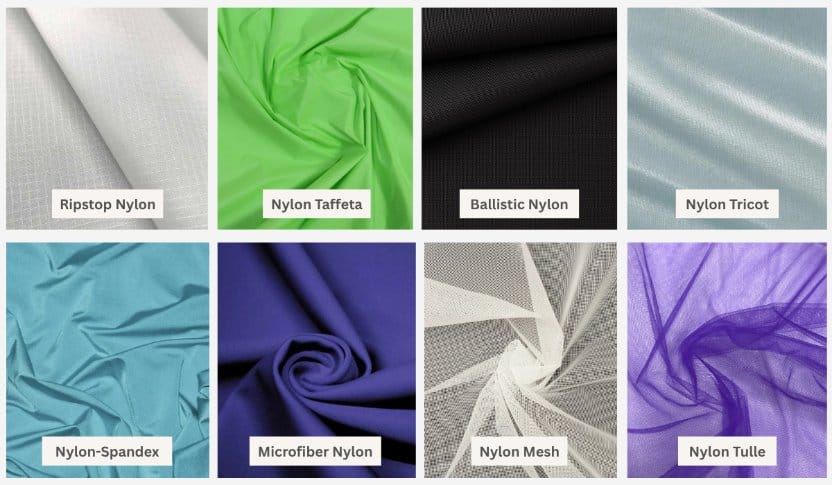
Overview of popular nylon fabric varieties for sewing, apparel and outdoor applications.
Walking into a fabric store or browsing online and seeing “nylon fabric” tells you very little. There are dozens of varieties, and the one you choose will affect everything from how it handles to what needle you use to how you finish the edges. Here is a practical guide to the most common types home sewists work with.
| Nylon Type | Weight / Feel | Best Projects | Skill Level |
|---|---|---|---|
| Ripstop Nylon | Lightweight, stiff grid weave | Bags, kites, tents, stuff sacks, rain gear | Intermediate |
| Nylon Taffeta | Lightweight, crisp, slight sheen | Jacket linings, windbreakers, bags | Intermediate |
| Ballistic Nylon | Heavy, tough basket weave | Heavy-duty bags, backpacks, protective covers | Intermediate-Advanced |
| Nylon Tricot | Lightweight knit, soft stretch | Lingerie, swimwear linings, activewear | Intermediate |
| Nylon-Spandex | Stretchy, smooth, varies in weight | Leggings, swimwear, sports bras, activewear | Intermediate |
| Microfiber Nylon | Very soft, fine, smooth | Lingerie, linings, activewear | Intermediate |
| Nylon Mesh | Lightweight, open, breathable | Bags, sport jerseys, shoe uppers | Beginner-friendly |
| Nylon Tulle | Stiff, net-like | Bridal veils, tutus, costume underlayers | Beginner-friendly |
Understanding Denier
Denier is the weight measurement used for nylon and other synthetic fabrics. It tells you how fine or heavy the fiber is. A lower denier means a finer, lighter fabric. A higher denier means heavier and more durable.
| Denier Range | Feel | Good For |
|---|---|---|
| Under 30D | Very fine, almost sheer | Linings, hosiery, lightweight activewear |
| 30D-70D | Lightweight, soft | Taffeta linings, wind shells, light bags |
| 70D-200D | Medium weight, workable | Ripstop, backpacks, rain jackets, outdoor gear |
| 400D-1000D | Heavy, stiff, very durable | Ballistic nylon, heavy-duty luggage and bags |
Coated vs Uncoated Nylon
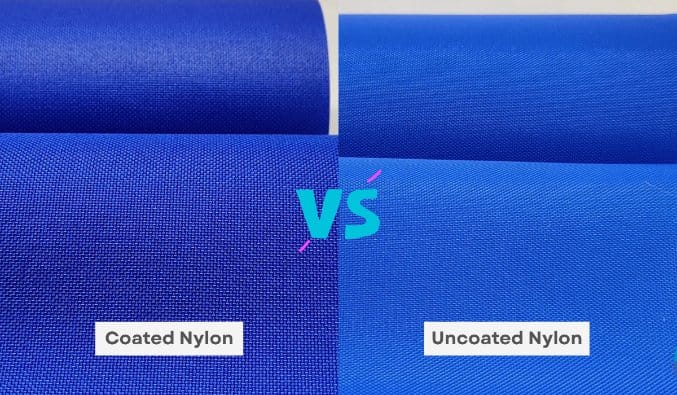
Coated and uncoated nylon fabrics compared for durability, water resistance and outdoor use.
Many nylon fabrics come with a coating, such as a durable water repellent (DWR) treatment, silicone, or polyurethane (PU). Coated nylon is more water-resistant but can be slightly harder to sew because the coating can grip the presser foot and cause uneven feeding. A Teflon or roller presser foot solves this.
Uncoated nylon is easier to sew but will need treatment or a separate waterproof layer if you need water resistance. You can also apply DWR spray to a finished project.
Learn more about how these coatings work in our guide to DWR coatings and water-repellent fabrics.
Not sure which fabric to pick for your project?
Try the Interactive Fabric Selector Tool to get a recommendation based on your specific project and skill level.
Tools You Need Before You Start
Getting the right tools sorted before you start is half the battle with nylon. Using the wrong needle or the wrong thread is the most common reason people struggle. Here is what you actually need.
Size 70/10 for lightweight nylon. Size 80/12 for medium weight. Size 90/14 for heavier ballistic or ripstop. Never use ballpoint needles on woven nylon.
100% polyester is the most practical choice for home sewists. It is strong, widely available, and works well across all types of nylon. Pure nylon thread is ideal for strength but can be harder to handle for beginners.
This is the single most useful upgrade for sewing nylon. It feeds both layers of fabric at the same rate, which prevents the slipping and uneven seams that cause so much frustration.
For coated nylon specifically. The non-stick sole glides over the coating instead of dragging it, giving you smooth, even feeding.
Far more accurate than scissors for slippery nylon. A sharp rotary cutter gives you clean edges and keeps the fabric from shifting while you cut.
Use instead of pins wherever possible. Pins leave permanent holes in many nylon fabrics, which cannot be hidden or removed.
Where you need to hold layers together during sewing, clips are better than pins for most nylon types. They grip without puncturing.
Holds fabric layers together for sewing without leaving holes or residue. Especially useful along seam lines when clips are not practical.
Essential if you are making anything waterproof. Needle holes let water through even on a coated fabric, so seam sealant applied to the wrong side of finished seams is the fix.
Nylon melts under a hot iron. A pressing cloth (even a piece of cotton muslin) sits between the iron and the nylon and protects the fabric from direct heat.
One thing to skip: Never use cotton thread on nylon fabric. Cotton and nylon have very different stretch and strength properties. Over time, the cotton thread will break while the nylon fabric stays intact, leaving you with open seams. Stick to polyester or nylon thread.
Need help choosing the right needle?
The Needle and Fabric Compatibility Chart matches needle types and sizes to fabric weight and type, so you can be sure before you start.
Preparing Nylon Fabric
Preparation is where a lot of sewists skip steps, and it shows in the finished project. Nylon has a few specific things worth doing before you ever put it under a needle.
Do You Need to Pre-Wash Nylon?
Most ripstop and coated nylon fabrics do not need pre-washing because they are pre-treated and generally do not shrink the way cotton does. However, nylon-spandex blends for activewear and swimwear can benefit from a gentle pre-wash to remove any residual sizing from the manufacturing process and to pre-shrink the spandex component slightly.
If you are making a garment that will be washed regularly, a pre-wash on nylon-spandex makes sense. If you are making bags, outdoor gear, or anything from ripstop or taffeta, skip it.
Letting the Fabric Relax
If your nylon has been tightly folded or rolled, let it hang or lay flat for a few hours before you cut. Creases from folding can affect your cutting accuracy, especially on lightweight taffeta that shows every mark.
Handling Static
Nylon builds up static electricity, and this gets worse in dry weather or heated rooms. Static makes the fabric cling to itself, to your cutting mat, and to your hands, which is very unhelpful when you are trying to cut accurately. A light mist of water from a spray bottle, or a quick wipe with a dryer sheet across the fabric surface, reduces static significantly before you start.
Testing Before You Cut
Always sew a test seam on a scrap of the actual fabric you are using before you start on your project. SewingMachineFun’s detailed guide on sewing ripstop nylon recommends starting with a Microtex 70/10 needle and a medium stitch length of around 2.5mm as a reliable baseline for most home machines.[2] Use the same thread and needle you plan to use, at the same stitch length and tension settings. Nylon from different manufacturers can behave very differently even at the same denier, and what worked on one roll may not work on another.
Cutting Nylon Fabric Without the Frustration
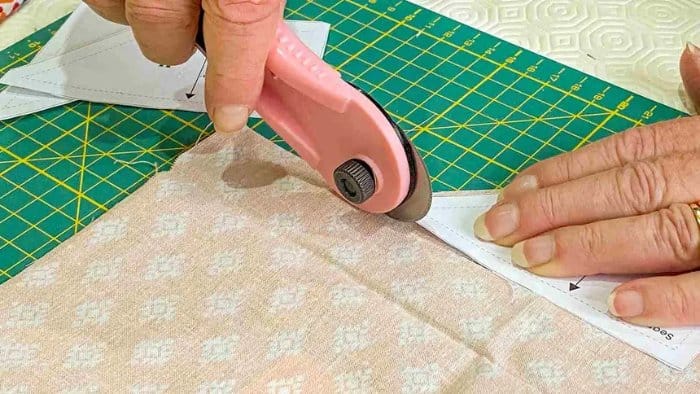
Using a rotary cutter to achieve clean, accurate cuts when working with nylon fabric.
Cutting is where nylon earns its difficult reputation. It slips, it slides, and lightweight varieties can jam into the machine if your seam allowances are too small. Here is how to cut it accurately and cleanly.
Lay it on a non-slip surface
A cutting mat works well. If your fabric is sliding off the mat, place a sheet of tissue paper or a piece of flannel under it to add grip. Do not cut on a slippery table surface.
Use pattern weights, not pins
Lay your pattern pieces on the fabric and hold them down with pattern weights, soup cans, or anything heavy and flat. If you must use pins, pin only within the seam allowance where the holes will be hidden inside the seam.
Cut with a sharp rotary cutter
A rotary cutter gives you more control and accuracy than scissors on nylon. Use a new blade, as a dull blade drags and causes fraying. If you prefer scissors, use very sharp fabric shears and cut with long, smooth strokes rather than short snips.
Keep seam allowances generous
Aim for at least half an inch (1.25cm) on seam allowances. Small seam allowances on lightweight nylon can feed into the machine and jam under the presser foot. Wider allowances give you more control and more material to work with when finishing edges.
Mark carefully
Use tailor’s chalk or a fabric-safe marker that wipes off easily. Avoid anything that requires heat to remove, since heat and nylon are not a good combination. Water-soluble pens work well on most nylons. Test on a scrap first.
Seal cut edges immediately if needed
Some nylons fray as soon as they are cut. If yours does, run the cut edges through a serger, apply a narrow zigzag stitch, or use seam sealant along the raw edge before you start assembling your project. This is especially important on ripstop and taffeta varieties.
Sewing Machine Settings for Nylon
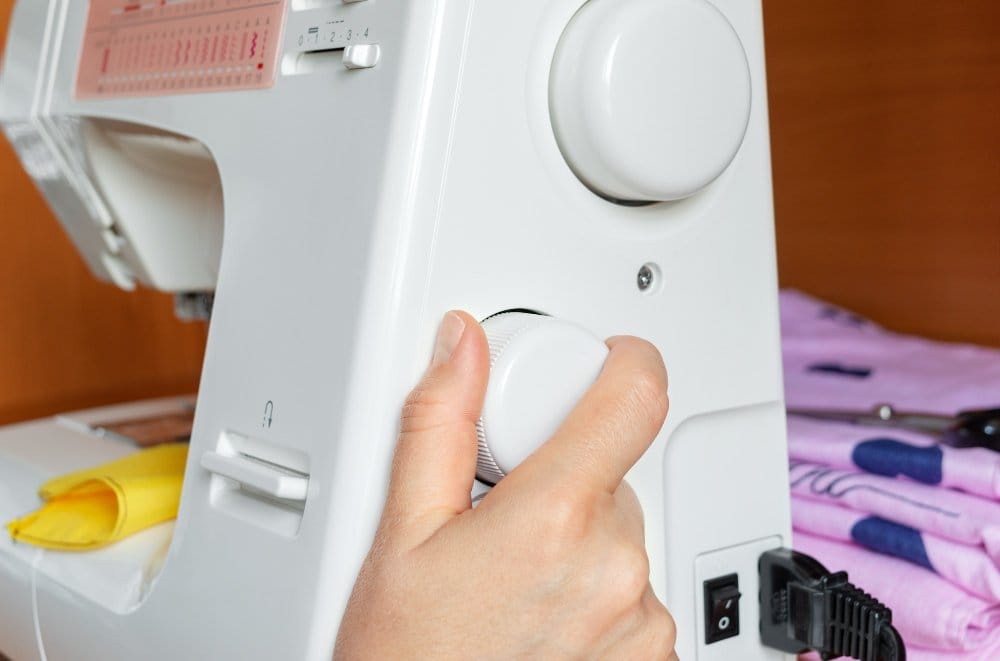
Adjusting sewing machine settings including stitch length, tension and presser foot pressure for nylon fabric.
Getting your machine settings right before you start sewing is the biggest factor in whether your nylon project goes smoothly. According to MH Thread’s practical guide to stitching nylon fabric, most domestic and industrial machines can handle nylon with minor adjustments; the key variables are needle type, presser foot pressure, and stitch length.[1] There is no single universal setting, because nylon varies a lot by type and weight. But these are the reliable starting points that work for most home sewing machines.
| Setting | Recommended Starting Point | Notes |
|---|---|---|
| Stitch Length | 2.5mm to 3mm (around 8-10 stitches per inch) | Do not go too short. A stitch that is too small creates too many needle holes too close together, which can weaken the fabric along the seam line. This is especially important on ripstop. |
| Tension | Slightly looser than your normal setting | Start at your machine’s default and reduce slightly if you see puckering. Nylon’s slight stretchiness means standard tension can cause the thread to pull and gather the fabric. |
| Presser Foot Pressure | Slightly reduced | Too much pressure squishes slippery nylon and causes uneven feeding. If your machine allows pressure adjustment, back it off a little from standard. |
| Needle | Sharp or Microtex, 70/10 to 80/12 | Change your needle if you have had it in for more than a couple of projects. A slightly blunt needle causes skipped stitches and snags on nylon more than on most fabrics. |
| Thread | 100% polyester or 100% nylon | Match thread weight to fabric weight. Lightweight nylon thread for sheer or fine nylon, medium-weight for most projects. |
| Presser Foot | Walking foot (or Teflon foot for coated nylon) | A standard foot can cause slipping. The walking foot feeds both layers evenly and is the single most effective tool for consistent seams on nylon. |
| Sewing Speed | Slow to medium | Rushing causes the fabric to shift under the foot. Sew deliberately and pause before curves or corners. |
The most important rule: Test on scrap fabric first. Sew a 6 to 8 inch seam on a scrap of your actual fabric, using the exact thread and needle you plan to use. Look at the stitches from both sides. If the seam puckers, adjust tension. If stitches are skipping, change the needle. If the fabric is shifting, try the walking foot. Fix the problem on the scrap, then start your project.
Does Your Regular Home Sewing Machine Handle Nylon?
Yes, for most types of nylon it will. Lightweight to medium-weight nylon, including ripstop, taffeta, tricot, and most nylon-spandex blends, sew fine on a standard home machine with the right needle, thread, and settings. You do not need an industrial machine.
Where you might hit limits is with very heavy ballistic nylon (like 1680D), which is thick and tough enough to challenge some lighter home machines. For standard bags and backpacks made from 420D to 600D nylon, your home machine will handle it.
For a deeper dive into sewing machine settings and maintenance, our sewing machine care guide and guide to sewing machine stitches are worth bookmarking.
Sewing Techniques That Actually Work
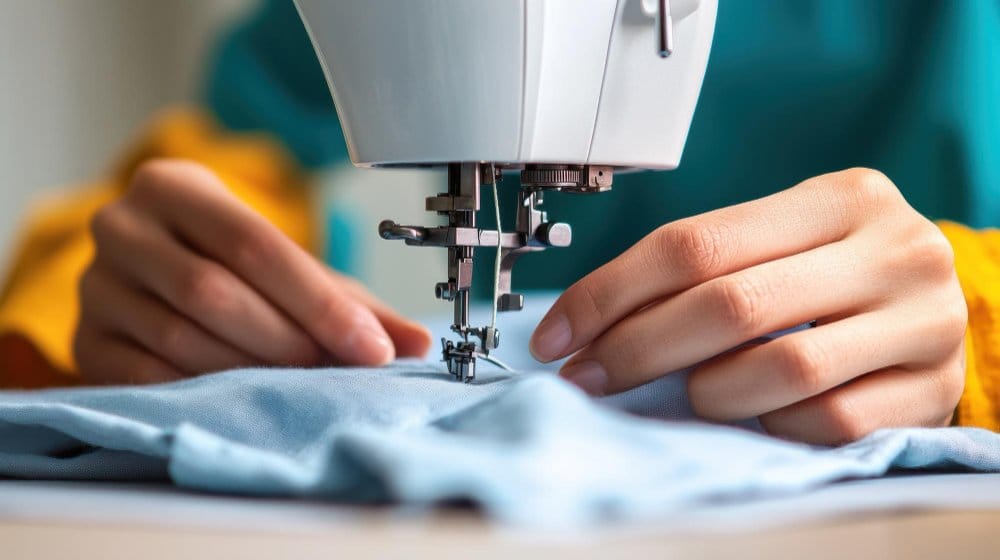
Practical sewing techniques for achieving smooth and professional nylon fabric results.
Even with the right settings, nylon has a few habits that can trip you up if you are not expecting them. These techniques address the most common problems directly.
Preventing Slippage
Nylon slips because it is smooth and has very little grip. Here are the most reliable ways to stop it from shifting while you sew:
- Use a walking foot: this is the most effective solution for most nylon types
- Hold the fabric layers together with sewing clips rather than pins
- Apply wash-away double-sided tape along the seam line to hold layers in place as you sew; the tape dissolves in the wash
- On very slippery lightweight nylon, place a strip of tissue paper under the fabric as you sew, then tear it away after. This gives the feed dogs something to grip
- Never pull the fabric through the machine. Let the feed dogs and walking foot do the work. Pulling causes stretching and uneven seams
Starting and Ending Seams
Lightweight nylon pieces can get pulled down into the needle plate at the start of a seam, especially if the piece is small. To prevent this, hold both thread tails behind the presser foot as you begin, and start sewing slowly. Alternatively, begin your seam on a scrap piece of fabric and transition onto your nylon, then trim the scrap away later.
Sewing Around Corners and Curves
Take your time. Reduce your speed well before the corner, sew one stitch at a time if needed, and use your needle-down function if your machine has it. This keeps the fabric from drifting when you lift the presser foot to pivot.
Reinforcing Stress Points
On bags, backpacks, and gear, the stress points are where straps attach, where zipper ends sit, and any area that takes regular pulling or weight. These need reinforcing. A bar tack (a dense zigzag stitch worked in place several times over the same spot) is the standard way to reinforce strap attachment points. A box stitch (a rectangle with an X through it) is another reliable option.
Working with Zippers on Nylon
Nylon coil zippers work best in nylon projects. They are lightweight and flexible, which suits the fabric well. Use a zipper foot and sew slowly past the zipper pull, moving it out of the way as needed. On waterproof projects, use a waterproof zipper and seal the zipper tape edges with seam sealant.
Sewing Nylon-Spandex for Activewear
Nylon-spandex blends need a stitch that can stretch with the fabric. Use a zigzag stitch, a stretch stitch, or a serger with a stretch stitch setting. A straight stitch will pop the moment the garment is put on. Use a ballpoint needle (also called a jersey needle) rather than a sharp for nylon-spandex blends, as this slides between the knit fibers rather than piercing them.
Our guide to stretchy fabrics covers more about working with stretch fabrics in general, which applies directly to nylon-spandex blends.
Seam Finishing and Edge Treatment
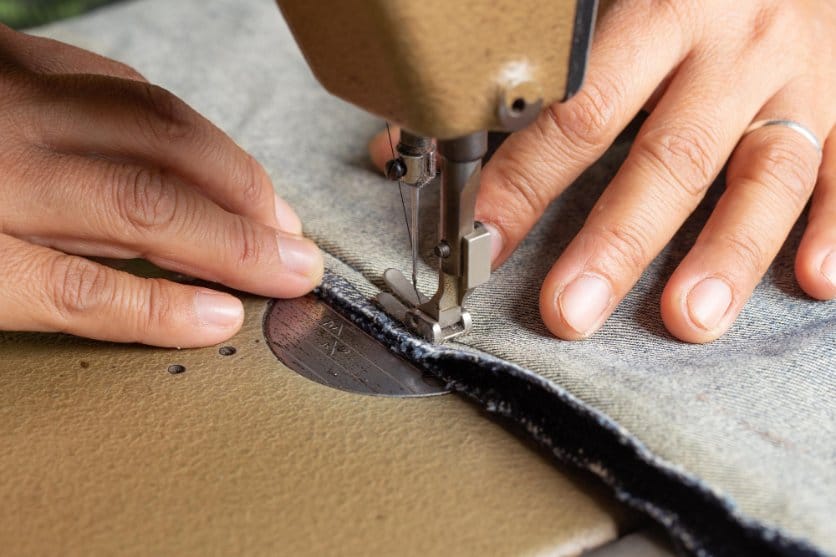
Sewing machine applying seam finishing techniques to improve fabric durability and appearance.
Raw edges on nylon need attention. Unlike cotton, where you can leave a seam raw and it will only fray slowly, nylon can ravel quickly, especially lightweight taffeta and ripstop varieties. Here are the main options, from simplest to most polished.
French Seams
French seams enclose the raw edges completely inside the seam, giving a clean finish on both sides. They work well on lightweight nylon and give bags and linings a very neat interior. Sew with wrong sides together first, trim close, then fold and sew again with right sides together to enclose the first seam. The result is strong, clean, and fray-proof.
Flat-Felled Seams
Flat-felled seams are extremely strong and are used on the outside of denim jeans and workwear for a reason. They work well on nylon bags and outdoor gear where you need seams that can take real stress. They take more time but produce a very professional result.
Serging / Overlocking
If you have a serger, this is the fastest and neatest way to finish nylon edges. A 3-thread overlock on nylon gives you a clean, secure edge finish in a single pass. Use polyester or nylon thread in the serger for best results.
Zigzag Stitch
If you do not have a serger, a narrow zigzag stitch along the raw edge works well. Trim close to the zigzag after stitching. This is fast and effective on most nylon weights.
Heat Sealing
Nylon is a synthetic, which means its edges can be sealed with heat. Running a cut edge quickly through a candle flame or past a hot knife melts the fibers together into a sealed bead that will not fray. This is a common technique for ripstop nylon on outdoor gear, kite tails, and bag straps.
This requires a confident, quick hand and good ventilation, as melting synthetic fibers produces fumes. Practice on scraps first. Pass the edge through the flame in a single smooth motion, far enough away that it melts but does not catch. Do not hold it in the flame. One second is usually enough.
Safety note: Heat sealing must be done in a well-ventilated space. The fumes from melting synthetic fibers are not something you want to breathe in. Work near an open window, or do it outdoors. Never hold the fabric in a flame; a quick pass is all that is needed.
Seam Sealing for Waterproof Projects
Even on waterproof coated nylon, the needle holes you create while sewing let water through. Seamwork’s guide to sewing a rain jacket notes that seam sealing tape or liquid sealant is the standard fix, and recommends testing heat levels on a swatch before applying tape to avoid melting the fabric underneath.[3] If you are making rain gear, tent groundsheets, or anything that needs to keep water out, seal every seam on the wrong side using a dedicated seam sealant such as Seam Grip, McNett, or a similar product. Apply it with a small brush or cotton swab, let it cure fully, and test before using the item in wet conditions.
For more on hemming techniques in general, see our guide to sewing perfect hems.
Pressing and Ironing Nylon Safely
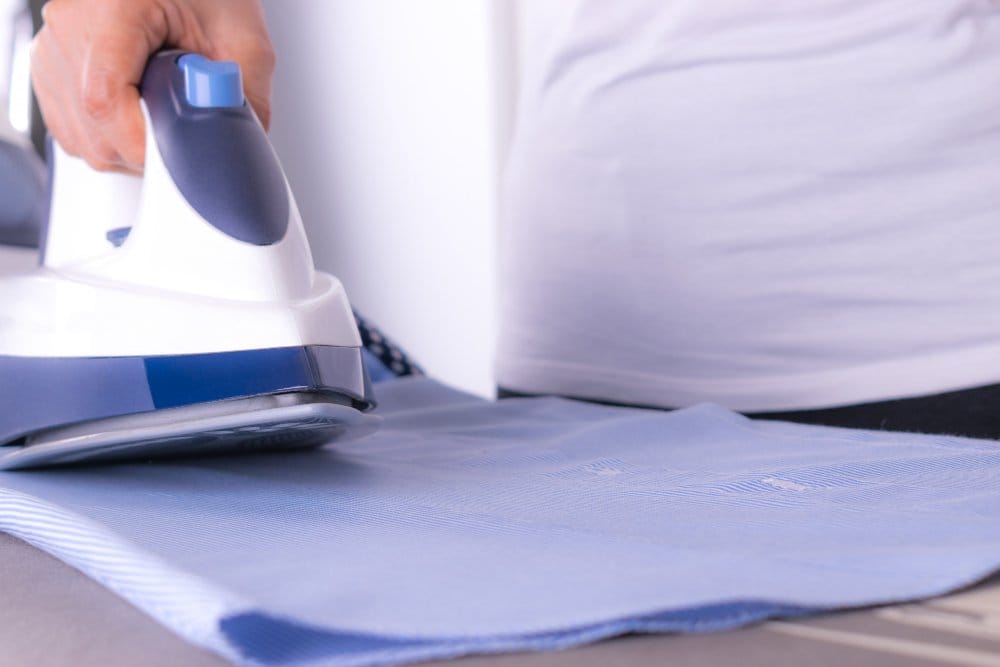
Safe ironing techniques for nylon fabric using controlled heat settings.
This is where more projects get ruined than almost anywhere else. Nylon melts at relatively low temperatures, and a hot iron applied directly to nylon fabric, even briefly, can cause permanent distortion, glazing, or actual holes.
The Non-Negotiable Rules
- Always use a pressing cloth between the iron and the nylon. A piece of cotton muslin works perfectly.
- Set your iron to the lowest heat setting, usually labeled Synthetic or Nylon.
- Never use steam directly on nylon. Steam at high temperature can cause water spots and distortion.
- Test on a scrap first every single time. Different nylon types have different heat tolerances.
- Press with brief, light contact rather than holding the iron in place.
- Let the fabric cool completely before moving it or sewing over pressed seams.
Finger Pressing: The Safer Alternative
For most nylon seam work, finger pressing is safer and often just as effective. Run your thumb and fingernail firmly along a seam allowance to open it flat. This works surprisingly well on lightweight nylon and completely eliminates the melting risk. A wooden seam roller or a smooth wooden clapper does the same job with a bit more force for heavier fabrics.
What If You Cannot Get a Crease?
Some nylons resist creasing entirely, particularly ripstop. For these, do not force it. Use clips or tape to hold seam allowances in place while you sew, rather than relying on a pressed crease to hold things flat. On bags and outdoor gear, a crease is usually less important than on garments anyway.
Troubleshooting Common Problems
Here are the problems sewists hit most often with nylon, along with the most direct fixes.
Seams are puckering
Loosen your thread tension slightly. Also try a longer stitch length. Puckering on nylon is almost always a tension or stitch length issue. Check that you are not pulling the fabric through the machine, which causes the thread to gather the seam.
Skipped stitches
Change the needle first; this fixes skipped stitches on nylon in the majority of cases. Use a sharp or Microtex needle, and make sure the needle is fully inserted into the needle clamp. If the problem continues, check tension and re-thread the machine completely.
Fabric is slipping and seams are uneven
Switch to a walking foot. If you are already using one, try placing tissue paper under the fabric as you sew. Also check that presser foot pressure is not too high. On coated nylon, switch to a Teflon or roller foot.
Fabric jammed into the machine at the start of a seam
Hold both thread tails firmly behind the presser foot as you begin. Start on a scrap piece and transition to your nylon. Increase your seam allowance so there is more fabric under the foot before you reach the start of your seam.
The fabric is melting or glazing under the iron
Your iron is too hot. Lower the temperature and always use a pressing cloth. If glazing has already occurred on a visible area, it cannot be fully reversed. This is one mistake you can only prevent, not fix.
The seam is leaking water even though the fabric is waterproof
Needle holes let water through on all fabrics, even coated nylon. Apply seam sealant to the wrong side of every seam. Let it cure completely before testing. You may need two coats for very fine stitching.
Thread keeps breaking
Check the needle, as a slightly bent or blunt needle is the usual cause. Also check that your thread tension is not too tight. Make sure you are not using cotton thread, which is more prone to breaking under the stress of sewing synthetic fabric.
The fabric is sticking to itself and difficult to handle
This is static. Lightly mist the fabric with water or wipe with a dryer sheet before working with it. Grounding yourself by touching a metal surface before handling the fabric also helps in very dry conditions.
For general sewing machine diagnosis, our sewing machine troubleshooting guide covers most common problems in detail.
Best Nylon Projects by Skill Level
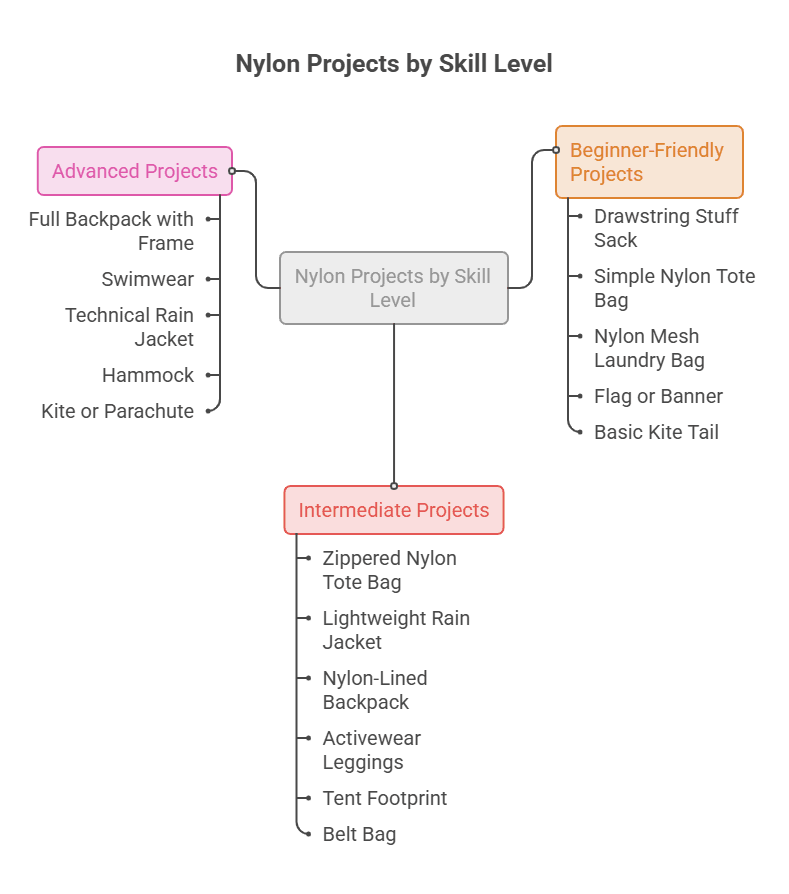
Visual guide to nylon fabric projects suitable for different sewing experience levels.
Not sure where to start? Here are project ideas organized by skill level, with notes on why each one works well as a first or next nylon project.
You have sewn before and are comfortable with straight seams, but nylon is new to you.
- Drawstring stuff sack
- Simple nylon tote bag (no zipper)
- Nylon mesh laundry or produce bag
- Flag or banner
- Basic kite tail
You are comfortable with nylon’s behavior and ready for zippers, linings, and more complex construction.
- Zippered nylon tote or crossbody bag
- Lightweight rain jacket or windbreaker
- Nylon-lined backpack
- Activewear leggings (nylon-spandex)
- Tent footprint or groundsheet
- Belt bag or fanny pack
You are confident with nylon and ready for projects that require precision, seam sealing, and multi-component construction.
- Full backpack with frame and straps
- Swimwear (nylon-spandex with boning)
- Technical rain jacket with taped seams
- Hammock or camping shelter
- Kite or parachute
Project Ideas in More Detail
Drawstring Stuff Sack
BeginnerRipstop nylon, straight seams, a drawstring casing, and a cord. This is the best first nylon project because it is simple, useful, and teaches you how nylon behaves without too many variables at once. Use it for camping gear, shoes, or anything you want to keep organized.
Zippered Tote Bag
IntermediateBallistic or CORDURA nylon for the shell, nylon taffeta for the lining. This project teaches zipper insertion on a flat panel, French seams for the interior, and strap attachment with bar tacks. A very practical bag that lasts for years.
Rain Jacket Shell
IntermediateRipstop or taffeta nylon with a DWR coating. This project involves a fitted pattern with sleeves, a hood, and a zipper front. Seam sealing is required on any seams that face the weather. One of the most satisfying nylon projects to wear.
Activewear Leggings
IntermediateNylon-spandex fabric, a stretch stitch or serger, and a ballpoint needle. Requires a leggings pattern and confidence working with stretch fabric. The key difference from other stretch fabric is that nylon-spandex needs slightly lower presser foot pressure to avoid stretching the fabric as you sew.
Fanny Pack / Belt Bag
IntermediateA trending project that uses a small amount of fabric, teaches zipper installation in a curved body, and shows you how to work with nylon webbing for straps and hardware. Very manageable in size, and the finished product gets daily use.
Technical Backpack
AdvancedCORDURA or ballistic nylon, multiple zippered compartments, padded back panel, and adjustable straps. Requires pattern making or a detailed commercial pattern, experience with hardware (buckles, D-rings), and the ability to sew through multiple thick layers at stress points.
For more sewing pattern inspiration and beginner-friendly project ideas, see our beginner-friendly sewing patterns guide and our overview of easy sewing projects for beginners.
Where to Buy Nylon Fabric
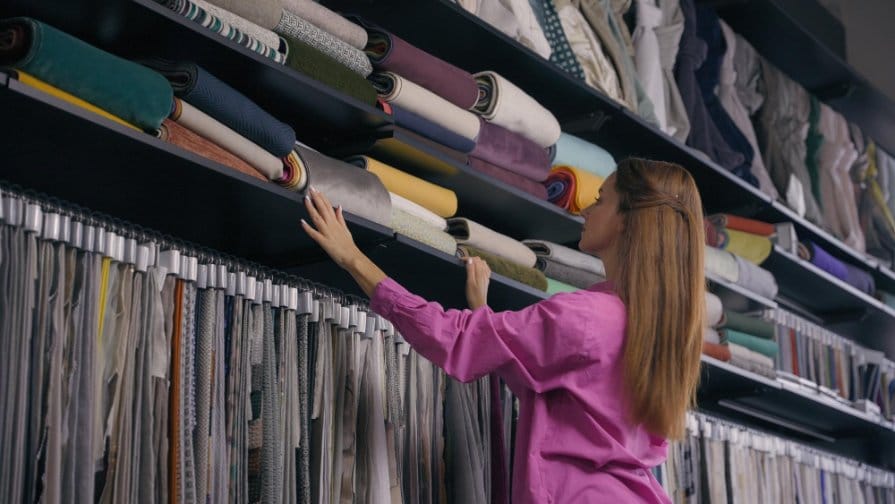
Fabric shopper exploring a wide selection of textile rolls, including nylon fabrics for creative projects.
Nylon fabric is widely available, but not all sources stock the same range. Here is a breakdown of the best places to buy, depending on what you are looking for.
Online Specialty Fabric Stores
For technical nylon and outdoor fabrics, specialty retailers are your best source. Seattle Fabrics is widely regarded as one of the best US sources for ripstop, CORDURA, coated nylon, and outdoor fabrics by the yard. They offer coated and uncoated nylon fabric by the yard, including a sample pack so you can feel the fabric before committing to a full cut.[4]
Mood Fabrics (moodfabrics.com) carries a broad range of nylon including fashion fabrics, tricot, and specialty varieties. Good for activewear and garment fabrics.
Vogue Fabrics (voguefabricsstore.com) offers nylon by the yard and is a reliable source for home sewists. Carries both fashion and technical varieties.
Local Fabric Stores
Joann Fabrics stocks nylon fabric, particularly ripstop and nylon-spandex blends, in most of its US locations. Selection varies by store, and technical outdoor nylon is less reliably stocked. Worth checking for basic varieties and for nylon-spandex for activewear projects.
What to Check Before Buying
- Denier: confirm the weight suits your project (see the denier guide in Section 2)
- Coating: is it coated or uncoated? DWR, PU, or silicone-coated nylons behave differently
- Width: most nylon fabrics come in 58-60 inch widths, but check before calculating your yardage
- Reviews: read what other sewists say about how it handles, especially for slippage and fraying
- Order a sample: for any project over $50 in materials, spend a few dollars on a swatch to test before committing
Need to calculate how much fabric to buy?
Use the Fabric Yardage Calculator to work out how many yards you need for your specific project before you order.
Caring for Your Finished Nylon Projects
Once you have put the work in to make something from nylon, it is worth knowing how to keep it looking good. Nylon is one of the easier synthetics to care for, but a few things can shorten its life if you are not careful.
| Care Step | What to Do | What to Avoid |
|---|---|---|
| Washing | Machine wash cold or warm on a gentle cycle. Use mild detergent. | Hot water, which can warp the fabric and degrade any DWR coating. |
| Activewear | Turn nylon-spandex garments inside out before washing to protect seams and surface. | Fabric softener, which coats the fibers and reduces moisture-wicking performance. |
| Drying | Air dry is always the safest option. Lay flat or hang away from direct sunlight. | High heat in the dryer. Even a medium heat setting can warp or melt nylon over time. |
| Stain removal | Treat stains promptly with cold water and a small amount of mild soap. Blot gently. | Rubbing aggressively, which can damage the weave or coating. |
| Storage | Store clean and dry. Loosely fold or roll rather than tightly compressing for long periods. | Prolonged direct sunlight, which causes yellowing and degrades nylon fiber over time. |
| Re-waterproofing | DWR coatings wear off with use and washing. Restore water repellency with a DWR spray after washing, applied while the fabric is still damp. | Ironing over DWR spray without a pressing cloth, as this can streak or damage the coating. |
For a broader look at caring for synthetic fabrics, our guide to caring for synthetic fabrics covers different fabric types side by side. You can also use the Care Symbol Decoder if you are ever unsure what the care icons on your fabric bolt mean.
Frequently Asked Questions
Can I sew nylon on a regular home sewing machine?
Yes. Most lightweight to medium-weight nylon fabrics sew fine on a standard home machine. You do not need an industrial machine. The key is using the right needle (sharp or Microtex), the right thread (polyester or nylon), and adjusting your stitch length and tension before you start. A walking foot attachment also makes a significant difference with slippery nylon.
What needle should I use for nylon fabric?
Use a sharp or Microtex needle. Size 70/10 for lightweight nylon like taffeta or fine ripstop. Size 80/12 for medium-weight fabrics. Size 90/14 for heavier ripstop or ballistic nylon. For nylon-spandex blends, switch to a ballpoint or jersey needle instead, as these slide between knit fibers rather than piercing them.
What thread should I use for sewing nylon?
100% polyester thread is the most practical choice for home sewists. It is strong, widely available, and works well with all types of nylon. 100% nylon thread is the technically superior choice for strength and stretch compatibility, but it can be harder to handle. Never use cotton thread with nylon; cotton is weaker than nylon and the seams will fail before the fabric does.
Why does my nylon keep slipping when I sew?
Nylon is smooth and has very little surface grip, which causes it to slide under the presser foot. The most effective fix is a walking foot, which feeds both layers of fabric at the same pace. Placing tissue paper underneath the fabric also helps the feed dogs grip. Using clips instead of pins and avoiding pulling the fabric through the machine are also important.
How do I stop nylon from fraying after cutting?
The main options are: serging the edges with an overlocker, sewing a narrow zigzag stitch along the raw edge, applying seam sealant with a cotton swab, or heat sealing by passing the edge quickly through a flame. Heat sealing is fast and very effective for outdoor fabrics and straps, but requires care and good ventilation.
Can I iron nylon fabric?
Yes, but with strict precautions. Always place a pressing cloth between the iron and the nylon. Use the lowest heat setting on your iron, labeled Synthetic or Nylon. Never use steam directly on nylon. Test on a scrap first. Finger pressing is a safer alternative for most seam work on nylon.
What stitch is best for sewing nylon?
For woven nylon (ripstop, taffeta, ballistic), a straight stitch at 2.5mm to 3mm works well. For nylon-spandex blends, use a zigzag stitch, a stretch stitch, or sew with a serger, as a straight stitch will pop when the garment is stretched. On stress points like strap attachments, use a bar tack or box stitch for added strength.
Do I need to pre-wash nylon before sewing?
For most woven nylons (ripstop, taffeta, ballistic), pre-washing is not necessary as these fabrics are pre-treated and do not shrink significantly. For nylon-spandex blends used in activewear, a gentle pre-wash is recommended to remove sizing residue and pre-shrink the spandex component before you cut your pattern pieces.
How do I make nylon seams waterproof?
Even coated waterproof nylon lets water through needle holes. To seal seams, apply a seam sealant product (such as Seam Grip or a similar product) to the wrong side of every seam using a small brush or cotton swab. Allow it to cure fully before testing, and apply a second coat if needed on any seams that face the rain directly.
Is nylon good for making bags?
Yes, it is one of the best fabric choices for bags. Nylon is strong, abrasion-resistant, lightweight, and water-resistant. Ripstop and ballistic nylon are particularly well-suited to bags and backpacks. CORDURA nylon is a certified high-performance variety used in premium outdoor bags and is available from specialty fabric retailers for home sewists.
Conclusion
Nylon has a learning curve. There is no point pretending otherwise. But most of the frustrations people have with this fabric come from the same small set of causes: the wrong needle, the wrong thread, tension that is too tight, or trying to push it through the machine too fast.
Once you sort those out on a scrap piece of fabric before your project, the actual sewing goes much more smoothly than most people expect. And the results are worth it. Nylon projects last. A bag you make from ballistic nylon will outlast any cotton or canvas equivalent. A rain jacket made from ripstop will keep you dry in weather that would ruin a cotton shell in minutes.
Key Takeaways
- Always test first. Sew a test seam on a scrap of your actual fabric before cutting into your project. Fix any issues there, not on the real thing.
- Use the right needle. Sharp or Microtex for woven nylon. Ballpoint for nylon-spandex. Change it if it has been in for more than a couple of projects.
- Thread matters. Polyester or nylon thread only. Never cotton.
- Get a walking foot. It is the single biggest improvement you can make for sewing nylon. It costs little and makes an immediate difference.
- Do not pull the fabric. Let the feed dogs and walking foot do the work. Pulling causes stretching, uneven seams, and puckering.
- Protect the edges. Nylon frays. Serge, zigzag, or heat seal cut edges, especially on lighter varieties.
- Use a pressing cloth every time. Nylon melts. There is no recovering from a melted patch on a finished project.
- Seal seams on waterproof projects. Needle holes let water through. Seam sealant is the fix.
- Start simple. A stuff sack or a flat tote bag teaches you how nylon behaves without too many variables. Build from there.
This is part of our nylon fabric series. The main nylon fabric guide covers the full picture including history, types, properties, comparisons with other fabrics, and sustainability. The other articles in the series are tailored for fashion and apparel students and small business owners sourcing nylon fabric.
Ready to start your first nylon project?
Use the Interactive Fabric Selector Tool to find the right nylon type for your project, or check the Sewing Machine Troubleshooting Guide if you run into issues along the way.
References
- MH Thread. (2025). Essential Guide to Stitching Nylon Fabric. mhthread.com
- Sewing Machine Fun. (2024). 13 Helpful Tips for Sewing Ripstop Nylon Fabric. sewingmachinefun.com
- Seamwork. (2023). How to Sew a Rain Jacket. seamwork.com
- Seattle Fabrics. (2025). Coated and Uncoated Nylon and Polyester Fabrics. seattlefabrics.com
Disclaimer: The sewing techniques and machine settings described in this article are general guidance for home sewists working with standard domestic sewing machines. Results vary depending on your specific machine, fabric, thread, and experience level. Always test on scrap fabric before cutting into your project. Heat sealing requires care and should be done in a well-ventilated space with appropriate precautions. Clothing Digest is not responsible for any outcomes resulting from the application of guidance provided in this article.