
The complete guide to nylon-spandex fabric: what it is, how it works, blend ratios, properties, uses, care, sustainability, and how it compares to every other stretch fabric on the market.
Think about the last time you put on a pair of leggings, pulled on a swimsuit, or slipped into a sports bra before a workout. There is a very good chance the fabric doing the work in all three of those garments was nylon-spandex. Not just any nylon. Not just any stretchy fabric. That specific combination of two synthetic fibers that has become the dominant material in performance apparel worldwide.
Nylon-spandex fabric shows up in more wardrobes, more sports kits, and more swimwear collections than almost any other textile blend. And yet most people wearing it have no real idea what makes it work, why it holds its shape after hundreds of washes, or why it feels so different from polyester-spandex sitting on the shelf next to it.
This guide covers all of it. We look at what nylon-spandex actually is, the science behind why it performs so well, how to choose the right blend ratio for different uses, and how it compares to its main competitors. If you want to understand nylon-spandex fully, this is the place to start.
If you are also interested in plain nylon fabric without the spandex component, our complete nylon fabric guide covers that in depth.
What Is Nylon-Spandex Fabric?
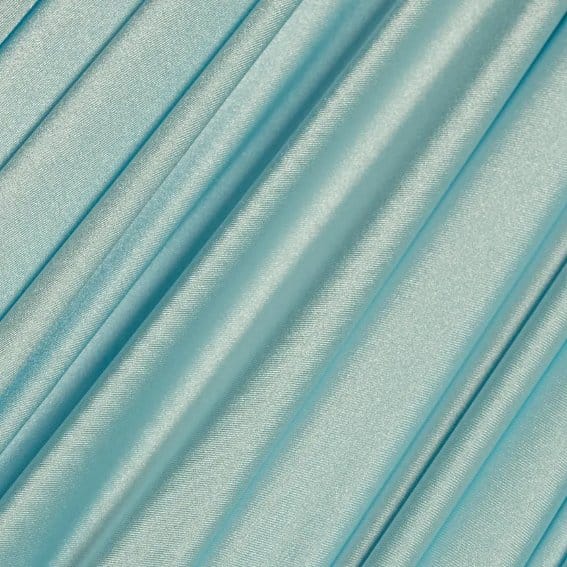
Nylon spandex fabric combines strength, stretch and comfort for versatile apparel applications.
Nylon-spandex fabric is a blended textile made from two synthetic fibers: nylon (a polyamide fiber) and spandex (an elastane fiber). Each fiber contributes something the other lacks, and together they produce a fabric that is stronger, stretchier, and more versatile than either fiber could be alone.
Nylon brings the structure: strength, durability, abrasion resistance, and a smooth, silky hand feel. Spandex brings the stretch: the ability to extend significantly in any direction and return completely to its original shape every single time.
The result is a four-way stretch fabric that moves with the body, supports it during activity, and snaps back without bagging or distorting. For any garment that needs to fit close to the body and maintain that fit through repeated wear and washing, nylon-spandex is one of the most effective materials available.
Labels to look for: Nylon-spandex may appear on garment labels in several forms: nylon/elastane, polyamide/spandex, polyamide/elastane, or nylon/Lycra. They all describe the same type of fabric. Lycra is a brand name for a premium spandex fiber made by The LYCRA Company; it is not a different fiber. In the US, the fiber is typically called spandex. In Europe and most of the rest of the world, it is called elastane.
Spandex, Elastane, and Lycra: Are They the Same?
Yes. All three terms refer to the same type of synthetic elastomeric fiber. Spandex is the generic US name, and cleverly, it is an anagram of the word “expands.” Elastane is the generic name used in Europe and on most international garment labels. Lycra is a brand name owned by The LYCRA Company (formerly part of DuPont), and it is the most well-known commercial version of the fiber worldwide.
When a brand says a garment contains Lycra, they are specifying that the elastane component is from a particular manufacturer known for premium quality and consistency. A garment with generic elastane or spandex will behave very similarly, but Lycra certification guarantees specific performance standards.
The History Behind the Blend
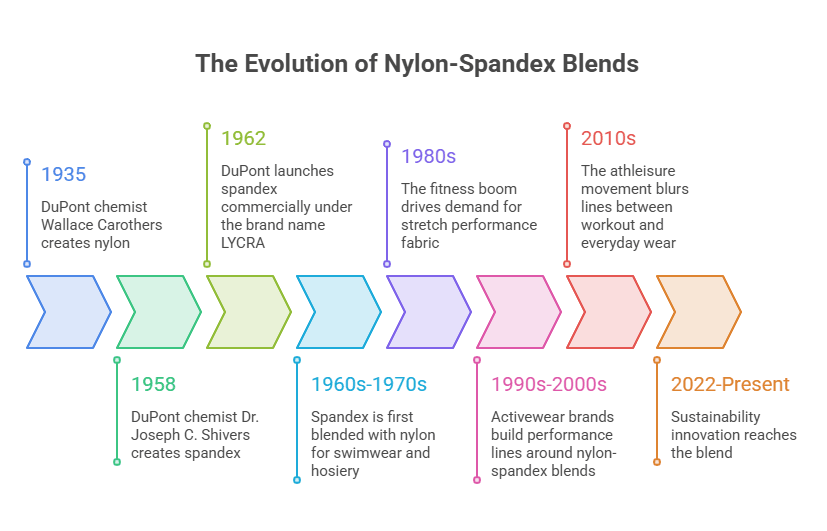
Historical evolution of nylon spandex fabric and its impact on the apparel industry.
To understand nylon-spandex, you need to understand where both fibers came from, because their histories are closely connected.
DuPont chemist Wallace Carothers creates nylon, the world’s first fully synthetic fiber. Originally designed to replace silk in stockings, nylon launches commercially in 1939 and becomes a global textile sensation.
DuPont scientists begin searching for a synthetic replacement for rubber in women’s foundation garments. Rubber-based elastic was heavy, prone to degrading, and difficult to work with in clothing construction.
DuPont chemist Dr. Joseph C. Shivers creates the first spandex fiber, initially codenamed “Fiber K.” The new elastomeric fiber can stretch up to 500% of its original length and recover completely without degrading. It is stronger, lighter, and more durable than any elastic thread then in use.[1]
DuPont launches Fiber K commercially under the brand name LYCRA, chosen by computer-generated naming. The name resonated immediately and became one of the most recognized fabric brand names in the world.
Spandex is first blended with nylon for swimwear and hosiery applications, where the combination of nylon’s strength and spandex’s stretch produces a far superior garment than either fiber alone. The nylon-spandex blend quickly becomes the standard for swimwear.
The fitness boom drives explosive demand for stretch performance fabric. Nylon-spandex leotards, leggings, and cycling shorts move from specialist athletic use into mainstream fashion. LYCRA becomes a household name synonymous with body-hugging stretch clothing.
Activewear brands including Nike, Adidas, and Under Armour build performance lines around nylon-spandex blends. Technical improvements in yarn texturizing and knitting produce softer, more breathable fabrics with better moisture management.
The athleisure movement blurs the line between workout wear and everyday clothing. Nylon-spandex leggings transition from gym to street. Brands like Lululemon build multi-billion-dollar businesses largely on premium nylon-spandex fabrics.
Sustainability innovation reaches the blend. ECONYL recycled nylon combined with spandex produces eco-friendly versions of the fabric without performance trade-offs. In 2025, The LYCRA Company and its partners open the first large-scale plant for bio-based spandex made from corn-derived materials in Iowa, aiming to cut the carbon footprint of elastane by nearly half.[2]
The nylon-spandex blend is now 60-plus years old and is arguably the most commercially successful fabric blend in the history of synthetic textiles. Its dominance in activewear, swimwear, and athleisure shows no sign of slowing.
How Nylon-Spandex Fabric Is Made
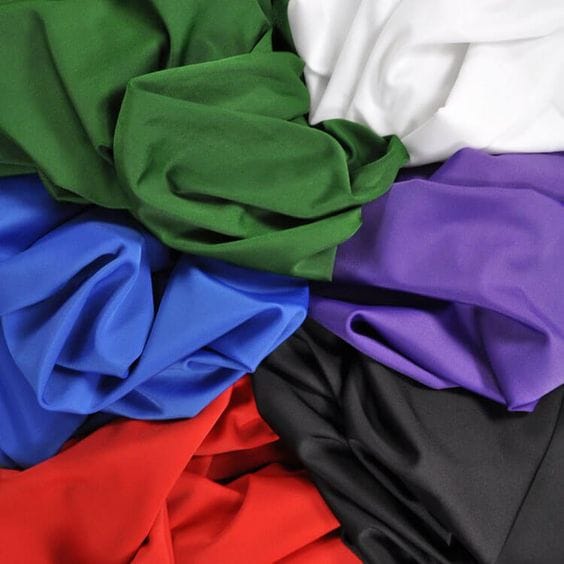
Overview of the manufacturing process used to create nylon spandex fabric blends.
The two fibers are manufactured separately and then combined in the knitting or weaving process. Understanding how each fiber is produced helps explain why the blend performs the way it does.
How Nylon Fiber Is Made
Nylon is produced by polymerizing petroleum-derived chemicals (caprolactam for Nylon 6, or hexamethylene diamine and adipic acid for Nylon 6,6) into long polymer chains. These chains are melted and extruded through a spinneret to produce continuous filaments, which are then drawn (stretched) to increase strength and aligned. The fineness of the yarn is measured in denier: lower denier means finer, softer fiber; higher denier means heavier, stronger fiber.
For use in activewear fabrics, nylon yarn is typically texturized after spinning, which introduces crimp or coil into the filaments to give the finished fabric a softer, more natural hand feel and better breathability compared to smooth flat-filament nylon.
How Spandex Fiber Is Made
Spandex is a polyurethane-based fiber produced through a process called solution dry spinning. The liquid polyurethane polymer is dissolved in a solvent and extruded through a spinneret into a heated chamber where the solvent evaporates, leaving behind solid elastomeric filaments. These filaments can be used as bare spandex yarn, or they can be wrapped (covered) with nylon yarn to improve handling, reduce tackiness, and enhance performance in specific applications.
How the Blend Is Created
In most nylon-spandex fabrics, the two fibers are combined during the knitting process. The spandex yarn is fed under tension alongside the nylon yarn as the fabric is knitted on circular knit or warp knit (tricot) machines. The spandex yarn is always under stretch as it enters the knitting zone; when the fabric is released from the machine, the spandex contracts, pulling the nylon fibers together and creating the stretch and recovery characteristic of the finished fabric.
The construction method matters enormously for the finished fabric’s performance:
- Circular knit, produces a tubular fabric with excellent two-way or four-way stretch and a smooth surface. Most activewear and swimwear fabric is circular knit.
- Warp knit (tricot), a flatter, more structured knit with good stretch and recovery, particularly in swimwear and lingerie applications. Warp knit nylon-spandex has a slightly different hand feel from circular knit versions of the same blend ratio.
Finishing
After knitting, the fabric goes through a series of finishing processes that significantly affect its final performance and feel:
- Heat setting: The fabric is held at a controlled temperature to stabilize its dimensions and lock in stretch recovery properties.
- Dyeing: Nylon-spandex is typically dyed with acid dyes, which bond to the nylon fiber. The spandex component accepts very little dye directly, so achieving consistent, even color in nylon-spandex fabric requires careful process control.
- Moisture-wicking finish: A chemical treatment that increases the fabric’s ability to move moisture away from the skin surface to the outer face for evaporation.
- Anti-chlorine treatment: Applied to swimwear fabrics to protect the spandex component from degradation by chlorine in pool water.
- UPF treatment: UV-protective finishes applied for outdoor activewear and swimwear, compensating for nylon’s relatively lower UV stability.
- Brushing or sueding: Mechanical surface treatment that raises fibers to create a softer, matte “peach skin” finish. Common in premium yoga wear and athleisure fabrics.
Blend Ratios: What the Numbers Mean
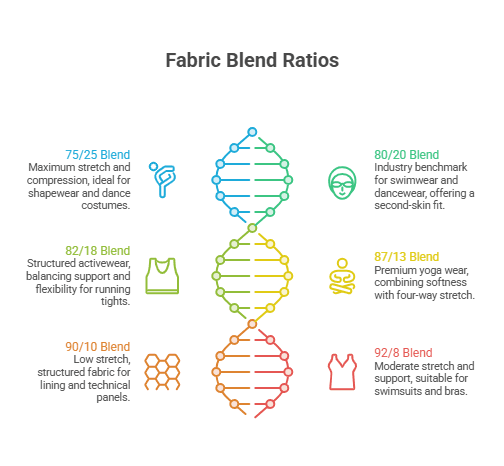
Understanding nylon spandex blend ratios and selecting the right fabric composition.
When you read a fabric label that says “80% nylon, 20% spandex” or “90% polyamide, 10% elastane,” those percentages directly determine how the fabric feels, how much it stretches, how compressive it is, and what it is best used for.
The first number is always the nylon percentage; the second is always the spandex. A higher spandex percentage means more stretch and compression. A higher nylon percentage means a firmer, more structured fabric with less stretch.
Choosing the right ratio: For swimwear and yoga pants, start with 80/20. For general activewear leggings and sports bras, 87/13 to 82/18 hits the sweet spot of stretch and support. For rash guards and technical panels, 90/10 gives more structure. For shapewear and gymnastics, 75/25 delivers the most stretch. If the ratio is not on the label, it is worth asking the supplier before you buy for production.
Key Properties and Characteristics
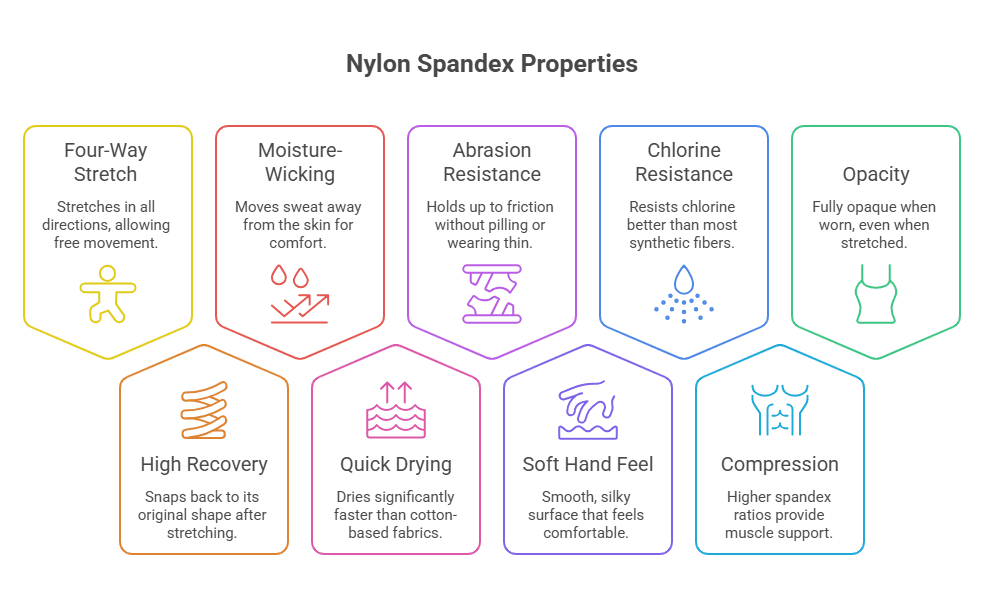
Essential properties that make nylon spandex a popular performance fabric.
Stretches in all directions: lengthwise, crosswise, and diagonally. This is what allows garments to move freely with the body in any direction without pulling or restricting.
Snaps back to its original shape after every stretch. Quality nylon-spandex retains its shape through hundreds of wears and washes without bagging or distorting.
Moves sweat away from the skin surface to the outer face of the fabric where it can evaporate. Keeps the wearer drier and more comfortable during physical activity.
Because nylon absorbs very little moisture, nylon-spandex dries significantly faster than cotton-based stretch fabrics. Critical for swimwear and high-intensity activewear.
Nylon’s fiber strength means the fabric holds up to friction from equipment, gym mats, and repeated movement without pilling or wearing thin. Significantly better than polyester-spandex equivalents.
Nylon was originally developed as a silk substitute. In a finely textured knit, nylon-spandex has a smooth, silky surface that feels comfortable against the skin and does not scratch or irritate during movement.
Nylon resists chlorine far better than most synthetic fibers. Critical for swimwear that will be used in chlorinated pools. Anti-chlorine finishes (like Xtra Life LYCRA) extend this resistance significantly.
Higher spandex ratios (15-20%+) produce noticeable compression, which can support muscles during activity. The degree of compression is controllable through both the blend ratio and the knit construction.
Quality nylon-spandex at appropriate GSM for its end use should be fully opaque when worn, even when stretched. This is one of the key quality differentiators between premium and budget versions of the fabric.
GSM: The Weight That Matters
GSM (grams per square meter) is the weight measurement for finished nylon-spandex fabric. It has a direct effect on how the fabric performs and what it is suitable for:
| GSM Range | Feel | Best For |
|---|---|---|
| 120-180 GSM | Lightweight, thin, semi-sheer when stretched at lower end | Lightweight activewear, summer running tops, dancewear, lingerie |
| 180-220 GSM | Medium weight, good balance of stretch and coverage, opaque | General activewear, yoga pants, gym leggings, sports bras, swimwear |
| 220-280 GSM | Substantial feel, good compression, very opaque | High-impact activewear, compression leggings, structured sportswear |
| 280 GSM+ | Heavy, compressive, very structured | Compression garments, shapewear, medical-grade supports |
Most mainstream activewear leggings and sports bras use fabric in the 180-250 GSM range. Swimwear typically uses 180-220 GSM. Lightweight summer activewear and dance pieces often use 120-160 GSM.
The Opacity Issue
One of the most searched questions about nylon-spandex is whether it is see-through when stretched. The answer depends on three things: GSM (heavier is more opaque), knit density (tighter knit is more opaque), and the color (lighter colors, particularly white and pastels, are more transparent than darker ones). Before cutting into fabric for any close-fitting garment, always do a squat test with the actual fabric in the colors you plan to use.
Nylon-Spandex vs Other Stretch Fabrics
Nylon-Spandex vs Polyester-Spandex
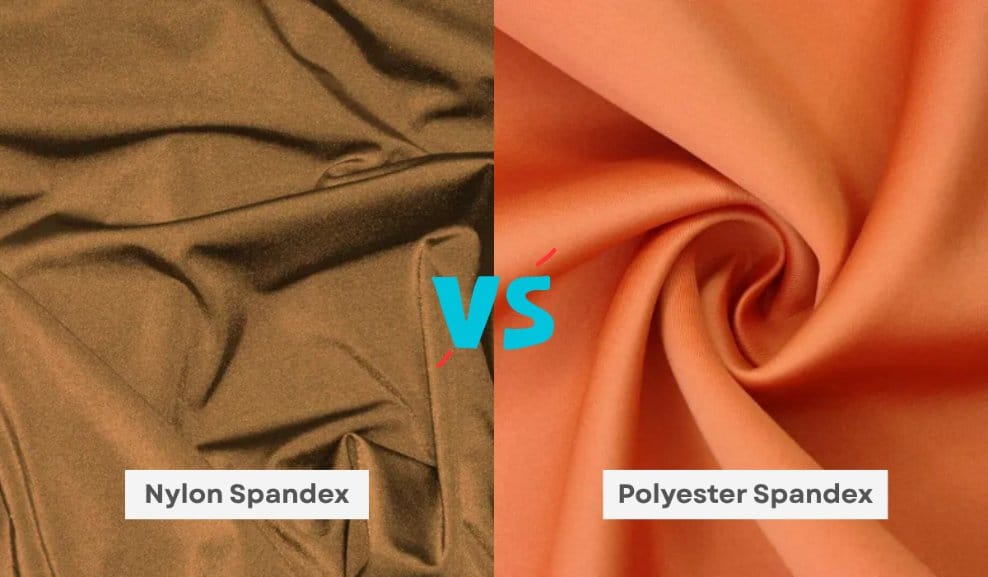
Understanding the differences between nylon spandex and polyester spandex fabric blends.
This is the most common and most important comparison in the stretch fabric world. These two blends dominate activewear and swimwear, and they are often sold side by side. Here is how they actually differ:
| Feature | Nylon-Spandex | Polyester-Spandex |
|---|---|---|
| Hand Feel | Softer, silkier, more luxurious | Slightly rougher, more synthetic feel (improving in premium versions) |
| Stretch and Recovery | Better recovery, more elastic | Good, but nylon edges it, especially after repeated wear |
| Abrasion Resistance | Higher | Good, but nylon is more resistant |
| Moisture Wicking | Good, dries quickly | Excellent, dries faster than nylon |
| UV Resistance | Lower, needs a UPF finish for outdoor use | Higher, more naturally UV stable |
| Chlorine Resistance | Better, naturally more resistant to pool water | Lower (though treated polyester can match nylon for chlorine resistance) |
| Color Retention | Good | Better, holds color longer under UV exposure |
| Sublimation Printing | Not suitable, nylon does not accept sublimation dye | Excellent; the standard for printed activewear |
| Cost | Generally more expensive | Usually cheaper |
| Best For | Yoga wear, swimwear, premium athleisure, lingerie, dancewear | Running gear, printed activewear, cycling, outdoor sports, budget performance wear |
The simple rule: If softness, feel against the skin, and stretch recovery are the priorities, nylon-spandex is the better choice. If drying speed, UV resistance, printed designs, or cost are the priorities, polyester-spandex is the stronger option.
Nylon-Spandex vs Cotton-Spandex
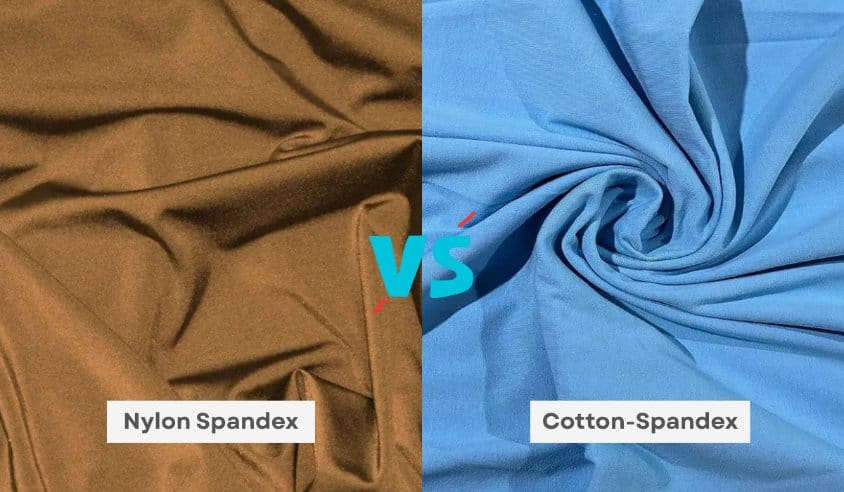
Comparing nylon spandex and cotton spandex fabrics for activewear, casual clothing and performance garments.
Cotton-spandex is a popular choice for everyday casual wear and light-activity garments. It feels natural, is breathable, and is comfortable for prolonged wear. However, it falls well short of nylon-spandex for any performance application.
| Feature | Nylon-Spandex | Cotton-Spandex |
|---|---|---|
| Breathability | Moderate (depends on knit structure) | High, natural fiber allows better air flow |
| Moisture Management | Excellent, wicks and dries fast | Poor for performance, absorbs sweat and stays damp |
| Durability | Much higher | Good for casual use; wears faster under athletic stress |
| Stretch Recovery | Excellent | Poor over time, cotton stretches out and loses shape |
| Weight When Wet | Stays light | Heavy and uncomfortable when saturated with sweat |
| Best For | All performance applications | Casual everyday wear, low-impact movement, comfort clothing |
Cotton-spandex is not a suitable substitute for nylon-spandex in high-intensity activewear or swimwear. It belongs in a different product category entirely.
Durability Comparison: Stretch Fabric Abrasion Resistance
Comparative abrasion resistance ratings based on general textile industry performance data. Illustrative only.
Is Nylon-Spandex Good For…?
Is Nylon-Spandex Good for Swimwear?
Yes, it is the standard fabric for swimwear. Nylon-spandex in an 80/20 blend is the industry benchmark for swimsuits because it combines chlorine resistance, excellent stretch recovery, opacity when wet, a flattering drape, and a silky hand feel. It holds its shape after repeated exposure to chlorine, salt water, and sunscreen in a way that cotton and most other fabrics do not.
For competitive swimwear that sees heavy pool use, look for fabric with an anti-chlorine treatment such as Xtra Life LYCRA certification. Standard nylon-spandex without a chlorine-resistant finish will still perform well in recreational use but will degrade faster in training environments where swimmers are in the pool for hours every day.
Is Nylon-Spandex Good for Yoga Pants and Leggings?
It is arguably the best fabric for this application. The combination of a buttery soft feel, full opacity under all conditions, excellent stretch and recovery, and good moisture management makes nylon-spandex (particularly the 87/13 blend) the fabric of choice for premium yoga wear and athleisure leggings. Brands like Lululemon built their reputation largely on premium nylon-spandex fabrics.
Is Nylon-Spandex Good for Sports Bras?
Yes. The combination of stretch for unrestricted movement, recovery for consistent support, moisture-wicking for comfort during exercise, and durability for frequent washing makes it an ideal sports bra fabric. The blend ratio matters here: 82/18 or 87/13 gives the best balance of stretch and structural support for medium-to-high-impact activities.
Is Nylon-Spandex Good for Activewear in Hot Weather?
This depends on the knit construction. A standard circular knit nylon-spandex is not as breathable as a mesh or open-knit construction of the same fiber. For hot weather, look for nylon-spandex with an open knit, perforated panels, or a specific moisture-wicking finish. The fiber itself manages moisture well, but breathability comes from the construction, not the raw fiber content alone.
Is Nylon-Spandex Good for Everyday Wear?
Increasingly yes. The athleisure trend has brought nylon-spandex into everyday clothing categories that used to be dominated by cotton and denim. Comfortable, stretch chinos, casual jumpsuits, and smart-casual trousers using nylon-spandex blends are now mainstream. The fabric’s shape retention and wrinkle resistance make it practical for daily wear, and its easy care makes it more manageable than natural fabrics that need careful laundering.
Comparing nylon-spandex fabric options for your project?
Use the Interactive Fabric Selector Tool to narrow down the right fabric type and weight for your specific end use.
What Is Nylon-Spandex Used For?
The number of product categories that rely on nylon-spandex is broader than most people realize.
| Category | Specific Products | Typical Blend |
|---|---|---|
| Swimwear | Bikinis, one-pieces, competitive swimsuits, trunks, rash guards | 80/20 to 85/15 |
| Activewear | Leggings, yoga pants, sports bras, gym shorts, cycling shorts, compression tights | 80/20 to 87/13 |
| Athleisure | Casual leggings, stretch trousers, performance casual tops | 87/13 to 90/10 |
| Dancewear | Leotards, unitards, ballet tights, dance shorts | 80/20 to 75/25 |
| Lingerie and Hosiery | Bras, underwear, bodysuits, tights, stockings, shapewear | 80/20 to 92/8 |
| Sportswear | Team jerseys, running gear, tennis skirts, football tights | 82/18 to 90/10 |
| Medical and Compression | Compression socks, graduated compression tights, support garments | 75/25 to 80/20 |
| Outerwear Linings | Stretch lining panels in jackets and trousers | 90/10 to 92/8 |
| Maternity | Maternity leggings, belly bands, support garments | 80/20 to 82/18 |
For more context on how nylon-spandex fits into the wider landscape of nylon fabric types and applications, see our guide to nylon fabric. For a look at the full range of stretchy fabrics including alternatives to nylon-spandex, our guide to stretchy fabrics covers the wider category.
Pros and Cons of Nylon-Spandex Fabric
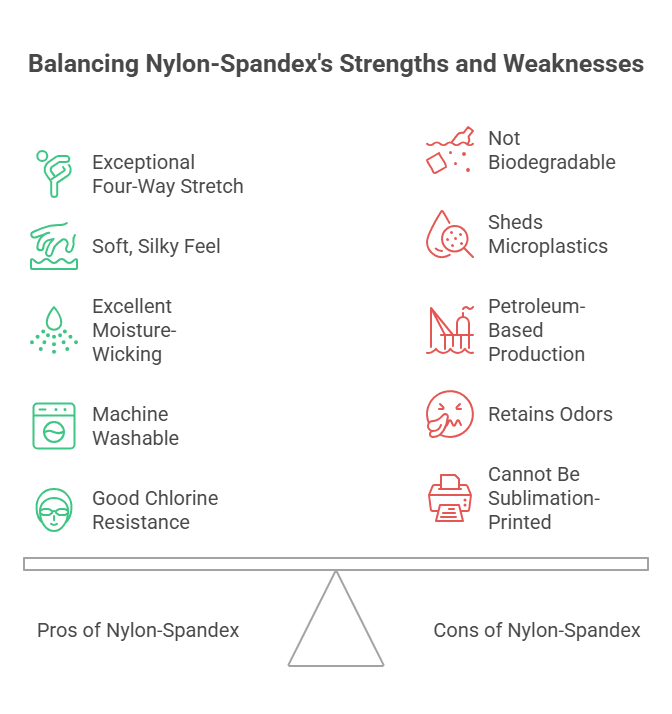
Balanced overview of the strengths and limitations of nylon spandex fabric.
Pros
- Exceptional four-way stretch and recovery
- Very soft, silky feel against the skin
- Strong and durable, resists pilling and abrasion
- Excellent moisture-wicking performance
- Quick-drying compared to cotton blends
- Maintains shape through repeated wear and washing
- Good chlorine resistance for swimwear use
- Wide range of weights and finishes available
- Machine washable and generally easy to care for
- Wrinkle-resistant, holds its appearance well
Cons
- Not biodegradable
- Petroleum-based, significant environmental cost to produce
- Sheds microplastics in every wash
- Can feel warm in hot weather without open-knit construction
- Degrades under prolonged UV exposure without UPF finish
- Retains odors after intensive activity
- More expensive than polyester-spandex alternatives
- Cannot be sublimation-printed (unlike polyester)
- Heat-sensitive, high temperatures damage the spandex component
- Spandex component makes the blend very difficult to recycle
Is Nylon-Spandex Safe for Your Skin?
For most people wearing it in normal conditions, nylon-spandex is perfectly safe. It is used in swimwear, underwear, and close-fitting activewear without issue for the vast majority of wearers. There are some things worth knowing, though.
For People with Sensitive Skin
Some individuals with sensitive skin, eczema, or synthetic fabric allergies may experience irritation from nylon-spandex, particularly in warm or sweaty conditions. The issue is usually not the fiber itself but a combination of trapped heat and moisture against the skin, plus potential reactions to dyes or finishing chemicals used in production. If you have sensitive skin, look for nylon-spandex with an OEKO-TEX Standard 100 certification, which tests for harmful substances in the finished fabric.
For Babies and Young Children
Nylon-spandex is not generally recommended for garments worn directly against a baby or young child’s skin. Natural fibers like cotton are the standard recommendation for infant clothing. Nylon-spandex is appropriate for children’s swimwear, rash guards, and activewear where its performance properties are needed, but not for everyday wear against sensitive infant skin.
Odor Retention
Nylon-spandex can retain body odors after intensive exercise. This is a real issue with synthetic fabrics in general. The fiber does not absorb odor the way cotton does, but bacteria that cause odors can adhere to synthetic fiber surfaces. An antimicrobial finish (common in premium activewear fabrics) significantly reduces this problem. Washing nylon-spandex activewear promptly after use, inside out, without fabric softener, is the most effective way to manage odor in garments without an antimicrobial treatment.
Fabric softener warning: Never use fabric softener on nylon-spandex activewear or swimwear. Fabric softener coats the fiber surface, reducing moisture-wicking performance, degrading the spandex component over time, and causing the fabric to lose its stretch recovery. It also traps odors rather than eliminating them. Mild detergent and cold water is all nylon-spandex needs.
How to Care for Nylon-Spandex Fabric
Proper care techniques help maintain the stretch and performance of nylon spandex fabrics.
Nylon-spandex is not difficult to care for, but it is unforgiving of heat. The spandex component degrades at relatively low temperatures, and damage from heat is permanent. Get this right and the fabric will last for years.
| Care Step | What to Do | What to Avoid |
|---|---|---|
| Washing | Machine wash cold (max 30C / 86F) on a gentle or delicate cycle. Turn garments inside out to protect the outer surface. | Hot water. It breaks down spandex fibers and permanently reduces stretch and recovery. |
| Detergent | Use a mild detergent. Less is more. Some activewear-specific detergents are formulated to remove odors without damaging stretch fabrics. | Fabric softener; it coats the fibers, kills moisture-wicking, and degrades spandex over time. Bleach damages both nylon and spandex. |
| Drying | Air dry flat or hang dry away from direct sunlight. This is the single most important care instruction for extending the life of nylon-spandex garments. | Tumble drying on any heat setting. Even low heat damages spandex over time. Direct sunlight causes yellowing and UV degradation. |
| Swimwear | Rinse in cold fresh water immediately after use in chlorinated or salt water. This removes chemicals and minerals before they can degrade the fabric. Then lay flat to dry. | Sitting in a damp swimsuit, chlorine and salt water concentration increases as water evaporates, accelerating fabric degradation. Wringing out; this stresses the spandex fibers. |
| Ironing | Do not iron unless absolutely necessary. If you must, use the lowest setting with a pressing cloth between the iron and the fabric. | Direct heat from an iron on any setting. Nylon melts and spandex degrades. There is no recovering from a melted patch. |
| Storage | Store clean and completely dry. Loosely folded or in a drawer. Keep away from direct sunlight for long-term storage. | Storing damp, mildew can grow on the fabric surface even though nylon resists it. Tight compression storage for extended periods can affect spandex recovery. |
Microplastic tip: Every wash of nylon-spandex (and any synthetic stretch fabric) releases microplastic fibers into the water system. Washing in a Guppyfriend bag captures a significant proportion of these fibers before they enter the drain. Washing on a cold gentle cycle also reduces the number of fibers shed compared to a hot agitated wash.
For a broader guide to caring for synthetic fabrics, our guide to caring for synthetic fabrics is a useful companion. The Care Symbol Decoder tool can help you interpret garment care labels if you are unsure what any symbol means.
Nylon-Spandex and Sustainability
Nylon-spandex is not an environmentally friendly fabric in its conventional form. Both components are petroleum-derived, both are non-biodegradable, and both shed microplastics. The situation is more complicated than for plain nylon, though, because spandex creates a specific recycling problem that plain nylon does not have.
The Spandex Recycling Problem
Even a small percentage of spandex in a fabric blend can make the whole fabric very difficult to recycle. Spandex has a fundamentally different chemical structure from nylon, and when the two fibers are knitted together, separating them for recycling is technically challenging at scale. This means that most nylon-spandex garments end up in landfill at end of life, where the spandex component will persist for generations without biodegrading.
This is one of the most significant unresolved sustainability issues in the activewear and swimwear sectors. The industry produces enormous volumes of nylon-spandex fabric every year, and very little of it is recycled.
Recycled Nylon-Spandex Options
The most viable current solution is using recycled nylon as the base fiber, even if the spandex component remains virgin. Fabrics made from ECONYL recycled nylon blended with spandex are now widely available and used by brands including Patagonia, Gucci, Adidas, and many sustainable swimwear brands. ECONYL recycled nylon combined with spandex reduces the production-side environmental footprint dramatically compared to fully virgin fiber fabric, even though the end-of-life problem remains.[3]
Bio-Based Spandex
In 2025, a major development occurred in the spandex sustainability story. The LYCRA Company, in collaboration with Qore (a biotech venture backed by Cargill), opened the first large-scale commercial plant in Iowa producing a bio-based spandex ingredient derived from corn sugar rather than petroleum. The resulting LYCRA fiber is approximately 70% bio-based in content while being identical in performance to conventional spandex. The process aims to cut the carbon footprint of elastane production by nearly half.[2]
The Microplastics Issue
Like all synthetic stretch fabrics, nylon-spandex sheds microplastic fibers every time it is washed. These fibers pass through most washing machine filters and water treatment systems, eventually reaching waterways and ocean environments. Using a Guppyfriend washing bag, washing on cold gentle cycles, and washing less frequently all help reduce the volume of microplastics shed, though none of these measures eliminates the issue entirely.
What to Look for When Buying
- ECONYL certification or GRS (Global Recycled Standard) label, confirms the nylon component is recycled
- OEKO-TEX Standard 100, confirms the fabric has been tested for harmful substances
- Bluesign certification, covers resource efficiency and environmental standards at manufacturing level
- Quality that lasts, a garment that lasts 5 years is far more sustainable than a cheap version replaced every 6 months
The Market: Why This Fabric Is Everywhere
The numbers behind the nylon-spandex and stretch fabric market explain why this blend dominates performance apparel in a way that is hard to overstate.
The spandex market is projected to grow from $6.69 billion in 2025 to $15.03 billion by 2035, driven primarily by activewear and athleisure demand.[4] Four-way stretch spandex holds approximately 67% of the spandex fabric market in 2025, reflecting the dominance of performance-oriented end uses where nylon-spandex is the primary choice.
The Athleisure Effect
The shift from activewear to athleisure over the past decade has been one of the most significant fabric market stories in recent history. Consumers who previously bought nylon-spandex only for workouts began wearing it to work, to social occasions, and for travel. This expansion has pulled the fabric into product categories, smart-casual trousers, casual dresses, everyday jumpsuits; that were previously dominated by woven natural fabrics. The global activewear market, of which nylon is a significant component, was valued at over $430 billion in 2025.
Key Industry Players
The global spandex supply chain is dominated by a small number of major producers. The LYCRA Company (formerly Invista, previously DuPont) remains the premium brand standard. Other major producers include Hyosung Corporation (South Korea), Asahi Kasei Corporation (Japan), Zhejiang Huafon Spandex, and Toray Industries. Asia-Pacific accounts for approximately 60-65% of global spandex production, with China being the largest single producer of spandex fiber worldwide.
Frequently Asked Questions About Nylon-Spandex Fabric
What is nylon-spandex fabric made of?
Nylon-spandex is a blended fabric made from two synthetic fibers: nylon (a polyamide polymer derived from petroleum) and spandex (an elastomeric polyurethane-based fiber, also called elastane or Lycra). The blend combines nylon’s strength, durability, and smooth feel with spandex’s exceptional stretch and recovery. On garment labels, you may see it listed as nylon/spandex, polyamide/elastane, polyamide/Lycra, or other combinations of these names.
What is the best nylon-spandex blend ratio?
It depends on the end use. For swimwear and dancewear, 80/20 (80% nylon, 20% spandex) is the industry standard, offering maximum stretch and a close fit. For yoga pants and premium athleisure leggings, 87/13 is widely regarded as the premium choice: soft, stretchy, and very comfortable. For general activewear, anywhere from 82/18 to 87/13 works well. For more structural or technical applications, 90/10 to 92/8 provides less stretch with more support.
Is nylon-spandex the same as Lycra?
No, but the term is often used loosely as if it were. Lycra is a brand name for a premium spandex (elastane) fiber made by The LYCRA Company. When a fabric is described as “nylon-Lycra,” it means nylon blended with Lycra-branded spandex. Nylon-spandex and nylon-Lycra describe the same type of fabric; the presence of the Lycra brand name indicates that the spandex component meets that brand’s specific quality and performance standards.
Is nylon-spandex better than polyester-spandex?
Neither is universally better. Nylon-spandex is softer, more elastic, and better for swimwear and premium yoga wear. Polyester-spandex dries faster, holds color better under UV exposure, handles sublimation printing well, and is generally cheaper. For most swimwear and high-end athleisure, nylon-spandex is the preferred choice. For running gear, printed activewear, and performance sportswear where drying speed matters most, polyester-spandex is often the stronger option.
Does nylon-spandex shrink?
Nylon-spandex has very low shrinkage in cold to warm water washing. The main risk is heat: high temperatures in the dryer or washing machine cause the spandex component to contract and lose elasticity permanently. Always wash cold and air dry to maintain the fabric’s original fit and stretch. A garment that feels like it has “shrunk” after washing has usually had its spandex degraded by heat, not actually shrunk.
Is nylon-spandex see-through?
It depends on the GSM (weight) and knit density of the specific fabric. Heavier fabrics (200 GSM and above) in a tight knit are opaque. Lighter fabrics and pale colors can be semi-transparent, especially when stretched. Before cutting into fabric for leggings or yoga pants, always do a stretch test and hold the fabric up to light. Light colors in any GSM need more careful checking than dark colors.
Can you iron nylon-spandex?
Generally no. Both nylon and spandex are heat-sensitive. Nylon melts at relatively low temperatures and spandex loses its elasticity when overheated. If a garment absolutely needs pressing, use the lowest setting possible with a pressing cloth between the iron and the fabric, and work quickly. In most cases, hanging the garment after washing is sufficient to remove any creasing.
How long does nylon-spandex last?
With proper care, a quality nylon-spandex garment should last several years of regular use. The main things that shorten its life are heat (tumble drying, hot washing), fabric softener, chlorine without anti-chlorine treatment, and UV exposure without a UPF finish. Washing cold, air drying, and avoiding fabric softener are the three most important things you can do to maximize the lifespan of nylon-spandex garments.
Is nylon-spandex sustainable?
Conventional nylon-spandex is not sustainable: both fibers are petroleum-based, non-biodegradable, and shed microplastics in every wash. The spandex component also makes the blend very difficult to recycle. The most meaningful improvement available now is choosing fabrics made with recycled nylon (such as ECONYL) blended with spandex. In 2025, bio-based spandex from corn-derived materials became commercially available for the first time, offering a lower-carbon alternative to petroleum-based spandex. Neither solution is perfect, but both are meaningfully better than fully virgin fiber equivalents.
Why does nylon-spandex smell after working out?
Synthetic fabrics including nylon-spandex can harbor odor-causing bacteria on their fiber surfaces. Unlike cotton, which absorbs and disperses body oils, nylon fibers can allow bacterial buildup on the surface over time. Premium activewear fabrics often include an antimicrobial finish to address this. For garments without such a finish, washing promptly after use, inside out, in cold water without fabric softener, is the most effective approach. Allowing activewear to air out after use rather than going straight into a laundry bag also helps significantly.
Conclusion
Nylon-spandex has earned its position as the dominant fabric in performance apparel through genuine merit. The combination of nylon’s strength, durability, and soft hand feel with spandex’s stretch and recovery produces a fabric that does things no other blend can quite match, particularly in swimwear and premium yoga wear.
It is not without downsides. The environmental cost of conventional nylon-spandex is real, the recycling challenge is significant, and the microplastics issue affects every synthetic stretch fabric on the market. Knowing these things does not mean avoiding nylon-spandex; it means choosing it where it truly performs best, specifying recycled versions where available, caring for it properly to maximize lifespan, and being honest about the trade-offs.
Key Takeaways
- Nylon-spandex is a blend of nylon (polyamide) and spandex (elastane/Lycra). On labels, look for nylon/elastane, polyamide/spandex, or nylon/Lycra.
- The blend ratio determines performance: 80/20 for maximum stretch (swimwear, dancewear), 87/13 for premium feel (yoga, athleisure), 90/10 for structure (technical panels, linings).
- Nylon-spandex is softer, more elastic, and more abrasion-resistant than polyester-spandex. Polyester-spandex dries faster, holds color better under UV, and suits sublimation printing.
- The fabric wicks moisture, dries quickly, resists chlorine, and maintains its shape over hundreds of wears and washes when cared for correctly.
- Care is straightforward but heat-sensitive: cold wash, no fabric softener, air dry. Heat is the main enemy of spandex.
- Conventional nylon-spandex is not sustainable. Recycled nylon (ECONYL) blended with spandex is the best current option. Bio-based spandex became commercially available in 2025.
- The global spandex market was valued at $6.69 billion in 2025 and is projected to reach $15 billion by 2035, driven by activewear, athleisure, and swimwear demand.
This is the first part in our nylon-spandex series. Coming next: dedicated guides for home sewists working with nylon-spandex, fashion and apparel students studying stretch fabric technology, and small business owners sourcing and selling nylon-spandex products.
References
- National Inventors Hall of Fame. (2024). Joseph Shivers, Inventor of Spandex / Lycra. invent.org
- SpandexByYard. (2025). History and Evolution of Spandex in Fashion. spandexbyyard.com
- Sportek International. (2025). Eco-Friendly Spandex Fabrics: Recycled Spandex Is the Future. sportek.com
- Market Research Future. (2026). Spandex Market Size, Share, Growth by 2035. marketresearchfuture.com
Disclaimer: The information in this article is provided for general educational and informational purposes only. Fabric properties, market figures, and sustainability data can vary by manufacturer, product grade, and testing methodology. This article does not constitute professional textile, medical, or environmental advice. Always check garment care labels and consult manufacturer guidance for specific products. Clothing Digest is not responsible for any decisions made based on the information provided here.