
The everyday fiber behind roughly nine out of ten cotton products you own
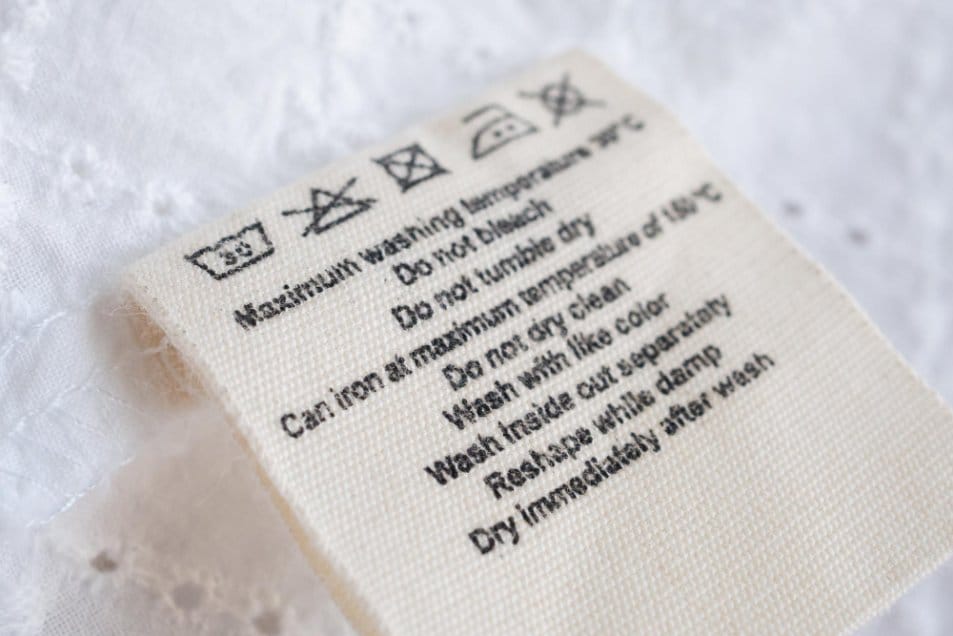
Check the tag on almost any cotton item you own right now, a t-shirt, a pair of jeans, a bedsheet, and there’s a very good chance it started life as upland cotton. You’ve likely never seen the term on a single label, yet it’s quietly behind the vast majority of cotton in the world.
This is the final piece in our series on cotton quality terms, and in some ways the most important one. Everything we’ve covered so far, combing, ring-spinning, mercerizing, thread count, GSM, even the Supima trademark, is really a story about what happens to this one fiber.
This guide covers what upland cotton actually is, why it dominates the market so completely, and how a plant most people have never heard of ends up in nearly everything they wear.
Short answer: Upland cotton (Gossypium hirsutum) is the species behind roughly 90% of the world’s cotton and about 95% of cotton grown in the US. It’s what people mean by “regular cotton.” It isn’t a quality grade on its own, it’s a plant species that spans a huge quality range depending on how it’s grown, graded, and processed.
Table of Contents
What Upland Cotton Actually Is
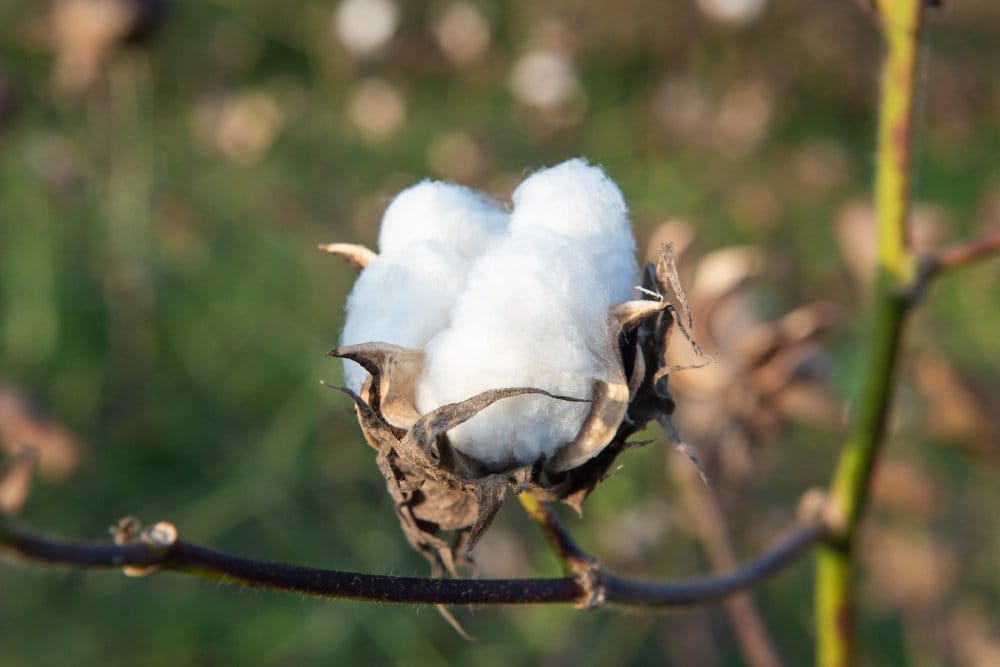
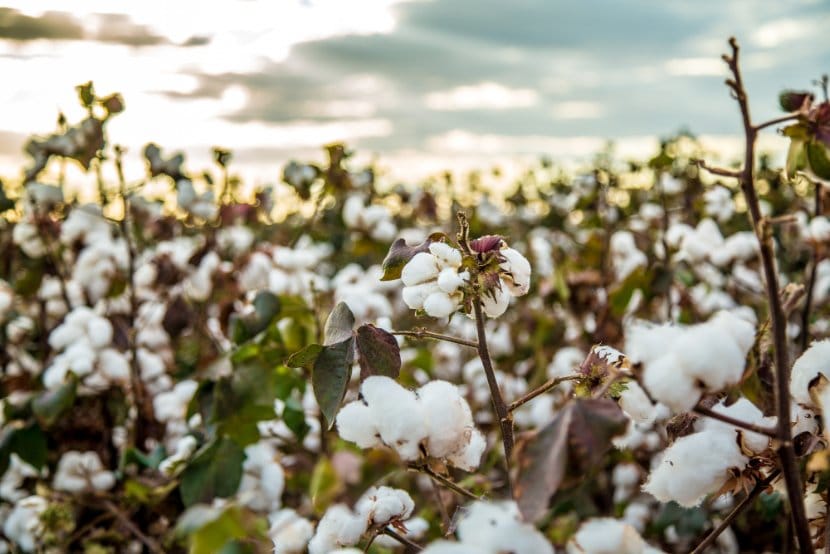
Upland cotton is the common name for Gossypium hirsutum, one of four cotton species grown commercially in the world and by far the most widely planted. It’s also sometimes called Mexican cotton, since it’s native to Mexico, Central America, the West Indies, and parts of northern South America.
The name “upland” is older than most people realize. It originally described cotton grown on raised, well-drained land that wasn’t prone to flooding, as opposed to cotton grown in lowland, riverside areas. Over time, the name stopped referring to a specific type of farmland and became attached to this particular species, regardless of where it’s actually grown today.
Archaeological evidence from the Tehuacan Valley in Mexico shows this species was already being grown as far back as 3,500 BC, making it the earliest known evidence of cotton farming anywhere in the Americas. That’s a genuinely long history for a plant most shoppers have never heard named.
Why It Dominates Global Production
Roughly 90% of all cotton grown worldwide comes from cultivars of this one species, and in the United States, the world’s largest cotton exporter, that figure rises to about 95%. Nothing else comes close.
Part of the reason is practical. Upland cotton cultivars have been bred over generations for a wide range of climates, growing seasons, and soil types, which lets it thrive almost everywhere cotton is grown at all: the US Cotton Belt states like Texas, Georgia, and Mississippi, along with major producers like China, India, Pakistan, and Brazil.
The species itself actually includes a wide range of cultivars, from “short staple upland” to “long staple upland,” with longer varieties being the ones most widely used in commercial textile production today. That range is part of why “upland cotton” isn’t really one single product, it’s closer to a broad category with real variation inside it.
How Upland Cotton Compares to Extra-Long Staple Varieties
| Property | Upland Cotton | Extra-Long Staple (Pima, Egyptian, Supima) |
|---|---|---|
| Typical fiber length | About 1 to 1 1/8 inches | 1 3/8 inches or longer |
| Share of world production | About 90% | A small fraction of total production |
| Growing regions | Worldwide, wide climate range | Limited to specific arid, irrigated regions |
| Cost | Lower | Higher |
| Typical uses | Everyday clothing, denim, bedding, workwear | Premium shirting, luxury bedding, fine knitwear |
This isn’t a story of one being universally better than the other. Extra-long staple cotton has a genuine fiber-length advantage that translates into smoother, stronger yarn, which is why it commands a premium. But upland cotton’s versatility, wide availability, and lower cost are exactly why it’s suitable for the enormous range of everyday products it ends up in.
How the USDA Actually Grades Upland Cotton
Here’s something almost nobody outside the industry knows: essentially every bale of cotton grown in the United States gets individually graded before it ever reaches a mill.
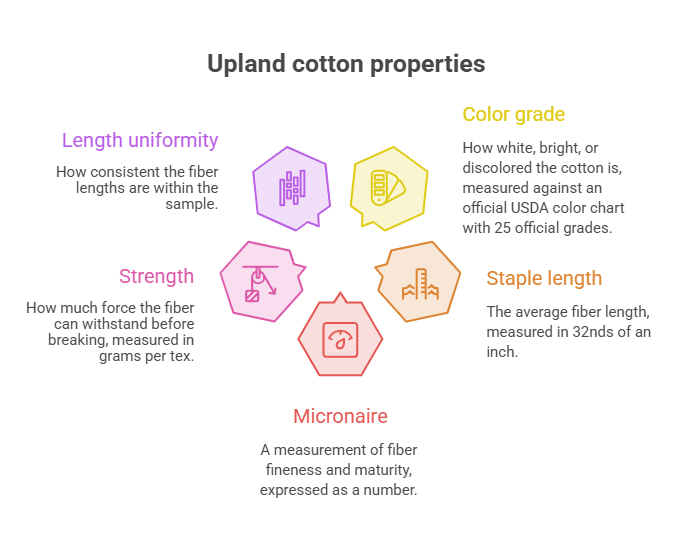
Since 1991, the USDA has classed 100% of the US cotton crop using High Volume Instrument (HVI) systems, which measure a specific set of properties on every single bale: color grade, leaf grade, staple length, micronaire, strength, and length uniformity.
- Color grade: How white, bright, or discolored the cotton is, measured against an official USDA color chart with 25 official grades for upland cotton.
- Staple length: The average fiber length, measured in 32nds of an inch.
- Micronaire: A measurement of fiber fineness and maturity, expressed as a number, with a desirable middle range and premiums or discounts applied outside of it.
- Strength: How much force the fiber can withstand before breaking, measured in grams per tex.
- Length uniformity: How consistent the fiber lengths are within the sample, since more uniform fiber spins into more consistent yarn.
These standards are legally defined under federal regulation (7 CFR § 28.8) and are used internationally as the “Universal” cotton standard, meaning countries around the world reference this same US-developed system.
This grading is also directly tied to how cotton is priced and traded, so a bale’s grade has a real, immediate financial impact on the farmer who grew it.
The takeaway: upland cotton isn’t graded once and treated as uniform from there. Every bale carries its own measured profile, and that profile can vary quite a bit even within the same species.
Does “Regular Cotton” Mean Low Quality?
Not at all, and the USDA grading system above is actually the clearest proof of that. If upland cotton were a single fixed quality level, there would be no need for 25 separate color grades, a strength measurement, or a fineness scale. The fact that this level of measurement exists shows how much real variation lives inside “regular cotton.”
A high-grade, long-staple upland cotton, properly combed and ring-spun, can produce genuinely excellent fabric. A poorly graded, short-staple upland cotton, left carded and open-end spun, can feel rough and wear out quickly. Both are upland cotton. The fiber species sets a general range, but processing decisions do most of the work in determining how the finished product actually feels.
Where Upland Cotton Fits With Everything Else in This Series
If you’ve read the rest of this series, this is where it all connects. Upland cotton is the fiber underneath nearly everything we’ve discussed:
- When a label just says combed cotton or carded cotton with no variety named, it’s almost always upland cotton being described.
- The distinction between ring-spun and open-end spinning applies to upland cotton constantly, since it’s the fiber spun into the vast majority of yarn worldwide.
- Mercerizing is applied to upland cotton just as often as to premium varieties, especially for embroidery thread and dress shirting.
- Thread count and GSM measure the finished fabric regardless of which cotton variety was used, and both apply just as directly to upland cotton sheets and clothing as to premium ones.
- When something is described as “regular cotton” in comparison to Supima, it’s upland cotton being referenced, almost without exception.
In other words, everything else in this series describes what can happen to upland cotton on its way to becoming a finished product. The fiber variety is the starting point. The processing choices are what actually separate a rough, cheap t-shirt from a soft, long-lasting one, even when both started from the exact same species.
Which Products Use Upland Cotton
Everyday T-Shirts

The overwhelming majority of t-shirts, from budget basics to premium combed, ring-spun tees, are made from upland cotton. Processing is what separates the two.
Common use: YesJeans and Denim
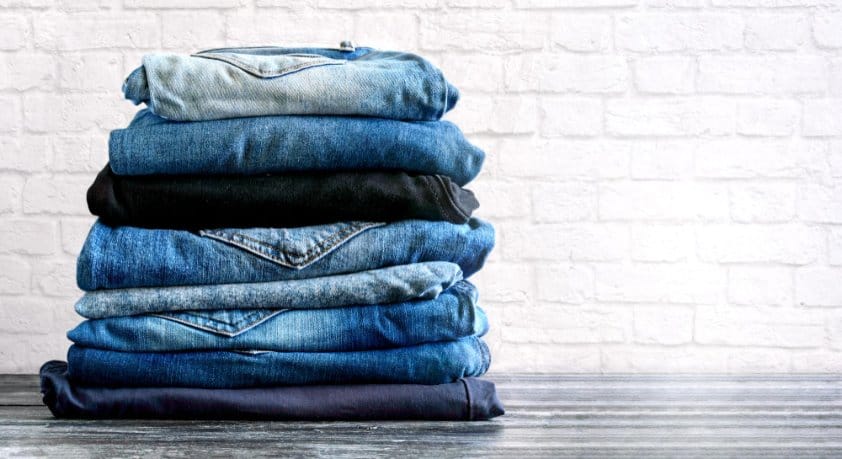
Classic denim relies on upland cotton’s strength and versatility, often spun open-end for the slightly textured, rugged feel denim is known for.
Common use: YesBed Sheets
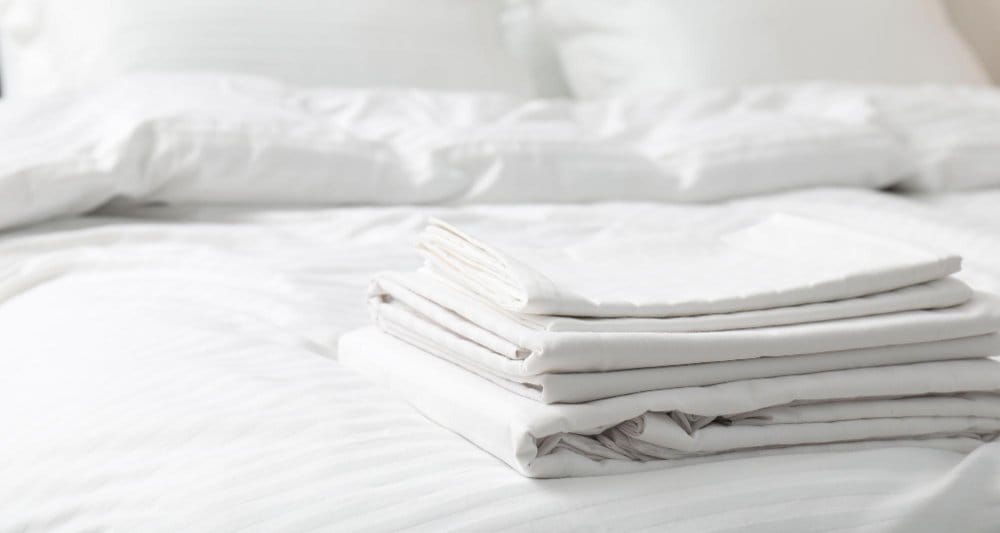
Most everyday and mid-range bedsheets use upland cotton, with quality varying widely based on thread count, weave, and whether the yarn is combed and ring-spun.
Common use: YesBath Towels
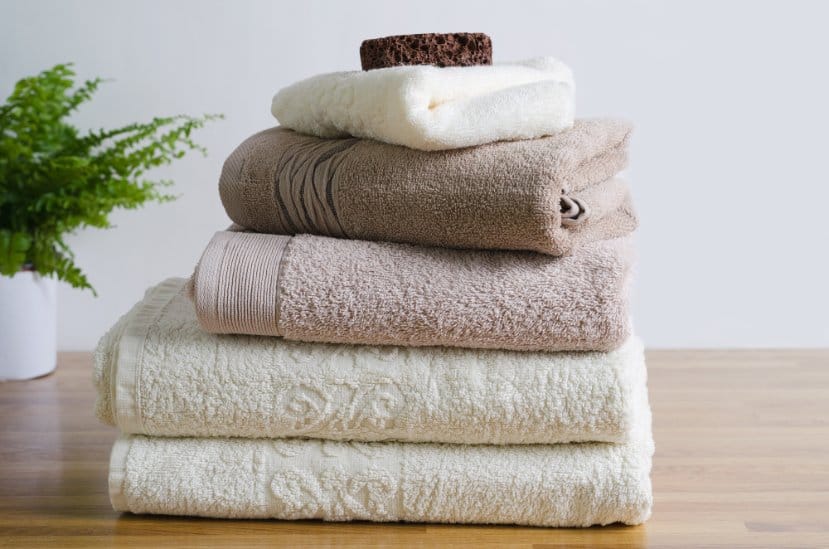
Upland cotton’s absorbency and availability make it the standard choice for towels, especially when ring-spun for improved softness and durability.
Common use: YesWorkwear and Canvas
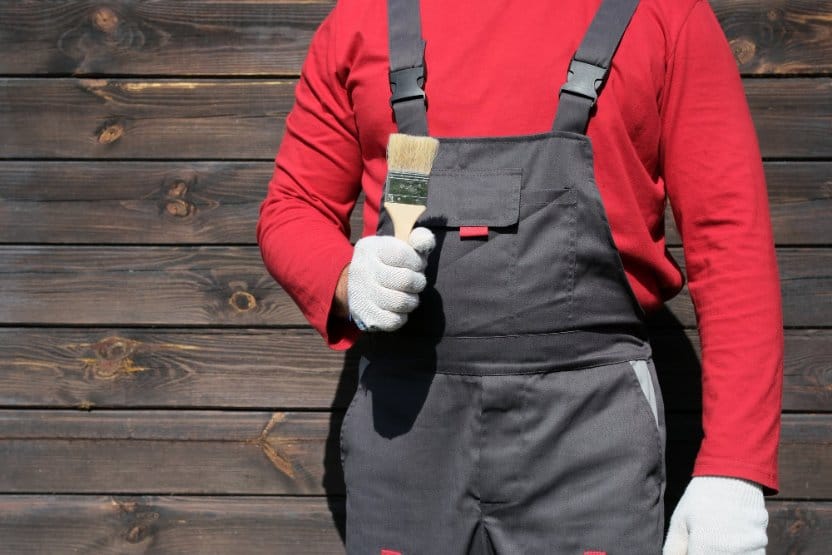
Heavy-duty fabrics like canvas and duck cloth lean on upland cotton’s strength and cost-effectiveness, often left carded for extra bulk and structure.
Common use: YesQuilting Cotton
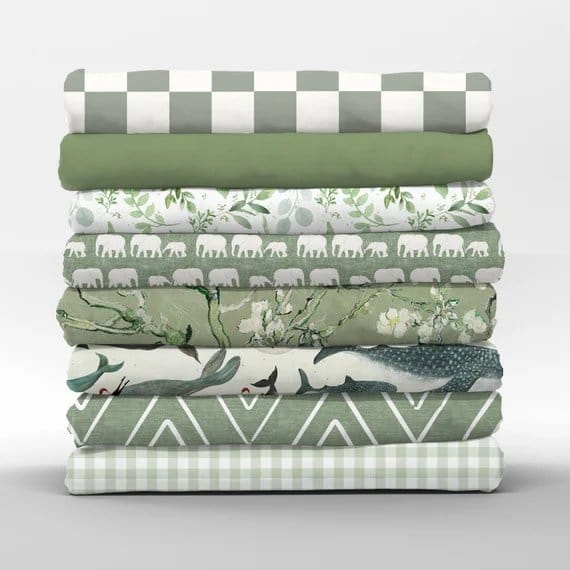
Standard quilting cotton is almost always upland cotton, chosen for its consistent weave and reliable behavior when pieced and stitched.
Common use: YesCurious what fabric type fits your next project? Our free Cotton Type Selector Quiz gives a personalized recommendation in under two minutes.
Take the QuizHow to Get the Most Out of Upland Cotton Products
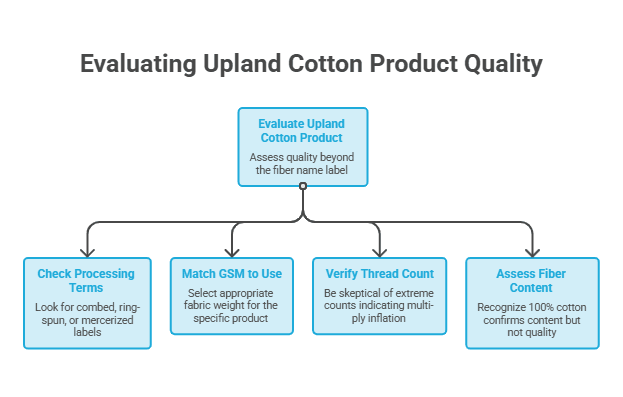
Since upland cotton spans such a wide quality range, the fiber name alone on a label doesn’t tell you much. A few practical habits make a real difference:
- Check for processing terms. Labels mentioning “combed,” “ring-spun,” or “mercerized” alongside plain cotton usually signal a better-made product, even without a premium fiber variety attached.
- Match GSM to the use. A well-chosen fabric weight for the specific product matters more than chasing the highest number available.
- Be skeptical of extreme thread counts. On upland cotton bedding especially, very high counts often signal multi-ply yarn inflation rather than genuinely finer fabric.
- Don’t assume “100% cotton” alone means quality. It confirms the fiber content, not how that fiber was selected, spun, or finished.
A well-processed upland cotton product, combed, ring-spun, and reasonably weighted for its purpose, will often outperform a poorly made product from a fancier-sounding cotton variety. The variety sets the starting material. Everything else in this series determines what actually gets made from it.
Frequently Asked Questions
Conclusion
Upland cotton is the plant behind nearly everything cotton in your closet, whether or not you’ve ever seen its name on a tag. Roughly nine out of ten cotton products in the world trace back to this one species, and understanding it is really understanding the foundation the rest of this series has been built on.
The most important thing to take from this final piece is that the fiber species is only the starting point. Upland cotton itself spans an enormous quality range, measured bale by bale under a genuinely rigorous USDA grading system.
What happens after that grading, combing versus carding, ring-spinning versus open-end, mercerized or plain, correctly weighted or mismatched for its purpose, determines far more about the finished product than the species name ever could.
A few things worth remembering from the whole series:
- Upland cotton (Gossypium hirsutum) is what “regular cotton” means in practice, responsible for the vast majority of cotton worldwide.
- Extra-long staple varieties like Pima, Egyptian, and Supima cotton come from a different species with genuinely longer fiber, which is why they command a premium.
- Every bale of US upland cotton is individually graded on color, length, fineness, strength, and uniformity, proving just how much real variation exists within “regular cotton.”
- Processing terms, combed, ring-spun, mercerized, thread count, and GSM, tell you far more about the finished product’s quality than the fiber variety alone.
- A well-processed upland cotton item often beats a poorly made product from a fancier-sounding variety.
That’s the thread running through this whole series: cotton quality isn’t one number or one fancy-sounding name. It’s a combination of fiber, processing, and finishing, and now you know how to read all three.
Want the complete picture of cotton fiber, weight, and care? Our full cotton fabric guide ties it all together in one place.
Disclaimer: This article is for general informational and educational purposes only. It is not a substitute for professional textile sourcing, agricultural, or manufacturing advice. Grading standards, production figures, and industry practices can change over time and may vary by region.
Figures referenced above are based on published agricultural and industry data available at the time of writing and are presented as general estimates. Always check the specific product label or contact the manufacturer directly for exact fiber content before purchasing.