
Everything you need to know about one of the world’s most versatile synthetic fabrics, from its surprising wartime history to how it stacks up against cotton, polyester, and silk today.
Picture this: it is 1946, and the war is finally over. Women across America are lining up outside department stores at 6 in the morning. Not for a sale on groceries or furniture, but for stockings. Nylon stockings.
Some stores sold out 10,000 pairs in just a few hours. In Pittsburgh, police had to manage crowds of 40,000 people. These events became known as the Nylon Riots, and they tell you something important: nylon did not just change fashion. It changed everyday life.
Fast forward to today, and nylon is everywhere. In your gym leggings, your backpack, your swimsuit, your toothbrush bristles, your car seat belt, and even parts of your phone. It is one of the most widely produced synthetic fabrics in the world, yet most people know very little about it beyond the label on their clothing.
This guide covers everything: history, properties, types, care, sustainability, and how nylon compares to cotton, polyester, and silk. Whether you are shopping, sewing, or just curious, you will find what you need here.
What Is Nylon Fabric?
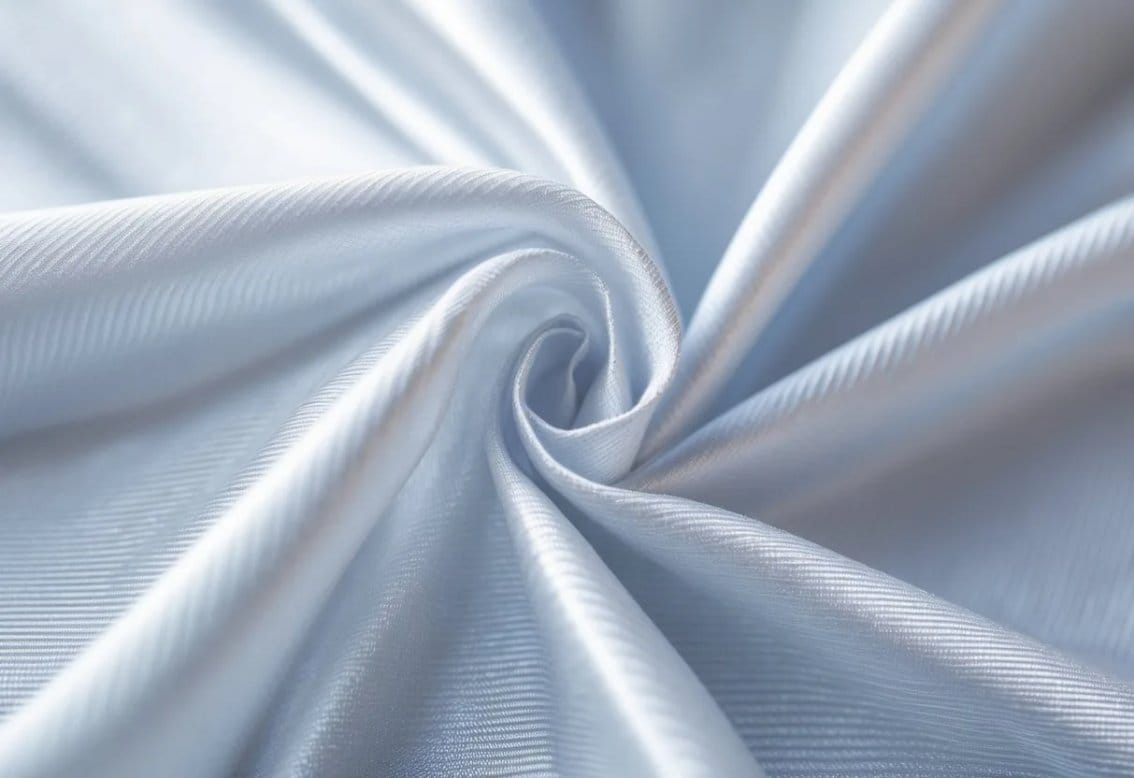
White nylon fabric showcasing the smooth texture and subtle sheen associated with nylon textiles.
Nylon fabric is a synthetic textile made from polyamide fibers. Those fibers are created through a chemical process using petroleum-based raw materials, then spun into thread and woven or knitted into fabric.
The simplest way to think about it: nylon is a type of plastic, engineered to be incredibly fine, flexible, and soft. On a garment label, you will sometimes see it listed as polyamide rather than nylon. That is the same material. European clothing labels tend to use polyamide; American labels use nylon.
In short: Nylon is not silk and it is not cotton. It is a fully man-made fiber, the first of its kind. On labels, look for nylon or polyamide (PA). They mean the same thing.
Is Nylon Basically Plastic?
Technically, yes. Nylon is derived from petroleum, making it a form of plastic at the molecular level. But calling it “just plastic” does not tell the whole story.
Through a very specific manufacturing process, those plastic polymers are drawn into ultra-fine fibers that feel nothing like a plastic bag. The result can feel silky, soft, and lightweight. Quite different from what most people picture when they hear the word plastic.
Is Nylon a Polyester or a Polyamide?
Nylon is a polyamide, not a polyester. Both are synthetic fabrics made from petroleum, and both look similar on a roll of fabric. But they have different chemical structures, different feels, and different strengths. Polyester is made from polyethylene terephthalate (PET). Nylon is made from polyamide chains. That difference matters a lot when it comes to softness, stretch, and durability.
The History of Nylon, Including the Riots
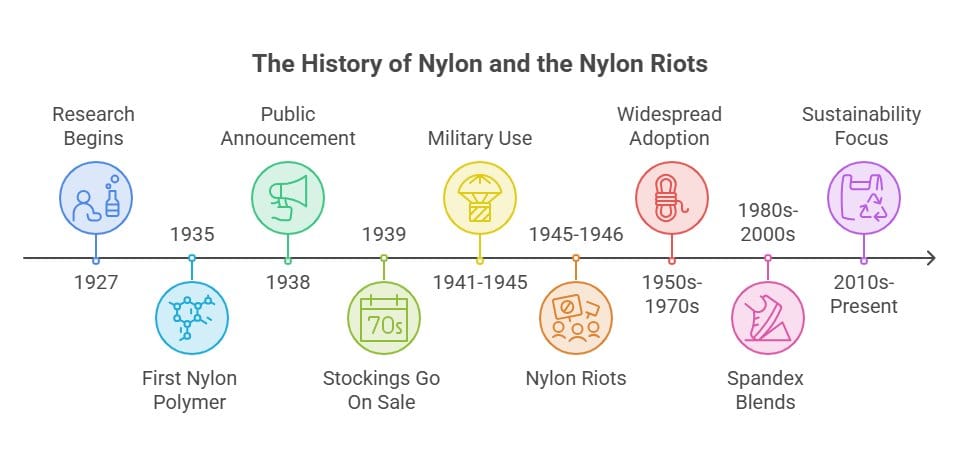
Historical timeline illustrating major milestones in the development of nylon fabric.
DuPont launches a research program to create a synthetic fiber. Chemist Wallace Carothers, hired away from Harvard University, leads the team.
Carothers and his team successfully create the first nylon polymer. It is the world’s first fully synthetic fiber, meaning it comes from no plant or animal source.
DuPont announces nylon to the public at the New York World’s Fair, billing it as a fiber made “from coal, water, and air,” stronger than steel and finer than silk.
Nylon stockings go on sale. Roughly four million pairs are sold across the US on the first day alone. Women had been paying high prices for silk stockings for years. Nylon offered the same look at a fraction of the cost.
All nylon production is diverted to the military. Nylon replaces silk in parachutes, ropes, tires, and military gear. By 1945, synthetic fibers like nylon made up roughly 25% of the textile market.[1]
Nylon returns to civilian use. Demand is overwhelming. The Nylon Riots break out in Pittsburgh and other US cities, with police managing crowds of tens of thousands.
Nylon moves beyond stockings into clothing, carpets, luggage, and industrial use. It becomes one of the most widely used materials on the planet.
Nylon blended with spandex (Lycra) becomes the standard for activewear, swimwear, and leggings. The athletic and outdoor gear industries build around it.
Sustainability concerns push the industry toward recycled nylon. ECONYL, made from discarded fishing nets and carpet scraps, is adopted by brands including Prada, Gucci, Adidas, and Patagonia.
Wallace Carothers never saw nylon’s full impact. He died in 1937, before nylon stockings ever reached store shelves. His invention has outlasted almost every other textile innovation of the 20th century.
How Nylon Fabric Is Made
You do not need a chemistry degree to understand this. Here is the process in plain terms:
Petroleum and natural gas are refined to extract chemical building blocks: hexamethylene diamine and adipic acid (Nylon 6,6) or caprolactam (Nylon 6).
These chemicals react under heat and pressure to form long polymer chains. The result looks like a sheet of solid plastic.
The solid nylon is melted and forced through a spinneret, a device with tiny holes similar to a shower head. Ultra-fine strands of fiber come out the other side.
The fibers are stretched to align the molecules. This step increases the fabric’s strength and elasticity significantly.
Multiple fibers are twisted together to create yarn. The thickness (measured in denier) determines whether the final fabric will be sheer or heavy-duty.
The yarn is turned into fabric using weaving or knitting machines. The weave pattern affects texture, stretch, and appearance.
Nylon accepts dye well. After dyeing, finishes may include water resistance, anti-static coatings, UV protection, or softening agents depending on use.
The whole process is energy-intensive and relies on non-renewable petroleum. That is one of nylon’s main environmental downsides, covered in the sustainability section below.
Types of Nylon Fabric
Not all nylon is the same. Knowing the difference helps you choose the right type for what you are making or buying.
The Three Main Types of Nylon
The three most common types are Nylon 6, Nylon 6,6, and Nylon 11 (or Nylon 12).
| Type | Made From | Key Traits | Common Uses |
|---|---|---|---|
| Nylon 6 | Caprolactam | Softer, more flexible, easier to dye | Hosiery, activewear, carpets, apparel |
| Nylon 6,6 | Hexamethylene diamine and adipic acid | Harder, stronger, higher melting point, better abrasion resistance | Gear, luggage, industrial parts, toothbrush bristles |
| Nylon 11 / 12 | Castor oil (plant-based) | More flexible, lower moisture absorption, semi-bio-based | Tubing, coatings, specialty apparel |
Which Nylon Is Best?
It depends on the job. For soft clothing like hosiery or activewear, Nylon 6 tends to feel better against the skin. For products that need to handle heavy use, such as backpacks, outdoor gear, and footwear, Nylon 6,6 is the stronger choice. Neither is universally better. They are built for different purposes.
Nylon Varieties by Weave and Finish
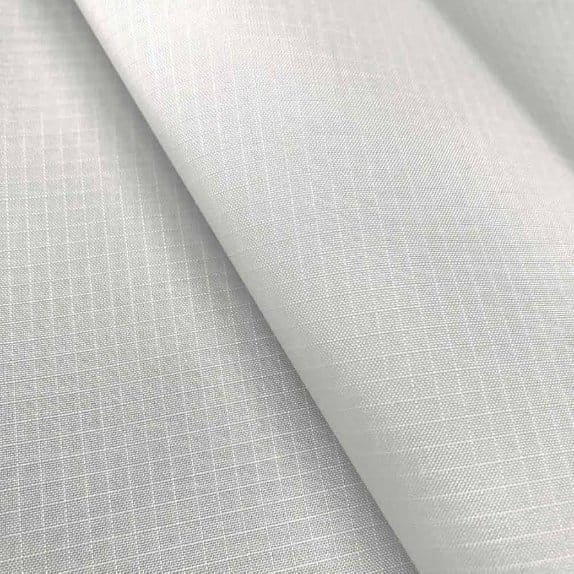
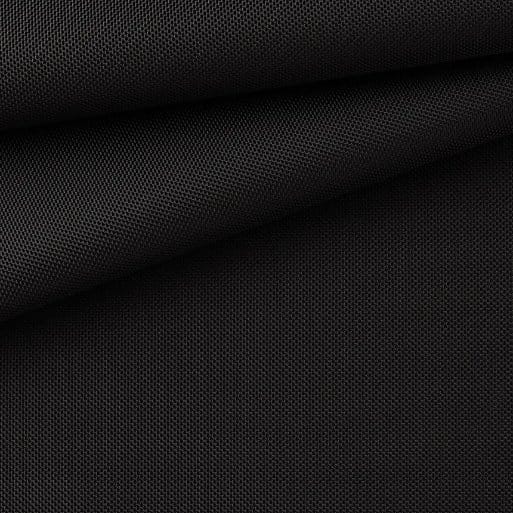
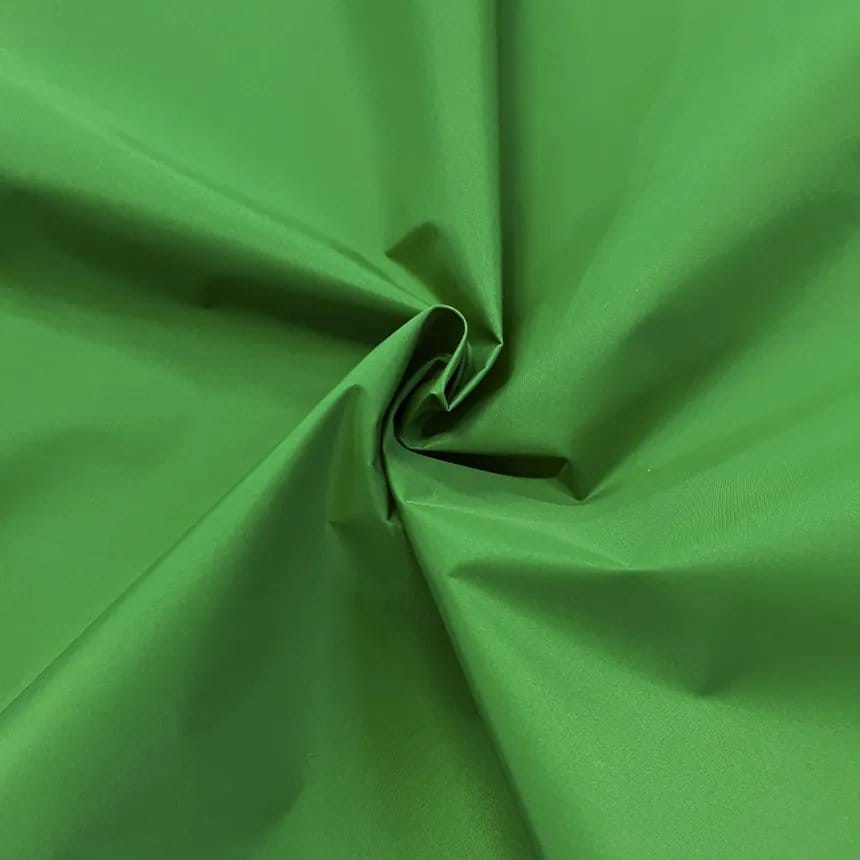
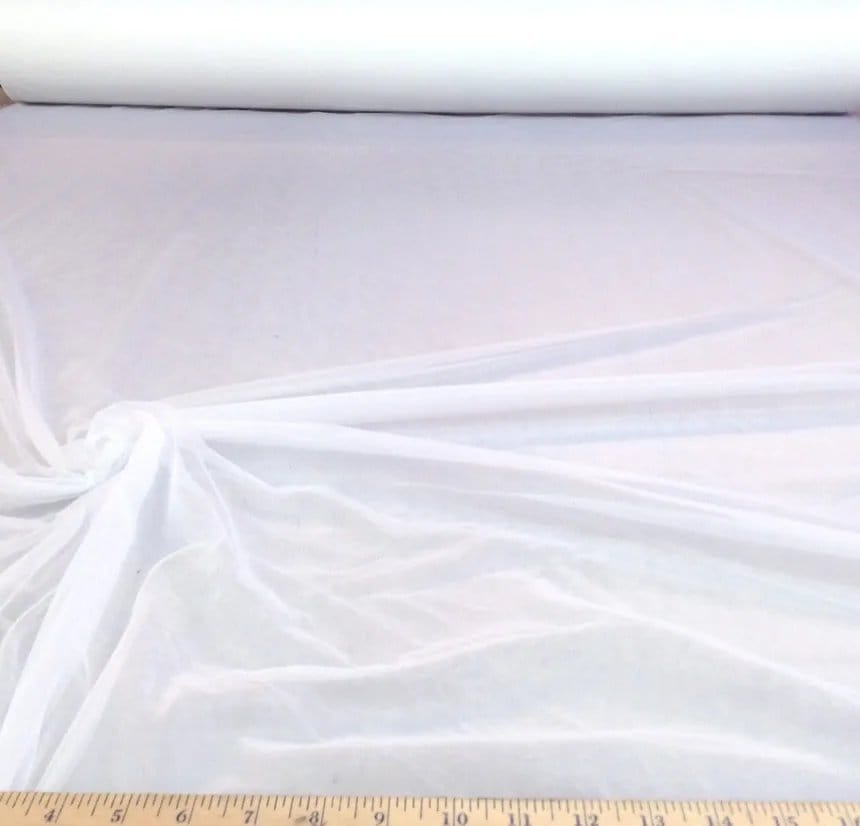
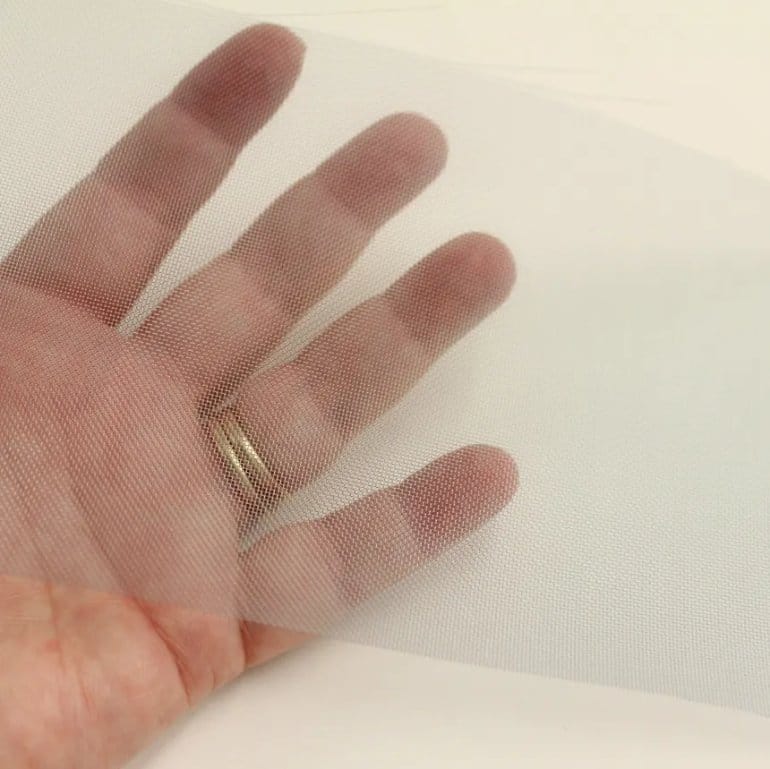

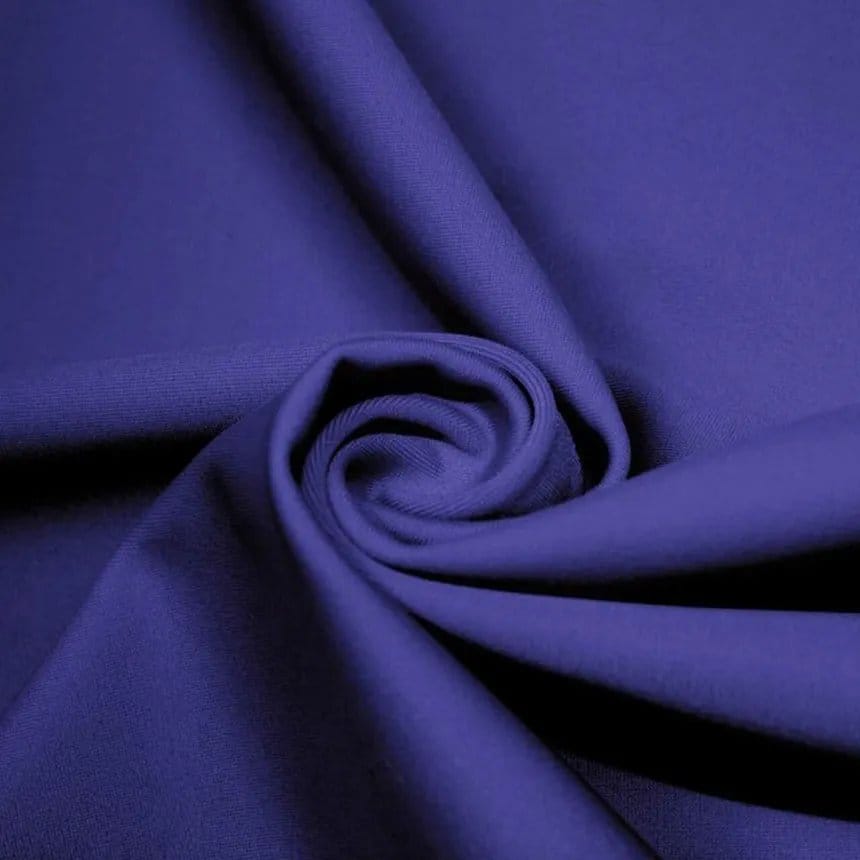
For a look at how nylon behaves in a specific delicate form, see our guide to nylon chiffon fabric.
Key Properties and Characteristics of Nylon Fabric
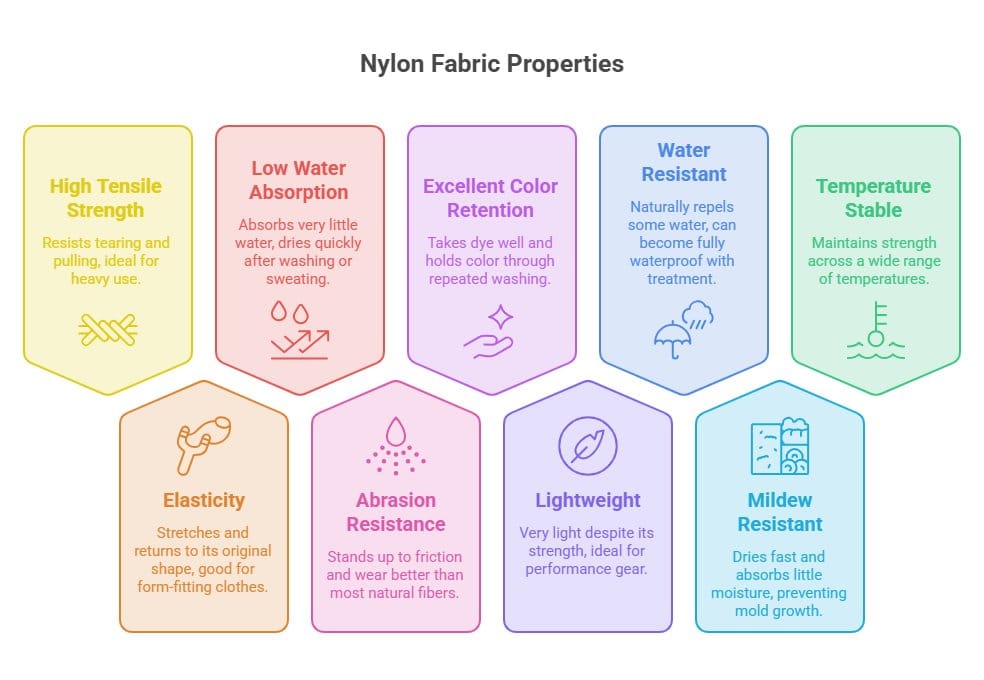
Visual guide explaining the main characteristics and performance benefits of nylon fabric.
One of the strongest synthetic fibers available. Resists tearing, pulling, and heavy use.
Stretches under tension and bounces back to its original shape. Good for form-fitting garments.
Absorbs very little water compared to cotton or wool, which means it dries quickly after washing or sweating.
Stands up to friction and wear far better than most natural fibers.
Takes dye well and holds color through repeated washing without significant fading.
Despite its strength, nylon is very light. Ideal for performance gear where every ounce counts.
Naturally repels some water. When treated with a DWR coating, it can become fully waterproof.
Because it dries fast and absorbs little moisture, mold and mildew have a hard time taking hold.
Maintains its strength across a fairly wide range of temperatures, from cold to moderately hot conditions.
Is Nylon a Breathable Fabric?
Standard nylon is less breathable than natural fibers like cotton or linen. It does not absorb moisture the way cotton does. Instead, it sits on the surface of your skin or wicks moisture away.
That said, nylon mesh and microfiber nylon can be surprisingly airy. Many athletic brands engineer nylon fabrics specifically for ventilation by adjusting the weave and denier. Breathability depends a lot on the type of nylon and how it is constructed.
Is Nylon Good Quality?
Yes. Nylon is a high-performance fabric, not a cheap one. It is stronger than most fabrics at the same weight, holds its shape, resists wear, and lasts a long time with proper care.
The reputation for being “cheap” sometimes comes from thin nylon blends in fast fashion, not from the fiber itself. High-quality nylon, such as CORDURA-grade or fine microfiber nylon, is used in premium outdoor gear and luxury sportswear alike.
Is Nylon a Luxury Fabric?
Nylon is not traditionally classified as a luxury fabric the way silk or cashmere are. However, high-grade microfiber nylon and recycled ECONYL nylon are now used by luxury houses including Prada, Gucci, and Stella McCartney. Prada’s iconic nylon bags helped reposition the material as aspirational. So while nylon does not carry the centuries-old prestige of natural luxury fibers, it can occupy a premium space in modern fashion.
For a sense of how nylon compares to a traditional luxury fiber, see our guide to cashmere wool fabric.
Nylon vs Other Fabrics: Full Comparison
Nylon vs Polyester
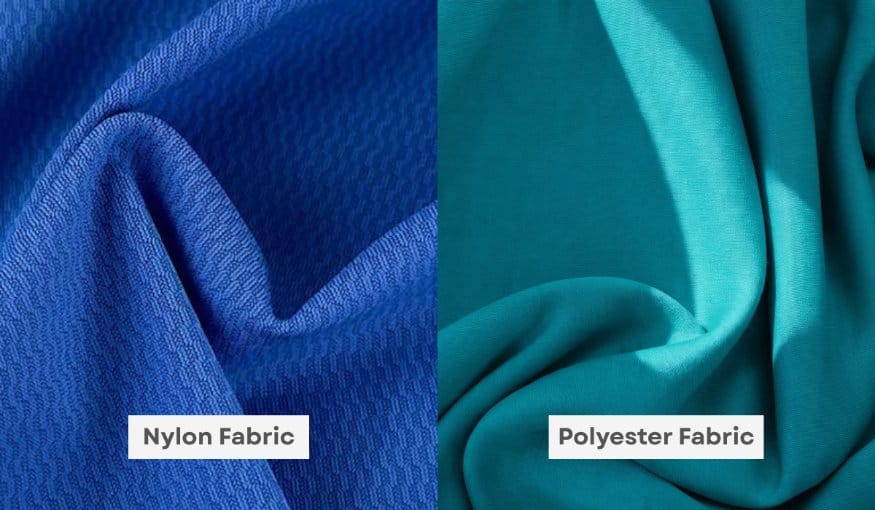
Nylon and polyester fabrics compared side by side for durability and performance evaluation.
These two are the dominant synthetic fabrics in clothing today. They look alike, both come from petroleum, and are often used for similar products. But they are not the same material.
| Feature | Nylon | Polyester |
|---|---|---|
| Feel | Softer, silkier, smoother | Slightly rougher, more synthetic (improving with technology) |
| Strength | Higher tensile strength | Strong but slightly less so |
| Stretch | More naturally elastic | Less stretch |
| Moisture Wicking | Good, dries quickly | Good, also dries quickly |
| UV Resistance | Lower, can fade or yellow in sunlight | Higher, more UV stable |
| Abrasion Resistance | Better | Good, but nylon edges it |
| Cost | Generally more expensive | Usually cheaper |
| Odor Retention | Can hold odors in activewear | Similar issue |
| Best For | Activewear, swimwear, hosiery, outdoor gear, bags | T-shirts, fleece, home furnishings, budget apparel |
Is nylon stronger than polyester? Generally yes. Nylon has higher tensile strength and better abrasion resistance, which is why it is the preferred choice for gear that takes heavy abuse: bags, ropes, outdoor equipment. Polyester handles sun exposure better and tends to cost less, making it a stronger pick for everyday clothing. Our full guide to polyester fabric covers this in more depth.
Is nylon less toxic than polyester? Both are petroleum-based synthetic plastics, and both shed microplastics when washed. Nylon production can also release nitrous oxide as a byproduct, which is a more potent greenhouse gas than CO2. Neither is significantly safer than the other for everyday wear, though.
Is nylon the same as polyester? No. They share a petroleum origin but have completely different chemical structures, different feels, different stretch properties, and different strengths. The confusion is understandable since they are used in similar products, but they are not interchangeable materials.
Nylon vs Cotton
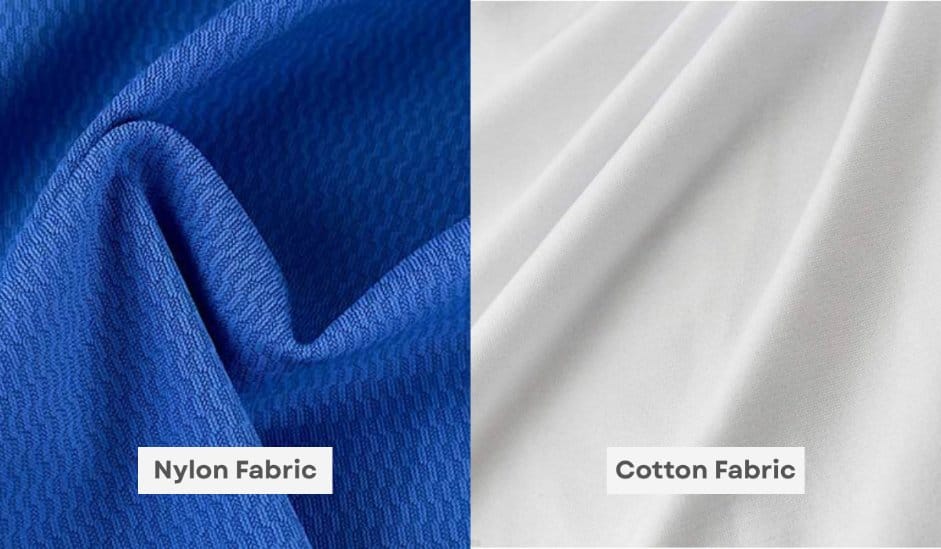
Visual comparison between nylon and cotton fabrics for textile selection and garment applications.
These two could not be more different in origin. One is fully synthetic; the other comes from a plant. Each has clear advantages depending on the situation.
| Feature | Nylon | Cotton |
|---|---|---|
| Origin | Synthetic (petroleum) | Natural (plant fiber) |
| Breathability | Lower | Higher |
| Moisture Absorption | Low, wicks away | High, absorbs and holds |
| Durability | Much higher | Good, but wears faster |
| Stretch | More elastic | Very little natural stretch |
| Comfort in Warm Weather | Less comfortable | Very comfortable |
| Weight | Lighter | Heavier (varies by weave) |
| Eco-friendliness | Poor (synthetic) | Better, especially organic cotton |
Is nylon good like cotton? For performance activities, sports, hiking, and swimming, nylon is actually better. It dries faster, lasts longer, and handles movement well. For everyday comfort in warm weather, cotton wins. They are built for different purposes. See our complete cotton fabric guide for a full picture.
Is nylon safer than cotton? Cotton is generally the safer choice for sensitive skin, babies, and everyday wear. It is natural, breathable, and biodegradable. For children’s clothing and sensitive skin, cotton is the preferred option. Our guide to the best fabrics for newborn clothing goes into more detail on this.
Nylon vs Silk
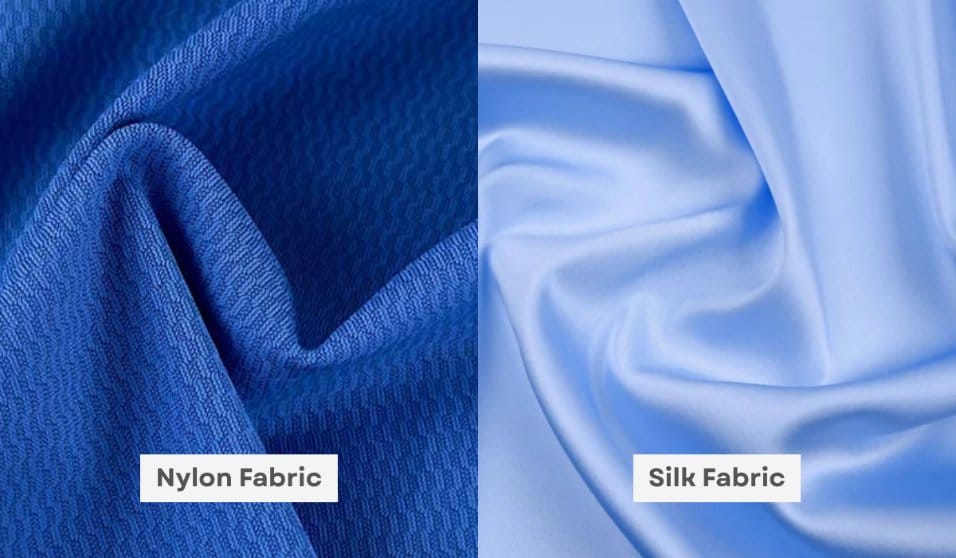
Nylon and silk fabrics displayed together to compare synthetic and natural textile characteristics.
Nylon was literally created to replace silk during World War II, so this comparison is part of its origin story.
| Feature | Nylon | Silk |
|---|---|---|
| Origin | Synthetic | Natural (silkworm) |
| Feel | Smooth, similar to silk | Luxuriously smooth, cooler to the touch |
| Durability | Much more durable | Delicate, requires careful handling |
| Price | Far cheaper | Expensive |
| Care | Machine washable | Dry clean or hand wash only |
| Breathability | Lower | Natural temperature regulation |
| Luster | Artificial shine | Natural, deep luster |
Is nylon silk or cotton? Neither. Nylon is a fully synthetic fabric with no natural source. It shares some visual qualities with silk, such as smoothness and sheen, but has nothing to do with the silk fiber. To learn about silk’s unique qualities, our guide to silk fabric is a good starting point.
Nylon vs Viscose (Rayon)
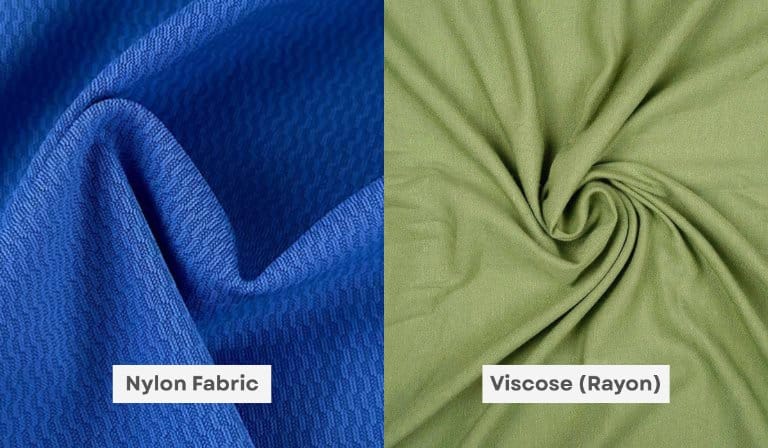
Nylon and viscose rayon fabrics compared to highlight performance and comfort differences.
Viscose, also called rayon, is a semi-synthetic fiber made from wood pulp. It is much more breathable than nylon, drapes beautifully, and feels closer to natural fabrics. But it is far less durable. Viscose pills, weakens when wet, and does not handle the kind of abuse nylon manages easily.
For breathable everyday wear and flowy garments, viscose is the better choice. For performance, durability, and outdoor use, nylon wins.
Durability Comparison
Comparative abrasion resistance and durability index based on general textile industry performance data. Illustrative only.
Is Nylon Good For…?
This section answers the most searched questions about nylon and specific uses, all in one place.
Is Nylon Good for Summer?
It depends on the type. Standard nylon can feel warm and stuffy in hot weather because it does not breathe the way cotton or linen does.
However, nylon mesh, microfiber nylon, and moisture-wicking performance nylon can work well in summer, particularly for sports and outdoor activities where fast drying matters more than raw breathability. For sitting around in the heat, cotton or linen will be more comfortable. For a morning run, nylon activewear is hard to beat.
For more summer fabric options, see our summer fabrics guide.
Is Nylon Good for Activewear?
Yes, it is one of the best choices for this. Nylon’s combination of stretch, moisture-wicking, durability, and light weight makes it a natural fit for gym wear, yoga pants, running gear, and cycling wear. Most premium activewear uses nylon, often blended with spandex or elastane.
Is Nylon Good for Swimwear?
Absolutely. Nylon is one of the most common swimwear fabrics. It dries fast, resists chlorine, holds its shape through repeated stretching, and keeps its color well. Most swimsuits in stores are made from nylon-spandex blends.
Is Nylon Good for Sewing?
Nylon can be tricky to sew but is very manageable with the right tools. Because it is slippery, it shifts on the cutting table and under a presser foot. Use sharp scissors, a fine ballpoint or sharp microtex needle, and a walking foot for even feeding.
Ripstop nylon is popular for DIY outdoor gear, bags, and rain jackets. For waterproof varieties, seams may need seam sealing tape. Our beginner’s guide to sewing covers fabric handling basics that apply to nylon.
Not sure which needle to use for nylon?
Check out the Needle and Fabric Compatibility Chart for guidance on matching the right needle to your fabric type.
Is Nylon Good for Bags and Luggage?
This is where nylon shines most. Backpacks, duffel bags, laptop bags, and travel luggage so often use nylon because it handles abrasion, weight, and daily use far better than most alternatives. Ballistic nylon and CORDURA-grade nylon are specifically engineered for this application.
What Is Nylon Fabric Used For?
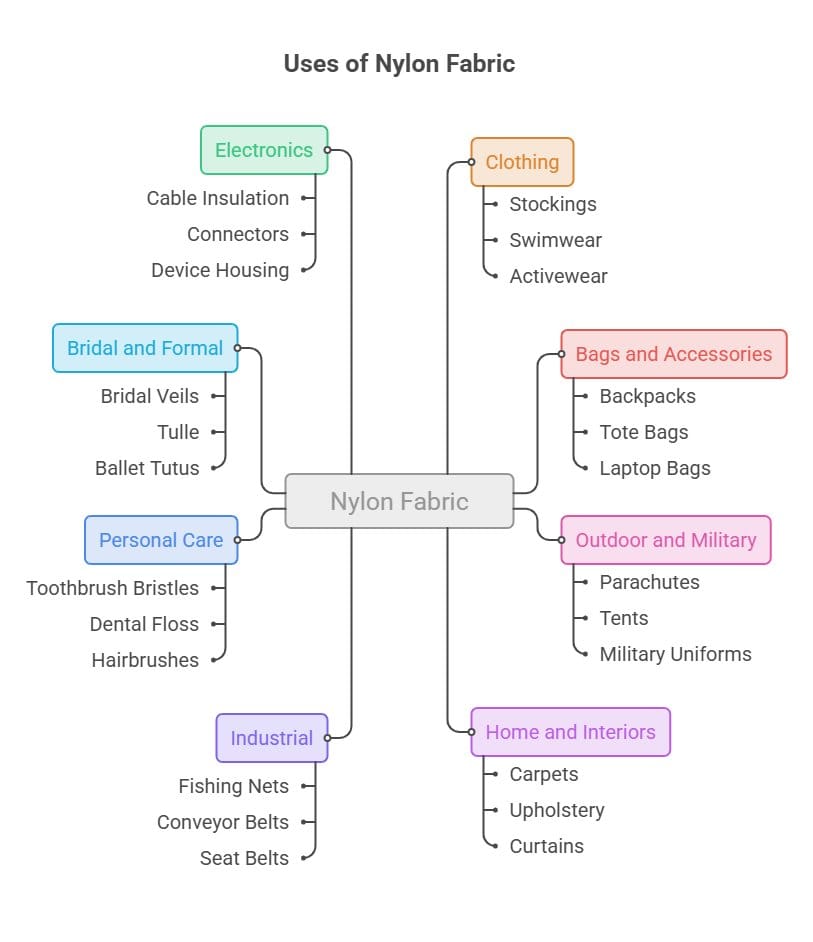
Visual guide showing the many applications of nylon fabric across different industries.
The list is longer than most people expect. Here is a breakdown by category:
| Category | Common Uses |
|---|---|
| Clothing | Stockings, hosiery, lingerie, swimwear, activewear, sportswear, yoga pants, blouses, jackets, rainwear, umbrellas, hats, socks |
| Bags and Accessories | Backpacks, duffel bags, tote bags, laptop bags, camera cases, wallets |
| Outdoor and Military | Parachutes, tents, sleeping bags, hammocks, life vests, military uniforms, ropes, nets |
| Home and Interiors | Carpets, rugs, upholstery, curtains, bedspreads |
| Industrial | Fishing nets, conveyor belts, car parts, seat belts, airbags, gears, bearings, tubes, pipes |
| Personal Care | Toothbrush bristles, dental floss, hairbrushes |
| Bridal and Formal | Bridal veils, tulle, netting for gowns, ballet tutus |
| Electronics | Cable insulation, connectors, device housing, laptop shells |
Nylon also appears in many stretchy fabric blends, often paired with spandex or elastane for added flexibility. It plays a role in denim-related clothing too, commonly used in linings and stitching. For an interesting look at how synthetic fibers interact across clothing categories, see this piece on denim in kids’ clothing.
The Pros and Cons of Nylon Fabric
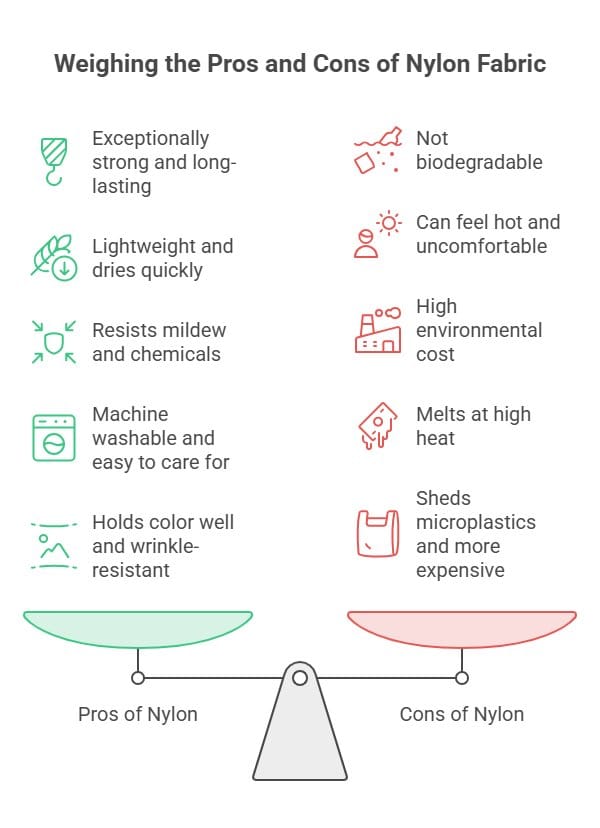
Balanced overview of nylon fabric benefits and drawbacks.
No fabric is perfect. Here is an honest look at where nylon succeeds and where it falls short.
Pros
- Exceptionally strong and long-lasting
- Lightweight for its strength
- Dries very quickly
- Good stretch and shape retention
- Resists abrasion, mildew, and many chemicals
- Holds color well
- Machine washable and easy to care for
- Versatile across clothing, gear, and industrial use
- Wrinkle-resistant
- Naturally water resistant
Cons
- Not biodegradable
- High environmental cost to produce
- Can feel hot and uncomfortable in warm weather
- Generates static electricity
- Can yellow with prolonged sun exposure
- Melts at high heat, so no high-temperature ironing
- Sheds microplastics in the wash
- Can irritate sensitive skin
- Retains odors, especially in activewear
- More expensive than polyester
What Are the Negatives of Nylon?
The two biggest downsides are environmental impact and comfort in heat. Nylon production is energy-heavy and releases harmful byproducts. Every wash also releases microplastic particles into waterways.
From a comfort standpoint, dense nylon fabrics do not breathe well. If you have ever worn a nylon shell jacket in direct sun and felt like you were in a greenhouse, you know what this means. Static cling is another real issue. Nylon builds up static electricity, which can cause garments to stick to your body or attract lint and pet hair. A fabric softener or anti-static spray helps with this.
Is Nylon Safe for Your Skin?
For most people, nylon is perfectly fine to wear. It is used in underwear, hosiery, and swimwear without issue for the vast majority of wearers. There are a few things worth knowing, though.
Is 100% Nylon Safe?
Yes, for most people. Pure nylon is chemically stable once manufactured into fabric. It does not release harmful substances during normal wear. The concerns around nylon tend to be environmental rather than direct health risks for healthy adults.
Some people with sensitive skin, allergies, or eczema may react to the synthetic fiber itself, or to the dyes and finishing chemicals added during processing. If you are prone to skin reactions, look for undyed or minimally treated nylon, or opt for natural fibers where possible.
Is Nylon as Unhealthy as Polyester?
In terms of skin contact, they are roughly comparable. Both are synthetic, both can cause irritation in sensitive individuals, and both shed microplastics. Neither is significantly healthier than the other for everyday wear in healthy adults. The bigger concern is not what touches your skin but the environmental impact of both materials throughout their lifecycle.
Is Nylon Good for Sensitive Skin?
Nylon is not the ideal choice for people with very sensitive skin. It does not breathe as well as cotton, which can trap heat and moisture against the skin, conditions that can aggravate eczema or irritation.
If you have sensitive skin, fabrics like cotton, bamboo, or other natural fibers are better for direct skin contact. See our guide to the softest fabrics for sensitive skin for more options. Nylon works better in outerwear, bags, or items not pressed directly against skin all day.
Note for parents: For babies and toddlers, natural fibers like cotton are the better choice for clothing worn directly against the skin. Nylon is fine for outerwear, bags, and accessories. See our guide to the best fabrics for newborn clothing for more detail.
How to Care for Nylon Fabric
Nylon is one of the easier synthetic fabrics to maintain. A few simple rules will keep it looking good for years.
| Care Step | What to Do | What to Avoid |
|---|---|---|
| Washing | Machine wash cold or warm (max 30C / 86F) on a gentle cycle. | Hot water. It can warp or shrink the fabric. |
| Detergent | Use a mild detergent. Less is more. | Bleach and fabric softeners, which degrade the fibers over time. |
| Drying | Air dry where possible. If tumble drying, use the lowest heat setting. | High heat in the dryer. Nylon melts or warps at relatively low temperatures. |
| Ironing | Use the lowest setting only if needed, with a pressing cloth between the iron and the fabric. | High heat. Nylon will melt or permanently distort. |
| Storage | Store clean, dry, and away from direct sunlight. | Prolonged sun exposure, which causes yellowing over time. |
| Stain Treatment | Treat promptly with cold water and mild soap. Blot gently. | Rubbing aggressively, which can distort the weave. |
Microplastic tip: Washing nylon in a Guppyfriend washing bag significantly reduces the number of microplastic fibers released into the water. It is a small step that makes a real difference.
For a broader look at caring for different fabric types, our guide to caring for synthetic fabrics is a useful companion. You can also use the Care Symbol Decoder tool if you are ever unsure what laundry icons mean on a garment label.
Nylon and Sustainability
Conventional nylon is not an environmentally friendly fabric. Here is why, and what is being done about it.
The Environmental Problems with Virgin Nylon
Nylon is made from petroleum, a non-renewable resource. The production process is energy-intensive and can release nitrous oxide as a byproduct, a greenhouse gas roughly 300 times more potent than CO2 over a 100-year period.
Once a nylon product is discarded, it does not biodegrade in any meaningful timeframe. It breaks down into microplastics that end up in soil, waterways, and eventually the food chain. Every time you wash a nylon garment, microplastic fibers are released into the water supply.
Despite this, nylon remains in heavy use because its performance properties are genuinely hard to replace. The question the industry is grappling with now is how to keep the performance without the environmental cost.
Recycled Nylon: The Better Alternative
Recycled nylon, most notably ECONYL produced by Italian company Aquafil, offers a meaningful improvement. ECONYL is made by collecting discarded nylon waste including fishing nets pulled from the ocean, old carpet flooring, and fabric scraps from factories, and chemically breaking them back down into their original polymer form.[2]
The result is nylon that performs identically to virgin nylon, but with a dramatically lower environmental footprint.
According to published lifecycle data, recycled nylon production saves up to 71-80% of the energy required to make virgin nylon, cuts CO2 emissions by 69-76%, and uses 54-58% less water.[3] For every 10,000 tons of ECONYL produced, approximately 70,000 barrels of crude oil are saved.[2]
Brands including Patagonia, Prada, Gucci, Adidas, and Stella McCartney have adopted ECONYL and other recycled nylon yarns. In Patagonia’s Spring 2026 line, less than 6% of their nylon-based fabric by weight includes virgin nylon, meaning 94% is now recycled.[4]
What to Look for When Buying Nylon
If sustainability matters to you, look for:
- Products labeled ECONYL or certified recycled nylon
- Global Recycled Standard (GRS) certification
- Brands with transparent supply chain reporting
- Higher-quality construction built to last, because fewer replacements means less waste overall
Cheap nylon in fast fashion is one of the worst uses of the material: poor quality blends that wear out quickly and end up in landfill. Choosing better-quality products that last for years is one of the most practical things you can do. Our piece on fast fashion vs slow fashion explores this further.
The Future of Nylon
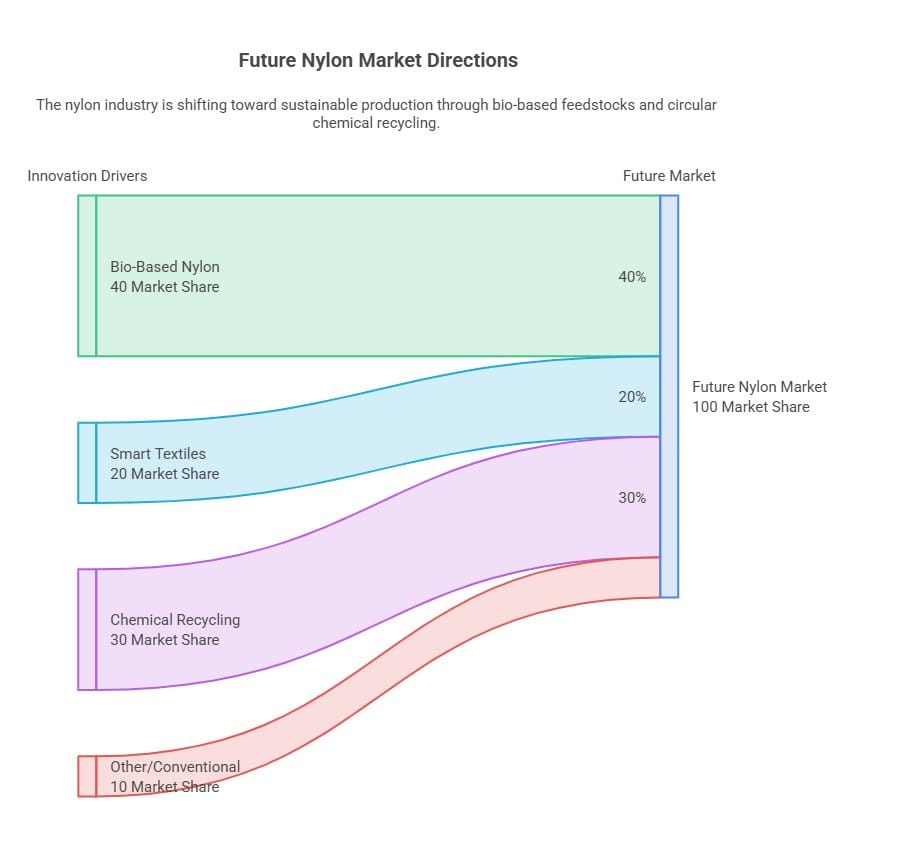
Visual overview of future developments and sustainability trends in the nylon industry.
The nylon industry is changing. Here are the directions it is heading.
Bio-Based Nylon
Researchers and manufacturers are developing nylon made from plant-based materials instead of petroleum. Nylon 11, made from castor oil, is already commercially available. Newer innovations like nylon 5,10, derived from castor plant-based sebacic acid, cut CO2 emissions by around 35% compared to conventional nylon without sacrificing performance.
Smart Textiles
Nano-treated nylon fabrics are being engineered to regulate temperature, respond to moisture, and even incorporate electronic sensors. The ability to engineer nylon at the molecular level makes it an ideal base material for these kinds of applications, more so than most natural fibers.
Chemical Recycling at Scale
Chemical recycling, which breaks nylon down to its original monomers and rebuilds it, is expanding. This approach maintains 100% of the performance properties of new nylon without the petroleum input. As the technology scales, the currently small share of recycled nylon in the global market is expected to grow significantly through 2030 and beyond.
Nylon’s story started in a chemistry lab in the 1930s, and chemistry is still the engine driving where it goes next. For a broader look at what other fabric trends are emerging, our 2026 fabric trends guide covers the wider picture.
Frequently Asked Questions About Nylon Fabric
What kind of fabric is nylon?
Nylon is a synthetic fabric made from polyamide fibers derived from petroleum. It was the world’s first fully man-made textile fiber, created in the 1930s. On garment labels, it may also appear as “polyamide.” Both terms refer to the same material.
Is nylon a polyester or polyamide?
Nylon is a polyamide. Polyester is a separate synthetic material with a different chemical structure. Both are petroleum-based, but they have different properties, textures, and performance characteristics.
Is nylon the same as polyester?
No. Both are synthetic fabrics made from petroleum, but their chemical structures are completely different. Nylon tends to be softer, more elastic, and more abrasion-resistant. Polyester handles UV exposure better and generally costs less.
Is nylon stronger than polyester?
Generally yes. Nylon has higher tensile strength and better abrasion resistance, which is why it is the preferred choice for bags, ropes, and outdoor equipment that gets heavy use.
Is 100% nylon safe to wear?
For most people, yes. Pure nylon is chemically stable in its finished fabric form and does not release harmful substances during normal wear. Those with sensitive skin may react to the synthetic fiber or to dyes used during production. Cotton is generally the safer option for skin-sensitive individuals.
Is nylon basically plastic?
At a chemical level, yes. Nylon is derived from petroleum and belongs to the same family as plastic. Through the manufacturing process, however, it becomes ultra-fine fibers that feel and function very differently from conventional plastic materials.
Is nylon a breathable fabric?
Standard woven nylon is not very breathable compared to cotton or linen. However, nylon mesh, microfiber nylon, and performance-engineered varieties can be quite breathable. Breathability depends more on weave structure and denier than on the fiber type alone.
What are the three main types of nylon?
The three most common are Nylon 6, which is softer and used in apparel; Nylon 6,6, which is stronger and used in gear and industrial applications; and Nylon 11 or 12, which is semi-bio-based and used in specialty applications.
Can you sew with nylon fabric?
Yes, though it requires a bit of care. Nylon is slippery and shifts when cutting and sewing. Use sharp scissors or a rotary cutter, a fine sharp needle (size 70/10 or 80/12), and sew at a reduced speed. A walking foot helps with even feeding. For waterproof nylon, seams may need seam sealing tape.
Does nylon shrink in the wash?
Nylon is generally resistant to shrinkage. However, high heat in the dryer can cause it to warp or slightly shrink. Always wash in cold or warm water and dry on a low or no-heat setting.
Is nylon a luxury fabric?
Not traditionally. However, high-grade recycled nylon such as ECONYL is used by luxury brands including Prada, Gucci, and Stella McCartney. Nylon can and does occupy a premium space in modern fashion.
Conclusion
Nylon has had one of the most remarkable journeys of any material in textile history. It started as a lab experiment, became a wartime necessity, sparked riots at department stores, and is now woven into nearly every corner of modern life.
It is not a perfect fabric. The environmental cost of virgin nylon production is real and significant. It is not the most comfortable choice in hot weather, and people with sensitive skin may find natural fibers more suitable. These are fair points, and they are worth knowing before you buy.
But nylon’s strengths are also genuinely impressive. No other fabric at the same weight delivers the same combination of strength, stretch, water resistance, and durability. That is why it is still here, nearly 90 years after Wallace Carothers first created it in a DuPont laboratory.
Key Takeaways
- Nylon is a synthetic polyamide fabric made from petroleum. On labels, it may appear as “polyamide.”
- It comes in several forms including ripstop, ballistic, tricot, taffeta, mesh, tulle, and microfiber, each suited to different purposes.
- Nylon is stronger, more elastic, and more abrasion-resistant than polyester, but generally costs more and handles UV exposure less well.
- Compared to cotton, nylon is more durable and dries faster, but is less breathable and not biodegradable.
- For most healthy adults, 100% nylon is safe to wear. Those with sensitive skin should choose natural fibers for skin-contact garments.
- Proper care: cold or warm water, no bleach, low heat drying, no high-temperature ironing.
- The most sustainable option is recycled nylon. Look for ECONYL certification or GRS-certified recycled content.
- Bio-based nylon and smart textile applications are already in development, keeping nylon relevant well into the future.
This is the first article in our nylon series. Coming next: dedicated guides for home sewists working with nylon, fashion students studying synthetic textiles, and small business owners sourcing and selling nylon fabric products.
Not sure which fabric is right for your project?
Try the Fabric Identification Quiz or the Interactive Fabric Selector Tool to find your perfect match.
References
- Baleaf Sports. (2023). What Is Nylon Fabric: History, Properties, How It Is Made, and Uses. baleaf.com
- ECONYL by Aquafil. (2025). Sustainability: The ECONYL Regeneration System. econyl.aquafil.com
- OneWind Outdoors. (2024). Recycled Nylon: Environmental Benefits and Lifecycle Data. onewindoutdoors.com
- Patagonia. (2026). Nylon: Virgin and Recycled. patagonia.com
- Good On You. (2025). Material Guide: How Sustainable Is Nylon? goodonyou.eco
Disclaimer: The information in this article is provided for general educational and informational purposes only. While every effort has been made to ensure accuracy, fabric properties, sustainability data, and industry figures can vary by manufacturer, product grade, and testing methodology. This article does not constitute professional textile, medical, or environmental advice. Always check garment care labels and consult the manufacturer’s guidance for specific products. References to third-party brands and certifications are for illustrative purposes and do not constitute endorsement. Clothing Digest is not responsible for any decisions made based on the information provided here.