
A technical and educational guide for fashion and apparel students who need to understand nylon beyond the basics, from fiber science and industry applications to design considerations and sustainability.
At some point during your fashion or apparel studies, you will encounter nylon. It will appear on a fabric label, come up in a textiles module, or sit on the bolt at a supplier when you are sourcing for a collection. And when it does, knowing what it actually is, how it behaves, and why designers choose it will set your work apart from those who just know what it looks like.
This guide is written for students who want to go beyond surface-level knowledge. It covers the science behind nylon’s properties, how the manufacturing process shapes its performance characteristics, how it is used across different market segments, and what you need to know when selecting or specifying it for design work. The main article in this series covers the general overview; this one goes deeper on the technical and professional side.
For the full history and general overview of nylon fabric, see our complete nylon fabric guide.
Why Nylon Matters to Fashion Students
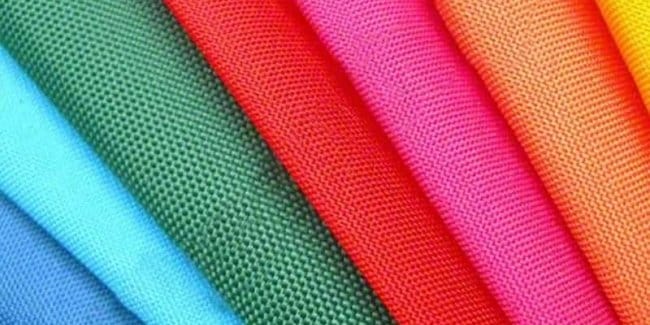
Vibrant nylon fabrics highlighting the importance of nylon in fashion design and textile education.
Understanding synthetic fibers is not optional in modern fashion education. Nylon and polyester together account for the majority of global fiber production, and nylon specifically appears in nearly every category of apparel, from the cheapest fast fashion basics to runway collections from Prada and Gucci.
Fashion and apparel programs teach textile science because understanding a material’s properties is what allows a designer to make informed decisions about fit, silhouette, performance, and durability. The gap between a garment that works and one that fails often comes down to fabric selection. Getting nylon right means understanding why it behaves the way it does, not just memorizing that it is “strong” or “synthetic.”
According to a study published in the journal International Journal of Fashion Design, Technology and Education, there is a fundamental need for students to understand the properties of established textiles like nylon and polyester in order to effectively design and develop products.[1] Understanding fiber properties is already a component of secondary and undergraduate fashion curricula, but depth of knowledge varies significantly between programs.
What follows in this guide is the depth that a textile module introduction may not have time to cover. The goal is to give you a working technical vocabulary and a clear framework for thinking about nylon as a design material.
Fiber Science: What Nylon Actually Is
Nylon is a synthetic polyamide polymer. To unpack that phrase: it is man-made (synthetic), its molecular backbone contains repeating amide bonds (polyamide), and it is formed into long chain-like molecules (polymer).
The amide bond is what gives nylon its distinctive performance properties. Amide bonds form relatively strong intermolecular connections through hydrogen bonding, which is why nylon fibers are more resistant to deformation and abrasion than many other synthetics. It also contributes to the fiber’s moderate crystallinity, meaning the polymer chains arrange themselves in both ordered (crystalline) and disordered (amorphous) regions. The balance between these two regions affects how nylon stretches, recovers, and takes on dye.
The Amide Bond: Why It Matters for Design
For a student who does not need to memorize organic chemistry, the key practical point is this: the amide linkage in nylon creates a fiber that is both strong and somewhat flexible. Unlike purely rigid polymers, nylon can stretch to a degree and recover its shape, which makes it suitable for close-fitting garments. The amide bond also makes nylon receptive to acid dyes, which is why it accepts color differently from polyester and why the dyeing process for nylon is distinct from other synthetics.
Crystallinity and Heat Setting
The crystallinity level in nylon rises significantly when the fiber is heat-set during manufacturing. Heat-setting is what gives finished nylon garments their dimensional stability. When a nylon fabric is exposed to steam or dry heat at the right temperature during production, the polymer chains lock into a more ordered arrangement. This is why heat-set pleats hold in nylon fabrics and why the fabric returns to its original shape after stretching.
This is also why nylon is heat-sensitive in use: exposing it to temperatures above its heat-set point can cause the molecular structure to reorganize, which permanently distorts the fabric. That is the scientific reason behind the practical warning not to iron nylon at high temperatures.
Polyamide. Molecular chain linked by amide bonds (-CO-NH-). This bond structure creates hydrogen bonding between chains.
Moderately crystalline at 35-45%. Crystallinity increases with drawing, spinning, and heat-setting. Higher crystallinity means greater stiffness and dimensional stability.
Nylon 6 absorbs around 4% moisture by weight (called moisture regain). Nylon 6,6 is slightly lower at around 3.5-4%. Both are lower than natural fibers like cotton (8%) or wool (14-18%).
Breaking length of 40-50 km, which is higher than most other textile fibers at equivalent weight. This is the science behind nylon’s durability.
Nylon 6,6 recovers 100% of its shape after being stretched by up to 8%. This makes it ideal for fitted garments that need to retain shape over time.
Nylon 6 melts at approximately 220°C (428°F). Nylon 6,6 at approximately 265°C (509°F). Both melt rather than char, which is why high heat causes permanent damage.
Nylon 6 vs Nylon 6,6: What the Numbers Mean
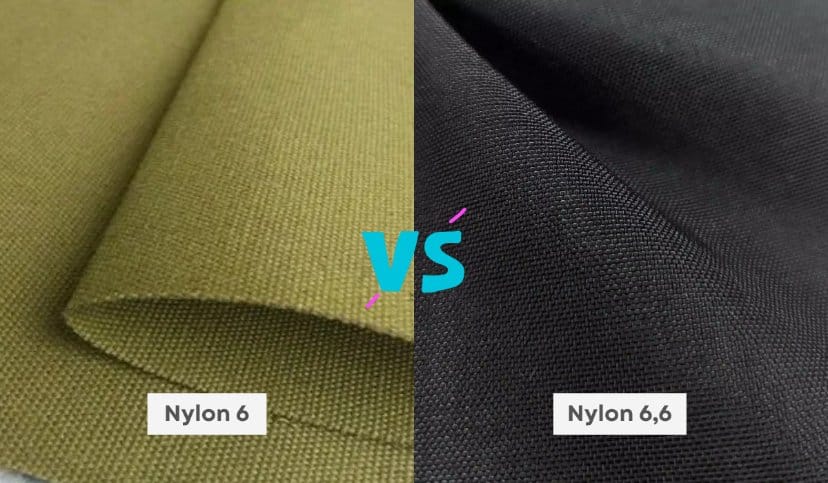
Nylon 6 and Nylon 6,6 fabrics compared for durability, strength and textile applications.
The numbers in nylon’s name tell you something about the polymer’s chemical structure. Specifically, they indicate how many carbon atoms are in the monomer units used to build the polymer chain.
Nylon 6 is made by ring-opening polymerization of a single monomer, caprolactam, which contains 6 carbon atoms. The result is a polymer with repeating units of 6 carbons.
Nylon 6,6 is made by condensation polymerization of two different monomers: hexamethylene diamine (6 carbons) and adipic acid (6 carbons). The two numbers refer to the carbon counts of each monomer respectively.
This distinction in chemistry produces real, practical differences in the finished fiber.
| Property | Nylon 6 | Nylon 6,6 |
|---|---|---|
| Melting Point | ~220°C (428°F) | ~265°C (509°F) |
| Feel | Softer, more flexible | Slightly stiffer, more rigid |
| Dyeability | Easier to dye, more uniform color uptake | Slightly harder to achieve level dyeing |
| Abrasion Resistance | Good | Better |
| Moisture Absorption | Slightly higher | Slightly lower |
| Production Cost | Lower | Higher |
| Primary Use in Apparel | Hosiery, activewear, tricot, lingerie | Technical gear, bags, industrial applications |
| Recyclability | Easier to chemically recycle (single monomer) | More complex to recycle chemically |
For most apparel applications, Nylon 6 is the dominant choice because of its softer hand, better dyeability, and lower cost. Nylon 6,6 dominates in gear, luggage, and industrial applications where higher melting point and abrasion resistance outweigh cost. Understanding this distinction helps when reading supplier specifications and when evaluating whether a fabric is appropriate for a specific design application.
For your specifications: When sourcing fabric for a collection, always ask suppliers to confirm whether the nylon is type 6 or 6,6. This affects dyeing compatibility, heat tolerance, and performance expectations. Do not assume all nylon performs the same way just because it shares the generic name.
From Polymer to Fabric: The Manufacturing Chain
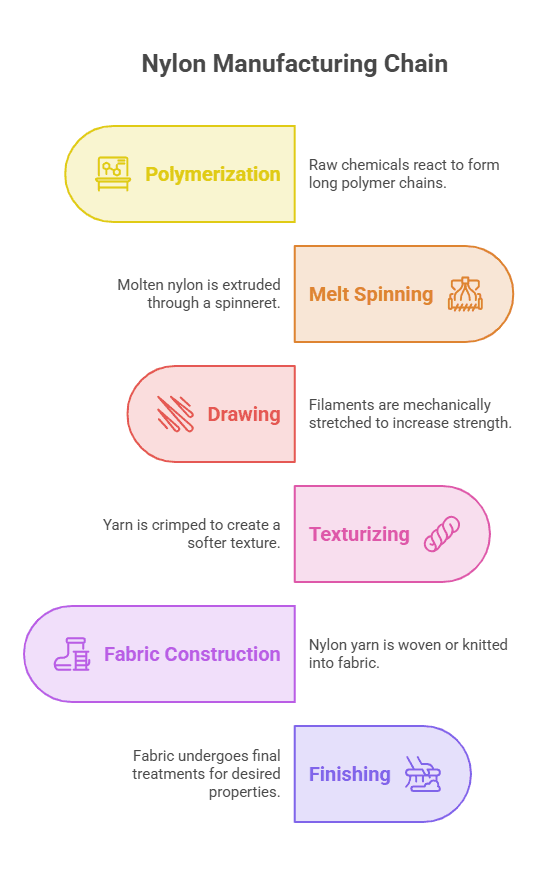
Step-by-step overview of how nylon fibres and fabrics are manufactured.
Understanding how a fiber is made helps you understand why it behaves the way it does in use. Here is the production chain from raw polymer to finished fabric, with the design-relevant implications at each stage.
1. Polymerization
The raw chemical inputs (either caprolactam for Nylon 6, or hexamethylene diamine and adipic acid for Nylon 6,6) are reacted under heat and pressure to form long polymer chains. The degree of polymerization affects molecular weight, which in turn affects the fiber’s strength and melt viscosity. Higher molecular weight nylon produces stronger, more durable fibers but is harder to process.
2. Melt Spinning
The nylon polymer is melted and extruded through a spinneret, a metal plate with dozens or hundreds of tiny holes. Each hole produces a continuous filament. The diameter of the holes and the speed of extrusion determine the filament’s denier (weight per unit length). A 15-denier filament, for example, produces the fine sheer nylon used in hosiery. A 1680-denier filament produces the thick yarns used in ballistic nylon bags.
This is why nylon can be made into radically different fabrics from the same basic polymer: the spinneret geometry and processing speed are the main variables.
3. Drawing
After spinning, the filaments are mechanically stretched (drawn) to several times their original length. This orients the polymer chains along the fiber axis, dramatically increasing tensile strength and reducing extensibility. The drawing ratio is one of the key parameters that determines a fiber’s mechanical properties. More drawing means a stronger, less elastic fiber. Less drawing means a softer, more elastic fiber.
4. Texturizing (for knit and activewear fabrics)
Flat filament yarn is smooth and somewhat slippery when woven or knitted. For apparel fabrics that need a softer, more natural hand, the yarn is texturized by processes that introduce crimp, loops, or coils into the filaments. Texturized nylon yarn produces fabrics that are softer, bulkier, and more breathable than flat-filament nylon. Most nylon activewear and lingerie fabrics use texturized yarn.
5. Fabric Construction
Nylon yarn is turned into fabric by weaving or knitting. The construction method fundamentally affects performance:
- Woven nylon (ripstop, taffeta, ballistic) has a denser structure, less stretch, better tear resistance, and a crisper hand. Suitable for outerwear, bags, and technical applications.
- Knitted nylon (tricot, jersey, circular knit) has inherent stretch from the loop structure, a softer hand, and better drape. Suitable for activewear, swimwear, lingerie, and garments needing body conforming stretch.
6. Finishing
After construction, nylon fabric undergoes finishing treatments that significantly alter its performance and hand. These include:
- DWR (Durable Water Repellent) treatment: Applies a coating that causes water to bead on the surface. Standard for outerwear and technical fabrics.
- Calendering: Passing the fabric through heated rollers to create a smooth, flat, or shiny surface. Used to make nylon taffeta crisper or nylon satin smoother.
- Brushing: Raising the surface fibers to create a soft, suede-like or peach-skin finish. Common in lingerie and premium activewear nylons.
- PU (polyurethane) coating: Adds a film to one side of the fabric, increasing waterproofing. Common in technical outerwear and bags.
- Antimicrobial finish: Applied to activewear and swimwear fabrics to reduce odor-causing bacteria. Relevant when specifying fabrics for high-intensity end uses.
The finishing stage is where luxury-grade nylon diverges from commodity nylon. Premium precision finishing including brushed surface treatments, matte calendering, and custom dyeing is what allows brands like Prada to position nylon as an aspirational material.[2]
Technical Properties for Designers
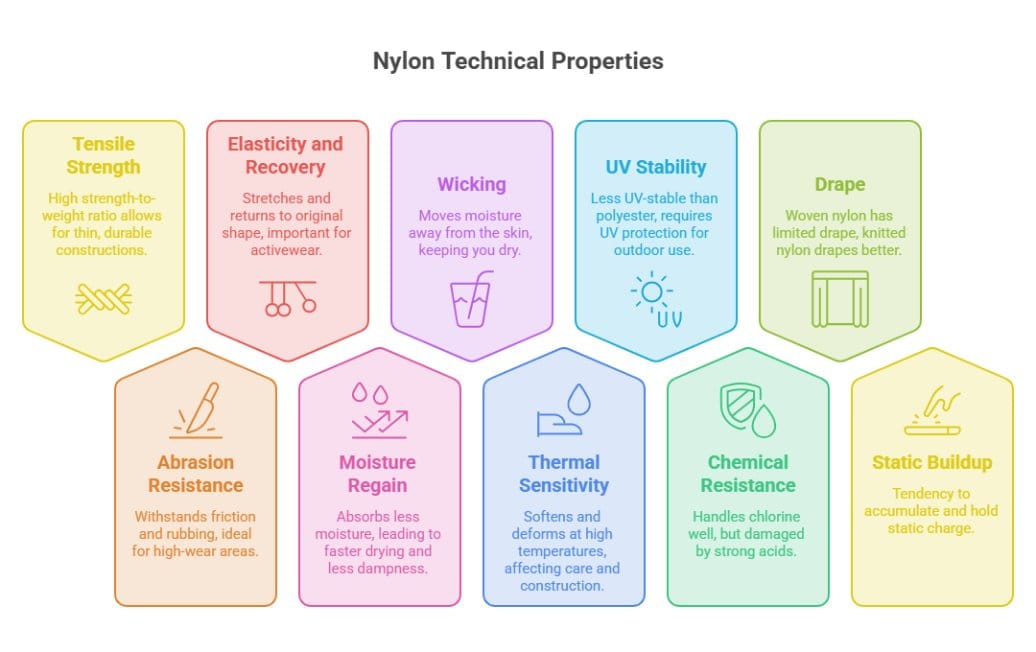
Visual guide to the key technical characteristics of nylon fabric for designers and textile professionals.
The following properties are the ones most relevant to design decisions. Understanding each one helps you predict how nylon will perform in a finished garment or product.
| Property | What It Means | Design Implication |
|---|---|---|
| Tensile Strength | The force required to break the fiber. Nylon’s is exceptionally high relative to its weight. | Lightweight nylon fabrics can withstand significant stress without tearing. Allows thinner, lighter constructions without sacrificing durability. |
| Abrasion Resistance | How well the fabric holds up to surface friction and rubbing. | Critical for bags, outerwear hems, cuffs, and any area that sees contact wear. Nylon outperforms most fabrics at equivalent weight. |
| Elasticity and Recovery | How much the fiber can stretch and how completely it returns to its original shape. | Important for garments that need to move with the body without bagging out. Nylon recovers better than polyester at equivalent denier. |
| Moisture Regain | The percentage of moisture the fiber absorbs at standard conditions (3.5-4% for nylon). | Nylon absorbs less moisture than cotton or wool, which means garments feel less damp against skin during activity. Also means they dry faster. |
| Wicking | The fabric’s ability to move moisture away from the skin surface to the outer face. | Wicking is a function of fabric construction and finish rather than fiber alone. A knit nylon activewear fabric can wick effectively; a dense woven nylon shell does not. |
| Thermal Sensitivity | The temperature at which nylon softens, deforms, or melts. | Limits garment care instructions. Affects pattern cutting (avoid friction heat from rotary cutters), pressing, and heat-bonding construction methods. |
| UV Stability | How well the fiber resists degradation from ultraviolet light exposure. | Nylon is less UV-stable than polyester. Outdoor end uses require either a UV-stabilized finish or acceptance that the fabric will yellow and weaken over time with direct sun exposure. |
| Chemical Resistance | Resistance to damage from chemicals including chlorine, cleaning agents, and body chemistry. | Nylon handles chlorine better than many fibers, which is part of why it is preferred for swimwear. However, strong acids can damage nylon fibers over time. |
| Drape | How the fabric falls and moves when unsupported. | Woven nylon has limited drape compared to silk, viscose, or chiffon. Knitted nylon and fine tricot nylon drape better. Nylon chiffon and nylon satin offer drape comparable to their natural fiber counterparts at a lower price point. |
| Static Buildup | The tendency to accumulate and hold static charge. | Nylon clings to other synthetic fabrics and skin. Lining garments in natural fibers or applying anti-static finish reduces this. Relevant for garment layering and customer comfort. |
Dyeing, Finishing, and Color Performance
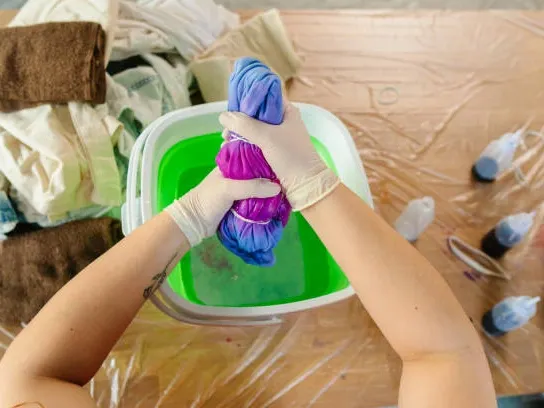
Nylon fabric being dyed to achieve vibrant colours and enhanced textile performance.
Nylon’s dyeing chemistry is one of the more distinctive things about it as a textile, and understanding it is useful when specifying or sourcing fabrics, particularly for collections where color accuracy and consistency matter.
How Nylon Takes Dye
Nylon is dyed primarily with acid dyes or disperse dyes, depending on the application. Acid dyes bond directly to the amide groups in the nylon molecule and produce vibrant, deep colors with generally good wash fastness. They require an acidic bath (hence the name) and moderately high temperatures.
This is fundamentally different from polyester, which is dyed with disperse dyes at very high temperatures, or cotton, which requires reactive or vat dyes. This means that in a nylon-polyester blend, achieving level dyeing across both fibers in a single dye bath can be technically challenging. Designers and product developers specifying blended fabrics need to account for this when expecting consistent color performance across the fabric surface.
Color Fastness Considerations
Nylon generally holds color well through washing, but it is more prone to light fading than polyester when exposed to UV radiation. For outdoor apparel or products that see extended sun exposure, specifying a UV-stabilized nylon or a UV-protective finish is worth considering at the design stage rather than discovering the issue after production.
Nylon and Digital Printing
Digital printing on nylon has become more accessible in recent years. Acid-based ink jet printing can produce photographic-quality prints directly onto nylon fabric with vibrant color saturation. This is relevant for designers working on limited-run collections or sampling, where printing on nylon fabric offers different aesthetic possibilities than weaving or knitting pattern elements. The smooth surface of woven nylon taffeta accepts digital prints with very sharp edge definition.
Finishing and Hand
The finishing treatments applied after dyeing have an enormous effect on how nylon fabric actually feels and how it behaves in construction. Two fabrics with identical fiber content can feel completely different depending on whether they have been brushed, calendered, silicone-coated, or treated with a softener. When sourcing, always request a swatch and test it physically against your design requirements rather than relying on written specifications alone.
Studio tip: When doing colorwork with nylon fabrics, be aware that different batches from the same supplier can have slight color variation, even with the same dye specification. For collections requiring strict color matching across multiple fabric components, ask for lot numbers and request that they dye all pieces from the same lot run.
Fabric Selection: Matching Nylon to Design Intent
Choosing the right nylon for a design is a question of matching the fabric’s physical properties to the demands of the garment. The questions below are a practical framework for thinking through this decision.
What silhouette are you creating?
Structured silhouettes with clean lines need a woven nylon with some body, such as taffeta or ripstop. Fluid, body-following silhouettes need a knit nylon or fine tricot. Very draped designs may require nylon chiffon or a fine microfiber nylon.
How much stretch do you need?
Woven nylon has minimal inherent stretch. Knit nylon has two-way stretch. Nylon-spandex has four-way stretch. For activewear, swimwear, or anything body-conforming, you need at least a knit construction, usually with a spandex component.
What performance does the end use require?
A raincoat shell needs a DWR-treated or PU-coated woven nylon. A sports bra needs a moisture-wicking nylon-spandex knit. A luxury bag needs high-denier ballistic or CORDURA nylon. Map the end-use performance requirements before selecting a fabric.
What weight do you need?
Measured in GSM (grams per square meter) or denier. A fine lingerie fabric might be 40-60 GSM. A bag fabric might be 200-400 GSM. Confirm fabric weight from suppliers and test it against your design intent.
How will the garment be cared for?
Nylon’s heat sensitivity means care instructions need to reflect this. A machine-washable cold label is appropriate. A tumble-dry low label needs testing. High-heat drying and high-temperature ironing are not appropriate for any nylon garment.
What are your sustainability commitments?
If your brand or design brief includes sustainability criteria, specify recycled nylon (ECONYL or equivalent) rather than virgin nylon. This needs to be established at the sourcing stage, not added as an afterthought. Ask suppliers for certification documentation.
Understanding Denier and GSM for Specifications
When writing a fabric specification for a brief or a supplier, you need to be precise about fabric weight. Nylon is specified in two ways depending on context:
- Denier (D) refers to the weight of the yarn, specifically the mass in grams of 9,000 meters of fiber. It is the standard unit for specifying yarn weight when ordering nylon by construction type (e.g., 70D ripstop, 420D ballistic nylon).
- GSM (grams per square meter) refers to the weight of the finished fabric and is the more relevant unit when comparing fabrics and specifying for production. Always confirm GSM in addition to denier when evaluating a sample.
For more on understanding fabric weight and selection for design, our guide to lightweight vs heavyweight fabrics covers these concepts across fabric types.
Need to compare fabric weights for a specification?
Use the Fabric Weight Calculator to convert between denier and GSM, or the Fabric Cost Comparison Calculator to evaluate cost per weight across fabric options.
Nylon Across the Industry: Where It Appears
Nylon is used across virtually every sector of the apparel and textile industry. Understanding where it appears and why helps you think about fabric selection in the context of real industry practice.
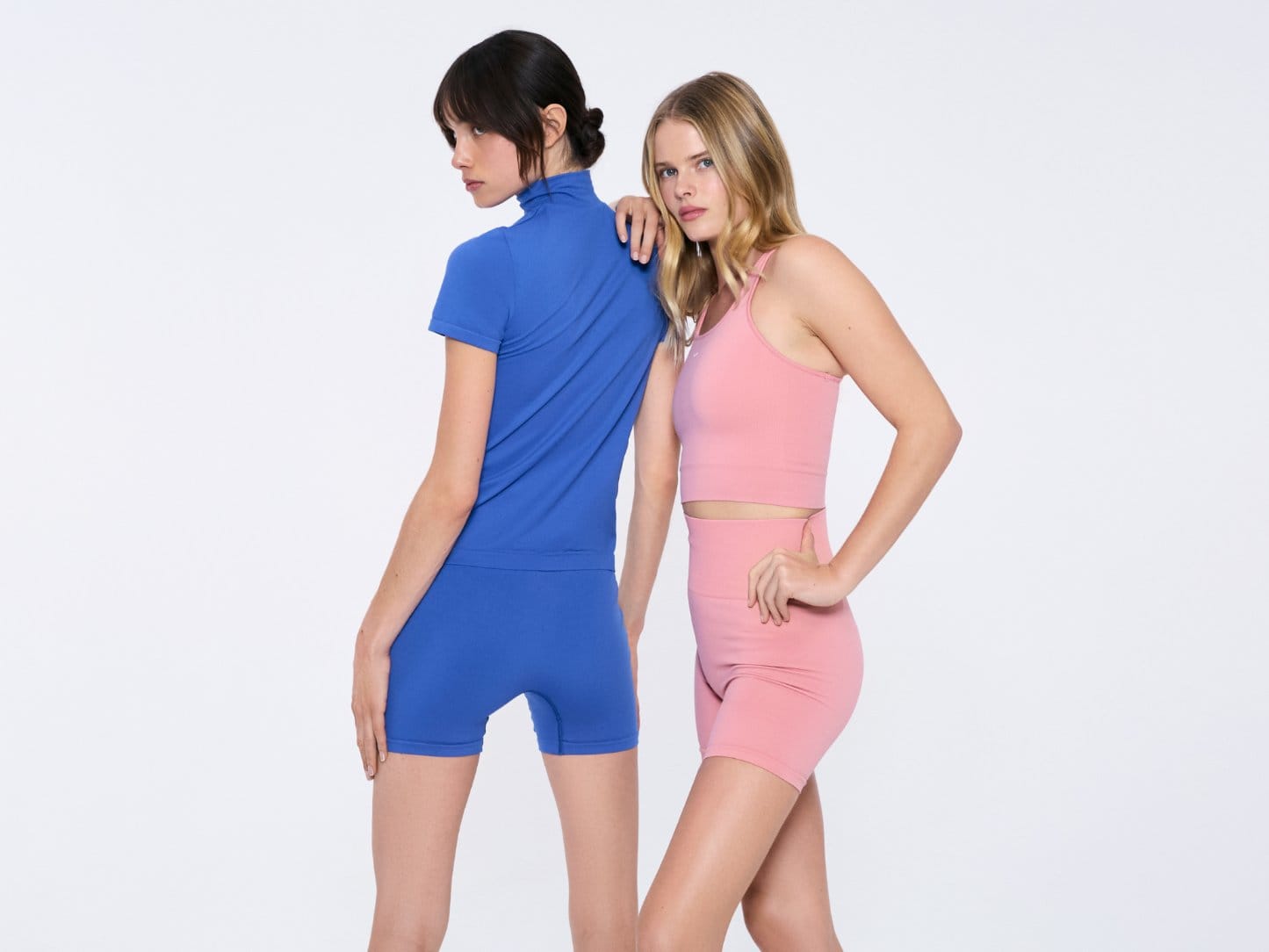
Nylon activewear and sportswear offering comfort, stretch and durability during exercise.
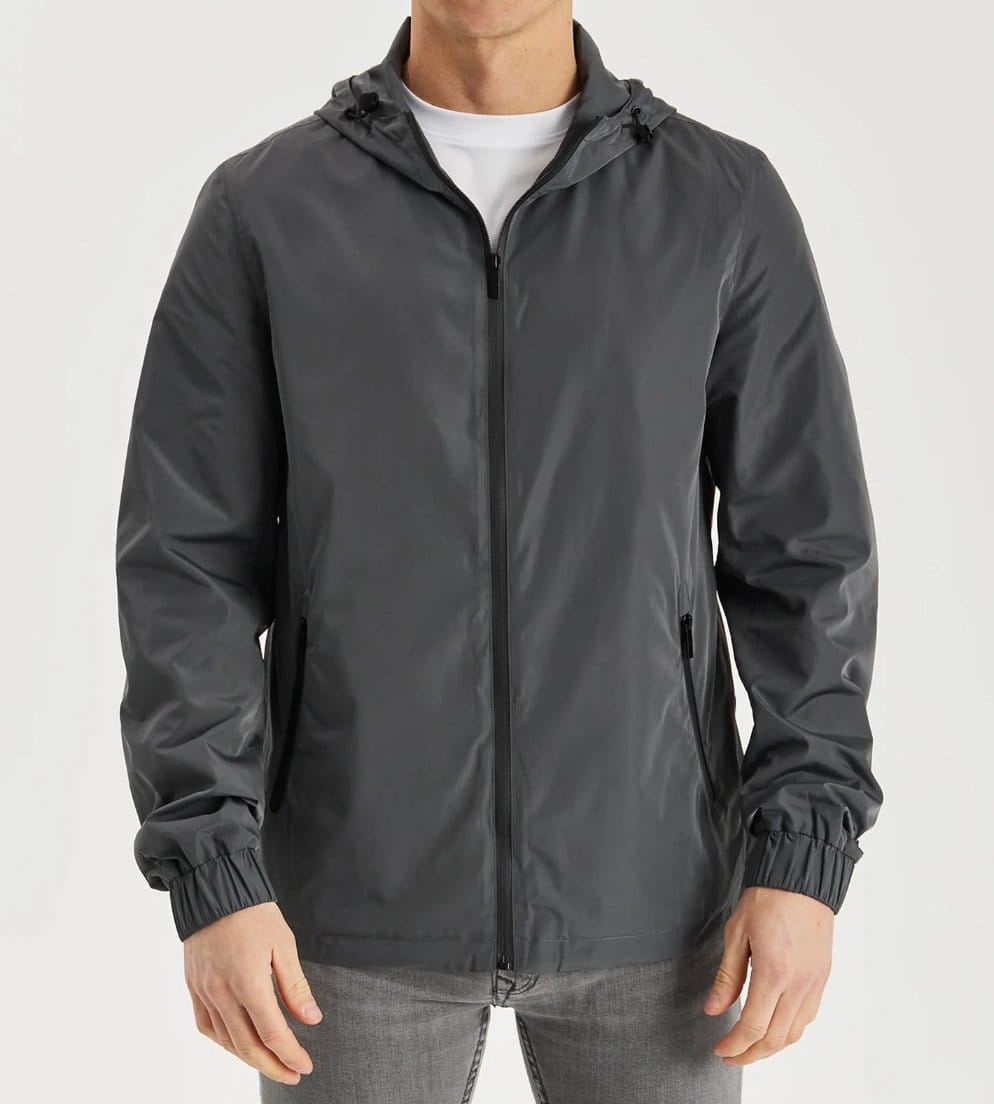
Nylon outerwear jacket offering water resistance, comfort and versatility.
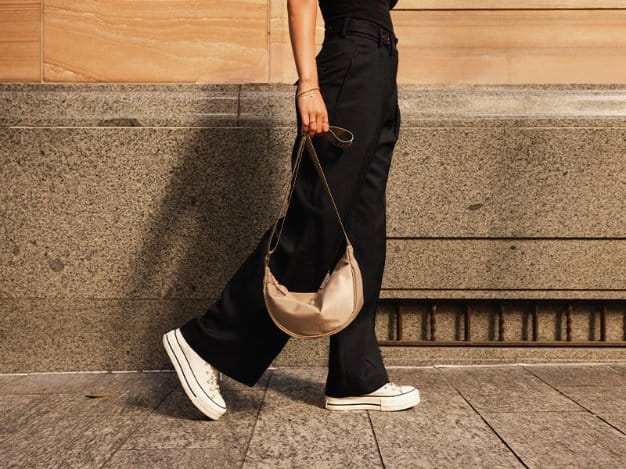
Nylon used in modern luxury fashion accessories combining practicality with premium design.
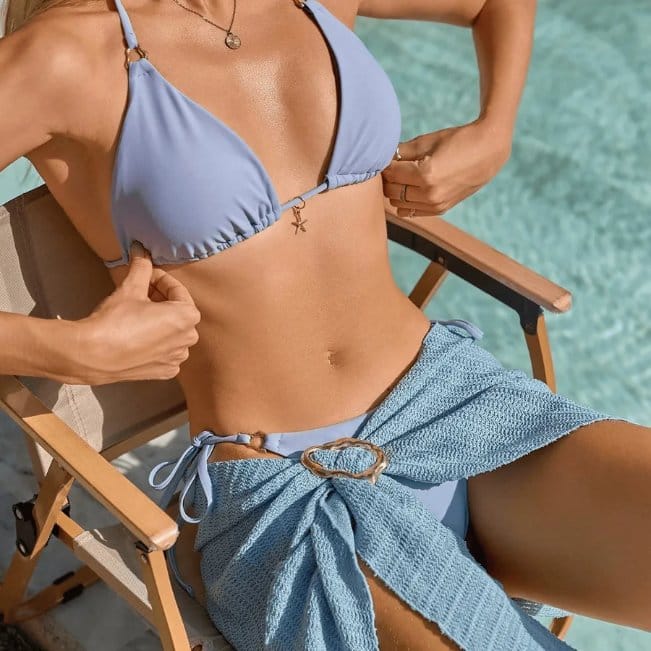
Nylon swimwear designed for flexibility, durability and water performance.
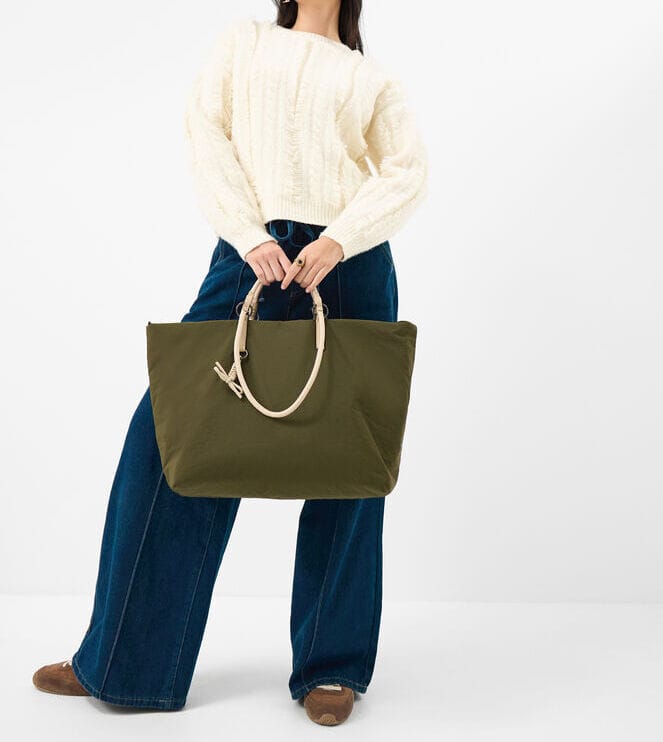
Nylon tote bag combining style, strength and functionality for daily use.
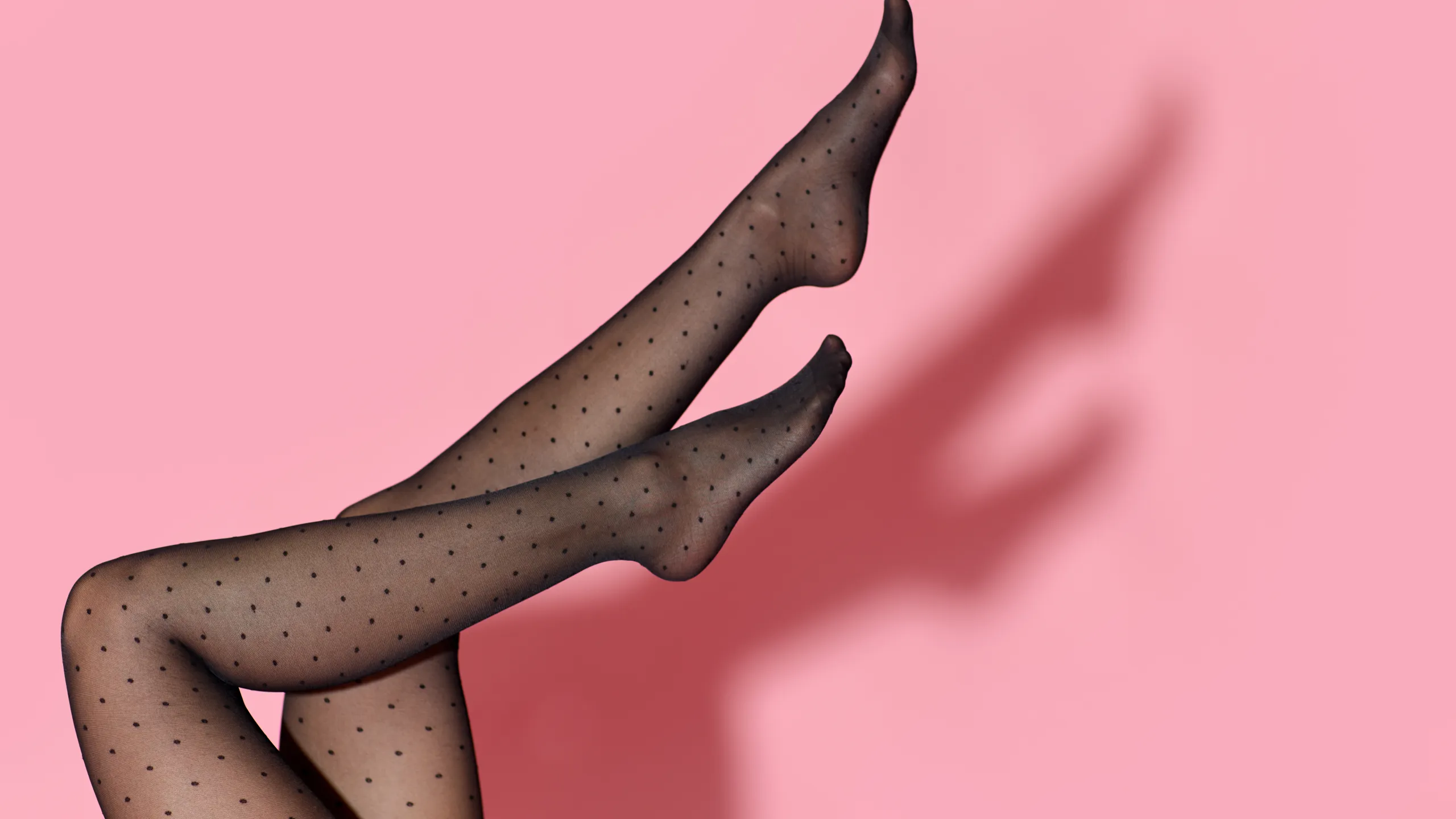
Nylon hosiery showcasing the fine, lightweight and flexible qualities of sheer nylon fabrics.
Understanding these categories helps position design decisions in a realistic industry context. A student designing activewear who specifies a woven taffeta nylon has made a material choice that goes against established industry practice. A student who specifies nylon-spandex knit with verified moisture-wicking performance is demonstrating fabric literacy.
Nylon in Luxury and High-Performance Fashion
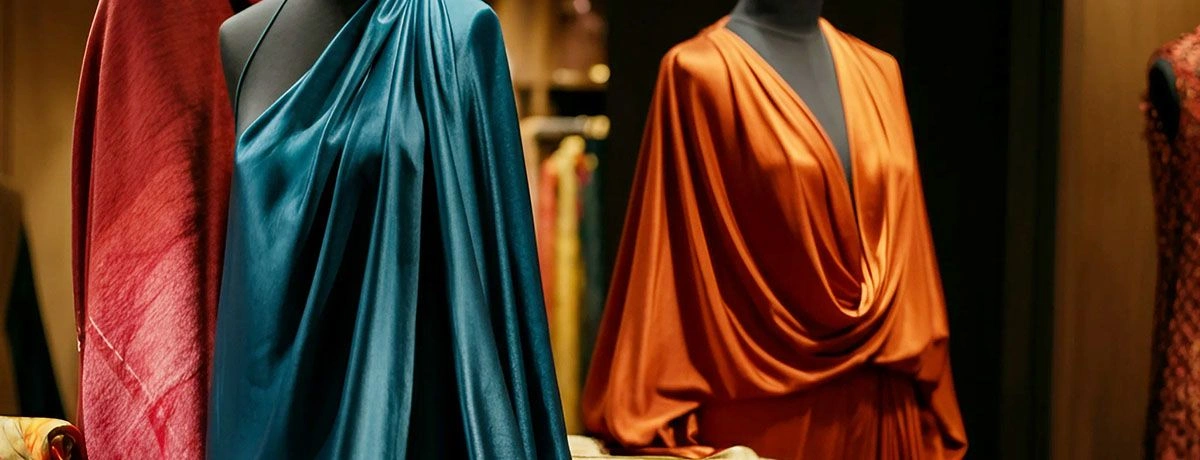
Nylon used in luxury fashion collections and high-performance apparel design.
Nylon occupies an interesting position in the market: it is simultaneously one of the cheapest synthetic fibers and a material used by some of the most prestigious fashion houses in the world. Understanding how and why this is possible is useful for a design student thinking about brand positioning and material strategy.
The Prada Effect
In 1984, Miuccia Prada launched a line of nylon backpacks and tote bags under the Prada brand. At the time, using an industrial synthetic material in luxury fashion was deliberately provocative. The bags became a cultural phenomenon, and the line is still in production today. This move demonstrated something important: luxury is not purely about material cost. It is about design authority, finish quality, and brand context.
The nylon Prada used was not standard commodity nylon. It was a proprietary Pocone nylon, woven to specific density and finished with precision. The perceived luxury came from the design, the construction quality, and the brand, not from the raw material cost.
What Makes Nylon Feel Luxurious
As noted in an analysis of why luxury brands choose nylon, the transformation from raw nylon to a premium textile happens almost entirely in the finishing stage. Calendering produces a smooth, refined surface. Brushing creates a soft peach-skin or suede-like hand. Custom dyeing with tight color tolerances and premium dye classes produces consistent, deep color. PU coatings add a structured weight and a distinctive sound (the rustle of a luxury nylon jacket is engineered, not accidental).[3]
For students thinking about fabric specification in a premium or luxury context, the lesson is: commodity nylon and luxury-grade nylon are the same polymer with very different finishing histories. Specifications need to be detailed about finish requirements, not just fiber content.
High-Performance Nylon in Technical Fashion
At the other end of the luxury spectrum, nylon also leads in high-performance technical fashion. The integration of nylon with smart textile technologies, conductive fibers, and nano-scale coatings is pushing the material into areas like biometric monitoring garments, adaptive camouflage in military wear, and thermoregulating activewear. Brands like Nike, Under Armour, and Google’s Project Jacquard have moved these technologies from research into commercial products.[3]
The common thread is nylon’s processability: its thermoplastic nature allows it to accept coatings, laminates, and embedded components in ways that natural fibers cannot.
Sustainability: The Environmental Picture
Sustainability is one of the most significant currents running through fashion education right now, and nylon sits in a complicated position within it. Students need to be able to discuss nylon’s environmental profile accurately, without either dismissing the concerns or overstating them.
The Problems with Virgin Nylon
Nylon production is petroleum-based and energy-intensive. The production of Nylon 6,6 in particular releases nitrous oxide (N2O) as a byproduct, a greenhouse gas with a global warming potential around 300 times that of CO2 over a 100-year period. Once a nylon product is discarded, it does not biodegrade meaningfully. It fragments into microplastics that persist in marine and terrestrial ecosystems. Every wash of a nylon garment releases microplastic fibers into the water system.
The Case for Recycled Nylon
Recycled nylon, most significantly produced as ECONYL by Italian manufacturer Aquafil, represents a genuine improvement on the virgin fiber’s environmental profile. ECONYL is chemically recycled from discarded nylon waste including ghost fishing nets, carpet flooring, and pre-consumer production waste. The regeneration process returns the polymer to its original monomer form, producing fiber with identical performance to virgin nylon.
Published lifecycle analysis data shows that recycled nylon production saves 71-80% of the energy required to make virgin nylon, reduces CO2 emissions by 69-76%, and uses 54-58% less water. For every 10,000 tonnes of ECONYL produced, approximately 70,000 barrels of crude oil are saved, according to Aquafil’s regeneration data.[4]
The Microplastics Issue
One important caveat: recycled nylon still sheds microplastics when washed, just as virgin nylon does. Recycling addresses the production-side environmental cost but does not solve the use-phase microplastic problem. This is an area of active research and innovation. Washing bags like the Guppyfriend capture microplastic fibers in the wash, and some brands are exploring fiber encapsulation technologies to reduce shedding at source. Students designing with synthetic fabrics should be prepared to address this when discussing garment care and end-of-life.
Sustainability Certifications to Know
- ECONYL: Aquafil’s certified regenerated nylon program. Requires chain-of-custody documentation.
- GRS (Global Recycled Standard): Third-party certification for recycled content claims, including recycled nylon. Covers chain of custody from recycled input to finished product.
- bluesign: A system standard for sustainable textile production that covers resource efficiency, consumer safety, and worker protection. Relevant when assessing a nylon fabric manufacturer’s overall sustainability practices.
- OEKO-TEX Standard 100: Tests finished textiles for harmful substances. Does not address environmental impact of production, but relevant for skin-safety claims on nylon garments.
For a comprehensive overview of how nylon’s environmental profile compares to other common synthetics, see our article on natural vs synthetic fabrics.
The Nylon Market: Industry Context
Fashion students benefit from understanding the commercial context of the materials they work with. Nylon is not a niche specialty fabric. It is one of the largest global fiber markets.
The textile and apparel sector accounts for a significant portion of global nylon consumption, with the nylon fabrics market specifically valued at approximately $4.5 billion in 2025, projected to reach $6.9 billion by 2034.[5] The growth is being driven by performance sportswear, technical outerwear, and the expanding activewear market.
Key Producers
The global nylon supply chain is concentrated in Asia-Pacific, with China, Taiwan, and South Korea as the dominant producers of nylon yarn and fabric. Major global producers of nylon polymer include INVISTA (producers of the Tactel and CORDURA brands), Toray Industries, BASF, Ascend Performance Materials, and Asahi Kasei Corporation. Understanding the supply chain geography is relevant when students are doing collection sourcing, since lead times, minimum order quantities, and sustainability certification availability vary significantly by region and supplier scale.
The Activewear and Athleisure Trend
One of the strongest growth drivers for nylon in the fashion sector is the continued expansion of athleisure. The blurring of boundaries between performance garments and everyday wear has brought nylon-spandex fabrics into categories where they were rarely seen before, including casual trousers, overshirts, and even formal-adjacent garments. Students designing in this space need to understand that the technical requirements of the fabric (moisture management, four-way stretch, abrasion resistance) are as relevant in a casual garment context as in a pure sportswear context, because consumer expectations have been shaped by high-performance activewear.
Nylon vs Competing Fibers: A Design Decision Framework
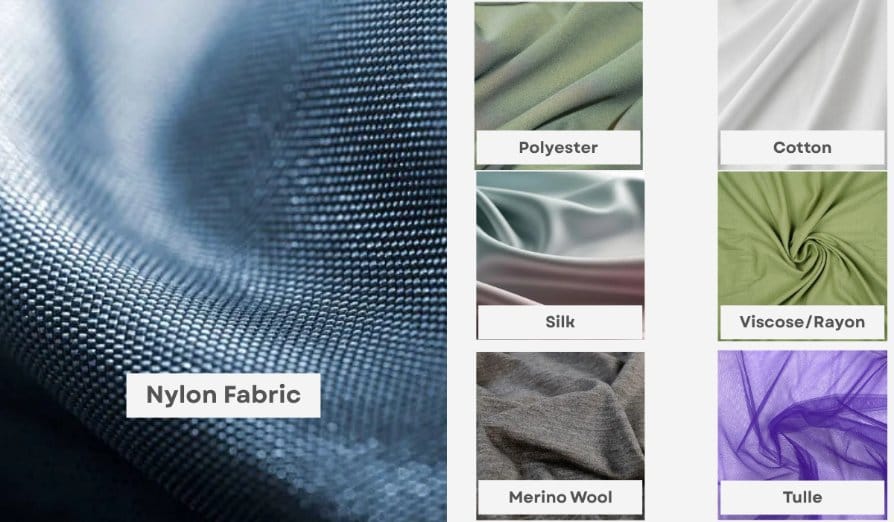
Nylon compared with popular natural and synthetic textile fibres.
In practice, fabric selection often comes down to choosing between nylon and a close alternative. Here is how to think through those comparisons at the design stage.
| Comparison | When Nylon Wins | When the Alternative Wins |
|---|---|---|
| Nylon vs Polyester | When you need higher abrasion resistance, softer hand, greater elasticity, or superior swimwear performance | When budget is a priority, UV stability matters more, or you need printed fabrics (polyester accepts sublimation printing better) |
| Nylon vs Cotton | When durability, moisture management, packability, or weight savings are priorities | When breathability, natural feel, biodegradability, or mass-market appeal to natural-fiber customers are priorities |
| Nylon vs Silk | When durability, ease of care, cost, or water resistance matter; for performance end uses that would destroy silk | When natural temperature regulation, true luxury provenance, sustainable natural fiber credentials, or specific aesthetic properties of silk are needed |
| Nylon vs Viscose/Rayon | When durability, moisture management, and structural integrity under stress matter | When drape, breathability, semi-natural fiber positioning, or a softer fluid silhouette are the design priority |
| Nylon vs Merino Wool | When cost, durability, quick-dry performance, or synthetic fiber is necessary | When natural odor resistance, temperature regulation, sustainable natural fiber claims, or next-to-skin softness in a natural fiber are the priorities |
For a detailed comparison of nylon against individual fibers including polyester, cotton, and silk, our complete nylon fabric guide covers each comparison in depth.
Working with Nylon in the Studio
Fashion students encounter nylon in a studio or workshop context differently from home sewists. The focus is typically on understanding the material’s behavior for design development rather than production sewing, though both skill sets are relevant.
Draping with Nylon
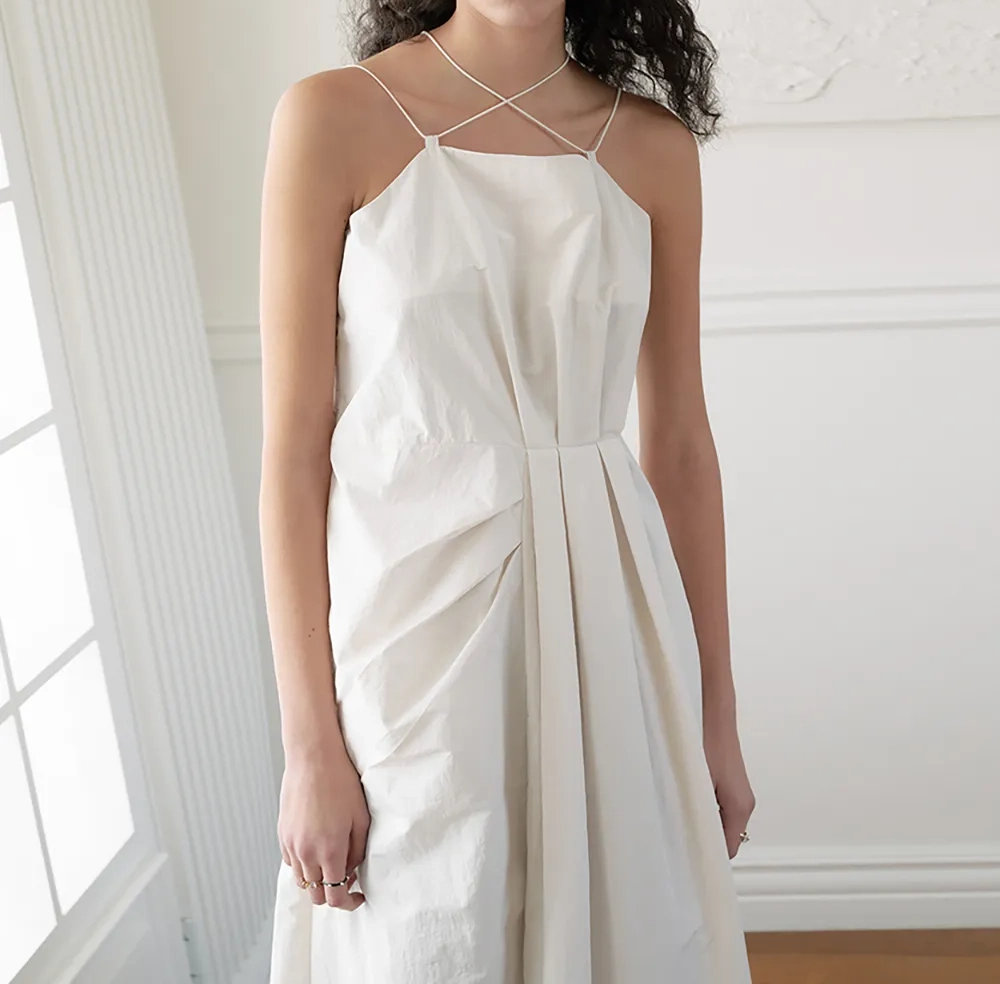
Nylon fabric draped into a contemporary garment showcasing its versatility in fashion design.
Nylon is not an ideal draping fabric for most silhouette exploration. Woven nylon (taffeta, ripstop) has a different behavior from the muslin or calico typically used for draping because it is slippery and does not respond to shaping and pinning the way woven cotton does. For initial draping work, use calico or a similar cotton stand-in to develop the shape, then confirm the design intent with the actual nylon fabric in toile form. Fine microfiber nylon or nylon chiffon can be draped directly, but requires more patience and different pinning technique than natural fabrics.
Creating Toiles in Nylon

Garment toile used to test fit, structure and design details before final production.
When working on technical outerwear or bags, making a toile in a cheaper nylon fabric (basic ripstop or taffeta) is more informative than making it in calico, because the behavior of the actual material type matters for construction decisions. The way nylon feeds through a machine, how it takes seam allowances, and how corners and curves behave are all different from cotton, and a calico toile will not reveal these issues.
Pattern Adjustments for Nylon
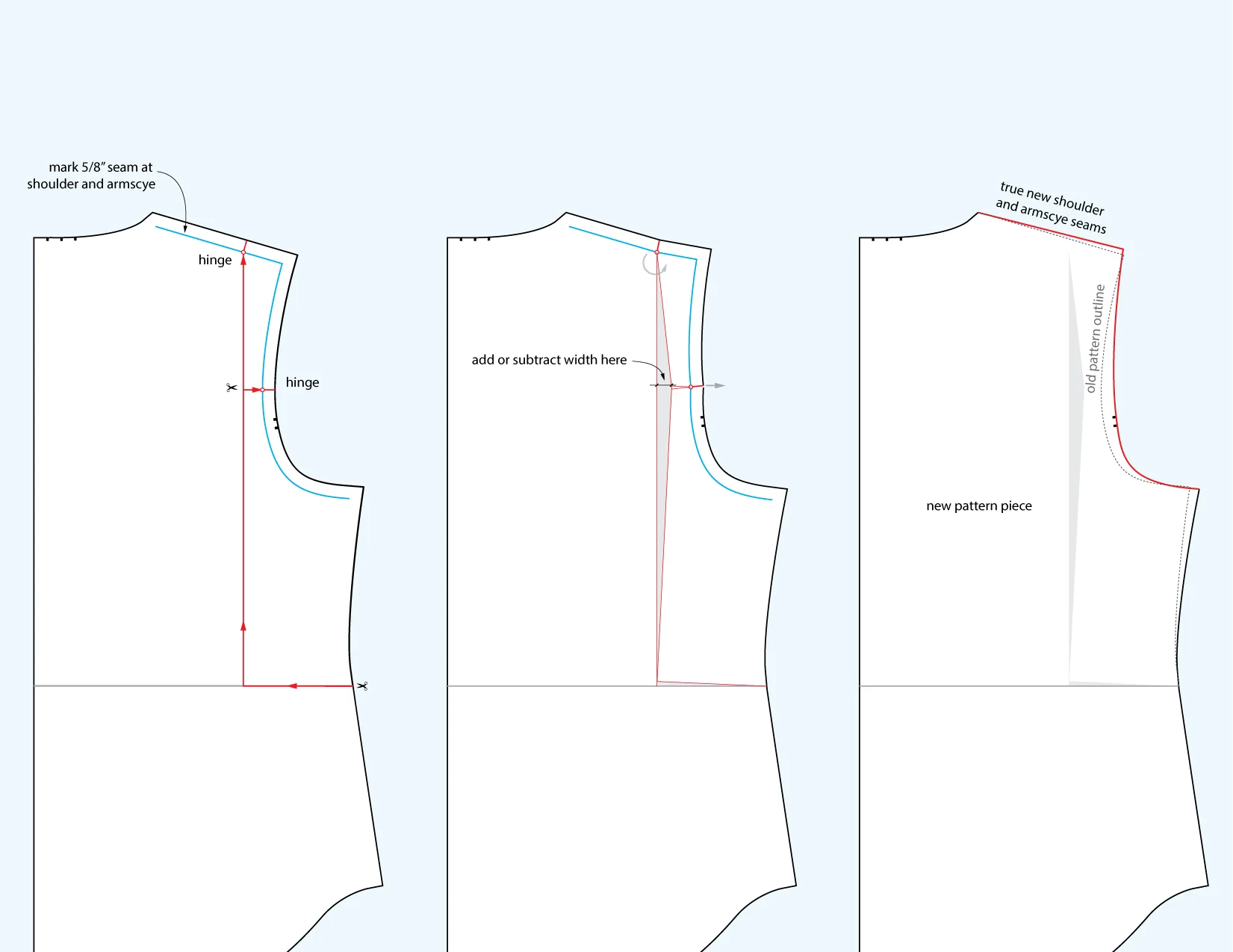
Pattern drafting adjustments for successful nylon garment construction.
When adapting a woven garment pattern for nylon taffeta or similar fabrics, seam allowances of at least 1.5 cm are advisable because of the fabric’s tendency to fray and its slippery handling. For knit nylon-spandex patterns, stretch percentages need to match the fabric’s actual stretch: a pattern designed for 50% stretch will not work correctly in a fabric with 75% stretch. Always test stretch percentage against the pattern specification before cutting.
Notions and Trimmings
Notions for nylon garments should match the material’s properties. Nylon coil zippers are preferred over metal for most applications because they are lighter and more flexible. Thread should be polyester or nylon; never cotton. Interfacing for nylon should be a sew-in type or a low-temperature fusible, since high-heat fusibles can distort nylon fabric during application.
For detailed guidance on sewing machine settings, needle selection, and construction techniques for nylon, our dedicated guide for home sewists working with nylon covers these topics in full, and is relevant for studio work too.
Frequently Asked Questions
What is the difference between nylon and polyamide on a fabric label?
Nothing. They are the same fiber. Nylon is the common commercial name used predominantly in the US. Polyamide is the technical chemical name and the standard used in European labeling. When you see “100% polyamide” on a European garment label and “100% nylon” on an American one, they describe identical fiber content.
Why do luxury brands use nylon if it is a cheap synthetic?
The raw fiber cost is low, but luxury-grade nylon is extensively processed and finished. Premium brushing, calendering, custom dyeing, and precision construction transform commodity nylon into a refined textile. Prada’s use of nylon demonstrated that brand context and finish quality can position any material as aspirational. The design authority, not the material cost, creates the luxury positioning.
How does nylon’s crystallinity affect garment performance?
Crystallinity determines how organized the polymer chains are within the fiber. Higher crystallinity means greater stiffness, dimensional stability, and resistance to deformation under stress. The crystallinity level is set during manufacturing through drawing and heat-setting. Heat-setting a finished nylon garment, for example by steaming, can stabilize pleats and shapes. Exposing nylon to temperatures above its heat-set point causes the chains to reorganize, permanently distorting the fabric.
What is ECONYL and how is it different from standard recycled nylon?
ECONYL is a specific brand of chemically recycled nylon produced by Aquafil. Chemical recycling breaks the nylon polymer back down to its original monomers (caprolactam for Nylon 6), which are then re-polymerized to produce virgin-quality fiber. This is different from mechanical recycling, which melts and re-spins existing fiber without breaking down the polymer. Chemical recycling produces a higher-quality output with no performance loss, and ECONYL can theoretically be recycled infinitely. The ECONYL brand requires certified chain-of-custody documentation.
How do I specify nylon fabric correctly in a design brief or production specification?
A complete nylon fabric specification should include: fiber content (nylon 6 or nylon 6,6, percentage, and any blend components), fabric construction (woven or knit, weave type if applicable), denier of the yarn, GSM of the finished fabric, finish treatment (DWR, PU coating, brushed, calendered, etc.), color standard (Pantone reference and acceptable tolerance), required certifications (ECONYL, GRS, bluesign, OEKO-TEX), and any performance test standards the fabric must meet. A specification with only “100% nylon” is insufficient for production purposes.
Why does nylon yellow when exposed to sunlight?
UV radiation breaks down the amide bonds in nylon’s molecular chain, which changes the chemical structure of the polymer and produces yellowing. This is a photo-oxidation reaction. Nylon is less UV-stable than polyester because polyester’s ester bonds are more resistant to UV degradation. UV-stabilizer additives can be incorporated during production to slow this process, and UV-protective fabric finishes can be applied after construction.
Can nylon be used in zero-waste pattern cutting?
Yes, nylon is compatible with zero-waste pattern cutting approaches. Because woven nylon does not have a significant nap or directional pattern constraint (except for directional printed versions), pattern pieces can be arranged in any orientation, which aids in minimizing waste. The slippery nature of nylon requires pattern weights rather than pins when cutting multiple layers, and precise marker-making is important. Some designers have also used nylon taffeta as a test fabric for zero-waste techniques because of its relatively low cost compared to the natural fabrics they intend to use for final production.
What is the significance of Nylon 6 vs Nylon 6,6 for a fashion designer?
For most apparel design decisions, Nylon 6 is the default: it is softer, dyes more easily, and is lower cost. Nylon 6,6 becomes relevant when specifying technical or high-performance applications (bags, outdoor gear, heavy-use items) where its higher melting point and superior abrasion resistance justify the added cost. From a sustainability standpoint, Nylon 6 is also easier to chemically recycle because it is formed from a single monomer, which is one reason ECONYL is based on Nylon 6.
Conclusion
Nylon is one of the most technically and commercially significant fibers in the fashion industry. It sits at the intersection of performance engineering and design creativity, from the technically demanding world of outdoor gear to the culturally loaded territory of luxury accessories.
For a fashion or apparel student, understanding nylon at a technical level is what allows you to make confident material decisions. It helps you write precise specifications, have informed conversations with fabric suppliers, understand why certain design choices work and others do not, and position your material selections within a credible sustainability framework.
Key Takeaways
- Nylon is a synthetic polyamide polymer whose properties are rooted in its molecular structure, specifically the amide bonds that create hydrogen bonding between chains.
- Nylon 6 and Nylon 6,6 are the two dominant types. Nylon 6 is softer and easier to dye; Nylon 6,6 is stronger and more heat-resistant. Most apparel uses Nylon 6.
- Manufacturing stages including drawing, texturizing, and finishing determine the fabric’s final hand, performance, and appearance. The same polymer can produce radically different fabrics depending on how it is processed.
- Nylon accepts acid dyes rather than the disperse dyes used for polyester. In blended fabrics, this creates level dyeing challenges that designers and product developers need to account for.
- Selecting nylon means specifying precisely: fiber type, denier, GSM, construction, and finish treatment all matter and affect performance.
- Virgin nylon has significant environmental costs: petroleum-based, energy-intensive production, N2O byproduct from Nylon 6,6, and persistent microplastic shedding in use.
- Recycled nylon (ECONYL) dramatically reduces the production-side environmental impact. GRS certification provides chain-of-custody verification for recycled content claims.
- The global nylon market was valued at approximately $34.5 billion in 2025 and is growing at around 5.7% annually, driven by activewear, technical outerwear, and performance apparel.
- Luxury positioning of nylon comes from design authority and finish quality, not from the raw fiber cost. A detailed finish specification is what distinguishes luxury-grade nylon from commodity nylon.
This is the third article in our nylon fabric series. The main nylon fabric guide covers the general overview. The guide for home sewists covers practical construction techniques. The final article in the series is tailored for small business owners sourcing and selling nylon fabric products.
References
- Landgren, A., & Pasricha, A. (2022). Developing textile sustainability education in the curriculum: pedagogical approaches to material innovation in fashion. International Journal of Fashion Design, Technology and Education. pmc.ncbi.nlm.nih.gov
- Szonier Fabrics. (2025). Why Luxury Fashion Brands Choose Nylon Fabrics. szoneierfabrics.com
- Heuritech. (2026). Fabric Innovation: Top Textile Trends and Technologies for 2026. heuritech.com
- ECONYL by Aquafil. (2025). Sustainability: The ECONYL Regeneration System. econyl.aquafil.com
- Verified Market Reports. (2026). Global Nylon Fabrics Market Size, Industry Share and Forecast 2026-2034. verifiedmarketreports.com
Disclaimer: The information in this article is provided for educational purposes and reflects published industry research and textile science data available at time of writing. Market figures are from third-party research sources and projections are subject to change. Fiber property data is based on standard industry references. Always verify specifications directly with material suppliers before making commercial production decisions. Clothing Digest is not responsible for any decisions made based on the information provided in this article.