
Everything you need to know about every fabric: from cotton and silk to polyester and performance blends, so you can shop smarter, dress better, and understand what’s really in your clothes.
Whether you’re shopping for clothes, starting a sewing project, or trying to figure out why your shirt keeps shrinking, understanding fabric is more useful than most people realize. This guide covers every major fabric type in plain language, with honest comparisons, care tips, health information, and practical advice you can actually use – wherever in the world you are.
What is Fabric?
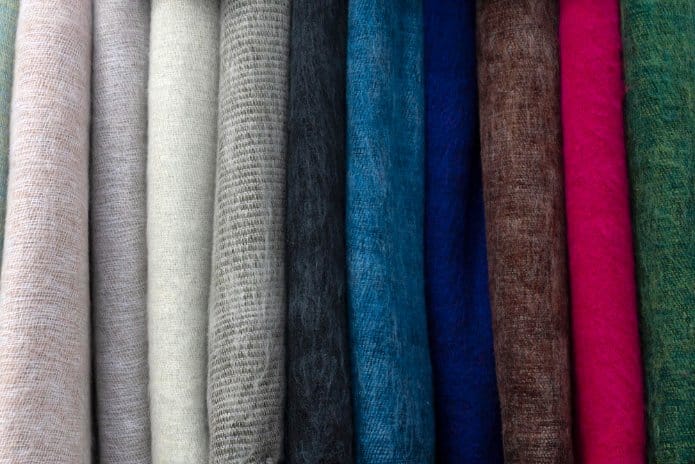
This image displays upright rolls of fabric in a variety of colors and patterns. Fabric is a textile material created by weaving, knitting, or bonding fibers together. Fibers may be natural, synthetic, or semi synthetic. Fabrics are used in clothing, home decor, upholstery, and industrial applications. Understanding fabric types helps consumers make informed choices for comfort and durability.
Fabric is material made from fibers that are woven, knitted, pressed, or bonded together. Those fibers come from three main sources: nature (plants and animals), a lab (synthetic chemicals), or a mix of both. Every piece of clothing you own, every towel in your bathroom, every sheet on your bed – all of it is fabric.
The type of fiber, and the way it’s made into fabric, affects everything. How it feels on your skin, how long it lasts, how it handles heat, whether it breathes, and how you should wash it – all of that comes back to what the fabric is made of.
The US textile industry is shifting toward domestic production, sustainability, and technical fabrics. Government contracts for defense and medical textiles, combined with growing demand for organic and recycled options, are reshaping what ends up in American stores.
Natural Fabrics Explained
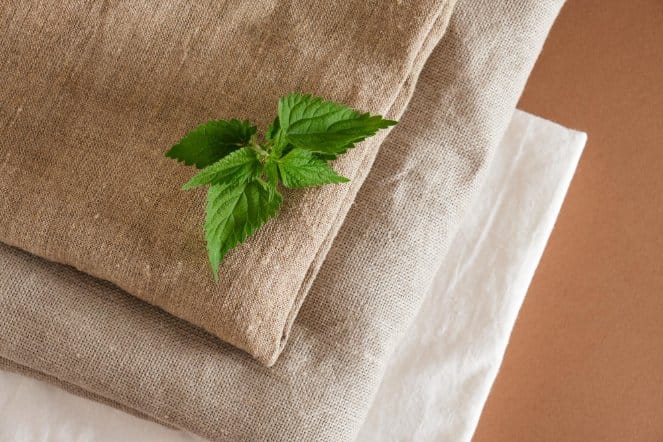
This image presents folded natural fabrics with green leaves placed on top, representing organic textiles. Natural fabrics are derived from plant or animal fibers such as cotton, wool, silk, and linen. They are breathable, biodegradable, and comfortable for everyday wear. Understanding natural fabrics helps consumers choose sustainable clothing options.
Natural fabrics come directly from plants or animals, with little or no chemical processing. They tend to be breathable, comfortable, and biodegradable – but they can also shrink, wrinkle, or need more care than synthetics.
Cotton Natural
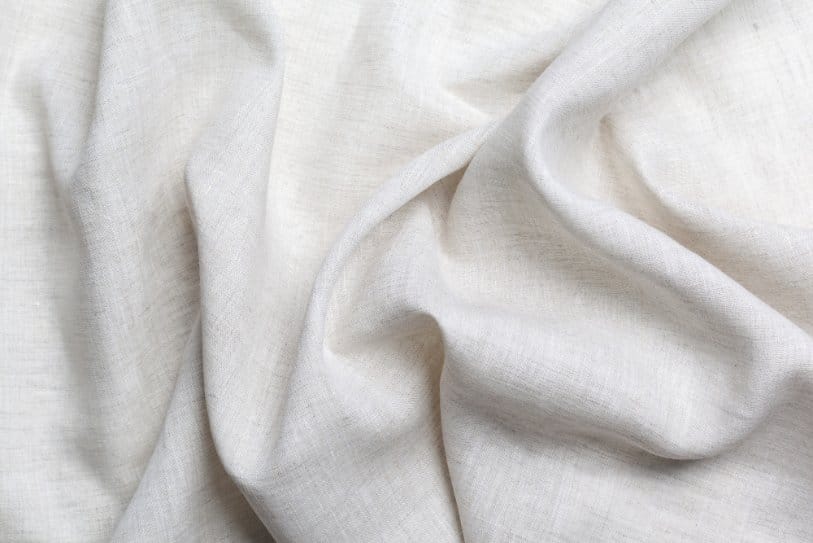
This image shows a close up of white cotton fabric with a visible woven texture. Cotton is a natural fiber widely used in shirts, dresses, bedding, and everyday garments. It is breathable, soft on the skin, and suitable for warm climates. Cotton is easy to care for and highly versatile, making it one of the most popular fabrics worldwide.
Cotton is the most-used natural fiber in the world and the go-to fabric for most Americans. It comes from the fluffy bolls of the cotton plant and goes through spinning and weaving (or knitting) to become the fabric you know.
You’ll find cotton in everything: T-shirts, jeans, bedsheets, towels, socks, baby clothes, and surgical supplies. It’s popular because it’s soft, breathable, and easy to care for.
Why You’ll Love It
- Soft and comfortable against skin
- Breathable – great for warm weather
- Absorbs moisture well
- Easy to wash (most types)
- Biodegradable and compostable
- Works well with dyes (vivid colors)
- Hypoallergenic for most people
Things to Watch Out For
- Can shrink if washed in hot water
- Wrinkles easily
- Holds moisture – can feel damp in humid weather
- Fades over time with repeated washing
- Conventional cotton uses a lot of water to grow
Types of Cotton You’ll See on Labels
| Type | What Makes It Different | Best For |
|---|---|---|
| Pima / Supima Cotton | Extra-long fibers, very soft and durable | Premium T-shirts, dress shirts |
| Egyptian Cotton | Grown in Egypt, fine and lustrous | Luxury bedding, dress shirts |
| Organic Cotton | Grown without synthetic pesticides | Baby clothes, sensitive skin |
| Denim | Tightly woven twill, very durable | Jeans, jackets, workwear |
| Flannel | Brushed surface for softness and warmth | Pajamas, winter shirts |
| Jersey | Knit cotton, stretchy | T-shirts, casual wear |
| Poplin | Crisp, smooth weave | Dress shirts, blouses |
| Corduroy | Ridged texture (wales) | Pants, jackets |
| Canvas | Heavy and stiff | Bags, workwear, outdoor gear |
| Cotton Twill | Diagonal weave, durable | Pants, jackets, chinos |
Linen Natural
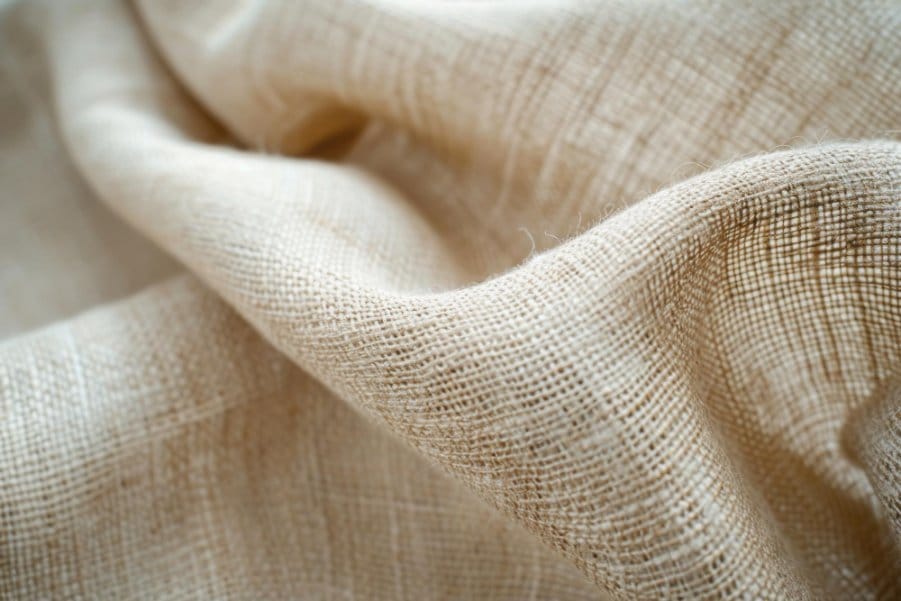
This image features a close up of linen fabric with a visible textured weave. Linen is made from flax fibers and is highly breathable, lightweight, and moisture absorbing. It is ideal for summer clothing, home textiles, and relaxed fashion styles. Linen offers a crisp look with natural durability.
Linen is made from the fibers of the flax plant and has been used for thousands of years. If you’ve ever grabbed a linen shirt for a hot summer day, you already know why it’s so popular – it breathes like almost nothing else, and it gets softer with every wash.
Linen is one of the most eco-friendly natural fabrics. Flax grows with very little water compared to cotton, and nearly every part of the plant gets used. Learn more about linen fabric here.
Why You’ll Love It
- Extremely breathable and cooling
- Gets softer with age and washing
- Absorbs moisture without feeling damp
- Naturally antibacterial
- Durable – linen garments last decades
- Eco-friendly crop (low water use)
Things to Watch Out For
- Wrinkles a lot – some people love this look, others don’t
- Can feel stiff when new
- More expensive than cotton
- Can shrink if not pre-washed
You’ll find linen in summer shirts, pants, blazers, bedding, and table linens. Irish linen and Belgian linen are considered the finest grades available.
Silk Natural
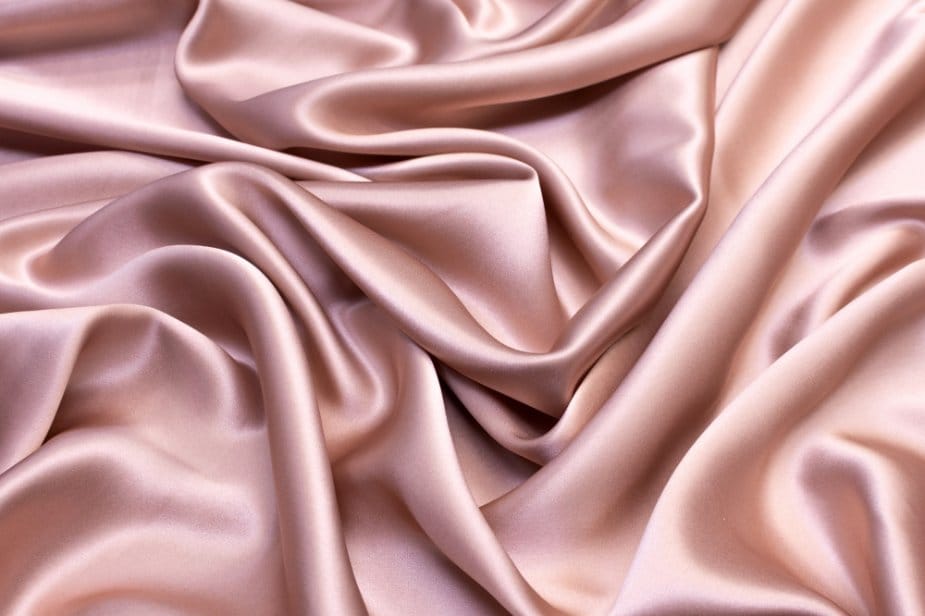
This image features soft pink silk fabric arranged in elegant folds that highlight its glossy finish. Silk is a natural protein fiber produced by silkworms and is known for its luxurious feel, lightweight comfort, and natural temperature regulation. It is commonly used in eveningwear, scarves, lingerie, and premium garments. Silk offers breathability and a refined appearance ideal for high end fashion.
Silk comes from the cocoons of silkworms and has been prized for thousands of years. It’s the strongest natural fiber, with a natural sheen that no synthetic can fully replicate. When you run your hand over real silk, you’ll know the difference immediately.
Silk regulates temperature well – it keeps you cool in summer and warm in winter. It’s also naturally hypoallergenic, which is why it’s used in bedding for people with allergies. Read the full silk fabric guide here.
Why You’ll Love It
- Naturally temperature-regulating
- Incredibly soft and smooth
- Hypoallergenic
- Beautiful drape – looks expensive
- Protein structure is gentle on hair and skin
- Strong for its weight
Things to Watch Out For
- Expensive
- Requires delicate care (usually hand wash or dry clean)
- Can water-spot or stain easily
- May fade in direct sunlight
Popular Silk Types
Wool Natural
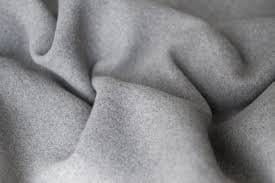
This image shows gray wool fabric with a soft and slightly fuzzy texture. Wool is a natural fiber obtained from sheep and other animals. It provides excellent insulation, moisture control, and durability. Wool is commonly used in sweaters, coats, blankets, and winter clothing. It is naturally breathable and temperature regulating.
Wool comes from the fleece of sheep and other animals (goats, rabbits, camels, alpacas). It’s the best natural insulator you can find in clothing, and it does something no other fiber can: it keeps you warm even when it’s wet.
Wool also has natural moisture-wicking properties, resists odor better than most synthetics, and is naturally flame-resistant. That makes it popular in military gear, firefighting clothing, and outdoor wear. Full wool fabric guide here.
Why You’ll Love It
- Best natural insulation – warm even when damp
- Natural moisture management
- Odor-resistant (great for travel)
- Naturally fire-resistant
- Biodegradable
- Durable when cared for properly
Things to Watch Out For
- Some types can feel scratchy (avoid if wool-sensitive)
- Can shrink dramatically if washed in hot water
- More expensive than cotton or polyester
- Attracts moths – needs careful storage
Wool Types at a Glance
| Wool Type | Feel | Best Use | Price Range |
|---|---|---|---|
| Merino | Very soft, fine fibers | Base layers, activewear, T-shirts | $$-$$$ |
| Cashmere | Incredibly soft and lightweight | Luxury sweaters, scarves | $$$$ |
| Alpaca | Soft, hypoallergenic, silky | Sweaters, coats, blankets | $$$ |
| Lambswool | Soft, from the first shearing | Sweaters, knitwear | $$-$$$ |
| Mohair | Fluffy, lustrous, silky sheen | Fashion knitwear, throws | $$$ |
| Standard Sheep Wool | Varies – can be scratchy | Outerwear, socks, blankets | $-$$ |
Synthetic Fabrics Explained
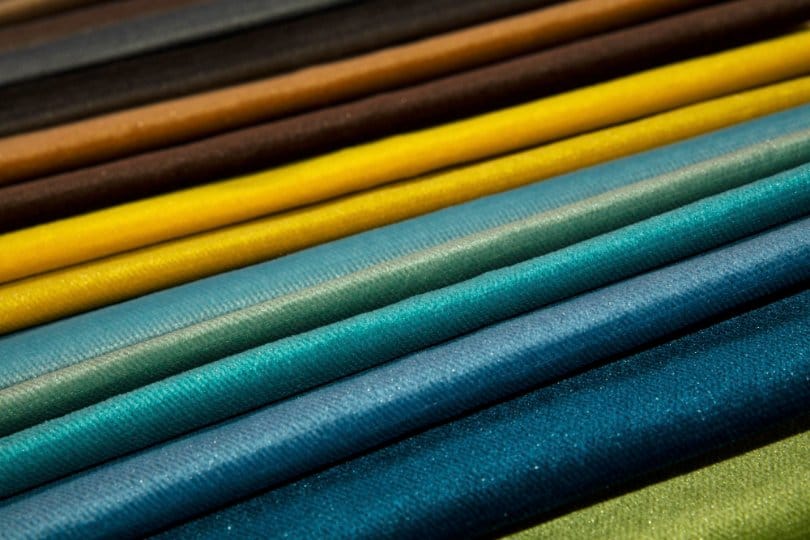
This image displays multiple rolls of synthetic fabrics in vibrant and neutral shades. Synthetic fabrics such as polyester, nylon, and acrylic are manufactured from chemical polymers. They are valued for durability, wrinkle resistance, moisture control, and affordability. Synthetic textiles are widely used in sportswear, outdoor gear, and everyday clothing.
Synthetic fabrics are made in a lab from petrochemicals (chemicals derived from oil and gas). They’re durable, affordable, wrinkle-resistant, and easy to care for. That’s why they dominate the clothing industry today – over half of all clothing fibers are now synthetic.
But synthetic fabrics come with real trade-offs: they trap heat, they’re made from non-renewable resources, and they shed tiny plastic particles (microplastics) every time you wash them. We’ll cover that in more detail in the health section below.
Polyester Synthetic
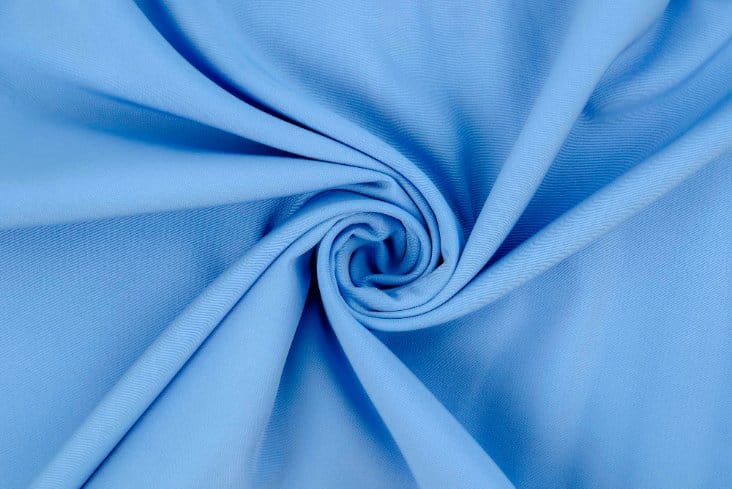
This image displays light blue polyester fabric arranged to highlight its smooth surface and consistent weave. Polyester is a synthetic fiber known for durability, wrinkle resistance, and quick drying properties. It is widely used in clothing, home textiles, and blends with natural fibers to enhance performance and longevity.
Polyester is the most-used fabric in the world. It’s in activewear, fast fashion, blouses, suits, outdoor gear, and almost every affordable clothing item you’ll find in a store. It’s cheap to produce, holds its shape well, and resists wrinkles.
Why It’s So Popular
- Very durable and hard-wearing
- Wrinkle-resistant
- Holds color well
- Dries quickly
- Affordable
- Resists shrinking and stretching
The Downsides
- Not breathable – traps heat and moisture
- Can feel clammy in warm weather
- Holds onto odors over time
- Sheds microplastics in the wash
- Not biodegradable
- Can pill with repeated use
Nylon Synthetic
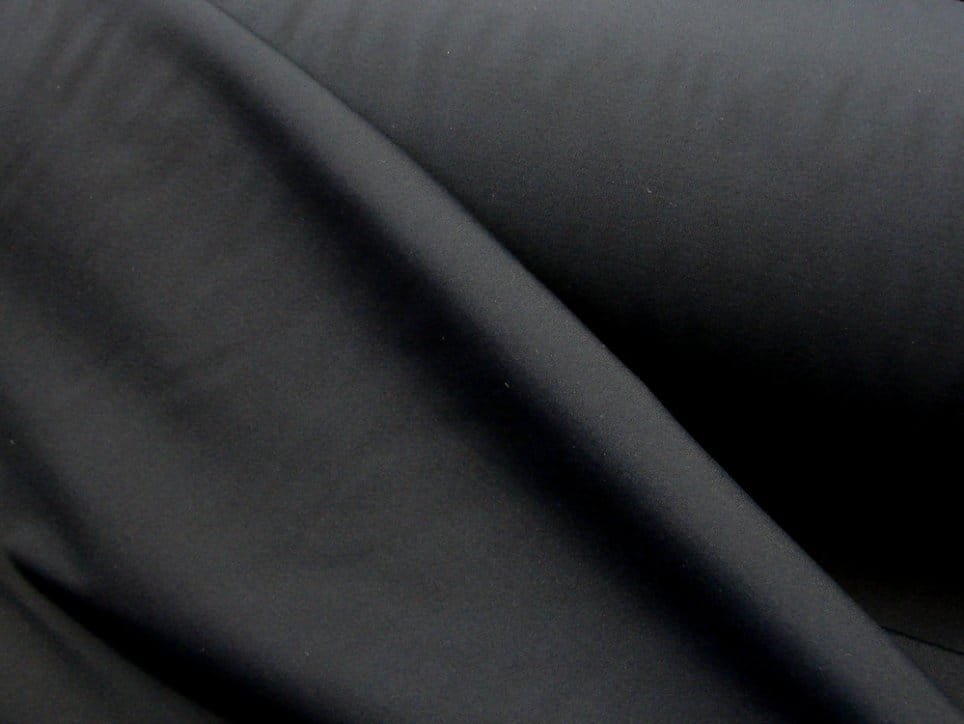
This image shows black nylon fabric with a smooth and slightly shiny surface. Nylon is a synthetic fiber valued for its strength, elasticity, and resistance to abrasion. It is commonly used in activewear, outerwear, swimwear, and bags. Nylon offers lightweight durability and moisture resistance.
Nylon was the first fully synthetic fabric ever made (1935) and it’s still everywhere: stockings, tights, activewear, swimwear, outerwear, and bags. It’s known for being extremely strong and resistant to abrasion – which is why it’s in hiking gear and backpacks.
Why You’ll Find It Useful
- Incredibly strong for its weight
- Resistant to abrasion
- Stretches and recovers well
- Dries very quickly
- Smooth and silky feel
The Downsides
- Not very breathable
- Can feel warm in hot weather
- Not biodegradable
- Production releases nitrous oxide (a greenhouse gas)
- Sheds microplastics when washed
Acrylic Synthetic
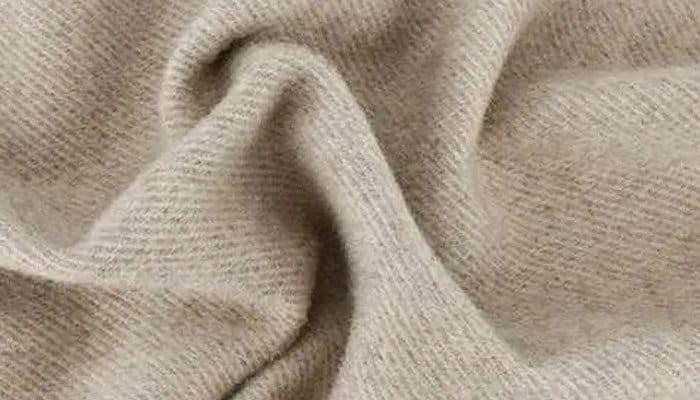
This close up image shows beige acrylic fabric with a soft, knitted texture. Acrylic is a synthetic fabric known for its wool like feel, durability, and resistance to wrinkles and moth damage. It is commonly used in sweaters, blankets, scarves, and winter wear because it provides warmth without the weight of natural wool. This fabric is affordable, easy to care for, and ideal for cold weather clothing.
Acrylic is made to look and feel like wool, but it costs much less. You’ll see it in affordable sweaters, scarves, blankets, and winter accessories. It’s lightweight, holds color well, and doesn’t attract moths. But it’s not as comfortable or durable as real wool, and it’s a significant contributor to microplastic pollution.
The Upsides
- Looks like wool at a fraction of the cost
- Lightweight and warm
- Resists moths, mildew, and shrinking
- Holds bright colors well
- Machine washable (usually)
The Downsides
- Sheds large amounts of microplastics
- Pills easily
- Not as breathable as wool
- Not durable long-term
- Not biodegradable
Spandex / Elastane / Lycra Synthetic
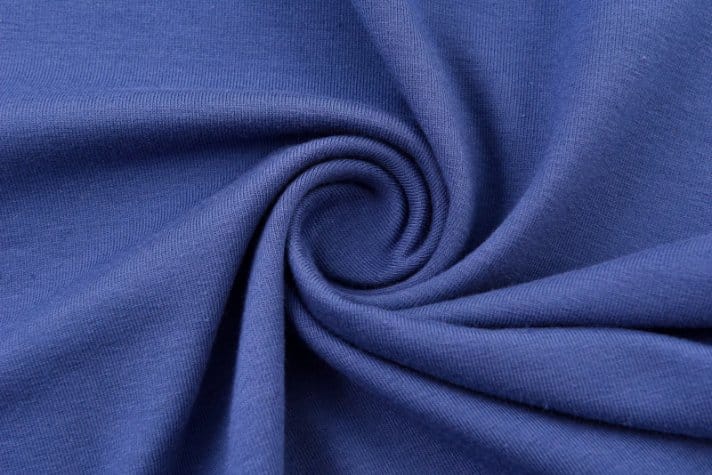
This image displays blue spandex fabric twisted into a spiral to emphasize its stretch and flexibility. Spandex, also known as elastane or Lycra, is a synthetic fiber known for exceptional elasticity. It is often blended with cotton or polyester in activewear, swimwear, leggings, and fitted garments. Spandex improves comfort, mobility, and shape retention in modern clothing.
Spandex (also sold under the brand name Lycra, or called elastane in Europe) is almost never used alone – it’s blended with other fabrics to add stretch. Even just 2-5% spandex in a fabric makes a big difference in how it moves and recovers its shape. It’s in jeans, leggings, swimwear, bras, socks, and athleisure wear.
Why It’s in Almost Everything
- Exceptional stretch (up to 600%)
- Excellent shape recovery
- Very lightweight
- Adds comfort to rigid fabrics
- Resists wrinkles
The Downsides
- Breaks down with heat – avoid hot dryers
- Can degrade with chlorine (bad for swimwear)
- Not biodegradable
- Can cause skin irritation in some people
Semi-Synthetic Fabrics: Rayon, Modal, and Lyocell
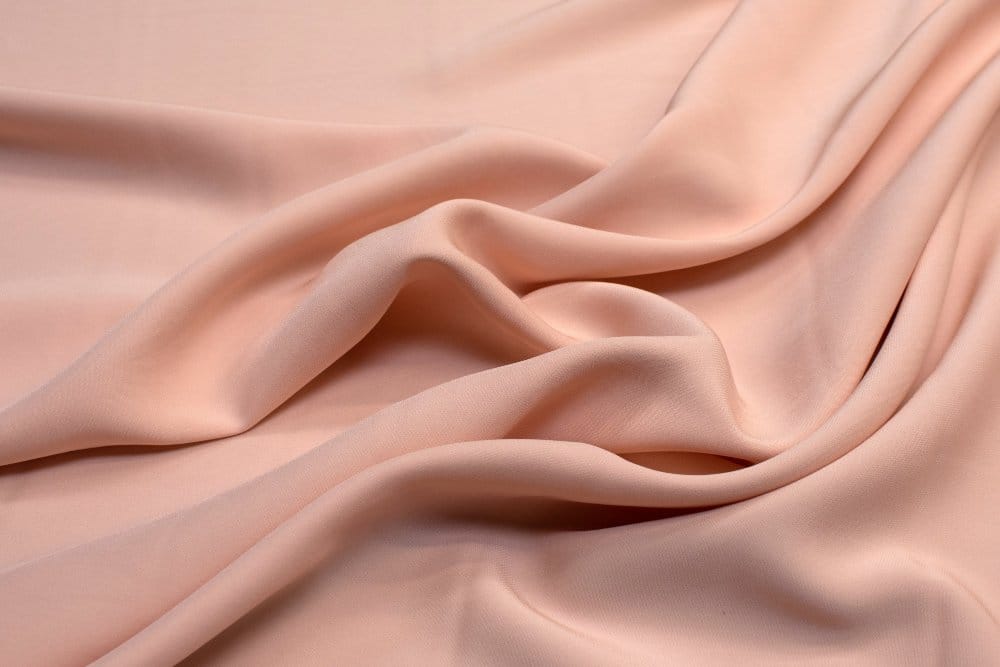
This image shows a soft peach colored semi synthetic fabric arranged in flowing folds. Semi synthetic fabrics such as rayon and viscose are made from natural cellulose that is chemically processed into fibers. These textiles combine the breathability of natural fibers with the durability and versatility of synthetics. Semi synthetic fabrics are widely used in dresses, blouses, and lightweight fashion pieces because they drape beautifully and feel smooth against the skin.
Semi-synthetic fabrics (also called “regenerated” or “man-made” fibers) are made from natural materials – usually wood pulp or plant cellulose – but processed with chemicals to create the fiber. They sit between natural and synthetic, offering some of the softness and breathability of natural fabrics at a lower cost.
| Fabric | Made From | How It Feels | Best For | Eco Factor |
|---|---|---|---|---|
| Rayon / Viscose | Wood pulp (usually bamboo or beech) | Soft, smooth, silky drape | Blouses, dresses, linings | Mixed – chemical-heavy process |
| Modal | Beech tree pulp | Softer than cotton, very smooth | Underwear, T-shirts, activewear | Better than rayon – uses less water |
| Lyocell / TENCEL | Wood pulp (eucalyptus, oak, birch) | Smooth, soft, slight sheen | Shirts, pants, bedding | Best in class – closed-loop process |
| Bamboo (fabric) | Bamboo grass | Very soft, smooth | Baby clothes, towels, activewear | Depends on processing method |
| Cupro | Cotton linter (waste cotton) | Silky, breathable, flows well | Linings, dresses | Uses cotton waste, but chemical-intensive |
Fabric Blends
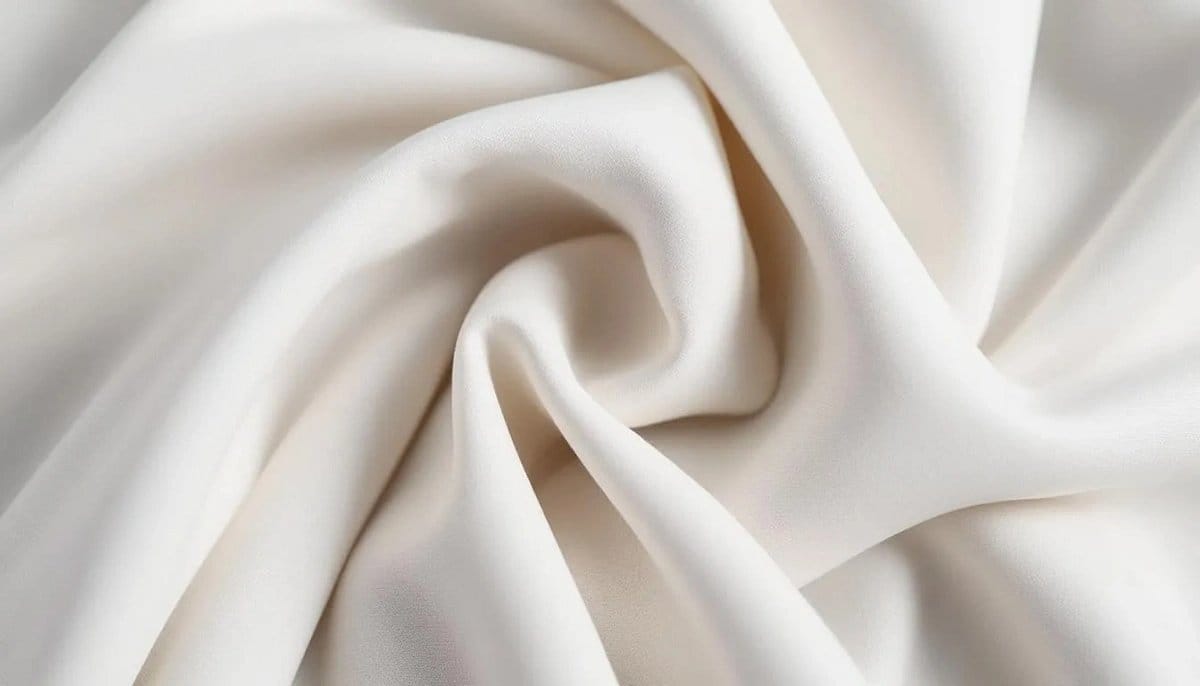
This image shows a smooth cream colored fabric with a soft drape, symbolizing fabric blends. Fabric blends combine natural and synthetic fibers such as cotton and polyester to enhance performance, durability, and wrinkle resistance. Blended fabrics are commonly used in shirts, trousers, and uniforms because they balance comfort with long lasting wear.
A fabric blend combines two or more different fiber types to get the best qualities of each. Most clothing you own is probably a blend. The most common one? Cotton and polyester – because it gives you cotton’s comfort with polyester’s durability and wrinkle-resistance.
| Blend | Common Ratio | What You Get | Typical Products |
|---|---|---|---|
| Cotton/Polyester | 60/40 or 50/50 | Soft feel + wrinkle resistance, durable | T-shirts, dress shirts, uniforms |
| Cotton/Spandex | 95/5 or 92/8 | Natural feel + stretch | Leggings, jeans, fitted shirts |
| Wool/Polyester | 80/20 | Warm + easy care, less expensive | Suits, pants, winter coats |
| Cotton/Linen | 55/45 | Breathable + less wrinkly than pure linen | Summer pants, shirts, dresses |
| Nylon/Spandex | 80/20 | Stretchy, moisture-wicking, quick-dry | Swimwear, leggings, activewear |
| Wool/Nylon | 85/15 | Wool warmth + added durability | Socks, sweaters |
| Silk/Cotton | 70/30 | Silk feel + easier care | Blouses, lightweight shirts |
Woven vs. Knit Fabrics
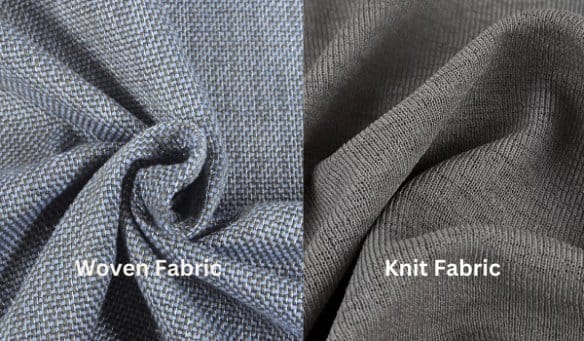
This image presents a side by side comparison of woven fabric and knit fabric. Woven fabrics are created by interlacing threads at right angles, making them structured and less stretchy. Knit fabrics are formed by looping yarns together, giving them natural stretch and flexibility. Understanding the difference between woven and knit fabrics helps in selecting the right material for specific garments and sewing projects.
Before we move to specialty fabrics, it helps to understand how any fabric is actually made. Nearly all fabrics are either woven or knitted – and that affects how they behave on your body.
Woven Fabrics
- Made on a loom by interlacing threads at right angles
- Stable, structured, doesn’t stretch much
- Examples: denim, poplin, twill, satin, canvas, chiffon
- Best for: dress shirts, pants, jackets, structured garments
Knit Fabrics
- Made by interlocking loops of yarn
- Stretchy and flexible by nature
- Examples: jersey, fleece, rib knit, interlock
- Best for: T-shirts, sweaters, activewear, casual wear
Specialty and Decorative Fabrics
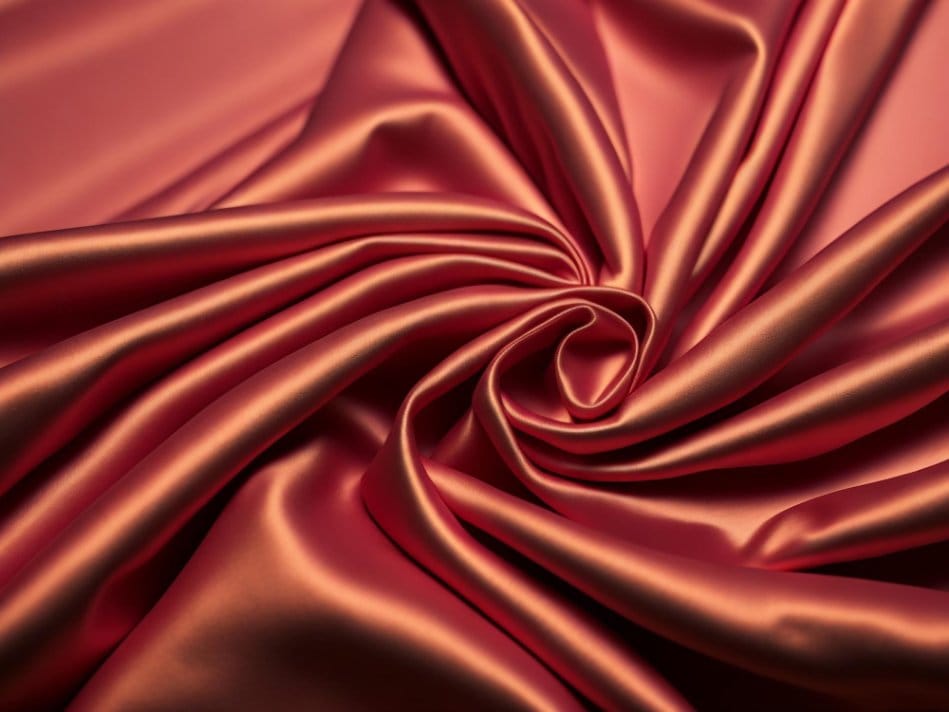
This image shows deep red satin fabric arranged in dramatic folds that emphasize its high shine and smooth finish. Specialty and decorative fabrics such as satin, brocade, velvet, and lace are used in formal fashion, upholstery, and event decor. These fabrics add texture, elegance, and visual impact to garments and interior designs.
Beyond the everyday basics, there’s a wide world of specialty fabrics – used in evening wear, home decor, bridal fashion, and more. Here’s what you need to know about the most common ones.
| Fabric | Key Characteristics | Common Uses | Care |
|---|---|---|---|
| Satin (learn more) | Glossy on one side, smooth, flows beautifully | Evening wear, bridal, lingerie, bedding | Gentle wash or dry clean |
| Chiffon | Sheer, lightweight, airy | Blouses, overlay fabrics, scarves | Hand wash or gentle machine wash |
| Georgette | Slightly crepe-like texture, drapey | Dresses, blouses, formal wear | Dry clean or delicate wash |
| Taffeta | Crisp, smooth, slight sheen, makes a swishing sound | Formalwear, bridal, linings | Dry clean recommended |
| Organza | Sheer, stiff, holds its shape | Wedding dresses, evening wear, overlays | Gentle hand wash |
| Brocade | Heavy with raised woven patterns | Formal wear, furnishings, holiday outfits | Dry clean |
| Velvet | Dense pile, soft, luxurious feel and look | Evening wear, blazers, home decor | Steam carefully, dry clean |
| Lace | Openwork pattern, delicate or heavy depending on type | Bridal, lingerie, overlays, decor | Hand wash gently |
| Charmeuse | Lightweight satin weave, silky drape | Blouses, lingerie, eveningwear | Hand wash or dry clean |
| Crepe de Chine | Slightly textured, lightweight, wrinkle-resistant | Blouses, dresses, scarves | Gentle hand wash or dry clean |
| Boucle | Looped, textured surface; cozy look | Blazers, coats, home furnishings | Dry clean recommended |
| Fleece | Soft, warm, lightweight pile fabric | Sweatshirts, jackets, blankets | Machine wash cool |
Chiffon: A Closer Look
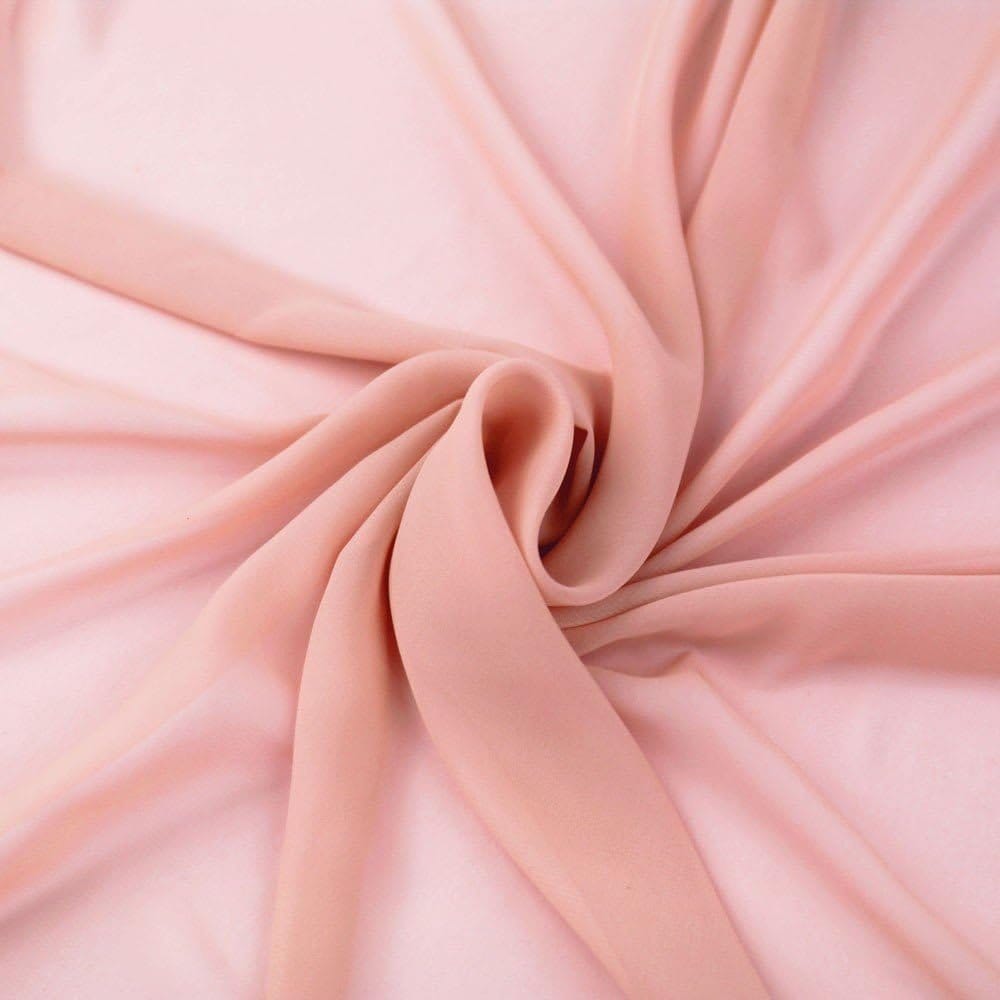
This image highlights pink chiffon fabric twisted to showcase its delicate, sheer structure. Chiffon is a lightweight woven fabric often made from silk or synthetic fibers like polyester. It is commonly used in evening dresses, blouses, and scarves due to its elegant drape and soft flow. Chiffon offers a romantic look and is perfect for layered or formal garments.
Chiffon deserves its own mention because it comes in many different varieties, each with different properties and best uses:
- Silk chiffon – the most luxurious and breathable version
- Polyester chiffon – more affordable, easier to care for
- Stretch chiffon – has a small percentage of spandex for added movement
- Georgette chiffon – slightly heavier with a crepe-like texture
- Cotton chiffon – more breathable and casual than silk or poly versions
Performance and Activewear Fabrics
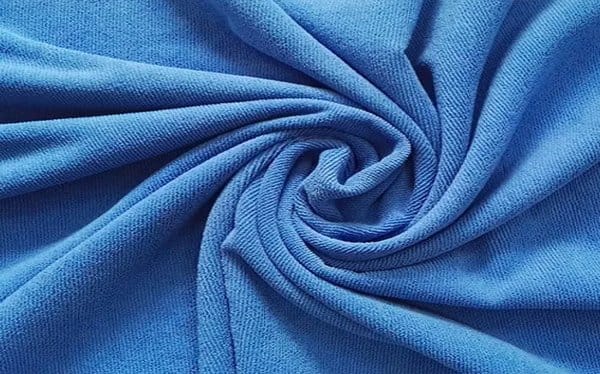
This image features blue stretch fabric twisted to demonstrate flexibility and structure. Performance fabrics are engineered for activewear and sports clothing. They often include polyester, spandex, or nylon blends that provide moisture wicking, stretch, and breathability. These fabrics enhance comfort and movement during physical activities.
Performance fabrics are engineered to do specific things – wick sweat, block wind, resist water, or stretch with your body. They’re the backbone of athletic wear, outdoor gear, and sportswear.
| Fabric / Technology | What It Does | Best For |
|---|---|---|
| Moisture-Wicking Polyester | Pulls sweat away from skin, dries fast | Running, gym, hot weather workouts |
| Merino Wool (fine grade) | Regulates temperature, naturally odor-resistant | Hiking, travel, base layers |
| Nylon/Spandex Blend | Stretches, dries fast, resists abrasion | Leggings, swimwear, compression wear |
| Gore-Tex (membrane) | Waterproof and breathable simultaneously | Rain jackets, hiking boots |
| Polartec Fleece | Warm, lightweight, moisture-managing | Midlayers, hiking, cold weather outdoor |
| 4-Way Stretch Fabric | Stretches in all directions, full range of motion | Yoga, cycling, gymnastics |
| Cooling Fabrics (phase-change) | Absorbs body heat and releases it | Hot weather, summer activewear |
| Microfiber | Ultra-fine fibers, soft, moisture-managing | Workout clothes, towels, cleaning |
See our guides on water-resistant vs. waterproof fabrics and stretchy fabrics for a deeper look at performance textiles.
How to Read a Clothing Label
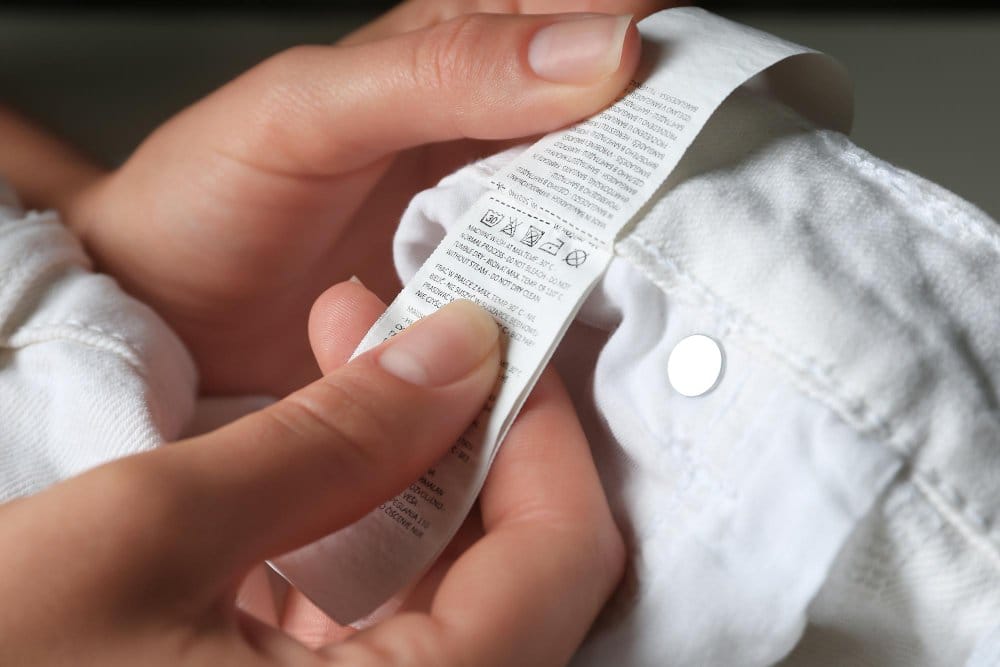
This image displays a clothing tag with standard washing, drying, and ironing symbols. Fabric care labels help consumers maintain garment quality and extend fabric lifespan. Understanding washing temperatures, drying methods, and ironing guidelines prevents shrinkage, fading, and damage. Proper care ensures fabrics remain durable and comfortable over time.
Most countries require specific information on clothing labels by law. While the exact rules differ from country to country, the core categories are similar worldwide: fiber content, country of origin, manufacturer details, and care instructions. This section walks through what to look for, with the US requirements as a reference point since they are among the most detailed globally.
What Clothing Labels Must Include (International Overview)
- Fiber Content: In most countries including the US, EU, UK, Canada, and Australia, labels must list fiber types in order from highest to lowest percentage. In the US, the Federal Trade Commission (FTC) requires fibers above 5% to be named individually. The EU has similar rules under its textile labeling regulation. A label reading “65% Cotton, 35% Polyester” means cotton is the dominant fiber, regardless of where you are.
- Country of Origin: Where the garment was manufactured. “Made in USA” under US law has a strict definition – both the garment and its significant materials must be domestically made. “Made in EU” and similar claims are governed by local regulations. “Assembled in [country]” is a weaker claim that means components were sourced elsewhere but sewn together locally.
- Manufacturer or Dealer Identity: A company name or registered number. In the US this is an RN (Registered Number) that can be verified via the FTC database. In the EU, brands must include a registered address.
- Care Instructions: Most countries follow the international GINETEX care labeling system, which uses standardized symbols recognized globally. These symbols mean the same thing on a label in Japan, Germany, Brazil, or the US.
Decoding Care Label Symbols (International Standard)
The symbols used on clothing care labels are based on the international GINETEX system and are largely consistent across Europe, North America, Asia, and Australia. Here’s a practical decoder:
| Symbol Type | Symbol Appearance | What It Means |
|---|---|---|
| Washing | Bucket / tub shape | Machine wash. Number inside = water temp (e.g., 30 = cold, 60 = hot). One line under = permanent press, two lines = delicate. |
| Hand Wash Only | Bucket with hand | Machine washing will likely damage or shrink this garment |
| Do Not Wash | Bucket with X | Dry clean only |
| Drying | Square with circle inside | Tumble dry (what Americans call a “dryer”). Dots = heat setting: 1 dot = low, 2 dots = medium, 3 dots = high. |
| Do Not Dry in Dryer | Square/circle with X | Lay flat or hang to dry |
| Ironing | Iron shape | Dots = heat: 1 dot = low (synthetics), 2 dots = medium (wool), 3 dots = high (cotton/linen) |
| Dry Clean | Circle | Professional dry cleaning recommended |
| Do Not Bleach | Triangle with X | No bleach or chlorine-based cleaners |
What “Made in USA” Really Means
This image shows a Made in USA label with an American flag design. Domestic textile production often emphasizes quality standards, ethical labor practices, and local manufacturing. Consumers seeking transparency and craftsmanship often look for country of origin labels when purchasing clothing and fabric products.
The FTC has a strict definition: for clothing to be labeled “Made in USA,” it must be “all or virtually all” made in the United States – including the fabric itself. Here’s how it breaks down in practice:
| Label | What It Means |
|---|---|
| Made in USA | All or virtually all components and manufacturing happened in the US |
| Assembled in USA | Sewn or assembled in the US but components (fabric, zippers) came from overseas |
| Made in USA of Imported Fabric | Sewn in the US but the fabric was imported |
| Designed in USA | The design work happened in the US – the actual manufacturing likely didn’t |
Fabric and Your Skin: What to Wear Based on Your Skin Type
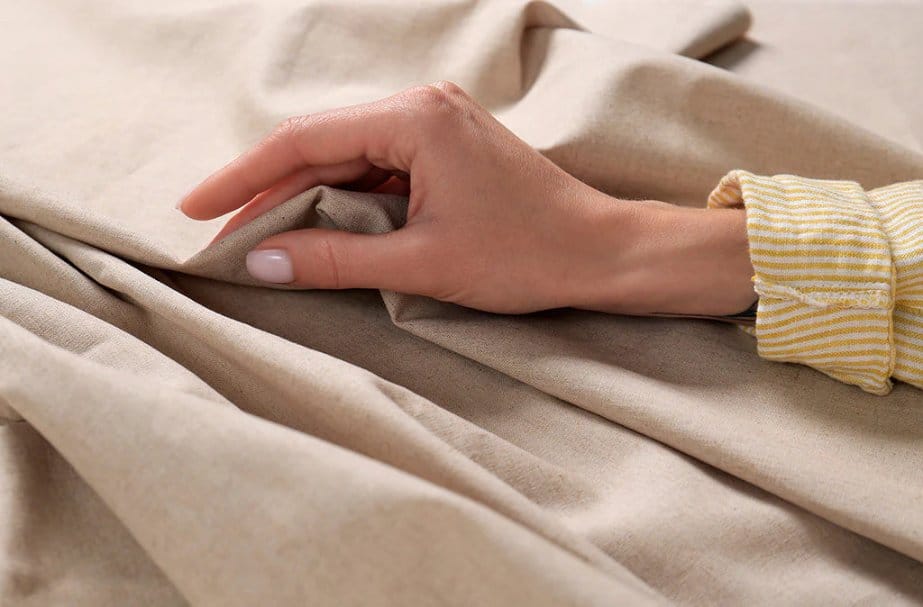
This image shows a hand gently holding beige fabric, emphasizing texture and softness. Selecting fabrics based on skin type is important for comfort and irritation prevention. Sensitive skin benefits from natural fabrics like cotton, bamboo, and silk, while synthetic materials may cause discomfort for some individuals. Fabric choice plays a key role in overall clothing comfort.
Your skin doesn’t react the same way to every fabric, and if you’ve ever broken out in a rash from a new shirt or felt itchy in a wool sweater, you already know this. Matching the right fabric to your skin type can make a real difference in your daily comfort.
Best Fabrics
- Organic cotton (no chemical treatments)
- Bamboo (if certified)
- Silk (naturally hypoallergenic)
- Fine merino wool
- TENCEL/Lyocell
Best Fabrics
- 100% organic cotton (smooth weave)
- Silk (especially for sleepwear)
- Modal (very smooth)
- Avoid: wool, polyester, nylon, spandex
Best Fabrics
- Moisture-wicking polyester (for workouts)
- Merino wool (odor-resistant)
- Linen (absorbs without feeling damp)
- Bamboo lyocell (cool and absorbent)
Best Fabrics
- Lightweight linen
- Cotton (especially loose weaves)
- TENCEL (temperature-regulating)
- Avoid: synthetic blends, polyester fleece
Best Fabrics
- Silk pillowcases and clothing (reduces friction)
- Cotton (breathable)
- Avoid: synthetic fabrics that trap heat/bacteria
Best Fabrics
- Organic cotton (certified GOTS)
- Bamboo (if processed without harsh chemicals)
- Avoid: flame-retardant coatings, synthetic blends
of people with sensitive skin report rashes or contact dermatitis when wearing synthetic fabrics, particularly during exercise or in warm conditions. If you have reactive skin, choosing natural or certified low-chemical fabrics makes a real practical difference.
See our detailed guide on the softest fabrics for sensitive skin for more specific recommendations.
Best Fabrics by Climate Type
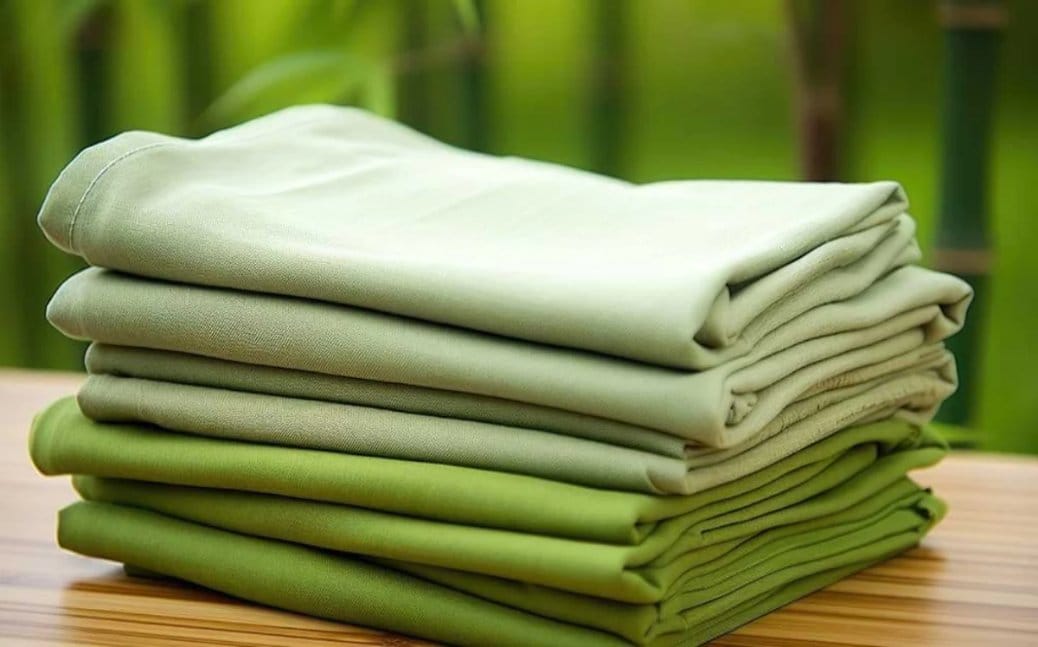
This image features neatly folded fabrics in shades of green and soft neutrals, symbolizing fabric choices for various climates. Lightweight cotton and linen are ideal for hot and humid weather, while thicker woven fabrics and blends work well in cooler environments. Choosing fabrics based on climate improves comfort, breathability, and durability in everyday clothing.
Where you live dictates a lot of what your wardrobe should be made from. The same fabric that’s perfect in London or Melbourne will make you miserable in Bangkok or Houston. Here’s how to match fabric to climate – whether you’re dressing for tropical heat, freezing winters, or everything in between.
You need fabrics that breathe, absorb moisture, and don’t trap heat against your skin.
- Lightweight linen (top choice)
- Cotton (loose weave poplin, voile, lawn)
- TENCEL or lyocell
- Bamboo fabric
- Rayon/viscose
Avoid: polyester, acrylic, nylon (except for specific activewear)
You want fabrics that breathe and protect from sun – lighter colors in breathable weaves.
- Linen (best overall)
- Cotton (medium weight)
- Chambray
- Moisture-wicking performance fabrics
Avoid: dark polyester (traps heat), heavy blends
Layering is key. You need insulating, moisture-managing fabrics for cold winters.
- Merino wool (base layers)
- Fleece (midlayers)
- Down-fill outerwear
- Wool coating fabrics
- Thermal cotton/modal blends
Avoid: single layers of non-insulating synthetics in extreme cold
You need a versatile wardrobe that works across seasons – layering is your best strategy.
- Cotton (year-round foundation)
- Cotton/linen for spring and summer
- Light wool for autumn
- Merino wool layers for winter
- Water-resistant outerwear
The most forgiving climate – you don’t need extremes in either direction.
- Light cotton and linen in summer
- Light wool or cashmere for cool evenings
- TENCEL and modal for year-round comfort
- Water-resistant jacket for occasional rain
Hot summers and surprisingly cold winters mean you need a wide range.
- Summer: linen, cotton, TENCEL
- Winter: wool blends, flannel, heavier cotton
- Spring/Autumn: cotton/linen blends
- All year: moisture-wicking for outdoor activities
For more detail, see our dedicated guides to summer fabrics and winter fabrics.
Is Your Fabric Making You Sick? The Truth About Microplastics and Textile Chemicals
This is the section most fabric guides skip entirely – but it’s one of the most important things you can know as a consumer in 2025.
The clothes you wear every day can expose you to chemicals and microplastics in ways scientists are still working to fully understand. Here’s what the current research actually says.
What Are Microplastics?
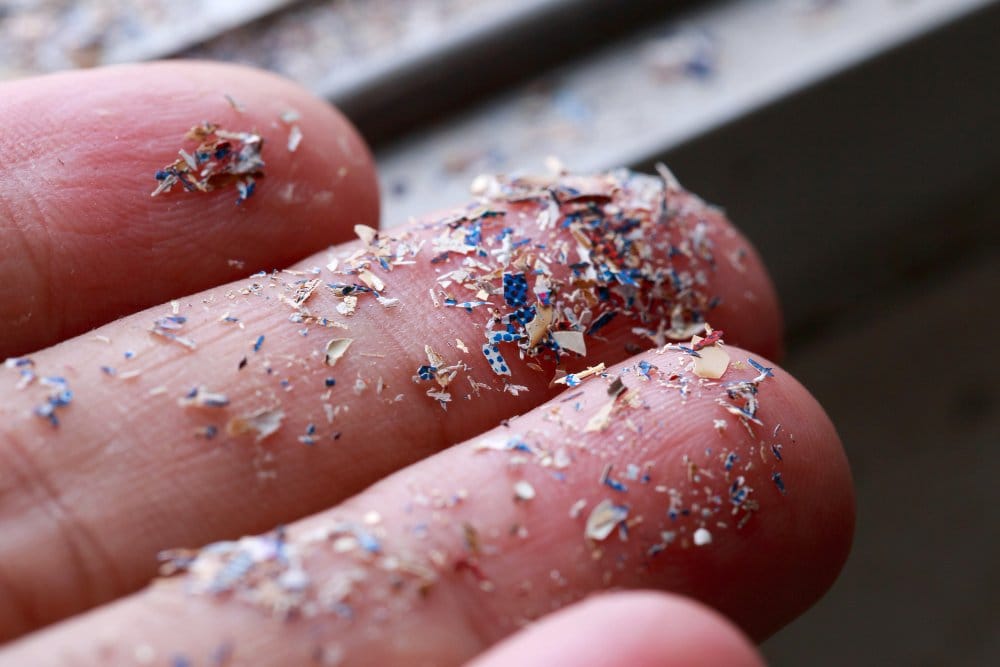
This close up image shows small plastic particles and fibers resting on fingertips. Microplastics are tiny synthetic particles often released from polyester, nylon, and other synthetic fabrics during washing. These particles can enter waterways and contribute to environmental pollution. Understanding microplastics helps promote sustainable fabric choices and responsible laundry practices.
Microplastics are tiny plastic particles smaller than 5mm. Every time you wash synthetic clothing (polyester, nylon, acrylic), thousands of microscopic plastic fibers break off and flow through your washing machine drain and into the water supply. A single laundry cycle can release up to 700,000 microplastic fibers, according to research published in environmental science journals.
of fast fashion clothing is made from synthetic materials like acrylic, nylon, and polyester. These fabrics are the leading source of microplastic pollution from textiles. Source: Earth.org
Microplastics have been detected in human blood, lungs, liver, kidneys, and even placental tissue. Researchers at Harvard Medical School have noted that studies in cell cultures and animal models show microplastics can cause oxidative damage, DNA damage, and changes in gene activity – factors linked to cancer development. Read the Harvard Medicine research here.
Fabrics to Limit
- Acrylic (worst for microplastic shedding)
- Polyester fleece
- Standard polyester
- Nylon
Better Alternatives
- Organic cotton
- Linen
- Wool
- TENCEL / Lyocell
- Silk
Chemicals Hidden in Your Clothes
Beyond microplastics, clothing – especially synthetic and “performance” fabrics – can contain chemical treatments that raise real concerns. The FTC doesn’t require brands to disclose most finishing chemicals on labels.
| Chemical | Where You’ll Find It | Potential Concern |
|---|---|---|
| PFAS (“Forever Chemicals”) | Water-resistant and stain-resistant coatings (outdoor gear, performance wear) | Linked to hormonal disruption, thyroid issues, immune function changes |
| Formaldehyde | Wrinkle-resistant, “easy-care” fabrics, dress shirts | Respiratory irritant; classified as a carcinogen by some health bodies |
| Phthalates | Printed designs on clothing, activewear, anti-odor treatments | Act as endocrine disruptors – mimic hormones in the body |
| Heavy Metal Dyes | Bright-colored synthetic fabrics, especially from low-cost manufacturers | Can cause skin irritation and contact dermatitis |
| Brominated Flame Retardants | Children’s sleepwear (required by law for sizes up to 14) | Some formulations linked to hormonal and neurological concerns |
| BPA / Bisphenols | Moisture-wicking and anti-static treatments | Endocrine disruptors – studies ongoing |
Audrey Gaskins, Associate Professor at Rollins School of Public Health at Emory University, told Cotton Inc’s Lifestyle Monitor that synthetic clothing can be a source of exposure to endocrine-disrupting chemicals (EDCs), noting that PFAS, flame retardants, phthalates, and bisphenols have all been found in clothing and have been linked to adverse health outcomes in men and women.
What You Can Do About It
- Wash new clothing before wearing it – this removes surface chemical residues
- Use a microplastic-filtering laundry bag (like Guppyfriend) when washing synthetics
- Wash synthetic clothes in cold water on shorter cycles to reduce fiber shedding
- Choose natural fibers when buying clothes that touch your skin directly (underwear, T-shirts, sleepwear)
- Look for certifications: OEKO-TEX Standard 100, GOTS, or bluesign for lower-chemical options
- For children’s clothing especially, choose GOTS-certified organic cotton or look for pajamas labeled “snug fitting” (these are exempt from flame retardant requirements)
- For water-resistant gear, look for PFC-free or PFAS-free DWR coatings
For a more detailed look at choosing safe, non-toxic baby clothes, we have a dedicated guide. We also have resources on the flame retardant requirements for children’s clothes in the US.
How to Spot Quality Fabric When You’re Shopping
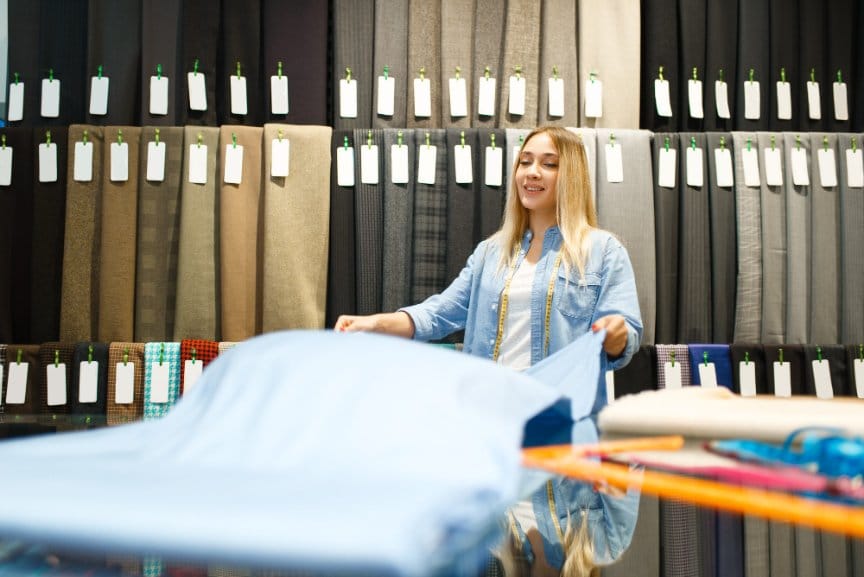
This image shows a shopper stretching and examining blue fabric in a textile store. Identifying quality fabric involves checking fiber content, weave density, stitching, and texture. High quality materials feel durable, smooth, and consistent in color. Understanding these factors helps consumers make informed clothing purchases.
You don’t need to be a textile expert to tell good fabric from bad fabric. Once you know what to look for, you can make smarter buying decisions in under a minute.
The Quick In-Store Check
- Feel the weight. Hold the fabric and gauge how it feels. A quality fabric has some substance – it doesn’t feel flimsy or tissue-thin. That said, lightweight fabrics can still be high-quality if they feel evenly woven.
- Check the stretch and recovery. Gently stretch the fabric and let it go. Quality fabric snaps back to its original shape. If it stays stretched out, it’ll look worn quickly.
- Look at it against the light. Hold it up to a light source. If it’s unexpectedly sheer or you can see the weave looks uneven, the construction may be low quality.
- Rub it gently. Low-quality fabrics will start to pill after a few seconds of rubbing. Tighter, higher-quality weaves are more resistant to this.
- Read the label. Higher fiber content matters. A 100% cotton shirt will generally outlast a 50/50 polyester blend – though blends can be excellent depending on the fiber quality.
- Check the seams. On garments, look at the stitching inside. Tight, even stitches with no loose threads indicate quality construction. Seams should be straight and patterns should match across panels.
Fabric Weight: What GSM Means
GSM stands for “grams per square meter” and it’s the standard measurement of fabric weight. A higher GSM generally means a thicker, heavier fabric. Here’s a quick reference:
| GSM Range | Weight Category | Best For |
|---|---|---|
| Under 100 GSM | Very lightweight | Chiffon, voile, summer scarves |
| 100-200 GSM | Lightweight | T-shirts, summer shirts, light blouses |
| 200-350 GSM | Medium weight | Most everyday clothing – pants, dresses, casual jackets |
| 350-500 GSM | Heavyweight | Denim, canvas, outerwear, workwear |
| Over 500 GSM | Very heavy | Canvas bags, heavy-duty workwear, protective gear |
Fast Fashion vs. Quality Fabrics: What’s the Real Difference?
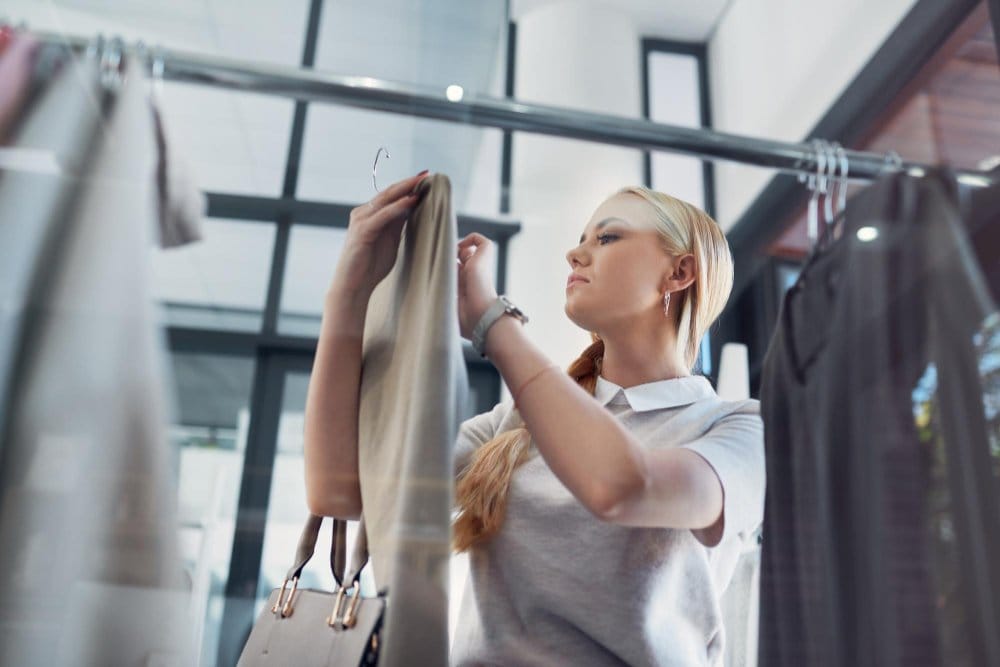
This image shows a shopper examining a garment closely in a retail setting. It represents the comparison between fast fashion and high quality fabrics. Fast fashion often prioritizes low cost production, while quality fabrics emphasize durability, comfort, and craftsmanship. Investing in better materials leads to longer lasting clothing and reduced environmental impact.
Fast fashion brands produce cheap clothes quickly using the lowest-cost materials available. That often means thin polyester, short-staple cotton blends, and chemical-heavy finishes. Quality clothing uses better fibers, tighter construction, and fewer shortcuts.
But here’s the thing – the difference isn’t always obvious until a few months of wearing. A $15 fast fashion T-shirt and a $60 quality T-shirt might look similar on the rack. The difference shows up in how they feel after 50 washes.
| Fast Fashion Fabric | Quality Fabric | |
|---|---|---|
| Fiber Type | Often cheap polyester or short-staple cotton | Long-staple cotton, merino wool, quality blends |
| Construction | Loose weave, fewer stitches per inch | Tight weave, high stitch density |
| After 10 Washes | Pilling, fading, stretched seams | Holds color and shape well |
| Cost Per Wear | Low upfront, but short lifespan = more spending | Higher upfront, but lasts much longer |
| Environmental Impact | High – frequent replacement, microplastic shedding | Lower over the garment’s full lifespan |
| Chemical Exposure | Higher risk of PFAS, formaldehyde, heavy metal dyes | Better certifications, more transparency |
Read more in our dedicated article: Fast Fashion vs. Slow Fashion in 2025.
Eco-Friendly and Sustainable Fabrics
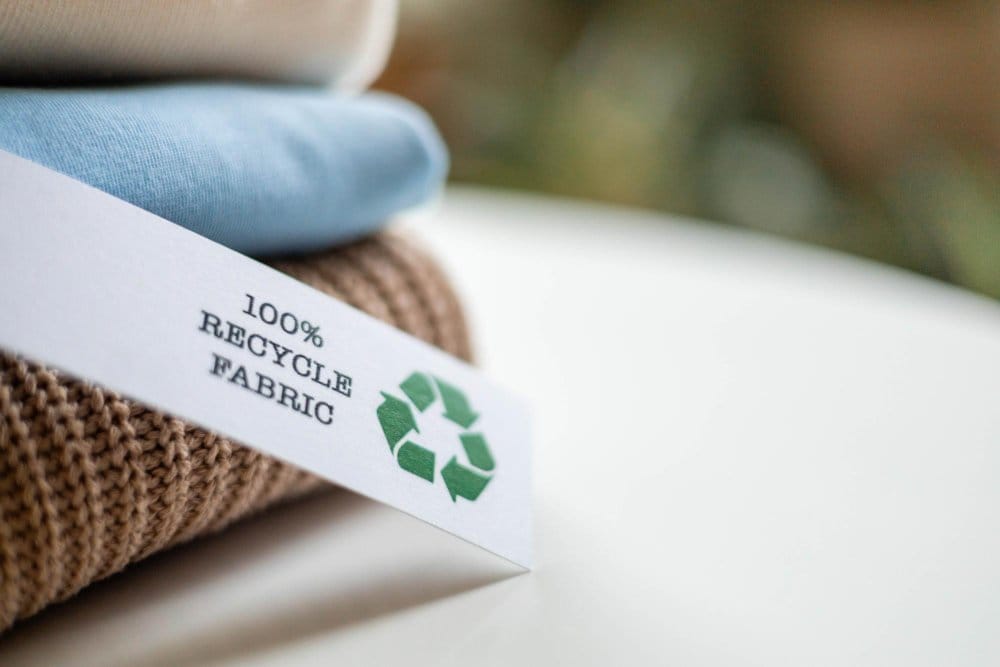
This image features a clothing label marked 100 percent recyclable fabric alongside a green recycling symbol. It represents the growing demand for sustainable and eco friendly textiles. Recycled polyester, organic cotton, hemp, and bamboo fabrics help reduce environmental impact. Sustainable fashion focuses on responsible sourcing, lower water usage, and reduced waste in textile manufacturing.
Sustainability in fabrics is about more than just what the fiber is made from – it covers how it’s grown, processed, dyed, transported, and eventually disposed of. No fabric is perfect, but some are significantly better than others.
Hemp: One of the Most Eco-Friendly Fabrics
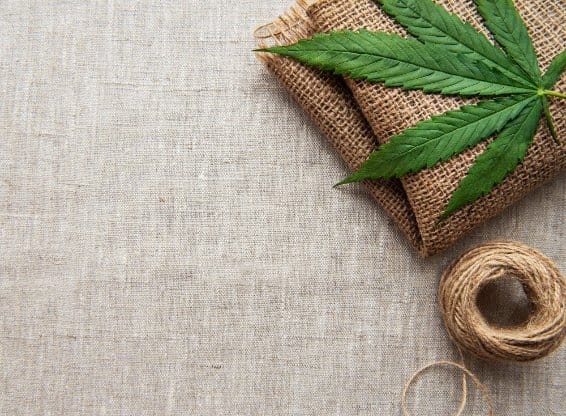
This image shows hemp fabric with a natural woven texture alongside green leaves. Hemp is one of the most sustainable natural fibers, requiring minimal water and pesticides. It is strong, breathable, and naturally resistant to mold and UV rays. Hemp fabric is increasingly popular in eco conscious fashion and sustainable clothing.
Hemp is worth a special mention because it’s one of the most sustainable crops on the planet. It grows quickly without pesticides, uses roughly 50% less water than cotton per kilogram of fiber, and actually improves soil health by pulling toxins from the ground. Hemp fabric gets stronger and softer with each wash, and it has natural UV resistance and antibacterial properties. The main reason it’s not more mainstream is that it’s stiffer when new and has historically been associated with workwear rather than fashion. That’s changing, with modern processing creating much softer hemp fabrics that blend well with cotton and linen.
Why Hemp Stands Out
- Uses 50% less water than cotton
- Grows without pesticides
- Improves soil health
- Gets stronger and softer with washing
- Naturally UV-resistant and antibacterial
- Fully biodegradable
Current Limitations
- Can feel stiff when new
- Less widely available than cotton
- Higher cost than conventional fabrics
- Regulatory history slowed development
Water Usage Comparison
| Fabric | Water to Produce 1 kg | Carbon Footprint | Biodegradable? |
|---|---|---|---|
| Conventional Cotton | ~2,700 liters | Medium-High | Yes |
| Organic Cotton | ~1,700 liters (varies) | Medium | Yes |
| Hemp | ~300 liters | Low | Yes |
| Linen (Flax) | ~400 liters (rain-fed) | Low | Yes |
| Polyester | Very low water use | High (oil-based) | No (500+ years) |
| TENCEL/Lyocell | Low (closed-loop process) | Low-Medium | Yes |
| Recycled Polyester (rPET) | Low | Lower than virgin polyester | No |
| Wool | Medium | Medium (methane from sheep) | Yes |
Sustainability Certifications Explained
| Certification | What It Covers | Look For It On |
|---|---|---|
| GOTS (Global Organic Textile Standard) | Organic fiber AND responsible processing, dyeing, and social standards | Organic cotton, wool clothing, baby items |
| OEKO-TEX Standard 100 | Every component tested for 100+ harmful substances | Any textile product |
| Bluesign | Responsible chemical use and safe manufacturing | Performance and outdoor gear |
| Fair Trade | Fair wages and working conditions | Cotton, casual clothing |
| ZDHC | Zero Discharge of Hazardous Chemicals in production | Brands committed to chemical transparency |
| Responsible Wool Standard (RWS) | Animal welfare and land management for wool production | Wool products |
Learn more about the differences between natural and synthetic fabrics in terms of sustainability and performance.
Fabric Myths Busted
There’s a lot of conventional wisdom about fabric that’s just plain wrong. Let’s clear up the most common ones.
“Linen is always wrinkled and messy-looking.”
Linen does wrinkle, but many people actually love this look – it’s relaxed and intentional. If you prefer a neater look, iron linen while it’s still slightly damp and it smooths out easily. Linen-cotton blends also wrinkle much less than pure linen.
“Bamboo fabric is always eco-friendly.”
Bamboo is a wonderful plant – it grows fast, uses little water, and doesn’t need pesticides. But when it’s turned into fabric (usually as bamboo viscose or bamboo rayon), the process uses harsh chemicals that often pollute waterways. TENCEL made from wood pulp is generally a more eco-friendly option. If you want bamboo fabric, look for OEKO-TEX certification to ensure chemical safety.
“Wool is always itchy and uncomfortable.”
Coarse wool can be scratchy, but fine grades like merino wool (especially under 17.5 microns) are softer than most cottons. Many people who thought they were “allergic to wool” are actually sensitive to coarse fibers or the lanolin in some wools – and do fine with fine merino. Cashmere and alpaca are even softer still.
“Polyester is cheap and low-quality.”
Cheap polyester exists, but high-quality polyester is used in premium outdoor gear, athletic wear, and even tailored clothing. The fiber quality and construction matter far more than the fiber type alone. High-grade polyester in a well-constructed performance jacket will outlast cheap cotton in many situations.
“Cotton is always the best choice for summer.”
Cotton is great in heat, but it holds moisture – once it gets wet from sweat, it can feel heavy and clingy. For very active warm-weather use, moisture-wicking polyester or linen (which releases moisture faster) can actually keep you more comfortable. For casual wear in the heat, cotton is excellent. For a hike in 95°F heat, moisture-wicking fabrics may work better.
“Dry clean only means you can never wash it at home.”
For many garments, “dry clean only” is a cautious recommendation, not a guarantee of disaster if you don’t. Unstructured silk blouses, rayon dresses, and knit sweaters can often be hand-washed in cool water with gentle detergent and laid flat to dry. The exception: structured wool suits, heavily tailored pieces, and garments with interfacing – these can lose their shape with water washing.
“Thread count is the best measure of sheet quality.”
Thread count is often manipulated – brands inflate counts by splitting individual threads and counting them multiple times. A 600 thread count can be lower quality than a well-made 300 thread count in long-staple Pima or Egyptian cotton. Fiber quality and weave matter far more than thread count alone.
“Recycled polyester is completely eco-friendly.”
Recycled polyester does use fewer virgin resources than standard polyester, and that’s genuinely good. But as mentioned earlier, it sheds more microplastics in the wash than virgin polyester. It’s better in some ways, but not a complete solution. It’s a step in the right direction, not the finish line.
Fabric Care Guide
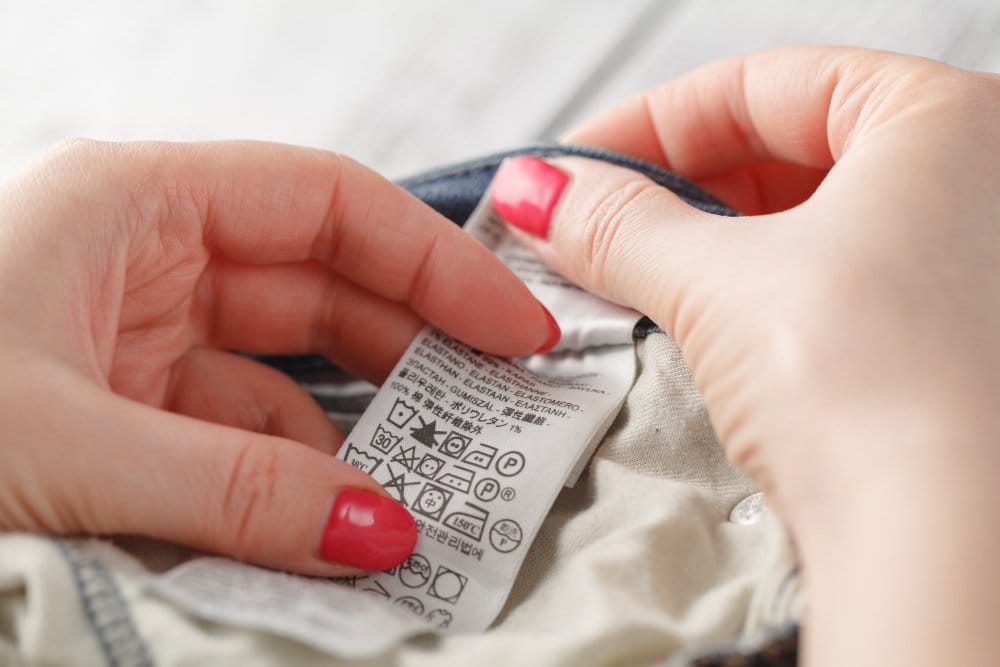
This image displays a clothing tag with standard washing, drying, and ironing symbols. Fabric care labels help consumers maintain garment quality and extend fabric lifespan. Understanding washing temperatures, drying methods, and ironing guidelines prevents shrinkage, fading, and damage. Proper care ensures fabrics remain durable and comfortable over time.

How to Wash your Clothes Without Damaging Them – a practical video guide to proper clothing care for every fabric type.
The right care routine makes the biggest difference in how long your clothes last and how good they look over time. Here’s a practical, easy-to-follow summary for every major fabric type.
| Fabric | Wash | Dry | Iron | Watch Out For |
|---|---|---|---|---|
| Cotton | Machine wash cold-warm | Tumble dry medium | Medium-high heat | Shrinks in hot water; fades with bleach |
| Linen | Machine wash cool, gentle cycle | Air dry preferred; low tumble | High heat while damp | Shrinks; wrinkles a lot |
| Silk | Hand wash cool; or dry clean | Air dry flat – no tumble dry | Low heat, silk setting | Water-spots; heat damage; bleach will destroy it |
| Wool | Cool water, wool detergent, gentle | Lay flat to dry – no tumble dry | Steam press, don’t drag | Felts and shrinks dramatically in hot water |
| Polyester | Machine wash cold, quick cycle | Low tumble dry | Low heat only | Melts under high heat; holds odors over time |
| Nylon | Machine wash cool, gentle cycle | Air dry or low heat | Very low heat | Yellows in direct sunlight; heat damage |
| Acrylic | Machine wash cool, gentle | Lay flat to dry | Cool only – iron on reverse | Melts easily; pills readily |
| Spandex Blends | Cold water, gentle cycle | Air dry – heat breaks down elastic | Avoid ironing if possible | Chlorine degrades elastane; heat causes permanent stretch-out |
| Rayon/Viscose | Hand wash cool; or dry clean | Air dry flat | Cool iron on reverse | Weakens when wet; can shrink dramatically |
| TENCEL/Lyocell | Machine wash cool, gentle cycle | Air dry or low tumble | Medium cool | Wrinkles when wet; can shrink on hot |
| Cashmere | Hand wash cool, cashmere shampoo | Lay flat to dry – never hang | Steam only | Shrinks; pills if handled roughly |
| Denim | Cold water, inside out, minimal washing | Air dry to preserve color and shape | Medium heat | Fades with frequent washing; pre-shrink before first wear |
| Velvet | Dry clean preferred | Air dry only | Steam gently – never press flat | Crushing the pile; water marks |
| Satin | Gentle hand wash or dry clean | Air dry away from direct sun | Low heat from reverse | Snags easily; loses sheen with rough handling |
We also have detailed care guides for specific fabrics: cotton, silk, wool, linen, denim, and cashmere.
Leather, Suede, and Vinyl
Not all clothing materials come from fiber. Leather, suede, and vinyl are a distinct category – surface materials used for shoes, jackets, bags, belts, and upholstery.
Leather
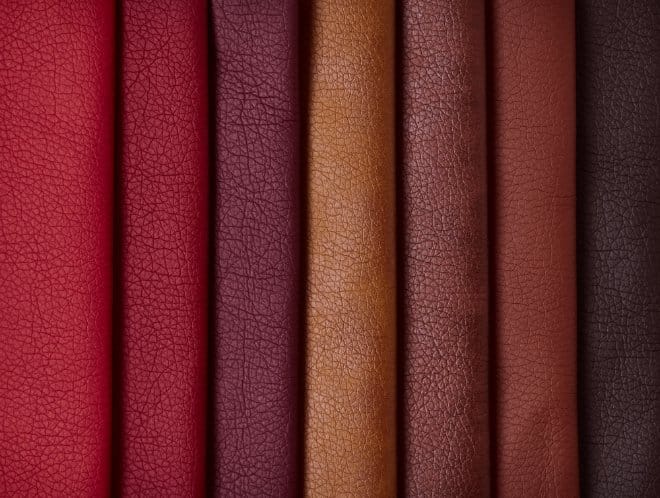
This image displays multiple pieces of leather in various warm tones. Leather is a durable material made from treated animal hide and is commonly used in jackets, shoes, bags, and upholstery. It is valued for its strength, longevity, and unique grain patterns. Proper care enhances leather’s appearance and lifespan.
Leather is made from treated animal hides (usually cow, but also sheep, goat, pig, and exotic animals). The tanning process transforms raw skin into a flexible, long-lasting material that develops a patina over time. Full-grain leather – the highest quality – shows the natural grain of the hide and becomes more beautiful with age. Top-grain leather is sanded for a uniform appearance and is widely used in commercial goods. See our leather and suede care guide for maintenance tips.
| Leather Grade | Characteristics | Best For |
|---|---|---|
| Full-grain | Highest quality, natural surface, most durable | Luxury goods, investment pieces |
| Top-grain | Sanded for uniformity, good durability | Most handbags, wallets, belts |
| Split leather (suede underside) | Softer, more flexible, less durable | Gloves, suede garments |
| Patent leather | High-gloss lacquered finish | Formal shoes, accessories |
| Faux leather (PU/PVC) | Synthetic, consistent appearance | Budget-friendly animal-free option |
Suede
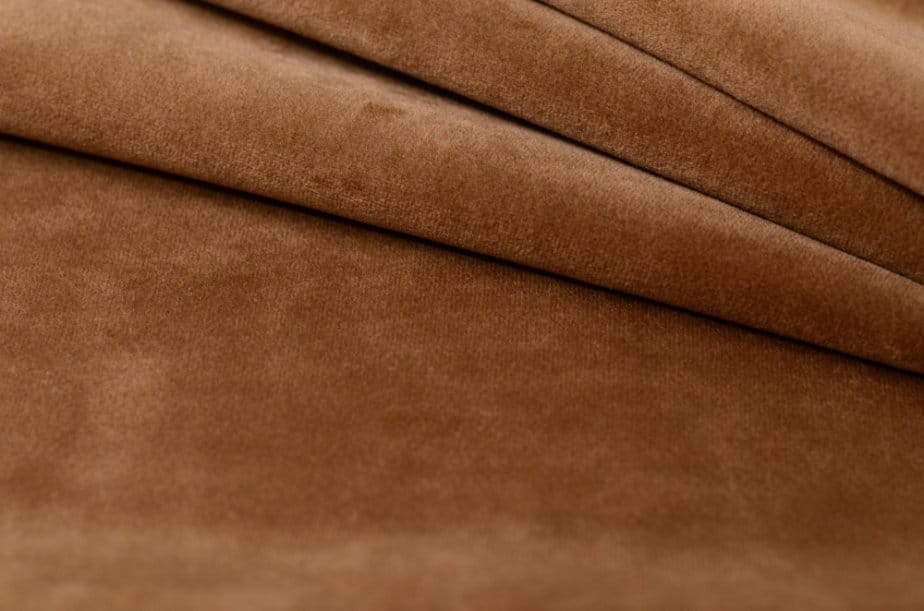
This image shows close up brown suede material with a smooth yet slightly textured surface. Suede is a type of leather made from the underside of animal hide, giving it a soft, brushed finish. It is commonly used in jackets, shoes, handbags, and upholstery. Suede offers a luxurious look but requires careful maintenance to prevent stains and water damage.
Suede comes from the underside of animal skin, creating a soft, napped surface with a distinctive texture. It’s used in shoes, jackets, skirts, bags, and accessories. Suede looks luxurious but requires more care than smooth leather – it marks easily and is not water-resistant without treatment. Synthetic microsuede (also called “Alcantara” in its premium branded form) offers similar texture with better water resistance and easier maintenance.
Vinyl
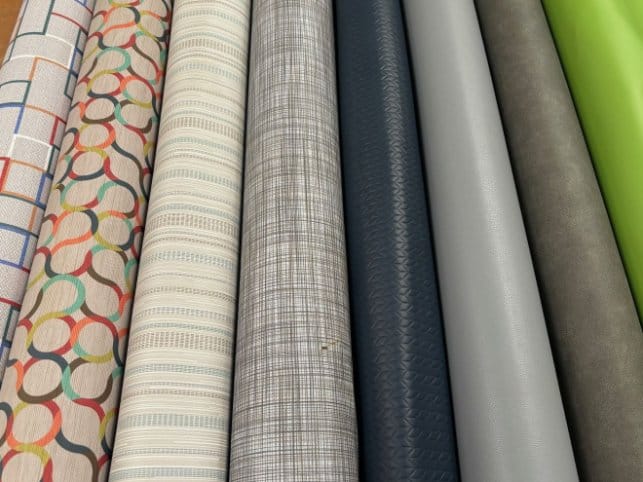
This image shows multiple rolls of vinyl material in assorted colors and patterns. Vinyl is a synthetic plastic based fabric commonly used for upholstery, furniture, automotive interiors, and waterproof covers. It is easy to clean, resistant to moisture, and highly durable. Vinyl is often chosen for practical and commercial applications.
Vinyl fabric uses a synthetic plastic coating (PVC or PU) over a woven base. Its water-resistant properties make it popular for outdoor furniture, marine upholstery, rainwear, and bags. Marine-grade vinyl includes UV inhibitors to prevent sun damage. Contract-grade vinyl is used in restaurants, hospitals, and public spaces. It’s easy to wipe clean, very durable, and animal-free. The downside: it doesn’t breathe at all, making it uncomfortable for clothing that covers large body areas.
Global and Traditional Fabrics
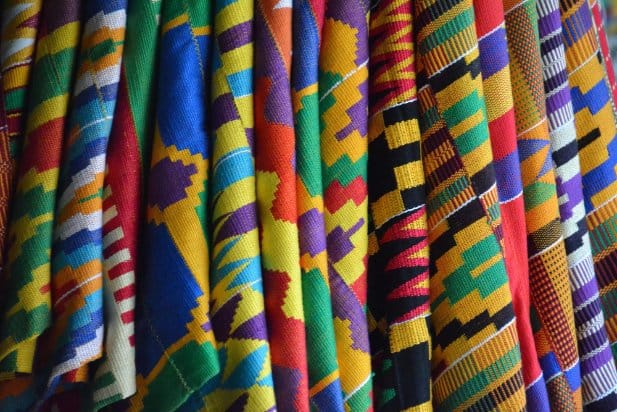
This image features brightly colored patterned textiles inspired by traditional global fabrics. Cultures around the world produce distinctive textiles such as African prints, Indian silk, and woven Latin American fabrics. These materials reflect heritage, craftsmanship, and artistic expression. Traditional fabrics remain influential in modern fashion design.
Fabric has always been one of the most powerful expressions of cultural identity. Every region of the world has developed distinct textiles that reflect its climate, resources, history, and values. Understanding these gives you a richer picture of the global textile world.
What Are the Three Most Traditional Fabrics?
The three most historically universal fabrics are cotton, wool, and silk. These have been used for thousands of years across virtually every culture. Linen is considered the oldest documented fabric, with evidence of use dating back around 34,000 years in what is now the Republic of Georgia.
Notable Regional Fabrics from Around the World
| Region | Fabric / Textile | What Makes It Distinctive |
|---|---|---|
| West Africa (Nigeria, Ghana) | Ankara (wax print), Aso-oke, Adire | Bold patterns and vibrant colors; Aso-oke is hand-woven in strips and used for ceremonial dress |
| Japan | Kimono silk fabrics, Yukata cotton | Intricate dyeing and weaving traditions; specific fabrics for specific occasions and seasons |
| India | Khadi cotton, Banarasi silk, block-printed cotton | Hand-spun khadi has political and cultural significance; Banarasi silk is one of the world’s finest luxury fabrics |
| Scotland | Wool tartan, Harris Tweed | Tartan patterns identify family and clan; Harris Tweed is legally protected handwoven wool from the Outer Hebrides |
| Peru / Andes | Alpaca wool, vicuña wool | Alpaca is a staple of Andean culture; vicuña is the world’s most expensive natural fiber at over $3,000 per yard |
| China | Raw silk, brocade, jacquard | China invented sericulture (silk farming) over 5,000 years ago and remains the world’s largest silk producer |
| Ireland / Belgium | Fine linen | Irish linen and Belgian linen are considered the finest in the world due to cool, damp climate ideal for retting flax |
| Indonesia / Malay region | Batik | Wax-resist dyeing technique applied to cotton or silk; UNESCO-recognized cultural heritage |
The Rarest and Most Expensive Fabrics
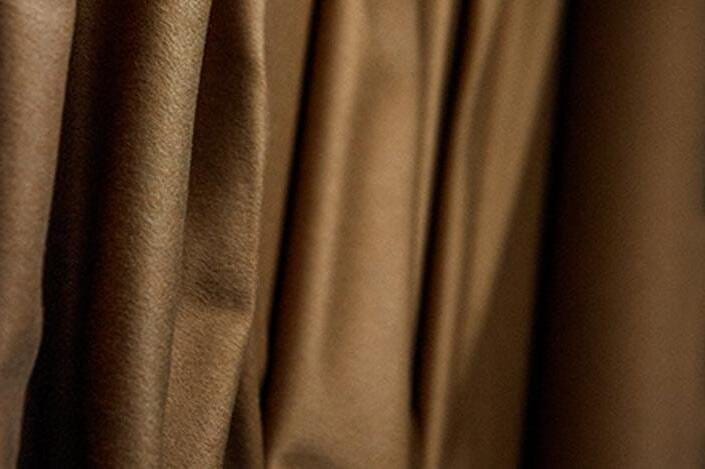
This image features a rich brown fabric with elegant folds and a refined finish. The rarest and most expensive fabrics in the world include materials such as vicuna wool, mulberry silk, and fine cashmere. These textiles are prized for softness, craftsmanship, limited production, and exceptional quality. Luxury fabrics are often used in high end fashion and bespoke tailoring.
Vicuña Wool
- From vicuñas in the Andes
- Can only be sheared every 2-3 years
- Over $3,000 per yard
Sea Silk (Byssus)
- Made from filaments of a clam (Pinna nobilis)
- Extraordinarily rare – near-extinct craft
- Found mainly in Sardinia, Italy
Qiviut (Musk Ox)
- Fiber from Arctic musk oxen
- 8x warmer than wool by weight
- Harvested by hand, not shearing
Lotus Silk
- Extracted from lotus flower stems
- Made in Myanmar and Cambodia
- Extremely labor-intensive to produce
What Fabric Looks Like Silk But Isn’t?
Several fabrics mimic silk’s appearance and drape at a much lower price point:
| Fabric | Why It Looks Like Silk | Key Difference |
|---|---|---|
| Charmeuse | Satin weave creates a glossy front surface | Can be silk or polyester; polyester version is far cheaper |
| Rayon/Viscose | Flows and drapes with silk-like movement | Not as strong, can shrink; made from wood pulp |
| Polyester Satin | High sheen surface, similar drape to satin-woven silk | Doesn’t breathe like silk; much less expensive |
| Modal | Very smooth surface, subtle sheen | Matte finish; more breathable than polyester alternatives |
| TENCEL/Lyocell | Smooth, slightly lustrous surface | More sustainable than most alternatives; good drape |
| Acetate | Silky sheen and drape | Brittle, heat-sensitive; dry clean only |
Stain Removal Quick Guide
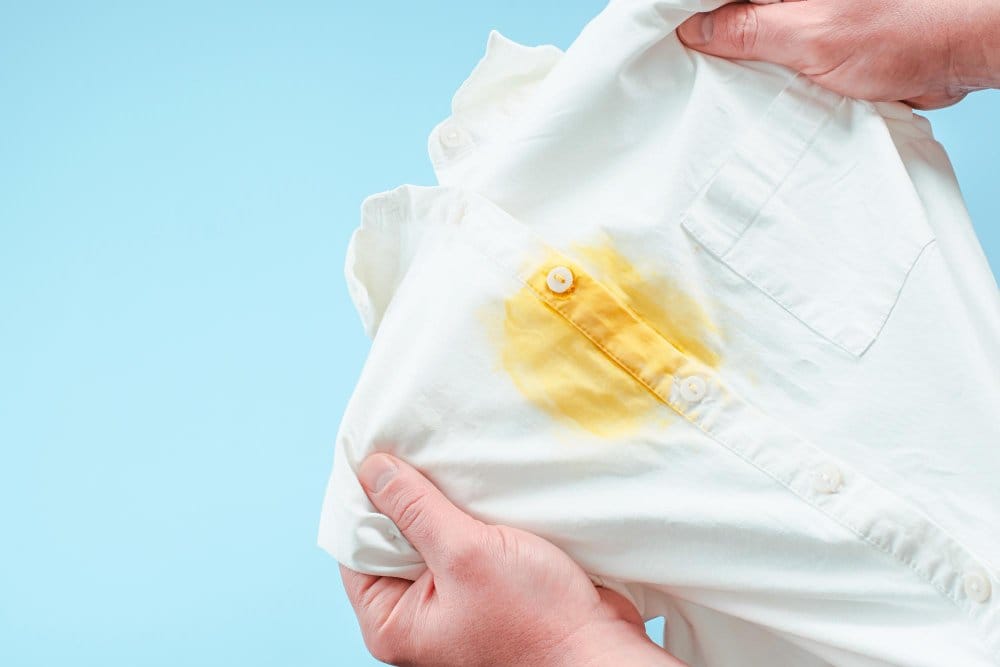
This image features a white shirt with a visible yellow stain near the buttons. It represents common household clothing stains and the importance of proper stain removal techniques. Different fabrics require specific cleaning methods depending on fiber content and stain type. Quick treatment and correct washing instructions help preserve garment quality and extend fabric lifespan.
The golden rule with stains: act fast. A stain treated within the first few minutes is dramatically easier to remove than one that’s been sitting for hours. Here’s a practical reference for the most common clothing stains.
| Stain Type | First Action | Treatment | What to Avoid |
|---|---|---|---|
| Grease / Oil | Blot (don’t rub), absorb with cornstarch or talcum powder | Apply a small amount of dish soap directly, work in gently, wash in cool water | Hot water (sets the stain) |
| Blood | Rinse immediately in cold water | Hydrogen peroxide on white/light fabrics; salt paste on colored fabrics | Hot water (cooks the protein and sets it permanently) |
| Red Wine | Blot with clean cloth, pour cold water over stain | Cover with salt to absorb, then apply dish soap or specialized stain remover | Rubbing (spreads the stain) |
| Coffee / Tea | Blot immediately | Cold water rinse, then apply liquid detergent before washing | Hot water before pre-treatment |
| Grass | Scrape off solid material | Pre-treat with enzyme-based detergent or a paste of baking soda and dish soap | Warm water before treatment |
| Sweat / Deodorant | Rinse in cold water | White vinegar or baking soda paste; soak for 30 minutes before washing | Chlorine bleach on colored fabrics |
| Ink (pen) | Dab (don’t rub) with a clean cloth | Rubbing alcohol applied with a cotton ball; work from outside inward | Water first (spreads ink) |
| Mud | Let dry completely first | Brush off dried mud, then treat with liquid detergent before washing | Treating while wet (pushes mud deeper into fibers) |
Fabric Trends for 2026
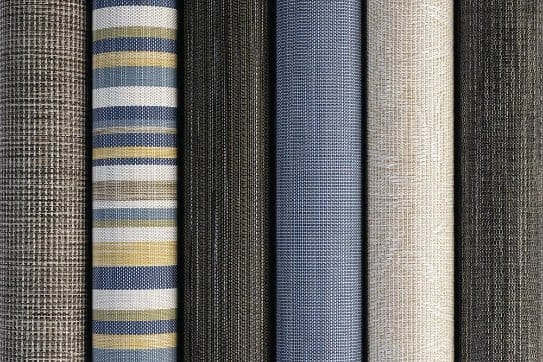
This image showcases a range of modern fabric swatches in neutral tones with varied textures and patterns. Fabric trends for 2026 emphasize sustainability, earthy colors, innovative weaves, and functional materials. Designers are focusing on eco conscious fabrics, minimalist aesthetics, and versatile textiles suitable for both fashion and interior applications.
The fabric world moves in sync with fashion, technology, and consumer values. Here’s what’s shaping the textiles you’ll see in stores and online through 2026.
Sustainable Fabrics
- Search volume for “sustainable fabrics” grew 83% in a recent period
- Linen, organic cotton, and TENCEL leading the charge
- Recycled materials gaining momentum (with caveats)
Textured Fabrics
- Boucle continuing from 2025 into 2026
- Tactile, dimensional surfaces (knits, bouclé, tweed)
- Sculptural knitwear via 3D knitting technology
Performance + Function
- Fabrics that work for both gym and everyday wear
- Microsuede and performance wool for home furnishings
- Easy-clean, long-lasting materials for family homes
Smart Textiles
- Temperature-adaptive fabrics
- Embedded sensors for health monitoring
- Self-cleaning and antimicrobial treatments
Natural Fabrics in Home
- Cotton, linen, and wool dominating interior design
- Natural textures as sustainability signals
- Handwoven and artisan-quality fabrics
Basic Fast Fashion Synthetics
- Consumer awareness of microplastics growing
- 30% of US consumers bothered by synthetic fiber use
- Pressure on brands to reduce polyester dependency
For a detailed look at what’s coming, read our 2025 fabric trends report and the latest 2026 fashion colors guide.
Frequently Asked Questions About Fabric
Linen is widely considered the most breathable fabric for clothing. It allows airflow, releases moisture quickly, and stays cool even in high heat and humidity. After linen, loose-weave cotton (like voile, lawn, or chambray), TENCEL, and bamboo are all excellent breathable options. For athletic use, moisture-wicking polyester technically “breathes” differently – it pulls sweat away rather than absorbing it, which keeps you dry during exercise but may feel less comfortable in passive hot-weather wear.
Silk is often the gentlest fabric against sensitive or reactive skin because its protein structure is smooth and naturally hypoallergenic. After silk, high-quality merino wool (under 18.5 microns), bamboo lyocell, modal, and OEKO-TEX certified organic cotton are all excellent choices. For children and babies, GOTS-certified organic cotton is generally the safest and most widely recommended option.
Linen tops the list for hot humid weather because it absorbs sweat and releases moisture fast, preventing that sticky feeling. Lightweight cotton in open weaves (poplin, voile, lawn) is a very close second and more affordable. TENCEL and bamboo lyocell also perform well in heat and humidity. For active use in humidity, moisture-wicking performance fabrics designed for tropical conditions work well too. The fabrics to avoid in humidity are polyester, nylon, and acrylic – they trap heat and moisture against your skin.
Polyester and nylon are the most shrink-resistant fabrics because they’re synthetic and heat-stable (though nylon can still deform in very high heat). Pre-washed or sanforized cotton has already been shrunk during manufacturing, so it shrinks much less in your washing machine. Polyester/cotton blends shrink less than pure cotton. Fabrics most likely to shrink in the wash: pure wool (especially in hot water), rayon/viscose, and untreated linen. Always wash natural fabrics in cool water to minimize shrinkage.
This is nuanced. Standard polyester itself isn’t proven to be directly toxic to wear. However, the concerns around polyester fall into two main categories: first, synthetic fabrics shed microplastics during washing which enter the water supply and have been detected in human tissue; second, polyester garments may contain chemical treatments (like PFAS or phthalates) that can leach through skin contact. The risk depends heavily on what chemical treatments were used in manufacturing, which brands typically don’t disclose. If you’re concerned, look for OEKO-TEX Standard 100 certified polyester garments, which have been tested for harmful substances.
All three are semi-synthetic fabrics made from plant cellulose (usually wood pulp), but they differ in their production process and final properties. Viscose (also called rayon) is the standard version: soft and drapey but weaker when wet and prone to shrinking. Modal is a more refined version of viscose made from beech tree pulp, with a smoother, softer feel and better durability and washability. TENCEL (lyocell) goes one step further with a closed-loop production process that recycles chemicals, making it the most eco-friendly of the three. All three feel softer than many cotton types and drape beautifully.
Read the fiber content first – look for natural or high-grade semi-synthetic fibers rather than 100% polyester in anything that touches your skin. Check the GSM (fabric weight) if listed – a T-shirt in the 160-200 GSM range will feel substantially more substantial than one at 130 GSM. Look for certifications like OEKO-TEX or GOTS in product descriptions. Read customer reviews specifically mentioning how the item looked after several washes. Order fabric swatches when possible before committing to bulk yardage for sewing projects. And pay attention to brand reputation – though even premium brands sometimes cut corners on specific lines.
For a summer outdoor wedding, your best bets are lightweight silk, silk chiffon, linen suiting, or a high-quality polyester chiffon if budget is a concern. These fabrics move beautifully, look polished, and keep you cooler than heavier options. For an indoor air-conditioned wedding reception, a wider range works well: crepe de chine, satin, or georgette all drape elegantly. Avoid heavy velvet, brocade, or thick wool for any summer event.
Canvas, denim, and nylon are among the most durable everyday fabrics. Canvas (heavy cotton) is nearly indestructible for bags and workwear. Denim lasts for years when cared for properly. Nylon outperforms most fabrics in abrasion resistance, which is why it’s in hiking pants and backpacks. For clothing that needs to be both durable and comfortable day-to-day, a quality cotton/polyester blend (60/40 or higher cotton) or mid-weight 100% cotton offers the best combination of durability, comfort, and washability. See our guide to the most durable fabrics for everyday wear.
For truly hot and humid conditions, linen has the edge over cotton because it releases moisture faster and feels less clammy when you sweat. Its loose fiber structure allows more airflow than most cotton weaves. That said, cotton in lightweight open weaves (lawn, voile, loose poplin) comes very close. The practical difference: a linen shirt on a humid 35°C (95°F) day will feel noticeably cooler than a standard cotton T-shirt. A lightweight cotton voile or lawn blouse will feel very similar to linen in the same conditions. Cotton has the advantage of being softer and available in more styles and price points.
100% organic cotton in a smooth, tight weave is the top recommendation for most people with eczema: it’s soft, breathable, and free from the chemical treatments that can trigger flare-ups. Silk is the other top choice – its smooth protein fibers reduce friction against irritated skin and it’s naturally hypoallergenic. Modal is also frequently recommended because of its exceptionally smooth surface. What to avoid: coarse wool, polyester, nylon, spandex, and any fabric with “easy-care” or “wrinkle-resistant” finishes (which usually contain formaldehyde). Always wash new clothes before wearing and use fragrance-free, dye-free detergent.
It’s best to separate fabrics by care requirements rather than fiber type alone. Natural fibers like cotton and linen can usually be washed together if the colors are similar. Keep delicate fabrics like silk and fine wool completely separate and wash them by hand or on a dedicated delicate cycle. Synthetics can usually be washed together on a cool, gentle cycle. The most important thing is to match water temperature to the most delicate item in the load – if you’re washing a silk blouse with cotton, use the silk’s cool water setting for everything.
Several factors drive fabric cost: fiber quality (natural fibers and long-staple varieties cost more), manufacturing complexity (hand-woven vs. machine-made, spinning method), scarcity (cashmere and vicuña are expensive because the animals are rare and produce limited fiber annually), certifications (organic and GOTS-certified fabrics cost more to produce), brand positioning, and finishing processes. A cashmere sweater costs more than an acrylic one not just because cashmere feels better, but because a single cashmere goat produces only about 150-200 grams of usable fiber per year, compared to the limitless production of petroleum-based acrylic.
Polyester is the most naturally wrinkle-resistant fabric – it’s why so many “easy-care” dress shirts contain at least some polyester. Other good options: wool (its natural elasticity means it bounces back from creasing), modal and bamboo lyocell (smooth semi-synthetic fibers that resist wrinkles reasonably well), and jersey knits (the stretch prevents sharp creases from forming). The most wrinkle-prone fabrics are linen, pure cotton, and rayon. If you travel a lot or prefer low-maintenance dressing, polyester blends, quality wool suiting, or knit fabrics will serve you much better than pure linen or cotton.
Which Fabric Should You Choose? A Simple Guide
Conclusion
Fabric is genuinely one of those topics where a little knowledge goes a very long way. Once you understand the basics, shopping for clothes, caring for your wardrobe, and making fabric choices for sewing projects all become much simpler.
Here are the most important things to take away from this guide:
- Natural fabrics (cotton, linen, silk, wool) breathe better and are healthier against your skin – especially for people with sensitive skin, eczema, or young children. They also biodegrade at end of life.
- Synthetic fabrics (polyester, nylon, acrylic) are durable and affordable but trap heat, may contain chemical treatments, and shed microplastics. They’re not inherently bad – but they’re better used in performance applications where their technical properties justify the trade-offs.
- Semi-synthetic fabrics like TENCEL and modal offer a middle ground – softer than most cottons, more breathable than synthetics, and (in the case of TENCEL) genuinely eco-friendly.
- Match your fabric choice to your climate. If you’re in the humid South, linen and lightweight cotton will serve you far better than polyester. If you’re in the frozen North, merino wool base layers and quality fleece midlayers are worth the investment.
- Read your clothing labels. The fiber content tells you almost everything you need to know about how a garment will feel, perform, and last. In the US, labels must list fibers in order from highest to lowest percentage – use that information.
- The microplastics issue is real and growing. The easiest things you can do: use a microplastic-filtering laundry bag, wash synthetics in cool water, and favor natural fibers for garments that touch your skin directly.
- Certifications matter. GOTS and OEKO-TEX Standard 100 are meaningful, third-party verified standards. Vague terms like “eco-friendly” or “natural” on a label mean nothing without certification to back them up.
- Spend more per wear, not per garment. A $90 linen shirt that lasts 10 years costs less per wear than a $20 polyester shirt that lasts 18 months – and it’s better for your skin, your wardrobe, and the environment.
- Proper care extends the life of every fabric. Cool water, air drying, and the right detergent for each fiber type can easily double how long your clothes look good and last.
The fabric world is broad, and you don’t need to know everything at once. Start with understanding what you’re buying, read your care labels, and make one or two better choices next time you shop. That’s already a real step forward.
If you want to go deeper on any specific fabric, use the internal links throughout this guide to access our detailed individual fabric pages, care guides, and interactive tools.
The information on this page regarding health effects, skin reactions, microplastics, and chemical exposure in textiles is provided for general educational purposes only. It does not constitute medical advice, diagnosis, or treatment. Individual reactions to fabrics and textile chemicals vary widely. If you experience skin irritation, allergic reactions, respiratory symptoms, or other health concerns you believe may be related to clothing or textiles, please consult a qualified healthcare professional, allergist, or dermatologist.
Clothing and textile regulations, certifications, and scientific research in this area continue to evolve. While we aim to keep this information current and accurate, always verify important health and regulatory information with official sources such as the Federal Trade Commission, the Consumer Product Safety Commission, or your healthcare provider.
Clothing Digest does not endorse any specific brands, products, or treatments mentioned in this article unless explicitly stated.