
An honest look at the environmental footprint of chambray fabric, how it compares to denim and synthetics, what the certifications actually mean, and how to make genuinely greener choices.
When someone tells you a piece of clothing is sustainable, the honest answer is almost always: it depends. It depends on where the fiber was grown, how it was processed, what dyes were used, how it was shipped, how long you keep it, and how you wash it. Chambray is no different.
What chambray does have going for it is a strong starting point. It is a natural fiber fabric that biodegrades, lasts years with proper care, and when made from organic cotton, carries a significantly lower environmental footprint than most synthetic alternatives. But conventional cotton chambray also comes with real costs that deserve an honest look.
This guide gives you the full picture, without the greenwashing. We will cover the environmental impact of cotton production, how chambray compares to denim and synthetic fabrics, what certifications like GOTS and OEKO-TEX actually guarantee, and what you can do as a shopper to make genuinely better choices.
Is Chambray Fabric Sustainable?
The short answer is: more so than most synthetic fabrics, but not automatically eco-friendly just because it is natural. The sustainability of chambray sits somewhere on a spectrum, and where it lands depends mostly on two things: how the cotton was grown, and how the garment was made.
What chambray has in its favor
Cotton chambray is a plant-based, renewable fiber. Unlike polyester or nylon, it does not shed microplastics when washed. It is fully biodegradable, meaning a cotton chambray shirt will break down naturally at the end of its life rather than sitting in a landfill for centuries. And because chambray is a lighter, thinner fabric than denim, less raw material is needed to produce each garment.
Durability also matters here. As noted by our own chambray fabric research, a well-made chambray shirt can last 5 to 10 years with proper care. That kind of longevity compresses the per-wear environmental cost significantly compared to fast fashion pieces that fall apart within a season.
Where the challenges lie
The problem is not chambray itself. It is the way most of the world’s cotton is grown. Conventional cotton is one of the most chemically intensive crops on the planet. It accounts for just 2.5% of global agricultural land but uses somewhere between 16% and 25% of the world’s pesticide supply, according to data compiled by The Roundup’s organic cotton statistics report. That gap between land use and chemical use tells you a great deal about the strain conventional cotton puts on soil and waterways.
Water use is the other major pressure point. Producing one conventional cotton t-shirt requires more than 2,700 liters of water. The dyeing and finishing processes add further water and chemical load. These are real costs, and a label that simply says “100% cotton” tells you nothing about whether any of this was managed responsibly.
The Environmental Cost of Cotton
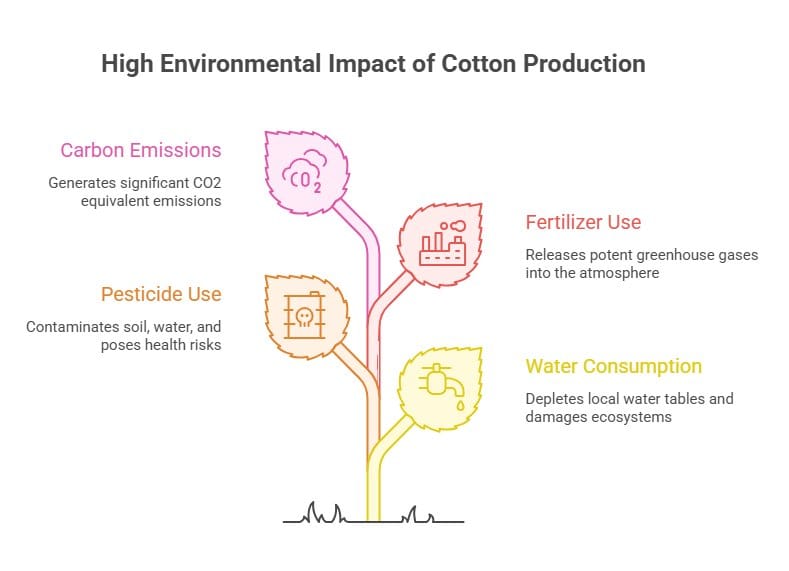
Cotton is the most-used natural fiber in the world and the backbone of chambray production. Understanding its environmental footprint is the foundation of any honest assessment of chambray’s sustainability.
Water consumption
Cotton is a thirsty crop. Global conventional cotton farming uses over 51 trillion liters of irrigation water annually. Producing just one kilogram of cotton fabric requires around 10,000 liters of water. These figures, documented in Unsustainable Magazine’s fabric impact analysis, put cotton in a particularly water-intensive category among agricultural crops.
The consequences go beyond just volume. Heavy irrigation in dry regions depletes local water tables, damages ecosystems, and in the most severe cases, has contributed to the near-complete destruction of bodies of water. The draining of the Aral Sea in Central Asia is one of the most cited and visible examples of what large-scale cotton irrigation has done to a regional environment.
Pesticide and chemical use
Conventional cotton farming uses synthetic pesticides and fertilizers heavily. According to data from The Roundup’s updated statistics, cotton production uses over 122,000 tons of pesticide annually, representing around 4.4% of all global chemical pesticide use across all crops. These chemicals contaminate soil, run off into rivers and groundwater, and create real health risks for the farming communities that live closest to them.
Synthetic fertilizers add another layer. Nitrous oxide released by nitrogen fertilizers is a greenhouse gas roughly 300 times more potent than CO2 over a 100-year period, and conventional cotton farming is a meaningful contributor to this.
Carbon emissions
The carbon picture for cotton is more nuanced than water and pesticides. Producing one kilogram of conventional cotton generates around 16.4 kg of CO2 equivalent, according to environmental impact research compiled by Geopelie’s textile fiber impact guide. That is comparable to polyester (14.2 kg CO2e per kg), which may surprise people who assume cotton is automatically more climate-friendly than synthetics.
What tips the scales back toward cotton is biodegradability, the absence of microplastic shedding, and the significantly lower end-of-life impact.
Organic vs Conventional Cotton: What the Data Actually Shows
This is where the sustainability picture for chambray gets genuinely better, provided you are buying the right kind.
The numbers
Organic cotton farming produces dramatically different results across nearly every environmental measure. A life cycle assessment study cited by Cotton Gins found that organic cotton uses 91% less water than conventional cotton. A separate analysis from EmVide’s environmental impact comparison found conventional cotton fabric emits 1,660 kg CO2 equivalent per 1,000 square meters, while organic cotton emits just 94 kg CO2e for the same amount. That is roughly a 94% reduction in carbon emissions.
Organic cotton uses no synthetic pesticides or fertilizers, relies on crop rotation and natural soil management, and generally produces healthier conditions for both the land and the farming communities working it.
The honest caveat
Organic cotton is not without complexity. Research published in ScienceDirect’s cotton lifecycle review notes that organic cotton typically yields less per hectare than conventional cotton. This means more land may be required to produce the same volume of fiber, which introduces its own land-use considerations. The environmental benefit depends heavily on where and how the cotton is grown, and whether it is rain-fed or irrigated.
The conclusion is not that organic cotton is perfect. It is that organic cotton is meaningfully better across most key measures, and significantly better for water, chemicals, and carbon when conditions are favorable.
What about Better Cotton?
Better Cotton Initiative (BCI) cotton sits between conventional and certified organic. It is conventional cotton grown under a framework of improved practices, including reduced pesticide use and better water management. It is not zero-chemical and does not meet organic standards, but it represents a real improvement over fully conventional farming and is far more widely available at scale. Many mainstream brands source from BCI when full organic is not feasible across their supply chain.
Chambray vs Denim vs Synthetic Fabrics: Environmental Comparison
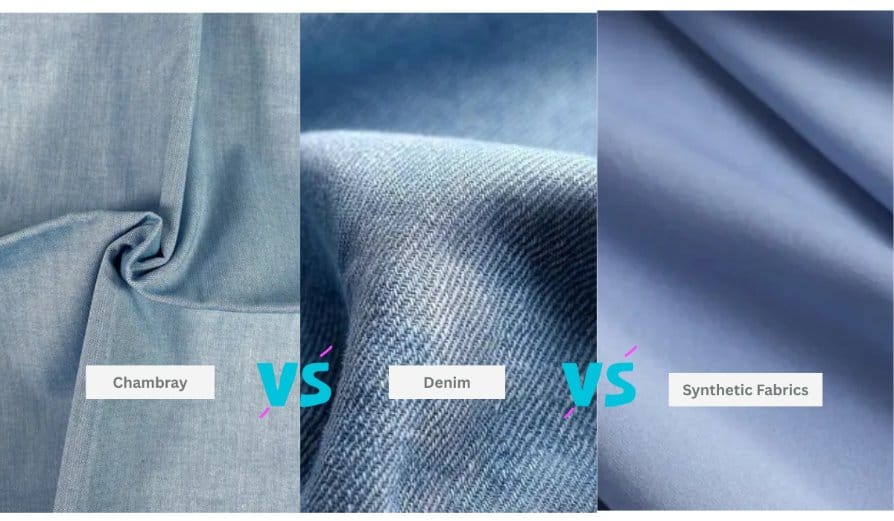
Chambray is often compared to denim in terms of look and feel. When it comes to environmental impact, the comparison is interesting. And against synthetic fabrics, natural fiber chambray wins on most measures.
| Factor | Cotton Chambray | Denim | Polyester | Nylon |
|---|---|---|---|---|
| Raw material source | Plant-based (cotton) | Plant-based (cotton) | Petroleum-based | Petroleum-based |
| Water use in production | Moderate to high | High (heavier fabric) | Lower | Lower |
| Carbon emissions (per kg) | ~16 kg CO2e | Higher (more fabric, chemical washes) | ~14 kg CO2e | ~30+ kg CO2e |
| Microplastic shedding | None | None | Yes, every wash | Yes, every wash |
| Biodegradable | Yes | Yes | No (200+ years) | No (200+ years) |
| Chemical dyeing impact | Moderate (indigo/vat dyes) | Higher (acid washes, stonewash treatments) | Moderate | Moderate |
| Fabric weight per garment | Light (4-6 oz) | Heavy (10-14 oz) | Variable | Variable |
| End-of-life impact | Biodegrades naturally | Biodegrades (slowly if blended) | Persists for centuries | Persists for centuries |
Why chambray has a lighter footprint than denim
Both are cotton fabrics, but chambray’s much lighter weight means less raw material per garment. A chambray shirt uses significantly less fabric than a denim jacket or jeans, which directly reduces the water and chemical inputs required. Denim also often goes through additional finishing processes, including acid washes, stonewashes, and distressing treatments that add chemical and water load. Chambray’s production process is comparatively straightforward.
Why chambray beats synthetics on end-of-life
The most stark difference between cotton chambray and synthetics comes at the end of a garment’s life. A synthetic garment can take over 200 years to decompose in a landfill. Cotton biodegrades in roughly six months to a few years depending on conditions. And every time you wash a polyester or nylon garment, it releases microplastic fibers into the water system. Cotton chambray does not do this.
The microplastic issue is increasingly serious. According to figures cited by Unsustainable Magazine, between 200,000 and 500,000 tons of microplastics from textiles enter global marine environments every year. Choosing natural fiber garments over synthetics is one of the most direct things a consumer can do to reduce their contribution to this.
The Full Lifecycle of a Chambray Garment
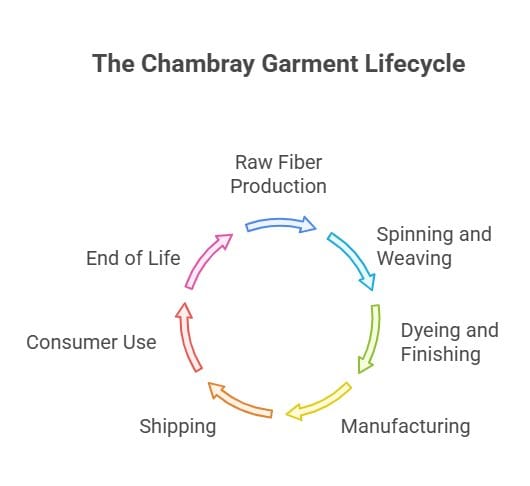
Sustainability is not just about where a fabric comes from. It covers the entire journey from field to landfill, and consumer behavior during the use phase is bigger than most people realize.
| Lifecycle Stage | Main Environmental Impacts | How to Reduce Them |
|---|---|---|
| Raw fiber (cotton farming) | Water use, pesticides, soil health, CO2 from fertilizers | Choose organic or BCI-certified cotton |
| Spinning and weaving | Energy consumption, water use, carbon emissions | Look for mills using renewable energy |
| Dyeing and finishing | Chemical use, wastewater pollution, water consumption | Look for OEKO-TEX or Bluesign certified production |
| Manufacturing and garment construction | Labor conditions, energy use, fabric waste | Choose brands with fair trade or ethical manufacturing certification |
| Shipping and distribution | Carbon emissions from transport | Buy local where possible; avoid air-freighted fast fashion |
| Consumer use and washing | Energy and water from washing, drying | Wash cold, air dry, wash less frequently |
| End of life | Landfill waste, incineration emissions | Donate, resell, repurpose, or compost if 100% natural fiber |
The use phase is bigger than you think
Research from ScienceDirect’s cotton lifecycle review found that consumer use, particularly washing and drying, accounts for over 65% of a garment’s total energy consumption across its life. This means the way you care for your chambray garments has a genuine and material impact on their overall environmental footprint.
Washing in cold water instead of warm cuts energy use significantly. Air drying instead of tumble drying eliminates the dryer’s energy demand entirely. Washing less frequently when a garment is not actually dirty extends both the life of the fabric and reduces cumulative water and energy use.
Dyeing, Finishing, and Water Pollution
Chambray’s signature look, that soft indigo blue warp against white weft threads, comes from the dyeing process. And dyeing is one of the most chemically intensive stages of textile production.
How chambray is dyed
Traditional chambray uses indigo dye on the warp threads before weaving. Indigo is one of the oldest dyes in textile history and exists in both natural and synthetic forms. Natural indigo has a lower chemical impact; synthetic indigo is more consistent and cost-effective but requires chemical inputs to produce and fix to the fiber.
Beyond indigo, many chambray garments go through additional finishing treatments: softeners, wrinkle-resistance coatings, and optical brighteners. Some of these involve chemicals that can be harmful if they enter waterways untreated.
The wastewater problem
Textile manufacturing is responsible for around 20% of the planet’s industrial wastewater pollution according to figures compiled by Unsustainable Magazine. In countries where environmental regulation of textile factories is weak, dye wastewater is often discharged directly into local rivers, with serious consequences for aquatic ecosystems and nearby communities.
What responsible dyeing looks like
A growing number of mills are adopting low-impact or plant-based dyes, closed-loop water recycling systems that recycle up to 90% of process water, and wastewater treatment before discharge. When you see OEKO-TEX Standard 100 certification on a chambray garment, it means the finished product has been tested for harmful residual substances, which is a meaningful signal that the dyeing process was managed responsibly.
Sustainability Certifications: What They Actually Mean
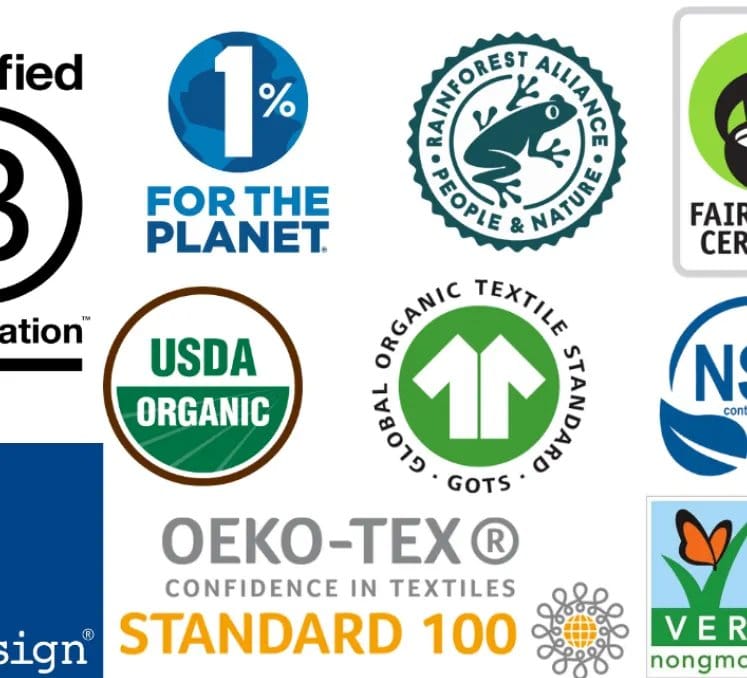
The certification landscape for sustainable textiles has grown significantly. Understanding what each label covers, and what it does not, helps you make genuinely informed choices rather than just responding to marketing language.
The most comprehensive organic textile certification. GOTS version 7.0 covers the entire supply chain from farm to finished product, requiring at least 70% certified organic fiber, strict limits on chemical use, wastewater treatment, and fair labor conditions.
- Covers farming, processing, manufacturing, and labeling
- Verifiable: every license number is in the public GOTS database
- Preferred standard for premium organic markets in the US and Europe
- Does not cover a brand’s overall carbon footprint
Tests the finished fabric or garment for over 1,000 harmful substances including pesticide residues, heavy metals, allergens, and formaldehyde. In 2026, OEKO-TEX implemented stricter chemical limits, particularly for endocrine-disrupting substances.
- Product-specific: each item requires separate testing
- Does not certify farming practices or labor conditions
- Strong assurance that what you wear against your skin is chemically safe
- Widely available across price points
Sits between conventional and certified organic. BCI trains farmers to improve practices, reduce pesticide use, and manage water more carefully. It does not prohibit all chemicals and does not meet organic standards, but represents a real improvement over fully conventional cotton at scale.
- Far more widely available than organic at mass market level
- Does not guarantee pesticide-free production
- Addresses water stewardship and worker welfare
Verifies that a product contains the stated amount of organically grown material, but unlike GOTS, does not extend to environmental processing criteria or labor standards. Useful as a baseline indicator of organic fiber but not as thorough as GOTS.
- Good entry-level certification for smaller brands
- Confirms organic fiber content only
- Pair with OEKO-TEX for more complete assurance
As noted in the Elexyfy sustainable clothing certifications guide, even with all of these labels improving, the single most impactful thing a consumer can do is buy less and wear longer. Certifications are tools for making better choices within a purchasing decision, not a substitute for that decision itself.
Tencel and Other Sustainable Chambray Alternatives
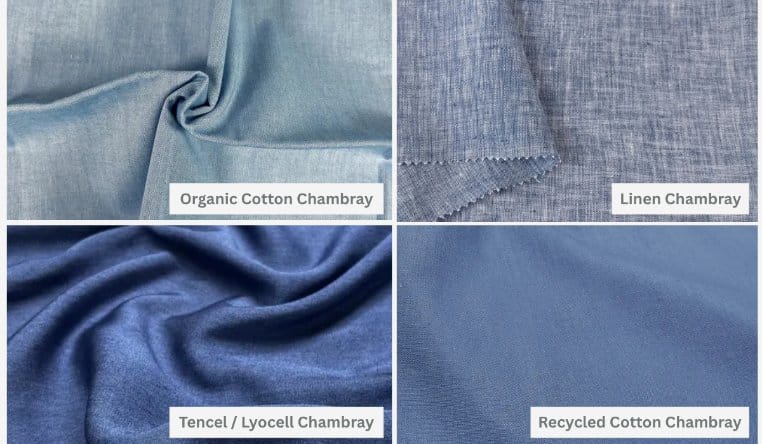
Beyond organic cotton, several other fibers are being used to produce chambray-style fabrics with a lower environmental footprint. These are worth knowing about if you are actively trying to reduce your textile impact.
| Fiber | Environmental Profile | How It Compares to Cotton Chambray | Best For |
|---|---|---|---|
| Tencel / Lyocell | Wood pulp from sustainably managed forests, closed-loop production recycling 99% of solvents | Lower water use, lower carbon, fully biodegradable | Silky-feeling chambray alternatives, dresses, shirts |
| Linen Chambray | Flax requires minimal irrigation and no pesticides in most growing conditions | Lower water and chemical footprint; slightly crisper hand | Hot climates, very eco-conscious shoppers |
| Organic Cotton Chambray | 91% less water, no synthetic pesticides, biodegradable | Significant improvement over conventional cotton | Everyday chambray shirts and garments |
| Recycled Cotton Chambray | Diverts textile waste from landfill, uses significantly less water than virgin cotton | Lower resource input; quality depends on recycling method | Brands focusing on circularity and waste reduction |
Why Tencel chambray is worth considering
Tencel (a brand name for lyocell made by Lenzing) is produced in a closed-loop manufacturing process that recycles the water and chemical solvents used to dissolve wood pulp into fiber. Around 99% of these solvents are recovered and reused. The wood pulp itself comes from sustainably managed forests certified by the Forest Stewardship Council. The result is a fiber with a significantly lower water and carbon footprint than conventionally grown cotton, and with properties (softness, drape, breathability) that translate beautifully into chambray-style fabrics.
Greenwashing in the Chambray and Cotton Market
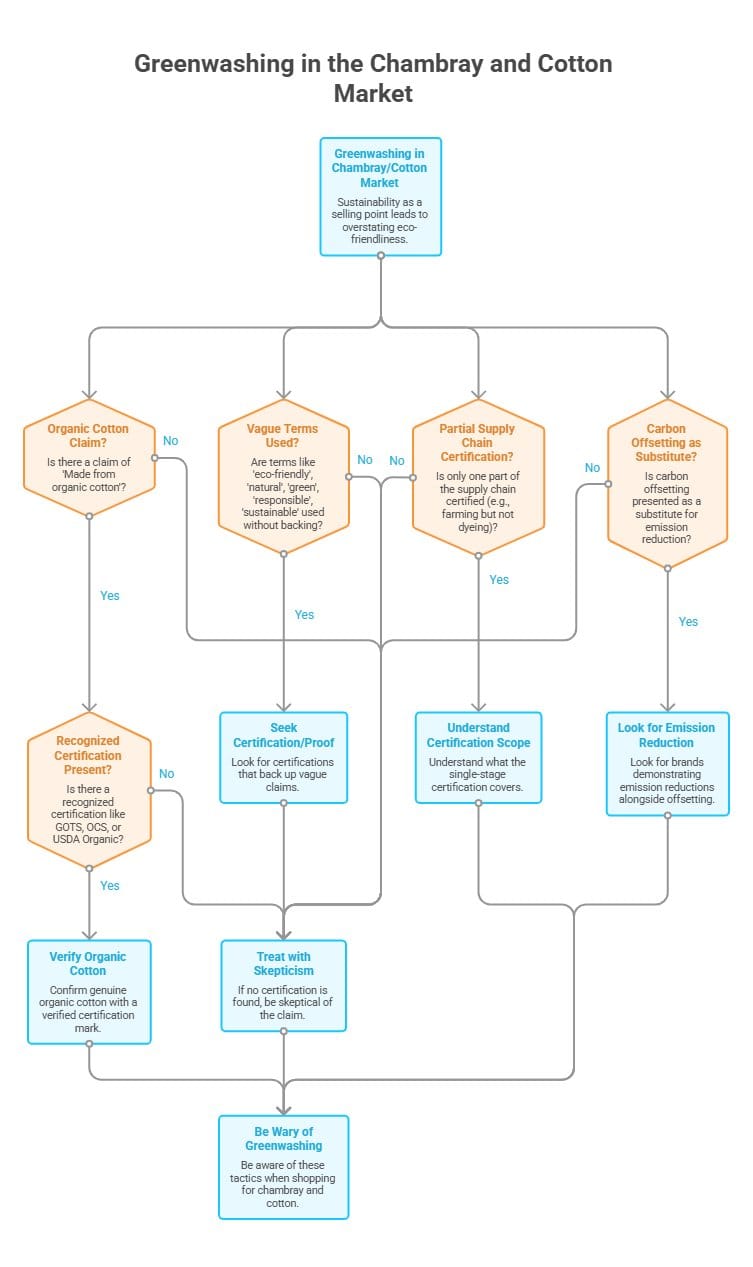
As sustainability has become a selling point, so has the temptation to overstate it. Greenwashing, making a product appear more eco-friendly than it actually is, is common in the fashion industry. Here is what to watch out for when shopping for chambray.
Vague terms with no backing
Words like “eco-friendly,” “natural,” “green,” “responsible,” and “sustainable” have no legal definition in most markets and require no certification or proof. A brand can use all of these words on a label made from conventionally grown cotton processed with harsh chemicals and shipped halfway around the world on diesel cargo ships. When you see these terms, look for the certification that backs them up. If there is none, treat the claim with skepticism.
“Made from organic cotton” without certification
Organic cotton claims without a recognized certification (GOTS, OCS, or USDA Organic) cannot be independently verified. As the Naturepedic organic cotton guide points out, many brands use organic-sounding claims that are not backed by any third-party verification. The only way to confirm that the cotton in your chambray shirt is genuinely organic is to see a verified certification mark.
Only certifying one part of the supply chain
A brand might certify the farming stage (organic cotton) but use an uncertified dyeing facility that discharges untreated wastewater. Or they might certify the fabric but have no transparency on labor practices. GOTS is valuable precisely because it addresses the full chain. Single-stage certifications are better than nothing but should be understood for what they cover.
Carbon offsetting as a substitute for reduction
Some brands offset their emissions through tree-planting programs while continuing to produce large volumes of fast fashion. Carbon offsets have genuine value but are not a substitute for actually reducing emissions at source. Look for brands that demonstrate emission reductions alongside any offsetting activity.
A Sustainable Chambray Buyer’s Guide

Armed with everything in this article, here is a practical checklist for making a genuinely more sustainable chambray purchase.
- Look for GOTS certification for the most comprehensive organic and ethical guarantee
- If GOTS is not available, look for OEKO-TEX Standard 100 as a chemical safety baseline
- Check fiber content: 100% organic cotton or linen chambray over conventional or blended options
- Consider Tencel or lyocell chambray alternatives for a lower water and carbon footprint
- Avoid garments with vague sustainability claims and no certification to support them
- Buy quality over quantity: one well-made chambray shirt worn for 10 years has a fraction of the impact of three cheap ones replaced every few years
- Look for brands with transparent supply chain information, not just a sustainability page
- Check for BCI sourcing if certified organic is not available or affordable in your budget
- Consider secondhand first: buying a pre-owned chambray shirt has essentially zero production footprint
- Look after what you buy: proper care dramatically extends garment life and compresses per-wear impact
How You Care for Chambray Matters Too
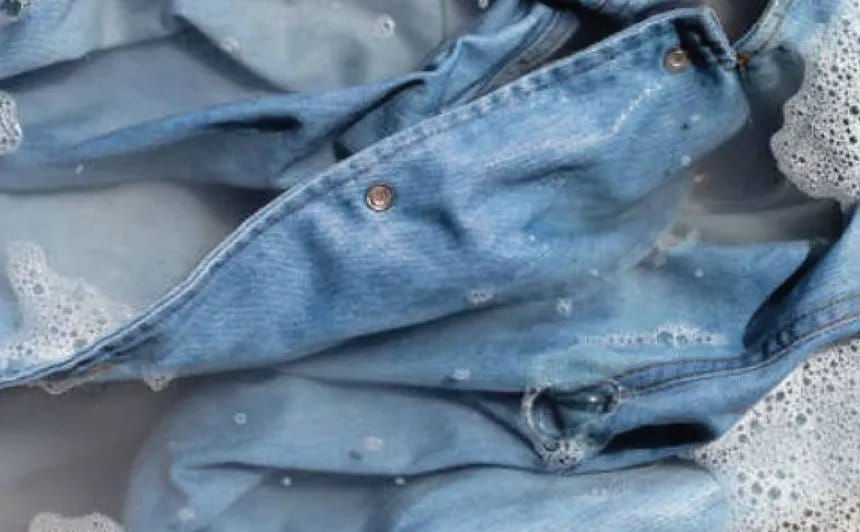
The environmental story of a garment does not end at purchase. Research consistently shows that the use phase, how a garment is washed, dried, and maintained, accounts for a substantial proportion of a garment’s total lifetime impact. For chambray, which is designed to last years, getting the care right is both a sustainability and a quality issue.
Wash cold, always
Washing in cold water rather than warm or hot uses significantly less energy with no meaningful difference to cleaning effectiveness for everyday garments. Most washing machines in modern homes use the majority of their energy just heating the water. Cold washes also preserve color and fabric integrity better, extending the shirt’s useful life.
Air dry whenever possible
A tumble dryer is one of the most energy-intensive appliances in a home. Air drying chambray takes a few hours and requires no energy at all. It also reduces shrinkage risk and preserves the fabric far better than high-heat drying.
Wash less frequently
A chambray shirt worn for a few hours in a cool environment does not need washing after every single wear. Airing it out, spot-cleaning minor marks, and reserving full washes for when the garment genuinely needs it both extends the fabric’s life and reduces the cumulative energy and water footprint of owning it.
Repair rather than replace
A small tear, a loose button, or a minor stain is not a reason to discard a garment. Basic repair skills, or access to a local tailor for a small fee, can add years to a chambray shirt’s life. The environmental cost of repairing is negligible compared to producing a replacement.
What to do at end of life
When a 100% cotton or linen chambray garment reaches the end of its wearable life, it has options that synthetic fabrics do not. It can be donated or resold, repurposed as cleaning cloths or fabric scraps, composted in a home compost system (if uncontaminated with synthetic blends), or taken to a textile recycling point. It will biodegrade in a natural environment. A polyester garment in the same situation simply cannot do any of these things effectively.
Frequently Asked Questions
Chambray made from organic or certified cotton is significantly more eco-friendly than synthetic fabrics and conventional denim. It biodegrades, does not shed microplastics, and when made from organic cotton, uses up to 91% less water than conventional cotton production. Conventional cotton chambray is less eco-friendly but still far better than polyester at end of life.
For most people, yes. Organic cotton chambray uses no synthetic pesticides, reduces water consumption by up to 91%, and carries a carbon footprint roughly 94% lower than conventional cotton. The higher upfront cost reflects a genuinely cleaner supply chain. When you factor in a 5 to 10 year lifespan, the cost-per-wear is also very competitive against cheaper alternatives.
GOTS (Global Organic Textile Standard) is the most comprehensive, covering organic farming, processing, chemical use, and fair labor throughout the supply chain. OEKO-TEX Standard 100 certifies that the finished fabric has been tested and is free from over 1,000 harmful substances. For chemical safety assurance, OEKO-TEX is strong. For the full organic and ethical picture, GOTS is the gold standard.
Yes. 100% cotton or linen chambray biodegrades naturally, typically within a few months to a couple of years depending on conditions. This is one of its significant advantages over polyester, nylon, and other synthetic fabrics that persist in the environment for over 200 years. Blended chambray (with polyester or elastane) biodegrades less effectively.
Generally yes, for several reasons. Chambray uses less fabric per garment due to its lighter weight. Its production process is simpler, with fewer finishing steps than denim, which often goes through acid washes and stonewash treatments that add chemical and water burden. Both are cotton-based and biodegradable, but chambray’s lighter construction gives it a smaller resource footprint per garment.
In most measures, yes. Tencel is produced through a closed-loop process that recovers around 99% of the water and solvents used. It requires less land and water than cotton farming, and the wood pulp used is sourced from sustainably managed forests. Tencel also biodegrades fully. For shoppers prioritizing the lowest possible production footprint, Tencel chambray is an excellent choice.
Yes, and it is bigger than most people realize. The use phase (washing, drying, ironing) accounts for over 65% of a garment’s total lifetime energy consumption. Washing in cold water, air drying, and washing only when genuinely needed can significantly reduce a garment’s cumulative environmental footprint over its lifetime.
Look for verifiable certifications, specifically GOTS, OEKO-TEX Standard 100, or OCS. Check that the fiber content is 100% organic or certified cotton rather than a conventional or blended option. Look for transparent supply chain information on the brand’s website. Be skeptical of vague claims like “eco-friendly” or “sustainable” without a certification number to support them. If in doubt, buying secondhand eliminates the production footprint entirely.
Conclusion
The honest answer to “is chambray sustainable?” is that it can be, and it is much closer to sustainable than most synthetic alternatives, but only if you know what to look for.
Natural fiber, biodegradable, microplastic-free, and durable enough to last a decade with proper care, chambray starts from a strong position. Organic cotton chambray takes that further with dramatic reductions in water use, pesticide load, and carbon emissions. Tencel chambray goes further still. The difference between the best and worst versions of “chambray” from an environmental standpoint is enormous, and it comes down almost entirely to certification and production practices.
Key takeaways:
- Conventional cotton has real environmental costs: high water use, heavy pesticide load, and significant carbon emissions. These are not trivial.
- Organic cotton chambray is meaningfully better across water, chemicals, and carbon. The 91% water reduction and 94% carbon reduction figures are significant and credible.
- Chambray beats synthetics on the most important long-term measures: biodegradability and the absence of microplastic shedding.
- Certifications matter. GOTS is the gold standard. OEKO-TEX provides chemical safety assurance. Neither is perfect, but both are far more reliable than marketing claims alone.
- Your behavior as a consumer matters too. Washing cold, air drying, washing less frequently, repairing rather than replacing, and keeping garments for as long as possible are all genuinely impactful choices.
- Buying less and wearing longer is the single most effective sustainable fashion choice available to any consumer, regardless of the fabric.
This is the third article in our chambray series. Explore the others:
- The Complete Guide to Chambray Fabric
- Sustainable Style With Organic Cotton
- Fast Fashion vs Slow Fashion
- Natural vs Synthetic Fabrics
- Most Durable Fabrics for Everyday Wear
Last reviewed: June 2026 | Category: Sustainability | Back to Fabric Guides