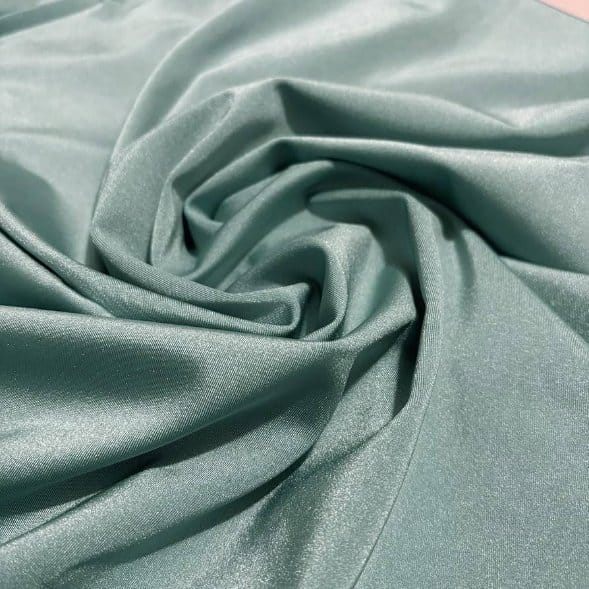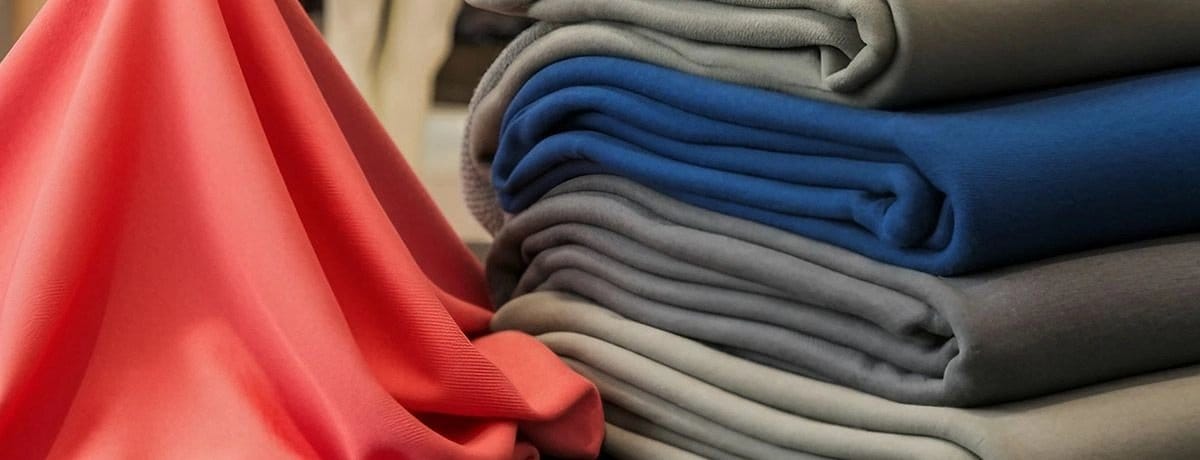

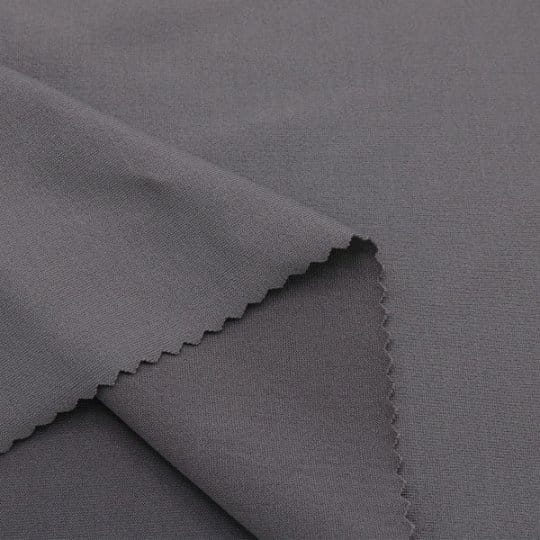
What is spandex, how does it work, and why is it in nearly every garment that moves with your body? This guide covers the full story: its origins and science, how it compares with other fabrics, how to care for it properly, and where the fiber is headed next.
What Is Spandex Fabric?
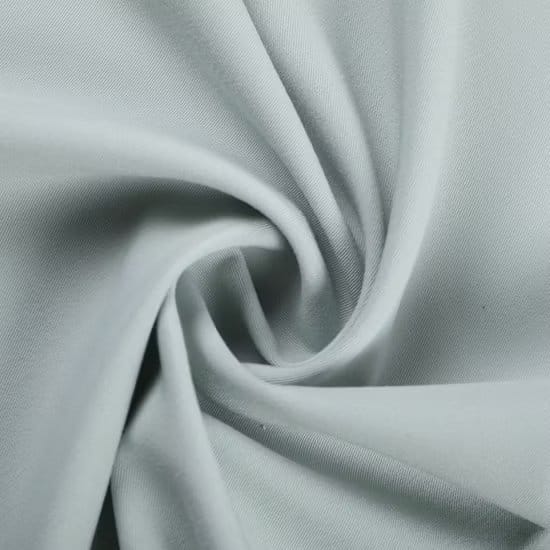
Spandex is a highly elastic synthetic fibre used in clothing and performance textiles.
Pull on a pair of leggings. Zip up a swimsuit. Slip into your favorite stretch jeans. In almost every garment that moves with your body instead of fighting it, one fiber is quietly doing all the work. That fiber is spandex.
Spandex is a synthetic, man-made fiber known for one thing above all: stretch. Not the gentle give of a loose cotton t-shirt, but a fiber that can be pulled to five, six, or even eight times its original length and then snap back to exactly where it started. No sagging. No permanent deformation.
Technically, it’s a polyether-polyurea copolymer. In plain English: a highly engineered plastic-based fiber made by linking specific chemical compounds into long, segmented chains that behave more like rubber than any traditional textile fiber.
Here’s the thing though: you almost never wear pure spandex. Just 2% to 5% blended into a fabric alongside cotton, nylon, or polyester is enough to completely transform how that garment fits and moves.
Quick fact: The word “spandex” is an anagram of “expands.” DuPont’s branding team coined it when the fiber was first introduced to the public in the early 1960s.
Is spandex basically plastic? In a sense, yes. It’s a petroleum-based synthetic polymer, just like polyester and nylon. But unlike those fibers, spandex has a unique segmented molecular structure that gives it elastic properties the others can’t replicate.
The global spandex market was valued at around $10 billion in 2024 and is expected to reach $21.9 billion by 2034. North America alone accounts for roughly 38% of global demand. With athleisure culture still going strong, those numbers are heading in one direction.
Spandex, Elastane, Lycra: What’s the Difference?
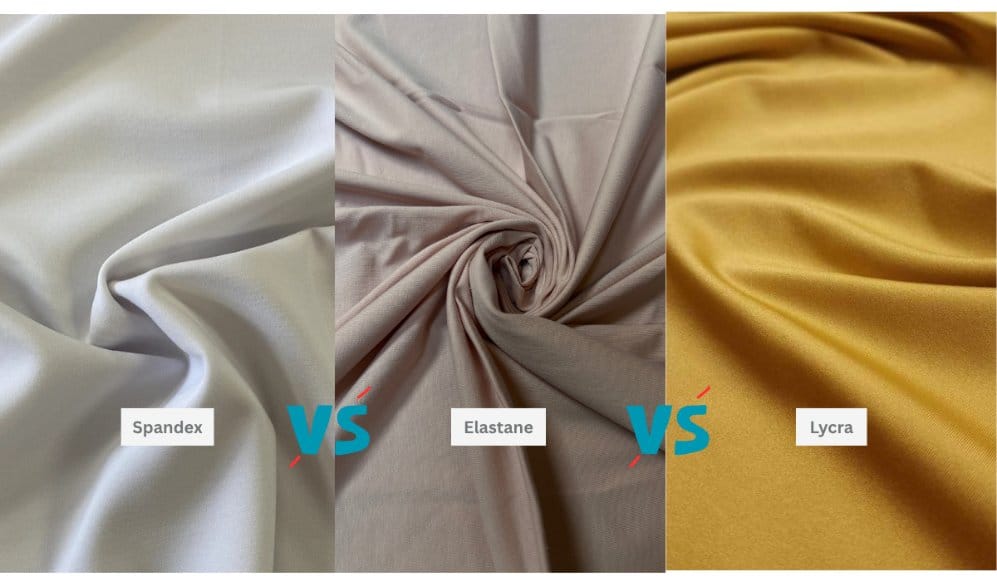
Spandex, elastane and Lycra refer to the same type of elastic fibre with different naming conventions.
You’ll see this fiber called at least three different things: spandex, elastane, and Lycra. Are they different materials? Should you pay more for one over another?
The simple truth: spandex and elastane are exactly the same fiber. No difference in chemistry, performance, or feel. The only difference is geography.
| Term | Where It’s Used | What It Means |
|---|---|---|
| Spandex | United States and Canada | Generic name for the elastic fiber. Required on US garment labels by federal law. |
| Elastane | Europe, Asia, and most of the world | The ISO-standardized international name for the same fiber. |
| Lycra | Global (brand name) | A trademarked brand of spandex/elastane made by The LYCRA Company. |
| Creora | Global (brand name) | A branded spandex made by South Korean company Hyosung, widely used in swimwear. |
If a garment made in the US says “5% spandex” and one made in Germany says “5% elastane,” they contain the same fiber. Full stop.
What is spandex called in the UK? On UK clothing labels you’ll see it listed as elastane, which follows the ISO standard. In everyday conversation, many British people use “Lycra” as a general term for any stretch fabric, much the way Americans say “Kleenex” for any facial tissue. Lycra is a brand name, not a fiber type on its own.
All Lycra is spandex. Not all spandex is Lycra. The LYCRA Company markets its fiber as having superior recovery power and backs that with quality certifications. For everyday clothing the difference is minor. For competitive athletic or medical compression garments, the specific fiber grade matters more.
Label tip: US federal labeling law requires the word “spandex” on all American clothing composition tags. European labels use “elastane.” Both refer to the exact same fiber.
Other notable brand names include Dorlastan, ROICA, and Creora HighClo. Creora HighClo is specifically engineered for better chlorine resistance, making it a common choice in pool swimwear.
How Spandex Was Invented
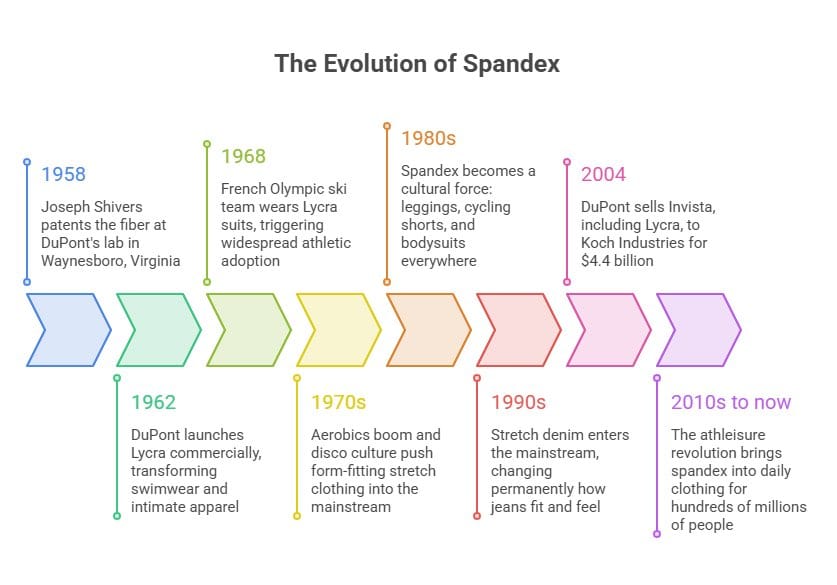
The evolution of spandex from laboratory invention to global textile staple.
The story of spandex doesn’t start in a fashion house. It starts in a chemistry lab in Waynesboro, Virginia, during the 1950s.
At the time, DuPont was one of the most innovative materials companies in the world. They had already given us nylon, Dacron polyester, and Orlon acrylic. Now they had a specific problem: women’s foundation garments, particularly girdles and bras, were made from rubber. Rubber was elastic, but it was heavy, got ruined by sweat and body oils, and was genuinely uncomfortable to wear for hours. Women complained. DuPont listened.
They assigned the problem to a chemist named Joseph C. Shivers Jr., a Duke University-trained organic chemist. His task was to find a synthetic replacement for rubber that was lighter, stronger, more comfortable, and resistant to the chemicals the human body produces daily.
DuPont shelved the project in 1950 after early attempts failed. But Shivers kept at it. In the early 1950s he found a breakthrough by modifying Dacron polyester using an intermediate substance that changed how the polymer behaved at the molecular level. The result bounced back, withstood high temperatures, and stretched dramatically without losing its shape.
DuPont codenamed it “Fiber K.” Their marketing team later renamed it spandex. The commercial product launched under the brand name Lycra, received its patent in 1958, and went public in 1962.
The Timeline
| Year | What Happened |
|---|---|
| 1958 | Joseph Shivers patents the fiber at DuPont’s lab in Waynesboro, Virginia |
| 1962 | DuPont launches Lycra commercially, transforming swimwear and intimate apparel |
| 1968 | French Olympic ski team wears Lycra suits, triggering widespread athletic adoption |
| 1970s | Aerobics boom and disco culture push form-fitting stretch clothing into the mainstream |
| 1980s | Spandex becomes a cultural force: leggings, cycling shorts, and bodysuits everywhere |
| 1990s | Stretch denim enters the mainstream, changing permanently how jeans fit and feel |
| 2004 | DuPont sells Invista, including Lycra, to Koch Industries for $4.4 billion |
| 2010s to now | The athleisure revolution brings spandex into daily clothing for hundreds of millions of people |
Joseph Shivers retired from DuPont in 1980 as technical director of the fiber department, received the Olney Medal for textile chemistry in 1998, and passed away in 2014 at age 93.
How Spandex Is Made
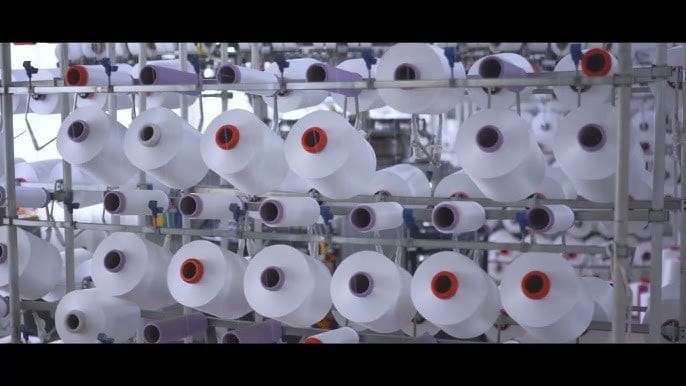
Spandex is produced through a specialised synthetic fibre manufacturing process.
Spandex begins as a set of petroleum-derived chemical compounds. Unlike cotton or wool, there’s no plant or animal involved. The entire fiber is built from scratch in a factory through a controlled chemical process.
The Raw Materials
Spandex is a polyether-polyurea copolymer. Its two main building blocks are polyols, which provide the soft, flexible segments that create stretchiness, and diisocyanates, which form the rigid segments that give the fiber its structure and shape memory.
Dry Spinning: The Main Production Method
- The polymer is dissolved in a solvent to create a liquid solution.
- This solution is pumped through a spinneret, a device with tiny holes that extrudes fine streams of liquid polymer.
- The streams pass through a warm-air chamber where the solvent evaporates, leaving solid spandex filaments.
- Multiple filaments are twisted together to form a single yarn.
- The yarn is wound onto bobbins and shipped to fabric mills.
Other methods include reaction spinning, solution wet spinning, and melt extrusion, but dry spinning covers the majority of commercial production.
From Fiber to Fabric
Once spandex yarn is produced, it’s almost always combined with other fibers rather than used on its own. The three main approaches are core-spun (spandex in the center with another fiber wound around it), covered (similar, with a wrapping yarn), and interknit or interwoven (spandex filaments incorporated directly into the fabric structure alongside other fibers).
The result is a fabric where the spandex is invisible but very much active. It lives inside the textile, contributing stretch and recovery without dramatically changing how the surface looks or feels from the outside.
The Science Behind the Stretch
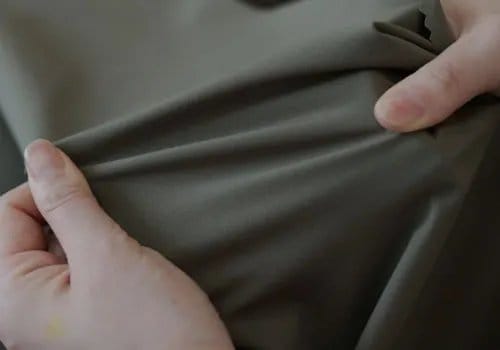
The unique fibre structure of spandex allows exceptional stretch and recovery.
Why can spandex stretch so much further than cotton, polyester, or nylon? The answer is in how its molecules are arranged.
Most textile fibers have relatively rigid polymer chains. When you stretch them, you’re forcing tightly packed structures to extend. They resist, may deform permanently, and don’t snap back the way spandex does.
Spandex is built differently. Its molecule has two distinct regions. Soft segments are long, loosely coiled chain sections that unwind easily under tension. These give spandex its stretch. Hard segments are short, stiff sections that act as anchors. They hold the soft segments in place and provide structural integrity.
When you stretch spandex, the soft segments unfurl and extend, like springs being pulled. The hard segments don’t move. When you release the tension, the soft segments snap back to their lowest-energy state, pulling the whole fiber with them. That’s why spandex has both extraordinary elongation and extraordinary recovery at the same time.
What Does 4-Way Stretch Mean in Fabric?
You’ll see this term on activewear labels constantly. It means the fabric stretches in two directions: horizontally (side to side) and vertically (lengthwise). Most knit fabrics with spandex offer 4-way stretch. Woven fabrics with spandex typically offer only 2-way stretch. For athletic and yoga use, 4-way stretch is what you need. It moves with your body in every direction without pulling or bunching.
Stretch Comparison by Fiber
Compare that to rubber, which spandex was designed to replace. While rubber is elastic, spandex is lighter, softer, stronger per unit weight, and far more resistant to degradation from sweat, sunscreens, and detergents. It can also be dyed; rubber cannot.
Types of Spandex Fabric
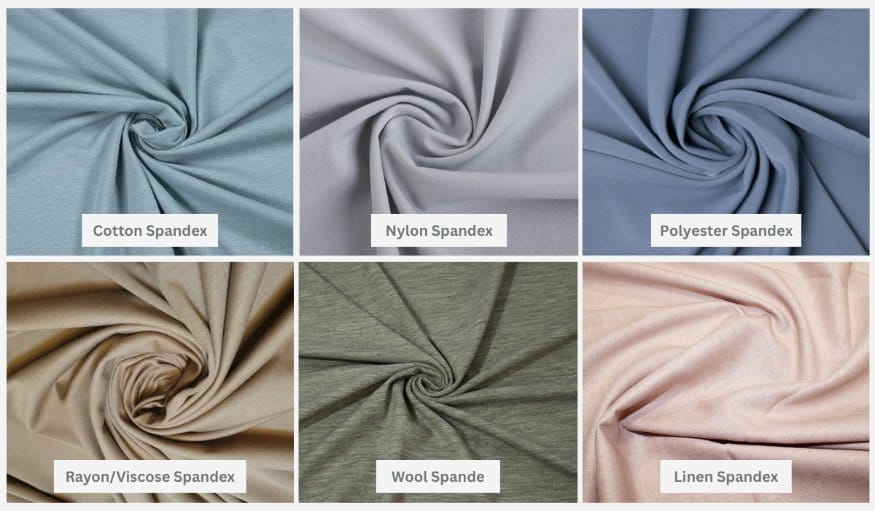
Different fibre blends create unique performance characteristics in spandex fabrics.
Not all spandex fabric performs the same. The construction, blend, and fiber content all affect what a fabric is actually suited for.
By Stretch Direction
Two-Way Stretch stretches in one direction only, typically side to side. It’s simpler to produce and used in garments where full-range stretch isn’t required. It currently accounts for about 75% of global spandex fabric production.
Four-Way Stretch moves both horizontally and vertically. It’s the standard for activewear, swimwear, and performance clothing because it moves with the body in every direction.
By Blend Type
Cotton Spandex (typically 95 to 97% cotton, 3 to 5% spandex) is soft, breathable, and natural-feeling. Great for everyday t-shirts, stretch jeans, and casual wear. Over time, cotton-spandex garments can lose shape faster than fully synthetic blends.
Nylon Spandex (usually 80% nylon, 20% spandex) is the premium choice for activewear. It has a silky, buttery feel, excellent 4-way stretch, and strong resistance to abrasion and pilling. Worth the slightly higher price for yoga pants, swimwear, and compression garments.
Polyester Spandex (often 80 to 87% polyester, 13 to 20% spandex) is more affordable than nylon blends while still delivering strong stretch and recovery. Better color retention, better chlorine resistance for pool swimwear, and excellent durability through repeated washing.
Rayon/Viscose Spandex (usually 95% rayon, 5% spandex) is drapey and soft with a gentle stretch. Used in dresses, blouses, and casual tops where you want just a hint of give without a sporty look.
Wool Spandex is uncommon but used in tailored suiting and outerwear. A small percentage of spandex adds ease of movement without compromising the warmth and texture of wool.
Linen Spandex is growing in popularity for warm-weather wear. It keeps the breezy, natural texture of linen while adding a touch of stretch that makes linen’s natural stiffness far more wearable day to day.
Guide to Stretchy FabricsExplore every type of stretch fabric and which one suits your project bestSpandex Properties at a Glance
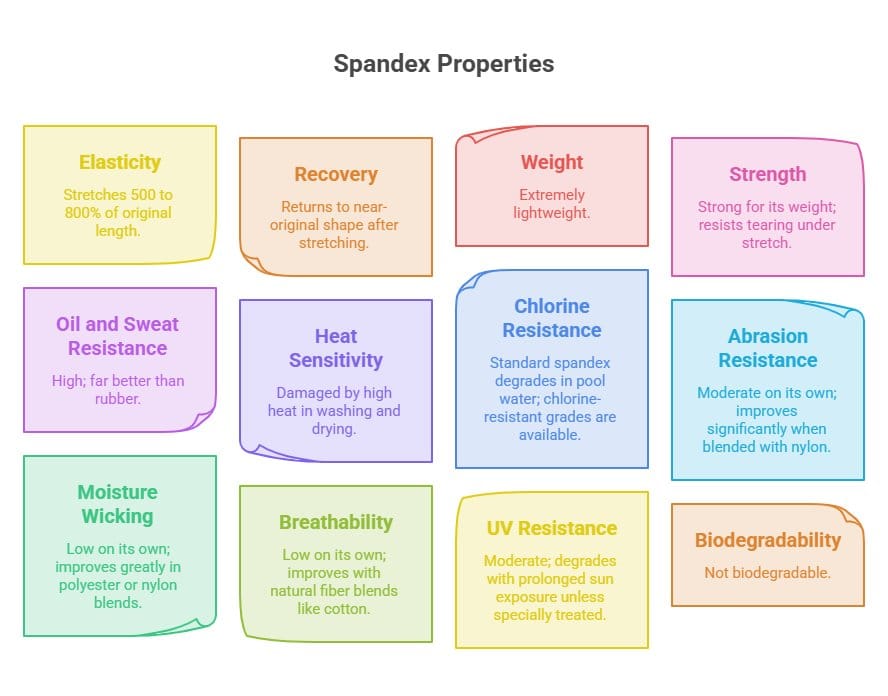
Important characteristics that make spandex a versatile performance fibre.
| Property | Detail |
|---|---|
| Elasticity | Stretches 500 to 800% of original length |
| Recovery | Returns to near-original shape after stretching |
| Weight | Extremely lightweight |
| Strength | Strong for its weight; resists tearing under stretch |
| Body oil and sweat resistance | High; far better than rubber |
| Heat sensitivity | Damaged by high heat in washing and drying |
| Chlorine resistance | Standard spandex degrades in pool water; chlorine-resistant grades are available |
| Abrasion resistance | Moderate on its own; improves significantly when blended with nylon |
| Moisture wicking | Low on its own; improves greatly in polyester or nylon blends |
| Breathability | Low on its own; improves with natural fiber blends like cotton |
| UV resistance | Moderate; degrades with prolonged sun exposure unless specially treated |
| Biodegradability | Not biodegradable |
| Dyeability | Can be dyed; holds color less consistently than natural fibers alone |
Spandex vs. Other Fabrics: A Head-to-Head Comparison
Spandex rarely competes with other fibers. It partners with them. But knowing what each fiber contributes helps you shop smarter and sew more effectively.
Spandex vs. Rubber
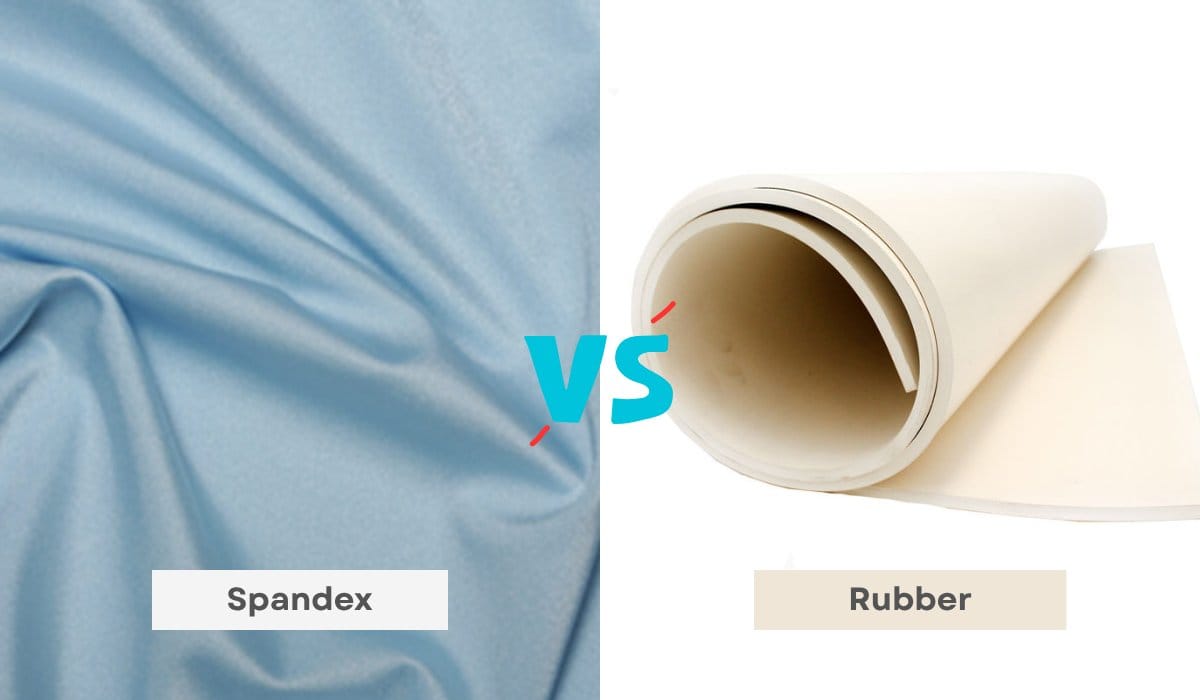
Spandex and rubber both provide elasticity but differ significantly in performance and comfort.
Rubber was the elastic standard before spandex arrived. In raw elasticity, rubber is impressive. But the comparison ends there. Spandex is lighter, smoother, softer, more durable, and far more resistant to sweat, sunscreen, and detergents. It can be dyed; rubber cannot. Spandex replaced rubber in garment elastics within a decade of its commercial launch.
Is Spandex More Natural Than Polyester?
Neither is natural. Both are petroleum-based synthetic fibers. Spandex is used in much smaller quantities per garment than polyester, so its volume footprint is smaller. However, its polyurethane base is generally more complex to recycle than polyester’s PET base. Neither wins a clear environmental edge.
Spandex vs. Cotton
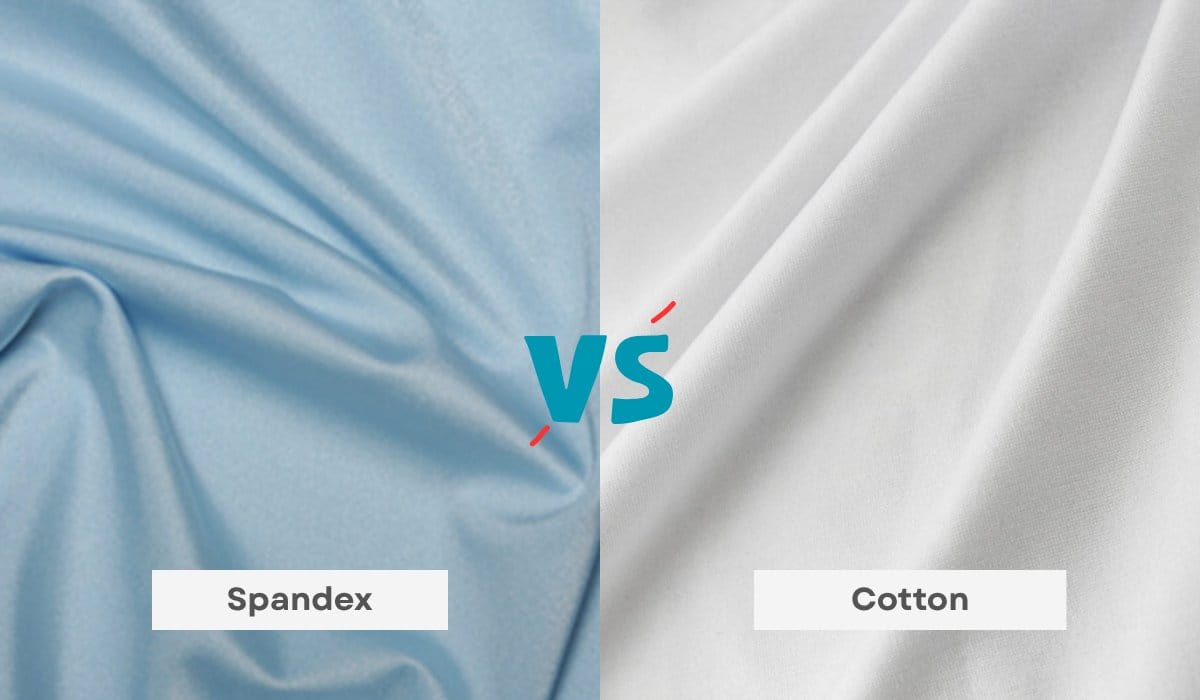
Comparing the stretch and performance differences between spandex and cotton.
Cotton is natural, breathable, and soft. Spandex brings none of those things on its own, but it’s not trying to replace cotton. It completes it. Blend 3 to 5% spandex into cotton and the result stays soft and breathable while gaining stretch and shape retention that cotton alone cannot deliver.
Is Spandex Hotter Than Cotton?
Pure spandex traps heat more than cotton, but in real garments this comparison isn’t relevant because you’re never wearing pure spandex. Cotton-spandex blends remain breathable because cotton dominates. Fully synthetic blends like polyester-spandex can feel warmer. For hot-weather use, cotton-spandex or moisture-wicking nylon-spandex are the better options.
Which Is Better: Cotton or Cotton Spandex?
It depends on the garment’s purpose. For a basic t-shirt where softness and breathability are all that matter, 100% cotton works perfectly well. For anything that needs to move with your body, hold its shape through the day, or resist wrinkling, cotton-spandex is the stronger choice. The 3 to 5% spandex adds very little in terms of discomfort but significantly improves function.
Spandex vs. Polyester
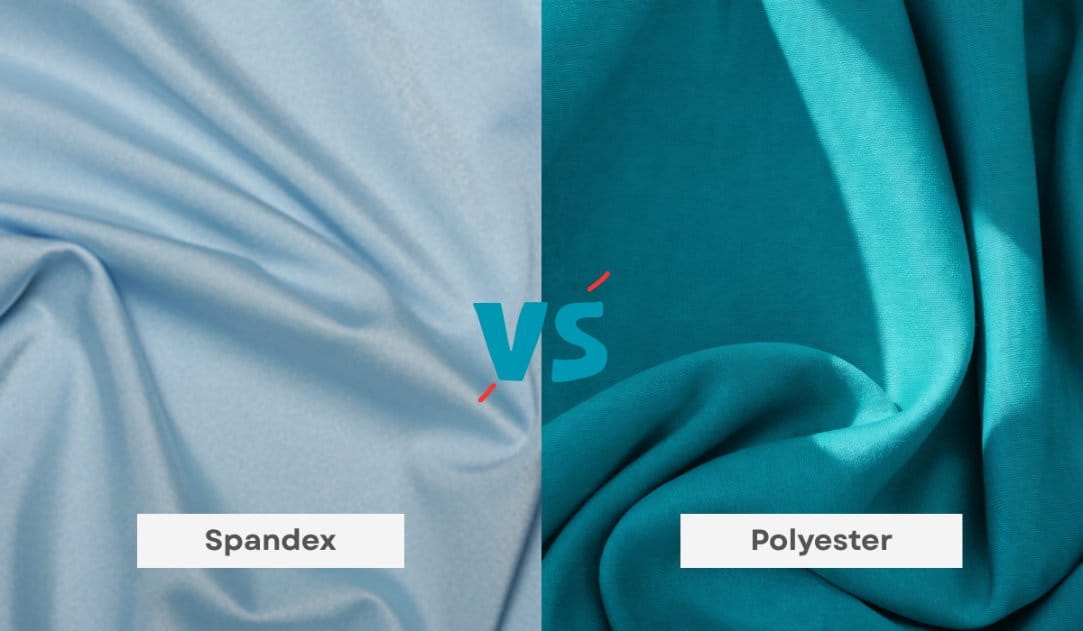
A comparison of stretch, durability and performance between spandex and polyester.
Polyester is strong, wrinkle-resistant, color-fast, and quick-drying, but it has almost no natural stretch. Adding 13 to 20% spandex fixes that completely. Polyester-spandex blends are extremely common in activewear because they combine stretch with excellent moisture management, color retention, and UV resistance.
Spandex vs. Nylon
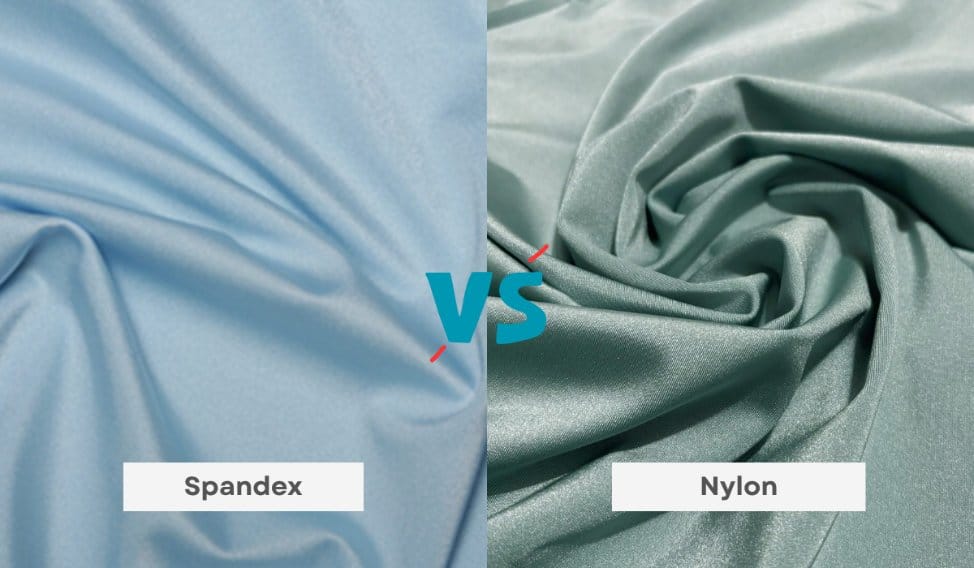
Understanding the differences between spandex and nylon fibres.
Nylon is the most naturally flexible of the common synthetic fibers, but even nylon alone can’t match spandex’s elasticity. Nylon-spandex blends are the premium pick for activewear: softer, silkier, and more comfortable against the skin than polyester blends, with outstanding stretch recovery. The trade-off is that nylon is less chlorine-resistant than polyester, so for regular pool use, polyester-spandex holds up better over time.
For a full deep-dive, see our detailed guides on nylon spandex fabric and nylon fabric.
Quick Comparison Table
| Fabric | Natural Stretch | With Spandex | Best For | Weakness |
|---|---|---|---|---|
| Cotton | Very low | Excellent | Everyday wear, t-shirts, jeans | May lose shape over time |
| Nylon | Low to moderate | Outstanding | Premium activewear, swimwear | Less chlorine-resistant |
| Polyester | Very low | Excellent | Sports, swimwear, budget activewear | Less soft than nylon blends |
| Rayon/Viscose | Very low | Good | Dresses, blouses, casual tops | Less durable, shrinks easily |
| Wool | Moderate (natural crimp) | Very good | Tailoring, outerwear | Expensive, care-intensive |
| Linen | Very low | Good | Resort wear, warm weather | Limited stretch recovery |
| Rubber | High | N/A (replaced by spandex) | Industrial elastic | Heavy, degrades quickly, can’t be dyed |
See also: our guides on stretch denim fabric and natural vs synthetic fabrics for a wider view of how spandex fits into the textile world.
What Is Spandex Used For?
The applications for spandex have spread far beyond the rubber replacement it was originally designed to be. Today it shows up across six main areas.
Activewear and Sportswear
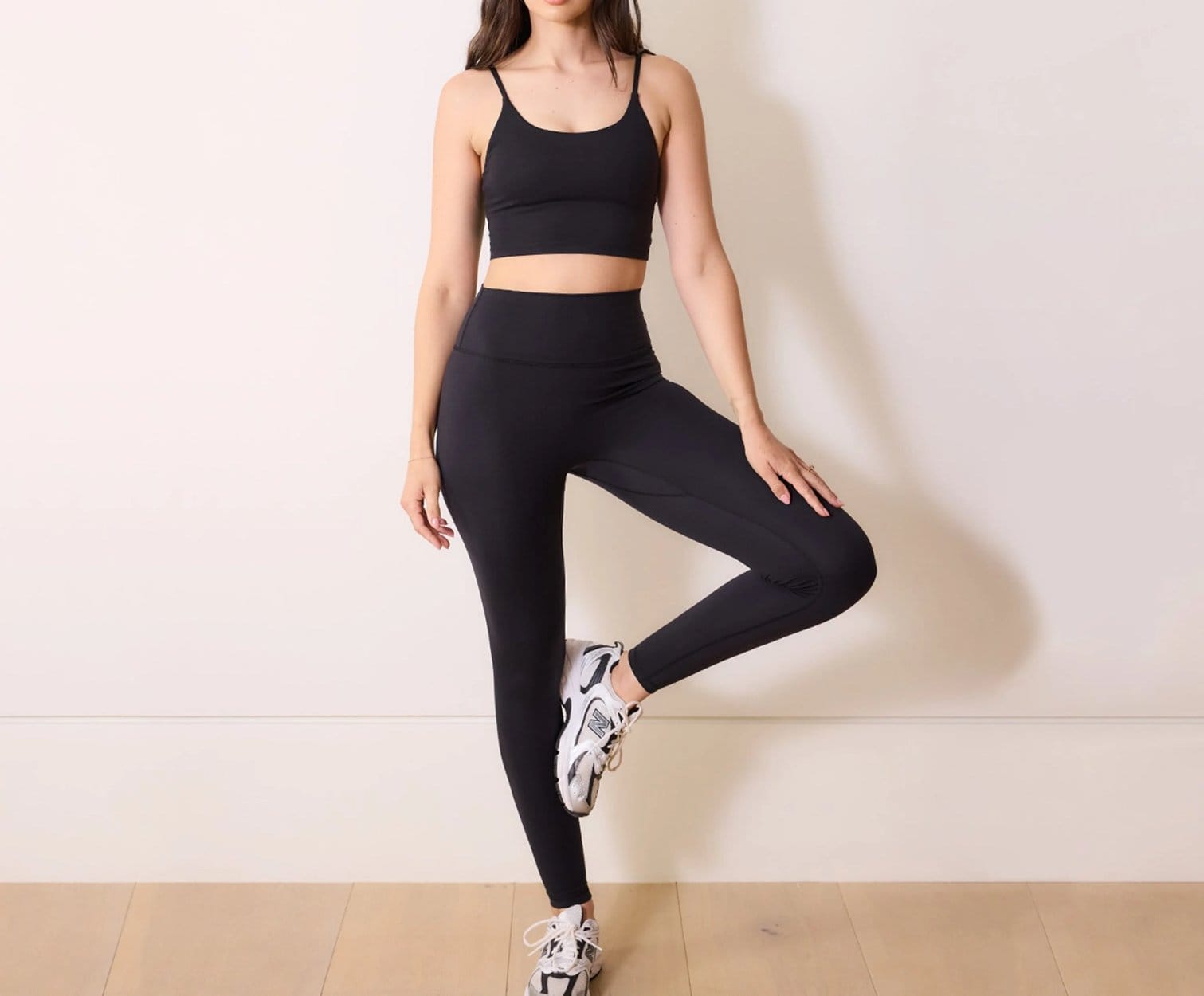
Spandex provides stretch, support and comfort for activewear and fitness clothing.
This is spandex’s most visible home. Leggings, yoga pants, cycling shorts, sports bras, compression shorts, and running tights all rely on spandex for 4-way stretch, shape retention, and freedom of movement. Nylon or polyester blends with 15 to 25% spandex content are the standard. Spandex’s ability to stretch and recover under dynamic, repeated stress makes it the right material for athletic use.
Swimwear

Spandex is widely used in swimwear for flexibility, comfort and shape retention.
Swimwear was one of the first categories transformed by spandex. Before Lycra, swimsuits were often heavy wool or cotton that became waterlogged and restrictive. Today’s lightweight, quick-drying suits exist because of spandex. Swimwear typically requires 15 to 40% spandex content and often uses chlorine-resistant grades for pool environments.
Everyday Fashion

Spandex helps everyday clothing maintain shape and comfort throughout the day.
This is where spandex is most quietly powerful. The reason modern jeans feel comfortable rather than stiff? Usually just 1 to 3% spandex woven into the denim. Dresses, blouses, trousers, and casual tops all benefit from small amounts of spandex that improve comfort and shape retention through the day.
You can find more detail in our guide to stretch denim fabric. And if you’re curious how spandex content plays into kids’ denim specifically, see this piece on facts about denim in kids’ clothing.
Underwear and Intimate Apparel
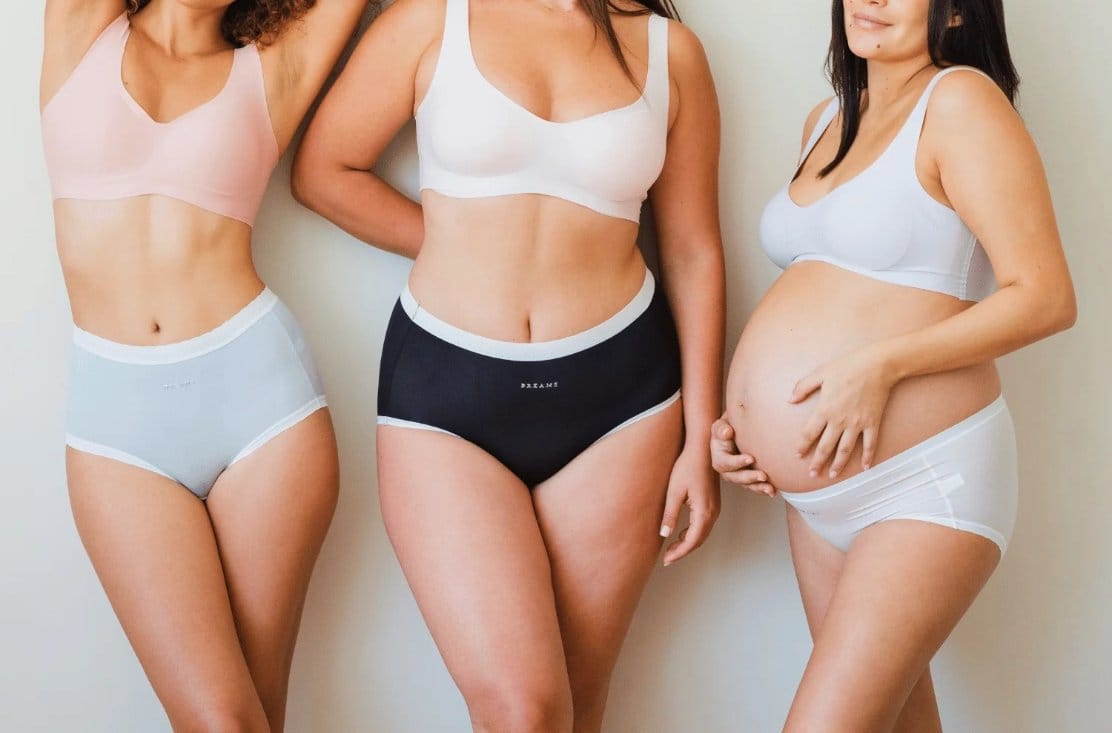
Spandex enhances the fit, comfort and flexibility of underwear and intimate garments.
This is where spandex was born, and it remains one of its biggest markets. Bras, underwear, shapewear, bodysuits, and foundation garments all use spandex for stretch, support, and shaping. Shapewear can reach 25 to 40% spandex content to create controlled, firm compression.
Medical and Compression Garments
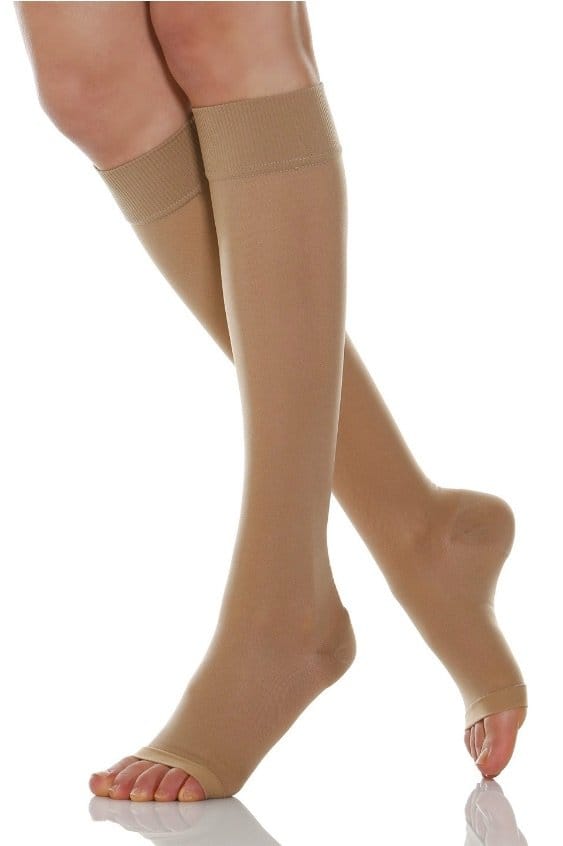
Spandex is commonly used in compression garments for support and stretch.
Compression socks, surgical stockings, support bandages, and orthopedic garments use spandex’s compression properties for clinical benefit. Medical applications often require precisely engineered compression profiles where the stretch and recovery characteristics are as carefully specified as any drug dosage.
Beyond Clothing
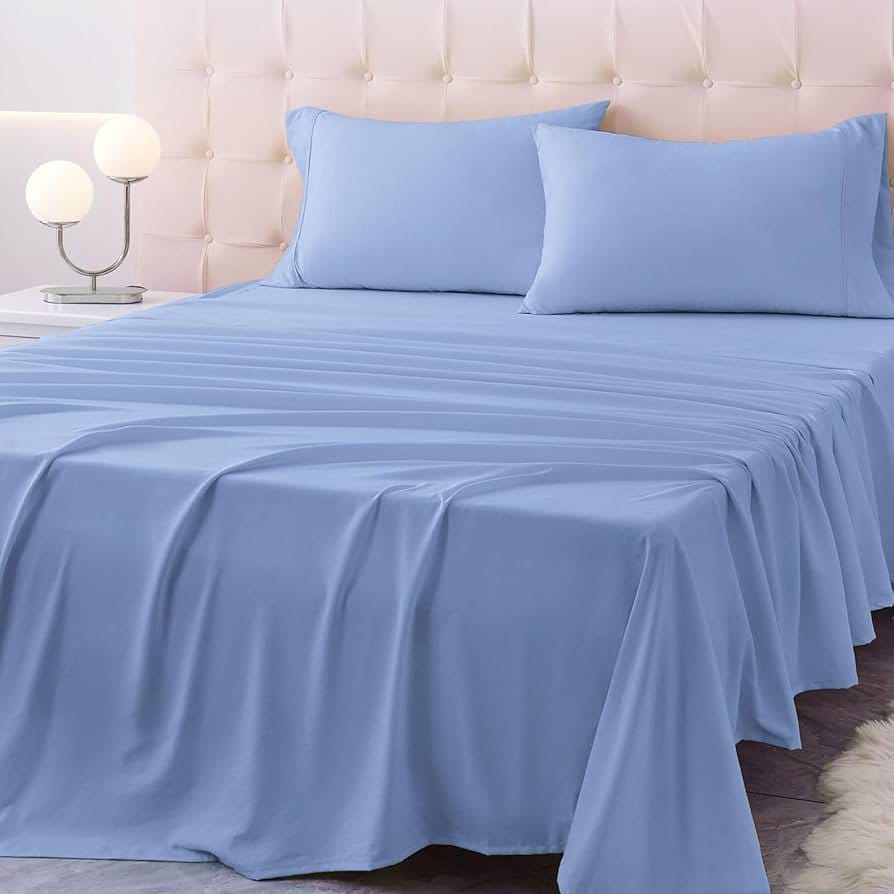
Spandex blends can improve the fit and flexibility of fitted bed sheets.
Spandex also shows up in home furnishings (stretch slipcovers), automotive interiors, dance and theatrical costumes, cosplay fabrics, stretch bed sheets, and furniture covers. The lifestyle and athleisure boom has taken it well beyond the wardrobe.
How Much Spandex Does a Fabric Need?
One of the most practical questions about spandex is: how much do you actually need? The answer varies a lot by what the garment has to do.
Is 20% Spandex a Lot of Stretch?
Yes, 20% is a high spandex content for everyday clothing. At that level you’ll feel genuine compression and strong 4-way stretch. It’s standard in performance leggings and competitive swimwear. For casual clothing, 3 to 8% delivers comfortable stretch without the body-conscious compression of higher percentages.
What Does 90% Polyester 10% Spandex Feel Like?
This is a common activewear blend. You get solid 4-way stretch with good recovery, moisture-wicking from the polyester, and a smooth, slightly firm feel against the skin. It’s not as soft as a nylon-spandex blend, but it’s more durable, more color-fast, and generally more affordable. You’ll find this ratio in a wide range of gym wear and sports leggings.
Is 95% Cotton 5% Spandex High Quality?
This is a well-balanced everyday blend used by both budget and premium brands. The 5% spandex adds stretch and shape retention without making the garment feel synthetic. The 95% cotton keeps it breathable and soft. Quality at this ratio depends far more on the cotton grade and construction than on the spandex percentage itself.
Worth noting: more spandex is not always better. Too high a content in woven fabrics can cause dimensional problems and increase UV degradation. For woven fabrics, 3 to 8% is the right range. Knit fabrics can typically handle 10 to 20%.
Is Spandex Good for Your Skin?

Most people find spandex comfortable and gentle when worn against the skin.
For most people, spandex is perfectly fine against the skin and causes zero problems. But there are a few things worth knowing.
Is Spandex Good or Bad for You?
Used normally, spandex is not considered harmful. It’s been worn safely by billions of people for decades and is widely used in medical garments precisely because of its skin compatibility. That said, tight synthetic garments can trap heat and moisture against the skin, creating conditions where bacteria thrive. This is why washing activewear after every use is important, and why the breathability of your chosen blend matters.
Is Spandex Fabric Good for Skin?
Spandex itself is generally considered hypoallergenic. True spandex allergies are rare. When people do react to stretch garments, the culprit is almost always the dyes, chemical finishes, or processing agents used during fabric manufacturing, not the spandex fiber itself.
If you have sensitive skin and experience irritation from stretch clothing, look for garments with OEKO-TEX Standard 100 certification, which limits harmful substances in textiles. [1]
What Is a Healthy Alternative to Spandex?
If you want to reduce or avoid synthetic elastic fibers, here are the main options available today:
- Natural rubber elastic: used in some eco-focused garments, though less common in woven clothing fabrics.
- ROICA EF (bio-based elastane): uses partially bio-based raw materials in production.
- YULASTIC by Yulex: launched in 2025, this is a fully plant-based elastane replacement derived from natural rubber sources, designed to match spandex performance with a lower environmental footprint.
- Mechanical stretch fabrics: certain woven structures offer modest stretch without any elastic fiber. They don’t match spandex’s recovery, but can work for garments that only need a small amount of give.
Is Spandex Good for Summer?

Spandex can be suitable for summer when blended with breathable fibres.
The honest answer: it depends on the blend.
Pure spandex doesn’t breathe well and would be uncomfortably warm on its own in summer. But nobody wears pure spandex. What you’re really asking is whether a cotton-spandex or nylon-spandex blend is a good warm-weather choice.
Cotton-spandex blends work very well for summer. Cotton provides natural breathability and moisture absorption, while spandex adds stretch and shape. A 95% cotton, 5% spandex t-shirt or light dress is a smart summer pick.
Nylon-spandex blends work well for summer activewear because nylon wicks moisture away from the skin efficiently. Most performance athletic wear is designed for warm-weather use.
Polyester-spandex blends can feel warmer because polyester doesn’t breathe as naturally. Modern moisture-wicking finishes have improved this considerably, but for maximum comfort in heat, lean toward cotton or nylon-dominant blends.
For warm-weather use, look for lighter-weight spandex blends with cotton, bamboo, or nylon as the dominant fiber, and keep the spandex content on the lower end (3 to 8%) unless you’re choosing performance activewear. Our guide to summer fabrics covers this in more depth.
How to Identify Spandex in a Garment
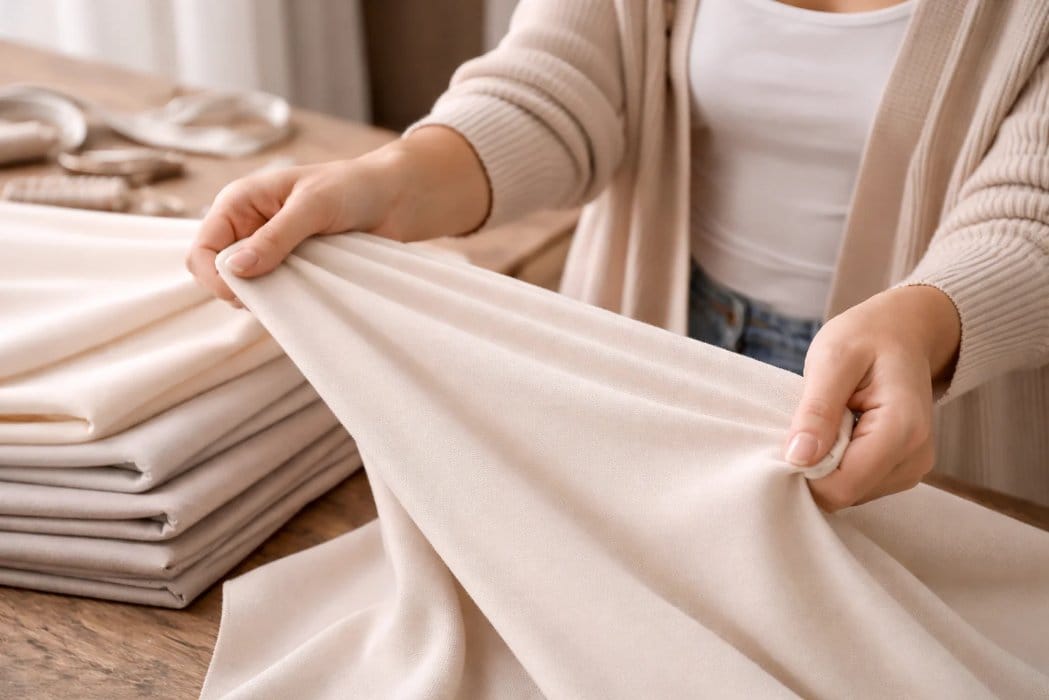
Stretch testing is one way to identify spandex in clothing and textiles.
The simplest way is to read the care label. In the US, spandex must be listed on all garment fiber content labels by federal law. In European garments, it appears as “elastane.” If there’s a care tag, the answer is right there.
You can also do a quick physical test:
- Stretch it gently. Grab a small section of the fabric with both hands and stretch. Spandex-containing fabric will extend considerably and feel smooth as it does so.
- Check the recovery. Release it. If it snaps back almost instantly to its original shape with no permanent distortion, spandex is almost certainly present. Fabric that stretches but recovers slowly, or stays stretched, likely has little or no spandex.
- Compare to pure cotton or linen. Those fabrics barely stretch at all. Any significant elasticity is a strong sign spandex is in the blend.
Sewing with Spandex
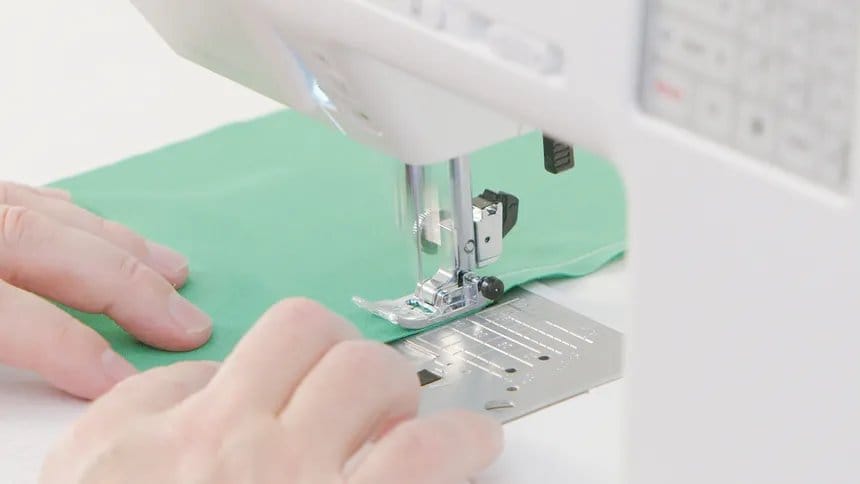
Special techniques help achieve professional results when sewing spandex fabrics.
Sewing spandex for the first time can be frustrating. The thread pops, the machine skips stitches, the seam doesn’t stretch. These are all fixable problems once you know what causes them.
Do You Need Special Thread to Sew Lycra and Spandex?
Yes. Regular cotton thread has zero stretch and will snap when a spandex seam is pulled. You need thread that moves with the fabric. Good options include:
- Wooly nylon thread: highly recommended, especially in a serger’s loopers. It has significant natural stretch and is very strong.
- Texturized polyester stretch thread: works well in a regular sewing machine.
- Standard polyester thread: acceptable for straight seams at reduced tension, but not ideal for high-stress seams.
- 100% cotton thread: avoid this for spandex. It has no stretch at all and will break under tension.
Other Sewing Tips for Spandex
- Use a ballpoint or stretch needle (size 75/11 for most spandex blends, 90/14 for thicker fabrics). Ballpoint needles push between the knit fibers rather than piercing them, which prevents skipped stitches and fabric damage.
- Use a zigzag stitch or stretch stitch rather than a straight stitch. Straight stitches don’t flex and will break when the seam is pulled.
- A walking foot or roller foot helps feed spandex fabric evenly and prevents unwanted stretching while you sew.
- Reduce your machine’s presser foot pressure if adjustable, since heavy pressure can stretch the fabric as it feeds through.
- A serger or overlocker is the ideal tool for spandex if you have one. It sews, trims, and finishes in a single pass and naturally produces a seam that stretches.
How to Care for Spandex
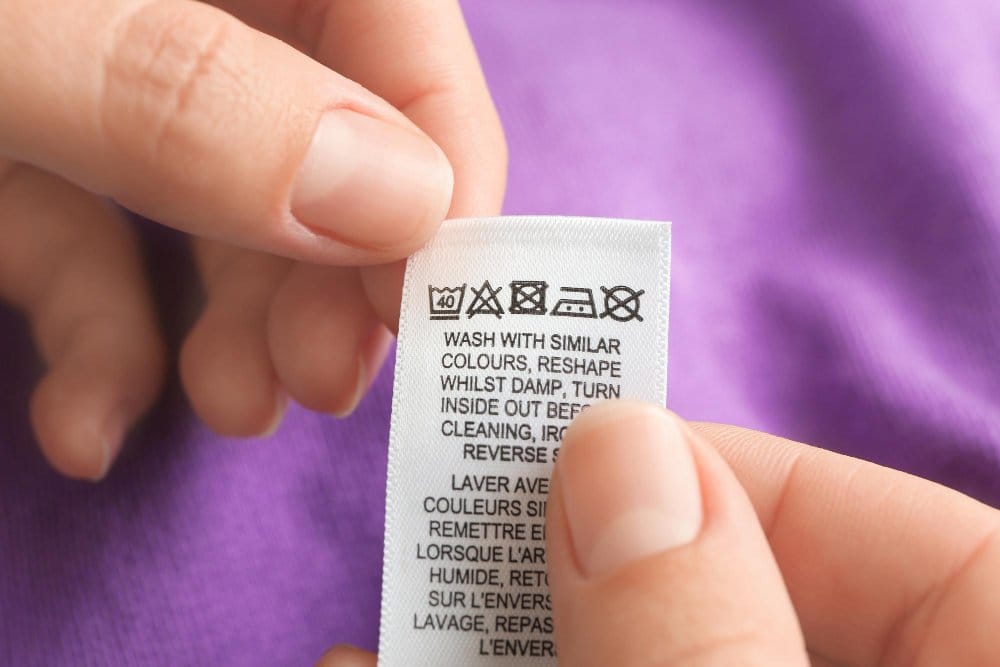
Always check the care label before washing spandex garments.
Spandex is durable, but heat is its biggest weakness. The elastic fibers that give it stretch break down with repeated exposure to high temperatures. How you wash and dry spandex garments has a real impact on how long they keep performing.
Washing
Do
- Use cold water (30C/86F or below)
- Use the gentle or delicate cycle
- Use a mild, enzyme-free detergent
- Turn garments inside out first
- Hand wash delicate items such as swimwear and lingerie
- Separate dark and light colors
Do Not
- Use hot water (degrades elastic fibers)
- Use chlorine bleach (permanently damages spandex)
- Use fabric softener (clogs fibers, destroys moisture-wicking)
- Use high-spin cycles
- Soak for extended periods
Video: How to Wash Spandex

Drying
Do
- Air dry flat on a clean towel
- Choose a well-ventilated area away from direct sun
- Gently press out excess water (never wring)
Do Not
- Put in a hot dryer (can permanently ruin elasticity)
- Hang spandex to dry (distorts shape over time)
- Wring or twist the garment
- Dry in direct sunlight for extended periods
Does Spandex Shrink When Washed?
Spandex doesn’t shrink in the way cotton does. What happens instead is that heat causes the elastic fibers to lose their recovery ability, making the garment feel tighter, stiffer, or misshapen. Always wash spandex in cold water and air dry flat. If you’ve accidentally washed a spandex garment in hot water, try gently stretching it back into shape while it’s still damp.
Ironing and Storing
Spandex should not be ironed directly. High heat will melt or distort the elastic fibers. If smoothing is needed, use a handheld garment steamer on a low setting held away from the surface. For storage, fold spandex garments rather than hanging them. Hanging over time can cause the elastic fibers to stretch and deform permanently. Store away from direct sunlight.
Full Guide: Caring for Synthetic FabricsKeep all your synthetic garments performing and looking great for longerIs Spandex Sustainable?
Sustainability efforts are helping improve the environmental impact of stretch fabrics.
More people are asking this question, and they deserve a direct answer.
Traditional spandex is not particularly sustainable. The picture has more to it than a simple yes or no, and the industry is starting to change, but that’s the honest starting point.
The Environmental Challenges
It’s petroleum-based. Spandex is derived from fossil fuels, making production dependent on non-renewable resources. The manufacturing process is energy-intensive and generates greenhouse gas emissions.
It sheds microplastics. Like other synthetic fibers, spandex releases tiny plastic microfibers during washing. These pass through most wastewater treatment systems and end up in rivers and oceans. Research cited by the IUCN (International Union for Conservation of Nature) confirms synthetic textiles are among the primary sources of microplastic pollution in the world’s oceans. [2]
It’s not biodegradable. When a spandex garment ends up in a landfill, it can take hundreds of years to break down. Globally, around 92 million tons of clothing go to landfill every year.
It makes recycling harder. Because spandex is almost always blended with other fibers, separating it for recycling is very difficult. Even a small percentage of elastane in a fabric can complicate the recycling stream for the rest of the garment.
Is Spandex Eco-Friendly?
In its traditional form, no. But sustainable alternatives are gaining commercial ground:
- Recycled fiber blends with spandex: brands like Patagonia and Girlfriend Collective offer activewear using REPREVE recycled polyester or ECONYL recycled nylon blended with spandex, significantly reducing virgin petroleum use.
- Bio-based elastane: ROICA EF uses partially bio-based materials. YULASTIC by Yulex (2025) is a fully plant-based elastane replacement.
- Cleaner manufacturing: waterless dyeing, natural dyes, and digital printing are reducing water usage and chemical waste at the production stage.
What You Can Do Right Now
- Choose garments with certified recycled fiber content such as REPREVE or ECONYL.
- Wash less frequently and always in cold water to reduce microfiber shedding.
- Use a microplastic filter bag (such as a Guppyfriend laundry bag) when washing synthetic garments.
- Buy quality over quantity. A well-made garment that lasts five years has far less environmental impact than three cheap ones that fall apart quickly.
- Extend garment life through proper care and repair rather than disposal.
For a broader look at the environmental side of clothing choices, see our piece on fast fashion vs slow fashion.
Benefits and Disadvantages of Spandex
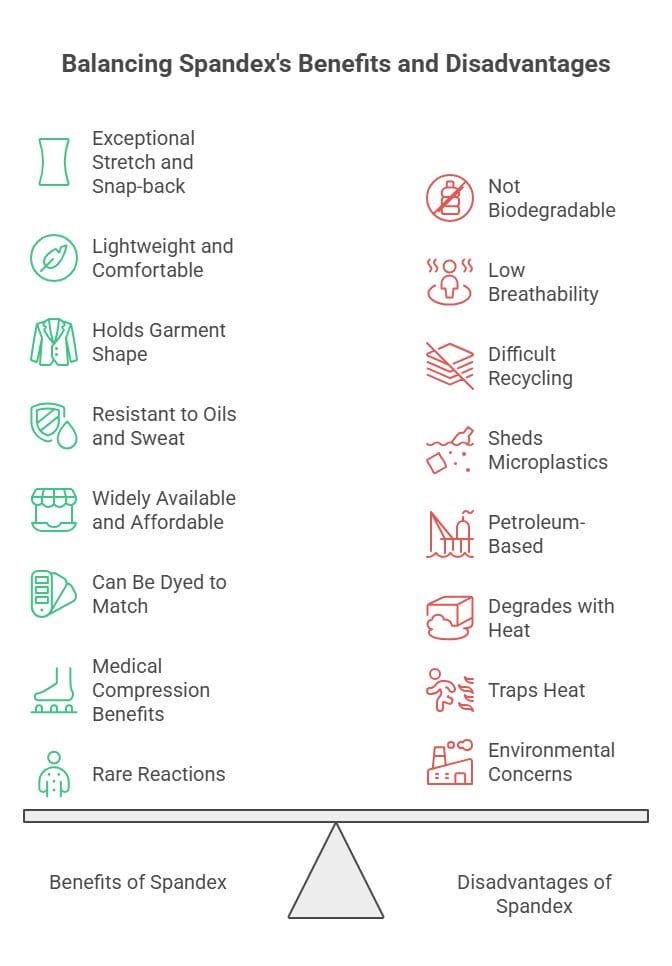
A visual overview of the key advantages and limitations of spandex.
Benefits
- Exceptional stretch and snap-back recovery
- Lightweight and comfortable to wear
- Holds garment shape through many wears and washes
- Resistant to body oils, sweat, and most detergents
- Durable; doesn’t tear easily under stretch
- Works with virtually every other fiber
- Widely available and affordable
- Can be dyed to match any color
- Used in medical compression with real clinical benefits
Disadvantages
- Not biodegradable
- Sheds microplastics during washing
- Petroleum-based; not from renewable sources
- Degrades with heat, chlorine, and UV exposure
- Low breathability on its own
- Makes garment recycling more difficult
- Can trap heat in hot weather when heavily blended with synthetics
- Rare reactions possible, usually from dyes or finishes, not the fiber itself
The Future of Spandex
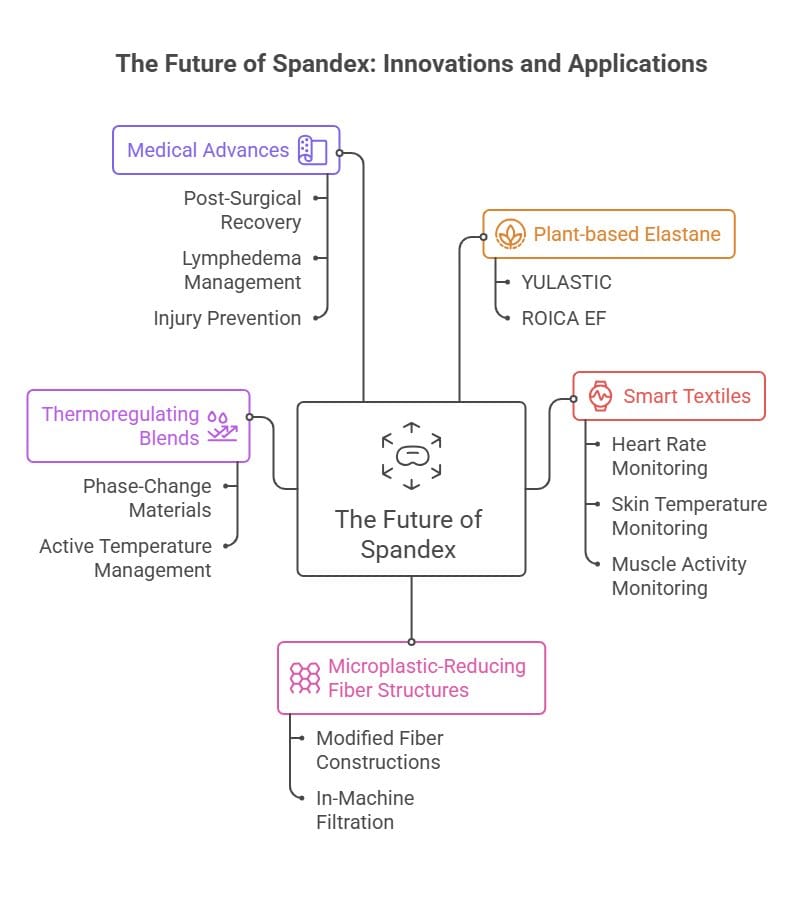
Emerging technologies are shaping the future of spandex and stretch textiles.
The fiber that changed clothing once is being reinvented again. Here’s where things are heading.
Plant-based elastane. Products like YULASTIC and ROICA EF are moving from lab concept toward commercial reality. If they can match traditional spandex performance at comparable prices, they could significantly change what’s inside your activewear within the decade.
Smart textiles. Researchers are working on ways to embed sensors into spandex-based fabrics that monitor biometric data including heart rate, skin temperature, and muscle activity. The goal is athletic garments that double as wearable health monitors.
Microplastic-reducing fiber structures. Modified fiber constructions that shed fewer particles during washing are in active development, alongside in-machine filtration technology that captures fibers before they reach waterways.
Thermoregulating blends. New fabric constructions incorporating phase-change materials into spandex blends are in testing. The aim is garments that actively manage body temperature during athletic activity rather than just wicking moisture away.
Medical advances. Precision-engineered compression fabrics for post-surgical recovery, lymphedema management, and injury prevention continue to advance rapidly, with spandex content tuned to deliver specific therapeutic compression profiles.
The global spandex market is projected to grow from approximately $3.24 billion in 2025 to $5.11 billion by 2032 at a compound annual growth rate of 6.7%. That’s not a fiber past its prime. It’s evolving.
Frequently Asked Questions
Spandex is a synthetic fabric made from a polyether-polyurea copolymer. It’s a man-made elastic fiber derived from petroleum-based chemicals. In clothing, it’s almost always blended with other fibers like cotton, nylon, or polyester rather than used on its own.
In the UK, spandex is listed as elastane on clothing labels, which is the internationally standardized ISO term. Many British people also use “Lycra” as a general term for any stretch fabric, even though Lycra is a brand name for one specific manufacturer’s fiber, not a fiber type on its own.
Spandex hasn’t been renamed. In the US it’s still called spandex. Internationally it’s called elastane. You may also see brand names like Lycra, Creora, or ROICA on clothing labels or fabric specs. All of these refer to the same class of elastic synthetic fiber.
No. Spandex is not cotton and is not related to cotton. Cotton is a natural fiber from the cotton plant. Spandex is a fully synthetic, petroleum-derived polymer. They are often blended together in fabrics like stretch jeans and t-shirts, but they are completely different materials.
In a broad sense, yes. Spandex is a synthetic polymer derived from petroleum, like polyester and nylon. However, its specific molecular structure gives it elastic properties that typical plastics don’t have. So while it shares petroleum origins with other plastics, it behaves very differently from them in textile use.
Pure spandex is not particularly breathable. In blends with cotton or moisture-wicking nylon, the breathability of the overall fabric is largely determined by those other fibers. Cotton-spandex blends remain breathable. Fully synthetic spandex blends can feel warmer, especially in hot weather.
Spandex doesn’t shrink in the same way cotton does. What happens instead is that heat causes the elastic fibers to lose their recovery ability, making a garment feel tighter, stiffer, or distorted. Always wash spandex in cold water and air dry flat to preserve its stretch and shape.
They all refer to the same fiber. Spandex is the term used in the US and Canada. Elastane is the international ISO term used in Europe and Asia. Lycra is a trademarked brand name from The LYCRA Company for their version of spandex/elastane. All three have identical chemistry and performance. The differences are geography and branding, not material.
Yes. Regular cotton thread has no stretch and will snap when spandex seams are pulled. Use wooly nylon thread or texturized polyester stretch thread. Also use a ballpoint or stretch needle (size 75/11 for most spandex blends) to avoid skipped stitches and fabric damage.
4-way stretch means the fabric stretches in both directions: horizontally (side to side) and vertically (lengthwise). This is the standard for performance activewear and swimwear because it moves with the body in every direction. 2-way stretch fabrics only stretch in one direction. Most knit fabrics containing spandex offer 4-way stretch.
Traditional spandex is not eco-friendly. It’s petroleum-based, non-biodegradable, and sheds microplastics during washing. However, recycled fiber blends and bio-based elastane alternatives are becoming more commercially available. Choosing certified recycled content and washing garments in a microplastic filter bag are the most practical steps right now.
True spandex allergies are rare. When people experience skin reactions to stretch garments, the cause is usually the dyes, chemical finishes, or processing agents used during manufacturing, not the spandex fiber itself. If you have sensitive skin, look for garments with OEKO-TEX Standard 100 certification, which limits harmful substances in textiles.
Conclusion: Key Takeaways and Recommendations
Spandex is one of those materials that has become so woven into everyday life that most of us have stopped noticing it. But from a chemistry lab in 1950s Virginia to the yoga pants in your closet and the swimsuit on your kid, this fiber has quietly changed how clothing feels, fits, and moves on the human body.
Understanding the basics saves you money. Knowing that spandex, elastane, and Lycra are the same thing means you won’t overpay for a “Lycra blend” when a generic elastane blend performs just as well for casual wear. Knowing that nylon-spandex is the premium performance option and polyester-spandex is the more affordable choice helps you shop smarter for activewear.
The blend matters more than the spandex percentage alone. A 95% cotton, 5% spandex garment will feel and perform completely differently from an 80% polyester, 20% spandex garment even though the spandex ratios aren’t wildly different. Always look at what the spandex is blended with, not just how much is in there.
Heat is spandex’s enemy. Cold wash. Air dry flat. That single habit will significantly extend the lifespan of your stretch garments. Skip the hot dryer, skip the fabric softener, skip the bleach. The elastic fibers that make spandex work are damaged by heat in ways that cannot be reversed.
Sustainability is improving, but requires action from both brands and buyers. Traditional spandex has real environmental costs: petroleum-based, non-biodegradable, and a microplastic contributor. Recycled fiber blends and bio-based alternatives are becoming more commercially available every year. Buying quality over quantity and following proper care instructions are the most practical steps any individual can take right now.
The future looks different. Wearable health monitoring, plant-based elastane, microplastic-reducing fiber structures, and thermoregulating blends. Spandex in its current form is already remarkable. What’s coming next could change how we think about it all over again.
Whatever you’re wearing today that moves with you without binding, springs back after a long day, and keeps its shape through washing after washing, spandex is likely part of why. It’s a small fiber doing a very big job, and it’s been doing it quietly for over sixty years.
References
- OEKO-TEX Association. “OEKO-TEX Standard 100.” oeko-tex.com. Accessed June 2026.
- IUCN (International Union for Conservation of Nature). “Plastic Pollution.” iucn.org. Updated April 2024.
- National Inventors Hall of Fame. “Joseph Shivers.” invent.org. Accessed June 2026.
- Coherent Market Insights. “Spandex Market Size and Forecast 2025-2032.” Accessed June 2026.
Disclaimer: The information in this article is intended for general educational and informational purposes only. It does not constitute professional textile, medical, or environmental advice. While we make every effort to keep content accurate and up to date, fabric compositions, brand certifications, and market data may change over time. Always check garment care labels before washing and consult a professional if you have specific health concerns related to fabric sensitivities.