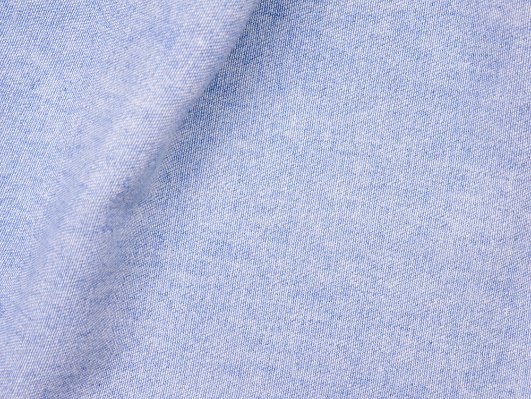

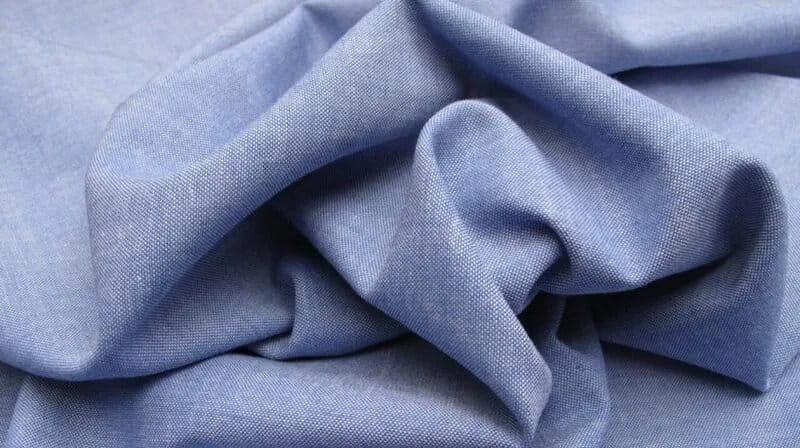
Everything you need to know about chambray fabric: what it is, how it is made, how it compares to denim, linen and more, and why it belongs in your wardrobe.
You have almost certainly worn chambray before. That soft, lightweight blue shirt that looks a bit like denim but feels nothing like it? That is chambray. The shirt that takes you from a weekend coffee run to a work meeting without a second thought? Chambray again.
It is one of those fabrics that has been around for centuries, quietly doing its job, rarely getting the credit it deserves. While denim grabs most of the headlines, chambray has been the smarter, cooler, more breathable option all along.
This guide covers everything: the history (including where “blue collar” actually came from), how chambray is made, how it stacks up against denim, linen, oxford cloth and more, and how to wear and care for it properly. Whether you are a fashion lover, a home sewer, a sustainability-conscious shopper, or just someone curious about what is hanging in their wardrobe, this guide is for you.
What Is Chambray Fabric?
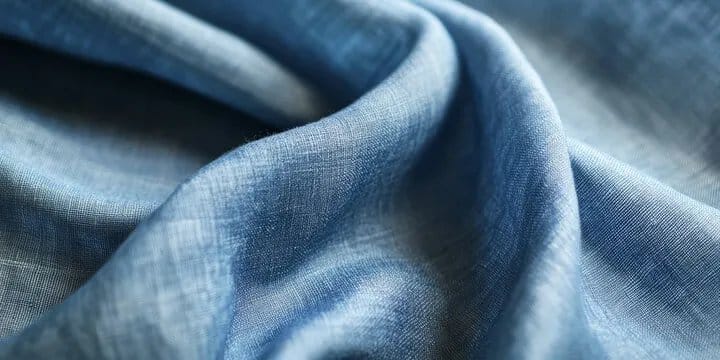
Chambray is a plain-weave fabric where a colored warp thread (most commonly indigo blue) is woven with a white weft thread. This creates a soft, faded, slightly heathered look. It is most often made from cotton, though it can also be made from linen, silk, or modern blends.
At first glance, chambray looks like denim. But the moment you touch it, the difference is clear. Chambray is lighter, softer, and far more breathable. Where denim feels structured and stiff, chambray drapes comfortably and moves with you.
What kind of fabric is chambray?
Chambray is a woven shirting fabric, specifically a plain-weave construction. It is most commonly made from 100% cotton, though linen and silk versions exist. The defining feature is always the colored warp paired with a white weft, giving it that characteristic two-tone, heathered surface.
Is chambray natural or synthetic?
Traditional chambray is a natural fabric. Cotton chambray is 100% plant-based and biodegradable. Some modern versions include a small amount of polyester or elastane for added stretch or durability, but these are clearly labelled. Pure cotton or linen chambray contains no synthetic fibers.
Can chambray be made of polyester?
Yes, though it is not the traditional form. Some manufacturers produce chambray-style fabrics using polyester blends to cut costs or reduce wrinkling. Always check the composition label. Pure cotton or linen chambray offers the best breathability and long-term comfort.
How to tell if something is chambray
Look closely at the fabric surface. You will see a mix of colored and white threads running in different directions, giving it a heathered or frosted look. It feels soft and lightweight, not stiff. Holding it to light will show a slight translucency that denim does not have. A label reading “cotton shirting” or “plain weave cotton” is another good indicator.
The History of Chambray (and the Origin of “Blue Collar”)
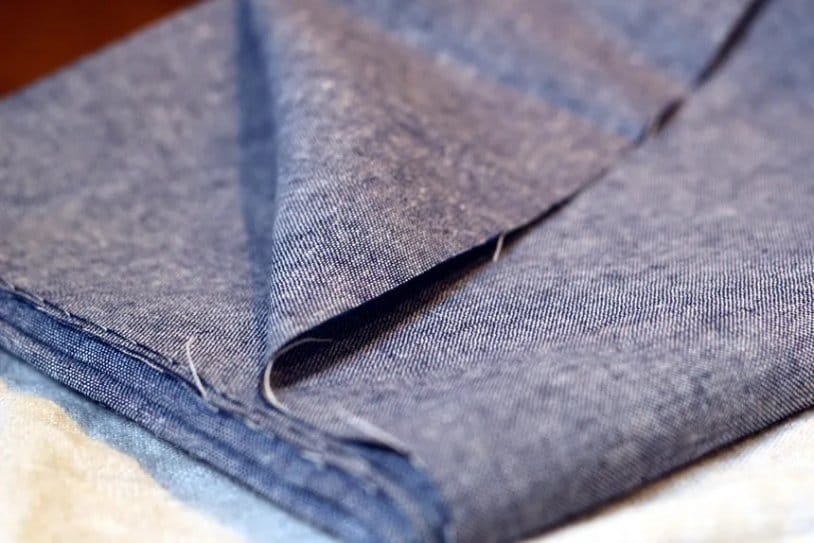
Chambray has a story that starts in a medieval French town and ends up dressing workers, sailors, soldiers, and Hollywood legends. It is a richer history than most fabrics ever get.
Where did chambray come from?
The story begins in Cambrai, a city in northern France, in the 1300s. A French weaver named Baptiste is credited with developing the fabric originally known as “cambric,” a fine, plain-weave cloth made from linen. Cambric was prized for its softness and used for delicate items like lace, handkerchiefs, and fine shirts.
By the mid-1500s, the cloth had evolved. Weavers began using a colored warp thread against a white weft, giving it the two-tone look we recognize today. The name “chambray” entered the English language officially around 1814, derived directly from the city of Cambrai.
From linen to cotton
Originally made from linen, chambray shifted to cotton as that fiber became more widely available. Cotton gave it additional softness, and chambray moved from fine clothing into workwear, where it would make its biggest cultural impact. As noted by Heddels in their Textile Tales series, the fabric was formally endorsed as early as 1831 in the US Farmer’s Bulletin, which recommended it for outdoor work due to its lightweight and breathable construction.
The origin of “blue collar”
Here is the part that surprises most people. The term “blue collar” originates from the blue chambray and denim work shirts worn by industrial and manual workers in early 20th-century America, as opposed to the white dress shirts of “white collar” office workers. It was not just a fashion choice; it was a uniform.
In 1901, the U.S. Navy officially authorized chambray shirts for sailors. From World War I through to World War II, chambray was standard-issue military clothing. Workers across America adopted it, and the blue fabric became a symbol of hard, honest work.
Chambray in Hollywood
In the 1960s and 70s, stars including Paul Newman, Marlon Brando, James Dean, and Elvis Presley were photographed in blue chambray shirts. The workwear staple had crossed into fashion and has never looked back.
How Chambray Is Made
The weave explained simply
Chambray uses a plain weave, the most straightforward weave structure in textile production. Each warp thread goes over one weft thread, then under the next, then over again, repeated across the full width of the fabric. Think of it like weaving paper strips together in a basic over-under pattern.
What makes chambray distinctive is that the warp threads (running vertically along the length of the fabric) are dyed, usually with indigo, while the weft threads (running horizontally) are left white. When these two colors interlace at a 1:1 ratio, you get that characteristic heathered look chambray is known for.
How Chambray Is Produced
What is 100% cotton chambray?
When a label says “100% cotton chambray,” every thread in the fabric is pure cotton with no synthetics whatsoever. This is the most breathable and comfortable version. It also softens with every wash, meaning well-loved pieces genuinely improve over time.
Thread count and fabric weight
Good-quality chambray typically has a thread count of 80 to 120 threads per inch and a weight of around 4 to 6 oz per square yard. Compare that to denim, which usually runs between 10 and 14 oz, and you can see why chambray feels so much lighter. The lower weight is a central reason it performs so well in warm weather.
Types of Chambray Fabric
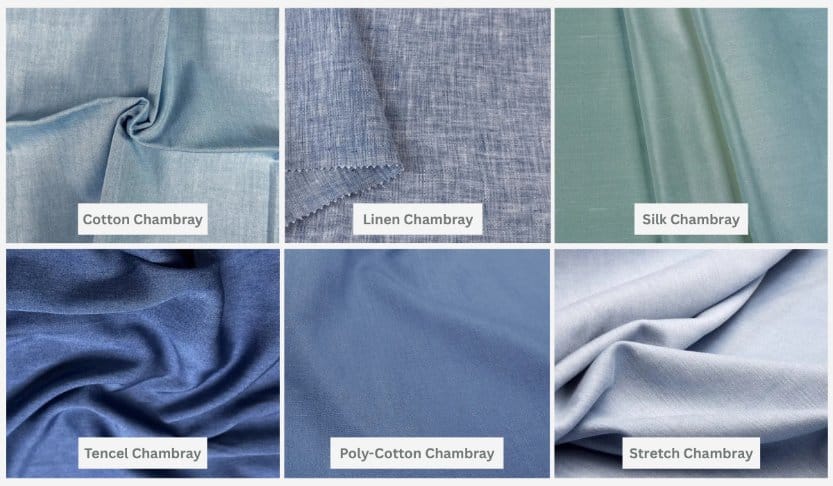
| Type | Main Fiber | Feel and Properties | Best For |
|---|---|---|---|
| Cotton Chambray | 100% Cotton | Soft, breathable, softens with washing | Shirts, dresses, everyday wear |
| Linen Chambray | Linen | Crisper texture, excellent moisture-wicking | Hot climates, casual summer wear |
| Silk Chambray | Silk | Lustrous, smooth, luxurious drape | Luxury garments, evening wear |
| Tencel / Lyocell Chambray | Wood pulp (Tencel) | Silky, drapes well, lower environmental impact | Sustainable fashion, dresses |
| Poly-Cotton Chambray | Cotton + Polyester | Less prone to wrinkling, more durable | Workwear, uniforms |
| Stretch Chambray | Cotton + Elastane | Soft, flexible, comfortable fitted cut | Active wear, fitted garments |
Cotton chambray remains the most widely available type. Linen chambray is rarer but excellent for very warm climates. Silk chambray is a genuine luxury fabric. Tencel blends are a strong option for eco-conscious shoppers who want a softer, more fluid feel.
Chambray Fabric Properties and Benefits
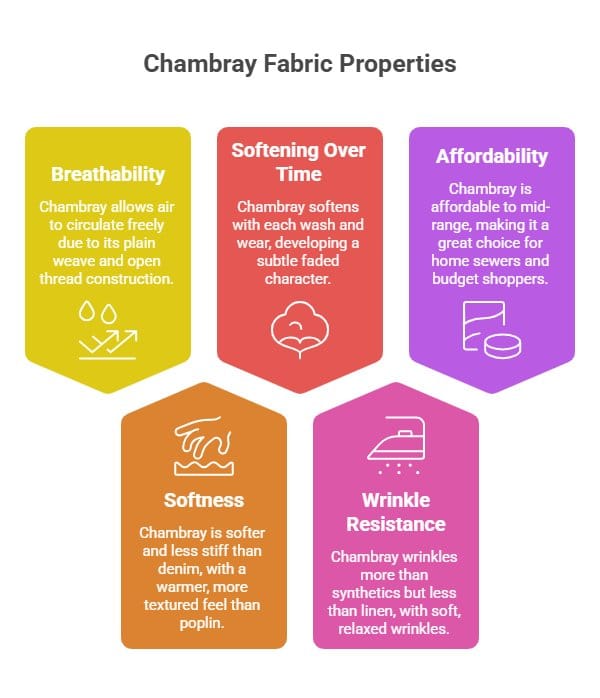
What are the benefits of wearing chambray?
Pros
- Lightweight and breathable
- Soft and gets softer with every wash
- Works across casual and smart-casual settings
- Available in a wide range of colors
- Durable with proper care and lasts years
- Biodegradable (cotton and linen versions)
- Easy to launder at home
- Works across all four seasons with layering
Cons
- Wrinkles more easily than synthetic fabrics
- Can shrink slightly if washed in hot water
- Lighter weights may be slightly sheer
- Less rugged than denim for heavy-duty use
- May fade over time with frequent washing
Is chambray breathable?
Very much so. The plain weave and relatively open thread construction allows air to circulate freely. According to cotton industry research compiled by The Fabric of Our Lives, chambray’s higher thread count and plain weave construction creates notably better airflow than denser cotton fabrics, making it one of the better choices for warm-weather dressing.
Is chambray softer than cotton?
Chambray is cotton in most cases, so a more useful comparison is against other cotton fabrics. Compared to denim, chambray is noticeably softer and less stiff. Against a similarly lightweight poplin, chambray has a slightly warmer, more textured feel from its two-tone thread structure. It tends to be softer than oxford cloth, which uses a heavier basket weave.
Does chambray get softer over time?
Yes, and this is one of its most loved qualities. With each wash and wear, the cotton fibers relax and the fabric softens. A chambray shirt you have owned for three years will feel noticeably more comfortable than a brand-new one. It also develops a subtle faded character that most people consider an improvement rather than wear.
Does chambray wrinkle easily?
It wrinkles more than synthetic fabrics but less than linen. The wrinkles it does develop tend to be soft and relaxed rather than sharp and obvious. A light iron on a low heat setting, ideally while the fabric is slightly damp, sorts it out quickly. Many people embrace the relaxed, lived-in look chambray develops naturally.
Is chambray expensive?
Chambray sits in the affordable-to-mid-range bracket for most shoppers. Basic cotton chambray fabric by the meter is one of the more accessible shirting fabrics available, which makes it a great choice for home sewers. Ready-to-wear chambray garments range from budget high-street prices to premium pieces depending on cotton quality, weave construction, and brand positioning. Linen and silk chambray variants cost more, but pure cotton chambray is accessible to most budgets.
Chambray vs Other Fabrics: Full Comparison
Chambray vs Denim
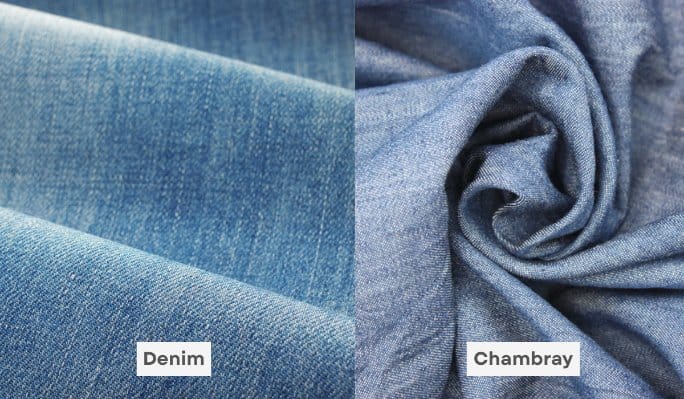
Denim and chambray are often called cousins. Both are primarily cotton fabrics with blue coloring, both have roots in workwear, and both carry a casual, relaxed aesthetic. But their construction is quite different.
| Feature | Chambray | Denim |
|---|---|---|
| Weave type | Plain weave (1×1) | Twill weave (diagonal rib) |
| Weight | 4 to 6 oz (light) | 10 to 14 oz (heavy) |
| Feel | Soft, fluid, drapes well | Stiff and structured |
| Breathability | Very high | Low to moderate |
| Durability | Good | Very high |
| Fading | Natural from thread color variation | Chemical or abrasion treatment |
| Dress code suitability | Casual to smart-casual | Casual (often restricted in workplaces) |
| Best season | All year, especially summer | Fall and winter |
Is chambray better than denim?
It depends on what you need. Denim wins on outright durability as it is built for heavy, rugged use. But chambray wins on comfort, breathability, and versatility across settings. For warm weather, for smarter occasions, or for day-to-day ease, chambray is often the better choice. Denim is for durability; chambray is for everyday living.
Chambray vs Linen
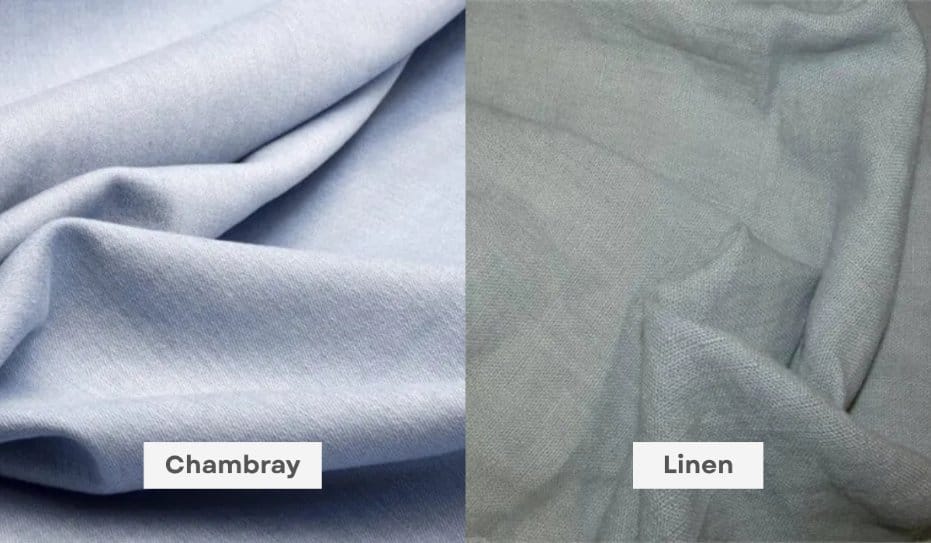
Both are popular summer fabrics but offer a different experience. Linen is made from flax plant fibers with natural hollow strands that wick moisture exceptionally well. But linen wrinkles more readily and has a crisper, more textured feel. Chambray is softer, wrinkles less, and has a smoother surface that most people find more comfortable for daily wear.
Is chambray similar to linen?
They share some qualities. Both are lightweight, breathable, and natural. But they come from different fibers and feel quite different. Linen is made from flax and has a characteristic crispness. Chambray is made from cotton and is softer and more pliable. Linen chambray, which uses linen fibers in a chambray weave structure, bridges the gap between the two nicely.
Chambray vs Oxford Cloth
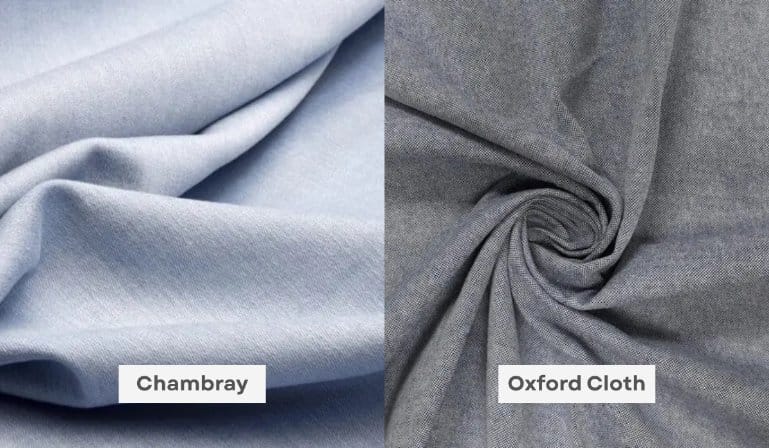
Oxford cloth uses a basket weave, with two warp threads interlacing with one weft thread, creating a heavier, more structured fabric with a slightly rougher, textured feel. It is typically used for formal button-down shirts. Chambray is softer, lighter, and more fluid. If Oxford cloth is the formal shirt fabric, chambray is its relaxed smart-casual alternative.
What is the difference between poplin and chambray?
Both are plain-weave fabrics used for shirts and lightweight clothing, making this one of the more subtle comparisons. Poplin uses a thicker weft yarn, which creates a fine ribbed texture and a slightly lustrous surface that looks crisp and polished. Chambray uses a colored warp with a white weft, giving it a heathered, matte appearance that reads as more relaxed.
Technically, chambray can be considered a type of poplin, but one with a very specific thread-color construction that gives it its distinctive look. If poplin is clean and formal, chambray is characterful and casual.
Full fabric comparison at a glance
| Fabric | Weave | Weight | Breathability | Formality | Wrinkle Resistance |
|---|---|---|---|---|---|
| Chambray | Plain | Light | Excellent | Casual to smart-casual | Moderate |
| Denim | Twill | Heavy | Low | Casual | Good |
| Linen | Plain | Light-Medium | Excellent | Casual to smart | Poor |
| Oxford Cloth | Basket | Medium-Heavy | Moderate | Smart to formal | Good |
| Poplin | Plain (ribbed) | Light | Good | Smart to formal | Very Good |
| Cotton Twill | Twill | Medium | Moderate | Casual to smart-casual | Good |
What Is Chambray Used For?
Most people think of chambray purely as a shirt fabric. It goes much further than that.
Clothing
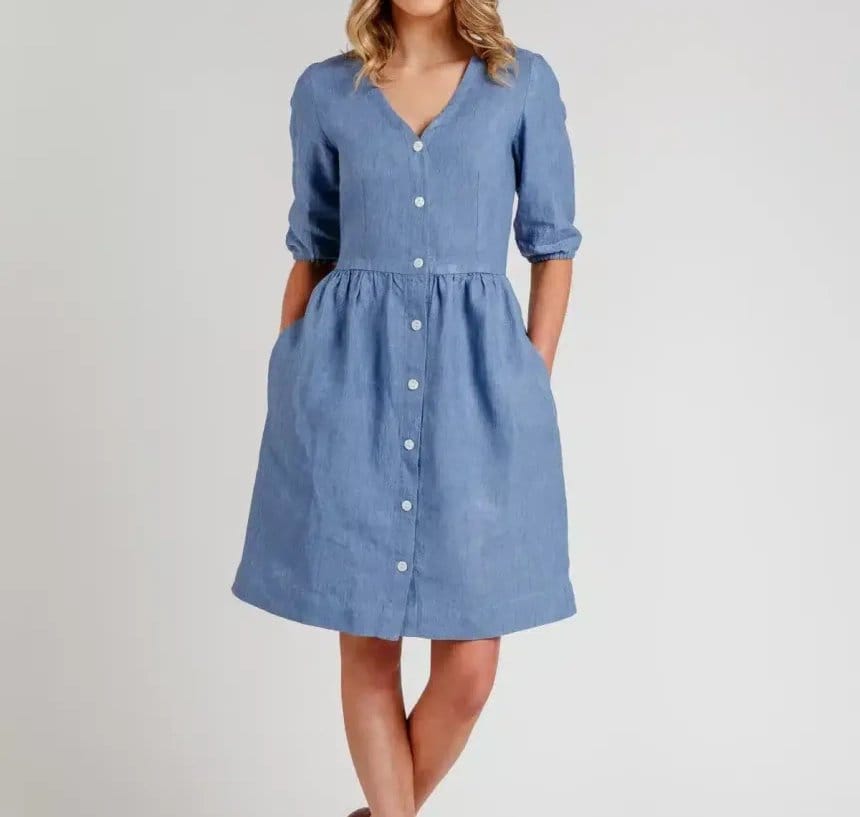
Chambray is most popular for shirts and blouses. The classic chambray button-down is a wardrobe staple in most parts of the world. It is also widely used for dresses and skirts (the lightweight fabric drapes beautifully and suits casual summer styles), pants and culottes (a fresh alternative to denim or heavy cotton), jumpsuits and rompers, children’s clothing, and light jackets or overshirts used as layering pieces in spring and fall.
Home decor
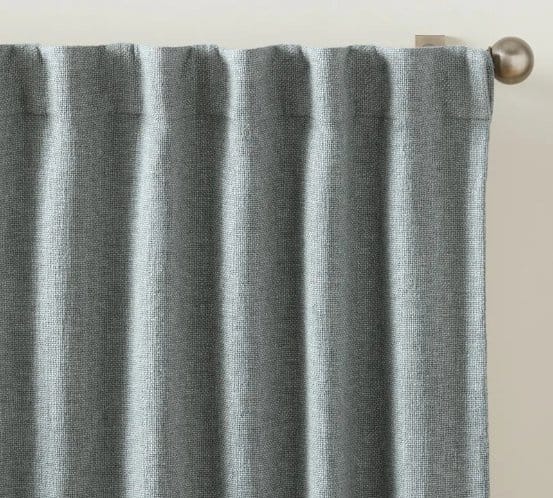
Chambray’s natural, relaxed look translates well into home interiors. It is used for lightweight curtains and window panels that let in light while adding texture, bedding and duvet covers that are cool for summer sleep, tablecloths and napkins, cushion and throw pillow covers, and kitchen aprons and accessories.
Accessories
Chambray works well for soft accessories including tote bags, bandanas, lightweight scarves, fabric hats, and cap linings. It is easy to cut and sew, holds color well, and has a casual charm that suits a wide range of accessory styles.
Workwear and uniforms
Chambray’s original purpose still holds today. Many industries use it for uniforms because it is durable enough for daily wear but comfortable enough for long shifts. It remains a popular choice in hospitality, service, and light manufacturing sectors.
How to Style Chambray in Every Season
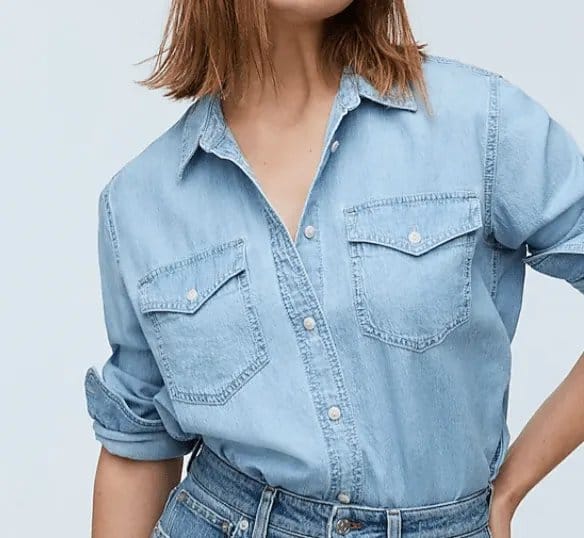
Is chambray only for summer?
Not at all. Chambray is a genuinely year-round fabric. The key is knowing how to layer and pair it. In summer it shines on its own; in colder months it works beautifully as a mid or base layer.
- Chambray shirt with shorts and sandals
- Chambray dress for beach-to-brunch
- Sleeveless chambray top with wide-leg pants
- Light chambray overshirt worn open as a cover-up
- Chambray shirt with chinos and white sneakers
- Chambray midi dress with a knit or denim jacket
- Tucked chambray shirt with tailored pants
- Chambray blouse under a blazer
- Chambray shirt under a chunky knit sweater
- Chambray layered under a wool coat
- Chambray overshirt over a plain white tee
- Chambray dress with ankle boots and tights
- Chambray as a base layer under a heavy sweater
- Chambray beneath a quilted or down jacket
- Chambray under a heavyweight wool blazer
- Chambray as a collar-peek under a turtleneck
Is chambray good for winter?
On its own, a single layer of chambray will not provide much warmth as it is simply too lightweight. But worn under a sweater, wool jacket, or insulated coat, it makes an excellent base or mid-layer. Its breathability actually helps here: it regulates temperature rather than trapping heat, so you stay comfortable moving between a cold street and a warm indoor space.
Can chambray be worn for formal occasions?
Chambray works well in smart-casual and business casual settings. A well-fitted chambray shirt paired with tailored pants and a blazer looks professional and polished. It is not a fabric for black-tie events, but it handles most professional and smart social occasions with ease. It occupies a useful middle ground between casual cotton and formal dress shirting.
What color is chambray?
Classic chambray is associated with a soft, medium indigo blue, lighter than traditional denim but in the same color family. Because white weft threads are woven through the colored warp, chambray always appears slightly lighter and more washed-out than a solid-dyed fabric. Beyond blue, modern chambray is available in white, grey, green, red, pink, and printed versions. The heathered quality of the weave gives all chambray colors a soft, frosted appearance that makes them easy to pair with other pieces.
How to Wash and Care for Chambray
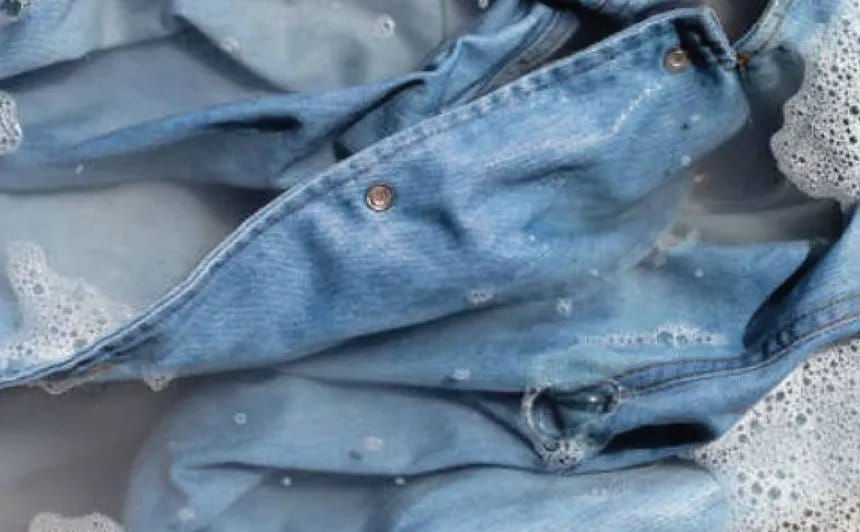
Chambray is a straightforward fabric to care for. You do not need specialist products or professional cleaning for most garments. A few consistent habits will keep it looking good for years.
Washing
Use a gentle or delicate machine cycle with cold water. Turn garments inside out to protect the color. Wash with similar colors to prevent dye transfer.
Drying
Air drying is best. Hang or lay flat in the shade to protect the color. If using a tumble dryer, use a low-heat setting and remove promptly.
Ironing
Iron inside out on a low-to-medium setting (max 110°C / 230°F). Slightly damp fabric irons best. Avoid ironing directly over seams. Light steam also works well.
Detergent
Use a mild or gentle detergent. Avoid harsh bleach or enzyme-heavy formulas, which can break down cotton fibers and cause premature fading. A color-safe detergent helps preserve depth of color.
Storage
Fold and store in a cool, dry place. Hanging lightweight chambray for extended periods can cause the garment to stretch out of shape over time.
Does chambray shrink after washing?
Pure cotton chambray can shrink by around 3 to 5% if washed in hot water or dried on high heat. The fix is simple: always wash in cold water on a gentle cycle and air dry. If you are sewing with chambray, pre-wash the fabric before cutting. This removes any residual sizing, shrinks the fibers in advance, and means your finished garment will hold its shape after laundering.

How to Buy Chambray: What to Look For
Not all chambray is equal. Here is how to spot a good quality piece whether you are buying fabric off the roll for sewing or picking up a ready-to-wear garment.
| What to Check | What Good Looks Like | What to Avoid |
|---|---|---|
| Fiber content | 100% cotton or linen clearly stated on label | Unlabelled or high polyester content |
| Thread count | 80 to 120 threads per inch | Very low thread counts feel rough and thin |
| Fabric weight | 4 to 6 oz for garments; slightly heavier for home use | Under 4 oz may be too sheer for many uses |
| Dye penetration | Even color across the full width, no patches or streaks | Uneven dyeing indicates lower quality |
| Feel | Soft and smooth with a slight two-tone texture | Rough or stiff may indicate a poor-quality blend |
| Opacity | Slight translucency is normal for lighter weights | Very sheer fabric will need lining for garments |
Use our free interactive tools to help plan your purchase:
Fabric Selection Flowchart Fabric Cost Comparison Calculator
Chambray and Sustainability
Is chambray eco-friendly?
The answer depends on how it is made. The fabric itself, when produced from natural fibers, has real environmental advantages over synthetic alternatives. However, cotton farming which produces most chambray carries a significant footprint when done at scale through conventional methods.
| Factor | Conventional Cotton Chambray | Organic Cotton Chambray |
|---|---|---|
| Water use | High (up to 20,000 liters per kg of cotton) | Reduced through better farming practices |
| Pesticide use | Significant. Cotton is a chemically intensive crop. | None (certified organic) |
| Biodegradability | Yes | Yes |
| Dyeing impact | Synthetic dyes can pollute waterways if poorly managed | Natural or low-impact dyes preferred |
| Certifications | OEKO-TEX Standard 100 | GOTS (Global Organic Textile Standard) |
How to make a more sustainable chambray choice
Look for GOTS certification when buying organic cotton chambray. This guarantees both the organic nature of the fiber and the social responsibility of the supply chain. Choosing quality over quantity matters too: a well-made chambray shirt can last 5 to 10 years, making it far more sustainable than fast fashion alternatives that fall apart in months.
Washing in cold water extends the garment’s life and uses significantly less energy than warm or hot washes. If you want to go further, consider Tencel or lyocell chambray. These use sustainably sourced wood pulp, require far less water than cotton to produce, and are fully biodegradable.
What Are the Most Unhealthy Fabrics to Wear?
Since we are talking about fabric choices, it is worth briefly addressing this. Some fabrics can cause discomfort for people with sensitive skin, and others carry concerns around chemical processing or environmental impact.
| Fabric | Potential Concern | Chambray as an Alternative? |
|---|---|---|
| Conventional polyester | Traps heat, poor breathability, sheds microplastics, petroleum-derived | Yes, far more breathable and natural |
| Nylon | Similar to polyester; can cause sweating and irritation for sensitive skin | Yes, particularly for warm-weather garments |
| Heavily treated cotton | Wrinkle-resistant finishes often use formaldehyde-based treatments | Yes, untreated chambray avoids these chemicals |
| Acrylic | Petroleum-based, poor breathability, sheds plastic microfibers | Yes, for layering applications |
| Rayon / Viscose | Production process involves harsh chemicals; environmental concerns at scale | Often yes, especially for sensitive skin types |
Natural, minimally treated fabrics like cotton and linen chambray are generally among the better choices for skin comfort. Where possible, look for OEKO-TEX or GOTS certified garments to ensure the fabric has been tested for harmful substances.
Is Chambray Still in Style?
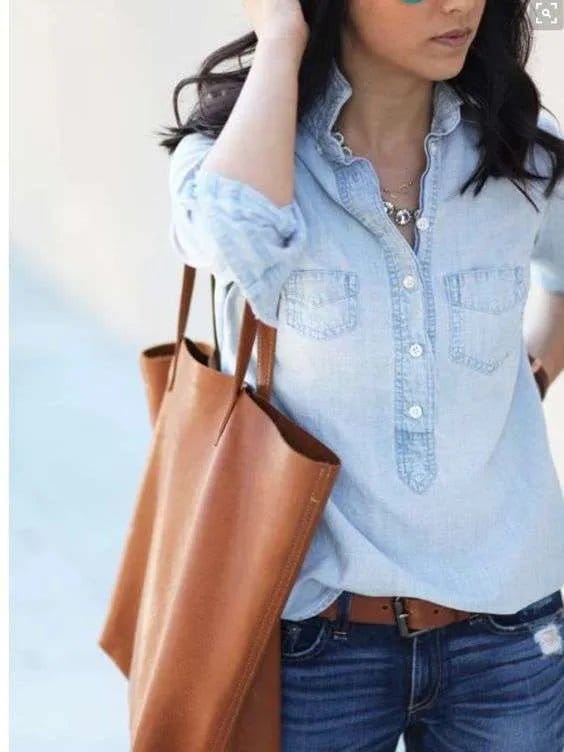
Short answer: yes. Chambray never really falls out of style. It just moves in and out of the spotlight as trends shift around it.
Right now, several key directions are working in chambray’s favour. The broader move toward natural fibers and considered dressing fits chambray perfectly. The growing interest in capsule wardrobes, quality pieces that work across different occasions, is exactly where chambray lives. And the shift away from synthetic fabrics, driven by sustainability awareness, puts cotton and linen chambray in a strong position.
Chambray has also stayed relevant because it does not look dated. A good-quality chambray shirt from five years ago looks just as wearable today. It is a fabric that follows fashion when invited, but does not depend on it.
Frequently Asked Questions About Chambray
No. Both are cotton fabrics with a blue color, but they are constructed very differently. Denim uses a twill weave with all-dyed warp threads. Chambray uses a plain weave with a colored warp and white weft. The result is that chambray is significantly lighter, softer, and more breathable than denim. They are related, but they are not the same fabric.
Chambray is one of the best fabrics for summer. Its plain weave allows excellent airflow and it is lightweight enough for hot, humid conditions without feeling heavy. It handles perspiration well, dries reasonably quickly, and does not cling uncomfortably to the skin.
On its own, chambray is too lightweight for cold weather. Layered under a sweater, heavy jacket, or wool coat, however, it works well as a comfortable base layer. Many people keep a chambray shirt as a year-round layering piece because it is thin enough not to add bulk while still providing a comfortable inner layer.
100% cotton chambray can shrink by around 3 to 5% if washed in hot water or dried on high heat. To avoid this, always wash in cold water on a gentle cycle and air dry. If you are sewing with chambray, pre-wash the fabric before cutting to account for any initial shrinkage.
Chambray works well in smart-casual and business casual settings. A well-fitted chambray shirt paired with tailored pants and a blazer looks professional and polished. It is not typically worn for black-tie events, but it handles most professional and smart social occasions comfortably.
This is a close comparison. Linen has exceptional moisture-wicking properties due to its hollow fiber structure and is often considered slightly more breathable in very hot, dry conditions. Chambray wrinkles less than linen and has a smoother surface that most people find more comfortable day-to-day. Both are excellent summer fabrics. The choice usually comes down to texture preference and how you feel about wrinkling.
Yes, and this is one of chambray’s most appreciated qualities. With each wash and wear, the cotton fibers relax and the fabric softens. A chambray shirt you have owned for a few years will feel noticeably more comfortable than a brand-new one. It also develops a subtle faded character that many people consider an improvement.
Yes. Cotton is the most common material for chambray. The term “chambray” refers to the weave structure and thread-color combination, not a specific fiber. You can have cotton chambray, linen chambray, or silk chambray, but cotton remains the most widely produced and available type.
Look closely at the fabric surface. Chambray will show a mix of colored and white threads giving it a heathered or frosted appearance. It feels soft and lightweight, not stiff like denim. Hold it to light and you will notice a slight translucency that denim does not have. The two-tone thread structure is the single most reliable identifier.
Both are plain-weave shirting fabrics, but poplin uses a thicker weft yarn creating a fine rib texture and a slightly lustrous, crisp surface suited to formal shirts. Chambray uses a colored warp with a white weft, creating a matte, heathered appearance that is more casual. Chambray can technically be considered a type of poplin, but with a specific thread construction that gives it its distinctive relaxed character.
Conclusion
Chambray has been around since the 1500s. It helped define the working class. It dressed American sailors, factory workers, and Hollywood legends. And it is still here, lighter, more versatile, and more relevant than ever.
If there is one thing this guide should leave you with, it is this: chambray is not just a denim alternative. It is its own fabric with its own strengths, its own history, and a remarkably broad range of uses.
It is light enough for a hot summer’s day, layerable enough for winter, smart enough for most professional settings, and soft enough to wear all day without thinking about it. It gets better with age. It is biodegradable. And a single good-quality piece, properly cared for, can last a decade.
Key takeaways from this guide:
- Breathability: Chambray’s plain weave provides significantly better airflow than denser cotton fabrics, making it outstanding in warm weather.
- Year-round versatility: Layer it in fall and winter. Chambray is one of the most useful wardrobe pieces you can own across all seasons.
- It improves with age: Unlike synthetic fabrics that degrade, well-cared-for chambray softens and improves with every wash.
- Choose natural where you can: 100% cotton or linen chambray is biodegradable and generally kinder to skin than synthetic alternatives. Look for GOTS or OEKO-TEX certified options.
- Buy quality: A good chambray shirt at a reasonable price will outlast several rounds of cheaper alternatives. The cost-per-wear on quality chambray is hard to beat.
- It is a global fabric: Chambray does not belong to any one country’s fashion tradition. It is worn and loved worldwide, from workwear to runway, from home interiors to children’s clothing.
This is the first article in our chambray fabric series. The specialist guides that follow will go deeper into each area:
- Chambray Cotton: Quality, Comfort and Versatility
- The Complete Guide to Denim Fabric
- The Complete Guide to Linen Fabric
- Best Fabrics for Summer
- Most Durable Fabrics for Everyday Wear
Last reviewed: May 2026 | Category: Fabric Guides | Back to Fabric Guides