
What’s in, what’s out, and exactly what you should be sewing right now — with sewability ratings, sewing tips, and global sourcing guidance
Quick Takeaways
- Sustainable fabrics like organic cotton and Tencel are no longer optional. They’re what buyers and clients expect.
- Maximalism is back. Bold prints, oversized florals, and rich textures are replacing years of quiet, minimal style.
- Velvet, bouclé, linen blends, and satin crepe are the standout fabrics for both fashion designers and home sewists this year.
- Performance fabrics and smart textiles are moving from activewear into everyday fashion.
- Knowing how to SEW trending fabrics , not just where to buy them. That’s what sets great designers apart.
- Mocha Mousse (Pantone’s Color of the Year 2025) pairs beautifully with most trending fabrics on this list.
If you’ve ever stood at a fabric store (or scrolled a fabric website at midnight) wondering what’s actually worth buying this year: this guide is for you. Whether you’re building a collection, planning your next sewing project, or just trying to keep your fabric choices current, 2025 is a genuinely exciting year to be working with textiles.
The fabric world right now is sitting at a crossroads of sustainability, technology, and a bold design revival that’s frankly overdue. After years of minimalist, muted, and safe fabric choices, the pendulum has swung hard in the other direction. Texture is back. Color is back. And the fabrics leading the charge in 2025 happen to be some of the most interesting, and most rewarding, to sew with.
This guide walks you through every major trend, what each fabric feels and sews like, how to use it for real garments and projects, and where to find it. You’ll also find sewability ratings for each trending fabric so you know exactly what you’re getting into before you start cutting.
What’s Driving 2025 Fabric Trends
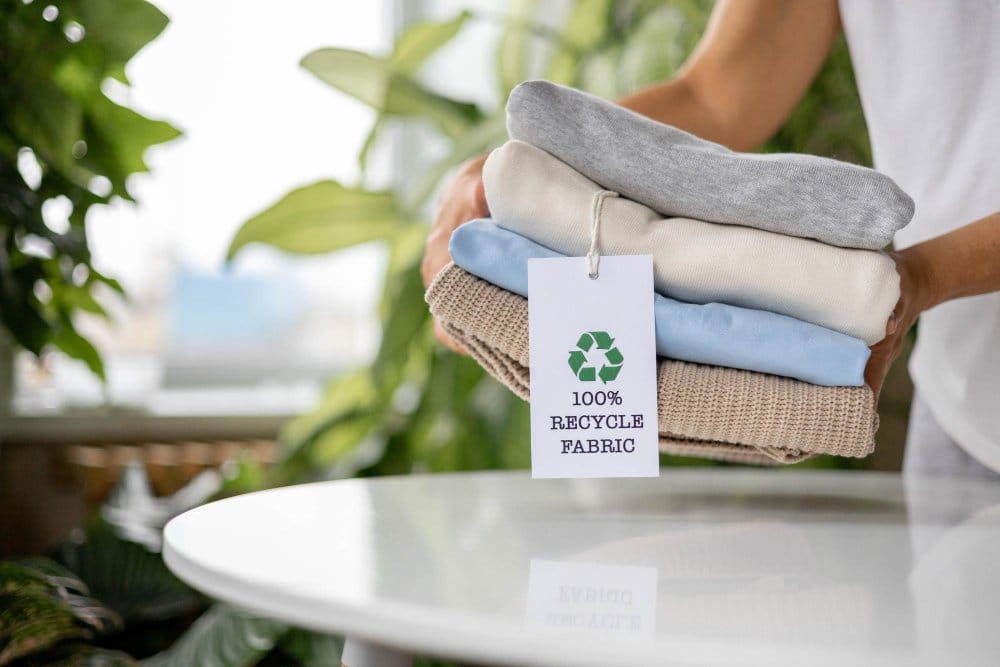
Before jumping into the specific fabrics, it helps to understand the forces shaping what’s trending and why. These four things are pushing the textile industry in a new direction right now:
Sustainability Demands
Consumers are asking, and often demanding, more eco-friendly options. Brands that can’t answer those questions are losing business fast.
The Maximalism Shift
Minimalism had a long run. Now bold prints, rich textures, and statement-making fabrics are taking center stage across both fashion and interiors.
Performance & Technology
Smart textiles, moisture-wicking finishes, and temperature-regulating fabrics are moving from niche tech into mainstream fashion.
Slow Fashion Values
People are buying less and investing more. Quality, durability, and care are being prioritized over cheap, fast turnover fabrics.
According to Textile Exchange’s 2025 Materials Market Report, global fiber production reached 132 million tonnes in 2024, up from 125 million the year before, and 34 percent of global cotton is now coming from certified sources.
Major brands are racing to meet their 2030 sustainability commitments, and that pressure is trickling all the way down to what fabrics land on independent designers’ cutting tables.
What’s In vs. What’s Out in 2025
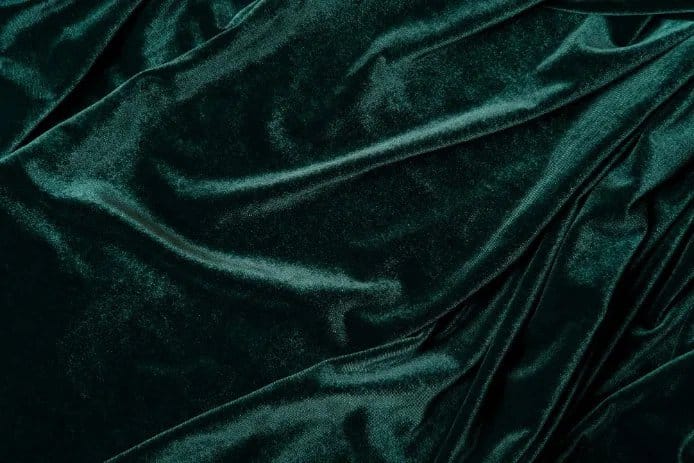
Before you spend money on fabric, it’s worth knowing which materials are building momentum right now and which ones are quietly being left behind. Here’s a clear breakdown:
✓ What’s In
- Organic and certified cotton
- Recycled polyester (RPET)
- Tencel and other wood-based fibers
- Velvet (especially in earthy jewel tones)
- Bouclé (updated colors, modern textures)
- Sheer and burnout chiffon
- Satin crepe and charmeuse-style drapes
- Linen and hemp blends
- Faux and micro suede
- Smart and performance textiles
- Bold botanical and geometric prints
- Contrast lining as a design feature
✗ What’s Out
- Cheap, non-breathable polyester
- Overly stiff, flat synthetic fabrics
- Fast-fashion quality blends with no character
- Heavy, non-sustainable acrylics
- Excessively shiny, plasticky finishes
- Plain, texture-free solid fabrics used as statement pieces
- Ultra-minimalist “quiet luxury” overuse (it’s fading)
- Disposable, one-season fabrics
The big story in 2025 isn’t just about what’s trendy. It’s about quality becoming non-negotiable. The fabrics that are performing well in the market right now combine good construction with either a sustainability story, a tactile quality, or genuine design interest. Preferably all three.
“The ‘vanilla girl’ aesthetic is the trendiest cozy vibe right now, and it’s directly affecting the textures rising in popularity, like bouclé. You don’t need TikTok to see how creamy soft, white neutrals are the best way to bring out bouclé’s cozy vibes.”– Jessica Harris, textile and interior designer at Living Spaces
The 10 Trending Fabrics for 2025 (With Sewability Ratings)
Here’s your detailed breakdown of the fabrics you should be working with this year. Each one includes a sewability rating card, a quick rundown of sewing tips, and the best projects to try.
1. Organic Cotton
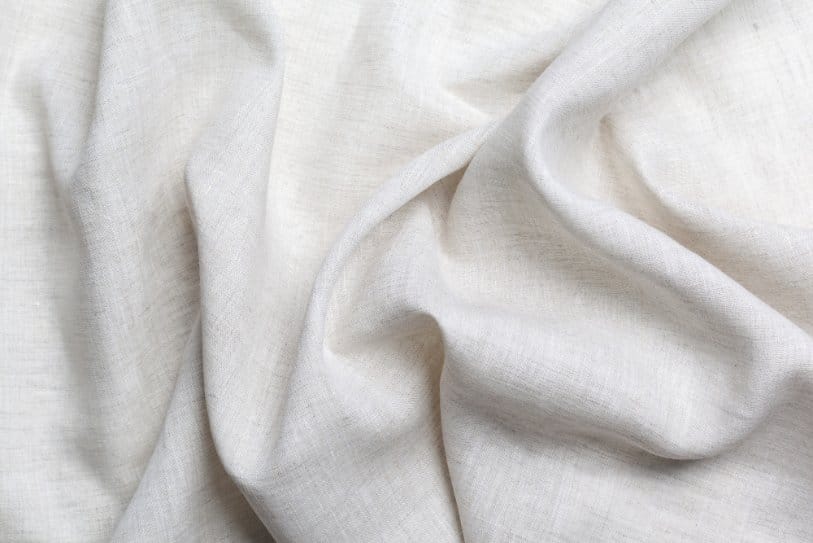
Organic cotton is having its best year yet. It’s the same versatile, breathable fabric you already know, but grown without synthetic pesticides or fertilizers. What’s changed is the quality. Modern organic cotton now comes in a much wider range of weights, weaves, and finishes than it did even five years ago, from crisp lawn and smooth poplin to stretchy jersey and structured denim.
If you care about what goes into your garments and what story you’re telling your clients or customers, this is your easiest starting point. Organic cotton uses about 40% less water than conventional cotton, and the certification standards (look for GOTS or OCS) mean what’s on the label is verified.
Best for: Casual dresses, children’s clothing, T-shirts, linings, quilts, loungewear, and any project where skin-contact comfort matters.
2. Recycled Polyester (RPET)
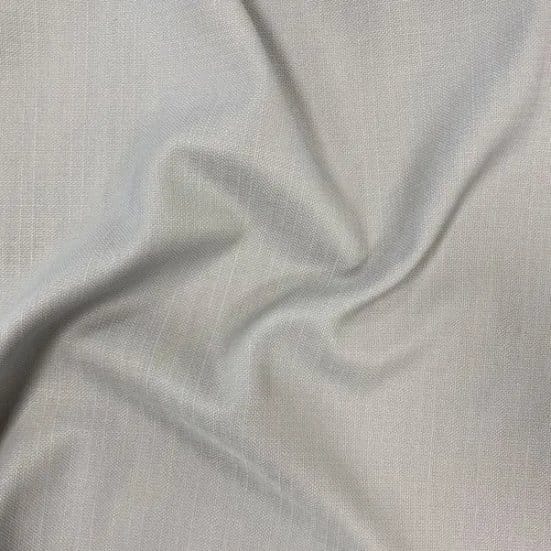
Every pound of recycled polyester diverts around 12 plastic bottles from a landfill. That’s a compelling story, but what’s really changed in 2025 is that RPET no longer feels like a compromise. New processing methods have produced recycled polyester that’s soft, well-draping, and almost identical in feel to virgin poly, without the environmental guilt.
You’ll find RPET in athletic wear, outerwear, lining fabrics, and even woven designs that would have been virgin polyester a few years ago. The performance versions (moisture-wicking, quick-dry, odor-resistant) are especially strong right now as the athleisure-meets-fashion crossover shows no signs of stopping.
Best for: Athletic wear, outerwear, lining jackets and bags, activewear sets, technical garments.
3. Tencel (Lyocell)
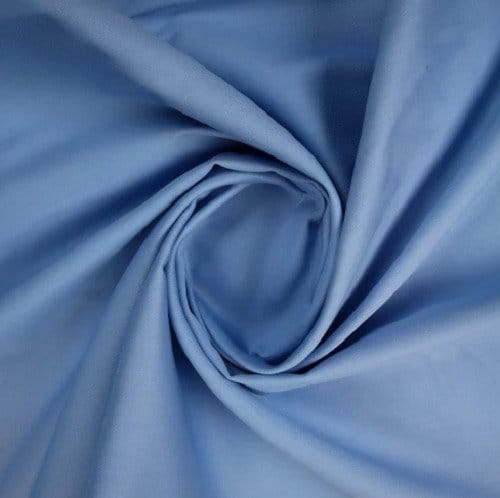
Tencel is made from wood pulp (mainly eucalyptus), processed in a closed-loop system that recovers and reuses 99% of the solvent used in production. The result is one of the most sustainable semi-synthetic fabrics available right now, and it sews beautifully. It has a soft, slightly silky drape that works for both structured and relaxed garments, and it resists wrinkles better than linen while breathing better than most synthetics.
In 2025, Tencel is showing up in blouses, wrap dresses, wide-leg trousers, and even tailored jackets. Its natural sheen catches the light in a way that reads as luxurious without the price tag of silk. You’ll also find it blended with cotton, wool, and linen for fabrics that combine the best of multiple materials.
Best for: Blouses, wrap dresses, wide-leg trousers, lightweight jackets, and anything where you want soft drape with a bit of body.
4. Velvet
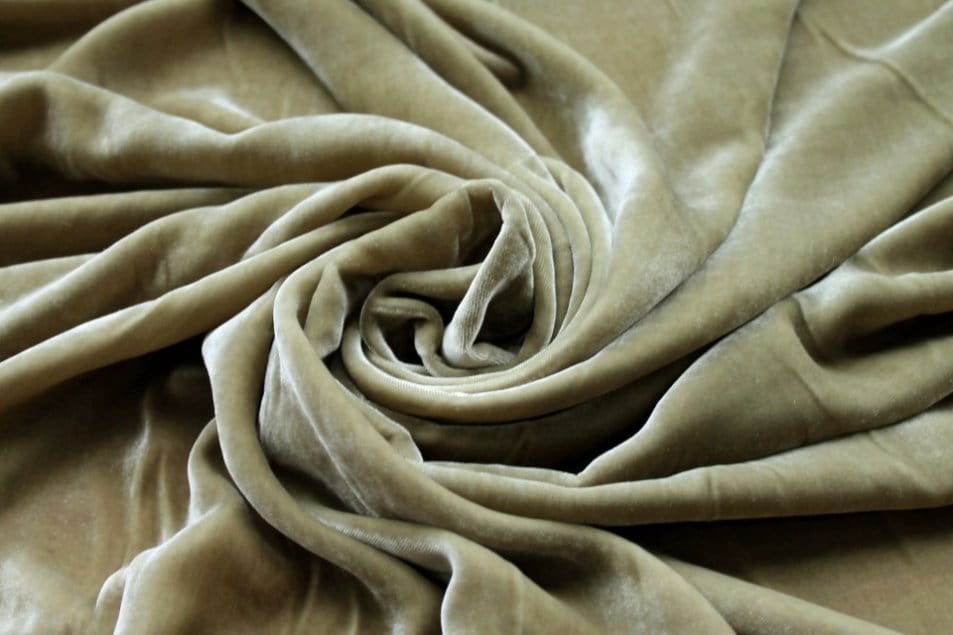
Velvet is back in a serious way. Not the fussy, can’t-wear-it-anywhere velvet of formal occasions past. Today it’s a more wearable, modern velvet that works for blazers, wide-leg trousers, slip dresses, and structured outerwear. In 2025, the color palette for velvet leans toward earthy jewel tones: deep olive, warm rust, inky navy, and rich burgundy.
The biggest development this year is stretch velvet. Linen-velvet blends and velvet-spandex mixes bring the luxurious look of velvet with enough give to be genuinely comfortable in a finished garment. If you’ve always admired velvet but found it difficult to sew, the stretch versions are a much more forgiving place to start.
Best for: Blazers, evening wear, slip dresses, structured bags, headbands, statement pieces, holiday collections.
5. Bouclé
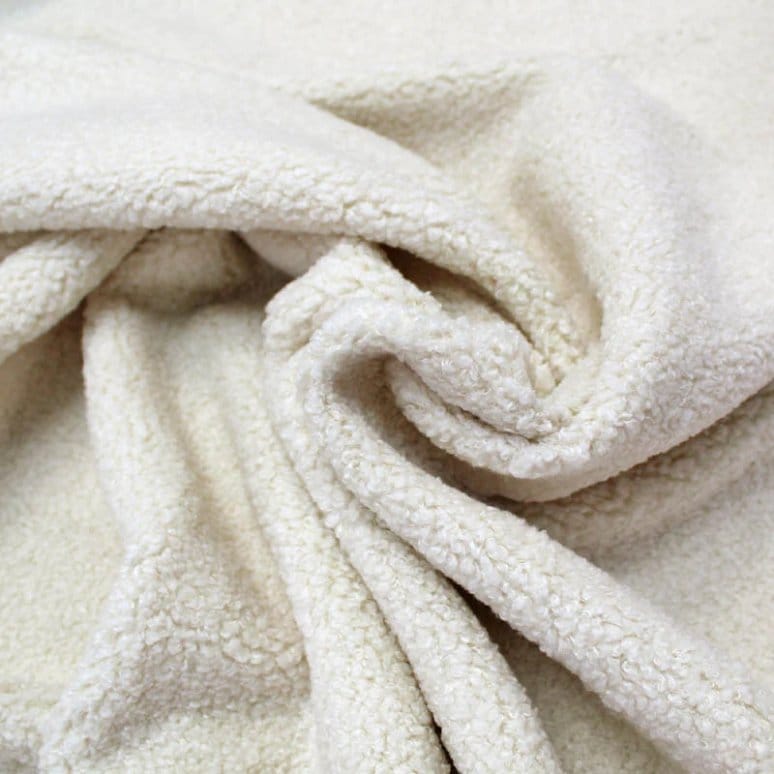
Bouclé is the texture story of 2025. Its looped, slightly coarse surface gives finished garments a rich, handcrafted look that photographs beautifully and never looks cheap. While it’s classically associated with Chanel-style jackets, today’s bouclé fabric comes in updated colorways (sage green, warm camel, dusty rose, charcoal) and lighter weights that work for everything from cropped jackets to structured totes.
Newer manufacturing methods also make bouclé easier to clean, with some versions suitable for gentle machine washing rather than dry cleaning only. For sewists, the textured surface is forgiving. Small imperfections in your seam lines are almost invisible.
Best for: Structured jackets, coordinating sets, tote bags, throw pillows, statement coats, skirt suits. You can also check out our detailed guide to boucle wool fabric for a deeper look at the wool versions.
6. Chiffon (Including Burnout Chiffon)
Sheer fabrics are having their moment right now, and chiffon is at the center of it. The 2025 take on chiffon goes beyond floaty overlay skirts. You’ll see it layered over structured pieces, used as full-transparency tops paired with visible bralettes, and stitched into pleated statement sleeves. Silk chiffon remains the most luxurious option, while polyester chiffon gives you a more budget-friendly version that’s easier to wash and care for.
If you want to go even more interesting, look at georgette chiffon, which has slightly more weight and body, and crepe chiffon for a matte, elegant texture that drapes exceptionally well.
What Is Burnout Chiffon Fabric?
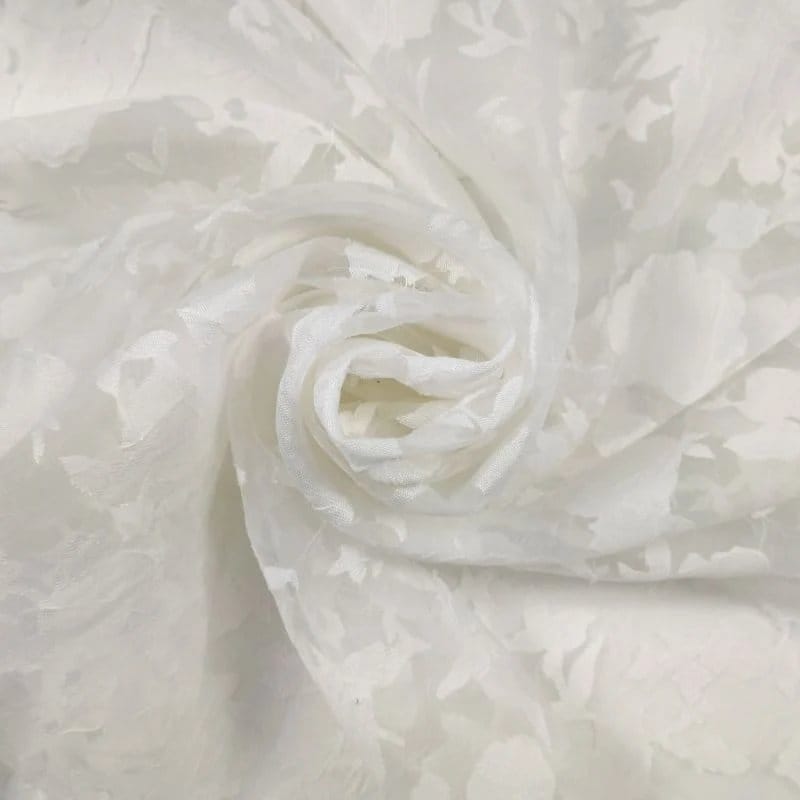
Burnout chiffon, also called devoré chiffon, is one of the most visually striking fabrics you can work with right now. It’s made from a blend of two different fiber types — typically polyester and viscose, or silk and rayon.
A chemical process called burnout or devoré is applied in a pattern that dissolves one of the fiber types while the other stays intact. The result is a fabric with both solid and sheer areas within the same piece, creating a lace-like or embossed visual effect without actually being lace.
The sheer sections are transparent and delicate, while the intact fiber areas hold their color and texture. This creates depth, dimension, and movement in finished garments that flat fabrics simply can’t match. It’s easy to see why burnout chiffon is trending hard right now. It ticks every 2025 box: sheer, textured, maximalist, and genuinely special.
What you can make with burnout chiffon:
- Romantic blouses and tops where the pattern does most of the design work
- Overlay skirts and dresses layered over a solid lining
- Evening wear with a high-end feel at an accessible price point
- Lightweight scarves and wraps where the pattern is the main event
- Statement sleeves and cuffs on otherwise simple garments
Sewing burnout chiffon is an intermediate to advanced challenge. The dissolved areas fray more readily than standard chiffon, so use a fresh sharp needle (size 60/8 or 70/10), tissue paper under the fabric to prevent snagging, and finish seams with either French seams or a tight rolled hem.
Handle it with clean, dry hands to avoid snags, and line any fitted areas since the burnout sections offer little structure or coverage on their own. Read our full burnout chiffon fabric guide for more.
7. Satin Crepe
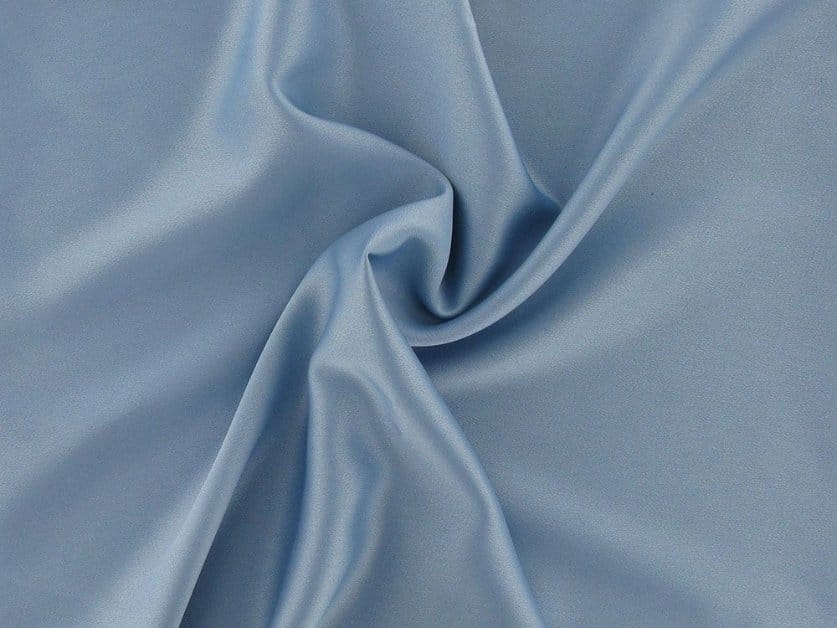
Satin crepe might be the single most wearable luxury fabric in 2025. It has a subtle sheen on one side (the satin side) and a matte, slightly textured finish on the other (the crepe side), which means you get two different looks within one fabric. Designers are using both faces deliberately, combining them in the same garment for tonal contrast, or choosing whichever side suits the garment’s mood.
The drape is exceptional. It falls cleanly, moves beautifully, and doesn’t cling in unflattering ways the way pure satin sometimes does.
You’ll find it in bias-cut dresses, elegant wrap tops, tailored trousers, and evening wear that needs to look polished but not stiff.
It photographs extremely well, which matters if you’re selling your work or building a brand online. For a deeper look at satin fabric types, check out this guide to satin fabric. You can also browse all satin types on our site, from charmeuse satin and duchess satin to crepe-back satin.
Best for: Bias-cut dresses, blouses, elegant trousers, bridal and event wear, coordinating sets.
8. Linen and Hemp Blends
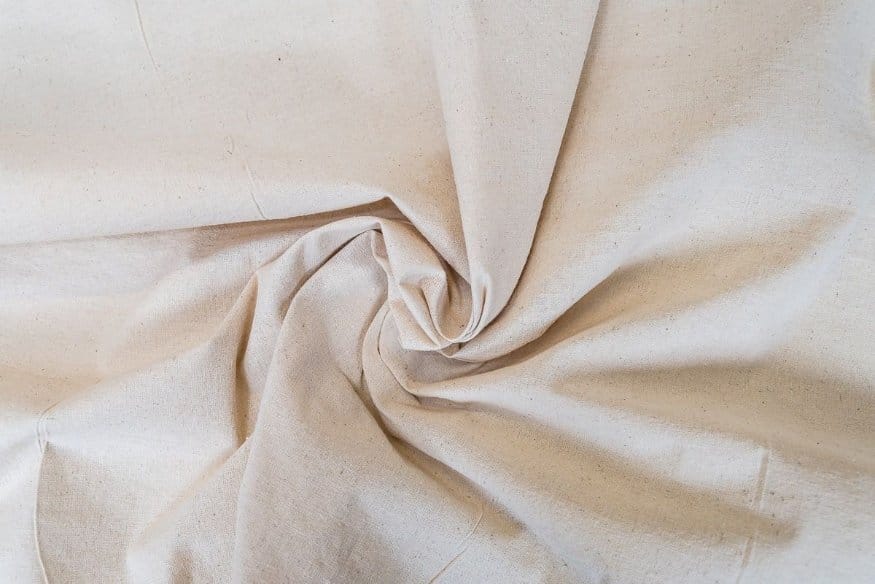
Pure linen has been a wardrobe staple for years, but in 2025 it’s the blends that are really earning attention. Linen-cotton blends give you linen’s breathability and natural texture with cotton’s softness and slightly more forgiving sewing behavior. Linen-hemp blends are even more durable and become softer the more they’re washed, which is a genuine selling point for slow-fashion collections.
Both materials are strong sustainability choices. Hemp is one of the most efficiently grown textile crops available, requiring little water and no pesticides while actually improving the soil it grows in. Linen has a similar profile. Together, these fibers make a convincing case for natural fabrics that genuinely last.
Look for these linen types at good fabric retailers — US sewists in particular will find strong availability: Irish linen, Belgian linen, linen shirting, and suiting linen, from specialty fabric suppliers and online retailers rather than big box stores. It’s worth seeking out. Check our linen care guide once your project is complete.
Best for: Summer and transitional season garments, structured trousers, button-down shirts, utility jackets, tote bags, home goods like napkins and curtains.
9. Faux Suede and Micro Suede
Suede is having one of its biggest comeback seasons in years, and the growth has been documented. Searches for suede items were up significantly in early 2025, driven by the boho-chic and Western-revival aesthetics that are both running strong. For sewists, faux suede and micro suede are the practical answers: the look and feel of suede without the care limitations of the real thing.
Micro suede is soft, durable, and available in a wide range of colors, from the earthy neutrals (camel, rust, taupe) that match 2025’s dominant color story, to bolder tones for statement pieces. It’s also water-resistant enough to be genuinely practical as outerwear. For care tips for genuine suede or leather, our leather and suede care guide covers both.
Best for: Jackets, skirts, tote bags, cushion covers, fitted trousers, Western-inspired shirts, accessories.
10. Smart and Performance Textiles
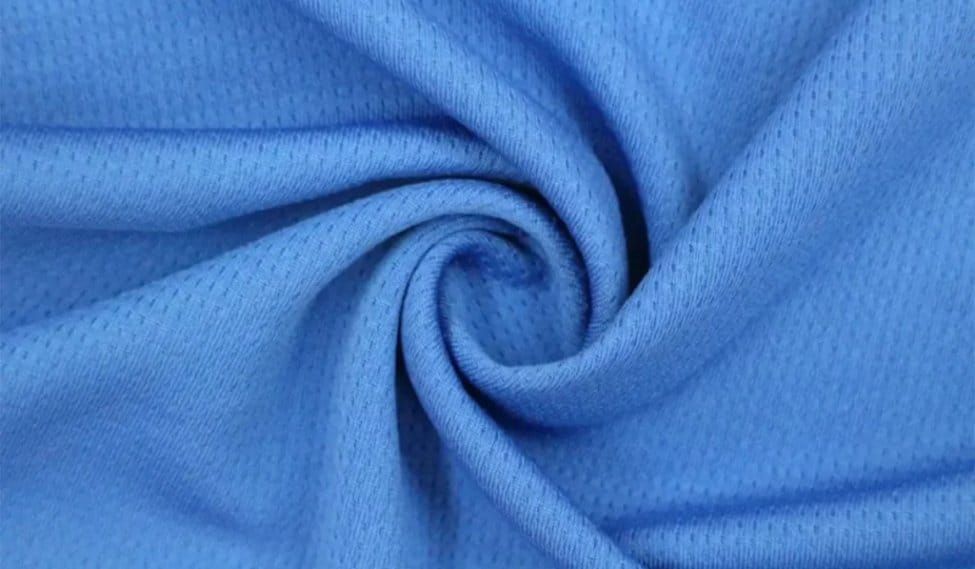
This is the most forward-thinking category on this list. Smart textiles range from moisture-wicking, quick-dry, and antimicrobial performance fabrics (which have been around for a while) to genuinely new technology like temperature-regulating phase-change materials, self-cleaning nanotechnology coatings, and fabrics with embedded conductive threads for wearable tech.
For most sewists in 2025, the actionable end of this trend is performance fabrics for everyday fashion. Moisture-wicking knits that look like regular jerseys but perform like activewear. UV-protective voiles and light wovens for summer garments. Water-resistant fabrics that work for outerwear without the technical-gear aesthetic. These are increasingly available to independent designers and sewists through specialty suppliers, and they’re changing what “everyday fashion” can actually do.
Best for: Activewear, transitional outerwear, travel garments, children’s clothing that needs to hold up to use, summer pieces with built-in sun protection.
Not sure which fabric is right for your project? Try our Interactive Fabric Selector Tool, answer a few quick questions and get personalized recommendations matched to your project type and skill level. Also check our Chiffon Type Selector Quiz if you’re working in that family of fabrics.
How to Work With Tricky Trending Fabrics
Some of the most popular fabrics in 2025 (velvet, chiffon, satin crepe, burnout chiffon) are also the ones that frustrate sewists the most. Here’s a practical how-to approach for getting clean results with the fabrics that give people the most trouble.
Use the right needle for the job
The most common reason for pulled threads, skipped stitches, or puckered seams is the wrong needle. Sharp/Microtex needles for tightly woven or delicate fabrics, ballpoint for stretch, leather needles for suede. Change your needle every 8 to 10 hours of sewing time. A dull needle destroys delicate fabrics. Our Needle and Fabric Compatibility Chart is a quick reference to bookmark.
Cut slippery fabrics with tissue paper
For chiffon, satin crepe, and burnout chiffon, place a layer of tissue paper under your fabric before cutting. This stops the fabric from sliding around on the table and gives your scissors a stable base to cut against. Pin through the tissue paper and fabric together. The tissue tears away cleanly after cutting.
Sew velvet with a walking foot
Velvet’s pile creates friction that shifts the two layers as you sew, leaving seams that don’t line up. A walking foot feeds both layers through your machine at the same rate, which solves this immediately. Always sew in the direction of the pile (usually downward), and handle the fabric as little as possible. Even your hands can flatten the pile with repeated contact.
Use French seams on sheer fabrics
On chiffon and other sheer fabrics, the inside of a garment is visible through the fabric. Raw seam edges and overlocker (serger) stitching look messy from the outside. French seams enclose the raw edge completely, giving you a clean, professional finish inside and out. They take a little longer but make a visible difference in quality.
Press as you sew, not after the whole garment is done
Pressing at each construction step is what separates homemade-looking garments from professional ones. Press each seam flat, then pressed open or to one side, before you sew the next piece. On velvet, use a velvet board or a thick terrycloth towel face-down to avoid crushing the pile. On satin and crepe, always use a press cloth and test your iron temperature on a scrap first.
Plan your seam allowances for the fabric weight
Lightweight fabrics like chiffon and burnout chiffon need narrower seam allowances — 5/8 inch creates too much bulk on delicate fabrics.
If you’re adapting a pattern, reduce seam allowances on sheer or very light fabrics to 3/8 or 1/4 inch and finish accordingly. For a full guide to seam allowances including troubleshooting tips, we have a dedicated resource. Our Fabric Yardage Calculator can also help you plan how much you need before you cut.
Best Fabrics by Season + Project Ideas
Not all trending fabrics work for all seasons. Here’s a quick breakdown of what to reach for at different times of year, with project ideas that make sense for each season.
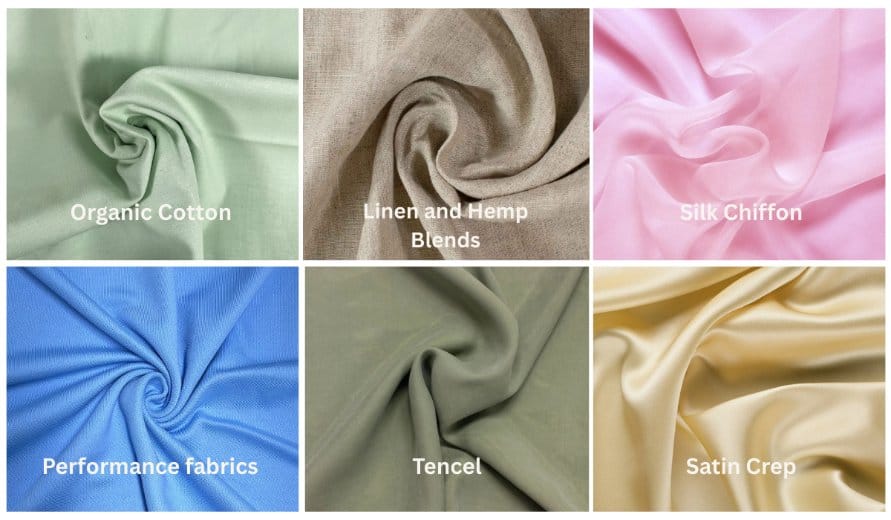
- Organic cotton lawn or voile: wrap dresses, breezy tops, lightweight skirts. Pre-wash twice.
- Linen and hemp blends: wide-leg trousers, button-down shirts, market totes. Gets better with every wash.
- Silk or poly chiffon: overlay skirts, layered maxi dresses, floaty blouses. Use French seams.
- Burnout chiffon: evening tops with sheer sleeves, romantic dresses. Needs lining for coverage.
- Satin crepe: bias-cut slip dresses, lightweight coordinating sets.
- Performance fabrics: activewear, swim cover-ups, UV-protective summer outerwear.
- Tencel: relaxed blazers, flowing midi skirts, travel-ready tops that don’t wrinkle.
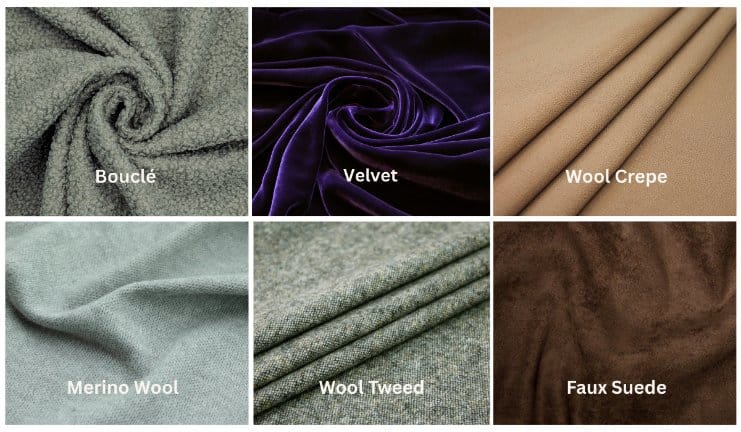
- Bouclé: cropped jackets, coordinating suit sets, structured totes.
- Velvet: evening blazers, slip dresses over turtlenecks, holiday occasion wear.
- Wool crepe or wool crepe fabric tailored trousers, flared midi skirts, structured blazers.
- Merino wool fitted base layers, transitional knit dresses.
- Wool tweed structured outerwear, heritage-inspired jackets.
- Faux suede: Western-inspired shirts, fitted skirts, coordinated sets.
- Heavyweight Tencel or cotton-Tencel blends: relaxed winter separates.
2025 Fabric Colors to Know
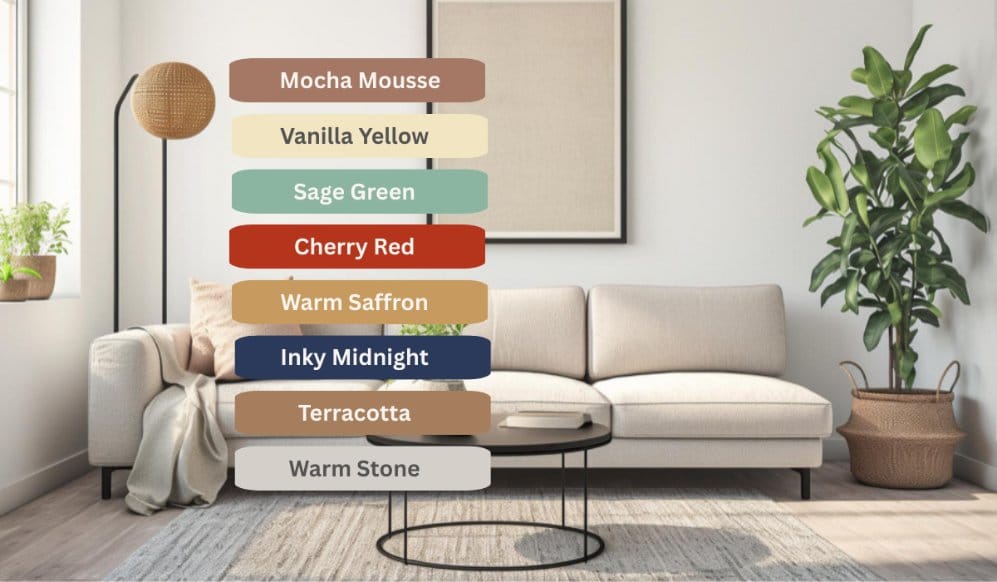
Pantone named Mocha Mousse (PANTONE 17-1230) as the Color of the Year for 2025, a warm deep brown that reads as sophisticated without being heavy. It’s a tone that works across most of the trending fabrics on this list, from smooth satin crepe to earthy linen and nubby bouclé.
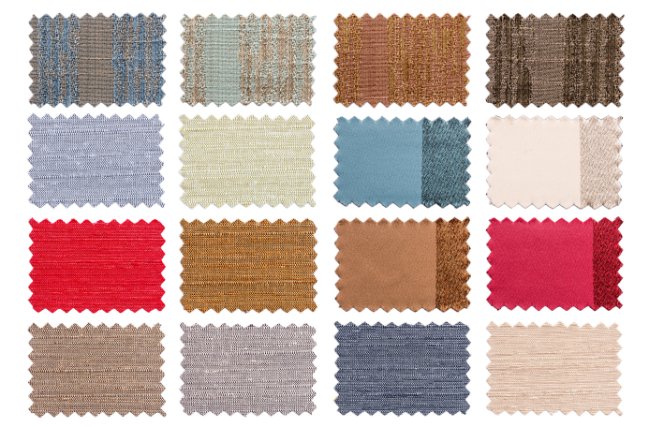
Beyond Mocha Mousse, here are the color stories running through 2025 collections that are worth keeping in mind when you’re selecting fabric:
The overall story this year is earthy and warm: browns, terracottas, warm greens, and soft neutrals, with bold pops of cherry red and saffron yellow for contrast. This color palette works particularly well with natural fibers: organic cotton, linen, and Tencel take dye in these warm tones beautifully and hold their depth longer than synthetics.
If you want to go bold, the maximalist print direction is running with oversized botanicals, 1970s-inspired geometrics, and abstract watercolor-style patterns in these same warm tones. Large-scale prints work best on fabrics with enough body to hold the design, medium-weight cotton, silk crepe, and structured Tencel all work well.
Slow Fashion, Upcycling, and Sewing Sustainably in 2025
One of the biggest shifts in the sewing community right now isn’t about a specific fabric. It’s about a whole different approach to how you use fabric.
Slow fashion is a growing movement that prioritizes buying better materials, making things that last, and treating your fabric investment with respect. For sewists, this actually plays to your biggest strength: you already make clothes by hand, which by definition means you’re investing more care than a fast-fashion factory.
Here’s how to take that a step further:
- Buy deadstock fabric. Deadstock is unused fabric left over from larger manufacturer runs. It’s often high-quality, comes in limited quantities, and buying it diverts it from landfill. Several online US retailers specialize in deadstock, and it’s where you can sometimes find designer-grade fabric at reasonable prices.
- Cut zero-waste patterns. Pattern pieces that fit together like a puzzle with no waste cuts are a growing design challenge and a genuinely interesting creative constraint. Look for zero-waste sewing patterns if this appeals to you.
- Use your scraps. Fabric scraps from bigger projects become bias tape, patch pockets, contrast facings, or even quilted linings. A scrap fabric bag that you dip into for small projects is a habit worth building.
- Upcycle before you replace. Worn-out garments can be cut down, overdyed, patched, or restructured. A tired linen dress becomes the fabric for a new blouse. A stained velvet jacket gets deconstructed and becomes a structured bag.
- Choose quality over quantity. One well-chosen yard of organic linen will last longer and look better than three yards of cheap polyester. That’s true in the fabric store and in the finished garment.
The most durable fabrics for everyday wear: linen, dense cotton twill, quality wool, all happen to be among the better sustainability choices too. That’s not a coincidence. Materials that last tend to be made with more care at every stage.
Where to Buy Trending Fabrics
Finding the specific fabrics trending in 2025 means going a bit beyond the mass-market options. The retailers below are US-focused, but most ship internationally — and the sourcing principles apply wherever you’re based.
Mood Fabrics
The designer’s go-to, with stores in NYC and LA plus a strong online presence. One of the best places for satin crepe, velvet, bouclé, and specialty fabrics in the current season’s colors. Ships internationally.
Spoonflower
Order custom-printed fabric in the maximalist prints trending right now. Good for organic cotton, Tencel, and performance knits with your own design or licensed prints.
Etsy
Search for independent fabric sellers and deadstock specialists. Some of the best deals on limited-run fabrics, small batch linen, and organic cotton live here.
NY Fashion District
The Garment District on West 36th to 40th Streets in New York City is one of the world’s great in-person fabric destinations, worth a dedicated trip if you’re visiting the US.
LA Fashion District
The Los Angeles Fabric District around Maple Avenue and 9th Street offers a strong selection and competitive prices, especially for fashion-forward fabrics. Great for in-person sourcing if you’re on the West Coast.
Online Specialty Stores
Fabric.com, Robert Kaufman, and Bolt Fabric Boutique carry a wide range of organic and sustainable options, often with fabric samples available before you commit to a yard.
Fabric Care Quick Guide
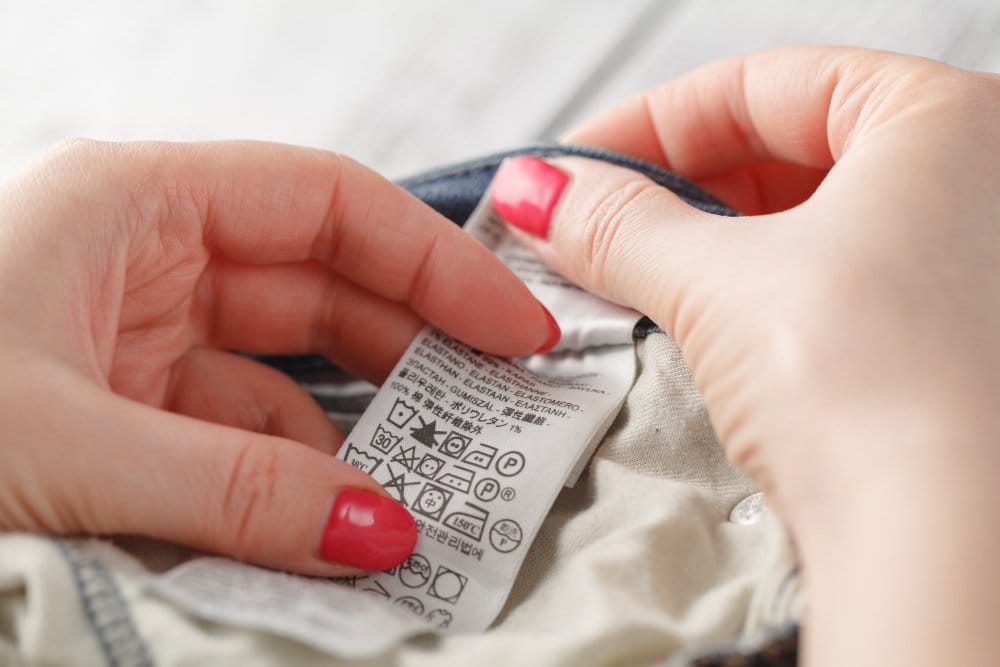
Knowing how to sew a fabric is only half the job. Your clients and customers need to be able to care for the finished garment too. Here’s a quick reference for the trending fabrics in this guide:
| Fabric | Wash Method | Temperature | Drying | Ironing |
|---|---|---|---|---|
| Organic Cotton | Machine wash | Cold to warm (30-40°C / 86-104°F) | Air dry or low tumble | Medium heat |
| Recycled Polyester | Machine wash | Cold (30°C / 86°F) | Low heat tumble or air dry | Low heat only |
| Tencel / Lyocell | Hand wash or gentle cycle | Cold (30°C / 86°F) | Air dry flat | Low-medium, press damp |
| Velvet | Dry clean recommended | N/A | Professional only | Steam only, never press flat |
| Bouclé | Dry clean or gentle cold | Cold only if machine washing | Air dry flat | Low heat with press cloth |
| Chiffon / Burnout | Hand wash | Cool (20-30°C / 68-86°F) | Air dry, hang gently | Very low heat or steam from a distance |
| Satin Crepe | Hand wash or dry clean | Cool (20-30°C / 68-86°F) | Air dry flat | Low heat, press cloth always |
| Linen / Hemp Blend | Machine wash | Cool to medium (30-40°C / 86-104°F) | Air dry or low tumble | High heat with steam: presses well |
| Faux Suede | Hand wash or gentle cycle | Cold (30°C / 86°F) | Air dry only | Very low, press cloth on reverse side |
| Smart / Performance | Follow care label | Usually cold | Air dry or as specified | Low heat; some coatings are heat-sensitive |
For more detailed care guidance, see our fabric-specific guides: cotton care, linen care, silk care, wool care, and the complete fabric washing guide. Use our Fabric Care Generator to get a custom care guide for any specific fabric type.
Understanding Fabric Weight (GSM) and Quality
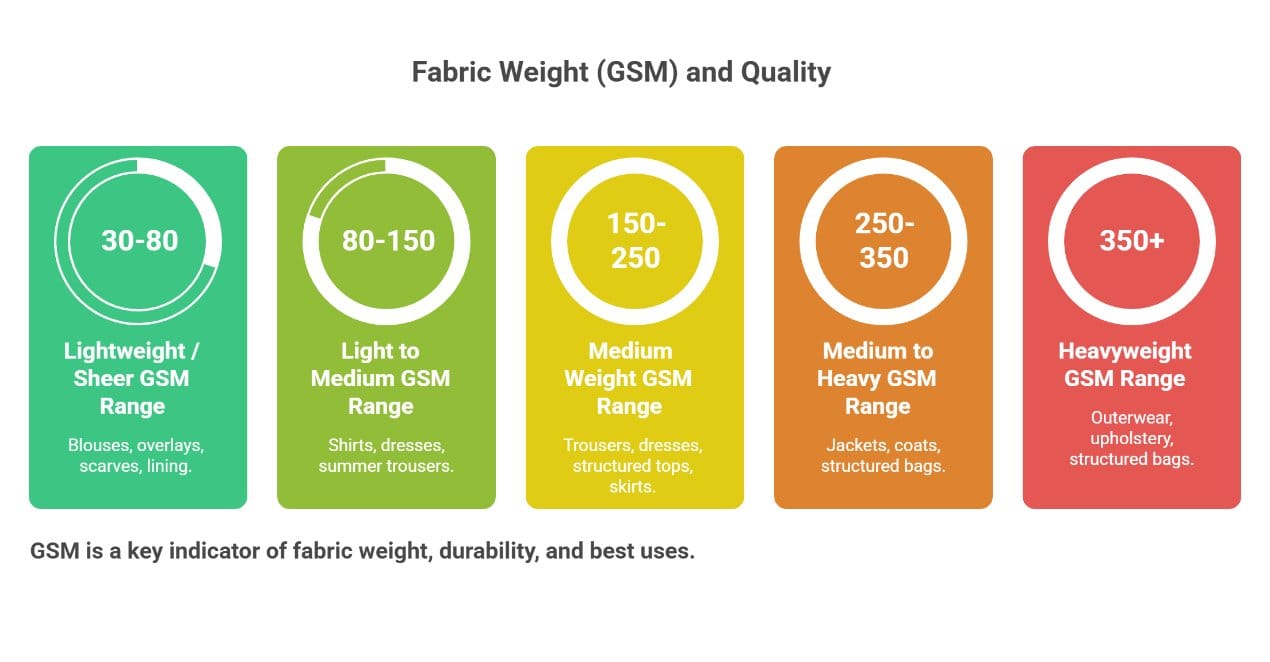
GSM stands for grams per square meter. It’s the standard measurement for fabric weight, and once you understand it, buying fabric online or from a supplier becomes a lot more straightforward. The higher the GSM, the heavier and generally more durable the fabric. The lower the number, the lighter and more sheer it tends to be.
| GSM Range | Weight Category | Best Uses | Example Fabrics |
|---|---|---|---|
| 30 to 80 GSM | Lightweight / Sheer | Blouses, overlays, scarves, lining | Chiffon, organza, voile, cotton lawn |
| 80 to 150 GSM | Light to Medium | Shirts, dresses, summer trousers | Cotton poplin, linen shirting, Tencel, chambray |
| 150 to 250 GSM | Medium Weight | Trousers, dresses, structured tops, skirts | Cotton twill, satin crepe, linen suiting, velvet |
| 250 to 350 GSM | Medium to Heavy | Jackets, coats, structured bags | Bouclé, denim, canvas, heavy linen |
| 350+ GSM | Heavyweight | Outerwear, upholstery, structured bags | Melton wool, heavy canvas, coating wool |
When calculating how much fabric you need for a project, start with your pattern’s yardage requirements, then add 15 to 20 percent extra. That buffer covers pattern matching, cutting corrections, the occasional mistake, and shrinkage after pre-washing.
For fabrics with a large print repeat or a directional nap (like velvet or bouclé), add even more — usually 25 to 30 percent — to make sure your pattern pieces all run in the correct direction.
Also factor in fabric width. Most sewing patterns are written for 45-inch or 60-inch (115 cm or 150 cm) wide fabric. If you’re buying fabric that comes in a different width, you’ll need to recalculate. Our Fabric Yardage Calculator handles this automatically, or check the lightweight vs. heavyweight fabrics guide for more on how fabric weight affects garment construction.
Global Fabric Market Insights
Understanding the broader textile market helps you make smarter sourcing decisions. Here’s what the global fabric industry looks like right now, and why it matters wherever you’re designing and sewing.
The World’s Most Valuable Fabrics
Not all fabrics are created equal. At the top of the price scale sits vicuña wool, which can command up to $3,000 per yard. It comes from the vicuña, a wild camelid native to the Andes, and can only be legally harvested every few years from each animal. The resulting fiber is extraordinarily fine and soft, with a warmth-to-weight ratio that nothing else matches.
Other luxury fabrics worth knowing about:
- Mulberry silk: The highest grade of silk, produced by silkworms fed exclusively on white mulberry leaves. Its luster and smoothness are unmatched by any synthetic.
- Cashmere: From the undercoat of Kashmir goats, genuine cashmere is one of the softest natural fibers available. Quality varies widely, so understanding what to look for matters.
- Sea silk: Made from byssus fibers produced by the noble pen shell (a bivalve mollusk), this is one of the rarest textiles in the world. It’s largely a historical curiosity rather than a commercial product today.
- Alpaca and mohair: Both are excellent choices for luxury knitwear and outerwear projects, and increasingly available from specialist online retailers worldwide.
Where Fabric Is Made
China manufactures roughly 50 percent of the world’s textiles, making it the dominant player in global fabric production. Other major producers include India (specializing in cotton and traditional hand-woven textiles), Turkey (high-quality cotton and home textiles), Italy (luxury fabrics and the world’s finest wool suiting), and Bangladesh (a major ready-to-wear manufacturing hub).
The “local production movement” is gaining real momentum globally. Buying from textile mills closer to home — wherever you are — reduces your carbon footprint, supports domestic jobs, and often gives you better quality control and faster turnaround.
In the US, mills in North Carolina, South Carolina, and New England still produce quality woven goods. The UK has a growing number of heritage mills producing wool and natural fiber fabrics. Similar movements are taking hold across Europe, Australia, and Canada.
Most Widely Used Fabrics
Cotton remains the most widely used natural fiber globally. Polyester dominates synthetic fabric production. Together, cotton and polyester blends account for over 70 percent of all garment production worldwide — largely because they’re affordable, versatile, and widely available.
That dominance is what makes the shift toward Tencel, organic cotton, and recycled polyester so interesting to follow. These alternatives are moving from niche to mainstream faster than most industry analysts predicted five years ago.
How Fabric Preferences Vary by Region
Every market has its own personality when it comes to fabric trends. Understanding those differences helps you position your work — whether you’re designing for a local client base or selling to a broader audience online.
United States
Performance meets classic. American buyers tend to want fabrics that look elevated but work hard. Comfort, durability, and versatility rank high alongside trend awareness. Organic cotton, linen, and performance blends are strong sellers.
UK and Europe
Luxury natural fibers and sustainable production credentials are table stakes in most European markets. Italian wool, Belgian linen, and certified organic cotton perform well. Heritage fabrics like tweed maintain a loyal following.
Asian Markets
Technology and innovation lead. Smart textiles, performance fabrics, and high-tech blends have strong demand. Japan is particularly influential in technical textile development and high-quality denim innovation.
Emerging Markets
Affordability and improving quality standards are the key drivers. Cotton blends dominate, but sustainable alternatives are growing as consumer awareness increases and certifications become more accessible to smaller producers.
The good news is that the fabrics leading the 2025 trend cycle — organic cotton, linen blends, velvet, satin crepe — travel well across markets. They read as sophisticated in the US, UK, Europe, and Asia without being so niche that they limit your reach.
Where Textiles Are Heading Next
If you want to stay ahead as a designer or sewist, it helps to know what’s coming down the pipeline. The innovations shaping the textile industry right now won’t stay in research labs forever.
What Fashion Could Look Like by 2050
The most credible predictions for how textiles will look in the next 25 years center on a few consistent themes. Fully circular production — zero-waste manufacturing where every fiber is recaptured and reused at end of life — is the direction most major textile companies are working toward.
Bio-fabricated materials grown from algae, bacteria, and fungi are already in limited commercial production and could become mainstream within a decade.
Companies like Bolt Threads (mushroom-based mycelium leather) and Modern Meadow (bio-fabricated leather proteins) are already shipping products. Personalized fit technology using 3D body scanning for perfect sizing is closer than most people realize, with several US retailers already piloting it. And climate-responsive clothing, fabrics that genuinely adapt to temperature and humidity, will move from performance niches into everyday fashion as the technology matures.
Innovations Happening Right Now
According to McKinsey’s State of Fashion 2025 report, sustainable materials and supply chain transparency are among the top strategic priorities for fashion brands through 2030, driven by both regulatory requirements and consumer preferences. The fastest-growing segments are smart textiles and bio-fabricated materials, with potential market values exceeding $50 billion globally.
The specific innovations worth watching as a designer or sewist:
- Molecular recycling: Breaking fabrics down to the molecular level for perfect, fiber-pure recycling. This solves the blended fabric recycling problem that’s stymied the industry for years.
- Digital fabric printing: Reduces water usage by up to 90 percent compared to traditional dyeing methods, while enabling on-demand production of custom prints with no minimum order quantities.
- Blockchain tracking: Complete supply chain transparency from fiber to finished product. Some fabric suppliers are already using it so buyers can verify sustainability claims independently.
- AI-designed fabric structures: Machine learning is being used to optimize weave structures for specific performance properties, creating fabrics that couldn’t have been designed by hand.
For independent designers and sewists, the near-term practical impact of these developments is better access to certified sustainable fabrics, more custom print options with lower minimums, and improved recycling options for fabric scraps and deadstock.
Decorative Finishing Techniques Trending in 2025
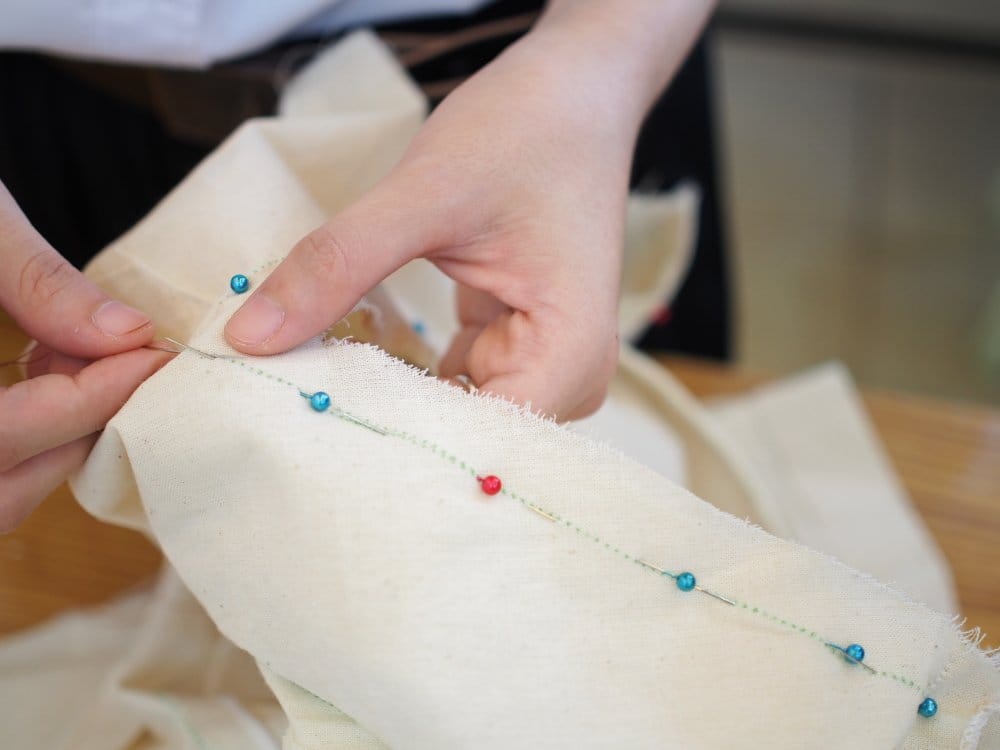
The maximalism trend isn’t just about bold fabric choices. How you finish and embellish a garment is part of the story too. These decorative techniques are showing up across 2025 collections and translate well to home sewing projects.
Passementerie and Trim Work
Passementerie is the craft of making and applying decorative trims: braided cords, tassels, fringe, and ornamental borders. It’s having a strong moment in 2025, particularly as an accent on outerwear, bags, and home furnishings.
The key to using it well is matching the weight of the trim to the weight of the fabric. Light trims on heavy fabrics disappear; heavy trims on light fabrics drag and distort. Some specific directions worth noting:
- Classic bullion fringe along the hems of structured jackets or along furniture edges gives an old-world feel that reads fresh against modern silhouettes.
- Twisted cord trim used as edge finishing on bags and outerwear has a crafted, artisanal quality that photographs well.
- Metallic cord and beaded tassels as curtain tie-backs or garment closures add drama without requiring a complicated construction technique.
- Rope and macramé-inspired trim continues the boho thread that runs through the broader 2025 aesthetic.
Embellishment Trends
Beyond passementerie, other embellishment directions performing well in 2025 include visible contrast stitching (particularly in a contrasting color thread on linen and denim), patch-style appliqué using scrap fabrics, and embroidery as a focal point rather than an all-over pattern. Beaded lace and embroidered lace as panel inserts on otherwise simple garments give a custom couture feel at a fraction of the time investment of full lace construction.
If you’re new to decorative finishing, start with contrast stitching. It requires only a thread color change, a sharp needle, and a longer stitch length (3.5 to 4mm for topstitching). The visual payoff is immediate and the technique is forgiving.
Frequently Asked Questions
If you had to pick one, satin crepe is probably the single most requested fabric in 2025. It’s showing up in bias-cut dresses, coordinating sets, bridal collections, and ready-to-wear lines across every price point.
Close behind it are velvet (especially in earthy jewel tones), bouclé (in updated colors beyond classic beige and black), and linen blends.
On the sustainability side, Tencel and certified organic cotton are growing faster than any other fabric category year over year. But “trending the most” depends a lot on what you’re making, activewear designers are talking about performance fabrics, while couture and bridal designers are all about satin crepe and burnout chiffon.
Velvet has a reputation for being difficult, and that reputation is partly deserved — but it’s manageable once you know what you’re working with.
The three main challenges are: the pile shifting as you sew (solved with a walking foot), the pile flattening when you press (solved by using a velvet board or pressing face-down on a thick towel), and seam impressions showing on the right side (solved by using the correct pressing technique).
Stretch velvet is significantly easier than woven velvet and a good starting point if you’re new to the fabric. Avoid basting tape or double-sided tape, they can crush the pile and leave marks. Pin only within the seam allowance, and always test sewing on a scrap before touching your main fabric.
Hemp is generally considered the most sustainable fabric at the fiber level. It grows fast with minimal water and no pesticides, improves the soil it grows in, and produces very durable fabric. It can be harder to source than other sustainable options, though availability is improving.
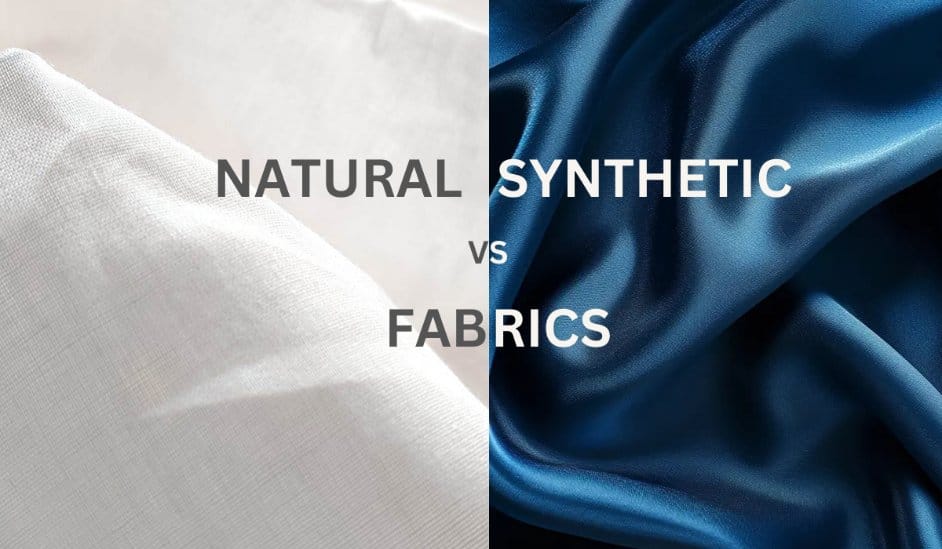
Tencel (Lyocell) is arguably the most sustainable option that’s widely available and easy to sew. Its closed-loop production process recovers almost all of the solvents used, the eucalyptus it comes from grows quickly on non-agricultural land, and it biodegrades. Organic cotton with GOTS certification is the most beginner-friendly sustainable option. For a full comparison, our natural vs. synthetic fabrics guide covers the environmental tradeoffs in detail.
Start with cotton — specifically, quilting cotton or cotton poplin. They’re stable, don’t stretch or shift during sewing, press cleanly, and are available in the bold prints and earthy tones that are trending right now.
Cotton lawn is the next step up: slightly lighter and more elegant for blouses and dresses.
After cotton, try linen or a linen-cotton blend. It’s beginner-friendly, very forgiving, and you can sew some of the most stylish garments of 2025 with just those two fabrics. Avoid velvet, chiffon, satin, and burnout fabrics until you’re comfortable with your machine and have a few successful projects under your belt. Our beginner’s guide to sewing and easy beginner sewing projects pages are good starting points.
Bouclé is intermediate in difficulty. It’s not as tricky as velvet or chiffon, but it has a few specific challenges: it frays badly, the looped texture can get caught in your presser foot or feed dogs, and it’s harder to ease around curves because it has little give.
The keys to success: use bound or Hong Kong seam finishes to control fraying from the start, and use a walking foot for better fabric control.
Cut with very sharp scissors and deal with raw edges immediately after cutting. Work in a clean, tidy workspace so you’re not dealing with loose loops everywhere. Stretch bouclé (blended with elastane) is significantly more forgiving and a good option if you want the look without the full challenge of woven bouclé.
Burnout chiffon (also called devoré chiffon) is made from a blend of two fiber types — usually polyester and viscose, or silk and rayon. A chemical process dissolves one of the fiber types in a pattern, leaving behind areas of solid fabric and areas that are sheer and transparent.
The result is a fabric with built-in pattern and visual texture — similar to lace, but made by removing material rather than knitting or weaving it.
It looks expensive and intricate but is available at a wide range of price points. It’s trending hard in 2025 for tops, evening wear, and overlay pieces. It’s an intermediate-to-advanced fabric to sew because the dissolved areas fray more easily than standard chiffon. Read our full burnout chiffon fabric guide for a complete breakdown.
From a trend perspective, cheap non-breathable polyester, overly stiff synthetics, and flat, texture-free fabrics are all losing ground. These fabrics don’t align with what buyers, clients, and the broader market are asking for right now — tactile quality, sustainability credentials, or both.
From a practical sewing perspective, there’s nothing wrong with any fabric if it suits your project. But if you’re building a collection or a brand, fabrics that look and feel disposable are a harder sell in 2025 than they were even two years ago. Invest in quality. Your customers notice.
Pantone’s Color of the Year for 2025 is Mocha Mousse (PANTONE 17-1230), a warm, sophisticated brown with a slight reddish undertone.
It works beautifully with almost all of the trending fabrics on this list.
In organic cotton and linen, it reads as natural and grounded. In velvet, it’s deeply luxurious. In satin crepe, it has an almost chocolate-box glamour. In bouclé, it becomes a heritage-influenced, artisan piece. Pair it with vanilla yellow, warm stone, or sage green for a palette that feels cohesive without being predictable. Cherry red as an accent against Mocha Mousse is a particularly strong combination for fall pieces.
Satin crepe is a two-sided fabric that combines a satin face (smooth and slightly lustrous) with a crepe back (matte and lightly textured). This gives you two distinctly different looks in one fabric, and a drape that’s both fluid and structured — it falls beautifully without clinging.
It’s used heavily in bias-cut dresses, evening wear, blouses, and tailored separates. It’s more forgiving than pure satin (less slippery) and more polished than pure crepe (more interesting surface). For sewists, the main challenge is avoiding iron marks on the satin face, always use a press cloth, low heat, and test on a scrap. See our full satin fabric guide for a comparison of all satin types.
Want to identify a fabric you’re not sure about? Use our Fabric Identification Quiz to identify any fabric in five questions. Or take the Sewing Skill Assessment Quiz to find out which fabrics on this list match your current level.
Conclusion
2025 is a genuinely good year to be working with fabric. The combination of improved sustainable materials, a design culture embracing texture and boldness again, and a sewing community that’s more knowledgeable than ever makes for a strong foundation to build on, whether you’re designing your first collection, sewing for yourself, or somewhere in the middle.
If you’re a fashion designer or independent label, the clearest opportunity right now is in sustainable materials with strong visual and tactile character. Clients want garments that tell a story — about where the fabric came from, how it was made, and why it was chosen.
Organic cotton, Tencel, linen blends, and certified recycled polyester all give you that story. Velvet, bouclé, and satin crepe give you the visual drama that makes a collection memorable.
If you’re a sewist focused on making garments for yourself or loved ones, the practical advice is simple: buy a little less fabric, but buy better. One yard of quality linen in Mocha Mousse will give you more satisfaction than three yards of cheap polyester.
Learn one new challenging fabric this year — maybe burnout chiffon, maybe velvet, maybe stretch bouclé — and build your skills deliberately. Every tricky fabric you master opens up a wider range of what you can make.
For conscious consumers who sew or buy thoughtfully made clothes, 2025 is the year that sustainable choices have genuinely caught up with style. You don’t have to choose between a garment that looks good and one you can feel good about. The fabrics at the top of this list are proof of that.
Key recommendations for 2025:
- Invest in at least one GOTS-certified organic or Tencel fabric this year. Both sew beautifully and give your finished pieces a genuine sustainability story.
- Match your fabric choice to your skill level. Beginners: stay with cotton and linen. Intermediate sewists: try satin crepe or faux suede. Advanced: take on velvet or burnout chiffon.
- Tie your fabric colors to the 2025 palette. Mocha Mousse, sage green, vanilla yellow, and cherry red are the color combinations that feel fresh and current right now.
- Use French seams on sheer fabrics, a walking foot on velvet and bouclé, and a press cloth on every project, every time.
- Pre-wash everything (especially organic cotton and linen) before you cut a single pattern piece.
- Start thinking ahead: 2026 fabric trends are already taking shape, and the foundations you build with this year’s materials will carry forward.
The fabrics available to you right now are among the most interesting in years. Use them well.