
Everything You Need to Know About This Beautiful, Textured Fabric
Table of Contents
- What is Crepe Chiffon Fabric?
- Physical Characteristics & Properties
- Types of Crepe Chiffon by Fiber
- How Crepe Chiffon is Made
- Crepe Chiffon vs Other Fabrics
- Sustainability & Ethical Production
- Complete Care Guide
- Uses & Applications
- Sewing with Crepe Chiffon
- History & Cultural Significance
- Buying Guide & Quality Indicators
- Market Trends & Innovations
- Frequently Asked Questions
Quick Facts: Crepe Chiffon at a Glance
What is Crepe Chiffon Fabric?
Crepe chiffon is a unique fabric that brings together two classic textile techniques. It combines the lightweight, airy quality of chiffon fabric with the distinctive crinkled texture of crepe. The result is a semi-transparent material that feels slightly rough to the touch but drapes beautifully.
The word “chiffon” comes from the French word meaning “cloth” or “rag,” while “crepe” refers to the twisted yarn technique that creates the fabric’s signature puckered surface. When you run your fingers over crepe chiffon, you’ll notice a fine-grained, matte texture that sets it apart from regular chiffon’s smoother feel.
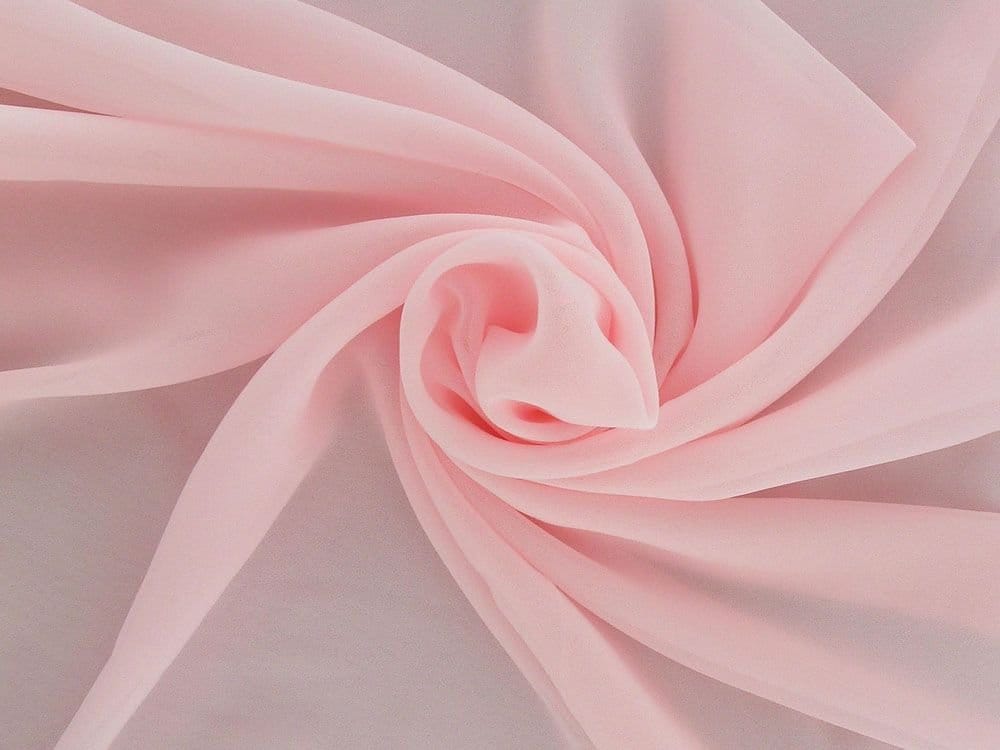
Crepe chiffon is a lightweight sheer fabric with a textured finish and elegant movement.
Unlike standard silk chiffon or polyester chiffon, crepe chiffon gets its texture from highly twisted yarns (typically 1200 to 4000 twists per meter). These yarns are woven using alternating S-twist and Z-twist patterns in both the warp and weft. This special weaving technique causes the fabric to pucker slightly in all directions after weaving, giving it that characteristic crinkle and a bit of natural stretch.
Key Difference
Regular chiffon has a smooth, slippery surface with a subtle sheen. Crepe chiffon has a textured, slightly rough surface that’s completely matte. Both are lightweight and sheer, but crepe chiffon holds its shape better because of the crepe weave.
Physical Characteristics & Properties
Understanding what makes crepe chiffon unique helps you decide if it’s right for your project. Here are the main characteristics:
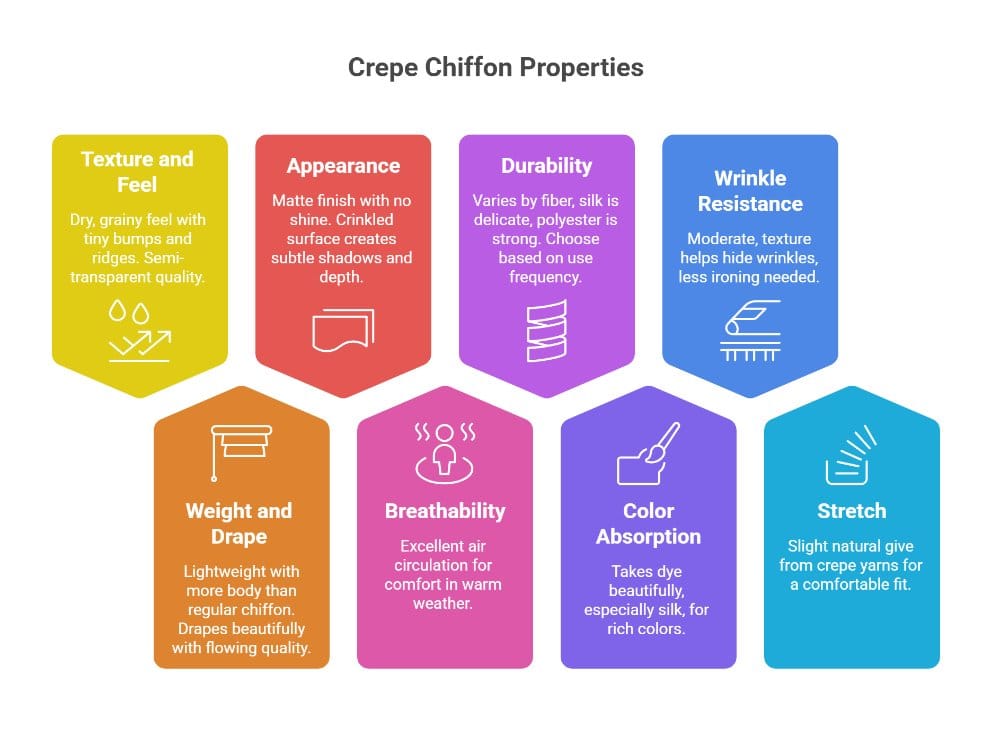
Key physical properties of crepe chiffon explained visually for quick understanding.
Texture and Feel
Crepe chiffon has a dry, grainy feel that’s almost like very fine sandpaper, but much softer. The surface has tiny bumps and ridges from the twisted yarns. When you hold it up to light, you’ll see its semi-transparent quality, though it’s usually less sheer than regular chiffon.
Weight and Drape
This fabric is lightweight, typically weighing around 0.60 grams per square meter for silk versions. Despite being light, it has more body than regular chiffon. It drapes beautifully with a flowing quality that still maintains some structure, making it perfect for garments that need movement without looking limp.
Appearance
The fabric has a matte finish with no shine or luster. Its crinkled surface creates subtle shadows and depth, which gives it visual interest without any embellishment. The texture helps hide minor wrinkles, making it more practical for travel and everyday wear than smooth fabrics.
| Property | Description | Benefit |
|---|---|---|
| Breathability | Excellent air circulation | Comfortable in warm weather |
| Durability | Varies by fiber (silk = delicate, polyester = strong) | Choose based on use frequency |
| Color Absorption | Takes dye beautifully, especially silk | Rich, deep colors possible |
| Wrinkle Resistance | Moderate (texture helps hide wrinkles) | Less ironing needed |
| Stretch | Slight natural give from crepe yarns | More comfortable fit |
Types of Crepe Chiffon by Fiber
Crepe chiffon comes in several fiber options, each with its own characteristics, price point, and care requirements. Let’s look at the main types:
Silk Crepe Chiffon
Silk crepe chiffon represents the luxury end of the spectrum. Made from natural silk fibers, it offers the best combination of softness, drape, and breathability.
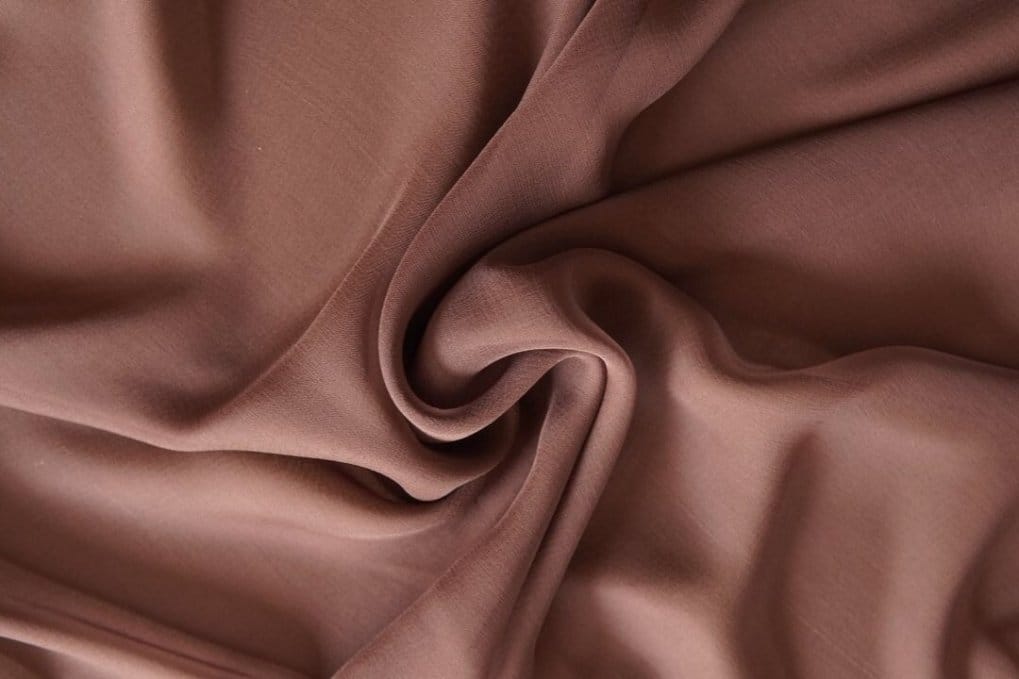
Silk crepe chiffon delivers a luxurious feel with exceptional softness and graceful movement.
Pros
- Incredibly soft and smooth against skin
- Natural temperature regulation
- Beautiful natural sheen in certain lights
- Takes dye exceptionally well
- Hypoallergenic and gentle on sensitive skin
- Most luxurious drape
Cons
- Most expensive option
- Requires careful handling
- Usually needs dry cleaning
- Can be damaged by water spots
- Prone to snags and tears
- Attracts moths if not stored properly
Best Uses: Wedding dresses, evening gowns, luxury scarves, high-end blouses, special occasion wear
Price Range: $30-100+ per yard
Polyester Crepe Chiffon
Polyester crepe chiffon is the most common and affordable option. Modern polyester versions can look remarkably similar to silk while offering better durability and easier care.
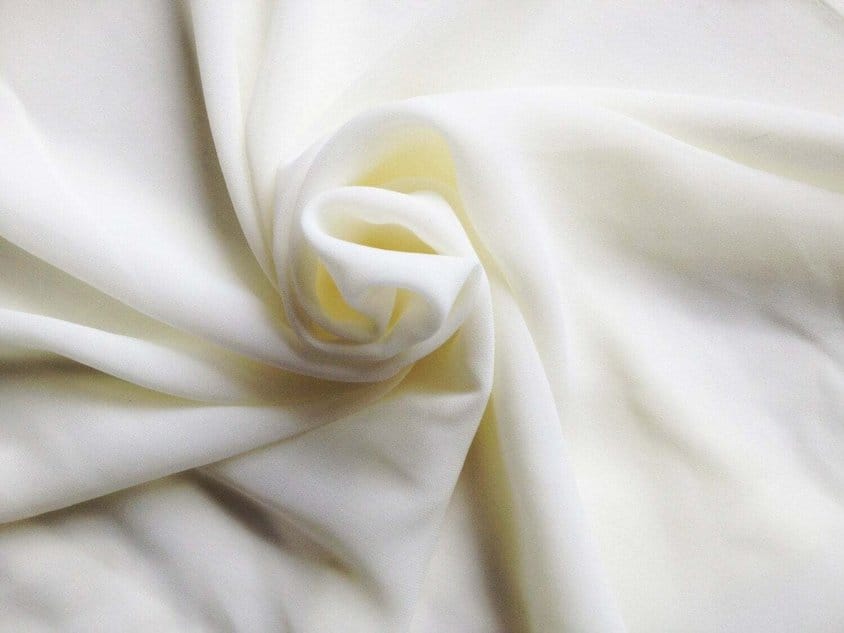
Polyester crepe chiffon offers durability, affordability, and easy care with a flowing drape.
Pros
- Very affordable
- Strong and durable
- Resists wrinkles well
- Can often machine wash
- Holds color permanently
- No moth damage
- Dries quickly
Cons
- Less breathable than natural fibers
- Can create static cling
- May pill over time
- Not as soft as silk
- Can feel warm in hot weather
- Not biodegradable
Best Uses: Bridesmaid dresses, everyday blouses, scarves, costume wear, home decor
Price Range: $3-15 per yard
Cotton Crepe Chiffon (Cotton Bemberg)
Cotton bemberg crepe chiffon is gaining popularity as a sustainable alternative. It’s made from cotton fibers processed to create a silk-like texture.
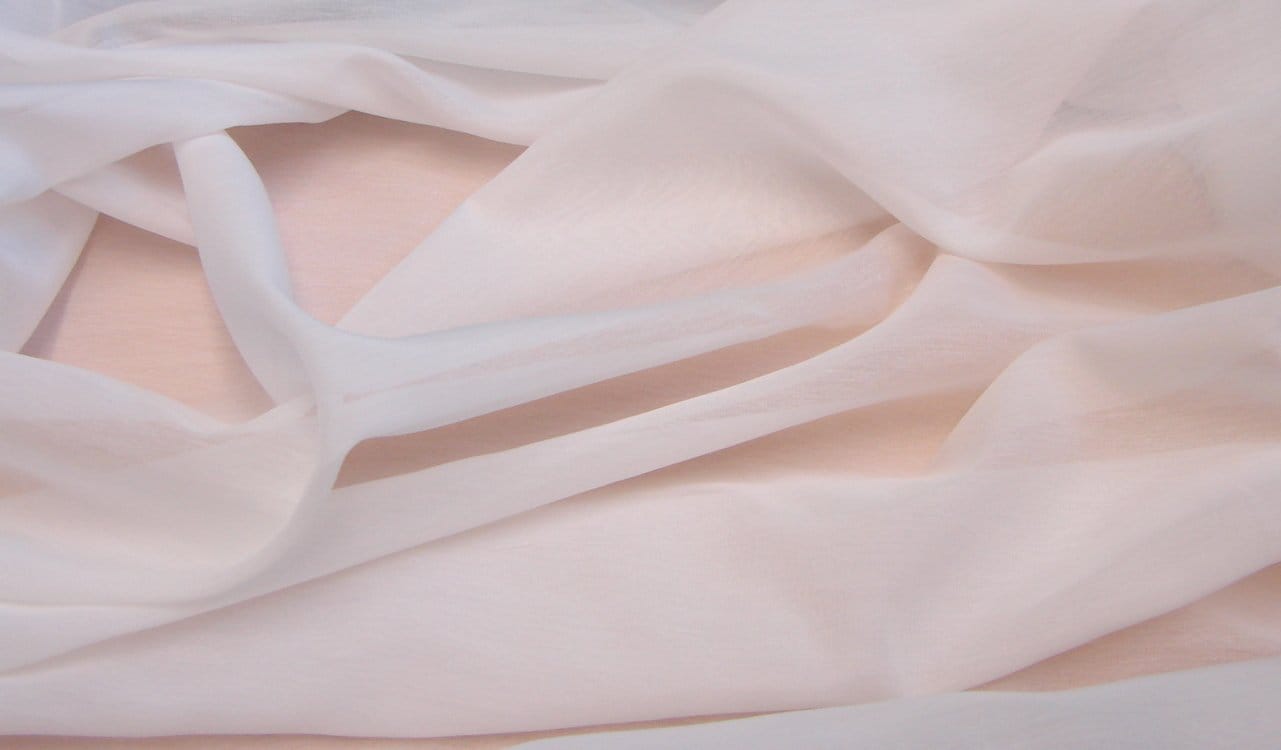
Cotton crepe chiffon combines breathable comfort with a soft textured drape.
Pros
- Natural and biodegradable
- Excellent breathability
- Soft and comfortable
- Often produced ethically
- Good for sensitive skin
- Natural moisture wicking
Cons
- More expensive than polyester
- Can shrink if not pre-washed
- Wrinkles more easily
- Less widely available
- May fade with washing
Best Uses: Hijabs, summer clothing, children’s garments, eco-conscious fashion
Price Range: $15-40 per yard
Rayon/Viscose Crepe Chiffon
Rayon crepe chiffon offers a middle ground between natural and synthetic fibers. It’s made from regenerated cellulose, giving it some natural fiber properties.
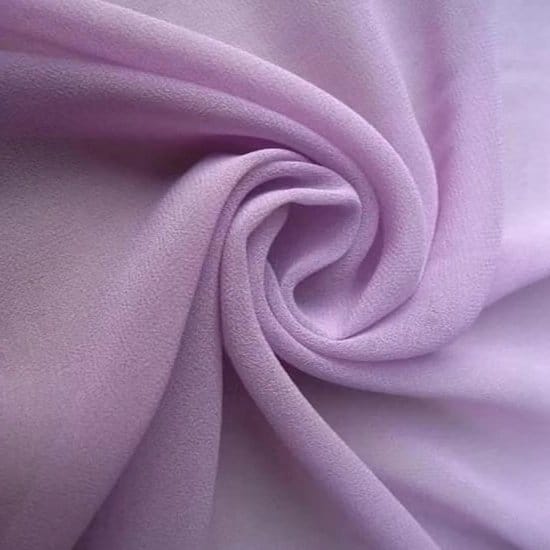
Viscose crepe chiffon provides a soft touch and breathable comfort with a beautiful flow.
Pros
- Affordable
- Soft and comfortable
- Good drape
- Breathable
- Takes dye well
Cons
- Weakens when wet
- Can shrink significantly
- Wrinkles easily
- Not as durable as polyester
- May require dry cleaning
Best Uses: Dresses, blouses, linings, flowing garments
Price Range: $8-25 per yard
How Crepe Chiffon is Made
Understanding how crepe chiffon is manufactured helps you appreciate why it has its unique properties. The process is more complex than making regular chiffon.
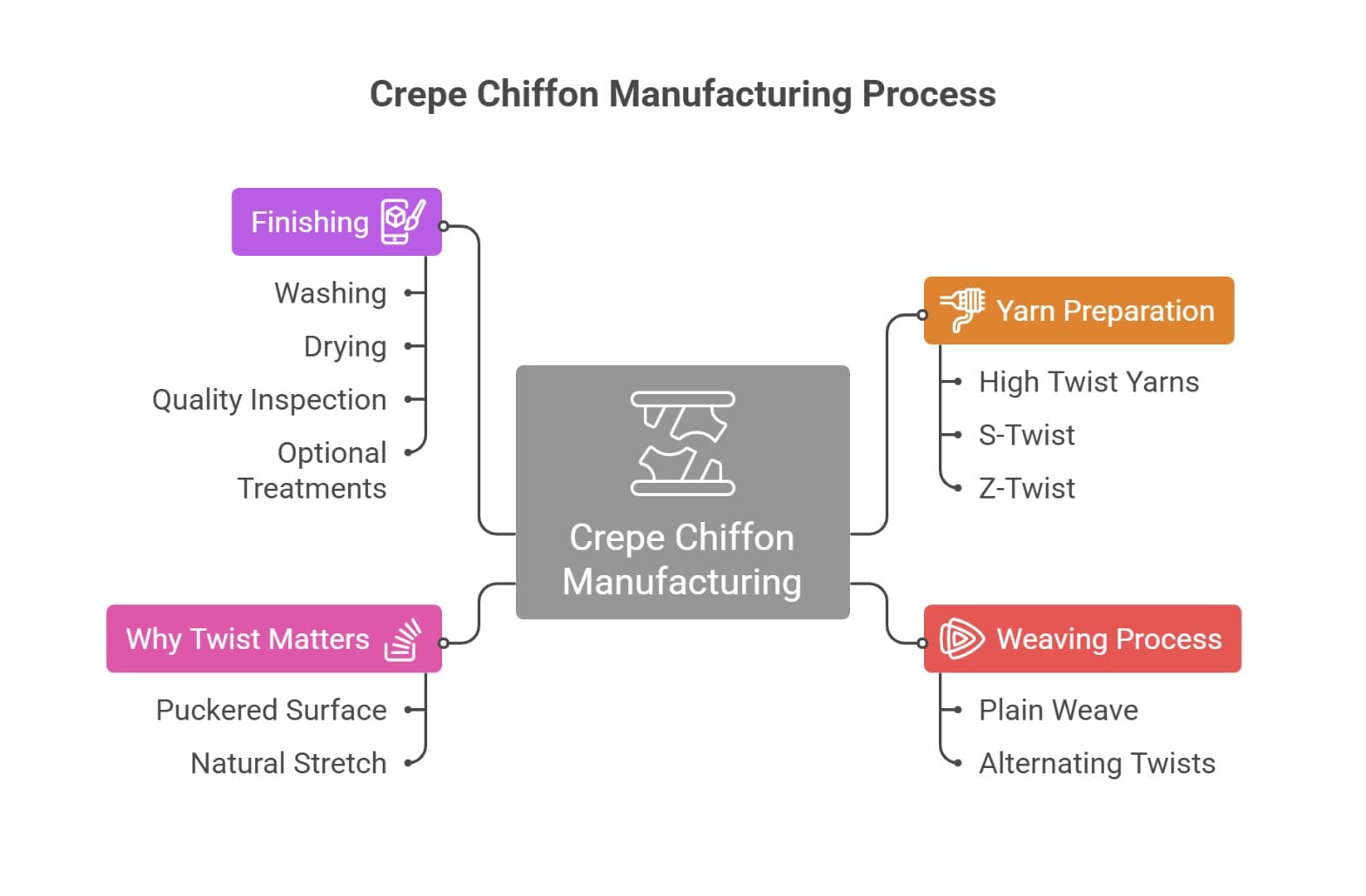
A simple overview of the crepe chiffon manufacturing process from twisted yarns to finished fabric.
The Yarn Preparation
Everything starts with the yarn. To create crepe chiffon, manufacturers use highly twisted yarns, typically with 1200 to 4000 twists per meter. This is much higher than standard yarns, which usually have fewer than 200 twists per meter.
The yarns are twisted in two different directions:
- S-twist: Twisted clockwise (looks like the middle of the letter S)
- Z-twist: Twisted counterclockwise (looks like the middle of the letter Z)
The Weaving Process
The fabric is woven using a plain weave structure, which is the simplest weaving pattern where one warp yarn goes over and under one weft yarn. However, what makes crepe chiffon special is the alternating pattern of S-twist and Z-twist yarns in both directions.
Why the Twist Matters
When you weave alternating S-twist and Z-twist yarns together, they try to untwist after weaving. This creates the puckered, crinkled surface that gives crepe its name. The high twist also makes the fabric stronger and gives it a slight natural stretch.
Finishing
After weaving, the fabric goes through finishing processes:
- Washing to allow the yarns to relax and create the crepe texture
- Drying carefully to maintain the texture
- Quality inspection
- Optional treatments for wrinkle resistance or water resistance
Crepe Chiffon vs Other Fabrics
Crepe chiffon often gets compared to several similar fabrics. Here’s how it stacks up:
Crepe Chiffon vs Regular Chiffon
This is the most common source of confusion. While both are lightweight and sheer, they have different characteristics.
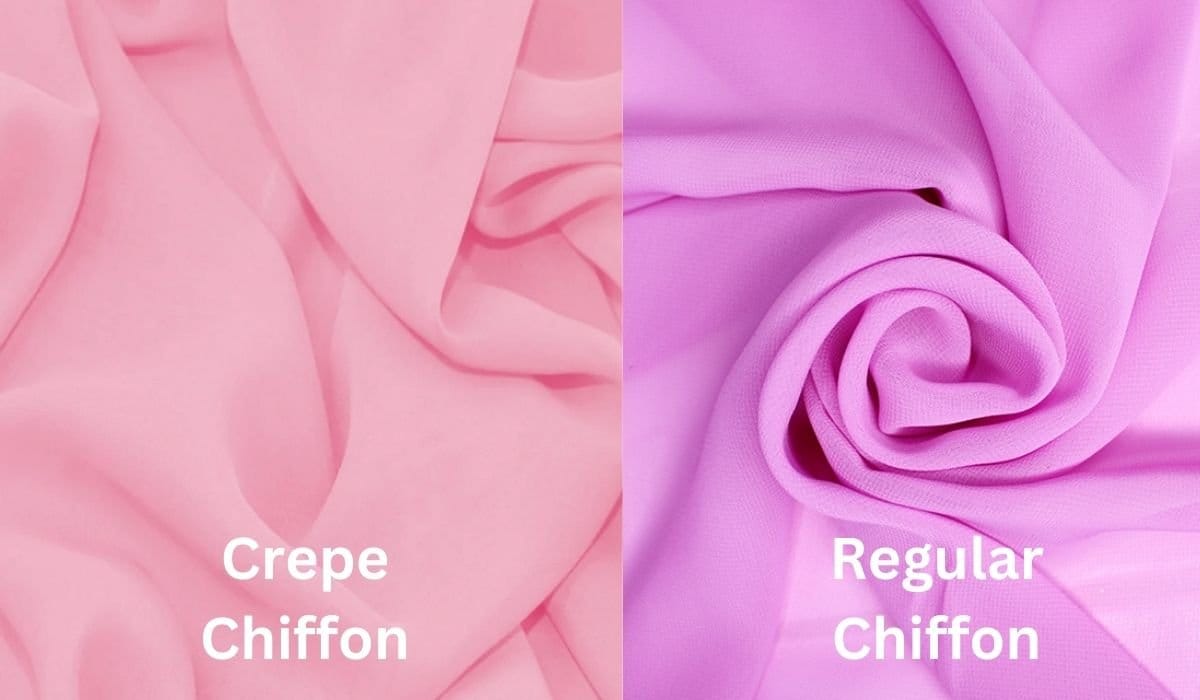
Crepe chiffon has more texture and body compared to smoother regular chiffon.
| Feature | Crepe Chiffon | Regular Chiffon |
|---|---|---|
| Texture | Grainy, pebbled, matte | Smooth, slightly rough, subtle sheen |
| Drape | Fluid with more body | Very fluid, almost liquid |
| Transparency | Semi-transparent | More sheer |
| Wrinkle Resistance | Better (texture hides wrinkles) | Shows wrinkles more |
| Structure | Holds shape better | Very soft, needs support |
| Best For | Structured flowing garments | Overlays, ultra-feminine looks |
Do Crepe and Chiffon Go Together?
Yes! Crepe chiffon actually combines both techniques. You can also layer regular chiffon over crepe fabric for interesting texture combinations. Many designers pair smooth chiffon with crepe elements to create depth in garments. The smooth chiffon provides airiness while the crepe adds visual interest and structure.
Crepe Chiffon vs Georgette
Georgette fabric is often confused with crepe chiffon because both have a crepe-like texture.
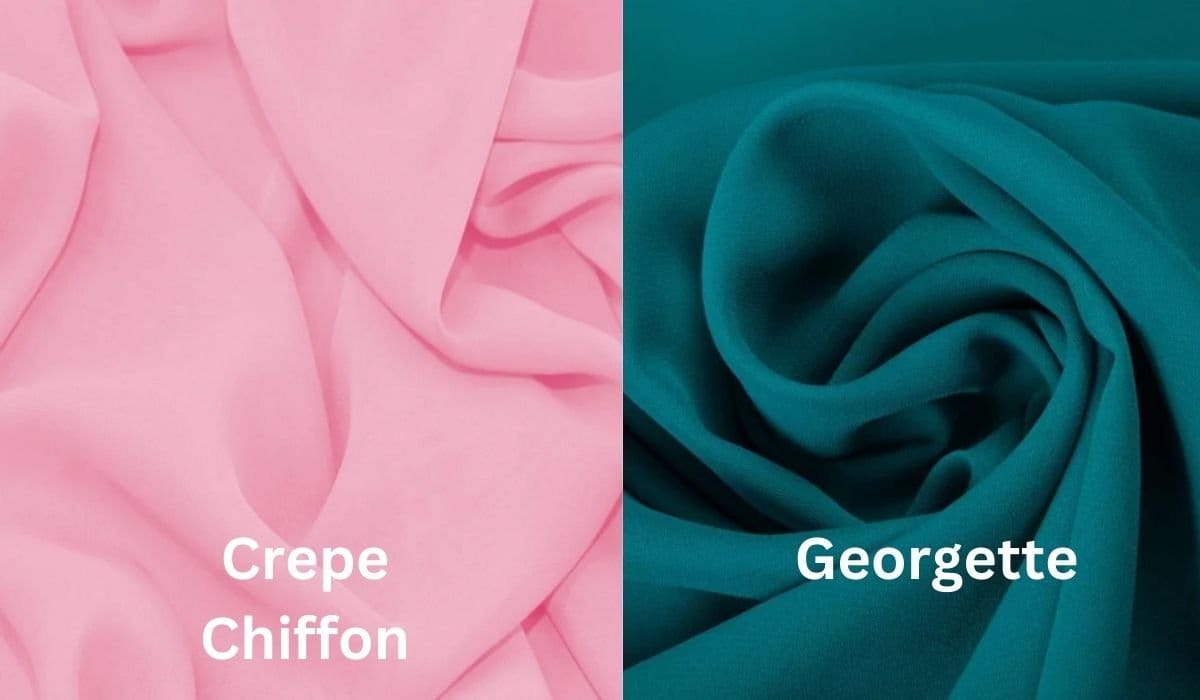
Georgette offers more structure while crepe chiffon provides a lighter, softer flow.
| Aspect | Crepe Chiffon | Georgette |
|---|---|---|
| Weight | Lighter | Heavier, more substantial |
| Transparency | More sheer | Semi-opaque |
| Texture | Fine crepe texture | Coarser, more pronounced texture |
| Drape | Very fluid | More structured |
| Strength | More delicate | Stronger, more durable |
| Uses | Scarves, overlays, evening wear | Blouses, dresses needing structure |
Crepe Chiffon vs Crepe de Chine
Crepe de Chine is another crepe family member, but it’s quite different from crepe chiffon.
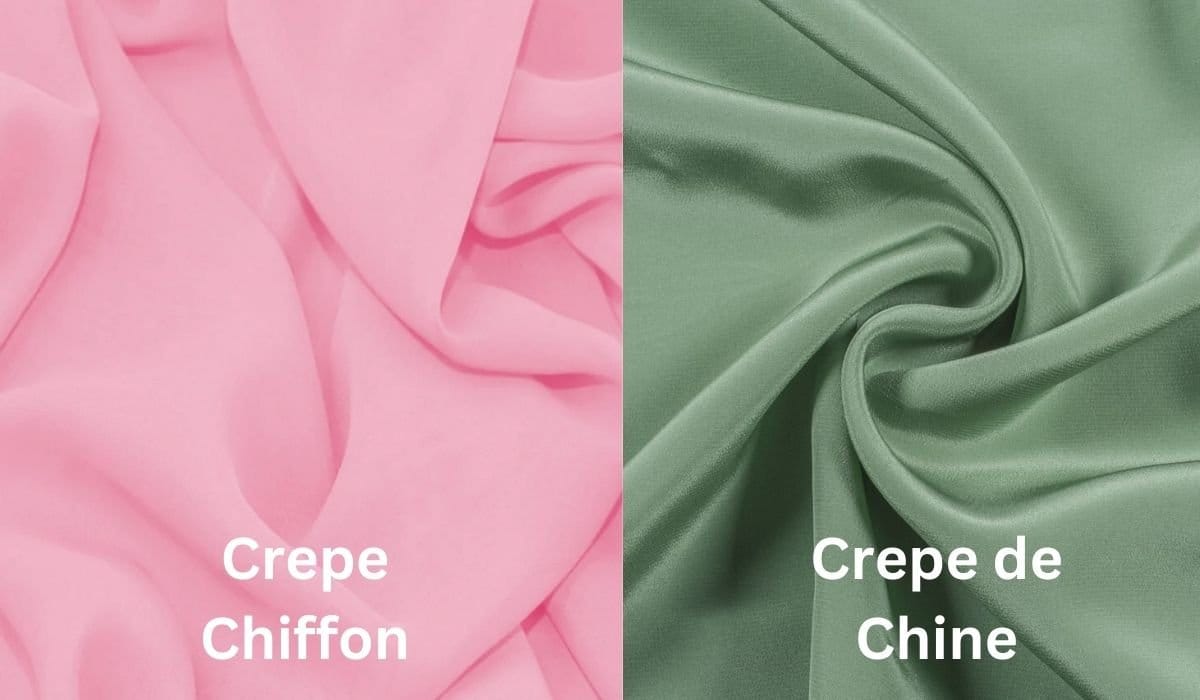
Crepe chiffon is lighter and sheerer while crepe de chine is smoother and slightly heavier.
| Characteristic | Crepe Chiffon | Crepe de Chine |
|---|---|---|
| Weight | Very light | Medium weight |
| Transparency | Semi-transparent | Opaque |
| Texture | Pronounced crepe | Subtle crepe, smoother |
| Shine | Matte | Slight luster |
| Drape | Very fluid | Fluid but with more body |
| Price (silk) | $30-60/yard | $40-80/yard |
Crepe Chiffon vs Organza
Organza is another lightweight, sheer fabric, but it feels completely different.
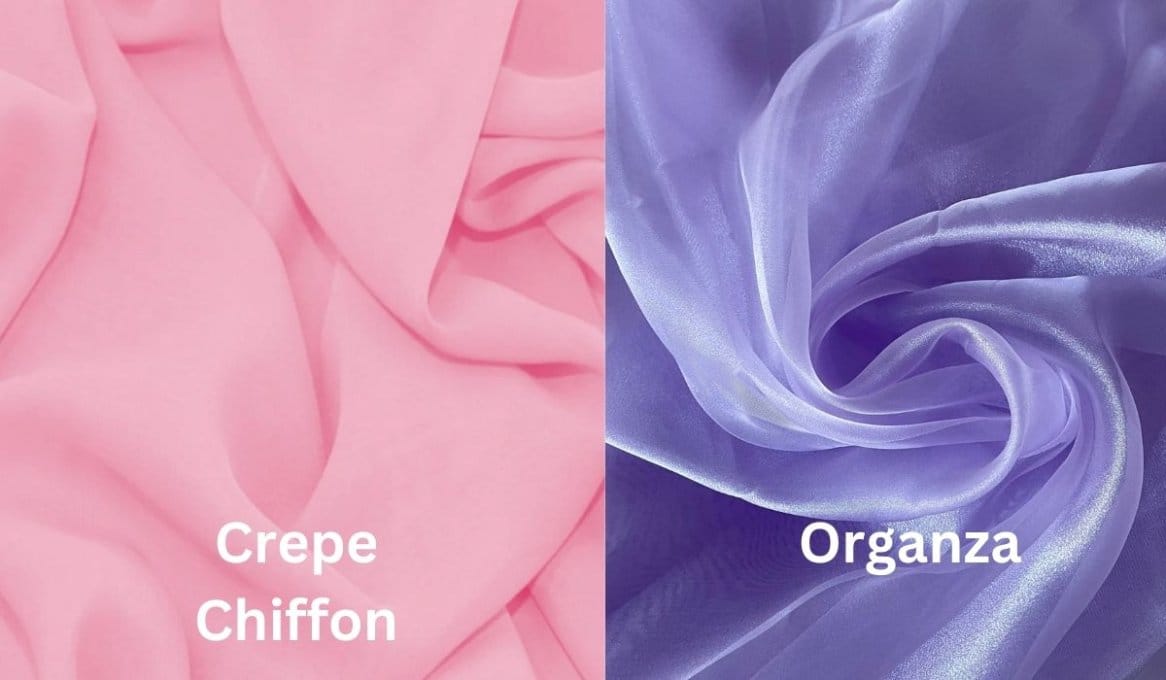
Organza holds its shape while crepe chiffon drapes softly and naturally.
- Organza is crisp and stiff, holds its shape, and has a smooth surface with sheen
- Crepe chiffon is soft and flowing, drapes beautifully, and has a textured matte surface
- Organza is better for structured elements like ruffles and bows
- Crepe chiffon is better for soft, flowing garments
Sustainability & Ethical Production
The fashion industry is changing, and more people want to know where their fabrics come from. Here’s what you need to know about sustainable crepe chiffon options.
Environmental Impact by Fiber Type
Silk Crepe Chiffon
Silk can be one of the most sustainable options when produced responsibly:
- Natural, biodegradable fiber
- Silkworms feed on mulberry leaves without harmful chemicals
- Look for certifications like GOTS (Global Organic Textile Standard)
- Peace silk (Ahimsa silk) allows moths to emerge before harvesting
- Traditional silk production supports rural communities
Polyester Crepe Chiffon
Traditional polyester has environmental challenges, but new options exist:
- Recycled polyester (rPET) uses plastic bottles and reduces waste
- 32% of new product launches now feature eco-credentials
- Look for GRS certification (Global Recycled Standard)
- Some brands offer take-back programs for recycling
Concerns:
- Energy-intensive production process
- Not biodegradable
- Releases microplastics when washed
- Made from petroleum products
Cotton Bemberg Crepe Chiffon
This is often the most sustainable choice:
- Made from cotton linter (short fibers left after ginning)
- Uses waste material that would otherwise be discarded
- Biodegradable and compostable
- Natural moisture-wicking properties
- Often produced with fair trade practices
Ethical Production Practices
Look for these indicators of ethical production:
| Certification | What It Means |
|---|---|
| Fair Trade Certified | Workers receive fair wages and work in safe conditions |
| GOTS (Global Organic Textile Standard) | Organic materials, environmental and social criteria |
| OEKO-TEX Standard 100 | Free from harmful substances |
| GRS (Global Recycled Standard) | Verifies recycled content and responsible production |
| B Corporation | Company meets high standards of social and environmental performance |
Reducing Your Environmental Impact
You can make more sustainable choices even with conventional crepe chiffon:
- Buy quality over quantity – one well-made garment lasts longer than several cheap ones
- Care for your crepe chiffon properly to extend its life
- Wash less frequently (spot clean when possible)
- Use cold water and eco-friendly detergents
- Air dry instead of using a dryer
- Repair rather than replace when possible
- Donate or recycle when you’re done with garments
Complete Care Guide: How to Wash Crepe Chiffon
Proper care keeps your crepe chiffon looking beautiful for years. The care method depends on the fiber content, so always check your garment’s label first.
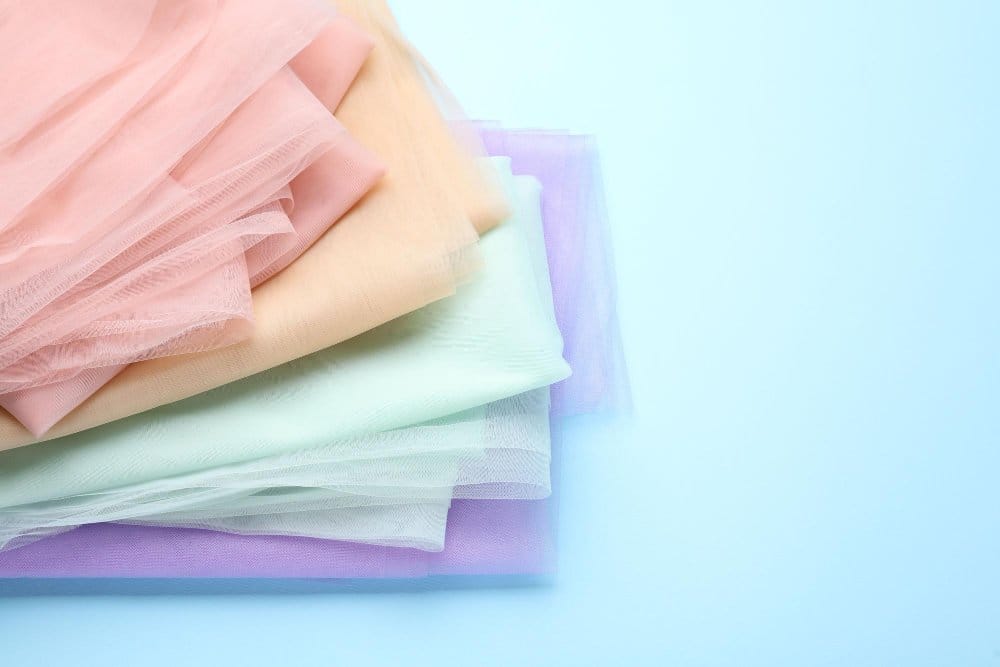
Proper washing and drying keeps crepe chiffon soft, wrinkle resistant, and long lasting.
General Care Rules for All Crepe Chiffon
- Always check the care label before washing
- Never wring or twist the fabric
- Avoid direct heat (no hot water, no hot dryer)
- Keep away from rough surfaces that can snag
- Store in a cool, dry place
How to Wash Silk Crepe Chiffon
Best Method: Dry Cleaning
For expensive silk crepe chiffon garments, professional dry cleaning is the safest option. However, if you want to wash at home, here’s how:
Hand Washing Silk Crepe Chiffon
- Prepare: Fill a clean basin with cool water (below 30°C/86°F)
- Add detergent: Use a gentle detergent specifically for silk or delicates. Mix well
- Submerge: Gently place the garment in water. Press down lightly to saturate
- Soak: Let it soak for 3-5 minutes (no longer)
- Gentle agitation: Swish gently through the water. Don’t rub or scrub
- Rinse: Drain and refill with clean cool water. Rinse until all soap is gone (usually 2-3 rinses)
- Remove water: Press gently between your hands to remove excess water. Never wring
- Dry: Lay flat on a clean towel. Roll the towel to absorb more water
- Final drying: Lay flat on a dry towel away from direct sunlight and heat
How to Wash Polyester Crepe Chiffon
Polyester is much easier to care for and can usually handle machine washing.
Machine Washing (if label allows)
- Place in a mesh laundry bag to prevent snagging
- Use cold water
- Select gentle or delicate cycle
- Use mild detergent (avoid fabric softener, which can build up)
- Remove promptly when cycle finishes
Hand Washing Polyester Crepe Chiffon
- Fill basin with cool to lukewarm water
- Add mild detergent
- Gently agitate for 3-5 minutes
- Rinse thoroughly in cool water
- Gently squeeze out excess water
- Hang to dry or lay flat
How to Wash Cotton Bemberg Crepe Chiffon
Cotton bemberg requires gentle care similar to silk:
- Hand wash in cold water with gentle detergent
- Soak for no more than 5 minutes
- Rinse thoroughly
- Press out water gently (never wring)
- Lay flat or hang to dry
- Note: May shrink slightly on first wash, so pre-wash fabric before sewing
Drying Crepe Chiffon
| Fiber Type | Best Drying Method | What to Avoid |
|---|---|---|
| Silk | Lay flat on towel, away from sunlight | Never use dryer, avoid direct sun |
| Polyester | Hang dry or tumble dry on LOW heat | High heat can damage fibers |
| Cotton Bemberg | Lay flat or hang, away from direct sun | High heat causes shrinkage |
| Rayon | Lay flat (weakens when wet) | Never wring, hang carefully to avoid stretching |
Ironing and Steaming
Silk Crepe Chiffon
- Use lowest heat setting (silk/delicate)
- Always iron on wrong side
- Place a pressing cloth between iron and fabric
- Steam is often better than dry ironing
- Never leave iron sitting on fabric
Polyester Crepe Chiffon
- Low to medium heat
- Steam works well
- Can iron on right or wrong side
- Be careful not to melt fibers with too much heat
Pro Tip: Steam Instead of Iron
A handheld steamer is often the best tool for crepe chiffon. Hang the garment and steam from a few inches away. The steam relaxes wrinkles without flattening the crepe texture.
Stain Removal
Act quickly when stains happen:
- Blot immediately – Don’t rub, which spreads the stain
- Test first – Try any cleaning solution on a hidden seam
- Use cool water – Hot water can set protein-based stains
- Gentle dabbing – Work from outside of stain toward center
- Rinse thoroughly – Make sure all cleaning solution is removed
- Professional help – For expensive silk garments with tough stains, take to a professional
Storage Tips
Short-term Storage
- Hang on padded hangers to prevent shoulder marks
- Allow space between garments for air circulation
- Keep in a cool, dry place away from direct sunlight
Long-term Storage
- Clean before storing (stains attract pests)
- Use breathable garment bags (never plastic)
- For silk, add cedar blocks to prevent moths
- Check periodically for any issues
- Avoid folding if possible (can create permanent creases)
Uses & Applications
Crepe chiffon’s unique combination of texture, drape, and lightness makes it suitable for many applications. Here’s where it shines:
Fashion and Apparel
Evening and Formal Wear
This is where crepe chiffon really stands out. Its elegant drape and subtle texture make it perfect for:
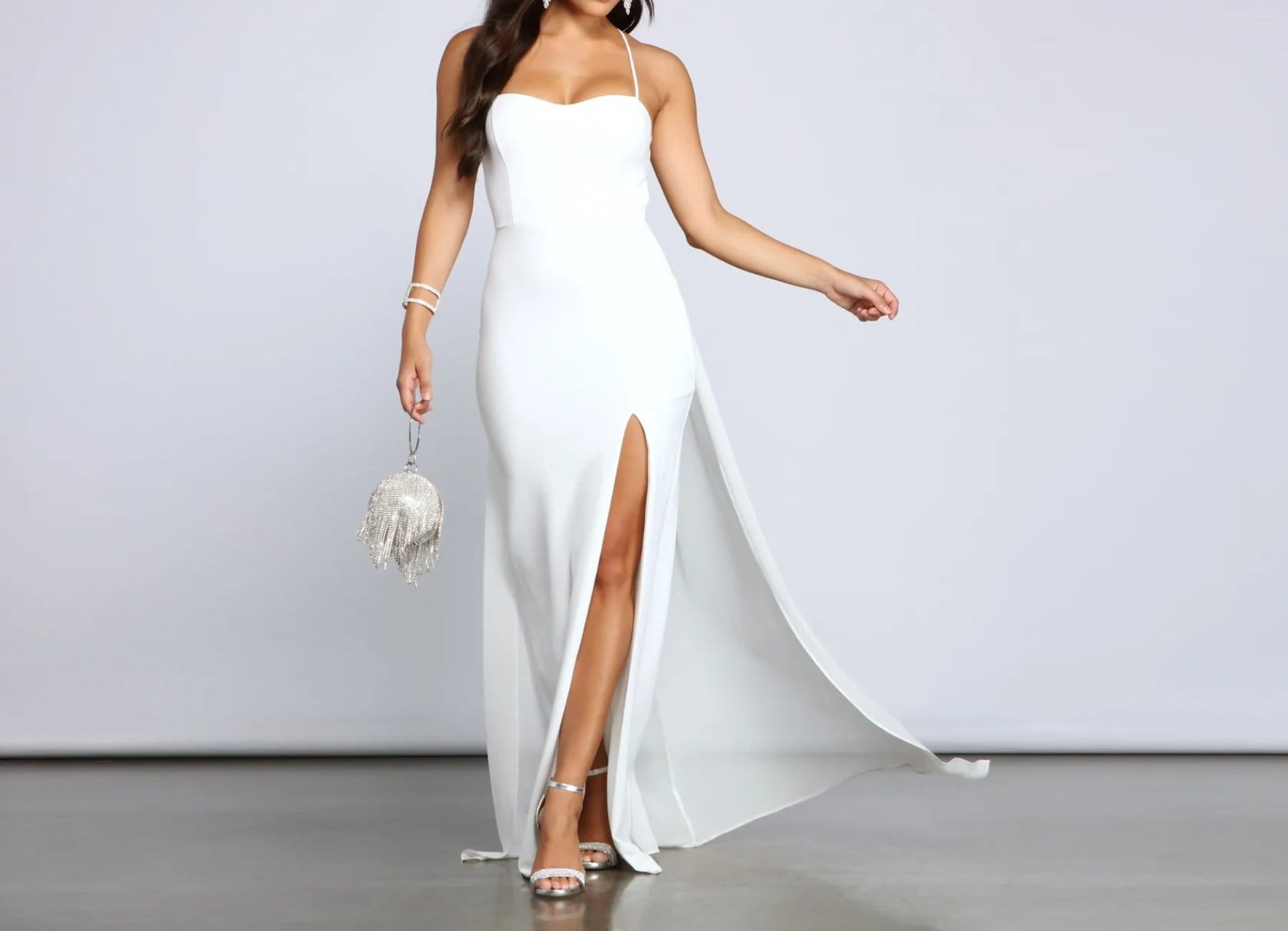
Crepe chiffon adds movement and sophistication to formal gowns and evening wear.
- Evening gowns: The fabric flows beautifully in full-length dresses while maintaining structure
- Cocktail dresses: Creates movement without excessive volume
- Overlays: Adds depth and interest when layered over other fabrics
- Wedding dresses: Particularly popular for destination weddings due to wrinkle resistance
- Bridesmaid dresses: Flattering on different body types because of the way it drapes
Everyday Fashion
Crepe chiffon isn’t just for special occasions:
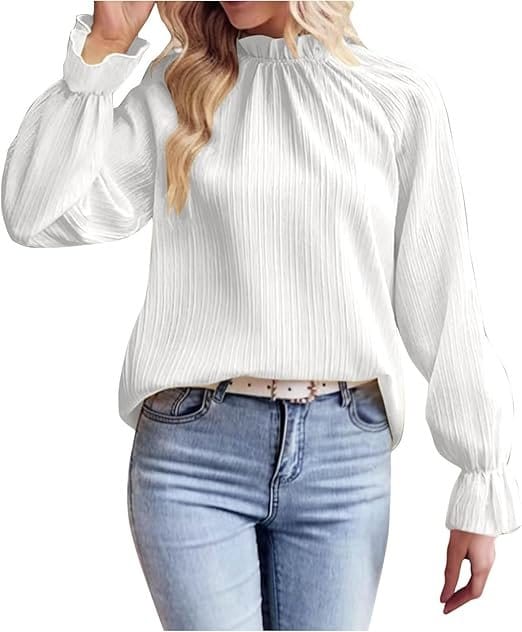
Crepe chiffon blouses offer comfort, movement, and effortless everyday style.
- Blouses: Professional yet feminine, works for office or casual wear
- Summer dresses: Breathable and comfortable in warm weather
- Skirts: From midi to maxi, the fabric creates beautiful movement
- Tunics: Flowy and comfortable, perfect for layering
Accessories
The fabric’s lightweight nature makes it ideal for:
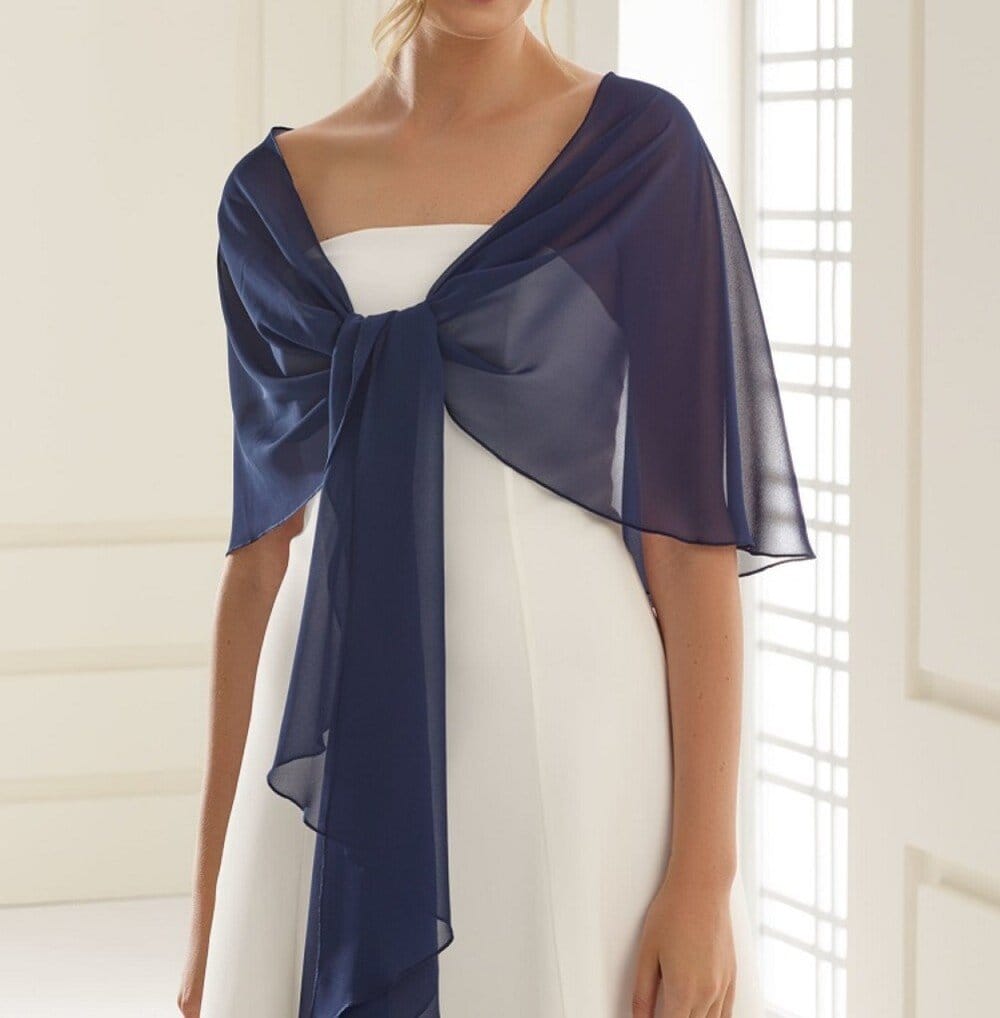
Crepe chiffon wraps provide soft coverage while keeping outfits light and breathable.
- Scarves: Light enough to wear year-round, drapes beautifully around neck
- Hijabs: Cotton bemberg crepe chiffon is especially popular for its breathability
- Shawls and wraps: Elegant for evening events
- Stoles: Adds sophistication to any outfit
Cultural and Traditional Garments
Crepe chiffon is widely used in traditional clothing:
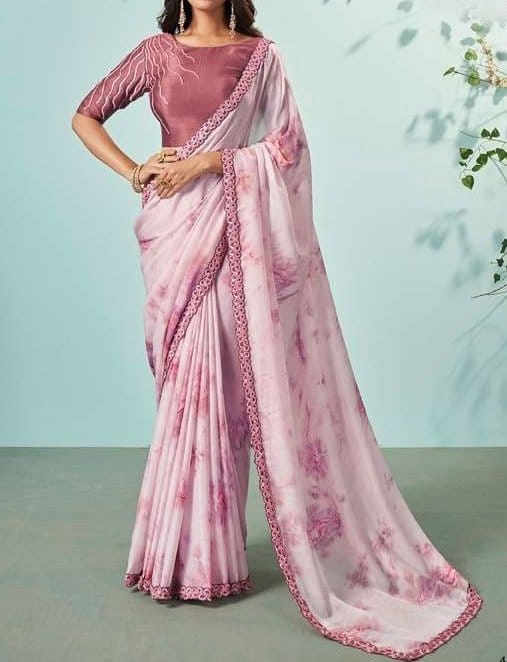
Crepe chiffon sarees offer soft drape, comfort, and effortless elegance for traditional wear.
- Sarees: Popular in India for both casual and formal occasions
- Dupattas: The fabric’s drape makes it perfect for these traditional scarves
- Abayas: Modest fashion often uses crepe chiffon for its coverage and flow
Home Decor
While less common than fashion uses, crepe chiffon can add elegance to home spaces:
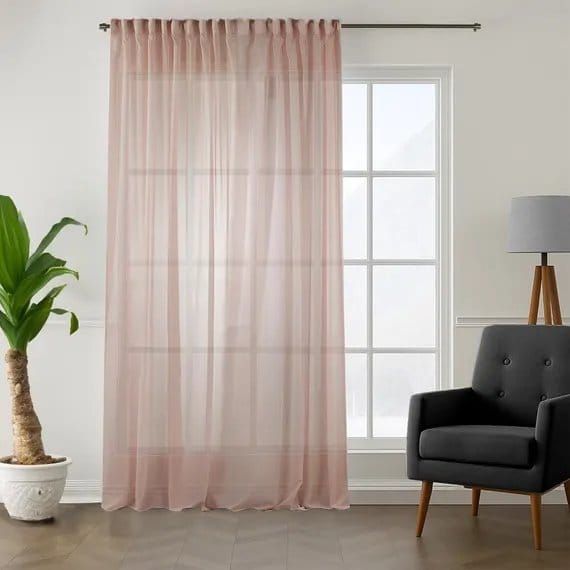
Crepe chiffon curtains gently filter light while adding texture to home spaces.
- Curtains: Creates soft, filtered light while maintaining privacy
- Canopy draping: Romantic bedroom decor
- Table overlays: For weddings and special events
- Decorative panels: Adds texture to walls or room dividers
Special Applications
Performance and Theater
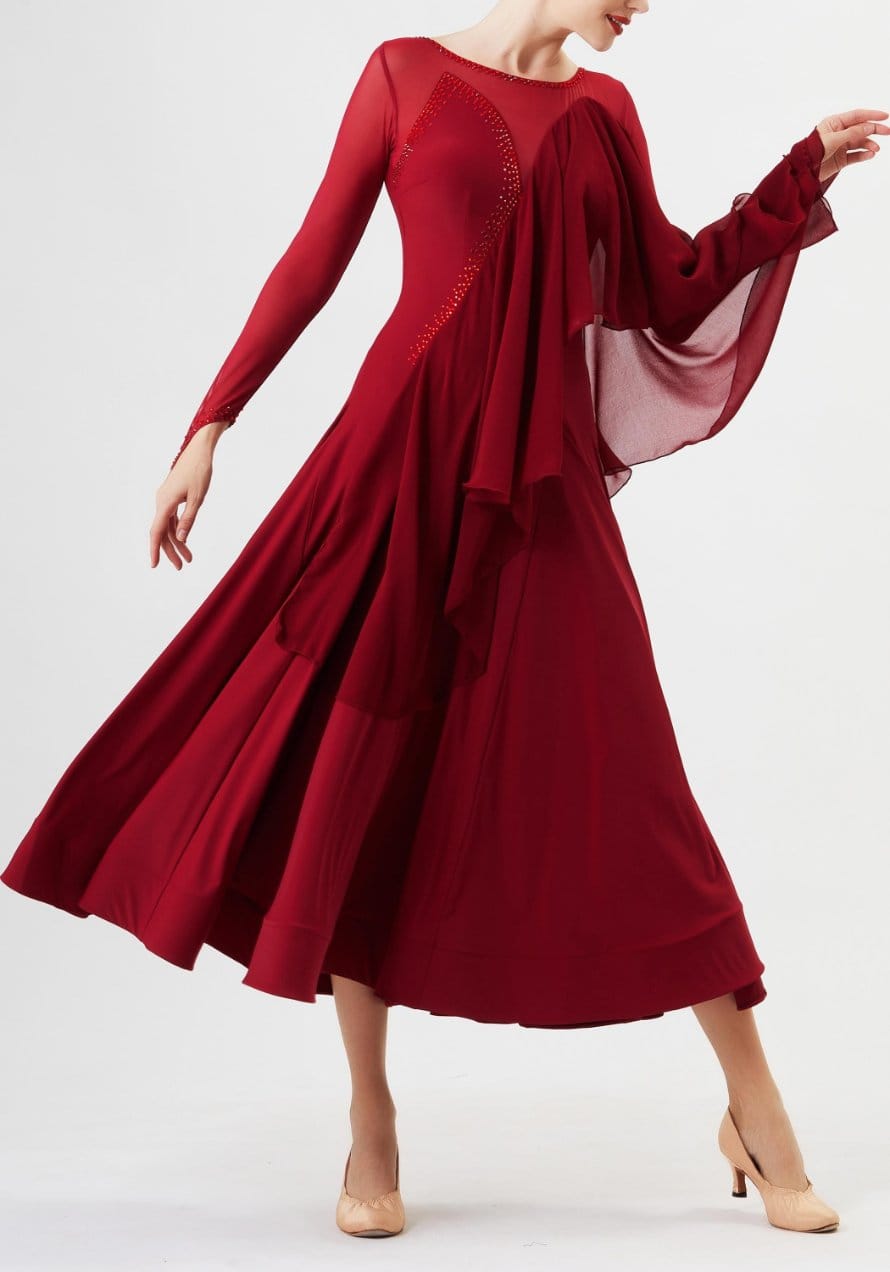
Crepe chiffon is ideal for dance costumes thanks to its flow and lightweight flexibility.
- Costume design (particularly for flowing, period pieces)
- Stage draping and backdrops
- Dance costumes where movement is important
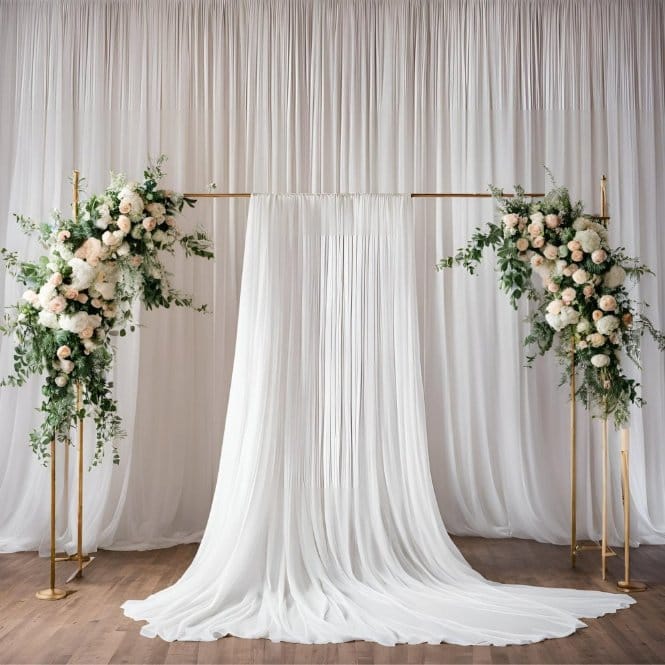
Crepe chiffon creates soft flowing backdrops for weddings and special event decorations.
Professional Uses
- Photography backdrops (the texture adds visual interest)
- Event decoration (weddings, galas, corporate events)
- Fashion runway shows
Choosing the Right Fiber for Your Project
- Wedding dress or luxury garment: Silk crepe chiffon
- Bridesmaid dresses (multiple people): Polyester crepe chiffon for consistency and affordability
- Summer blouse or everyday wear: Cotton bemberg or polyester
- Hijabs or scarves: Cotton bemberg for breathability
- Home decor: Polyester for durability and easy care
- Children’s clothing: Cotton bemberg or polyester (check for safety standards)
Sewing with Crepe Chiffon
Crepe chiffon can be challenging to sew, but with the right techniques, you can create beautiful garments. Here’s what you need to know.
Before You Start: Challenges
Be aware of these common issues:
- Slippery texture: The fabric shifts easily while cutting and sewing
- Fraying: Edges fray quickly once cut
- Transparency: Seams and finishing show through the fabric
- Puckering: Easy to create gathers you don’t want
- Needle marks: Mistakes are hard to fix as needle holes may remain visible

Watch this helpful video tutorial on sewing with chiffon fabrics.
Essential Tools and Supplies
| Tool | Specification | Why It Matters |
|---|---|---|
| Needles | Size 60/8 or 70/10, sharp or microtex | Small, sharp needles prevent snags and large holes |
| Thread | Fine polyester or silk thread | Matches fabric weight, reduces bulk in seams |
| Scissors | Very sharp fabric shears | Clean cuts prevent excessive fraying |
| Rotary Cutter | Sharp blade with cutting mat | Often easier than scissors for slippery fabric |
| Pins | Fine silk pins or extra-fine pins | Leave minimal marks in fabric |
| Weights | Pattern weights | Hold fabric without pin holes |
Cutting Techniques
- Prepare your surface: Use a large, clean cutting table. Cover with tissue paper or a cutting mat
- Layer fabric on tissue: Place crepe chiffon on top of tissue paper to prevent shifting
- Use weights: Place pattern pieces and secure with pattern weights instead of pins when possible
- Cut carefully: Use sharp scissors or rotary cutter. Cut through both fabric and tissue paper together
- Transfer markings: Use tailor’s tacks or washable fabric markers (test first on scrap)
Pro Tip: The Tissue Paper Method
Sandwich your crepe chiffon between two layers of tissue paper when cutting. This stabilizes the fabric and gives you more control. You can sew through the tissue paper and tear it away after stitching.
Seam Options
Because crepe chiffon frays easily and is transparent, seam choice matters:
French Seams (Best Choice)
French seams enclose raw edges completely, preventing fraying and creating a clean finish visible through the fabric.
- Place fabric pieces wrong sides together
- Sew a narrow seam (1/4 inch or 6mm)
- Trim seam to 1/8 inch (3mm)
- Press seam to one side
- Fold fabric so right sides are together, enclosing the raw edges
- Sew another seam (3/8 inch or 10mm from fold)
- Press to one side
Learn more about creating perfect French seams.
Narrow Hem
For hems on crepe chiffon:
- Fold edge under 1/4 inch, press
- Fold under another 1/4 inch
- Stitch close to inner fold
- For a rolled hem, use a rolled hem foot on your sewing machine
Check out our guide on sewing perfect hems for more techniques.
Bound Seams
Use bias tape or strips of lining fabric to bind edges. This works well for armholes and necklines. Visit our bound seam finishing guide for detailed instructions.
Sewing Machine Settings
- Stitch length: 2.0-2.5mm (slightly shorter than normal)
- Tension: May need to reduce slightly to prevent puckering
- Presser foot pressure: Lighten if possible to prevent stretching
- Speed: Sew slowly for better control
- Stitch type: Straight stitch works best; zigzag can stretch the fabric
Preventing Common Problems
| Problem | Solution |
|---|---|
| Fabric bunching under needle | Hold thread tails when starting; use tissue paper under fabric |
| Puckered seams | Reduce tension; don’t pull fabric while sewing |
| Fabric slipping | Pin frequently; use walking foot or tissue paper |
| Skipped stitches | Change to fresh, sharp needle; check needle type |
| Visible needle holes | Use smaller needle; avoid unpicking seams when possible |
Pattern Selection
Choose patterns designed for crepe chiffon or similar lightweight fabrics:
- Look for patterns that specify “suitable for chiffon” or “lightweight fabrics”
- Flowing styles work best (gathered skirts, draped necklines, loose silhouettes)
- Avoid patterns with lots of topstitching or heavy detail work
- Simple designs often look most elegant in this fabric
- Consider lining for opacity and easier sewing
Find beginner-friendly options in our beginner sewing patterns guide.
Working with Lining
Most crepe chiffon garments need lining:
- Why line: Adds opacity, protects seams, makes garment more comfortable
- Lining choices: Lightweight silk, polyester lining fabric, or cotton batiste
- Technique: Construct outer layer and lining separately, then join at neckline and armholes
- Slip lining: For skirts and dresses, create a separate slip to wear underneath
History & Cultural Significance
Understanding where crepe chiffon comes from helps us appreciate this beautiful fabric even more.
The Origins of Chiffon
The story starts with chiffon itself. The word “chiffon” comes from the French word for “cloth” or “rag,” though there’s nothing rag-like about this elegant fabric today. Chiffon first appeared in France around the 1700s.
Originally, all chiffon was made from silk and was extremely expensive. Only wealthy people could afford it, and it became a symbol of luxury and refinement. Think of elaborate gowns at royal balls, flowing with every step.
The Addition of Crepe Texture
Crepe techniques have been around for centuries, but combining them with the lightness of chiffon created something special. The crepe weave (using highly twisted yarns) was traditionally used for heavier fabrics. Applying this technique to chiffon’s light weave resulted in crepe chiffon, also sometimes called “crepe chiffon.”
This combination gave designers a fabric that had the elegance of chiffon but with more interesting texture and better shape retention.
The Synthetic Revolution
Everything changed in the 20th century:
- 1938: Nylon chiffon was invented, making chiffon fabrics more accessible
- 1958: Polyester chiffon became available and quickly gained popularity due to its low cost and durability
- Modern era: Today, most crepe chiffon is made from polyester, though silk versions remain the luxury standard
This democratization meant that crepe chiffon was no longer just for the wealthy. Everyday people could afford beautiful flowing garments.
Cultural Traditions
Chinese Silk Tradition
In China, silk chiffon made from raw silk was known as “xiāo,” which was also the name for raw silk itself. Chinese silk weavers have been creating delicate, sheer fabrics for thousands of years, and their techniques influenced Western chiffon production.
Indian Textile Heritage
Crepe chiffon became particularly popular in India for sarees. The fabric’s drape makes it perfect for this traditional garment. Indian weavers in places like Banaras (Varanasi) create exquisite chiffon sarees, often with handwoven zari (metallic thread) embellishments.
These sarees represent a blend of traditional craftsmanship and modern fabric technology, making crepe chiffon an important part of contemporary Indian fashion.
Middle Eastern Modest Fashion
In recent decades, crepe chiffon has become a staple in modest fashion, particularly for hijabs and abayas. The fabric’s breathability and beautiful drape make it perfect for these garments, especially in warm climates.
High Fashion Evolution
Throughout the 20th and 21st centuries, crepe chiffon has remained a favorite of designers:
- Used by haute couture houses for evening wear
- Popular in bridal fashion for destination weddings
- Featured in red carpet gowns (the fabric photographs beautifully)
- Used in contemporary minimalist fashion for its clean, matte appearance
Buying Guide & Quality Indicators
Whether you’re buying fabric by the yard or purchasing ready-made garments, knowing how to spot quality helps you get the best value.
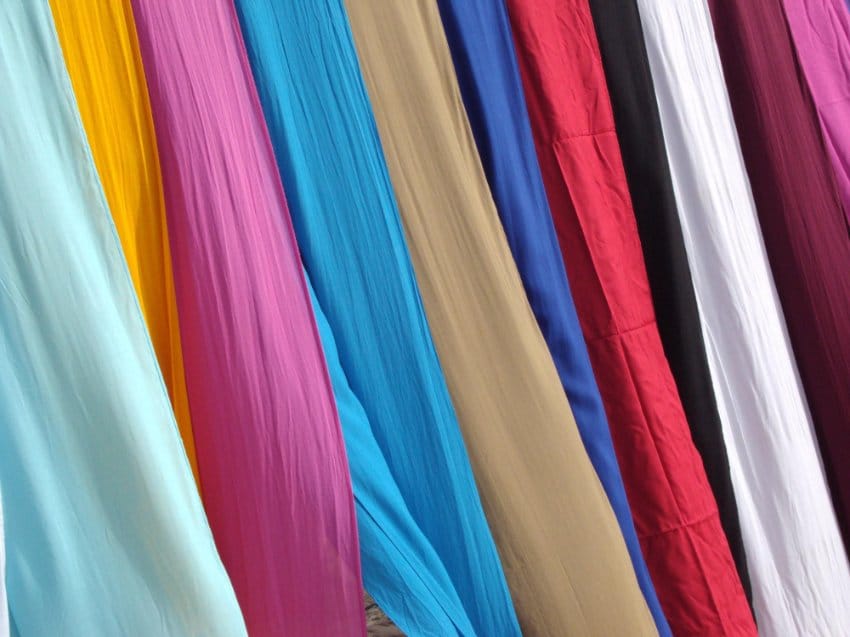
A wide range of colors makes crepe chiffon easy to match for dresses, tops, and decor projects.
How to Identify Quality Crepe Chiffon
Visual Inspection
- Even texture: The crepe texture should be consistent across the entire fabric
- No slubs or thick spots: Quality fabric has uniform thickness
- Clean edges: Check the selvage (finished edge) for neat, even weaving
- Color consistency: No variation in color across the fabric
- Opacity consistency: Sheerness should be even throughout
Touch and Feel Test
- Drape test: Hold up a corner and let it fall. Quality crepe chiffon should flow smoothly
- Texture: Should feel dry and slightly grainy, not sticky or rough
- Recovery test: Gently crush in your hand and release. It should spring back without severe creasing
- Weight: Should feel light but not flimsy (for silk, around 0.60 g/m²)
The Burn Test (for fiber identification)
If you’re unsure whether a fabric is silk or polyester, a burn test can help (only do this with a small sample you don’t need):
| Fiber | Burn Characteristics | Smell | Residue |
|---|---|---|---|
| Silk | Burns slowly, curls away from flame | Burning hair | Crushable black ash |
| Polyester | Melts and drips, continues burning | Sweet chemical smell | Hard black beads |
| Cotton | Burns quickly with bright flame | Burning paper | Soft gray ash |
Price Expectations
Fabric by the Yard
| Fiber Type | Price Range | What Affects Price |
|---|---|---|
| Silk Crepe Chiffon | $30-100+ per yard | Silk grade, width, origin, organic certification |
| Polyester Crepe Chiffon | $3-15 per yard | Quality, width, recycled content, printing |
| Cotton Bemberg | $15-40 per yard | Organic status, fair trade, width |
| Rayon Crepe Chiffon | $8-25 per yard | Quality, dyeing method, width |
Ready-Made Garments
Garment pricing varies widely based on construction quality, brand, and origin:
- Budget polyester blouse: $20-50
- Mid-range dress: $80-200
- Designer dress: $300-1000+
- Silk scarf: $50-300
- Polyester scarf: $10-40
Where to Buy
Online Fabric Retailers
- Specialty fabric websites (often have better selection and quality)
- General craft stores (more budget-friendly options)
- Wholesale suppliers (for bulk orders, often minimum 300 meters per color)
- Sustainable fabric marketplaces (for eco-conscious options)
Local Options
- Fabric stores (can see and feel before buying)
- Garment districts in major cities
- Specialty stores for ethnic fabrics (good for traditional uses)
Questions to Ask Before Buying
- What is the exact fiber content?
- What is the fabric width? (typically 130-150cm)
- What is the weight/GSM?
- Is it pre-washed or will it shrink?
- What are the care requirements?
- Is there a minimum order quantity?
- What is the return/exchange policy?
- Are there any certifications (GOTS, Fair Trade, OEKO-TEX)?
Red Flags: Signs of Poor Quality
- Price too good to be true for silk (likely not real silk)
- Uneven dyeing or color bleeding
- Strong chemical smell
- Excessive shedding or pilling
- Inconsistent texture across fabric
- Very stiff or scratchy feel
- Seller can’t or won’t provide fiber content information
Market Trends & Innovations
The crepe chiffon market continues to grow and change. Here’s what’s happening now and what to expect.
Current Market Size and Growth
According to recent market research:
- Global chiffon crepe market valued at $3.8 billion
- Expected to grow at 5.2% annually through 2028
- Asia-Pacific dominates production (78% market share)
- China leads in manufacturing output
- Europe and North America are the largest consumption markets for premium fabrics
Sustainability Trends
The biggest shift in the industry is toward sustainable options:
- 32% of new product launches feature eco-credentials
- Recycled polyester crepe chiffon growing rapidly
- Organic silk becoming more available
- Fair trade and ethical production certifications increasing
- Brands highlighting supply chain transparency
Technology and Innovation
Digital Printing
Digital printing technology has changed what’s possible with crepe chiffon:
- Small-batch custom prints now affordable
- More complex patterns and photo-realistic prints
- Reduced water usage compared to traditional dyeing
- Faster turnaround times
- Individual customization possible
Performance Enhancements
New finishing treatments add functionality:
- Wrinkle-resistant treatments
- Water-repellent coatings
- UV protection
- Antimicrobial finishes
- Flame-retardant versions for events and theater
Regional Preferences
Europe
- Strong preference for sustainable and organic options
- Minimalist colors and designs
- Slow fashion movement influence
- Capsule wardrobe friendly pieces
Middle East & Southeast Asia
- High demand for embellished crepe chiffon
- Sequined and printed options popular
- Focus on modest fashion
- Occasion wear dominates
North America
- Mix of budget and luxury options
- Growing interest in sustainable fabrics
- Casualwear applications increasing
- Online shopping driving accessibility
Fashion Industry Applications
Fast Fashion Impact
Fast fashion has increased demand for affordable crepe chiffon:
- Polyester versions most affected
- Rapid trend cycles mean more frequent purchases
- Concerns about quality and sustainability
- Push toward better working conditions in factories
Athleisure Integration
Surprisingly, crepe chiffon is finding new uses in athletic wear:
- Lightweight overlays for yoga and dance wear
- Performance versions with moisture-wicking properties
- Blending athletic and casual styles
Future Predictions
What to expect in the coming years:
- More biodegradable synthetic options
- Increased transparency in supply chains
- Smart fabrics with embedded technology
- Growing secondhand and upcycling markets
- Regional production to reduce shipping emissions
- More inclusive sizing in ready-to-wear
Frequently Asked Questions
Crepe chiffon is semi-transparent to sheer, meaning you can see through it to varying degrees depending on the color and fiber type. Light colors and silk versions tend to be more transparent, while dark colors and polyester versions may be less see-through. Most garments made from crepe chiffon require lining for modesty, except for items like scarves or overlays where transparency is desired.
It depends on the fiber content. Polyester crepe chiffon can usually be machine washed on a gentle cycle in cold water (check the care label first). Silk crepe chiffon should typically be dry cleaned or hand washed with extreme care. Cotton bemberg and rayon crepe chiffon are best hand washed. Always place the item in a mesh laundry bag if machine washing, and never use hot water or high heat when drying.
Regular chiffon has a smooth, slightly slippery surface with a subtle sheen and is very sheer and fluid. Crepe has a textured, crinkled surface that’s matte and has more body. Crepe chiffon combines both: it has the lightweight, flowing quality of chiffon but with the textured, pebbled surface of crepe. This gives it better shape retention while maintaining an elegant drape.
Yes, crepe chiffon is excellent for summer wear. It’s lightweight and breathable, allowing air to circulate. The fabric doesn’t cling to the body, which helps keep you cool. Silk and cotton bemberg versions are particularly good for hot weather as they’re natural fibers that regulate temperature well. Polyester can be slightly warmer but still works for summer if the garment is loose-fitting.
Crepe chiffon is moderately wrinkle-resistant compared to smooth fabrics. The textured crepe surface actually helps hide minor wrinkles, making it more practical than regular chiffon or smooth silks. Polyester crepe chiffon resists wrinkles best, while silk and rayon versions will wrinkle more. If wrinkles occur, steaming is usually more effective than ironing for removing them without flattening the crepe texture.
Several tests can help identify real silk: (1) Feel test – real silk feels cool to touch and warms up quickly in your hand; polyester stays relatively cool. (2) Luster test – silk has a natural, soft sheen that changes in different lights; polyester has a more consistent shine. (3) Price – if it’s very cheap, it’s likely not silk. (4) Burn test – a tiny sample of silk smells like burning hair and leaves crushable ash; polyester melts and smells chemical. Always ask the seller for fiber content before purchasing.
Yes, but with caution. Use the lowest heat setting (silk/delicate), always iron on the wrong side of the fabric, and place a pressing cloth between the iron and fabric. Never leave the iron sitting on the fabric. However, steaming is often better than ironing for crepe chiffon because it removes wrinkles without flattening the crepe texture. If you must iron, use light pressure and keep the iron moving.
Use a sharp or microtex needle in size 60/8 or 70/10. These small, sharp needles make clean holes without snagging the delicate fibers. Change to a fresh needle for each major project, as dull needles can cause snags and skipped stitches. Universal needles can work in a pinch, but sharp needles specifically designed for woven fabrics give the best results with crepe chiffon.
Crepe chiffon has slight natural stretch from the highly twisted crepe yarns, but it’s not a stretch fabric. The stretch is minimal and mainly provides a bit of give for comfort rather than significant elasticity. If you need stretch fabric, look for versions with added spandex or elastane (usually labeled as “stretch crepe chiffon”), which will have 2-5% stretch fiber blended in.
Prices vary widely based on fiber content: Polyester crepe chiffon costs $3-15 per yard and is the most affordable option. Rayon/viscose ranges from $8-25 per yard. Cotton bemberg runs $15-40 per yard. Silk crepe chiffon is the most expensive at $30-100+ per yard, with prices depending on silk quality, width, and whether it’s organic or conventionally produced.
Crepe chiffon is commonly used for evening gowns, wedding dresses, bridesmaid dresses, blouses, scarves, hijabs, sarees, and dupattas. It works well for any garment where you want flowing movement with some structure. The fabric is also used for home decor like curtains and event decorations. Its combination of elegant drape and interesting texture makes it perfect for both special occasion wear and everyday fashion pieces.
Yes, but success depends on fiber content. Silk and rayon take dye beautifully and can be dyed at home using fiber-reactive or acid dyes. Cotton can be dyed with fiber-reactive dyes. Polyester is the hardest to dye and requires special polyester dyes and very hot water (often boiling), which can damage the fabric. For best results with dyeing any crepe chiffon, start with white or very light colors, and always test on a scrap first.
Conclusion
Crepe chiffon is a unique fabric that brings together the best of two textile worlds. Its combination of chiffon’s flowing elegance and crepe’s interesting texture creates a material that’s both practical and beautiful. Whether you’re a home sewer looking for the perfect fabric for your next project, a fashion enthusiast wanting to understand your wardrobe better, or someone shopping for special occasion wear, understanding crepe chiffon helps you make better choices.
We’ve covered everything from the basic characteristics that make crepe chiffon special to the detailed care instructions that will keep your garments looking beautiful for years. The fabric’s versatility shines through in its many applications, from wedding gowns to everyday scarves, from traditional sarees to modern minimalist fashion.
The sustainability movement is changing how crepe chiffon is produced, with more eco-friendly options becoming available every year. Whether you choose organic silk, recycled polyester, or cotton bemberg, you can find crepe chiffon that aligns with your values without sacrificing quality or beauty.
Key Takeaways
Understanding the Fabric: Crepe chiffon combines chiffon’s lightweight sheerness with crepe’s textured surface, created through highly twisted yarns (1200-4000 twists per meter). This gives it better shape retention than regular chiffon while maintaining beautiful drape.
Choosing the Right Type: Select silk for luxury and special occasions, polyester for affordability and easy care, cotton bemberg for sustainable everyday wear, and rayon for a budget-friendly middle ground. Each fiber type has distinct characteristics that make it suitable for different uses.
Proper Care is Essential: Silk requires the most careful handling (typically dry cleaning or gentle hand washing), polyester is the easiest to care for (often machine washable), and all types benefit from air drying and low-heat ironing or steaming. Never use hot water or high heat, and avoid wringing the fabric.
Sewing Success: Use sharp microtex needles (size 60/8 or 70/10), fine thread, and French seams for the best results. Work slowly and carefully, using tissue paper to stabilize the fabric while cutting and sewing. The effort is worth it for beautiful finished garments.
Quality Matters: Look for even texture, consistent color, smooth drape, and appropriate pricing for the fiber type. Don’t be fooled by prices that seem too good to be true, especially for silk. Quality crepe chiffon is an investment that pays off in longevity and appearance.
Sustainability Counts: Choose certified organic silk, recycled polyester, or cotton bemberg when possible. Look for certifications like GOTS, Fair Trade, and GRS. Care for your garments properly to extend their life, and consider the true cost per wear rather than just the initial price.
Know Your Application: Crepe chiffon works beautifully for flowing garments like dresses and blouses, makes excellent scarves and accessories, and adds elegance to special occasion wear. Its wrinkle resistance and interesting texture make it more practical than many other delicate fabrics.
Final Recommendations
For Beginners: Start with polyester crepe chiffon. It’s affordable, forgiving, and easier to care for than silk. Practice your sewing techniques on small projects like scarves before moving to larger garments. Don’t skip the step of reading through sewing tutorials specific to delicate fabrics.
For Special Occasions: Invest in silk crepe chiffon for wedding dresses, anniversary celebrations, or heirloom garments. The extra cost is justified by the superior feel, drape, and longevity of natural silk. Have it professionally cleaned and stored to preserve it for years.
For Everyday Wear: Cotton bemberg crepe chiffon offers the best balance of comfort, sustainability, and practicality for regular use. It’s breathable, gentle on skin, and usually more affordable than silk while feeling more natural than polyester.
For the Environment: Prioritize certified sustainable options, buy quality over quantity, and care for what you own. One well-made crepe chiffon garment that lasts for years is better than multiple cheap items that wear out quickly.
Whether you’re draping it into an elegant evening gown, wrapping it as a flowing scarf, or incorporating it into cultural traditional wear, crepe chiffon adds a touch of sophistication to any wardrobe. Its unique texture catches light beautifully, its drape flatters most body types, and its versatility means you’ll find countless uses for this special fabric.
Now that you understand everything about crepe chiffon, from its manufacturing to care, from shopping tips to sewing techniques, you’re ready to work with this beautiful fabric confidently. Whether you choose to sew your own pieces or shop for ready-made garments, you’ll make informed decisions that result in clothing you love wearing for years to come.