


How spandex went from women’s underwear to the dominant force in fashion and everyday dressing. The full cultural journey, decade by decade, plus what it means for how you dress today.
The Quiet Revolution Nobody Saw Coming
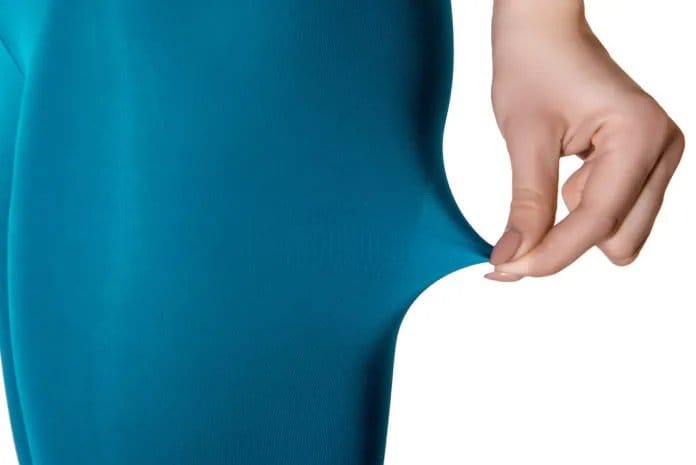
In 1962, DuPont launched a new fiber called Lycra. The press release described it as a replacement for rubber in women’s foundation garments. Nobody wrote breathless headlines about it. Nobody predicted it would reshape how every person on the planet gets dressed.
Sixty-plus years later, spandex is in your jeans, your t-shirts, your swimsuit, your work trousers, and the fitted dress you wore to the last event you attended. It’s in the leggings hundreds of millions of people now wear as everyday pants. It’s in the yoga clothes, the cycling kits, the shapewear, the compression socks. Spandex didn’t just enter fashion. It quietly rewired what fashion was supposed to feel like.
The story of how that happened, decade by decade, is one of the most interesting threads in modern style history. And it tells us something real about how clothing shapes culture, and how culture shapes clothing in return.
The 1960s: A New Kind of Freedom

When Lycra first entered commercial production, it went straight into underwear and swimwear. That was the plan. That was the market. And in those two categories alone, it caused an immediate and dramatic shift.
Before spandex, swimwear was largely made from wool or heavy cotton. Getting in and out of the water left you carrying what felt like twice your body weight in waterlogged fabric. Early synthetic swimsuits made from nylon were lighter, but they bagged and stretched out of shape quickly. Lycra changed both problems at once. Swimsuits became lighter, faster-drying, and form-fitting in a way that stayed consistent from the first wear to the hundredth.
The fashion world noticed. Designers who had been pushing boundary-breaking silhouettes in the early 1960s, shorter hemlines, body-skimming cuts, clothes that reflected movement rather than concealing it, suddenly had a material that could keep up with the ideas. The mod fashion movement of the mid-1960s, with its emphasis on youth, speed, and freedom, found a natural ally in a fiber that moved when you moved.
At the same time, the 1960s saw the foundations of athletic wear begin to shift. As jogging emerged as a leisure activity and leisure time itself became more prominent in American life, the idea that clothing should accommodate physical movement rather than just look correct when standing still began to take hold. Spandex was waiting, quietly, to meet that demand.
Worth knowing: Italian designer Elio Fiorucci was among the first to experiment with elastane in denim in the 1960s and 1970s, arguing that women deserved jeans designed for their bodies rather than adapted from men’s cuts. His early stretch jeans were considered scandalous and groundbreaking in equal measure.
The 1970s: Spandex Goes Mainstream
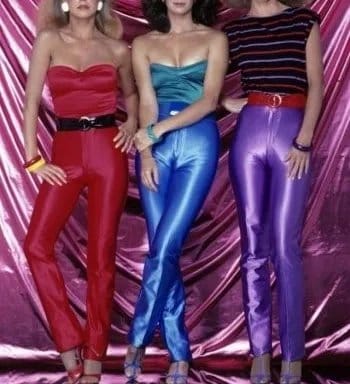
The 1970s expanded spandex’s territory significantly. Disco culture brought with it a celebration of the body and a demand for clothing that moved with dancers on the floor rather than restricting them. Jumpsuits, wrap dresses, and body-conscious silhouettes all found their way into spandex blends.
The decade also introduced spandex to a wider range of sportswear categories. Cycling, as a sport, had been using tight-fitting shorts made from wool and cotton. The introduction of nylon-spandex blends in cycling shorts transformed the sport’s kit. The shorts were lighter, more aerodynamic, and far more comfortable for long rides. The same logic carried over to running tights, gymnastics leotards, and athletic base layers.
One cultural moment from the late 1970s that helped cement spandex in mainstream consciousness came in 1978, when Olivia Newton-John appeared in her iconic skin-tight black satin pants in the film Grease. While technically not spandex, the look captured the cultural appetite for body-hugging, movement-friendly clothing that spandex was uniquely positioned to deliver.
By the end of the 1970s, spandex had moved decisively out of foundation garments and into activewear. The next decade would take it much further.
The 1980s: The Decade That Went All In
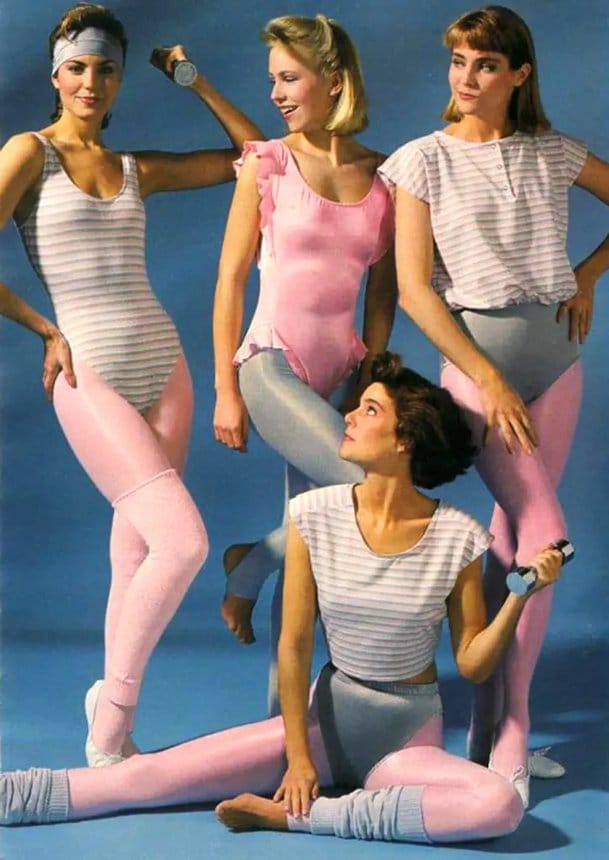
If there’s one era that’s synonymous with spandex in popular culture, it’s the 1980s. And the reason is the aerobics boom.
Jane Fonda released her first workout video in 1982. It sold over a million copies and became the bestselling home video of its time. Millions of Americans were suddenly doing aerobics in their living rooms, wearing exactly what Fonda wore: brightly colored leotards, high-cut bodysuits, shiny Lycra leggings, and leg warmers. The look was bold, physical, and unapologetically body-conscious. It was also everywhere.
“Women’s bodies were now shaping the clothes, rather than clothes shaping the body.”
Fashion editor observation on the 1980s spandex shift, cited by Spandexbyyard.comThe aerobics look didn’t stay in the gym. It spilled onto the streets. Wearing leggings with an oversized off-the-shoulder sweatshirt became a legitimate casual outfit, popularized partly by the 1983 film Flashdance. Cycling shorts, which had been exclusively athletic gear, became streetwear layered under blazers or short skirts. This was a genuinely radical blurring of the line between workout clothing and fashion clothing, and it happened fast.
High fashion took notice. Azzedine Alaïa, the Tunisian-French designer often called the “King of Cling,” used Lycra blends to create sculptural, second-skin dresses that celebrated the human form. His work was serious fashion, worn by serious fashion people, and it made stretch fabric legitimate in the upper reaches of the industry. Donna Karan’s landmark 1985 “Seven Easy Pieces” collection made the sleek bodysuit a cornerstone of the professional woman’s wardrobe: a stretch foundation that could go from the gym to the office with a change of blazer.
Neon leotards and bodysuits
High-cut spandex leggings
Cycling shorts as streetwear
Lycra minidresses and bodysuits
Leg warmers over spandex tights
Jane Fonda: aerobics as pop culture
Azzedine Alaïa: Lycra as high fashion
Donna Karan: the bodysuit as workwear
Madonna: spandex as performance art
Flashdance: gym wear as street style
Workout clothes became fashion clothes
Fit and movement became style criteria
Comfort stopped being a trade-off
Stretch legitimized in high fashion
The gym-to-street transition was born
By the end of the 1980s, virtually every corner of the fashion market had some relationship with spandex. The question was no longer whether stretch fabrics belonged in fashion. The question was how much stretch, and where.
The 1990s: From Excess to Everyday
The 1990s began as a reaction against the excess of the 1980s. Grunge culture pushed toward baggy, deliberately unstyled clothing. The neon leotard was replaced by the flannel shirt. But spandex didn’t retreat. It simply went quieter, working its way into everyday clothing in less visible but deeply influential ways.
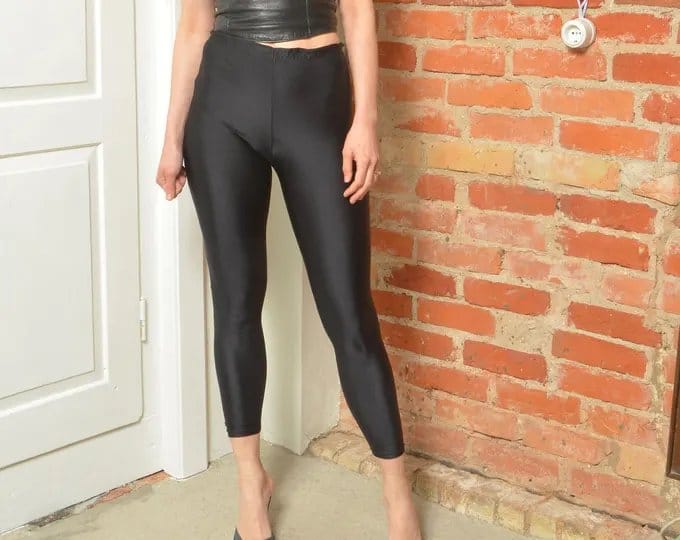
Black spandex leggings paired with an oversized sweater or long top became a casual staple for young women throughout the decade. Not neon, not high-cut, not gym-coded, just comfortable, practical, body-skimming bottoms that worked for errands, class, and weekends. The look was so ubiquitous it barely registered as a “trend.” It had become clothing.
Meanwhile, stretch denim was quietly transforming the jeans market. Early stretch denim had existed since the late 1970s, but the 1990s saw major denim brands begin adding 1 to 3% elastane to their women’s jeans as standard. It was in the 1990s that major brands began adding a touch of elastane to denim to create form-fitting but comfortable stretch jeans, and by the mid-90s, slim-fit women’s jeans with spandex content were ubiquitous, allowing the skinny jean silhouette to gain traction ahead of its 2000s heyday.
The 1990s also saw spandex work its way into office clothing. Retailers like Banana Republic began incorporating Lycra blends into men’s shirts, pants, and suits. A small percentage of spandex in woven fabric meant office workers could bend and sit more comfortably in their suits, and garments creased less. Nobody talked about it because the change was invisible in the fabric. But the expectation of comfort it created was permanent.
By the decade’s end, Princess Diana’s off-duty cycling shorts looks had become some of the most photographed casual fashion moments of the era. Spandex had earned its place not just as gym wear or fashion statement, but as genuine everyday clothing.
The 2000s: Stretch Becomes the Standard
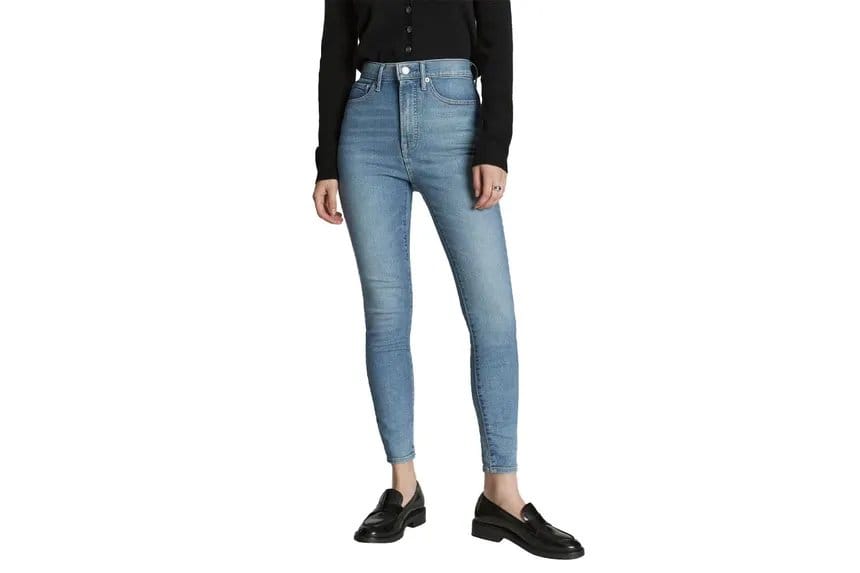
The 2000s were when consumer expectations permanently shifted. By the 2000s, consumers had come to expect stretch in most of their apparel. The idea of a rigid, non-stretch garment began to feel outdated for everyday wear. That’s a remarkable cultural shift to happen in less than four decades from Lycra’s launch.
The decade’s defining fashion item, the premium skinny jean, would have been physically unwearable without spandex. A truly rigid denim skinny jean would have been almost impossible to put on, and deeply uncomfortable once on. Denim innovators incorporated just enough elastane to make the silhouette comfortable and flattering, and the skinny jean became the dominant denim style for most of the decade and beyond.
At the same time, Sara Blakely founded Spanx in 2000, taking spandex-powered shapewear to a mainstream consumer audience in a way that hadn’t been done since the girdle era. The difference was that Spanx was marketed on comfort and confidence rather than correction and restriction. It was spandex repackaged for a new generation, and it worked spectacularly. Spanx became a billion-dollar brand.
On the designer front, Stella McCartney’s collaboration with Adidas, launched in 2004, brought genuine fashion credibility to performance garments. It signaled that the boundary between gym clothes and designer fashion had essentially dissolved. By the end of the decade, it was not unusual to see designer sneakers paired with leggings on a fashion runway.
Read our full guide to stretch denim fabricEverything you need to know about stretch denim, fits, and how spandex changed jeansThe 2010s: Athleisure Takes Over

The 2010s cemented spandex as the backbone of contemporary apparel, thanks in large part to the athleisure movement. Yoga pants and gym leggings essentially became the new jeans, worn to brunch, travel, and even casual Fridays at work.
The word “athleisure” entered the fashion lexicon around 2013 to 2014, but the reality it described had been building for years. Lululemon, founded in 1998, had spent over a decade quietly convincing women that high-quality yoga pants were worth spending serious money on. By the early 2010s, the brand was a cultural phenomenon, and its nylon-spandex leggings were being worn by people who had never attended a yoga class in their lives.
What made athleisure different from the gym-wear-as-casual-wear trend of the 1980s was that it was deliberate, styled, and premium. These weren’t cheap leggings thrown on for grocery shopping. These were carefully designed, technically sophisticated garments made in specific color palettes, with flattering seam placements, moisture management, and opacity testing. Wearing them to brunch wasn’t laziness. It was a style choice.
The broader fashion industry scrambled to respond. High fashion designers like Alexander Wang and Virgil Abloh incorporated sporty spandex pieces such as cycling shorts and unitards into their runway shows. In denim, brands like Levi’s and Uniqlo began marketing 4-way stretch jeans with advanced spandex blends that could rebound and hold shape better than ever. By the end of the 2010s, spandex was everywhere: in the lining of a tailored Balenciaga jacket, in a fast fashion retailer’s $20 leggings, and even in specialist wearable tech garments.
The numbers tell the story: The global athleisure market was valued at over $400 billion in 2024. That figure is larger than the entire global luxury goods market. Spandex is the fiber at the center of all of it.
Spandex in Fashion Today
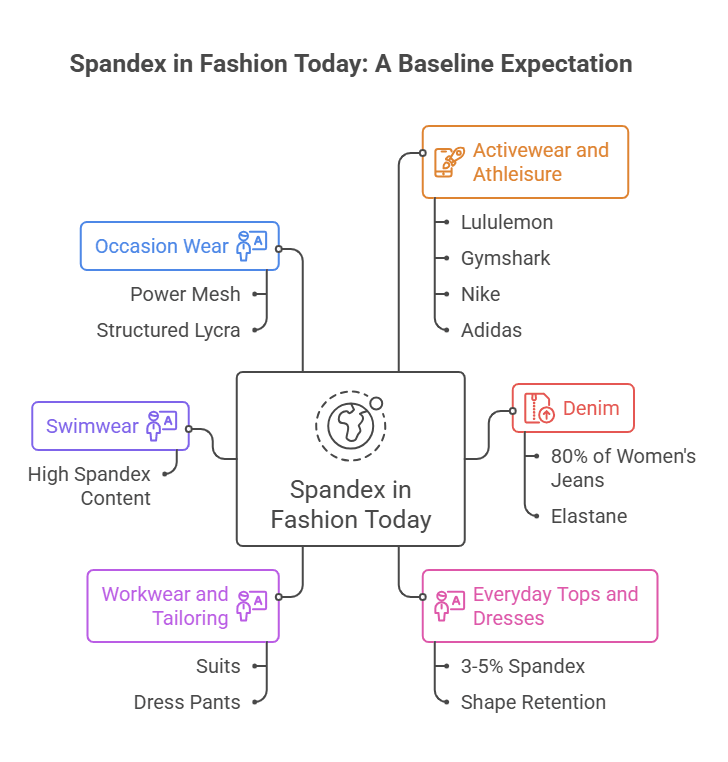
In 2025 and 2026, spandex is no longer a trend or a subcategory. It’s a baseline expectation. Consumers across every demographic now expect their clothing to move with them, recover its shape, and require minimal care. Spandex delivers all three, and no other fiber does it as well or as affordably at scale.
The categories it now occupies include virtually the full wardrobe:
- Activewear and athleisure: the dominant force, driven by brands like Lululemon, Gymshark, Nike, and Adidas, plus countless direct-to-consumer labels. The global athleisure market reached $425 billion in 2025 and is projected to approach $941 billion by 2034. [1]
- Denim: stretch denim is now the dominant form of jeans sold globally, with around 80% of women’s jeans containing spandex or elastane. [2]
- Everyday tops and dresses: even garments that appear to be plain knits or woven fabrics often contain 3 to 5% spandex for shape retention and comfort.
- Workwear and tailoring: suits, dress pants, blazers, and shirts increasingly incorporate spandex for ease of movement through the working day.
- Swimwear: the category where it all started, and still one of the highest spandex-content garment types in any wardrobe.
- Occasion wear: evening gowns and formal dresses now commonly use power mesh or structured Lycra linings beneath outer fabrics to shape and support without the weight of traditional boning or structure.
What’s changed most recently is the premium end of the market. Spandex is no longer just for mass-market activewear. It’s in couture. It’s in tailoring from houses that would once have considered stretch fabric beneath them. The consumer won this argument, and the fashion industry adjusted.
2026 Fabric Trends: What’s In, Out, and What to SewSee how spandex blends feature in this year’s biggest fabric storiesHow Spandex Changed Denim Forever
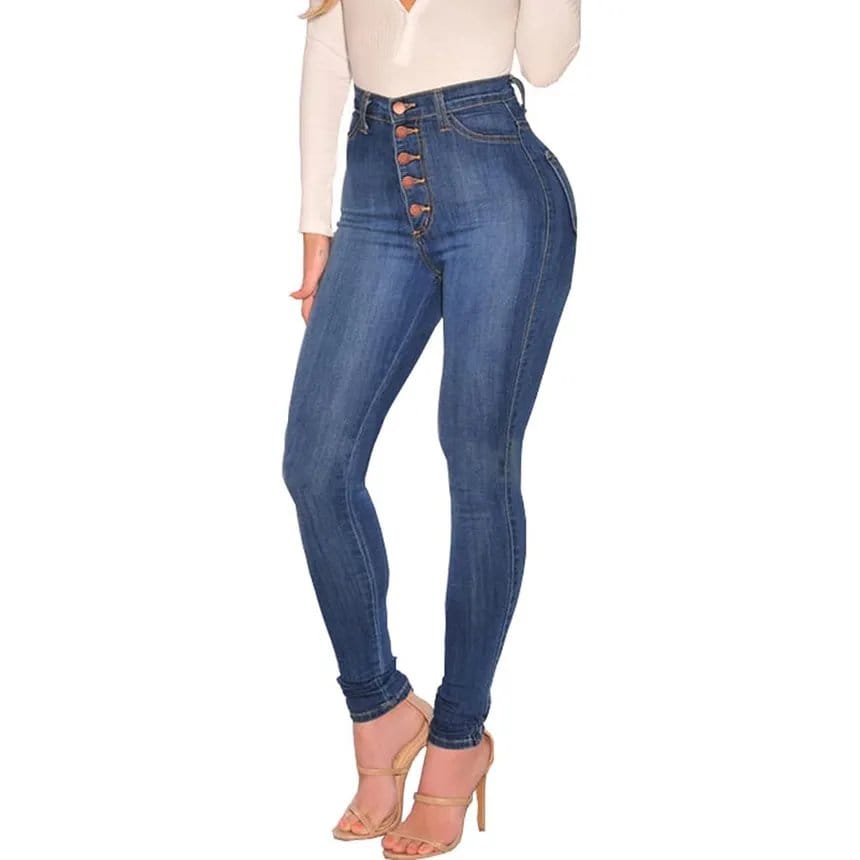
The denim story deserves its own section because it’s one of the most dramatic examples of how spandex altered a category it originally had no business being in.
Denim was invented to be tough. The whole point of the fabric was rigidity, durability, and resistance to wear. It was workwear, designed for miners and cowboys, and the cotton twill weave that gave denim its strength was also what made it stiff, uncomfortable, and slow to break in. For most of the twentieth century, breaking in a pair of jeans was an accepted rite of passage. You wore them until they softened and shaped to your body.
Spandex eliminated that process entirely. A 2023 survey found 65% of consumers prefer stretch denim for comfort, with 80% of women’s jeans now containing 2 to 4% spandex. Those numbers represent a complete transformation of consumer preference within roughly thirty years.
The practical effects on the denim industry have been significant. Better-fitting jeans mean fewer returns, fewer refunds, and higher customer satisfaction. The ability to offer skinny, slim, and body-conscious silhouettes without sacrificing comfort opened enormous new market segments. Stretch denim also enabled the jeggings category, effectively a jean-legging hybrid that sits at the intersection of denim fashion and athleisure comfort.
Not everyone was happy about it. Diehard denim enthusiasts, the selvedge denim community, raw denim devotees, have long considered stretch denim a compromise of everything that made denim worth wearing. Their argument is that rigid denim develops a character over time that stretch denim cannot replicate, the fades, creases, and wear patterns that form uniquely to the individual wearer. They’re not wrong. But they’re a small minority. Most consumers chose comfort, and the market followed.
In 2016, Levi’s launched a stretch version of their iconic 501 model, the world’s best-known jean, essentially acknowledging that even the most historically significant rigid denim couldn’t hold out against the consumer preference for stretch.
Complete Guide to Stretch Denim FabricHow stretch denim is made, the best blends, and how to care for itSpandex and High Fashion
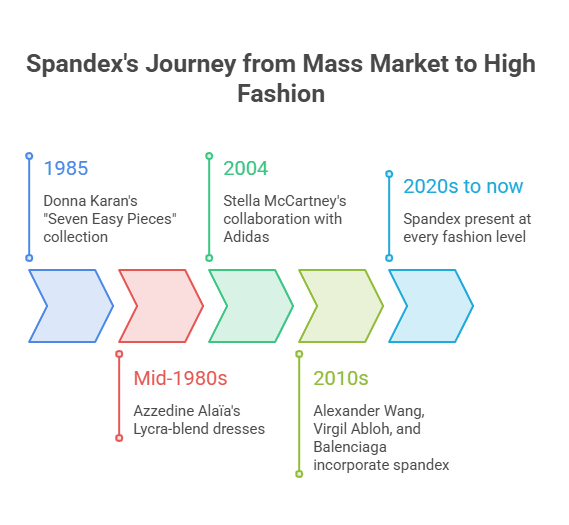
For much of its early history, spandex was associated with mass-market clothing: affordable activewear, basic leggings, budget swimwear. High fashion kept its distance. Stretch was considered a concession to comfort, and comfort was considered slightly at odds with seriousness.
That attitude started shifting in the 1980s, and by the 2010s it had reversed completely. Here’s how the key moments unfolded:
Donna Karan’s “Seven Easy Pieces” collection made the stretch bodysuit a cornerstone of the professional woman’s wardrobe. Stretch as sophisticated workwear, not just gym wear.
Azzedine Alaïa, dubbed the “King of Cling,” elevated Lycra-blend dresses to high fashion. His sculptural, body-hugging designs were worn by models and celebrities and reviewed by serious fashion critics.
Stella McCartney’s collaboration with Adidas launched, bringing designer credibility to performance garments and signaling that the gap between fashion and athleticwear had closed.
Alexander Wang, Virgil Abloh, and Balenciaga all incorporated spandex pieces into runway collections. Cycling shorts appeared in high fashion shows. Stretch linings became standard in evening gowns from luxury houses.
Spandex is now present at every level of fashion, from fast fashion leggings to couture gowns. The distinction between “fashion fabric” and “performance fabric” has largely dissolved.
Today, the presence of spandex in a garment tells you almost nothing about its price point or fashion credibility. A $15 pair of leggings and a $1,500 designer bodysuit might both contain the same fiber in roughly the same proportion. What separates them is construction quality, fit precision, fabric weight, colorway, and the name on the label.
Social Media and the Stretch Explosion

No discussion of spandex in modern fashion is complete without acknowledging the role social media has played in the last decade.
Instagram launched in 2010. TikTok became a global force around 2018 to 2019. Both platforms rewarded visual content that was immediate, physical, and body-forward. Fitness content, workout tutorials, transformation videos, and activewear try-ons all thrived in this environment. And the clothing category best suited to all of that content was spandex-based activewear.
Gymshark, founded in 2012 by teenager Ben Francis, built a billion-dollar brand almost entirely through social media and influencer partnerships. The brand’s products, mostly nylon-spandex leggings and shorts, became status symbols in the fitness community precisely because of how they looked in workout videos and photo posts. Fitness influencer endorsements have been shown to drive significantly higher purchase intent for activewear compared to celebrity endorsements, primarily due to their perceived authenticity and relatable fitness journeys. Gymshark, which operates exclusively on a direct-to-consumer model, reached a valuation of USD 1.45 billion by leveraging micro-influencer collaborations.
The visual logic of social media also accelerated the athleisure trend in a specific way. Content creators who needed to film workout content and also create lifestyle content, outfit posts, food content, and travel content, found that high-quality spandex-based activewear photographed well in all contexts. Wearing your workout clothes to a coffee shop wasn’t laziness when it was also content creation. The gym-to-street transition that started with the 1980s aerobics boom found its full expression in the influencer economy.
The TikTok effect: The “hot girl walk” trend, which peaked in 2021 and 2022, drove enormous demand for matching spandex-blend activewear sets, particularly in neutral and pastel colorways. The trend was credited with significant sales increases for brands including Lululemon, Alo Yoga, and countless smaller activewear labels.
Spandex, Body Image, and Inclusivity

Spandex’s relationship with body image is genuinely complicated, and it’s worth taking it seriously rather than glossing over it.
On one hand, stretch fabric has been democratizing. Clothing that accommodates a wider range of body shapes and sizes, that doesn’t require a specific silhouette to wear comfortably, that moves with the body rather than demanding the body conform to it, is inherently more inclusive than rigid, unforgiving fabrics. The shift from structured, boned, non-stretch fashion toward stretch-dominant clothing has allowed more people to find garments that actually fit them.
Size-inclusive activewear has been one of the more meaningful developments of the 2010s and 2020s. Brands like Universal Standard, Girlfriend Collective, and Athleta expanded their spandex-blend ranges to include a genuine range of sizes, not just token additions at the outer edges of a standard range. The elasticity of spandex is part of what makes genuine size inclusivity possible in fitted garments: a fabric with no stretch tolerance is far harder to engineer across a wide size range.
On the other hand, the dominance of body-hugging spandex clothing in fashion imagery has historically been accompanied by narrow ideals of which bodies were shown wearing it. For decades, the marketing of Lycra activewear, shapewear, and stretch fashion presented a very specific body type as the aspirational norm, creating pressure rather than freedom.
The tide on this has shifted meaningfully in recent years. Body neutrality campaigns, plus-size representation in activewear marketing, and the broader body positivity movement have all pushed the fashion industry toward more representative imagery. Spandex itself is neutral in this debate. It’s the marketing and styling choices that carry the cultural weight.
How to Style Spandex Blends: Practical Guidance for Today
Understanding the history of spandex in fashion is interesting. Knowing how to actually wear it well in 2025 and 2026 is useful. Here’s a practical breakdown of how spandex blends work across different wardrobe categories today.
Athleisure: The Art of the Casual-but-Intentional Look
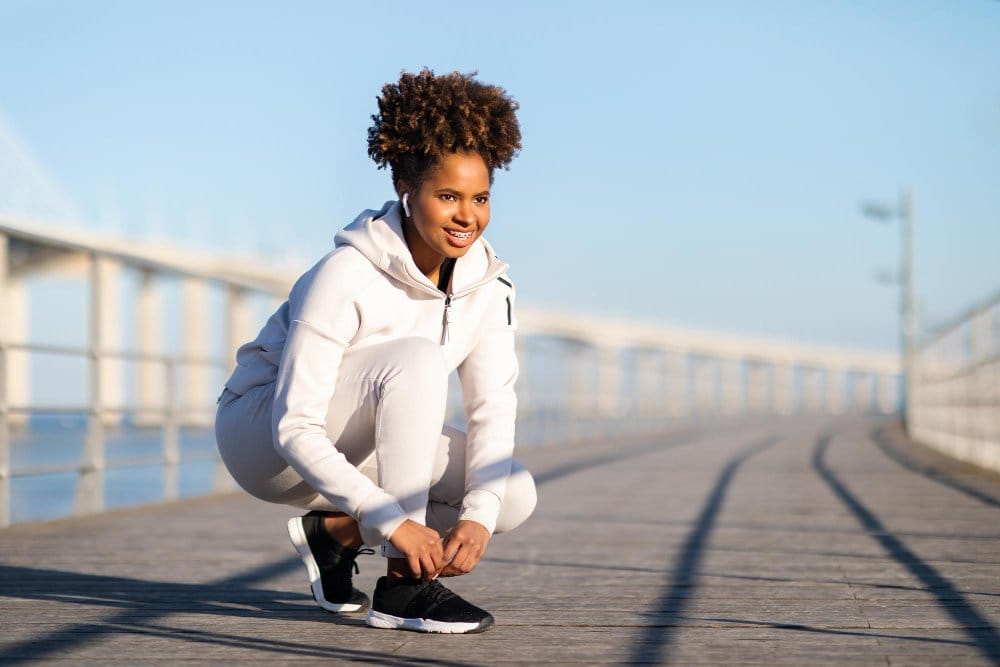
The key to athleisure done well is intention. Matching sets in a single color palette look considered rather than thrown together. A fitted nylon-spandex legging in a neutral color, paired with a structured blazer and clean sneakers, reads as a deliberate style choice rather than gym clothes worn by mistake. The fabric quality matters too: cheap, see-through leggings undermine the whole effect regardless of how they’re styled.
Stretch Denim: Finding Your Right Percentage

Not all stretch denim feels the same. A 1 to 2% spandex content gives you a slight give that makes jeans easier to wear all day without significantly changing how the denim looks or feels. A 4 to 6% content gives you genuine stretch that moves with you, closer to a jegging in feel. A higher content, 8% or more, starts to feel quite elastic, almost legging-like, and will lose shape faster over time. For most people, 2 to 4% is the sweet spot.
Workwear: The Invisible Stretch Advantage

The best spandex-blend workwear is the kind you don’t think about. Trousers with 2 to 3% spandex that sit flat on the hanger but allow you to move freely when sitting, standing, and commuting. Blazers with a small amount of stretch in the lining that don’t pull or restrict arm movement. Look for the fiber content on the label rather than marketing terms like “comfort fit.” If there’s 2% or more spandex listed, the garment will move with you.
Occasion Wear: Stretch Hidden Inside

Modern evening wear and occasion dresses frequently use power mesh or structured Lycra as an inner layer beneath the main fabric. This invisible support provides shaping and structure without the rigidity of traditional boning. It’s worth looking for this in higher-price-point dresses: a gown that includes interior stretch structure will hold its shape through a long event far better than one that relies on structure alone.
Everyday Comfort: The 3 to 5% Sweet Spot

For everyday t-shirts, tops, and casual dresses, a 3 to 5% spandex content in a cotton or cotton-modal blend gives you the softness and breathability of natural fibers with just enough stretch to make the garment comfortable all day. This is the range where you barely notice the spandex is there, which is exactly the point.
| Style Category | Recommended Blend | Spandex % | What to Look For |
|---|---|---|---|
| Performance activewear | Nylon-spandex or polyester-spandex | 15 to 25% | 4-way stretch, moisture-wicking, opacity tested |
| Casual athleisure | Nylon-spandex or cotton-modal-spandex | 8 to 15% | Soft hand, shape retention, not see-through |
| Stretch jeans | Cotton-spandex or cotton-polyester-spandex | 2 to 4% | Recovers shape after sitting, holds color well |
| Casual tops and dresses | Cotton-spandex or rayon-spandex | 3 to 5% | Breathable, soft, minimal synthetic feel |
| Workwear and tailoring | Polyester-spandex or wool-spandex | 2 to 5% | Wrinkle-resistant, holds structure, comfortable seated |
| Swimwear | Polyester-spandex or nylon-spandex | 15 to 40% | Chlorine-resistant, quick-drying, retains shape in water |
Frequently Asked Questions
Spandex answered a need that traditional fabrics could not: clothing that moves with the body, recovers its shape, and stays comfortable through long periods of wear. The aerobics boom of the 1980s pushed it into mainstream fashion. The athleisure movement of the 2010s made it a wardrobe standard. Social media accelerated both of those trends by making fitness and comfort-forward clothing highly visible and aspirational.
The transition happened in stages. The 1980s aerobics boom first blurred the line between gym wear and street wear. Designers like Azzedine Alaïa and Donna Karan legitimized stretch fabric in high fashion during the mid-1980s. By the 1990s, stretch denim and everyday spandex blends were mainstream. The 2000s made stretch an expected feature of most garments, and the 2010s athleisure movement completed the transformation by making sportswear-derived clothing the dominant casual dress code globally.
Athleisure is no longer really a trend in the traditional sense. It’s a permanent category. The global athleisure market reached approximately $425 billion in 2025 and is projected to grow toward $941 billion by 2034. At that scale, it’s a fixture of how people dress, not a passing style moment. The specific aesthetic evolves season by season, but the underlying preference for stretch, comfort, and versatility in casual clothing is not going away.
Consumer preference drove this change. Around 65% of consumers say they prefer stretch denim for comfort, and approximately 80% of women’s jeans now contain some spandex or elastane. From a business perspective, stretch denim also reduces returns and increases customer satisfaction because it fits a wider range of body types more comfortably. Even Levi’s, the most historically traditional denim brand, launched a stretch version of their iconic 501 jeans in 2016.
At the premium end of activewear, you’re paying for the quality of the spandex blend, the engineering of the fit, fabric opacity testing, and construction details like flatlock seams and reinforced waistbands. Higher-quality spandex retains its recovery and shape through hundreds of washes rather than going saggy or misshapen quickly. The comfort difference between a well-engineered nylon-spandex legging and a cheap polyester-spandex version is real and noticeable during extended wear.
The relationship is complex. Stretch fabric has made clothing more inclusive in terms of fit, accommodating a wider range of body shapes than rigid fabrics can. Size-inclusive activewear has expanded meaningfully in recent years. However, the marketing of spandex-based clothing has historically presented narrow body ideals, which has created pressure alongside the practical liberation the fabric offers. This is changing, with more representative imagery in activewear marketing, but progress has been uneven across the industry.
Yes, and they increasingly are. Spandex-blend workwear including suits, dress trousers, and blazers with 2 to 5% spandex is now mainstream in most office environments. The stretch is invisible in the finished garment but makes a real difference in comfort through a long workday. Athleisure-influenced looks, like well-fitted spandex-blend trousers with a structured blazer, are considered office-appropriate in most workplaces today.
Conclusion: What Spandex Really Did to Fashion
The story of spandex in fashion is ultimately a story about who clothing is for. For most of fashion history, the answer was complicated. Clothing shaped and constrained the body to fit an ideal. Fit was achieved through structure, restriction, and careful tailoring to a specific silhouette. Comfort was secondary.
Spandex quietly reversed that priority. Once a fiber existed that could stretch to accommodate the body and return to shape without losing its form, the idea that clothing should conform to the body rather than the other way around became possible at scale. Not immediately, not all at once, but decade by decade, category by category, the fashion industry moved in that direction because consumers kept choosing it.
What this means practically for how you dress today: you live in the most comfortable era of clothing in human history, and spandex is a significant reason why. The jeans that don’t require breaking in. The workwear that doesn’t restrict you at your desk. The casual dress that moves comfortably through a full day. The swimsuit that fits and stays fitted. All of that came from one fiber, developed in a chemistry lab in Virginia in the 1950s, that was originally designed to replace the rubber in women’s girdles.
If you’re building a wardrobe today, understanding spandex blends helps you make smarter choices. A higher spandex percentage isn’t always better. The base fiber matters as much as the spandex content. Premium blends perform better over time and through more washes. And knowing what you’re buying, what the care requirements are, and what to expect from different blend types, is the difference between clothing that lasts and clothing that disappoints.
The fiber that nobody saw coming has become the fiber behind almost everything. That’s a remarkable sixty-year run, and there’s no sign it’s slowing down.
References
- Printful. “Athleisure Market Report for 2025: Trends and Opportunities.” printful.com. Accessed June 2026.
- Zeva Denim. “Spandex in Denim: Revolutionizing Comfort and Style.” lydenim.com. August 2025.
- Spandexbyyard.com. “History and Evolution of Spandex in Fashion.” spandexbyyard.com. November 2025.
- Mordor Intelligence. “Athleisure Market Size, Share, Trends and Growth Report 2031.” mordorintelligence.com. Accessed June 2026.
- The Economist / 1843 Magazine. “How Jeans Got Their Stretch.” 1843magazine.com. 2019.
Disclaimer: The information in this article is intended for general educational and informational purposes only. Market statistics are sourced from third-party industry reports and are subject to change. Historical fashion information reflects widely documented accounts and editorial interpretation. This article does not constitute professional fashion, retail, or financial advice.