
Last Updated:
Everything you need to know about toddler sizing, from 2T to 5T and beyond, including how to measure your child, the best fabrics, washing tips, and when to size up.
Table of Contents
- What Are Toddler Clothing Sizes?
- What Size Does Toddler Clothing Go Up To?
- Complete Size Breakdown: 2T Through 5T
- 24 Months vs. 2T: What Is the Difference?
- How to Measure Your Toddler for Clothing
- Signs It Is Time to Size Up
- Tops vs. Bottoms: Why Your Toddler May Wear Two Different Sizes
- Body Type Variations: Slim, Average, and Chubby Builds
- What Comes After 5T?
- Best Fabrics for Toddler Clothes
- Washing and Care: How to Stop Clothes from Shrinking
- Seasonal Sizing and Layering Tips
- Buying Toddler Clothes as a Gift
- Building a Toddler Capsule Wardrobe
- Budget Tips and Cost-Per-Wear Thinking
- Safety Standards Every Parent Should Know
- Brand Size Variations and Shopping Tips
- International Sizing Guide
- Full Size Progression: Preemie to Big Kids
- Frequently Asked Questions
- Conclusion
If you have ever stood in a store holding up two different sizes of toddler pants while your little one runs circles around your legs, you are not alone. Toddler clothing sizes can be genuinely confusing, especially when you are switching from baby sizes and suddenly a whole new labeling system shows up.
This guide answers every question you are likely to have about toddler clothing sizes. Whether you are shopping for your own child, buying a gift for a friend’s toddler, or trying to figure out why your 3-year-old fits a 4T in jeans but a 2T in shirts, you will find the answer here. Let’s get into it.
What Are Toddler Clothing Sizes?
Toddler clothing sizes use a letter-and-number system that makes them easy to spot on a hanger or label. Sizes are labeled with a “T” after the number, like 2T, 3T, 4T, and 5T. The “T” simply stands for toddler.
These sizes are different from baby sizes (which go by months, like 0-3M or 18-24M) and different from regular kids’ sizes (which use plain numbers, like 4, 5, 6, and so on). Each type is cut differently because kids’ bodies change a lot between infancy, the toddler years, and early childhood.
The Three Main Sizing Categories at a Glance
Infant Sizes
0M–24M
Sized by months. Slim cut, short proportions, designed for babies who are lying down or just starting to move.
Toddler Sizes
2T–5T (or 6T)
Sized by age with a “T” tag. Extra room for diapers or pull-ups, built for active running and climbing.
Kids’ Sizes
4–16
Plain numbers, no “T.” Slimmer fit that assumes the child is potty trained, with longer arms and legs.
The biggest thing that sets toddler sizes apart is the fit. Toddler clothes are cut with extra width through the seat and belly to leave room for diapers or training pants. They also have shorter torsos and sleeves compared to kids’ sizes of the same number, which fits the shorter, rounder body shape toddlers typically have. Once your child is fully potty trained and starting to slim out, the transition to regular kids’ sizes usually makes more sense.
What Size Does Toddler Clothing Go Up To?
The largest standard toddler size is 5T. This is what you will find at most major retailers like Target, Old Navy, Carter’s, and The Children’s Place. Some brands, including OshKosh B’gosh and a handful of specialty labels, offer 6T as an extended toddler size for bigger kids who still need the toddler cut.
After 5T (or 6T if the brand carries it), toddler sizing ends completely. Your next stop is the regular kids’ department, which starts around size 4, 5, or 6 depending on the brand.
The Toddler Size Progression
18m–2.5yr
2.5–3.5yr
3.5–4.5yr
4.5–5.5yr
5–6yr
Transition
5T vs. Kids’ Size 6: What Changes?
Size 5T (Toddler)
- Extra room in seat and belly for diapers/pull-ups
- Shorter torso, arms, and legs
- Rounder overall cut
- Fits approx. 41–43 inches tall, 37–42 lbs
Kids’ Size 6
- Slimmer cut, no diaper room
- Longer torso, arms, and legs
- Assumes child is fully potty trained
- Fits approx. 45–47 inches tall, 42–48 lbs
A key thing to know: 5T and kids’ size 6 are not interchangeable even though they cover a similar age range. They fit differently enough that you should always try both or check measurements before deciding which one to go with for your child.
Complete Size Breakdown: 2T Through 5T
The number in a toddler size gives you a starting point for age, but your child’s actual measurements matter far more than their birthday. Use the table below as your reference when shopping, and always check the specific brand’s size chart since sizing can vary between manufacturers.
| Size | Typical Age | Height | Weight | Chest | Waist | Inseam |
|---|---|---|---|---|---|---|
| 2T | 18 months – 2.5 yrs | 32–34 in | 25–28 lbs | 20–21 in | 19.5–20 in | 14–16 in |
| 3T | 2.5 – 3.5 yrs | 35–37 in | 28–32 lbs | 21–22 in | 20–20.5 in | 16–18 in |
| 4T | 3.5 – 4.5 yrs | 38–40 in | 33–36 lbs | 22–23 in | 20.5–21 in | 18–20 in |
| 5T | 4.5 – 5.5 yrs | 41–43 in | 37–42 lbs | 23–24 in | 21–21.5 in | 20–22 in |
| 6T | 5 – 6 yrs (select brands) | 43–46 in | 42–47 lbs | 24–25 in | 21.5–22 in | 22–24 in |
These measurements are averages based on U.S. sizing standards. Your child may fall slightly outside any of these ranges, and that is completely fine. What matters is finding a fit that lets them move freely, is not digging into their waist, and does not have fabric bunching in places it should not.
How Long Will Your Toddler Stay in Each Size?
Most toddlers spend about 6 to 12 months in each size, though this varies a lot based on how fast your child grows. Some kids rocket through 2T in just 3 or 4 months. Others stretch a single size for well over a year. Here is a general guide:
| Size | Average Time in Size | Growth Rate Note |
|---|---|---|
| 2T | 6–10 months | Fast growth period; may outgrow quickly |
| 3T | 6–12 months | Most popular toddler size range |
| 4T | 8–14 months | Growth begins to slow for many kids |
| 5T | 10–16 months | Longest-lasting toddler size on average |
24 Months vs. 2T: What Is the Difference?
This is one of the most searched questions about toddler sizing, and the confusion makes total sense. Both sizes are made for children around age 2, so why are they different? The short answer: the cut is different, not just the label.
24 Months (24M)
- Category: Infant/baby sizing
- Cut: Slimmer, more fitted body
- Torso: Shorter
- Diaper room: Designed specifically for diapers
- Style: More “babyish” designs (snaps, onesies)
- Logic: Fits children up to 24 months
Size 2T (Toddler)
- Category: Toddler sizing
- Cut: Roomier body for active movement
- Torso: Slightly longer
- Diaper room: Has some, but less than 24M
- Style: More toddler-forward designs
- Logic: Fits children starting at 2 years
A big thing many parents do not realize is that the sizing logic flips at this transition point. Baby sizes like 24M are labeled as the maximum age for that size. Toddler sizes like 2T are labeled as the minimum age. So 2T is designed to last your child through most of their third year of life, not just the beginning of it.
As a practical guide: if your child is still in diapers and just turning 2, try both sizes. If they are potty training or have already made the jump to pull-ups, 2T will likely be the better fit going forward.
How to Measure Your Toddler for Clothing
Measuring a toddler sounds straightforward until your child decides they would rather sprint around the room than stand still for 45 seconds. Here are the measurements you need and some real-world tips for actually getting them on a moving target.
What You Will Need
- A soft, flexible fabric measuring tape (not a rigid metal one)
- A pencil or pen and something to write on
- A flat wall or door frame for height
- A helper if possible, since two sets of hands make this much easier
Step-by-Step Measuring Guide
- Height
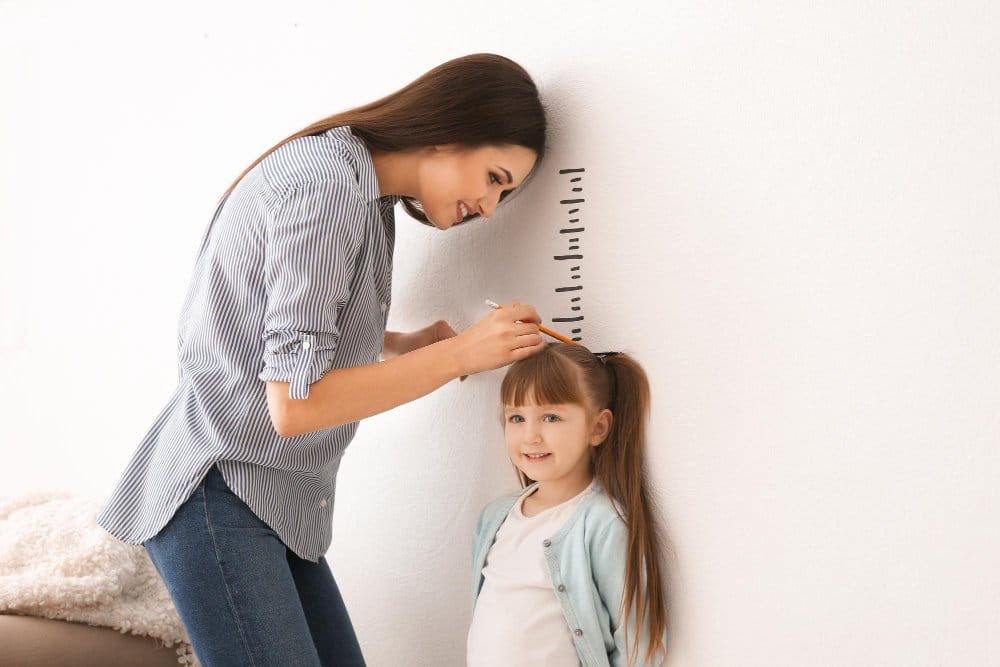
Have your toddler stand barefoot against a wall. Place a flat hardback book on top of their head, level with the wall, and mark where it hits. Measure from the floor to that mark. This gives you a more accurate result than measuring your child directly. Do it when they are calm. Nap-time hair works too if they sleep on their back. - Weight
Step on your bathroom scale by yourself, note the number, then step back on while holding your toddler. Subtract your weight from the combined reading. You do not need an exact number; ballpark is fine for sizing purposes. - Chest
Wrap the measuring tape around the fullest part of their chest, just under the armpits. It should sit snugly without pulling tight. This measurement is used mainly for tops, jackets, and one-piece outfits. - Waist
Measure around their natural waistline, roughly one inch above the belly button. Keep the tape relaxed, not sucked in. This is the measurement that matters most for pants, shorts, and skirts. - Inseam
This one is easiest to do on a pair of pants that already fits your child well. Lay the pants flat on a table and measure from the crotch seam down to the hem along the inside leg. This tells you what inseam length to look for in new pants. - Match to a Size Chart
Compare all measurements to the specific brand’s size chart, not just a generic guide. If any measurement falls between two sizes, go up. If your child is tall but thin, prioritize height for pants length and check if the brand offers adjustable waistbands.
Tips for Measuring a Wriggly Toddler
- Try measuring during a calm activity like watching a favorite show or reading a book together.
- Turn it into a game. Try saying “Let’s see how tall you are!” often works well with 2- and 3-year-olds.
- Measuring once every 3 to 4 months is usually enough to stay ahead of growth spurts.
- Keep a simple notebook or use your phone’s notes app to record measurements with a date. You will thank yourself later.
- If your child is in a phase of maximum chaos, measuring height on a doorframe can be done in about 5 seconds.
Track your child’s measurements over time with the Toddler Size Transition Tracker. It helps you predict when your child is likely to move up to the next size, so you can plan purchases in advance.
Signs It Is Time to Size Up
Toddlers rarely grow in a straight line. Your child might stay in one size for months, then suddenly outgrow it in a matter of weeks. Here is a clear checklist of the signs that it is time to go up a size:
Physical Signs in the Clothing
- The waistband is leaving red marks or indentations on their skin
- Shirt hems are consistently riding up above the belly
- Pant hems sit noticeably above the ankle (not just a trendy crop look)
- Fabric is stretching or puckering at the seams, especially around the shoulders and seat
- Buttons or snaps are pulling and hard to fasten
- Their diaper or pull-up is visibly sticking out above the waistband of pants
- Sleeves are more than an inch or two above the wrist
Signs in How Your Child Feels
- They keep pulling at their waistband, collar, or sleeves
- They say clothes feel “tight,” “scratchy,” or “uncomfortable”, even if nothing looks wrong to you
- They refuse to wear certain items they used to love (fit discomfort is a common reason)
- They have trouble moving freely, bending, or crouching in their clothes
Tops vs. Bottoms: Why Your Toddler May Wear Two Different Sizes
This surprises a lot of parents, but it is actually pretty common for a toddler to wear one size in tops and a completely different size in pants. If your child is wearing a 3T shirt but a 4T pair of pants, nothing is wrong. That just means their body proportions are different from the average for their age, which is entirely normal.
The Most Common Scenarios
| Build Type | What Usually Happens | Best Approach |
|---|---|---|
| Rounder belly, slim chest | Pants need bigger waist, tops fit smaller | Look for adjustable waistbands in pants; size tops by chest measurement |
| Long legs, shorter torso | Pants need bigger inseam, tops fit the same | Size up in pants for length; stay in current size for tops |
| Tall and slim | Needs bigger size for height but waist is loose | Size up and use adjustable waistbands to cinch the fit |
| Wide shoulders, slim waist | Tops need bigger size, bottoms fit smaller | Size tops by shoulder/chest, bottoms by waist |
The practical tip here: always buy tops and bottoms separately. Avoid matching sets where both pieces must be the same size unless you know those specific measurements work across the board for your child. Separates give you far more flexibility.
For more on how different garment types are sized, check out our guide on how kids’ clothes sizes work.
Body Type Variations: Slim, Average, and Chubby Builds
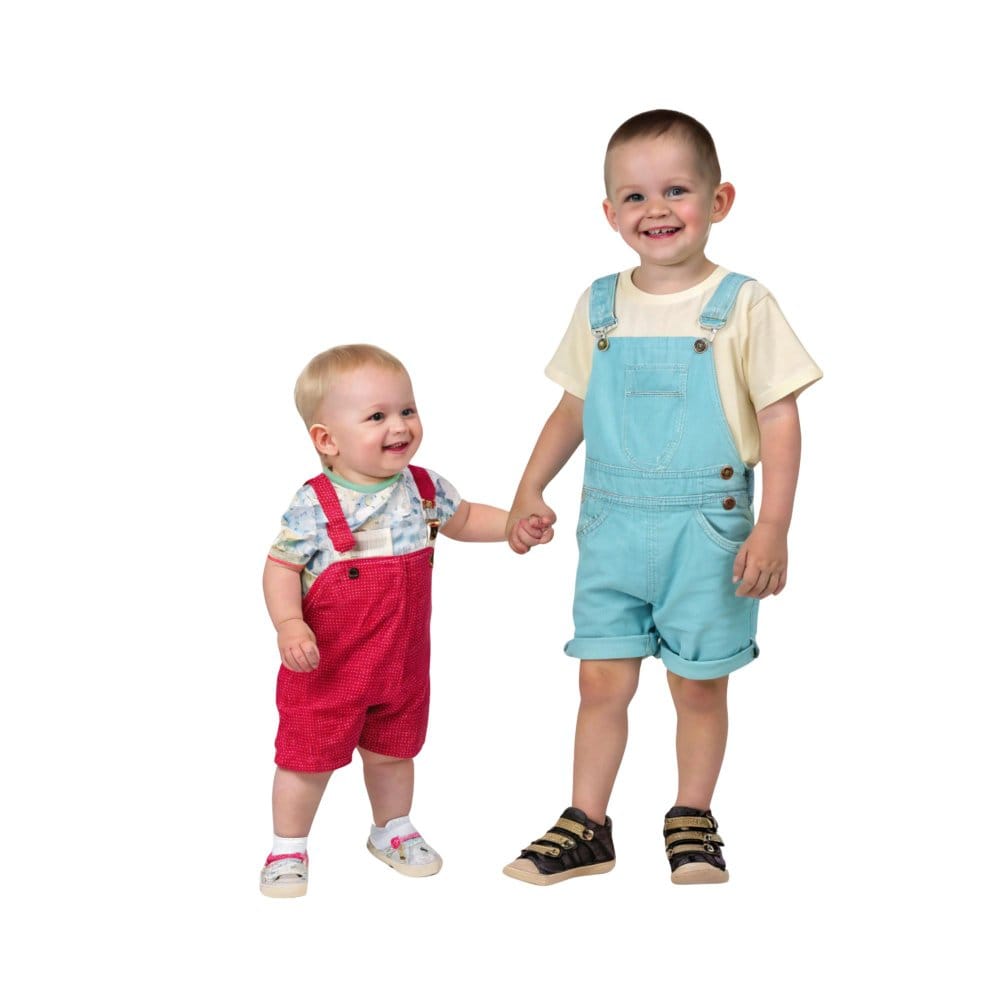
Standard toddler sizing is built around the “average” child. But toddlers come in every possible body shape, and if your child does not fit that average, finding the right fit can feel frustrating. Here is how to approach shopping for different builds.
Slim or Petite Toddlers
If your toddler is on the slimmer side or shorter than average for their age, standard sizing will often be too roomy in the waist and too long in the leg. Things that help:
- Adjustable waistbands: elastic waistbands with internal buttons are a game-changer. Many brands like Carter’s and Old Navy include them on toddler pants.
- Slim-cut lines: some brands (OshKosh, H&M) offer a slim cut option in select sizes.
- Rolling or hemming: pants can be rolled or hemmed to the right length without affecting fit elsewhere.
- Sizing down: if your child’s waist and chest measurements match a smaller size, buy that even if the age label seems young.
Chubby or Husky Toddlers
Toddlers with a fuller belly, thicker thighs, or broader frame often find standard waistbands too tight even when the length fits. A few things that help:
- Size up in pants: choosing a size up and using the adjustable waistband to tighten gives a better fit than squeezing into a size that fits everywhere except the waist.
- Stretchy fabrics: look for pants and shorts made with jersey cotton or fabrics that include a bit of spandex or elastane. They move with the body much better than stiff denim.
- Pull-on waistbands: fully elasticized waistbands (no button, no adjusters) often fit fuller builds more comfortably than any other style.
- Separates over sets: buy tops and bottoms in different sizes as needed rather than matching sets that force one size across both pieces.
Toddlers Who Are Tall for Their Age
Tall toddlers often end up in a size that fits their height but is too roomy in the waist or chest. This is the same situation as slim kids, just for different reasons. Adjustable waistbands and belt loops are your best friends. You can also look for brands that offer tall cuts in toddler sizes, though these are less common than in adult clothing.
What Comes After 5T? Transitioning to Kids’ Sizes
Once your child outgrows 5T (or 6T if that is where you are), it is time to move into the kids’ or “big kid” section. This transition usually happens somewhere between ages 4.5 and 6, but every child gets there at their own pace.
What Changes When You Move to Kids’ Sizes
- No more extra room in the seat and belly; the cut is slimmer throughout
- Longer proportions in the arms, torso, and legs
- No more onesie-style snaps or pull-on-only waistbands in the same way
- Sizes assume the child is fully potty trained
- More variety in fits (slim, regular, relaxed) starts appearing at some brands
The First Kids’ Sizes After Toddler
| Kids’ Size | Age Range | Height | Weight | Notes |
|---|---|---|---|---|
| XS / 4 | 4–5 yrs | 41–44 in | 38–44 lbs | Closest to 5T in measurements, slimmer cut |
| S / 5–6 | 5–7 yrs | 44–48 in | 44–55 lbs | More like a school-age cut |
| 6X | 5.5–6.5 yrs | 46–48 in | 50–57 lbs | Bridge size; between 6 and 7; offered by some brands |
For a deeper look at how regular kids’ sizes work, read our full guide on how kids’ clothes sizes work.
Best Fabrics for Toddler Clothes
Choosing the right fabric makes a bigger difference in toddler clothing than most parents realize. Toddlers are rough on clothes. They crawl, roll, spill, sweat, and generally put every garment through its paces. You want fabrics that are soft against sensitive skin, easy to wash, and durable enough to actually last. Here is a rundown of the most common fabrics you will find in toddler clothing and how they compare.

Cotton
Cotton is the most common fabric in toddler clothing, and for good reason. It is breathable, soft, hypoallergenic, and holds up well to repeated washing. The main downside is that 100% cotton can shrink, especially in a hot dryer. For toddler basics like T-shirts, leggings, and pajamas, cotton or a cotton blend is almost always a solid pick.
Bamboo / Viscose from Bamboo
Bamboo fabric has become very popular in baby and toddler clothing, and it earns the hype. It is incredibly soft, naturally hypoallergenic, temperature-regulating, and moisture-wicking. It is a top pick for children with sensitive skin or eczema. Bamboo fabric also tends to stay soft wash after wash. If your child has skin reactions to other fabrics, bamboo or a bamboo-cotton blend is worth trying. For more on the softest fabrics for sensitive skin, check out our dedicated guide.
Merino Wool
For winter clothing, merino wool is one of the best options you can buy for a toddler. It is naturally soft (not scratchy like traditional wool), temperature-regulating, moisture-wicking, and odor-resistant. Merino is great for base layers and winter tops. It is not as easy to care for as cotton, most merino items need a gentle machine wash or hand wash, but the performance is worth it for cold-weather use.
Fleece
Fleece is the go-to fabric for outer layers, zip-up jackets, and cozy sweaters. It is warm, lightweight, and extremely easy to care for. Fleece dries fast and holds its shape well. The downside is it is not breathable enough for warm weather, and it can generate static. For layering in fall and winter, it is hard to beat.
Organic Cotton
Organic cotton is grown without synthetic pesticides and is processed with fewer chemicals. This makes it a great choice for children with sensitive skin or parents who prefer to limit chemical exposure in clothing. It performs similarly to regular cotton in terms of care but can be softer right out of the bag. Check out our guide on organic vs. conventional infant and toddler clothing to weigh up the options.
Fabrics to Avoid for Everyday Toddler Wear
- Rough synthetic fabrics without a soft lining, they irritate sensitive skin
- Dry-clean-only fabrics, since toddler clothes get dirty constantly and need regular machine washing
- Scratchy lace or embellishments that rub against skin
- Heavy stiff denim without any stretch, which limits movement for active play
- Anything with a strong chemical smell straight out of the packaging, which is a sign of heavy dye or finish treatment; always pre-wash new clothes
Not sure which fabric is right for your child? Try the Toddler Fabric Comparison Matrix to compare materials side by side based on softness, durability, warmth, and care ease.
Washing and Care: How to Stop Clothes from Shrinking
Buying the perfect size only to have it shrink in the first wash is one of the most frustrating things about shopping for toddler clothes. Here is what you need to know to keep those clothes fitting right for as long as possible.
Why Toddler Clothes Shrink
Cotton is the most common material in toddler clothing and it shrinks when exposed to heat, both from hot water and from dryer heat. The fabric fibers tighten and contract, and a single hot wash can cause noticeable shrinkage, particularly in untreated 100% cotton. For a size 3T shirt, even a 3% shrink is enough to make it fit noticeably differently.
Step-by-Step Care Guide for Toddler Clothes
- Wash new clothes before wearing
Always run new clothes through a wash cycle before putting them on your child. This removes any chemical finishes or dyes used in manufacturing, pre-shrinks the fabric (so you know what size you are actually working with), and makes the fabric softer. Read our guide on why you should wash toddler clothes before use. - Use cold water
Cold water is your best protection against shrinkage. It is also gentler on colors, since hot water bleaches and fades fabric over time. For almost all toddler clothes, cold water washes are the way to go. For heavily stained items, you can use a stain treatment first and still wash cold. - Choose a gentle detergent
Use a detergent designed for sensitive skin, especially for young toddlers. Avoid detergents with heavy fragrances, optical brighteners, or chlorine bleach as these can irritate skin and damage fabric. - Skip the high-heat dryer
This is the biggest cause of shrinkage. If you use a dryer, run it on a low-heat or permanent press setting. Better yet, air dry cotton, bamboo, and merino items. Fleece and synthetic blends can usually handle medium dryer heat without much issue. For more on this, see our guide on whether toddler and baby clothes can go in the dryer. - Treat stains quickly
Toddlers are stain machines. The faster you treat a stain, the more likely it is to come out fully. Rinse with cold water immediately, apply a gentle stain remover, and wash as soon as possible. Hot water sets stains, so always rinse stains with cold first. - Read the label
Every piece of clothing has a care label. If something says “lay flat to dry” or “hand wash only,” follow it, especially for knitwear, merino wool, and bamboo blends. Ignoring the label is the fastest way to ruin an item.
For a deeper look at this topic, read our article on whether toddler and baby clothes are supposed to shrink.
Seasonal Sizing and Layering Tips
What size fits your toddler in July might not work the same way in January, and that is not just about growth. Layering for cold weather, adjusting for heat, and planning seasonal wardrobes all affect how you buy and use toddler clothing sizes.
🌸 Spring
- Buy true to size
- Focus on light layers
- Easy-to-remove cardigans over tees
- Avoid drawstrings near the face
- Rain-resistant outer layer for wet days
☀️ Summer
- Buy true to size or slightly loose
- Breathable fabrics are a priority
- Look for UPF-rated clothing for sun protection
- Light colors to reflect heat
- Stay in current size, since loose fits are fine
🍂 Fall
- Consider sizing up half a size for layering
- Temperature swings need flexible outfits
- Fleece zip-ups over long-sleeve tees
- Stock up on transitional pieces
❄️ Winter
- Size up slightly to fit base layers underneath
- Thin base layers under regular clothes
- Car seat safety: Remove puffy coats before buckling
- Easy bathroom access; avoid too many layers
The Car Seat Rule
This one is a safety issue, not just a sizing preference. Bulky puffy coats in car seats are dangerous because they compress in a crash, creating slack in the harness that can cause serious injury. Both the National Highway Traffic Safety Administration (NHTSA) and the American Academy of Pediatrics (AAP) advise removing your toddler’s coat before strapping them in. Instead, put the coat on backward over the straps after buckling, or use a thin fleece layer under the harness with a blanket on top. This matters at any toddler size. Always size outerwear generously enough that it comes on and off easily.
For dressing toddlers in warm weather, read our detailed guide on dressing toddlers for warm weather.
Planning ahead by season? Use the Toddler Seasonal Wardrobe Checklist to make sure you have all the right pieces for each season, sized and ready to go.
Buying Toddler Clothes as a Gift
If you are a grandparent, aunt, uncle, or family friend buying clothes for someone else’s toddler, this section is for you. Buying toddler clothes as a gift without knowing the child’s exact size is genuinely tricky, but there are some smart ways to get it right, or at least get it close enough.
The Golden Rule: Always Size Up
When in doubt, buy bigger. A gift that is a little large will still get worn. Kids grow into it quickly. A gift that is too small might never be worn at all. If a toddler is 2 years old, buy a 3T. If they are 3, buy a 4T. This simple rule saves a lot of problems.
Questions to Ask (If You Can)
- “What size is she wearing right now?” Most parents can answer this in seconds
- “Is he in between sizes at the moment?” If yes, go up.
- “Any fabrics or materials they are sensitive to?” Some toddlers have skin sensitivities
If You Cannot Ask
- Buy one size up from the child’s age (a 3-year-old gets a 4T)
- Choose items with adjustable waistbands, tie-backs, or stretchy fabrics, as these have more flexibility in fit
- Avoid anything very size-specific like fitted pajamas (which have strict fit requirements for safety reasons)
- Practical, versatile pieces like pullover tops, elastic-waist pants, and zip-up jackets are more forgiving than structured or fitted items
- Always include a gift receipt. This is not a backup plan, it is just good practice. Every experienced parent knows the value of being able to swap a size.
Great Gift Ideas That Work Across Sizes
- Zip-up fleece hoodies (size up; they last longer and layer easily)
- Elastic-waist jogger pants in soft fabric
- Simple long-sleeve T-shirts in a 2-pack (buy one for now, one for later)
- A fun pair of seasonal pajamas in the next size up
Building a Toddler Capsule Wardrobe
One of the best ways to deal with the fact that toddlers grow out of clothes so fast is to build a capsule wardrobe: a core collection of versatile, mix-and-match pieces that covers all the basics without overwhelming your closet or your budget. Here is a simple starting point for each toddler size.
Suggested Capsule Wardrobe by Size (Per Season)
| Item | Suggested Quantity | Why It Matters |
|---|---|---|
| Everyday T-shirts | 5–7 | Toddlers go through multiple shirts a day |
| Long-sleeve tops | 4–5 | Layer under sweaters or wear alone in cooler temps |
| Pants or leggings (elastic waist) | 4–5 | Elastic waist for easy potty training access |
| Shorts (warm weather) | 3–4 | Pack light and rotate |
| Pajamas (2-piece sets) | 3–4 sets | Toddlers need clean PJs often; rotate to extend life |
| Zip-up hoodie or fleece jacket | 1–2 | Go-to layer for cool mornings or AC |
| Waterproof outer layer (cold weather) | 1 | Invest here; durability matters |
| Casual dress or outfit set | 2 | Birthdays, family dinners, photos |
| Socks | 8–10 pairs | They disappear constantly |
| Underwear / training pants | 6–8 | Plenty for potty-training phase |
A capsule approach saves money because you are not buying outfits that only work once or twice before being outgrown. It also makes laundry easier, so you always have what you need without the drawer overflowing. To figure out exactly how many clothes your toddler needs, our guide on how many clothes a toddler needs breaks it down by age and season.
For outfit inspiration, browse our 25 easy-to-wear toddler outfit ideas for 2025 and our collection of comfortable playwear for toddlers.
Budget Tips and Cost-Per-Wear Thinking
Toddler clothes are one of those things where spending a lot does not always make sense, but spending too little can also backfire. The key is knowing where to invest and where to save.
Where to Spend More
- Outerwear: A good waterproof jacket or winter coat is worth paying more for. Your toddler will wear it every day for the whole season, and you want it to last (and ideally hand it down to a younger sibling).
- Shoes: Good, supportive shoes matter for developing feet. This is not the place to cut corners.
- Pajamas: Quality pajamas that hold up to nightly washing are worth the investment, especially fitted ones where the fit actually matters.
Where You Can Save
- Everyday basics: Multipacks of plain T-shirts, leggings, and socks from budget retailers are perfectly fine. They are going to get stained and worn out quickly regardless of what they cost.
- Trend items: That cute themed shirt they love right now? Buy it inexpensive. They will outgrow both the size and the obsession faster than you think.
- Between-season transition pieces: Lightweight jackets for spring/fall that bridge two seasons do not need to be expensive since your child may only wear them for a few months.
Cost-Per-Wear: A Simple Way to Think About Value
Cost-per-wear is easy to calculate: take the price of an item and divide it by how many times your child will wear it. A $6 T-shirt worn 40 times costs 15 cents per wear. A $40 jacket worn 60 times over two winters costs about 67 cents per wear, which is still good value for the quality difference. This framing helps you decide when paying more is actually worth it and when it is not.
Smart Money-Saving Strategies
- Hand-me-downs: Free clothes are always the best deal. If your child can receive hand-me-downs from older cousins or friends, take them. Read our guide on making the most of hand-me-down baby and toddler clothes.
- End-of-season sales: Buy next season’s clothes at the end of the current season; just size up one size to account for growth.
- Resell or donate: Outgrown toddler clothes in good condition can be sold or passed along. See our guides on where to sell old toddler clothes and what to do with old toddler clothes.
Use the Toddler Clothing Budget Calculator to plan out your child’s seasonal wardrobe spending in advance and figure out where your money goes furthest.
Safety Standards Every Parent Should Know
Toddler clothing in the United States is regulated by the Consumer Product Safety Commission (CPSC) under the Consumer Product Safety Improvement Act (CPSIA). Understanding what these rules mean helps you shop more confidently and spot what to avoid.

Key Safety Requirements for Toddler Clothing
| Requirement | What It Means |
|---|---|
| Lead limits | Lead content in children’s clothing must not exceed 100 ppm for children 12 and under |
| Phthalate restrictions | Restricted in buttons, zippers, screen prints, and decorative elements |
| Flammability standards | All clothing must meet federal flammability standards (16 CFR 1610) |
| Drawstring ban | No functional drawstrings on upper outerwear for sizes 2T–12 (CPSC rule) |
| Third-party testing | Required for all children’s products sold in the U.S. |
Safe Design Features to Look For
- Securely attached buttons that pass the 70N force test (cannot be pulled off easily)
- Smooth finished seams on the inside, with no rough edges against skin
- Heat-sealed or stitched embellishments rather than glued-on decorations
- Snap closures or toggles instead of small detachable buttons on items for young toddlers
- No long cords, ties, or decorative strings near the neck area
Sleepwear Safety
Toddler pajamas have especially strict rules under federal law. Per CPSC sleepwear regulations (16 CFR 1615 and 1616), sleepwear for sizes above 9 months must either be treated with flame retardants or made from a snug-fitting fabric (usually polyester or a close-fitting cotton blend) that meets flammability standards without chemical treatment. The snug-fit approach is more common now since some flame retardant chemicals have been banned or linked to health concerns (Tris was banned from children’s sleepwear in 1977). Look for the label that says “Snug Fit – Not Flame Resistant”, this means the garment meets safety standards through fit rather than chemicals. For more detail, read our guide on whether children’s clothes are flame retardant.
Fabric Certifications Worth Knowing
- CPSIA Compliance: required for all U.S. children’s clothing
- Oeko-Tex Standard 100: tests for more than 100 harmful substances in textiles, including dyes, pesticide residues, and heavy metals
- GOTS (Global Organic Textile Standard): covers both the fiber (organic) and the processing (ethical and chemical-safe production)
- GREENGUARD: low chemical emissions certification, less common in clothing but worth noting for highly sensitive children
Brand Size Variations and Shopping Tips
If there is one thing every experienced parent knows about toddler clothing, it is this: a 3T is not the same across every brand. Sizing varies, sometimes significantly, and buying based on the label alone without checking measurements is a gamble.
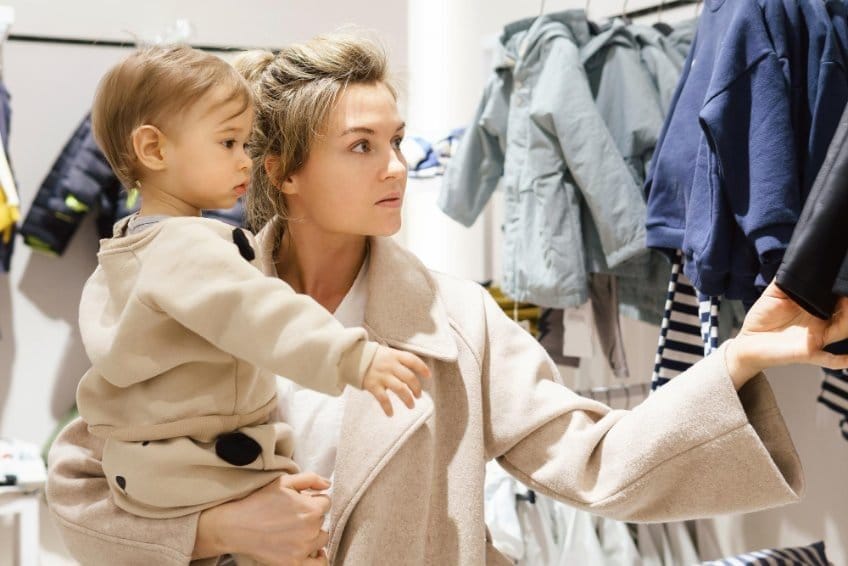
How Major Brands Generally Run
| Brand | How It Tends to Fit | Notes |
|---|---|---|
| Carter’s | True to size, slightly roomy | One of the most consistent brands; good baseline |
| OshKosh B’gosh | Runs slightly large | Good for between-size kids; reliable adjustable waistbands |
| Old Navy | True to size with adjustable waists | Excellent value for basics; consistent sizing |
| H&M Kids | Runs small to true to size | Size up if in doubt; fits more European proportions |
| Gap Kids | Runs slightly large | Good quality; generous proportions |
| Hanna Andersson | True to size | Uses height-based sizing; particularly good for tall kids |
| Zara Kids | Runs small; European cut | Size up 1–2 sizes from U.S. standard |
For a full guide to the best toddler clothing brands, including durability, value, and fit comparisons, see our guide to the best toddler clothing brands. And for tips on choosing clothes that hold up to rough play and repeated washing, read our guide on how to choose durable toddler clothes.
Shopping Tips to Get the Right Size Every Time
- Always look up the brand’s specific size chart, not just a generic one
- Read customer reviews and specifically look for sizing comments (“runs small,” “true to size,” “size up”)
- If shopping in-store, bring your child’s measurements on your phone so you can compare on the spot
- When ordering online from a new brand, start with one or two items before buying a whole wardrobe in that size
- Keep a note on your phone of which brands work well for your child’s specific build, and you will save time on every future shopping trip
- Check the store’s return and exchange policy before buying. Good return policies make online sizing guesswork much less stressful
Compare sizing across popular brands with the Toddler Size Comparison Tool, enter your child’s measurements to see which size to buy at different retailers.
International Sizing Guide
If you are shopping from international brands or buying from an overseas retailer, the sizing system changes completely. Here is how U.S. toddler sizes translate across the most common international systems.
How Each Country’s System Works
- United States: Age-based “T” system (2T, 3T, etc.) for toddlers
- United Kingdom: Age-based ranges (2–3 years, 3–4 years, etc.)
- Europe: Height-based in centimeters (86cm, 92cm, 98cm, etc.), which is more precise than age-based systems
- Australia: Similar to the U.S. but labeled as a plain number (Size 2, Size 3)
- Japan / East Asia: Primarily height-based in centimeters; typically runs 1–2 sizes smaller than U.S.
U.S. to International Size Conversion Chart
| U.S. Size | UK Size | EU Size (cm) | Australia | Age Range | Height (US) |
|---|---|---|---|---|---|
| 2T | 18–24M / 2–3Y | 86–92 cm | Size 2 | 18 months – 2.5 yrs | 32–34 in |
| 3T | 2–3Y / 3–4Y | 92–98 cm | Size 3 | 2.5–3.5 yrs | 35–37 in |
| 4T | 3–4Y / 4–5Y | 98–104 cm | Size 4 | 3.5–4.5 yrs | 38–40 in |
| 5T | 4–5Y / 5–6Y | 104–110 cm | Size 5 | 4.5–5.5 yrs | 41–43 in |
UK Sizing: A Closer Look
Since many parents shop from UK-based retailers online, it is worth knowing how UK sizing works in a bit more detail. UK toddler and kids’ sizing uses age-range labels rather than the U.S. “T” system, but the sizing logic is similar. The main differences:
- UK sizes are often labeled as “2–3 years” or “3–4 years” rather than 2T or 3T
- UK sizing tends to be very slightly more generous than U.S. sizing at the same age label
- Major UK brands like Next, M&S, and Primark all size slightly differently, so always check the brand’s own size guide
- Next in particular uses age ranges but their sizing runs true to generous; a “3–4 years” from Next often fits like a U.S. 4T
- European brands stocked at UK retailers (like Zara or H&M) tend to run smaller and use the EU height-in-centimeters system
Tips for Shopping Asian Brands
- Asian sizing (Chinese, Korean, Japanese) generally runs 1–2 full sizes smaller than U.S. sizing
- Always use the brand’s centimeter-based height chart rather than the age label
- Read customer reviews on international marketplaces where other buyers often comment specifically on sizing
- When in doubt, size up two sizes from what you would normally buy in the U.S.
Shopping from international retailers? Use the International Kids Size Converter to quickly translate between U.S., UK, EU, Australian, and Asian sizing systems.
Full Size Progression: From Preemie to Big Kids
Understanding where toddler sizing fits in the bigger picture of children’s clothing helps you plan ahead and know what to expect at each stage. Here is the full picture from birth through childhood.
| Category | Size Range | Age Range | Key Feature | What Comes Next |
|---|---|---|---|---|
| Preemie | P, NB | Birth – first weeks | Tiny cut for early or small babies | 0–3M |
| Infant | 0-3M → 24M | Birth – 2 years | Month-based, baby proportions, snap closures | 2T (toddler sizing) |
| Toddler | 2T → 5T (or 6T) | 18 months – 5.5 years | Diaper room, active proportions | Kids’ size 4–6 or XS |
| Little Kids | 4 → 6X | 4 – 7 years | Slimmer cut, potty-trained proportions | Big kids 7–8 |
| Big Kids | 7 → 14/16 | 6 – 13 years | Approaches adult proportions; more fits available | Junior / adult sizes |
For a full breakdown of how infant sizes work before the toddler stage, read our guides on how infant clothes sizes work and the differences between infant and newborn sizes.
And if you are curious about whether boys’ and girls’ toddler sizes are actually the same, we cover that in detail in our article on whether toddler boy and girl clothes sizes are the same.
Frequently Asked Questions
What size does toddler clothing go up to?
Standard toddler clothing goes up to size 5T at most major retailers. Some brands also offer a 6T as an extended toddler option. After that, children move into regular kids’ sizes, which start at size 4, 5, or 6 depending on the brand. The “T” designation ends completely once your child transitions to the kids’ department.
What is the difference between 24 months and 2T?
Both sizes fit children around the same age, but the cut is different. 24M (24 months) is in the baby category . It is slimmer and has a shorter torso. 2T is in the toddler category, roomier through the body to fit over diapers or pull-ups, with a slightly longer torso. Also, 24M sizing is the maximum age for that size, while 2T is the starting age, meaning 2T is designed to last your child most of their third year.
What comes after 5T in toddler sizes?
After 5T, you move into regular kids’ sizes. The closest equivalent is usually kids’ size 4, 5, or 6 (or XS) in brands that use letter sizing. Kids’ sizes are cut differently: slimmer in the seat and belly with no diaper room, and longer proportions overall. Take fresh measurements before buying to make sure you get the right fit in the new sizing system.
How long do kids usually stay in each toddler size?
Most toddlers spend about 6 to 12 months in each size, though it varies a lot. Fast-growing children may outgrow a size in 3 to 4 months. Growth usually slows around age 4 and 5, so many kids stay in 4T and 5T longer than earlier sizes. Measuring your child every 3 to 4 months helps you stay ahead of the changes.
Is 3T the same as being 3 years old?
Not exactly. 3T is designed with children around age 3 in mind, typically fitting best from about 2.5 to 3.5 years. But the actual fit depends more on your child’s height and weight than their birthday. A tall 2-year-old or a petite 4-year-old might both fit 3T comfortably. Always use measurements first, age as a starting point second.
Why does my toddler wear a different size in tops and bottoms?
This is very common and completely normal. Toddlers have wide variations in body proportions. A child with a rounder belly might need a 4T in pants for the waist but fit a 3T in tops. A tall child might need a larger size in pants for leg length but the same size as before in tops. Always buy tops based on chest and shoulder measurements and bottoms based on waist and inseam measurements. Buying separates rather than sets gives you much more flexibility.
Do toddler clothes shrink in the wash?
Yes, especially items made from 100% cotton. Cotton can shrink noticeably when washed in hot water or dried on high heat, sometimes enough to affect the fit after just one wash. To prevent shrinkage, wash toddler clothes in cold water and either air dry or tumble dry on low heat. Always wash new clothes once before wearing to pre-shrink the fabric and remove manufacturing residue.
How should I buy toddler clothes as a gift if I do not know the child’s size?
When buying as a gift, always size up. A slightly big item will still get worn. A too-small one will not. As a rule of thumb, buy one size up from the child’s current age (e.g., buy 4T for a 3-year-old). Choose items with elastic or adjustable waistbands, stretchy fabrics, or adjustable features for more flexibility in fit. And always include a gift receipt so the parent can exchange if needed.
What are the best fabrics for toddler clothing?
For everyday wear, 100% cotton or cotton blends are the most practical choice: breathable, washable, and durable. For sensitive skin, bamboo/viscose from bamboo is incredibly soft and hypoallergenic. For cold weather, merino wool is naturally warm, soft, and moisture-wicking. Fleece works well for outer layers and zip-up jackets. Avoid anything labeled dry-clean only for everyday toddler clothing.
Are toddler boy and girl clothes the same size?
In the toddler range (2T–5T), boys’ and girls’ clothing generally uses the same height and weight measurements. The main differences are in style and cut. Girls’ tops may be slightly more fitted or have different necklines, while boys’ tend to run a bit boxier. You can often cross-shop between boys’ and girls’ sections in toddler sizes if you find a style you like. For more, see our guide on whether toddler boy and girl sizes are the same.
Is 5T the same as kids’ XS?
Not exactly. 5T and kids’ XS may cover a similar weight and height range, but they are cut differently. 5T maintains toddler proportions, with extra room in the seat, shorter torso. Kids’ XS is slimmer and longer, cut for a child who is fully potty trained and starting to slim out. When transitioning from 5T, try both and see which fits your child’s current body shape better.
How do I shop for toddler clothes internationally?
U.S. toddler sizes use the “T” system. UK brands use age ranges (like “2–3 years”). European brands use height in centimeters (86cm, 92cm, 98cm, etc.). Asian brands typically run 1–2 sizes smaller than U.S. sizing. Always use the brand’s specific size chart rather than age labels when shopping internationally, and when in doubt, size up. Use the International Kids Size Converter to quickly translate between sizing systems.
Conclusion
Toddler clothing sizes do not have to be confusing once you know how the system works. The most important thing to remember is that age is just a starting point. Your child’s actual measurements (height, weight, chest, waist, and inseam) are what determine the right fit. A 3-year-old might wear 2T or 4T depending on their build, and either is perfectly normal.
Your Key Takeaways
- Toddler clothing tops out at 5T (some brands offer 6T), then transitions to regular kids’ sizes starting at 4, 5, or 6.
- Measure your child every 3 to 4 months and compare to brand-specific size charts, not just generic guides.
- The T-size cut matters. 24M and 2T look similar on paper but are made differently. 2T has more room for movement and slightly different proportions.
- Tops and bottoms can be different sizes. Buy separates for more flexibility and a better fit across your child’s unique proportions.
- When in doubt, size up. For gifts, for fast-growing kids, for cotton items that might shrink. A little extra room is always better than too tight.
- Wash cold, dry low. Hot water and high dryer heat are the main reasons toddler clothes shrink. Cold washes and air drying or low heat extend the life of every garment.
- Fabric matters. Cotton for everyday basics, bamboo for sensitive skin, merino for cold weather, fleece for outer layers. Knowing what fabrics work for your child saves money and frustration.
- Build a capsule, not a collection. Focus on versatile pieces that mix and match well. You do not need to fill every drawer. You need enough that laundry day is manageable.
- Safety is non-negotiable. Look for CPSIA-compliant clothing with secure buttons, no drawstrings on hoods, and age-appropriate closures. For sleepwear, snug-fit designs are the safer route for most families today.
- International sizing requires translation. U.S. T-sizes, UK age ranges, EU centimeter-based sizes, and Asian sizing all work differently. Always use height measurements when shopping international brands.
Final Recommendation
The best approach to toddler clothing is a simple one: measure first, shop second, and buy slightly ahead. A 3T bought when your child is 30 months and just growing into 2T is money well spent. A toddler wardrobe built on a few high-quality staples and filled out with budget basics is smarter than a closet full of matching sets that all outgrow at the same time.
Shopping for toddler clothes should not be stressful. Once you know your child’s measurements and how your favorite brands fit, the whole process gets much easier, and sometimes even a little fun. For a wide range of toddler clothing options at great prices, check out FBargainsGalore’s kids’ clothing collection to find something your little one will love and actually wear.