
From Cloud Dancer whites to bold cobalt blues: your complete guide to the fabrics and colours shaping fashion and sewing this year
Two words sum up fabric trends in 2026: calm and bold. At first glance, these feel like opposites. And in some ways, they are. Pantone chose Cloud Dancer, a soft billowy white, as its 2026 Color of the Year. Yet the spring/summer 2026 runways from Paris to New York were packed with saturated cobalt blue, tomato red, and deep grape purple.
So which story is 2026 telling? Both, as it turns out. And if you understand how to work with both sides of that tension, whether you are designing a collection, planning your next sewing project, or building a more intentional wardrobe, you are already well ahead of the crowd.
This guide covers everything: the major fabric trends, the colour story, what to sew with each fabric, which materials are worth buying, and what you can safely leave behind. If you want context on how we got here, check out our 2025 Fabric Trends guide first.
Energy
Energy
What 2025 Taught Us
Before going all-in on 2026, it is worth a quick look back. Most of the big calls from our 2025 fabric trends guide held up well. Bouclé stayed strong. Linen kept having its moment. Sustainable fabrics grew in both availability and consumer awareness. And the move toward texture over flat, smooth surfaces played out exactly as expected.
What faded faster than expected? Overly shiny synthetic finishes lost their appeal quickly. Ultra-stiff fabrics with no drape or breathability felt out of step with where fashion was heading. And the softer side of minimalism, flat, featureless, interchangeable neutrals, started feeling a bit hollow by mid-year. Mocha Mousse from 2025 carried beautifully into the early part of the year but is now giving way to the cleaner, lighter Cloud Dancer energy.
2026 builds directly on these shifts. Texture is now the rule, not the exception. Sustainability is no longer a niche conversation. And the hunger for genuine self-expression, through bold colour, craftsmanship, and intention, is the strongest it has been in years.
Pantone Color of the Year 2026: Cloud Dancer
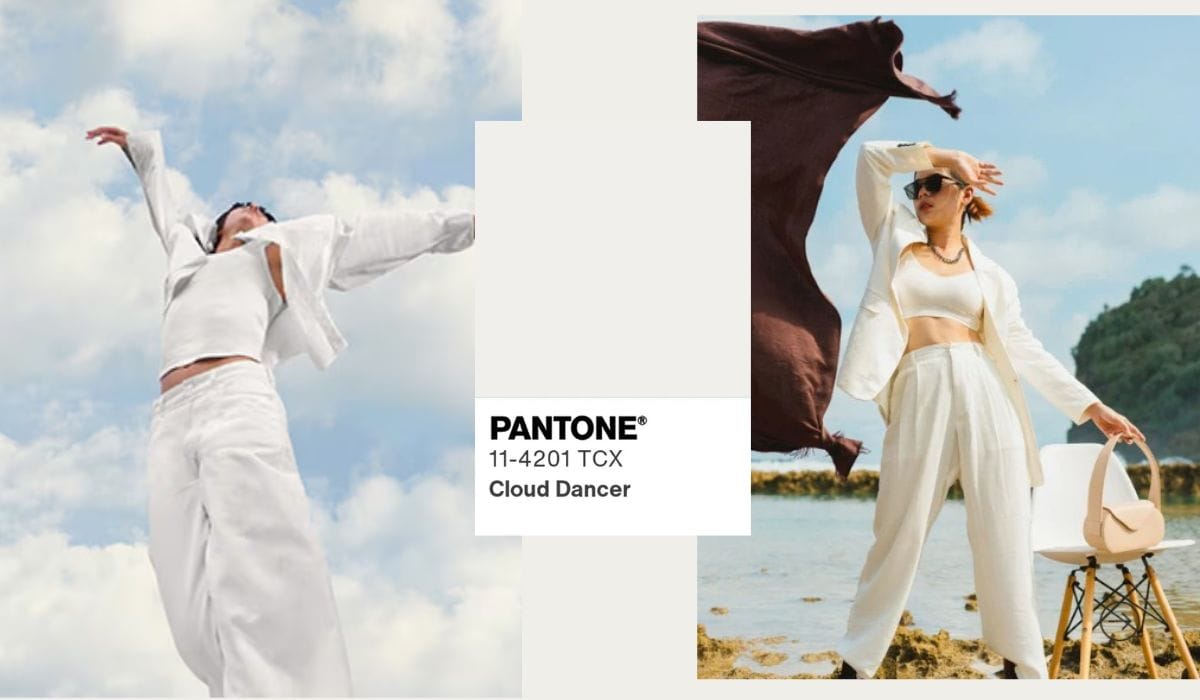
For the first time in the award’s history, Pantone chose a white tone as its Color of the Year. Cloud Dancer (Pantone 11-4201) is described as a billowy off-white that is both warm and cool at once. It is not a stark clinical white, and it is not a creamy yellow-tinted white either. It sits in a balanced, luminous middle ground that Pantone describes as a “conscious statement of simplification” in an overstimulating world.
In practical terms for sewists and designers, it points toward light, airy, natural-feeling garments with real substance behind them. Think flowing silhouettes, plush textures, and fabrics that breathe. Pantone specifically connects Cloud Dancer to diaphanous chiffons, fluid jersey, plush and lofty wools, and flowing natural fabrics.
What to Sew in Cloud Dancer
- Voluminous blouses and tops in silk chiffon or cotton chiffon
- Flowy wrap dresses in linen or Eco-Viscose
- Cosy knitwear and outerwear in plush merino wool or cashmere
- Layered, ethereal bridal or evening pieces in organza or tulle
- Relaxed wide-leg trousers in linen or cotton poplin
- Tactile outerwear in off-white bouclé for a quiet luxury look
The Full 2026 Colour Story
Cloud Dancer may be the headline, but it is only half the picture. The spring/summer 2026 runways from Paris, Milan, London, and New York brought a much bolder colour story alongside it. High saturation is back after years of soft, muted tones. Cobalt blue and tomato red appeared at Chanel, Loewe, Stella McCartney, Victoria Beckham, and Balenciaga. Oxblood and burgundy are becoming near-neutral: easy to wear, hard to get wrong. And Burnished Lilac (Pantone 15-1905) brings a vintage-tinged softness to complement the louder shades.
For a full breakdown of every trending 2026 shade, visit our 2026 Fashion Colours: Every Trending Shade guide.
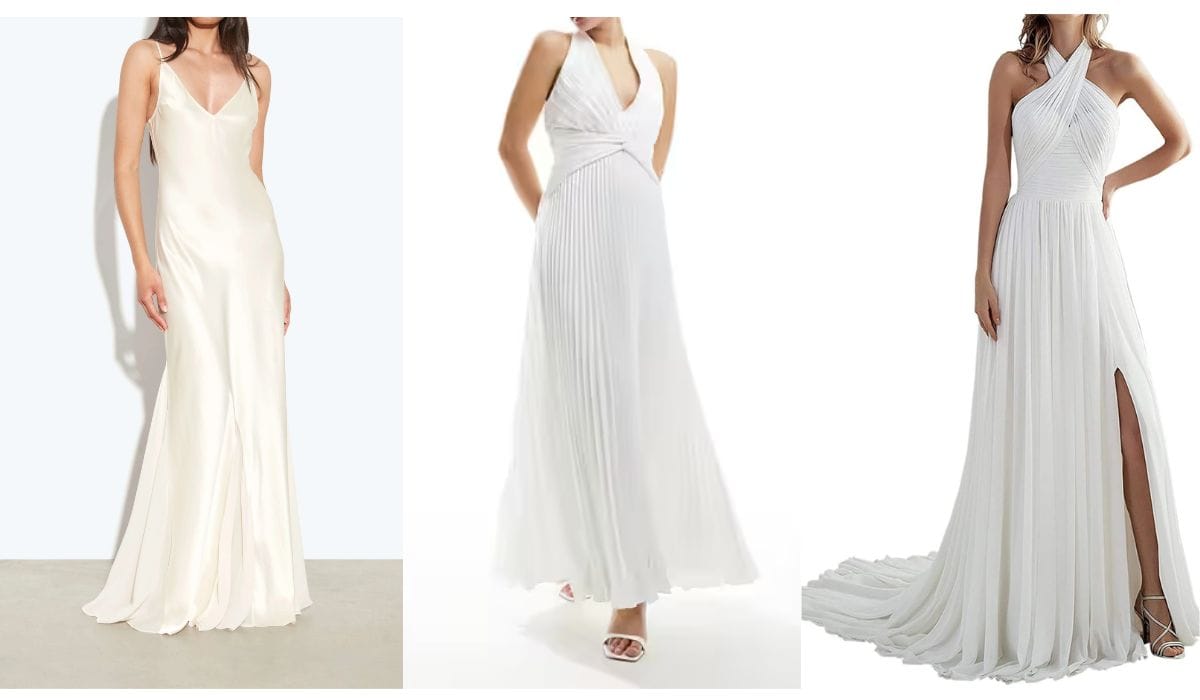
The runway also gave us some specific colour pairings worth knowing. Ballet pink with tomato red appeared at Chanel and created a romantic yet punchy look. Cobalt blue with a stark white (very Cloud Dancer) reads clean and modern. Sage green with butter yellow, and cherry with grape, are the two more unexpected combinations showing up in street style right now.
The Major Fabric Trends for 2026
If there is one word that describes 2026 fabrics, it is texture. Flat, smooth, featureless surfaces are firmly out. Fabrics that reward being touched, add visual depth, and feel like they were made with real intention are in. Here is what that looks like in practice.
Texture Takes Over: Bouclé, Velvet, Jacquard and More
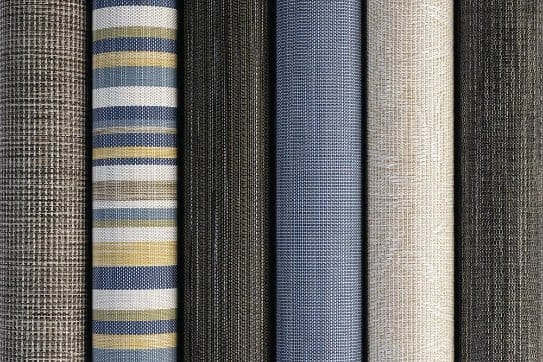
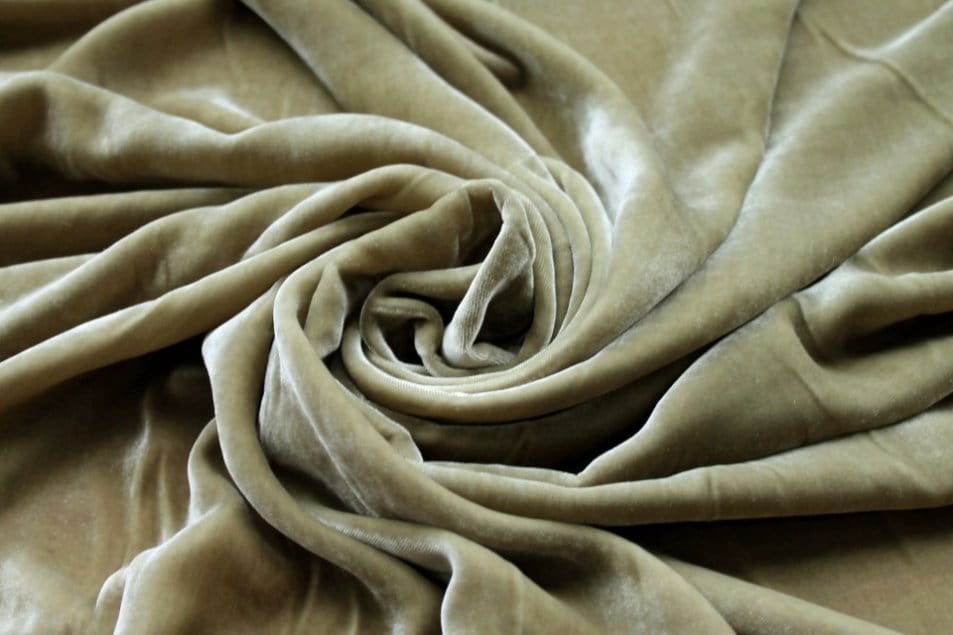
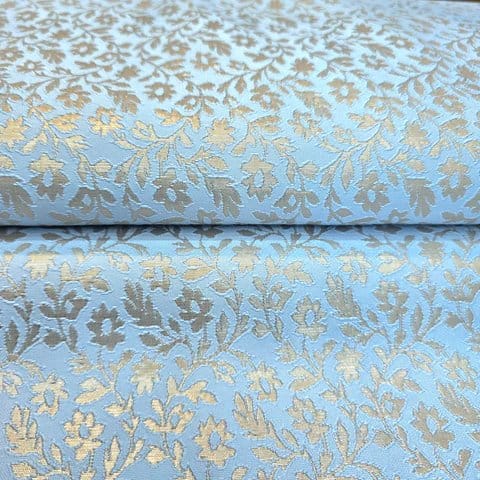
Bouclé is evolving rather than fading. The looped texture is now showing up blended with metallic threads and tonal contrasts for a more polished, almost couture result. Our bouclé wool guide covers the full story. Velvet is shifting toward matte, mark-resistant finishes that are more practical and more modern-feeling. Deep colours in velvet, especially oxblood, cobalt, and forest green, are particularly strong right now. Jacquard fabrics with raised woven patterns are surging with florals, geometrics, and retro motifs. Ribbed chenille and raised herringbone weaves add a 3D quality that photographs well and feels genuinely luxurious on the body.
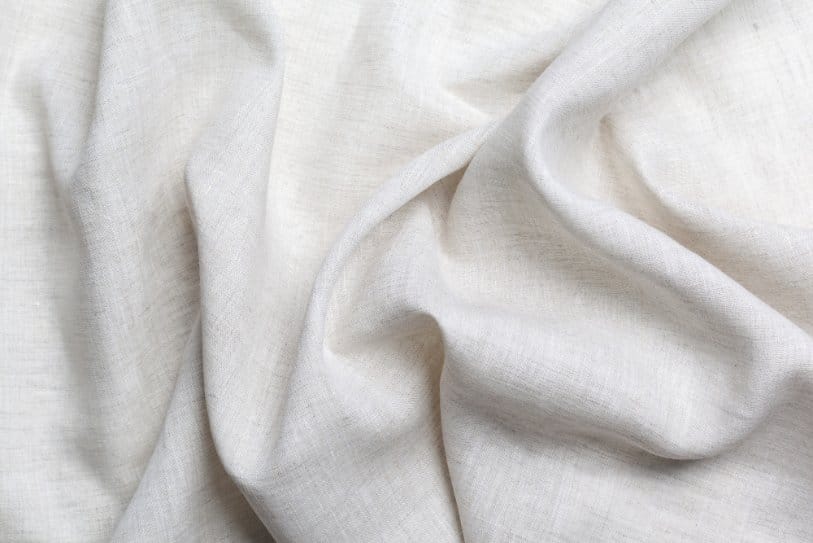
Linen and Natural Fabrics Lead Spring/Summer 2026
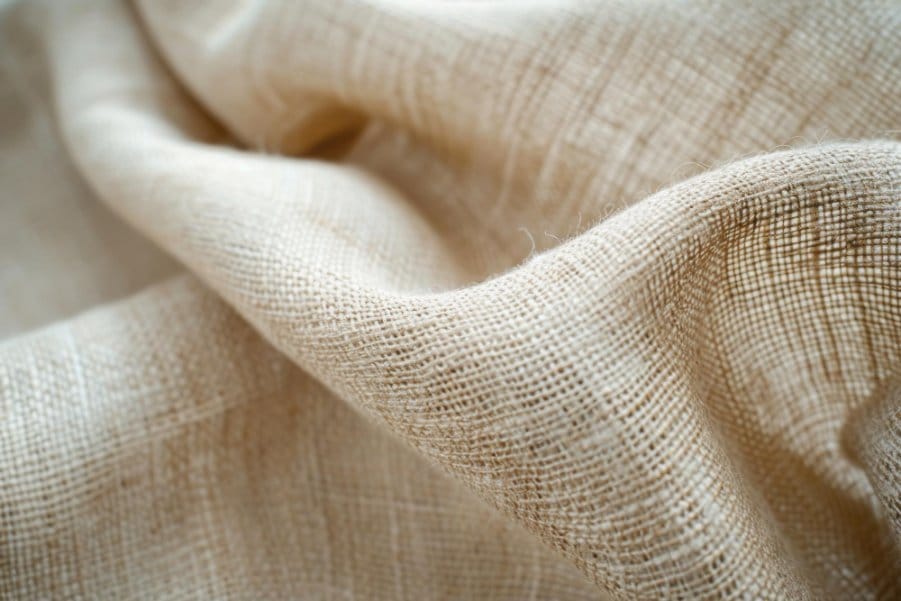
Linen is having one of its best years yet. On the SS26 runways, linen shirting appeared in crisp, structured “uniform dressing” looks, while linen suiting blended with wool showed up in bold power-suit silhouettes. For sewists, linen’s natural drape and breathability make it one of the most rewarding fabrics to work with throughout the year.
Organic cotton, organic cotton-spandex blends, and cotton-bamboo fabrics continue growing in both quality and availability. These are solid everyday choices that age well and carry the 2026 colour story beautifully in both bold and muted shades.
Sheer and Floaty Fabrics Are Back in Full Force
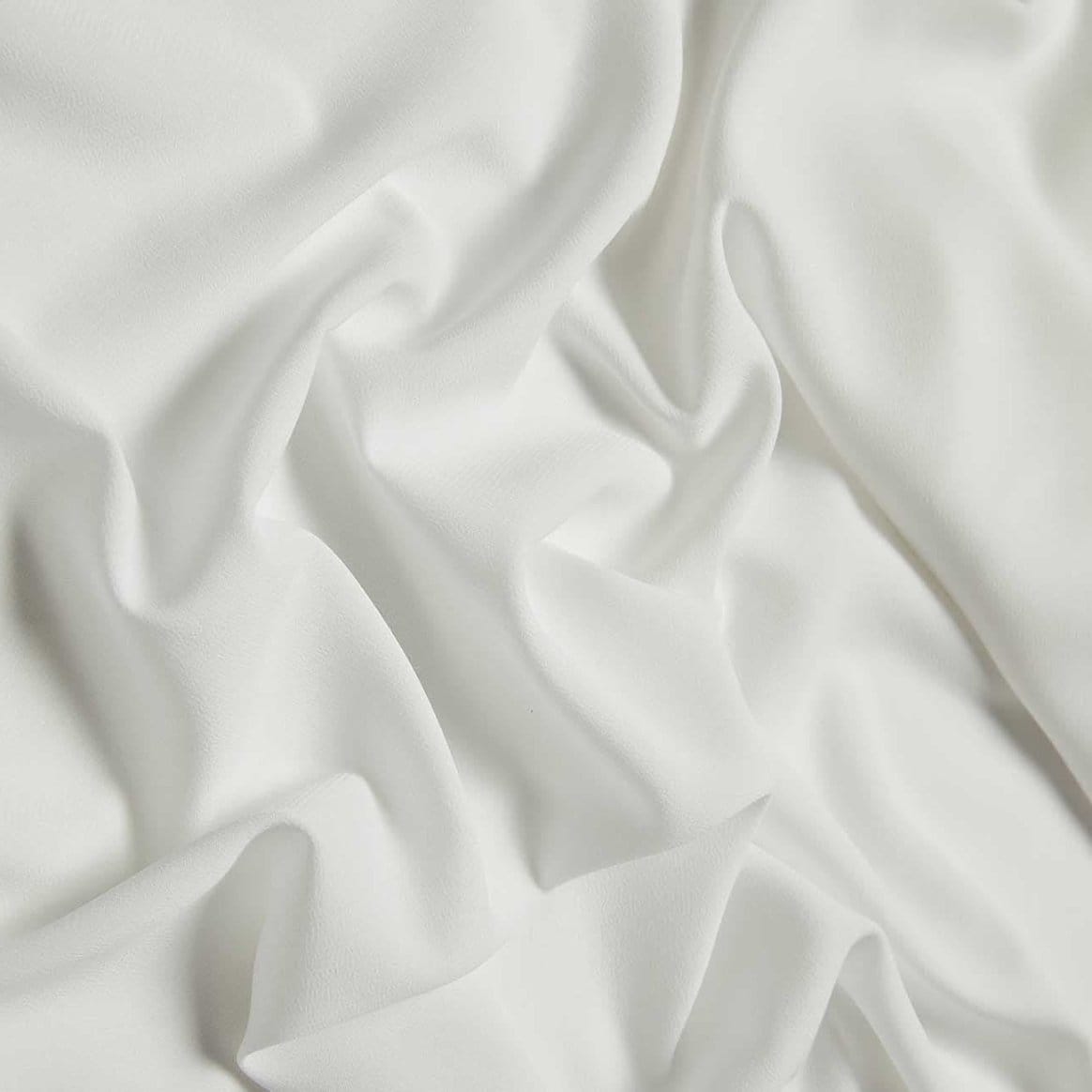
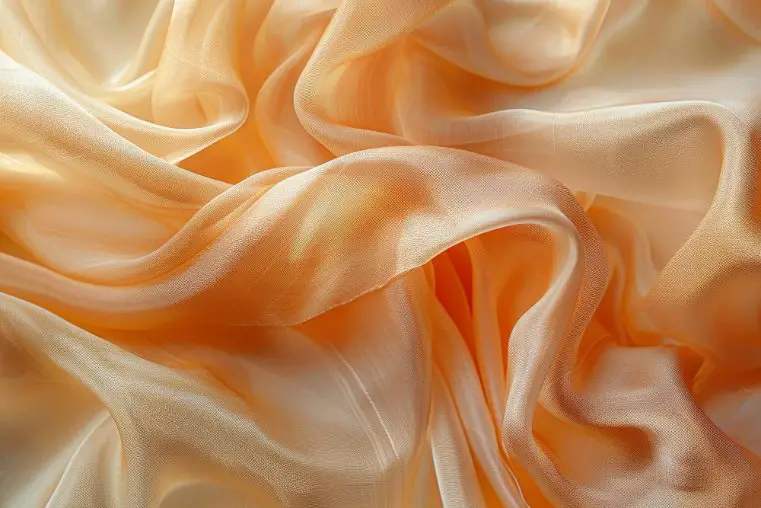
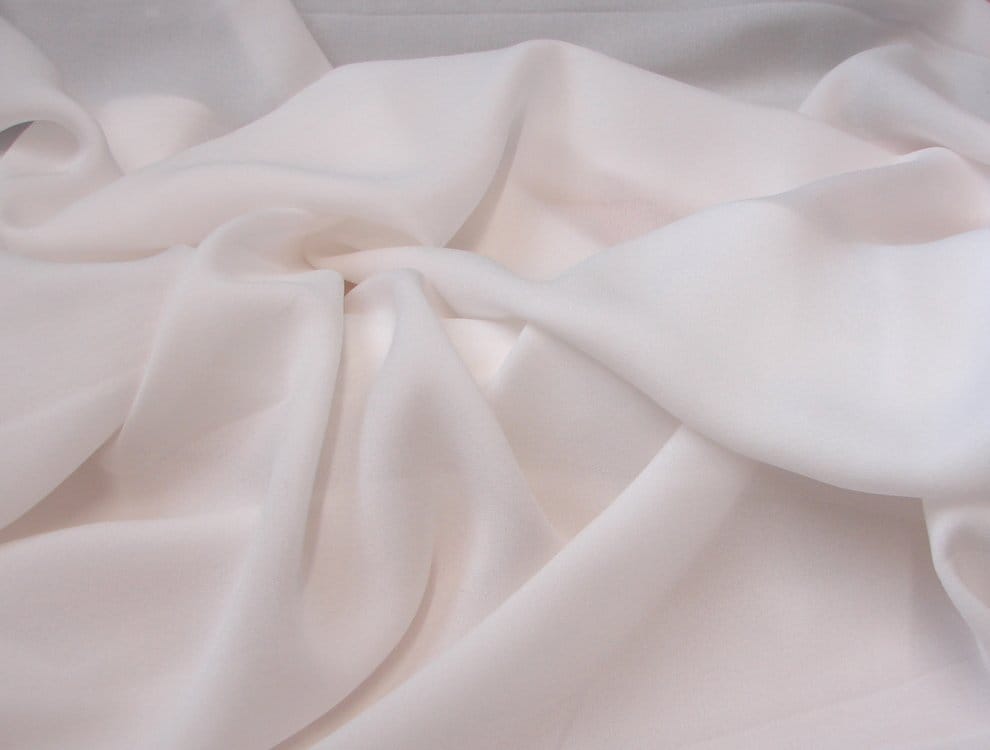
The SS26 runways at Dior, Dolce and Gabbana, and Isabel Marant made one thing clear: sheer, floaty fabrics are having a serious moment. Chiffon, voile, organza, tulle, and tissue-fine silks are key for spring/summer 2026, used in voluminous layers, ethereal draping, and exaggerated silhouettes that feel simultaneously dreamy and directional.
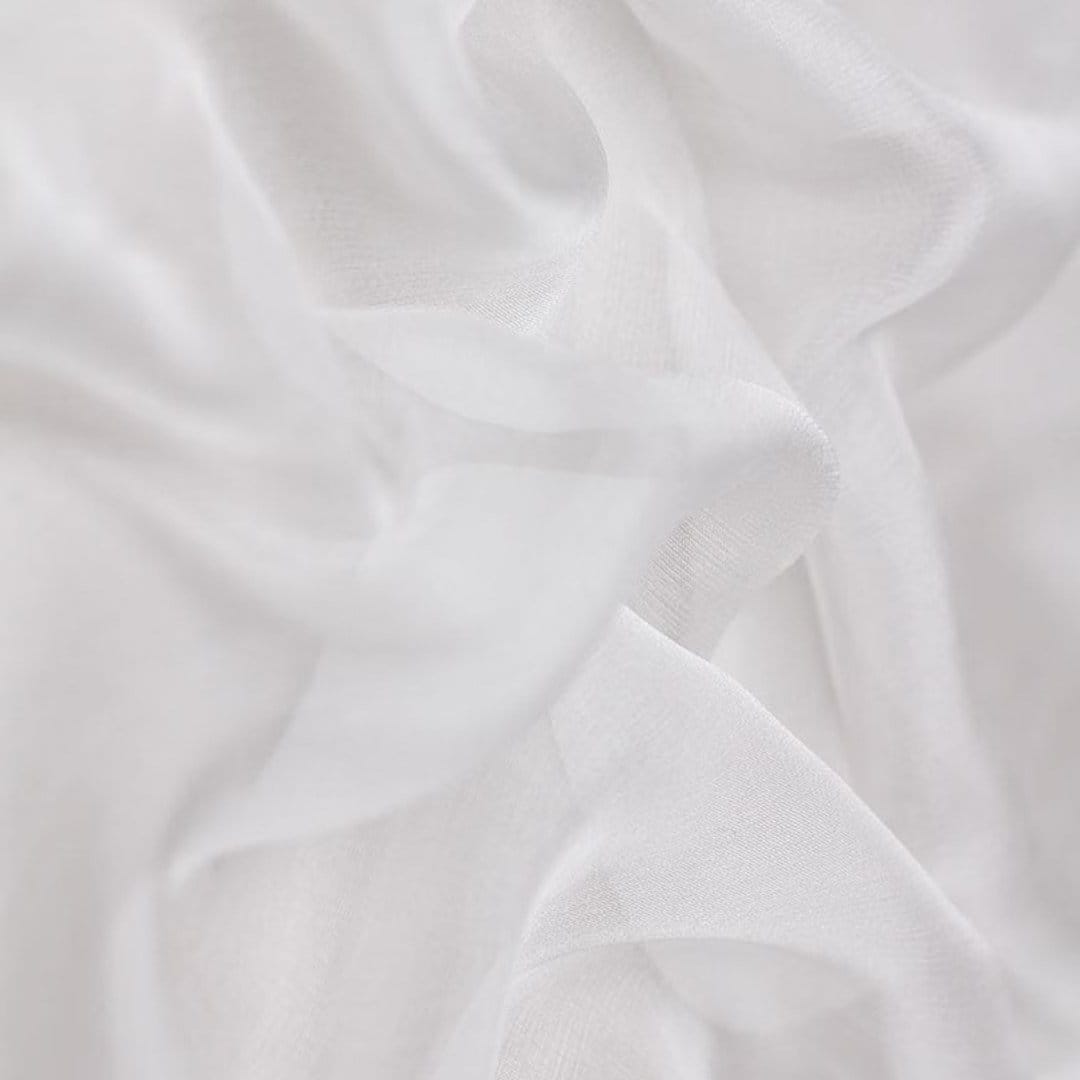
- Best for: evening wear, blouses, layered dresses
- Silk Chiffon Guide
- Best for: bodycon dresses, wrap styles
- Stretch Chiffon Guide
- Best for: blouses, midi dresses, scarves
- Georgette Guide
- Best for: overlays, statement sleeves, bridal
- Organza Guide
Our Chiffon Type Selector Quiz walks you through a few quick questions about your project and gives you a personalised recommendation.
Sustainable and Recycled Fabrics Get Serious
The sustainable fabric market is growing at around 13% per year and is now a mainstream consideration worldwide, not a niche one. According to Textile Exchange, consumer demand for certified sustainable fibres has grown consistently year-on-year, with brands under increasing pressure to back up their environmental claims with verified third-party standards. The key names to know in 2026:
- ECOVERO / Eco-Viscose: Made from sustainably sourced wood pulp in a closed-loop system that recovers over 99% of chemicals and water used. Soft, drapey, and breathable. It is a genuinely cleaner alternative to conventional viscose.
- ECONYL: Regenerated nylon from ocean waste, fishing nets, and industrial plastics. Same performance as virgin nylon, without the environmental cost. Strong for swimwear and activewear.
- Tencel / Lyocell: Made in a closed-loop process using certified wood pulp. Silky, moisture-wicking, and biodegradable. Works well for shirts, dresses, and lightweight trousers.
- Recycled Polyester (rPET): Made from post-consumer plastic bottles. Certified versions carry OEKO-TEX or GRS certification. See our recycled polyester guide for more.
- Organic Cotton: Grown without synthetic pesticides or fertilisers. Look for GOTS certification to confirm it meets global organic standards. Our organic cotton guide covers what to look for.
Performance Fabrics Go Mainstream
In 2026, functional fabrics are crossing out of activewear and into everyday fashion. Thermoregulating knits, PFC-free water repellency, windproofing, and built-in antimicrobial properties are now showing up on fashion-week runways. Supima cotton is being called out specifically for durability-focused, anti-fast-fashion design. See our guide to water repellent technology and most durable fabrics for everyday wear for the practical side of this trend.
Craftsmanship and Artisan Textures
There is a clear push through 2026 fashion toward fabrics that look and feel hand-crafted. Crochet lace, wovens, raffia, embroidery-ready fabrics, and textiles with visible stitching are all strong. The counter-reaction to AI and mass production is real, and fabrics that signal a human made this, with care, are exactly what the market is responding to right now.
What’s Out in 2026
Being clear about what is fading is just as useful as knowing what is trending. Here is what you can leave behind this year.
| Category | What’s IN | What’s OUT |
|---|---|---|
| Surface quality | 3D texture, bouclé, raised weaves, matte finishes | Flat, smooth, featureless fabrics with no tactile interest |
| Synthetics | Recycled polyester, ECONYL, ECOVERO, plant-based blends | Cheap virgin polyester blends with no drape or breathability |
| Shine | Matte velvet, subtle sheen on satin for evening | Overly shiny, plasticky synthetic finishes |
| Colour neutrals | Cloud Dancer off-white, oxblood (now near-neutral) | Butter yellow (replaced by lemon yellow), safe beige with no depth |
| Fast fashion fabrics | Quality investment fabrics built to last for years | Disposable-grade fabrics that pill or fade after a few washes |
| Minimalism | Intentional simplicity with Cloud Dancer palette and Cloud Dancer-inspired texture | Pure bare minimalism with no texture or interest |
Fabric Comparison at a Glance
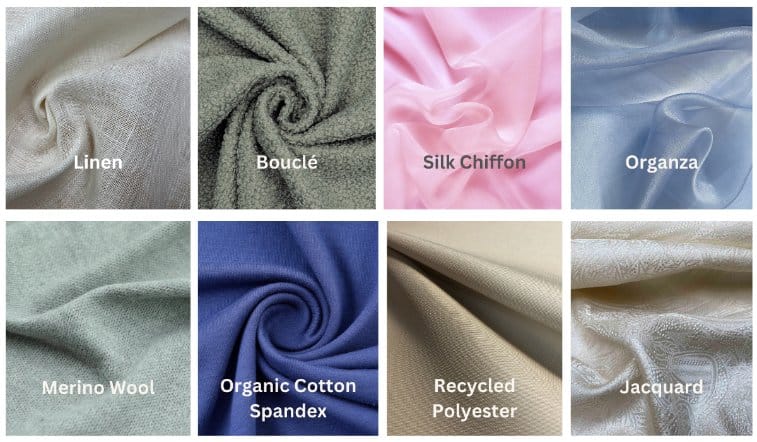
This is your quick-reference table for the main trending fabrics in 2026. Use it to compare at a glance before you commit to buying.
| Fabric | Best For | Skill Level | Sustainability | Price Range | Drape | Sewability |
|---|---|---|---|---|---|---|
| Linen | Shirts, dresses, trousers, suiting | Beginner | High (natural, low-input crop) | Low to mid | Medium, crisp | Easy, forgiving |
| Bouclé | Jackets, coats, skirts | Intermediate | Medium (depends on fibre) | Mid to high | Structured, cosy | Tricky; frays easily |
| Silk Chiffon | Blouses, evening wear, layering | Advanced | Medium (natural, but processing-intensive) | High | Flowing, fluid | Challenging; very slippery |
| Eco-Viscose / ECOVERO | Dresses, blouses, wide-leg trousers | Intermediate | High (closed-loop production) | Low to mid | Fluid, soft | Moderate; needs stabilising |
| Tencel / Lyocell | Shirts, dresses, lightweight trousers | Beginner | High (certified wood pulp) | Low to mid | Soft, drapey | Easy, similar to jersey |
| Organza | Overlays, statement sleeves, bridal | Advanced | Low to medium | Mid to high | Stiff, sculptural | Challenging; shows every pin mark |
| Merino Wool | Knitwear, layering, light outerwear | Intermediate | Medium to high (if certified) | Mid to high | Soft, fluid | Moderate; needs ballpoint needle |
| Organic Cotton Spandex | Activewear, fitted tees, loungewear | Beginner | High (GOTS certified versions) | Low to mid | Stretch, recovery | Easy with stretch needle |
| Recycled Polyester | Activewear, swimwear, outerwear linings | Beginner | High (rPET certified) | Low to mid | Variable | Easy |
| Jacquard | Statement pieces, evening wear, structured tops | Intermediate | Low to medium | Mid to high | Medium, structured | Moderate; pattern matching required |
Use our Fabric Yardage Calculator to work out exactly how much you need for any garment, in both metres and yards.
Colour and Fabric Matchmaker
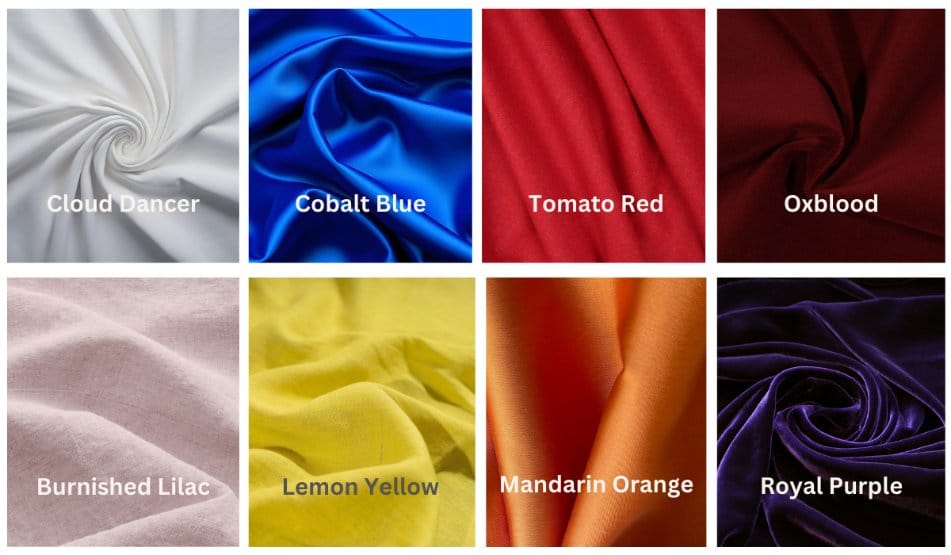
One of the most practical questions for 2026 is: which fabric types carry each trending colour best? Here is your quick reference.
| 2026 Colour | Best Fabric Choices | What to Sew | Skill Level |
|---|---|---|---|
| Cloud Dancer | Silk chiffon, linen, fluid jersey, organza, merino wool | Blouses, wrap dresses, coats, layered evening pieces | Beginner to intermediate |
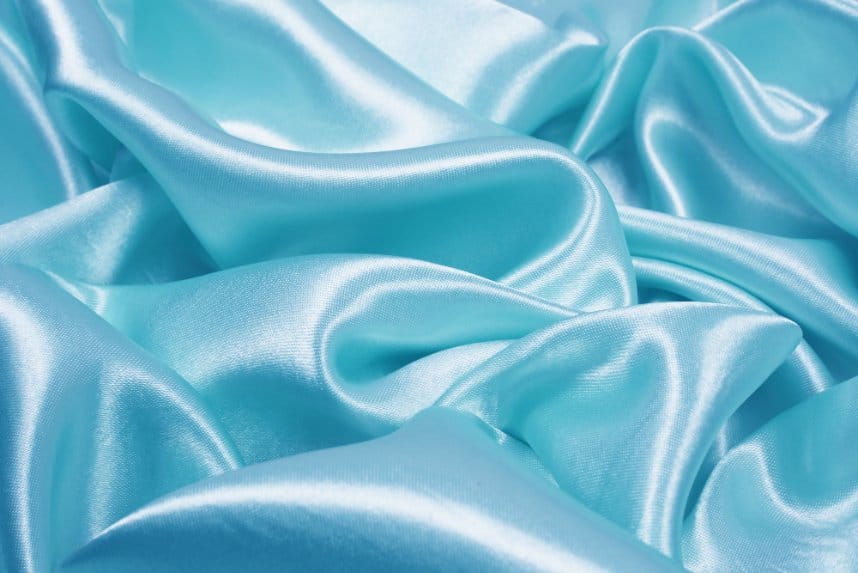
| Cobalt Blue | Satin, crepe de chine, structured cotton, wool broadcloth | Statement coats, structured blouses, tailored trousers | Intermediate |
| Tomato Red | Linen, cotton twill, wool crepe | Summer dresses, shirts, co-ord sets, relaxed trousers | Beginner to intermediate |
| Oxblood | Matte velvet, wool crepe, corduroy, charmeuse | Midi dresses, trousers, fitted blazers, accessories | Intermediate |
| Burnished Lilac | Chiffon, stretch satin, lace, crepe | Maxi dresses, blouses, skirts with flowing silhouettes | Intermediate to advanced |
| Lemon Yellow | Poplin, linen shirting, sateen | Shirts, summer dresses, tailored shorts, simple skirts | Beginner |
| Mandarin Orange | Crepe de chine, georgette, lightweight cotton jersey | Fluid dresses, wide-leg trousers, summer tops | Beginner to intermediate |
| Royal Purple | Velvet, dupioni silk, brocade, charmeuse | Evening wear, statement jackets, tailored skirts | Intermediate to advanced |
What Sewists Are Making in 2026
Knowing the fabric trends is useful. Knowing what the sewing community is actually making right now is even more useful. Here are the most popular project types in 2026, organised by the trending fabrics that work best for each one.

It is worth noting that the home sewing community has grown significantly in recent years, with an active global community sharing projects across TikTok, Instagram, and sewing forums. The garment types getting the most attention right now reflect the 2026 fabric story almost perfectly: volume, texture, wearability, and pieces worth keeping for years.
- Bouclé boxy jacket
- Linen-wool blazer in cobalt or tomato red
- Oxblood velvet fitted blazer
- Silk chiffon or georgette maxi dress
- Tiered organza midi skirt
- Linen wrap dress in Cloud Dancer or tomato red
- Wide-leg linen trousers
- Linen or Tencel matching shirt-and-trouser set
- Mandarin orange crepe wide-leg trousers
- Volume-sleeve blouse in silk or stretch chiffon
- Cobalt blue crepe de chine button-down
- Cloud Dancer organza layering top
- Organic cotton spandex fitted tee
- Tencel relaxed shirt
- Eco-Viscose fluid midi dress
- Reworked shirt with visible-stitch repairs
- Patchwork panel skirt from fabric scraps
- Adding crochet lace trim to existing pieces

Our Interactive Sewing Project Planner helps you match a project to your skill level, available fabric, and available time. Great for choosing your first 2026 project.
Seasonal Fabric Guide for 2026
Not all trending fabrics are right for every time of year. Here is a quick breakdown of which 2026 fabrics belong to which season, so you can plan your sewing calendar more easily.
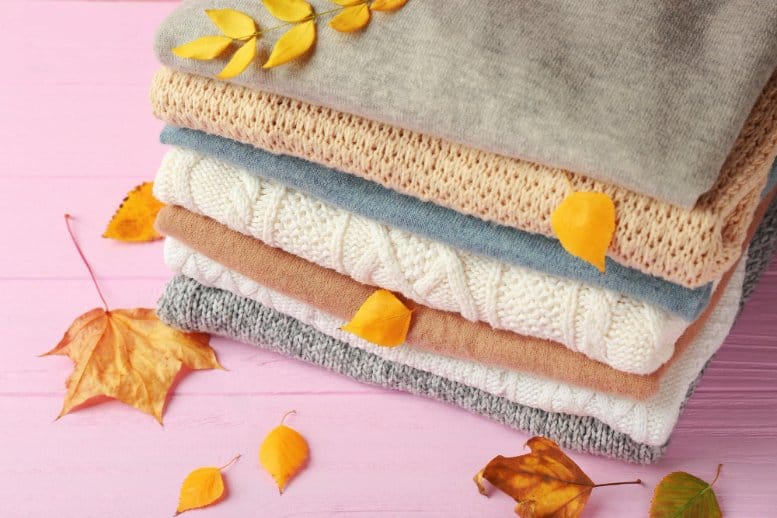
- Linen in all weights: shirts, dresses, co-ords
- Silk and synthetic chiffon: blouses, layers, evening wear
- Organza: overlays, statement sleeves, structural pieces
- Georgette: fluid dresses and mid-weight blouses
- Organic cotton and cotton blends: everyday basics
- Eco-Viscose / Tencel: breathable, drapey dresses and trousers
- Cotton poplin: crisp shirts, co-ords in bold colours
- Bouclé: coats, jackets, boxy skirts
- Matte velvet: evening wear, midi dresses, tailored pieces
- Merino wool and wool blends: knitwear, outerwear, trousers
- Jacquard: statement coats, evening tops, structured dresses
- Ribbed chenille: oversized knit-look pieces
- Herringbone wool: tailored trousers, coats, structured jackets
- Cashmere: investment knitwear and layering pieces
Some fabrics cross seasons well. Wool crepe works in early spring and all through autumn. Linen-cotton blends can take you from late summer into early autumn. And structured cotton pieces in the bold 2026 colours work year-round as long as the weight is right. See our summer fabrics guide and winter fabrics guide for more detail.
Try our Seasonal Fabric Quiz for climate-based fabric recommendations tailored to where you live.
How to Sew with 2026 Trending Fabrics
Knowing which fabrics are trending is one thing. Knowing how to actually work with them is where confidence comes from. Here are practical sewing guides for the key fabrics of 2026.
Bouclé
IntermediateOne of the trickier fabrics to sew cleanly, but incredibly rewarding when done right. The looped texture catches on everything and frays aggressively without the right approach.
Read more: Bouclé Wool Fabric Guide | Bouclé Fabric Guide
Linen (and Linen Blends)
Beginner FriendlyLinen is one of the most forgiving fabrics to sew once you know its quirks. It loves a clean finish and rewards patience with pre-treatment.
Read more: Linen Fabric Guide | Linen Care Guide
Chiffon and Sheer Fabrics
AdvancedSheers are notoriously slippery and unforgiving of mistakes. With the right set-up though, they are genuinely beautiful to work with.
See also: Chiffon Overview | Silk Chiffon | Polyester Chiffon
Eco-Viscose / ECOVERO
IntermediateEco-Viscose handles similarly to conventional viscose but with a much better environmental footprint. It is beautifully drapey and lightweight, but requires gentle handling throughout.
Organic Cotton Spandex
Beginner FriendlyA great fabric for beginners wanting to sew activewear, fitted tees, and loungewear. Forgiving and comfortable to work with once you switch to a stretch stitch.
Our Needle and Fabric Compatibility Chart matches fabric types to the right needle size and type for every project.
The Slow Crafting Movement
One of the strongest cultural threads running through 2026 is not a fabric at all. It is a mindset. Slow crafting is the practice of making things by hand, with intention, at a pace that is not driven by social media or output targets. Embroidery, weaving, hand sewing, and visible mending are all growing. Not as content to post, but as a practice.
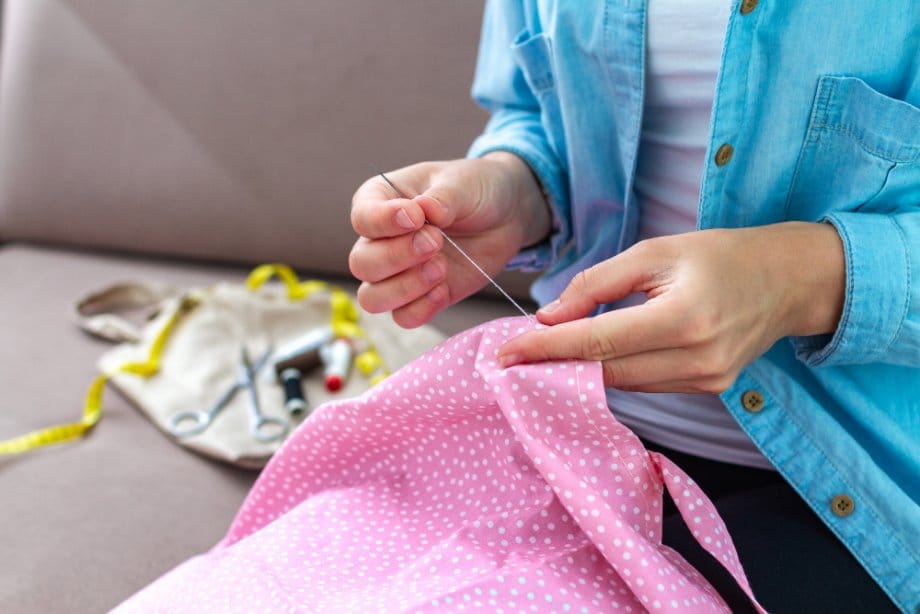
This connects directly to fabric choice. Slow crafting values fabrics that age well, reward careful handling, and are worth the time you put into them. Linen that softens with every wash. Wool that lasts decades. Eco-Viscose that drapes better the longer you wear it. These are the fabrics the slow crafting ethos is built around.
The growing home sewing community reflects this shift. Younger sewists discovering the craft through online communities are largely motivated by sustainability, self-expression, and the genuine satisfaction of making something real. The slow fashion versus fast fashion debate has shifted: for more and more people, the answer is simply to make it yourself, on your own terms.
How to Spot Greenwashing
With sustainable fabric being one of the biggest stories in 2026, greenwashing has become a real issue. Many brands use environmental language without any substance to back it up. Textile Exchange and OEKO-TEX both publish resources to help consumers verify claims. Here is a quick way to tell the difference between genuine credentials and marketing spin.
| Genuine Sustainability Signal | Red Flag |
|---|---|
| Third-party certification: GOTS, OEKO-TEX, GRS, bluesign | “Eco-friendly” or “sustainable” with no certification named |
| Named fibre origin and production process | Vague terms like “responsible materials” or “conscious collection” |
| Transparent supply chain information on the brand’s website | No information on where or how the fabric was made |
| Full material composition: e.g. 100% GOTS Organic Cotton | “Made with sustainable fibres” with no percentage or standard given |
| Biodegradable or recyclable end-of-life option | Green-coloured packaging and leaf logos with no other information |
The safest approach when sourcing fabric? Look for a named third-party certification on the fabric itself or on the retailer’s product listing. If you cannot find one, ask. Reputable suppliers will always be happy to provide documentation.
Frequently Asked Questions
The biggest fabric stories in 2026 are: bouclé (evolving with metallic blends), linen (leading SS26 natural fibres), sheer and floaty fabrics (chiffon, organza, voile), Eco-Viscose and ECOVERO, organic cotton blends, recycled fibres like ECONYL, and craftsmanship-led textures like crochet and artisan wovens. Texture is the defining quality across all of them.
Cloud Dancer (Pantone 11-4201) is the 2026 Pantone Color of the Year, a billowy balanced off-white that is both warm and cool. It is the first time Pantone has chosen a white tone for this award. For sewists, it works best in fabrics that give it depth and movement: silk chiffon, fluid jersey, linen, organza, and plush wools. It reads as intentional rather than plain when used with the right fabric and silhouette.
ECOVERO is a branded Eco-Viscose made by Lenzing, produced from sustainably sourced wood pulp in a closed-loop system that recovers over 99% of the chemicals and water used. It has a significantly lower environmental footprint than conventional viscose while offering the same soft drape and breathability. It sews much like regular viscose but needs to be pre-washed, as it can shrink up to 10%.
The key is to treat the edges immediately. Cut with sharp shears, then serge or overlock right away before doing anything else. Use a walking foot to prevent the layers shifting while stitching. Avoid pins through the loops; use sewing clips instead. A pressing cloth is a must, as direct heat will damage the surface. For beginners, a simple boxy jacket or skirt is a good first bouclé project. See our full bouclé guide for more detail.
The SS26 runways brought a strong saturated colour story: cobalt blue, tomato red, oxblood, Burnished Lilac, lemon yellow, mandarin orange, and royal purple all had a strong runway presence. Pantone’s official SS26 palette includes Burnished Lilac, Lava Falls (bold red), Alexandrite (teal), Acacia (yellow-green), and Mandarin Orange. See our full 2026 colour guide for everything.
Slow crafting is the growing practice of making things by hand with intention and at a deliberate pace, without rushing to share the result online. It connects to slow fashion values: choosing quality over quantity, using fabrics that last, and finding genuine value in the process of making. In 2026, sewing, embroidery, weaving, and visible mending are all part of this cultural shift.
Flat, featureless synthetic fabrics with no drape or breathability are out. Overly shiny plasticky finishes are out. Cheap virgin polyester blends that pill after a few washes are out. Butter yellow is fading, replaced by the sharper lemon yellow. Pure minimalism with no texture or tactile interest is also on its way out in 2026.
Look for a named third-party certification: GOTS for organic fibres, OEKO-TEX Standard 100 for chemical safety, GRS for recycled content, or bluesign for responsible manufacturing. Both Textile Exchange and OEKO-TEX offer searchable databases where you can verify certification claims. If a product uses sustainability language without any of these certifications to back it up, that is a sign to look more closely.
Conclusion
2026 is a genuinely interesting year for fabrics. The tension between Cloud Dancer calm and SS26 boldness is not a contradiction; it is an invitation. You can sew a billowy white linen dress that whispers serenity. You can also cut a cobalt blue satin blouse that stops a room. Both are right for this moment, and the sewists and designers who understand how to work across both registers are the ones who will get the most out of this year.
Here are the things worth keeping front of mind as you shop fabric, plan collections, or build your sewing year:
- Texture is the defining quality of 2026. If a fabric is flat and featureless, it is working against the direction the whole industry is moving in. Bouclé, matte velvet, raised jacquard, ribbed chenille: these are your friends this year.
- Cloud Dancer is more than a colour. It is a creative direction toward light, natural, movement-filled fabrics. Chiffon, linen, fine wool, and organza all read beautifully in this palette.
- Linen is having its best year yet. Whether you are making crisp shirting, relaxed suiting, or flowing dresses, linen is a strong and versatile choice for spring/summer 2026.
- Sustainable fabrics now have real, accessible options. ECOVERO, ECONYL, Tencel, and certified organic cotton are mainstream, high quality, and genuinely better choices. Look for third-party certification when you buy.
- Sheer and floaty fabrics reward patience. If you have been putting off learning to sew chiffon or organza, 2026 is the year. The results are well worth the learning curve.
- Bold colour is back and it needs the right fabric to carry it. Use the colour-fabric matchmaker table in this article to make sure your cobalt blue or tomato red actually delivers what you are imagining.
- The slow crafting mindset is worth adopting. Buy less, buy better, take your time with the process. The fabrics that reward this approach, linen, merino, quality cottons, are exactly the ones defining 2026.
If you found this guide useful, our 2025 Fabric Trends article gives a helpful comparison point, and our 2026 Fashion Colours guide goes deeper on every trending shade of the year.