
The no-nonsense guide to understanding fast fashion vs slow fashion, what it actually costs you, and how to shop smarter in 2026 without giving up your style.
You’ve been there. You spot a cute top on TikTok, it’s $12, and three clicks later it’s in your cart. Two weeks later, it pills after one wash and ends up at the back of your closet. Sound familiar? You’re not alone, and there’s nothing wrong with you for buying it. The system is designed to make this feel perfectly normal.
But here’s what nobody tells you: that $12 top probably cost you more than the $45 one sitting next to it at a slow fashion brand. Once you understand how fast fashion vs slow fashion actually breaks down in real dollars, real wear counts, and real impact, you start shopping completely differently.
This guide gives you the full picture. Not to guilt you, not to tell you to only buy hundred-dollar organic linen shirts. Just the facts, the tools to make smarter decisions, and a realistic path forward for whatever your budget looks like right now.
What Is Fast Fashion in 2026?
Fast fashion is exactly what it sounds like: clothing made fast, sold cheap, and designed to be replaced quickly. But in 2026, “fast” has taken on a whole new meaning. We’re no longer talking about brands releasing new collections every season. Some brands, like Shein, add up to 10,000 new items to their site every single day.
The business model depends on a few things working together: cheap materials (mostly synthetic), overseas labor paid far below living wages, and a constant flow of new trends to keep you shopping. The goal isn’t to make clothes you love for years. It’s to make clothes you buy again and again.
How Fast Fashion Evolved
It didn’t start out this extreme. In the 1980s and 90s, brands like Zara pioneered the idea of reacting to trends quickly, cutting the design-to-store timeline from months down to weeks. That felt revolutionary at the time. Now Zara is almost considered “slow” compared to ultra-fast brands that operate on no seasons at all, just a 24/7 stream of new drops.
Fast Fashion
- New styles added daily or weekly
- Price points: $5 to $30 per item
- Mostly synthetic fabrics like polyester
- Manufactured in bulk overseas
- Trend-driven, not quality-driven
- Items designed to last 5 to 15 wears
- Massive overproduction is built in
Slow Fashion
- Limited, thoughtful collections
- Price points: $40 to $200+ per item
- Natural and sustainable fabrics
- Smaller production runs
- Quality and longevity focused
- Items designed to last years
- Made-to-order or small batch
The Biggest Fast Fashion Players in 2026
You almost certainly shop at one of these, or you know someone who does:
- Shein: The current king of ultra-fast fashion. With AI-powered trend prediction and manufacturing that takes days, not months, Shein dominates. Prices are rock-bottom, but so are labor and safety standards.
- H&M: One of the original fast fashion giants, now trying to clean up its image with “Conscious Choice” collections. Those collections make up less than 15% of what they sell.
- Zara: Pioneered the two-week design cycle. Still very much fast fashion, despite some sustainability language on their website.
- Amazon Fashion: Growing fast, with private label brands and algorithm-driven trend chasing that puts millions of cheap items in front of shoppers daily.
- ASOS: A mixed bag. About 70% of their inventory is traditional fast fashion, but they’ve been expanding sustainable options through their Responsible Edit.
What Is Slow Fashion in 2026?
Slow fashion isn’t a brand. It’s a way of thinking about clothes. At its core, it asks: who made this, what is it made of, and how long will it last? When all three answers are good, you’ve found slow fashion.
The term was coined by Kate Fletcher of the Centre for Sustainable Fashion as a direct pushback against the fast fashion model. It’s grown from a niche concept into a genuine movement, especially among younger shoppers who are starting to connect the dots between their spending habits and larger issues they care about.
The Core Ideas Behind Slow Fashion
- Quality over quantity. Buy fewer things, but buy things that will actually hold up. A well-made pair of jeans in a quality cotton denim beats five pairs that fall apart in a season.
- Know what it’s made of. Understanding natural vs. synthetic fabrics matters. Natural fibers like cotton, wool, and linen are generally more durable, breathable, and biodegradable than synthetic alternatives.
- Fair pay for the people who made it. The reason fast fashion is so cheap is largely because the people making it aren’t paid fairly. Slow fashion tries to fix that.
- Fewer trends, more personal style. Instead of chasing what’s on TikTok this week, slow fashion encourages you to build a closet that reflects who you actually are.
- Repair instead of replace. Learning to sew on a button or fix a hem means your clothes last longer instead of going straight to the trash.
Leading Slow Fashion Brands in 2026
| Brand | What They Do Well | Price Range | US Shipping |
|---|---|---|---|
| Patagonia | Repair program, 87% recycled materials, 1% for the planet | $$-$$$ | Yes |
| Everlane | Radical price transparency, ethical factories | $$ | Yes |
| Eileen Fisher | Timeless designs, take-back program, organic materials | $$$ | Yes |
| Pact | Affordable organic cotton basics, Fair Trade certified | $-$$ | Yes |
| Kotn | Affordable everyday basics, Egyptian cotton | $$ | Yes |
| Reformation | Carbon-neutral shipping, sustainability report per garment | $$$ | Yes |
The True Cost of Your Clothes
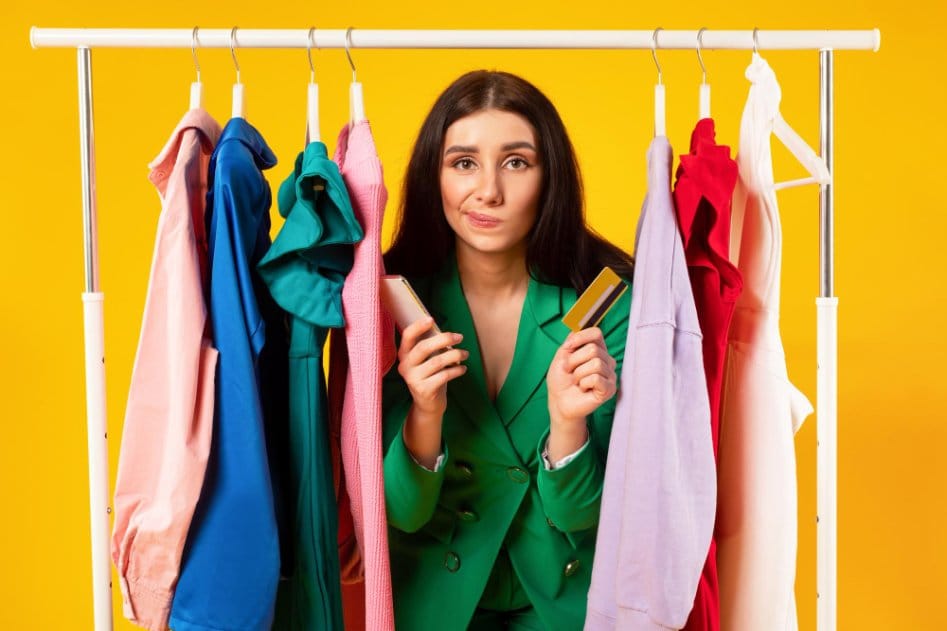
Here’s where most people have it backward. They look at the price tag and think that’s the cost. It’s not. The real cost of a piece of clothing is the price divided by how many times you actually wear it. This is called cost per wear, and once you start calculating it, fast fashion stops looking like a deal.
A $15 fast fashion top worn 5 times costs $3.00 per wear.
A $60 quality top worn 60 times costs $1.00 per wear.
The “cheap” option cost three times as much.
🧰 Calculate Your True Clothing Cost
Enter any item you own or are thinking about buying to see its real value.
Your Cost Per Wear
Hidden Costs You Never See on the Price Tag

Fast fashion is cheap at checkout but expensive in the long run, and not just for your wallet. When a $5 shirt makes it from factory floor to your door, someone, somewhere is paying the difference. That cost just gets shifted elsewhere:
- Worker wages: Garment workers in countries like Bangladesh and Vietnam often earn less than $3 a day. The low price you pay at checkout reflects their exploitation, not efficiency.
- Environmental cleanup: The fashion industry creates roughly $2.1 trillion in environmental damage annually. None of that shows up on a price tag.
- Your own replacement spending: When you replace cheap items every few months, the total adds up fast. The average American spent around $1,800 on clothing in 2025, and that number is still climbing. A lot of that went on items worn only a handful of times.
- Health impacts: Some fast fashion items, especially from ultra-cheap retailers, have been found to contain chemicals above safe thresholds. That matters if you’re wearing it against your skin all day.
Water used to make a single cotton t-shirt. That’s nearly 3 years of drinking water for one person.
Water used by a sustainably made alternative. 85% less water through efficient production methods.
Most fast fashion items are thrown away or forgotten after fewer than 10 wears.
A well-made item worn regularly and cared for properly can last several years.
The Environmental Impact: Fast Fashion vs Slow Fashion
You’ve probably heard that fashion is bad for the environment, but the numbers are hard to wrap your head around. Here’s what the data actually says.
| Environmental Factor | Fast Fashion | Slow Fashion |
|---|---|---|
| Carbon Emissions | 1.2 billion tons CO2 per year | 60-80% lower per garment |
| Water Use | 79 trillion liters per year | Up to 95% less through efficient production |
| Textile Waste | 92 million tons annually | Near-zero through circular design |
| Chemical Use | 1,400+ chemicals, many toxic | Natural dyes, fewer chemicals |
| Ocean Microplastics | 35% of ocean microplastics come from synthetic fashion | Minimal from natural fibers |
| Landfill | One garbage truck of textiles every second | Circular or biodegradable design |
Understanding what fabrics are in your clothing helps you make more informed choices. Check out this guide on natural vs. synthetic fabrics to learn more about which materials have the lowest impact. For building a more durable wardrobe, the guide on the most durable fabrics for everyday wear is a great starting point.
The Microplastics Problem: Every time you wash a polyester or acrylic item, it releases thousands of tiny plastic fibers into the water supply. These microplastics have been found in human blood, breast milk, and even the deepest ocean trenches. Switching to natural cotton or silk for clothing you wash frequently reduces this impact significantly.
What About the Circular Economy?
The circular economy is one of the most exciting ideas in sustainable fashion right now. Instead of the current “make it, wear it, trash it” cycle, circular fashion imagines clothing that gets repaired, resold, or returned to the manufacturer to be turned into something new. Brands like Patagonia are already doing this with their Worn Wear program. The Ellen MacArthur Foundation has done extensive research on what a fully circular fashion economy would look like, and the numbers are compelling.
Brand-by-Brand Breakdown: Who’s Actually Sustainable?
Brands love slapping words like “eco,” “conscious,” and “green” on their labels. Here’s a more honest look at what some of the biggest names are actually doing.
| Brand | Fast Fashion? | Worker Conditions | Environment | Transparency | Verdict |
|---|---|---|---|---|---|
| Shein | Yes | Very poor | No initiatives | Minimal | Avoid |
| H&M | Yes | Mixed | Some progress | Improving | Caution |
| Zara | Yes | Mixed | Pre-Owned program | Limited | Caution |
| ASOS | Mostly | Better than Shein | Responsible Edit | Partial | Mixed |
| Patagonia | No | Strong | Industry-leading | High | Recommended |
| Everlane | No | Transparent | Good | Very high | Recommended |
For a deeper dive into how current fashion trends are being shaped by sustainability, check out the 2026 fashion trends guide and the 2026 fabric trends breakdown.
Why You Keep Buying Fast Fashion (Even When You Know Better)
Let’s be honest with each other here. Most people reading this already know fast fashion has problems. You’ve seen the documentaries. You’ve read the headlines. And yet, three weeks ago you still added something to your Shein cart. Why?
It’s not weakness. It’s psychology. The fast fashion industry has spent billions studying exactly how to make you buy things you don’t need. Here’s what they know about you:
🧠 The Dopamine Hit
Buying something new triggers a release of dopamine in your brain. The same chemical that makes you feel good after exercise. Fast fashion is engineered to deliver that hit as often as possible, at the lowest possible price point.
📷 Social Comparison
41% of young women say they feel pressure not to repeat outfits in photos. When your feed is full of influencers in new looks every day, wearing the same thing twice starts to feel like a statement you didn’t mean to make.
⏳ Urgency and Scarcity
“Only 3 left!” “Flash sale ends in 2 hours!” These aren’t accidents. They’re calculated tricks designed to get you to skip the thinking step and go straight to checkout. Slow fashion rarely uses these tactics because it doesn’t need to.
🌈 The Values-Action Gap
78% of people say they care about sustainability in fashion. But only 22% consistently buy sustainable. The gap between what you believe and what you do under pressure is completely normal. Understanding it is the first step to closing it.
💰 Price Anchoring
When you see a $200 dress next to a $20 dress, the $20 one feels like a steal, even if the $200 one would cost you less per wear over time. Fast fashion brands use this anchoring effect to make cheap feel like smart.
🕐 The Fresh Start Effect
New clothes feel like a new you. A new job, a breakup, a move. Fast fashion is especially tempting at life transition points because buying something new feels like taking action toward who you want to be next.
Understanding these triggers doesn’t mean you’ll never fall for them again. But noticing them in the moment, “wait, is this a real need or a dopamine chase?” gives you a pause that often makes the difference.
To better understand your personal style preferences beyond trend-chasing, try the Personal Fashion Style Finder Quiz or the Fashion Aesthetic Quiz.
What Kind of Fashion Shopper Are You?
Everyone shops differently. Before you can change your habits, it helps to know where you’re starting from. Take this quick quiz to find out your shopper type and get advice that actually fits your lifestyle.
Find Your Shopper Type
Answer 4 questions to get your personalized shopping profile.
How to Spot Greenwashing: Don’t Get Fooled
Greenwashing is when a brand uses vague or misleading environmental claims to make you feel good about buying from them, without actually doing the work. It’s one of the most common tricks in fashion marketing today, and it works because most of us don’t know what to look for.
A brand putting “eco-friendly” on a label costs them nothing. Proving it is a very different story.
Famous Greenwashing Examples
- H&M’s Conscious Collection: Marketed as their sustainable line, but investigations found garments scored worse on sustainability than their regular products in some cases. The collection still uses predominantly new synthetic materials.
- Recycled Material Claims: “Made from recycled plastic bottles” sounds great until you realize the item is still synthetic, still sheds microplastics when washed, and still ends up in a landfill.
- Carbon Neutral Shipping: Some brands buy cheap carbon offsets to claim carbon neutrality without changing their actual production process at all.
Use This Greenwashing Checker
Before buying from any brand that claims to be sustainable, run through this checklist. The more boxes that apply, the more legitimate their claims.
✅ Brand Sustainability Checker
Check off every point that applies to the brand you’re evaluating. Your trust score updates as you go.
Check boxes above to see your score
Quick tip: The Good On You app rates thousands of fashion brands on environment, labor, and animal welfare using verified data. Download it before you shop and look up any brand in seconds.
TikTok, Social Media, and the Trend Trap
If you’ve ever bought something because you saw it on TikTok, you’re part of one of the most powerful economic forces in fashion history. The stats are staggering: 78% of Gen Z shoppers report buying clothing after seeing it on social media. Live shopping streams in China alone generated over $700 billion in a single year.
The problem isn’t social media itself. It’s the speed at which it cycles trends. In the 1990s, a fashion trend might last 3 to 5 years. In the early 2000s, maybe 2 years. By 2015, seasonal trends. By 2025, a trend can go from viral to over in less than a month, and fast fashion brands have engineered their entire operation around this cycle.
The result is what fashion researchers call “micro-trends,” super-fast trend cycles that are so short they’re practically designed to leave you feeling behind before you can even catch up. That feeling of being behind is exactly what keeps you buying.
For a deeper look at how social media is reshaping what we wear, check out our guide on how social media is influencing fashion trends.
How to Break the TikTok Trend Cycle
- Wait 48 hours. If you still want it two days after seeing it, it might actually be something you’ll wear. If you’ve forgotten about it, that’s your answer.
- Unfollow haul content. Not because it’s evil, but because constant exposure to “look how much stuff I bought” content normalizes that level of consumption for your brain.
- Follow style creators, not haul creators. There’s a huge difference between someone showing you 40 items from a Shein order and someone showing you 5 ways to style one good jacket you already own.
- Ask “is this my style or is this the trend?” If you can picture yourself loving this in 3 years, it might be worth buying. If you’re only excited because it’s everywhere right now, wait.
Real Talk: You Don’t Have to Pick a Side
Here’s something most sustainable fashion content won’t say: not everyone can afford to go fully slow fashion, and that’s completely fine. If you’re working with $300 a year for clothes, being told to buy a $90 Everlane t-shirt isn’t helpful. It’s just making you feel bad for no reason.
The actual goal isn’t to be perfect. It’s to be a little more thoughtful than you were before. Most people are somewhere in the middle, buying some fast fashion, some secondhand, maybe one or two quality pieces a year. That’s not failure. That’s real life.
The shift that makes the biggest difference isn’t switching entirely to slow fashion. It’s asking better questions before you buy anything. Will I actually wear this 30 times? Do I already own something that does this job? Is this a want or a need? Those three questions, asked consistently, will do more for your wallet and for the environment than any single brand switch.
When you’re ready to start adding some quality women’s clothing and fashion deals to your closet without completely breaking the bank, browsing fashiontrendyshop.com and women’s fashion deals can help you find pieces that balance style and value.
The Slow Fashion Starter Kit for Beginners
You don’t need to overhaul your closet all at once. Start with these 10 foundational pieces and you’ll have the building blocks of a wardrobe that works for years, not weeks. Focus on quality, versatility, and things you’ll genuinely wear.
Fabric matters more than brand name. Learning to read fabric labels is one of the most useful skills in slow fashion. Generally, higher natural fiber content means better quality. A good guide on common fabric types and their uses will help you shop smarter at any price point.
How Long Should Your Clothes Actually Last?
As a rule of thumb, here’s what to expect from well-made clothing with proper care:
Building a Better Wardrobe on Any Budget
Slow fashion doesn’t require a big budget. It requires a different mindset. Here’s a realistic game plan for three different spending levels.
- Focus almost entirely on secondhand
- ThredUp, Poshmark, local thrift stores
- Buy 1-2 quality basics per season
- Learn basic repairs to extend garment life
- Clothing swaps with friends or community groups
- Prioritize fabric quality over brand name
- Mix sustainable brands with quality secondhand
- Target 5-7 higher quality pieces per year
- Rent for special occasions instead of buying
- Look for end-of-season sales at ethical brands
- Compare fabric types before buying
- Use cost per wear as your guide, always
- Invest in premium sustainable brands
- Build a true capsule wardrobe of 30-40 pieces
- Consider made-to-measure for key pieces
- Invest in a cashmere or quality wool piece annually
- Support innovation in sustainable materials
- Influence others with your purchasing choices
Secondhand, Rental, and Smarter Alternatives
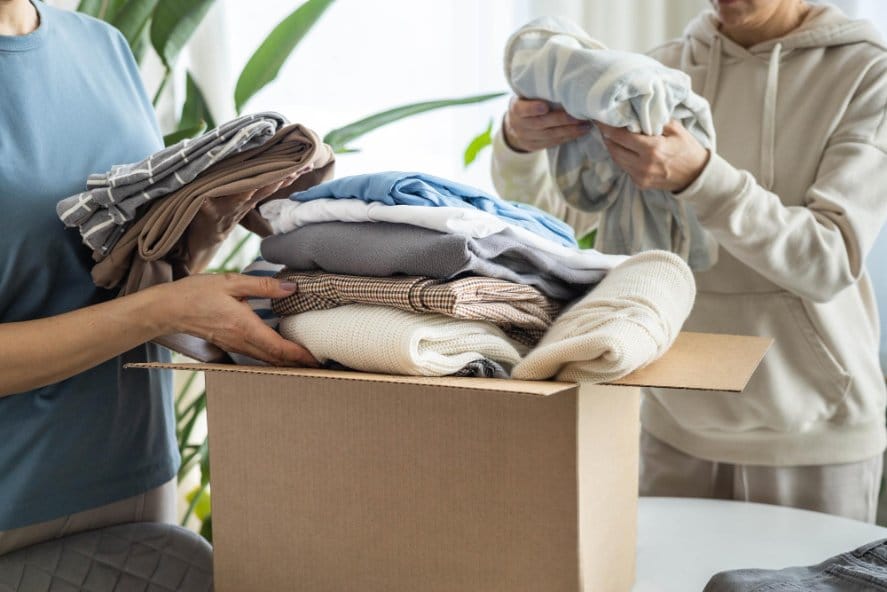
One of the best-kept secrets in sustainable fashion is that buying secondhand is almost always the most sustainable option, regardless of what brand the item originally came from. You’re not creating new demand for production. You’re extending the life of something that already exists.
The Secondhand Boom
The resale market is one of the fastest-growing segments in all of retail, projected to hit $350 billion by 2029. Platforms have made it easier than ever to find quality pieces at a fraction of retail price:
- ThredUp: Online consignment, great for everyday brands at 60-80% off retail
- Poshmark: Strong for brands and more curated finds. Our guide on Poshmark vs eBay breaks down what works best where.
- Depop: Great for vintage and Gen Z aesthetics. See our Depop vs. Vinted guide for more.
- Facebook Marketplace and local thrift stores: Often overlooked, but can turn up incredible finds for almost nothing
Fashion Rental: Smarter for Special Occasions
If you need a dress for a wedding, a gala, or an event you’ll attend once, buying something you’ll never wear again is one of the least sustainable purchases you can make. Rental services like Rent the Runway give you access to designer pieces at a fraction of the purchase price. It’s genuinely one of the best sustainability hacks in fashion.
Clothing Swaps
Hosting or attending a clothing swap costs nothing and gives you something new to wear without any new production. It’s social, it’s free, and it’s one of the most direct ways to extend the life of clothing in your community. Check if your neighborhood has a “Buy Nothing” group on Facebook, which often runs clothing exchanges year-round.
How to Properly Care for What You Own
The single most sustainable thing you can do is take better care of the clothes you already have. Proper washing, storage, and repair can double or triple the life of your existing wardrobe. Learn how to wash and care for different fabrics to keep everything looking better, longer.
Fashion and Mental Health: The Part Nobody Talks About
There’s a conversation happening quietly underneath all the sustainability talk, and it’s about how our relationship with clothes affects the way we feel. Not just guilt about buying too much, but the anxiety of keeping up, the comparison that comes with scrolling, and the strange feeling that your closet full of things still doesn’t feel like enough.
These aren’t personal failures. They’re documented psychological patterns driven by how the modern fashion industry operates.
The Comparison Cycle
When your feed is full of people in new outfits every day, your brain starts to register your own wardrobe as lacking, even when it’s objectively full. This is called social comparison theory, and fast fashion’s business model depends on triggering it constantly. The fix isn’t buying more. It’s changing what you see.
The Guilt-Buy Cycle
Many people experience a pattern that goes: buy something quickly online, feel a brief high, then feel guilty about the purchase, try to compensate by buying something “better” or more sustainable, feel guilty about that too, and so on. If this sounds familiar, the problem isn’t what you’re buying. It’s the underlying pressure driving the buying in the first place. Stepping back and examining whether shopping is a coping mechanism for stress or boredom is worth the reflection.
Building a Wardrobe That Makes You Feel Good Every Day
The practical benefit of a smaller, more curated closet is that getting dressed in the morning becomes genuinely easier. Research on decision fatigue consistently shows that more choices don’t lead to more satisfaction. They lead to more stress. A closet of 30 things you love beats a closet of 150 things you feel “meh” about, every time.
“You don’t need more clothes. You need fewer clothes you actually like wearing.”
The Future of Fashion: What’s Coming

The fashion industry is changing faster than most people realize. Here’s a look at what’s coming and how it affects the fast fashion vs slow fashion conversation.
- 2026 to 2027: AI Changes Everything AI-powered trend forecasting helps reduce overproduction. Virtual try-on technology cuts return rates by up to 64%, which reduces emissions from shipping. Slow fashion brands are using AI to personalize styling in ways that reduce impulse buying.
- 2026 to 2028: Regulation Arrives The EU’s Circular Economy Action Plan and New York’s Fashion Act are pushing brands to disclose environmental data and take back their products. This makes greenwashing harder and forces real change at the production level.
- 2028 to 2030: New Materials Take Over Lab-grown leather from mushroom mycelium, algae-based fibers, and biodegradable synthetics are moving from experiment to mainstream. These materials could make sustainable fashion genuinely affordable at scale.
- 2030 and Beyond: Ownership Models Shift Rental, subscription, and buy-back schemes become mainstream. 3D printing enables local, on-demand production that eliminates overstock entirely. The concept of “fast fashion” may start to look like the industry’s past, not its future.
Will fast fashion disappear? Probably not anytime soon. But it will be forced to evolve. The combination of consumer pressure, new regulations, and rising material costs means the current ultra-cheap, ultra-fast model has a limited future. The brands that adapt early will survive. The ones that don’t will face serious challenges.
Frequently Asked Questions
Yes, the environmental impact is genuinely significant. The fashion industry accounts for 10% of global carbon emissions, more than international aviation and shipping combined. It consumes 79 trillion liters of water annually, produces 92 million tons of textile waste, and contributes around 35% of the microplastics found in oceans. Fast fashion specifically makes these numbers worse because it’s designed around high volume and short use cycles, meaning more production with less use per item.
Almost always, yes. Buying secondhand extends the life of an existing garment without creating any new production demand. It’s the most sustainable option available, regardless of the original brand. When you buy new, buying from a slow fashion brand is the better choice because it supports better production practices and sends a market signal. But if the budget is tight, secondhand first every time.
The short answer is that fast fashion is cheap because its true costs get pushed onto workers, communities, and the environment rather than the price tag. Slow fashion prices reflect fair wages, quality materials, smaller production runs, and responsible manufacturing. When you factor in cost per wear, the expensive option often isn’t. A $90 top worn 90 times costs $1 per wear. A $15 top worn 10 times costs $1.50 per wear.
These terms overlap but they’re not the same thing. Sustainable fashion focuses on environmental impact, meaning things like carbon emissions, water use, materials sourcing, and waste. Ethical fashion focuses on social impact, meaning fair wages, safe working conditions, and human rights in the supply chain. The best brands address both. Some brands do well on environment but poorly on labor rights, and vice versa.
Look for specifics over vague language. A brand that says “we are committed to a more sustainable future” is saying almost nothing. A brand that publishes the names and addresses of their factories, shares actual wage data, has verifiable third-party certifications like B-Corp or GOTS, and reports annual environmental impact numbers is doing the real work. When in doubt, check Good On You, which rates brands based on independently verified data.
Yes, absolutely. Secondhand shopping, clothing swaps, and learning basic repairs are all free or close to it. You can also start small: instead of replacing your whole closet at once, just replace the next fast fashion item you would have bought with a secondhand equivalent. Over time, small shifts add up to a real change without blowing your budget.
A lot of it gets incinerated, sent to landfills in the Global South, or ends up in situations like the giant “clothing graveyard” in Chile’s Atacama Desert, where tens of thousands of tons of discarded clothing pile up in the desert because it’s cheaper to ship than to dispose of locally. Some gets donated, but donation networks are so overwhelmed by fast fashion volume that most charity shops can only sell a fraction of what they receive.
A good basic t-shirt in quality cotton should last 2 to 4 years with regular wear. Jeans in solid denim, 3 to 7 years. A well-made coat or jacket, 10 years or more. Quality sweaters in natural fibers like merino wool or cashmere can last decades with proper care. The key variables are fabric quality, construction, and how well you look after it. Learning to care for your fabrics properly can double the lifespan of almost anything you own.
Not in its current form. The economics of ultra-cheap, ultra-fast production make genuine ethical practices essentially impossible. You can’t pay workers fairly, use quality materials, and sell a dress for $8. Something has to give, and right now it’s always workers and the environment. Some mid-range brands are finding ways to balance speed with better practices, but true fast fashion at the lowest price points will always involve trade-offs that put ethics last.
For special occasion clothing, yes, usually. If you’re renting a dress you’d wear once and then forget about, rental is far more sustainable than buying. For everyday clothing, it depends on the service. Subscription rentals that involve a lot of shipping and dry cleaning can actually have a higher carbon footprint than buying one quality item and wearing it for years. Think about what you’re replacing and whether it genuinely reduces total production demand.
Watch: Slow Fashion vs Fast Fashion Explained

Conclusion
Here’s the honest truth about fast fashion vs slow fashion in 2026: the perfect choice doesn’t exist, and waiting until you can make perfect choices means never making any. The fashion industry is one of the most polluting on earth, and it’s also one of the most psychologically sophisticated at getting you to keep buying things you don’t need. Understanding that dynamic is the first real step.
You don’t need to swear off Zara tomorrow. You don’t need to spend $200 on a t-shirt to prove you care. What you do need is to start asking different questions before you buy anything: How long will I actually wear this? What is it made of? Do I already own something that does this job? Will I think this was a good purchase in six months?
Those questions, asked consistently, are more powerful than any single brand switch. They shift your relationship with clothes from reactive to intentional, from trend-driven to personal. And over time, that shift costs you less money, less guilt, and less closet chaos.
🎯 Key Takeaways and Action Steps
- Fast fashion’s low prices are real, but its true cost, including environmental damage, worker exploitation, and your own replacement spending, is much higher than the price tag.
- Cost per wear is the most honest way to compare fast and slow fashion. A $15 item worn 5 times costs more per wear than a $60 item worn 60 times.
- Greenwashing is everywhere. Look for third-party certifications, factory transparency, and specific data rather than vague sustainability language.
- Buying secondhand is almost always the most sustainable choice, regardless of the original brand. ThredUp, Poshmark, and Depop are good starting points.
- You don’t have to choose a side. Small, consistent improvements are more sustainable than trying to be perfect and burning out.
- Taking care of what you already own is the single most impactful thing you can do today. Proper washing, storage, and basic repairs extend garment life dramatically.
- Unfollow haul culture. The content you consume shapes what you feel you need. Following style-focused creators instead of quantity-focused ones genuinely changes your spending behavior over time.
- Start your slow fashion shift with one thing: the next time you’re about to buy a fast fashion item on impulse, wait 48 hours. That one habit alone will save you money and reduce waste without costing you anything.
The way the fashion industry works right now isn’t inevitable. It’s the result of choices made by brands, platforms, and consumers. Your choices, made consistently, are part of what shapes what comes next. Dress with that in mind.
For more on building a wardrobe that works for your life, check out our guides on women’s clothing trends, fall and winter 2025 trend predictions, and the complete 2025 fashion forecast. And if you’re ready to make your next fashion purchase a better one, browse curated women’s fashion options and budget-friendly women’s clothing from shops that care about quality and value.
For further reading on sustainability in fashion, Fashion Revolution is a global movement pushing for transparency and accountability in the industry, and their resources are free and well-researched.