
What it is, why it matters, how it compares, and everything you should know before you buy or care for it
The Surprising Truth About Your Jeans
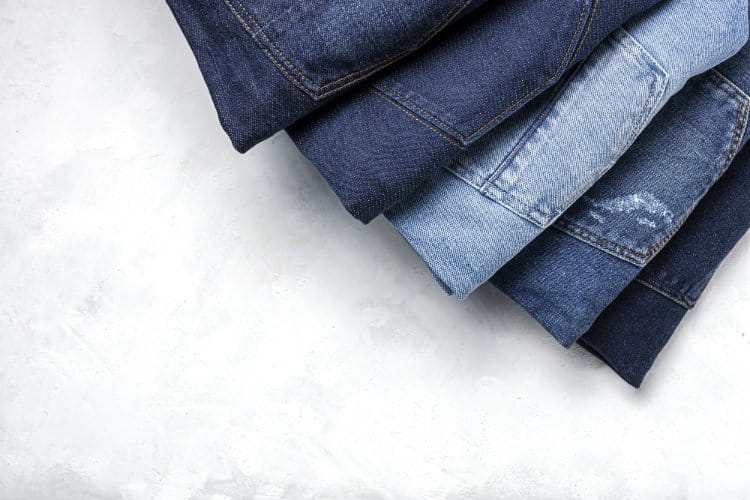
Here’s something most people never think about: the jeans you are wearing right now are probably not made from pure cotton.
Denim has been made from cotton for centuries. But today, only about 25% of all denim produced globally is 100% cotton. The rest contains polyester, elastane, or other synthetic fibres added for stretch and comfort. [Source: Honry Fabric]
That shift happened quietly, over the last few decades. Brands started adding tiny amounts of synthetic fibres to make jeans more comfortable from the first wear. Consumers loved the stretch. And slowly, pure cotton denim became the exception rather than the rule.
So why does it matter? Because 100% cotton denim behaves, feels, ages, and lasts in ways that blended fabrics simply cannot copy. If you care about quality, longevity, sustainability, or getting the most out of your clothes, understanding pure cotton denim is worth your time.
This guide covers everything: what it is, how it’s made, how it compares to every other type of denim, and how to buy, size, and care for it properly.
What Is 100% Cotton Denim?
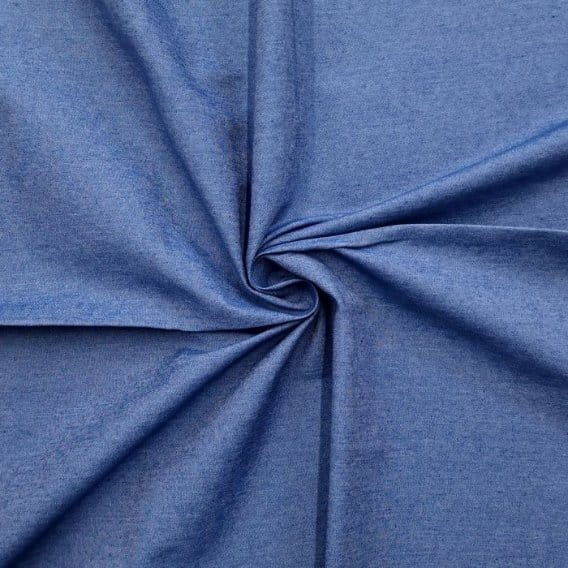
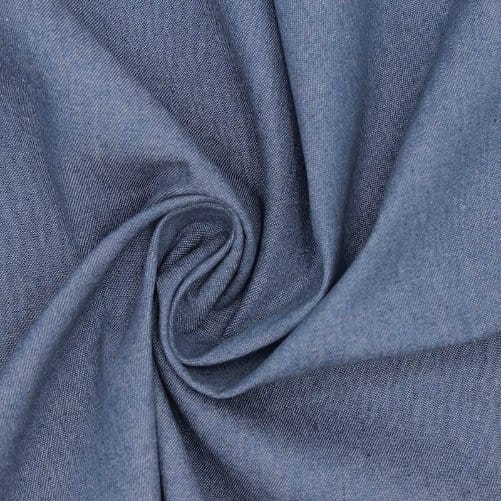
At its most basic, denim is a woven fabric made in a specific pattern called a twill weave. This weave creates the diagonal ribbing you see on the back of any pair of jeans.
In a traditional twill weave, the warp threads (running lengthwise) are dyed in indigo. The weft threads (running crosswise) stay undyed, usually white or natural. That combination of dyed warp and undyed weft is what gives denim its signature blue-on-white look and its ability to fade in such a distinctive way over time.
When the fabric is 100% cotton denim, it means every single fibre used in that weave comes from cotton plants. There is no polyester, no elastane, no viscose, and no other material added in.
Cotton Denim vs. Regular Denim: What’s the Difference?
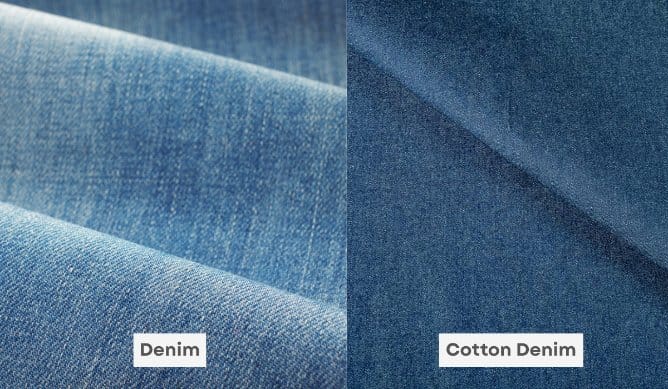
This is a question people get confused about, and for good reason.
Cotton is the raw fibre. Denim is the fabric made from that fibre using a twill weave. So technically, all traditional denim is a type of cotton fabric.
The confusion comes from the fact that “regular denim” today often refers to a blend. Most modern jeans are 97-98% cotton with 2-3% elastane or polyester added. When a label just says “denim,” it does not automatically mean pure cotton anymore.
100% cotton denim means the fabric is made entirely from cotton fibres with nothing else mixed in. This is the original version of denim, and it has very different properties from blended denim in terms of feel, stretch, durability, and how it ages. You can read more in our guide on the difference between denim and jeans.
Can Denim Actually Be 100% Cotton?
Yes, absolutely. And for most of denim’s history, it was always 100% cotton. The shift to blended fabrics only really accelerated from the 1990s onward.
Today, 100% cotton denim is still produced all over the world, though it has become more of a premium, intentional choice than the default. Raw denim, selvedge denim, and heritage workwear brands in particular still use and champion pure cotton construction.
A Brief History of Cotton Denim
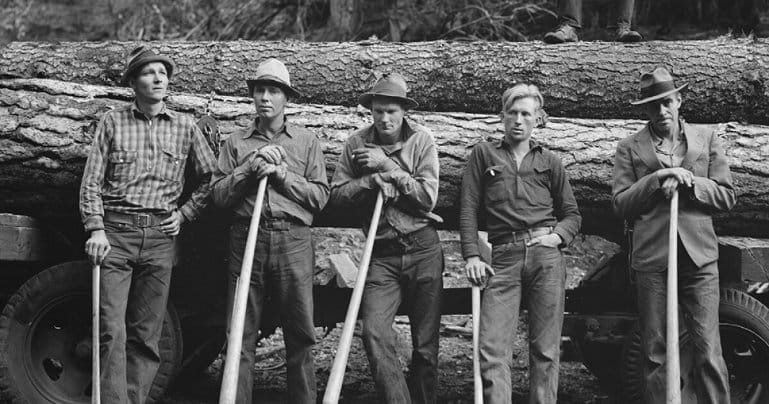
The word “denim” comes from the French phrase serge de Nîmes, referring to a sturdy fabric that originated in the French city of Nîmes around the 17th century. At that time, it was a 100% cotton fabric used primarily for workwear.
Around the same period, a similar heavy cotton fabric was produced in Genoa, Italy. British merchants called it “Genes” cloth, which eventually became the word “jeans.”
Denim as we know it today was shaped in the United States in the 19th century. In 1873, Jacob Davis and Levi Strauss were granted a patent for riveted denim trousers designed for workers. These were made from pure, heavy cotton denim and built for hard physical labour.
For the next century, 100% cotton was simply what denim was. There was no other option. The fabric earned its reputation for toughness, comfort over time, and the way it moulded to the wearer’s body.
The first major shift came in the 1970s and 1980s when fashion denim took off and brands began experimenting with lighter-weight fabrics. The real turning point was the 1990s and 2000s, when elastane (spandex) blends became mainstream as slim and skinny fits became popular. You cannot make truly form-fitting jeans from rigid 100% cotton, so stretch blends became a commercial necessity.
Today, 100% cotton denim has found a passionate following among denim enthusiasts, slow-fashion advocates, workwear brands, and sustainability-conscious consumers who want the real thing.
From Cotton Field to Your Closet
Most people never think about how many steps it takes to turn raw cotton into a finished pair of jeans. The journey is longer than you might expect, and each step directly affects the quality of the final fabric.
It takes approximately 1.5 pounds of raw cotton to make one pair of jeans. You need two cotton plants to grow that amount. [Source: Denimhunters] Here is how the whole process works, from field to finished fabric.
Ring-Spun vs. Open-End Spun Cotton
The way cotton is spun into yarn makes a real difference to the finished fabric. There are two main methods used in denim production.
Ring-spun yarn twists fibres tightly together in a continuous ring spinning process. This creates a stronger, smoother yarn with a slight “slubby” texture that gives denim its characteristic depth and interest. Most premium and Japanese denim uses ring-spun cotton.
Open-end spun yarn is faster and cheaper to produce. It creates a slightly more uniform, airier yarn. Most mass-market denim uses open-end spinning.
You can learn more about how cotton is grown and processed in our guide on growing cotton from seed to harvest.
Why Indigo Dye Matters
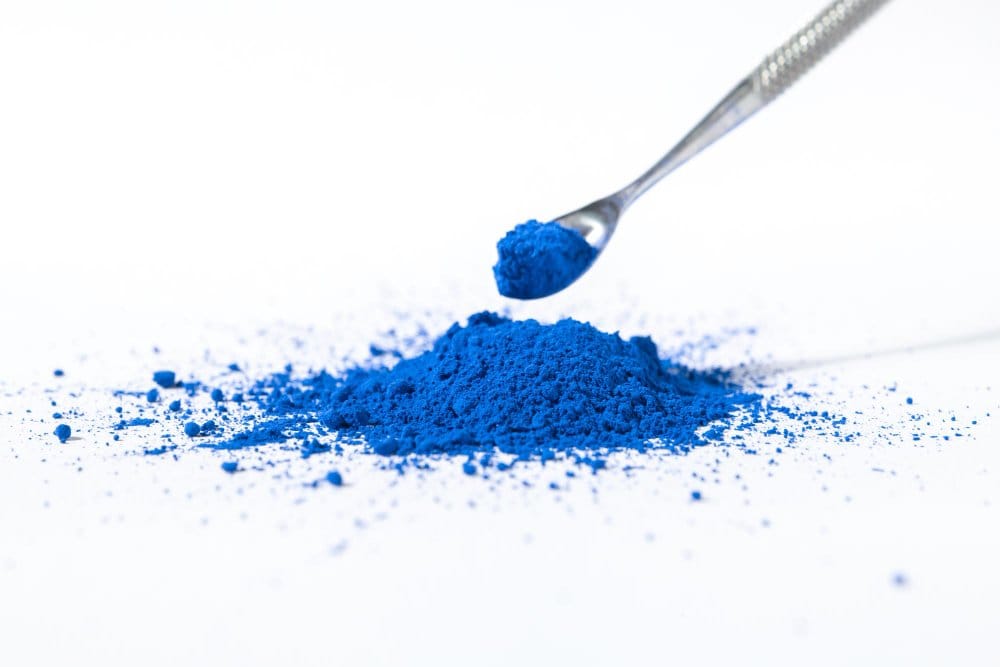
Indigo dye is the reason denim fades the way it does, and it is central to what makes cotton denim so special.
Unlike most dyes, indigo does not fully penetrate the cotton yarn. It only coats the outer surface. The core of each cotton thread stays undyed and white. As the fabric wears over time, the dye on the surface slowly rubs off, revealing the white core underneath. This is what creates the beautiful, personalised fading patterns that denim enthusiasts love.
Synthetic fibres do not absorb or release indigo the same way cotton does. This is one of the key reasons why 100% cotton denim fades so much more richly and uniquely than any blended fabric.
What Makes 100% Cotton Denim Special
Is 100% Cotton Denim Good Quality?
Yes. In fact, among denim experts and serious enthusiasts, 100% cotton is considered the gold standard.
A study by Cotton Incorporated found that 100% cotton denim is up to 60% stronger in width after 20 washes compared to non-cotton synthetic blends. That is a significant durability advantage, and it backs up what denim wearers have known for decades through experience.
The quality of 100% cotton denim depends heavily on the type of cotton used, how it is spun, and how the fabric is woven. Extra-long-staple cotton varieties such as Egyptian Giza or Indian Suvin produce finer, stronger yarn and create higher-quality denim. The shorter the cotton fibre (called the staple length), the lower the potential quality of the yarn.
The Main Benefits of 100% Cotton Denim
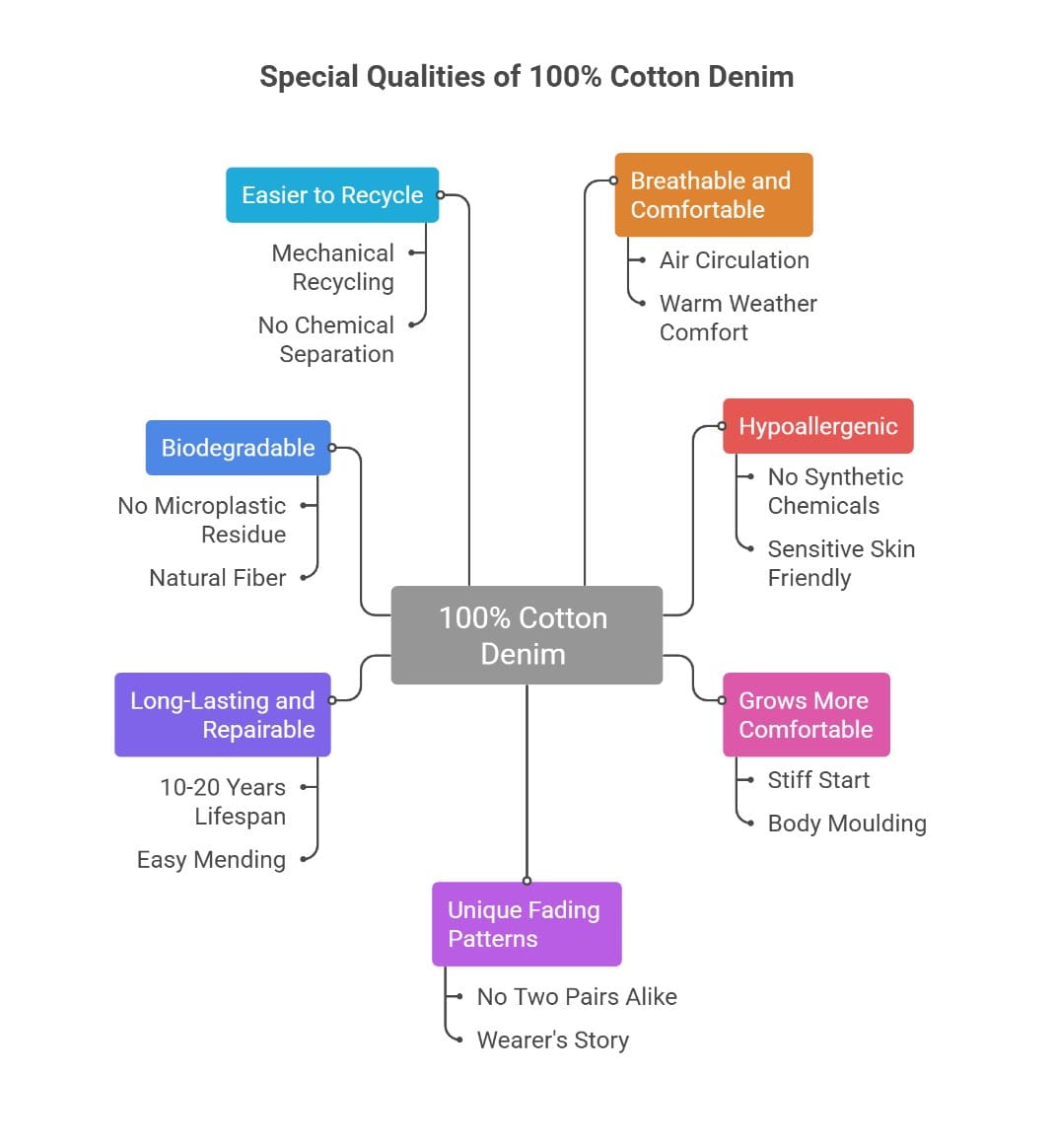
- Breathable and comfortable in warm weather. Cotton fibres allow air to circulate freely, making pure cotton denim much more comfortable in heat than polyester-heavy blends.
- Hypoallergenic. Without synthetic chemicals or artificial fibres, 100% cotton is less likely to cause skin irritation, making it a better choice for people with sensitive skin.
- Grows more comfortable over time. Pure cotton denim starts stiff and softens gradually with wear, eventually moulding to the exact shape of the wearer’s body.
- Develops unique, personal fading patterns. No two pairs of 100% cotton jeans age the same way. The fading tells the story of the person who wore them.
- Long-lasting and repairable. High-quality cotton denim can last 10 to 20 years with proper care. It can also be repaired and mended more easily than synthetic blends.
- Biodegradable. Cotton is a natural fibre that breaks down without leaving microplastic residue. Blended denim with polyester sheds microplastics every time it is washed.
- Easier to recycle. Pure cotton denim can be mechanically recycled without the need for chemical separation processes required by blended fabrics.
Cotton Denim Weight Guide
Denim weight is measured in ounces per square yard (oz/yd²). This number tells you how heavy and thick the fabric is, which affects how it drapes, how warm it is to wear, and how stiff or soft it feels.
For 100% cotton denim, weight is especially important because there is no stretch to compensate for stiffness. A lightweight cotton denim feels completely different from a heavy raw denim. Here is a quick guide to what the weights mean.
You can explore our complete guide to lightweight vs. heavyweight fabrics for a broader comparison across all fabric types.
The Art of Fading: Whiskers, Honeycombs and Patina
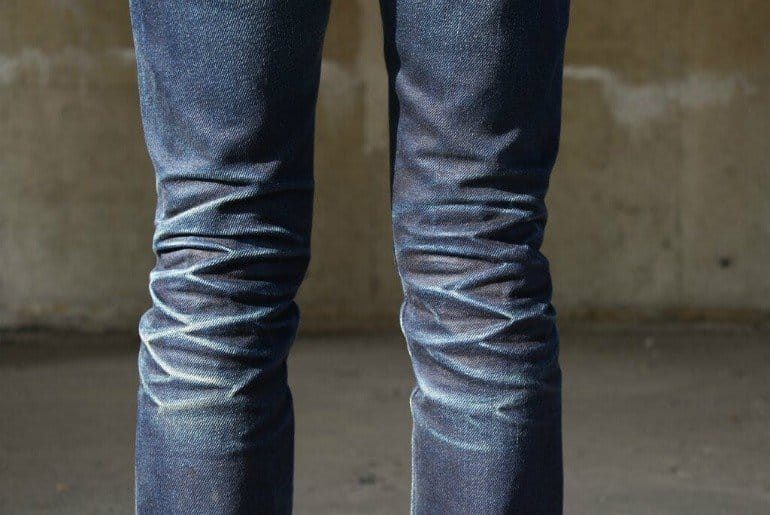
This is the part of the cotton denim story that no synthetic blend can replicate.
Because indigo dye only coats the outer surface of cotton yarn, 100% cotton denim fades from the points of friction outward. The places where the fabric bends, creases, and rubs develop high-contrast, bright fades, while the less-worn areas stay darker.
These fading patterns have their own names. Denim enthusiasts around the world use the same vocabulary to describe them:
- Whiskers – The radiating fade lines that form at the hips and thighs from sitting and moving.
- Honeycombs – The criss-cross patterns that develop behind the knees.
- Train tracks – Fade lines that form along the leg seams.
- Stacks – The horizontal creases that build up at the ankle when jeans are worn long.
- Combs – Similar to whiskers, but appearing at the back of the knee or upper thigh.
Each of these patterns is unique to the person wearing the jeans. The way you walk, sit, work, and move all leave their mark on the fabric. That is why denim enthusiasts talk about “earning” fades. You cannot fake it. A pair of 100% cotton jeans that has been worn for years looks completely different from a pair that has been artificially distressed at a factory.
Blended denim with polyester or elastane does not develop this kind of character. The synthetic fibres resist indigo in a different way, and the fabric does not crease and hold shape in the same manner. You can buy artificially faded stretch jeans, but the effect is flat and uniform. True cotton patina is three-dimensional and earned.
100% Cotton Denim vs. Everything Else
One of the most useful things you can do when choosing denim is understand what you are actually comparing. Here is a thorough breakdown of how 100% cotton denim stacks up against every major alternative.
100% Cotton Denim vs. Stretch Denim (Elastane Blends)
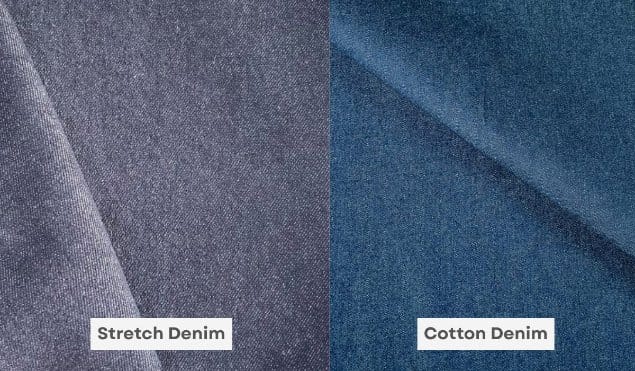
Stretch denim typically contains 97-99% cotton with 1-3% elastane (spandex, Lycra). This small addition of elastane gives the fabric significant stretch, usually 10-20% elongation.
This is the most direct comparison most consumers face when buying jeans. The honest answer is that each has real advantages depending on what you want.
| Feature | 100% Cotton Denim | Stretch Denim (98/2 blend) |
|---|---|---|
| Stretch | ✗ None initially, softens with wear | ✓ 10–20% stretch from day one |
| Breathability | ✓ Excellent | ~ Good, slightly reduced |
| Fading character | ✓ Outstanding, personalised | ~ Moderate, less distinct |
| Long-term durability | ✓ Superior (up to 60% stronger) | ~ Good but elastane degrades |
| Initial comfort | ✗ Stiff, requires break-in | ✓ Comfortable from first wear |
| Shape retention | ~ Moulds to body over time | ✓ Springs back after wear |
| Biodegradability | ✓ Fully biodegradable | ✗ Elastane is not biodegradable |
| Recyclability | ✓ Easily mechanically recycled | ✗ Requires chemical separation |
| Microplastics | ✓ None released | ✗ Sheds microplastic fibres |
| Price (general) | ~ Mid to high | ~ Wide range |
A global retailer found that women’s jeans in sizes 27-32 had a 26% return rate in rigid 100% cotton, versus 11% for stretch denim. [Source: Szoneier Fabrics] This shows that for fit-first consumers, especially those shopping online, stretch blends reduce the chance of getting the fit wrong.
But for consumers who prioritise authenticity, sustainability, and long-term value, 100% cotton is the stronger choice.
100% Cotton Denim vs. Polyester Blend Denim
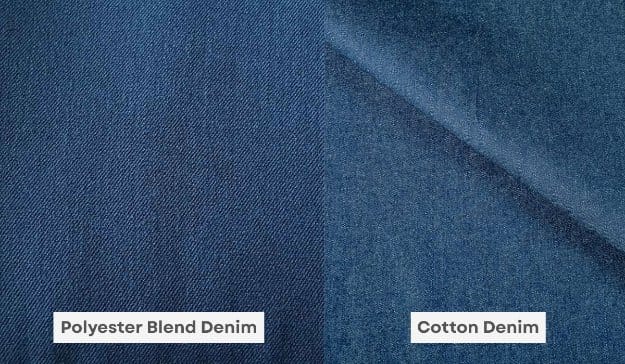
Some denim, particularly lower-cost options and workwear, contains 5-40% polyester. This is different from elastane. Polyester adds durability and reduces cost, but it changes the feel and breathability of the fabric significantly.
| Feature | 100% Cotton | Cotton-Polyester Blend |
|---|---|---|
| Breathability | ✓ High | ✗ Reduced |
| Moisture management | ✓ Absorbs moisture | ~ Dries faster, less absorbent |
| Abrasion resistance | ✓ Very good | ✓ Very good |
| Natural feel | ✓ Soft, natural | ✗ Slightly synthetic feel |
| Wrinkle resistance | ✗ Creases easily | ✓ More wrinkle-resistant |
| Fading character | ✓ Excellent | ✗ Poor |
| Cost | ~ Mid-high | ✓ Usually lower |
Polyester blends make sense for workwear that needs to survive heavy abrasion without fading. But for fashion and lifestyle denim, most consumers prefer the natural feel, breathability, and fading character of pure cotton. See our detailed comparison of cotton vs. polyester fabric for a broader look.
100% Cotton Denim vs. Lyocell / TENCEL Denim
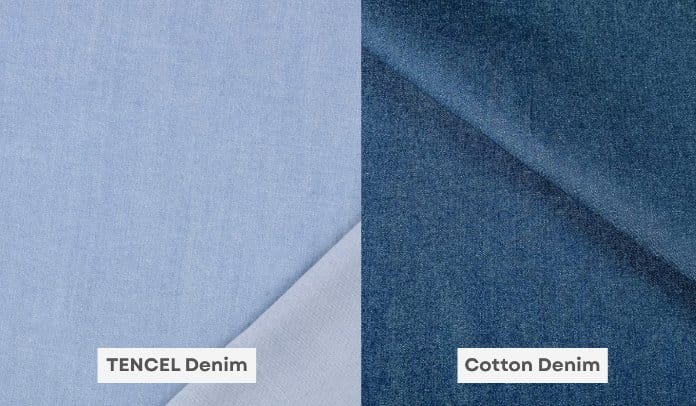
Lyocell (sold under the brand name TENCEL) is a wood-pulp-derived fibre that has become popular in denim for its silky drape and moisture-wicking properties. Some denim blends 60-80% cotton with lyocell.
Cotton-lyocell blends have a softer, more drapey hand feel than pure cotton denim. They are cooler to wear and have less of the classic rigid denim character. However, they do not develop the same fading patterns as pure cotton, and they are generally less durable over the long term.
For those who want denim-like garments with a more fluid silhouette, lyocell blends can be appealing. But for classic jean-wearing, pure cotton remains the more authentic and durable choice.
100% Cotton Denim vs. Other Natural Fabrics
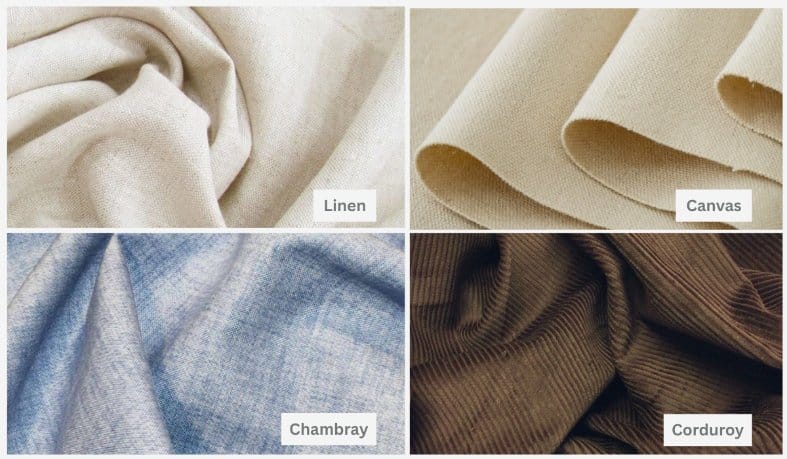
| Fabric | Key Strength | Key Weakness vs. Cotton Denim | Best For |
|---|---|---|---|
| Linen | Very breathable, gets softer with age | Less durable, wrinkles heavily, no twill structure | Summer shirts, trousers |
| Canvas | Very tough, good for heavy workwear | Stiffer, heavier, less drape | Workwear, outerwear, bags |
| Hemp Denim | Very sustainable, strong, UV-resistant | Coarser texture, less soft, limited production | Eco-conscious buyers |
| Chambray | Lighter, softer, similar look to denim | Much less durable, not true denim weave | Shirts, lightweight clothing |
| Corduroy | Textured, warm, distinctive look | Less versatile, pile can wear flat | Autumn/winter trousers, jackets |
Selvedge vs. Open-End Cotton Denim
Both types are made from 100% cotton. The difference is in how the fabric is woven.
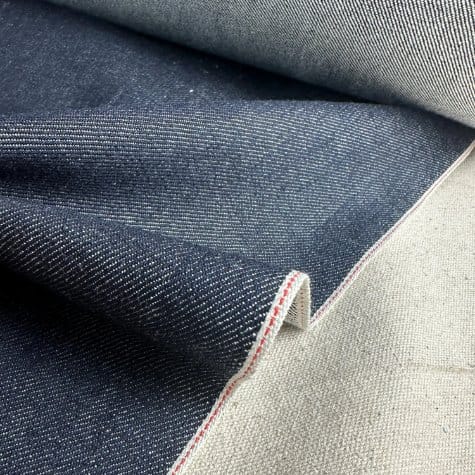
Selvedge denim (also spelled selvage) is woven on narrow shuttle looms, typically 28-32 inches wide. The loom weaves the fabric back and forth in a continuous thread, creating a tightly finished, self-bound edge that will not fray. This is the old-fashioned method, producing a denser, more uniform fabric.
Open-end (or air-jet) denim is woven on modern, wide looms at much higher speeds. The edges are raw and must be finished separately. This method produces more fabric faster and at lower cost, but some argue the fabric has less character and integrity than selvedge denim.
Selvedge denim represents less than 5% of global denim production today, but it holds a strong luxury positioning and is beloved by collectors and quality-focused consumers worldwide. Look for the clean, coloured stripe along the inside seam of the jeans as a sign of selvedge construction.
Raw (Dry) Cotton Denim vs. Washed Cotton Denim
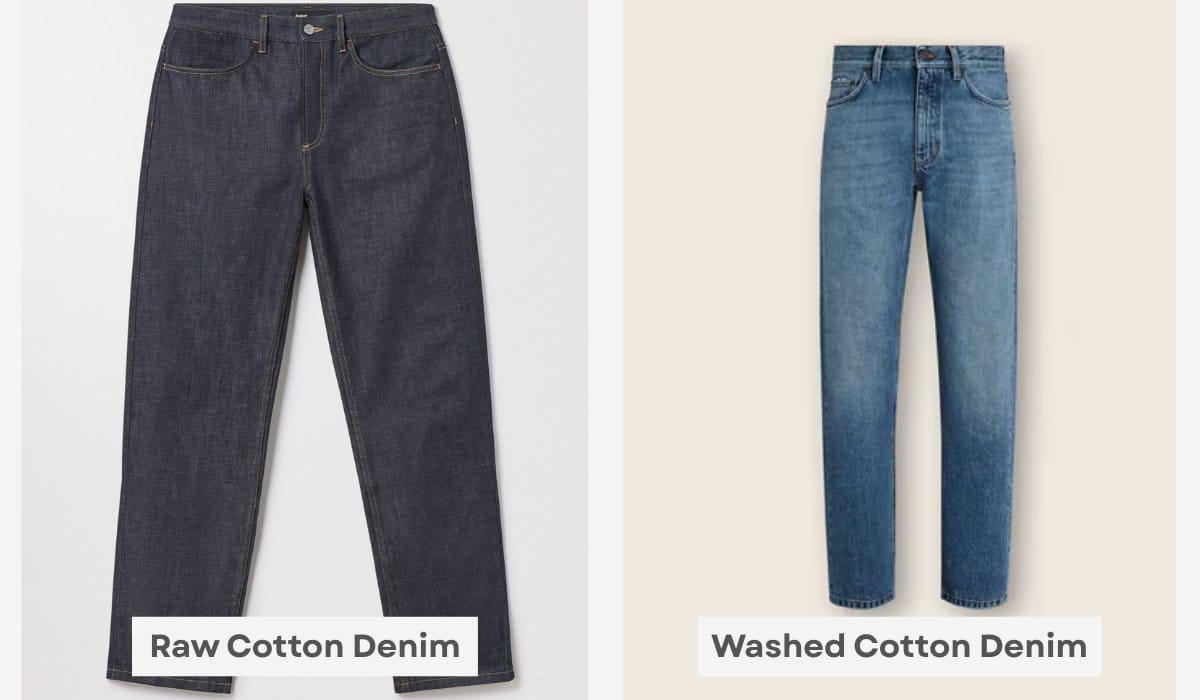
Raw denim (also called dry denim) is 100% cotton denim that has not been washed or treated after the indigo dyeing process. It is sold stiff, dark, and starched. It requires a break-in period of several weeks to months, but the payoff is fading that is entirely unique to the wearer.
Washed cotton denim has been put through various wash and treatment processes before sale. This removes the starch, softens the fabric, and often creates artificial fading. It is much more comfortable from the first wear but will never develop the same high-contrast, personalised fading as raw denim.
| Factor | Raw Cotton Denim | Washed Cotton Denim |
|---|---|---|
| Initial feel | Stiff, dark, scratchy | Soft, comfortable |
| Break-in needed | Yes (weeks to months) | No |
| Fading potential | Outstanding, personalised | Limited (pre-faded) |
| Shrinkage on first wash | Higher (5-12%) | Lower (pre-shrunk) |
| Collector appeal | Very high | Low |
| Best for | Enthusiasts, heritage style | Everyday casual wear |
Why Japanese Denim Is in a Class of Its Own
Ask any denim enthusiast about the best denim in the world, and almost all of them will say Japan. But why?
It starts with history. When American textile manufacturers modernised in the 1960s and 1970s, they sold off their old narrow shuttle looms. Japanese manufacturers bought them. While America moved to faster, cheaper open-end weaving, Japan kept making selvedge denim on those vintage machines.
Japanese mills then spent decades perfecting the craft. They developed strict quality standards for ring-spun yarns, experimented with cotton varieties, refined dyeing techniques, and built a culture of excellence around denim production that is unmatched anywhere else.
Today, Japanese denim mills such as Kurabo, Kaihara, and Collect Mills produce some of the world’s most sought-after 100% cotton selvedge fabrics. These fabrics are used by premium brands in Japan, the US, Europe, and beyond.
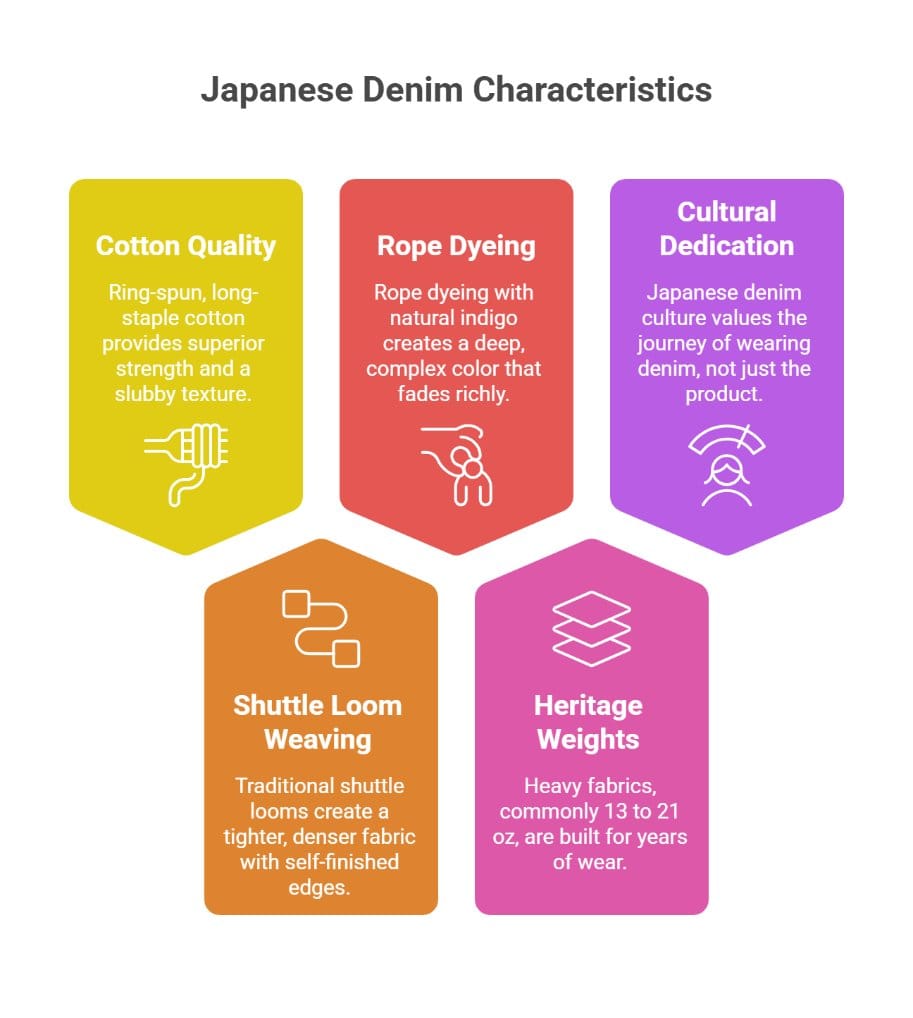
Here is what sets Japanese 100% cotton denim apart:
- Ring-spun, long-staple cotton. Japanese mills carefully select cotton for fibre length and quality, resulting in yarns with superior strength and a distinctive slubby texture.
- Traditional shuttle loom weaving. The narrow shuttle looms produce a tighter, denser fabric with self-finished edges. The resulting fabric has a natural, slightly uneven character that modern looms cannot replicate.
- Rope dyeing with natural indigo. Japanese mills often use traditional rope dyeing methods, where bundles of yarn are slowly dyed in indigo vat after vat. This creates a deep, complex colour that fades with extraordinary richness over time.
- Heritage weights. Japanese denim commonly runs from 13 to 21 oz, weights that most Western manufacturers abandoned decades ago. These heavy fabrics are built for years of wear and produce spectacular fading.
- Cultural dedication to craft. Japanese denim culture values the journey of wearing denim, not just the finished product. That philosophy shows in every aspect of how the fabric is made.
Japanese premium selvedge denim commands high prices, often $50 or more per metre for raw fabric and $200-500 or more for finished jeans. But for those who understand what they are buying, it represents extraordinary long-term value.
Is 100% Cotton Denim Sustainable?
This is one of the most important questions in fashion right now, and the honest answer is: it is more sustainable than synthetic blends in several key ways, but it is not without environmental costs.
- Fully biodegradable (over 90% in 77 days in industrial composting)
- Does not shed microplastics when washed
- Easily mechanically recycled without chemical separation
- Carbon sequestered during cotton plant growth
- Organic cotton eliminates synthetic pesticides
- Durable construction reduces frequency of replacement
- BCI and GOTS certified options available globally
- Water-intensive: up to 10,000 litres to produce one pair of jeans [Source]
- Conventional cotton uses significant pesticides and herbicides
- Indigo dyeing can produce chemical wastewater
- Long supply chains in global production
- Higher cost makes consumers wash more frequently, increasing water use
The microplastic point is particularly important. Every time you wash jeans containing polyester or elastane, tiny synthetic fibres shed into wastewater. These microplastics pass through water treatment systems, enter waterways, and accumulate in marine and freshwater ecosystems. Cotton microfibers, by contrast, biodegrade naturally.
Research published in 2024 found that denim with 24% polyester and 2% elastane degraded only 60% after 77 days in industrial composting, leaving synthetic residues. Pure cotton denim degraded over 90% in the same period. [Source: Cornell University compostability study, via Lyde Denim]
The water concern is real, but context matters. Organic cotton uses significantly less water than conventional cotton in many production regions. And a pair of 100% cotton jeans that lasts 15 years has a lower total lifecycle impact than three or four pairs of cheaper blended jeans that wear out every few years.
“The most sustainable garment is the one you already own. After that, it is the one you buy well and keep for the longest time.” This is the core philosophy behind choosing high-quality 100% cotton denim.
This connects to the broader conversation about fast fashion vs. slow fashion. The durability and repairability of pure cotton denim aligns perfectly with slow fashion values.
Brands like Patagonia (hemp-cotton blends), Nudie Jeans (organic cotton), and several Japanese heritage brands are leading the way in making 100% cotton denim production more sustainable. You can also explore sustainable style with organic cotton for more ideas.
The Label Truth: Is Your Denim Really 100% Cotton?
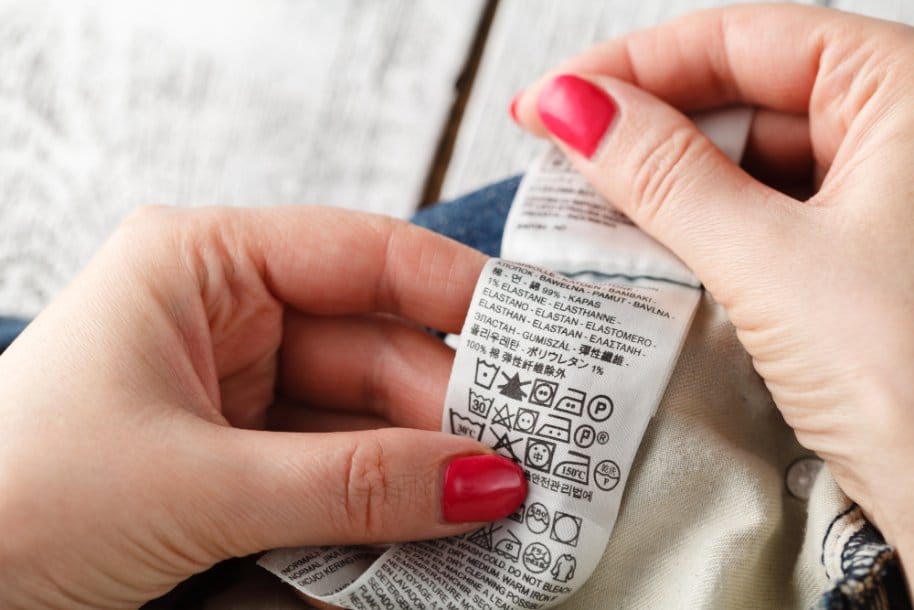
Here is something that surprises most people: a label that says “100% cotton” may not always mean what you think it means.
In many regions, clothing labelling regulations allow for a small tolerance. In some markets, fabric labelled “100% cotton” can legally contain up to 5% other fibres. This means a garment could contain trace amounts of polyester or elastane and still technically be labelled as pure cotton under local regulations.
On top of this, chemical additives and finishing treatments applied to denim after weaving, such as resin finishes for wrinkle resistance or silicone softeners for feel, can alter the composition of the fabric without being reflected on the label.
Studies have found that some “100% cotton” jeans from major brands contain trace amounts of polyester or elastane when tested in laboratories. These amounts are often below the threshold that requires disclosure, but they are there.
This is not necessarily a scandal. In many cases, the amounts involved are genuinely negligible and do not significantly affect the fabric’s performance or biodegradability. But it is important for consumers to be aware of this nuance, particularly if they are buying specifically for sustainability reasons.
How to Protect Yourself as a Buyer
- Buy from brands that publish detailed fabric specifications and use third-party certifications.
- Look for GOTS (Global Organic Textile Standard) or OEKO-TEX Standard 100 certifications, which require independent verification.
- Choose brands with transparent supply chains that can trace their cotton from farm to fabric.
- For the most reliable purity, choose Japanese selvedge denim from reputable mills, which are subject to very strict quality and composition standards.
How to Tell If Denim Is 100% Cotton

Whether you are shopping in a store, buying second-hand, or checking what you already own, here are the most reliable ways to identify genuine 100% cotton denim.
Should You Size Up or Down in 100% Cotton Denim?
Sizing is one of the most practical questions about 100% cotton denim, and it has a more considered answer than you might expect.
The key variables are: whether the denim is raw or pre-washed, the weight of the fabric, and whether you are buying with intent to wear and break in versus buying for an immediate comfortable fit.
- Buying raw (unwashed) 100% cotton denim
- Purchasing heavyweight denim (12 oz and above)
- The brand is known for a slim or snug fit
- You plan to wash the jeans before first wear
- You have a curvier or more athletic build
- Buying pre-washed or sanforized cotton denim
- The brand uses pre-shrunk cotton
- Buying a lighter-weight cotton denim (under 10 oz)
- The fit is designed to be relaxed or loose
- You want a slightly oversized look
The traditional advice for raw denim is to size up by one and wear the jeans without washing for as long as possible, allowing the fabric to mould to your body before the first wash. After the first cold wash, raw denim typically shrinks 2-5% in length and 1-3% in the waist. The jeans then stretch back somewhat with continued wear.
Many denim brands now use “sanforized” cotton denim, which has been pre-shrunk during manufacturing using a mechanical process. With sanforized denim, you can buy true to size, as most of the shrinkage has already been accounted for.
Will 100% Cotton Denim Shrink?
Yes. This is one of the most common questions about pure cotton denim, and the answer is straightforward: 100% cotton denim will shrink when washed in hot water or dried at high heat. But the amount of shrinkage depends heavily on whether the fabric is sanforized and how you wash it.
Typical Shrinkage Rates
| Denim Type | Waist Shrinkage | Length Shrinkage | Wash Temperature |
|---|---|---|---|
| Raw (unsanforized): first wash | 2–5% | 3–8% | Any temperature |
| Raw (unsanforized): hot wash | 5–10% | 8–12% | 40°C+ (104°F+) |
| Sanforized cotton denim | 1–2% | 1–3% | Cold wash |
| Pre-washed cotton denim | Less than 1% | 1–2% | Cold wash |
The good news is that most of the shrinkage in raw cotton denim happens only once, on the first wash. After that, the fabric reaches a stable state. It may stretch slightly with wear and re-shrink slightly with washing, but these movements are generally small.
To minimise shrinkage, always wash in cold water and air dry. If you must use a tumble dryer, use the lowest heat setting and remove the jeans while still slightly damp.
After 40-50 wears and occasional cold washes, many denim enthusiasts report that their 100% cotton jeans have naturally stretched and softened to provide a comfortable fit without any synthetic stretch fibres at all.
How Long Do 100% Cotton Jeans Last?
This is where pure cotton denim has a real, measurable advantage over most blended fabrics.
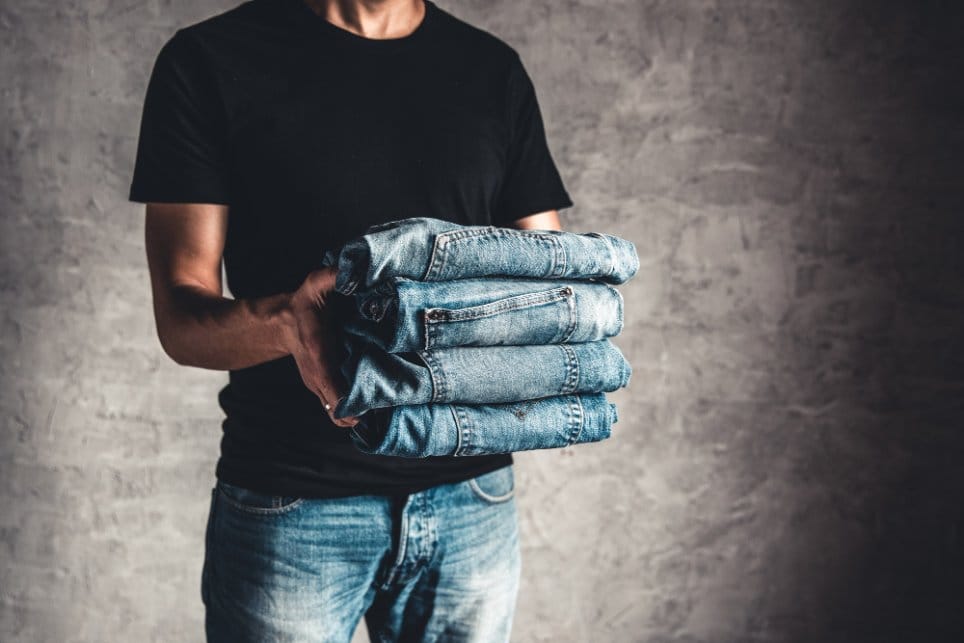
With proper care, a high-quality pair of 100% cotton jeans can last 10 to 15 years of regular wear. Well-made selvedge or heavyweight cotton denim is regularly worn for 20 years or more. There are documented cases of denim enthusiasts wearing the same pair of raw selvedge jeans for 10 or 15 years without major repairs.
Stretch denim, by contrast, has a built-in lifespan limitation: elastane degrades. Over time and through washing, the elastane fibres in stretch denim break down, causing the fabric to lose its recovery and begin to bag at the knees, seat, and thighs. This typically happens within 3-7 years of regular wear, even with good care.
Cotton, by contrast, does not have this degradation mechanism. It does wear through at friction points eventually, but it does so slowly and predictably. And when it does, it can be repaired, patched, and re-reinforced, extending the garment’s life further.
Workwear brands such as Carhartt, Dickies, and their counterparts around the world have built their reputations on 100% cotton denim precisely because of this long-term durability. For a broader comparison, see our guide on the most durable fabrics for everyday wear.
How to Wash and Care for 100% Cotton Denim
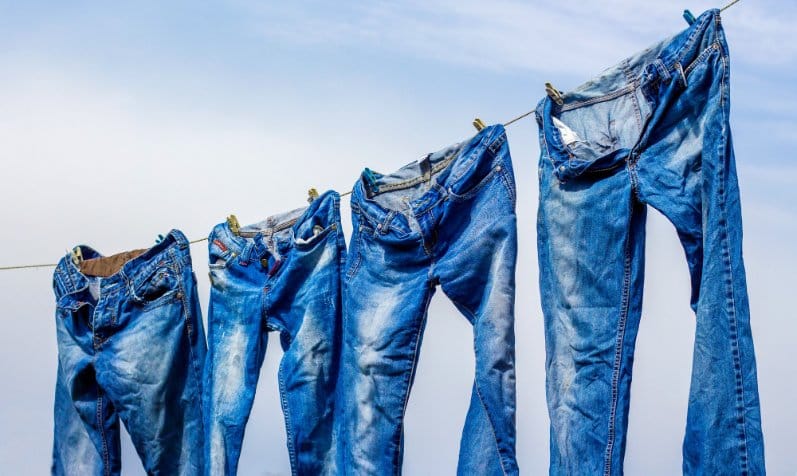
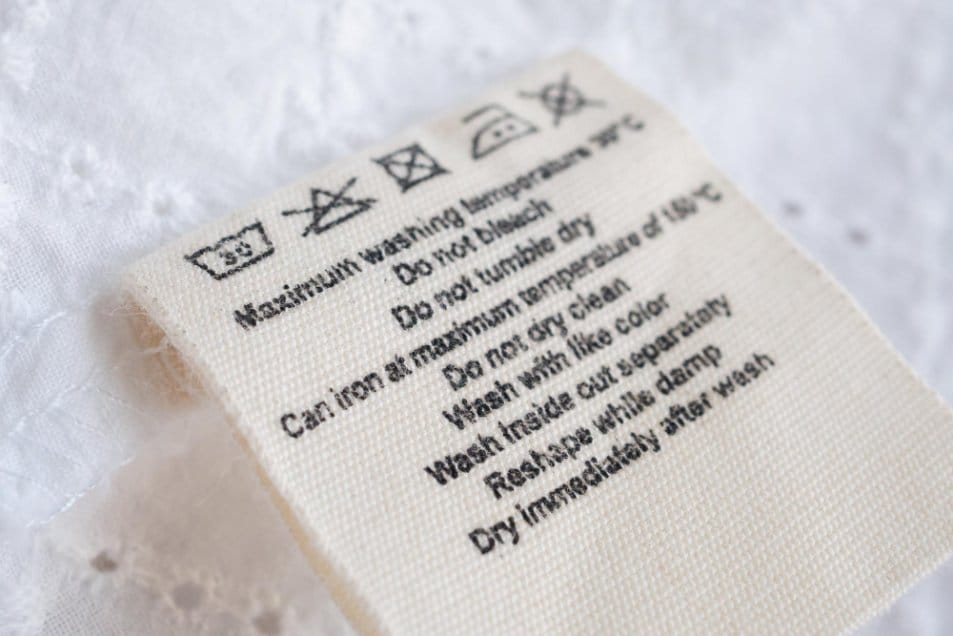
Caring for 100% cotton denim well is the single biggest factor in how long your jeans last and how beautifully they age. The key principle is simple: wash less frequently, and wash gently when you do.
The Golden Rules of Cotton Denim Care
Can You Put Cotton Denim in the Freezer?
You may have heard the advice to put jeans in the freezer to “kill bacteria” instead of washing them. This is a popular tip in denim communities, particularly for raw denim where people want to avoid washing for as long as possible.
The science on this is mixed. Freezing temperatures can slow bacterial activity but do not kill most bacteria that cause odour. The better approach is to hang your jeans in fresh air for several hours after wearing. This is genuinely effective at reducing odour without affecting the fabric at all.
For a complete, structured approach to cotton denim care, visit our denim care guide and cotton care guide.
Cotton Denim Around the World
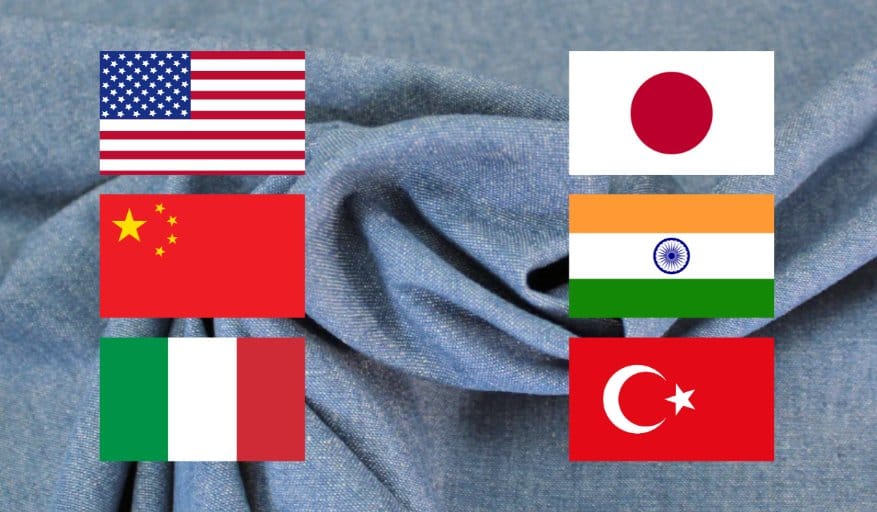
Denim is genuinely global. While it has a strong cultural association with the American West and workwear tradition, the world’s best denim is produced in many different countries, and every major region has its own relationship with cotton denim.
Denim also extends far beyond jeans. It is used in children’s clothing, workwear, accessories, upholstery, and homewares across every continent. For families interested in the role of cotton denim in children’s wardrobes, you might find this article on facts about denim in kids clothing useful.
The natural vs. synthetic fabrics debate plays out differently in each country depending on climate, culture, and industry priorities. In hot, tropical climates, the breathability of 100% cotton denim is particularly valued over synthetic blends.
2025 and 2026 Denim Trends: The Cotton Revival
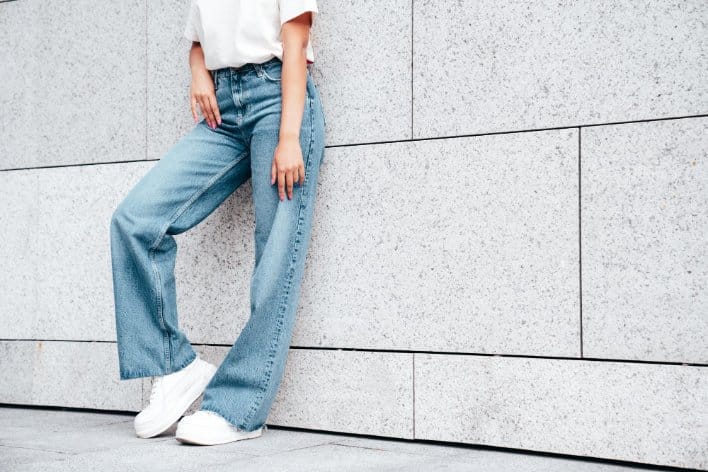
The denim industry in 2025 and 2026 is seeing a genuine resurgence of interest in authentic, pure cotton denim. Several converging trends are driving this.
The vintage and heritage revival. Fashion cycles have brought baggy, wide-leg, and straight-cut jeans back into the mainstream. These silhouettes work better in structured 100% cotton denim than in stretch fabrics, driving renewed demand for pure cotton styles.
Sustainability pressure. Consumers are increasingly aware of microplastic pollution from synthetic fibres. The non-biodegradable nature of elastane blends is driving a segment of the market back to pure cotton options.
The slow fashion movement. As more people buy fewer, better clothes and commit to wearing them longer, the durability and patina of 100% cotton denim becomes more appealing than the immediate comfort of stretch blends.
Raw and selvedge denim communities. Online communities dedicated to raw denim, selvedge jeans, and “fade contests” have grown significantly. These communities are passionate advocates for 100% cotton denim and introduce new enthusiasts to the category regularly.
Looking ahead, denim mills are working on innovations that give 100% cotton denim comfort-stretch properties without adding synthetic fibres, using mechanical finishing processes and special weave constructions. Brands like Orta in Turkey have developed 100% cotton fabrics with 15-20% stretch performance achieved through fibre engineering alone, which could reshape the market significantly.
For the latest on what’s happening in fabric for 2026, see our guide to 2026 fabric trends.
Frequently Asked Questions
Glossary of Cotton Denim Terms
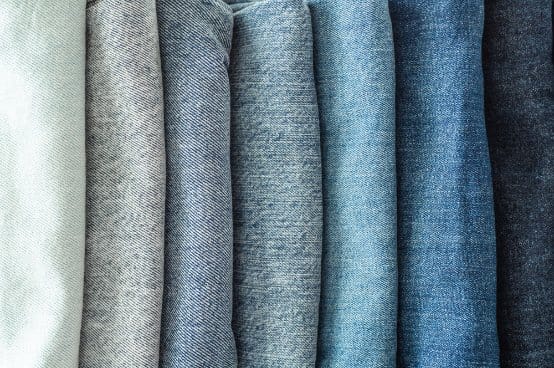
Here are the key terms you need to know when reading about or shopping for 100% cotton denim.
Conclusion
After all of this, one thing stands out clearly: 100% cotton denim is not a relic of the past. It is a fabric that rewards patience, care, and attention in ways that blended alternatives simply cannot match.
It starts stiff and requires a break-in period. It shrinks on the first wash if you are not careful. It does not give you the immediate comfort of stretch denim from the very first wear. These are real trade-offs, and they are worth acknowledging honestly.
But in return for that patience, you get something genuinely special: a fabric that gets better with every wear, develops character and patina that is entirely your own, lasts far longer than most alternatives, does not shed microplastics into waterways, and can ultimately be recycled or composted without leaving synthetic residue.
For denim enthusiasts, pure cotton is simply the authentic version of a fabric they love. For sustainability-minded consumers, it is one of the better long-term choices in a clothing market still dominated by synthetic fibre blends. For everyday shoppers, it is the fabric that turns a £150 pair of jeans into a 15-year relationship with a garment that tells your personal story.
Key Takeaways
- Check your labels. Most denim sold today contains synthetic fibres. If you want pure cotton, you need to actively look for it and verify the composition.
- Size up in raw denim. Unsanforized cotton denim will shrink on the first wash. Buy one size larger and wash in cold water.
- Wash less, air more. The single best thing you can do for cotton denim is wash it less frequently. Air your jeans out between wears and spot clean where needed.
- Cold water only. Always wash in cold water to minimise shrinkage and preserve indigo colour.
- Invest in quality. A well-made pair of 100% cotton selvedge jeans will outlast multiple cheaper alternatives and cost less per year of wear in the long run.
- Embrace the process. The stiffness, the break-in period, and the slow development of fades are not problems to solve. They are the experience. That is what sets 100% cotton denim apart from everything else.
- Buy certified when possible. GOTS, BCI, or OEKO-TEX certified cotton denim gives you confidence about fibre purity and sustainability credentials.
Whether you are a first-time buyer trying to understand what you are purchasing, a sustainability advocate looking to reduce your microplastic impact, or a denim devotee hunting for the perfect pair of raw selvedge jeans, 100% cotton denim offers something real and lasting.
It is the original. It is still the best. And once you understand what makes it different, it is very hard to go back.
Related Guides:
- The Complete Denim Fabric Guide
- How to Care for Denim
- The Difference Between Denim and Jeans
- The Complete Guide to Cotton Fabric
- Natural vs. Synthetic Fabrics: A Full Comparison
- How to Find the Perfect Pair of Jeans
- Most Durable Fabrics for Everyday Wear