
Last Updated: February 18, 2026
Your complete resource for understanding baby clothing sizes, navigating brand differences, and making smart shopping choices for your growing infant
Quick Summary: Baby clothing sizes are based on age, weight, and length, but every brand sizes differently. This guide helps you decode confusing size labels, compare major brands, understand international sizing, and shop smartly as your baby grows.
Table of Contents
- Understanding Infant Clothing Size Basics
- Age, Weight, and Height: Key Sizing Factors
- The Great Debate: Newborn vs 0-3 Months
- Brand-Specific Sizing Differences
- Decoding Infant Clothing Size Charts
- European vs US Sizing Conversion
- Types of Infant Clothing and Their Sizing
- How Many Clothes Does Your Baby Actually Need?
- Growth Spurt Timeline and Size Changes
- Understanding 24 Months vs 2T Sizes
- Premature Baby Sizing Guide
- Accessories: Shoes, Socks, and Hats
- How to Measure Your Baby for Clothes
- Fabric Shrinkage and What to Expect
- Seasonal Sizing Strategies
- Ensuring Comfort and Safety
- Common Sizing Mistakes to Avoid
- Smart Shopping and Money-Saving Tips
- Frequently Asked Questions
- Final Thoughts
Understanding Infant Clothing Size Basics
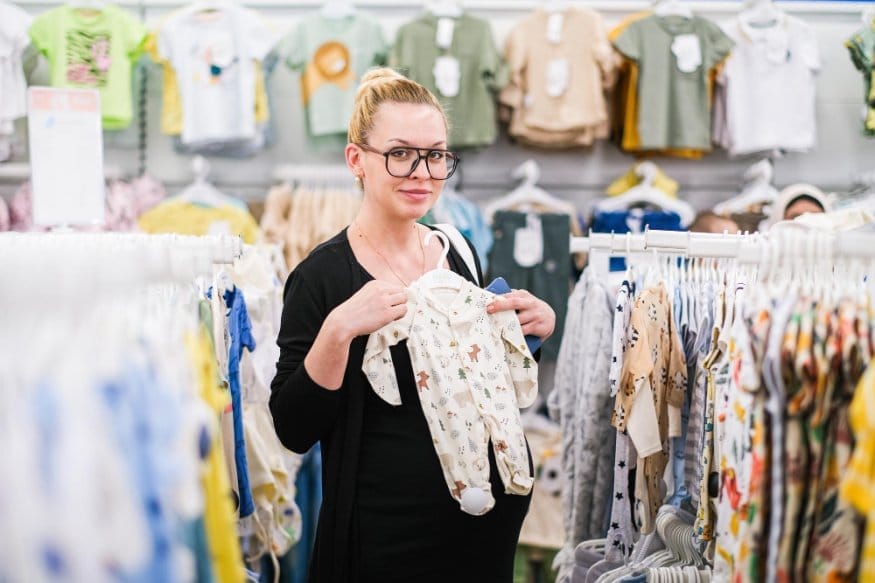
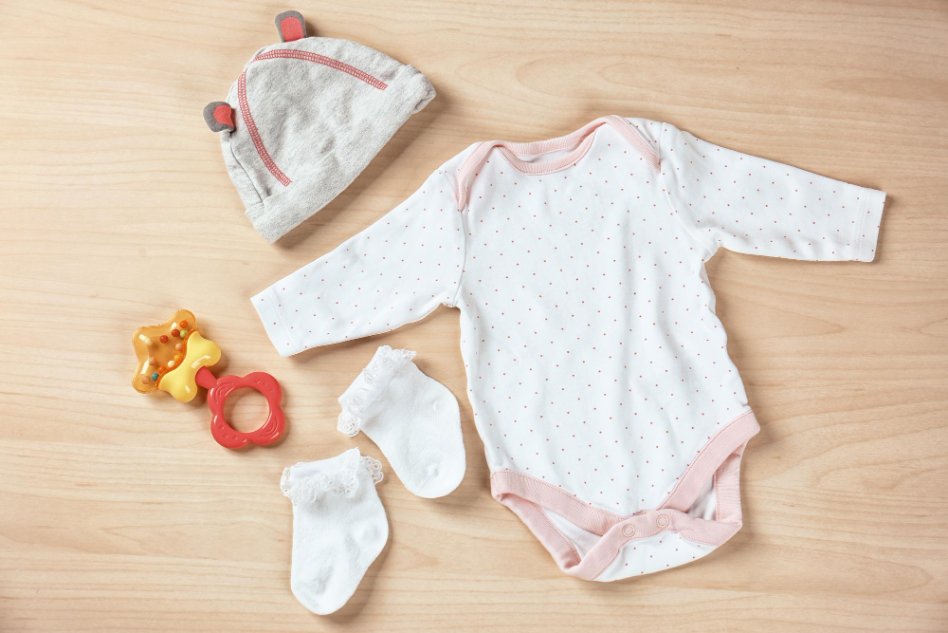
Infant clothing sizes are often based on age ranges but may differ between brands.
Here’s the thing about baby clothes: they should be simple to buy, but they’re not. You’d think “3 months” would mean the same thing everywhere, but it doesn’t. One brand’s 3-month outfit might fit your 6-week-old perfectly, while another brand’s version won’t fit until your baby is 4 months old.
Baby clothing sizes in the US, UK, Canada, and Australia are usually marked by age ranges like “0-3 months” or “3-6 months.” But these age labels are really just starting points. Your baby doesn’t read size charts, and they certainly don’t grow on a predictable schedule.
How Baby Sizes Differ From Other Clothing
Unlike toddler or kids’ clothes that might use actual measurements (like chest size or height), infant sizes lean heavily on age ranges. This creates problems because babies come in all shapes and sizes. A baby born at 10 pounds will need completely different sizes than a baby born at 6 pounds, even if they’re the same age.
Most brands create their size ranges based on average baby growth patterns tracked by organizations like the CDC and World Health Organization. But “average” is just a statistical middle point. Your baby might be in the 10th percentile for weight and 90th for length, which throws standard sizing right out the window.
What Really Determines Baby Clothing Size
Manufacturers look at three main factors when creating size ranges:
- Weight: Usually the most important factor for fit
- Length: Determines if sleeves and legs will be long enough
- Age: Used for the label, but least reliable for actual fit
The materials used in baby clothing also play a big role in how sizes fit. Cotton fabric tends to shrink more than synthetic blends, which means you might need to size up if you’re buying 100% cotton items. Stretchy fabrics like cotton jersey are more forgiving and can accommodate a wider range of sizes.
Common Size Labels You’ll See
Walking through any baby store, you’ll spot these size labels:
- P or Preemie: For babies under 5 pounds
- NB or Newborn: Typically fits babies 5-8 pounds
- 0-3M, 3M: Usually 8-12 pounds
- 3-6M, 6M: Usually 12-17 pounds
- 6-9M, 9M: Usually 17-20 pounds
- 9-12M, 12M: Usually 20-24 pounds
- 12-18M, 18M: Usually 24-28 pounds
- 18-24M, 24M: Usually 28-30 pounds
Some brands use the range format (0-3M), while others use a single number (3M). They usually mean the same thing, but always check the brand’s size chart to be sure.
Age, Weight, and Height: Key Sizing Factors
Weight, length, and growth rate are key factors when choosing infant clothing sizes.
Age is written on the label, but weight and length actually determine if clothes will fit. Let’s break down what matters most.
Weight: The Primary Sizing Factor
If you only remember one measurement when shopping for baby clothes, make it weight. Most size charts put the heaviest emphasis on weight ranges. Here’s why: a baby’s overall body size correlates most closely with weight. A chubby 3-month-old might wear the same size as a lean 6-month-old if they weigh the same amount.
| Size Label | Weight Range | Length Range | Typical Age |
|---|---|---|---|
| Preemie | Up to 5 lbs | Up to 17 inches | Premature babies |
| Newborn | 5-8 lbs | 17-21 inches | 0-1 month |
| 0-3 Months | 8-12 lbs | 21-24 inches | 0-3 months |
| 3-6 Months | 12-17 lbs | 24-27 inches | 3-6 months |
| 6-9 Months | 17-20 lbs | 27-28.5 inches | 6-9 months |
| 9-12 Months | 20-24 lbs | 28.5-30.5 inches | 9-12 months |
Length: Why Tall Babies Need Special Attention
If your baby is long for their weight, you’ll run into a frustrating problem: clothes that fit around the body might be too short in the arms and legs. This is super common. Many parents find themselves buying based on length rather than weight, even if it means the waist is a bit loose.
Babies can grow 1 to 1.5 inches per month during their first six months. That’s fast. One week the sleeper fits perfectly, and two weeks later your baby’s toes are scrunched at the bottom. This is why buying a size up is usually smarter than buying exact-fit clothing.
Body Proportions Matter Too
Some babies are long and lean. Others are shorter and rounder. Both are perfectly healthy, but they need different approaches to sizing:
- Long and lean babies: Often need to size up for length while the waist stays roomy. Look for adjustable features or stretchy waistbands.
- Shorter, rounder babies: Might fit the length perfectly but need more room around the middle. One-piece outfits with snaps at the crotch are your friend here.
- Babies with chunky thighs: Need pants with stretchy leg openings. Tight elastic can leave marks and be uncomfortable.
Pro Tip: Track Your Baby’s Percentiles
At each pediatrician visit, ask where your baby falls on the growth chart for weight and length. If they’re consistently in the 90th percentile for length but 50th for weight, you know you’ll need to prioritize length when shopping. This simple info saves so much guesswork.
The Great Debate: Newborn vs 0-3 Months
This confuses almost every new parent. Doesn’t “0 months” overlap with “newborn”? Why are they separate sizes? And which one should you buy before your baby arrives?
What’s Actually Different
Newborn size is specifically designed for babies right after birth. It fits babies weighing 5-8 pounds and measuring 17-21 inches. The 0-3 month size starts where newborn ends: 8-12 pounds and 21-24 inches.
In terms of actual measurements, 0-3 month clothing is about 2.5 inches longer than newborn size. The body width is also about 3 pounds’ worth of room bigger. That might not sound like much, but on a tiny baby, it’s huge.
| Size | Weight | Length | How Long It Typically Lasts |
|---|---|---|---|
| Newborn | 5-8 lbs | 17-21 inches | 2-6 weeks (some babies skip entirely) |
| 0-3 Months | 8-12 lbs | 21-24 inches | 6-12 weeks typically |
When to Buy Newborn Size
If your baby is predicted to be average or small (under 8 pounds), get a few newborn pieces. Having clothes that fit properly in those first weeks makes everything easier. Baggy clothes bunch up under car seat straps and can be a safety issue.
But here’s the catch: don’t go overboard. Babies born at 7.5 pounds typically outgrow newborn size by 3-4 weeks. If your baby comes in at 9 pounds or more, they might never fit newborn size at all. Many babies go straight to 0-3 months from day one.
What to Pack in Your Hospital Bag
Pack options. Bring both a newborn outfit and a 0-3 month outfit to the hospital. You won’t know which fits better until you meet your baby. Keep the tags on everything until you’re sure about the size.
Hospital Bag Size Strategy
- 2-3 newborn outfits (onesies or sleepers)
- 1-2 0-3 month backup outfits
- A going-home outfit in both sizes
- Keep everything simple with easy snaps or zippers
After birth, you or your partner can make a quick run to grab more of whatever size actually fits. This beats having a drawer full of newborn clothes your baby never wears.
When to Size Up to 0-3 Months
Switch sizes when you notice these signs:
- Toes touching the end of footed sleepers
- Snaps at the crotch getting hard to fasten
- Necklines looking tight or leaving red marks
- Sleeves not reaching the wrists anymore
Don’t wait until clothes are actually too small. Babies are more comfortable with a little extra room, and you’ll get more wear out of each size if you transition slightly early.
Brand-Specific Sizing Differences
This is where things get really frustrating. A 6-month outfit from Carter’s fits completely different than a 6-month outfit from Gap. There’s no industry standard, so every company does their own thing.
Major Brand Comparison Chart
Here’s what parents consistently report about how different brands fit:
Carter’s
Fit: Runs small and narrow
Best for: Lean, average-sized babies
Size strategy: Size up, especially for chunky babies
Quality notes: Thin fabric, affordable, washes okay but may shrink
Baby Gap
Fit: Runs large and wide
Best for: Bigger babies, longer wear
Size strategy: Can size down or buy true to size
Quality notes: Better quality, softer fabrics, holds up well
Old Navy
Fit: Runs small and short
Best for: Budget shopping, play clothes
Size strategy: Definitely size up
Quality notes: Inconsistent sizing, okay quality for the price
Gerber
Fit: Runs very small
Best for: Small or preemie babies only
Size strategy: Size up 1-2 sizes from normal
Quality notes: Thin fabric, sleeves stretch out, not recommended by most parents
Target (Cat & Jack, Cloud Island)
Fit: True to size generally
Best for: Good balance of quality and price
Size strategy: Follow the size chart
Quality notes: Decent quality, good return policy
H&M
Fit: Runs large
Best for: Trendy styles, adjustable features
Size strategy: Follow their size chart, often can size down
Quality notes: Mixed quality, great for style
Hanna Andersson
Fit: Runs large
Best for: Tall babies, long-lasting clothes
Size strategy: Great for growing into
Quality notes: Expensive but very durable, organic options
Burt’s Bees Baby
Fit: Slightly snug
Best for: Organic cotton lovers
Size strategy: Follow chart or size up slightly
Quality notes: Very soft, 100% organic cotton
Remember: Sizing Changes Within Brands Too
Different clothing types from the same brand can fit differently. A 6-month onesie might fit while 6-month pants from the same brand are too small. Always check reviews if buying online, and when possible, feel the fabric in person to gauge stretch and thickness.
If you’re shopping for affordable baby clothes online, many UK retailers offer detailed size charts and customer reviews that can help you make better decisions across different brands.
Decoding Infant Clothing Size Charts
Every brand publishes a size chart, but they’re not all equally helpful. Some give you weight and length ranges. Others add in age. A few even include chest and waist measurements. Learn to read these charts properly and you’ll save yourself a lot of returned packages.
What to Look for in a Size Chart
The best size charts give you multiple data points:
- Weight range (most important)
- Height/length range (second most important)
- Age range (least important but helpful for reference)
- Specific measurements like chest, waist, or inseam (bonus points)
How to Use Size Charts Effectively
Don’t just look at the age. Here’s a better approach:
Sample Size Chart Comparison
Here’s how three major brands size their 3-6 month clothing differently:
| Brand | Weight Range | Height Range | Notes |
|---|---|---|---|
| Carter’s (3M) | 9-12.5 lbs | 21.5-24 inches | Smaller weight range |
| Carter’s (6M) | 12.5-17 lbs | 24-27 inches | Note the gap between 3M and 6M |
| Baby Gap (3-6M) | 12-17 lbs | 23-27 inches | Wider range, runs larger |
| Old Navy (3-6M) | 12-17 lbs | 23-27 inches | Similar to Gap but fits smaller |
Notice how Carter’s splits this range into two separate sizes (3M and 6M) while Gap and Old Navy group it as one size (3-6M). A 13-pound baby would be in Carter’s 6M but could wear any of these brands’ offerings in this range.
European vs US Sizing Conversion
Planning to buy from European brands? The sizing system is completely different. Instead of age ranges, European sizes are based on height in centimeters. A size 60 means the clothes fit a baby about 60 cm tall.
Why European Sizing Makes More Sense
Honestly, it’s more logical. Height is a fixed measurement, while “3 months old” could describe babies ranging from 11 to 16 pounds. When you know your baby is 62 cm long, you know they need size 62. Simple.
The downside is you need to know your baby’s length in centimeters, which Americans don’t typically track. But once you make the conversion, it’s actually easier to find the right fit.
European to US Size Conversion Chart
| European Size (cm) | Height in Inches | US Size Equivalent | Approximate Weight | Typical Age |
|---|---|---|---|---|
| 50 | 19.7 inches | Newborn | 5-8 lbs | 0-1 month |
| 56 | 22 inches | 0-3 Months | 8-11 lbs | 0-3 months |
| 62 | 24.4 inches | 3-6 Months | 11-14 lbs | 3-6 months |
| 68 | 26.8 inches | 6-9 Months | 14-18 lbs | 6-9 months |
| 74 | 29.1 inches | 9-12 Months | 18-22 lbs | 9-12 months |
| 80 | 31.5 inches | 12-18 Months | 22-26 lbs | 12-18 months |
| 86 | 33.9 inches | 18-24 Months | 26-29 lbs | 18-24 months |
Quick Conversion Tip
To convert inches to centimeters: multiply by 2.54. To convert centimeters to inches: divide by 2.54. Or just use your phone’s calculator and Google “convert [number] inches to cm.”
European Brands Tend to Run Slimmer
European sizing is based on height, which works great for length, but European brands often cut their clothes slimmer than American brands. If your baby is on the heavier side for their height, you might need to size up one European size beyond what the height chart suggests.
Popular European brands like Zara Baby, H&M, and various Scandinavian labels use this system. When shopping these brands, always check both the size number and the brand’s specific measurements.
Types of Infant Clothing and Their Sizing
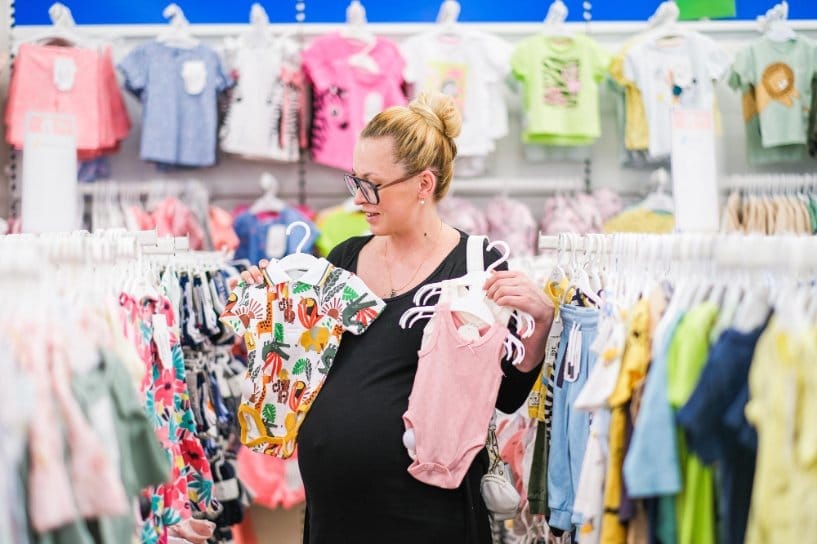
Different types of infant clothing may fit differently even in the same size range.
Not all baby clothes fit the same way, even when they’re labeled the same size. A 6-month onesie might fit your baby perfectly while 6-month pants from the same brand are too tight. Here’s what to know about different clothing types.
Onesies and Bodysuits
These are your wardrobe workhorses. Onesies and bodysuits snap at the crotch and stay tucked in, which makes them perfect for layering or wearing alone. They’re sized pretty consistently across brands, but watch out for:
- Neckline size: Some brands have tight neck holes that are hard to get over baby’s head
- Snap placement: More snaps = more size flexibility
- Body length: Long-torso babies need brands that run longer
Sleepers and Pajamas
Footed sleepers are tricky because they need to fit everywhere at once: body, arms, legs, and feet. If any one area is too small, the whole thing doesn’t work. This is why sleepers often need to be sized up earlier than other clothes.
Look for sleepers with grippy feet once your baby starts standing. Regular footed sleepers can be slippery on hard floors. After 12 months, many parents switch to two-piece pajamas for easier diaper changes at night.
Pants and Bottoms
Baby pants are notoriously difficult to fit. They need to be:
- Big enough around the waist (especially for diaper bulk)
- Long enough for the legs
- Stretchy enough to get over chunky thighs
- Snug enough to stay up without constant adjustment
Many parents find that pants need to be 1-2 sizes bigger than tops. If your baby has chunky legs, look for pants with elastic waists and stretchy leg openings. Avoid pants with tight ankle cuffs that can dig into soft baby skin.
Dresses and Rompers
One-piece outfits like dresses and rompers are great because they eliminate the guesswork of matching separates. But they also need to fit correctly in multiple places at once. A dress that fits in the chest might be too short in length, or vice versa.
Rompers with snap crotches are easier for diaper changes than dresses that need to be pulled all the way up or down. Look for stretchy fabrics that allow for movement once your baby starts crawling and pulling up to stand.
Outerwear and Jackets
Baby jackets and coats need to fit over other clothes, so they typically run larger. But here’s a safety note: never put a baby in a car seat wearing a puffy jacket. The jacket compresses in a crash and the straps won’t be tight enough.
Instead, use thin fleece jackets under the car seat straps, or put the jacket on backwards after buckling (like a blanket). For more guidance on dressing babies for different weather, seasonal planning helps you buy the right sizes at the right times.
How Many Clothes Does Your Baby Actually Need?
New parents often either buy way too much or not enough. Here’s what most families find works well, broken down by size range and assuming you do laundry every 2-3 days.
Newborn Size (if buying at all)
- 4-6 onesies
- 4-6 sleepers
- 2-3 pairs of socks
- 1-2 hats
- 2-3 outfits (optional)
Why so few? Babies outgrow this size in 2-4 weeks typically. Many parents find they barely used their newborn clothes at all.
0-3 Months
- 8-10 onesies
- 6-8 sleepers
- 6-8 pairs of socks
- 4-5 outfits
- 2-3 swaddles or sleep sacks
Why more? Babies spend about 6-12 weeks in this size range, and they spit up and have diaper blowouts frequently. You need backups.
3-6 Months
- 8-10 onesies or short-sleeve bodysuits
- 6-8 sleepers
- 6-8 pairs of socks
- 5-6 outfits
- 6-8 bibs (drooling increases)
6-12 Months
- 8-10 tops or onesies
- 6-8 bottoms
- 4-5 sleepers or two-piece pajamas
- 6-8 pairs of socks
- 4-5 complete outfits
Note: Once babies start crawling and eating solid foods, they get dirtier. You might go through multiple outfits per day.
Adjust Based on Your Situation
Need more clothes if:
- You do laundry less frequently
- Your baby is a frequent spitter-upper
- You live in a cold climate (need layers)
- You don’t have a dryer and air-drying takes longer
Need fewer clothes if:
- You do laundry daily
- You receive lots of hand-me-downs
- You live in a warm climate (fewer layers)
- You use cloth diapers (often leads to doing laundry more often anyway)
What About Gifts?
Many new parents receive tons of baby clothes as gifts. Before you buy a whole wardrobe, wait and see what you get at baby showers or from friends and family. You can always fill in gaps later.
When people ask what you need, request specific sizes in the 6-12 month range. Everyone buys newborn and 0-3 month clothes, but you’ll actually need 6-12 month sizes more because your baby will wear them longer.
Growth Spurt Timeline and Size Changes
Babies don’t grow steadily. They have spurts where they suddenly shoot up in size, followed by periods where they coast at the same measurements for weeks. Understanding this pattern helps you time your clothing purchases better.
When Growth Spurts Typically Happen
According to the American Academy of Pediatrics, babies usually have growth spurts around:
- 2-3 weeks
- 6 weeks
- 3 months
- 6 months
- 9 months
During these spurts, your baby might suddenly seem too big for all their clothes at once. This is normal. They can literally grow 1-2 inches in a couple of weeks.
Expected Size Change Timeline
| Age Range | Size Change Frequency | Average Growth Rate | What to Expect |
|---|---|---|---|
| 0-3 months | Every 2-3 weeks | 1.5-2 lbs per month, 1-1.5 inches per month | Fastest growth period, size up frequently |
| 3-6 months | Every 2-3 months | 1-1.5 lbs per month, 0.5-1 inch per month | Growth slows slightly but still rapid |
| 6-12 months | Every 3-4 months | 0.75-1 lb per month, 0.5 inch per month | More predictable sizing |
| 12-24 months | Every 4-6 months | 0.5-0.75 lbs per month, 0.25-0.5 inch per month | Growth rate continues slowing |
Signs Your Baby Needs the Next Size
Don’t wait until clothes are obviously too small. Size up when you notice:
- Toes touching the ends of footed sleepers
- Snaps are on the last row and getting tight
- Sleeves or pant legs are too short
- Red marks on skin after wearing clothes
- Clothes ride up during normal movement
- Onesies don’t stay snapped easily
Shopping Ahead Strategy
Buy one size ahead during sales. When you find a great deal on 9-month clothes and your baby is currently in 6-month size, grab them. Just make sure to buy for the right season. Don’t buy 9-month winter clothes in spring if your baby won’t be that size until summer rolls around.
Understanding 24 Months vs 2T Sizes
This one confuses everyone. Both labels are for two-year-olds, so why are they different sizes? The answer has to do with diapers and development stages.
The Key Differences
| Feature | 24 Months | 2T |
|---|---|---|
| Intended Age Range | 18-24 months | 2-3 years |
| Diaper Space | Designed for diapered babies | Designed for potty-training or potty-trained toddlers |
| Overall Fit | Wider through hips and bottom | Slimmer, more like kids’ clothing |
| Closures | Often has onesie-style snaps | Elastic waists, easy-on/off styles |
| Store Section | Baby section | Toddler section |
| Length | Slightly shorter | Slightly longer |
Which Should You Buy?
It depends on your child’s situation:
Buy 24 Months if:
- Your child is still in diapers full-time
- Your child is between 18-24 months old
- You want that extra room in the bottom
- Your child is shorter than average for their age
Buy 2T if:
- Your child is potty training or potty trained
- Your child is 24+ months old
- Your child is tall for their age
- You want clothes that are easier to pull up and down independently
Some kids wear 24-month clothes until they’re almost three if they’re in diapers and on the smaller side. Other kids switch to 2T right at age two. There’s no wrong answer here. For more information on how toddler sizing works, the transition from baby to toddler clothes involves several adjustments.
Premature Baby Sizing Guide
If your baby arrives early or is born smaller than average, regular newborn clothes will be way too big. Premature baby clothes are specifically designed for tiny babies and come in several sub-sizes.
Preemie Size Categories
| Size Label | Weight Range | Length | Who It Fits |
|---|---|---|---|
| Micro Preemie | Under 3 lbs | Under 12 inches | Extremely premature babies |
| Preemie (P) | 3-5 lbs | Up to 17 inches | Most premature babies |
| Newborn | 5-8 lbs | 17-21 inches | Small full-term or growing preemies |
Where to Find Preemie Clothes
Not all baby stores carry preemie sizes, but these places usually do:
- Carter’s (in-store and online)
- Target
- Walmart
- Online specialty shops like Preemie Store and Itty Bitty Baby
- Hospital gift shops (often carry micro preemie sizes)
NICU Considerations
If your baby is in the NICU, clothes need to accommodate medical equipment like IV lines, feeding tubes, and monitors. Look for:
- Side-snap or front-opening gowns
- Extra-soft fabrics (preemie skin is very delicate)
- No tags or rough seams
- Easy access for medical staff
Many NICUs have specific requirements or preferences, so ask the nurses before buying. Some units even provide free preemie clothes for families.
How Long Will Preemie Sizes Last?
Premature babies often catch up to their full-term peers by age two, but the pace varies. A baby born at 3 pounds might wear preemie size for 4-8 weeks before moving to newborn. Don’t stock up too much. Buy a few pieces at a time and size up as needed.
For families with preemies, understanding what to look for in preemie clothing can make hospital stays and early days at home more comfortable.
Accessories: Shoes, Socks, and Hats
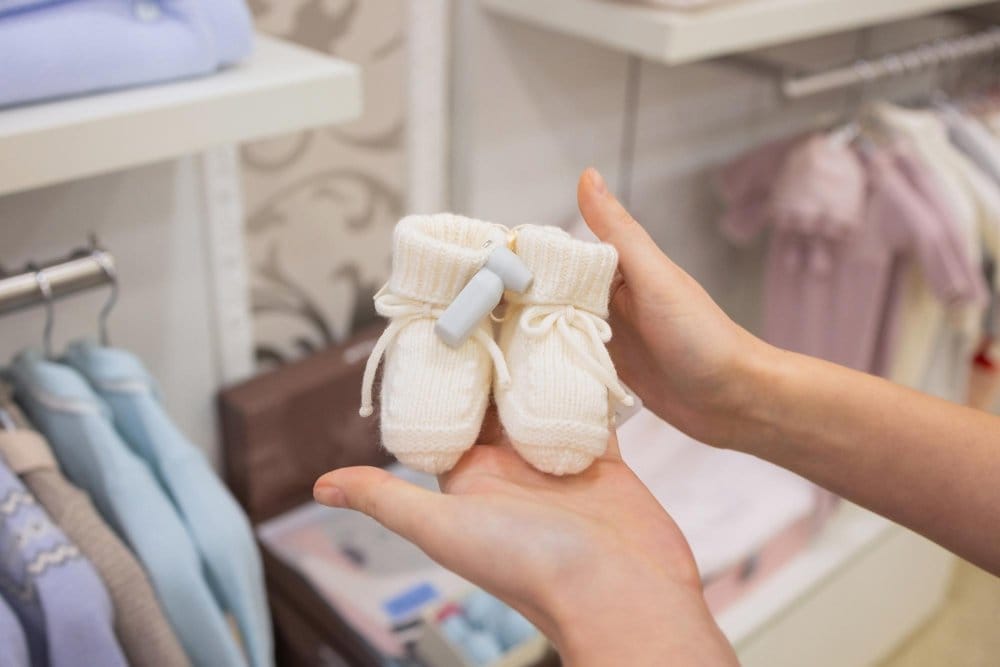
Infant accessories should fit snugly but not restrict circulation.
Baby accessories have their own sizing systems, and they’re just as confusing as clothing sizes. Here’s what you need to know.
Baby Socks
Baby socks are notorious for not staying on. Look for socks with:
- Stay-on grips around the ankle
- Slightly larger sizes than you think you need
- Soft, non-restrictive elastic
Sock sizes are usually by age (0-6 months, 6-12 months) but fit varies wildly. Buy a few pairs to test before stocking up. Many parents find that baby leg warmers work better than socks because they’re harder for babies to kick off.
Baby Shoes
Here’s a secret: babies don’t actually need shoes until they’re walking. Before that, shoes are purely decorative. But if you want them for photos or special occasions:
- Measure your baby’s foot length in inches
- Compare to the shoe brand’s size chart
- Go for soft-soled shoes that don’t restrict movement
- Make sure there’s about a thumb’s width of space at the toe
Once your baby starts walking, proper shoe fit becomes important. Get feet measured at a shoe store and buy shoes designed for new walkers with flexible soles.
Baby Hats
Newborns need hats because they can’t regulate their body temperature well. After the first few weeks, hats are mainly for sun protection or cold weather.
Hat sizes go by head circumference:
| Age Range | Head Circumference | Hat Size |
|---|---|---|
| 0-3 months | 13-15 inches | Newborn |
| 3-6 months | 15-17 inches | Small |
| 6-12 months | 17-18.5 inches | Medium |
| 12-24 months | 18.5-20 inches | Large |
Stretchy hats fit a wider range of sizes and are more forgiving than structured hats. For sun protection, look for hats with wide brims and UPF-rated fabric.
How to Measure Your Baby for Clothes
Taking your baby’s measurements only takes a few minutes and makes online shopping so much easier. You don’t need anything fancy. A soft measuring tape (the kind used for sewing) works perfectly.
Step-by-Step Measuring Guide

Measuring Length (Height)
- Lay your baby on their back on a flat surface
- Gently straighten their legs (don’t force it)
- Measure from the top of their head to the bottom of their heels
- Write it down immediately (you’ll forget)
Measuring Weight
You’ll get the most accurate weight at your pediatrician’s office, but you can estimate at home:
- Step on your bathroom scale holding your baby
- Note the combined weight
- Step on the scale alone
- Subtract your weight from the combined weight
Measuring Chest
- Wrap the measuring tape around the fullest part of baby’s chest
- Make sure the tape is flat against the back
- Keep it snug but not tight
- Take the measurement while baby is breathing normally
Measuring Waist
- Wrap the tape around the narrowest part of baby’s torso
- Usually right at the belly button level
- Don’t pull tight
- Allow room for diapers
Best Time to Measure
Measure your baby after a diaper change when they’re calm and happy. Trying to measure a fussy baby is frustrating for everyone. Some parents find it easiest to measure during diaper changes on the changing table.
How Often to Update Measurements
In the first six months, measure monthly. After six months, every two months is fine. Keep these measurements handy (in your phone notes or a small notebook) so you can reference them when shopping.
Fabric Shrinkage and What to Expect
You buy clothes that fit perfectly, wash them once, and suddenly they’re too small. Sound familiar? Fabric shrinkage is a real issue with baby clothes, especially 100% cotton items.
Why Baby Clothes Shrink
Most shrinkage happens because:
- Heat from the dryer causes fibers to contract
- Cotton naturally shrinks 3-5% after the first wash
- Cheaper fabrics aren’t pre-shrunk during manufacturing
- Tight weaves shrink more than loose knits
Expected Shrinkage by Fabric Type
| Fabric Type | Expected Shrinkage | Prevention Strategy |
|---|---|---|
| 100% Cotton | 3-5% | Buy one size up, air dry, or use low heat |
| Cotton Blends | 2-3% | Medium heat is usually okay |
| Synthetic (polyester, etc.) | Minimal to none | Normal washing and drying |
| Organic Cotton | 3-5% | Same as regular cotton |
| Pre-washed Cotton | 1-2% | Should be labeled as pre-shrunk |
How to Minimize Shrinkage
- Wash in cold or warm water (never hot)
- Use the lowest heat setting on your dryer
- Remove clothes from dryer while slightly damp and air-dry the rest
- For items you love, air dry completely
- Check labels for “pre-shrunk” or “sanforized” designations
Pre-Wash New Baby Clothes
Always wash baby clothes before first wear, even if they’re not going to shrink much. This removes manufacturing chemicals, dust, and potential irritants. It also lets you see how much they’ll shrink so you’re not surprised later.
If you’re buying organic or conventional cotton baby clothes, remember that both will shrink. The “organic” label refers to how the cotton was grown, not whether it will shrink less.
Seasonal Sizing Strategies
Babies grow fast, and seasons change. The adorable winter coat you bought in November might not fit by January. Here’s how to plan ahead without wasting money on clothes your baby never wears.
The Golden Rule of Seasonal Shopping
Buy clothes for the size your baby will be when the season arrives, not their current size. Sounds obvious, but it’s easy to forget when you’re shopping months in advance.
Example: Shopping for a July Baby
Your baby is born in July and weighs 7 pounds at birth:
- July-August (0-2 months): Buy summer clothes in newborn and 0-3M
- September-November (2-5 months): Light fall layers in 3-6M
- December-February (5-8 months): Winter clothes in 6-9M or even 9-12M
- March-May (8-11 months): Spring clothes in 9-12M or 12-18M
Season-Specific Sizing Tips
Winter Babies
Challenge: Bulky layers, slower growth visibility
Strategy: Buy 6-month summer clothes larger because growth accelerates in spring
Must-haves: Sleep sacks instead of blankets, layering basics
Summer Babies
Challenge: Need winter gear in larger sizes before baby arrives at that size
Strategy: Shop winter sales in late February for 6-12 month winter clothes
Must-haves: Sun protection hats, lightweight layers for AC
Spring Babies
Challenge: Rapid growth through summer
Strategy: Stock up on 9-12 month summer clothes
Must-haves: Versatile pieces that work in varying temps
Fall Babies
Challenge: Need next summer’s clothes during winter sales
Strategy: Buy 12-18 month summer clothes in January clearance
Must-haves: Transitional layers for unpredictable weather
Climate Considerations
Where you live changes what you need:
Year-round warm climates: You can buy clothes more freely without worrying about seasons. But you’ll still need long sleeves and pants for air-conditioned buildings.
Year-round cold climates: Layering is your friend. Buy base layers (onesies, thin pants) in multiple sizes so you always have something that fits under warmer clothes.
Four-season climates: You need the full range. Don’t over-buy any one season. Babies outgrow sizes faster than seasons change.
For specific advice on dressing newborns for summer or preparing for winter, seasonal guides can help you avoid buying unnecessary items.
Ensuring Comfort and Safety
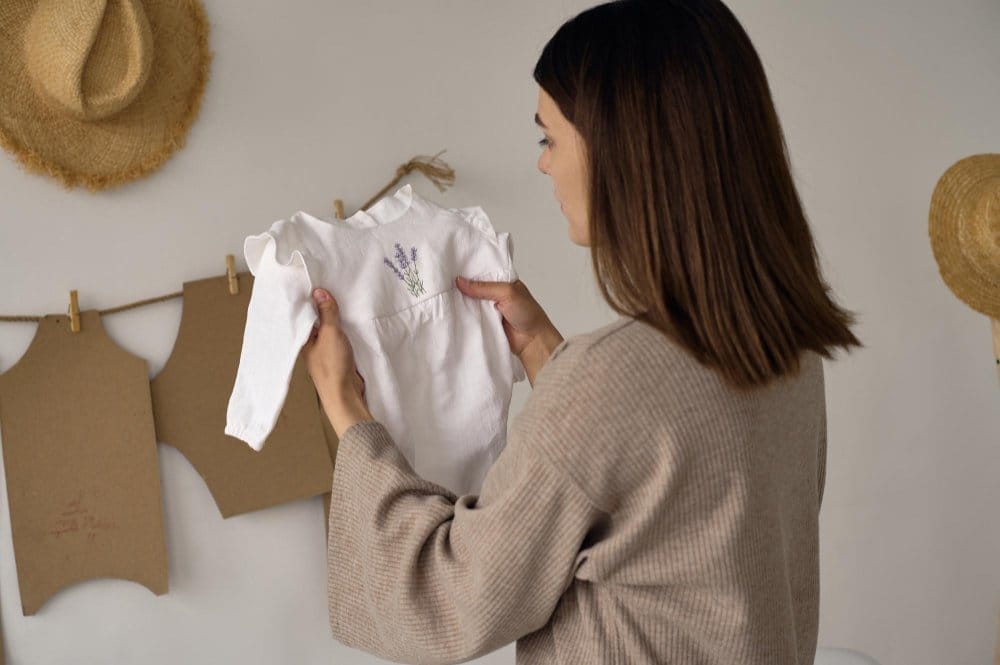
Proper fit and soft materials help keep infants comfortable and safe.
The right size isn’t just about fit. It’s also about keeping your baby safe and comfortable. Here’s what to watch for.
Safety Issues With Poor Fit
- Too loose: Fabric can bunch up in car seats or carriers, creating gaps in safety harnesses. Loose sleepwear is also a suffocation risk.
- Too tight: Restricts movement, leaves red marks on skin, and can affect circulation if really tight.
- Long drawstrings: Strangulation hazard. Cut them off or buy clothes without them.
- Small buttons or decorations: Choking hazard if they come loose. Check durability before buying.
Sleepwear Safety Rules
In the US, the Consumer Product Safety Commission requires that sleepwear for children under 9 months either be flame-resistant or fit snugly. This is why you’ll see:
- Snug-fit pajamas: Made from stretchy cotton, fit close to the body
- Flame-resistant sleepwear: Usually labeled as “sleepwear” not “playwear”
- Sleep sacks and wearable blankets: Exempt from flame-resistance rules if they zip or snap
Regular daytime clothes don’t need to meet these standards, but clothes marketed as sleepwear do. Understanding whether children’s clothes are flame retardant helps you make informed decisions about sleepwear purchases.
Comfort Checklist
- No tags inside (or soft, easy-to-remove tags)
- Flat seams that won’t rub or chafe
- Soft, breathable fabrics
- Easy diaper access (snaps, not complicated buttons)
- Stretchy neck holes (or envelope shoulders that expand)
- Room to move arms and legs freely
- No elastic that leaves marks
Signs Your Baby is Uncomfortable
Babies can’t tell you their clothes are bothering them, but they show you:
- Fussing more than usual
- Pulling at clothing
- Red marks on skin
- Seeming too hot or too cold
- Difficulty moving during tummy time
If you notice these signs, check for tags, tight elastic, or rough seams.
Common Sizing Mistakes to Avoid
Even experienced parents make these mistakes. Learn from them so you don’t have to.
Mistake 1: Buying Too Much Newborn Size
Why it’s a problem: Many babies outgrow newborn in 2-3 weeks. Some never fit it at all.
Better approach: Buy 3-4 pieces max in newborn. Focus on 0-3 month size instead.
Mistake 2: Trusting Age Labels
Why it’s a problem: Age is the least reliable sizing factor. Babies of the same age can be vastly different sizes.
Better approach: Always check weight and length ranges. Know your baby’s measurements.
Mistake 3: Not Accounting for Shrinkage
Why it’s a problem: That perfectly-fitting outfit shrinks after one wash and suddenly doesn’t fit.
Better approach: For 100% cotton items, size up or plan to air dry.
Mistake 4: Buying the Wrong Season
Why it’s a problem: Those adorable 6-month winter clothes are useless if your baby will be 6 months old in July.
Better approach: Calculate what season your baby will be in each size and shop accordingly.
Mistake 5: Not Considering Brand Differences
Why it’s a problem: You assume all 6M sizes are the same and end up with clothes that don’t fit.
Better approach: Check each brand’s size chart. Keep notes on which brands run big or small for your baby’s body type.
Mistake 6: Saving All the Cute Outfits for Special Occasions
Why it’s a problem: By the time the special occasion rolls around, baby has outgrown the outfit.
Better approach: Use the cute outfits now. Babies don’t stay small long enough to save clothes for “someday.”
Mistake 7: Not Checking Return Policies
Why it’s a problem: You’re stuck with clothes that don’t fit and can’t exchange them.
Better approach: Before buying, especially online, check the return window and policy. Keep tags on until you’re sure about the size.
Mistake 8: Buying All One Brand
Why it’s a problem: If that brand doesn’t fit your baby’s proportions, nothing in your closet works.
Better approach: Try different brands to see what fits best. Mix and match based on what works for your baby’s body.
Smart Shopping and Money-Saving Tips
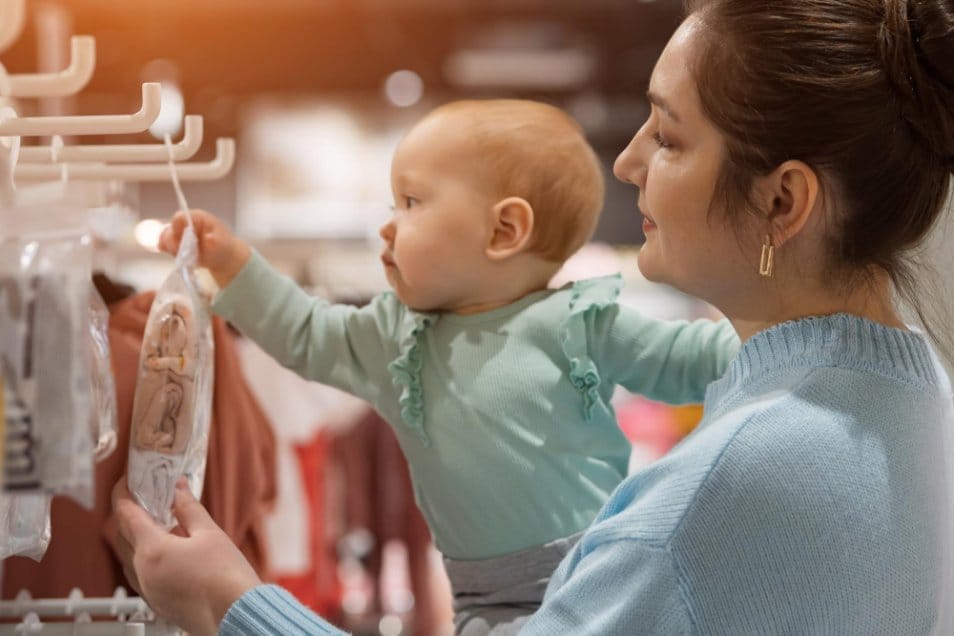
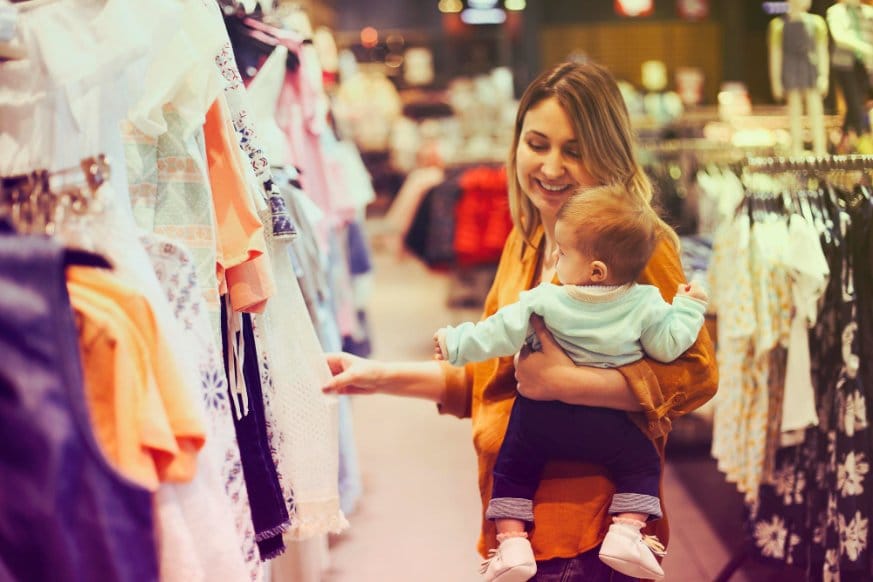
Smart shopping for baby clothes includes checking labels and planning for growth.
Baby clothes can eat up your budget fast if you’re not strategic. Here’s how to dress your baby well without going broke.
When to Buy New vs Used
Buy new:
- Sleepwear (for safety reasons and peace of mind)
- Undergarments and onesies
- Items that will be heavily worn
Buy used:
- Outfits for photos or special occasions (worn once, if at all)
- Seasonal items like coats (expensive new, barely used when resold)
- Larger sizes you won’t need for months
Many parents find that buying hand-me-downs or reusing baby clothes saves hundreds of dollars in the first year alone.
Best Times to Shop
- End of season clearance: Buy 9-12 month winter clothes in February for next year
- After major holidays: Especially after Christmas for winter items
- Black Friday/Cyber Monday: If you know what sizes you need
- Store anniversaries or customer appreciation sales
- Sign up for email lists: Get first access to sales and coupons
Where to Find Deals
- Consignment shops: Name-brand clothes at fraction of retail
- Facebook Marketplace and local buy/sell groups: Often find barely-worn items
- ThredUp and Poshmark: Online secondhand with good search filters
- Target’s baby section: Affordable with good quality, frequent sales
- Old Navy clearance: Can find items for $2-5 if you’re patient
- Carter’s outlet stores: Better deals than retail locations
Shopping Online vs In-Store
Online advantages:
- Better selection of sizes
- Easy to compare size charts
- Can shop multiple brands quickly
- Reviews tell you about fit and quality
In-store advantages:
- Feel fabric quality before buying
- See true colors (not screen colors)
- Check actual size (some items run small/large)
- No shipping wait or fees
- Easier returns usually
Building a Capsule Baby Wardrobe
Instead of buying tons of different outfits, build a small collection of versatile pieces that mix and match:
Base layer (body suits/onesies): 6-8 in neutral colors
Bottoms: 4-5 pairs of pants or leggings in basic colors
Sleepers: 5-6 for rotation
Layers: 2-3 cardigans or light jackets
Special outfits: 2-3 max
This minimalist approach means less laundry, less clutter, and less money spent on clothes your baby quickly outgrows.
Free Baby Clothes Sources
- Ask family and friends with older babies
- Post on local parent groups (people often want to get rid of outgrown clothes)
- Some hospitals and nonprofits give free baby clothes to families in need
- Swap with other parents in your birth month group
Frequently Asked Questions
Final Thoughts
Understanding baby clothing sizes doesn’t have to be complicated, even though the system certainly tries to make it that way. The most important thing to remember is that the age on the label is just a starting point. Your baby’s actual weight and length, combined with knowledge of how different brands fit, will guide you to the right size every time.
Quick Reference: The Essential Rules
- Prioritize weight over age when choosing sizes
- When in doubt, size up
- Know how your go-to brands fit (runs small, large, or true to size)
- Keep your baby’s current measurements handy for shopping
- Buy for the season your baby will be in that size, not current season
- Account for shrinkage, especially with 100% cotton
- Don’t overbuy newborn or any single size
- Keep tags on until you’re sure about fit
- Trust the size chart more than customer reviews about sizing
- Accept that babies grow unpredictably
Looking Ahead
As your baby grows into toddler sizes, the sizing system changes again. You’ll move from monthly age ranges to yearly ranges (2T, 3T, 4T) and eventually to numerical sizes. But the same principles apply: know your child’s measurements, understand brand differences, and size up when uncertain.
The confusion you feel now about sizing is temporary. After a few shopping trips and some trial and error, you’ll develop an intuition for what works for your baby. You’ll know which brands to reach for and which to skip. You’ll be able to eyeball a piece of clothing and know if it’ll fit.
Your Action Plan
Before your next baby clothes shopping trip:
- Measure your baby’s current weight and length
- Calculate what size they’ll need for the upcoming season
- Check size charts for specific brands you’re considering
- Set a budget and stick to it
- Buy fewer pieces in smaller sizes, more in larger sizes
- Save receipts and keep tags on until worn
Remember that clothes are just clothes. Your baby doesn’t care if they’re wearing designer outfits or hand-me-downs. They care about being comfortable, being able to move freely, and being close to you. Everything else is just details.
The time you spend figuring out sizes is time well spent if it means your baby is comfortable and you’re not stressed about ill-fitting clothes. But don’t let sizing confusion steal the joy of dressing your baby in cute outfits. You’ve got this.
Still Have Questions?
Every baby is different, and what works for one family might not work for another. Trust your instincts, be willing to adjust your approach as you learn what works for your baby, and don’t be afraid to ask other parents for advice. The parent community is full of people who’ve been exactly where you are and are happy to share what they learned.