
A no-fluff guide to sourcing, testing, pricing, and working with colored denim as a small fashion brand, covering MOQs, supplier types, fabric testing, capsule building, labeling requirements, and the mistakes that cost brands most.
- Sourcing options: The five types of fabric supplier and what each means for a small brand working with colored denim
- MOQs explained honestly: Typical minimum order ranges for colored denim fabric, and how to work within or around them
- Testing before you commit: Four specific fabric tests you should run on any colored denim before placing a bulk order
- Labeling requirements: What different markets require on colored denim garments, including where care labels are legally mandatory and where fiber content is the primary legal requirement
- Capsule strategy: How to structure a small colored denim range that works at low volumes
- Mistakes to avoid: The most common and costly errors small brands make when working with non-indigo denim
Colored denim is a genuine opportunity for small brands. It is a category where large fast fashion players are slow to move, where consumer demand for non-indigo options is real and growing, and where a well-sourced piece in the right color can sell at a premium that blue jeans cannot command.
But colored denim also comes with sourcing challenges that are distinct from standard blue denim, and those challenges are proportionally harder for small brands than for large buyers.
MOQs bite harder at 100 units than at 1,000. Color consistency issues hurt more when you cannot afford to reject a batch. And the testing and care labeling decisions that large brands have dedicated teams for, you are doing yourself.
This guide exists to make that process more manageable. It covers the practical sourcing and operational decisions that matter most when you are working with colored denim at small scale, without assuming you have a sourcing team, a pattern of existing mill relationships, or unlimited development budget.
Why Colored Denim Is Worth Considering for a Small Brand
The market case for colored denim is straightforward but worth stating clearly. Brown denim, earth tones, and non-indigo colors have moved from trend-level interest to confirmed commercial traction. The category benefits from seasonality that standard blue denim does not: colored pieces drive seasonal urgency and repeat purchase in a way that perennial blue jeans cannot.
More specifically, colored denim works well for small brands for these reasons:
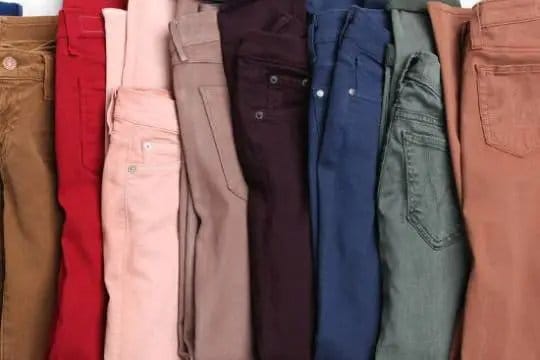
- It differentiates at the fabric level without requiring a new silhouette. You can take a proven shape, a wide-leg trouser, an oversized jacket, a midi skirt, and make it feel genuinely new through color. This lowers design development risk.
- It commands higher price points than equivalent blue denim at most price tiers. Non-indigo denim carries an implicit premium that customers accept, which improves margin on a per-unit basis.
- Small brands can move faster on color than large retailers. A large retailer needs six months of planning lead time and thousands of units committed before a color is commercially viable. A small brand can test a color in 50 garments, read the response, and reorder or pivot in a fraction of the time.
- Brown, earth tones, and white are perennial enough to carry across seasons. These are not single-season bets. If you source a good-quality brown denim, you can sell it across multiple seasons without the markdown risk of a trend-driven color.
The counterargument is also worth acknowledging. Colored denim is more technically complex to source than blue denim, MOQs can be harder to meet at small scale, and color consistency across production runs requires more active management. This guide addresses all of those challenges directly.
Your Sourcing Options Explained
There are five main types of fabric supplier you can use to source colored denim. Each has a different minimum order profile, pricing structure, and level of control over what you get. Understanding the difference is the starting point for building a sourcing strategy that works at your scale.
You buy fabric directly from the mill that weaves and dyes it. Best pricing per meter. Most control over specification. Most access to custom color development.
The problem for small brands: MOQs are typically 500-1,000 meters per colorway, often more. This is not a realistic starting point for most independent designers. Start considering mill direct sourcing once you are confident in a color and know you can order at that scale consistently.
A converter buys greige (unfinished) denim fabric from a mill and then dyes, finishes, or washes it before selling to brands. This is a valuable middle tier for colored denim because converters can dye smaller quantities to your specification.
MOQs are lower than mill direct. Pricing is higher per meter, but you get more flexibility on color and order size.
Jobbers sell surplus fabric from cancelled orders or overruns from larger brands. For colored denim, this is one of the best routes for small brands. You can often find 30-200m of a specific colored denim at a price significantly below wholesale.
The downside is that stock is non-repeatable. Once it is gone, it is gone. Jobbers work best for one-off or limited-edition colored pieces where repeatability is not the point.
These are distributors who hold stock fabric and sell in smaller quantities than mills. For colored denim, the selection is usually limited to the most commercial colors: black, white, tan, and the occasional trend shade.
Pricing is higher per meter than mill or converter. But the low MOQ and fast availability make this the most practical starting point for a new brand testing whether colored denim works for them.
Deadstock is fabric that would otherwise go to waste, from closed factories, cancelled orders, or designer overruns. For colored denim, deadstock can be a genuinely exciting source: unusual colors and rare washes that cannot be replicated.
It also carries a strong sustainability story. The limitations are the same as jobbers: no repeatability, often limited to small quantities, and quality is variable.
A practical starting route for most small brands: Begin with a stock fabric wholesaler or jobber for your first colored denim project. This keeps your financial exposure low and lets you learn how colored denim performs in your production process before committing to larger minimums. Once you have a color that is working commercially, move toward a converter relationship to get more control over your specification and the possibility of repeatability.
Understanding MOQs for Colored Denim
Minimum order quantities for colored denim fabric are typically higher than for standard blue denim. This is because non-indigo dye processes require dye bath setup costs that mills need to spread across a minimum yardage to make the process economically viable.
Typical MOQ Ranges for Colored Denim Fabric
| Supplier Type | Typical MOQ (Colored Denim) | Pricing Relative to Mill Direct | Best For |
|---|---|---|---|
| Mill Direct | 500-1,000m per colorway | Lowest (baseline) | Established programs with known demand |
| Converter | 100-500m per colorway | +10-25% vs mill direct | Custom color at mid-scale; repeat potential |
| Stock Wholesaler | 5-50m | +25-50% vs mill direct | Testing, small runs, first collections |
| Jobber | 10-100m (surplus only) | Variable, often below wholesale | One-off or limited edition colored pieces |
| Deadstock | No standard, often 1-30m | Variable, often below wholesale | Unique small-run pieces with a story |
How to Negotiate MOQs Down
Fabric MOQs are negotiable more often than they appear. The most practical strategies for small brands are:
- Combine colorways to meet the minimum. Many suppliers allow you to split a fabric MOQ across multiple colors of the same base cloth. If the MOQ is 200m and you want four colors, you can order 50m of each to meet the minimum. This is one of the most consistently available MOQ work-arounds.[1]
- Accept a price surcharge for small quantities. Some suppliers will reduce the MOQ if you accept a per-meter premium. This is worth calculating: the surcharge may be cheaper than the carrying cost of ordering more fabric than you need.
- Start with a converter rather than a mill. Converters work with smaller dye runs by design. Their entire business model is built around flexibility that mills cannot offer.
- Be honest about your scale and growth trajectory. Suppliers who believe you will grow are more willing to accommodate small initial orders. A brand that can show three seasons of consistent growth is a more attractive account than an unknown first-time buyer, even at similar current volumes.
MOQ reality check: For colored denim garments (not fabric), the typical MOQ for a denim manufacturer is 100-500 pieces per style per wash.[2] If you are sourcing your own fabric and taking it to a cut-and-sew maker, your minimum is set by the fabric supplier, not the garment maker. This gives you more flexibility to control your total commitment.
Stock Fabric vs Custom Development
The most important decision you make when starting a colored denim program is whether to use stock fabric or invest in custom color development. This decision has significant consequences for your timeline, cost, MOQ exposure, and the uniqueness of your product.
| Factor | Stock Fabric | Custom Development |
|---|---|---|
| Timeline | Days to a few weeks | 8-16 weeks minimum for lab dip, strike-off, and approval |
| MOQ | Low (5-50m with wholesalers) | High (100-1,000m depending on supplier) |
| Cost per meter | Higher (you pay for convenience) | Lower at scale (you pay for development time) |
| Color uniqueness | Same fabric available to any buyer | Your color, your specification, genuinely unique |
| Repeatability | Usually available to reorder if supplier stocks it | Fully repeatable to your specification |
| Color consistency | Pre-tested by supplier; reliable | You bear responsibility for approving lab dips |
| Development risk | Very low | Moderate, lab dips may go through multiple rounds |
| Right for | First collection, testing, speed-to-market | Established brand, brand-specific color, repeating program |
The Decision Framework
Use stock fabric when you are starting out, testing a new color category, or need a short timeline. The higher per-meter cost is the price of validation. It is significantly cheaper than paying for custom development on a color that does not sell.
Move to custom development when you have a stock fabric color that is selling consistently and you want to own it, either because you want a specific shade that stock cannot provide, or because you want to prevent competitors from sourcing the exact same fabric.
A tip from the industry: Always request a lab dip and a wash-down swatch together when evaluating any colored denim fabric, stock or custom. The pre-wash color and the post-wash color can look very different. Many brands have discovered post-production that their “olive green” looks like a muddy khaki after the first customer wash. Suppliers who are confident in their product will send both without being asked.
How to Brief a Supplier on Colored Denim
Most sourcing problems with colored denim start with an incomplete brief. When a supplier does not have clear specifications, they fill in the gaps themselves, and their assumptions are rarely the same as yours.
A proper colored denim supplier brief should include:
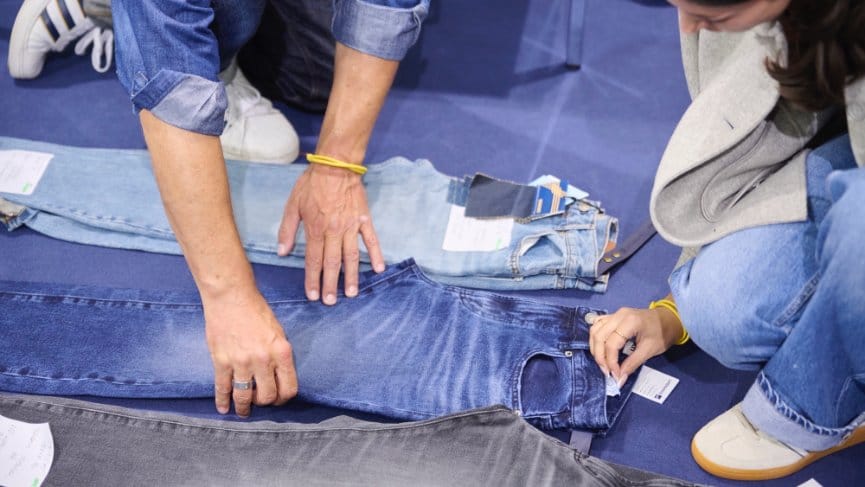
- Fabric weight: State the target weight in oz per square yard or GSM. Typical colored denim ranges from 8oz (lightweight, shirt-weight) to 14oz (heavyweight). Be specific. “Medium weight” means different things to different mills.
- Color reference: Never describe a color in words alone. Provide a physical fabric swatch, a Pantone reference, or a digital color chip in LAB values. “Olive green” has no shared definition in fabric sourcing. A Pantone number or a physical reference does.
- Dye system preference: If you have a preference for sulfur versus reactive dye (and you should, because they produce different wash-down behavior), state it. If you do not specify, the supplier will choose based on cost and availability.
- Post-wash behavior: State whether you want a pre-washed finish, a raw finish, or a specific wash-down effect. Include a reference image if possible. Also state how much fading or color shift over 10-20 washes is acceptable.
- Stretch content: State whether you want rigid denim, comfort stretch (1-2% elastane), or performance stretch (3%+ elastane). Stretch content affects color performance and end-of-life recyclability.
- Fiber composition: State your preferred fiber mix. 100% cotton, organic cotton, cotton-lyocell blend, recycled cotton content. This affects both price and your label requirements.
- Colorfastness minimum: State that you require dry crocking rating of at least 3-4 and wet crocking of at least 3 on the standard 1-5 scale. Without a stated minimum, you have no contractual basis to reject fabric that fails in production.
- Certifications required: State any certification requirements upfront (OEKO-TEX Standard 100, GOTS, Bluesign). These affect which suppliers can work with you and will take time to verify.
- Target quantity and timeline: Give your approximate order quantity and your production date. This allows the supplier to assess whether they can accommodate you and at what price.
Fabric Testing Before You Commit
Before placing a bulk colored denim order, you need to test the fabric. This is non-negotiable regardless of how trustworthy the supplier appears or how good the swatch looks. Colored denim behaves differently from blue denim in several ways that only testing can reveal.
You do not need a full commercial laboratory for most of these tests. A small amount of sample yardage, typically 2-3 meters, and basic equipment is enough to catch the most common problems before they become expensive ones.
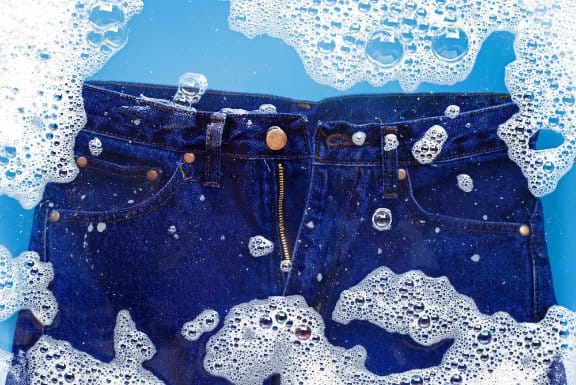
Wash a 10x10cm swatch with a white cotton cloth at 30°C and again at 40°C. Check the white cloth for dye transfer and check the swatch for color change. The standard scale runs 1 (catastrophic loss) to 5 (no change). Aim for a rating of 4 or higher. Colored denim, especially reactive-dyed brights, is more prone to wash bleed than blue indigo denim. A rating below 3 is a rejection signal.[3]
Rub a dry white cloth firmly against the fabric 10 times. Then repeat with a damp white cloth. Check both cloths for dye transfer. The standard requires dry crocking at grade 3-4 and wet crocking at grade 3. This test is critical for colored denim because dye that transfers to a white shirt or a customer’s skin is a returns and reputation problem. Black and dark-colored denim tends to crock more than lighter shades.
Mark a precise 30x30cm grid on the unwashed swatch. Wash and dry using the care method you plan to specify on your label. Measure the grid again. Acceptable shrinkage for sanforized denim is typically 1-3%. Raw or un-sanforized denim can shrink 5-7%. For colored denim, shrinkage matters more than usual because uneven shrinkage can cause color-visible distortion at seams and panels. Flag any fabric showing over 3% pre-production.
This is the test most small brands skip and most regret. Wash the swatch five times at the temperature on your care label. Photograph it against the original swatch each time. Some colored denim, particularly pastel and bright shades dyed with reactive dyes, shifts significantly after three to five washes. If your “dusty pink” is going to look “faded peach” after the customer’s second laundry cycle, you need to know before production, not after delivery.
One test suppliers will not always volunteer: Ask specifically for the perspiration colorfastness result. For colored denim used in warm climates, or for lightweight denim worn next to skin, sweat resistance matters. Reactive dyes on cotton can bleed significantly when exposed to body perspiration and heat, producing visible staining on adjacent light-colored fabrics. This is less relevant for outerwear-weight denim jackets, more relevant for lightweight colored denim trousers or shirts.
The Cost Structure of Colored Denim
Colored denim costs more per meter than equivalent blue denim. Understanding where that cost comes from helps you build pricing that reflects reality rather than guesswork.
| Cost Driver | Blue Indigo Denim | Colored Denim |
|---|---|---|
| Dye cost | Indigo is commodity-priced; well-established supply chain | Non-indigo dyes (reactive, sulfur) cost more per kg; more formulation variables |
| Dye bath setup | Standardised process; high speed at scale | Each color requires dedicated dye bath setup; more complex to run |
| Dyeing process steps | Typically 1 dye system (indigo) | May require multiple dye passes for depth; more water and time per meter |
| Quality control | Shade variation within standard tolerances is accepted in blue denim | More visible in non-indigo; stricter QC required; higher rejection rate |
| Finishing costs | Standard wash-down processes widely available | Some sustainable finishing technologies (ozone) not compatible with colored denim |
| Care labeling cost | Standard | Standard, but colored denim may require more specific wash temperature instructions |
How to Think About Margin on Colored Denim
As a rough guide, expect colored denim fabric to cost 15-35% more per meter than a comparable blue denim from the same supplier or tier.
The exact premium depends on the color (brights cost more than earth tones), the dye system (reactive is often more expensive than sulfur), and the supplier tier (converters more than mills).
The good news is that retail pricing for colored denim can support this premium. A brown or terra cotta denim trouser at the right price point carries a margin that equivalent blue denim does not, because the consumer perception of colored denim as more considered, more seasonal, or more elevated justifies a higher retail price.
Build your cost sheet around the actual per-meter fabric cost, not a blue-denim equivalent assumption. If you have not confirmed your colored denim fabric cost with a supplier before setting your retail price, you are guessing.
The higher cost of non-indigo dyes is also linked to a more complex environmental footprint at the dyeing stage. If that is relevant to your brand positioning, the environmental cost of colored denim guide covers the dye chemistry, wastewater implications, and what certifications to look for when sourcing more responsibly.
The Fabric Cost Comparison Calculator helps you evaluate total cost of ownership across different denim fabric specifications, including the impact of MOQ and per-meter pricing on your overall collection cost.
Building a Small Colored Denim Range
The instinct when adding colored denim to a range is often to do too much. Four colors, six silhouettes, a new fabric for each, and suddenly you have 24 SKUs to develop, sample, photograph, store, and sell through.
That is not a small brand’s colored denim strategy. That is a large brand’s strategy applied to a small brand’s budget, and it usually ends in stock write-offs.
The Capsule Approach
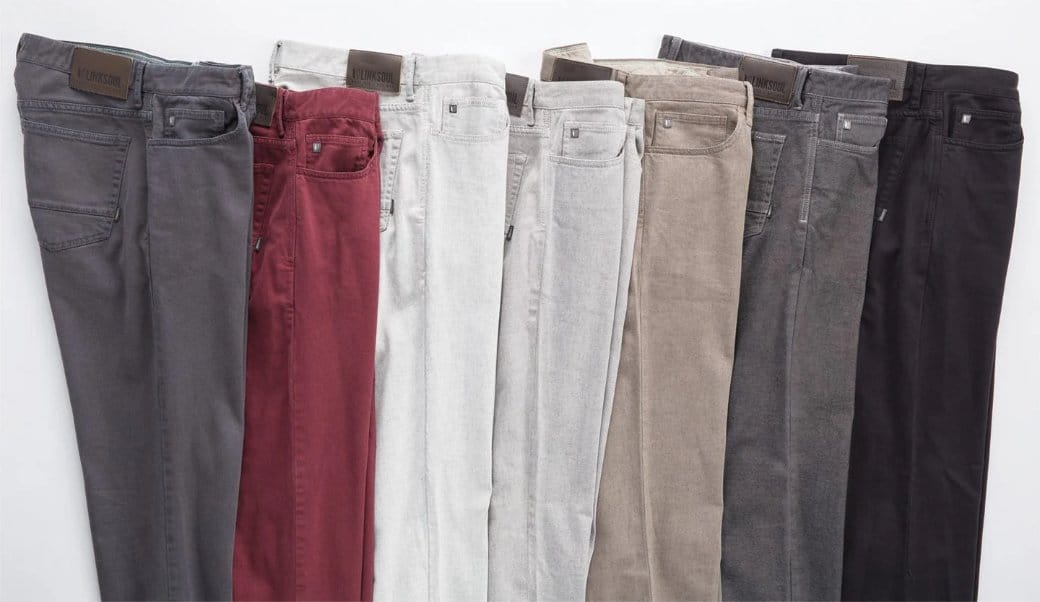
A viable colored denim capsule for a small brand typically looks like this: one or two colors, three to five silhouettes, one base fabric. Everything is designed to mix and match. Everything is produced in quantities that your current sales channels can absorb.
Starting with one color is not a compromise. It is risk management. Testing one color properly, sourcing the right fabric, getting the testing right, building the story around it, gives you data you can use. That data tells you whether to expand, reorder, or pivot before you have committed budget to more.
Which Colors to Start With
For small brands new to colored denim, the safest starting colors are those with the longest commercial runway and the widest styling flexibility. These are not the most exciting colors, but they are the ones most likely to sell through without markdowns.
For market-level intelligence on which colors have confirmed commercial traction and what mills are developing for 2026 and 2027, the colored denim fabric market trends guide covers color intelligence, regional demand, and mill innovation from an industry perspective.
- Brown and chocolate: Confirmed commercial traction across multiple markets. Works across multiple seasons. Pairs with both warm and cool tones in the wardrobe. Low trend-sensitivity risk.
- Earth tones (tan, khaki, terracotta): Similar commercial profile. Tan and khaki especially cross the boundary between colored denim and neutral, making them versatile for customers who are not yet committed to colored denim as a category.
- White or off-white: Year-round for the right customer. High visibility in social media marketing. Reliable across multiple seasons with a strong spring/summer peak.
- Black: Perennial. Not a trend bet. The safest colored denim investment of all, though the market is also the most crowded, differentiation needs to come from fit, finish, or wash treatment rather than color.
Colors to approach carefully as a first-time colored denim brand: Bright reactive-dyed shades (hot pink, electric green, vivid orange) carry higher sourcing complexity, higher colorfastness risk, and significantly higher trend sensitivity. These are not the right starting point for a brand that has not yet established its colored denim sourcing pipeline. Build toward brights from a stable base of commercial neutrals.
Silhouette Selection for a Colored Denim Capsule
Silhouettes that already sell well for your brand in blue denim are the lowest-risk colored denim starting point. You already know the fit is right, the pattern is tested, and the production process works.
The only variable you are introducing is the fabric. Adding an untested silhouette at the same time as an untested color doubles the variables and doubles the development risk.
A simple capsule structure that works at small scale:
- One trouser (your best-selling fit adapted in the colored fabric)
- One jacket or overshirt (your highest-margin or most-photographed outer piece)
- One or two additional pieces if the fabric quantity requires it to meet MOQ
Everything in the capsule should be photographed together. The visual of a complete colored denim look is significantly more powerful for marketing than individual pieces photographed separately.
Care Labeling Requirements
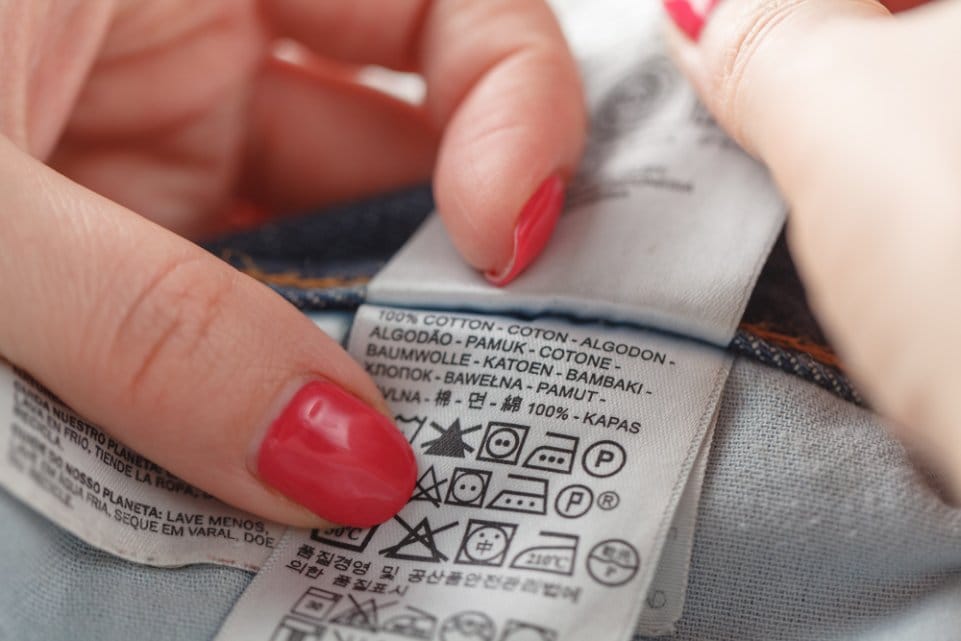
Colored denim requires specific care instructions because it behaves differently from standard blue denim during washing, and getting the care label wrong creates both legal exposure and customer experience problems.
Requirements vary by market. What is legally mandatory in the US differs meaningfully from what is required in the EU, UK, or Australia. If you are selling across multiple markets, your label needs to satisfy all of them simultaneously.
What the Law Requires by Market
United States
- REQUIRED Fiber content, the FTC Textile Fiber Products Identification Act requires all textile garments to carry a fiber content label listing the percentage of each fiber by weight (e.g. 98% cotton, 2% elastane). Fibers present at less than 5% are listed as “other fiber.”
- REQUIRED Care instructions, unlike most other markets, the US FTC Care Labeling Rule makes care instructions legally mandatory on all garments. You must provide at least one safe care method in English, using symbols or text, permanently attached to the garment.
- REQUIRED Country of origin, all garments sold in the US must state where they were manufactured. This is a Customs requirement enforced by the FTC, not optional.
- REQUIRED Business identification, either the company name and address, or an FTC-registered RN (Registered Number) or WPL number. Most small brands use their RN, which is free to register at the FTC.
European Union
- REQUIRED Fiber composition, all fibers present at more than 15% of total weight must be listed with their percentage. Label must be durable, legible, visible, and accessible.[4]
- REQUIRED Language, labels must be in the official language(s) of each member state where the product is sold. Multi-market EU distribution may require multiple languages on the same label.
- RECOMMENDED Wash care symbols, not technically mandatory under EU textile regulation, but effectively required in Germany under product liability law, and universally expected by retailers across the EU. For colored denim, omitting care instructions is a practical and commercial risk.[5]
- REQUIRED (France) Sorting symbols (Triman logo), mandatory for textiles sold in France since 2023.
United Kingdom
- REQUIRED Fiber composition, identical to EU requirements. All fibers over 15% of total weight must be listed. Legally protected terms like “100% cotton” can only be used if genuinely 100%.
- REQUIRED Manufacturer or importer identification, name and address required under UK General Product Safety Regulations.
- RECOMMENDED Wash care symbols, not legally mandatory, but the same product liability risk applies as in Germany. If a customer damages a colored denim garment washing it incorrectly and no care instructions were provided, you may be liable.
- RECOMMENDED Country of origin, not legally required in the UK but protects you against implied origin claims.
Australia and Canada
- REQUIRED Fiber content, both Australia (under the Trade Practices Act) and Canada (under the Textile Labelling Act) require fiber content disclosure. Australia also requires country of origin labeling on most garments.
- RECOMMENDED Care instructions, strongly recommended in both markets and expected by all major retailers, though legal requirements vary by province in Canada and state in Australia.
The practical takeaway: If you are selling in the US, care labels are legally required. If you are selling in the EU or UK, fiber content labels are legally required and care labels are effectively required for practical and liability reasons. If you are selling in multiple markets, a single label covering all requirements, fiber content, country of origin, care instructions, and business identification, satisfies the rules for all major English-speaking and EU markets simultaneously.
What to Specify on Colored Denim Care Labels
Colored denim requires more specific care instructions than standard blue denim because of its higher dye sensitivity. The practical recommendations for non-indigo denim:
- Wash temperature: Cold or warm, not hot. 30°C (86°F) is the standard recommendation for most colored denim. Higher temperatures accelerate dye loss in reactive-dyed fabrics. For sulfur-dyed black and dark pieces, cold wash is preferable.
- Wash separately or with similar colors for the first few washes, not a standard symbol, but worth adding as text. This is a practical protection against dye transfer that your customers will appreciate and that reduces the chance of returns.
- Do not bleach, essential for all colored denim. The standard ASTM/ISO symbol is a crossed-out triangle.
- Turn inside out before washing, reduces surface abrasion and slows visible color fading on the garment face.
- Low heat or air dry, high tumble-dry heat accelerates color shift in reactive-dyed fabrics. Specify low heat or hang dry.
A note on the EU Digital Product Passport: The EU is moving toward requiring a Digital Product Passport for textiles, with mandatory compliance expected between 2027 and 2030. This will require brands to provide digitally accessible information about fiber composition, dye chemistry, and care.
While this is not an immediate requirement for small brands selling today, it is worth building dye chemistry documentation habits now. If you cannot confirm which dye system was used on your colored denim, you will need to find that information before compliance becomes mandatory.
Common Mistakes Small Brands Make with Colored Denim
These are the mistakes that come up repeatedly when small brands work with colored denim for the first time. Most are preventable with the right information upfront.
Approving a lab dip without testing wash-down behavior. A lab dip shows you the color before production. It does not show you how the color will look after five washes. Always request a washed-down swatch alongside any lab dip approval, and wash-test your sample fabric before signing off on bulk. This is the single most common source of customer complaints about colored denim.
Ordering the same quantity of each color without testing first. Your instinct may be to order equal quantities of four colors to create a cohesive range. This is the wrong approach at small scale. Order a test quantity in one or two colors first. Let sales data tell you which colors to deepen before you commit equal budget to colors that might not move. Colored denim marks down badly because the customer pool for a specific non-indigo color is smaller than for blue.
Not specifying colorfastness minimums in the purchase order. If you do not state a minimum colorfastness rating in your purchase agreement, you have no contractual basis to reject or return fabric that bleeds. State that you require dry crocking at grade 3-4 and wash fastness at grade 4 as a minimum, in writing, before ordering. This one step prevents the scenario where you receive fabric that fails on delivery and have no leverage with the supplier.
Using blue denim care instructions on colored denim garments. Colored denim requires colder wash temperatures and more specific care instructions than blue denim. A care label that says “wash at 40°C” is probably fine for blue jeans but will accelerate color fading in reactive-dyed colored fabric. Check the supplier’s recommended care instructions for your specific fabric and use those, do not copy care labels from your existing blue denim range.
Choosing trend-driven brights for a first colored denim collection. A vivid orange or electric green is visually exciting on a mood board. In practice, it narrows your customer pool significantly, increases your sourcing complexity (bright reactive dyes are harder to get consistently right), and creates end-of-season markdown risk if the color does not land. Start with commercial neutrals. Build toward brights once you have a track record with the category.
Not accounting for MOQ reality in the range plan. A common mistake is designing a colored denim range and then discovering the fabric MOQ requires more yardage than the range can absorb at planned production quantities. Design your range with the fabric MOQ already confirmed. If the MOQ for your preferred fabric is 200m and your production plan only requires 80m, you either need to add more styles, find a different supplier, or accept the cost of excess fabric. Finding this out at design stage is much cheaper than finding it out at the production order stage.
Skipping the supplier brief and just sending a color image. A photo reference for a color is a starting point, not a brief. Suppliers need fabric weight, dye system, stretch content, fiber composition, colorfastness requirements, and quantity to give you an accurate price and timeline. Without those details, what you get back is a quote based on the supplier’s assumptions, which may have little relationship to what you actually need.
Frequently Asked Questions
What is the minimum order quantity for colored denim fabric as a small brand?
It depends on the supplier type. Stock fabric wholesalers typically accept orders from as low as 5-20 meters, the most accessible entry point for small brands. Converters usually require 100-500 meters per colorway for custom-dyed fabric. Mill direct orders are typically 500-1,000 meters per color.
For a first colored denim project, stock wholesalers or jobbers are the most realistic starting point. Moving to converter or mill direct becomes viable once you have confirmed demand and can commit to larger quantities.
How do I know if a colored denim fabric will bleed onto other garments after washing?
You run a crocking test and a wash fastness test on sample fabric before ordering in bulk. For the crocking test, rub a damp white cloth firmly against the fabric and check for dye transfer. For wash fastness, wash a small swatch with a white cotton cloth and check for bleed.
Aim for a dry crocking rating of 3-4 and wash fastness of 4 on the 1-5 scale. Any rating below 3 is a rejection signal for most consumer-facing brands.
Are care labels legally required on colored denim garments?
It depends on where you are selling. In the US, care labels are legally required under the FTC Care Labeling Rule, you must include at least one safe care method permanently attached to the garment. Country of origin and fiber content are also both legally required in the US.
In the EU and UK, wash care symbols are not technically mandatory under textile labeling law, but fiber content is required. Care instructions are effectively expected everywhere, in Germany, omitting them can create product liability exposure, and all major retailers across every market will expect them. For colored denim specifically, care labels are also a genuine customer protection measure given the higher wash sensitivity of non-indigo dyes.
Should I start with stock fabric or custom color development for my first colored denim collection?
Start with stock fabric. Custom color development requires a minimum of 8-16 weeks for lab dip approval and typically involves higher MOQs than stock sourcing.
Stock fabric wholesalers let you test colored denim with customers at low financial risk and short timelines. Once you have sales data showing that a color is working for your brand, that is the right moment to invest in custom development to own the specification and ensure repeatability.
Why does colored denim fade faster than blue denim?
Blue indigo denim fades in a characteristically gradual, controlled way because indigo sits on the surface of the cotton fiber rather than bonding chemically with it. This is by design and part of what consumers love about blue denim.
Non-indigo colored denim uses reactive dyes (for brighter colors) and sulfur dyes (for darker shades) that bond differently with the fiber and respond differently to washing, heat, and sunlight. Reactive dyes in particular can fade or shift noticeably in early wash cycles if fixation was incomplete during production. Cold wash, turning inside out, and no high-heat tumble drying significantly extends the color life of non-indigo denim.
How many pieces should I produce in my first colored denim capsule?
For a first colored denim capsule, three to five styles in one or two colors is a manageable scope. This is enough to create a coherent visual story, photograph as a collection, and test demand without committing to significant stock risk.
The total production quantity per style should reflect your existing sell-through rates on comparable blue denim pieces, not an optimistic forecast. If you typically sell 60 units of a bestselling trouser in blue, producing 30-40 units in a new color is a reasonable test quantity.
What should I include in a colored denim fabric brief to a supplier?
At minimum: target fabric weight in oz or GSM, a physical or Pantone color reference, preferred dye system (sulfur or reactive), post-wash behavior expectations, stretch content requirement, fiber composition preference, and colorfastness minimum ratings (dry crocking 3-4, wash fastness 4).
Also include any required certifications (OEKO-TEX, GOTS), target quantity, and production timeline. A brief without these details will produce a quote based on the supplier’s assumptions, which rarely matches what you actually need.
What colors are the safest commercial bets for a small brand adding colored denim?
Brown, chocolate, tan, khaki, and white are the safest starting points. These colors have confirmed commercial traction across multiple markets and seasons, the widest styling flexibility, and the lowest trend-sensitivity risk. They carry across two or three seasons without becoming dated.
Black is always safe for volume, though the market is crowded and differentiation needs to come from fit or finish rather than color. Electric brights and statement shades are better as a second chapter once your colored denim sourcing pipeline is established.
Conclusion
Colored denim is a genuine opportunity for small brands. The consumer demand is real, the commercial case is solid, and small brands have structural advantages, speed, focus, storytelling, that large retailers cannot match.
The challenges are also real. MOQs bite harder at small scale. Color consistency requires active management. Testing takes time and upfront cost. And the labeling and compliance requirements, while manageable, need to be understood before production rather than discovered after.
The key things to take away from this guide:
- Start with a stock fabric wholesaler or jobber for your first colored denim project. Keep the financial exposure low until you have validated demand.
- Begin with one or two commercial colors, brown, earth tones, white. Add complexity as you build confidence in the category.
- Always test: colorfastness to washing, crocking, shrinkage, and post-wash color shift. All four. Before bulk production.
- Write a proper supplier brief. Color image alone is not a brief. Specify weight, dye system preference, stretch content, colorfastness minimums, fiber composition, and quantity.
- In the US, care labels are legally required. In the EU and UK, fiber content labeling is legally required and care labels are effectively expected by retailers everywhere. If you are selling across markets, a single label covering fiber content, country of origin, care instructions, and business identification satisfies all major market requirements simultaneously.
- Build your colored denim range around fabric MOQ reality from the start. Design the range once you know what quantities the fabric minimum requires, not before.
- The most common mistake is skipping the wash-down test. Do not approve a color on a dry lab dip alone. Always see how it behaves after five washes before committing to production.
For a deeper understanding of how colored denim behaves technically, dye types, fabric weights, fading patterns, the complete colored denim fabric guide covers all of that. And for the full care guide to help you write effective wash instructions for your garments, the denim care guide has detailed care symbol guidance and best practice recommendations.