
Everything you need to know about chiffon, from its history and types to sewing tips and care instructions
Table of Contents
What is Chiffon Fabric?
Definition and Characteristics
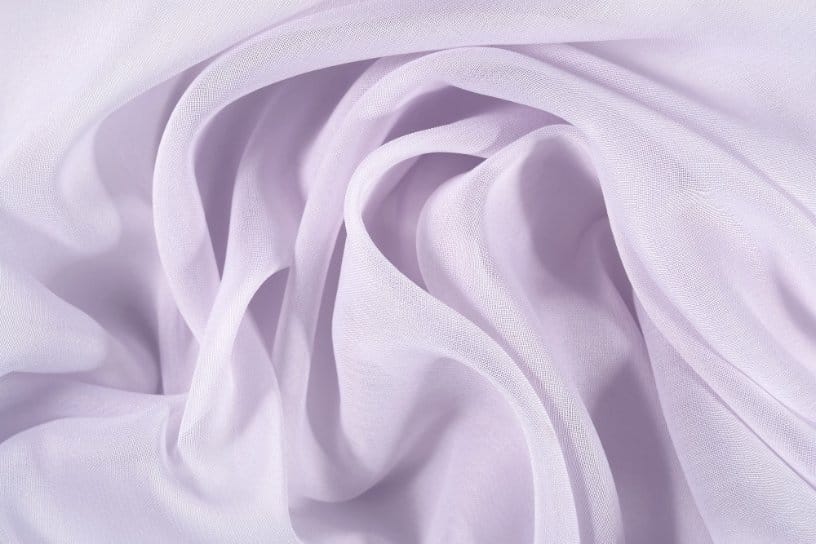
Chiffon is a lightweight, sheer fabric that has been a favorite in fashion for centuries. The name comes from the French word “chiffe,” which means “cloth” or “rag.” But don’t let that fool you. Today, chiffon is associated with elegant, expensive clothing, not rags at all.
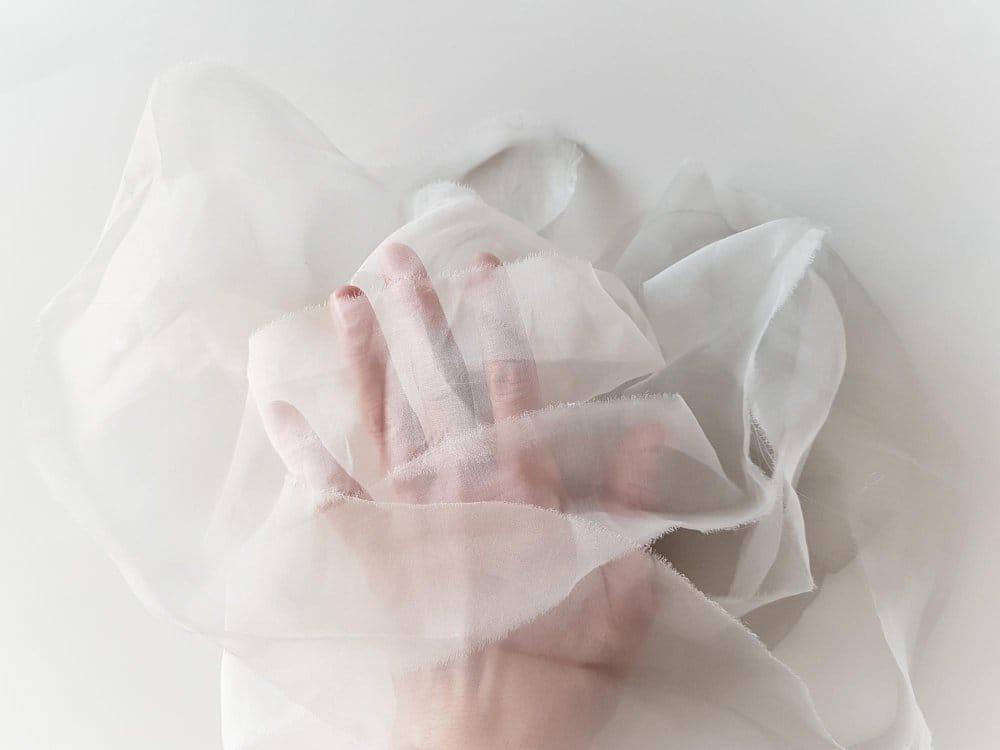
This fabric is known for being see-through and incredibly light. When you hold it up to the light, you can see right through it. The fabric weighs only about 2 to 3 ounces per square yard, making it one of the lightest fabrics available. To put this in perspective, that’s about the weight of a single sheet of paper spread over the same area.
What makes chiffon special is its texture. It feels slightly rough when you rub it between your fingers, which surprises many people because it looks so smooth and delicate. This roughness comes from how the threads are twisted during the weaving process. Despite this texture, chiffon still feels soft when worn because the fabric is so light and airy. The tactile experience is unique: it’s both delicate and slightly textured at the same time.
When you look at chiffon under a magnifying glass, it looks like a fine net or mesh. This is what makes it see-through and so light. The open weave structure allows air to pass through freely, which is why chiffon feels so breathable despite being made from various fiber types.
Understanding Chiffon’s Unique Structure
The structure of chiffon is what sets it apart from other lightweight fabrics. The fabric has a balanced plain weave, meaning the warp and weft threads cross over and under each other in a simple one-over-one pattern. What makes this special is the high twist of the yarns used.
The yarns in chiffon can have anywhere from 65 to 85 twists per inch. This is significantly higher than most other fabrics. For comparison, regular cotton fabric might have only 3-5 twists per inch. This high twist creates the characteristic crepe-like surface texture and contributes to the fabric’s strength despite its delicate appearance.
How Chiffon is Made
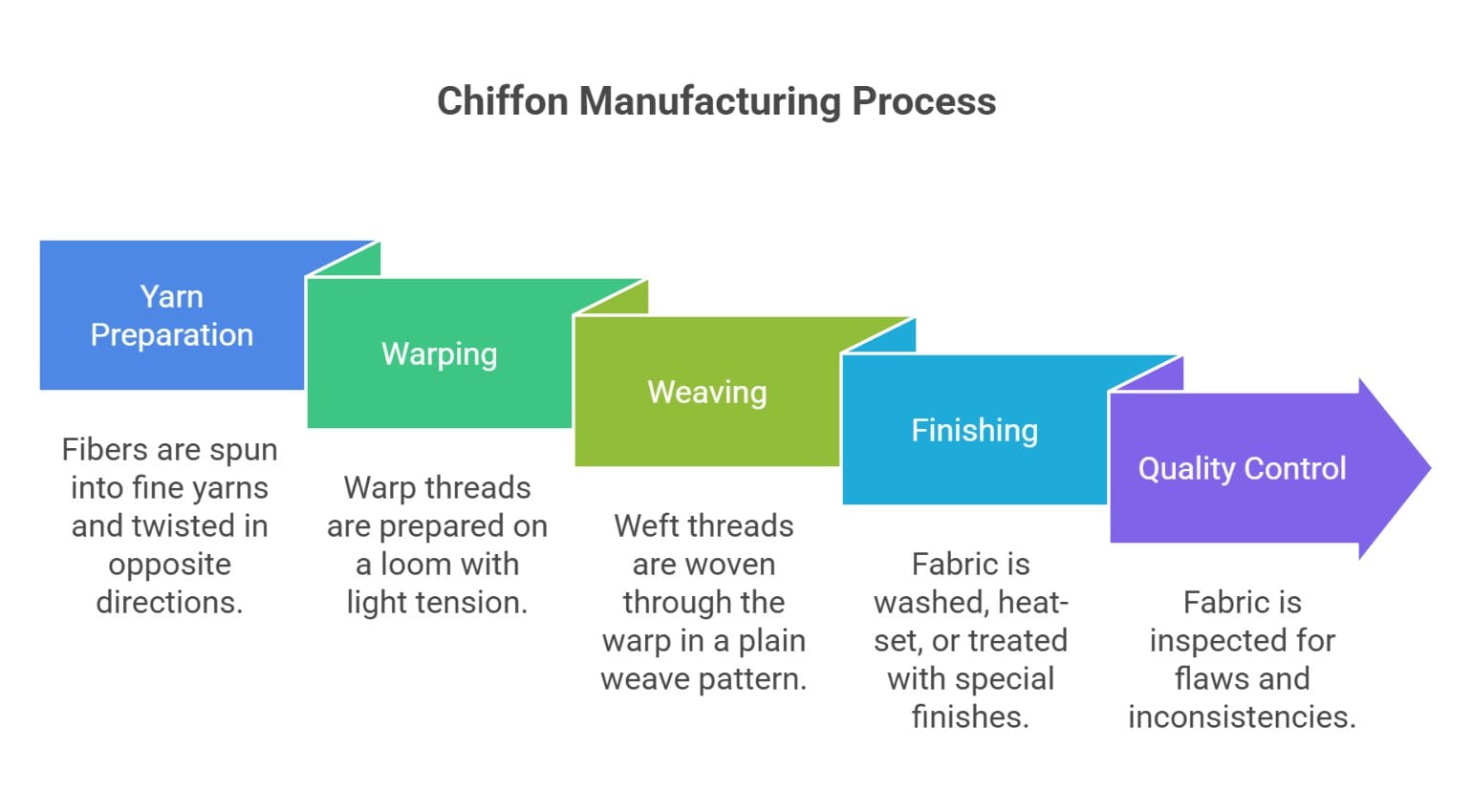
Chiffon is made using a special weaving pattern called the S-twist and Z-twist technique. Think of it like this: the threads are twisted in opposite directions (one clockwise, one counter-clockwise) before being woven together. This creates a slightly bumpy texture and gives the fabric a little bit of stretch.
Here’s how the manufacturing process works:
- Yarn preparation: The fibers (silk, polyester, etc.) are spun into very fine yarns. These yarns are then twisted tightly in alternating directions.
- Warping: The warp threads (lengthwise threads) are prepared on a loom. For chiffon, these threads are kept at very light tension to create the delicate structure.
- Weaving: The weft threads (crosswise threads) are woven through the warp in a plain weave pattern. The alternating twist of the yarns creates the slightly pebbled texture.
- Finishing: After weaving, the fabric may be washed, heat-set (for synthetics), or treated with special finishes to improve drape or reduce fraying.
- Quality control: The fabric is inspected for flaws, inconsistencies in the weave, or irregular dyeing.
The weaving process uses a plain weave structure, which is one of the simplest weaving patterns. However, the twist in the yarns is what transforms a basic weave into something special. This technique has been used for hundreds of years and remains the standard way to create authentic chiffon.
Modern chiffon production uses both traditional handlooms (for high-end silk chiffon) and automated industrial looms (for mass-produced synthetic versions). The quality difference between handwoven and machine-woven chiffon is noticeable, with handwoven versions typically having more character and slight irregularities that add to their charm.
What Type of Fabric is Chiffon?
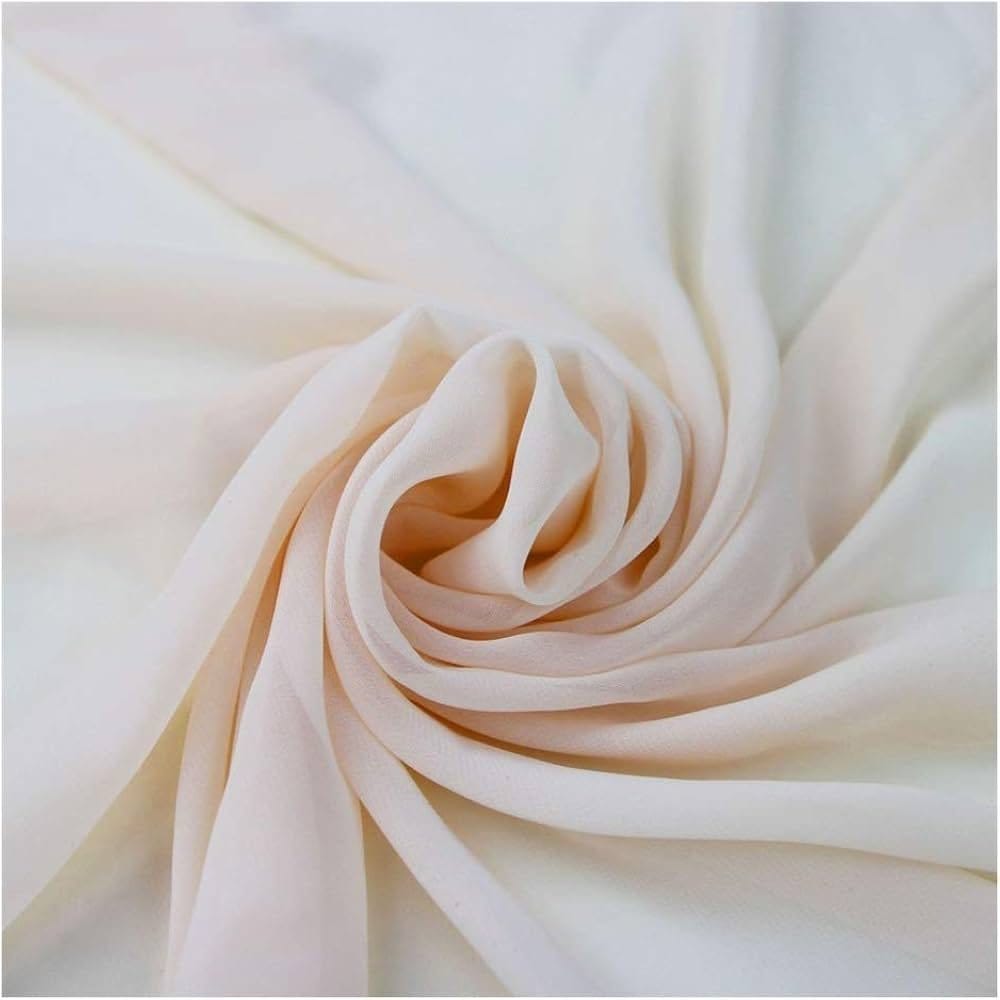
Chiffon is classified as a sheer, plain-weave fabric. Unlike fabrics that are named after what they’re made from (like cotton or silk), chiffon gets its name from how it’s made. You can make chiffon from different materials including silk, polyester, nylon, rayon, and even cotton. What makes it chiffon is the weaving method, not the fiber.
This means you can have silk chiffon, polyester chiffon, or any other fiber type, as long as it’s woven using the characteristic S-twist and Z-twist method that creates the lightweight, sheer appearance we associate with chiffon.
In technical terms, chiffon falls into these categories:
- Weight class: Lightweight to sheer
- Weave type: Plain weave with high-twist yarns
- Opacity: Transparent to semi-transparent
- Drape: Excellent, fluid drape
- Hand feel: Soft with slight texture
- End use: Apparel, scarves, evening wear, decorative
The Science Behind Chiffon’s Properties
Why does chiffon behave the way it does? The answer lies in physics and textile science:
Sheerness: The open weave structure and fine yarns create gaps between threads that allow light to pass through. The spacing between yarns is larger relative to the yarn diameter compared to opaque fabrics.
Drape: The high twist in the yarns combined with light weight allows the fabric to conform to curves and create fluid movement. The fabric has low bending stiffness, meaning it bends easily under its own weight.
Texture: The alternating twist direction of adjacent yarns creates small surface irregularities. When warp and weft yarns with opposite twists cross each other, they create tiny bumps that give chiffon its characteristic feel.
Strength vs. delicacy: Despite being thin, the high yarn twist provides surprising tensile strength. However, the open weave makes the fabric susceptible to snagging and tearing if caught.
The Rich History of Chiffon Fabric
The story of chiffon is a fascinating journey through centuries of textile innovation, from ancient Asian weaving techniques to modern synthetic production. Understanding this history helps us appreciate why chiffon remains so valued today.
Ancient Origins: Early Sheer Fabrics
While similar sheer fabrics were made in China during the Han dynasty (206 BC to 220 AD), these weren’t exactly the chiffon we know today. Ancient Chinese weavers created delicate silk fabrics using techniques that would later influence chiffon production. These early sheer silks were reserved for royalty and the wealthy elite, used in ceremonial robes and as symbols of status.
In India, weavers in regions like Dhaka (in modern-day Bangladesh) were creating muslin fabrics so fine they were called “woven air.” While muslin is technically different from chiffon, these weaving traditions showed that creating ultra-lightweight, sheer fabrics was possible and highly valued across cultures.
European Development: The Birth of Modern Chiffon
The chiffon we know today really got its start in France during the 1700s, where textile innovation flourished. French silk weavers in Lyon, the center of European silk production, began experimenting with highly twisted yarns to create new textile effects. They discovered that alternating the direction of yarn twist created a fabric with unique properties: sheer, lightweight, and with a subtle surface texture.
The term “chiffon” itself comes from the French word “chiffe,” meaning “cloth” or “rag.” This humble origin for the name seems ironic today, but it likely referred to the fabric’s light, airy quality rather than any association with actual rags. By the late 1700s, “chiffon” had become the accepted term for this specific type of sheer silk fabric.
Early Days: A Fabric for the Wealthy
During the 18th and 19th centuries, chiffon was made only from silk and was incredibly expensive. Only rich people could afford it. Wearing silk chiffon was like wearing a sign that said “I’m wealthy.” The fabric became a symbol of status and sophistication in European high society.
The production process was entirely manual, requiring skilled weavers who could create the delicate twisted yarns and maintain consistent tension throughout the weaving. A master weaver might spend weeks creating enough chiffon for a single gown. This labor-intensive process kept prices high and availability limited.
Consider this: In the 1850s, a yard of quality silk chiffon could cost the equivalent of $200-300 in today’s money. A ball gown might require 15-20 yards of fabric, making the material cost alone equivalent to several thousand dollars. Add the cost of skilled dressmaking, and you can see why chiffon garments were true luxury items.
The Victorian and Edwardian Eras: Chiffon’s Golden Age
The late 1800s and early 1900s saw chiffon reach peak popularity among the upper classes. Victorian and Edwardian ladies wore chiffon in layers over silk slips, creating the soft, romantic silhouettes fashionable at the time. Chiffon sleeves, chiffon overlays on evening gowns, and delicate chiffon scarves were markers of refinement and good taste.
Fashion plates from this era show elaborate gowns featuring chiffon ruffles, drapes, and details. The famous designer Charles Frederick Worth used chiffon extensively in his haute couture creations for European royalty and American society ladies. Chiffon was particularly popular for evening wear and formal afternoon dresses.
Mourning wear of the Victorian era also featured black chiffon extensively. Widows would wear multiple layers of sheer black chiffon over black silk, creating appropriate somberness while maintaining fashionable silhouettes.
The Game Changer: Synthetic Fibers
Everything changed in 1938 when nylon was invented by DuPont chemist Wallace Carothers. This marked the beginning of a textile revolution. Suddenly, chiffon didn’t have to be made from expensive silk anymore. Manufacturers could use nylon and later polyester to make chiffon that looked similar to silk but cost much less.
The first nylon chiffon appeared in the early 1940s, but World War II interrupted civilian production as nylon was diverted to military use (parachutes, tents, rope). After the war ended in 1945, nylon chiffon flooded the consumer market. Women who could never afford silk chiffon suddenly had access to affordable sheer fabrics.
Polyester, invented in 1941 but not widely commercialized until the 1950s, proved even better for chiffon production than nylon. Polyester chiffon was easier to dye, more wrinkle-resistant, and held up better to washing than nylon. By the 1960s, polyester chiffon had become the standard for affordable fashion.
Mid-20th Century: Democratization of Fashion
This transformation made chiffon available to everyday people, not just the wealthy. By the 1960s, polyester chiffon had become popular in mainstream fashion. Department stores carried chiffon blouses and dresses at prices working women could afford. The fabric that once signaled wealth became accessible to the middle class.
The 1960s and 1970s saw chiffon used in new ways. Designers like Halston and Diane von Furstenberg incorporated chiffon into their ready-to-wear collections. The hippie movement embraced flowing chiffon skirts and tops. Disco fashion of the late 1970s featured chiffon extensively in both men’s and women’s wear.
By the 1980s, synthetic chiffon had become so common that silk chiffon once again became a marker of luxury. The fashion industry created a clear distinction between “real” (silk) chiffon and “regular” (synthetic) chiffon.
Contemporary Chiffon: A Modern Classic
Today, you can find chiffon made from various materials at different price points, making this beautiful fabric accessible to everyone. Modern technology has improved synthetic chiffon quality to the point where high-grade polyester chiffon can closely mimic silk’s appearance, though not its feel or breathability.
Contemporary fashion uses chiffon in countless ways: wedding dresses, bridesmaid gowns, evening wear, casual summer dresses, scarves, and even home decor. Designers from haute couture houses to fast-fashion brands incorporate chiffon into their collections.
Recent innovations include:
- Stretch chiffon (1990s-present): Adding spandex or elastane for better fit and comfort
- Eco-friendly chiffon (2000s-present): Made from recycled polyester or sustainable silk production
- Performance chiffon (2010s-present): Treated for moisture-wicking or UV protection
- Digital print chiffon (2000s-present): Advanced printing technology allows complex, photo-realistic designs
Before synthetic materials, a single yard of silk chiffon could cost the equivalent of a week’s wages for an average worker. The invention of synthetic fibers democratized fashion in ways that are hard to overstate. This transformation meant that styles once available only to the wealthy could be worn by anyone, fundamentally changing how people expressed themselves through clothing.
Cultural Significance Across the Globe
Chiffon’s appeal has never been limited to Western fashion. The fabric plays important roles in various cultural dress traditions:
South Asian fashion: Chiffon sarees became popular in India and Pakistan in the mid-20th century. The lightweight fabric suited the climate while allowing for elaborate draping. Today, chiffon remains one of the most popular fabrics for sarees, dupattas, and formal wear.
Middle Eastern clothing: Chiffon abayas and hijabs offer modesty while remaining lightweight and breathable in hot climates. The fabric’s elegant drape makes it ideal for formal Islamic dress.
Western bridal wear: Since the early 1900s, chiffon has been a favorite for wedding dresses and bridesmaid gowns. The romantic, flowing quality of the fabric perfectly suits wedding aesthetics.
Dance costumes: From ballet to belly dancing, chiffon’s movement and flow make it perfect for performance costumes. The fabric catches light beautifully on stage.
Why Chiffon Endures
Despite changing fashion trends, chiffon has remained relevant for over 200 years. Why? Several factors explain its enduring appeal:
- The unique combination of sheerness and strength can’t be easily replicated
- The drape creates flattering silhouettes on many body types
- It photographs beautifully, important in our image-focused culture
- The fabric works for both casual and formal occasions
- Modern production makes it affordable at many price points
- It remains associated with elegance and sophistication
From royal courts to modern runways, chiffon has proven itself a true classic that adapts to each era while maintaining its essential character.
Types of Chiffon Fabric
Chiffon comes in many varieties. Let’s break them down by what they’re made from and how they’re finished.
Types by Fiber Content
Silk Chiffon
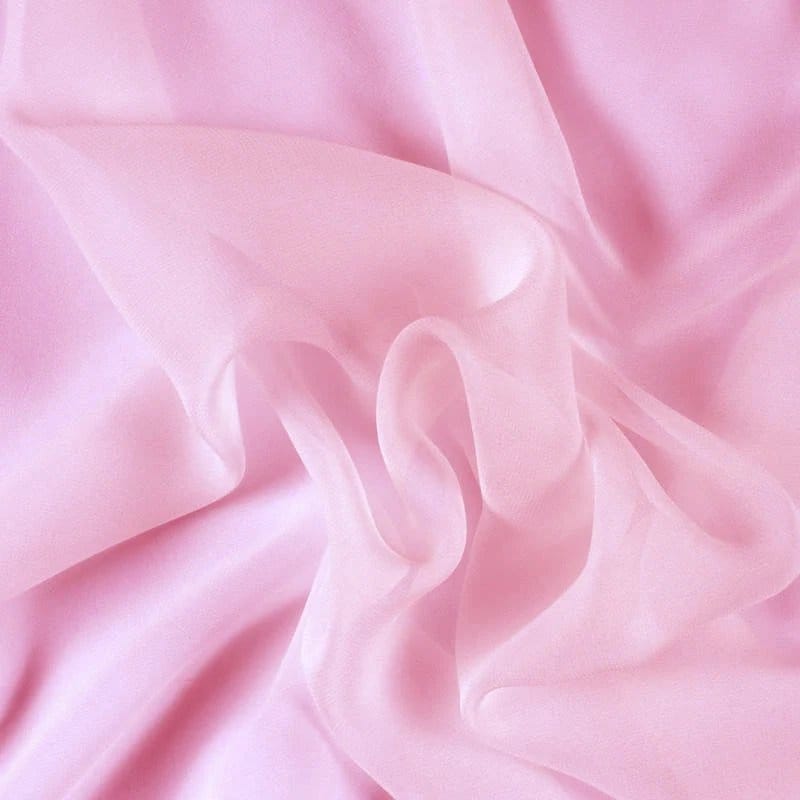
This is the original and most expensive type. Silk chiffon has a natural shine and drapes beautifully. It feels soft and smooth against your skin, though it still has that characteristic slight roughness when you rub it between your fingers.
Silk chiffon is made from natural silk fibers produced by silkworms. It’s breathable, temperature-regulating, and has a luxurious hand feel that synthetic versions can’t quite match. However, it requires careful handling and professional cleaning.
Detailed characteristics:
- Weight: Typically 3-6 momme (one momme equals 4.340 grams per square meter)
- Breathability: Excellent – naturally wicks moisture and allows air circulation
- Temperature regulation: Keeps you cool in summer, provides light warmth in winter
- Luster: Natural, irregular sheen that changes with light
- Drape: Fluid and graceful, the gold standard for chiffon drape
- Durability: Moderate – delicate but stronger than it looks
- UV resistance: Good – silk naturally resists UV damage
- Wrinkle tendency: Wrinkles easily but wrinkles often fall out with hanging
- Static: Minimal static compared to synthetics
- Color retention: Takes dye beautifully but colors may fade over time
Production notes: Quality silk chiffon requires the finest grade silk filaments. Mulberry silk (from silkworms fed exclusively on mulberry leaves) produces the highest quality. Some silk chiffon is made from dupioni silk waste, which creates a slightly more textured, less expensive version.
Best uses: Wedding dresses, evening gowns, high-end scarves, formal wear, luxury garments where the investment is worthwhile
Price range: $25-$100+ per yard, with designer silk chiffon reaching $150+ per yard
When to choose silk chiffon: For once-in-a-lifetime garments like wedding dresses, when natural fibers are a priority, for special heirloom pieces, when the best drape and feel are non-negotiable, or for hot climates where breathability matters most.
Not all silk chiffon is created equal. Look for these quality indicators: consistent thread thickness, even weave without slubs or thick spots, smooth hand feel without rough patches, consistent color throughout, and natural luster that doesn’t look artificial. Higher momme weight (5-6) is more durable; lower momme (3-4) is more sheer and delicate.
Polyester Chiffon
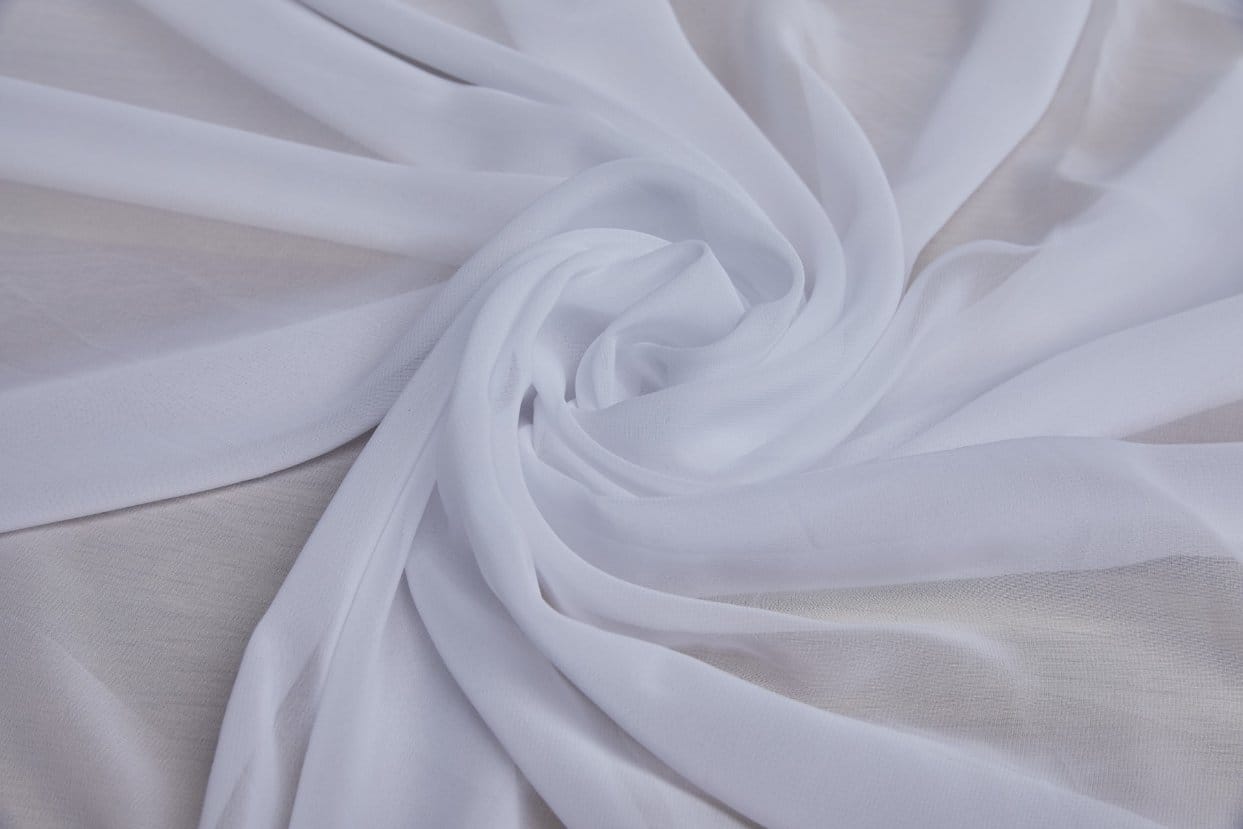
This is the most common type you’ll find in stores today. Polyester chiffon costs less than silk and is easier to care for. You can usually machine wash it, which makes it practical for everyday clothing.
Modern polyester chiffon has come a long way in quality. Higher-grade polyester chiffon can closely mimic the appearance of silk, though it doesn’t have the same breathability or temperature regulation. It’s also more resistant to wrinkles and holds up better to frequent washing.
Detailed characteristics:
- Weight: Typically 20-40 GSM (grams per square meter)
- Breathability: Limited – doesn’t allow as much air circulation as natural fibers
- Temperature regulation: Poor – can feel hot in warm weather
- Luster: Can range from matte to quite shiny depending on finishing
- Drape: Good to very good depending on quality
- Durability: Excellent – most durable chiffon type
- UV resistance: Moderate – can degrade with prolonged sun exposure
- Wrinkle tendency: Low – resists wrinkles well
- Static: High – generates significant static electricity
- Color retention: Excellent – colors stay vibrant through many washes
- Moisture management: Poor – doesn’t absorb or wick moisture
- Pilling resistance: Good – quality polyester chiffon resists pilling
Production notes: Polyester chiffon quality varies widely. Look for higher-grade polyester (labeled “high twist polyester chiffon” or “bridal quality”) for better drape and appearance. Lower-quality versions often feel stiff and have an artificial shine.
Best uses: Everyday dresses, bridesmaid dresses, blouses, affordable formal wear, practice garments for learning to sew with chiffon, costumes that need frequent washing
Price range: $5-$20 per yard, with premium polyester chiffon reaching $25-35 per yard
When to choose polyester chiffon: For garments that need frequent washing, when budget is a concern, for practice projects before working with silk, for children’s clothing that will be outgrown quickly, when wrinkle resistance is important (travel wear), or for costumes and theatrical use.
Quality levels of polyester chiffon:
- Budget grade ($5-8/yard): Stiff, artificial shine, poor drape, suitable only for practice or very casual use
- Mid-grade ($8-15/yard): Decent drape, moderate shine, good for everyday garments
- Bridal grade ($15-25/yard): Excellent drape, natural-looking finish, suitable for special occasions
- Premium grade ($25-35/yard): Best polyester, closely mimics silk appearance, professional quality
Nylon Chiffon
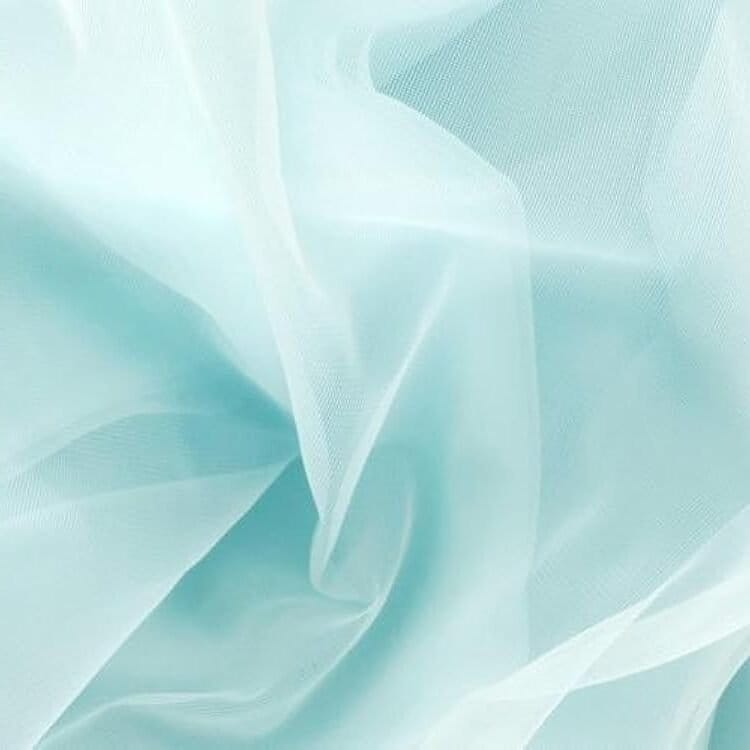
Nylon chiffon sits between silk and polyester in terms of quality and price. It’s stronger than polyester chiffon and has a nice drape. It also dries quickly, which is great if you’re in a hurry.
Nylon was the first synthetic fiber used to make chiffon, and it remains popular today. It has good elasticity and recovery, meaning it bounces back to its original shape after being stretched or worn.
Detailed characteristics:
- Weight: Typically 25-45 GSM
- Breathability: Poor to moderate – better than polyester, worse than natural fibers
- Temperature regulation: Limited – can feel clammy in heat
- Luster: Moderate to high shine
- Drape: Very good – one of nylon’s best qualities
- Durability: Excellent – very strong and resistant to abrasion
- UV resistance: Poor – degrades faster in sunlight than polyester
- Wrinkle tendency: Low to moderate
- Static: Moderate to high
- Color retention: Good but can fade with sun exposure
- Moisture management: Poor – doesn’t absorb moisture
- Elasticity: Excellent – has natural stretch and recovery
- Quick-drying: Very fast drying, faster than polyester
Production notes: Nylon chiffon is often used in applications requiring extra strength or elasticity. It’s particularly popular for lingerie and dance wear because of its stretch and recovery properties.
Best uses: Scarves, lingerie, dance costumes, activewear overlays, travel clothing, bathing suit cover-ups, anything requiring quick-drying properties
Price range: $8-$25 per yard
When to choose nylon chiffon: For items that need extra strength, when elasticity is beneficial, for travel or activewear, when quick drying is important, or for costumes that get frequent hard wear.
Special considerations: Nylon chiffon can develop a yellowish tinge over time, especially with sun exposure. Store away from direct light. Avoid high heat when ironing or drying, as nylon can melt or develop shiny spots.
Rayon Chiffon
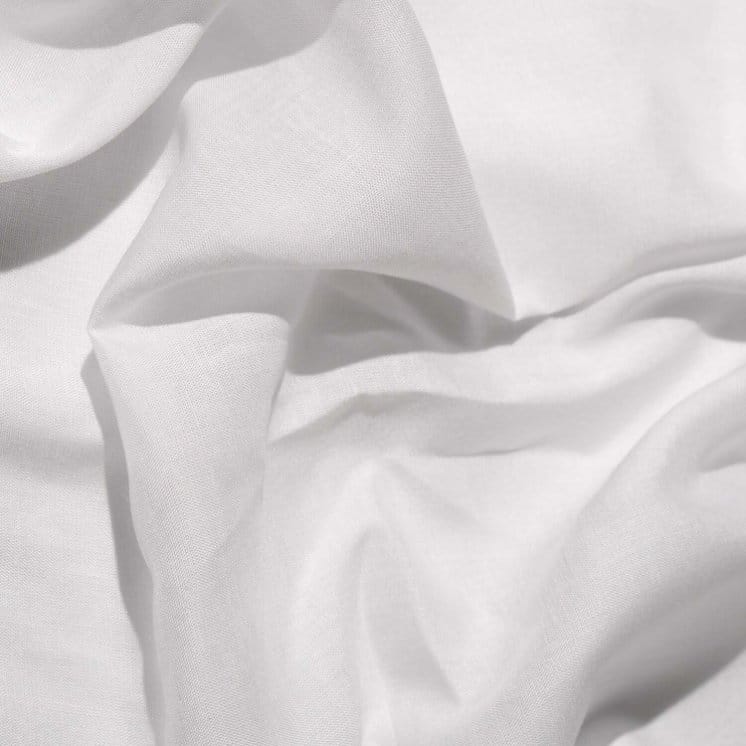
Rayon chiffon is a semi-synthetic option that falls between natural and fully synthetic fabrics. It’s made from wood pulp, so it starts natural but goes through chemical processing.
Rayon has a soft, silk-like feel and drapes well. It’s more breathable than polyester, making it a good choice for warmer climates. However, it wrinkles more easily and requires more careful washing than polyester.
Detailed characteristics:
- Weight: Typically 25-40 GSM
- Breathability: Good – closer to natural fibers than other synthetics
- Temperature regulation: Moderate – better than polyester or nylon
- Luster: Soft, silk-like sheen
- Drape: Excellent – very fluid and graceful
- Durability: Moderate – weakens when wet
- UV resistance: Moderate
- Wrinkle tendency: High – wrinkles easily
- Static: Low – generates minimal static
- Color retention: Excellent – takes and holds dye beautifully
- Moisture management: Good – absorbs moisture like natural fibers
- Shrinkage: Can shrink significantly if not pre-shrunk
- Care difficulty: High – requires gentle handling
Production notes: Rayon chiffon is often labeled as “viscose chiffon” – these terms are interchangeable. Modal and Tencel are types of rayon that undergo different processing, resulting in stronger, more stable fabrics, but they’re rarely used for chiffon due to cost.
Best uses: Dresses, blouses, scarves, affordable formal wear, summer clothing where breathability matters
Price range: $7-$22 per yard
When to choose rayon chiffon: When you want silk-like feel at a lower price, for garments in hot climates, when natural fiber characteristics are preferred but cost is a factor, or for items that won’t be washed frequently.
Important warnings: Always pre-wash rayon chiffon before sewing, as it can shrink 3-5% or more. Hand wash only or dry clean. Rayon becomes very weak when wet, so handle carefully during washing. Never wring or twist wet rayon chiffon.
Cotton Chiffon
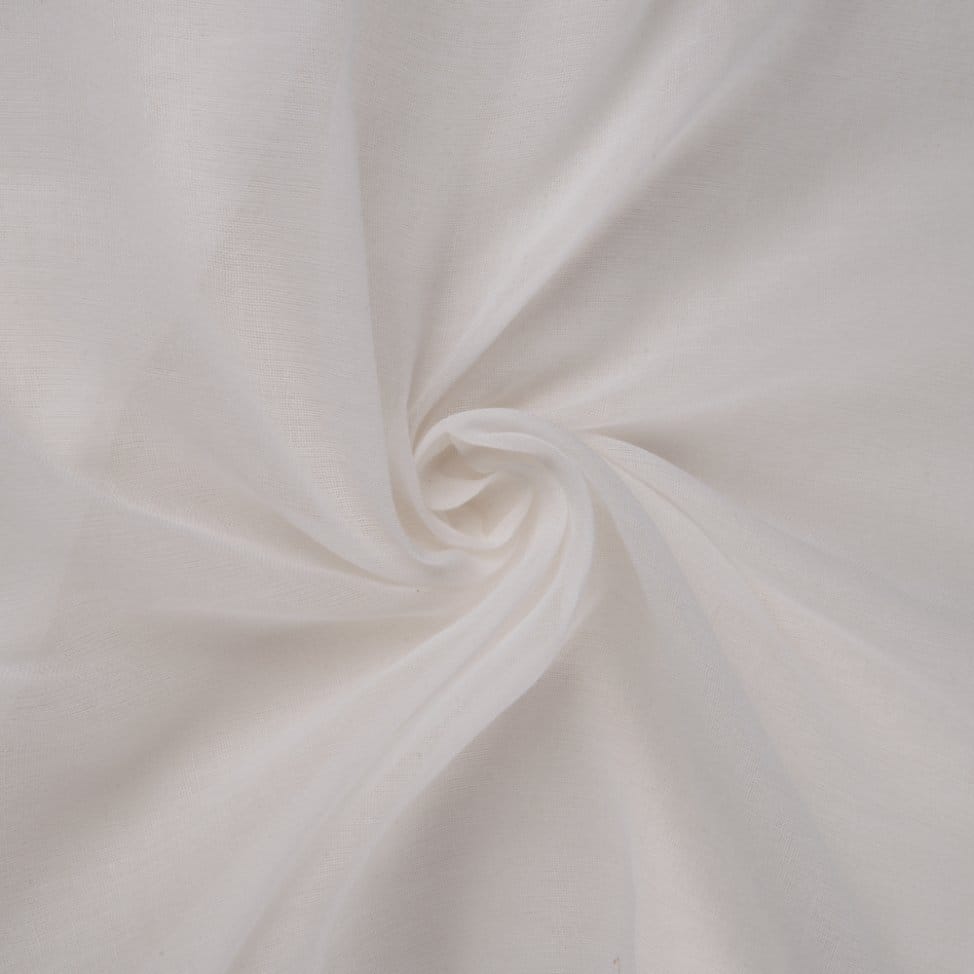
Yes, cotton chiffon exists! While less common than silk or polyester chiffon, cotton chiffon is real and becoming more popular. It’s perfect for people who want the chiffon look but prefer natural fibers.
Cotton chiffon is more opaque than other types and has less drape. It’s breathable and comfortable, making it suitable for summer clothing. However, it wrinkles easily and doesn’t have the same fluid movement as silk or polyester chiffon.
Detailed characteristics:
- Weight: Typically 30-50 GSM (heavier than other chiffon types)
- Breathability: Excellent – best breathability of all chiffon types
- Temperature regulation: Very good – natural cotton properties
- Luster: Low to matte – minimal shine
- Drape: Moderate – doesn’t drape as well as silk or polyester
- Durability: Good – cotton is naturally strong
- UV resistance: Good
- Wrinkle tendency: Very high – wrinkles very easily
- Static: None – cotton doesn’t generate static
- Color retention: Moderate – natural fibers can fade
- Moisture management: Excellent – absorbs and releases moisture
- Shrinkage: Can shrink 3-5% if not pre-shrunk
- Hypoallergenic: Excellent for sensitive skin
Production notes: Cotton chiffon is made using very fine, long-staple cotton fibers. Egyptian or Pima cotton produce the best quality cotton chiffon. The fabric is less sheer than silk or synthetic chiffon because cotton fibers are naturally more opaque.
Best uses: Summer dresses, casual blouses, lightweight summer wear, children’s clothing, items for sensitive skin
Price range: $10-$30 per yard
When to choose cotton chiffon: When natural fibers are a priority, for sensitive skin, for children’s clothing, when breathability is most important, for eco-conscious consumers, or when you want a more casual look than silk or polyester provides.
Care tips: Always pre-wash before sewing. Cotton chiffon can usually be machine washed, unlike silk chiffon, but use gentle cycle and cool water. Iron while slightly damp for best results. Can withstand higher ironing temperatures than synthetic chiffon.
Silk chiffon is best for special occasions when you want the absolute highest quality. Polyester chiffon works great for everyday wear and is budget-friendly. Cotton chiffon is perfect if you prioritize natural fibers and breathability over drape.
Not sure which type of chiffon is right for your project? Take our Chiffon Type Selector Quiz to get personalized recommendations based on your needs, budget, and project requirements.
Types by Style and Finish
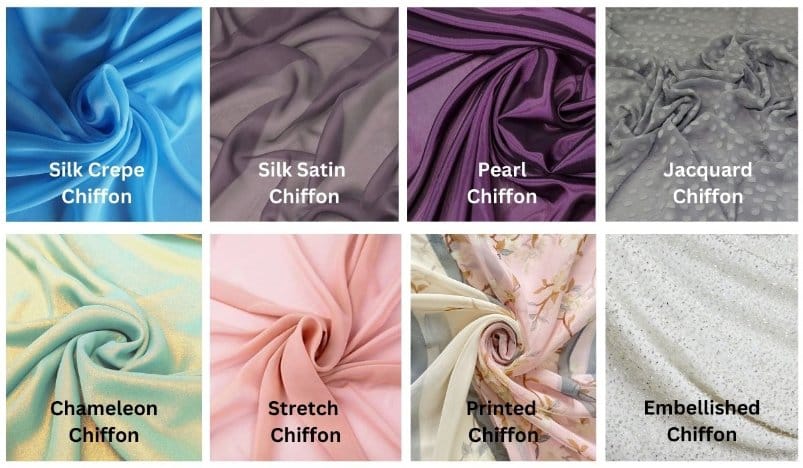
Silk Crepe Chiffon
This is the classic chiffon most people picture. It has a slightly bumpy texture and that characteristic rough feel. The crepe texture comes from highly twisted yarns.
Silk Satin Chiffon
Smoother than crepe chiffon, this type has more shine and is more transparent. It’s lighter weight too. One side has a subtle satin finish while maintaining chiffon’s sheer quality.
Pearl Chiffon
This type has a pearlescent shine that gives it a unique, glowing appearance. It’s great for special occasion wear. The pearl effect is usually achieved through special finishing treatments.
Jacquard Chiffon
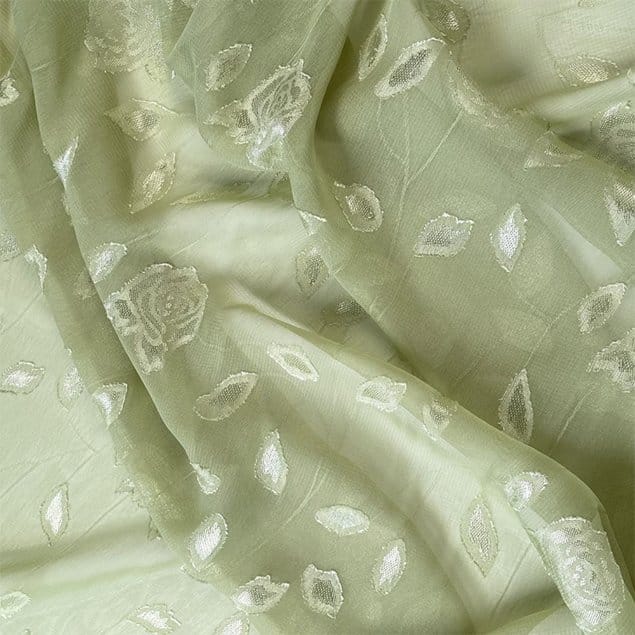
While still thin, jacquard chiffon feels heavier because it has woven patterns in the fabric. These patterns are created during the weaving process, not printed on afterward.
Chameleon Chiffon
This rare type changes color depending on the light. It has a multi-toned appearance that makes it really stand out. Different fibers in the warp and weft create this iridescent effect.
Stretch Chiffon
Made with a bit of spandex or elastane mixed in, stretch chiffon has more give. It’s great for fitted garments. The stretch makes it easier to sew and more comfortable to wear.
Printed Chiffon
Any chiffon can be printed with patterns or designs. The print shows through both sides of the fabric. Digital printing technology has made elaborate designs more affordable.
Embellished Chiffon
This includes chiffon with embroidery, sequins, beads, or other decorations sewn on. These details add weight and change how the fabric drapes.
Chiffon Properties and Characteristics
Is Chiffon Rough or Smooth?
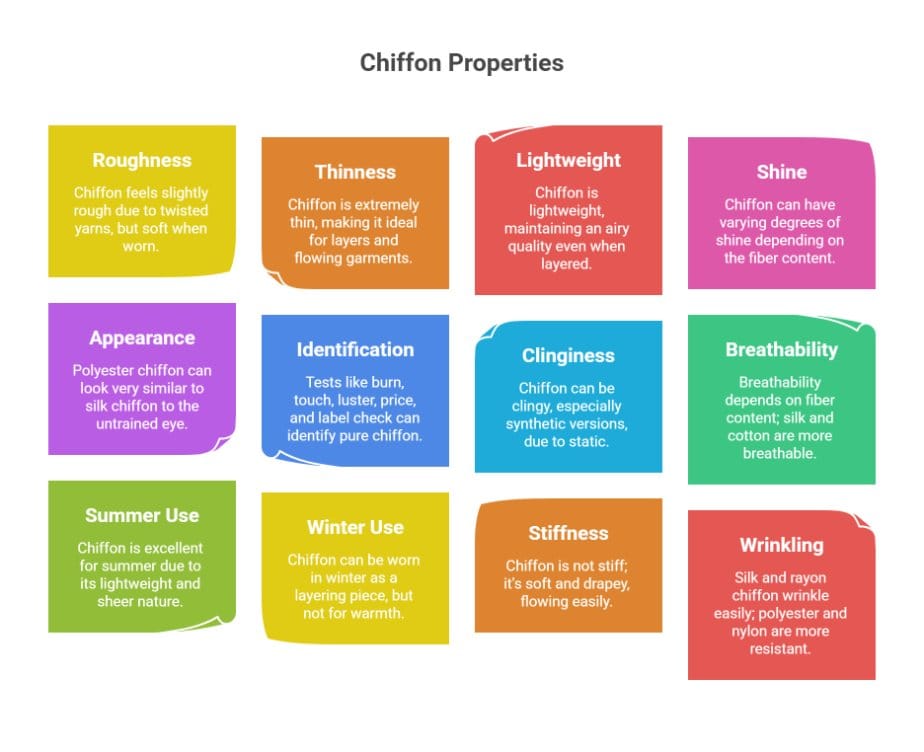
Here’s something interesting about chiffon: it feels slightly rough when you rub it between your fingers. This might surprise you because it looks so smooth and delicate. The roughness comes from those twisted yarns we talked about earlier. When you touch it, you’re feeling the tiny ridges created by the twist.
However, chiffon still feels soft when you wear it because the fabric is so light and airy. The roughness is noticeable only when you’re examining the fabric directly, not when it’s draped on your body.
Is Chiffon a Thin Material?
Yes, chiffon is extremely thin. It’s one of the thinnest fabrics you can buy. This thinness is what makes it perfect for layers, overlays, and flowing garments. The fabric drapes beautifully because it’s so light and thin.
The thickness of chiffon is usually measured in momme (for silk) or grams per square meter. Most chiffon ranges from 3 to 6 momme for silk, or 20-40 GSM for synthetic versions.
Need help understanding chiffon weights and measurements? Check our comprehensive Chiffon Weight Guide to learn about momme, GSM, and which weight is best for different projects. You can also use our Fabric Weight Calculator to compare different chiffon options.
Is Chiffon a Heavy Material?
No, chiffon is lightweight, not heavy. That’s one of its defining characteristics. Even when you layer multiple pieces of chiffon, it still maintains a light, airy quality. This makes it comfortable to wear even in warmer weather.
Is Chiffon Fabric Shiny?
Chiffon can have varying degrees of shine depending on the fiber content and finish. Silk chiffon has a natural, subtle luster. Polyester chiffon can range from matte to quite shiny. Satin chiffon has more shine than crepe chiffon. The level of shine is one of the factors to consider when choosing chiffon for your project.
Does Chiffon Look Like Silk?
Silk chiffon is silk, so it definitely looks like silk! But polyester and other synthetic chiffons can also look very similar to silk chiffon, especially higher-quality versions. The main differences are in the hand feel, drape, and how the fabric catches light. To the untrained eye, good quality polyester chiffon can pass for silk chiffon from a distance.
How to Identify Pure Chiffon Fabric
If you want to know if your chiffon is pure silk or synthetic, here are some tests:
- Burn test: Take a small piece from the seam allowance. Silk burns slowly and smells like burning hair. It leaves a crushable ash. Synthetics melt and smell like plastic, leaving a hard bead.
- Touch test: Real silk warms up quickly in your hand. Synthetics feel cooler and take longer to warm.
- Luster test: Silk has a soft, subtle shine. Synthetic shine is often brighter and more uniform.
- Price test: If it’s very cheap, it’s probably not silk. Real silk chiffon is expensive.
- Label check: Check the fabric content label. Reputable sellers will clearly state the fiber content.
Want to get better at identifying different fabrics by sight and touch? Try our Fabric Identification Quiz to test your skills and learn the key differences between fabric types.
Is Chiffon a Clingy Fabric?
Chiffon can be somewhat clingy, especially when it’s made from synthetic fibers like polyester or nylon. The fabric tends to create static and can stick to your body or other fabrics. This is why chiffon dresses often have a lining underneath.
To reduce clinging, you can use anti-static spray, wear a slip underneath, or choose silk or rayon chiffon which are less prone to static than polyester.
Is Chiffon a Breathable Fabric?
Breathability depends on the fiber content. Silk and cotton chiffon are quite breathable, making them good choices for warm weather. Polyester and nylon chiffon are less breathable but still allow some air circulation due to the loose weave. The sheerness of the fabric helps with air flow regardless of fiber content.
Is Chiffon Good for Summer?
Yes, chiffon is excellent for summer! The lightweight, sheer nature of the fabric makes it perfect for hot weather. It allows air to circulate and doesn’t trap heat against your body. Silk and cotton chiffon are especially good summer choices because they’re natural fibers that breathe well.
Many summer dresses, tops, and children’s clothing use chiffon for this reason. The fabric looks elegant while keeping you cool and comfortable.
Is Chiffon a Winter Fabric?
While chiffon is primarily thought of as a summer fabric, it can be worn in winter as a layering piece. You might wear a chiffon blouse under a cardigan or jacket, or use chiffon scarves as accessories. However, chiffon alone won’t keep you warm, so it’s not a primary winter fabric like wool or fleece.
Is Chiffon Fabric Stiff?
No, chiffon is not stiff. It’s known for being soft and drapey. The fabric flows and moves easily, which is why it’s popular for garments that need movement and fluidity. If your chiffon feels stiff, it might be heavily starched or have a special finish that will soften after washing.
Does Chiffon Wrinkle Easily?
This depends on what the chiffon is made from. Silk and rayon chiffon wrinkle fairly easily. Polyester and nylon chiffon are more wrinkle-resistant. However, because chiffon is often used in flowing garments, small wrinkles are less noticeable than they would be in a structured fabric.
If wrinkles are a concern, choose polyester chiffon or hang your garments immediately after washing. Many people find that steam from a hot shower can help release wrinkles from chiffon without direct ironing.
Advantages and Disadvantages of Chiffon Fabric
Advantages of Chiffon
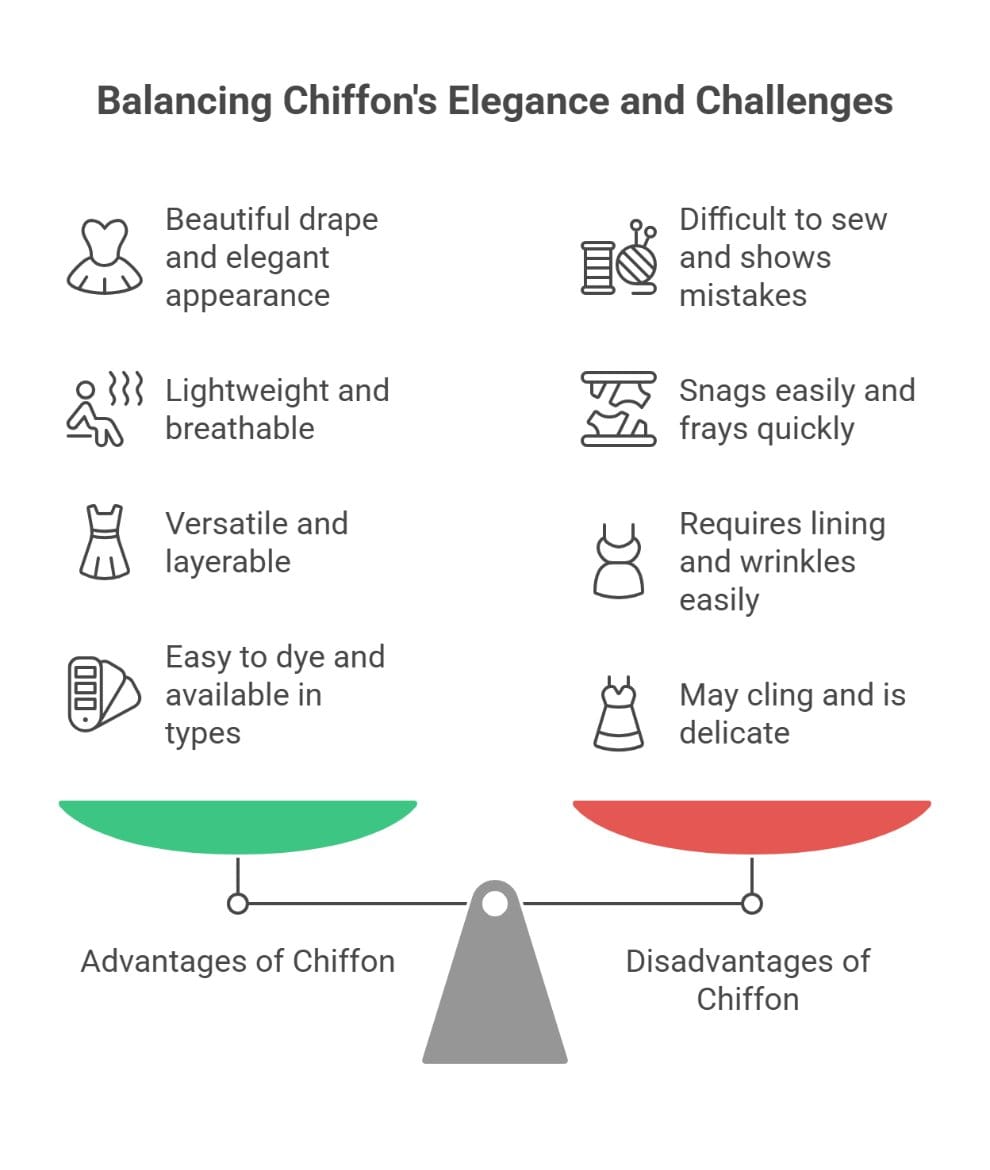
- Beautiful drape: Chiffon flows and moves gracefully, creating an elegant look
- Lightweight and comfortable: You barely feel it on your skin, perfect for warm weather
- Versatile: Works for formal and casual occasions depending on the style
- Layerable: The sheer quality makes it perfect for creating dimension through layers
- Easy to dye: Takes color beautifully, especially silk and rayon versions
- Breathable: Allows air circulation, keeping you cool
- Elegant appearance: Automatically makes garments look more sophisticated
- Available in many types: Can choose based on budget and needs
Disadvantages of Chiffon
- Difficult to sew: Slippery and requires special techniques and patience
- Shows every mistake: Any errors in sewing or handling are visible
- Requires lining: Usually needs an underlay because it’s see-through
- Snags easily: Can catch on jewelry, rough surfaces, or even itself
- Frays quickly: Raw edges fray fast if not finished properly
- Delicate: Can tear or develop runs like pantyhose
- May cling: Synthetic versions create static and stick to skin
- Can wrinkle: Silk and rayon types wrinkle easily
- May need special care: Silk chiffon often requires dry cleaning
- Not very durable: Won’t last as long as sturdier fabrics
Is Chiffon a Good Material?
Whether chiffon is “good” depends on what you need it for. For elegant, flowing garments and special occasions, chiffon is excellent. It creates a beautiful, romantic look that few other fabrics can match. However, for everyday wear that needs to be durable and easy to care for, chiffon might not be the best choice.
Chiffon excels at creating soft, feminine silhouettes. It’s perfect when you want a delicate, sophisticated appearance. But if you need something practical and low-maintenance, you might want to consider other options.
Chiffon Compared to Other Fabrics
What is the Difference Between Chiffon and Georgette?
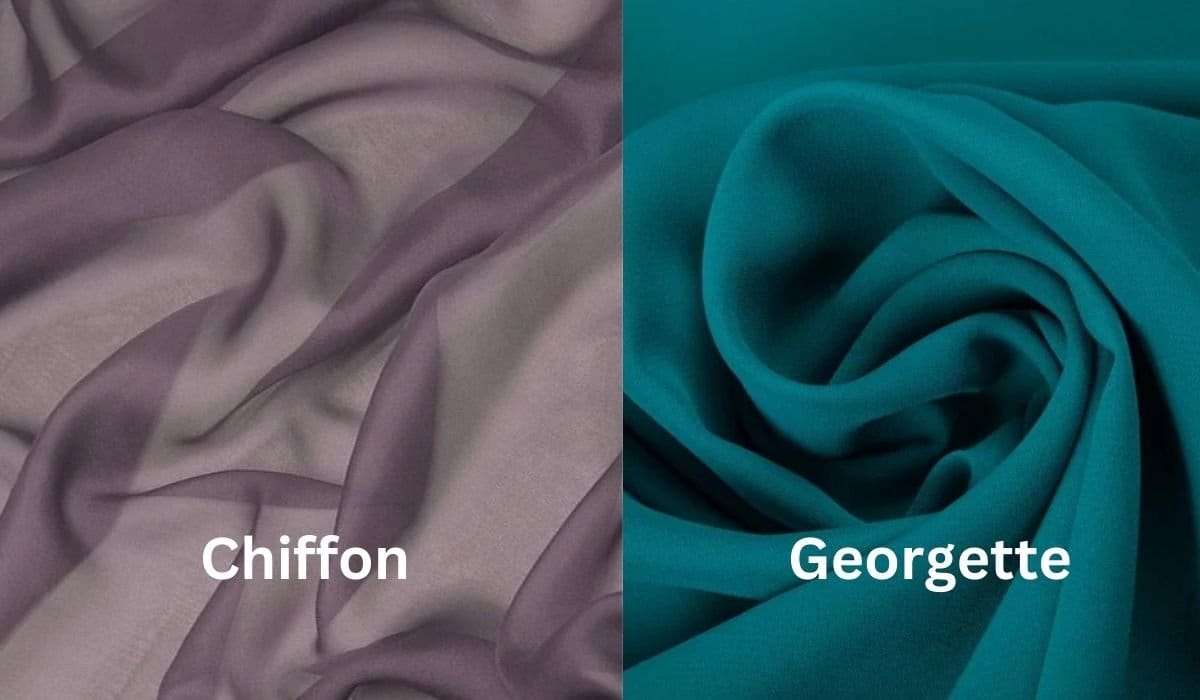
People often confuse chiffon and georgette because they’re both sheer, lightweight fabrics. Here’s how they differ:
| Feature | Chiffon | Georgette |
|---|---|---|
| Weight | Lighter | Slightly heavier |
| Texture | Smooth with slight roughness | More textured, crepe-like surface |
| Transparency | Very sheer | Less transparent |
| Drape | More fluid and flowing | More body, holds shape better |
| Strength | More delicate | Stronger and more durable |
| Uses | Overlays, evening wear, scarves | Blouses, dresses that need more structure |
Both fabrics use twisted yarns, but georgette uses more tightly twisted yarns, creating a slightly heavier fabric with more texture. If you want maximum flow and sheerness, choose chiffon. If you want something with a bit more substance and structure, go with georgette.
Is Chiffon Better Than Cotton?
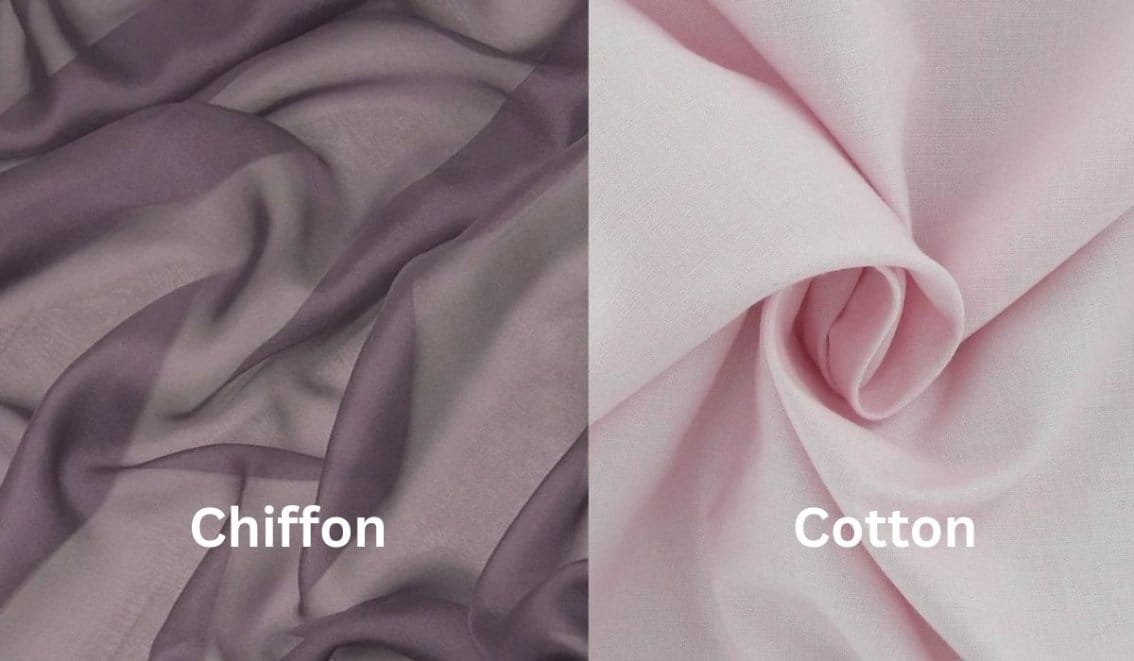
This isn’t really a fair comparison because chiffon and cotton serve different purposes. Cotton is a fiber, while chiffon is a type of weave. You can actually have cotton chiffon!
Regular cotton fabric (like cotton broadcloth or poplin) is:
- More durable and practical for everyday wear
- Easier to sew and care for
- Less expensive in most cases
- More opaque and provides better coverage
- Better for casual, everyday clothing
Chiffon (regardless of fiber) is:
- More elegant and formal-looking
- Better for special occasions and dressy garments
- Lighter and more breathable
- More difficult to work with and maintain
Choose based on your needs. For everyday t-shirts and casual wear, regular cotton wins. For formal dresses and elegant garments, chiffon is the better choice.
What is the Closest Fabric to Chiffon?
Several fabrics share similarities with chiffon:
Georgette: The closest match. Slightly heavier and less sheer, but has a similar drape and feel.
Organza: Also sheer and lightweight, but stiffer and more crisp. Holds its shape better than chiffon.
Voile: Similar sheerness but usually made from cotton. Has a soft, semi-transparent quality like chiffon but doesn’t drape quite as well.
Crepe de Chine: Heavier than chiffon with a crepe texture. Less transparent but has a similar elegant quality.
Tulle: Very sheer and lightweight, but has a net-like structure instead of chiffon’s plain weave. Used for similar applications but has a different texture.
Which is Better: Silk or Chiffon?
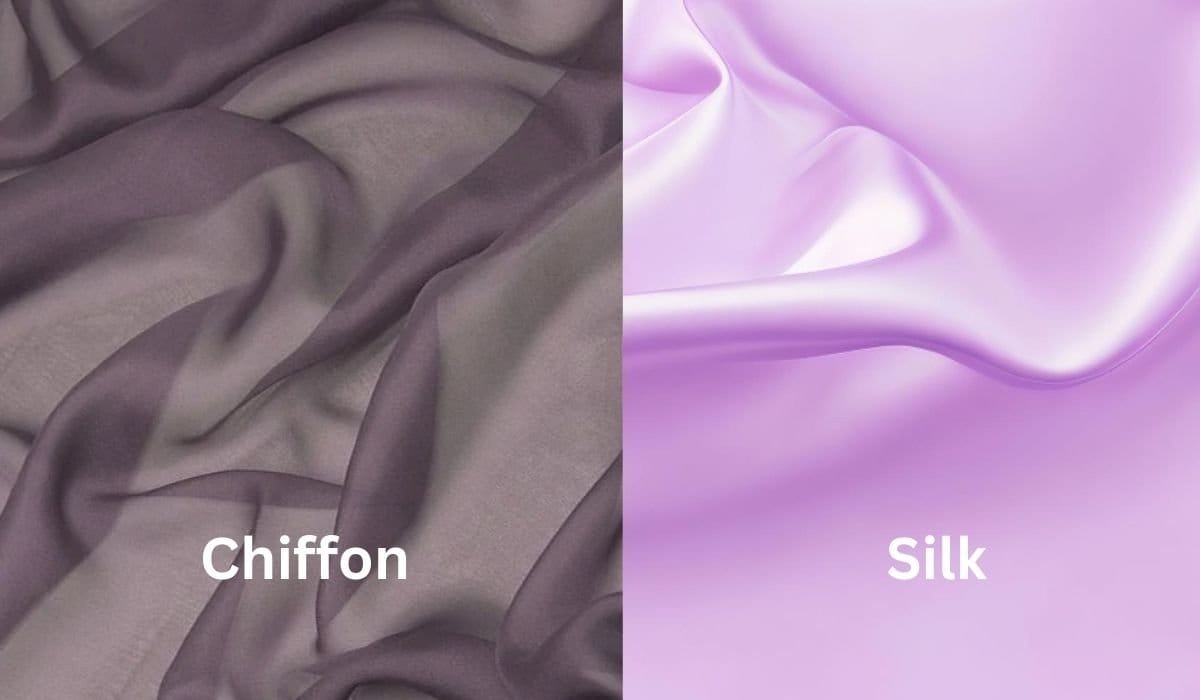
This is a bit of a trick question! Chiffon can be made from silk. When people ask this, they usually mean “Which is better: silk chiffon or polyester chiffon?” or “Which is better: chiffon or other silk fabrics?”
If comparing silk chiffon to polyester chiffon:
- Silk chiffon feels more luxurious and breathes better
- Polyester chiffon is more affordable and easier to care for
- Silk chiffon drapes beautifully and has a natural luster
- Polyester chiffon is more durable and wrinkle-resistant
If comparing chiffon to other silk fabrics like silk charmeuse or habotai, chiffon is sheerer and lighter but less durable.
Is Chiffon Pure Silk?
Not always. Chiffon can be made from silk, but it can also be made from polyester, nylon, rayon, or cotton. Only chiffon specifically labeled as “silk chiffon” is made from pure silk. Most chiffon you’ll find in stores today is polyester because it’s more affordable.
Is Chiffon Synthetic or Natural?
It depends on the fiber content. Chiffon can be either synthetic or natural:
- Natural chiffon: Made from silk or cotton
- Synthetic chiffon: Made from polyester or nylon
- Semi-synthetic chiffon: Made from rayon (which starts as natural wood pulp but undergoes chemical processing)
Always check the fiber content label to know what you’re getting.
Common Uses for Chiffon Fabric
Chiffon’s lightweight, elegant nature makes it perfect for many applications. Understanding where and how to use each type of chiffon helps you make better choices for your projects.
Formal and Special Occasion Wear
Wedding Dresses
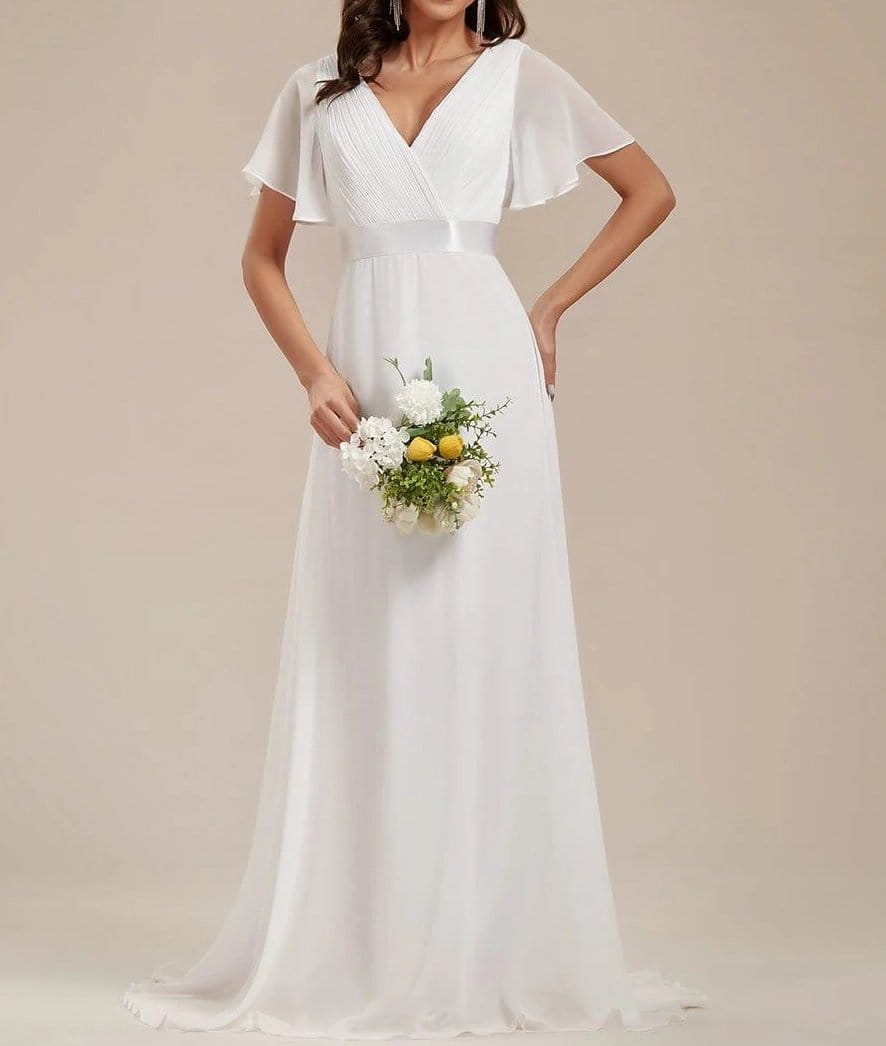
Chiffon creates romantic, flowing bridal gowns that move beautifully:
- A-line gowns: Chiffon overlays create soft, flattering silhouettes
- Beach weddings: Lightweight chiffon suits outdoor ceremonies perfectly
- Empire waist styles: Chiffon skirts flow gracefully from high waist
- Layered looks: Multiple chiffon layers create dimension without weight
- Sleeves and details: Chiffon cap sleeves, flutter sleeves, and overlays add delicate touches
- Best chiffon type: Silk chiffon for luxury; high-grade polyester for budget-conscious brides
Real example: A classic A-line wedding dress might use 8-10 yards of silk chiffon over a satin underdress, creating ethereal movement as the bride walks down the aisle. The chiffon softens the silhouette while the satin provides structure and opacity.
Bridesmaid Dresses
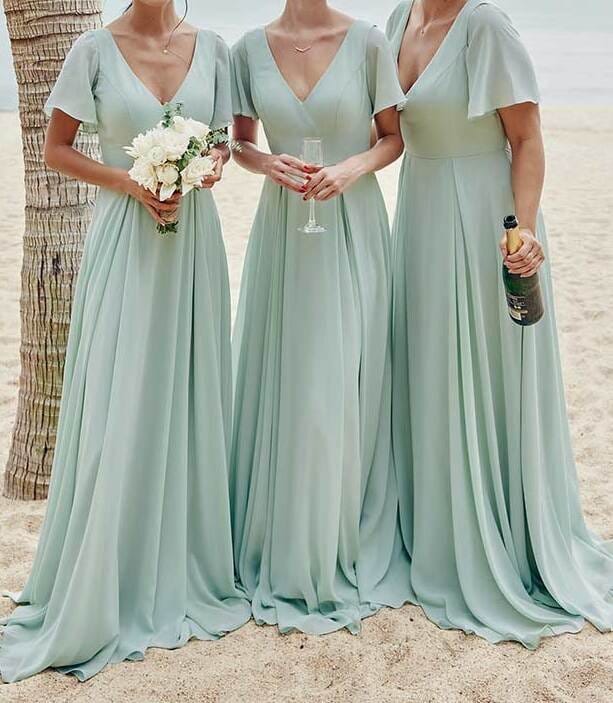
The most popular choice for wedding party outfits:
- Coordinated colors: Chiffon dyes well, allowing perfect color matching
- Flattering for all body types: The drape creates forgiving silhouettes
- Comfortable for all-day wear: Lightweight and breathable
- Photographs beautifully: Catches light without looking shiny or cheap
- Affordable in polyester: Whole bridal party can dress elegantly on budget
- Popular styles: Floor-length gowns, high-low hems, one-shoulder designs
Typical yardage: 4-6 yards per dress depending on style and length
Evening Gowns
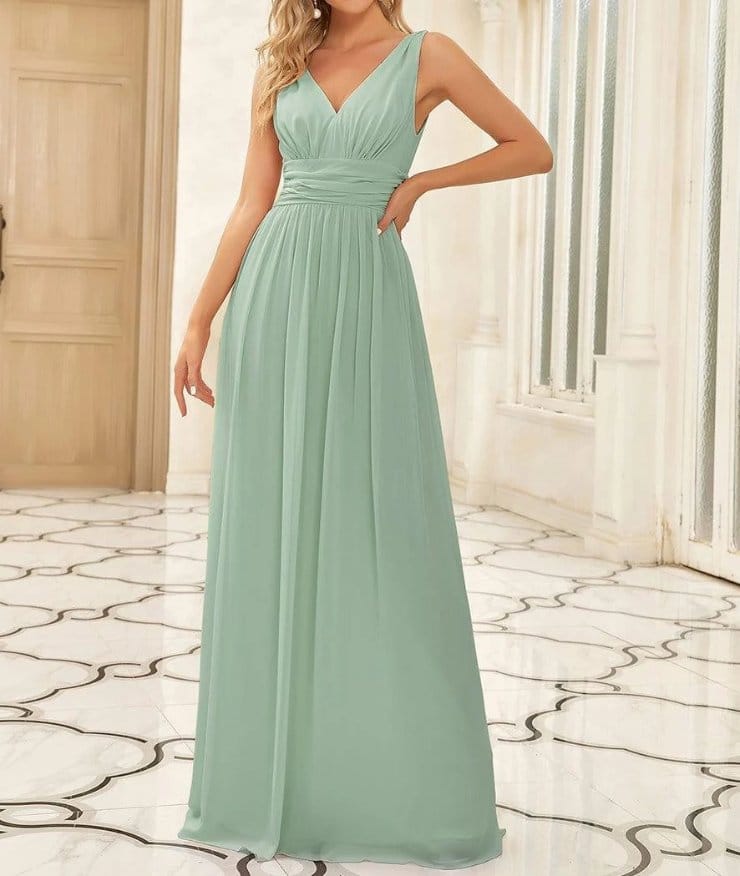
Perfect for red carpet events, galas, and formal dances:
- Full-length gowns: Chiffon creates dramatic, sweeping looks
- Cocktail dresses: Shorter lengths for semi-formal events
- Overlay dresses: Chiffon over sequins or lace for glamorous effect
- Grecian draping: Chiffon’s fluid nature perfect for draped styles
- Statement sleeves: Voluminous chiffon sleeves add drama
Designer usage: Luxury designers like Elie Saab and Marchesa frequently feature silk chiffon in their evening wear collections, using 15-25 yards per gown for elaborate draping and layers.
Prom and Formal Dance Dresses
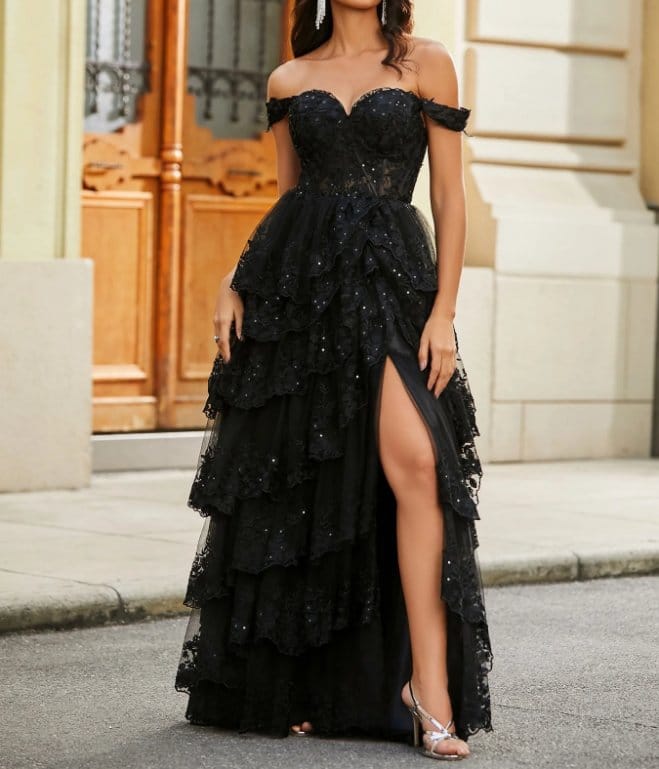
Creates youthful, elegant looks for special school events:
- Trendy styles: Two-piece sets, off-shoulder designs, fitted bodices with flowing skirts
- Comfortable dancing: Lightweight fabric won’t weigh you down
- Photos well: Important for prom pictures
- Budget-friendly: Polyester chiffon keeps costs reasonable
- Easy care: Can usually be cleaned at home
Everyday Fashion
Blouses and Tops
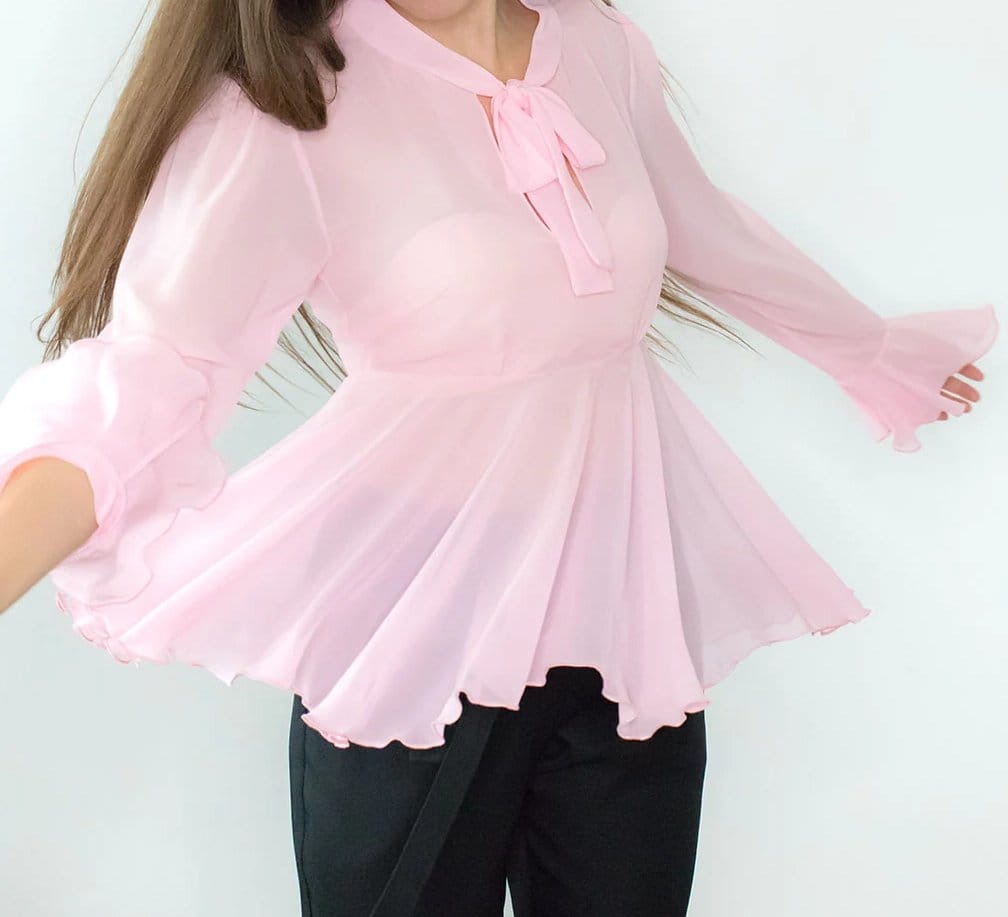
Adds dressy touch to work and casual outfits:
- Work wear: Chiffon blouses over camisoles create professional looks
- Casual tops: Relaxed-fit chiffon for weekend wear
- Peasant tops: Flowy, comfortable summer staples
- Dressy tank overlays: Lightweight layer for air-conditioned offices
- Button-front shirts: Classic styling in delicate fabric
Practical tip: Always wear appropriate undergarments beneath sheer chiffon tops. Camisoles, bralettes, or bandeaus in matching colors are essential.
Typical yardage: 1.5-2.5 yards depending on style and size
Skirts
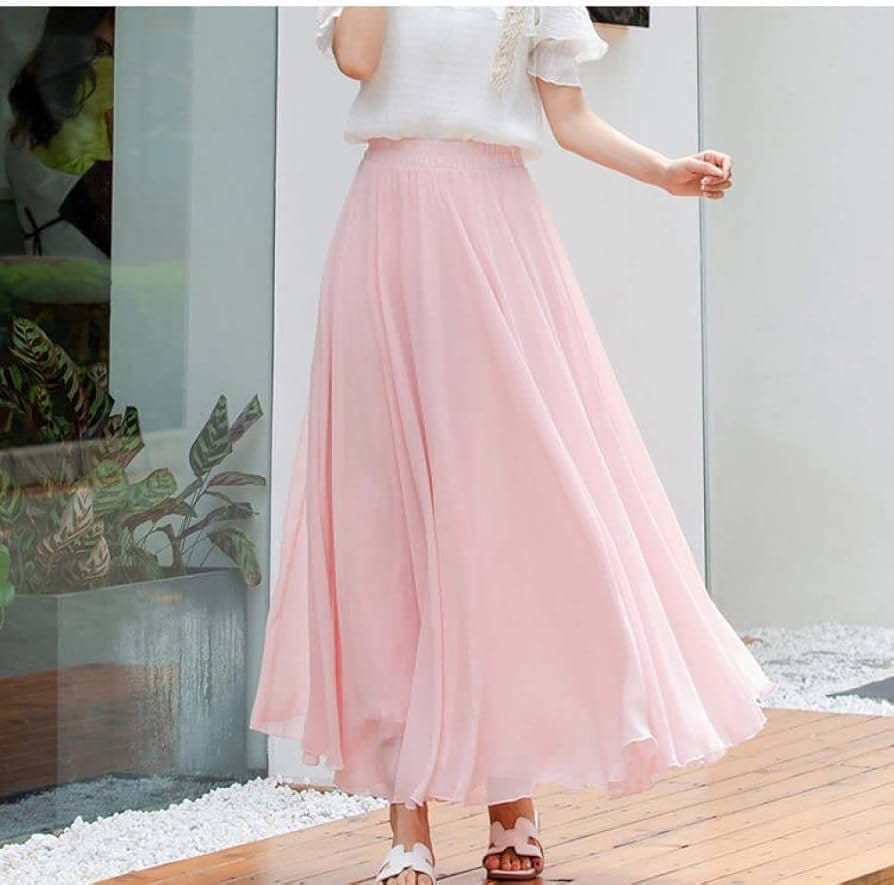
Creates movement and feminine style:
- Maxi skirts: Floor-length chiffon skirts for bohemian looks
- Midi skirts: Mid-calf length for work or casual wear
- Circle skirts: Full, twirly skirts that catch the breeze
- Tiered skirts: Multiple layers create volume
- Wrap skirts: Adjustable fit with flowing fabric
Styling tip: Pair chiffon skirts with fitted tops to balance the volume. Tuck in tops to define waist.
Summer Dresses
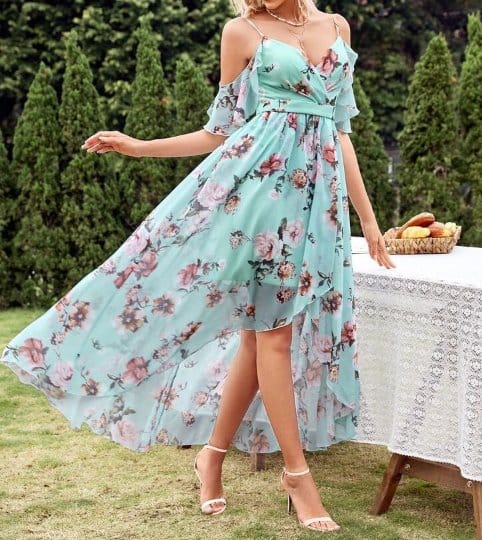
Keeps you cool while looking polished:
- Sundresses: Strappy, casual styles for hot weather
- Shirt dresses: Button-front chiffon for office or casual
- Maxi dresses: Full-length coverage while staying cool
- Wrap dresses: Flattering style in flowing fabric
- Tiered dresses: Layered ruffles create interest
Best fiber for summer: Silk or cotton chiffon for maximum breathability; polyester acceptable for short-term wear.
Overlays and Dusters
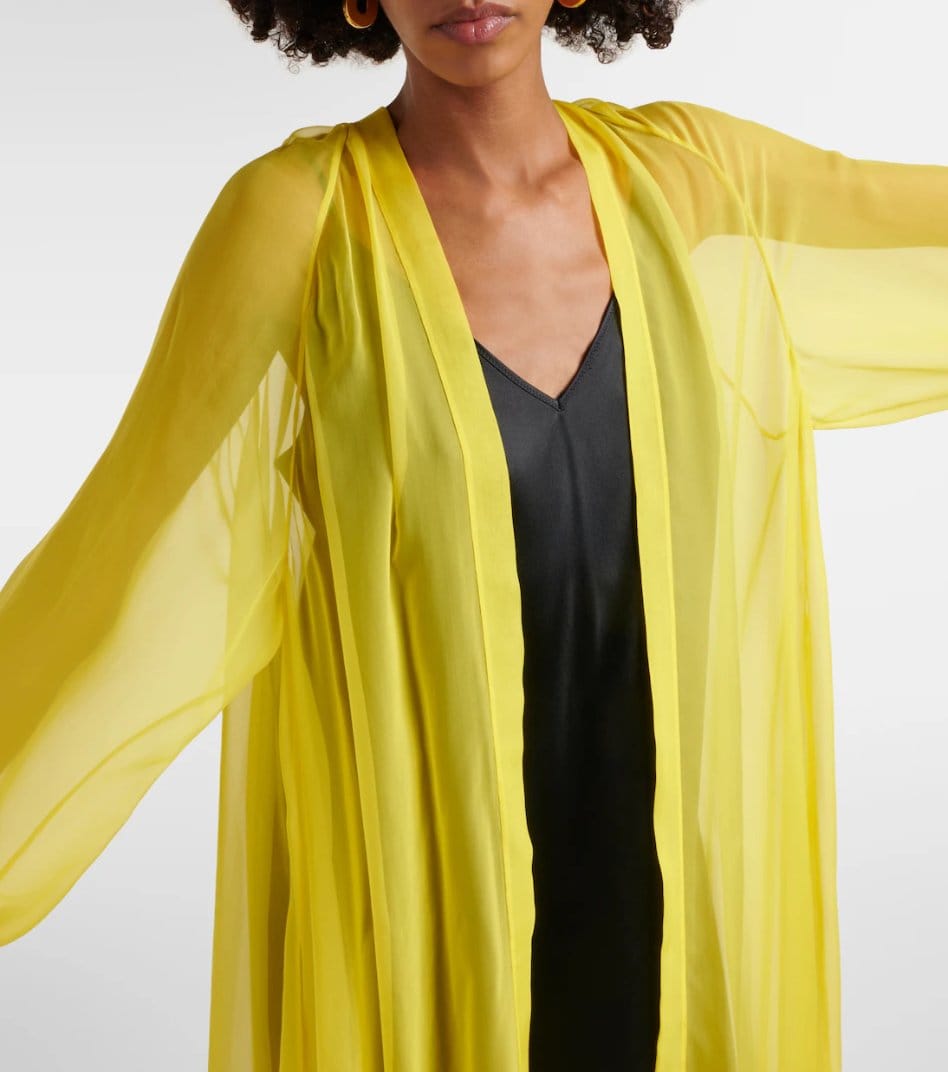
Adds extra layer without bulk:
- Kimono-style dusters: Easy throw-on layers
- Long cardigans: Chiffon versions add elegance
- Shawl wraps: Lightweight coverage for cool evenings
- Cape overlays: Dramatic silhouettes
Accessories
Scarves
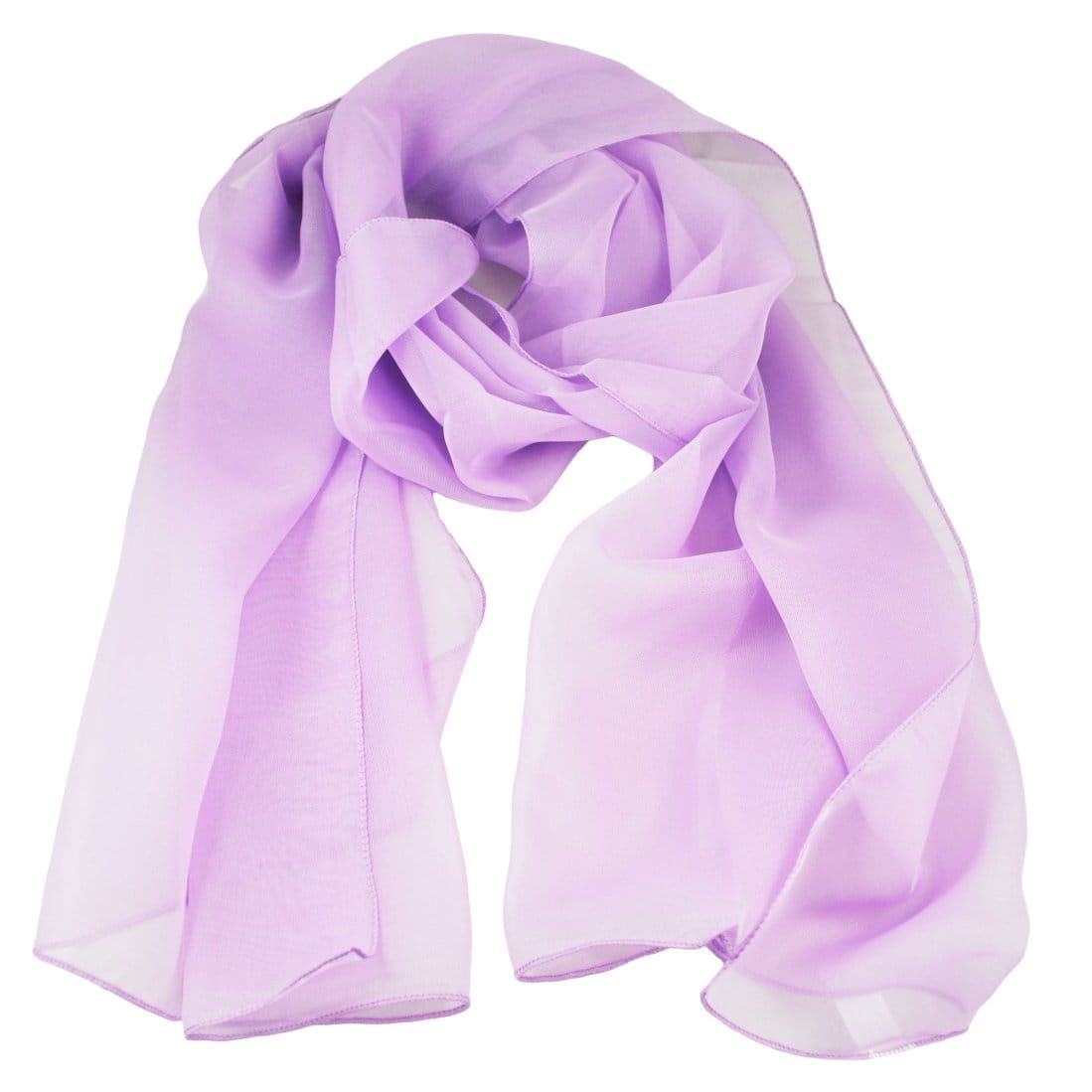
One of chiffon’s most popular uses:
- Fashion scarves: Lightweight accessories that don’t add bulk
- Oblong scarves: Wrap around neck multiple ways
- Square scarves: Versatile styling options
- Printed designs: Digital printing creates stunning patterns
- Solid colors: Classic elegance
Popular dimensions: 14″x72″ for oblong scarves, 36″x36″ or 45″x45″ for squares
Care advantage: Chiffon scarves wash easily and dry quickly, making them practical travel accessories
Shawls and Wraps
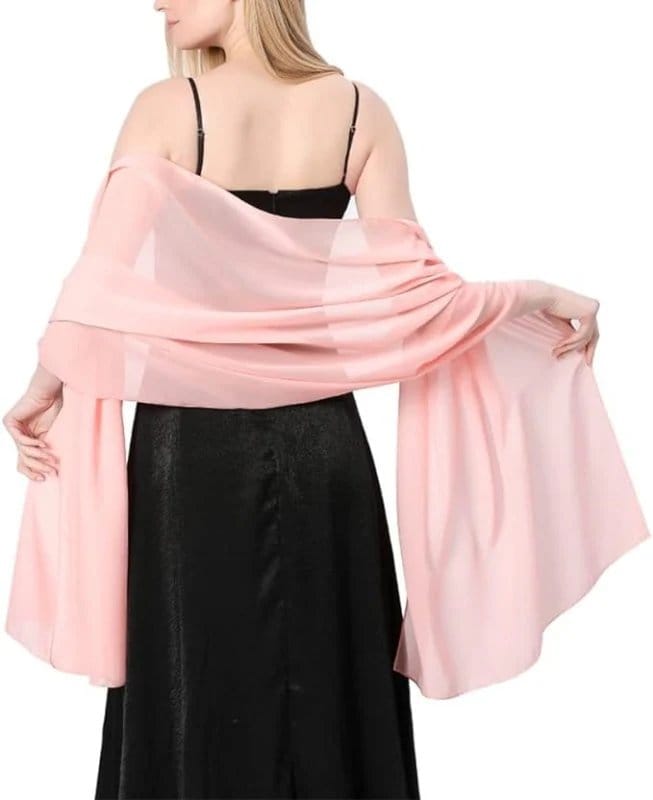
Elegant cover-ups for formal events:
- Evening shawls: Drape over shoulders for dinners and theater
- Beach cover-ups: Lightweight protection from sun
- Travel wraps: Compact and lightweight for planes
- Wedding shawls: Coordinate with bridal gowns
Hair Accessories
Delicate accessories for special occasions:
- Scrunchies: Soft on hair, gentle hold
- Headbands: Feminine and decorative
- Hair bows: Add whimsical touch
- Flower decorations: Made from layered chiffon
Special Categories
Children’s Clothing
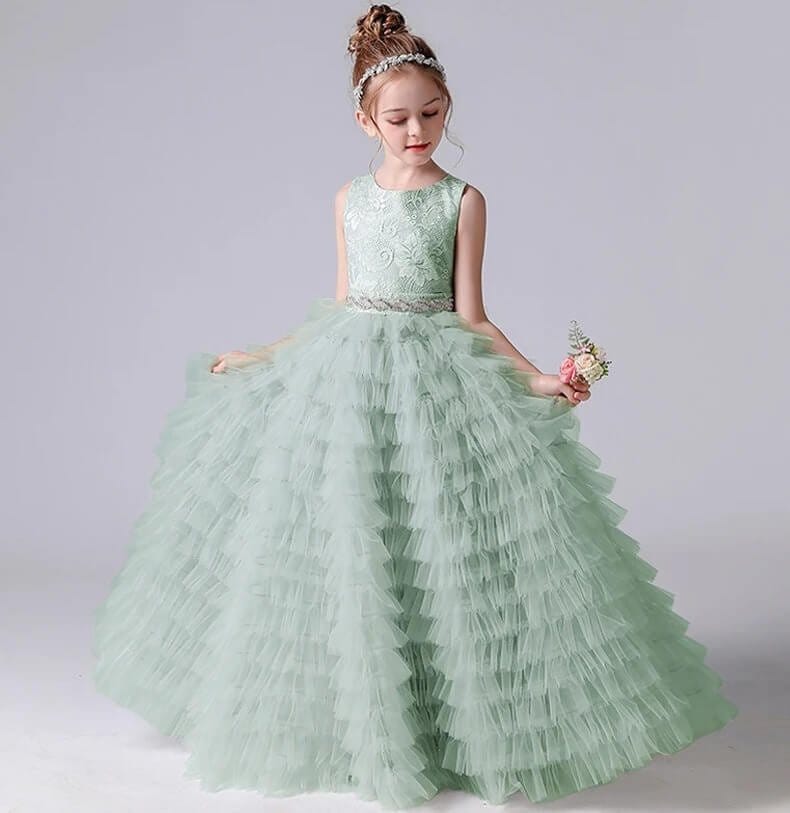
Chiffon is particularly popular for children’s formal wear, creating beautiful dresses for special occasions:
- Flower girl dresses: Romantic layers perfect for weddings
- First communion dresses: White chiffon creates angelic looks
- Birthday party dresses: Makes kids feel special
- Holiday dresses: Photo-worthy outfits
- Dress-up costumes: Princesses and fairies
Safety note: Choose polyester chiffon for children’s clothing – it’s easier to care for, less expensive when outgrown, and more durable for active kids. Always supervise young children in chiffon garments as the fabric can catch on things.
Dance and Performance Costumes
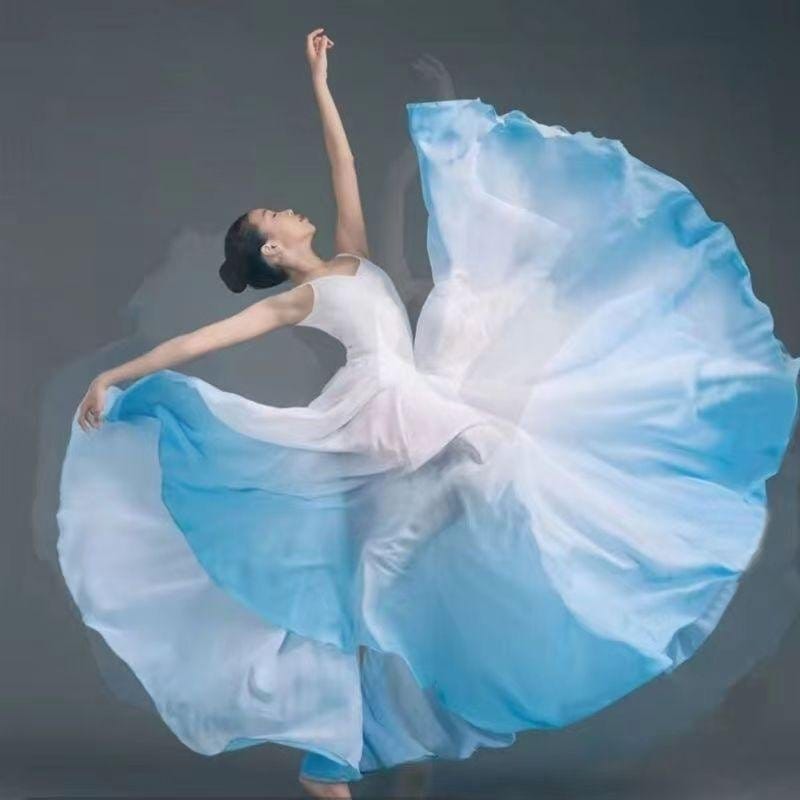
Chiffon’s movement makes it perfect for stage:
- Ballet costumes: Flowing romantic tutus and skirts
- Lyrical dance: Creates beautiful lines and movement
- Belly dance: Veil work and costume embellishments
- Theatrical productions: Period costumes and flowing robes
- Figure skating: Lightweight overlay on performance dresses
Best choice: Nylon or polyester chiffon – durable enough for repeated performances, washable, and affordable for multiple costume pieces
Maternity Wear
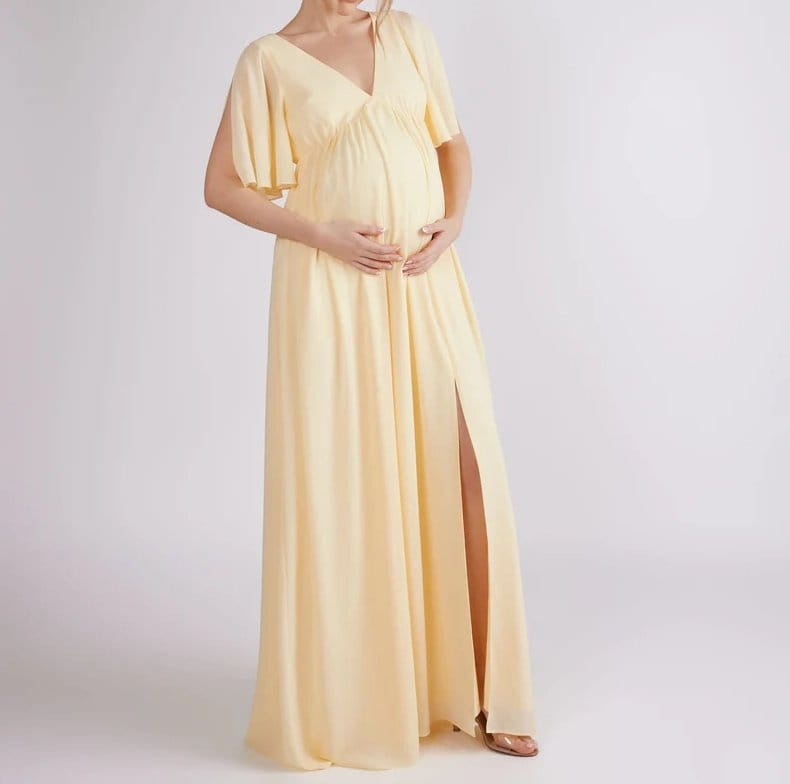
Chiffon’s drape makes it flattering for pregnancy:
- Maxi dresses: Comfortable and expandable
- Empire waist tops: Flowy coverage for growing bump
- Special occasion maternity: Baby showers and weddings
- Nursing-friendly styles: Button-front or wrap designs
Home Decor Applications
Window Treatments
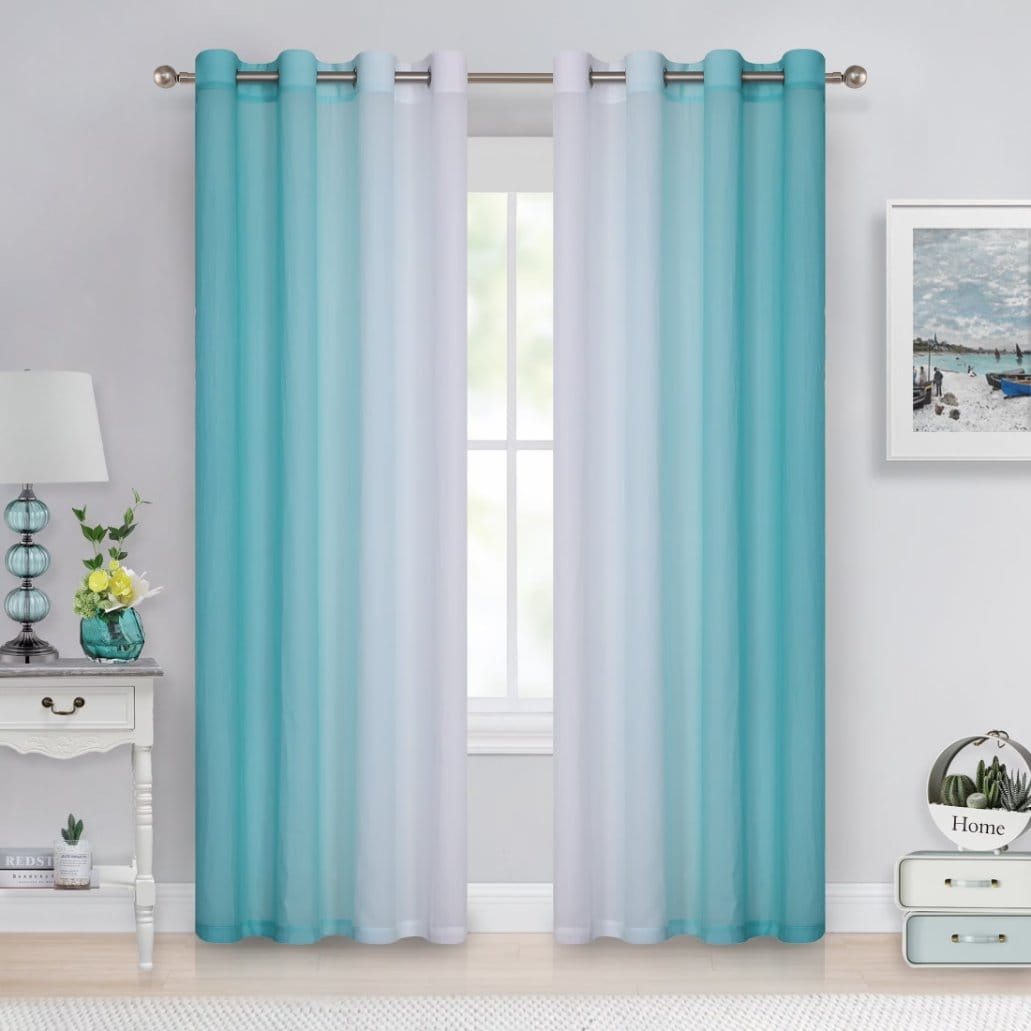
Creates soft, romantic ambiance:
- Sheer curtains: Filters light while providing privacy during day
- Canopy drapes: Creates romantic bedroom settings
- Swags and valances: Decorative window toppers
- Layered treatments: Chiffon over blinds or heavier drapes
Best fiber: Polyester chiffon – more affordable for large yardage, more durable for home use, easier to clean
Typical yardage: 2-3 times window width for proper fullness
Table Settings
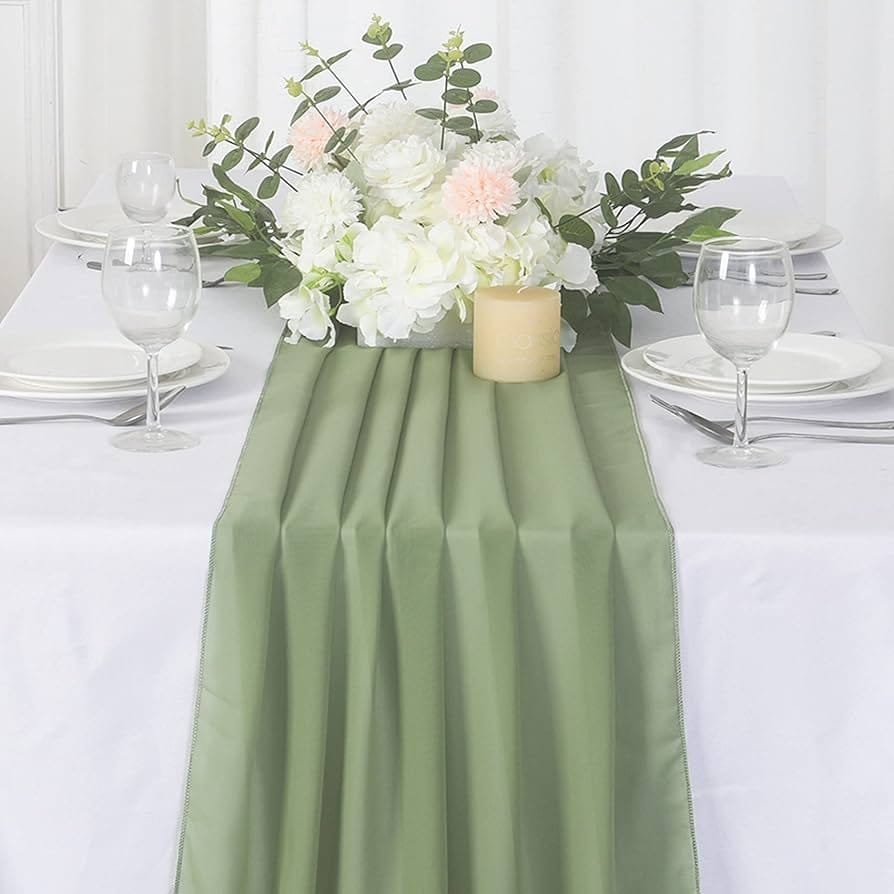
Adds elegance to special occasions:
- Table runners: Lightweight accent down center of table
- Chair sashes: Decorative ties for wedding or party chairs
- Tablecloth overlays: Adds color and texture
- Napkins: Though impractical for actual use, beautiful for display
Event Decor

Popular for wedding and party decorations:
- Ceiling draping: Creates elegant venue ambiance
- Backdrop swags: Photo booth and head table backdrops
- Aisle decorations: Pew bows and markers
- Tent lining: Softens industrial-looking event tents
- Ribbon alternatives: Wide chiffon strips for bows and decorations
- Scarf: 0.5-1 yard
- Simple blouse: 1.5-2.5 yards
- Knee-length dress: 3-4 yards
- Maxi dress: 4-6 yards
- Bridesmaid dress: 4-6 yards
- Wedding dress: 8-15 yards (depending on style)
- Full circle skirt: 4-6 yards
- Curtain panel (96″ long): 6-8 yards
Always buy 10-20% extra for mistakes, pattern matching, and testing techniques.
Professional and Industry Uses
Fashion Industry
- Runway shows: High-fashion garments feature expensive silk chiffon
- Ready-to-wear: Mass-market brands use polyester chiffon
- Bridal industry: Major sector using vast quantities of chiffon
- Evening wear lines: Department stores stock chiffon dresses seasonally
Costume Design
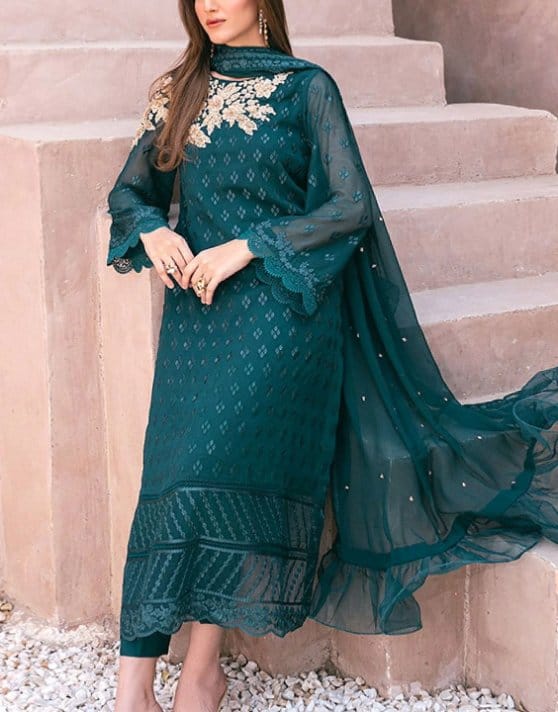
- Film and TV: Period costumes and contemporary designs
- Theater productions: Everything from Shakespeare to modern musicals
- Cosplay: Recreating characters with flowing garments
- Halloween costumes: Angels, fairies, princesses, and more
Craft Projects
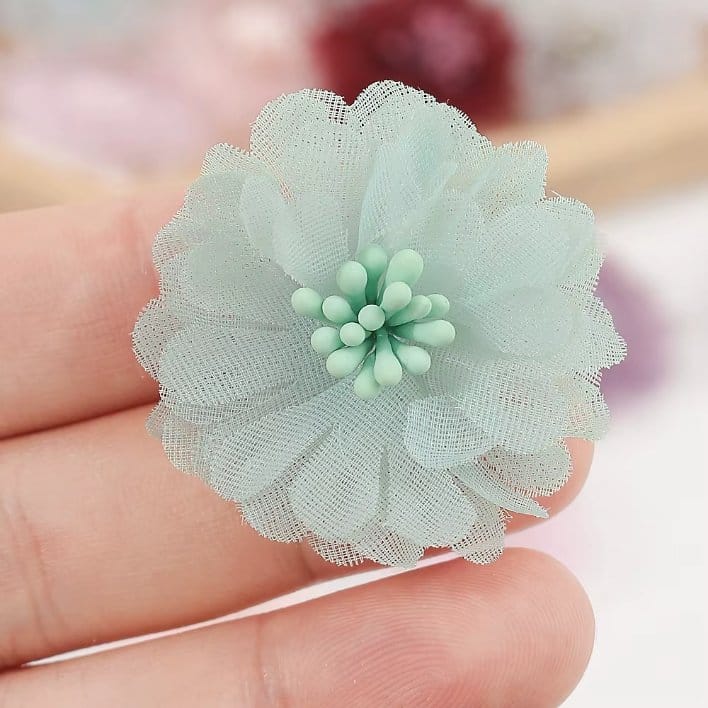
- Fabric flowers: Layered petals create realistic blooms
- Gift wrapping: Elegant alternative to ribbon
- Art projects: Mixed media and textile art
- Doll clothing: Miniature garments for fashion dolls
Sewing with Chiffon: Tips and Techniques
Chiffon has a reputation for being difficult to sew, and that reputation is well-earned. However, with the right techniques and patience, you can successfully work with this beautiful fabric. This section will walk you through everything you need to know, from preparation to finishing.
Before You Start: Essential Preparation
Understanding Why Chiffon is Challenging
Before we dive into techniques, let’s understand what makes chiffon difficult:
- Slipperiness: The smooth surface makes layers shift and slide during cutting and sewing
- Sheerness: You can see every mistake, stitch, and seam allowance through the fabric
- Fraying: Raw edges fray almost immediately when cut
- Delicacy: The fabric can snag on rough hands, jewelry, or tools
- Feeding issues: Standard sewing machine presser feet can pull the fabric into the machine
- Pin marks: Regular pins leave permanent holes
- Puckering: Seams easily pucker if tension or technique isn’t perfect
Knowing these challenges helps you prepare properly and avoid common mistakes.
Choose the Right Tools
Needles – Critical to Success:
- Size: Use 60/8 or 70/10 sharp (microtex) needles. These create tiny holes that won’t damage the fabric.
- Type: Sharp/microtex needles have a very fine point designed for delicate fabrics. Universal needles are too blunt.
- Quality: Invest in good quality needles. Cheap needles may have burrs that snag fabric.
- Freshness: Change your needle every 4-6 hours of sewing or at the start of each chiffon project. Even slightly dull needles cause problems.
- Testing: If you’re getting skipped stitches or pulls, try a new needle before troubleshooting other issues.
Not sure which needle to use for your chiffon project? Our Needle & Fabric Compatibility Chart helps you match the perfect needle size and type to your specific chiffon fabric.
Thread Selection:
- Weight: Use fine thread – 60-80 weight for silk chiffon, 50-60 weight for polyester chiffon
- Type: Fine polyester thread works best for all chiffon types. Silk thread for silk chiffon if you want traditional methods.
- Color matching: Thread should match your fabric exactly. The sheerness of chiffon makes even slight color differences visible.
- Quality: Use good quality thread. Cheap thread sheds lint and breaks easily.
Pins and Clips:
- Super-fine silk pins (size 17 or 0.5mm): The only pins safe for chiffon. Regular pins leave permanent holes.
- Fabric clips: Even better than pins – no holes at all. Use for holding seams together.
- Pin placement: If you must pin, pin within seam allowances only, never in areas that will be visible.
- Pin quantity: Pin more frequently than you would for other fabrics – every 1-2 inches.
Cutting Tools:
- Sharp fabric scissors: Must be razor-sharp. Dull scissors pull and fray the fabric.
- Rotary cutter: Many sewers prefer this for cutting chiffon. Use a new blade.
- Cutting mat: Self-healing cutting mat if using rotary cutter
- Pattern weights: Heavy enough to hold pattern pieces without shifting
Other Essential Tools:
- Tissue paper or medical exam paper: For the sewing machine technique explained below
- Walking foot: Helps feed both fabric layers evenly
- Straight stitch plate: If your machine has one, use it instead of zigzag plate
- Seam ripper: For fixing mistakes (and you will make mistakes)
- Pressing cloth: Protects fabric from iron damage
- Water-soluble marking pen: For marking darts, pleats, etc.
Prep Your Workspace
Your workspace setup can make or break your chiffon project:
- Large, clear surface: You need plenty of room to spread out fabric
- Clean workspace: Even small debris can snag chiffon
- Remove jewelry: Rings, bracelets, and watches can catch and pull threads
- Smooth hands: File any rough fingernails or hangnails
- Good lighting: You need to see what you’re doing clearly
- Comfortable height: Cutting table at proper height prevents fatigue
- Anti-static spray: Keep nearby for synthetic chiffon
Pre-Washing: Do You Need To?
Whether to pre-wash chiffon depends on fiber content:
| Fiber Type | Pre-wash? | Method | Expected Shrinkage |
|---|---|---|---|
| Silk Chiffon | Optional | Dry clean or hand wash in cool water | 2-3% if washed |
| Polyester Chiffon | Recommended | Hand or gentle machine wash | Minimal (less than 1%) |
| Nylon Chiffon | Recommended | Hand or gentle machine wash | Minimal |
| Rayon Chiffon | Essential | Hand wash only, very gentle | 3-5% or more |
| Cotton Chiffon | Essential | Hand or gentle machine wash | 3-5% |
How to pre-wash chiffon safely:
- Fill sink or basin with cool water
- Add small amount of mild detergent
- Submerge fabric gently
- Swish gently for 2-3 minutes – don’t agitate vigorously
- Drain and rinse in cool water
- Press water out gently – never wring
- Roll in clean towel to absorb excess water
- Lay flat or hang to dry
- Press while slightly damp if needed
Cutting Chiffon: Techniques for Success
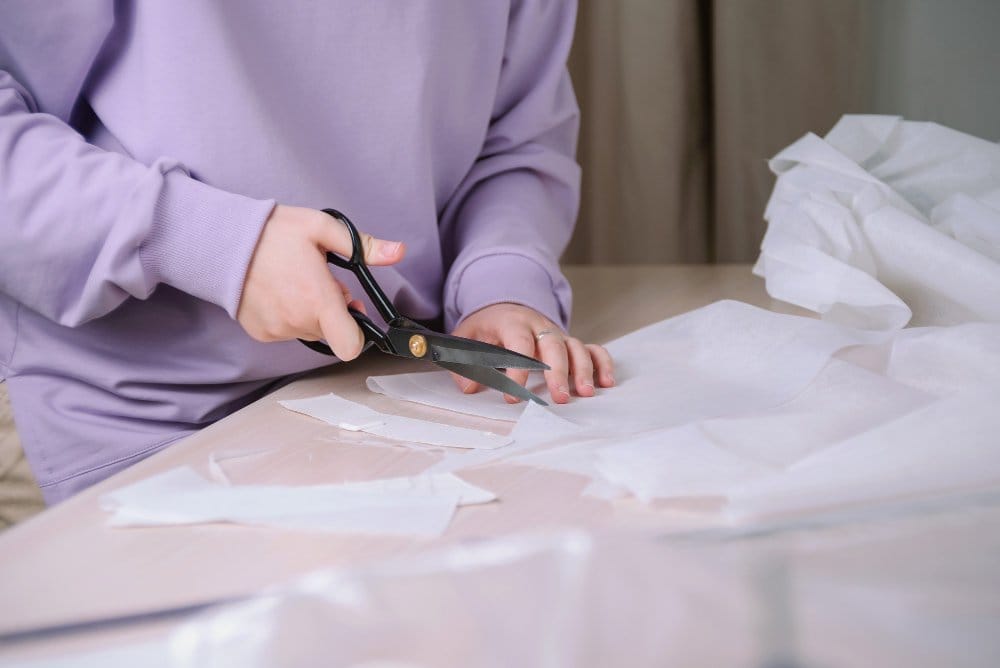
Cutting chiffon is one of the trickiest parts because the fabric is so slippery. Here are multiple methods – try them and see which works best for you.
Method 1: The Tissue Paper Sandwich
This is the most reliable method for beginners:
- Prepare layers: Place tissue paper on cutting surface, then chiffon, then pattern, then another layer of tissue paper on top
- Weight it down: Use pattern weights on pattern pieces
- Cut through all layers: Cut through tissue, chiffon, and tissue together using very sharp scissors
- Transfer markings: Mark darts, notches, etc. before removing tissue
- Remove tissue: Carefully tear away tissue paper
Advantages: Fabric can’t slip; easy to cut accurately; works every time
Disadvantages: Uses tissue paper; takes extra time; some find it tedious
Method 2: Rotary Cutter Technique
Many experienced sewers prefer this method:
- Setup: Place cutting mat on table, lay chiffon on mat
- Stabilize: Lay pattern pieces and weight down heavily
- Single layer: Cut only one layer at a time for most accuracy
- Firm pressure: Use rotary cutter with firm, even pressure
- Continuous cuts: Try not to lift rotary cutter mid-cut
- Fresh blade: Use a new blade for cleanest cuts
Advantages: Fast; very clean edges; no pin holes
Disadvantages: Requires practice; need proper equipment; some find it scary at first
Method 3: Spray Starch Method
Some sewers swear by this technique:
- Spray lightly: Apply light coat of spray starch to fabric
- Let dry: Allow to dry or press with cool iron
- Cut normally: Fabric is now stabilized and can be cut more easily
- Note: Starch washes out after sewing
Advantages: Makes fabric easier to handle; helps with sewing too
Disadvantages: Extra step; not suitable for silk; can leave residue
Method 4: Two-Layer Pin Method (For Symmetrical Pieces Only)
For cutting two identical pieces at once:
- Fold carefully: Fold fabric so both layers are perfectly aligned
- Pin frequently: Pin every 1-2 inches WITHIN seam allowances
- Pin perpendicular: Pin at right angles to cutting line
- Cut carefully: Use sharp scissors, cut slowly and deliberately
- Check often: Make sure layers haven’t shifted
Advantages: Cuts two pieces at once; traditional method
Disadvantages: Risk of shifting; can leave pin marks if not careful; requires confidence
Critical Cutting Tips
- Add extra seam allowance: Use 5/8″ to 3/4″ instead of standard 5/8″. Chiffon frays quickly, so extra is insurance.
- Cut notches outward: Instead of cutting into seam allowance, cut small triangles pointing outward. This maintains seam allowance width.
- Mark minimally: Use water-soluble markers and mark only what’s absolutely necessary.
- Label pieces: Attach small pieces of masking tape to each cut piece with piece number/name. Chiffon pieces look very similar.
- Keep pattern pieces: Don’t throw away pattern pieces until project is complete. You may need to recut.
- Cut directionally: Always cut in same direction to prevent stretching
Machine Sewing Techniques
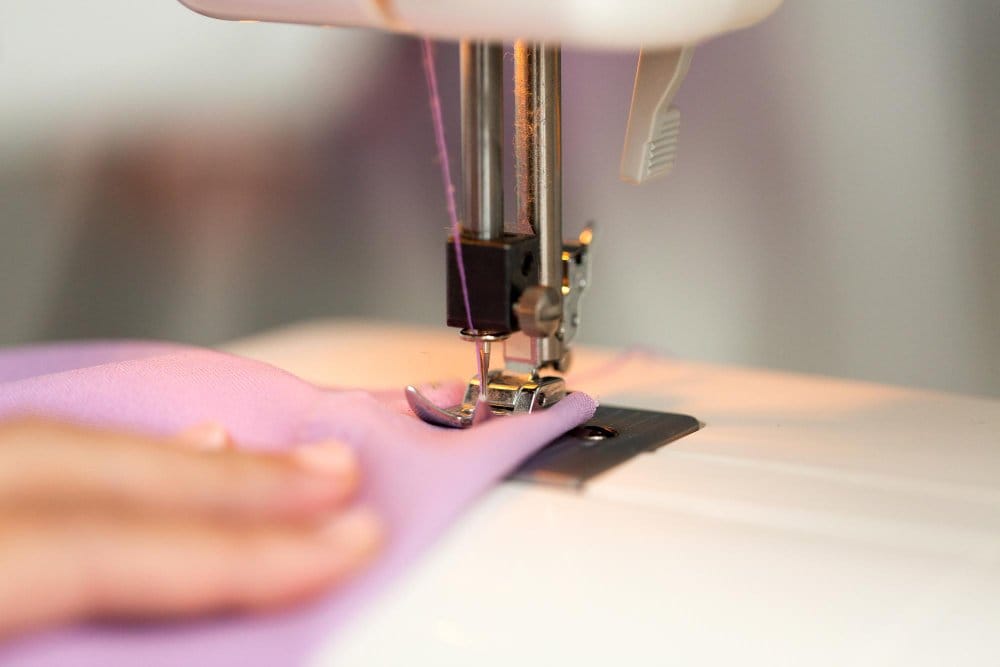
Basic Machine Setup
Proper machine setup is absolutely critical for success:
- Use straight stitch plate: If your machine has one, install it. The small round hole prevents fabric from being pulled down.
- Reduce presser foot pressure: If your machine allows adjustment, reduce pressure by 25-50%. Too much pressure pushes fabric down into feed dogs.
- Stitch length: Set to 2.0-2.5mm (about 12-15 stitches per inch). Too small bunches fabric; too large looks sloppy.
- Tension adjustment: Start with normal tension. If puckering occurs, reduce upper tension slightly. Test on scraps first.
- Speed control: Sew slowly and steadily. Fast sewing increases risk of fabric being pulled into machine.
- Thread both top and bobbin: Use same weight thread in bobbin as on top for balanced stitches.
The Tissue Paper Technique (Game Changer!)
This is the single most important technique for machine sewing chiffon. It solves most common problems:
Why it works: The tissue paper stabilizes the fabric, prevents it from being pulled into the machine, helps feed evenly, reduces puckering, and makes seams much easier to sew.
How to do it:
- Cut strips: Cut tissue paper or medical exam paper into strips about 2-3 inches wide
- Position fabric: Align your seam as you normally would
- Add paper beneath: Place strip of tissue paper under fabric layers
- Add paper on top (optional): For extra stability, put strip on top too
- Sew through everything: Sew through paper and fabric together
- Remove paper carefully: After sewing, gently tear away tissue paper. Use tweezers for stubborn bits.
Pro tip: Use medical exam paper (from doctor supply stores) instead of tissue paper. It tears away more easily and doesn’t leave lint.
Seaming Techniques
French Seams (Best for Chiffon):
French seams are perfect for chiffon because they completely enclose raw edges, preventing fraying. They look professional and are nearly invisible from the right side.
How to sew French seams:
- Wrong sides together: Place fabric pieces WRONG sides together (opposite of normal)
- First seam: Sew 1/4″ seam using tissue paper technique
- Trim close: Trim seam allowance to 1/8″ or less
- Press: Press seam to one side
- Flip: Fold fabric so RIGHT sides are now together, enclosing the trimmed seam
- Second seam: Sew 3/8″ from fold (or your desired final seam allowance)
- Press: Press seam to one side
Final result: All raw edges are completely enclosed inside. The seam looks clean from both sides. For more on French seam techniques, check our detailed tutorial.
When to use: Straight seams on blouses, dresses, skirts. Don’t use for curved seams (too bulky) or seams that need to be pressed open.
Flat-Felled Seams:
Another option that encloses raw edges. Creates a visible seam but very durable.
- Sew normal seam with right sides together
- Press both seam allowances to one side
- Trim lower seam allowance to 1/8″
- Fold upper seam allowance over trimmed edge
- Topstitch close to fold
When to use: More casual garments, where visible topstitching is acceptable.
Serged/Overlocked Seams:
If you have a serger, this is quick and effective:
- Use woolly nylon thread in loopers for softer seams
- Set for narrow 3-thread overlock
- Test tension on scraps first
- Sew slowly with tissue paper if needed
- Good for side seams and less visible areas
Hong Kong Finish:
Uses bias tape to bind raw edges. Beautiful but time-consuming.
- Sew seam normally
- Press seam open
- Bind each raw edge with narrow bias tape
- Creates very professional finish
Starting and Stopping Seams
The beginning and end of seams need special attention:
- Starting: Hold thread tails as you begin sewing to prevent fabric from being pulled into machine
- Backstitching: Limit to 2-3 stitches. Too much backstitching creates bulk
- Alternative to backstitching: Leave long thread tails and tie them off by hand
- Thread ends: Trim thread tails to 1/4″ after tying off
- Continuous seaming: When possible, chain piece (sew one seam after another without cutting thread between pieces)
Hand Sewing Chiffon
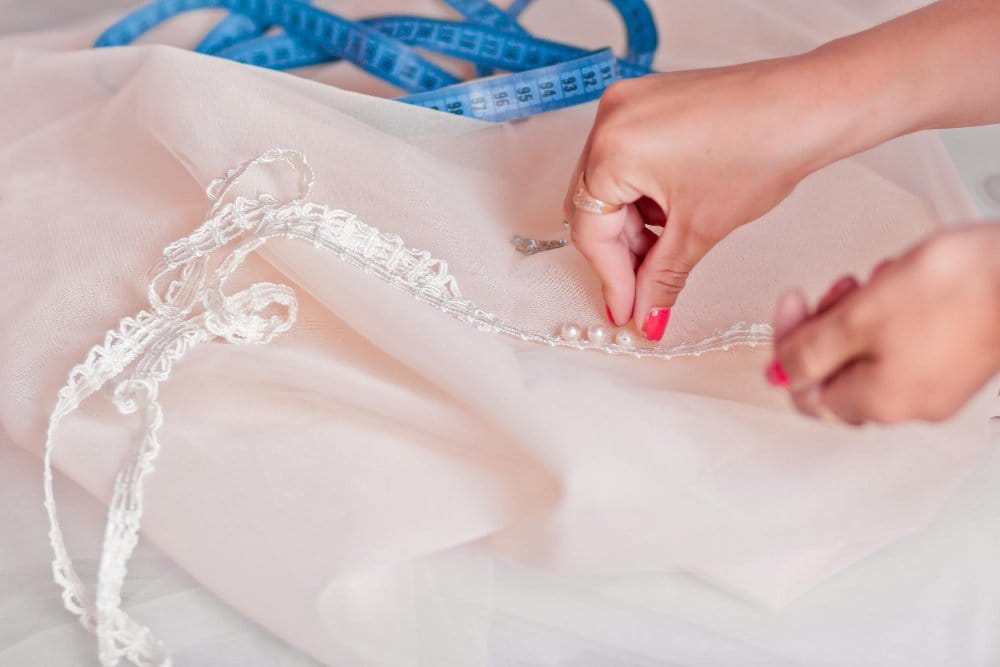
Sometimes hand sewing is the best approach for chiffon, especially for:
- Basting seams before machine sewing (highly recommended)
- Attaching delicate trims or beads
- Creating invisible hems
- Fixing small tears or runs
- Sewing on buttons
- Finishing necklines and armholes
Hand sewing supplies:
- Fine hand-sewing needles (size 10-12)
- Fine thread matching fabric
- Thimble (optional but helpful)
- Good lighting
- Patience!
Hand basting technique:
- Pin seam carefully (pins in seam allowance only)
- Thread needle with single strand of thread
- Knot end or do a few tiny backstitches to secure
- Take small running stitches along seamline (about 1/4″ long)
- Keep stitches even and on the seamline
- Remove pins as you go
- Machine sew over basting
- Remove basting stitches after machine sewing
Why baste: Basting holds slippery chiffon layers together perfectly, eliminates shifting during machine sewing, makes machine sewing much less stressful, and results in more accurate seams. Yes, it takes time, but the results are worth it.
Hemming Chiffon
Hems on chiffon require special attention. For general hemming principles, see our guide to sewing perfect hems. Here are your best options for chiffon:
Rolled Hem by Machine
This creates a narrow, professional hem:
- Prepare edge: Trim hem allowance to 1/4″
- First fold: Fold and press tiny hem (1/8″)
- Second fold: Fold again (another 1/8″)
- Stitch: Using tissue paper, sew close to inner fold
- Alternative: Use rolled hem foot if you have one
Pro tip: Instead of pressing folds (which can be difficult), finger-press as you sew, feeding fabric into rolled hem foot.

Hand-Rolled Hem
Traditional method for finest results:
- Trim hem allowance to 1/2″
- Make tiny roll (about 1/8″) and take small slanted stitches through roll
- Roll a bit more and stitch – continue around entire hem
- Very time-consuming but beautiful results
Lettuce Edge Hem
Creates decorative wavy edge:
- Set machine to narrow zigzag
- As you sew, gently stretch the fabric edge
- Fabric will wave and ripple
- Great for casual garments, not formal wear
Horsehair Braid Hem
Adds structure to bottom of full skirts:
- Turn up hem allowance
- Insert horsehair braid into fold
- Stitch braid in place
- Creates fullness and body at hem
- Popular for ball gowns and formal skirts
Faced Hem
Good for curved hems:
- Cut bias strips of chiffon 2″ wide
- Attach bias strip to hem edge, right sides together
- Trim and turn strip to inside
- Hand-stitch in place
- Creates clean finish on curved edges
Adding Closures
Zippers in Chiffon
Adding zippers requires extra care:
- Use lightweight zippers: Heavy zippers will pull and distort chiffon
- Interface: Apply lightweight fusible interfacing to seam allowances where zipper will go
- Hand-baste: Baste zipper in place before machine stitching
- Tissue paper: Use tissue paper method when sewing zipper
- Test first: Practice on fabric scraps
- Invisible zippers: Often best choice for chiffon – creates invisible closure
Buttons and Buttonholes
- Interface buttonholes: Must use interfacing to prevent stretching
- Use small buttons: Large buttons are too heavy
- Test buttonholes: Make samples on fabric scraps first
- Hand-finish: Bar-tack ends of buttonholes by hand for extra security
- Alternative: Use loops instead of buttonholes
Alternative Closures
- Hooks and eyes: Often better than zippers for delicate chiffon
- Snaps: Use fine snaps, not heavy-duty ones
- Ties: Self-fabric ties work beautifully with chiffon
- Ribbon closures: Elegant and easy to attach
Common Sewing Problems and Fixes
| Problem | Cause | Solution |
|---|---|---|
| Puckered seams | Tension too tight, needle too large, pulling fabric while sewing | Loosen tension, use smaller needle, sew with tissue paper, don’t pull fabric |
| Skipped stitches | Wrong needle type, dull needle, improper timing | Use sharp/microtex needle, replace needle, have machine serviced |
| Fabric pulled into machine | Presser foot pressure too high, hole in throat plate too large | Reduce pressure, use tissue paper technique, use straight stitch plate |
| Uneven feed | Fabric too slippery, layers shifting | Use walking foot, reduce speed, hand-baste first |
| Holes from pins | Pins too large | Use silk pins or fabric clips, pin only in seam allowances |
| Excessive fraying | Raw edges exposed too long | Use French seams, finish edges immediately, increase seam allowances |
| Thread showing through | Thread too dark or too heavy | Use lighter thread shade, use finer thread weight |
| Wavy edges | Stretching during sewing or cutting | Support fabric weight, don’t pull, cut on-grain |
| Seams pull apart | Stitch too long, seam allowance too narrow | Use smaller stitch length, increase seam allowances, backstitch properly |
| Machine jamming | Fabric being pushed down into bobbin case | Use tissue paper method, reduce presser foot pressure, hold threads when starting |
Advanced Techniques
Adding Lining to Chiffon
Most chiffon garments need lining because chiffon is sheer:
- Choose appropriate lining: Silk or polyester lining fabric in matching color
- Cut separately: Cut chiffon and lining separately, following same pattern
- Sew separately: Construct chiffon layer and lining layer independently
- Attach at neckline and armholes: Sandwich lining and chiffon with facings or bindings
- Leave hem separate: Hem chiffon and lining separately so both layers hang properly
- Tack at seams: Hand-tack lining to chiffon at side seams to prevent shifting
Working with Prints and Embellishments
- Match patterns: Take extra time to match printed designs at seams
- Directional prints: Ensure all pattern pieces face correct direction
- Beaded/sequined chiffon: Remove embellishments from seam allowances before sewing
- Hand-sew around embellishments: Use hand-sewing to attach seams near heavy embellishments
Creating Gathers in Chiffon
- Use longest stitch length on machine
- Sew two parallel rows 1/4″ apart
- Don’t backstitch – leave long thread tails
- Pull both bobbin threads together to gather
- Distribute gathers evenly
- Secure with backstitching when gathers are even
- Sew final seam between gathering rows
Tips for Success
- Work in good lighting: You need to see the fabric clearly
- Take your time: Rushing leads to mistakes. Budget 2-3 times longer than for normal fabrics
- Use a walking foot: If available, this helps feed fabric evenly
- Keep workspace clean: Even small debris can snag chiffon
- Press carefully: Use low heat and pressing cloth. Steam works better than dry heat.
- Consider lining: Makes the entire project easier and more wearable
- Stay patient: Chiffon tests even experienced sewers. Mistakes happen. Learn and continue.
- Practice first: Buy extra yardage to practice techniques before cutting into your fashion fabric
- Watch videos: Visual learning helps with chiffon techniques
- Join sewing forums: Connect with other sewers tackling chiffon projects
Before starting your actual project, practice on scrap chiffon. Test your machine settings, seam finishes, and hemming techniques. This will save you from making costly mistakes on your final garment. Spend an hour making samples – it’s time well invested.
For more detailed sewing guidance and fabric cutting techniques, check out our complete guides.
How to Care for Chiffon Fabric
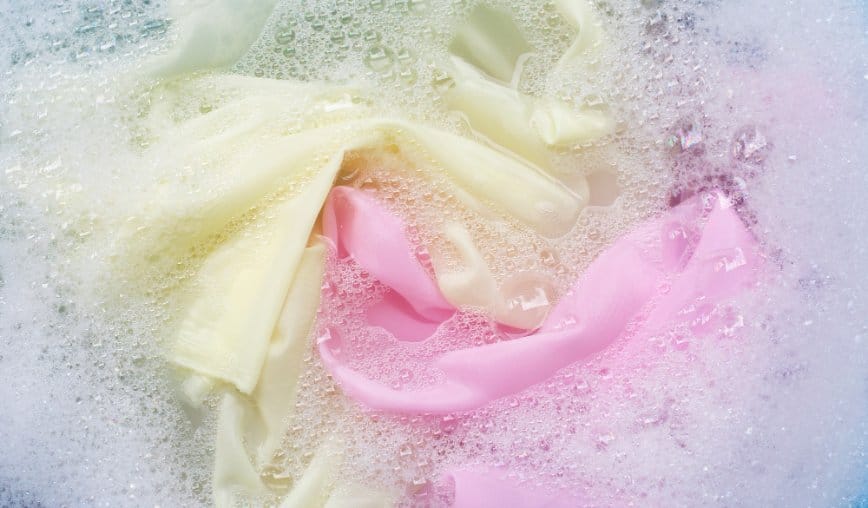
Proper care will keep your chiffon garments looking beautiful for years. Care requirements vary based on fiber content, so always check the care label first. For general fabric care principles, see our guide on how to wash and care for different fabrics.
Different chiffon types require different care methods. Use our Fabric Care Calculator to get specific washing, drying, and ironing instructions based on your chiffon’s fiber content and garment type.
Can You Wash a Chiffon Dress?
Yes, many chiffon dresses can be washed, but the method depends on the fiber content. Polyester and nylon chiffon can usually be machine washed on a delicate cycle. Silk chiffon typically needs hand washing or dry cleaning. When in doubt, hand wash or dry clean to be safe.
General Washing Guidelines
Hand Washing Chiffon
This is the safest method for all types of chiffon:
- Fill a basin with cool or lukewarm water
- Add a small amount of mild detergent or baby shampoo
- Gently swish the garment in the water for 2-3 minutes
- Don’t wring, twist, or rub the fabric
- Rinse thoroughly in cool water until soap is gone
- Press water out gently; don’t wring
- Roll in a clean towel to absorb excess water
- Lay flat to dry on a clean, dry towel
Machine Washing Chiffon
Only for polyester or nylon chiffon that’s labeled machine washable:
- Use a mesh laundry bag to protect the fabric
- Select delicate or hand wash cycle
- Use cold water
- Add mild detergent
- Remove immediately when cycle finishes
- Never machine wash silk chiffon
Drying Chiffon
- Air drying is best: Lay flat on a clean towel or hang on a padded hanger
- Avoid direct sunlight: Can fade colors, especially on silk
- Never use a dryer: Heat can damage or melt the fibers
- Don’t wring or twist: This can permanently damage the fabric structure
- Reshape while damp: Gently smooth out wrinkles as it dries
Ironing and Steaming
Chiffon can be ironed, but you need to be careful:
- Use the lowest heat setting (silk or synthetic setting)
- Always use a pressing cloth between the iron and fabric
- Iron on the wrong side of the fabric when possible
- Never leave the iron sitting on chiffon
- Keep the iron moving constantly
- Test on a scrap or inconspicuous area first
Steaming is often better than ironing for chiffon:
- Hang the garment on a hanger
- Hold the steamer 6-8 inches away
- Move the steamer continuously
- Let the steam do the work; don’t touch the fabric with the steamer head
- Allow to dry completely before wearing
Storage Tips
- Store on padded hangers to prevent shoulder bumps
- Keep in a breathable garment bag
- Don’t overcrowd in the closet; chiffon needs space
- Avoid plastic bags for long-term storage (especially for silk)
- Store away from direct sunlight
- Keep away from rough fabrics that might snag it
Stain Removal
Act quickly when dealing with stains on chiffon:
- Blot immediately: Don’t rub, just gently blot with a clean, white cloth
- Test any cleaner: Always test on a hidden seam allowance first
- Use mild solutions: Mix a tiny amount of mild soap with cool water
- Dab gently: Work from the outside of the stain inward
- Rinse thoroughly: Make sure all soap is removed
- For tough stains: Take silk chiffon to a professional cleaner
Special Care by Fiber Type
| Fiber Type | Washing | Drying | Special Notes |
|---|---|---|---|
| Silk Chiffon | Hand wash or dry clean | Air dry flat | Most delicate, professional cleaning recommended |
| Polyester Chiffon | Hand or machine wash delicate | Air dry or low tumble | Most durable, easiest to care for |
| Nylon Chiffon | Hand or machine wash delicate | Air dry | Dries quickly, avoid high heat |
| Rayon Chiffon | Hand wash only | Air dry flat | Can shrink, handle like silk |
| Cotton Chiffon | Hand or gentle machine wash | Air dry | May shrink, pre-wash before sewing |
Caring for silk chiffon can be tricky. Our Silk Care Calculator provides detailed, step-by-step care instructions specifically for silk chiffon garments, helping you preserve their beauty and longevity.
Is Chiffon Good for Skin?
Chiffon is generally comfortable to wear, but comfort depends on the fiber content. Silk and cotton chiffon are natural fibers that breathe well and are gentle on sensitive skin. They’re hypoallergenic and less likely to cause irritation.
Polyester and nylon chiffon can sometimes irritate sensitive skin, especially if you’re prone to sweating. These synthetic fibers don’t breathe as well and can trap moisture against your skin. If you have sensitive skin, natural fiber chiffon is the better choice.
The lightweight nature of chiffon means it won’t weigh down on your skin, making it comfortable for extended wear.
When traveling with chiffon garments, roll them instead of folding to minimize wrinkles. Place them in a plastic bag before rolling to reduce friction and prevent snags.
Buying Guide: Choosing and Purchasing Chiffon
Is Chiffon Cheap or Expensive?
The price of chiffon varies widely depending on fiber content and quality. Understanding what drives cost helps you make informed purchasing decisions.
| Type | Price Range (per yard) | Best For | Cost for Typical Dress |
|---|---|---|---|
| Budget Polyester | $5-$8 | Practice projects, costumes | $20-$32 (4 yards) |
| Mid-Range Polyester | $8-$15 | Everyday wear, bridesmaid dresses | $32-$60 (4 yards) |
| Premium Polyester | $15-$25 | Special occasions, bridal | $60-$100 (4 yards) |
| Nylon Chiffon | $8-$25 | Dance costumes, scarves, activewear | $32-$100 (4 yards) |
| Rayon Chiffon | $7-$22 | Mid-range dresses, blouses | $28-$88 (4 yards) |
| Cotton Chiffon | $10-$30 | Natural fiber preference, summer wear | $40-$120 (4 yards) |
| Standard Silk | $25-$50 | Quality garments, investment pieces | $100-$200 (4 yards) |
| Premium Silk | $50-$100 | Wedding dresses, heirloom pieces | $200-$400 (4 yards) |
| Designer Silk | $100-$200+ | Haute couture, luxury garments | $400-$800+ (4 yards) |
Why is Chiffon So Expensive? (When It Is)
When chiffon is expensive, several factors contribute to the high price:
Raw Material Costs
- Silk production: Silkworms must be raised and fed mulberry leaves. One pound of silk requires about 3,000 cocoons.
- Fiber quality: The finest silk filaments cost significantly more than standard grades
- Natural vs synthetic: Natural silk will always cost more than petroleum-based polyester
- Organic or sustainable: Eco-friendly production adds to cost
Production Complexity
- High-twist yarns: Creating the 65-85 twists per inch requires specialized equipment and skill
- Delicate handling: Requires careful processing throughout production
- Lower yields: More waste during production than sturdier fabrics
- Quality control: Extensive inspection needed to catch flaws
- Handwoven vs machine: Handwoven silk chiffon commands premium prices
Finishing and Treatment
- Special finishes: Treatments for wrinkle resistance or water repellency add cost
- Digital printing: High-quality printed designs increase price
- Pearl or chameleon effects: Special finishing techniques
- Hand-dyeing: Artisan dyeing processes
Brand and Market Factors
- Designer markup: Designer fabrics command premium prices
- Import costs: Shipping and duties on imported fabrics
- Retail markup: Brick-and-mortar stores have higher overhead
- Limited availability: Rare colors or limited editions cost more
Understanding Value: What You’re Really Paying For
Price isn’t always a direct indicator of quality. Here’s what different price points typically offer:
Trying to decide between different chiffon options? Our Fabric Cost Comparison Calculator helps you compare the total cost of different chiffon types for your project, factoring in yardage, care costs, and longevity.
Budget Chiffon ($5-$10/yard)
What you get: Basic polyester chiffon with acceptable appearance for short-term use
Compromises: Stiff hand feel, artificial shine, poor drape, may pill or snag easily
Best uses: Practice projects, one-time costumes, testing patterns
Not recommended for: Special occasions, professional garments, anything you want to last
Mid-Range Chiffon ($10-$30/yard)
What you get: Good quality polyester or basic silk/rayon with nice drape and appearance
Quality level: Suitable for most projects, photographs well, comfortable to wear
Best uses: Everyday clothing, bridesmaid dresses, professional sewing projects
Sweet spot: Best value for most sewers – good quality without luxury pricing
Premium Chiffon ($30-$100/yard)
What you get: High-quality silk or top-grade synthetic with excellent drape and hand feel
Quality level: Professional results, investment-quality garments
Best uses: Wedding dresses, special occasion wear, heirloom pieces
Worth it when: Creating once-in-a-lifetime garments, gifts, or professional commissions
Luxury Chiffon ($100+/yard)
What you get: The absolute finest silk, often handwoven or designer fabrics
Quality level: Haute couture standards, museum-quality textiles
Best uses: Ultra-luxury garments, collector pieces, high-end bridal
Reality check: Most home sewers don’t need this level unless creating truly special pieces
What to Look for When Buying Chiffon
Quality Indicators – Visual Inspection
Weave Quality:
- Hold fabric up to light – weave should be consistent throughout
- No thin spots, thick areas, or irregular sections
- No slubs (lumpy areas) unless intentional design feature
- Even distribution of threads in both directions
Surface Quality:
- Smooth surface without snags or pulls
- No rough patches or pilling
- Consistent texture across entire piece
- Check both sides of fabric
Color Quality:
- Consistent color throughout – no fading or variations
- Color should match on both sides (unless intentionally different)
- Printed designs should be clear and well-registered
- No dye bleeding or color transfer
Drape Test:
- Hold up a length of fabric – it should flow and move freely
- Shouldn’t feel stiff or papery
- Should have fluid movement, not rigid hang
- Good drape is one of the most important quality indicators
Quality Indicators – Tactile Inspection
Hand Feel:
- Should feel soft, not rough or scratchy (remember slight texture is normal)
- Shouldn’t feel sticky or leave residue on hands
- Quality silk warms quickly in your hand
- Should feel pleasant against skin
Weight:
- Should feel appropriately lightweight
- Too heavy indicates wrong weave or over-finishing
- Too light might lack body needed for garment construction
Pilling Test:
- Gently rub small section between fingers
- Quality chiffon resists pilling
- If tiny balls form immediately, it’s lower quality
Essential Questions to Ask Before Buying
About the Fabric
- What is the exact fiber content? Don’t accept vague answers like “poly-blend”
- What is the weight? 20-40 GSM for synthetic, 3-6 momme for silk
- What is the width? Usually 45-60 inches, affects yardage needed
- Is it pre-shrunk? Important for cotton and rayon
- What finishing treatments were applied? Water-resistant? Wrinkle-resistant?
- Where was it manufactured? Can indicate quality standards
- Is there a color/dye lot number? Important if you need to order more later
About Care and Maintenance
- How should it be cleaned? Machine wash, hand wash, or dry clean only?
- Will it shrink? Expected shrinkage percentage?
- Is it colorfast? Will colors bleed or fade?
- How should it be stored? Any special requirements?
- What iron temperature is safe? Critical for avoiding damage
About Purchase Terms
- What is the return policy? Can you return if it doesn’t work for your project?
- Can you order a swatch first? Especially important for online purchases
- Is there a minimum purchase? Some stores require minimum yardage
- Are there quantity discounts? Buying 10+ yards often gets better pricing
- When will it ship? In stock or special order?
Where to Buy Chiffon
Local Fabric Stores
Advantages:
- Touch and see fabric before buying
- Get expert advice from staff
- Take fabric home same day
- Support local business
- Easier returns if problems arise
Disadvantages:
- Limited selection compared to online
- Usually higher prices
- May not have all colors or types
- Store hours may not fit your schedule
Best for: Beginners who need guidance, when you need fabric immediately, when you’re unsure about color or quality
Online Fabric Retailers
Advantages:
- Vast selection of types, colors, and patterns
- Often better prices than brick-and-mortar
- Shop anytime from home
- Easy price comparison
- Customer reviews help decision-making
Disadvantages:
- Can’t see or touch fabric first
- Colors may look different on screen
- Shipping costs and wait time
- Return shipping if not satisfied
- No expert advice
Best for: Experienced sewers who know what they want, when you need specific colors or types not available locally, when price is a concern
Pro tip: Order swatches before buying yardage for important projects. Many online retailers offer free or low-cost swatches.
Specialty Silk Retailers
Focus: High-end silk fabrics, including premium silk chiffon
Pricing: Higher, but quality is typically excellent
Best for: Wedding dresses, luxury garments, when you want the absolute best
Examples: Mood Fabrics (NYC), B&J Fabrics, Thai Silks, Dharma Trading
Craft Stores
Focus: Budget-friendly polyester chiffon
Pricing: Usually lower, frequent sales and coupons
Best for: Practice projects, costumes, craft uses
Quality note: Generally lower quality but acceptable for many uses
Bridal Fabric Suppliers
Focus: Fabrics specifically for wedding and formal wear
Pricing: Mid to high range
Best for: Wedding dresses, bridesmaid dresses, formal event wear
Advantage: Staff understands bridal sewing needs
Online Bargain Sites
Examples: Fabulous Bargains Galore, fabric overstock sites
Focus: Good deals on quality chiffon
Pricing: Significantly lower than retail
Best for: Budget-conscious sewers wanting quality
Watch for: Limited quantities, clearance items may be discontinued
How Much Chiffon to Buy
Always buy more than your pattern calls for. Here’s why and how much extra:
Basic Rule of Thumb
- For simple projects: Buy 10% extra (pattern calls for 3 yards, buy 3.3 yards)
- For complex projects: Buy 20% extra (pattern calls for 5 yards, buy 6 yards)
- For first chiffon project: Buy 25-30% extra for practice and mistakes
- For expensive silk: Buy exact amount plus 1 yard for samples and tests
Why You Need Extra
- Chiffon frays, requiring larger seam allowances
- You’ll want fabric for practice and testing techniques
- Mistakes happen, and you’ll need fabric for fixes
- Layout can be tricky with chiffon’s slippery nature
- Dye lots can vary – buying extra from same bolt ensures color match
- Pattern matching for prints requires extra fabric
- May want to make matching accessories (belt, scarf)
Not sure how much chiffon to buy for your project? Use our Fabric Yardage Calculator to determine exactly how many yards you need, including recommended extra for your project type and skill level.
Calculating Yardage for Common Projects
| Project | Pattern Requirement | Recommended Purchase | Reason for Extra |
|---|---|---|---|
| Simple scarf | 0.5 yard | 1 yard | Practice hem techniques |
| Blouse | 2 yards | 2.5 yards | Test buttonholes, practice seams |
| Knee-length dress | 3 yards | 4 yards | Complex construction, multiple pieces |
| Maxi dress | 5 yards | 6-7 yards | Long hems, gathering, fitting adjustments |
| Wedding dress | 10 yards | 12-13 yards | Multiple fittings, no margin for error |
Shopping Checklist
Use this checklist when shopping for chiffon:
- ☐ Determined project requirements (type, color, yardage)
- ☐ Calculated total yardage including extra
- ☐ Set budget range
- ☐ Decided on fiber type based on project needs
- ☐ If online shopping, ordered swatches
- ☐ Checked reviews for online sellers
- ☐ Confirmed return policy
- ☐ Asked about fiber content and care
- ☐ Inspected fabric quality (if in person)
- ☐ Checked for consistent color/pattern
- ☐ Noted dye lot number
- ☐ Purchased matching thread
- ☐ Purchased lining if needed
- ☐ Bought pattern if needed
Common Buying Mistakes to Avoid
- Buying cheapest option without considering quality: Budget chiffon may ruin an important project
- Not ordering swatches for online purchases: Colors and quality can surprise you
- Buying exact pattern yardage with no extra: Almost always leads to problems
- Ignoring fiber content: Each type has different properties and care needs
- Not checking care requirements before purchase: May discover it needs dry cleaning when you wanted machine-washable
- Buying without measuring project area: Especially for home decor, measure twice, buy once
- Not considering lining costs: Chiffon usually needs lining, budget for both
- Impulse buying sale fabric: Only buy if you have a specific project in mind
- Not checking return policy: Online fabric often can’t be returned once cut
- Forgetting about dye lots: If you might need more later, buy it all at once
What is the English Name for Chiffon Fabric?
“Chiffon” is the English name for this fabric. The word comes from French, but it’s used in English without translation. In some regions, you might hear it called “sheer silk” or “gossamer fabric,” but “chiffon” is the standard term used worldwide in the fashion and textile industry.
What is Chiffon Also Known As?
While “chiffon” is the primary name, you might occasionally hear it referred to as:
- “Sheer fabric” (generic term)
- “Gossamer” (poetic term for very light, sheer fabric)
- “Mousseline” (French term sometimes used for very lightweight chiffon)
- “Crepe chiffon”: (when emphasizing the crepe texture)
However, these terms aren’t exact synonyms. “Chiffon” remains the most precise and commonly used name. When shopping, always use the term “chiffon” to ensure you get the right fabric.
Frequently Asked Questions About Chiffon Fabric
Chiffon has a slightly rough texture when you rub it between your fingers, but it’s not really scratchy when worn. The roughness comes from the twisted yarns used to make it. Most people find chiffon comfortable to wear because it’s so light and airy. If you have very sensitive skin, you might notice the texture more, especially with synthetic chiffon. Natural fiber chiffon (silk or cotton) tends to feel softer against the skin.
The word “chiffon” comes from the French word “chiffe,” which means “cloth” or “rag.” This seems odd now since chiffon is associated with luxury and elegance, but the name likely referred to the fabric’s lightweight, delicate nature. Over time, chiffon evolved from a simple description into the specific term we use today for this sheer, twisted-yarn fabric.
No, chiffon is not wrinkle-free, though polyester chiffon resists wrinkles better than other types. Silk and rayon chiffon wrinkle fairly easily. However, because chiffon is used in flowing, draped garments, small wrinkles often aren’t as noticeable as they would be in a structured fabric. You can hang chiffon garments in a steamy bathroom to help release wrinkles, or use a steamer on the lowest setting. If you need wrinkle-free chiffon, choose polyester.
Care depends on fiber content. Hand wash silk and rayon chiffon in cool water with mild detergent, then lay flat to dry. Polyester and nylon chiffon can usually be machine washed on delicate cycle in cool water and hung to dry. Never put chiffon in the dryer. Iron on the lowest heat setting using a pressing cloth, or better yet, use a steamer. Store on padded hangers in breathable garment bags. Always check the care label first, as silk chiffon often requires dry cleaning.
Chiffon is challenging for beginners because it’s slippery, sheer, and frays easily. However, beginners can work with it if they practice first and use the right techniques. Start with a simple pattern, use polyester chiffon (easier than silk), practice on scraps, use sharp needles and fine pins, sew slowly with tissue paper under the fabric, and don’t get discouraged by mistakes. Many sewers recommend gaining experience with easier fabrics first, but if you’re determined, take your time and follow careful preparation steps.
Regular chiffon has very little stretch. The twisted yarn weave gives it a tiny bit of give, but it’s not a stretchy fabric. However, “stretch chiffon” is made with added spandex or elastane and does stretch. If you need stretch for your project, specifically look for stretch chiffon. Regular chiffon is woven without stretch fibers and maintains its shape without much give.
The burn test is the most reliable method. Take a small piece from a seam allowance and carefully burn it. Real silk burns slowly, smells like burning hair, and leaves a crushable ash. Synthetic chiffon melts and smells like plastic, leaving a hard bead. Other clues: real silk warms up quickly in your hand (synthetics stay cooler), has an irregular sheen (synthetic is more uniform), costs significantly more, and has a softer feel. Check the label first, but if unlabeled, these tests can help identify fiber content.
Use a size 60/8 or 70/10 sharp (microtex) needle. These fine needles create tiny holes that won’t damage the delicate fabric. Regular universal needles are too thick and can snag or create visible holes. Change your needle frequently when sewing chiffon because even slightly dull needles can cause problems. A fresh, sharp needle makes a huge difference in stitch quality.
No, chiffon and cotton are not the same. Cotton is a fiber (what the fabric is made from), while chiffon is a type of weave (how the fabric is constructed). You can have cotton chiffon, which means the fabric is made from cotton fibers but woven using the chiffon technique. However, when people say “cotton fabric,” they usually mean regular cotton weaves like poplin or broadcloth, which are much different from chiffon in weight, opacity, and drape.
Small snags can sometimes be fixed. For a pulled thread, gently work it back to the wrong side of the fabric using a fine needle. Don’t cut the thread. For small tears, you can carefully hand-stitch the edges together using matching thread and tiny stitches. For larger damage, consider adding decorative elements like embroidery or appliques to cover the problem area. Prevention is key: remove jewelry before wearing chiffon, keep nails smooth, and store chiffon away from rough surfaces.
Conclusion
Chiffon is one of fashion’s most beautiful and versatile fabrics. Its lightweight, sheer quality creates an elegant, flowing look that few other materials can match. Whether you’re drawn to the luxury of silk chiffon or the practicality of polyester, there’s a chiffon type perfect for your needs.
Yes, chiffon has challenges. It’s tricky to sew, delicate to handle, and requires careful maintenance. But the results are worth the effort. A well-made chiffon garment drapes beautifully, moves gracefully, and creates an air of sophistication that makes the wearer feel special.
The key to success with chiffon is understanding its properties and working with them, not against them. Choose the right type for your project, prepare properly before cutting and sewing, take your time with construction, and care for your finished garments appropriately. With patience and the right techniques, even challenging aspects of working with chiffon become manageable.
Key Takeaways and Recommendations
For Your First Chiffon Project:
- Start with polyester chiffon (most forgiving and affordable)
- Choose a simple pattern with minimal seams
- Buy extra fabric for practice and mistakes
- Invest in the right tools: sharp needles, fine pins, and tissue paper
- Watch tutorial videos before you start cutting
- Be patient with yourself; chiffon tests even experienced sewers
When Buying Ready-Made Chiffon Garments:
- Check fiber content to understand care requirements
- Examine seam finishes for quality
- Look for lining in key areas
- Consider your climate and comfort preferences
- Think about maintenance; can you hand wash or will you need dry cleaning?
- Try on if possible to check for static or clinging issues
For Long-Term Care:
- Follow care instructions religiously
- Store properly on padded hangers
- Address snags and small tears immediately
- Keep away from rough surfaces and sharp objects
- Consider professional cleaning for expensive silk pieces
- Rotate wearing to reduce stress on the fabric
Making Smart Choices:
- Match chiffon type to your project’s purpose
- Consider your skill level honestly when planning projects
- Factor in total cost including lining and notions
- Think about care requirements before buying
- Don’t compromise on quality for special occasion garments
- Save money on practice fabric but invest in quality for final projects
Whether you’re sewing your first chiffon scarf or choosing a wedding dress, understanding this fabric helps you make better decisions. Chiffon has earned its place in fashion history through centuries of creating beautiful garments. With the right knowledge and approach, you can harness its beauty for your own wardrobe or creative projects.
Remember that every expert was once a beginner who struggled with their first chiffon seam. The learning curve is steep, but the rewards are substantial. Each project teaches you something new about working with this unique fabric. Soon, techniques that seemed impossible become second nature.
Most importantly, don’t be afraid to experiment. Try different types of chiffon, test various sewing techniques, and find what works best for you. The more you work with chiffon, the more comfortable you’ll become with its quirks and characteristics.
Now that you understand chiffon, explore related fabrics like georgette, organza, and other silk fabrics. Each has unique properties that make them suitable for different projects. Building your fabric knowledge opens up endless creative possibilities.
Ready to start your chiffon project? Take your time, trust the process, and enjoy creating something beautiful with this remarkable fabric. The journey from choosing your fabric to wearing your finished garment is part of what makes sewing with chiffon so rewarding.