
Everything you need to know about satin blend fabrics, from fiber combinations to care instructions, sustainability, and best uses
Table of Contents
- What is Satin Blend Fabric?
- Why Satin Blends Were Developed
- History and Evolution of Satin Blends
- The Science Behind Satin Weave
- Complete Fiber Guide
- Types of Satin Blend Fabrics
- Comprehensive Comparison Tables
- Quality and What to Look For
- Sustainability and Environmental Impact
- Uses and Applications
- Complete Care Guide
- Buying Guide
- Frequently Asked Questions
What is Satin Blend Fabric?
Satin blend fabric combines the beauty of traditional satin fabric with the practical benefits of different fiber types. Here’s what makes it special: satin isn’t actually a type of fiber like cotton or silk. Instead, it’s a weaving technique that creates that smooth, glossy surface we all recognize. When manufacturers blend different fibers together using this satin weave, they create fabrics that can be more affordable, durable, or easy to care for than pure silk satin.
Think of it this way: pure silk satin is like a luxury sports car – beautiful and high-performance, but expensive and requiring special care. A satin blend is more like a well-equipped sedan – it still looks great and performs well, but it’s more practical for everyday life.

Quick Definition
Satin blend fabric is any fabric woven using the satin weave technique (creating a glossy front and matte back) but made from a mixture of two or more different fiber types rather than a single fiber. Common blends include silk-polyester, cotton-polyester, and silk-cotton combinations.
The most common satin blends you’ll find include:
- Silk-Polyester Blend: Combines silk’s natural beauty with polyester’s durability and lower cost
- Cotton-Satin (Sateen): Uses cotton fibers in a satin weave for a more breathable, affordable option
- Polyester-Cotton Blend: Mixes synthetic and natural fibers for easy care and comfort
- Stretch Satin Blends: Adds elastane or spandex for flexibility and better fit
- Eco-Friendly Blends: Combines materials like Tencel, bamboo, or recycled polyester
Why Satin Blends Were Developed
Pure silk satin has been around for over 2,000 years, but it comes with some serious drawbacks. It’s expensive – we’re talking $50-150 per yard for high-quality silk satin. It requires dry cleaning or very careful hand washing. And it’s delicate, making it prone to snags and water spots.
Manufacturers started experimenting with fiber blends to solve these problems. The goal was simple: keep the beautiful appearance and smooth feel of satin while making it more accessible and practical for everyday use.
Cost Solution
By blending silk with polyester satin, manufacturers can reduce costs by 60-80% while maintaining much of the visual appeal.
Durability Boost
Adding synthetic fibers increases resistance to wrinkles, stains, and wear, making satin blends perfect for frequently used items like bedding.
Easy Care
Most satin blends can be machine washed, unlike pure silk which often requires professional cleaning.
History and Evolution of Satin Blends

Ancient Origins (12th Century)
The satin weave originated in Quanzhou, China, where it was made exclusively with silk. Only royalty and the extremely wealthy could afford this fabric. When it reached Europe via the Silk Road, it became a symbol of status and luxury.
Industrial Revolution (1800s-1900s)
The development of mechanical looms made satin production faster and cheaper, but it was still made from silk. The fabric remained out of reach for most people.
Synthetic Revolution (1950s-1970s)
This is when everything changed. The invention of polyester and other synthetic fibers opened up new possibilities. Manufacturers could now create satin-weave fabrics using polyester, making the glossy look affordable for everyone. Wedding dresses, formal wear, and luxury bedding became accessible to middle-class consumers.
Blend Innovation (1980s-2000s)
Instead of using only synthetic fibers, textile manufacturers started combining them with natural fibers. Silk-polyester blends offered a middle ground: more affordable than pure silk but more luxurious than pure polyester. Charmeuse satin blends became especially popular for lingerie and bridal wear.
Sustainability Era (2010s-Present)
Today’s satin blends focus on environmental impact. You’ll find options like:
- Recycled polyester blended with natural fibers
- Tencel (lyocell) and bamboo satin alternatives
- Organic cotton sateen
- Peace silk (ahimsa silk) blends that don’t harm silkworms
The Science Behind Satin Weave
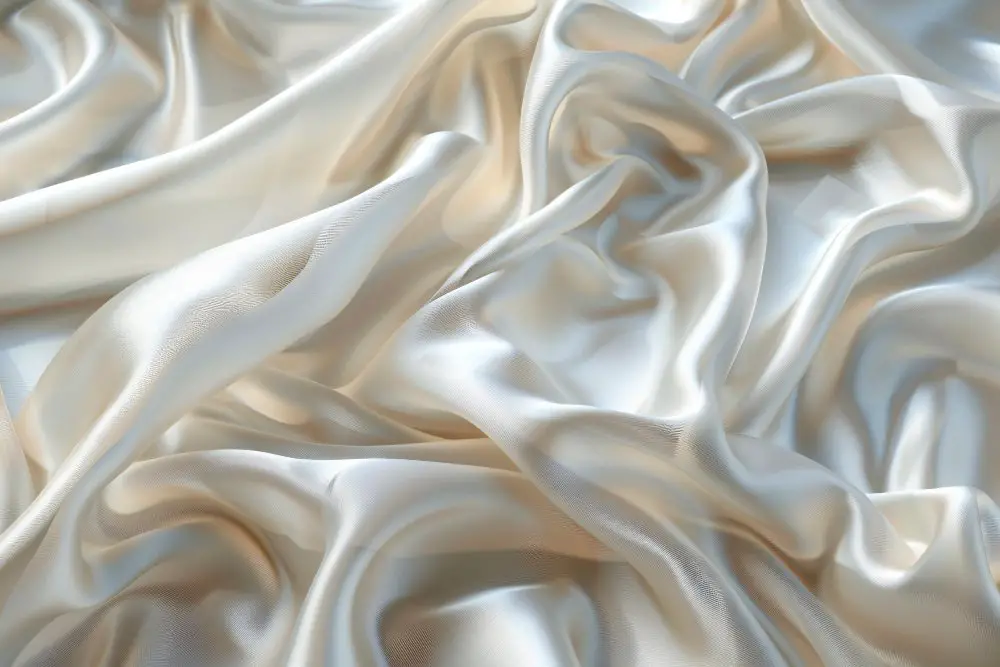
Understanding how satin is made helps explain why blends work so well. The satin weave is one of three main weaving techniques (along with plain weave and twill).
How Satin Weave Works
In a satin weave, the weft threads (horizontal) pass over four or more warp threads (vertical) before going under one warp thread. This creates long “floats” of thread on the surface, which is what gives satin its characteristic shine.
Because most of the thread sits on top of the fabric rather than being woven tightly together, light reflects off these smooth surfaces instead of getting scattered by the weave structure. That’s what creates the glossy appearance.
Why Fiber Type Matters
The satin weave works with any fiber, but different fibers produce different results:
- Silk: Naturally smooth and round, reflects light beautifully
- Polyester: Very smooth and can be made highly reflective, creates maximum shine
- Cotton: Slightly rougher surface, creates a more subtle sheen (this is called sateen)
- Nylon: Similar to polyester but with more flexibility
Complete Fiber Guide
Let’s break down each fiber type you’ll find in satin blends and what it brings to the table.
Silk in Blends
Silk satin is the original and most expensive option. When used in blends, even a small percentage (like 30% silk with 70% polyester) can make the fabric feel noticeably more luxurious.
What Silk Adds
- Natural temperature regulation
- Breathability
- Hypoallergenic properties
- Natural protein structure that’s gentle on skin and hair
- Beautiful drape and fluid movement
Silk Challenges
- Increases cost significantly
- Makes care more complicated
- Can water spot if not treated carefully
- Less durable than synthetic alternatives
Polyester in Blends
Polyester is the workhorse of satin blends. It’s affordable, durable, and easy to care for. Most satin you’ll find in stores today contains at least some polyester.
What Polyester Adds
- Wrinkle resistance
- Color retention (doesn’t fade easily)
- Machine washable and dryer safe
- Strong and long-lasting
- Affordable pricing
Polyester Challenges
- Doesn’t breathe as well (can make you sweat)
- Can feel less natural against skin
- Holds static electricity
- Made from petroleum (not eco-friendly unless recycled)
- Can pill with frequent use
Cotton in Satin Weave (Sateen)
When cotton is woven using the satin weave, it’s technically called sateen. This creates a more subtle sheen than silk or polyester satin, but it’s much more breathable.
What Cotton Adds
- Excellent breathability
- Absorbs moisture (good for bedding)
- Soft and comfortable
- Natural and biodegradable
- Less expensive than silk
Cotton Challenges
- Wrinkles more easily
- Can shrink if not pre-washed
- Less shiny than silk or polyester satin
- Conventional cotton uses pesticides (choose organic when possible)
Nylon in Blends
Nylon satin is often used in activewear and items that need extra strength. It’s similar to polyester but more flexible.
Eco-Friendly Alternatives
Tencel (Lyocell)
Made from wood pulp using a closed-loop process, Tencel is soft, breathable, and environmentally friendly. When woven in a satin structure, it creates a beautiful drape.
Bamboo
Bamboo fabric is naturally antibacterial and grows quickly without pesticides. Bamboo satin has a subtle sheen and feels cool to the touch.
Recycled Polyester
Made from plastic bottles and textile waste, recycled polyester performs just like virgin polyester but with a much smaller environmental footprint.
Types of Satin Blend Fabrics
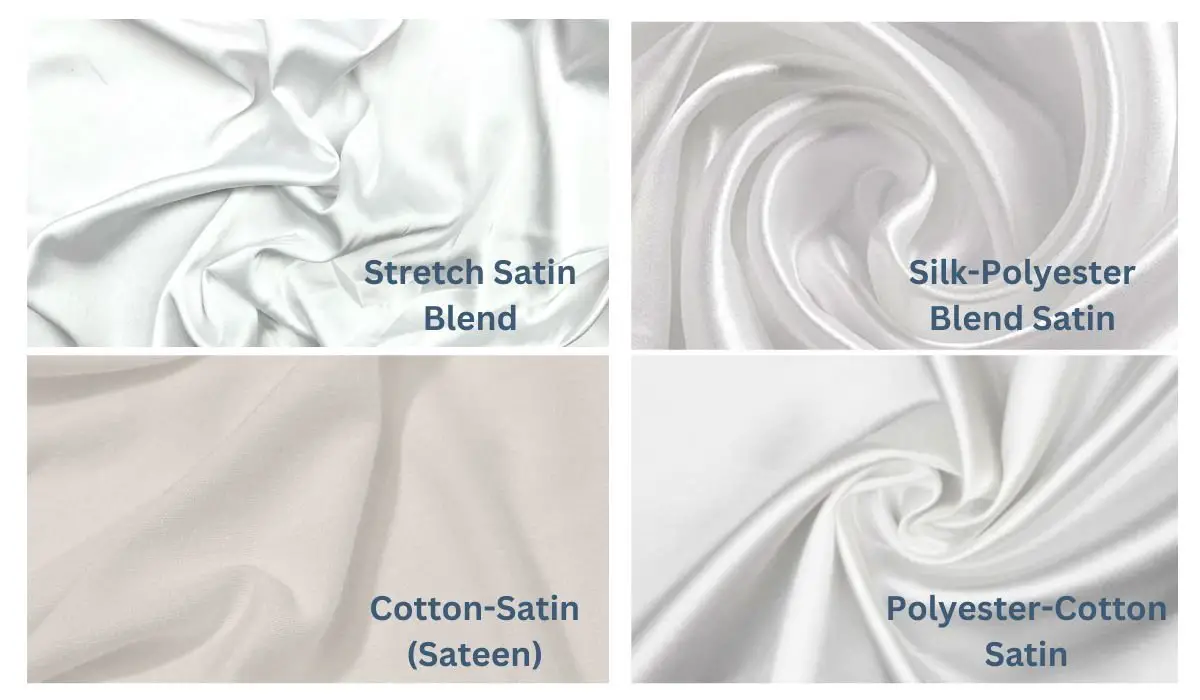
Silk-Polyester Blend Satin
This is probably the most popular blend for formal wear. A typical ratio is 60% polyester and 40% silk, though you’ll see variations from 70/30 to 50/50.
Best for: Bridal gowns, evening wear, duchess satin applications, and formal occasions where you want luxury without the full silk price tag.
Price range: $20-50 per yard
Care needs: Most can be dry cleaned or carefully hand washed. Some higher polyester content blends can handle gentle machine washing.
Cotton-Satin (Sateen)
Cotton sateen is woven with cotton fibers in a satin weave. Sometimes it includes a small percentage of synthetic fibers (like 5-10% polyester) for added durability.
Best for: Bedding, everyday clothing, children’s formal wear, and any application where breathability matters more than high shine.
Price range: $8-25 per yard
Care needs: Machine washable, but wash in cool water to prevent shrinkage. Iron while slightly damp for best results.
Polyester-Cotton Blend
This workhorse blend typically runs 65% polyester and 35% cotton, though ratios vary. It’s designed for everyday use.
Best for: Tablecloths, event decorations, slipper satin shoes, budget-friendly formal wear, and items that need frequent washing.
Price range: $5-15 per yard
Care needs: Very easy – machine washable, tumble dry on low, minimal ironing needed.
Stretch Satin Blends
Stretch satin adds 2-15% elastane (spandex) to a base fabric, which could be silk, polyester, or a combination. The stretch makes it perfect for fitted clothing.
Best for: Dance costumes, athletic wear, fitted dresses, and anything that needs to move with your body.
Price range: $12-35 per yard
Care needs: Avoid high heat, which can damage the elastic fibers. Air dry when possible.
Sustainable Satin Blends
Tencel-Polyester Blend
Combines eco-friendly Tencel with recycled polyester for a sustainable option that still has good durability.
Eco-Friendly
Organic Cotton Sateen
Made from organic cotton grown without pesticides, this option is gentle on both skin and environment.
Certified Organic
Bamboo-Cotton Blend
Combines fast-growing bamboo with cotton for a soft, breathable satin with a smaller environmental footprint.
Comprehensive Comparison Tables
Pure Satin vs. Satin Blends Quick Comparison
| Feature | Pure Silk Satin | Silk-Poly Blend | Pure Polyester Satin | Cotton Sateen |
|---|---|---|---|---|
| Price per yard | $50-150 | $20-50 | $5-20 | $8-25 |
| Shine level | High, natural | High | Very high | Subtle |
| Durability | Delicate | Good | Excellent | Good |
| Breathability | Excellent | Good | Poor | Excellent |
| Care difficulty | High (hand wash or dry clean) | Medium (gentle machine wash) | Low (machine washable) | Low (machine washable) |
| Wrinkle resistance | Moderate | Good | Excellent | Poor |
| Eco-friendliness | Good (if sustainable sourced) | Moderate | Poor (unless recycled) | Good (if organic) |
Best Satin Blend for Different Uses
| Use | Best Blend Type | Why | Care Tip |
|---|---|---|---|
| Bedding (sheets, pillowcases) | Cotton sateen or cotton-poly blend | Breathable, comfortable, machine washable | Wash weekly in cool water |
| Wedding dress | Silk-polyester blend (60/40) | Looks luxurious, more affordable, holds shape | Professional cleaning only |
| Evening wear | Silk-polyester or charmeuse blend | Beautiful drape, elegant appearance | Hand wash or dry clean |
| Activewear | Stretch satin (polyester-spandex) | Moves with body, moisture-wicking | Wash after each use, air dry |
| Children’s clothing | Polyester-cotton blend | Durable, easy to wash, affordable | Machine wash, tumble dry low |
| Home decor (curtains, pillows) | Polyester satin or poly-cotton | Resists fading, long-lasting | Vacuum regularly, spot clean |
| Linings | 100% polyester satin | Smooth, helps garments slide on easily, cheap | Usually doesn’t need separate washing |
Quality and What to Look For

Reading the Label
The fiber content label tells you everything you need to know about a satin blend. Here’s how to decode it:
Example: “60% Polyester, 40% Silk”
What this means:
- Majority polyester = more affordable, easier care, more durable
- 40% silk = adds luxury feel, better drape, some natural properties
- Good balance for formal wear that needs to be practical
Example: “95% Cotton, 5% Spandex”
What this means:
- Mostly natural cotton = breathable, comfortable
- 5% spandex = just enough stretch for comfort, maintains shape
- Perfect for everyday wear
Important Certifications to Look For
OEKO-TEX Standard 100
This certification means the fabric has been tested for harmful substances and is safe for direct skin contact. This is especially important for bedding and children’s clothing.
GOTS (Global Organic Textile Standard)
If you see this on cotton or other natural fiber blends, it means the natural fibers are certified organic and the processing meets environmental and social standards.
GRS (Global Recycled Standard)
This certifies that recycled content is actually recycled and processed according to environmental and social standards.
Price and Quality Relationship
Understanding what you should pay helps you avoid both overpriced items and suspiciously cheap ones that won’t last.
| Price Category | What to Expect | Best For |
|---|---|---|
| Budget ($5-10/yard) | High polyester content, may pill quickly, basic quality | Costume wear, one-time use items, practice projects |
| Mid-range ($10-30/yard) | Good quality blends, will last with proper care, nice appearance | Everyday wear, bedding, most home projects |
| Premium ($30-60/yard) | Higher silk content or specialty blends, excellent quality | Special occasion wear, heirloom pieces, professional use |
| Luxury ($60+/yard) | High silk percentage or pure silk, best available quality | Bridal wear, high-end fashion, investment pieces |
Red Flags When Shopping
- No fiber content listed: Legitimate fabrics always list fiber percentages
- “Satin” without fiber type: This usually means 100% polyester
- Extremely cheap silk blends: If it seems too good to be true, it probably is
- No care instructions: Quality fabrics come with proper care guidance
- Strong chemical smell: May indicate poor quality dyes or finishes
Sustainability and Environmental Impact
Not all satin blends have the same environmental footprint. Understanding the impact helps you make better choices.
Environmental Impact by Fiber Type
| Fiber Type | Environmental Concerns | Sustainability Rating | Better Alternatives |
|---|---|---|---|
| Conventional Silk | High water use, silkworms killed in production, pesticides on mulberry trees | Moderate | Peace silk (ahimsa), organic silk |
| Virgin Polyester | Made from petroleum, releases microplastics when washed, not biodegradable | Poor | Recycled polyester |
| Conventional Cotton | Heavy pesticide use, high water consumption | Moderate | Organic cotton, regenerative cotton |
| Recycled Polyester | Uses existing plastic, still releases microplastics | Good | – |
| Tencel/Lyocell | Closed-loop production, minimal chemicals | Excellent | – |
| Bamboo | Fast-growing, minimal water, but processing can use chemicals | Good | Look for closed-loop bamboo lyocell |
Most Sustainable Satin Blend Options
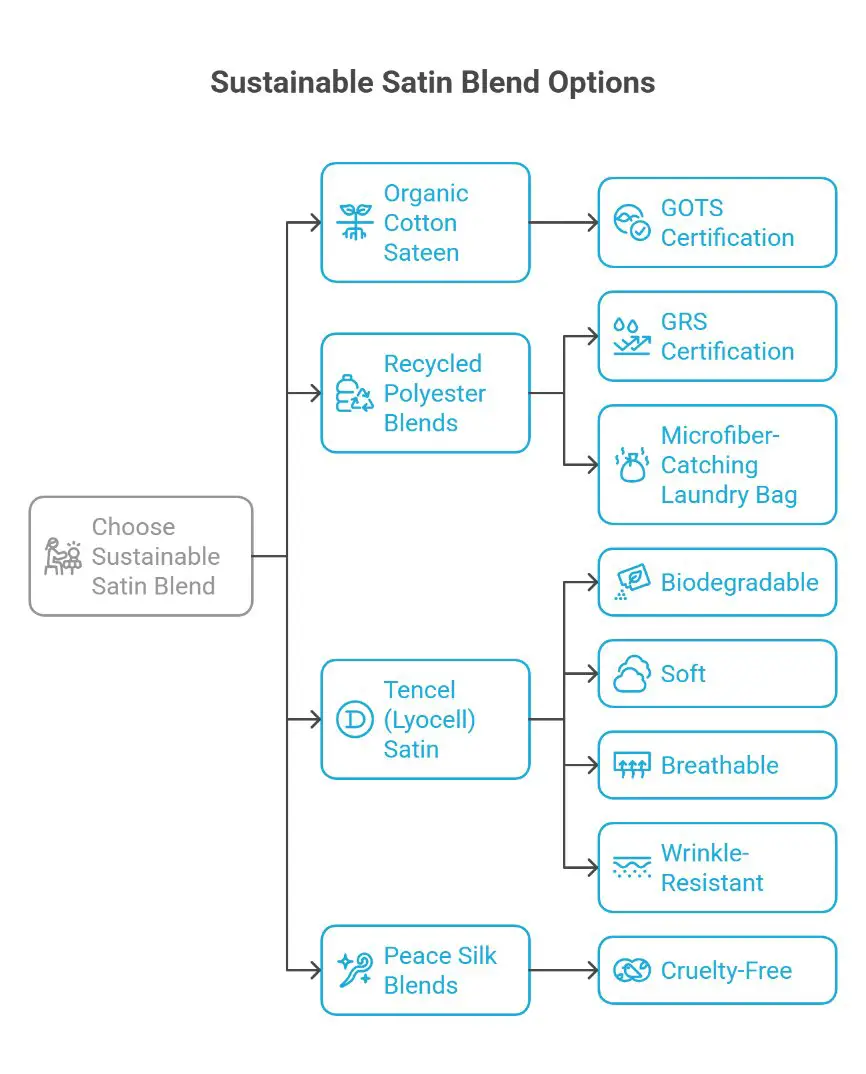
1. Organic Cotton Sateen
When you choose organic cotton sateen, you’re supporting farming practices that don’t use synthetic pesticides or fertilizers. The cotton is grown using natural methods that are better for soil health and farmers’ wellbeing.
What to look for: GOTS certification
Price impact: Usually 10-30% more expensive than conventional cotton
2. Recycled Polyester Blends
Recycled polyester is made from plastic bottles and textile waste. It keeps plastic out of landfills and uses 59% less energy to produce than virgin polyester.
What to look for: GRS certification, clear recycled content percentage
Washing tip: Use a microfiber-catching laundry bag to prevent microplastic pollution
3. Tencel (Lyocell) Satin
Tencel is made from sustainably harvested wood pulp. The manufacturing process uses a closed-loop system where 99% of the water and solvents are recovered and reused.
Benefits: Biodegradable, soft, breathable, naturally wrinkle-resistant
4. Peace Silk Blends
Also called ahimsa silk, this allows the silkworm to complete its life cycle and emerge from the cocoon before the silk is harvested. It’s more labor-intensive, which makes it more expensive, but it’s cruelty-free.
How to Make Satin Blends Last Longer (Sustainability Through Use)
The most sustainable fabric is one you already own. Here’s how to extend the life of your satin blends:
- Proper storage: Hang or fold with tissue paper to prevent creasing
- Spot clean when possible: Full washing shortens fabric life
- Use correct washing method: Following care instructions prevents damage
- Air dry: Heat from dryers breaks down fibers faster
- Rotate use: Don’t wear or wash the same items constantly
- Repair instead of replace: Small tears can often be mended
Uses and Applications
Bedding Applications
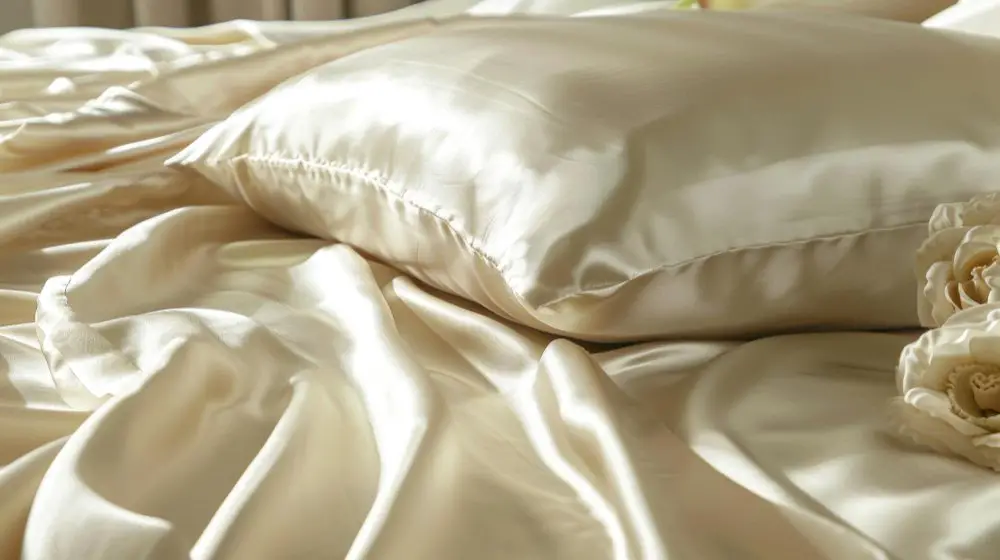
Satin bedding has become extremely popular, but choosing the right blend matters for comfort and durability.
For Hot Sleepers
Choose cotton sateen or Tencel blends. These breathe well and wick moisture away from your body. Avoid high polyester content, which traps heat.
Recommended blend: 100% cotton sateen or 95% Tencel/5% spandex
For Hair and Skin Benefits
Silk pillowcases are famous for reducing hair breakage and preventing sleep lines. If pure silk is too expensive, a silk-polyester blend (at least 40% silk) still provides benefits.
Recommended blend: 60% polyester/40% silk or higher silk content if budget allows
For Easy Care
Polyester-cotton blend sheets are the most practical. They resist wrinkles, wash easily, and last for years.
Recommended blend: 60% polyester/40% cotton
Thread Count and Satin
Here’s something many people don’t know: thread count works differently for satin than for regular weave sheets. With satin weave, the quality depends more on the fiber type than the thread count. A 300-thread-count sateen can feel better than a 600-thread-count regular cotton sheet.
Good thread count range for sateen: 300-600
Fashion and Apparel

Bridal Wear
Wedding dresses often use silk-polyester blends (typically 60% polyester, 40% silk). This gives you the look of silk at a fraction of the price, plus the dress holds its shape better during a long wedding day.
Popular satin types for bridal wear include duchess satin (heavy and structured) and charmeuse (lightweight and drapey).
Evening and Cocktail Dresses
For special occasion dresses, look for blends with at least some silk content if your budget allows. The drape is noticeably better than pure polyester.
Best choice: Silk-polyester blend or high-quality polyester charmeuse
Casual Wear
Satin blouses and skirts for everyday wear should be machine washable. Cotton sateen or polyester-cotton blends work best.
Activewear and Dancewear
Dance costumes and athletic clothing need stretch, so look for satin blends with 10-15% spandex. The polyester-spandex combination works well because it’s durable and moisture-wicking.
Home Decor

Curtains and Drapes
For window treatments, you want something that resists fading from sunlight. Polyester or polyester blends are your best bet. They also hang well and resist water damage from humidity.
Upholstery
Furniture fabric needs to be extremely durable. If you love the satin look, choose a heavy-weight polyester blend designed specifically for upholstery. Regular satin is too delicate for furniture.
Decorative Pillows and Table Linens
These items don’t get as much wear as furniture, so you can use lighter-weight blends. Polyester-cotton works well for table runners and place mats that need frequent washing.
Sewing and DIY Projects
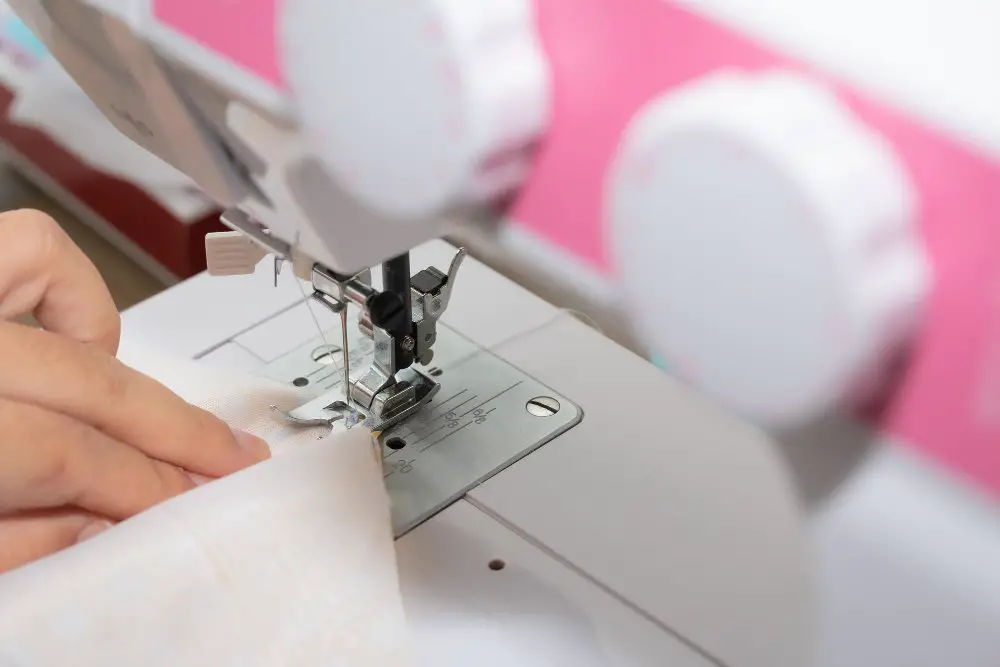
Best Blends for Beginners
If you’re new to sewing, start with polyester-cotton blends. They’re more forgiving than pure silk or high-silk-content blends.
Sewing tips for satin blends:
- Use sharp, fine needles (size 9 or 11 for lightweight, 14 for heavier)
- Pin within seam allowances to avoid marks
- Use tissue paper under fabric when machine sewing to prevent slipping
- Set stitch length to 2.0-2.5mm for best results
Pattern Selection
Satin blends work best with patterns designed for fluid fabrics. Avoid patterns with lots of gathering or intricate details if you’re working with very slippery blends.
Complete Care Guide
Proper care makes the difference between satin that lasts for years and satin that falls apart after a few washes. The care method depends entirely on the fiber blend.
Care by Blend Type
Silk-Polyester Blend Care
Washing:
- Check the care label first – some can be machine washed on delicate, others need hand washing
- For machine washing: Use cold water and delicate cycle only
- For hand washing: Use lukewarm water (never hot) with gentle detergent
- Turn items inside out before washing
- Don’t wring or twist – press water out gently between towels
Drying:
- Air dry is always best – hang or lay flat away from direct sunlight
- If you must use a dryer, use the lowest heat setting and remove while slightly damp
- Never use high heat – it can damage both silk and polyester fibers
Ironing:
- Iron while slightly damp for best results
- Use low to medium heat setting
- Always iron on the wrong side or use a pressing cloth
- Never let the iron sit in one spot – keep it moving
Cotton Sateen Care
Washing:
- Machine washable in cold to warm water (not hot)
- Wash new items separately the first time – they may release excess dye
- Use regular detergent, but avoid fabric softener (it can dull the sheen)
- Don’t overload the machine – satin needs room to move
Drying:
- Can be tumble dried on low heat
- Remove from dryer while slightly damp to minimize wrinkles
- Hang or lay flat to finish drying if possible
Ironing:
- Cotton sateen wrinkles easily and needs regular ironing
- Iron while damp with medium-high heat
- Iron on the wrong side for best results
- Use steam for stubborn wrinkles
For more detailed information on caring for satin clothing, you can find additional tips and techniques.
Polyester-Cotton Blend Care
Washing:
- Very easy care – machine wash in warm water
- Can use regular detergent
- Avoid bleach, which can yellow polyester
Drying:
- Tumble dry on medium-low heat
- Remove promptly to prevent wrinkles
Ironing:
- Usually needs minimal ironing
- If needed, use medium heat
- Be careful not to melt polyester fibers with too much heat
Stretch Satin Blend Care
Washing:
- Hand wash or gentle machine cycle in cold water
- Use detergent designed for delicates
- Don’t use fabric softener – it can damage elastic fibers
Drying:
- Air dry only – heat destroys elastane/spandex
- Lay flat to dry to maintain shape
- Never wring out – roll in a towel to remove excess water
Ironing:
- Usually doesn’t need ironing
- If necessary, use lowest heat setting and avoid the iron touching fabric directly
Troubleshooting Common Problems
Wrinkles
Prevention: Remove from dryer/wash immediately, hang or fold promptly
Fix: Hang in steamy bathroom, use garment steamer, or iron with pressing cloth
Static Cling
Prevention: Don’t over-dry, add vinegar to rinse cycle
Fix: Lightly spray with water, use anti-static spray, or run dryer sheet over surface
Snags and Pulls
Prevention: Keep jewelry smooth, wash in mesh bags, avoid rough surfaces
Fix: Don’t cut! Gently pull thread to wrong side with needle or snag repair tool
Water Spots (on silk blends)
Prevention: Protect from rain, be careful with beverages
Fix: May need professional cleaning. For minor spots, steam entire garment to even out moisture
Fading
Prevention: Wash in cold water, turn inside out, avoid direct sunlight when drying
Fix: Unfortunately, once faded, it’s hard to reverse. Consider fabric dye if severe
Shrinkage
Prevention: Pre-wash fabric before sewing, follow care instructions exactly, avoid hot water/dryers
Fix: For cotton blends, try rewetting and gently stretching while damp. Silk blends are harder to fix
Storage Tips
- Garments: Hang on padded hangers to prevent shoulder marks, or fold with acid-free tissue paper
- Bedding: Store in cool, dry place in breathable cotton bags (not plastic)
- Out of season items: Clean before storing, use cedar or lavender to deter moths
- Avoid: Wire hangers (leave marks), plastic bags (trap moisture), direct sunlight
Buying Guide

Where to Buy Satin Blends
Fabric Stores
Buying in person lets you feel the fabric and see the true color. Staff can often answer questions about fiber content and care.
Pros: Touch before buying, immediate availability, expert help
Cons: Limited selection compared to online, usually higher prices
Online Retailers
Online stores offer much wider selection and often better prices. Always check the return policy before ordering.
Pros: Huge selection, competitive prices, convenient
Cons: Can’t feel fabric, color may look different, shipping time
Tip: Order swatches when possible before buying yardage
Wholesale Suppliers
If you need large quantities, wholesale can save significant money. Minimum order requirements usually apply.
Questions to Ask Before Buying
- What is the exact fiber content percentage? This affects everything from care to durability
- What is the fabric width? Standard is 44-45″ or 54-60″
- What is the weight? Measured in grams per square meter (GSM) or ounces per yard
- Is it pre-shrunk? Important for sewing projects
- What are the care requirements? Make sure you can actually care for it properly
- Does it have any special finishes? Water-resistant, anti-static, etc.
- What is the return policy? In case color or quality isn’t what you expected
Seasonal Shopping
Timing your purchase can save money:
- January-February: Post-holiday sales on bedding and home goods
- July-August: White sales on linens, good time for bedding
- September-October: After wedding season, bridal fabrics may go on sale
- November-December: Black Friday and holiday sales
Budget Planning
For a typical project, you’ll need to budget for:
- Fabric cost: Calculate yardage needed plus 10% extra for mistakes
- Matching thread: $3-8 per spool
- Interfacing or lining: If needed for your project
- Notions: Buttons, zippers, etc.
- Care products: Appropriate detergent, dry cleaning budget
Quick Decision Guide: Which Satin Blend to Buy?
Wedding dress? → Silk-poly blend (60/40)
Evening wear? → Charmeuse or silk-poly blend
Everyday clothing? → Cotton sateen or poly-cotton
Dance/activewear? → Stretch satin (poly-spandex)
Under $15/yard → Poly-cotton or sateen
$15-40/yard → Quality poly-cotton or mid-range silk blend
Over $40/yard → High silk content blend
Easy care → Poly-cotton or polyester
Moderate care → Cotton sateen
Special care okay → Silk blends
Frequently Asked Questions
Satin is a weaving technique, not a specific fabric. When this weave is used with long filament fibers like silk or polyester, it’s called satin. When used with short staple fibers like cotton, it’s called sateen. Both create that characteristic smooth, shiny surface, but sateen has a more subtle sheen because cotton fibers don’t reflect light as dramatically as silk or polyester.
It depends on the fiber content. Cotton sateen and polyester-cotton blends can typically be machine washed on gentle cycle. Silk-polyester blends vary – check the care label. High silk content (over 50%) usually requires hand washing or dry cleaning. When in doubt, hand wash in cold water or take to a professional cleaner.
Yes, but choose the right type. Cotton sateen is excellent for bedding – it’s breathable, comfortable, and machine washable. For pillowcases specifically, silk-polyester blends (at least 40% silk) can help reduce hair breakage and sleep wrinkles. Avoid high-polyester-content blends for sheets if you’re a hot sleeper, as they don’t breathe well.
Check these factors: First, look at the fiber content – higher natural fiber content usually means better quality. Second, feel the weight – quality satin has some substance, not tissue-thin. Third, check the sheen – it should be consistent across the fabric, not patchy. Fourth, examine the weave – you shouldn’t see obvious gaps or irregularities. Finally, look for certifications like OEKO-TEX which indicate testing for harmful substances.
It depends on the fiber mix. Pure silk and cotton sateen wrinkle fairly easily. Polyester blends resist wrinkles much better – the higher the polyester content, the less wrinkling you’ll see. A 60% polyester/40% silk blend wrinkles less than a 40% polyester/60% silk blend. If wrinkle resistance is important to you, look for blends with at least 50% polyester.
Both can be good for sensitive skin, but for different reasons. Silk is naturally hypoallergenic and contains amino acids that are gentle on skin. Cotton is also hypoallergenic and highly breathable, which helps if you’re sensitive to heat or moisture. Choose organic cotton sateen if you’re concerned about pesticide residues, or look for OEKO-TEX certified fabrics of either type, which are tested for harmful substances.
Yes, but use the right technique. Always iron on the wrong (dull) side of the fabric or use a pressing cloth. Start with low heat and increase if needed. Iron while the fabric is slightly damp for best results. Never leave the iron sitting in one spot – keep it moving. For silk blends, use the silk setting. For polyester blends, be careful not to use too much heat, which can melt synthetic fibers.
With proper care, quality satin blends can last many years. Polyester-heavy blends are most durable and can last 5-10 years of regular use. Cotton sateen bedding typically lasts 3-5 years with weekly washing. Silk blend garments can last 10+ years if worn occasionally and cared for properly. The key factors are following care instructions, avoiding excessive heat, and proper storage. Budget satin blends may only last 1-2 years.
No. While both use the satin weave, they’re made from completely different fibers. Polyester satin is synthetic, made from petroleum-based fibers. It’s more affordable, durable, and easy to care for, but doesn’t breathe as well. Silk satin is natural, made from silkworm cocoons. It’s more expensive, breathable, and feels more luxurious, but requires special care. Silk-polyester blends try to capture benefits of both.
For most people, 30-40% silk content offers the best value. You’ll notice the improved drape and feel compared to pure polyester, but the cost is still reasonable. Below 30% silk, you won’t notice much difference from pure polyester. Above 60% silk, you’re paying a lot more without proportional benefits, and you might as well buy pure silk. For bedding specifically, 40% silk is the sweet spot for hair and skin benefits.
Yes, but satin can be challenging for beginners because it’s slippery. Start with polyester-cotton blends, which are easier to handle. Use sharp, fine needles (size 9-11 for lightweight, 14 for heavier fabrics). Pin within seam allowances to avoid marks. Place tissue paper under the fabric when sewing to prevent slipping. Set your stitch length to 2.0-2.5mm. Practice on scraps first. Once you’re comfortable with easier blends, move up to silk-containing satins.
It depends on the fiber content. Cotton sateen can shrink 3-5% if exposed to hot water or high dryer heat. Silk may shrink slightly with heat or agitation. Polyester typically doesn’t shrink. Blends will shrink based on their natural fiber content. To prevent shrinkage: pre-wash fabric before sewing, always use cool water for washing, and air dry or use low heat in the dryer. If you’re buying ready-made items, check if they’re pre-shrunk.
The most sustainable options are: (1) Organic cotton sateen with GOTS certification, (2) Tencel lyocell satin made with closed-loop processing, (3) Recycled polyester blends with GRS certification, or (4) Peace silk (ahimsa) blends. For the best environmental impact, also consider the fabric’s durability – a well-made polyester blend that lasts 10 years may be more sustainable than organic cotton that wears out in 2 years.
Generally, no. Bleach can damage most satin blends. It yellows polyester, weakens silk fibers, and can cause cotton to break down. For white fabrics that need brightening, use oxygen-based bleach alternatives (like OxiClean) instead of chlorine bleach. Always test on an inconspicuous area first. For stain removal, spot-treat with gentle detergent or take to professional cleaners for silk-containing blends.
Static cling happens most with synthetic fibers, especially polyester. It’s worse in dry climates and winter months. To reduce static: don’t over-dry clothes (remove from dryer while slightly damp), add white vinegar to the rinse cycle, use dryer balls instead of sheets, or lightly spray with water or anti-static spray. Natural fiber blends (like cotton sateen) have less static than high-polyester blends.
Conclusion
Satin blend fabrics have come a long way from their ancient silk-only origins. Today’s blends offer something for everyone, from budget-friendly polyester-cotton options to luxury silk blends that rival pure silk in beauty while being more practical to care for.
The key to choosing the right blended satin for your needs comes down to understanding what each fiber brings to the mix. Silk adds natural luxury and breathability. Polyester provides durability and easy care. Cotton offers comfort and affordability. When these fibers are combined thoughtfully, you get fabrics that truly perform better than any single fiber could alone.
Key Takeaways
Remember These Points:
- Satin is a weave, not a fiber. It can be made from silk, polyester, cotton, or blends of these materials.
- Fiber percentage matters. A 60/40 blend behaves very differently from an 80/20 blend of the same fibers.
- Higher polyester content = easier care and lower cost. Higher natural fiber content = better breathability and more luxury.
- For bedding, choose cotton sateen or Tencel blends. They breathe better than high-polyester options.
- For formal wear on a budget, silk-polyester blends (40-60% silk) offer the best value. You get the look of silk without the full expense.
- Care instructions are based on the blend, not just the weave. Always check the fiber content and follow those guidelines.
- Sustainability varies widely. Look for certifications like GOTS, OEKO-TEX, and GRS to make informed choices.
Final Recommendations
If you’re buying bedding: Start with cotton sateen in the 300-600 thread count range. It’s breathable, comfortable, and machine washable. For pillowcases specifically, consider a silk-polyester blend with at least 40% silk for hair and skin benefits.
If you’re sewing formal wear: A silk-polyester blend (60% polyester, 40% silk) gives you professional results at a reasonable price. It holds shape better than pure silk and is more forgiving to work with.
If you’re on a budget: Polyester-cotton blends offer the best value. Look for at least 35% cotton for better comfort and breathability.
If sustainability is your priority: Choose organic cotton sateen, Tencel blends, or recycled polyester options. Look for proper certifications to ensure environmental claims are real.
If you want easy care: High polyester content (60% or more) is your friend. These blends resist wrinkles, handle machine washing and drying, and last for years.
Before You Buy
Take time to really think about how you’ll use the fabric. A wedding dress that you’ll wear once has different needs than bedding you’ll wash weekly. Consider not just the initial cost, but the total cost over the fabric’s lifetime, including care requirements. Sometimes spending more upfront on a quality blend saves money in the long run.
Don’t be afraid to ask questions when shopping. Reputable retailers should be able to tell you exact fiber percentages, care requirements, and whether fabric is pre-shrunk. If they can’t answer basic questions, shop elsewhere.
Most importantly, when you find a satin blend you love, take care of it properly. Following the care instructions, storing items correctly, and addressing problems quickly will help your satin blends last for years. The most sustainable fabric is the one you already own and love.
Whether you’re making your first sewing project, buying luxurious bedding, or planning a special occasion outfit, there’s a satin blend that’s perfect for your needs. Use this guide as your starting point, and don’t be afraid to experiment until you find exactly what works for you.