
Everything You Need to Know About Choosing, Sewing, and Caring for Stretch Satin
Table of Contents
- What is Stretch Satin Fabric?
- The History of Satin Fabric
- Types of Stretch Satin Fabric
- Stretch Satin vs Other Fabrics
- Properties and Characteristics
- Uses and Applications
- Sustainability and Eco-Friendly Options
- How to Choose Quality Stretch Satin
- Complete Sewing Guide
- Care and Maintenance Instructions
- Price Guide and Where to Buy
- Frequently Asked Questions
What is Stretch Satin Fabric?
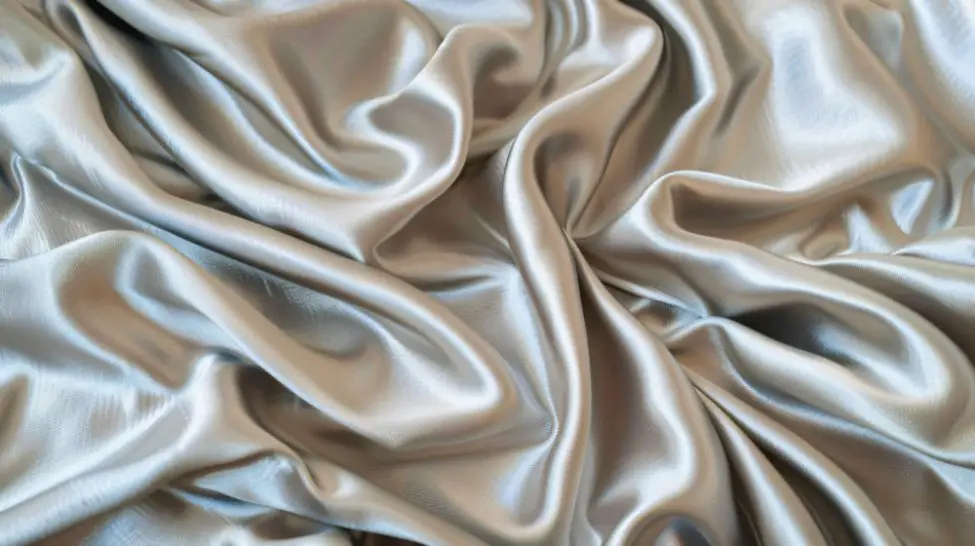
Stretch satin is a beautiful fabric that combines the classic shine and smooth feel of traditional satin with the added benefit of stretch and flexibility. When you touch stretch satin, you’ll immediately notice how it glides across your skin while also having a bit of give when you pull it gently.
To understand stretch satin, you need to know that “satin” refers to a specific way of weaving fabric, not the actual material itself. This weaving technique creates that signature glossy surface on one side and a duller finish on the back. The satin weave works by floating several warp threads over a single weft thread (or vice versa), which makes the surface reflect light in that beautiful, shiny way we all recognize.
What makes stretch satin different from regular satin is the addition of elastic fibers like spandex or elastane, typically making up 2% to 10% of the fabric’s composition. These stretchy fibers are woven right into the fabric alongside the main material (which could be polyester, silk, or nylon), giving the finished fabric the ability to stretch and then bounce back to its original shape.
Quick Fact: Most stretch satins you’ll find today contain 95-97% polyester or silk with 3-5% spandex. This ratio gives you enough stretch for comfort and movement without losing the satin’s beautiful drape and shine.
The Science Behind the Stretch
The stretch in stretch satin comes from those elastic fibers that are carefully integrated during the weaving process. When you pull the fabric, these elastic fibers extend, and when you release, they contract back. This is why stretch satin is perfect for fitted clothing like body-hugging dresses, lingerie, and dancewear where you need the fabric to move with your body.
Unlike regular satin which has a fixed shape, stretch satin can expand by 10% to 40% depending on whether it has 2-way stretch (stretches in one direction, usually crosswise) or 4-way stretch (stretches both horizontally and vertically). This flexibility is what makes it so comfortable to wear and easier to fit on different body types.

The History of Satin Fabric
The story of satin begins over 2,000 years ago in ancient China during the Tang Dynasty (7th century CE). Chinese weavers developed this special weaving technique and created beautiful silks that were reserved exclusively for emperors, nobles, and the wealthy elite. The fabric was so precious that it became a symbol of power and status.
The name “satin” itself comes from Quanzhou (also called Zayton or Zaitun), a major Chinese port city where this luxurious fabric was shipped along the famous Silk Road. Arab traders who visited this port called the shiny fabric “zaituni,” and over time, this evolved into the word “satin” that we use today.
Satin Reaches Europe
During the Middle Ages, satin made its way to Europe along trade routes. It was incredibly expensive because silk was rare and the weaving process was complex and time-consuming. European royalty and clergy wore satin robes and gowns to demonstrate their wealth and importance. Think of the elaborate gowns worn by Marie Antoinette or the ceremonial robes in the Palace of Versailles – many were made from luxurious satin.
For centuries, satin remained exclusive and expensive because it was made only from silk, which had to be carefully produced from silkworm cocoons. A single loom might produce just a few meters of satin per day, making it a true luxury item.
The Modern Era: Stretch Enters the Picture
Everything changed in the 19th and 20th centuries with the Industrial Revolution and the development of synthetic fibers. Suddenly, fabrics like polyester, nylon, and acetate could be used to create satin weaves at a fraction of the cost of silk. Modern looms could produce hundreds of meters per day instead of just a few.
The real game-changer came with the invention of spandex (also called Lycra or elastane) in 1958. This revolutionary fiber could stretch up to 500% of its original length and snap back perfectly. By the 1980s and 1990s, textile manufacturers started adding small amounts of spandex to satin fabrics, creating what we now know as stretch satin.
Today, stretch satin has become a popular choice for everything from evening gowns to everyday clothing. It’s no longer just for royalty – anyone can enjoy the combination of luxury appearance and comfortable stretch that this fabric provides.
Types of Stretch Satin Fabric
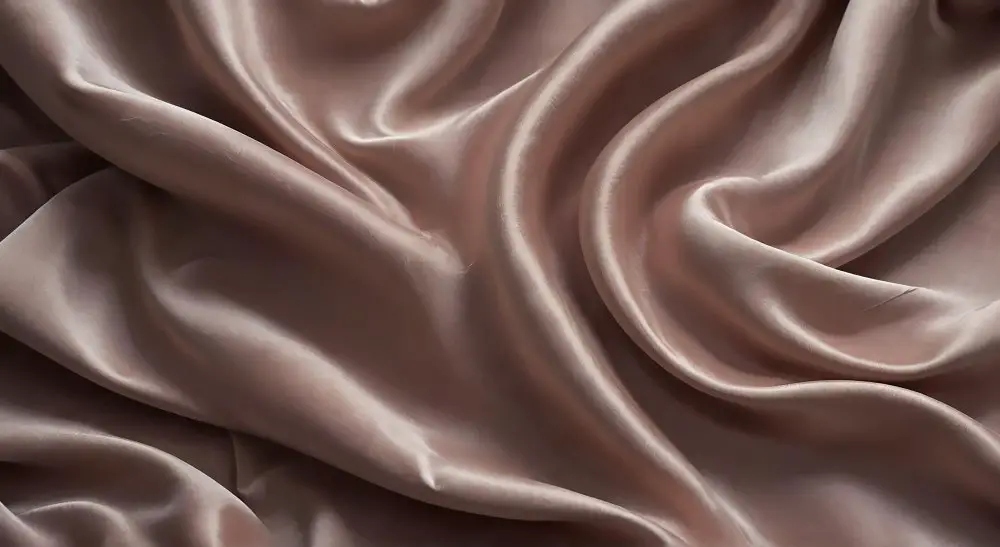
Not all stretch satin is created equal. Understanding the different types will help you choose the right one for your project.
By Fiber Content
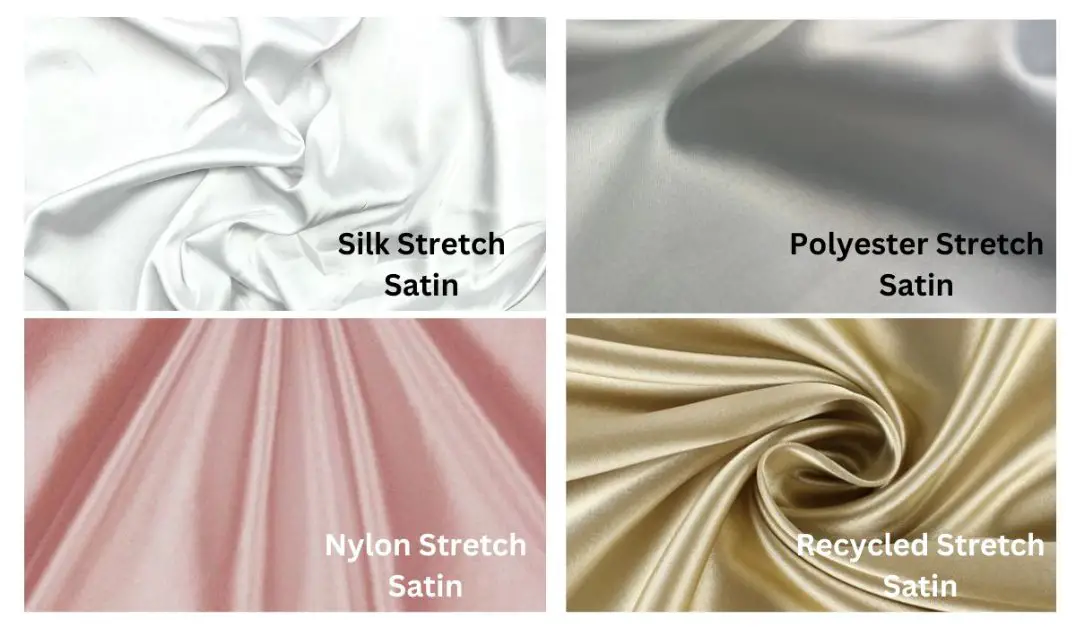
Silk Stretch Satin
This is the luxury option, made from natural silk fibers combined with 2-5% spandex. Silk stretch satin has a softer sheen than synthetic versions and feels incredibly smooth against the skin. It’s breathable, naturally temperature-regulating, and perfect for high-end evening wear and bridal gowns. The downside? It’s expensive, usually costing $30-$100+ per yard, and requires careful handling and dry cleaning.
Polyester Stretch Satin
This is by far the most common type you’ll find. Polyester stretch satin typically contains 95-97% polyester with 3-5% spandex. It’s affordable (usually $5-$20 per yard), machine washable, and holds color beautifully. While it doesn’t breathe as well as silk, modern polyester satins can look remarkably similar to silk and are much more practical for everyday use.
Nylon Stretch Satin
Nylon-based stretch satin is popular for activewear and dancewear because it’s extremely durable and has excellent stretch recovery. It typically contains 73-90% nylon with 10-27% spandex for maximum flexibility. This type is great for performance costumes and workout clothing.
Recycled Stretch Satin
An emerging eco-friendly option, recycled stretch satin is made from recycled plastic bottles (rPET) or recycled nylon combined with spandex. It performs similarly to virgin polyester or nylon satin but has a lower environmental impact. Look for fabrics with Global Recycled Standard (GRS) certification.
Silk Stretch Satin
Composition: 95-98% silk, 2-5% spandex
Price: $30-$100+/yard
Best For: Luxury evening wear, bridal gowns
Care: Dry clean only
Polyester Stretch Satin
Composition: 95-97% polyester, 3-5% spandex
Price: $5-$20/yard
Best For: Everyday dresses, lingerie
Care: Machine washable
Nylon Stretch Satin
Composition: 73-90% nylon, 10-27% spandex
Price: $10-$30/yard
Best For: Dancewear, activewear
Care: Machine washable
Recycled Stretch Satin
Composition: 73% recycled nylon/polyester, 27% spandex
Price: $15-$35/yard
Best For: Eco-conscious projects
Care: Machine washable
By Stretch Type
2-Way Stretch Satin
This type stretches in only one direction, usually horizontally across the fabric (crosswise or along the weft). When you pull it vertically, it stays firm. 2-way stretch is perfect for fitted skirts, pants, and tops where you need stretch around the body but not lengthwise.
4-Way Stretch Satin
This fabric stretches in all directions – both horizontally and vertically. It’s incredibly flexible and comfortable, making it ideal for close-fitting garments like bodysuits, dancewear, and activewear. The 4-way stretch typically contains more spandex (5-10%) than 2-way stretch versions.
By Weight
Lightweight Stretch Satin (60-120 GSM)
This thin, delicate version is perfect for lingerie, linings, and flowing garments. It drapes beautifully but can be tricky to sew because it’s so slippery and delicate.
Medium-Weight Stretch Satin (120-200 GSM)
This is the most versatile weight, suitable for dresses, blouses, and skirts. It has enough body to drape well while still being comfortable to wear and manageable to sew.
Heavy-Weight Stretch Satin (200+ GSM)
This structured fabric is great for formal gowns, tailored jackets, and projects that need more body. It holds its shape better than lighter weights and is easier for beginners to work with.
🔧 Find Your Perfect Stretch Satin
Not sure which type of stretch satin is right for your project? Use our interactive fabric selector tool to get personalized recommendations based on your specific needs.
Stretch Satin vs Other Fabrics: Complete Comparison
Understanding how stretch satin compares to similar fabrics will help you make the right choice for your project.
Stretch Satin vs Regular Satin
The main difference is obvious – stretch satin has elastic fibers while regular satin doesn’t. But this simple change affects everything about how the fabric performs.

| Feature | Stretch Satin | Regular Satin |
|---|---|---|
| Flexibility | Stretches 10-40% in one or both directions | No stretch, fixed shape |
| Comfort | Moves with your body, very comfortable | Can feel restrictive in fitted garments |
| Drape | Excellent drape with recovery | Beautiful drape but no recovery |
| Sewing Difficulty | Moderate (needs stretch techniques) | Moderate to difficult (slippery) |
| Best Uses | Body-con dresses, lingerie, dancewear | Flowing gowns, curtains, upholstery |
| Price Range | $5-$100/yard depending on fiber | $5-$80/yard depending on fiber |
Stretch Satin vs Stretch Charmeuse
This comparison confuses a lot of people, and for good reason. Charmeuse is actually a type of satin weave, but it’s lighter and has a softer, more fluid drape than what we typically call “satin.”

Think of it this way: Duchess satin is heavy and structured, charmeuse satin is light and flowing, and regular satin falls somewhere in between. When you add stretch to any of these, you get stretch duchess satin, stretch charmeuse, or stretch satin. For more information on different satin fabric types and characteristics, you can explore additional resources.
| Feature | Stretch Satin | Stretch Charmeuse |
|---|---|---|
| Weight | Medium to heavy (120-250 GSM) | Lightweight (60-120 GSM) |
| Drape | Moderate drape with body | Very fluid, liquid-like drape |
| Sheen | High shine | Softer, more subtle sheen |
| Structure | Holds shape moderately well | Very soft, minimal structure |
| Best Uses | Structured dresses, fitted garments | Flowing blouses, slip dresses, lingerie |
| Sewing Difficulty | Moderate | Difficult (very slippery) |
Stretch Satin vs Crepe Back Satin
Crepe back satin is a reversible fabric with a shiny satin side and a textured crepe side. When stretch is added, you get a versatile fabric that can be used either way.
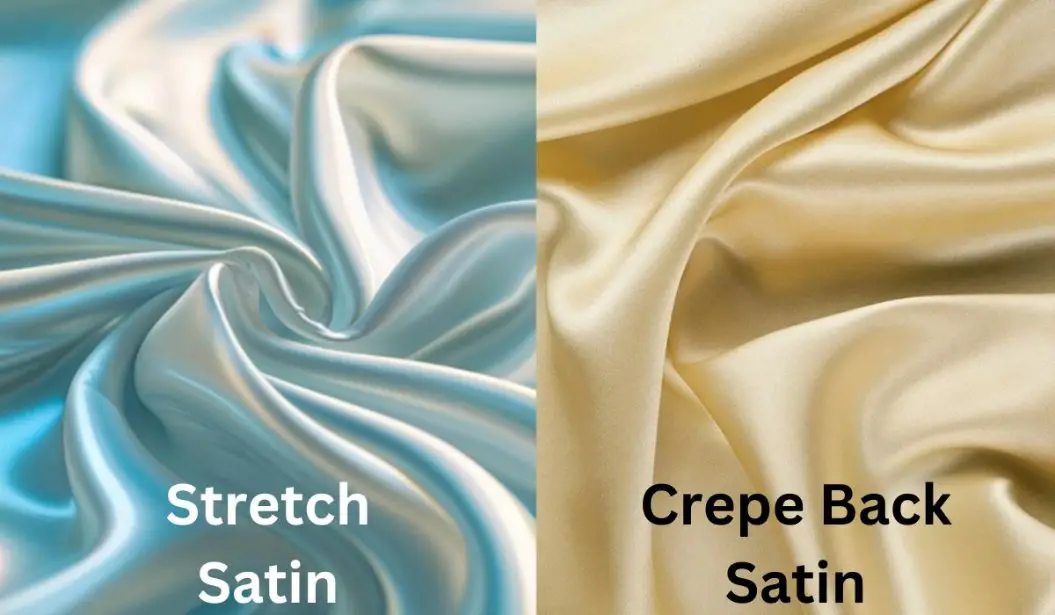
The crepe side is matte and has a subtle pebbly texture, while the satin side maintains that glossy finish. This gives designers flexibility – you can use the shiny side for a glamorous look or the matte side for something more understated.
Stretch Satin vs Chiffon
These are completely different fabrics that serve different purposes. Chiffon is sheer, lightweight, and has a slightly rough texture, while stretch satin is opaque, smooth, and shiny.
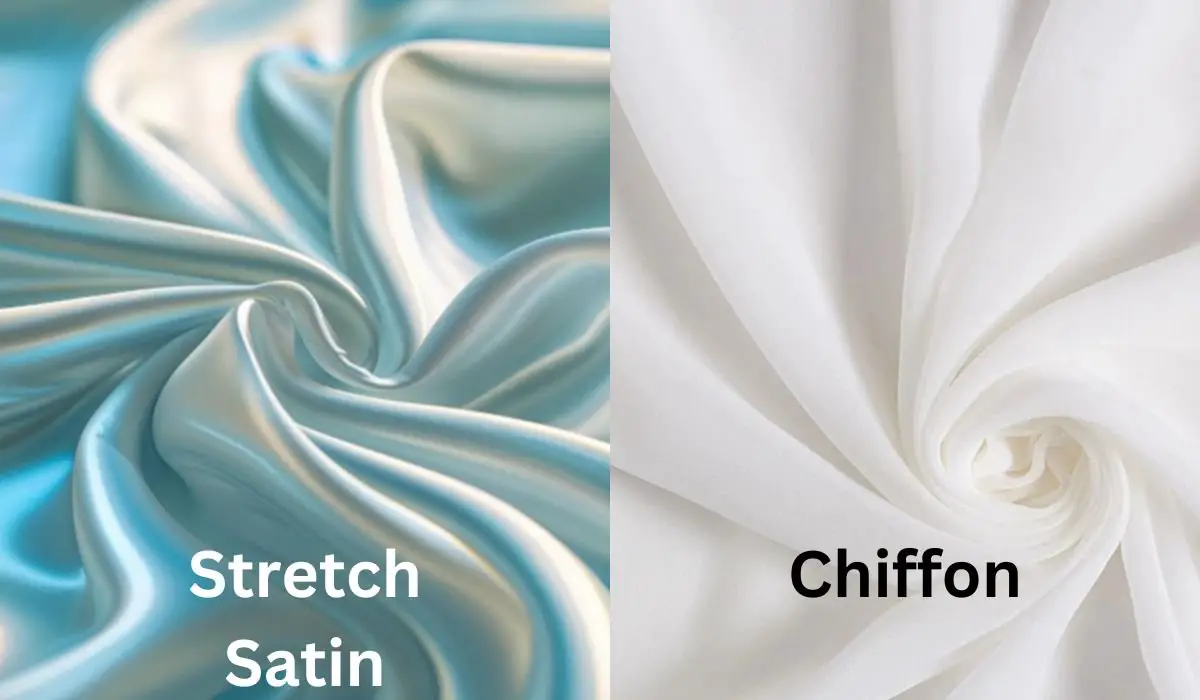
| Feature | Stretch Satin | Chiffon |
|---|---|---|
| Transparency | Opaque | Sheer, see-through |
| Surface | Smooth and shiny | Slightly rough, matte |
| Weight | Medium | Very light |
| Drape | Moderate drape | Floaty, airy drape |
| Occasion | Elegant, formal | Romantic, ethereal |
Choose stretch satin when you want a sophisticated, structured look with some stretch. Choose chiffon when you want flowing layers and movement.
Is Charmeuse the Same as Stretch Satin?
No, they’re not the same, though they’re related. Charmeuse is a specific lightweight type of satin weave. Stretch satin is a broader term that can include various weights and types of satin with added stretch. You can have stretch charmeuse (lightweight stretch satin) or stretch duchess satin (heavy stretch satin), and they’re both types of stretch satin but feel quite different from each other. For detailed information on charmeuse fabric properties and production, textile experts provide comprehensive guides.
Properties and Characteristics
Stretch satin has several unique properties that make it stand out from other fabrics. Understanding these will help you decide if it’s right for your project.
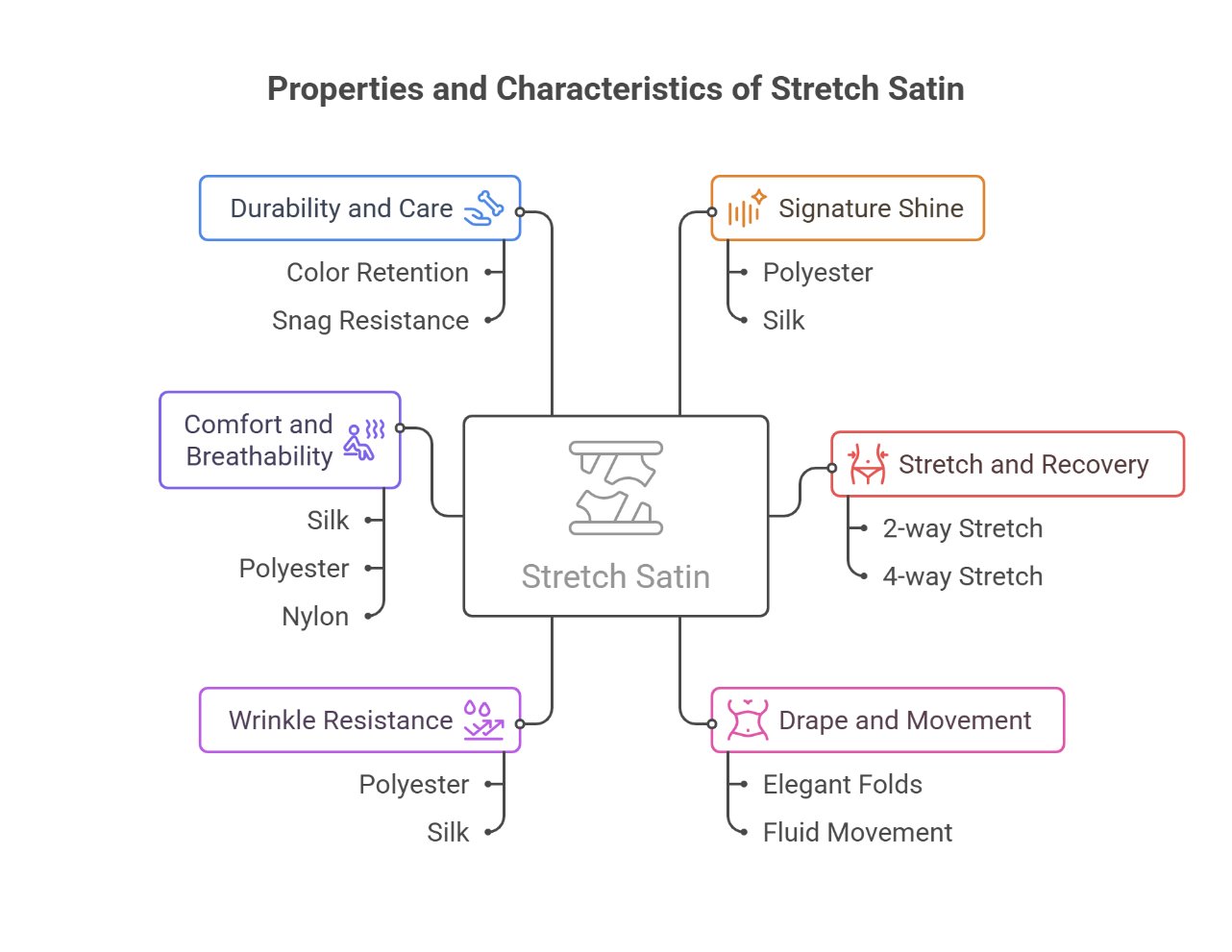
The Signature Shine
That beautiful glossy surface is what makes stretch satin instantly recognizable. The shine comes from how the weave is constructed – with long threads floating on the surface that reflect light smoothly. Unlike other shiny fabrics that might look cheap or plastic-like, quality stretch satin has a rich, luxurious sheen that photographs beautifully.
The level of shine can vary. Polyester stretch satin tends to have a brighter, more reflective shine, while silk stretch satin has a softer, more subtle luster. Some stretch satins are even made with a semi-matte finish for a more understated look.
Is Stretch Satin Shiny or Matte?
Traditional stretch satin is definitely shiny on one side and matte on the other. However, you can now find semi-matte or “dull” stretch satins that have a less reflective finish. These are perfect if you want the smooth feel and drape of satin without the high shine.
Stretch and Recovery
Does stretch satin actually stretch? Absolutely! The amount depends on the spandex content and whether it’s 2-way or 4-way stretch:
- 2-way stretch (3-5% spandex): Stretches about 10-25% in one direction
- 4-way stretch (5-10% spandex): Stretches about 25-40% in both directions
What makes stretch satin special is its recovery. When you release the fabric, it snaps back to its original shape without staying stretched out. This recovery is what keeps garments fitting well over time.
Note: The stretch in stretch satin is different from bias stretch. All woven fabrics, including regular satin, have some give when cut on the bias (diagonal). Stretch satin has mechanical stretch from the elastic fibers in addition to any bias stretch.
Drape and Movement
Stretch satin drapes beautifully, meaning it flows and hangs gracefully on the body. The fabric has enough weight to create elegant folds and curves without being stiff or standing away from the body. When you move, stretch satin moves with you in a fluid way that’s both flattering and comfortable.
Wrinkle Resistance
Does stretch satin wrinkle easily? Not really. One of the great things about stretch satin is that it’s fairly wrinkle-resistant, especially polyester versions. If it does get wrinkled, the wrinkles typically fall out when the garment is hung up for a short time.
Silk stretch satin may wrinkle more easily than polyester, but even then, it’s more resistant than many other silk fabrics. The stretch fibers actually help prevent wrinkles because the fabric can move and adjust rather than creasing sharply.
Comfort and Breathability
Stretch satin feels soft and smooth against the skin. The fabric glides over your body without clinging uncomfortably. However, breathability depends on the fiber content:
- Silk stretch satin: Highly breathable, naturally temperature-regulating
- Polyester stretch satin: Less breathable, can feel warm in hot weather
- Nylon stretch satin: Minimal breathability, best for activewear with moisture-wicking treatments
Durability and Care
Stretch satin is surprisingly durable when cared for properly. The tight weave and synthetic fibers (in most versions) make it resistant to wear and tear. However, the smooth surface can snag easily if caught on rough surfaces or jewelry.
Color retention is excellent, especially in polyester versions. The fabric holds dye well and doesn’t fade easily with proper washing.
Is 100% Polyester Satin Stretchy?
No, 100% polyester satin has no mechanical stretch – it’s a woven fabric made entirely from polyester fibers without any elastic fibers. It may have slight give on the bias (diagonal), but it won’t stretch and recover the way stretch satin does. To get true stretch, you need those elastic fibers (spandex/elastane) blended in.
Uses and Applications
Stretch satin’s combination of beauty and functionality makes it suitable for a wide range of projects.
Fashion and Apparel
Evening Wear and Formal Dresses
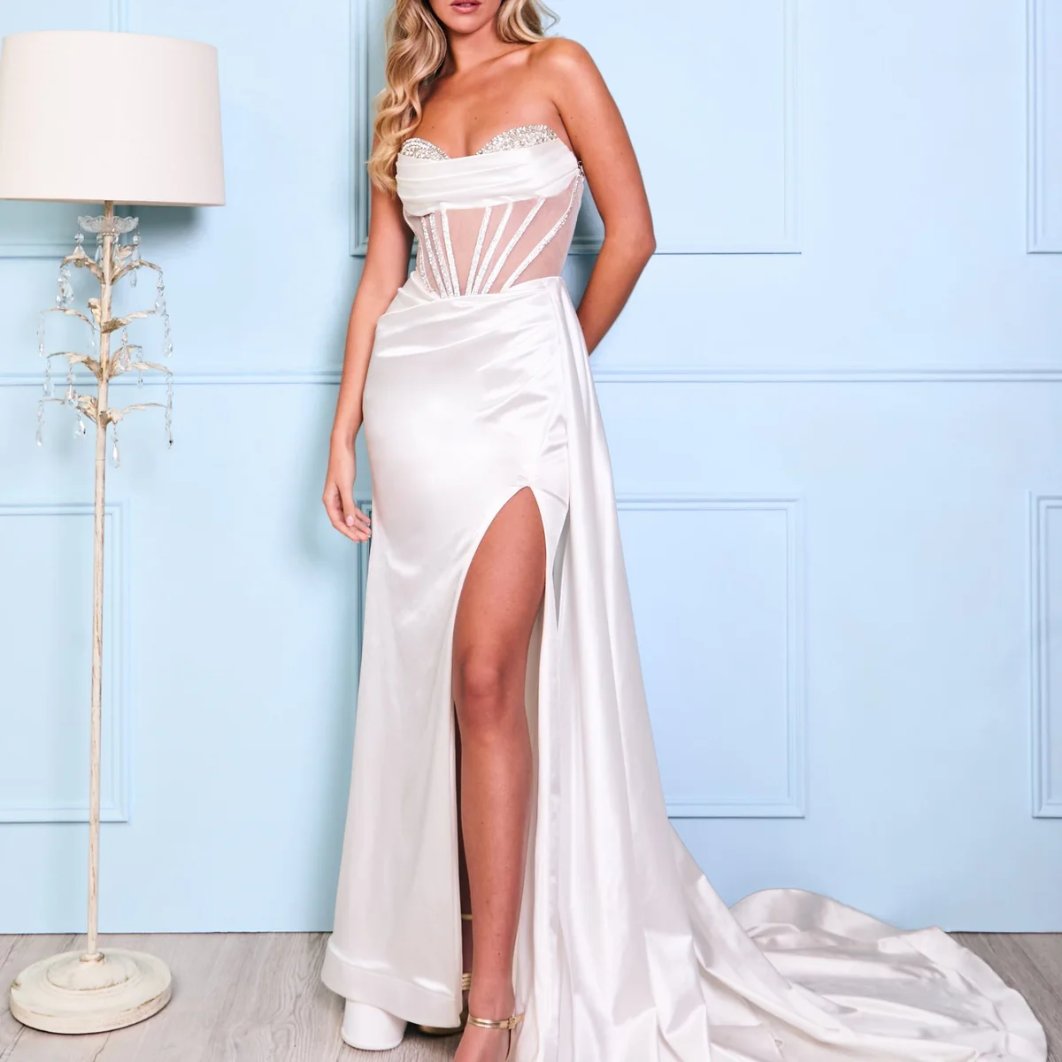
This is where stretch satin really shines. The fabric creates stunning formal gowns that fit perfectly and move beautifully. Unlike regular satin evening wear, stretch satin dresses are comfortable enough to wear all night without feeling restricted. The fabric hugs curves gracefully while the shine catches light beautifully in photos.
Bridal and Bridesmaid Gowns
Many modern wedding dresses incorporate stretch satin because it photographs beautifully and provides comfort during a long wedding day. Brides appreciate how the fabric moves naturally and doesn’t wrinkle easily during hours of wear. For bridesmaids, stretch satin is perfect because it fits different body types well without requiring extensive alterations.
Lingerie and Sleepwear
Lightweight stretch satin is a popular choice for luxurious lingerie, camisoles, and pajamas. The smooth surface feels wonderful against skin, and the stretch provides comfort and a flattering fit. Many high-end lingerie brands use silk stretch satin for its breathability and natural temperature regulation.
Dancewear and Performance Costumes
Dance costumes benefit hugely from stretch satin’s flexibility. Dancers need costumes that look beautiful but also allow full range of movement. 4-way stretch satin is perfect for this because it moves in every direction while maintaining that stage-worthy shine under lights.
Body-Con Dresses and Fitted Garments
The stretch in stretch satin makes it ideal for body-hugging silhouettes. The fabric smooths over the body without clinging to every imperfection, and the recovery prevents sagging or bagging. This is why you’ll often see stretch satin used in fitted cocktail dresses and bodycon styles.
Activewear (High-End)
Some athletic brands use nylon stretch satin for premium activewear pieces. The smooth surface reduces friction, and the stretch allows for movement. While not as common as traditional activewear fabrics, stretch satin adds a luxurious touch to yoga wear and athleisure pieces.
Home Decor Applications
Luxury Bedding and Pillowcases
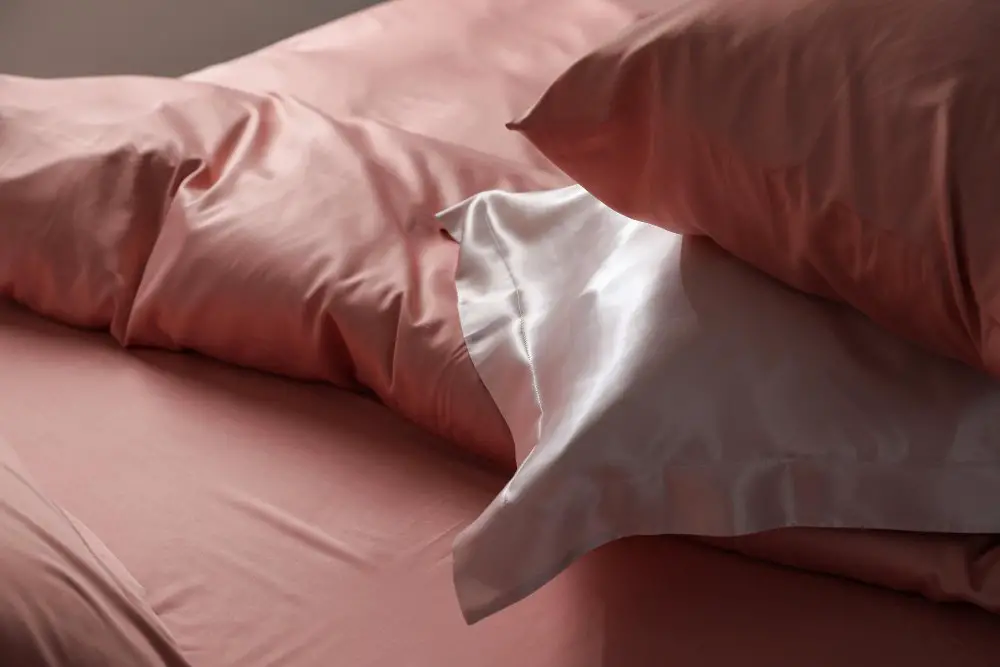
Silk stretch satin pillowcases have become popular for hair and skin care. The smooth surface reduces friction that can cause hair breakage and sleep wrinkles. The slight stretch makes fitted sheets easier to put on mattresses.
Curtains and Drapes
Medium to heavy-weight stretch satin creates beautiful, flowing window treatments. The fabric drapes elegantly and the slight stretch helps prevent sagging over time.
Decorative Accents
Stretch satin works well for decorative pillows, table runners, and other home decor items where you want a touch of elegance.
What is Stretch Fabric Good For? Stretch fabrics in general (not just satin) are perfect for any garment that needs to fit closely to the body, move with you during activity, or accommodate different body shapes without extensive tailoring. The addition of stretch makes clothes more comfortable, forgiving, and practical for everyday wear.
Sustainability and Eco-Friendly Options
As more people care about the environmental impact of their clothing choices, it’s worth understanding the sustainability aspects of stretch satin.
Environmental Impact of Different Fiber Types
Polyester Stretch Satin
Traditional polyester is made from petroleum, a non-renewable resource. The production process is energy-intensive and releases greenhouse gases. However, polyester fabric is durable and long-lasting, which means garments don’t need to be replaced as often. Polyester can also be recycled, though most polyester clothing isn’t currently recycled.
The main environmental concerns are:
- Reliance on fossil fuels
- High energy use in production
- Releases microplastics when washed
- Takes hundreds of years to break down in landfills
Silk Stretch Satin
Silk is a natural, biodegradable fiber, which sounds great environmentally. However, silk production has its own issues:
- Requires large amounts of water
- Chemical dyes and treatments can pollute waterways
- Traditional sericulture often kills silkworms during harvest
- Labor-intensive process can involve poor working conditions
Look for peace silk (also called Ahimsa silk) which allows moths to emerge before harvesting cocoons, and GOTS-certified organic silk which follows environmental and social standards.
Nylon Stretch Satin
Like polyester, nylon is petroleum-based and has similar environmental impacts. It’s durable and recyclable but also sheds microplastics.
Recycled and Eco-Friendly Alternatives
The good news is that sustainable options are becoming more available:
Recycled Polyester Stretch Satin (rPET)
Made from recycled plastic bottles and other post-consumer plastic waste, recycled polyester stretch satin performs just like virgin polyester but has a much lower environmental impact. Production uses 59% less energy and reduces CO2 emissions by 32% compared to virgin polyester.
Look for fabrics certified by:
- Global Recycled Standard (GRS)
- OEKO-TEX Standard 100 (ensures no harmful chemicals)
- bluesign® (comprehensive environmental and safety standard)
Recycled Nylon Stretch Satin
Similar to recycled polyester, recycled nylon is made from recovered fishing nets, fabric scraps, and industrial plastic waste. It has the same performance characteristics as virgin nylon but with significantly lower environmental impact.
Tencel Stretch Satin Blends
Some manufacturers are experimenting with Tencel (lyocell) blended with spandex to create eco-friendly stretch satins. Tencel is made from sustainably sourced wood pulp using a closed-loop process that recycles 99% of solvents. While less common, these blends offer a more sustainable alternative to traditional stretch satin.
Tips for More Sustainable Use
- Buy quality, not quantity: Invest in higher-quality stretch satin that will last longer rather than cheap fabric that pills or snags quickly
- Use fabric efficiently: Plan your cutting layout carefully to minimize waste
- Save scraps: Small pieces can be used for trim, hair accessories, or craft projects
- Wash less frequently: Stretch satin doesn’t need to be washed after every wear, which saves water and prevents microplastic release
- Use a microplastic filter: Products like Guppyfriend bags catch microplastics during washing
- Repair instead of replace: Small snags or tears can often be repaired
- Recycle or upcycle: When garments are beyond repair, look for textile recycling programs or repurpose fabric into new projects
How to Choose Quality Stretch Satin
Not all stretch satin is created equal. Here’s how to identify high-quality fabric:
Check the Fiber Content
Always read the fiber content label. For polyester stretch satin, look for 95-97% polyester with 3-5% spandex. Higher spandex percentages (up to 10%) aren’t necessarily better – they just provide more stretch, which you may or may not need.
For silk stretch satin, expect 95-98% silk with 2-5% spandex or elastane. Real silk will be labeled as “silk” or “100% silk + spandex.” Terms like “silky polyester” or “satin” without fiber specifics usually mean polyester.
Understanding Weight Measurements
Fabric weight is measured in GSM (grams per square meter). For stretch satin:
- Lightweight: 60-120 GSM (good for linings, lingerie)
- Medium-weight: 120-200 GSM (most versatile, good for dresses)
- Heavy-weight: 200-300+ GSM (structured gowns, jackets)
For silk, you might also see “momme weight” (mm). This is specific to silk and measures density:
- 12-16 momme: Lightweight
- 16-19 momme: Medium-weight
- 19-25 momme: Heavy-weight
- 25+ momme: Very heavy
Test the Stretch and Recovery
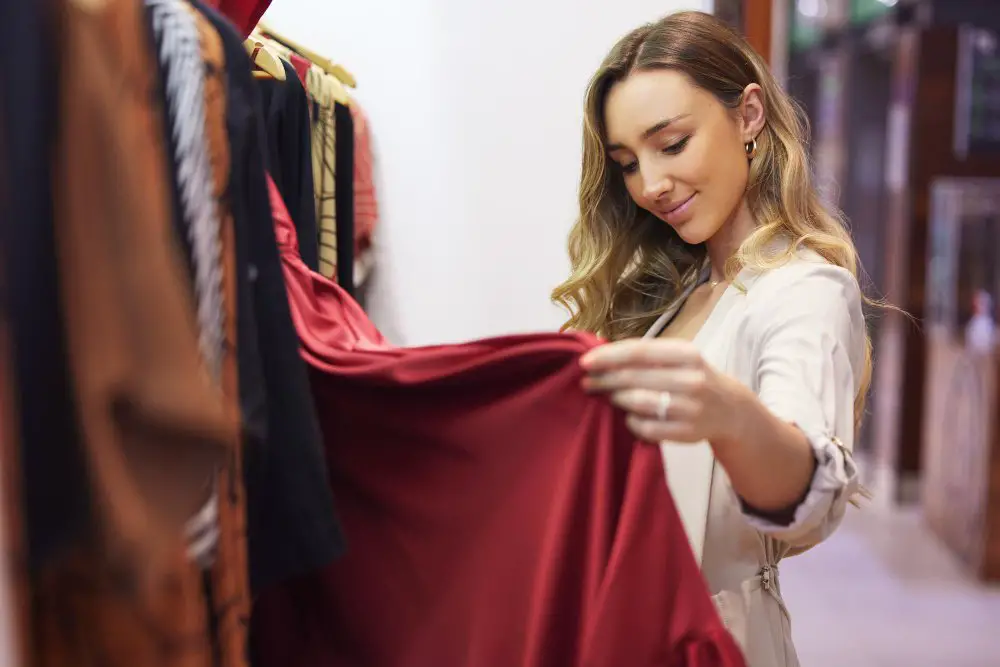
When shopping in person, do this simple test:
- Pull the fabric gently across the width and length
- Notice how much it stretches in each direction
- Release and watch how quickly it returns to shape
- Good quality stretch satin should snap back immediately without staying stretched out
If the fabric stays stretched or takes a long time to recover, the spandex quality is poor or the fabric is old and degraded.
Examine the Sheen
Hold the fabric up to light and look at the surface. Quality stretch satin should have a consistent, even sheen across the entire piece. Watch out for:
- Dull spots or areas with inconsistent shine
- Obvious slubs or bumps in the weave
- Streaky or uneven color
The sheen should be rich and smooth, not plasticky or too bright. Silk will have a softer, more natural luster compared to polyester’s brighter shine.
Check for Consistent Color
Unroll a few yards and check that the color is the same throughout. Color variations can indicate poor quality control or different dye lots. Also check both sides of the fabric – the back should be noticeably duller than the front.
Feel the Hand (Drape and Texture)
“Hand” is the technical term for how fabric feels. Let the fabric drape over your hand and notice:
- Does it flow smoothly or feel stiff?
- Is the surface smooth or slightly rough?
- Does it feel soft or scratchy against skin?
Quality stretch satin should feel smooth and soft with a nice fluid drape. If it feels rough, stiff, or papery, look for better quality.
Price as a Quality Indicator
While price isn’t everything, it’s often a good indicator of quality:
- Budget ($5-$10/yard): Basic polyester stretch satin, fine for practice projects or costume wear
- Mid-range ($10-$25/yard): Good quality polyester or nylon stretch satin, suitable for most projects
- Premium ($25-$50/yard): High-quality polyester or lower-grade silk stretch satin
- Luxury ($50-$100+/yard): Premium silk stretch satin from reputable mills
Where to Buy Quality Stretch Satin
Knowing where to shop can make a big difference:
Local Fabric Stores
The advantage here is that you can see, touch, and test the fabric before buying. Staff can often provide helpful advice. However, selection may be limited.
Online Fabric Retailers
Online shops often have better selection and prices. Reputable sellers include Mood Fabrics, Fashion Fabrics Club, and EmmaOneSock. Always order swatches first before buying yardage.
Wholesale Suppliers
If you’re buying in bulk, wholesale suppliers offer the best prices. However, minimum orders can be high (often 50+ yards).
Pro Tip: Always request fabric samples before buying large quantities online. The $2-5 you spend on samples can save you from investing in fabric that’s not right for your project. Colors, weight, and drape can be very different from what appears on screen.
Complete Sewing Guide for Stretch Satin
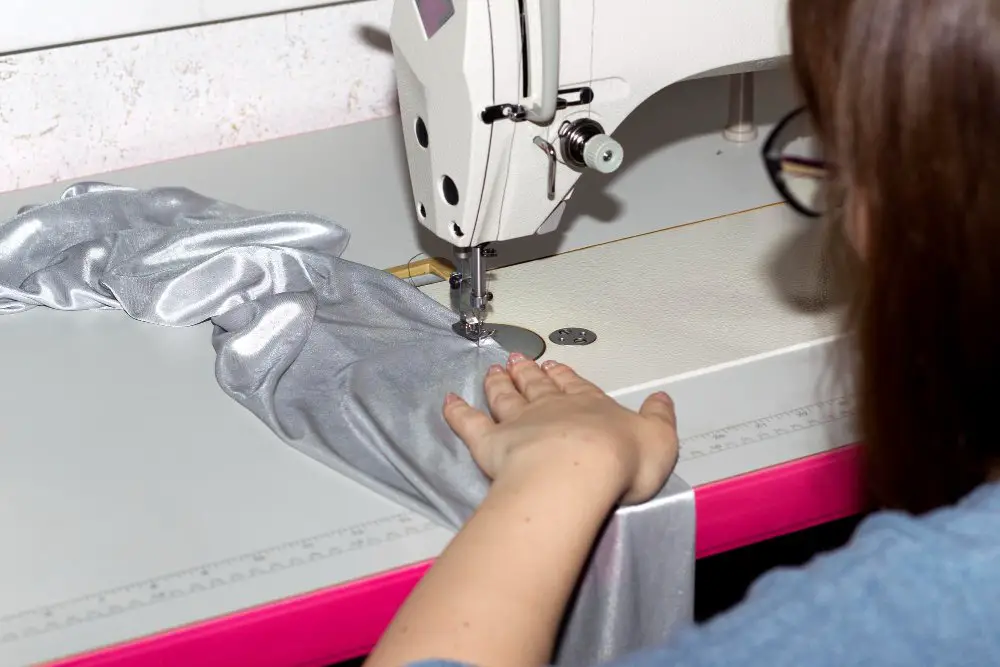
Working with stretch satin can feel challenging at first, but with the right techniques, you can achieve professional results. Let’s break down everything you need to know.
Is Stretch Satin Hard to Work With?
Stretch satin sits somewhere in the middle of the difficulty scale. It’s easier than regular satin because the stretch makes it a bit more forgiving, but it still has challenges. The fabric is slippery, can shift during cutting and sewing, and shows every mistake. However, with proper preparation and techniques, most intermediate sewers can handle it successfully.
Is Stretch Satin Easy to Sew?
For beginners, stretch satin isn’t the easiest fabric to start with, but it’s not impossible. If you’re new to sewing with slippery or stretch fabrics, it’s smart to practice with a less expensive version first. Once you understand the basic techniques, you’ll find stretch satin is actually more manageable than regular satin because it’s more forgiving and doesn’t slide around quite as much.
Is Stretch Satin Hard to Sew?
The difficulty level depends on your experience and preparation. The main challenges are keeping the fabric from shifting, sewing seams that can stretch without popping, and avoiding visible pin marks or snags. But here’s the good news: with the right tools and techniques (which we’ll cover below), these challenges are totally manageable.
Pre-Sewing Preparation
Should You Pre-Wash Stretch Satin?
This depends on the fiber content:
- Polyester stretch satin: Optional. It rarely shrinks, but washing can remove sizing and help you see the fabric’s true drape
- Silk stretch satin: Dry clean only, don’t pre-wash at home
- Nylon stretch satin: Should be washed once in cool water to remove any manufacturing residue
If you do pre-wash, use cool water on a gentle cycle, skip the dryer (air dry flat), and iron on low heat if needed before cutting.
Understanding Direction of Greatest Stretch (DoGS)
This is one of the most important concepts when working with stretch satin. The Direction of Greatest Stretch is exactly what it sounds like – the direction in which the fabric stretches the most.
For 2-way stretch satin, this is usually across the width of the fabric (perpendicular to the selvage). For 4-way stretch, it stretches in both directions but often still has one direction with more stretch.
Why does this matter? You want the greatest stretch to go around your body (horizontally), not up and down. This allows the garment to fit comfortably without stretching out lengthwise.
Quick DoGS Test: Pull the fabric in both directions. The direction that stretches more easily is the Direction of Greatest Stretch. Mark this with a piece of tape or chalk so you don’t forget when laying out your pattern.
Pattern Selection and Layout
Choose patterns designed for stretch fabrics or woven fabrics with some give. Patterns that work well include:
- Slip dresses and bias-cut gowns
- Fitted bodysuits and camisoles
- Body-conscious dresses with princess seams
- Simple A-line or sheath dresses
Avoid patterns with lots of intricate details if you’re a beginner. The simpler the pattern, the easier it will be to sew beautifully.
Cutting Techniques
This is where many people struggle with stretch satin. The fabric is slippery and can shift easily. Here’s how to get clean, accurate cuts:
- Use a single layer: Never cut stretch satin while folded. Cut each pattern piece separately in a single layer
- Stabilize your cutting surface: Work on a table covered with a non-slip mat or flannel-backed vinyl tablecloth
- Use pattern weights instead of pins: Pins can leave permanent marks in stretch satin. Use pattern weights, cans of food, or heavy books to hold the pattern in place
- Use sharp scissors or a rotary cutter: Dull blades will pull and distort the fabric. A rotary cutter gives the cleanest edge
- Cut slowly and deliberately: Take your time and keep the fabric flat on the table as you cut
Important: Stretch satin can easily shift while cutting, which will result in pattern pieces that don’t match. Some sewers like to spray-baste the pattern to the fabric with temporary adhesive, cut, then carefully remove the pattern. This prevents any movement during cutting.
Marking the Fabric
Traditional marking methods can leave permanent marks on stretch satin. Use these safe alternatives:
- Tailor’s tacks: Small thread loops that won’t damage the fabric
- Clip notches: Tiny snips in the seam allowance (be careful not to cut too deep)
- Chalk on the wrong side only: Never mark the right side
- Washable fabric markers: Test on a scrap first to ensure it washes out completely
Sewing Techniques That Work
Choosing the Right Needle
The needle makes a huge difference when sewing stretch satin. Here’s what to use:
- For woven stretch satin (most common): Use a stretch needle (also called a ballpoint needle) in size 70/10 or 80/12
- For very lightweight stretch satin: Use size 70/10 to prevent large holes
- For medium-weight stretch satin: Use size 80/12
- For heavy-weight stretch satin: Use size 90/14
Stretch needles have a slightly rounded point that pushes between fibers rather than piercing through them. This prevents snags and runs. Always start with a new needle – dull or damaged needles will cause problems.
Thread Selection
Use good quality polyester thread for stretch satin. Polyester thread has a slight stretch and is strong enough to handle the fabric’s movement. The thread color should match your fabric – when in doubt, go slightly darker rather than lighter, as darker thread is less noticeable.
Stitch Settings
This is where many sewers make mistakes. Here are the optimal settings:
- Stitch length: 2.5mm (this is the sweet spot for stretch satin)
- Tension: Start with normal tension (usually 4 on most machines) and adjust if needed
- Pressure: Reduce presser foot pressure slightly to prevent fabric from stretching as it feeds through
For seams that need to stretch (like side seams on a fitted dress), use one of these stitches:
- Straight stretch stitch: Most machines have this as a built-in stitch
- Narrow zigzag: Set width to 0.5-1mm and length to 2.5mm
- Lightning stitch: If your machine has this, it’s great for stretch fabrics
For seams that shouldn’t stretch (like necklines, shoulder seams), use a regular straight stitch at 2.5mm and add stay tape along the seam line to prevent stretching.
Preventing Seam Puckering
Puckered seams are frustrating but preventable:
- Don’t pull or push the fabric as you sew – let the feed dogs do the work
- Use tissue paper under the fabric – place tissue paper between the fabric and feed dogs, then tear it away after sewing
- Hold the fabric taut (not stretched) – gently hold the fabric taut in front and behind the needle as you sew, but don’t pull
- Use a walking foot – this presser foot helps feed top and bottom layers evenly
Handling Slippage
The fabric sliding around during sewing is one of the biggest challenges. Here’s how to control it:
- Pin in seam allowances only: If you must pin, place pins only in seam allowances where holes won’t show
- Use clips instead of pins: Small sewing clips or even binder clips work well
- Baste first: Hand-baste seams together before machine sewing, especially for curves
- Use a walking foot: This prevents top and bottom layers from shifting
Sewing Seams That Stretch
For seams that need to stretch with the fabric:
- Use a stretch stitch or narrow zigzag
- Stretch the fabric very slightly as it passes under the needle (this puts a tiny bit of ease into the seam)
- Test on scraps first to get the tension right
When sewing elastic to stretch satin (like in lingerie waistbands), you may need to pull the elastic slightly as you sew to prevent the fabric edge from rippling. Practice this technique on scraps first.
Stabilizing Techniques
Some areas of a garment shouldn’t stretch. Stabilize these with:
- Clear elastic: Great for necklines and armholes
- Twill tape or stay tape: Sewn on top of the seam line before stitching prevents stretching
- Lightweight fusible interfacing: Use on collars, cuffs, and button bands
The shoulder seams of dresses should always be stabilized with stay tape to prevent sagging.
Finishing Seams
Stretch satin can fray, so finish your seams properly:
- Serger/Overlocker: The best option if you have one
- Zigzag stitch: Stitch close to the edge of the seam allowance
- French seams: Perfect for lightweight stretch satin, encloses raw edges
- Mock French seams: Easier than true French seams, still looks clean
Common Problems and Solutions
Problem: Fabric Shifting During Cutting
Solution: Cut single layers only, use pattern weights, work on a non-slip surface, and consider spray-basting the pattern to the fabric.
Problem: Visible Pin Holes
Solution: Pin only in seam allowances, use clips instead of pins, or hand-baste seams.
Problem: Seams That Pop When Stretched
Solution: Use a stretch stitch or narrow zigzag instead of straight stitch on seams that need to stretch.
Problem: Puckered Seams
Solution: Use tissue paper under the fabric, adjust tension, use a walking foot, and don’t pull the fabric as you sew.
Problem: Snags and Pulls
Solution: Use a new, sharp stretch needle, reduce pressure on presser foot, and handle fabric gently.
Problem: Stretched-Out Necklines or Armholes
Solution: Always stabilize these areas with clear elastic or stay tape before sewing.
🔧 Calculate Your Fabric Needs
Not sure how much stretch satin to buy for your project? Our fabric yardage calculator helps you calculate exactly how much you need based on your garment type and size.
Pressing and Ironing
Can Stretch Satin Be Ironed?
Yes, stretch satin can be ironed, but you need to be careful about heat and technique. The main concern is that high heat can damage the spandex fibers and cause the fabric to lose its stretch and recovery.
Can You Iron Stretch Satin?
Absolutely, and you’ll need to iron stretch satin at various points during construction. Here’s how to do it safely:
- Use low to medium heat: For polyester stretch satin, use the synthetic setting. For silk, use the silk setting
- Always iron on the wrong side: This prevents shine marks on the right side
- Use a pressing cloth: Place a clean piece of cotton fabric between the iron and your stretch satin
- Press, don’t drag: Lift the iron and set it down rather than sliding it across the fabric
- Let it cool before moving: Allow the fabric to cool completely before handling to set the press
Can You Steam Stretch Satin?
Yes, and steaming is actually gentler than ironing. A handheld steamer or steam iron held just above the fabric (not touching) can remove wrinkles effectively. This is especially good for finished garments. Always test on a scrap first to make sure the fabric responds well to steam.
Never: Use high heat on stretch satin, press directly on the right side without a pressing cloth, or drag the iron across the fabric. These can cause permanent damage.
Care and Maintenance Instructions
Proper care will keep your stretch satin garments looking beautiful for years. The good news is that most stretch satin is fairly easy to care for.

How to Wash Stretch Satin
The washing method depends on the fiber content:
Polyester Stretch Satin
Machine Washing:
- Turn garments inside out to protect the shiny surface
- Use cold water (warm water can damage spandex fibers over time)
- Select gentle or delicate cycle
- Use mild detergent – avoid harsh chemicals or bleach
- Don’t use fabric softener (it can coat the fibers and reduce shine)
- Wash with similar colors and fabrics
Hand Washing (preferred method):
- Fill a basin with cool water and mild detergent
- Submerge the garment and gently swish for 2-3 minutes
- Let soak for 10-15 minutes if heavily soiled
- Rinse thoroughly in cool water until soap is gone
- Gently squeeze out excess water (don’t wring or twist)
Silk Stretch Satin
Always dry clean silk stretch satin unless the care label specifically says it’s hand-washable. The spandex can be damaged by dry cleaning solvents over time, so look for cleaners experienced with stretch silk fabrics.
Nylon Stretch Satin
Follow the same guidelines as polyester stretch satin. Nylon can be machine washed on delicate cycle in cool water.
Can You Wash Stretch Satin?
Yes, most stretch satin (especially polyester and nylon versions) can be safely washed at home. The key is using cool water, gentle agitation, and proper drying methods. Always check the care label first, as some heavily embellished or lined garments may require dry cleaning.
Drying Stretch Satin
Important: Never put stretch satin in a hot dryer. The heat will damage the spandex fibers and can cause the fabric to lose its stretch permanently.
Best drying method:
- Gently squeeze out excess water (don’t wring)
- Roll the garment in a clean, dry towel to absorb more moisture
- Lay flat on a clean, dry towel or drying rack
- Reshape the garment to its original shape
- Allow to air dry away from direct sunlight and heat
For items that can hang (not knit or very stretchy), you can hang them on padded hangers, but laying flat is always safest.
Stain Removal
Treat stains as quickly as possible:
- Blot (don’t rub) liquid stains immediately with a clean cloth
- For oil-based stains, sprinkle with cornstarch or talcum powder to absorb the oil, wait 15 minutes, then brush off gently
- For water-based stains, dab with a clean, damp cloth
- Use a gentle spot cleaner designed for delicate fabrics
- Test any stain remover on a hidden area first
- Never use harsh chemicals or bleach
Water Spotting: Stretch satin, especially polyester, can show water spots if you try to spot-clean it. If you treat a stain with water, you may need to wash the entire garment to avoid a watermark.
Storage
Proper storage keeps stretch satin garments in great condition:
- Hanging: Use padded or wide hangers for dresses and tops to prevent shoulder bumps
- Folding: For items you fold, place tissue paper between folds to prevent creases
- Garment bags: Store special occasion pieces in breathable garment bags (not plastic) to protect from dust
- Climate: Store in a cool, dry place away from direct sunlight which can fade colors
- Moths: While polyester and nylon aren’t attractive to moths, silk is – use cedar or lavender sachets for silk pieces
Does Stretch Satin Shrink?
Polyester and nylon stretch satin rarely shrink, even with washing. However, there are two situations where shrinkage can occur:
- High heat: If exposed to high heat (hot water, hot dryer, high iron setting), the spandex fibers can degrade and contract, causing the fabric to shrink and lose stretch
- First wash of silk: Silk can shrink up to 5-10% with the first wash or dry cleaning, which is why it’s important to dry clean silk stretch satin unless labeled washable
To prevent shrinkage, always use cool water and air dry.
Refreshing Between Wears
You don’t need to wash stretch satin after every wear. To refresh garments between wears:
- Hang in a steamy bathroom to release wrinkles and odors
- Use a fabric refresher spray designed for delicates
- Air out garments for several hours before storing
- Spot-clean any small marks or spills
For more detailed information on caring for satin garments, check out this helpful guide on how to care for satin clothing.
Price Guide and Where to Buy
Understanding pricing and knowing where to shop can help you get the best value for your money.
Price Ranges by Quality and Fiber
| Type | Price Range (per yard) | Quality Level | Best For |
|---|---|---|---|
| Budget Polyester | $5-$10 | Basic | Practice projects, costume wear |
| Mid-Range Polyester | $10-$20 | Good | Most sewing projects, everyday wear |
| Premium Polyester | $20-$35 | Excellent | Special occasion wear, photography |
| Nylon Blend | $10-$30 | Good to Excellent | Dancewear, activewear |
| Recycled Options | $15-$35 | Good to Excellent | Eco-conscious projects |
| Silk Blend (lower grade) | $30-$60 | Luxury | Special garments |
| Silk Blend (premium) | $60-$100+ | Ultra-luxury | Bridal, high-end fashion |
Where to Buy
Online Retailers
- Mood Fabrics: Wide selection, good quality, ships internationally
- Fabric.com: Large inventory, frequent sales
- Fashion Fabrics Club: Stretch satin specialists, good wholesale prices
- EmmaOneSock: Quality silk and polyester options
- Etsy: Independent sellers, unique options, varying quality
Chain Fabric Stores
- Joann Fabrics: Budget to mid-range options, frequent coupons
- Hobby Lobby: Affordable options, limited selection
Local Fabric Stores
Independent fabric stores often have better quality and knowledgeable staff. The ability to see and feel fabric before buying is worth the potentially higher price.
Money-Saving Tips:
- Buy during sales (Black Friday, end of season)
- Purchase full bolts for wholesale pricing
- Join loyalty programs for discounts
- Order swatches before buying yardage (saves money on returns)
- Check the remnant section for smaller projects
Frequently Asked Questions
Conclusion
Stretch satin offers something special: the luxurious look and feel of traditional satin combined with modern comfort and flexibility. Whether you’re creating an elegant evening gown, comfortable lingerie, or performance dancewear, this versatile fabric delivers both beauty and practicality.
Key Takeaways
Understanding Stretch Satin: Remember that satin refers to a weaving technique, not a specific fiber. Stretch satin combines this classic satin weave with 2-10% elastic fibers, giving you the best of both worlds – shine and flexibility. The most common type is polyester with spandex, which is affordable, easy to care for, and works well for most projects.
Choosing the Right Type: Consider your project needs carefully. Silk stretch satin offers luxury and breathability but requires dry cleaning and comes with a higher price tag. Polyester stretch satin provides excellent value and easy care for everyday projects. Nylon blends excel for activewear and dancewear. And if sustainability matters to you, recycled options are increasingly available without sacrificing quality.
Sewing Success: Working with stretch satin doesn’t have to be intimidating. The key is preparation and the right techniques. Cut in single layers, use pattern weights instead of pins, invest in quality stretch needles, and practice on scraps before tackling your final project. A 2.5mm stitch length works best for most applications, and a walking foot can make your sewing experience much smoother.
Care and Longevity: Most stretch satin is surprisingly low-maintenance. Polyester and nylon versions can be machine washed in cool water and air dried, making them practical for garments you’ll wear regularly. The fabric resists wrinkles, holds color beautifully, and maintains its stretch over time when cared for properly. Just avoid high heat in washing, drying, and ironing to protect those elastic fibers.
Recommendations for Getting Started
If you’re new to working with stretch satin, start with a small, simple project using mid-range polyester stretch satin. A simple camisole or slip dress is perfect for learning the basics without investing too much money or time. Practice your cutting and sewing techniques on scraps first.
For your first project, choose 2-way stretch in medium weight (around 150 GSM). This weight is the most forgiving and easiest to handle. As you gain confidence, you can move on to lightweight fabrics for lingerie or heavier weights for structured gowns.
Don’t be discouraged if your first attempts aren’t perfect. Stretch satin has a learning curve, but it’s absolutely manageable with patience and practice. The beautiful results are worth the extra care required.
Consider exploring sustainable options as you gain experience. Recycled stretch satin performs just as well as virgin fabric while reducing environmental impact. Supporting brands and suppliers that prioritize eco-friendly production helps make the fashion industry more sustainable for everyone.
Moving Forward
Stretch satin opens up possibilities for creating professional-looking garments at home. From special occasion dresses to everyday lingerie, this fabric can handle whatever you dream up. The combination of elegant appearance and comfortable wear makes it a favorite among both home sewers and professional designers.
Remember to order fabric samples before committing to large yardage purchases. What looks perfect on screen might feel different in person, and a few dollars spent on samples can save you from investing in fabric that doesn’t work for your project.
Take care of your finished garments properly, and they’ll continue looking beautiful for years. With stretch satin’s durability and wrinkle resistance, you’re creating pieces that will stay in your wardrobe long-term, making your sewing investment truly worthwhile.
The world of stretch satin is full of creative possibilities. Whether you’re crafting your first slip dress or designing an elaborate wedding gown, you now have the knowledge to choose the right fabric, sew it successfully, and care for it properly. Happy sewing!