
Everything You Need to Know About Properties, Care, Sewing, Sustainability, and Uses of This Versatile Fabric
Table of Contents
- Introduction
- What is Nylon Chiffon Fabric?
- The History of Nylon Chiffon
- Properties and Characteristics
- Nylon Chiffon vs Other Chiffon Types
- Types and Varieties
- Uses and Applications
- Sustainability and Environmental Impact
- Care and Maintenance
- How to Sew with Nylon Chiffon
- Buying Guide
- Related Fabrics
- Frequently Asked Questions
- Conclusion
Introduction
Picture this: It’s 1938, and a new fabric hits the market that promises to make luxury fashion available to everyone, not just the wealthy. That fabric was nylon chiffon, and it changed fashion forever.
Before nylon chiffon came along, chiffon fabric meant silk, and silk meant expensive. Only people with money to spare could afford the flowing, beautiful dresses and scarves made from this delicate material. But when scientists invented nylon chiffon, suddenly everyone could enjoy that same elegant drape and sheer beauty without breaking the bank.
Today, nylon chiffon is everywhere. You’ll find it in dance costumes that move like water, bridal veils that float on air, evening gowns that make heads turn, and even in everyday scarves and blouses. It’s strong enough to hold up to repeated wear, beautiful enough for special occasions, and practical enough for real life.
This guide will walk you through everything you need to know about nylon chiffon. Whether you’re a home sewer looking to tackle your first chiffon project, a costume designer searching for the perfect fabric, or simply curious about this material that’s probably hanging in your closet right now, you’ll find practical answers to all your questions.
What is Nylon Chiffon Fabric?
Nylon chiffon is a lightweight sheer fabric known for softness and flow.
Nylon chiffon is a lightweight, see-through fabric made from synthetic nylon fibers woven in a specific pattern that creates its signature look and feel. If you hold it up to the light, you’ll see right through it, almost like looking through a very fine net or mesh.
What Makes It Chiffon?
The word “chiffon” doesn’t describe what a fabric is made from. Instead, it describes how the fabric is made. Think of it like this: “chocolate cake” tells you the flavor, but “layer cake” tells you the structure. Chiffon is the structure, and nylon is what it’s made from.
What makes chiffon special is the way the threads are twisted and woven together. The unique S-twist and Z-twist weaving technique is what distinguishes chiffon from other lightweight fabrics. According to Sewport’s comprehensive fabric directory, this alternating twist pattern creates the signature puckered texture that makes chiffon both beautiful and functional. The threads get twisted really tight in two different directions (one clockwise, one counter-clockwise), then woven in a simple over-under pattern. This creates tiny puckers in the fabric that you can feel when you run your fingers across it. These puckers are what give chiffon its slightly rough texture and help it drape so beautifully.
Is Nylon Chiffon the Same as Nylon Fabric?
Not exactly. This is where things get interesting. Nylon is the material (the “what”), while chiffon is the weaving technique (the “how”). You can make lots of different fabrics from nylon using different weaving methods. You could make nylon satin, nylon taffeta, or nylon jersey, each with completely different properties.
When someone says “nylon fabric,” they could mean any fabric made from nylon fibers. But “nylon chiffon” is specific. It means nylon fibers woven using the special chiffon technique that creates that sheer, flowing, slightly textured fabric we’re talking about.
Quick Example: Imagine making bread. Flour is your ingredient (like nylon), but you can turn flour into baguettes, croissants, or pizza dough depending on how you work with it. Same ingredient, completely different results. That’s the difference between nylon fabric (the ingredient) and nylon chiffon (one specific way to use that ingredient).
Key Characteristics at a Glance
When you’re working with nylon chiffon, you’ll notice these features right away:
- Sheer and lightweight: You can see through it easily, and it feels almost weightless in your hands
- Smooth but textured: It has a silky appearance but feels slightly rough due to those twisted yarns
- Stretchy: It has about 20-25% stretch across the width, which makes it move with your body
- Strong for its weight: Despite being so light and delicate-looking, it’s actually quite tough
- Flows beautifully: It drapes and moves in a way that makes it perfect for anything that needs to look graceful
The Fascinating History of Nylon Chiffon
Nylon chiffon blends vintage elegance with modern synthetic innovation.
Understanding where nylon chiffon came from helps explain why it became such a big deal in the fashion world. This isn’t just about fabric; it’s about making luxury accessible to regular people.
Before 1938: When Chiffon Meant Silk
Go back to the early 1900s, and chiffon meant one thing: silk. French weavers had perfected the art of taking delicate silk chiffon fabric and turning it into gorgeous, flowing fabric. But here’s the catch: silk was expensive to produce because it came from silkworm cocoons, and the process was time-consuming and labor-intensive.
Only wealthy people could afford silk chiffon gowns, scarves, and blouses. It showed up in high-society events, expensive boutiques, and fancy department stores. For most people, silk chiffon was something you saw in magazines or store windows, but never actually owned.
1938: The Game Changer
Then came 1938, and everything changed. Scientists had just invented nylon a few years earlier (in 1935), and fabric makers were excited to try it for everything. When they used nylon to make chiffon, they thought they’d created the perfect fabric that would replace silk completely.
At first, people were thrilled. Here was a fabric that looked like silk chiffon, flowed like silk chiffon, and cost way less than silk chiffon. Fashion magazines called it a miracle fabric. Stores couldn’t keep it in stock.
The Problem Nobody Saw Coming
But then the problems started showing up. Early nylon chiffon didn’t quite work the way people hoped. It melted too easily when ironed, didn’t breathe as well as silk, and had some issues with how it aged. Plus, World War II started shortly after, and nylon became super important for military use (parachutes, ropes, tents). Regular people couldn’t get nylon chiffon even if they wanted it.
After the war, manufacturers went back to making mostly silk chiffon for a while, trying to figure out how to fix nylon chiffon’s problems.
1958: The Comeback and Competition
By 1958, fabric makers had improved nylon chiffon and also invented polyester chiffon. Both synthetic options were now better, cheaper, and more durable than ever before. Polyester ended up becoming the most popular choice for everyday chiffon because it was even cheaper and easier to care for than nylon.
But nylon chiffon found its perfect uses. It became the go-to fabric for dance costumes because of its stretch and strength. Costume designers loved it because it could handle the wear and tear of performances. Lingerie makers chose it for its smooth feel and durability. And it became super popular for children’s pettiskirts because it held its shape better than polyester.
Modern Day: Finding Its Place
Today, nylon chiffon has carved out its own space in the fabric world. It’s not trying to replace silk anymore. Instead, it’s appreciated for what it does best: providing affordable beauty with practical durability. You’ll find it in professional dance companies, children’s formal wear, lingerie collections, and anywhere else people need a fabric that looks delicate but can actually take a beating.
Properties and Characteristics
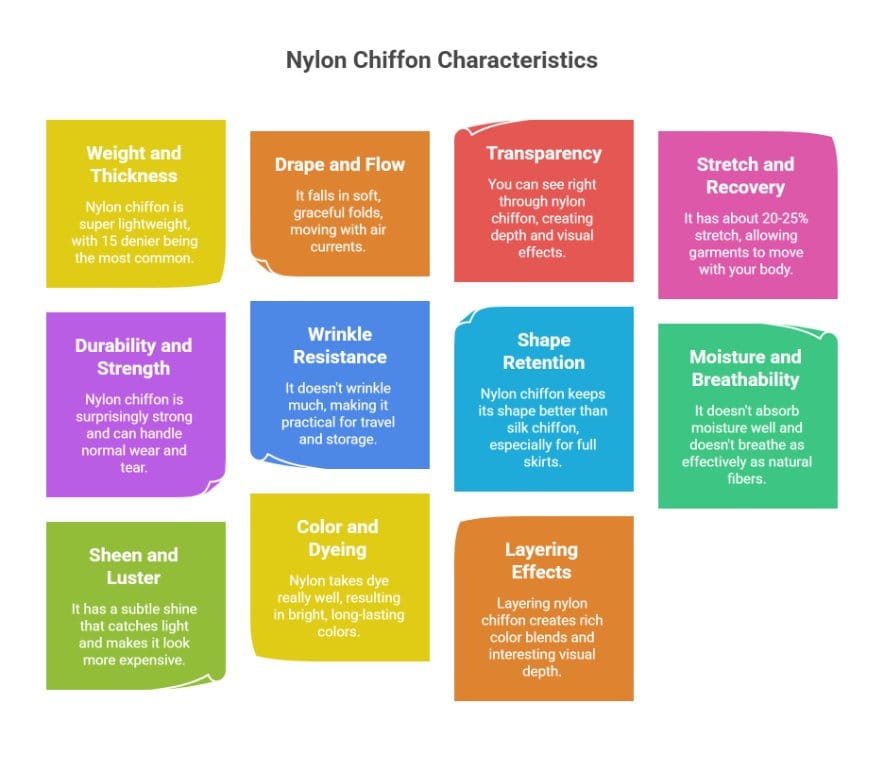
Key properties of nylon chiffon explained visually for quick fabric comparison.
Let’s get into what nylon chiffon actually does and how it behaves. This matters whether you’re buying it, sewing with it, or just trying to figure out if it’s right for your project.
Physical Properties
Weight and Thickness
Nylon chiffon usually comes in different weights measured in something called “denier.” Don’t worry about the technical stuff-just know that 15 denier is the most common and means it’s super lightweight. Some versions go up to 20 or 30 denier, which are a bit heavier but still very light.
To give you an idea: a yard of 15-denier nylon chiffon weighs less than an ounce. That’s lighter than a slice of bread. When you’re holding it, it feels almost like holding nothing at all.
Drape and Flow
This is where nylon chiffon really shines. When you let it hang, it falls in soft, graceful folds. It doesn’t stick out stiffly like some fabrics, and it doesn’t just hang there limply either. It moves with air currents, swirls when you spin, and creates that flowing, romantic look that people love in evening wear and dance costumes.
Real-World Comparison: Think about how water moves when you pour it slowly versus how honey moves. Nylon chiffon drapes more like water, soft and flowing, while heavier fabrics move more like honey, slower and more deliberately.
Transparency
You can see right through nylon chiffon. This isn’t a flaw; it’s a feature. When designers use it, they usually layer it over another fabric or use multiple layers of the chiffon itself to create depth and interesting visual effects. Single layers work great for scarves and overlays where you want that see-through quality.
Stretch and Recovery
Nylon chiffon has about 20-25% stretch across the width of the fabric. This means if you pull it gently from side to side, it stretches and then snaps back into shape. This stretch is super helpful because it lets garments move with your body and helps them keep their shape even after wearing them multiple times.
Performance Properties
Durability and Strength
As noted in MasterClass’s guide to chiffon fabric, the tight twists in the yarns combined with the plain weave structure give chiffon surprising strength despite its delicate appearance. This makes it suitable for both decorative and functional applications.
Here’s something that surprises people: nylon chiffon is actually quite strong for how delicate it looks. You can wash it in a machine (on gentle, of course), and it won’t fall apart. It can handle normal wear and tear better than silk chiffon, which is one reason dance companies and costume shops prefer it.
That said, it’s not indestructible. Sharp objects can snag it, and if you catch it on something rough, it can tear. But for everyday use, it holds up really well.
Wrinkle Resistance
One of nylon chiffon’s best features: it doesn’t wrinkle much. You can pack it in a suitcase, pull it out, and it’s mostly ready to wear. Compare this to silk chiffon, which wrinkles if you look at it wrong. This makes nylon chiffon way more practical for travel and storage.
Shape Retention
Nylon chiffon keeps its shape better than silk chiffon. This is especially important for garments like pettiskirts or full skirts that need to maintain volume. Silk chiffon tends to relax and lose its poof over time, but nylon holds up much better.
The tricot knit version (which we’ll talk about later) is even better at this because the knit structure adds extra stability.
Moisture and Breathability
This is where nylon chiffon isn’t as great as natural fibers. It doesn’t absorb moisture well and doesn’t breathe as effectively as silk or cotton. In hot, humid weather, this can feel less comfortable. However, for short periods (like wearing an evening dress for a few hours) or for costumes and dancewear where you need the fabric to stay looking fresh, it works fine.
Aesthetic Properties
Sheen and Luster
Nylon chiffon has a subtle shine to it. It’s not super shiny like satin, but it catches light nicely and has a soft glow. Under stage lights or in photographs, this sheen helps the fabric look more expensive than it actually is.
Color and Dyeing
Nylon takes dye really well, which means you can find nylon chiffon in just about any color you can imagine. The colors tend to stay bright even after multiple washes. However, if you want to dye it yourself at home, nylon can be tricky because it needs special dyes and high heat.
Layering Effects
When you layer nylon chiffon, interesting things happen with color and transparency. Two layers of the same color create a richer, deeper shade. Layering different colors creates beautiful color blends. This is why costume designers and fashion designers love using multiple layers of nylon chiffon to create depth in their designs.
Nylon Chiffon vs Other Chiffon Types
Understanding how nylon chiffon compares to other types helps you pick the right fabric for your needs. Each type has its strengths and weaknesses.
Nylon Chiffon vs Silk Chiffon
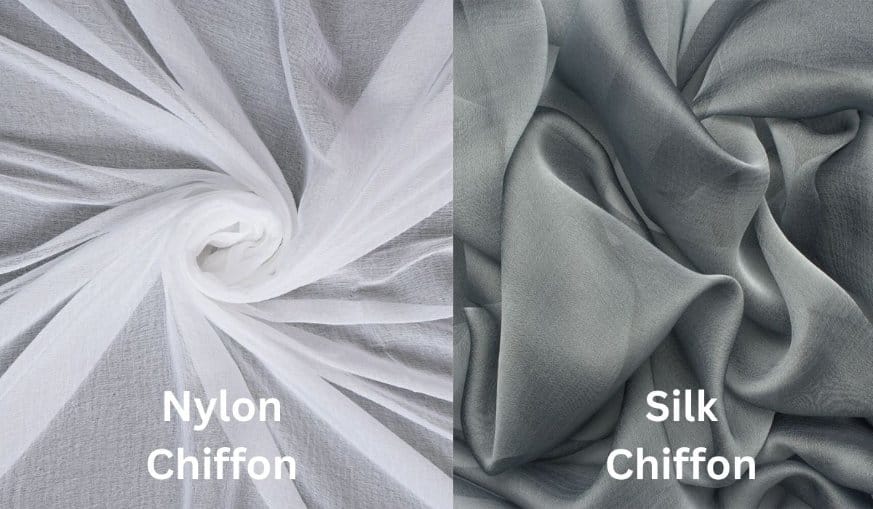
Silk chiffon offers natural luxury while nylon chiffon provides durability and affordability.
This is the big comparison everyone wants to know about. Let’s break it down honestly.
| Feature | Nylon Chiffon | Silk Chiffon |
|---|---|---|
| Cost | $3-8 per yard | $15-50+ per yard |
| Durability | Very strong, handles wear well | More delicate, can weaken over time |
| Feel | Smooth but slightly synthetic | Softer, more natural feel |
| Shine | Subtle, consistent sheen | Natural, luxurious luster |
| Care | Machine washable (gentle) | Usually requires dry cleaning |
| Breathability | Less breathable | More breathable, better for heat |
| Wrinkle Resistance | Resists wrinkles well | Wrinkles easily |
| Shape Retention | Maintains shape well | Can sag over time |
| Best For | Dance costumes, children’s wear, practical garments | High-end fashion, luxury items, formal occasions |
Bottom Line: Choose silk chiffon when you want the absolute best quality and don’t mind the extra cost and care requirements. Choose nylon chiffon when you need something that can handle real use, costs less, and doesn’t need special treatment.
Nylon Chiffon vs Polyester Chiffon
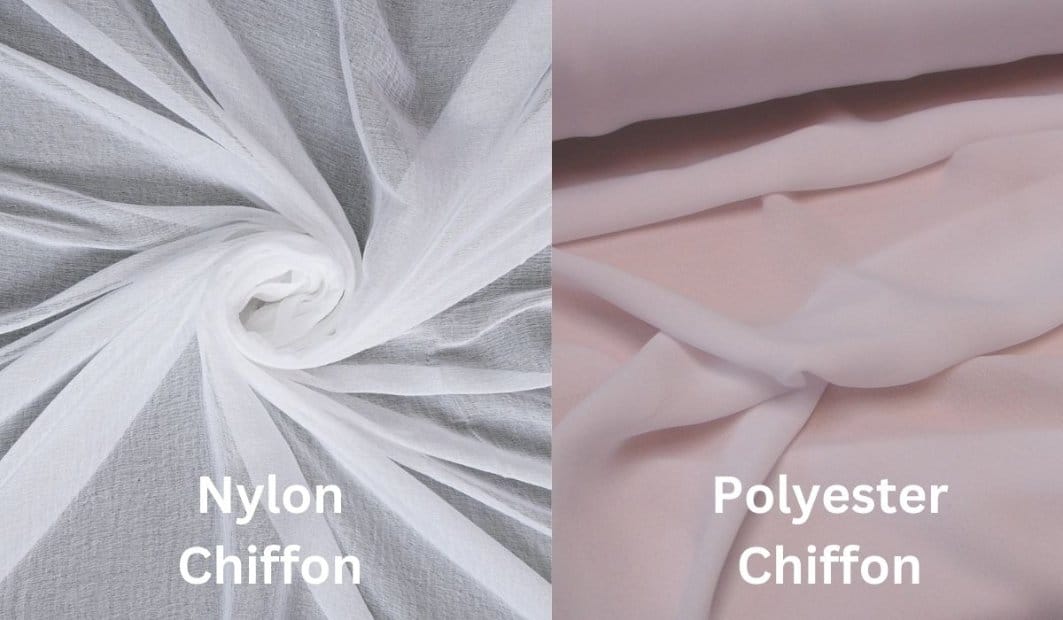
Visual comparison between nylon chiffon and polyester chiffon fabrics.
These two are the most common synthetic chiffons, and they’re often confused with each other. Here’s how they differ:
| Aspect | Nylon Chiffon | Polyester Chiffon |
|---|---|---|
| Texture | Smoother, more silk-like | Slightly rougher, more crisp |
| Stretch | 20-25% stretch across width | Less stretch, more stable |
| Drape | Softer, more flowing drape | Holds shape more, less fluid |
| Price | $3-8 per yard | $2-6 per yard |
| Color Fastness | Good | Excellent, colors stay bright longer |
| Wrinkle Resistance | Very good | Excellent, rarely wrinkles |
| Strength | Very strong | Strong but slightly less than nylon |
| Heat Sensitivity | Can melt at high heat | Very heat sensitive, melts easily |
| Best Uses | Dancewear, lingerie, children’s formal wear | Everyday clothing, scarves, linings |
Most people can’t tell the difference just by looking, but dancers and sewers definitely notice. Nylon chiffon moves better and feels softer, which is why it costs a bit more. Polyester chiffon is more practical for everyday items because it’s cheaper and even easier to care for.
Nylon Chiffon vs Cotton/Rayon Chiffon
Natural and semi-synthetic chiffons exist too, though they’re less common. Here’s the quick comparison:
Cotton Chiffon:
- More breathable and comfortable in heat
- Has a matte finish instead of shine
- Wrinkles much more easily
- Less see-through than nylon
- Better for people with sensitive skin
- Harder to find and usually more expensive
Rayon Chiffon:
- Drapes beautifully, similar to silk
- More breathable than nylon
- Less durable, can weaken when wet
- Requires gentle care
- Often used in high-end fast fashion
- Environmental concerns with production
Types and Varieties of Nylon Chiffon
Not all nylon chiffon is created equal. Different types serve different purposes, and knowing which one you need can save you time and frustration.
Woven Nylon Chiffon
This is the traditional type, made on a loom with the classic chiffon weaving technique. The edges will fray when cut, so you need to finish them properly when sewing. It has that authentic chiffon texture and drape that people expect.
Best for: Formal wear, scarves, overlays where you want the classic chiffon look
Tricot Knit Nylon Chiffon (Non-Fray)
Here’s a game-changer: instead of weaving the fabric, this type is knitted in a special way that creates a chiffon-like appearance but doesn’t fray when you cut it. This is huge for sewers and crafters because you can cut it and use it right away without finishing the edges.
Tricot knit nylon chiffon is super popular for pettiskirts and children’s party dresses because you can buy it in pre-cut rolls and just start ruffling. The knit structure also makes it a bit stretchier and more durable than woven chiffon.
Best for: Pettiskirts, projects where you need to cut a lot, crafts, anything where finishing edges would be a pain
Denier Variations
Remember when we talked about denier? Here’s what the different weights mean in practice:
15 Denier (Most Common):
- Super lightweight and see-through
- Perfect for layering and overlays
- Great drape and flow
- Most versatile weight
20 Denier:
- Slightly heavier and less transparent
- A bit more durable
- Better for garments that need more structure
- Still very lightweight
30 Denier:
- The heaviest nylon chiffon you’ll commonly find
- Less see-through
- More substantial feel
- Good for items that need to last longer
Width Variations
Nylon chiffon comes in different widths, which matters when you’re planning a project:
- 54-60 inches: Standard width for most fashion applications
- 108 inches: Extra-wide, great for large projects like curtains or event draping
- Pre-cut rolls: Available in widths from 2 to 13 inches, perfect for pettiskirts and ruffles
Specialty Types
Iridescent Nylon Chiffon: Changes color depending on how the light hits it. The threads are woven with different colors that create a shimmering effect. Beautiful for evening wear and costumes.
Metallic Nylon Chiffon: Has metallic threads woven in that create a sparkly look. Popular for dance costumes and party wear.
Printed Nylon Chiffon: Comes with patterns or designs printed on it. Less common than solid colors but available for special projects.
Uses and Applications
Let’s talk about where nylon chiffon really shines. This fabric works in so many different ways, and understanding its applications helps you see why it’s stayed popular for almost 90 years.
Fashion Applications
Evening Gowns and Formal Wear
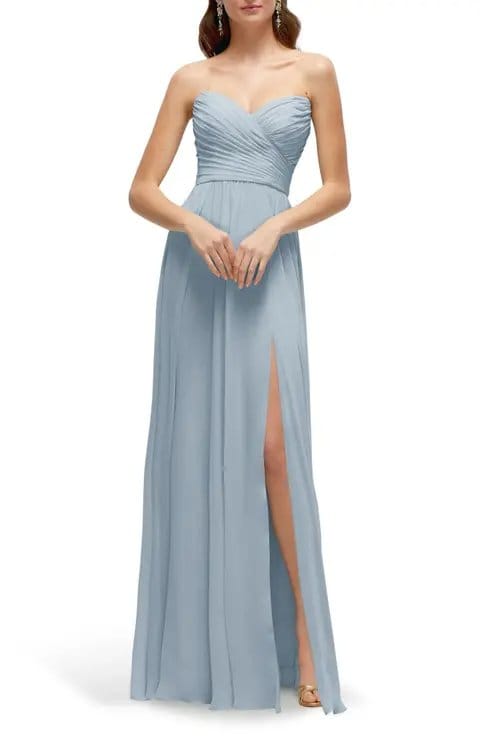
Nylon chiffon creates graceful evening dresses with lightweight flow and romantic movement.
Nylon chiffon creates those flowing, romantic looks you see in evening gowns. Designers layer it over satin or taffeta to add softness and movement. A solid-colored dress becomes more interesting with a nylon chiffon overlay that catches light and flows when you walk.
The fabric works especially well for:
- Overlay skirts that add volume without weight
- Flutter sleeves that move gracefully
- Flowing panels that create movement
- Layered hemlines that add dimension
Bridal Fashion
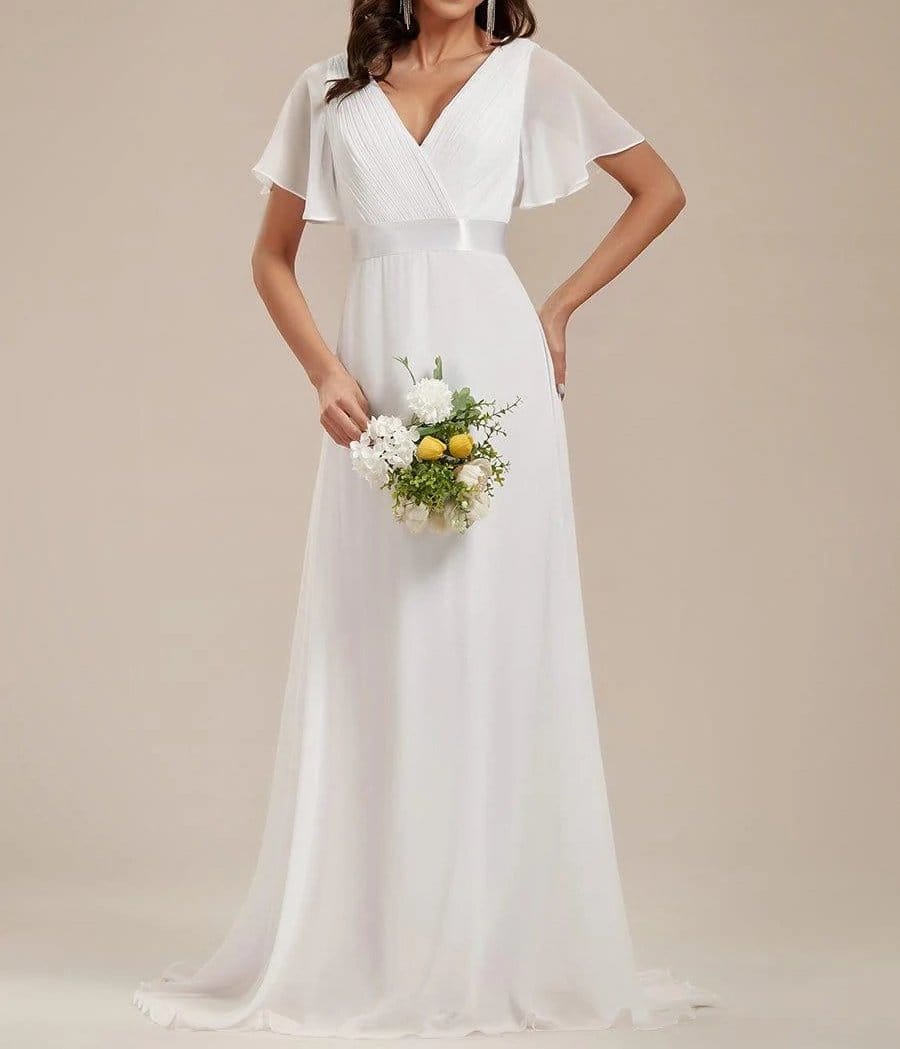
Nylon chiffon adds softness and romance to bridal dresses and wedding designs.
Wedding industry professionals love nylon chiffon for several reasons. It’s durable enough to survive a full day of wear, it photographs beautifully, and it costs less than silk while still looking elegant.
You’ll find it in:
- Veils: The sheerness creates that dreamy, romantic look
- Overlays and wraps: Adds softness to structured bridal gowns
- Sashes and ribbons: Ties beautifully and holds its shape
- Bridesmaid dresses: Affordable option that still looks high-end
Scarves and Accessories
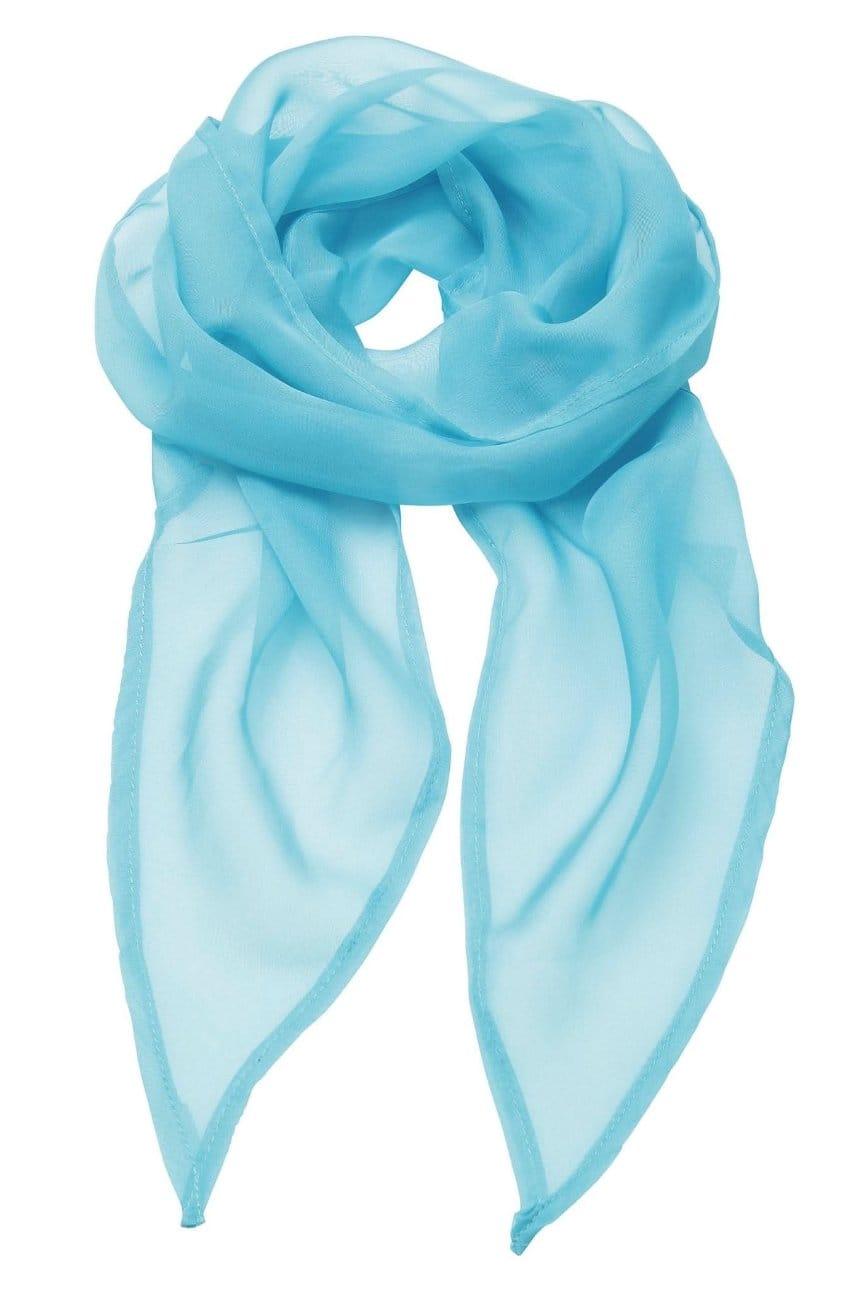
Chiffon scarves offer airy comfort and stylish layering for everyday outfits.
Nylon chiffon makes fantastic scarves because it’s lightweight enough to tie easily but sturdy enough to last. Unlike silk scarves that need dry cleaning, nylon chiffon scarves can go through a gentle machine wash cycle.
Blouses and Tops
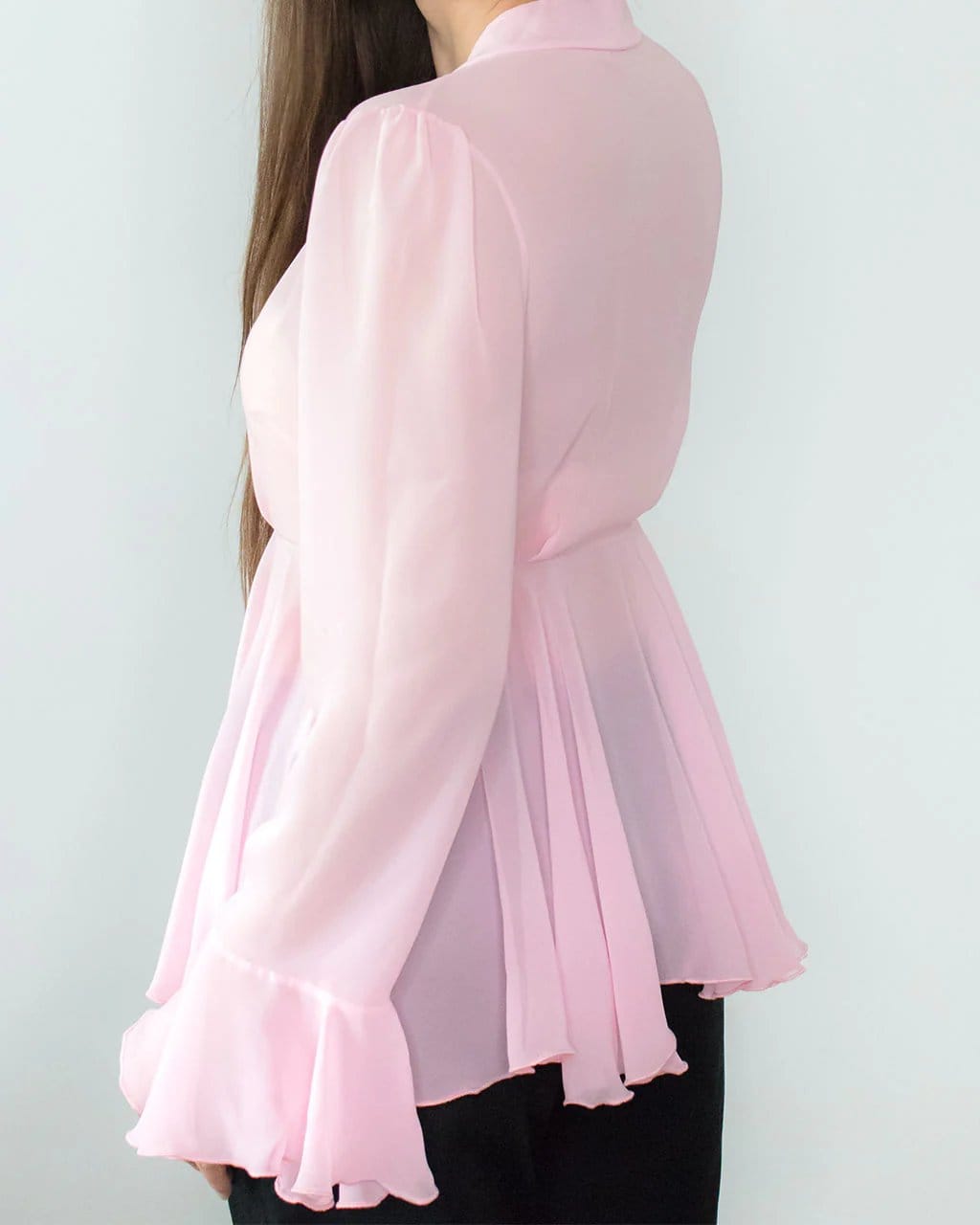
Nylon chiffon creates airy blouses with graceful movement and feminine style.
Sheer nylon chiffon blouses work great when layered over camisoles or tank tops. They add a dressy element to an outfit without being too heavy or warm. The slight stretch in nylon chiffon also makes these garments more comfortable than polyester alternatives.
Lingerie and Intimate Apparel
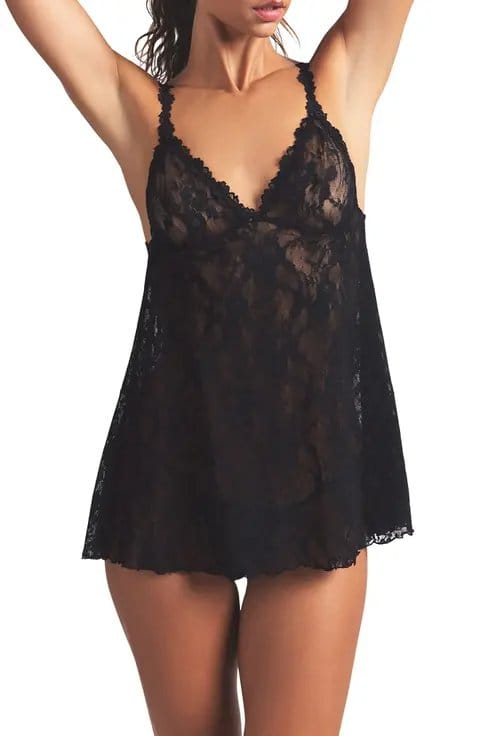
Nylon chiffon is often used in lingerie for its softness, breathability, and sheer elegance.
The lingerie industry uses nylon chiffon for overlays, panels, and decorative elements. It’s soft against skin, durable enough for regular washing, and creates that delicate, feminine look that’s popular in nightgowns, robes, and bralettes.
Children’s Pettiskirts and Tutus
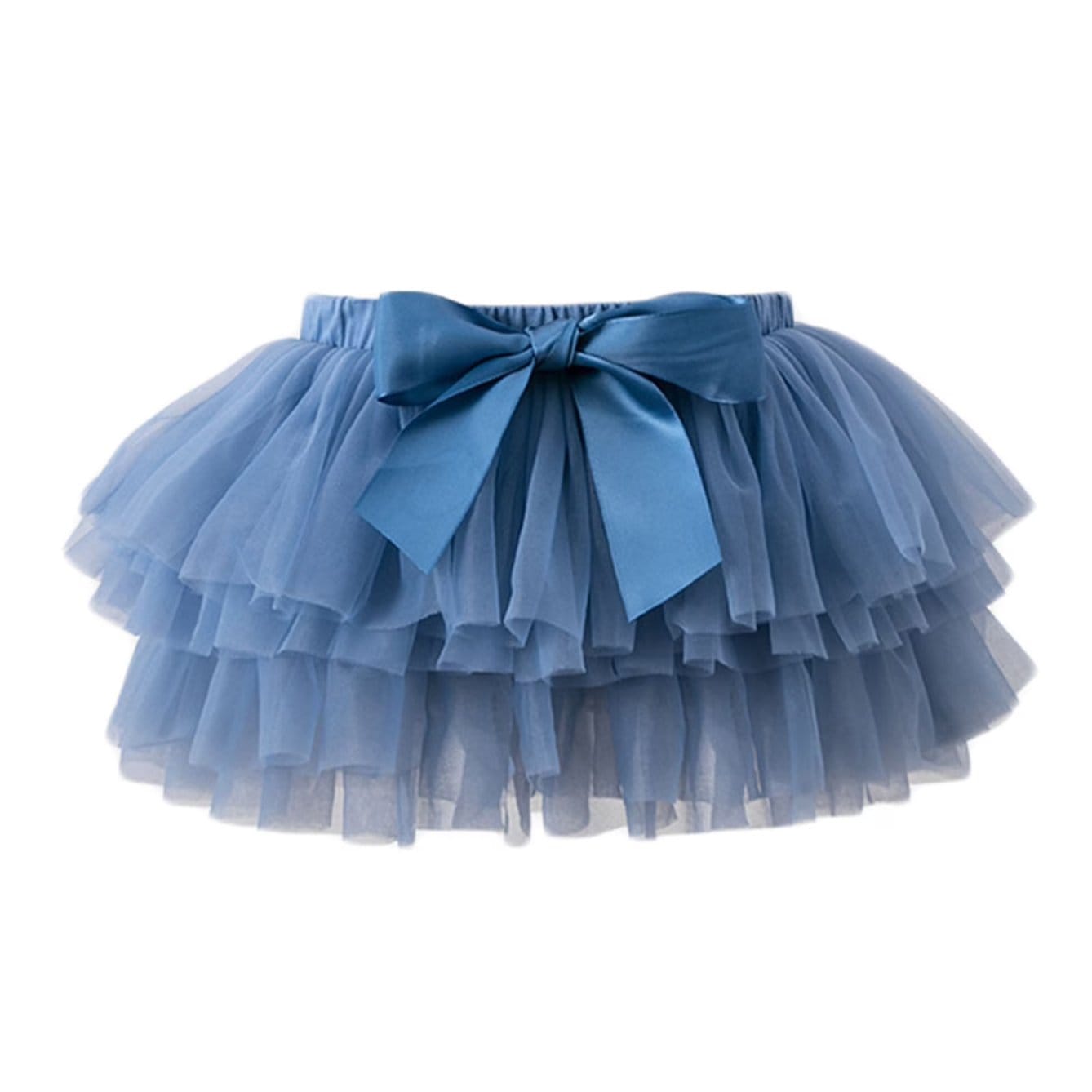
Layered nylon chiffon creates playful volume in children’s tutus.
This might be where nylon chiffon really found its calling. Those super fluffy pettiskirts that little girls wear under dresses? Most of them use nylon tricot chiffon. Here’s why:
- It holds volume without being stiff or scratchy
- The tricot version doesn’t fray, making construction easier
- It’s machine washable (important for kids’ clothes)
- Comes in every color imaginable
- Available in pre-cut rolls that save time
- Durable enough to survive active play
Performance and Costume Wear
Dance Costumes
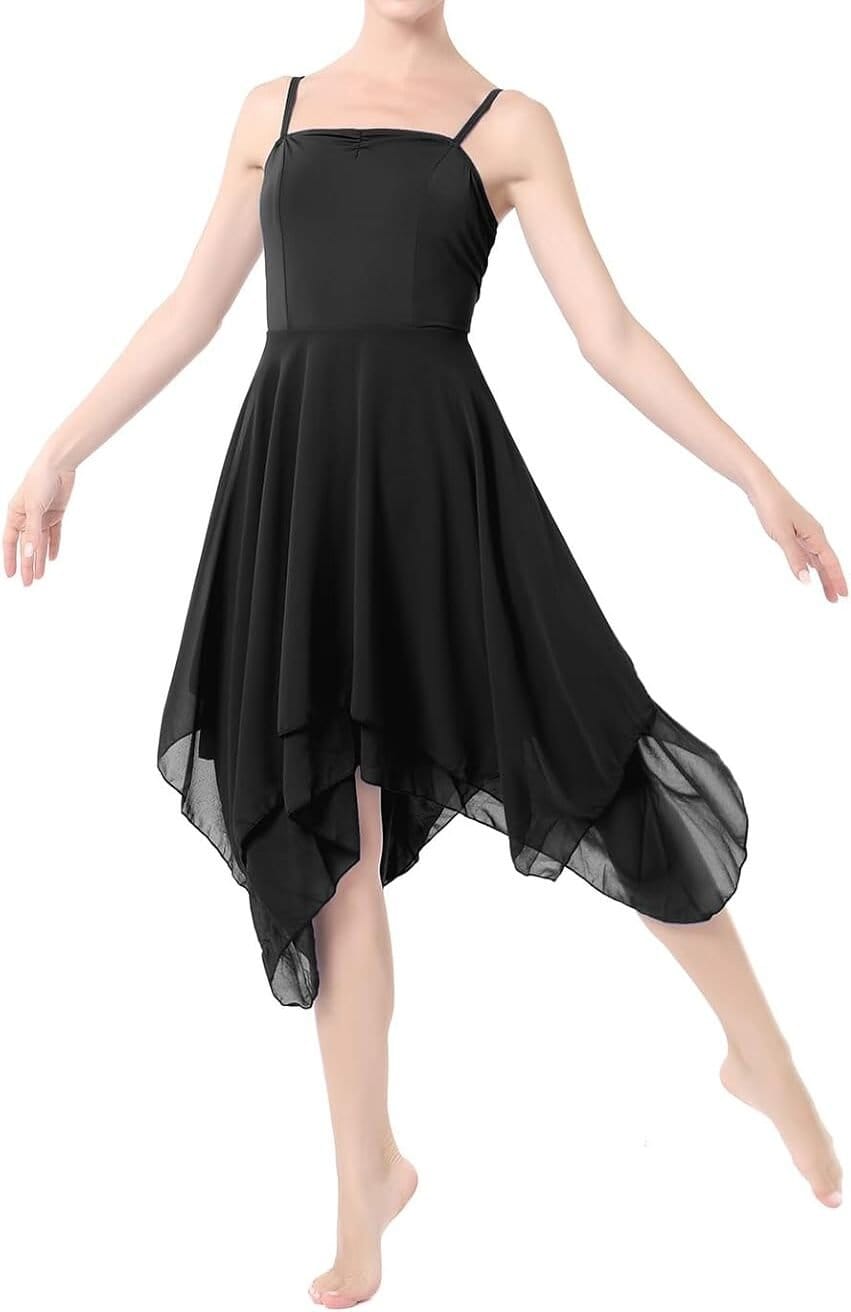
Chiffon dance costumes allow freedom of movement and dramatic flow.
Professional dance companies and costume shops stock nylon chiffon in quantity. It’s basically the standard for flowing dance costumes because:
- The fabric moves beautifully with the dancer
- Strong enough to handle repeated performances
- Can be washed frequently without falling apart
- The stretch allows for full range of motion
- Looks ethereal under stage lighting
- Doesn’t wrinkle when packed for travel
Ballet, contemporary dance, and ballroom dancing all use nylon chiffon for skirts, flowing sleeves, and overlays. The way it catches air and swirls creates that magical effect that makes dance performances look even more beautiful.
Theater and Stage Costumes
Theater costume departments choose nylon chiffon because it needs to survive multiple performances while looking good from the audience. It’s practical and beautiful, which is exactly what costume designers need.
Gymnastics and Figure Skating
Those flowing elements you see on figure skating dresses? Often nylon chiffon. It moves without getting in the way of athletic performance, doesn’t add significant weight, and stands up to the physical demands of competition.
Home and Event Decor
Sheer Curtains

Sheer chiffon curtains filter sunlight while maintaining a bright and airy space.
Nylon chiffon makes beautiful window treatments. It lets light through while providing privacy, and because it’s synthetic, it doesn’t fade as quickly as natural fibers when exposed to sunlight.
Event Draping
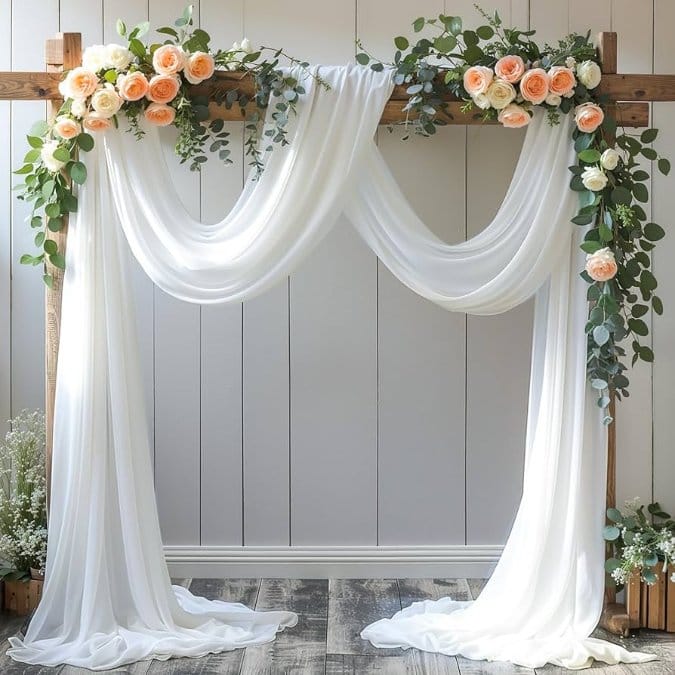
Sheer nylon chiffon adds elegant texture and flow to wedding and event decorations.
Wedding planners and event decorators use nylon chiffon by the bolt. It’s perfect for:
- Ceiling draping that creates romantic ambiance
- Table runners and overlays
- Chair sashes and bows
- Backdrop decorations
- Aisle decorations
The wide width options (up to 108 inches) mean you can create dramatic effects without seams. Plus, it’s affordable enough to use in quantity without breaking the event budget.
Decorative Elements
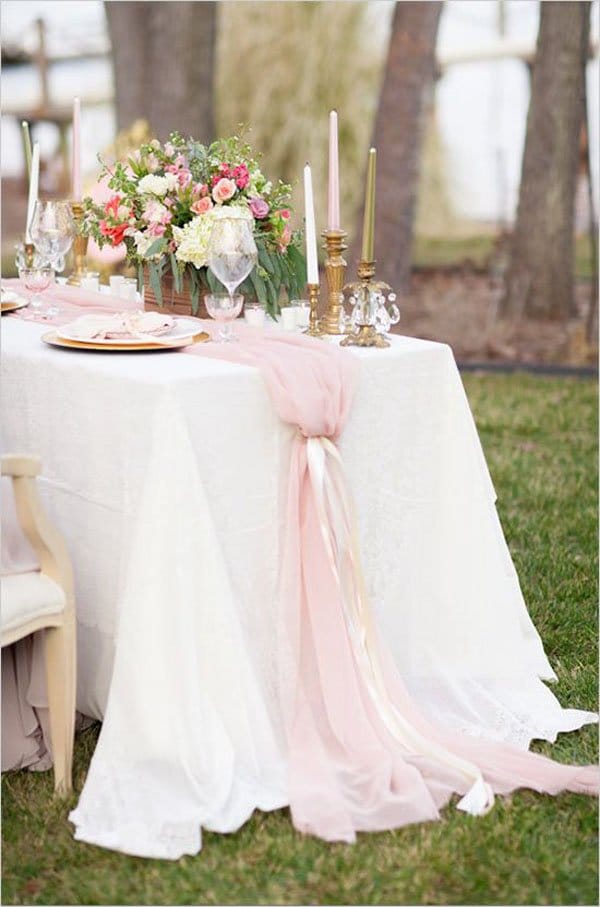
Nylon chiffon adds elegance to wedding and event decorations.
Crafters and DIY decorators use nylon chiffon for things like:
- Party decorations
- Baby shower decor
- Flower arrangements (as wrapping or accent material)
- Craft projects
- Gift wrapping for special presents
Sustainability and Environmental Impact
Let’s be honest about nylon chiffon’s environmental story. It’s not all good news, but there are some positive developments and things you can do to make better choices.
The Environmental Challenges
Petroleum-Based Production
Nylon comes from petroleum oil, which is a non-renewable resource. Getting oil out of the ground uses a lot of energy and can damage local ecosystems. The process of turning that oil into nylon also requires high temperatures and lots of energy, which means a significant carbon footprint.
Non-Biodegradable Nature
Here’s a tough fact: when you throw away nylon chiffon, it doesn’t break down naturally. Scientists estimate it takes 30-40 years to decompose, and even then, it doesn’t completely disappear. It breaks into smaller pieces but doesn’t return to natural elements the way cotton or silk would.
Microplastic Pollution
Every time you wash nylon chiffon, tiny plastic fibers break off and go down the drain. These microplastics end up in rivers, lakes, and eventually the ocean. Fish and other wildlife can mistake them for food, and they’re entering the food chain. Currently, nylon accounts for about 10% of the plastic debris in our oceans.
Manufacturing Process
According to Good On You’s material sustainability guide, nylon production releases nitrous oxide, a greenhouse gas approximately 300 times more harmful than carbon dioxide. The guide also notes that nylon accounts for a significant portion of ocean debris and takes hundreds of years to decompose in landfills.
Making nylon isn’t just energy-intensive; it also produces nitrous oxide, a greenhouse gas that’s about 300 times worse than carbon dioxide for the environment. Plus, the process uses a lot of water for cooling the fibers, and if that water isn’t treated properly, it can pollute local water sources.
Comparing to Alternatives
It’s worth putting this in perspective:
Silk chiffon: Better environmentally because it’s biodegradable and comes from a natural process (silkworms eating mulberry leaves). However, conventional silk production can use pesticides and isn’t always produced ethically.
Polyester chiffon: Very similar environmental impact to nylon, also petroleum-based and non-biodegradable.
Cotton chiffon: Biodegradable and from a renewable source, but cotton farming can use a lot of water and pesticides unless it’s organic.
Sustainable Alternatives and Solutions
The good news? The textile industry is working on better options.
Recycled Nylon
Companies are now making nylon from recycled materials like old fishing nets, fabric scraps, and even carpet fibers. Brands like Econyl have created regenerated nylon that performs just like new nylon but with a much smaller environmental footprint.
Recycled nylon chiffon isn’t as common as recycled nylon for other fabrics yet, but it’s growing. The quality is just as good as virgin nylon, but it uses less energy to produce and keeps waste out of landfills and oceans.
Bio-Based Nylon
Some manufacturers are creating nylon from renewable plant sources like castor beans, corn, or sugar crops instead of petroleum. This reduces dependence on fossil fuels and can lower the carbon footprint significantly.
Bio-based nylon can even be biodegradable in some formulations, breaking down in as little as five years in the right conditions. This is still developing technology, but it’s promising for the future.
What You Can Do
Buying Choices
When shopping for nylon chiffon, look for:
- Recycled content: Some suppliers now offer recycled nylon chiffon
- Certifications: Look for Global Recycled Standard (GRS), OEKO-TEX Standard 100, or Bluesign certifications
- Responsible brands: Companies that are transparent about their environmental practices
Use and Care Practices
You can reduce environmental impact through how you use the fabric:
- Buy what you need: Don’t over-purchase fabric that will just sit in your stash
- Use microplastic-catching bags: Wash nylon items in Guppyfriend bags or similar products that trap fibers
- Wash less frequently: Only wash when actually dirty, not after every wear
- Extend garment life: Take care of items so they last longer
- Repurpose and upcycle: Turn old nylon chiffon items into new projects instead of throwing them away
Disposal and Recycling
When an item has truly reached the end of its life:
- Check if your local textile recycling program accepts nylon
- Some brands offer take-back programs
- Consider donating to costume departments or craft programs if still usable
- Cut into small pieces for stuffing (better than throwing away whole)
Perspective: While nylon chiffon has environmental challenges, using it thoughtfully is better than buying cheap items that fall apart quickly. A well-made nylon chiffon garment that lasts for years has less environmental impact than several lower-quality items that get thrown away.
Care and Maintenance
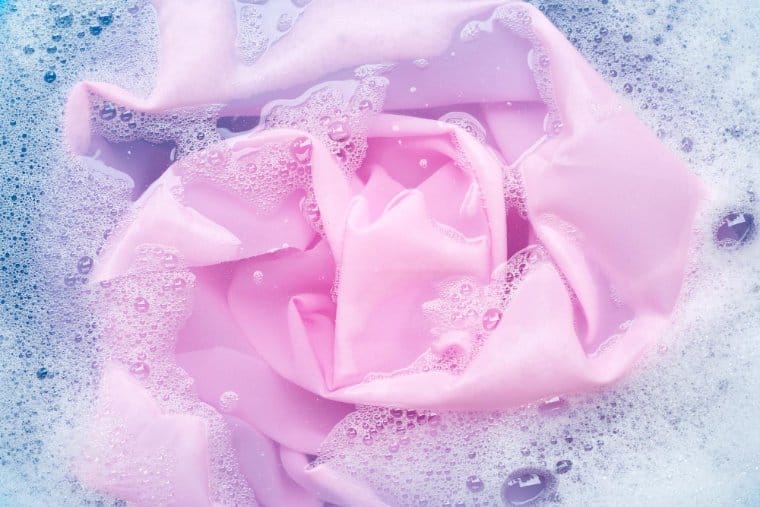
Hand washing nylon chiffon helps preserve its shape, softness, and transparency.
One of nylon chiffon’s best features is that it’s way easier to care for than silk chiffon. Here’s how to keep it looking good for years.
Washing Instructions
Machine Washing (The Easy Way)
Unlike silk chiffon that needs dry cleaning, nylon chiffon can handle machine washing. Here’s how to do it right:
- 1 Use a mesh laundry bag: This protects the fabric from snagging on other items or getting caught in the machine
- 2 Choose the gentlest cycle: Look for “delicate,” “hand wash,” or “gentle” settings
- 3 Cold water only: Hot water can damage nylon fibers and affect the fabric’s texture
- 4 Mild detergent: Skip the heavy-duty stuff. Use a gentle, pH-neutral detergent
- 5 Don’t overload: Wash with other delicate items, but give the fabrics room to move
- 6 Skip fabric softener: It can coat the fibers and change how the fabric drapes
Hand Washing
For special items or if you want to be extra careful:
- Fill a clean sink or basin with cold water
- Add a small amount of gentle detergent
- Swish the item gently in the water (don’t scrub or twist)
- Soak for maximum 30 minutes (longer can cause dye to fade)
- Rinse thoroughly in cold water until no soap remains
- Gently squeeze out excess water (don’t wring or twist)
Important: Don’t leave nylon chiffon soaking for more than 30 minutes. The dye can start to bleed, especially on darker colors. Set a timer if you need to.
Drying
Air Drying (Best Method)
Nylon chiffon air dries really quickly. Here’s the best way:
- Lay flat on a clean towel: This prevents stretching and maintains the shape
- Or hang on a padded hanger: Regular hangers can leave marks
- Avoid direct sunlight: UV rays can fade colors and weaken fibers over time
- Don’t use clips: They leave marks on delicate fabric
The fabric usually dries within an hour or two because it’s so lightweight and doesn’t hold water.
Machine Drying (If You Must)
It’s not ideal, but if you need to use a dryer:
- Use the absolute lowest heat setting or air fluff
- Put the item in a mesh bag
- Remove as soon as dry (don’t let it tumble extra)
- Know that repeated machine drying will shorten the fabric’s life
Ironing and Pressing
Temperature Settings
Here’s where you need to be careful. Nylon can melt if the iron is too hot. Follow these rules:
- Maximum temperature: 250-300°F (never higher)
- Iron setting: Use “nylon,” “synthetic,” or the lowest setting
- Test first: Always test on a scrap piece or hidden area
Best Practices
- Use a pressing cloth: Put a thin cotton cloth between the iron and nylon chiffon
- Keep the iron moving: Don’t let it sit in one place
- Iron on the wrong side: This prevents shine marks
- Don’t use steam directly: Lightly mist with water instead if needed
- Press, don’t push: Gently press down rather than sliding the iron around
Alternative: Steaming
Honestly, steaming is safer and often works better for nylon chiffon. A garment steamer removes wrinkles without the risk of melting. Just hold the steamer a few inches away from the fabric and let the steam do the work.
Storage
Short-Term Storage
For items you wear regularly:
- Hang on padded hangers to prevent shoulder bumps
- Give garments space to breathe (don’t cram them together)
- Keep away from direct sunlight
- Store in a cool, dry place
Long-Term Storage
For seasonal items or special occasion pieces:
- Clean before storing (even if it looks clean)
- Fold gently with tissue paper between folds
- Store in a breathable garment bag (not plastic)
- Keep in a climate-controlled space
- Check periodically for any issues
Stain Removal
General Stain Treatment
- Act quickly: Fresh stains are easier to remove
- Blot, don’t rub: Rubbing pushes the stain deeper into fibers
- Work from the outside in: This prevents spreading
- Test cleaning products: Try on a hidden area first
Specific Stains
Food and Beverage:
- Blot up excess with a clean cloth
- Dab with cold water
- Apply a small amount of gentle stain remover
- Wash as normal
Oil-Based Stains:
- Sprinkle baking soda on the stain to absorb oil
- Let sit for 15-20 minutes
- Brush off gently
- Apply gentle dish soap directly to stain
- Rinse and wash
Makeup:
- Use makeup remover or micellar water on a cotton pad
- Dab gently at the stain
- Wash as normal
Pro Tip: For tough stains on light-colored nylon chiffon, a paste of baking soda and water can work wonders. Apply gently, let sit for 30 minutes, then rinse and wash. Don’t use this on dark colors as it might lighten them.
What to Avoid
- Bleach (even on white fabric, it damages nylon)
- High heat (melts the fabric)
- Harsh chemicals
- Wringing or twisting
- Dry cleaning (usually unnecessary and wasteful)
- Prolonged soaking (causes dye fade)
How to Sew with Nylon Chiffon
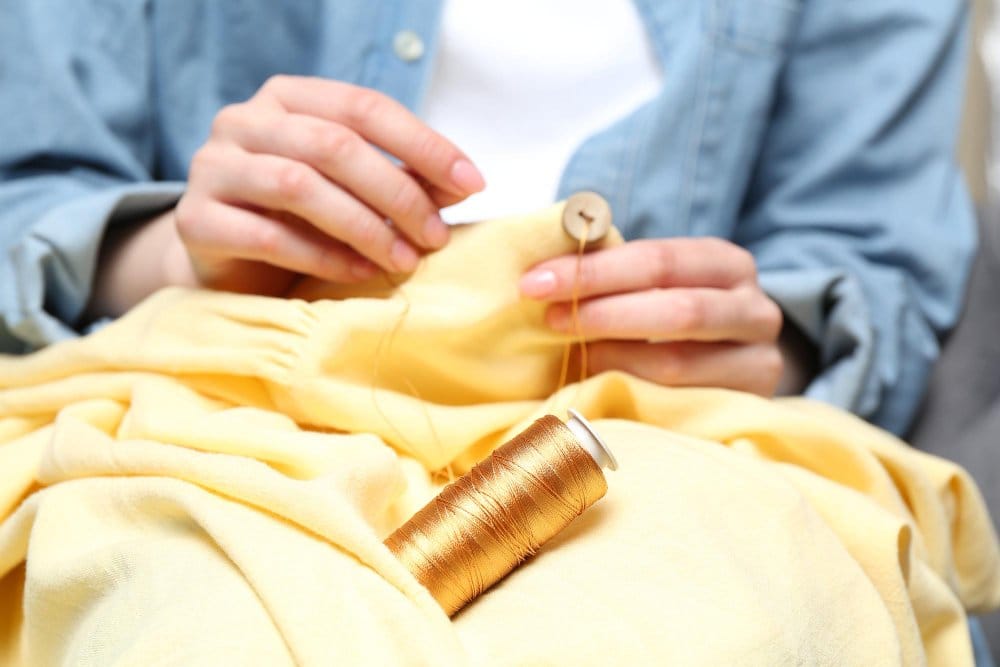
Hand sewing nylon chiffon requires gentle handling and fine needles to prevent snagging and puckering.
Sewing with nylon chiffon has a reputation for being tricky, but once you know the tricks, it’s totally manageable. Let’s walk through everything you need to know to succeed.
Before You Start: Preparation
To Pre-Wash or Not?
This is a hot debate among sewers. Here’s the deal: nylon chiffon doesn’t shrink much (if at all), so pre-washing isn’t usually necessary for shrinkage concerns. However, pre-washing can:
- Remove any finishing chemicals from manufacturing
- Check for color bleeding
- Give you a feel for how the fabric behaves when wet
If you do pre-wash, use the gentle cycle in cold water and air dry. Don’t skip the mesh bag.
Cutting Techniques
Cutting nylon chiffon can feel like trying to cut air. Here’s how to make it easier:
- 1 Use tissue paper: Sandwich the fabric between layers of tissue paper or pattern tissue before cutting. This stabilizes it and prevents shifting
- 2 Weight instead of pin: Pattern weights hold the fabric down without creating holes or distortion
- 3 Sharp tools are critical: Use very sharp fabric scissors or a new rotary blade. Dull blades catch and pull the fabric
- 4 Cut one layer at a time: Yes, it takes longer, but you’ll get much more accurate results
- 5 Use a non-slip surface: A cutting mat with a slightly rough texture helps
Tissue Paper Hack: After cutting, carefully tear away the tissue paper along the cut edges. The small perforations make it easy to remove without disturbing your fabric pieces.
Equipment You Need
Needle Selection
The right needle makes a huge difference:
- Type: Microtex Sharp or Universal Sharp needles
- Size: 60/8 for very fine work, 70/10 for most projects
- Why it matters: Sharp needles create clean holes without snagging. Ball point needles can snag the delicate fibers
- Replace often: Use a new needle for each project with chiffon
Thread Choice
Thread matters just as much as needles:
- Best options: Fine polyester thread or silk thread (100 weight works well)
- Why not cotton: Cotton thread can be too thick and show through sheer fabric
- Color matching: Go one shade darker than your fabric for the best invisible seams
Presser Feet and Accessories
These tools can make life easier:
- Walking foot: Feeds fabric evenly and prevents shifting
- Straight stitch plate: Smaller hole prevents fabric from being pulled into the machine
- Straight stitch foot: Gives better control than a zigzag foot
Sewing Techniques That Work
Machine Settings
Set up your machine for success:
- Stitch length: 12-20 stitches per inch (shorter is better for delicate fabrics)
- Presser foot pressure: Reduce it to the lightest setting that still feeds fabric
- Speed: Sew slowly for better control
- Tension: Test on scraps and adjust if needed (usually slightly looser than normal)
Preventing Fabric from Getting Sucked In
This is a common problem with lightweight fabrics. Here’s the fix:
- Position your fabric under the presser foot
- Hold both the top thread and bobbin thread tails behind the foot
- As you start sewing, gently pull on these threads
- After a few stitches, you can let go
Seam Finishing Options
Because nylon chiffon is sheer, your seam finishing shows. Make it pretty:
French Seams (Best for Professional Look):
- Sew fabrics wrong sides together with a narrow seam
- Trim to 1/8 inch
- Press seam to one side
- Fold along seam line so right sides are now together
- Sew again, enclosing the raw edges
Rolled Hems: Perfect for edge finishing. Use a rolled hem foot if you have one, or do it manually by folding a tiny amount twice and stitching close to the edge.
Serger/Overlock: Quick and creates a nice finish if you have a serger. Use a fine thread and adjust tension for lightweight fabrics.
Hemming
Two methods work well:
Narrow Hem:
- Press edge up 1/4 inch
- Stitch 1/8 inch from fold
- Trim close to stitching
- Fold and press another 1/4 inch
- Stitch 1/8 inch from edge
Rolled Hem with Serger: Uses a serger’s rolled hem setting to create a tiny, neat edge. You can use contrasting thread for a decorative effect.
Special Techniques
Gathering and Ruffling
Nylon chiffon gathers beautifully. For best results:
- Use a longer stitch length (3-4mm)
- Sew two parallel rows of basting stitches
- Pull both bobbin threads together to gather
- Distribute gathers evenly
- Secure with regular stitching
Layering
When creating multiple layers of nylon chiffon:
- Baste layers together before final stitching
- Treat multiple layers as one piece when sewing
- Consider using spray baste to hold layers temporarily
Dealing with Slippery Fabric
Beyond tissue paper, try these tricks:
- Spray starch: Light application makes fabric easier to handle temporarily
- Basting: Hand baste or use long machine stitches to hold pieces together before final sewing
- Wonder clips: Better than pins for holding pieces while sewing
Common Mistakes and Solutions
| Problem | Solution |
|---|---|
| Fabric puckering | Use a shorter stitch length and reduce tension slightly |
| Uneven stitching | Slow down, use a walking foot, stabilize with tissue paper |
| Thread showing through | Use finer thread that matches fabric color exactly |
| Fabric shifting while sewing | Baste pieces together first, use more pins/clips |
| Needle making large holes | Switch to a smaller, sharper needle (60/8) |
| Fabric getting pulled into machine | Use straight stitch plate, hold thread tails, reduce pressure |
Practice Makes Perfect
Before diving into your main project:
- Make samples with your actual fabric
- Test different needle and thread combinations
- Practice seam finishing techniques
- Try hemming on scraps
- Get comfortable with your machine settings
The time you spend on samples saves frustration later and helps you create professional-looking results.
Buying Guide
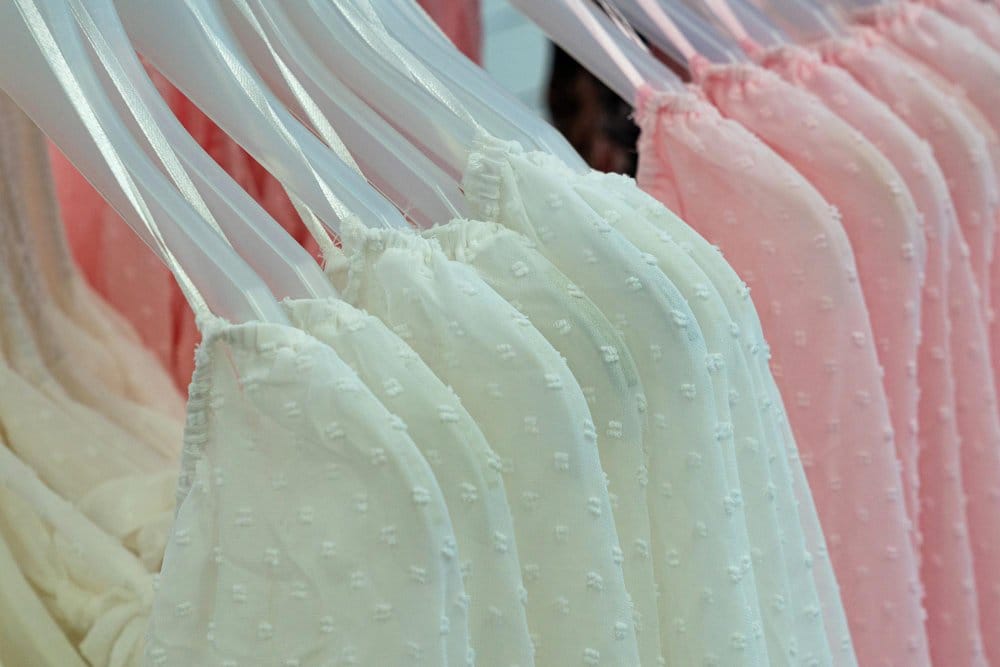
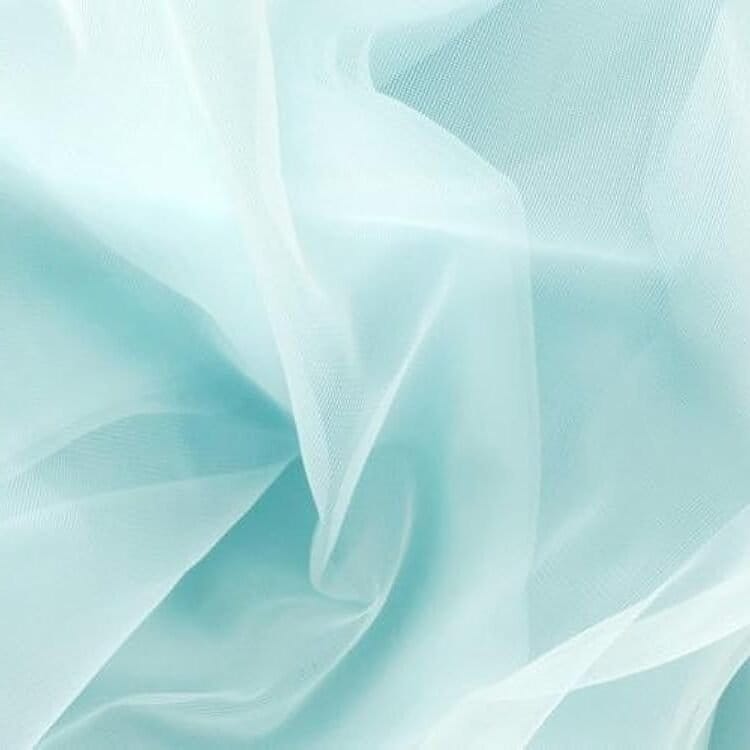
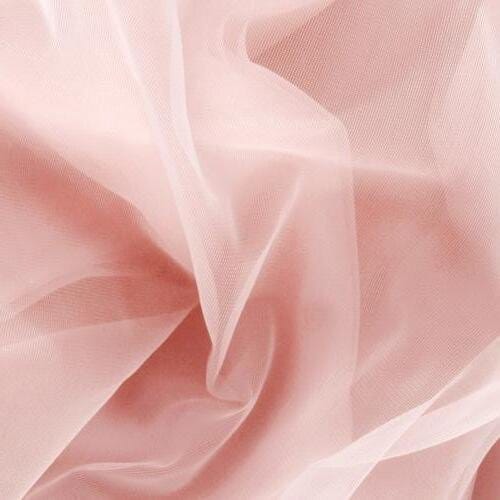
Pastel nylon chiffon fabrics displayed for comparison when choosing color, transparency, and drape.
Shopping for nylon chiffon can be overwhelming with so many options. Here’s what to look for and where to find quality fabric.
What to Look For
Quality Indicators
Visual Inspection:
- Even weave pattern with no thick or thin spots
- Consistent color throughout the fabric
- No pulls, snags, or obvious flaws
- Uniform sheen across the surface
Touch Test:
- Fabric should feel smooth, not rough or scratchy
- Should have some body, not completely limp
- Spring back when gently stretched
Drape Test:
- Hold it up and let it hang-it should flow nicely
- Gather a handful and release-it should fall in soft folds
Specifications to Check
- Denier weight: 15 denier for most uses, 20-30 for more durability
- Width: Standard 54-60 inches, or 108 inches for large projects
- Type: Woven or tricot knit (non-fray)
- Fiber content: Should be 100% nylon unless it’s a blend
- Care requirements: Should be machine washable
Color Considerations
When choosing colors:
- Request swatches: Many online sellers offer free samples
- Check color fastness: Ask if the dye is colorfast
- Remember it’s sheer: Colors look different when layered or backlit
- Consider your base fabric: If using as overlay, how will it look over the base color?
Where to Buy
Local Fabric Stores
Pros:
- See and touch before buying
- No shipping costs or wait time
- Can ask staff questions
- Buy exact amount needed
Cons:
- Limited selection and colors
- Often more expensive
- May not carry specialty types like tricot
Online Fabric Retailers
Major sellers include:
- Fabric.com
- Mood Fabrics
- Fashion Fabrics Club
- Etsy (for smaller quantities and specialty colors)
Pros:
- Huge color selection
- Usually better prices
- Can shop anytime
- Access to specialty types
Cons:
- Can’t see/touch before buying
- Shipping costs and wait time
- Colors may vary from photos
- May need to buy minimum yardage
Specialty Dance and Costume Suppliers
These suppliers often carry high-quality nylon chiffon specifically for performance use:
- AFC Express (known for tricot chiffon in pre-cut rolls)
- Discount Dance Supply
- Theater House
They’re especially good for finding non-fray tricot versions and unusual colors.
Wholesale Suppliers
For large quantities:
- Alibaba (international, minimum orders)
- Wholesale fabric suppliers (may require business license)
Price Expectations
Understanding pricing helps you budget and spot deals:
- Budget range: $3-5 per yard (basic colors, thin quality)
- Mid-range: $5-8 per yard (good quality, wider selection)
- Premium: $8-12 per yard (specialty colors, recycled content, or superior quality)
- Pre-cut rolls: Usually priced per roll (30-60 yards) at wholesale rates
Remember, prices fluctuate based on:
- Width (wider = more expensive per yard)
- Denier weight (heavier = slightly more)
- Color (some colors cost more to produce)
- Type (tricot may cost a bit more than woven)
- Minimum purchase (buying more usually lowers per-yard cost)
How Much to Buy
General guidelines for common projects:
- Scarf: 1-1.5 yards
- Simple blouse overlay: 2-3 yards
- Evening gown overlay: 4-6 yards
- Pettiskirt: Varies by fullness, usually 5-15 yards
- Bridal veil: 2-4 yards depending on length
- Dance costume skirt: 3-5 yards
Always buy at least 10% extra to account for shrinkage (minimal), mistakes, and testing.
Questions to Ask Sellers
Before purchasing, especially online:
- What’s the exact fiber content?
- Is this woven or tricot knit?
- What’s the denier weight?
- Is the color colorfast?
- Can I get a swatch before ordering?
- What’s your return policy?
- Do you offer bulk discounts?
Smart Shopping Tip: Join fabric groups on Facebook or sewing forums. Members often share information about sales, quality suppliers, and may even sell from their own stashes at good prices.
Related Fabrics
Understanding fabrics similar to nylon chiffon helps you make the right choice for your project. Sometimes nylon chiffon is perfect; other times, you might want something a little different.
Georgette
Georgette fabric is chiffon’s close cousin. It’s made using the same twisted yarn technique but is woven a bit tighter, making it less transparent and slightly heavier.
Key Differences:
- More opaque than chiffon
- Has a crepe-like texture (more pronounced puckers)
- Slightly stiffer drape
- Better for garments that need more body
When to Choose Georgette Instead: Blouses that you want to wear without a camisole underneath, garments that need more structure, or when you want texture to be a design feature.
Organza
Organza fabric is also sheer and lightweight, but it’s crisp and stands away from the body rather than flowing.
Key Differences:
- Much stiffer than chiffon
- Holds shapes (like bow loops or ruffles)
- Makes a rustling sound when you move
- More transparent
When to Choose Organza Instead: When you need volume that stands out (like crinolines, structured overlays, or ribbon bows), or for crafts where you want the fabric to hold a specific shape.
Tulle and Netting
These are mesh-like fabrics with visible holes between the threads.
Key Differences:
- Net structure vs woven fabric
- More see-through
- Stiffer and holds volume better
- Different drape (more structured)
When to Choose Tulle Instead: For tutus, veils where you want maximum transparency, or any project where you need the fabric to poof out. Tulle is better than chiffon for creating volume without weight.
Comparison Chart
| Feature | Nylon Chiffon | Georgette | Organza | Tulle |
|---|---|---|---|---|
| Transparency | Very sheer | Semi-sheer | Very sheer | Extremely sheer |
| Drape | Soft, flowing | Moderate flow | Stands away from body | Structured, holds shape |
| Texture | Slightly pebbled | Crepe texture | Smooth, crisp | Net structure |
| Weight | Very lightweight | Lightweight to medium | Lightweight | Very lightweight |
| Best for | Flowing garments, overlays | Blouses, dresses with body | Structured overlays, bows | Tutus, veils, volume |
Making the Right Choice
Ask yourself these questions:
- Do you want flow or structure? Flow = chiffon, Structure = organza or tulle
- How transparent is too transparent? Least see-through = georgette
- Will it be worn or just decorative? Worn = chiffon or georgette, Decorative = organza or tulle work fine
- Do you need it to poof? Maximum poof = tulle, some poof = organza, no poof = chiffon
Frequently Asked Questions
Nylon chiffon is less breathable than natural fabrics like silk or cotton chiffon because it’s made from synthetic fibers. However, the sheer, open weave allows some air circulation. For short periods, like wearing an evening dress for a few hours, breathability isn’t usually an issue. In hot, humid weather or for all-day wear, it may feel less comfortable than natural fiber alternatives.
Nylon chiffon typically doesn’t shrink when washed properly. Unlike natural fibers, nylon is very stable and maintains its size even after multiple washings. The key is using cold water and avoiding high heat when drying. If you’re concerned, you can pre-wash the fabric before cutting, but it’s usually not necessary with nylon chiffon.
Yes, but it requires specific acid dyes designed for nylon (like Jacquard Acid Dyes). Regular fabric dyes won’t work. The process involves heating the dye bath to near-boiling temperatures and maintaining it for 30-60 minutes. This can be tricky with delicate chiffon. If you want custom colors, it’s often easier to buy the fabric already dyed or have it professionally dyed.
Yes, nylon chiffon is very sheer and see-through. This is a design feature, not a flaw. When using it for clothing, you’ll typically layer it over another fabric (like satin or a solid lining) or wear it over a camisole. Multiple layers of chiffon can be used together to create more coverage while maintaining the flowing, ethereal look.
For woven nylon chiffon, use French seams, serge the edges, or finish with a narrow rolled hem. The best option is to buy tricot knit nylon chiffon, which doesn’t fray at all when cut. This is especially helpful for projects like pettiskirts where you’re cutting lots of strips.
Nylon chiffon is a woven fabric with a solid but sheer appearance, while tulle is a net fabric with visible holes in a honeycomb pattern. Chiffon drapes softly and flows, whereas tulle is stiffer and holds its shape. Chiffon is better for flowing garments and scarves, while tulle is better for creating volume in tutus and structured layers.
Absolutely! Nylon chiffon is commonly used in wedding dresses for overlays, sleeves, and decorative elements. It’s especially popular for destination weddings because it travels well (doesn’t wrinkle much) and can be washed if needed. Many budget-friendly bridal lines use nylon chiffon to achieve an elegant look at a lower price point than silk.
Traditional nylon chiffon is not very sustainable as it’s made from petroleum and doesn’t biodegrade. However, the picture is improving with recycled nylon options becoming available. Look for fabrics made from recycled nylon (like Econyl) or those with certifications like the Global Recycled Standard. You can also reduce environmental impact by using microplastic-catching laundry bags and making items that last for years.
With proper care, nylon chiffon garments can last for many years. Unlike silk chiffon which can weaken over time, nylon maintains its strength. Dance costumes made from nylon chiffon often survive multiple seasons of performances. The key to longevity is proper washing (gentle cycle, cold water), avoiding high heat, and storing items carefully to prevent snags.
Yes, but with caution. Use the lowest heat setting on your iron (synthetic or nylon setting), always use a pressing cloth between the iron and fabric, and never let the iron sit in one place. Steaming is safer and often more effective for removing wrinkles from nylon chiffon. If you’re unsure, test on a scrap piece first.
Puckering usually happens because of incorrect tension, stitch length that’s too long, or the fabric being pulled while sewing. Try using a shorter stitch length (12-20 stitches per inch), slightly reduce your tension, and let the machine feed the fabric without pulling. Using tissue paper underneath while sewing can also help prevent puckering.
Use a sharp Microtex needle in size 60/8 for very delicate work or 70/10 for most projects. Never use a ball point needle with chiffon as it can snag the fabric. Always start with a new needle for each chiffon project, as even slightly dull needles can cause problems with this delicate fabric.
Yes! This is one of nylon chiffon’s best features compared to silk. Use a gentle cycle, cold water, mild detergent, and always place the item in a mesh laundry bag. Avoid washing with rough fabrics like denim or towels. Air dry for best results, or use the lowest heat setting if you must use a dryer.
Most professional dancers and costume designers prefer nylon chiffon because it has better drape, more stretch, and a softer feel against skin. It moves more gracefully under stage lights and is more comfortable for extended wear during performances. Polyester chiffon can work but tends to be stiffer and less fluid.
Conclusion
Nylon chiffon has come a long way since that 1938 debut. What started as an attempt to replace silk has become its own success story, finding unique uses where its specific properties shine brightest.
Key Takeaways
What Makes Nylon Chiffon Special
This fabric combines the elegant drape and sheer beauty of traditional chiffon with the strength and easy care of modern synthetics. It’s proof that affordable doesn’t have to mean low quality. Whether you’re creating a dance costume that needs to survive hundreds of performances, a pettiskirt that can handle active play, or an evening gown that travels well, nylon chiffon delivers both beauty and practicality.
Making Smart Choices
Understanding the different types helps you pick the right one for your project. Woven nylon chiffon for that authentic chiffon look and drape. Tricot knit for projects where you’ll be doing a lot of cutting and don’t want to deal with fraying. 15 denier for maximum flow and transparency. Higher denier weights when you need a bit more coverage and durability. These choices matter and will affect how your finished project looks and functions.
Sewing Success
Yes, nylon chiffon has a reputation for being tricky to sew, but with the right techniques, it’s totally manageable. The tissue paper method for cutting, sharp microtex needles, fine thread, French seams for clean finishing and patience all make a difference. Start with small projects to build confidence, always test on scraps first, and remember that even experienced sewers take their time with chiffon. The results are worth the extra care.
Care and Longevity
One of nylon chiffon’s best selling points is how easy it is to maintain compared to silk. Machine washable, wrinkle-resistant, and durable enough to last for years with proper care. Use cold water, gentle cycles, avoid high heat, and your nylon chiffon items will stay beautiful through countless wears and washes. This makes it perfect for real-life use, not just special occasions.
Environmental Considerations
Be honest about the environmental challenges of synthetic fabrics while also recognizing that using items for many years is better than buying disposable fashion. Look for recycled nylon options when available, use microplastic-catching laundry bags, and make items built to last. The textile industry is improving, with bio-based and recycled nylon becoming more common. Your purchasing choices can support these better options.
Final Recommendations
Choose nylon chiffon when you need:
- Affordable elegance that doesn’t look cheap
- Durability for costumes, dancewear, or children’s clothing
- Easy care fabrics that can handle machine washing
- Beautiful drape without the high cost of silk
- Fabrics that travel well and resist wrinkles
Consider alternatives when you want:
- Maximum breathability (choose cotton or silk chiffon)
- The absolute finest quality for once-in-a-lifetime items (choose silk)
- Completely biodegradable options (choose natural fibers)
- More structure and body (choose georgette or organza)
Moving Forward
Whether you’re a home sewer working on your first chiffon project, a costume designer stocking up for a production, a parent looking for the perfect pettiskirt fabric, or just someone who appreciates beautiful, practical textiles, nylon chiffon has something to offer.
Start small if you’re new to working with it. Buy a couple yards in an affordable color and practice the cutting and sewing techniques. Make a simple scarf or overlay. Once you get comfortable with how the fabric behaves, you’ll find it’s not nearly as scary as its reputation suggests.
For experienced sewers and designers, nylon chiffon is a reliable tool in your fabric arsenal. It does what you need it to do, looks beautiful, and doesn’t require excessive fussing. That’s why it’s been popular for almost 90 years and shows no signs of going away.
The story of nylon chiffon is really the story of making beauty accessible. Not everyone can afford silk, but everyone deserves to feel elegant. Nylon chiffon delivers on that promise, and it does it well.
Ready to start your nylon chiffon project? Try our Chiffon Type Selector Quiz to find the perfect chiffon for your needs, or use our Fabric Yardage Calculator to determine exactly how much fabric you’ll need.