
Everything You Need to Know About This Luxurious Fabric from History to Care Instructions
Table of Contents
- What is Charmeuse Satin Fabric?
- History and Origins
- How Charmeuse is Made
- Types of Charmeuse Fabric
- Charmeuse vs Other Fabrics
- Uses and Applications
- Beauty and Health Benefits
- Sustainability and Environmental Impact
- How to Care for Charmeuse Satin
- Sewing with Charmeuse
- Buying Guide
- Frequently Asked Questions
- Conclusion
What is Charmeuse Satin Fabric?
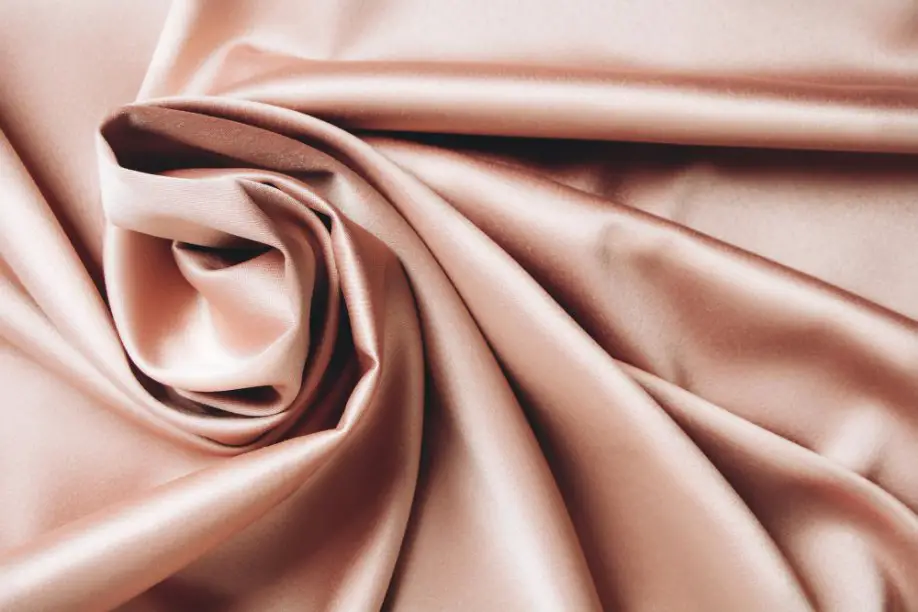
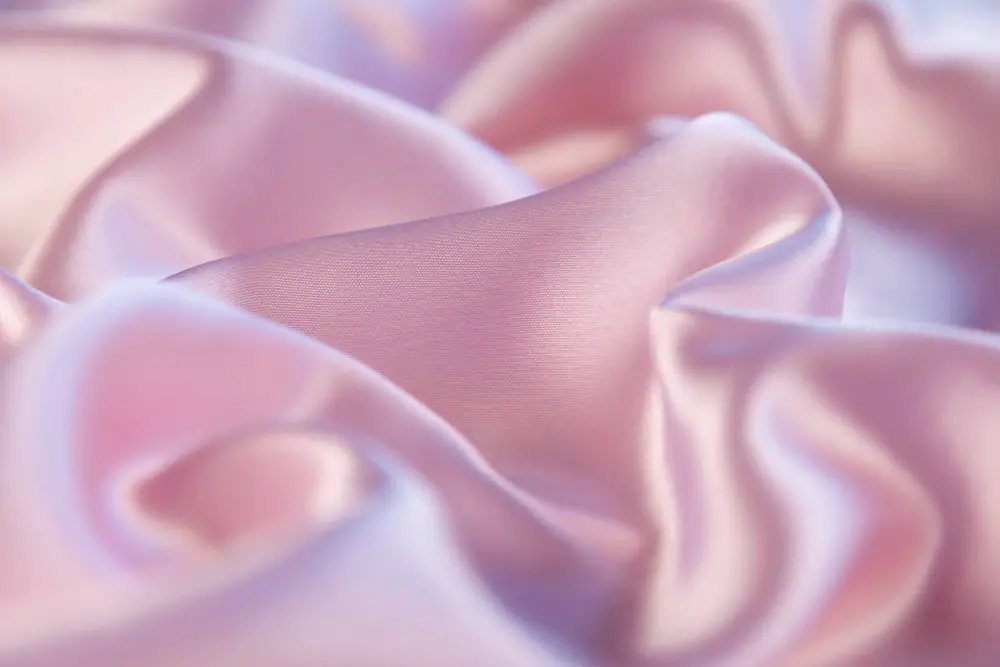
Charmeuse satin is one of the most luxurious fabrics you’ll ever touch. The name comes from the French word “charmeuse,” which means “female charmer,” and once you feel this fabric, you’ll understand why it earned such a romantic name.
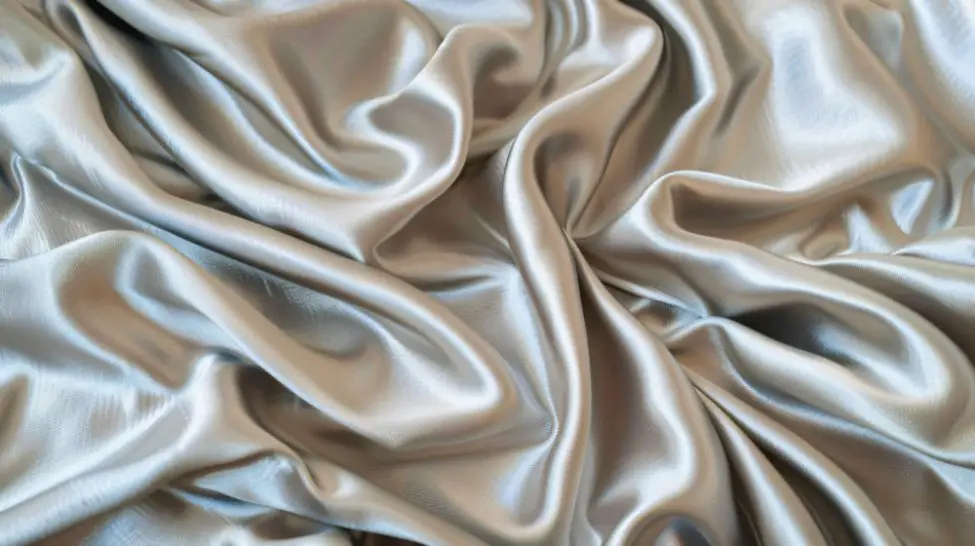
Here’s what makes charmeuse special: it has a shiny, glossy front side and a matte, dull back side. This two-faced nature comes from the way the fabric is woven using what’s called a satin weave. While you can make charmeuse from different materials, the most prized version is made from pure silk, though polyester versions are also popular because they cost less.
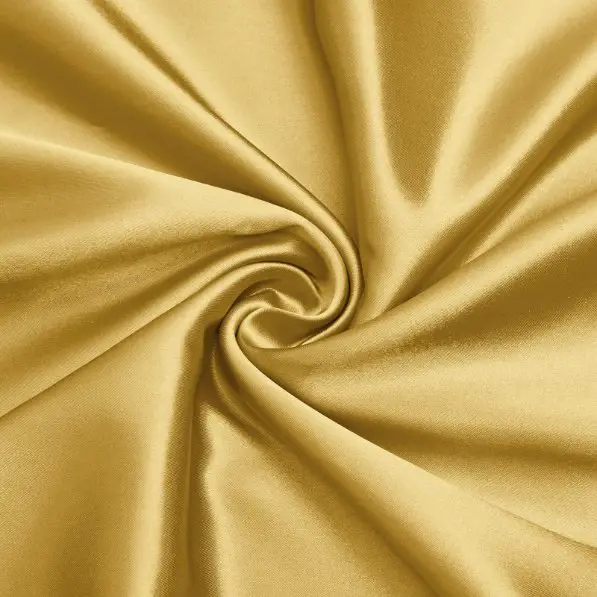
Quick Definition: Charmeuse is a lightweight satin fabric with a lustrous front and matte back. It can be made from silk, polyester, or other synthetic fibers. The fabric is known for its smooth texture, beautiful drape, and elegant sheen.
What Does Charmeuse Mean in English?
The word “charmeuse” translates directly to “charmer” in English, specifically referring to a female who charms or attracts others. French textile makers chose this name because the fabric’s shimmering surface and soft feel were seen as attractive and alluring – qualities they associated with charm and beauty.
What is the Difference Between Satin and Charmeuse Satin?
This confuses a lot of people, so let’s clear it up. “Satin” actually refers to a weaving technique, not a specific fabric. Many different fabrics can be woven using the satin weave method.
Charmeuse is a specific type of satin fabric. It’s lighter and softer than most other satins, with a more fluid drape. If you compare charmeuse to duchess satin (another type of satin), you’ll notice duchess is heavier and stiffer, while charmeuse flows like water.
Is Charmeuse Satin and Charmeuse Silk the Same?
Not exactly. This is where it gets tricky:
- Charmeuse Silk: Made from 100% silk fibers, this is the traditional, high-end version of charmeuse
- Charmeuse Satin: Can be made from silk OR synthetic fibers like polyester
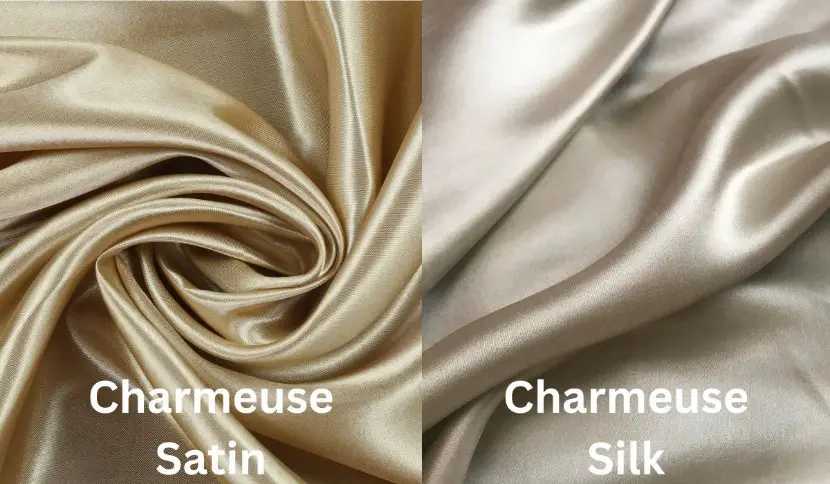
All charmeuse silk is charmeuse satin, but not all charmeuse satin is silk. Many manufacturers make polyester charmeuse that mimics the look and feel of silk charmeuse at a lower price point. When shopping, always check what the fabric is actually made from – don’t assume “charmeuse” automatically means silk.
Is Charmeuse Satin Good Quality?
Quality depends on what the charmeuse is made from and how well it’s manufactured. Mulberry silk charmeuse is considered the highest quality, especially when it has a momme weight between 19-30. This type is durable, has a beautiful shine, and feels amazing against your skin.
Polyester charmeuse can also be good quality, but it won’t match silk’s natural temperature regulation or moisture-wicking properties. However, polyester versions are more affordable, easier to care for, and still look elegant for many purposes.
What is 100% Satin Charmeuse?
The term “100% satin charmeuse” is a bit misleading. What it usually means is that the fabric is 100% made from one fiber type (like 100% polyester or 100% silk) and woven in the charmeuse satin style. Pure polyester charmeuse is often marketed this way to distinguish it from silk-polyester blends.
Is Charmeuse Thicker Than Satin?
Actually, charmeuse is generally thinner and lighter than most other satin fabrics. Compare it to duchess satin or baronet satin, and you’ll find charmeuse is more delicate and has a lighter weight. This makes it perfect for garments that need to flow and drape, but it’s not the best choice if you need a structured, heavy fabric.
Is Charmeuse or Satin Shinier?
Charmeuse typically has a higher shine compared to many other satin fabrics. Its luster is one of its defining features. The smooth surface reflects light beautifully, creating that glossy, almost luminescent look. However, some satins like crepe back satin have a more subdued shine on one side.
History and Origins of Charmeuse
The story of charmeuse starts in ancient China, where silk production began over 5,000 years ago. According to Chinese legend, Empress Leizu discovered silk around 2700 BCE when a silkworm cocoon fell into her tea. As she tried to remove it, the cocoon unraveled into a long, shiny thread.
Archaeological evidence shows silk production in Chinese provinces. Early silk fabrics were reserved exclusively for royalty and nobility.
The Silk Road opens, allowing silk to travel from China to the West. However, China keeps silk-making techniques secret for centuries. Anyone caught trying to smuggle silkworms out of China faced the death penalty.
Byzantine Empire obtains silkworm eggs after monks smuggled them from China in hollow bamboo canes. Silk production begins spreading beyond China.
Silk fabrics, including charmeuse-like weaves, become prized possessions of European nobility. Charmeuse satin is considered the “fabric of emperors” due to its beauty and cost.
French textile makers perfect and popularize charmeuse, giving it its French name. The fabric becomes associated with Parisian high fashion and luxury.
Fashion houses like Coco Chanel and Christian Dior help silk charmeuse shine in the fashion world. The fabric becomes a staple for elegant evening wear.
Synthetic fibers like polyester are developed, making charmeuse-style fabrics more affordable and accessible to everyday consumers.
Charmeuse remains popular for luxury fashion, bridal wear, and high-end bedding. China still produces the majority of the world’s silk charmeuse, though synthetic versions are manufactured globally.
How Charmeuse is Made
The Satin Weave Technique
What makes charmeuse different from regular fabrics is the satin weave. In this weaving style, the lengthwise threads (called warp threads) pass over four or more crosswise threads (called weft threads) before going under one. This creates long “floats” of thread on the surface.
These long floats are what give charmeuse its signature smooth, shiny surface. The more thread exposed on the surface, the more light it reflects. Meanwhile, the back side has more thread interlacing points, which is why it looks matte and dull.
For Silk Charmeuse
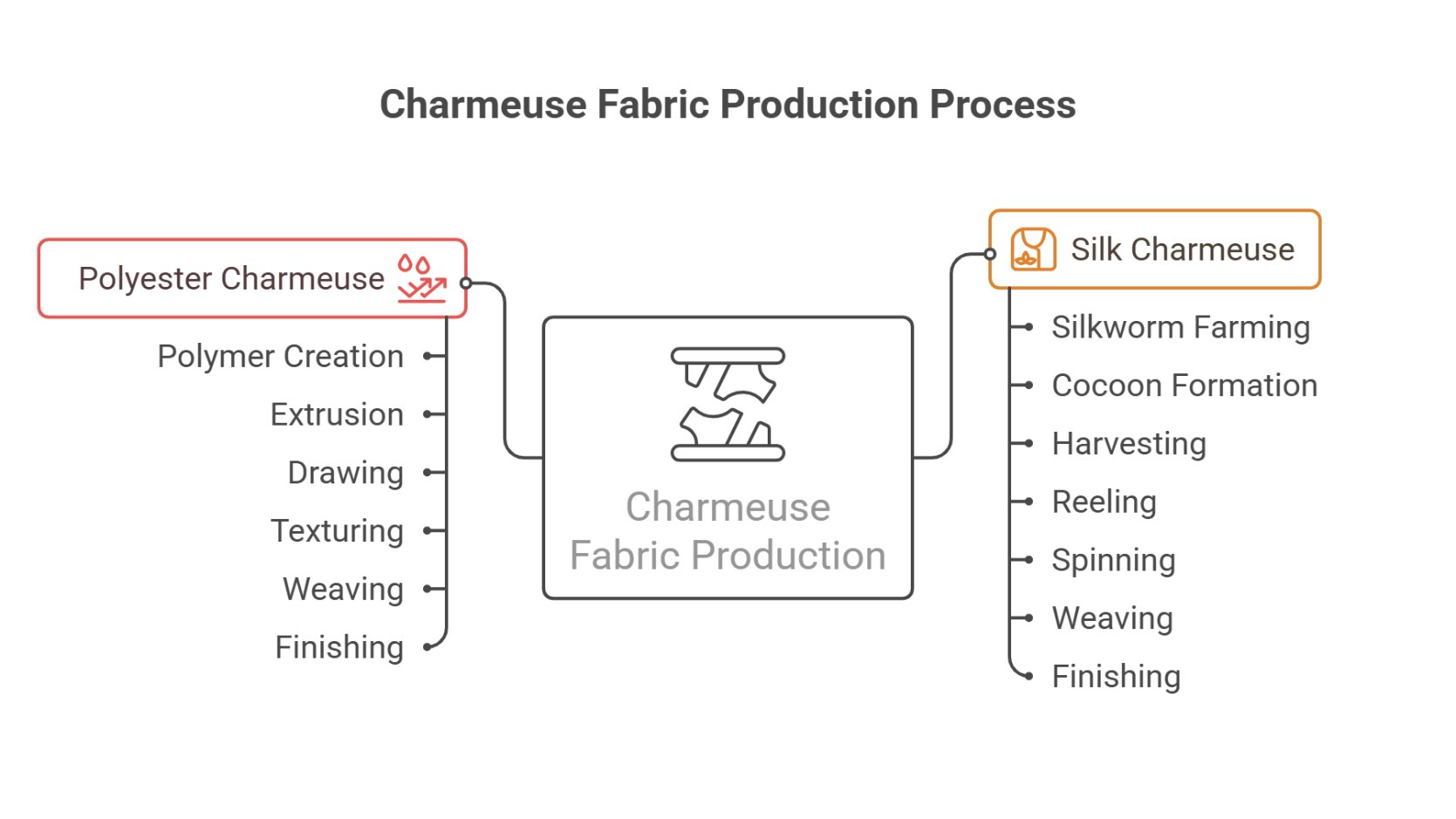
Making silk charmeuse starts with silkworms. Here’s the process:
- Silkworm Farming: Silkworms feed on mulberry leaves for about 4-6 weeks until they’re ready to make cocoons
- Cocoon Formation: Each silkworm spins a cocoon using a single continuous silk thread that can be up to 900 meters long
- Harvesting: Workers collect the cocoons and boil them to soften the sericin (natural glue) that holds the threads together
- Reeling: The softened cocoons are unwound, and multiple threads are combined to create stronger silk yarn
- Spinning: The threads are twisted together in either an “S” or “Z” pattern to create durable silk yarn
- Weaving: The silk yarn is woven using the satin weave technique on a loom
- Finishing: The fabric goes through treatments to enhance softness, luster, and smoothness
For Polyester Charmeuse
Polyester charmeuse follows a different process:
- Polymer Creation: Polyester starts as petroleum-based chemicals that are heated and formed into polymer chips
- Extrusion: The chips are melted and forced through tiny holes to create long polyester filaments
- Drawing: The filaments are stretched to align the molecules, making them stronger
- Texturing: Filaments are twisted or crimped to add bulk and texture
- Weaving: The polyester yarn is woven using the same satin weave as silk charmeuse
- Finishing: Chemical treatments add softness and help the fabric mimic silk’s feel
Types of Charmeuse Fabric
Silk Charmeuse
Made from 100% silk fibers, this is the most luxurious type. Pure mulberry silk charmeuse is the gold standard, known for its smooth texture, natural temperature regulation, and hypoallergenic properties. Silk charmeuse typically has a momme weight between 12-30, with 19-22 momme being popular for clothing and bedding.
Polyester Charmeuse
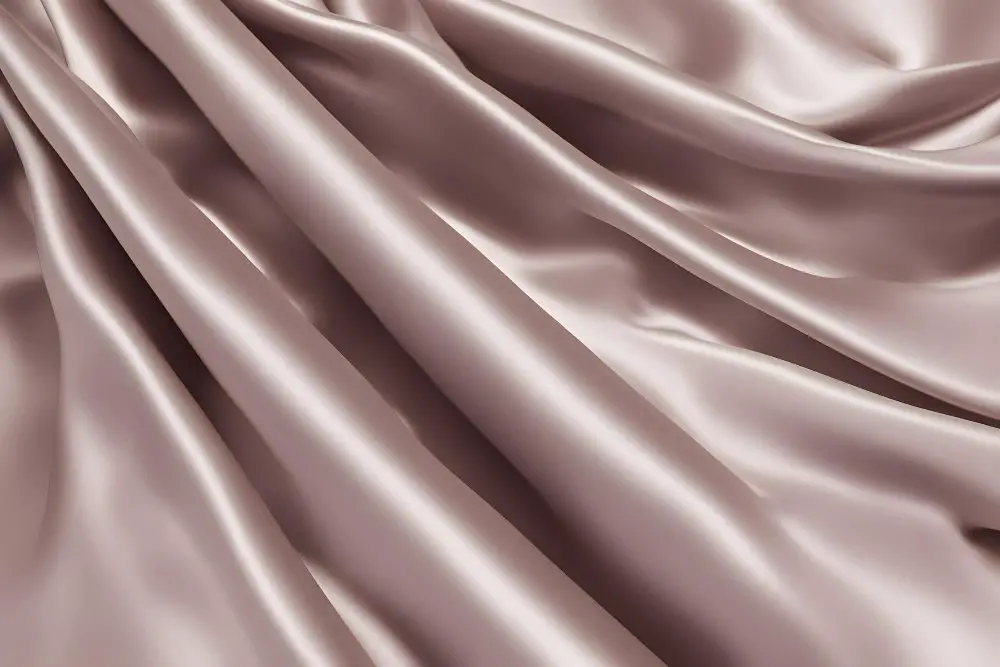
This synthetic version costs much less than silk and is easier to care for. Modern polyester charmeuse can look very similar to silk, with a nice shine and smooth feel. It’s more durable, doesn’t wrinkle as easily, and you can usually machine wash it. However, it doesn’t breathe as well as silk and can feel warmer against your skin.
Rayon Charmeuse
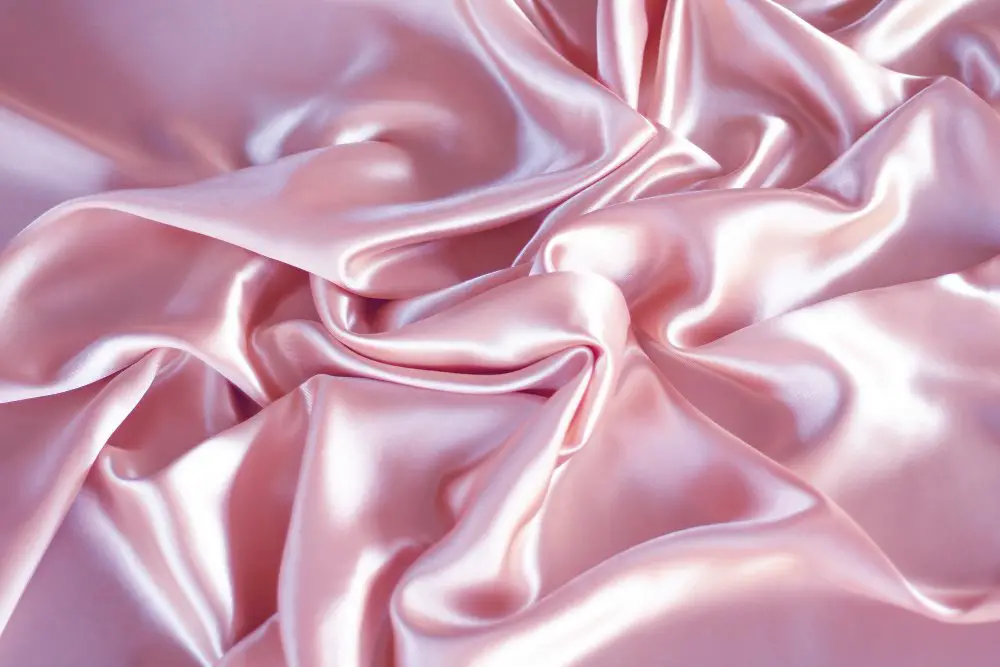
Rayon is a semi-synthetic fiber made from wood pulp. Rayon charmeuse falls somewhere between silk and polyester in terms of cost and properties. It drapes beautifully and has a soft feel, but it’s not as strong as polyester and requires more delicate care.
Stretch Charmeuse
This version adds spandex or elastane to the fabric, usually making it 95% silk or polyester and 5% spandex. The stretch makes it more forgiving for fitted garments and helps the fabric return to its shape after wearing. It’s popular for form-fitting dresses and activewear with a dressy look.
Blend Charmeuse
Some manufacturers create silk-polyester blends (like 70% silk, 30% polyester) or hemp-silk blends (like 70% organic hemp, 30% silk). These combinations try to balance the best properties of each fiber while managing cost.
Charmeuse vs Other Fabrics
| Fabric Type | Weight | Drape | Luster | Best For | Price Range |
|---|---|---|---|---|---|
| Charmeuse | Light (75-95 GSM) | Very fluid, flows beautifully | High shine | Lingerie, flowing gowns, pillowcases | $$-$$$$ |
| Duchess Satin | Heavy | Structured, holds shape | High shine | Wedding gowns, formal skirts | $$-$$$ |
| Crepe Back Satin | Medium | Good drape with some structure | Moderate shine on one side, matte on other | Reversible garments, blouses | $$-$$$ |
| Habutai Silk | Very light | Light drape, slightly crisp | Subtle shine | Linings, lightweight scarves | $-$$ |
| Dupioni Silk | Medium | Crisp, papery | Slubby texture with shine | Structured dresses, home decor | $$-$$$ |
| Chiffon | Very light | Airy, floaty | Subtle sheen, sheer | Overlays, scarves, flowing layers | $-$$ |
Charmeuse vs Silk: Understanding the Confusion
Here’s where many people get confused: “charmeuse” and “silk” aren’t competing fabrics. Charmeuse is a type of weave, while silk is a fiber. You can have silk charmeuse (silk fiber woven in charmeuse style) or polyester charmeuse (polyester fiber woven in charmeuse style).
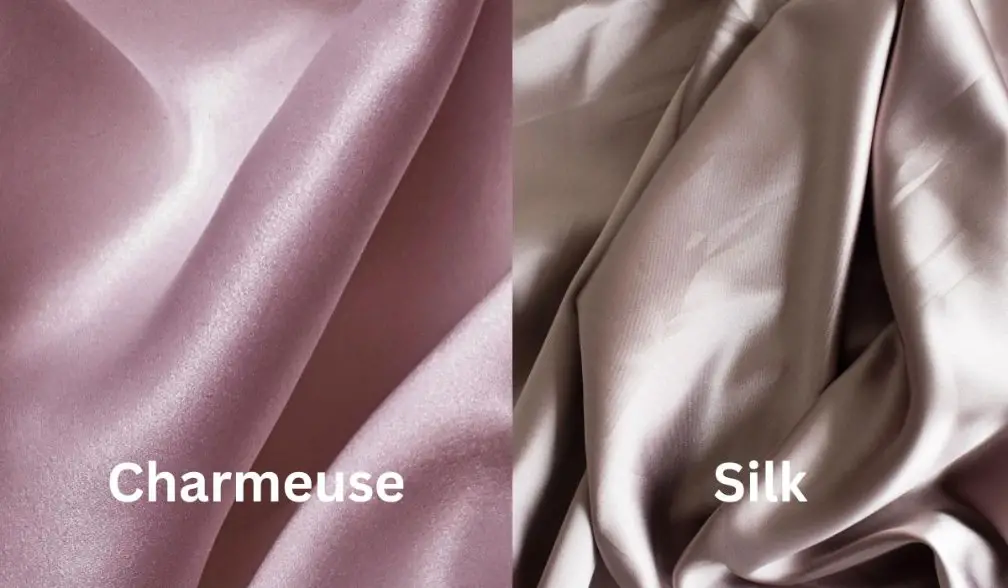
When people say “silk,” they might mean any silk fabric – habotai, dupioni, shantung, or charmeuse. Each has different textures and properties because they use different weaving techniques.
Uses and Applications
Fashion and Apparel
Evening Wear and Formal Dresses: Charmeuse’s flowing drape makes it perfect for elegant gowns. The way it catches light creates a glamorous effect, which is why you see it on red carpets and at formal events.

Bridal Wear: Many wedding gowns use charmeuse for the skirt or as a lining. It feels smooth against the skin and photographs beautifully. Bridesmaids’ dresses often feature charmeuse because it comes in many colors and drapes nicely.
Lingerie and Sleepwear: The soft, smooth texture of charmeuse feels wonderful next to your skin. You’ll find it in camisoles, chemises, robes, and pajamas. Silk charmeuse is especially popular because it helps regulate temperature.
Blouses and Tops: Charmeuse makes beautiful dressy tops. The fabric flows well and has enough weight to drape without clinging too much. However, it can show sweat, so many people wear an undershirt or choose darker colors.
Men’s Wear: While less common, you’ll find charmeuse in men’s luxury items like silk boxers, pajamas, ties, and pocket squares. Some high-end suits use charmeuse as lining in jackets.
Home Textiles and Bedding
Charmeuse has become super popular for bedding, especially pillowcases. The smooth surface is said to be gentler on hair and skin compared to cotton. Many people swear by silk charmeuse pillowcases to reduce frizz and prevent sleep lines on their face.
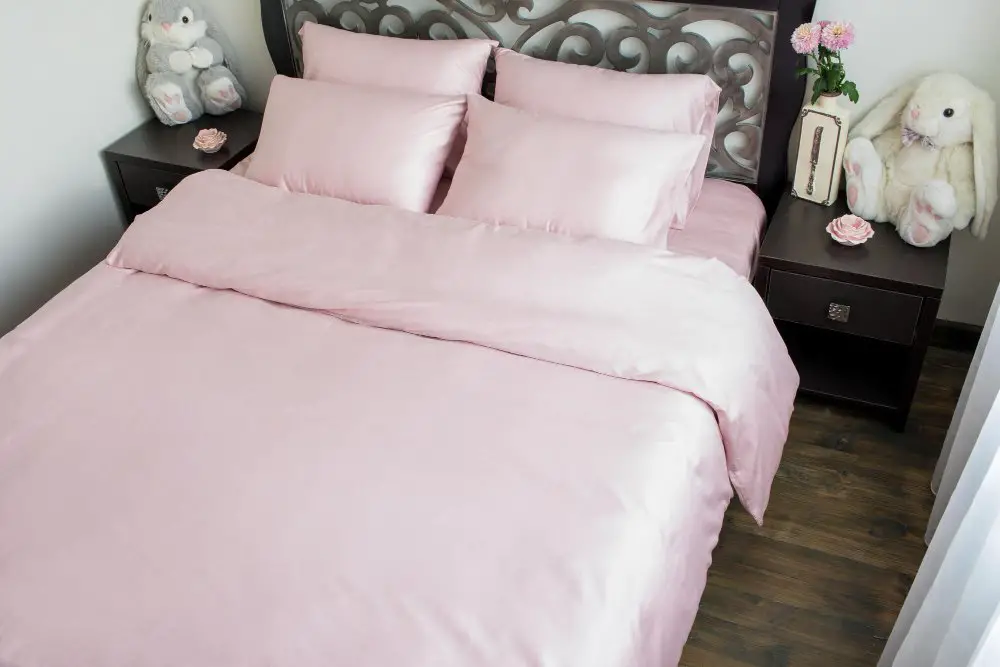
You’ll also find charmeuse used for:
- Sheets and duvet covers (though they can be slippery)
- Decorative pillows
- Window curtains (for a luxurious look)
- Table linens for special occasions
Want to explore the benefits of silk for your sleep routine? Check out these silk fabric recommendations based on your needs.
Special Events and Decor
Event planners love polyester charmeuse for:
- Draping and swags at weddings
- Table runners and overlays
- Backdrop curtains
- Chair sashes
The fabric’s beautiful drape and shine make events look more upscale, while polyester versions stay within budget and are easier to clean after use.
Beauty and Health Benefits
Hair Benefits
Sleeping on a charmeuse satin pillowcase has become a beauty trend, and there’s science behind it. Unlike cotton, which has small fibers that catch and pull on your hair, charmeuse’s smooth surface lets your hair glide freely as you move during sleep.

Benefits for hair include:
- Less friction means fewer tangles and knots in the morning
- Reduced frizz and flyaways
- Less breakage, especially for damaged or chemically treated hair
- Helps preserve hairstyles and blowouts longer
- Better for people with curly or textured hair
Skin Benefits
Your skin can benefit from charmeuse too:
- Fewer Sleep Creases: The smooth surface doesn’t create the same compression wrinkles that cotton does
- Moisture Retention: Silk charmeuse doesn’t absorb moisture from your skin like cotton does, so your nighttime skincare products stay on your face instead of soaking into your pillowcase
- Hypoallergenic: Pure silk charmeuse naturally resists mold, mites, and dust, making it good for people with allergies or sensitive skin
- Temperature Regulation: Silk charmeuse helps keep you cool in summer and warm in winter because of its natural properties
Note about Polyester: While polyester charmeuse offers some of these benefits (like reduced friction), it doesn’t have silk’s natural temperature regulation or moisture-wicking properties. It may also feel warmer against your skin.
Does Charmeuse Show Sweat?
Yes, charmeuse can show sweat marks, especially in lighter colors. The smooth, shiny surface makes any moisture visible. If you’re concerned about this:
- Choose darker colors like navy, black, or deep jewel tones
- Look for prints or patterns that hide marks better
- Consider wearing an undershirt with charmeuse tops
- Use dress shields for important events
Sustainability and Environmental Impact
Silk Charmeuse: The Natural Choice
Silk production has a relatively low environmental impact compared to synthetic fabrics:
Environmental Pros
- Completely biodegradable
- Mulberry trees (silkworm food) help with carbon sequestration
- No pesticides needed (they would kill the silkworms)
- Silk farms integrate waste into local ecosystems
- Traditional production methods are low-tech
- Natural fiber requires minimal chemical processing
Environmental Cons
- Silkworms are typically boiled alive in their cocoons
- Dyeing processes can use toxic chemicals
- Some farms use growth hormones or chemical disinfectants
- Fabric may be “weighted” with metallic salts
- High water usage in some production methods
Choosing Sustainable Silk
If sustainability matters to you, look for:
- Peace Silk (Ahimsa Silk): Silkworms are allowed to emerge from cocoons before harvesting
- OEKO-TEX Certified: Ensures no harmful chemicals were used
- Organic Certification: No synthetic chemicals or growth hormones used
- Natural Dyes: Plant-based or low-impact dyes instead of chemical dyes
- Fair Trade Certification: Ensures fair wages and safe working conditions
Sustainable Alternatives
Several eco-friendly options compete with traditional silk charmeuse:
Hemp-Silk Blends: Mixing 70% organic hemp with 30% silk creates a durable, sustainable fabric that still has charmeuse’s luster. Hemp requires little water and no pesticides to grow.
Tencel (Lyocell): Made from wood pulp in a closed-loop process that recycles 99% of chemicals and water. While it doesn’t exactly replicate charmeuse’s feel, luxury versions are getting close.
Recycled Polyester: While not as eco-friendly as natural fibers, using recycled plastic bottles to make polyester is better than creating new polyester from petroleum.
Polyester Charmeuse: The Trade-offs
Polyester has significant environmental downsides:
- Made from petroleum, a non-renewable resource
- Takes hundreds of years to break down
- Releases microplastics when washed that end up in oceans
- Production creates greenhouse gases
However, polyester lasts longer than many natural fibers, which means you might buy fewer items over time. It’s also more affordable, making luxury-look fabrics accessible to more people.
How to Care for Charmeuse Satin
Does Charmeuse Wrinkle Easily?
Silk charmeuse wrinkles moderately. It creases more easily than polyester but less than linen. The good news is that wrinkles often fall out naturally as you wear the garment or after hanging it in a steamy bathroom. Polyester charmeuse is more wrinkle-resistant and bounces back to its shape quickly.
Washing Silk Charmeuse
Silk charmeuse needs gentle care to maintain its luster and softness. Here’s how to properly care for it:
Hand Washing Method (Recommended)
- Fill a clean basin with cool water (never hot, which can damage silk fibers)
- Add a small amount of gentle detergent made for delicates or silk – about 1 tablespoon for a basin of water
- Swirl the water to distribute the detergent
- Submerge your charmeuse item and gently agitate it in the water for 3-5 minutes
- Let it soak for 15-20 minutes (no longer than 30 minutes)
- Rinse thoroughly with cool water until all soap is gone – soap residue can dull the shine
- Never wring or twist the fabric, as this can damage the fibers
- Gently press water out by rolling the item in a clean towel
- Lay flat to dry on a clean towel, away from direct sunlight and heat
Machine Washing (Use with Caution)
- Check the care label first – some silk charmeuse can handle machine washing
- Place the item in a mesh laundry bag to protect it
- Use the delicate or hand-wash cycle with cold water
- Add a small amount of gentle detergent
- Skip the spin cycle or use the lowest spin setting
- Remove immediately when done and lay flat to dry
Important Note: Machine washing may slightly dull silk charmeuse’s sheen over time, even on gentle cycles. Hand washing keeps it looking its best longest.
Color Care: Dark or bright colors may bleed, especially during the first few washes. Always wash these separately and expect some dye in the water initially.
Washing Polyester Charmeuse
Polyester charmeuse is much easier to care for:
- Machine wash on gentle cycle with cold water
- Use regular laundry detergent (no need for special silk detergent)
- Can usually tumble dry on low heat, but air drying helps it last longer
- Less likely to shrink or lose its shape
- Colors typically don’t bleed as much as silk
Drying
For Silk Charmeuse:
- Always air dry – never use a dryer
- Lay flat on a clean, dry towel
- Keep away from direct sunlight, which can fade colors and damage fibers
- Avoid hanging wet silk, as the weight can stretch it out of shape
- Once mostly dry, you can hang it on a padded hanger to finish drying
For Polyester Charmeuse:
- Air drying is still best for longevity
- If using a dryer, use the lowest heat setting
- Remove while still slightly damp to prevent over-drying
- Can hang to dry without worry about stretching
Ironing and Steaming
For Silk Charmeuse:
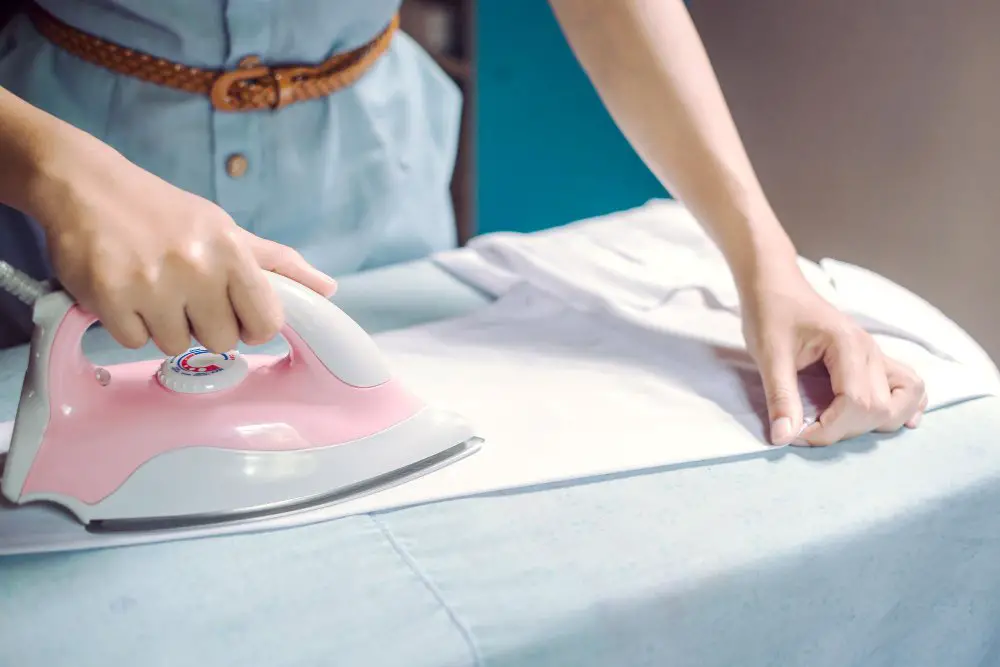
- Iron while the fabric is still slightly damp for best results
- Use the silk or low heat setting (never high heat)
- Always iron on the wrong (matte) side to protect the sheen
- Use a pressing cloth between the iron and fabric for extra protection
- Don’t spray water directly on silk – it can leave water marks
- Steaming is often safer and easier than ironing
For Polyester Charmeuse:
- Use low to medium heat
- Can usually iron on either side
- Steam works well and is quick
- Less likely to get water marks
Dry Cleaning
Dry cleaning is the safest option for:
- Expensive silk charmeuse items
- Structured garments with linings
- Items with beading or embellishments
- Garments you want to keep looking perfect
- Bright colors or prints that might bleed
Professional cleaners have specialized chemicals and techniques that clean effectively while preserving the fabric’s sheen and softness. For more detailed fabric care information, visit this comprehensive satin care guide.
Storage
Proper storage helps charmeuse last longer:
- Store clean items only – stains and body oils can set over time
- Use padded or wooden hangers, never wire ones
- Store in breathable cotton garment bags, not plastic
- Keep away from direct sunlight to prevent fading
- Don’t overcrowd your closet – charmeuse needs space to breathe
- For long-term storage, wrap in acid-free tissue paper
Need help with general fabric care? Use this fabric care calculator for personalized washing instructions.
Sewing with Charmeuse
Is Charmeuse Satin Easy to Sew?
Honestly? Charmeuse is one of the more challenging fabrics to sew with, especially if you’re a beginner. The fabric is slippery, shifts easily, and can snag if you’re not careful. However, with the right techniques and tools, even intermediate sewers can create beautiful charmeuse garments.

Before You Start
Pre-wash Your Fabric: Always pre-wash charmeuse before cutting, especially silk. Silk can shrink up to 10% when first washed, so washing it first prevents your finished garment from shrinking later. Follow the care instructions above.
Let It Rest: After washing, lay the fabric flat and let it dry completely. Then hang it for 24 hours before cutting to let any remaining wrinkles relax.
Essential Tools and Supplies
- Sharp, New Needles: Use size 60/8, 70/10, or 80/12 universal or microtex needles. Dull needles will snag the fabric
- Fine Thread: Use 50-weight silk or polyester thread. Thick thread can create puckers
- Sharp Fabric Scissors: Rotary cutters also work well for clean cuts
- Fine Pins: Silk pins or extra-fine pins won’t leave permanent holes
- Weights: Pattern weights are better than pins for holding patterns in place
- Tissue Paper: Helps stabilize fabric while cutting and sewing
Cutting Tips
- Use a single layer when cutting to prevent shifting
- Pin only within seam allowances to avoid visible pin marks
- Use pattern weights instead of pins when possible
- Cut with sharp scissors in long, smooth strokes
- Mark with tailor’s chalk or washable fabric markers, never regular pens
- Consider cutting on a large table with the fabric hanging slightly over the edge – the weight helps keep it in place
For more guidance, check out this complete fabric cutting guide.
Sewing Techniques
Stabilize the Edges: Use stay-stitching (a line of regular stitching just inside the seam line) to prevent stretching on curves and bias edges.
Use Short Stitch Length: A stitch length of 2mm or less (about 12-15 stitches per inch) helps prevent puckering.
Reduce Presser Foot Pressure: If your machine allows it, lighten the pressure so the fabric feeds through smoothly without stretching.
Sew Slowly: Take your time and guide the fabric gently. Don’t pull or push – let the machine’s feed dogs do the work.
Best Seam Finishes
French Seams: These enclose raw edges for a clean, professional finish. They’re perfect for sheer or lightweight charmeuse.
Flat-Felled Seams: Strong and neat, these work well for items that will be washed frequently.
Serged Seams: If you have a serger, it creates clean edges and prevents fraying.
Common Problems and Solutions
Fabric Sliding: Place tissue paper under the fabric while sewing. Tear it away afterward.
Puckered Seams: Reduce thread tension, use a smaller needle, or sew with a shorter stitch length.
Skipped Stitches: Change to a new needle – your current one might be dull or damaged.
Fabric Snagging: Check your needle plate for burrs or rough spots. File them smooth with an emery board.
Is Charmeuse Good for a Wedding Dress?
Yes, charmeuse is beautiful for wedding dresses, but with some considerations:
Perfect For:
- Flowing, bias-cut gowns with minimal structure
- Slip-style dresses
- Skirts that need to drape and move gracefully
- Linings under lace or other fabrics
- Brides who want a softer, more romantic silhouette
Not Ideal For:
- Ball gowns that need to hold a specific shape
- Structured bodices without additional support
- Dresses with lots of pleating or gathering (charmeuse is too slippery)
Many designers use duchess satin for structured wedding gowns instead, saving charmeuse for linings or flowing skirts.
Want to learn more about sewing? Start with our beginner’s guide to sewing.
Buying Guide: What to Look For
Understanding Momme Weight
For silk charmeuse, “momme” (pronounced “mummy”) is the unit of measurement. It tells you the weight and quality of the silk. Higher momme means thicker, more durable silk:
- 12-16 momme: Lightweight, suitable for scarves and linings. Less durable.
- 16-19 momme: Medium weight, good for garments and lighter pillowcases.
- 19-22 momme: The sweet spot for most clothing and bedding. Durable and luxurious.
- 22-30 momme: Heavy, very durable. Great for bedding that will be washed often, but might be too heavy for flowing garments.
How to Identify Quality Charmeuse
Visual Inspection:
- Look for consistent luster across the entire fabric
- Check for an even weave with no thin or thick spots
- The matte back should be uniform, not patchy
- Hold it up to light – high-quality charmeuse has a subtle glow
Touch Test:
- Should feel smooth and cool, not rough or scratchy
- Should have some weight to it – very thin, flimsy fabric is lower quality
- Should be soft but not overly slippery
Drape Test:
- Hold a corner and let it hang – it should flow gracefully
- Scrunch it up and release – it should fall back smoothly without holding creases
Price Expectations
Silk Charmeuse:
- Budget: $15-25 per yard (lower momme, may be lower quality)
- Mid-range: $25-40 per yard (19-22 momme, good quality)
- Premium: $40-80+ per yard (high momme, luxury brands)
Polyester Charmeuse:
- Budget: $3-8 per yard (basic quality)
- Mid-range: $8-15 per yard (better finish and drape)
- Premium: $15-25 per yard (high-quality polyester, excellent silk mimicry)
Where to Buy
Online Retailers: Websites like Silk Baron, Dharma Trading Co., and specialty fabric stores offer good selections with detailed specifications.
Local Fabric Stores: Being able to feel the fabric in person is helpful, especially if you’re new to charmeuse.
What to Ask:
- What is the fiber content?
- What is the momme weight (for silk)?
- What is the fabric width?
- Is it machine washable or dry clean only?
- Can I get a sample swatch?
- What certifications does it have (OEKO-TEX, organic, etc.)?
Red Flags to Avoid
- Price seems too good to be true for silk
- Seller won’t provide momme weight or fiber content
- Fabric feels stiff or has a chemical smell
- Colors look uneven or patchy
- No care instructions provided
- Seller has poor reviews or no return policy
Frequently Asked Questions
Conclusion
Charmeuse satin is a beautiful, luxurious fabric with a rich history spanning thousands of years. From its origins in ancient China to its current status as a fashion and bedding favorite, charmeuse has maintained its reputation as a fabric of choice for those seeking both comfort and style.
Key Takeaways
For Fashion Enthusiasts: Charmeuse offers unmatched drape and shine for evening wear, bridal gowns, and elegant tops. While it requires some skill to sew with, the results are worth the effort. Silk charmeuse creates garments that photograph beautifully and feel wonderful to wear, while polyester versions provide a budget-friendly alternative that’s easier to care for.
For Eco-Conscious Consumers: Silk charmeuse, especially when certified organic or OEKO-TEX, is a more sustainable choice than polyester. Look for peace silk if animal welfare concerns you, and consider hemp-silk blends for even better environmental credentials. Remember that a well-made silk garment that lasts for years is more sustainable than cheap fast fashion items you’ll replace frequently.
For Beauty and Wellness: The hair and skin benefits of silk charmeuse pillowcases are real, not just marketing hype. While polyester satin pillowcases offer some benefits, silk provides superior moisture retention, temperature regulation, and natural hypoallergenic properties. If you have damaged hair, sensitive skin, or allergies, investing in silk charmeuse bedding makes sense.
For Students and Beginners: Start with polyester charmeuse if you’re learning to sew – it’s more forgiving, costs less, and you won’t be heartbroken if you make mistakes. Practice on scraps before cutting into expensive silk. Once you’re comfortable with the fabric’s slippery nature, you can move up to silk for special projects.
For Textile Professionals: Understanding charmeuse’s properties, care requirements, and applications helps you advise clients better. Know when to recommend silk versus polyester, understand momme weights, and stay informed about sustainable sourcing options. The demand for quality charmeuse remains strong in bridal, formal wear, and luxury bedding markets.
Final Recommendations
Choose Silk Charmeuse If:
- You want the best quality and can afford it
- Natural fibers and sustainability matter to you
- You need temperature regulation and breathability
- You have sensitive skin or allergies
- You’re making a special occasion garment or heirloom piece
Choose Polyester Charmeuse If:
- Budget is a concern
- You want easy care and durability
- You’re making items for events or decor that need frequent cleaning
- You’re practicing sewing techniques
- You need specific colors that aren’t available in silk
Moving Forward
Whether you choose silk or synthetic, charmeuse satin offers a unique combination of beauty, comfort, and versatility. Take time to feel different weights and fibers before buying. Read care labels carefully. Invest in proper care and storage to make your charmeuse items last.
Remember that charmeuse is more than just a pretty fabric – it’s a textile with a fascinating history, science-backed benefits, and endless creative possibilities. From the ancient silk roads of China to modern fashion runways and cozy bedrooms, charmeuse continues to charm people around the world, just as its French name promises.
Ready to explore more luxurious fabrics? Check out our guides on silk care, different types of silk, and common fabric types to expand your textile knowledge.