
Everything you need to know about choosing, caring for, and working with burnout chiffon fabric for fashion, crafts, and home decor
Table of Contents
- What is Burnout Chiffon Fabric?
- Understanding the Devoré Technique
- The History of Burnout Fabric
- Fiber Content and Quality
- Burnout Chiffon vs Other Chiffon Types
- Related Luxury Fabrics
- Fashion and Design Applications
- Complete Care Instructions
- Sewing with Burnout Chiffon
- Sustainability Considerations
- How to Buy Quality Burnout Chiffon
- Frequently Asked Questions
What is Burnout Chiffon Fabric?
Burnout chiffon is a special type of chiffon fabric that features beautiful semi-transparent patterns created through a chemical treatment process. Unlike regular silk chiffon or polyester chiffon, burnout chiffon has a unique three-dimensional texture where some areas are sheer while others remain opaque, creating stunning visual contrast.
This fabric goes by several names. You might see it called “devoré chiffon” (from the French word meaning “to devour”), “burnout fabric,” or “etched chiffon.” All these terms refer to the same gorgeous textile that combines the flowing drape of regular chiffon with eye-catching patterns that look almost like lace but are created through an entirely different method.
Quick Definition: Burnout chiffon is a lightweight, sheer fabric where certain fibers have been chemically dissolved to create semi-transparent patterns against a more solid woven background. The result is a fabric with both opaque and see-through areas that creates a romantic, vintage-inspired look.
What makes burnout chiffon special is its slightly heavier weight compared to plain chiffon. While standard chiffon feels almost weightless, burnout chiffon has more body and substance. This makes it easier to work with for sewing projects while still maintaining that beautiful, flowing quality everyone loves about chiffon fabrics.
The patterns in burnout chiffon are permanently part of the fabric structure. They won’t wash out or fade like printed designs might. Common patterns include florals, geometric shapes, paisleys, and abstract designs. The see-through areas allow light to pass through, creating a soft, diffused glow that’s absolutely stunning in the right lighting.
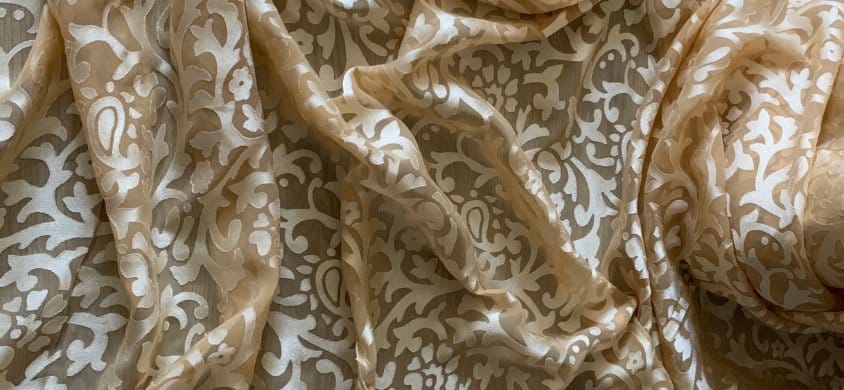
Burnout chiffon fabric showing transparent and opaque areas created through chemical processing.
Understanding the Devoré Technique: How Burnout Chiffon is Made
The magic behind burnout chiffon lies in a process called devoré, which uses chemistry to selectively dissolve certain fibers while leaving others intact. This isn’t a simple printing or embroidery technique. It’s a complex chemical treatment that literally eats away parts of the fabric to create those beautiful patterns.
The Chemical Process
Here’s how it works: Burnout chiffon starts with a blended fabric made from two different types of fibers. The most common combination is silk and rayon, though you’ll also find polyester and rayon blends. These fiber combinations are important because each type of fiber reacts differently to chemicals.
Step 1: Pattern Application
A chemical paste containing sodium hydrogen sulfate is applied to the fabric in specific patterns using screen printing, hand painting, or stamps.
Step 2: Drying
The fabric is left to dry completely, allowing the chemical to penetrate the fibers thoroughly.
Step 3: Heat Activation
The fabric is heated (either with an iron or in an oven), which activates the acid in the chemical paste.
Step 4: Washing
The treated fabric is washed to remove dissolved fibers and chemical residue, revealing the final burnout pattern.
The chemical used, sodium hydrogen sulfate (also called sodium bisulfate), creates a mild acid when heated. This acid breaks down cellulose-based fibers like rayon, cotton, or viscose, but it doesn’t affect protein-based fibers like silk or synthetic fibers like polyester. That’s why the fabric needs to be a blend. The acid “burns out” or “devours” one type of fiber, leaving the other type behind.
The areas where the chemical was applied become sheer and delicate after the dissolved fibers are washed away. The untreated areas remain solid and opaque. This creates that signature burnout look with its play between transparent and solid sections.
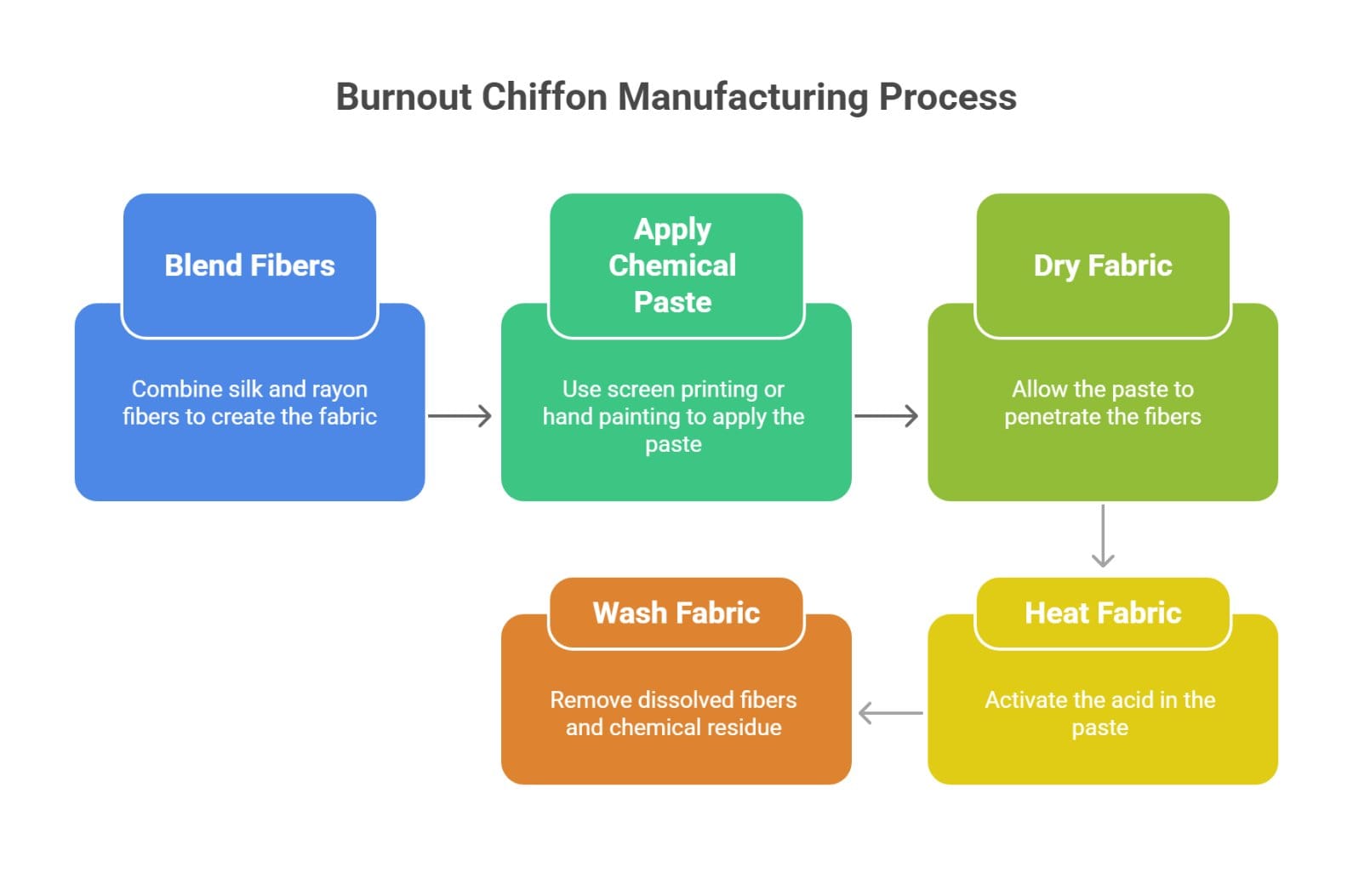
Visual infographic explaining the step by step process of how burnout chiffon fabric is made.
Why Blended Fabrics Are Required
You can’t create true burnout chiffon from a single fiber type. The fabric needs two different fibers that react differently to the chemical treatment. The most popular combinations are:
- Silk and Rayon (30% silk, 70% rayon): This is the most common blend for burnout chiffon. The rayon dissolves, leaving the silk threads behind in a sheer web.
- Polyester and Rayon: A more affordable option that’s also more durable. The rayon burns away, leaving the polyester structure.
- 100% Silk (with special weaving): Some luxury burnout fabrics use silk for both fibers but with different weave structures that react differently to treatment.
The quality of the burnout pattern depends heavily on precise chemical application and careful heat control. Too much chemical or too much heat can damage the entire fabric. Too little, and the pattern won’t be crisp and clear. This is why high-quality burnout chiffon tends to be more expensive than regular chiffon.
The Fascinating History of Burnout Fabric
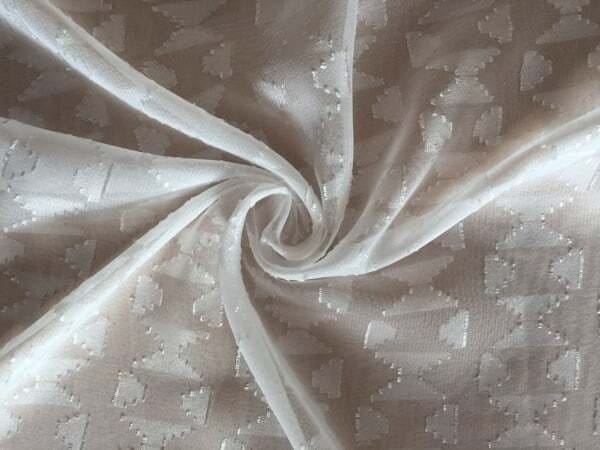
Burnout fabric featuring classic motifs that reflect its rich textile history.
The story of burnout fabric is a journey through fashion history, from 19th-century France to modern runways. Understanding where this fabric comes from helps you appreciate why it still captures our imagination today.
Origins in Late 1800s France
The devoré technique was developed in Lyon, France, during the late 1800s. Lyon was already famous as a center for silk production and textile innovation. Textile manufacturers there were looking for ways to create expensive-looking fabrics that could be produced faster and cheaper than traditional handmade lace.
The term “devoré” itself comes from the French verb “dévorer,” which means “to devour” or “to eat away.” It’s a perfect description of what the chemical treatment does to the fabric. Early burnout fabrics were marketed as an affordable alternative to handmade Venetian lace and other expensive textiles that required skilled artisans.
The Golden Age: 1920s Fashion
Burnout fabrics really took off during the 1920s. This was the era of Art Deco, jazz, and a complete revolution in women’s fashion. Women were abandoning restrictive Victorian-era clothing in favor of loose, flowing dresses that allowed them to dance and move freely.
Burnout velvet and burnout chiffon became popular choices for evening gowns, cocktail dresses, and elegant shawls. The fabrics fit perfectly with the 1920s aesthetic that loved geometric patterns, flowing lines, and a mix of covered and revealed skin. Fashion houses in Paris used burnout fabrics to create romantic, semi-sheer garments that were both sophisticated and slightly daring for the time.
The 1980s and 1990s Revival
After falling out of fashion for several decades, burnout fabrics came roaring back in the 1980s and 1990s. British designer Jasper Conran became famous for his use of devoré velvets in theatrical costumes and evening wear. His burnout pieces were so elaborate that they sometimes took days to produce and sold for thousands of pounds.
Around the same time, textile designer Georgina von Etzdorf brought burnout fabrics to a wider audience. Starting in 1985, she experimented with printed velvets and introduced burnout techniques to her scarf collection in 1993. Von Etzdorf is credited with popularizing the velvet scarf and making burnout textiles accessible to more people, not just the wealthy elite.
These designers helped connect burnout fabrics with a bohemian, artistic aesthetic that still influences how we see these textiles today. The technique showed up in music videos, on red carpets, and in high-fashion editorials throughout the 1990s.
Burnout Chiffon Today
Modern burnout chiffon maintains its association with romance and vintage style. You’ll find it in festival fashion, boho-chic looks, and special occasion wear. Contemporary designers use burnout techniques on everything from delicate scarves to dramatic evening gowns.
Today’s production methods allow for more precise patterns and better quality control than ever before. While hand-painted burnout fabrics still exist, most commercial burnout chiffon is produced using screen printing techniques that ensure consistent, reliable results.
Fiber Content and Quality Indicators
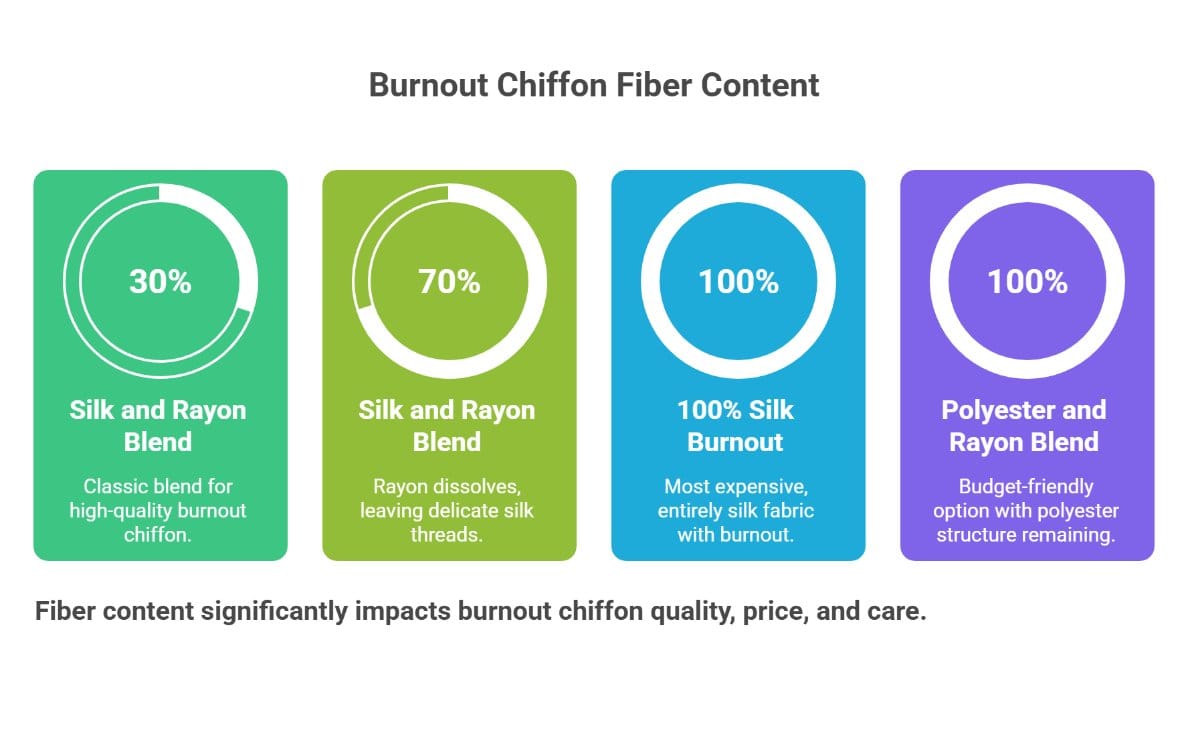
Fiber composition influences price, care, and durability.
Not all burnout chiffon is created equal. The fiber content directly affects the fabric’s quality, price, durability, and how you’ll need to care for it. Let’s break down what you need to know.
Common Fiber Blends
Silk and Rayon Blend (Premium Quality)
The classic silk-rayon blend is what most people think of when they picture high-quality burnout chiffon. The typical ratio is 30% silk and 70% rayon, though you might see slight variations. After the burnout process, the rayon dissolves away in the pattern areas, leaving delicate silk threads that create the sheer sections.
This blend gives you the best of both fibers. The silk provides that luxurious drape and soft sheen, while the rayon (before it’s burned out) helps create crisp, detailed patterns. Silk-rayon burnout chiffon feels incredibly soft against the skin and has a beautiful movement when you wear it.
Expect to pay more for silk-rayon burnout chiffon. Prices typically range from $15 to $40 per yard, depending on the pattern complexity and silk quality. High-end designer fabrics can cost even more.
100% Silk Burnout (Ultra-Premium)
Pure silk burnout chiffon is the most expensive option. These fabrics use specially woven silk where different weave structures create areas that react differently to the chemical treatment. The result is an entirely silk fabric with burnout effects.
Because it’s all silk, this fabric has the most consistent feel and drape. There’s no difference in texture between the solid and sheer areas (unlike blended fabrics where you can feel the different fibers). However, it’s also the most delicate and requires the most careful handling and cleaning.
Polyester and Rayon Blend (Budget-Friendly)
For a more affordable option, look for polyester-rayon blends. After treatment, the rayon burns away and the polyester structure remains. These fabrics typically cost $8 to $20 per yard, making them accessible for larger projects or when budget is a concern.
Polyester-rayon burnout chiffon is more durable than silk blends. It’s less likely to snag, easier to wash at home, and holds up better to regular wear. The trade-off is that it doesn’t have quite the same luxurious feel as silk. The drape is still beautiful, but you might notice the fabric feels slightly crisper or more synthetic to the touch.
This is a great choice if you’re making items like children’s chiffon clothing or decorative pieces that need to withstand frequent washing.
Quality Indicators to Look For
When shopping for burnout chiffon, check these quality markers:
Pattern Clarity
The burnout patterns should be crisp and well-defined. Blurry edges or incomplete burnout areas indicate poor quality or improper processing. Hold the fabric up to light and examine the sheer sections carefully.
Even Burnout
The thickness should be consistent throughout the sheer areas. If some parts are more transparent than others within the same pattern area, the chemical treatment wasn’t applied evenly.
No Fraying at Pattern Edges
Quality burnout chiffon has clean edges where solid and sheer sections meet. Excessive fraying or loose threads suggest the fabric won’t hold up well over time.
Consistent Hand Feel
The entire piece should feel uniformly soft and smooth. Rough patches or stiff areas might indicate chemical residue that wasn’t properly washed out.
Understanding GSM and Weight
Burnout chiffon is measured in GSM (grams per square meter), just like other fabrics. Most burnout chiffon falls in the 40-65 GSM range. For comparison:
- 40-50 GSM: Very lightweight, more transparent, drapes beautifully but can be tricky to sew
- 50-60 GSM: Medium weight, the most common for clothing, good balance of drape and structure
- 60-65 GSM: Slightly heavier, easier to work with, less transparent, better for beginner sewers
Width also matters. Most burnout chiffon comes in widths between 40 and 54 inches. Wider fabrics give you more flexibility with pattern layouts and can reduce waste.
The Sustainability Angle
As more people care about environmental impact, it’s worth noting that burnout fabric production does involve chemicals. However, some manufacturers are working to make the process more sustainable by:
- Using recycled fibers in the rayon component
- Properly treating and disposing of chemical waste
- Offering “deadstock” or surplus burnout chiffon that would otherwise go to waste
Deadstock burnout chiffon can be a great eco-friendly choice. These are leftover fabrics from fashion houses or textile mills that didn’t get used. Instead of ending up in landfills, they’re sold at reduced prices. You get unique, sometimes high-end fabrics while reducing waste.
Burnout Chiffon vs Other Chiffon Types
Understanding how burnout chiffon compares to other chiffon varieties helps you choose the right fabric for your project. Each type has its own characteristics, best uses, and price points.
| Fabric Type | Key Features | Best For | Price Range |
|---|---|---|---|
| Burnout Chiffon | Semi-transparent patterns, 3D texture, slightly heavier than regular chiffon, unique visual depth | Evening wear, overlays, scarves, romantic looks, vintage-inspired fashion | $15-$40/yard |
| Regular Chiffon | Plain weave, fully sheer, ultra-lightweight, smooth texture throughout | Flowing dresses, blouses, sheer curtains, general purpose | $5-$25/yard |
| Georgette Chiffon | Crinkled texture, slightly heavier, more opaque, matte finish | Structured dresses, scarves, everyday wear, professional clothing | $8-$30/yard |
| Jacquard Chiffon | Woven patterns, slightly textured, patterns created during weaving process | Special occasion wear, upscale fashion, decorative projects | $12-$35/yard |
| Stretch Chiffon | Contains spandex, flexible, form-fitting, recovers shape | Fitted dresses, dancewear, performance costumes | $10-$28/yard |
| Crepe Chiffon | Pebbled surface, less sheer, good drape, wrinkle-resistant | Professional wear, travel clothing, everyday dresses | $8-$25/yard |
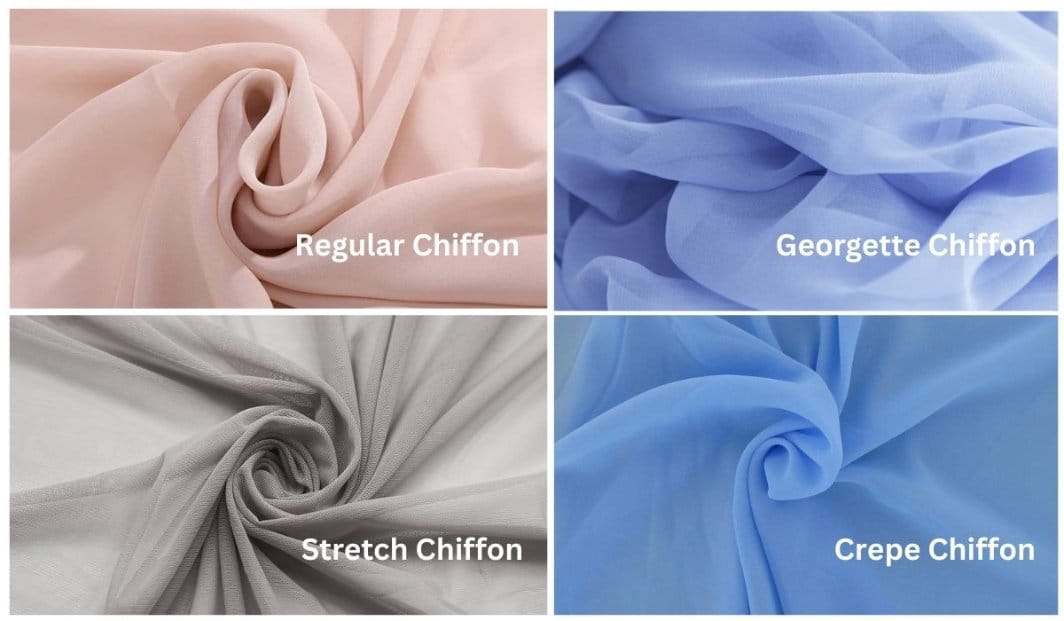
Each chiffon variety offers unique drape and texture.
What Makes Burnout Chiffon Different?
The main difference is obvious when you look at the fabric: burnout chiffon has built-in patterns created through chemical treatment, not printing or weaving. But there are other important differences too.
Weight and Body: Burnout chiffon feels slightly heavier than regular chiffon. This extra weight actually makes it easier to sew with, especially for beginners. The fabric doesn’t slip and slide quite as much as ultra-lightweight chiffon does.
Drape: While all chiffon drapes beautifully, burnout chiffon has a unique quality. The contrast between solid and sheer areas creates interesting dimension and movement. When you wear it, the fabric seems to dance differently than plain chiffon.
Opacity: Regular chiffon is consistently sheer throughout. Burnout chiffon gives you both sheer and solid areas in one fabric, which means you might not need as much lining (depending on the pattern placement).
Care Requirements: Burnout chiffon often needs more careful handling than regular chiffon because the chemical treatment can make the sheer areas more delicate. The fiber-on-fiber structure in the burnout sections is more fragile than solid fabric.
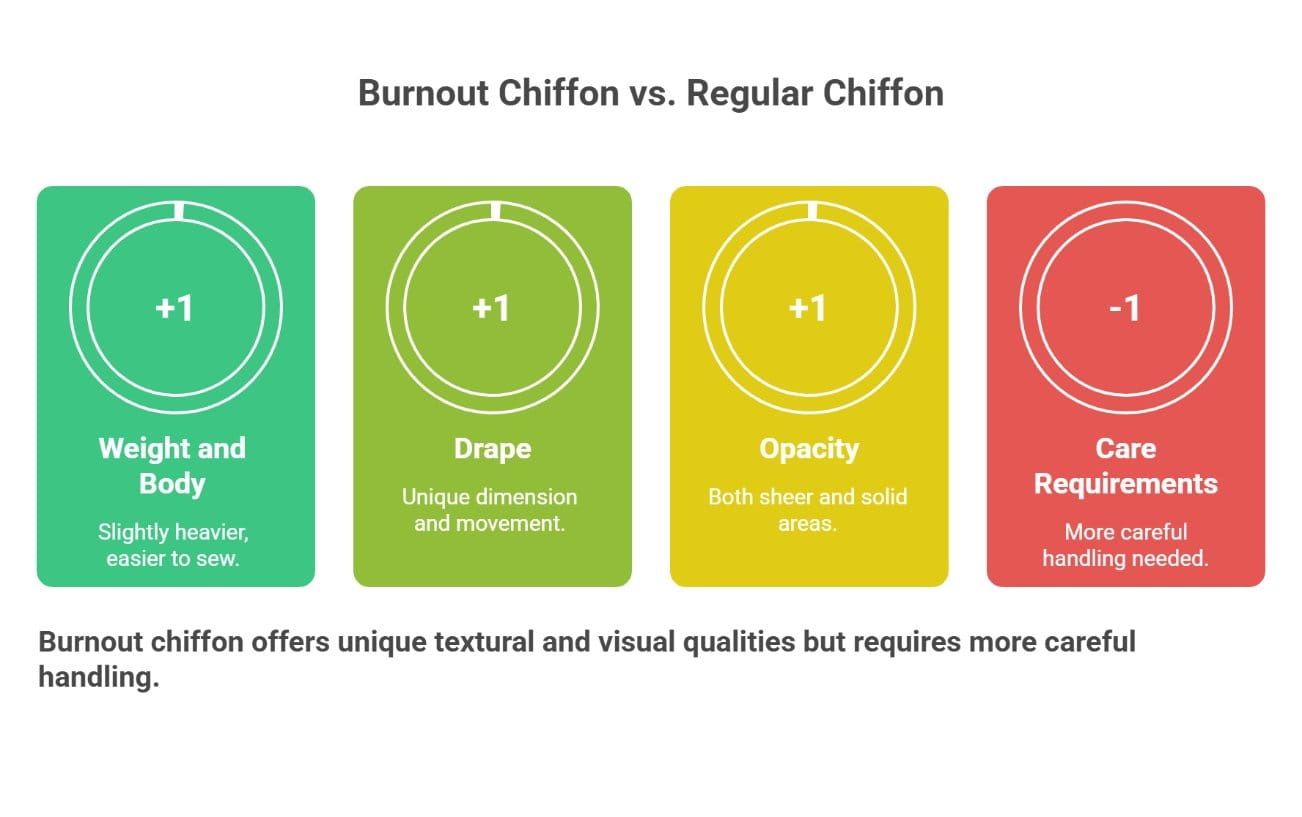
Infographic comparing burnout chiffon fabric with regular chiffon.
Comparison with Georgette Fabric
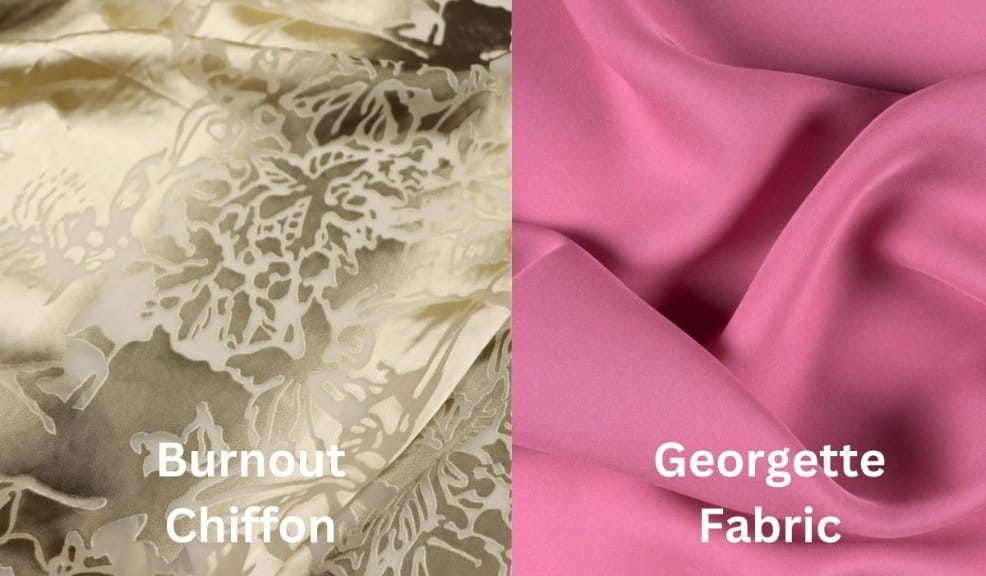
Georgette has uniform texture while burnout features transparent motifs.
People often confuse georgette and chiffon because they’re both lightweight, sheer fabrics. Here’s the key difference: georgette chiffon has a crinkled, slightly pebbled texture throughout, while burnout chiffon is smooth with textured patterns only in specific areas.
Georgette uses highly twisted yarns in both the warp and weft, creating that signature crepe-like texture. It’s slightly more opaque and has more body than regular chiffon. Burnout chiffon starts with a smoother base and gets its texture from the chemical burnout process.
If you want an all-over textured look, georgette is your fabric. If you want specific patterns with a mix of smooth and sheer, go with burnout chiffon.
Related Luxury Fabrics You Should Know
If you love burnout chiffon, you might also be interested in these similar luxury fabrics that use related techniques or create comparable effects.
Burnout Velvet (Devoré Velvet)
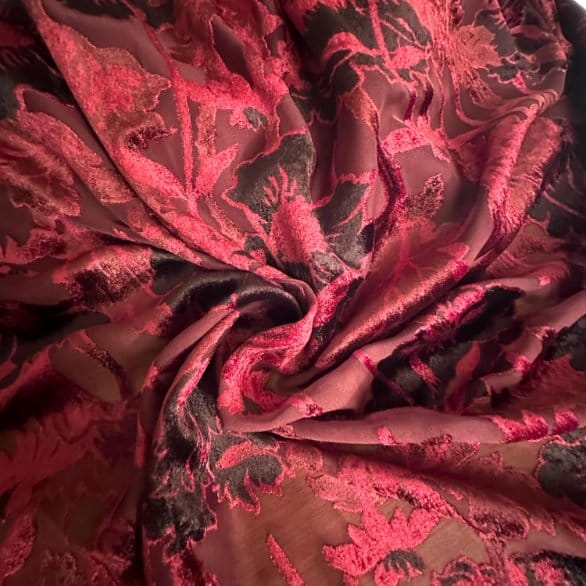
Devoré uses a similar technique to chiffon but on velvet.
This is burnout chiffon’s more dramatic cousin. Burnout velvet uses the same chemical process but on velvet fabric. The pile (the fuzzy part of velvet) is typically made from rayon or cotton, while the backing is silk or synthetic. When treated, the pile burns away in patterns, leaving the sheer backing visible.
The result is absolutely stunning: plush, opaque velvet areas contrasted with sheer sections. Burnout velvet is popular for evening wear, theater costumes, and luxury home decor. It’s heavier and more structured than burnout chiffon, making it perfect when you want drama and volume.
Fil Coupé
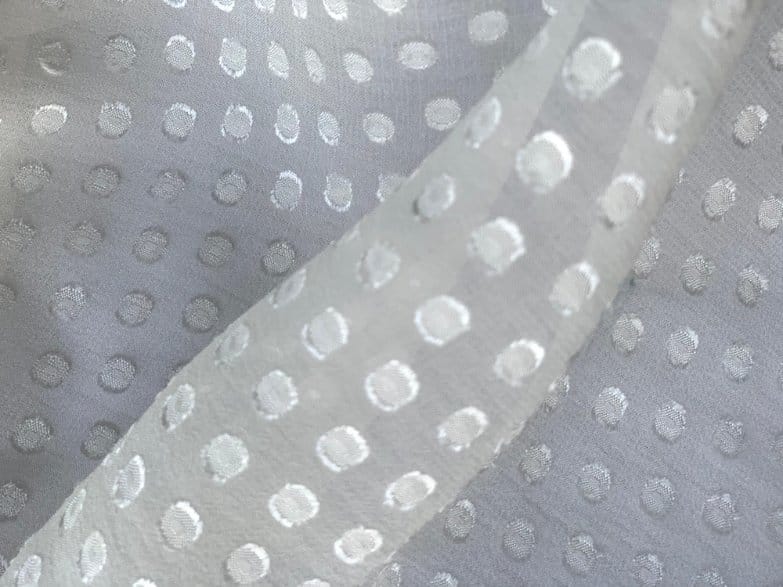
Fil coupé fabric displaying raised woven dots on a translucent chiffon background.
While not created through chemical treatment, fil coupé creates a similar effect through weaving. Extra threads are woven into the fabric to create raised patterns, then the threads between pattern areas are cut away. This leaves floating pattern elements on a sheer background.
The look is similar to burnout fabric, but the technique is completely different. Fil coupé tends to be more expensive because it requires specialized looms and skilled weavers. However, it’s often more durable than burnout fabrics because nothing has been chemically weakened.
Organza
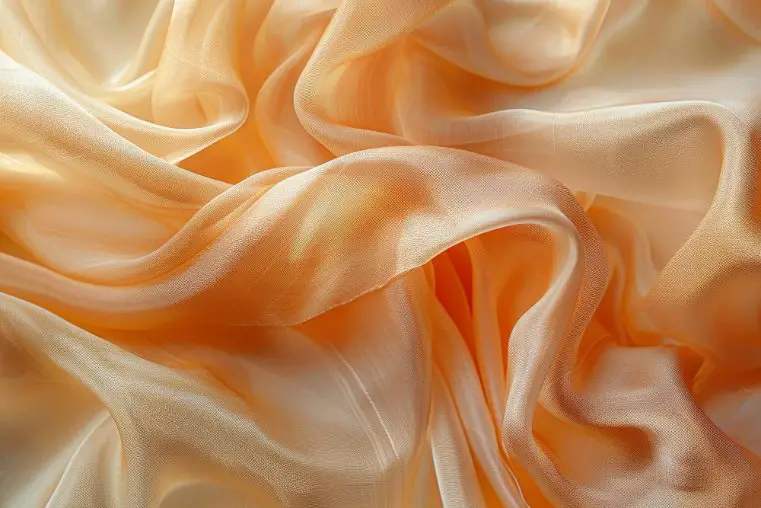
Organza offers structured body compared to chiffon’s soft drape.
Organza is a crisp, sheer fabric that’s often confused with chiffon. The main difference is stiffness: organza holds its shape and has body, while chiffon is soft and drapey. Burnout techniques can also be applied to organza, creating burnout organza with structured sheer areas.
If you want a fabric that creates volume and holds structure (like in ball gowns), organza is better than chiffon. For flowing, romantic designs, stick with burnout chiffon.
Chemical Lace
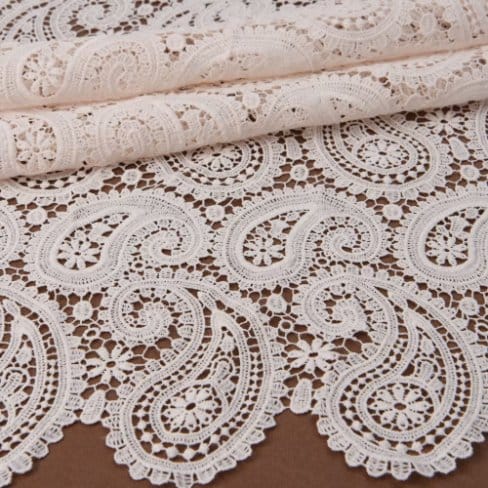
Chemical lace fabric showcasing delicate cutwork patterns created through a chemical burn out process.
The burnout technique is actually used to create some types of lace. Chemical lace (also called guipure lace) starts as a fabric with embroidery or pattern stitching. The base fabric is then dissolved away using chemicals, leaving only the stitched pattern as a lace-like structure.
This is similar to burnout fabric but taken to an extreme: instead of leaving some background fabric, almost all of it is dissolved away. The result looks more like traditional lace but is made through an industrial process.
Fashion and Design Applications
Burnout chiffon’s romantic, semi-sheer quality makes it perfect for a wide range of fashion and home decor projects. Let’s explore the most popular uses and get some inspiration for your next creation.
Evening Wear and Special Occasions
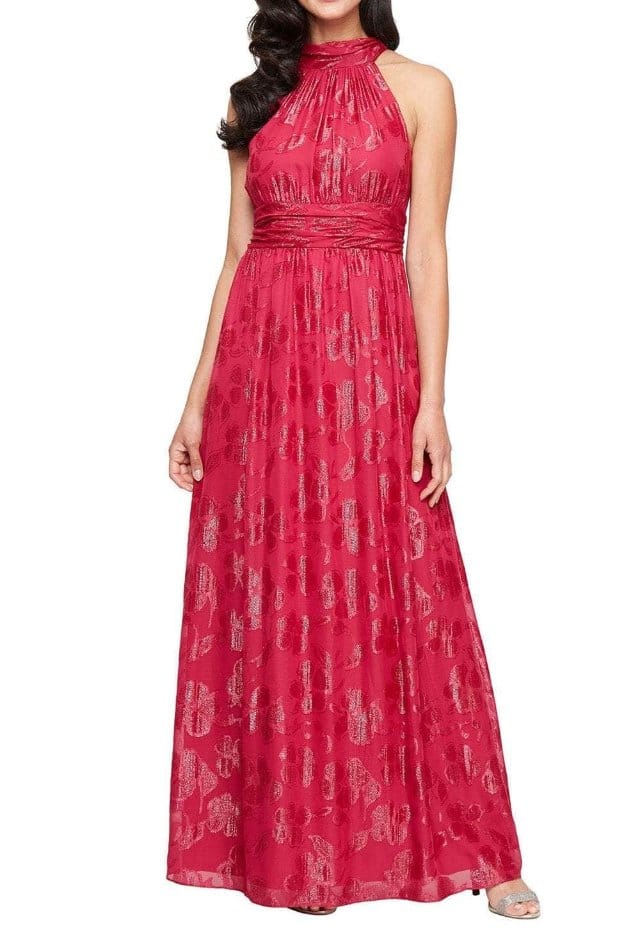
Evening designs highlight the dramatic contrast of burnout textures.
This is where burnout chiffon truly shines. The fabric’s semi-transparent quality creates that perfect balance between covered and revealed, making it ideal for formal events where you want to look elegant and sophisticated.
Dress Overlays: One of the most popular uses is as an overlay for evening gowns and cocktail dresses. You can sew a burnout chiffon layer over a solid colored lining, creating depth and visual interest. The sheer burnout areas reveal hints of the underdress while the solid sections provide coverage where you need it.
Blouse Details: Add burnout chiffon sleeves to a simple top for instant elegance. The sheer, patterned sleeves create a romantic look without overwhelming the outfit. This works beautifully for wedding guest attire or dinner party outfits.
Skirt Panels: Create flowing skirts with burnout chiffon panels. The patterns add movement and catch the light beautifully as you move. Pair with a solid lining for a look that’s both modest and eye-catching.
Bridal and Wedding Fashion
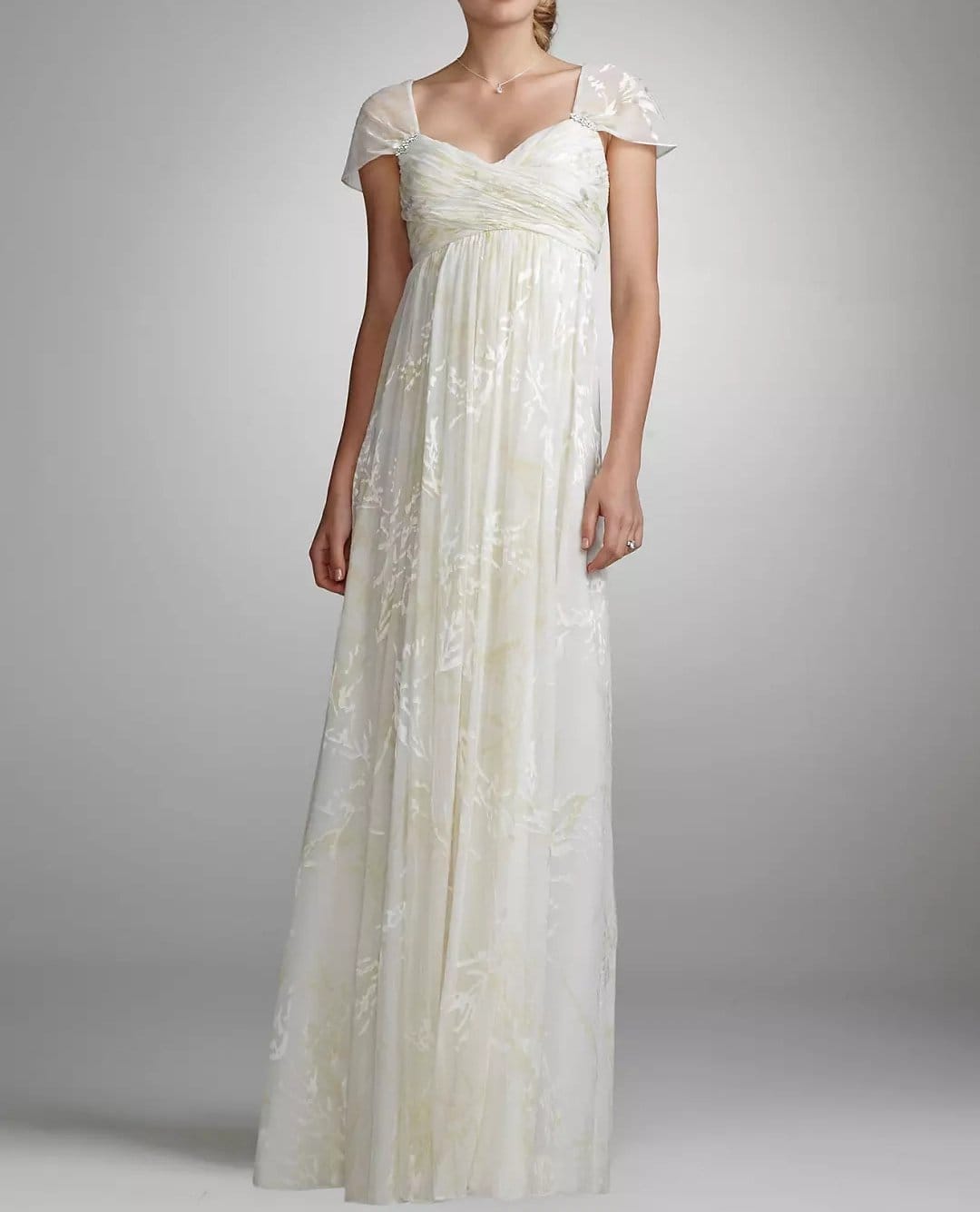
Burnout chiffon creates romantic texture for wedding dresses.
Burnout chiffon has a naturally romantic, vintage-inspired quality that fits perfectly with wedding aesthetics. Many brides choose it for various elements of their wedding day look.
Wedding Dress Elements: Use burnout chiffon for sheer sleeves, back panels, or overlay layers on a wedding gown. The fabric photographs beautifully and adds a dreamy, ethereal quality to bridal portraits.
Veils and Accessories: A burnout chiffon veil creates a unique alternative to traditional tulle. The patterns add visual interest without feeling too busy or distracting from the dress.
Bridesmaid Dresses: For a coordinated bridal party look, burnout chiffon bridesmaid dresses with matching patterns create cohesion while still feeling special. Choose colors that complement your wedding palette.
Everyday Fashion and Casual Wear
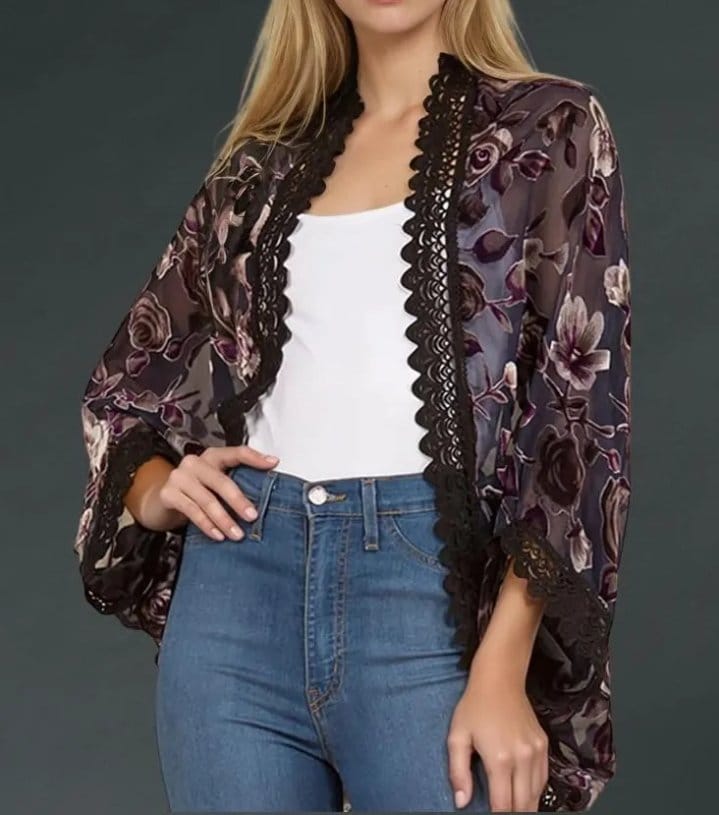
Burnout chiffon adds lightweight layering to everyday fashion.
You don’t have to save burnout chiffon only for special occasions. With the right designs, it works for everyday wear too.
Kimono-Style Jackets: A loose, flowing kimono or cardigan in burnout chiffon makes a perfect layering piece for spring and summer. Wear it over jeans and a tank top for an effortlessly bohemian look.
Scarves: Burnout chiffon scarves are lightweight enough for year-round wear. The patterns add interest without needing additional embellishment. These make excellent gifts and travel accessories.
Tunics and Cover-Ups: Beach cover-ups in burnout chiffon are both practical and beautiful. The sheer quality lets air flow through while still providing sun protection and coverage.
Home Decor Applications
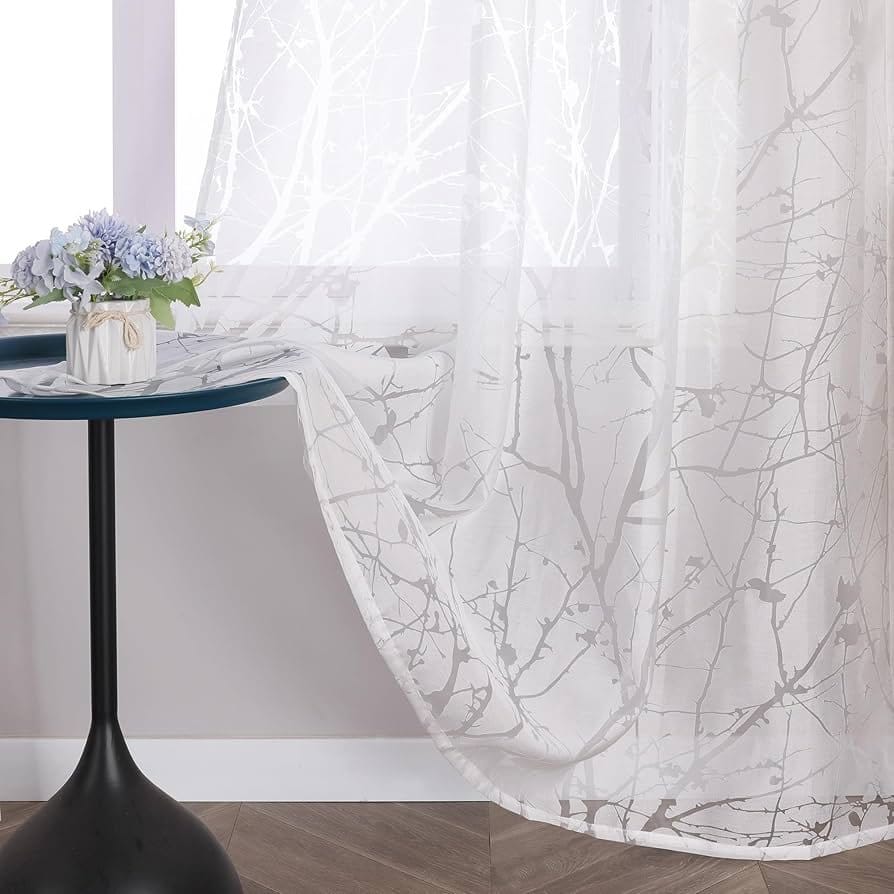
Burnout chiffon works beautifully for airy window treatments.
Don’t limit burnout chiffon to clothing. This fabric creates stunning home decor pieces that add softness and romance to any room.
Curtains and Window Treatments: Burnout chiffon curtains filter light beautifully while adding privacy. The patterns create interesting shadows and light effects throughout the day. This works especially well in bedrooms or dining rooms where you want soft, diffused light.
Table Runners and Overlays: For weddings, parties, or special dinners, burnout chiffon table runners add elegance. Layer them over solid-colored tablecloths for a sophisticated look. The fabric drapes beautifully over table edges.
Canopy and Bed Draping: Create a romantic bedroom atmosphere with burnout chiffon bed canopies or drapes. The sheer quality keeps the space from feeling closed-in while adding softness and visual interest.
Decorative Pillows: Add burnout chiffon as pillow overlays or as the main fabric (with backing for structure). The texture adds dimension to solid-colored cushions.
Festival and Boho Fashion
The free-spirited, romantic quality of burnout chiffon makes it a natural fit for festival fashion and bohemian styles.
Festival Tops: Loose, flowing tops with burnout patterns are perfect for music festivals and outdoor events. The sheer quality keeps you cool while the patterns add visual interest.
Layering Pieces: Create multi-layered outfits by combining burnout chiffon with other textures. The semi-transparency works beautifully when layered over contrasting colors or patterns.
Complete Care Instructions for Burnout Chiffon
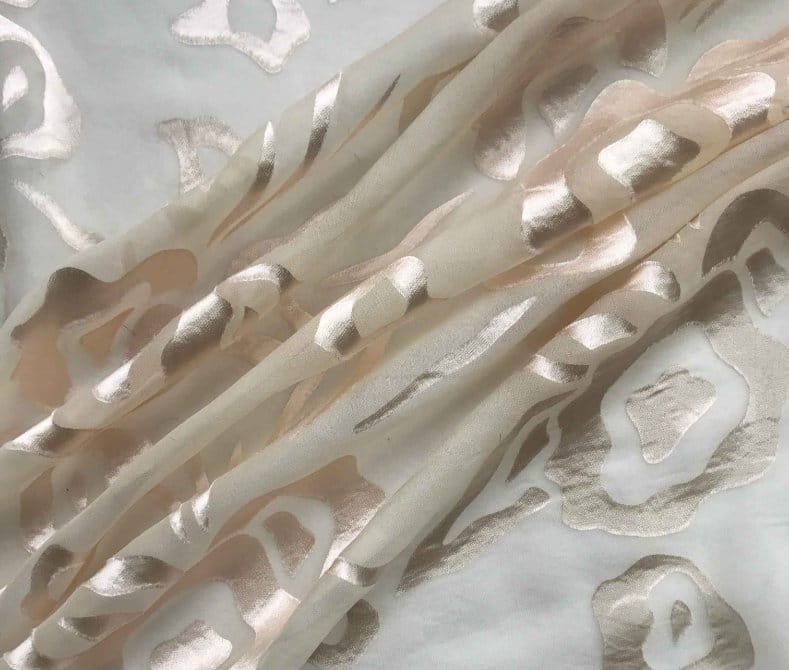
Proper care protects fragile sheer areas.
Proper care will keep your burnout chiffon looking beautiful for years. The fabric needs gentle handling because the chemical treatment makes the sheer areas more delicate than solid fabric. Here’s everything you need to know.
Important: Always check the care label first. Different fiber contents require different care methods. Silk burnout chiffon needs gentler treatment than polyester blends.
Hand Washing Burnout Chiffon (Recommended Method)
Hand washing is the safest way to clean burnout chiffon, especially for silk blends. It gives you complete control and minimizes stress on the delicate fibers.
- Prepare Your Basin: Fill a clean basin or sink with cool or lukewarm water. Hot water can damage the fibers and cause shrinkage. The water should feel comfortable to your hands, not warm.
- Add Mild Detergent: Use a gentle liquid detergent designed for delicate fabrics. You only need a small amount, about one teaspoon per gallon of water. Swirl the water gently to mix the detergent and create light suds.
- Submerge and Soak: Place your burnout chiffon item in the water and gently press it down to submerge. Let it soak for 3-5 minutes. This gives the detergent time to loosen any dirt or oils without you needing to scrub.
- Gentle Swishing: Move the fabric gently through the water with a soft swishing motion. Never rub, twist, or wring the fabric. The burnout areas are delicate and can be damaged by rough handling.
- Rinse Thoroughly: Drain the soapy water and refill with clean, cool water. Gently move the fabric through the rinse water. You may need to do this 2-3 times until all soap is gone. Soap residue can attract dirt and make the fabric look dull.
- Remove Excess Water: Never wring or twist. Instead, gently press the fabric between your hands to remove excess water. Then lay it flat on a clean, dry towel. Roll the towel up with the fabric inside and press gently. The towel will absorb most of the moisture.
Machine Washing (When Appropriate)
Some burnout chiffon fabrics, particularly polyester-rayon blends, can handle machine washing. However, silk-rayon blends should always be hand washed or dry cleaned.
Machine Washing Guidelines:
- Use a Mesh Bag: Always place the garment in a mesh laundry bag. This protects it from snags and prevents it from getting tangled with other items.
- Delicate Cycle Only: Select the gentlest cycle available on your machine. Use cold water only.
- Mild Detergent: Use a small amount of gentle liquid detergent. Avoid harsh detergents or bleach.
- Wash Alone: Don’t add other clothing, especially items with zippers, hooks, or rough textures that could snag the chiffon.
- Skip the Spin Cycle: If possible, stop the machine before the spin cycle. The spinning motion can be too harsh for delicate fabrics.
Drying Your Burnout Chiffon
Proper drying is just as important as proper washing. The wrong drying method can cause permanent damage.
Air Drying (Best Method): Lay the fabric flat on a clean, dry towel or drying rack. Reshape the garment gently to its original form while it’s still damp. Never hang burnout chiffon to dry while it’s very wet because the weight of the water can stretch the fabric.
Location Matters: Dry in a shaded, well-ventilated area. Direct sunlight can fade colors and weaken fibers. Indoor drying near a fan or in a room with good air circulation works well.
Never Tumble Dry: The heat and tumbling motion of a dryer will damage burnout chiffon. The fabric can shrink, the sheer areas can tear, and synthetic fibers might melt. There are no exceptions to this rule.
Ironing and Steaming
Burnout chiffon wrinkles easily, but removing those wrinkles requires care.
Steaming (Safer Option): A garment steamer is the best tool for removing wrinkles from burnout chiffon. Hold the steamer a few inches away from the fabric and let the steam do the work. Never touch the steamer head directly to the fabric.
Ironing (If Necessary): If you must iron:
- Use the lowest heat setting possible
- Always iron on the wrong side of the fabric
- Place a pressing cloth (a clean cotton cloth) between the iron and the fabric
- Never let the iron sit in one spot; keep it moving gently
- Test on a hidden area first
Storage Tips
Proper storage prevents damage when you’re not wearing or using your burnout chiffon items.
Hanging: For garments, use padded hangers to prevent creases at the shoulder line. Wire hangers can create permanent indentations. Make sure there’s space between items in your closet so the fabric doesn’t get crushed.
Folding: If you need to fold burnout chiffon, place acid-free tissue paper between the folds. This prevents permanent creases and protects the fabric. Re-fold along different lines every few months to avoid set-in creases.
Protect from Snags: Store burnout chiffon away from rough surfaces, jewelry, or anything with hooks or sharp edges. Even a small snag can run through the delicate sheer areas.
Climate Control: Store in a cool, dry place. Avoid damp basements or hot attics where humidity and temperature extremes can damage the fabric.
Stain Treatment
If you get a stain on burnout chiffon, act quickly but gently.
- Blot (don’t rub) the stain immediately with a clean, white cloth to absorb any excess
- Mix a tiny amount of mild detergent with cool water
- Gently dab the stain with the solution using a clean cloth
- Rinse the area by dabbing with clean water
- If the stain persists, take the item to a professional cleaner who specializes in delicate fabrics
When to Choose Dry Cleaning
Some burnout chiffon items are best left to professionals. Consider dry cleaning if:
- The item is made from 100% silk burnout chiffon
- It has complex embellishments like beading or stones
- The care label specifically says “Dry Clean Only”
- You’re dealing with a valuable or sentimental piece
- There’s a stubborn stain you can’t remove
When taking burnout chiffon to the dry cleaner, point out that it’s a delicate fabric with chemical treatment. Make sure they have experience with specialty fabrics.
Sewing with Burnout Chiffon: A Complete Guide

Sewing and fitting a garment made from burnout chiffon fabric.
If you’ve ever tried sewing with regular chiffon, you know it can be challenging. The fabric slips, slides, and seems to have a mind of its own. Good news: burnout chiffon is actually easier to work with than regular chiffon because it has slightly more weight and body. Still, it requires specific techniques for best results.
Why Burnout Chiffon is Easier Than Regular Chiffon
The extra weight from the thicker fiber structure (before areas are burned out) gives burnout chiffon more stability. It doesn’t slip around quite as much when you’re cutting or sewing. The fabric also feeds through your sewing machine more consistently without getting sucked down into the throat plate.
That said, the sheer burnout areas are still delicate and can be damaged if you’re not careful. The key is treating the solid areas normally while being extra gentle with the sheer sections.
Essential Tools and Supplies
Having the right tools makes a huge difference when sewing burnout chiffon.
Sharp Scissors or Rotary Cutter
Dull blades will pull and snag the delicate fibers. Use fabric scissors that are reserved only for fabric, never paper.
Fine Pins or Pattern Weights
Use extra-fine silk pins if pinning. Better yet, use pattern weights to avoid creating holes in the fabric.
Lightweight Needles
Size 60/8 or 70/10 needles work best. Choose microtex or sharp needles designed for delicate fabrics.
Fine Thread
Use lightweight thread that matches the fabric’s delicate nature. Heavy thread will create puckering.
Cutting Burnout Chiffon
The cutting stage sets you up for success (or frustration) for the entire project.
Prepare Your Surface: Work on a large, flat surface. If your fabric is slippery, place a sheet or piece of muslin underneath to create friction and prevent sliding.
Cut One Layer at a Time: Even though burnout chiffon is easier to handle than regular chiffon, cutting single layers ensures accuracy. The slight thickness variations between solid and sheer areas can cause layers to shift if you cut multiple layers together.
Use Pattern Weights: Instead of pins, use pattern weights to hold your pattern pieces in place. This prevents pin holes in the finished garment. If you must pin, pin within the seam allowance only.
Rotary Cutter Advantage: A rotary cutter and cutting mat give you cleaner cuts than scissors. The blade rolls smoothly without pulling the fabric. Keep your blade sharp and replace it when it starts to drag.
Sewing Techniques
Test First: Always sew a test seam on fabric scraps before starting your actual project. This lets you adjust tension, stitch length, and needle type without risking your garment pieces.
Stitch Length: Use a slightly shorter stitch length than normal, around 2.0 to 2.5 mm. This creates stronger seams without the stitches being so tight that they pucker the fabric.
Tension Settings: Reduce your upper thread tension slightly. Too much tension will cause the seams to pucker. Your machine’s manual should have settings for lightweight fabrics.
Basting Before Sewing: For best results, hand-baste layers together before machine sewing. Use long, loose stitches that you’ll remove later. This prevents layers from shifting while you sew.
Seam Finishes: French seams are ideal for burnout chiffon. They enclose raw edges completely, creating a clean finish that looks professional from both sides. French seams work especially well for sheer fabrics because you’ll be able to see regular seam allowances through the fabric.
Working with Pattern Placement
One unique aspect of sewing with burnout chiffon is considering the placement of the burnout patterns.
Before cutting, look at where the patterns fall. You might want certain design elements centered on a bodice or symmetrically placed on sleeves. Lay out your pattern pieces first and move them around to find the most flattering placement.
Keep in mind that seam allowances will cut through some pattern areas. Try to avoid having important parts of the design fall directly on a seamline where they’ll be hidden.
Preventing Snags and Pulls
The sheer areas of burnout chiffon are prone to snags. Here’s how to prevent them:
- File your fingernails smooth before handling the fabric
- Remove jewelry that might catch on the fabric
- Keep your sewing machine bobbin area clean and free of burrs
- Change your needle frequently; dull needles cause pulls
- Use a new needle for each project
Using Stabilizers
If you’re having trouble with the fabric getting pulled down into your machine’s throat plate, use a stabilizer. Tear-away stabilizer placed under the fabric provides temporary support during sewing. Gently tear it away after you’re done sewing.
Water-soluble stabilizer can also work well. It rinses away completely when you wash the finished garment.
Pattern Selection
Not all patterns work well with burnout chiffon. Choose designs that complement the fabric’s characteristics.
Best Patterns:
- Loose, flowing designs that don’t require precise fitting
- Gathered or draped styles that show off the fabric’s movement
- Overlay designs where structure comes from an underlayer
- Simple shapes without complicated seams or details
Patterns to Avoid:
- Tailored, structured garments that need crisp lines
- Heavily pleated designs (the fabric is too soft to hold sharp pleats)
- Designs with lots of topstitching or decorative stitching
- Tight-fitting styles (the sheer areas won’t provide adequate coverage)
Sustainability and Ethical Considerations
As we become more aware of fashion’s environmental impact, it’s important to think about the sustainability aspects of burnout chiffon. The chemical process raises some questions, but there are ways to make more responsible choices.
The Chemical Process Environmental Impact
Creating burnout fabric involves sodium hydrogen sulfate, which is a chemical treatment. When used and disposed of properly, this chemical has a moderate environmental impact. It’s less toxic than many other textile chemicals, but it still needs to be handled responsibly.
Responsible manufacturers treat their wastewater before releasing it and follow environmental regulations for chemical disposal. Unfortunately, not all producers follow these standards, especially in countries with less strict environmental oversight.
When shopping for burnout chiffon, look for manufacturers who are transparent about their production processes. Certifications like OEKO-TEX Standard 100 indicate that harmful substances are limited in the final textile product.
Sustainable Alternatives and Choices
Deadstock and Surplus Fabric: One of the most sustainable ways to use burnout chiffon is buying deadstock fabric. These are leftover materials from fashion houses, textile mills, or fabric stores that would otherwise go to waste. You get beautiful, often high-quality fabrics at reduced prices while keeping textiles out of landfills.
Recycled Fiber Content: Some burnout chiffon now incorporates recycled fibers, particularly in the rayon component. Recycled rayon (made from post-consumer textile waste) has a lower environmental impact than virgin rayon production.
Small-Scale Artisan Production: Supporting small-scale producers who use hand-application techniques can be more sustainable than mass production. These makers often have more control over their waste and can ensure chemicals are properly handled.
Longevity and Quality Over Fast Fashion
One of the best ways to make your burnout chiffon more sustainable is simply to care for it properly so it lasts longer. A well-made burnout chiffon piece that you keep for years is far more sustainable than cheap, poorly-made items you throw away after a season.
Following the care instructions in this guide, storing items properly, and mending small damage instead of discarding pieces all contribute to sustainability. The longer you use something, the lower its environmental impact per wear.
Care for Longevity
Proper washing actually extends the life of your fabric:
- Hand washing creates less fiber stress than machine washing
- Air drying prevents heat damage that weakens fibers over time
- Proper storage prevents snags, pulls, and sun damage
- Spot treating stains means less frequent full washing
Every time you care for your burnout chiffon correctly, you’re making a choice that supports sustainability by extending the garment’s usable life.
How to Buy Quality Burnout Chiffon

Designer carefully selecting high quality burnout chiffon fabric for garment production.
Whether you’re shopping online or in person, knowing what to look for helps you get the best quality for your money. Here’s your complete buying guide.
What to Look For
Pattern Clarity: Examine the burnout patterns closely. The edges between solid and sheer areas should be clean and crisp, not fuzzy or blurred. Hold the fabric up to light to check if the sheer areas are evenly transparent throughout.
Fiber Content Information: Reputable sellers always list the fiber content. Be wary of vague descriptions like “silk-like” or “silk blend” without specific percentages. You want to know exactly what you’re buying.
Color Consistency: Check that colors are even throughout the fabric. Uneven dyeing or fading can indicate poor quality or improper processing.
Handle the Fabric: If shopping in person, feel the fabric. It should be soft and smooth with no rough patches or stiff areas. Run your hand gently over both solid and sheer sections to check for consistency.
Price Ranges by Quality
| Quality Level | Price Per Yard | Characteristics |
|---|---|---|
| Budget | $8-$15 | Polyester-rayon blend, simpler patterns, good for practice or large projects |
| Mid-Range | $15-$30 | Silk-rayon blend, good quality patterns, suitable for most projects |
| Premium | $30-$50+ | High silk content or 100% silk, designer patterns, heirloom quality |
Online Shopping Tips
Shopping for fabric online comes with challenges since you can’t feel the fabric first. Here’s how to shop smart:
- Order Swatches: Many online fabric stores offer swatches for a small fee. This lets you check the quality, weight, and color in person before buying yards of fabric.
- Read Reviews: Look for reviews from other buyers. They often mention if colors are accurate, if the fabric is thinner/heavier than expected, or if quality matches the price.
- Check Return Policies: Make sure you can return or exchange fabric if it doesn’t meet your expectations.
- Look at Detailed Photos: Good sellers provide close-up photos showing fabric texture and pattern details.
Width and Quantity Considerations
Burnout chiffon typically comes in widths from 40 to 54 inches. Wider fabrics are more expensive per yard but may save you money overall because you need less yardage for your project.
Calculate how much you need carefully. Burnout chiffon isn’t cheap, and you don’t want to over-buy. Most pattern instructions give yardage requirements for different fabric widths. Add an extra half yard for mistakes or pattern placement adjustments.
Where to Find Quality Burnout Chiffon
Specialty Fabric Stores: High-end fabric stores often carry quality burnout chiffon, especially for bridal and evening wear. Staff can usually provide guidance on selecting the right fabric for your project.
Online Fabric Retailers: Many online stores specialize in luxury or specialty fabrics. Look for retailers with good reputations and detailed product descriptions.
Designer Deadstock Suppliers: These suppliers sell surplus fabric from fashion houses and textile mills at reduced prices. You might find amazing quality at bargain prices, but selection is limited to what’s available.
International Suppliers: Consider suppliers in India, China, or Europe where silk and specialty fabrics are produced. You might get better prices, but factor in shipping costs and time.
Frequently Asked Questions About Burnout Chiffon
Burnout chiffon is partially see-through. The solid areas where the pattern hasn’t been burned out are relatively opaque, while the areas where fibers have been dissolved away are sheer and transparent. This creates a unique effect where some parts of the fabric provide coverage while others are see-through. Most people line burnout chiffon garments or wear them as overlay layers over solid fabrics for this reason.
Shrinkage depends on the fiber content. Silk-rayon blends can shrink slightly (2-5%) if exposed to hot water or high heat. Polyester-rayon blends are more stable and less likely to shrink significantly. To prevent shrinkage, always wash in cold or cool water and air dry flat. Never put burnout chiffon in the dryer. If you’re making a garment, consider pre-washing your fabric using the same method you’ll use for the finished piece to account for any potential shrinkage.
You can dye burnout chiffon, but the results might not be what you expect. Because the fabric contains different fiber types (like silk and rayon or polyester and rayon), different parts will take dye differently. Silk and rayon both accept dye well, so silk-rayon burnout chiffon can be dyed successfully, though the solid and sheer areas might show slight color variations. Polyester-rayon blends are trickier because polyester requires special disperse dyes and high heat, which might damage the delicate fabric structure. For best results, choose burnout chiffon in the color you want rather than planning to dye it.
The chemical burnout process adds extra labor, materials, and expertise to the production, making burnout chiffon more expensive. The fabric goes through more processing steps than regular chiffon: pattern application, chemical treatment, heat activation, and thorough washing. Each step requires skilled workers and careful quality control to ensure patterns are crisp and clean. The chemicals used cost money, and proper waste disposal adds to production costs. Additionally, some fabric is lost in the process because the burnout areas literally dissolve away, meaning you start with more fabric than you end with.
No, they’re created through completely different methods. Burnout chiffon uses chemical treatment to dissolve certain fibers, leaving others intact. Laser-cut chiffon uses a laser beam to physically cut away portions of the fabric. Laser cutting works on any fabric type and creates very precise patterns with sealed edges. Burnout creates a softer, more organic look with the characteristic fiber texture in sheer areas. Laser-cut fabrics have clean, cut edges, while burnout fabrics have a dissolved, softer appearance in pattern areas.
Prevention is key since fixing snags in burnout chiffon is difficult. Keep the fabric away from jewelry, rough surfaces, Velcro, and anything with hooks or sharp edges. When wearing burnout chiffon garments, be careful around bags with hardware, rough upholstery, and wood splinters. Store items in garment bags or wrapped in tissue paper. If you do get a small snag, try gently pulling the fabric around it to redistribute the threads. For larger snags, take the item to a professional who specializes in delicate fabric repair. Don’t try to cut the snagged thread as this can make the problem worse.
Conclusion
Burnout chiffon stands out as a truly special fabric that bridges the gap between artistic textile technique and practical fashion material. Its unique combination of sheer and solid areas, created through the fascinating devoré chemical process, gives it a romantic quality that’s hard to match with other fabrics.
Throughout this guide, we’ve covered everything from the chemistry behind the burnout process to practical care instructions and sewing tips. Here are the key points to remember as you work with this beautiful fabric:
Understanding Quality Matters: Not all burnout chiffon is the same. Silk-rayon blends offer luxury and drape, while polyester-rayon blends provide durability and easier care at a lower price point. Check for crisp patterns, even burnout, and clean edges when shopping. These quality markers tell you if a fabric will stand the test of time.
Proper Care Extends Life: Hand washing in cool water with gentle detergent, air drying flat, and careful storage will keep your burnout chiffon looking beautiful for years. While these care requirements take more time than tossing something in the washer and dryer, they’re worth it to protect your investment and reduce waste. Remember, taking care of what you own is one of the most sustainable choices you can make.
Sewing Success Comes From Preparation: If you’re making something from burnout chiffon, take time to prepare properly. Use the right needles, thread, and cutting tools. Plan your pattern placement to show off the burnout designs. Work carefully but confidently, knowing that burnout chiffon is actually easier to sew than regular chiffon because of its slightly heavier weight.
Versatility in Use: Don’t limit burnout chiffon to just special occasion wear. Yes, it shines in evening gowns and wedding attire, but it’s also perfect for everyday items like scarves, kimono jackets, and home decor. The fabric’s romantic quality works in both formal and casual settings when styled appropriately.
Consider the Environmental Impact: While the chemical process raises sustainability questions, you can make responsible choices. Look for deadstock fabrics, choose quality over quantity, care for items properly to extend their life, and support manufacturers who are transparent about their environmental practices.
Final Recommendations
If you’re new to working with burnout chiffon, start with a small project like a scarf or simple top. This lets you get a feel for the fabric without investing too much money or time. Choose a polyester-rayon blend for your first project since it’s more forgiving and affordable than silk blends.
For experienced sewers ready to tackle more complex projects, burnout chiffon offers endless creative possibilities. Consider using it as an overlay on structured garments where the underlayer provides support while the burnout chiffon adds visual interest and texture.
When shopping, don’t just focus on the cheapest option. A slightly more expensive, higher-quality burnout chiffon will be easier to work with, look better in the finished project, and last longer. Quality fabric is always worth the investment.
Most importantly, have fun with this fabric. Burnout chiffon has a artistic, bohemian spirit that shouldn’t feel stressful or intimidating. Take your time, follow the care and sewing guidelines we’ve covered, and enjoy creating something beautiful.
Whether you’re draping it over a dining table for a special dinner, sewing an evening gown for a wedding, or creating a flowing scarf for everyday wear, burnout chiffon brings a touch of vintage romance and modern sophistication to any project. With the knowledge you’ve gained from this guide, you’re ready to choose, care for, and create with this special fabric confidently.
Further Resources:
- For more information on textile techniques and history, visit The Victoria and Albert Museum’s Textile Collection
- Learn about fabric care and maintenance at The Textile Museum of Canada
- Find detailed information about devoré techniques on Wikipedia’s Devoré Page