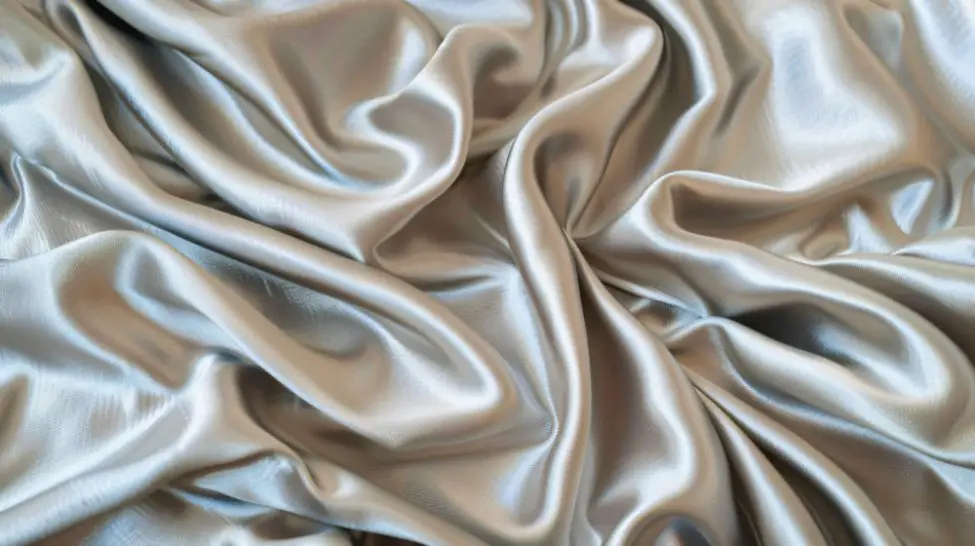

Discover the timeless beauty of antique satin, from authentication to modern applications in sustainable fashion
Table of Contents
- What is Antique Satin Fabric?
- The Rich History of Antique Satin
- Key Characteristics and Types
- How to Identify Authentic Antique Satin
- Why Antique Satin is a Sustainable Choice
- End Uses and Applications
- Complete Care and Maintenance Guide
- Market Value and Investment Potential
- Antique Satin vs Other Luxury Fabrics
- Modern Applications in 2025
- Frequently Asked Questions
- Conclusion
What is Antique Satin Fabric?
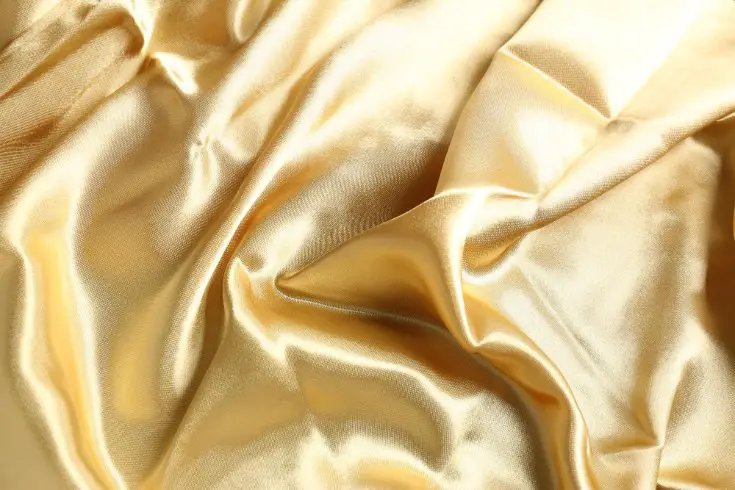
Gold antique satin displaying its characteristic textured surface and muted shine.
Antique satin is a special type of satin fabric that stands out from regular satin with its unique textured surface and vintage appearance. Unlike traditional wedding satin with its mirror-like shine, antique satin features small slubs (slight bumps or irregularities) that give it character and depth.
The fabric was developed in the 1950s by combining acetate warp threads with rayon weft threads. This combination created a decorative fabric mainly used for draperies and upholstery. The most popular style came in 48-inch widths using what’s called 19/2 ply yarn, meaning 19 threads to the inch woven as a two-ply thread to create an appearance similar to silk.
Quick Definition
Antique satin is a five- or eight-harness satin weave that uses slubbed or unevenly spun yarns in the weft (crosswise threads). It’s reversible, with one side showing a satin finish and the other displaying a shantung texture. Think of it as a satin-faced version of shantung or dupioni silk.
What makes antique satin special is its dual personality. The fabric has a glossy front surface that contrasts beautifully with a dull, matte back. The name “antique” specifically refers to the textured, slightly lustrous finish that resembles fabrics used in older, classic interior designs from historic homes and establishments.
Modern antique satin can be made from several materials:
- Silk: The traditional choice, offering natural breathability and hypoallergenic properties
- Rayon or Acetate: Synthetic alternatives that provide greater durability
- Polyester: The most affordable and easy-to-care-for option
- Blended fibers: Combining silk with rayon for a balance of luxury and practicality
The Rich History of Antique Satin
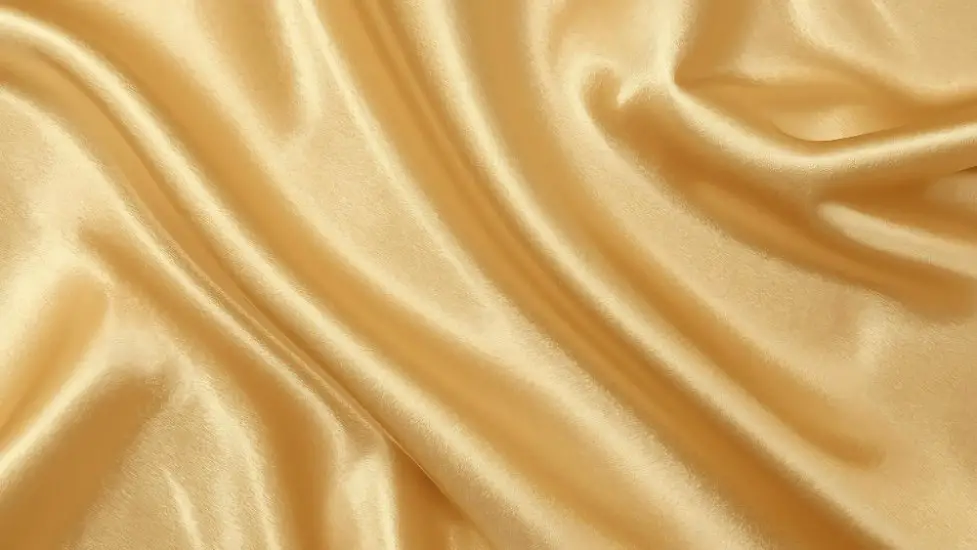
Gold antique satin illustrating the vintage look and historic texture associated with the fabric.
To understand antique satin, you need to know where silk fabric and satin weaving came from. The story begins in medieval China, specifically in the port city of Quanzhou. The Arabs called this city “Zaitun,” and that’s actually where the word “satin” comes from.
Satin weaving originated in Quanzhou and was made exclusively from silk. It was so expensive that only the upper classes could afford it. The fabric traveled along the famous Silk Road, becoming a luxury trading item across the Middle East.
Italy became the first Western country to produce satin. Italian weavers mastered the technique and began creating their own versions.
Satin became widely popular throughout Europe. It was used extensively in royal garments and upholstery. Much of the furniture in the Palace of Versailles features satin, showcasing its status as a luxury material.
Antique satin as we know it today was developed. Companies like Penco Fabrics pioneered the combination of acetate and rayon to create this unique textured fabric. It first appeared in limited colors and was primarily used for window treatments and home decor.
Antique satin gained popularity in fashion, particularly for simulating 17th and 18th-century silks. Designers used it for evening wear, lingerie, blouses, and wedding gowns.
Vintage textiles like antique satin are experiencing a major comeback. With Gen Z and younger generations prioritizing sustainable fashion, antique satin has found new life as both a collectible and a practical eco-friendly alternative to newly manufactured fabrics.
Key Characteristics and Types
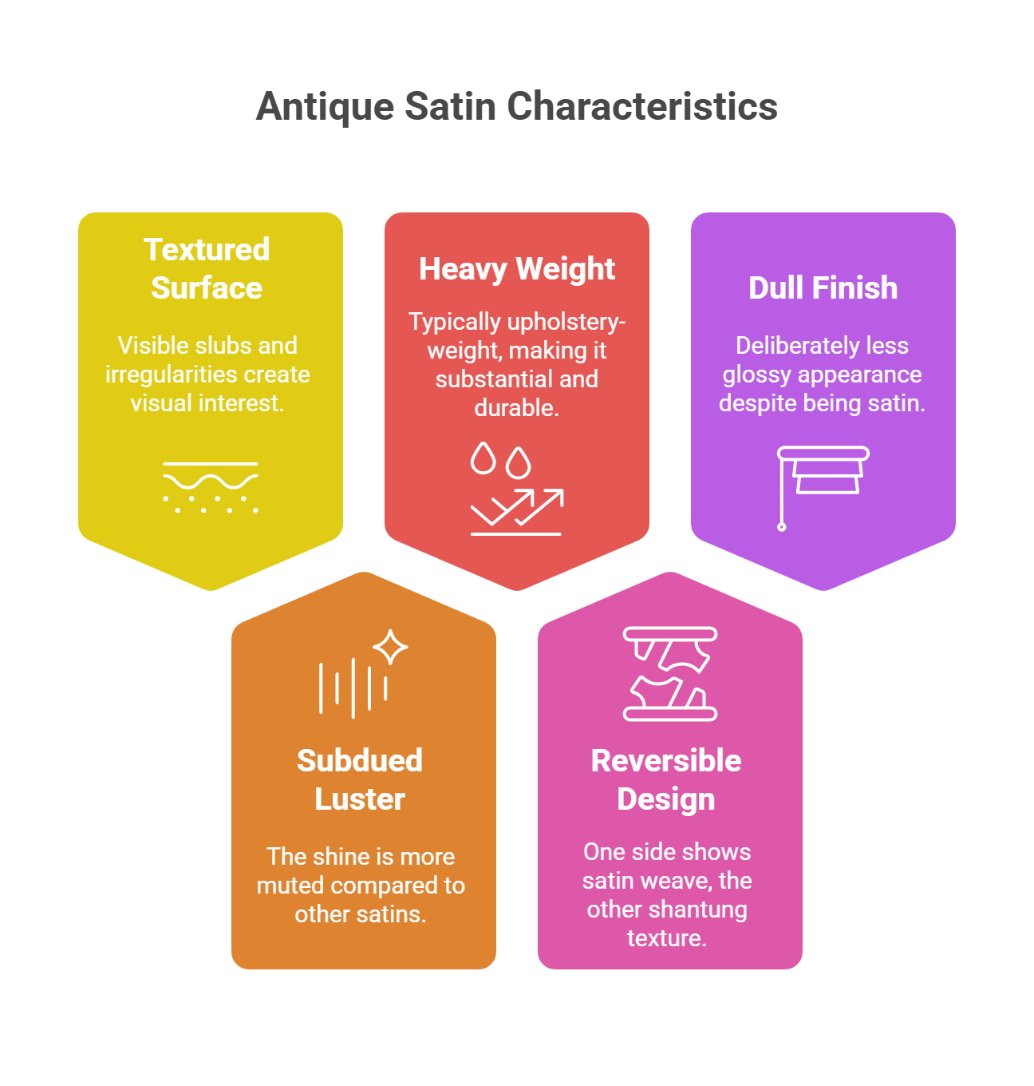
Infographic outlining key characteristics that define antique satin fabric.
What Makes Antique Satin Unique
Antique satin has several distinct features that set it apart from other satin fabrics:
- Textured Surface: Unlike smooth satins like charmeuse or duchess satin, antique satin has visible slubs and irregularities that create visual interest
- Subdued Luster: The shine is more muted compared to wedding or bridal satin
- Heavy Weight: Antique satin is typically upholstery-weight, making it substantial and durable
- Reversible Design: One side shows the satin weave while the other displays a shantung texture
- Dull Finish: Despite being satin, it has a deliberately less glossy appearance
Comparing Antique Satin to Other Satin Types
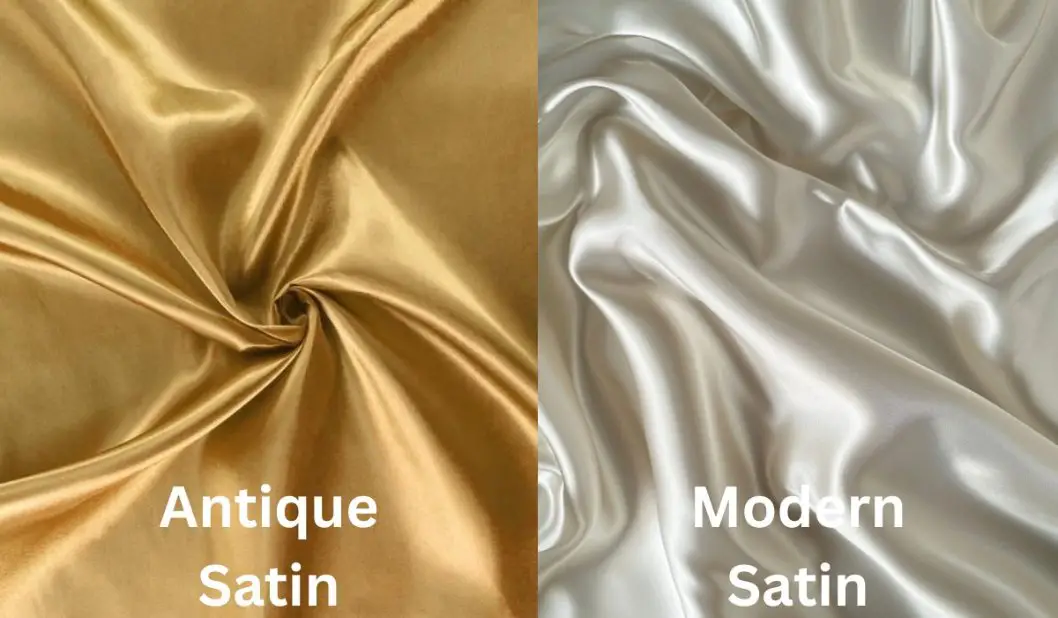
Comparing antique satin with modern satin to show variations in luster, smoothness, and fabric structure.
According to Wikipedia’s textile documentation, antique satin is technically defined as any five- or eight-harness satin weave using slubbed or unevenly spun yarns in the weft, creating its characteristic reversible construction.
| Fabric Type | Surface Texture | Weight | Best Uses | Shine Level |
|---|---|---|---|---|
| Antique Satin | Textured with slubs | Heavy | Draperies, upholstery, historical garments | Subdued |
| Duchess Satin | Smooth | Heavy | Wedding gowns, formal wear | High |
| Charmeuse | Very smooth | Lightweight | Lingerie, evening wear | Very high |
| Crepe Back Satin | Smooth front, crepe back | Medium | Reversible garments, draping | High on one side |
| Slipper Satin | Smooth, tight weave | Medium-heavy | Shoes, accessories | Very high |
Common Fiber Compositions
When you’re looking at antique satin, the fiber content will determine its care requirements, durability, and price point:
| Fiber Type | Pros | Cons | Typical Price Range |
|---|---|---|---|
| 100% Silk | Luxurious feel, breathable, natural sheen, hypoallergenic | Expensive, requires professional cleaning, water-sensitive | $50-100+ per yard |
| Acetate/Rayon Blend | Affordable, silk-like appearance, good drape | Sensitive to water and light, can’t be washed easily | $15-30 per yard |
| Polyester | Durable, washable, wrinkle-resistant, budget-friendly | Less breathable, lacks natural silk properties | $8-20 per yard |
| Silk/Rayon Blend | Balance of luxury and practicality, more affordable than pure silk | Still requires careful handling | $25-50 per yard |
How to Identify Authentic Antique Satin
Whether you’re shopping at estate sales, vintage markets, or online platforms, knowing how to spot genuine antique satin will save you from overpaying for reproductions. Here’s your complete authentication guide.
The 5-Minute Authentication Test
Quick Visual and Touch Assessment
Run your hand across the fabric. Genuine antique satin should have noticeable slubs or bumps. If it’s perfectly smooth, it’s likely regular satin, not antique satin.
Flip the fabric over. True antique satin is reversible with one side showing satin weave and the other showing shantung texture. Both sides should look finished and intentional.
Antique satin should feel heavy and substantial. Hold it up and let it drape. It should have body and weight, not flow lightly like chiffon or charmeuse.
The luster should be subdued and sophisticated, not mirror-like. If it’s too shiny, it might be newer satin or a different type altogether.
Authentic vintage pieces may show natural aging like slight fading, minor wear at folds, or color changes. These should look organic, not artificially distressed.
Advanced Authentication Techniques
The Burn Test (For Small Samples Only)
This test helps identify fiber content:
- Silk: Curls when approaching flame, smells like burning hair, leaves a crushable black ash
- Synthetic (Polyester/Acetate): Melts and drips, smells like plastic, leaves hard beads
Warning: Only perform this test if you have a small thread or cutting you can spare. Never test valuable pieces.
Red Flags to Watch For
Signs of Reproductions or Fakes
- Too perfect: No natural aging or wear
- Artificially distressed: Unnatural-looking fading or damage
- Wrong weight: Too light or too stiff
- Inconsistent texture: Slubs that look printed on rather than woven in
- Modern dyes: Colors that are too vibrant for the claimed era
- Poor construction: If it’s a garment, check seams and finishing
Dating Your Antique Satin
If you want to know when your piece was made, look for these clues:
- 1950s-1960s: Limited color palette, usually found in home decor items, acetate/rayon blends common
- 1970s: Expanded color range, used in both fashion and home decor, often in earth tones
- 1980s: Bold colors, larger-scale patterns if printed, increased use in evening wear
Why Antique Satin is a Sustainable Choice
In 2025, sustainability isn’t just a trend but it’s a movement reshaping the fashion and textile industry. Antique satin fits perfectly into this shift toward more responsible consumption.
The Environmental Impact of Choosing Vintage
When you buy antique or vintage textiles instead of newly manufactured fabrics, you’re making a significant positive impact:
Environmental Benefits at a Glance
- Zero new resource extraction: No water, energy, or raw materials needed for production
- Reduced carbon footprint: No manufacturing emissions from creating new fabric
- Waste reduction: Keeps textiles out of landfills where they would take decades to decompose
- No chemical pollution: Avoids the dyes, bleaches, and finishing chemicals used in modern production
Vintage textile collecting has become especially popular with Gen Z and younger generations who are increasingly drawn to antiques as a sustainable option. This generation recognizes that purchasing secondhand reduces environmental impact and supports unique, long-lasting craftsmanship.
The True Cost of Fast Fashion Fabrics
Consider what goes into making new satin fabric today:
- Polyester satin production requires petroleum-based resources
- Synthetic fabrics make up 60% of new clothing and 87% ends up in landfills
- Manufacturing new textiles generates significant carbon emissions
- Water consumption for dyeing and finishing processes is substantial
- Chemical runoff from textile factories pollutes waterways
When you choose antique satin, you bypass all of these environmental costs entirely. You’re working with a fabric that’s already been produced, often decades ago, and giving it a new purpose.
Quality That Lasts Generations
One of the best sustainability arguments for antique satin is simple: it’s still here. Fabric that has survived 30, 50, or even 70 years proves its durability. Compare that to modern fast-fashion fabrics that pill, fade, or fall apart after a few washes.
Antique satin was made during an era when quality mattered more than speed. The weaving techniques, fiber quality, and construction standards were often higher than what you find in mass-produced fabrics today.
End Uses and Applications
What is Antique Satin End Use?
Antique satin is remarkably versatile. Its unique combination of durability, texture, and beauty makes it suitable for both historical recreations and modern applications.
Home Decor and Interior Design
Antique satin was originally developed for decorative purposes, and it still excels in these applications:
- Window Treatments: Draperies, valances, and curtains where the fabric’s weight helps it hang beautifully
- Upholstery: Furniture covering for sofas, chairs, and cushions (especially in rooms that receive natural light)
- Decorative Pillows: Accent pieces that add texture and vintage character
- Bed Linens: Bedspreads, coverlets, and decorative shams
- Wall Hangings: Tapestries or fabric art that showcases the material’s unique texture
Fashion and Clothing
Designers and crafters use antique satin to create or recreate period garments:
- Historical Costumes: Perfect for simulating 17th and 18th-century silks in theater productions or historical reenactments
- Evening Wear: Gowns, jackets, and formal attire with vintage appeal
- Blouses and Shirts: The reversible nature makes interesting design possibilities
- Wedding Attire: Vintage-inspired bridal gowns or bridesmaid dresses
- Lingerie: Robes, camisoles, and sleepwear with a retro feel
Accessories and Small Projects
Don’t overlook antique satin for smaller items:
- Evening bags and clutches
- Hair accessories and headbands
- Ring bearer pillows for weddings
- Table runners and placemats
- Picture frames and decorative boxes
- Ornamental flowers and crafts
Modern Styling Tips for 2025
Vintage textiles are trending in 2025, particularly antique fabrics like quilts and tapestries. Interior designers are pairing antique satin with:
- Rustic wood for depth and contrast
- Sleek metal accents for modern edge
- Natural lighting to highlight the fabric’s subtle luster
- Neutral color schemes to let the texture speak
Complete Care and Maintenance Guide
Proper care will keep your antique satin beautiful for years to come. The key is understanding that this fabric requires gentle handling because it’s both heavy and sensitive to certain conditions.
How to Wash Antique Satin
The first thing you need to know: antique satin, especially older pieces, generally should NOT be machine washed. Here’s why and what to do instead.
Get Personalized Care Instructions
Not sure which washing method is right for your specific piece? Try our Satin Fabric Care Calculator to get personalized washing and care instructions based on your fabric type.
The General Rule
Important Warning
Traditional antique satin (particularly acetate/rayon blends from the 1950s-1980s) is sensitive to water and light. Water can leave white rings, and exposure to light can shred the fabric and change its color. For these pieces, professional cleaning is strongly recommended.
Step-by-Step Hand Washing Process
If you have a polyester or washable blend antique satin, you can hand wash it carefully. Here’s how:
Safe Hand Washing Method
Before washing the entire piece, test a small hidden area for colorfastness. Dampen a white cloth and gently press it against the fabric. If color transfers, don’t wash it at home. Take it to a professional.
Fill a clean bathtub or large basin with cool water (never hot). Add 1/4 cup of gentle laundry liquid designed for delicate fabrics. Mix well with your hands.
Gently place your fabric in the water and push it lightly to submerge. Let it soak for 3-5 minutes maximum. Don’t scrub or agitate.
Using both hands, gently swirl the fabric through the water. Focus on any soiled areas with very light touching, never rubbing or wringing.
Drain the soapy water and refill with cool, clean water. Gently swish the fabric to remove all soap. You may need to do this 2-3 times.
Never wring or twist. Instead, lay the fabric on a clean, dry towel. Roll the towel and fabric together like a jelly roll and gently press to absorb water.
Unroll and lay the fabric flat on a clean, dry surface away from direct sunlight and heat sources. Allow it to air dry completely. This may take 24-48 hours.
Professional Cleaning
For silk antique satin, valuable pieces, or anything from the 1950s-1970s era, always choose professional cleaning. Find a cleaner experienced with vintage textiles. Ask your local museum or textile conservator for recommendations. For more detailed satin care instructions, check out this helpful guide on how to care for satin clothing.
How to Get Stains Out of Antique Fabric
Stains on antique satin require immediate but gentle attention. The longer a stain sits, the harder it becomes to remove without damaging the fabric.
Interactive Stain Removal Help
Dealing with a tough stain? Our Interactive Stain Removal Guide provides step-by-step troubleshooting for different types of stains on delicate fabrics.
Emergency Stain Treatment Guide
| Stain Type | Treatment Method | What to Avoid |
|---|---|---|
| Oil-Based (food, makeup) | Blot with clean paper towel. Sprinkle flour or cornstarch, let sit 1 hour, brush away. Apply pre-treater for 3-4 minutes, rinse with warm water | Never rub or scrub. Don’t use hot water |
| Water-Based (juice, wine) | Blot immediately with white cloth. Dab with cool water and mild soap solution. Rinse gently | Don’t let it dry. Never use bleach |
| Protein-Based (blood, dairy) | Soak in cool water with enzyme cleaner. Gently dab the stain. Rinse thoroughly | Hot water will set the stain permanently |
| Rust | Make a paste of salt and white vinegar. Apply gently, let sit briefly, rinse | Test on hidden area first |
| Unknown Origin | Take to professional textile cleaner | Don’t experiment with harsh chemicals |
Never Use These on Antique Satin
- Bleach (will discolor and damage fibers)
- Fabric softener (leaves residue)
- Hairspray as stain remover (can stain, especially silk)
- Hot water (can cause shrinkage and damage)
- Machine dryer (heat will damage the fabric)
Ironing and Wrinkle Removal
Antique satin can wrinkle, but you need to be careful with heat. Here’s the safest approach:
- Set your iron to the lowest heat setting
- Always use a pressing cloth (a clean cotton towel or handkerchief) between the iron and fabric
- Iron the dull side of the fabric, never the shiny satin side
- Move the iron quickly and evenly; don’t let it sit in one spot
- For stubborn wrinkles, use a steamer held several feet away from the fabric
- Never use steam directly on silk antique satin (it can leave water spots)
Storage Best Practices
How you store antique satin determines whether it will last another generation or deteriorate:
- Clean Before Storing: Always clean the fabric first. Stains and soil can set permanently during storage
- Avoid Basements: Humidity causes mold and mildew. Never store in damp areas
- Use Acid-Free Materials: Wrap in acid-free tissue paper or unbleached muslin
- Avoid Plastic: Plastic bags trap moisture. Use breathable cotton or linen storage bags
- Store Flat When Possible: For large pieces, fold minimally and pad folds with acid-free tissue
- Keep Cool and Dark: Store in a cool, dark, dry place away from direct sunlight
- Check Periodically: Inspect stored items every 6 months for any signs of damage or pests
Market Value and Investment Potential
Understanding the market for antique satin helps you make smart buying and selling decisions. Prices vary widely based on several factors.
Current Market Trends
The market for antique satin fabric and items varies significantly. Based on current marketplace data, a piece of antique satin fabric typically sells for an average of $4,188, with prices ranging from $656 for simpler pieces to $9,699 for exceptional examples.
What Determines Value
| Factor | High Value | Lower Value |
|---|---|---|
| Condition | Mint, unused, no damage or fading | Significant wear, stains, or damage |
| Fiber Content | 100% silk, high-quality weave | Low-grade synthetic blends |
| Age | Pre-1960s, documented provenance | Recent vintage (1990s+) |
| Rarity | Unique colors, limited production runs | Common colors, mass-produced |
| Size | Large yardage or complete garments | Small scraps or remnants |
| History | Known maker, designer label, documented history | Unknown origin |
Where to Buy Authentic Antique Satin
Finding quality antique satin requires knowing where to look:
Smart Shopping Resources
Before making a purchase, check the condition and authenticity carefully. Reputable vintage textile organizations like Heirlooms at Home provide valuable guidance on identifying authentic pieces and understanding current market trends for vintage textiles and fabrics.
- Estate Sales: Often the best source for large quantities at reasonable prices
- Vintage Textile Dealers: Higher prices but authenticated pieces
- Online Marketplaces: Etsy, eBay, and 1stDibs have selections, but verify authenticity carefully
- Antique Shops: Sometimes have textile sections with hidden gems
- Textile Shows and Fairs: Connect with specialized dealers and collectors
- Auction Houses: For rare or designer pieces
Smart Buying Tips
- Request close-up photos showing texture and any flaws
- Ask about fiber content and any professional assessments
- Compare prices across multiple platforms
- Build relationships with reputable dealers
- Join online communities and forums for collectors
- Start with smaller, less expensive pieces while you learn
Antique Satin vs Other Luxury Fabrics
How does antique satin stack up against other luxury and vintage fabrics? Here’s what you need to know.
Antique Satin vs Modern Satin
| Characteristic | Antique Satin | Modern Satin |
|---|---|---|
| Texture | Textured with visible slubs | Usually smooth and consistent |
| Production Method | Often hand-finished, vintage techniques | Mass-produced, mechanized |
| Environmental Impact | Zero new resources needed | Requires energy, water, materials |
| Availability | Limited, must hunt for it | Widely available |
| Price | Variable, can be expensive for rare pieces | Generally affordable |
| Durability | Proven longevity (survived decades) | Varies by quality |
Comparing with Other Vintage Luxury Fabrics
Compare Fabric Types
Use our Interactive Fabric Comparison Tool to see how antique satin stacks up against other luxury fabrics in terms of care, durability, and cost.
Understanding the differences between luxury fabrics helps you make informed purchasing decisions. Satin is defined by its weaving technique rather than fiber content, which is why you’ll find such variety in both antique and modern satin types.
| Fabric | Best For | Care Level | Typical Uses |
|---|---|---|---|
| Antique Satin | Draperies, upholstery, vintage garments | Moderate to High | Home decor, historical costumes |
| Vintage Brocade | Formal wear, decorative pieces | High | Evening gowns, upholstery |
| Antique Lace | Delicate garments, trim | Very High | Wedding dresses, lingerie |
| Vintage Organza | Overlays, sheer effects | Moderate | Formal wear, decorative accents |
| Antique Taffeta | Structured garments | Moderate | Ball gowns, curtains |
Modern Applications in 2025
Fashion and design trends in 2025 have created perfect conditions for antique satin to shine. Here’s how designers and creators are using this fabric today.
The Vintage Textile Renaissance
Vintage textiles are experiencing a major comeback in 2025. Designers recognize that antique fabrics like quilts and tapestries add warmth, texture, and history to contemporary spaces. This trend appears both in interior design and fashion, with vintage-inspired collections from major houses like Chloé featuring bohemian elements with artisanal details.
Bohemian and Vintage-Inspired Fashion
The 1970s bohemian style is back in full force this year. Flowing silhouettes, airy dresses, and earthy tones dominate, and antique satin fits perfectly into this trend. Fashion brands are using it for:
- Vintage-inspired evening wear with historical references
- Boho-chic blouses with flowing sleeves
- Layered looks combining vintage with modern pieces
- Statement jackets and outerwear
Sustainable Fashion Movement
With sustainability at the forefront of 2025 fabric trends, antique satin appeals to eco-conscious consumers. Young designers are specifically seeking vintage materials to create unique, limited-edition pieces that tell a story while reducing environmental impact.
Interior Design Trends
In home decor, antique satin works beautifully with current trends:
- Maximalism: Layered textures with velvet, chenille, and boucle create depth
- Vintage-Modern Mix: Pairing antique satin with sleek contemporary furniture
- Natural Lighting Enhancement: The subtle luster reflects light beautifully
- Textile Art: Using antique satin as wall hangings or framed pieces
Upcycling and DIY Projects
The craft community has embraced antique satin for creative projects:
- Transforming vintage draperies into modern throw pillows
- Creating patchwork pieces mixing antique satin with other vintage fabrics
- Making statement headboards or wall panels
- Designing unique accessories like bags and clutches
- Customizing clothing with vintage fabric accents
Frequently Asked Questions
Conclusion
Antique satin fabric represents more than just a beautiful textile. It’s a connection to craftsmanship from past eras, a sustainable alternative to fast fashion, and a versatile material for both historical recreations and modern design projects.
What We’ve Covered
Throughout this guide, we’ve explored antique satin from every angle. You’ve learned that this unique fabric was developed in the 1950s, combining textured slubbed yarns with satin weaving techniques to create a reversible material with one smooth side and one textured side. Unlike the mirror-like shine of regular satin, antique satin offers a subdued luster that has made it popular for everything from draperies to evening gowns.
The Authentication Advantage
Knowing how to identify genuine antique satin protects you from overpaying for reproductions. Remember the five-minute test: check for visible slubs, confirm the reversible construction, test the weight (it should be substantial), examine the subdued shine, and look for natural aging signs. These simple checks will serve you well whether you’re shopping at estate sales or browsing online marketplaces.
Sustainability Matters
In 2025, choosing antique satin isn’t just about style but it’s about values. Every vintage textile purchase bypasses the environmental costs of new production: no water consumption, no chemical dyes polluting waterways, no carbon emissions from manufacturing, and no resource extraction. For Gen Z and younger collectors especially, this sustainable aspect makes antique satin particularly appealing. You’re not just buying fabric but you’re keeping textiles out of landfills and preserving craftsmanship that has already proven its durability by surviving decades.
Care is Critical
Your antique satin will only last for future generations if you care for it properly. The most important lessons: never machine wash traditional acetate/rayon blends, always test for colorfastness before any cleaning, use cool water and gentle handling for washable types, avoid direct sunlight and heat during storage, and don’t hesitate to consult professional cleaners for valuable pieces. Remember that fabric which has survived 30 to 70 years deserves respect and careful treatment.
Investment and Value
The market for antique satin varies widely, with pieces ranging from $656 to over $9,000 depending on condition, fiber content, age, and rarity. While not every piece will appreciate in value, buying from reputable sources and maintaining excellent condition gives you the best chance for a good investment. More importantly, the personal value of owning a piece of textile history often outweighs pure financial considerations.
Modern Relevance
Don’t think of antique satin as purely historical. Current fashion trends in 2025 have created perfect conditions for vintage textiles to shine. Bohemian styles, sustainable fashion movements, and the popularity of vintage-modern interior design all favor antique satin. Whether you’re creating historical costumes, designing vintage-inspired clothing, or adding character to your home decor, this fabric offers possibilities that mass-produced modern materials simply can’t match.
Your Next Steps
Ready to start your antique satin journey? Here’s what to do:
- Start small with affordable pieces while you learn authentication techniques
- Join online collector communities to learn from experienced enthusiasts
- Build relationships with reputable dealers in your area
- Practice the identification tests on different fabrics
- Create a proper storage system before buying large quantities
- Consider taking a textile conservation class or workshop
- Document your collection with photos and provenance when possible
The Bigger Picture
Every time you choose antique satin over newly manufactured fabric, you’re voting for quality over quantity, history over disposability, and sustainability over fast fashion. You’re preserving craftsmanship techniques that might otherwise be lost and giving new life to materials that someone decades ago valued enough to create and preserve.
The beauty of antique satin lies not just in its textured surface or subtle luster but in its story. Each piece carries the marks of its time, the skill of its makers, and the care of previous owners. By learning to identify, care for, and use this remarkable fabric, you become part of that continuing story.
Whether you’re a fashion designer seeking sustainable materials, a collector preserving textile history, an interior decorator adding character to spaces, or simply someone who appreciates beautiful, well-made things, antique satin offers something special. It proves that the best solutions to modern problems sometimes come from looking backward, that quality endures, and that true luxury lies in things made to last.
As you move forward with your antique satin projects, remember: you’re not just working with fabric but you’re connecting with generations of craftspeople, designers, and appreciators who valued quality and beauty. That’s a legacy worth preserving.