
Discover everything about delaine fabric, from its rich history to modern applications, care tips, and why it’s the perfect choice for quality-conscious sewists and fashion lovers
Table of Contents
- What Is Wool Delaine Fabric?
- The Rich History of Delaine
- The Delaine Merino Sheep Connection
- Technical Properties and Characteristics
- Why Delaine Is Considered Luxury Fabric
- Sustainability and Environmental Benefits
- Performance Properties
- Modern Uses and Applications
- Delaine vs Other Fabrics
- Complete Care Instructions
- How to Identify Authentic Delaine
- Where to Buy and What to Look For
- Sewing with Delaine Fabric
- Frequently Asked Questions
- Conclusion
What Is Wool Delaine Fabric?
If you’ve been searching for information about delaine fabric, you’ve probably noticed something confusing: different sources seem to describe completely different fabrics. You’re not imagining things. There’s actually a fascinating historical reason for this confusion.
Understanding the Two Definitions
Delaine fabric has two distinct meanings, depending on whether you’re looking at historical textiles or modern wool fabrics:
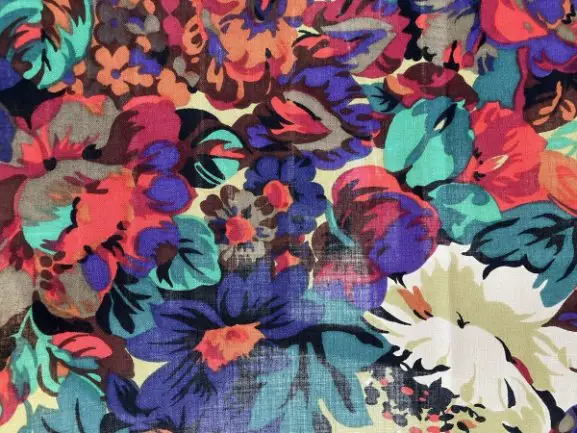
Historical Delaine (19th Century): A lightweight dress fabric made with a cotton warp (lengthwise threads) and fine worsted wool filling (crosswise threads). This blended fabric was popular for women’s dresses and featured beautiful printed patterns, especially in vibrant blues and greens.
Modern Delaine (Today): A high-grade, 100% wool fabric made from fine combed Merino wool, specifically from Delaine Merino sheep. It features a plain weave and compact structure, making it perfect for lightweight garments that still provide warmth.
For this guide, we’ll focus on modern wool delaine, which is what you’ll find when shopping for fabric today, though we’ll touch on the historical version because it’s part of this fabric’s story.
What Does Delaine Mean?
The word “delaine” comes from the French phrase “de laine,” which simply means “of wool” or “from wool.” It’s also been called “Mousseline de Laine” (wool muslin) because of its fine, almost muslin-like texture despite being made from wool.
When you see “delaine” on a fabric label today, it tells you two important things: you’re getting a fine quality wool, and it’s likely woven in a specific way that makes it lighter and softer than typical sheep wool.
What Makes It Different?
Delaine stands out from other wool fabrics because of several key features:
- Made from exceptionally fine wool fibers (typically 18-24 microns in diameter)
- Plain weave construction creates a smooth, even surface
- Compact structure adds durability without bulk
- Lightweight feel (usually 124-162 grams per square meter)
- Soft hand feel that doesn’t itch like coarser wools
- Beautiful drape perfect for flowing garments
The Rich History of Delaine
The story of delaine fabric is connected to one of the most carefully guarded secrets in textile history: the Spanish Merino sheep.
The Spanish Monopoly
For centuries, Spain controlled the world’s finest wool through their Merino sheep. The Spanish government was so protective of this valuable resource that exporting Merino sheep was punishable by death. That’s right – people risked execution to smuggle these wool-producing animals out of Spain.
This monopoly lasted from the 14th century until the late 1700s, when the Spanish King finally gifted some Merino sheep to his cousin, Louis XVI of France. From there, Merino sheep spread across Europe and eventually to Australia, New Zealand, and the United States.
The 19th Century Fashion Boom
Delaine fabric became hugely popular in 19th century America and England. English mills like Hargreaves began producing delaine fabrics in 1849, specifically catering to American quilters and dressmakers.
If you’ve read “Little House in the Big Woods” by Laura Ingalls Wilder, you might remember Ma’s treasured delaine dress – a dark green fabric printed with a strawberry pattern. This dress represented something special for pioneer women: a connection to fashion and refinement even on the frontier.
The fabric was perfect for that era because it was:
- Lightweight enough for daily wear
- Durable enough to withstand pioneer life
- Affordable enough for middle-class families
- Beautiful enough for special occasions
After 1860, delaine fabrics saw a surge in use for American quilts, with manufacturers like Greens Dale Bleachery (established 1843) producing sample books showcasing bright, vibrant designs.
The Delaine Merino Sheep Connection
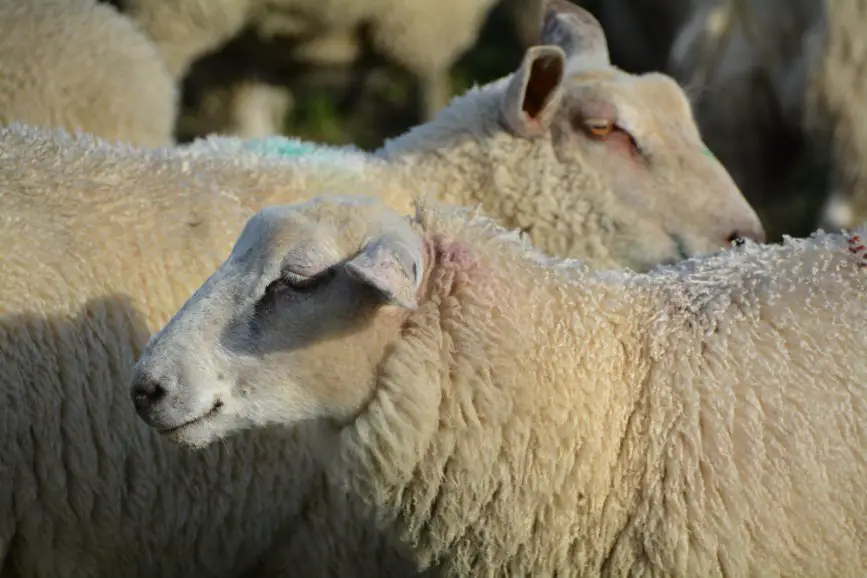
Modern wool delaine gets its name and quality from a specific type of Merino sheep: the Delaine Merino. Understanding these remarkable animals helps you appreciate why this fabric is so special.
What Makes Delaine Merinos Unique?
Delaine Merino sheep were specifically bred to be the most practical Merino type for average farms and range production. Unlike some other Merino varieties (particularly those bred in Australia), Delaine Merinos have smooth, relatively wrinkle-free bodies.
This smooth skin is more than just an appearance preference. It means:
- The sheep are less prone to flystrike (a serious health issue for wrinkly-skinned sheep)
- They don’t require the controversial practice of mulesing
- Their wool quality remains consistently high
- They’re easier to care for in various climates
Wool Production Details
A typical Delaine Merino ewe (female sheep) weighing 125-180 pounds can produce 12-20 pounds of wool annually. Rams (male sheep) are larger at 175-235 pounds and can produce even more.
The wool itself has these specifications:
- Staple Length: 2.5 to 4 inches per year’s growth
- Fiber Diameter: 18-24 microns (for comparison, human hair is 50-100 microns)
- Spinning Count: Grades from 64’s to 80’s (higher numbers mean finer wool)
- Color: Natural white to cream to light straw
- Crimp: High natural waviness that adds elasticity
American Delaine Merino
In the United States, Delaine Merino sheep are especially common in the Western and Southwestern states. The Belle Fourche region of South Dakota is particularly famous for producing exceptional Delaine Merino wool.
These sheep thrive in range conditions and can handle extreme climates, making them perfect for large-scale wool production. They have a strong flocking instinct, making them easy to herd, and ewes are excellent mothers who often produce twins.
The American & Delaine Merino Record Association maintains breed standards and certifies pure Delaine Merino breeding, helping ensure quality wool production continues. You can learn more at their official website.
Technical Properties and Characteristics
Let’s get into the details that make delaine fabric special from a technical standpoint. Whether you’re a sewist, designer, or just someone who appreciates quality textiles, understanding these properties will help you work with and appreciate this fabric.
Fiber Structure
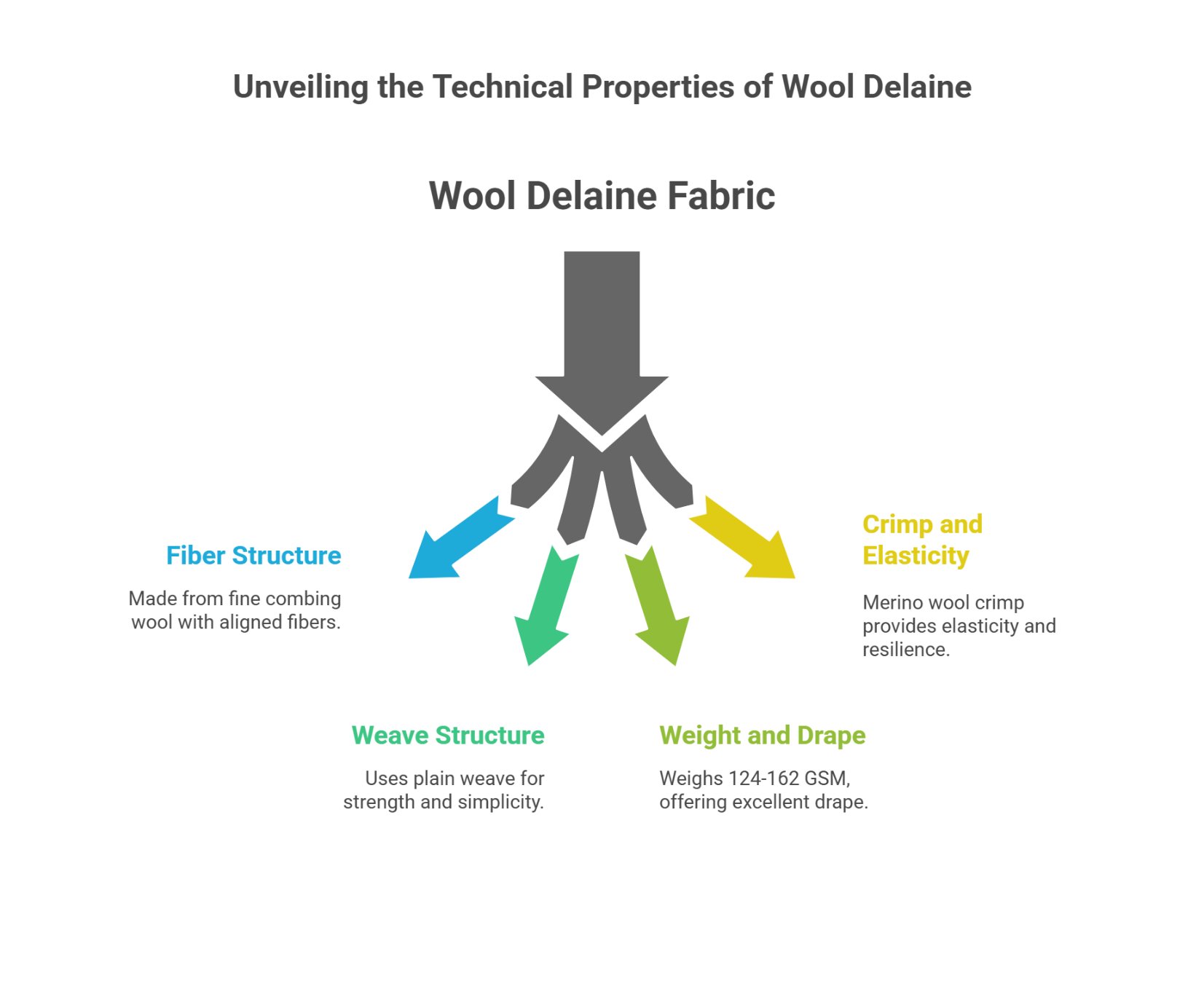
Delaine is made from fine combing wool, which means the wool has been processed to remove shorter fibers and align the longer ones. This combing process creates a smooth, strong yarn that produces fabric with these qualities:
- Smoothness: The aligned fibers create an even, polished surface
- Strength: Longer fibers mean fewer weak points in the yarn
- Luster: Aligned fibers reflect light more uniformly, creating subtle shine
- Less Pilling: Longer staple lengths reduce the formation of fuzzy balls on the surface
Weave Structure
Delaine uses a plain weave (also called tabby weave), the simplest and strongest weave pattern where threads alternate over-under, over-under. This creates:
- Maximum thread interlacing for durability
- A balanced, stable fabric that doesn’t distort easily
- Good air circulation between fibers
- An even surface perfect for printing or dyeing
Weight and Drape
Modern delaine typically weighs between 124-162 grams per square meter (GSM). To put this in perspective:
| Fabric Weight Category | GSM Range | Delaine Placement |
|---|---|---|
| Sheer/Very Light | 30-100 GSM | – |
| Light | 100-150 GSM | ✓ Delaine fits here |
| Medium | 150-250 GSM | Some heavier delaines |
| Heavy | 250+ GSM | – |
This light to medium weight gives delaine its characteristic beautiful drape. It flows well without being too floppy, making it perfect for garments that need body but shouldn’t look stiff.
Crimp and Elasticity
One of wool’s special properties is crimp – the natural waviness in the fiber. Merino wool, and therefore delaine, has excellent crimp which provides:
- Natural elasticity (can stretch 25-30% without breaking)
- Better air trapping for insulation
- Natural bounce and recovery
- Resistance to wrinkles
For more on how different wool types compare, check out our guides on cashmere, alpaca, and mohair wool. Not sure which wool type is right for you? Try our Wool Type Selector Quiz to find your perfect match.
Why Delaine Is Considered Luxury Fabric
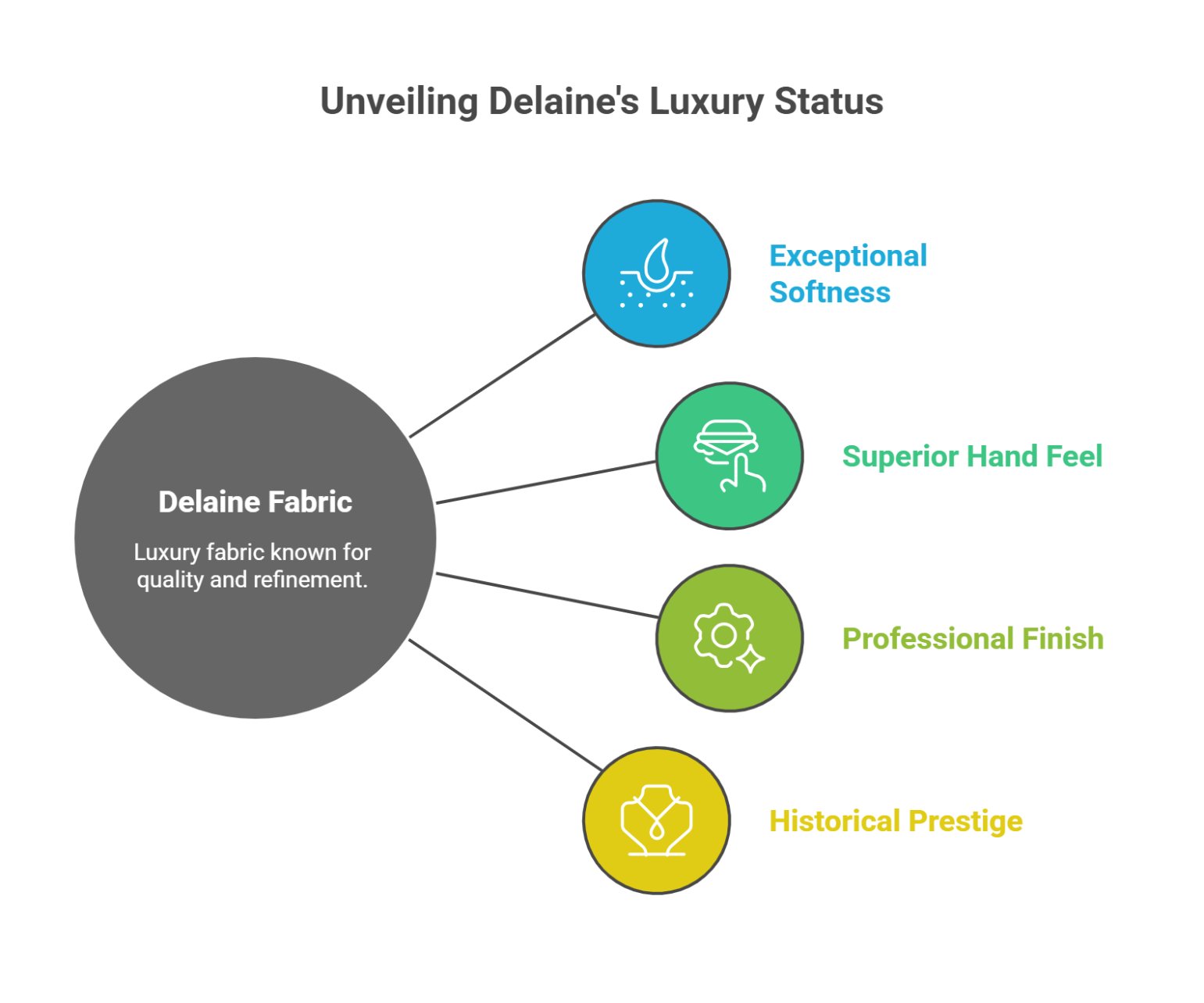
When you pick up a piece of delaine fabric, you immediately notice the quality. But what exactly makes it a luxury textile? It’s more than just price – it’s about the combination of factors that make this fabric special.
Exceptional Softness
The fineness of Delaine Merino wool (18-24 microns) puts it in the same category as premium wools. This matters because fiber diameter directly affects how soft something feels against your skin:
- 30+ microns: Feels itchy and rough to most people
- 25-30 microns: Noticeably less itchy but still somewhat coarse
- 18-24 microns (Delaine): Soft, comfortable, minimal to no itch
- Under 18 microns: Ultra-fine (like superfine Merino or cashmere)
When wool fibers are this fine, they bend when they touch your skin rather than poking into it, which is why delaine doesn’t have that scratchy feeling you might associate with grandpa’s old wool sweater.
Superior Hand Feel
“Hand feel” is textile-speak for how a fabric feels when you touch it. Delaine has what’s called a “soft hand” with these qualities:
- Smooth surface texture
- Slight natural loft (thickness without stiffness)
- Pleasant weight that feels substantial but not heavy
- Gentle drape that moves with you
Professional Finish
Quality delaine fabric receives careful finishing that adds to its luxury status:
- Scouring: Gentle cleaning removes natural oils without damaging fibers
- Carding or Combing: Aligns fibers for smooth yarn
- Pressing: Creates an even, polished surface
- Sometimes Calendering: Light pressing between rollers for extra smoothness
Historical Prestige
Part of delaine’s luxury status comes from its history. For centuries, Merino wool was so valuable that it was literally worth killing over (remember those Spanish export laws?). Today, fine Merino products like delaine continue that tradition of being associated with quality and refinement.
Did You Know?
Delaine Merino sheep have been bred for over 1,200 years specifically for producing the world’s best wool. That’s longer than most dog breeds have existed!
Sustainability and Environmental Benefits
In an era where fast fashion and synthetic fabrics dominate, delaine wool stands out as a genuinely sustainable choice. Let’s look at why this matters and what makes it environmentally friendly.
Renewable and Biodegradable
Unlike synthetic fabrics that come from petroleum, wool is a renewable resource. Delaine Merino sheep produce 4-5 kilograms of wool annually, year after year. As long as the sheep are well cared for, they keep producing high-quality wool.
When a delaine garment finally reaches the end of its life, it biodegrades in about 6 months when buried in soil. Compare that to synthetic fabrics:
| Fabric Type | Biodegradation Time | Environmental Impact |
|---|---|---|
| Wool Delaine | 6 months | Returns nutrients to soil |
| Cotton | 1-5 months | Returns nutrients to soil |
| Polyester | 20-200 years | Releases microplastics |
| Nylon | 30-40 years | Releases microplastics |
Natural Production Process
Delaine Merino sheep create wool using only:
- Sunlight (for growing grass)
- Water (for drinking and grass growth)
- Grass and forage (natural feed)
- Air (for respiration)
The wool itself is made of keratin – the same natural protein found in human hair. No toxic chemicals are needed to produce the raw fiber.
Lower Carbon Footprint
While sheep do produce methane (a greenhouse gas), well-managed grazing can actually help sequester carbon in grassland soils. According to the Woolmark Company, wool production can have a lower overall carbon footprint than synthetic fiber production when you account for the entire lifecycle. The International Wool Textile Organisation (IWTO) continues to research and promote sustainable wool production practices worldwide.
Longevity Reduces Waste
One of the biggest sustainability advantages of delaine is simply how long it lasts. A well-made delaine garment can serve you for decades if properly cared for. This means:
- Fewer garments purchased over time
- Less textile waste in landfills
- Lower overall resource consumption
- Better value for your money
Ethical Considerations
The sustainability of wool also depends on animal welfare. American Delaine Merinos are specifically bred to have smooth skin, which means they don’t require mulesing – a controversial practice used on wrinkly-skinned sheep to prevent flystrike.
When buying delaine, look for wool certified by organizations that ensure ethical treatment:
- Responsible Wool Standard (RWS)
- ZQ Merino certification
- American & Delaine Merino Record Association certification
For more sustainable fabric options, explore our guide to natural vs synthetic fabrics.
Performance Properties
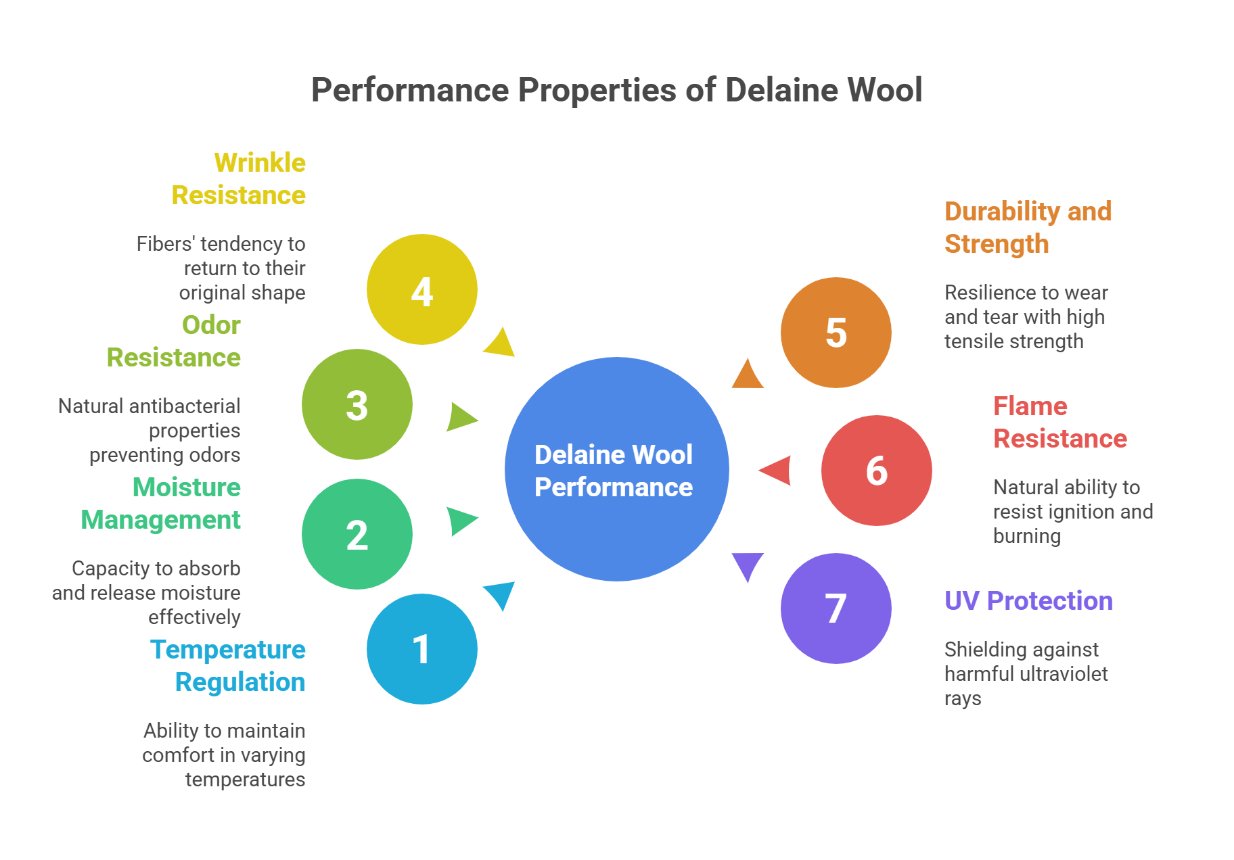
Beyond just looking and feeling good, delaine wool performs remarkably well in various conditions. These performance characteristics make it practical for everyday wear, not just special occasions.
Temperature Regulation
One of wool’s most amazing properties is its ability to keep you comfortable in both warm and cold weather. Delaine manages this through several mechanisms:
- Air Trapping: The crimped fibers create millions of tiny air pockets that insulate against cold
- Moisture Management: As wool absorbs moisture, it releases heat (called “heat of sorption”), warming you when you’re cold
- Breathability: The fiber structure allows air and water vapor to pass through, preventing overheating
- Thinness: Despite being wool, delaine’s fine weave allows it to work in surprisingly warm weather
Moisture Management
Delaine can absorb up to 30% of its weight in moisture without feeling wet or clammy. This is huge for comfort:
- You don’t feel sweaty even when active
- The fabric doesn’t stick to your skin
- Moisture moves away from your body and evaporates
- You stay drier in humid conditions
However, delaine does take longer to dry than synthetics once it’s thoroughly wet. If you need quick-dry performance for athletic activities, you might want to blend it with other fabrics or choose a different material for those specific uses.
Odor Resistance
Thanks to wool’s natural antibacterial properties, delaine resists developing odors far better than synthetic fabrics or even cotton. The same keratin structure that makes up the fiber naturally inhibits bacterial growth.
This means you can:
- Wear delaine garments multiple times between washes
- Travel lighter without packing as many clothes
- Reduce washing frequency (which extends garment life)
- Feel fresh throughout the day
Wrinkle Resistance
Those crimped fibers that help with temperature regulation also make delaine naturally wrinkle-resistant. The fibers want to return to their natural wavy shape, which means:
- Wrinkles hang out overnight
- Light steaming easily refreshes the fabric
- You don’t need to iron as often
- Garments look polished longer
Durability and Strength
Wool fibers are surprisingly strong. Delaine’s long staple length (thanks to fine combing) means the yarn has fewer weak points. The fabric can:
- Stretch 25-30% without breaking
- Return to its original shape after stretching
- Withstand regular wear without showing signs of damage
- Resist abrasion better than many other natural fibers
Natural Flame Resistance
Unlike synthetics that melt when exposed to flame, wool is naturally flame resistant. It’s harder to ignite and won’t sustain a flame because it requires more oxygen than the atmosphere normally contains. If it does ignite, it typically burns slowly or goes out on its own.
UV Protection
Delaine provides natural protection from UV rays – much better than most synthetic fabrics and even better than cotton. While you should still use sunscreen, wearing delaine adds another layer of sun protection.
Modern Uses and Applications

So you know what delaine is and why it’s great – but what should you actually make with it? Let’s look at the best uses for this versatile fabric.
Dresses and Skirts
This is where delaine really shines. The fabric’s drape and lightweight feel make it perfect for:
- A-line dresses: The fabric’s body creates beautiful movement
- Wrap dresses: Drapes beautifully and holds its shape
- Midi and maxi skirts: Weight provides flow without being too heavy
- Pleated styles: Holds pleats well without looking bulky
The historical connection makes sense – 19th century women loved delaine for dresses because it was formal enough for special occasions but practical enough for regular wear.
Blouses and Shirts
Delaine makes excellent blouses and shirts for several reasons:
- Light enough to tuck in without bulk
- Drapes well without looking limp
- Breathes better than synthetic dress shirts
- Needs less frequent washing
- Looks professional and polished
Consider delaine for button-up shirts, tunics, or even lightweight work blouses that transition from office to evening.
Lightweight Suits and Separates
While not as common as heavier suiting wools, delaine can work beautifully for:
- Spring and fall blazers
- Lightweight trousers
- Unstructured jackets
- Vest and waistcoat options
The fabric provides structure without feeling stiff, making it comfortable for all-day wear. For heavier suiting, check out our guide to wool tweed.
Layering Pieces
Delaine’s light weight makes it perfect for layering:
- Cardigans and light sweaters (when knit rather than woven)
- Vests
- Shawls and wraps
- Scarves
These pieces add warmth without bulk, perfect for transitional seasons.
When NOT to Use Delaine
While delaine is versatile, it’s not right for everything:
- Heavy winter coats: Use heavier wool like traditional wool coating
- Athletic wear: Synthetics dry faster for high-sweat activities
- Structured tailoring: Needs more body than delaine provides
- Very casual wear: May be too dressy for super-casual styles
- Children’s play clothes: Kids need more durable, washable options
Delaine vs Other Fabrics: Complete Comparison Guide
How does delaine stack up against other fabrics you might be considering? Let’s break it down.
Delaine vs. Other Merino Wools
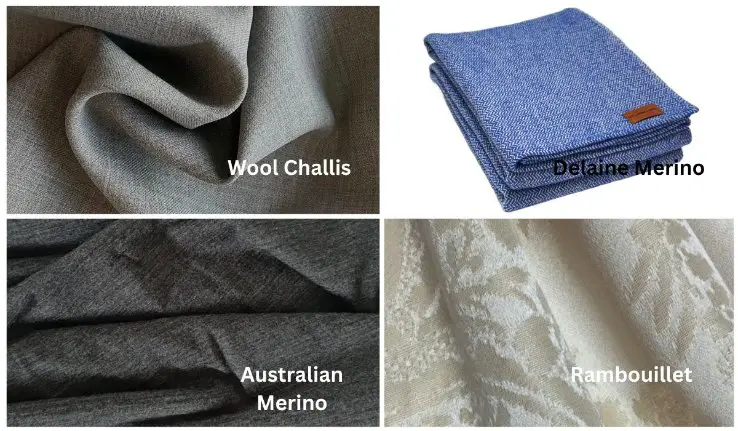
| Type | Skin Texture | Wool Yield | Best Use |
|---|---|---|---|
| Delaine Merino | Smooth, minimal wrinkles | 12-20 lbs/ewe | Fine fabrics, range production |
| Australian Merino | Wrinkly skin folds | Up to 22+ lbs/sheep | Maximum wool production |
| Rambouillet | Moderate wrinkles | 15-20 lbs | Dual purpose (meat & wool) |
Delaine vs. Other Fine Wools

Delaine Advantages
- More affordable than cashmere
- More durable than superfine Merino
- Less prone to pilling than shorter-staple wools
- Better availability than specialty wools
- Easier care than vicuña
Delaine vs. Other Lightweight Wools
Several other wool fabrics compete in the lightweight category:
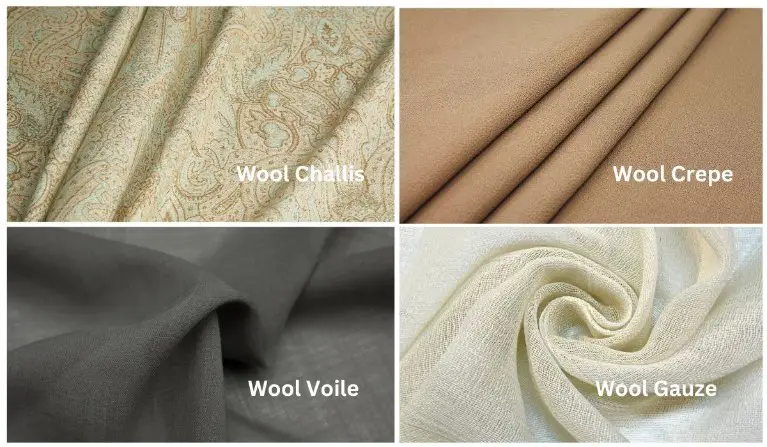
| Fabric | Weave | Best For | Key Difference |
|---|---|---|---|
| Delaine | Plain weave, compact | Dresses, blouses | Balanced drape and structure |
| Wool Challis | Plain weave, looser | Flowing dresses, scarves | More drape, less structure |
| Wool Crepe | Twisted yarns | Suits, structured garments | More texture, crinkle surface |
| Wool Voile | Sheer plain weave | Lightweight overlays | Much sheerer and lighter |
| Wool Gauze | Open weave | Summer garments | More breathable, less dense |
Delaine vs. Synthetic Fabrics
How does delaine compare to modern synthetics?

| Feature | Delaine Wool | Polyester | Nylon |
|---|---|---|---|
| Breathability | Excellent natural breathability | Limited, can feel clammy | Better than polyester, less than wool |
| Moisture Management | Absorbs moisture, stays dry-feeling | Wicks but doesn’t absorb | Wicks well, dries fast |
| Odor Resistance | Naturally antibacterial | Holds odors easily | Holds odors easily |
| Environmental Impact | Biodegradable, renewable | Petroleum-based, 200+ year decomposition | Petroleum-based, 30-40 year decomposition |
| Cost | Higher initial cost | Very affordable | Moderate |
| Durability | Very durable with care | Very durable | Extremely durable |
| Care Ease | Requires gentle care | Machine washable, easy | Machine washable, easy |
For more on synthetic vs natural fabrics, see our comprehensive guide to natural and synthetic textiles.
Delaine vs. Natural Non-Wool Fabrics
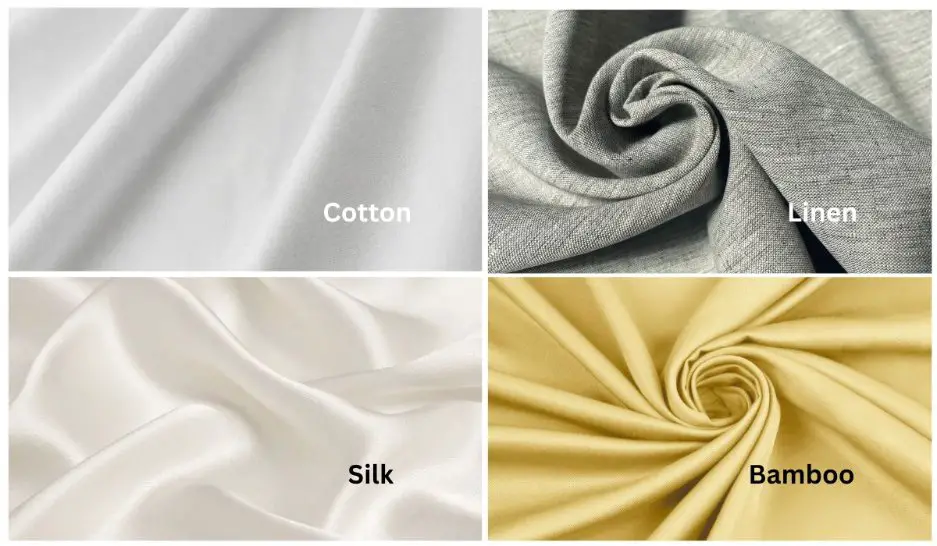
| Fabric | Warmth | Breathability | Wrinkle Resistance | Best Season |
|---|---|---|---|---|
| Delaine Wool | Warm | Excellent | Excellent | Fall/Winter/Spring |
| Cotton | Cool | Good | Poor | Summer |
| Linen | Cool | Excellent | Very Poor | Summer |
| Silk | Moderate | Good | Good | Year-round |
| Bamboo | Cool | Excellent | Moderate | Summer |
Complete Care Instructions for Delaine Fabric
Proper care is what makes delaine last for decades rather than just a few years. While it requires more attention than synthetic fabrics, the care routine is straightforward once you know the rules.
General Care Principles
The Golden Rules of Delaine Care
- Always use cool to lukewarm water (never hot)
- Use only wool-safe detergent
- Never wring or twist when wet
- Dry flat, never hang when wet
- Air out between wears instead of washing frequently
Washing Delaine: Step-by-Step
Hand washing is safest. Machine washing is possible if you have a delicate or wool cycle and use a mesh bag. Dry cleaning is always safe but not always necessary.
Fill a basin or machine with cool to lukewarm water (30°C/86°F maximum). Add wool-safe detergent – these are pH-neutral formulas that won’t damage wool fibers.
For hand washing: Submerge the garment and gently press water through it. Don’t rub, scrub, or agitate. Let soak for 3-5 minutes. For machine washing: Use the delicate/wool cycle with minimal agitation.
Rinse in water the same temperature as wash water. Temperature changes can cause felting (unwanted shrinkage). Rinse until water runs clear.
NEVER wring or twist. Instead, gently press water out, or roll the garment in a clean towel and press to absorb water. When wet, wool has low tensile strength and can stretch permanently if pulled.
Lay the garment flat on a dry towel or mesh drying rack. Reshape to original dimensions. Never hang wet wool – it will stretch. Air dry away from direct heat or sunlight. This may take 24-48 hours.
Stain Treatment
Act quickly with stains on delaine:
- Blot, don’t rub: Rubbing pushes stains deeper into fibers
- Use cool water: Hot water can set protein-based stains
- Wool-safe only: Regular stain removers may damage wool
- Test first: Always test stain treatments on an inconspicuous area
Common stain solutions:
- Oil/grease: Cornstarch absorbs oil, then gentle wash
- Wine/juice: Club soda, then blot with white vinegar solution
- Mud: Let dry completely, brush off, then spot clean
- Sweat: Diluted white vinegar neutralizes odors
Pressing and Ironing
Delaine’s wrinkle resistance means you won’t iron often, but when you do:
- Use the wool setting (medium heat, typically 148°C/300°F)
- ALWAYS use a pressing cloth to protect the fabric
- Press with an up-and-down motion; don’t slide the iron
- Leave slightly damp to air dry completely
- Never press over buttons or embellishments
Steam is even better than ironing – hang the garment in a steamy bathroom or use a garment steamer for quick wrinkle removal.
Storage
Proper storage protects your investment:
- Clean before storing: Moths are attracted to body oils and food residue
- Use breathable storage: Cotton garment bags, not plastic
- Add moth protection: Cedar, lavender, or commercial moth repellents
- Fold, don’t hang: Long-term hanging can stretch shoulders
- Cool, dry location: Avoid damp basements or hot attics
- Check periodically: Air out stored items occasionally
Between-Wear Refreshing
You don’t need to wash delaine after every wear. Instead:
- Air out garments for 24 hours between wears
- Hang in a well-ventilated area (not in your closet)
- Brush gently with a soft garment brush to remove surface dirt
- Spot clean small marks rather than washing entire garment
- Steam to refresh and remove odors
For comprehensive wool care guidance, see our detailed wool care guide. You can also use our Wool Care Calculator to get personalized washing instructions for your specific delaine garment.
How to Identify Authentic Delaine Fabric
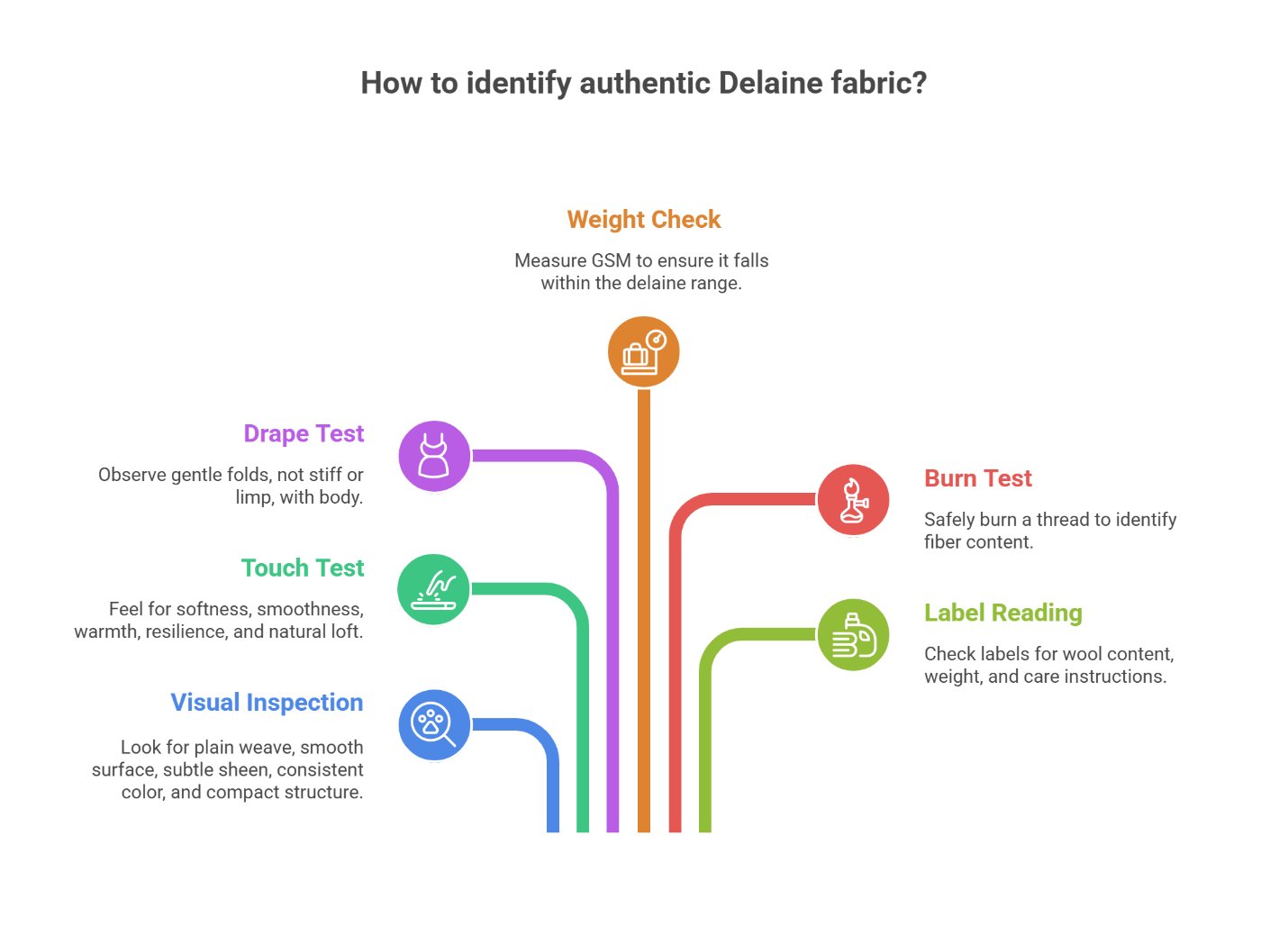
Whether you’re shopping for delaine or trying to identify a fabric you already own, here’s how to tell if you’re looking at the real thing.
Visual Inspection
Look for these characteristics:
- Plain weave structure: Simple over-under pattern when you look closely
- Even, smooth surface: No texture or nubby bits
- Subtle sheen: Not shiny like satin, but a gentle luster
- Consistent color: Evenly dyed with good color saturation
- Compact structure: Tightly woven with minimal visible gaps
Touch Test
The hand feel should be:
- Soft without being slippery
- Smooth but not silky
- Slightly warm to the touch (natural fibers feel warmer than synthetics)
- Resilient – springs back when squeezed
- Has a gentle natural loft
Drape Test
Hold a corner and let it hang:
- Should flow in gentle folds
- Shouldn’t be stiff or boardy
- Shouldn’t be limp or floppy
- Should have body without being rigid
Weight Check
Delaine typically weighs 124-162 GSM. If you have a scale and can measure a known area:
- Too light (under 100 GSM): Probably wool voile or gauze
- Right range (124-162 GSM): Likely delaine
- Too heavy (over 200 GSM): Probably a different wool suiting
Burn Test (Use with Caution)
This test can identify fiber content but should only be done safely:
- Take a small thread from the edge or seam allowance
- Hold with tweezers over a fireproof surface
- Light with a match
- Observe carefully
Real wool (including delaine):
- Burns slowly and sputters out
- Smells like burning hair
- Leaves a crushable ash
- Won’t sustain a flame on its own
If it melts, beads, or smells like burning plastic, it contains synthetic fibers.
Label Reading
Check fabric labels for:
- “100% Wool” or “100% Merino Wool”
- “Delaine” or “Fine Wool”
- Weight specification (GSM or oz/sq yard)
- Care instructions (hand wash or dry clean)
- Country of origin
Where to Buy Delaine and What to Look For
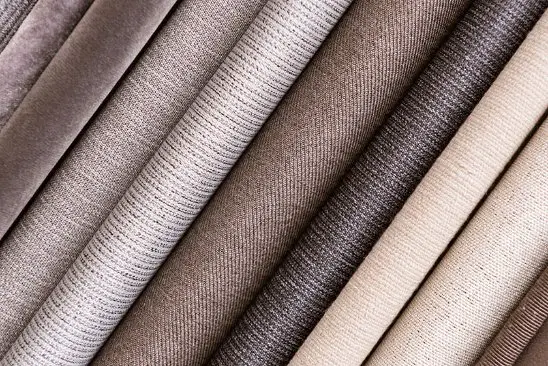
Finding quality delaine requires knowing where to look and what questions to ask.
Specialty Fabric Stores
Your best bet for quality delaine is specialty fabric retailers, either online or in person. These stores typically:
- Carry multiple weights and colors
- Provide accurate fabric composition information
- Offer samples for testing
- Have knowledgeable staff who can answer questions
- Stock reliable, tested suppliers
Online Sources
When shopping online for delaine:
- Order samples before buying yardage
- Read customer reviews carefully
- Check the return policy
- Look for detailed specifications (weight, width, care instructions)
- Compare prices – extremely cheap “delaine” may not be authentic
What to Ask Before Buying
When shopping for delaine, ask these questions (or use our Wool Quality Assessment Checklist to evaluate fabric before purchasing):
- What is the exact fiber content? (Should be 100% wool or 100% Merino wool)
- What is the fabric weight? (Should be 124-162 GSM for true delaine)
- What is the fabric width? (Typically 142-148 cm/56-58 inches)
- Is it pre-shrunk or does it require pre-washing?
- Where was the wool sourced? (For quality and ethical considerations)
- What are the care requirements?
- Can I order a sample?
Price Expectations
Quality delaine isn’t cheap, but it shouldn’t be outrageously expensive either. Expect to pay:
- Lower range: $15-25 per yard/meter for basic colors
- Mid range: $25-40 per yard/meter for premium quality
- High range: $40-60+ per yard/meter for designer or specialty colors
If you find “delaine” for under $10 per yard, be skeptical. It may be:
- A wool blend rather than pure wool
- Lower quality wool
- Not actually delaine (mislabeled)
- Damaged or seconds quality
Minimum Orders
Many fine fabric sellers sell by the 10cm increment with minimum orders of 10cm (about 4 inches) for samples. For actual project fabric, expect to buy at least half a yard/meter, though full yards are more common.
For high-quality wool and cashmere options, check out F Bargains Galore’s wool and cashmere selection.
Sewing with Delaine Fabric: Tips and Techniques
Working with delaine requires some special techniques, but it’s not difficult once you know the tricks.
Pre-Treatment
Before cutting into your delaine:
- Pre-shrink if needed: If the fabric isn’t pre-shrunk, have it dry cleaned or gently hand wash and dry flat before cutting
- Press if wrinkled: Steam or press on wool setting with a pressing cloth
- Let it rest: Unroll and let fabric relax for 24 hours before cutting
Pattern Selection
Choose patterns that work with delaine’s characteristics:
- Patterns designed for lightweight wools or challis
- Styles with drape and flow (A-line, gathered, pleated)
- Avoid very fitted styles that need lots of interfacing
- Look for patterns with minimal seams to showcase the fabric
Cutting
Delaine-specific cutting tips:
- Use sharp shears: Dull scissors can pull and distort wool fibers
- Cut on a single layer when possible: Delaine can shift during cutting
- Use weights instead of pins when possible: Pins can leave permanent marks
- If pinning is necessary: Pin within seam allowances only
- Mark carefully: Use tailor’s chalk or washable markers; never use ballpoint pen
For more cutting guidance, see our comprehensive guide to fabric cutting.
Needles and Thread
The right supplies make a big difference:
- Machine needles: Universal or Microtex/Sharp size 70/10 to 80/12
- Hand needles: Sharps or betweens in size 8-10
- Thread: All-purpose polyester or cotton-wrapped polyester in matching color
- Avoid: Heavy-duty needles that can damage fine fibers
Sewing Techniques
Special considerations for delaine:
- Test first: Always make a test seam on scraps
- Stitch length: 2.5-3mm for regular seams
- Presser foot pressure: Lighten if possible to avoid stretching
- Seam finishes: French seams, bound seams, or serged edges work well
- Pressing as you go: Essential for professional results – press each seam before crossing with another
Learn about different French seam techniques and bound seam finishing for clean interiors.
Interfacing
If your project needs interfacing:
- Use lightweight fusible or sew-in interfacing
- Test fusible interfacing on scraps first (heat can damage wool)
- Use a pressing cloth and appropriate temperature
- Consider sew-in interfacing for collar stands and cuffs
Hem Finishes
Delaine’s light weight allows for several hem options:
- Hand-stitched blind hem: Most invisible, best for special garments
- Machine-stitched hem: Works well if done carefully
- Hong Kong finish: Beautiful for unlined jackets
- Bound hem: Adds weight and a design detail
See our guide to sewing perfect hems for detailed techniques.
Common Beginner Mistakes to Avoid
- Using too hot an iron (causes shine and can scorch)
- Skipping the pressing cloth
- Stretching fabric while cutting or sewing
- Using wrong needle size (too large leaves visible holes)
- Not pre-treating/pre-shrinking when needed
- Washing finished garment in hot water (hello, felting!)
Frequently Asked Questions About Wool Delaine Fabric
Conclusion
After exploring everything about wool delaine fabric, from its Spanish origins to modern sewing techniques, you’re equipped to decide if this luxurious textile belongs in your wardrobe or sewing room.
When Delaine Is the Perfect Choice
Choose delaine fabric when you want:
- A high-quality natural fiber that performs well in multiple seasons
- Lightweight warmth without bulk
- A fabric that drapes beautifully for dresses and blouses
- Natural odor resistance and easy care between wears
- An environmentally responsible choice that biodegrades
- A fabric investment that will last for decades
- Professional-looking garments with minimal ironing
When to Consider Alternatives
Look at other fabrics if you need:
- Heavy winter outerwear (choose thicker wool coatings)
- Machine-washable, dryer-safe everyday clothing
- High-performance athletic wear (synthetics dry faster)
- The absolute softest possible fabric (try cashmere)
- Children’s play clothes (more durable, washable options work better)
- The most budget-friendly option (synthetics cost less upfront)
Key Takeaways
- Delaine has two meanings: Historical cotton-wool blend and modern 100% fine Merino wool
- It comes from Delaine Merino sheep: Specifically bred for smooth skin and fine, long-staple wool
- The sweet spot for quality: Look for 18-24 micron fiber diameter and 124-162 GSM weight
- Sustainability wins: Renewable, biodegradable in 6 months, lasts for decades with care
- Perfect for dresses and blouses: The drape and weight are ideal for flowing garments
- Care is simple but specific: Cool water, gentle handling, air dry flat – that’s the formula
- Price reflects quality: Expect $15-60 per yard; extremely cheap “delaine” likely isn’t authentic
- Sewing requires care: Sharp needles, gentle handling, proper pressing makes all the difference
Your Next Steps
Ready to work with delaine? Here’s what to do next:
- Order samples: Get small swatches from 2-3 suppliers to compare quality and color in person
- Test your care routine: Practice washing and pressing on samples before working with yardage
- Start with a simple project: A basic A-line skirt or simple blouse lets you learn the fabric’s behavior
- Invest in proper supplies: Quality wool-safe detergent, a mesh laundry bag, and a pressing cloth
- Join sewing communities: Connect with other sewists who work with fine wools for tips and support
Delaine fabric represents a connection to textile history spanning over a thousand years, from carefully guarded Spanish flocks to modern sustainable fashion. When you choose delaine, you’re choosing quality, performance, and environmental responsibility wrapped in a fabric that feels as good as it looks.
Whether you’re sewing a special dress, selecting fabric for a custom garment, or simply building a more sustainable wardrobe, delaine offers a balance of luxury and practicality that few fabrics can match. The care it requires isn’t burden – it’s an investment in quality that pays dividends in longevity, performance, and timeless style.
Take your time, choose quality over bargains, and treat your delaine pieces with the respect they deserve. In return, you’ll have garments that serve you beautifully for years to come.