
Everything you need to know about barathea wool, from its rich history to modern applications, care, and buying tips
Table of Contents
- What is Wool Barathea Fabric?
- The Rich History of Barathea
- How Barathea Fabric is Made
- Properties and Characteristics
- Types and Variations
- Barathea vs. Other Premium Fabrics
- Uses and Applications
- Styling Guide
- Sustainability and Environmental Impact
- Care and Maintenance
- Buying Guide
- Cost and Value Analysis
- Frequently Asked Questions
- Conclusion
What is Wool Barathea Fabric?
Wool barathea is a premium fabric with a distinctive broken twill weave that creates a unique pebbled or ribbed texture on the surface. When you run your hand across it, you’ll feel a smooth yet slightly grainy surface that looks almost like tiny ripples frozen in fabric form.
The name “barathea” comes from the Arabic word “barrat,” meaning silky fabric, which perfectly captures its refined character. This wool fabric stands out because of its special weave structure where two weft yarns cross each warp yarn, creating a pattern that appears to run in both directions at once.
What Makes Wool Barathea Special?
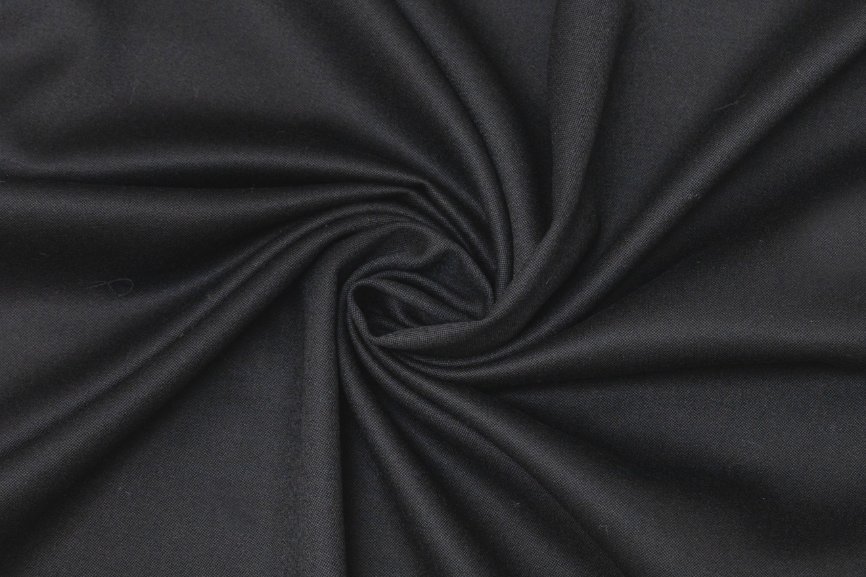
What sets barathea apart from regular wool suiting fabrics is its unique visual quality. The fabric has a matte finish that absorbs light differently than other weaves. This is why black barathea looks “blacker” than other black fabrics. It doesn’t reflect much ambient light, giving it an exceptionally deep, rich color that’s perfect for formal wear.
The texture isn’t just for looks. This broken twill weave creates a fabric that’s both durable and flexible. Unlike simpler weaves that might show wear quickly, barathea’s complex structure distributes stress across the fabric, making it last longer while maintaining its elegant appearance.
The Barathea Weave Explained
Understanding the barathea weave helps you appreciate what you’re getting. It belongs to the satin weave family, which means it has more float (where threads skip over other threads) than a basic plain weave. But unlike smooth satin, barathea has a broken pattern.
Think of it like this: in a regular twill, the diagonal lines run consistently in one direction. In barathea, those diagonals change direction, creating a hopsack or basket-like effect. This gives the fabric its signature look and its strength.
The Rich History of Barathea
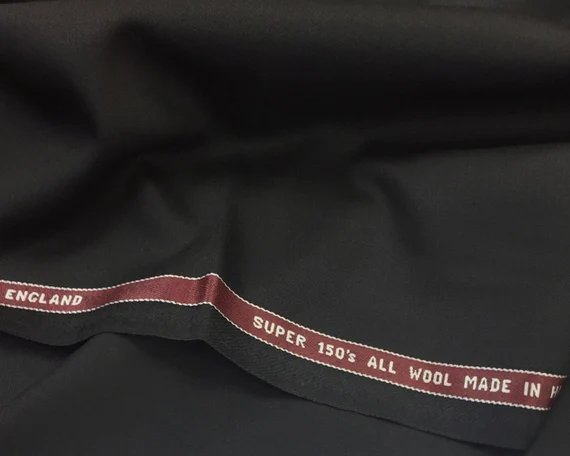
Barathea fabric showcased in classic formalwear with historical significance.
Barathea was first developed in England during the 1840s as a mourning cloth. Victorian society had strict rules about mourning dress, and barathea’s deep matte black made it perfect for funeral attire. Its somber appearance matched the serious nature of grieving.
For decades, barathea stayed associated with death and mourning. People avoided it for happy occasions because of this connection. It took nearly 30 years for the fabric to shake off its funeral image and be accepted for other uses.
The Victorian era finally embraced barathea for formal wear. Its refined appearance and durability made it perfect for men’s evening wear, especially tuxedos and tailcoats. The fabric became a symbol of sophistication and proper dress.
Military dress uniforms began using barathea for its smart appearance and ability to hold sharp creases. The fabric’s durability was perfect for uniforms that needed to look pristine and last through many formal occasions.
This was barathea’s peak period. Every well-dressed man who could afford it had at least one barathea dinner jacket. It was the standard fabric for black-tie events, from Hollywood premieres to diplomatic functions.
Cheaper synthetic fabrics and more casual dress codes reduced barathea’s dominance. However, it remained the choice for those who wanted true quality and traditional elegance.
There’s been a renewed interest in traditional craftsmanship and quality materials. Barathea is making a comeback among those who appreciate its superior quality and timeless appeal. Modern mills are also developing sustainable production methods, making it more appealing to eco-conscious consumers.
From Mourning to Celebration
The journey from funeral cloth to celebration wear is fascinating. Victorian society was obsessed with proper etiquette, and mourning had strict rules. Barathea’s deep black and refined appearance made it perfect for showing respect for the deceased without being showy.
But this same quality that made it perfect for mourning also made it ideal for formal events. Once society moved past the association with death, people realized barathea was simply the best-looking formal fabric available.
How Barathea Fabric is Made
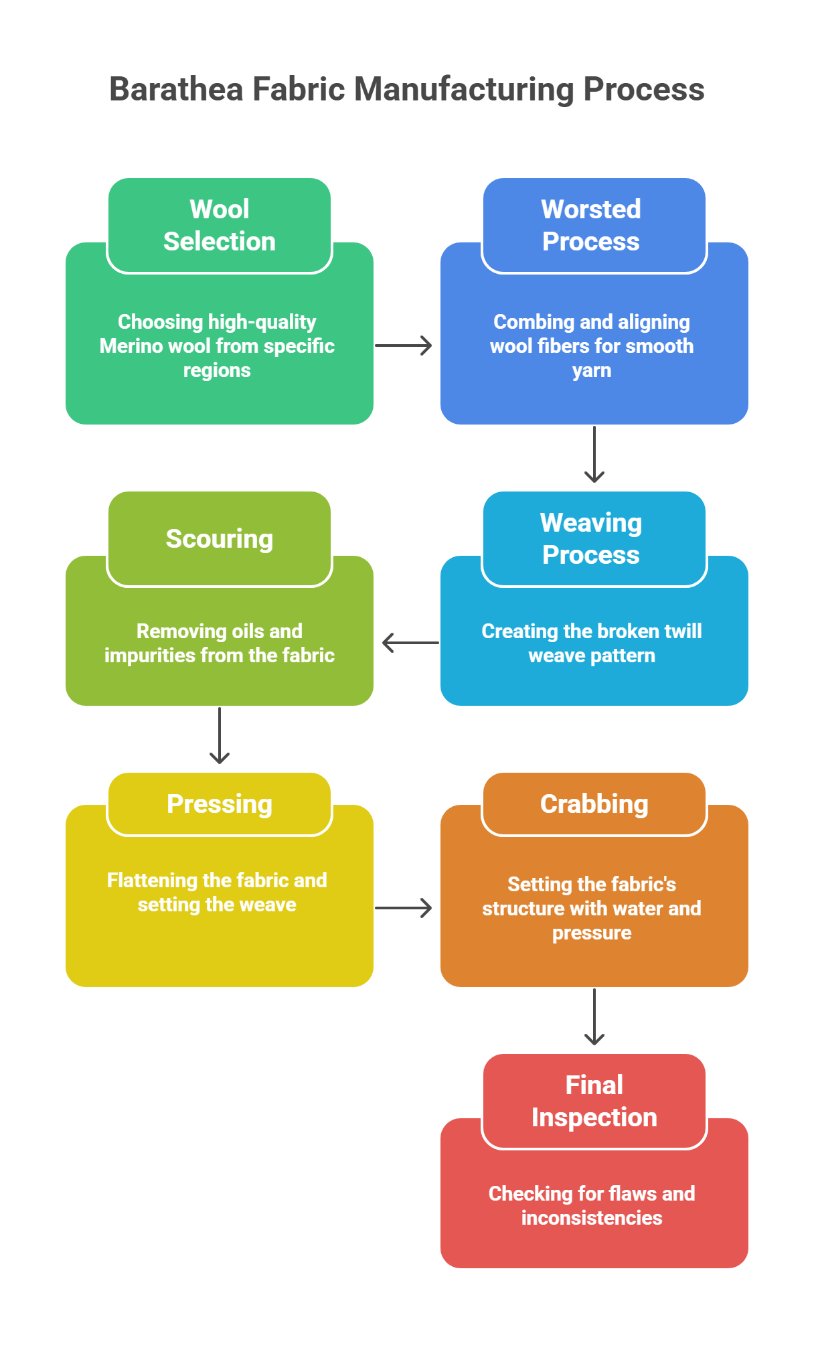
The manufacturing process of barathea fabric from wool selection to inspection.
The Wool Selection
Quality barathea starts with quality wool. Most barathea uses Merino wool from sheep raised in the UK, Australia, or New Zealand. The best producers are particular about their wool source because it affects everything else.
British mills often prefer UK-raised sheep because the climate produces wool with specific characteristics. The cool, damp British weather encourages sheep to grow denser, more resilient fleeces. Italian mills might prefer Australian Merino for its fine fiber diameter and consistent quality.
The Worsted Process
Barathea is traditionally made using the worsted process, not the woolen process. This is important because it affects how the fabric looks and feels.
In worsted spinning, the wool fibers are combed to remove short fibers and align all the long fibers in the same direction. This creates a smooth, strong yarn that’s perfect for the tight weave barathea requires. The result is a fabric with a clear surface pattern and minimal fuzz.
The woolen process, used for fabrics like tweed, deliberately keeps fibers going in different directions, creating a fuzzy, textured surface. That’s great for casual fabrics but not for the refined look barathea needs.
The Weaving Process
Creating the broken twill weave is where skill really matters. The loom must be set up precisely so the weft yarns (running horizontally) cross over the warp yarns (running vertically) in the right pattern.
In barathea, two weft yarns move together, crossing each warp yarn. This creates the hopsack effect where the twill direction appears to reverse itself. Getting this pattern consistent across the entire fabric width requires experienced weavers and well-maintained equipment.
Traditional mills in Yorkshire, England, and parts of Italy still use time-tested methods, though they’ve upgraded to modern looms that can maintain the pattern more consistently. The basic principle remains the same as it was in the 1840s.
Finishing Touches
After weaving, the fabric goes through several finishing steps:
- Scouring: Removes oils and impurities from the weaving process
- Pressing: Flattens the fabric and sets the weave pattern
- Crabbing: A process that uses water and pressure to permanently set the fabric’s structure
- Final inspection: Checking for any flaws or inconsistencies
Some mills add a light steaming process that gives the fabric its characteristic hand feel. This is where barathea gets its smooth-yet-textured surface that makes it so distinctive.
Properties and Characteristics
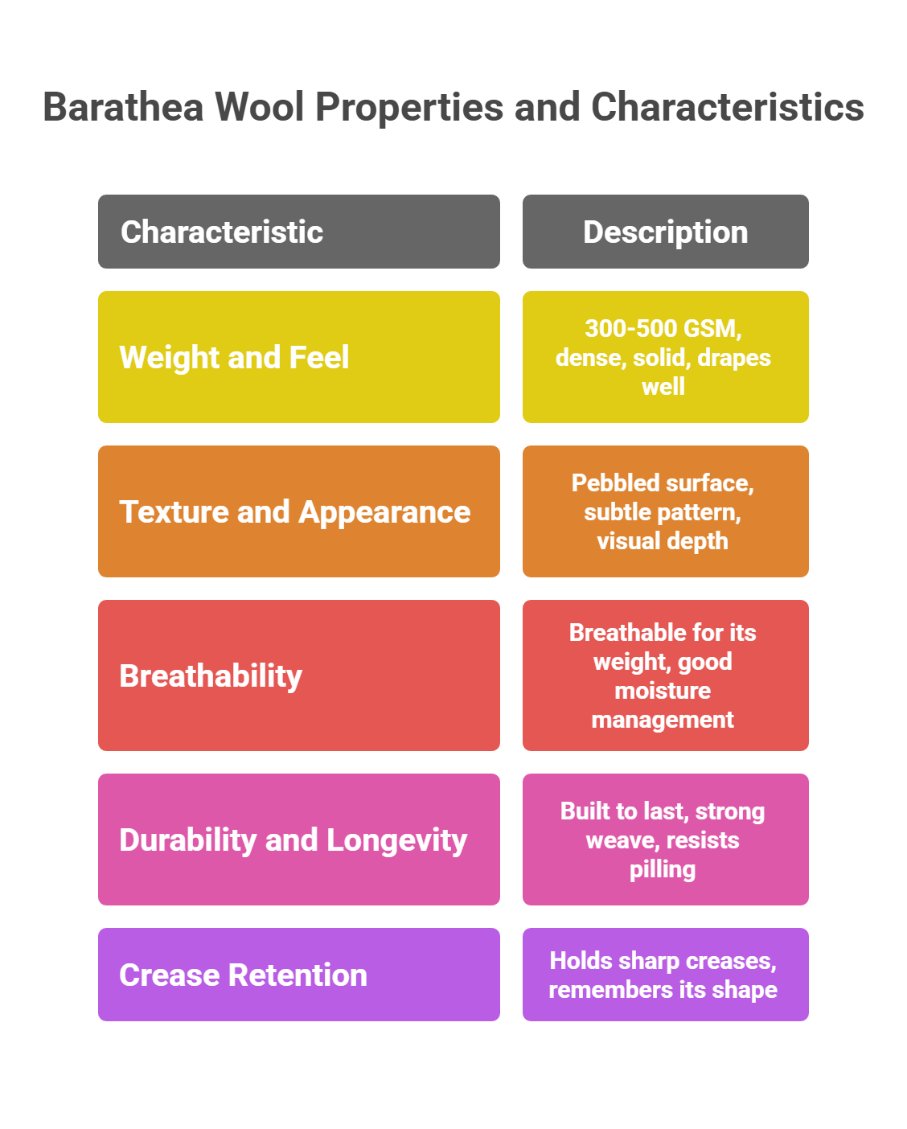
Visual overview of wool barathea properties including texture, durability, and drape.
Weight and Feel
What weight is Barathea wool? Barathea typically ranges from 300 to 500 grams per square meter (GSM). Most dinner jackets use fabric in the 350-400 GSM range, which provides good structure without being too heavy. Heavier weights (450-500 GSM) work better for outerwear or colder climates.
When you pick up barathea, you’ll notice it has substance. It’s not a lightweight fabric like wool voile. The fabric feels dense and solid in your hands, but it’s not stiff. Quality barathea drapes beautifully despite its weight.
Texture and Appearance
The pebbled surface is barathea’s signature look. Under close inspection, you’ll see a subtle pattern of tiny raised areas that catch light differently than the surrounding fabric. This creates visual depth that makes the fabric interesting to look at without being showy.
What is black Barathea? Black barathea is the most traditional color and the standard for tuxedos and formal evening wear. The broken twill weave combined with the matte finish creates what many consider the “blackest black” in fabric. Unlike shinier materials that can look dark gray under certain lighting, black barathea maintains its deep color in almost any light.
Midnight blue is another classic barathea color. Under artificial light, it can actually appear blacker than black fabric, which is why some formal wear experts recommend it over black.
Does Barathea Wrinkle Easily?
Not really, and this is one of barathea’s best features. The tight weave and worsted yarn construction give it natural wrinkle resistance. If you hang a barathea jacket after wearing it, minor wrinkles will relax out overnight.
This doesn’t mean it’s wrinkle-proof. If you pack it badly or sit in it for hours, you’ll get creases. But compared to wool delaine or wool crepe, barathea is much more forgiving.
The fabric’s natural resilience means it bounces back to its original shape. This is partly due to the wool itself (which has natural elasticity) and partly due to the weave structure distributing stress evenly.
Is Barathea Breathable?
Yes, barathea is quite breathable for its weight. Wool is a natural fiber with amazing temperature regulation properties. Even though barathea is densely woven, the wool fibers themselves have a structure that allows air circulation.
However, let’s be realistic. It’s a formal fabric designed for evening wear, not a summer shirt. You’ll be comfortable at an evening wedding or formal dinner, but you wouldn’t want to wear it hiking. Compared to heavier fabrics like tweed, barathea is actually quite comfortable.
The breathability also helps with moisture management. Wool can absorb up to 30% of its weight in moisture without feeling damp. This means light perspiration won’t make you uncomfortable or damage the fabric.
Durability and Longevity
Barathea is built to last. The combination of worsted wool (which is already strong) and the broken twill weave (which distributes wear) creates a fabric that can handle decades of use.
The weave structure is particularly clever for durability. In a plain weave, stress concentrates at specific points where threads intersect. In barathea’s broken twill, stress gets distributed across more intersection points, so no single area takes all the wear.
Many people own barathea dinner jackets that have been passed down through generations. With proper care, these pieces look almost as good as new. The fabric doesn’t pill easily, colors stay deep, and the structure maintains its shape.
Crease Retention
This property makes barathea perfect for formal wear. The fabric holds sharp creases beautifully, which is why it’s traditional for trousers with pressed front creases and jackets with crisp lapels.
When properly pressed, creases stay in place through an entire evening of wear. The fabric remembers its shape, which contributes to that impeccably tailored look formal wear requires.
| Property | Wool Barathea | Standard Wool |
|---|---|---|
| Weight Range | 300-500 GSM | 200-400 GSM |
| Wrinkle Resistance | High | Medium |
| Breathability | Good | Excellent |
| Durability | Excellent | Good |
| Crease Retention | Excellent | Good |
| Color Depth | Exceptional | Good |
| Formality Level | Very High | Varies |
Types and Variations of Barathea
Pure Wool Barathea
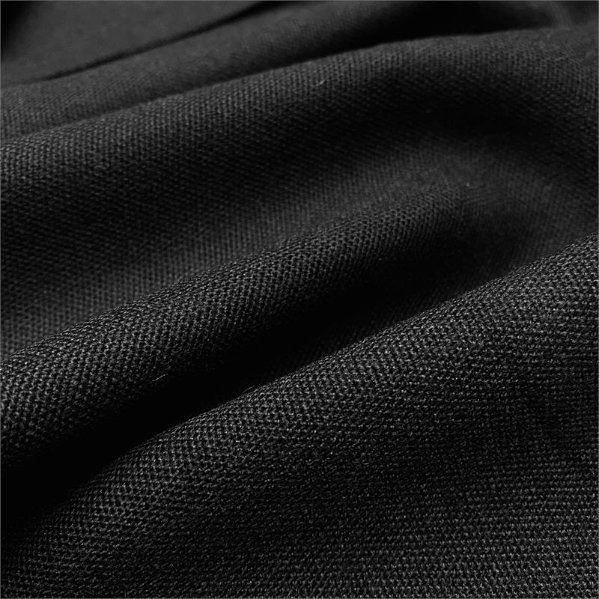
Pure wool barathea fabric with a refined pebbled surface and elegant drape. Credit: MacCulloch & Wallis
This is the classic version made from 100% wool. Most high-end formal wear uses pure wool barathea because it offers the best combination of appearance, comfort, and durability.
Pure wool barathea typically uses fine Merino wool for softness and comfort. The wool might be sourced from specific regions known for quality, like Australian Merino or British wool from Shetland or Welsh sheep.
The main advantage of pure wool is its natural properties: breathability, temperature regulation, and that special drape that only wool provides. It’s also easier to tailor because the fabric responds well to pressing and shaping.
Silk-Wool Blend Barathea
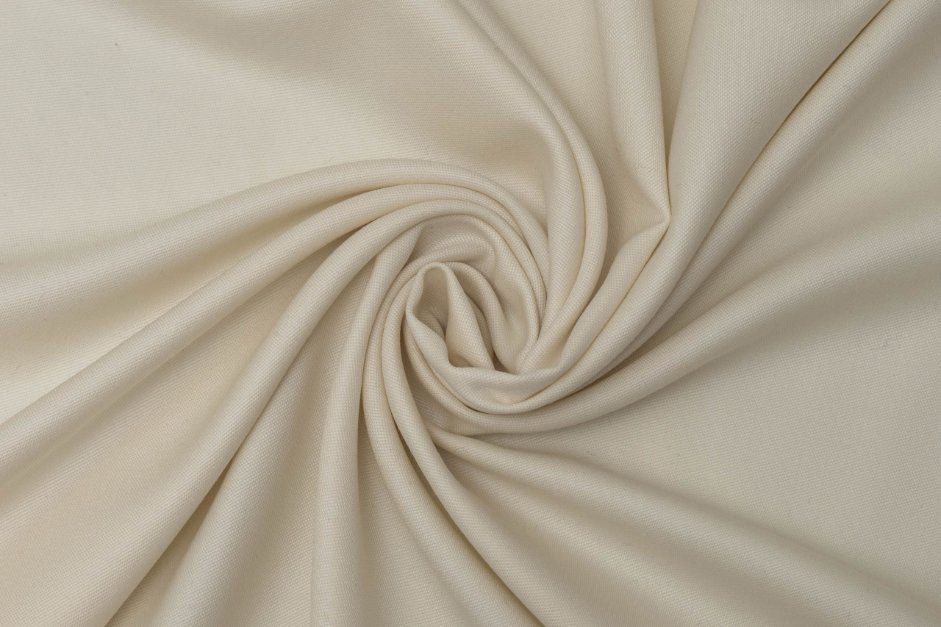
Silk wool blend barathea combining structure with added softness and sheen. Credit: Whaleys Bradford
Traditional barathea often included silk in the blend, typically with a silk warp and wool weft. This combination adds a subtle luster to the fabric’s surface while maintaining the characteristic barathea texture.
The silk content is usually between 10-30%. Higher silk content creates more shine, which moves away from barathea’s signature matte look. The sweet spot is around 15-20% silk, which adds just enough sheen to catch light beautifully without looking shiny.
Silk-wool blends are particularly popular for Scottish Highland wear like Prince Charlie jackets. The slight sheen looks appropriate for formal occasions while maintaining the refined character Highland wear requires. You can explore more about premium wool and cashmere blends for formal wear applications.
Mohair Barathea
Mohair adds interesting properties to barathea. Mohair comes from Angora goats and has natural luster, good durability, and excellent wrinkle resistance.
A mohair-wool barathea blend (typically 40-60% mohair) creates a fabric with more shine than pure wool but still maintains the broken twill texture. This makes it suitable for summer formal wear because mohair is naturally more breathable and cooler than wool.
The trade-off is comfort. Mohair can feel slightly coarser against the skin than pure wool. It’s usually fine for jackets but might be less comfortable for trousers worn without a base layer.
Synthetic Blend Barathea
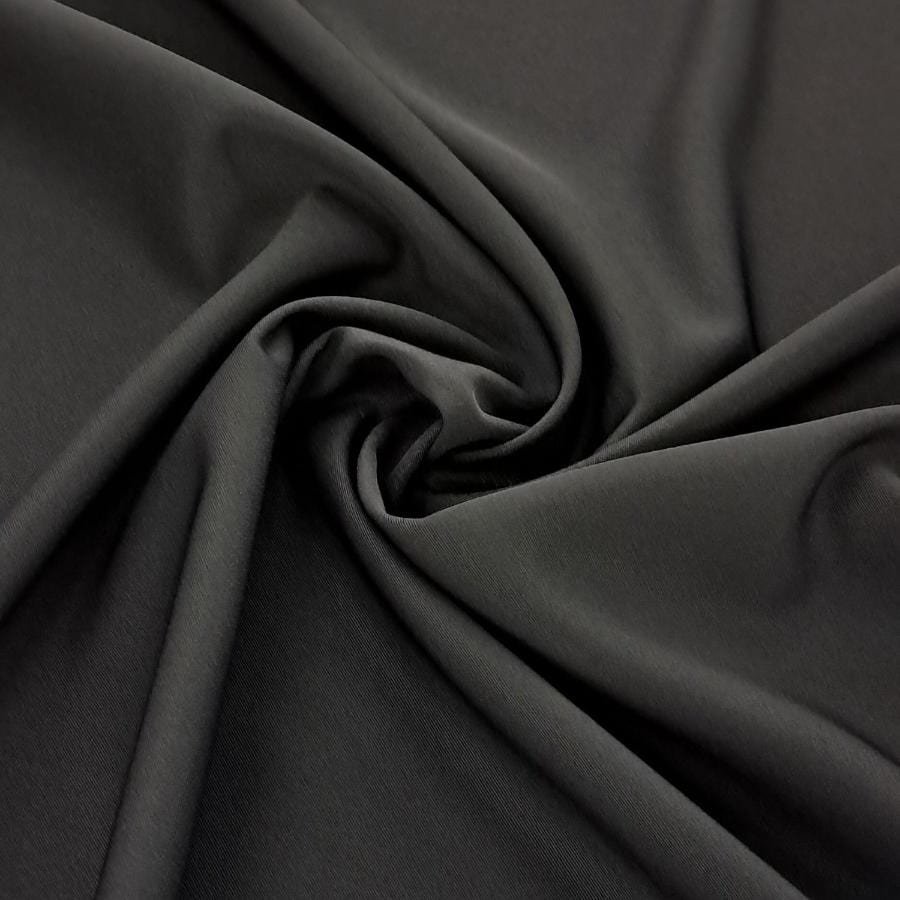
Synthetic blend barathea offering durability and cost effective performance.
Modern mills sometimes create barathea-style fabrics using polyester or rayon blends. These are more affordable and easier to care for but sacrifice some of the qualities that make traditional barathea special.
A 70% wool, 30% polyester blend offers good durability and wrinkle resistance. It’s more affordable than pure wool and easier to care for. However, it won’t breathe as well, and the hand feel is noticeably different. The fabric doesn’t drape quite the same way.
These blends work fine for rental formal wear or if you only need occasional use. But for an investment piece, pure wool or wool-silk blends are worth the extra cost.
Weight Variations
Barathea comes in different weights for different purposes:
- Lightweight (280-320 GSM): Used for dress trousers and summer formal wear. Drapes beautifully and is comfortable in warmer weather.
- Medium weight (320-400 GSM): The standard for dinner jackets and formal suits. Provides good structure without being too heavy.
- Heavy weight (400-500+ GSM): Used for outerwear, heavier jackets, or very cold climates. Has excellent structure but can feel warm.
Most people find medium weight offers the best balance for year-round formal wear.
Regional Variations
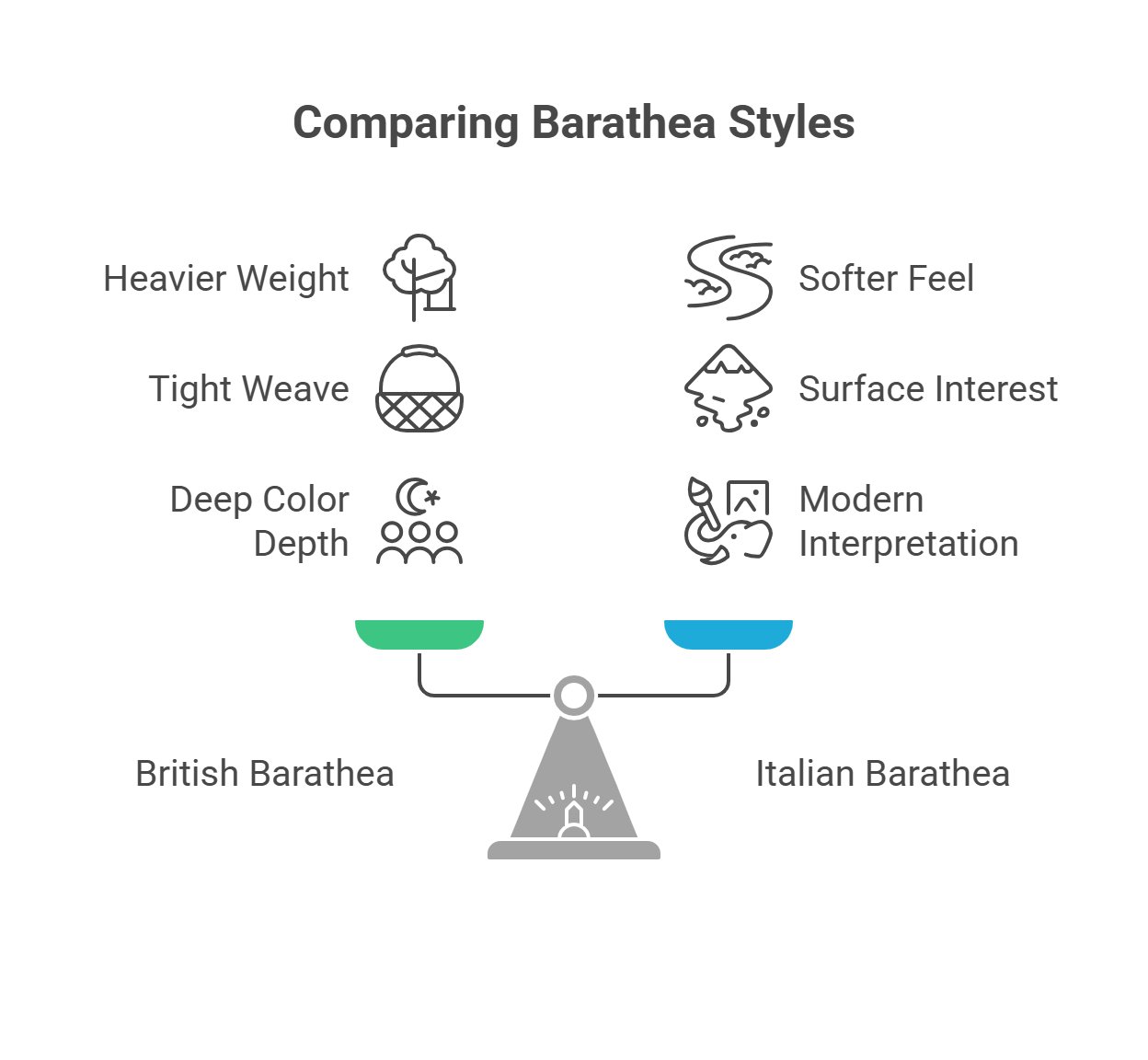
Comparison of British and Italian wool barathea styles and fabric qualities.
British Barathea
British mills, particularly in Yorkshire, have been making barathea for over 150 years. British barathea tends to be traditionally styled with a focus on durability and that classic matte finish.
The characteristics include slightly heavier weight (often 380-450 GSM), very tight weave, and exceptional color depth in blacks and midnight blues. British mills are known for consistency and traditional quality standards.
Italian Barathea
Italian mills approach barathea with a slightly different philosophy. Italian barathea often feels softer and drapes more fluidly. It might have a slightly lighter weight and a touch more surface interest.
Italian producers sometimes experiment with variations on the traditional weave or subtle color variations. The focus is on a more modern, slightly less formal interpretation while maintaining quality.
Barathea vs. Other Premium Fabrics
Barathea vs. Worsted Wool
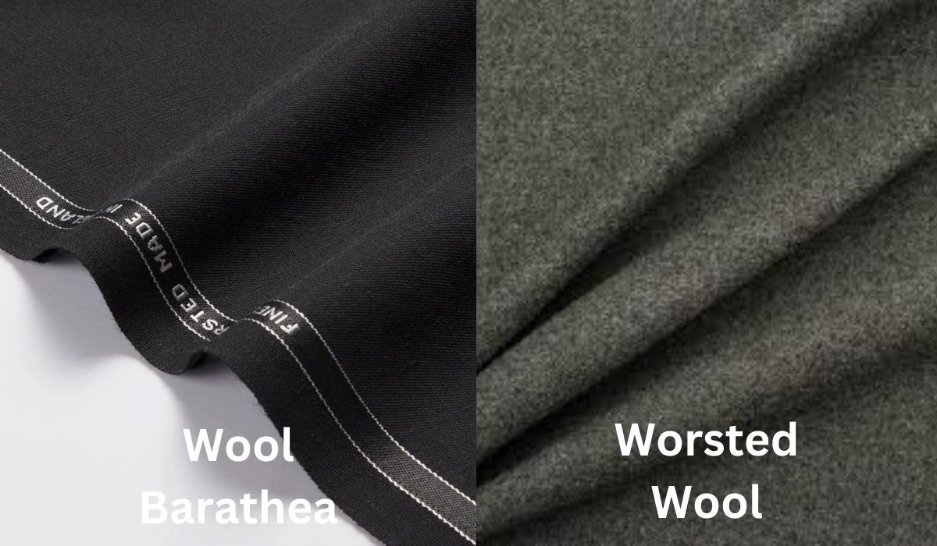
A comparison of barathea fabric and worsted wool textiles.
Worsted wool is a broad category that includes many types of fabrics, including barathea. The key difference is in the weave.
Regular worsted wool typically uses simpler weaves like plain weave or basic twill. These create smooth surfaces but lack barathea’s characteristic texture and depth. Worsted wool suits are appropriate for business wear, while barathea is specifically for formal occasions.
Worsted wool is generally more affordable and easier to find in different colors and patterns. Barathea is more specialized, usually available only in classic formal colors.
Barathea vs. Venetian Weave
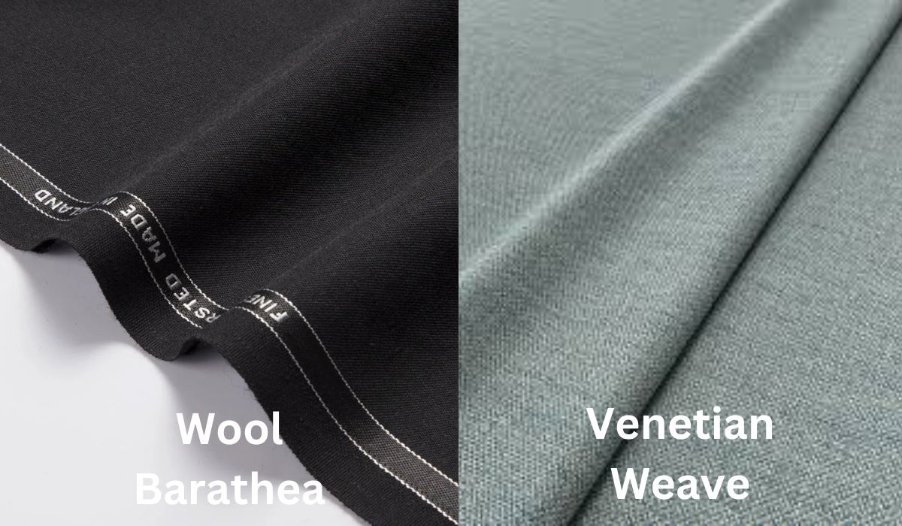
Barathea compared with Venetian weave for formal tailoring applications.
Venetian is another formal fabric often confused with barathea. Venetian uses a satin weave that creates a smooth, lustrous surface. It’s shinier than barathea and has a completely different character.
Venetian works well for formal trousers because its smooth surface resists wrinkling and has an elegant drape. However, it’s less traditional for dinner jackets because the shine can look too bright under certain lighting.
Barathea’s matte finish makes it more versatile for jackets and more appropriate for very formal occasions where understated elegance is the goal.
Barathea vs. Flannel
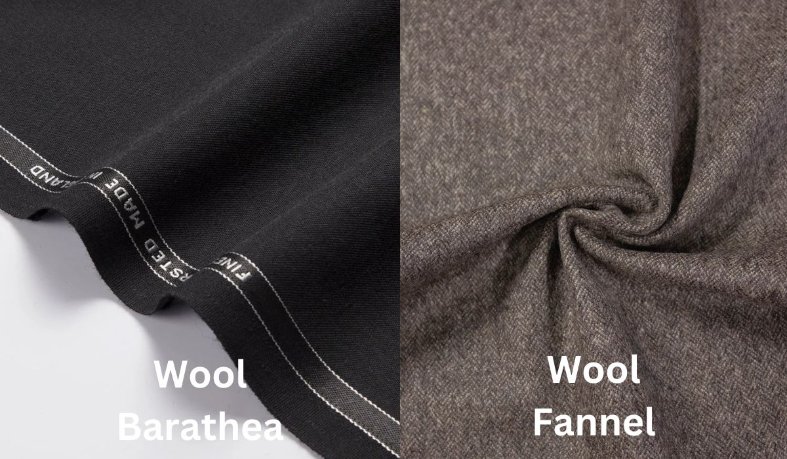
Barathea compared with wool flannel to highlight structure versus softness.
Wool flannel is on the opposite end of the texture spectrum. Flannel has a soft, brushed surface that feels fuzzy and warm. It’s perfect for casual or business wear but too informal for black-tie events.
Flannel is typically lighter than barathea and much less structured. It’s comfortable and forgiving but doesn’t hold creases well or maintain the sharp lines formal wear requires.
The visual difference is obvious: flannel looks soft and casual, barathea looks crisp and formal.
Barathea vs. Tweed
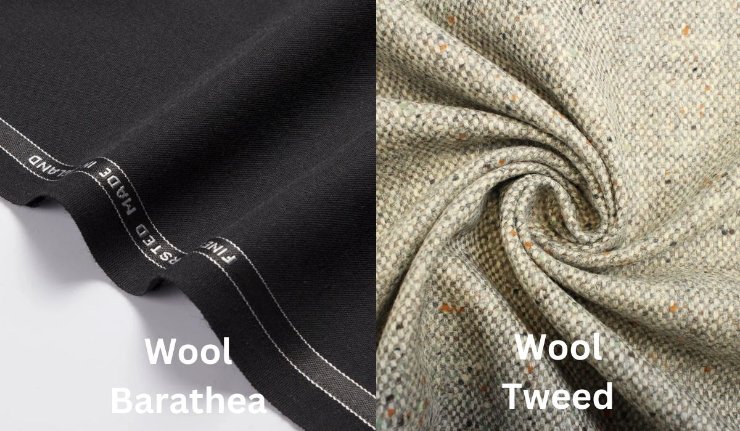
Barathea compared with tweed to highlight elegance and durability differences.
Tweed is a completely different category of fabric. Tweed uses the woolen spinning process (not worsted) and typically has a rough, heavily textured surface with visible color variations.
Tweed is outdoor wear and country clothing. It’s warm, durable, and weather-resistant but far too casual for formal events. The texture is much coarser, and the appearance is rustic rather than refined.
Where barathea is about smooth elegance, tweed is about rugged practicality.
Barathea vs. Gabardine
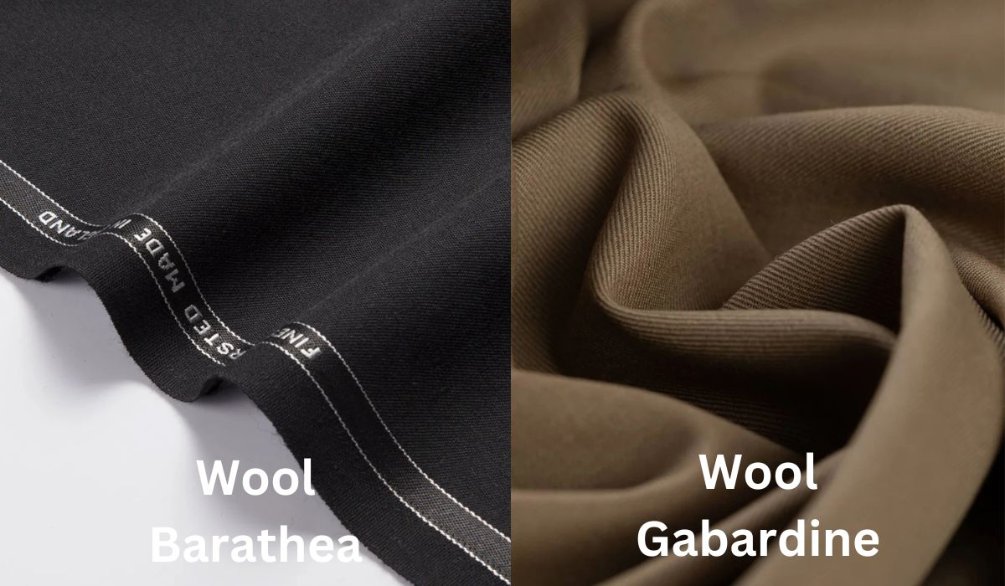
A comparison of barathea and wool gabardine for tailored garments.
Wool gabardine has a steep twill weave that creates distinct diagonal lines on the surface. It’s durable and has good drape, making it popular for business suits and raincoats.
Gabardine is less formal than barathea. The pronounced diagonal twill makes it interesting but not appropriate for very formal occasions. Gabardine is also typically lighter weight and more suitable for everyday wear.
Barathea vs. Hopsack
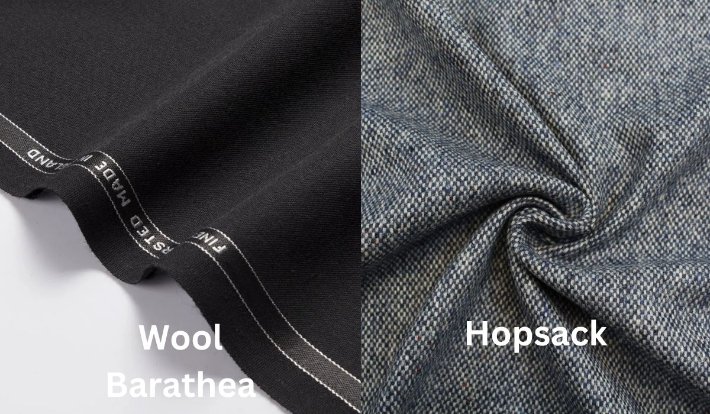
Barathea compared with hopsack to illustrate formality and breathability.
Hopsack has a basket weave that creates a textured surface, but it’s more open than barathea’s tight weave. Hopsack is breathable and has a casual appearance that works well for summer suits.
Hopsack lacks barathea’s formal character. The more visible weave pattern makes it look less refined, and it doesn’t have the color depth or structure needed for evening wear.
Barathea vs. Serge
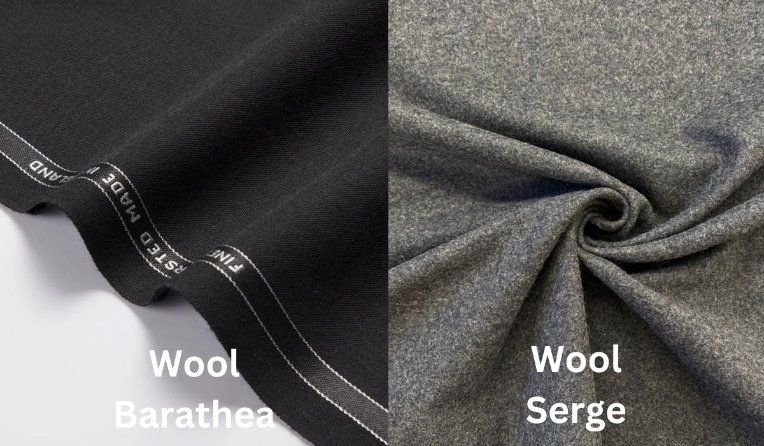
Comparing barathea with wool serge for structure and performance.
Wool serge is a basic twill weave that’s been used for everything from school uniforms to military dress. It’s durable and affordable but lacks barathea’s special qualities.
Serge has more obvious diagonal lines and a flatter appearance. It doesn’t have barathea’s depth or refinement. Serge works fine for everyday wear but isn’t sophisticated enough for formal occasions.
| Fabric | Formality | Texture | Best Use | Price Range |
|---|---|---|---|---|
| Barathea | Very High | Pebbled, matte | Tuxedos, evening wear | $$$ |
| Venetian | High | Smooth, lustrous | Formal trousers | $$ |
| Flannel | Low-Medium | Soft, brushed | Casual/business wear | $$ |
| Tweed | Low | Rough, textured | Country clothing | $$ |
| Gabardine | Medium | Diagonal twill | Business suits | $$ |
| Hopsack | Medium | Open weave | Summer suits | $$ |
| Serge | Medium | Simple twill | Everyday wear | $ |
Uses and Applications
Traditional Formal Wear
What is a Barathea Blazer?
A barathea blazer is a formal jacket made from barathea fabric, typically worn for evening events. The most common style is the dinner jacket (tuxedo jacket) in black or midnight blue.
These jackets usually feature satin or grosgrain lapels that contrast with the matte barathea body. The combination creates the classic tuxedo look: refined, elegant, and traditionally correct for black-tie events.
What makes a barathea blazer special is how it photographs and looks under evening lighting. The matte finish doesn’t create hot spots or reflections, while the deep color creates a sophisticated silhouette.
Is Barathea Suitable for Suits?
Yes, but with context. Barathea is perfect for formal suits worn at evening events, weddings, and ceremonial occasions. A black or midnight blue barathea suit with appropriate accessories is proper attire for any formal event that doesn’t specifically require white tie.
However, barathea is too formal for business suits or everyday wear. You wouldn’t wear a barathea suit to the office or casual social events. It would look out of place and overly dressed up.
For business suits, stick with regular worsted wool in appropriate patterns and colors. Save barathea for times when formal dress is explicitly appropriate.
Dinner Jackets and Tuxedos
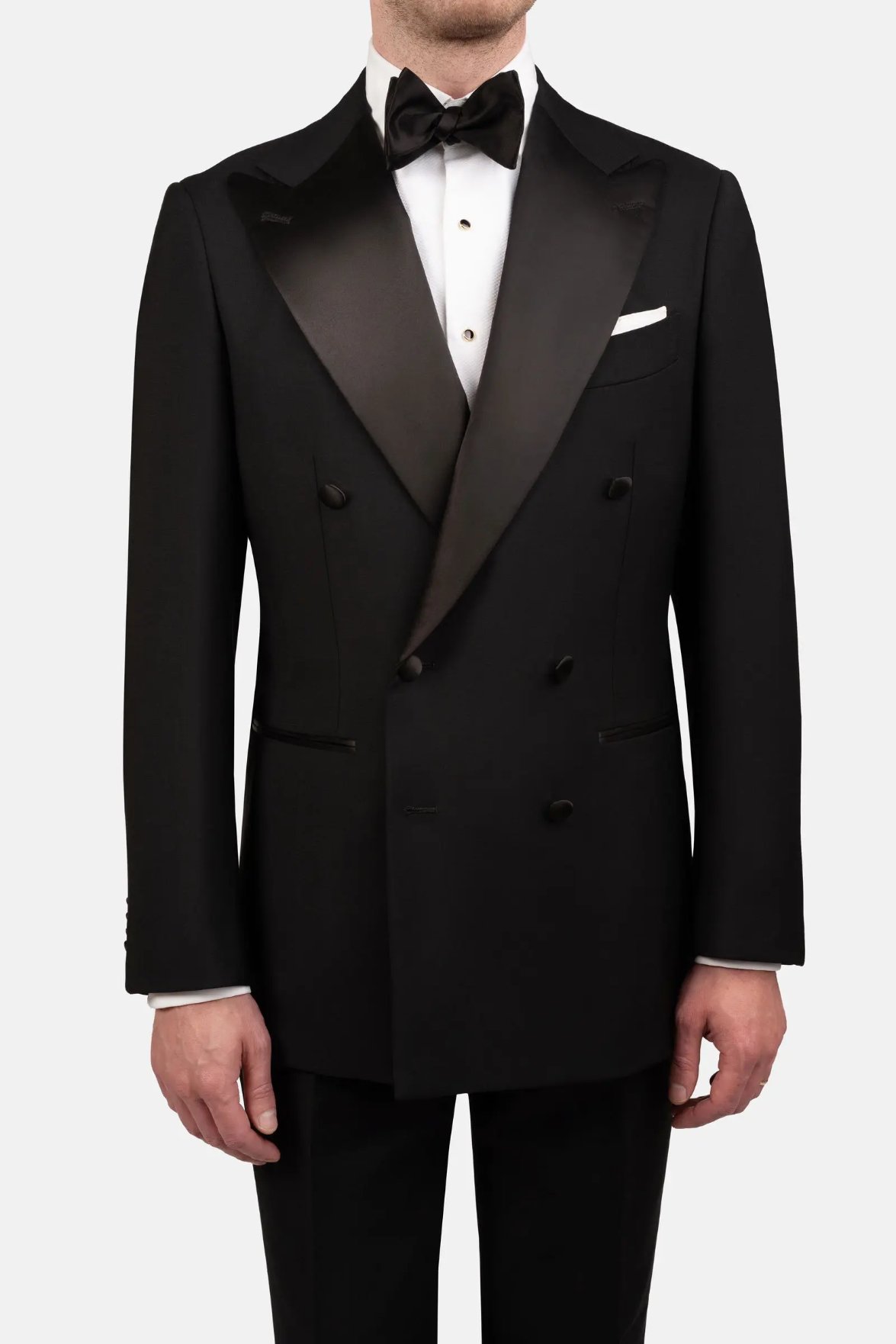
Classic tuxedo crafted from wool barathea fabric. Credit: Cavour
This is where barathea truly shines. The fabric has been the gold standard for dinner jackets since the Victorian era for good reasons:
- The matte finish looks appropriate for evening wear
- The color depth creates a sophisticated appearance
- The structure holds the tailored shape jackets need
- The durability means the jacket will last through many formal events
A quality barathea dinner jacket is an investment piece that never goes out of style. While fashion changes, proper formal wear remains remarkably consistent.
Morning Coats
Morning coats for daytime formal events sometimes use barathea, though this is less common than for evening wear. The formal character works well, but the dark colors traditionally used for barathea can be quite warm for daytime wear.
Formal Waistcoats
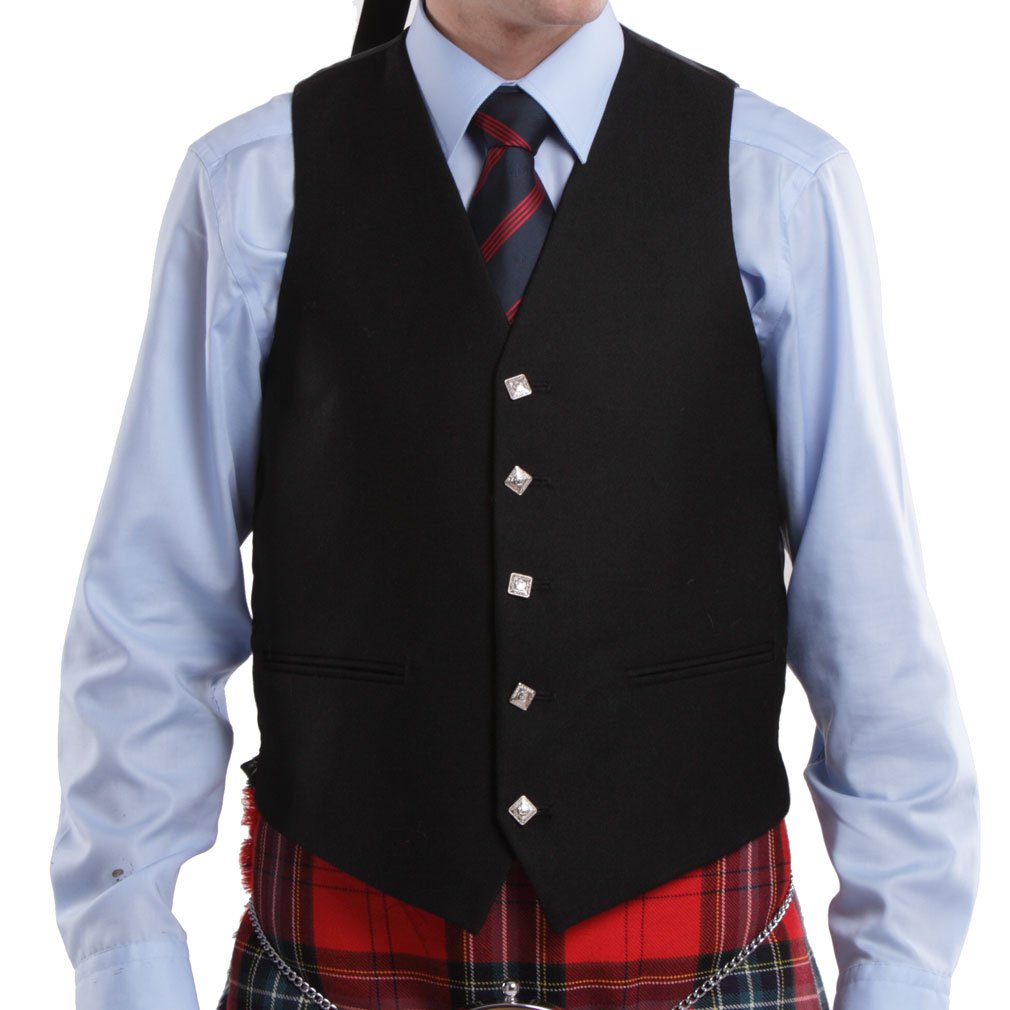
Wool barathea waistcoat used in classic and ceremonial outfits.
Barathea waistcoats worn with formal three-piece ensembles maintain the consistent formal appearance throughout the outfit. They work particularly well when the jacket might be removed during an event.
Military and Ceremonial Wear
Military dress uniforms have used barathea for over a century. The fabric meets several military requirements:
- Durability: Uniforms need to withstand regular wear and multiple cleaning cycles
- Appearance: Sharp, professional look that maintains its quality
- Crease retention: Critical for military uniform standards
- Color stability: The deep blacks and blues stay true over time
Mess dress, the military equivalent of civilian formal wear, almost always uses barathea. Naval officers, in particular, favor barathea for its traditional connection to formal naval dress.
Scottish Highland Wear
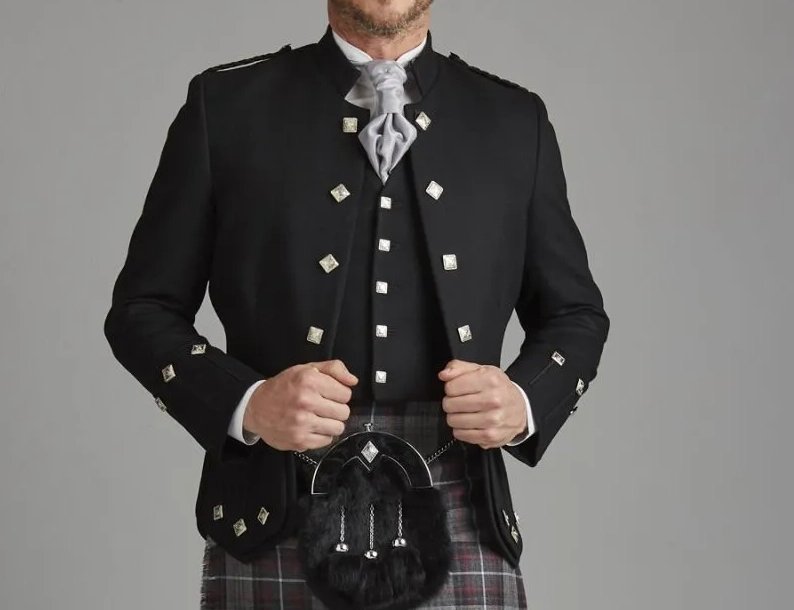
Wool barathea used in traditional Scottish Highland formalwear. Credit: Kinloch Anderson
Scottish formal Highland wear has a special relationship with barathea. The Prince Charlie jacket and Argyll jacket, both traditional styles worn with kilts, are typically made from barathea.
These jackets need to hold sharp creases (particularly important in Highland dress) and maintain a formal appearance while being durable enough for regular wear at Highland games, weddings, and formal ceilidhs (traditional Scottish gatherings).
The ability to hold creases is particularly important because Highland jackets have distinctive style lines that need to stay sharp. The sleeves often have three decorative buttons that emphasize the crease line.
Modern Applications
Contemporary Fashion
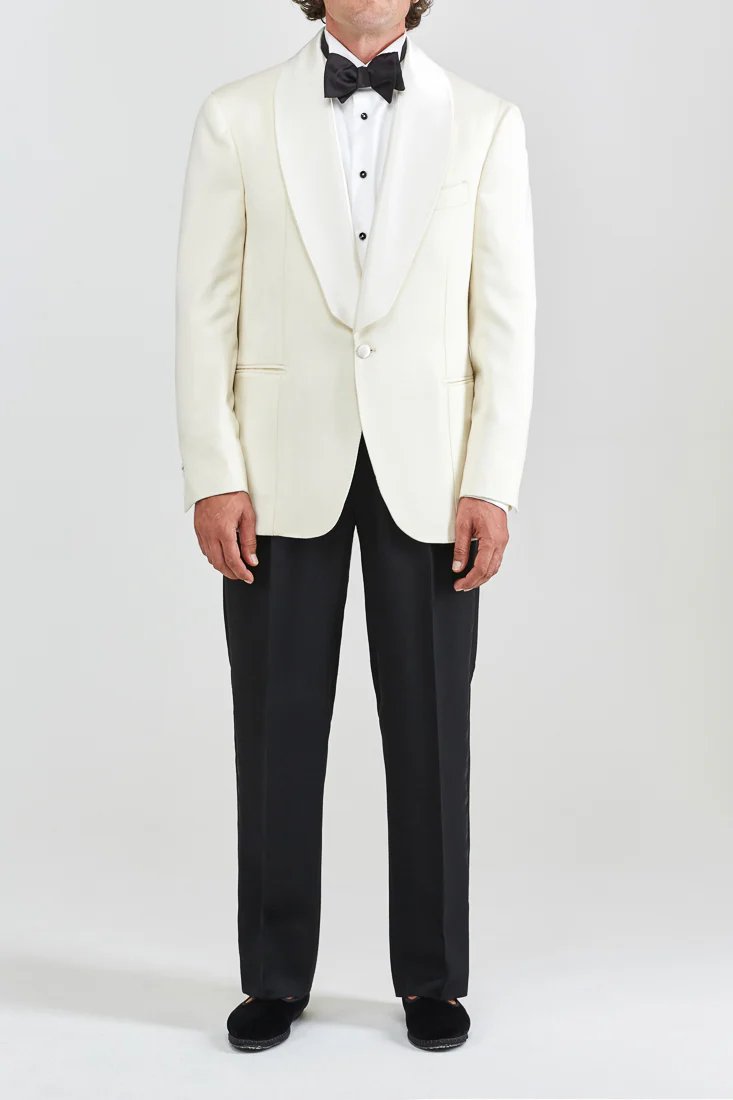
Wool barathea blazer designed for elegant formal and semi formal occasions. Credit: Giuliva Heritage
Some fashion designers are rediscovering barathea for modern interpretations of formal wear. The fabric’s quality and traditional character appeal to consumers interested in craftsmanship and sustainability.
Modern uses include structured blazers (not necessarily for formal events), high-end trousers, and even stylish outerwear pieces that emphasize quality and durability over fast fashion trends.
Luxury Accessories
High-end menswear shops sometimes offer barathea accessories like bow ties, pocket squares, or even specialty bags and small leather goods lined with barathea.
Styling Guide: How to Wear Wool Barathea
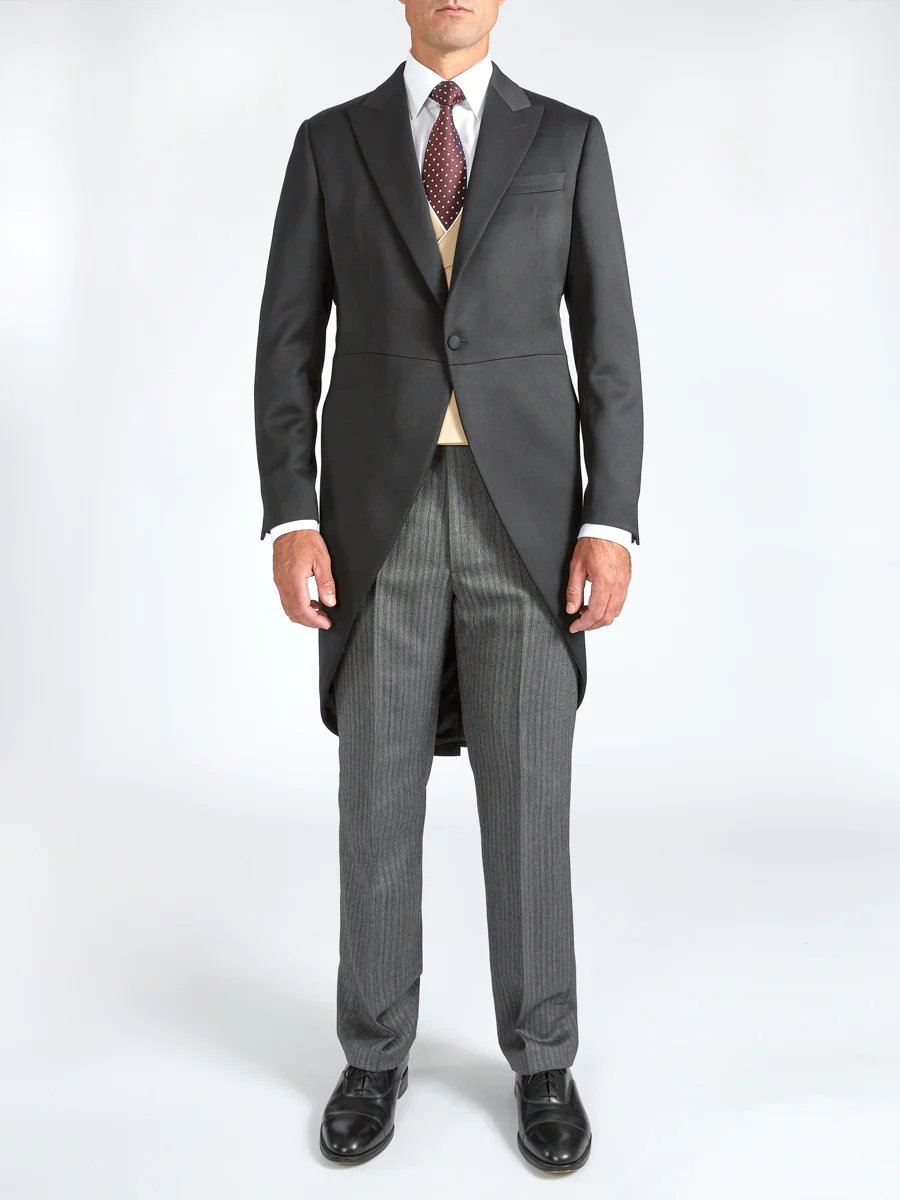
Classic styling example using wool barathea in formal menswear. Credit: Favourbrook
Classic Black Tie
The traditional barathea dinner jacket follows specific style rules that have evolved over more than a century:
The Jacket: Single-breasted with one button or double-breasted with four or six buttons. The lapels should be either shawl collar or peaked lapel, covered in satin or grosgrain. Black is traditional, but midnight blue is equally correct (and sometimes looks better under artificial light).
Trousers: Should match the jacket (ideally from the same cloth) with a satin or grosgrain stripe down the outer seam. No cuffs, no belt loops.
Shirt: White dress shirt with pleated or plain front, turndown collar or wing collar. French cuffs that require cufflinks.
Bow Tie: Black bow tie, preferably self-tied rather than pre-tied. The bow tie should match the jacket lapels (satin or grosgrain).
Shoes: Black patent leather or highly polished black cap-toe oxfords. No brown, no loafers, no fashion sneakers.
Accessories: Simple cufflinks, studs if wearing a formal shirt. A white linen pocket square, folded simply. No flashy jewelry.
Modern Formal Interpretations
While the classic rules exist for a reason, modern formal wear allows some flexibility depending on the event:
Color choices: Beyond black and midnight blue, very dark charcoal gray barathea can work for less traditional formal events. However, stick with classic colors for traditional black-tie events.
Velvet touches: Some modern dinner jackets use barathea for the body with velvet shawl collars. This creates interesting texture contrast while maintaining formality.
Slim vs. traditional fit: Modern tailoring tends toward slimmer cuts. This works fine with barathea as long as the jacket still fits properly and allows comfortable movement.
Seasonal Considerations
Barathea is primarily evening wear, but seasonal thinking still applies:
Spring/Summer: Consider lighter weight barathea (280-320 GSM) if you’ll be wearing it for warm-weather events. Midnight blue might be more comfortable than black because it seems psychologically cooler.
Fall/Winter: Standard to heavy weight barathea (350-450 GSM) provides warmth while maintaining the formal appearance. Consider layering with appropriate formal overcoats for outdoor portions of events.
Common Styling Mistakes to Avoid
- Wearing it during the day: Barathea’s traditional colors and formal character make it inappropriate for daytime events. Morning coat events call for lighter colors.
- Mixing formality levels: Don’t wear a barathea jacket with jeans or casual trousers. It looks confused rather than creative.
- Over-accessorizing: Barathea’s elegant simplicity doesn’t need help. Avoid flashy cufflinks, colored shirts, or novelty bow ties.
- Wrong shoes: Brown shoes with a black or midnight blue barathea suit is a serious mistake. Keep it simple and correct.
- Ignoring fit: Even the finest barathea looks poor if the garment doesn’t fit properly. Get proper tailoring.
Sustainability and Environmental Impact
Natural Fiber Benefits
Wool barathea starts with an advantage: it’s made from a natural, renewable fiber. Sheep grow new fleece every year, making wool a sustainable resource when managed properly.
Wool is biodegradable. At the end of its very long life, a wool garment will naturally break down, unlike synthetic fabrics that persist in landfills for decades. This natural lifecycle is a significant environmental benefit.
Wool also has natural properties that reduce the need for chemical treatments. Its resistance to odors and wrinkles means less frequent washing, which saves water and energy over the garment’s lifetime.
Environmental Considerations in Wool Production
Being natural doesn’t mean wool production has zero environmental impact. Understanding these impacts helps you make informed choices:
Land use: Sheep farming requires grazing land. Well-managed grazing can actually benefit landscapes by preventing brush overgrowth and maintaining grasslands. Poorly managed grazing can cause erosion and habitat destruction.
Water consumption: Sheep need water, though much less than growing crops like cotton. The water footprint of wool is significantly lower than cotton per kilogram of fiber.
Methane emissions: Sheep produce methane, a greenhouse gas. This is a real environmental concern. However, improved farming practices and feed management can reduce methane production.
Chemical use: The worsted spinning process used for barathea uses fewer chemicals than the processing required for many other fabrics. However, dyeing and finishing still involve chemical treatments.
Sustainable Barathea Production
Some mills are leading the way in sustainable barathea production:
British mills: Several Yorkshire mills use renewable energy for manufacturing and have invested in water recycling systems. Using locally-sourced British wool also reduces transportation emissions.
Certified wool: Look for barathea made from wool certified by programs like:
- Responsible Wool Standard (RWS): Ensures animal welfare and land management practices
- ZQ Merino: Certification covering animal welfare, environmental impact, and social responsibility
Natural dyes: Some specialty producers experiment with natural dye processes, though this is rare for barathea because achieving the deep blacks it’s known for is difficult without modern dyes.
The Longevity Factor
Perhaps barathea’s biggest sustainability advantage is its durability. A well-made barathea dinner jacket can last 30+ years with proper care. Compare this to fast fashion formal wear that might last only a few years.
When you calculate environmental impact per wear, high-quality barathea becomes very sustainable. One jacket worn 100 times over 30 years has far less impact than buying three or four cheaper jackets that wear out or go out of style.
This longevity also makes barathea suitable for hand-me-downs and vintage wear. Many people wear formal wear passed down from fathers or grandfathers. This extends the garment’s useful life even further.
Comparing to Synthetic Alternatives
Synthetic “barathea-style” fabrics might seem like an eco-friendly choice because they use less water and land, but consider the full lifecycle:
Production: Synthetic fabrics come from petroleum, a non-renewable resource. Production is energy-intensive and creates pollution.
Microplastics: Every time synthetic formal wear is washed, it sheds microplastic fibers that end up in waterways and eventually the ocean.
Durability: Synthetic formal wear typically doesn’t last as long as wool barathea. The fabric pills, loses its shape, and generally looks worn faster.
End of life: Synthetic fabrics don’t biodegrade. They sit in landfills essentially forever.
For these reasons, natural wool barathea has better overall environmental credentials than synthetic alternatives, especially when you factor in longevity.
Making Sustainable Choices
If you want to choose barathea with sustainability in mind:
- Buy quality over quantity. One excellent jacket beats multiple mediocre ones.
- Look for certifications like RWS or ZQ Merino.
- Choose mills with transparent sustainability practices.
- Buy from brands committed to fair labor practices.
- Care for your garments properly to maximize their lifespan.
- Consider vintage or second-hand barathea formal wear.
- Support brands using renewable energy in production.
Care and Maintenance: Keeping Your Barathea Perfect
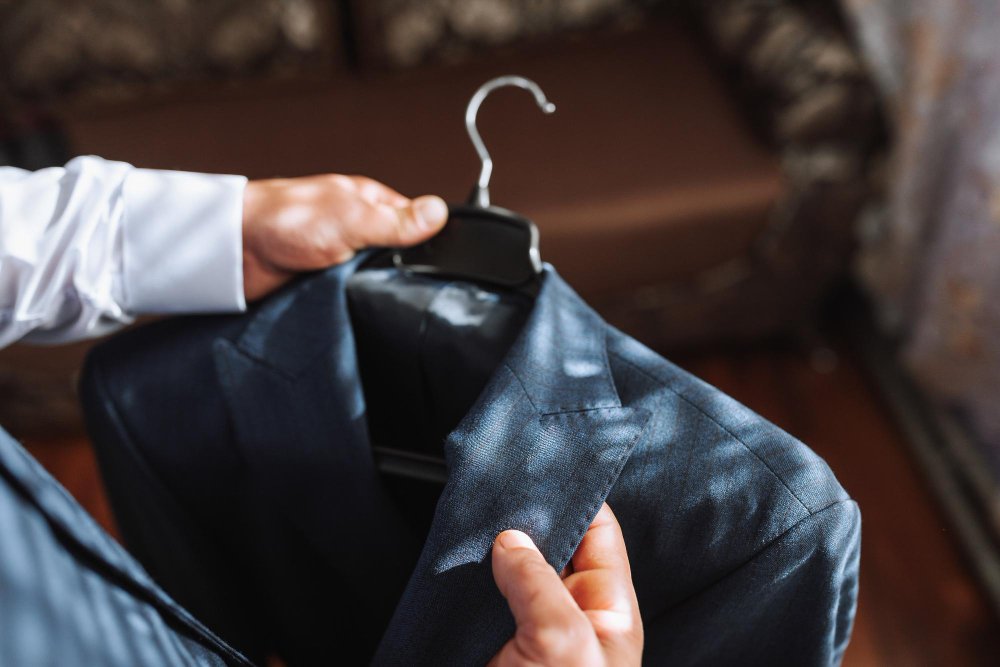
Proper care and handling of wool barathea garments to maintain longevity.
Can Barathea be Dry Cleaned?
Yes, and dry cleaning is the recommended care method for barathea formal wear. The fabric’s structure and finish are best maintained through professional dry cleaning rather than home washing.
However, you don’t need to dry clean after every wear. Wool naturally resists odors and dirt. Unless there’s a visible stain or you’ve worn the garment extensively, spot cleaning and airing out between wears is sufficient.
Regular Maintenance
After each wear:
- Hang the garment on a proper wooden hanger (not wire)
- Let it air out for at least 24 hours before putting it away
- Use a soft clothes brush to remove any surface dust or lint
- Check for any spots that need attention
Spot cleaning: For small spots, use a damp (not wet) cloth to gently blot the area. Don’t rub, as this can damage the weave. For anything more than a tiny mark, take it to the cleaner.
Frequency of cleaning: Most experts recommend dry cleaning formal wear 2-3 times per year if worn regularly, or after particularly long or physically active events.
Pressing and Steaming
Proper pressing maintains barathea’s appearance and helps it last longer:
- Use the right temperature: Set your iron to the wool setting (usually around 300°F or 150°C). Too hot and you’ll damage the fabric; too cool and it won’t have any effect.
- Always use a pressing cloth: Place a clean cotton cloth between the iron and the barathea. This prevents shine spots and protects the fabric’s finish.
- Use steam: The combination of heat and moisture is what sets creases and removes wrinkles. If your iron produces good steam, use it. Otherwise, lightly dampen the pressing cloth.
- Press, don’t iron: Lower the iron onto the fabric, let it sit for a moment, then lift. Don’t slide the iron back and forth like you’re ironing a shirt.
- Pay attention to seams: Be careful around seams and decorative elements. Too much pressure can create unwanted marks.
For minor wrinkles, a handheld steamer works well. Hold it a few inches from the fabric and let the steam do the work. This is gentler than pressing and works great for refreshing a garment between wears.
Storage
Proper storage prevents damage and keeps barathea looking its best:
Short-term storage (between wears):
- Use a quality wooden hanger that matches the garment’s shoulder width
- Keep in a breathable garment bag to protect from dust
- Store in a cool, dark place away from direct sunlight
- Ensure good air circulation (don’t pack closets too tightly)
Long-term storage (off-season):
- Have the garment cleaned before storing (even if it looks clean)
- Use a breathable garment bag, never plastic
- Add cedar blocks or lavender sachets to deter moths
- Check periodically for any signs of moth damage
- Consider climate-controlled storage if your home has humidity issues
Stain Removal
Different stains need different approaches:
Water-based stains (wine, coffee, juice): Blot immediately with a clean white cloth. Don’t rub. Once you’re home, take the garment to a professional cleaner as soon as possible. Mention what caused the stain.
Oil-based stains (food grease, salad dressing): Don’t use water, as this can set oil stains. Blot gently with a clean cloth and take to a cleaner immediately. These stains are harder to remove the longer they sit.
Wax (candle drips): Let the wax harden completely. Carefully scrape off what you can with a butter knife (don’t use anything sharp). Take to a professional for the rest. Don’t try to melt it out with an iron.
Ink: Don’t attempt home remedies. Professional dry cleaners have specialized products for ink removal that won’t damage the fabric.
Emergency Stain Response
At a formal event when something spills on your barathea garment:
- Stay calm – panicking makes things worse
- Blot (never rub) with a clean napkin or cloth
- Ask staff if they have club soda (it helps with many stains)
- Dab gently with club soda and blot dry
- Let it air dry naturally
- Take to a professional cleaner as soon as possible after the event
Repair and Restoration
Even with careful use, repairs might be needed:
Minor issues you can handle:
- Loose buttons: Reattach with strong thread matching the button color
- Small pulls: Sometimes these can be worked back through to the inside with a needle
Issues requiring professional help:
- Torn seams: A tailor can restitch these invisibly
- Worn areas: Especially at elbows or seat, these might be repairable depending on severity
- Moth holes: Small ones can sometimes be rewoven by specialists
- Lining replacement: Common after many years and relatively straightforward
Quality barathea is worth repairing. A good tailor can extend the life of a garment significantly.
Common Problems and Solutions
Shine spots: These happen when the fabric is pressed too hard or without a pressing cloth. A professional cleaner can often reduce or remove shine spots using steam and proper techniques.
Moth damage: Prevention is key. Use cedar, check garments regularly, and never store dirty clothing. If you find moth damage, have the garment cleaned immediately and inspect all other wool items in your closet.
Odor: Wool naturally resists odors, but if your garment smells musty, air it out thoroughly. If that doesn’t work, it needs cleaning. Never use perfume or air freshener to mask odors.
Pulled threads: Don’t cut them. Either work them back through or have a tailor fix them. Cutting can unravel the weave.
Buying Guide: Choosing Quality Wool Barathea
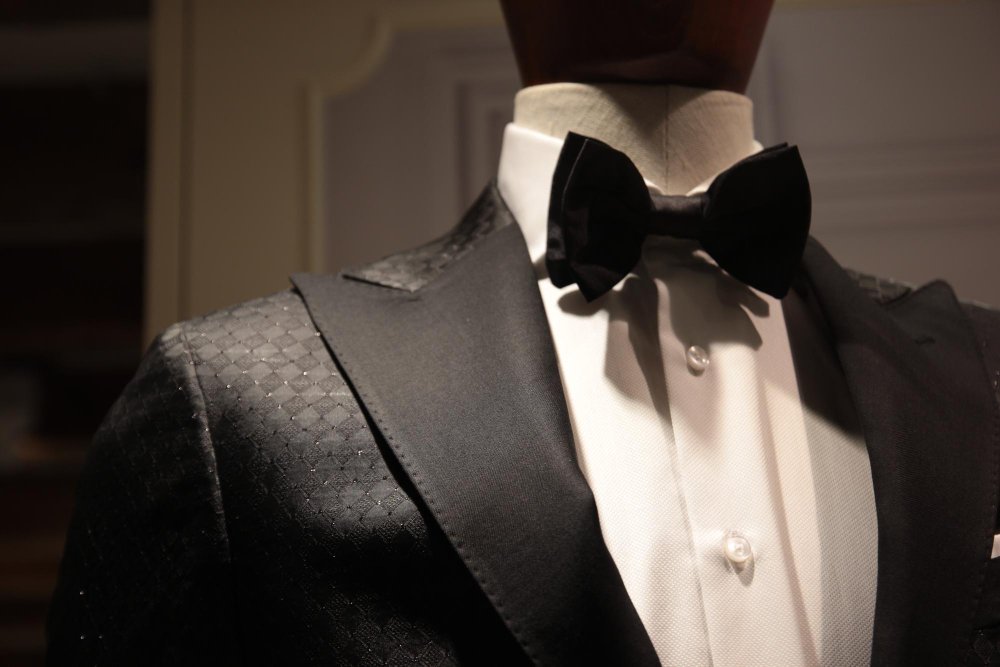
Evaluating wool barathea fabric quality for tailoring and garment construction.
Quality Indicators
When shopping for barathea, either as fabric or in a finished garment, look for these signs of quality:
Hand feel: Quality barathea should feel substantial but not stiff. It should have a slight spring when you squeeze it – it compresses then bounces back. The surface should feel smooth but with that characteristic subtle texture.
Visual inspection:
- Check for consistent weave across the fabric. The pebbled texture should be even.
- Look at the color depth. Quality barathea has rich, deep color that doesn’t look flat.
- Inspect for any flaws, pulls, or inconsistencies in the weave.
- The fabric should have a slight natural luster without being shiny.
Weight: Pick up the fabric or garment. It should feel substantial – lighter than heavy overcoating but more weighty than regular suiting. Quality is often associated with appropriate weight for the purpose.
Recovery test: Squeeze a corner of the fabric firmly, then release. It should spring back to its original shape quickly. If it stays wrinkled, the quality might be lower or the fabric might have a high synthetic content.
Understanding Fabric Specifications
When buying fabric by the yard or evaluating ready-made garments, these specifications matter:
Weight (GSM): Already discussed, but remember: 280-320 for lightweight, 320-400 for standard, 400-500+ for heavy. Most people want the standard range.
Width: Barathea typically comes in 150cm (59 inches) width. This is standard for suiting fabric and allows efficient pattern cutting.
Composition: Check the fiber content. “100% Wool” or “95% Wool, 5% Cashmere” is what you’re looking for. Higher synthetic content usually means lower quality.
Super numbers: You might see wool labeled as “Super 100s” or similar. This refers to the fineness of the wool fiber. Higher numbers mean finer, softer wool. For barathea, Super 100s to Super 120s is ideal. Higher numbers might feel nice but can be less durable.
Top Manufacturers and Mills
These mills are known for quality barathea:
Hainsworth (UK): One of the oldest mills in Yorkshire, with over 230 years of history. Known for traditional barathea with exceptional color depth and durability. Used for military uniforms and high-end formal wear.
Dormeuil (France/Italy): Luxury fabric merchant offering barathea from Italian mills. Known for soft hand feel and refined appearance. Higher price point but exceptional quality.
Loro Piana (Italy): Famous for using the finest wool. Their barathea is soft and beautifully finished. Very expensive but considered among the best available.
Holland & Sherry (UK): British merchant offering both British and Italian-made barathea. Good balance of quality and value. Known for consistent quality control.
Lesser-known quality options: Several Yorkshire mills produce excellent barathea at more accessible price points. These might not have the brand recognition but offer genuine quality.
Where to Buy
Specialty fabric stores: In major cities, specialty fabric stores catering to tailors and serious sewers often stock barathea. Staff can usually provide guidance on quality and appropriate choices.
Online retailers: Many fabric merchants sell online. Look for detailed specifications, return policies, and the option to order samples before committing to yardage.
Direct from mills: Some mills sell directly to consumers, though there might be minimum order requirements. This can offer the best prices for quality fabric.
Custom clothiers: If you’re having a garment made, the clothier will usually source the fabric. Ask about the mill, composition, and weight. A good clothier will guide you to appropriate choices.
International sources: Both British and Italian sources offer excellent barathea. If ordering internationally, factor in shipping costs and customs fees.
Identifying Lower Quality or Counterfeits
Watch out for these red flags:
- Price too good to be true: Quality barathea costs what it costs because of the materials and production. Extremely cheap “barathea” is probably synthetic.
- Excessive shine: Real barathea has a matte finish. If it’s shiny, it’s either not barathea or has high synthetic content.
- Rough hand feel: If the fabric feels scratchy or rough, it’s either low-grade wool or has manufacturing issues.
- Inconsistent weave: The pebbled pattern should be consistent. Variations suggest quality control problems.
- Poor drape: Quality barathea drapes beautifully. If it hangs stiffly or won’t fold smoothly, something’s wrong.
- Vague specifications: If the seller can’t or won’t provide clear information about composition, weight, and origin, be suspicious.
Ordering Considerations
How much to buy: For a dinner jacket, you’ll need about 3.5-4 meters (approximately 4 yards) depending on size and style. Trousers need about 2.5 meters (approximately 2.75 yards). Always buy a bit extra for tailoring adjustments.
Sample ordering: If buying online, order swatches first. Most fabric merchants offer sample services for a small fee. See and feel the fabric before committing.
International shipping: Factor in shipping time and costs. Also consider potential customs fees. Sometimes buying domestically is more practical even if the base price is higher.
Return policies: Understand the return policy before ordering, especially for online purchases. Quality fabric sellers usually accept returns of unused fabric in original condition.
Cost and Value Analysis
Understanding Barathea Pricing
Usually synthetic blends or lower-grade wool. Acceptable for occasional wear or if budget is tight. The fabric will look and feel noticeably different from premium barathea. Might work for rental formal wear or pieces you’ll only wear a few times.
Good quality wool barathea suitable for most people’s needs. This range includes solid British and Italian fabrics that will last well and look appropriate for formal events. Best value for most buyers.
High-quality wool from recognized mills. Noticeable improvement in hand feel, drape, and appearance. Worth it if you wear formal wear regularly or want an investment piece.
The finest wool from prestigious mills like Loro Piana. Beautiful to look at and wonderful to wear, but the practical difference from premium tier is smaller than the price difference suggests. For enthusiasts or those who want the very best.
Why Barathea Is Expensive
Several factors contribute to barathea’s cost:
Raw material quality: Fine Merino wool costs more than standard wool. The difference in comfort and appearance justifies this cost.
Production complexity: The broken twill weave requires skilled setup and monitoring. It’s more labor-intensive than simpler weaves.
Specialist skills: Fewer mills make traditional barathea now. Specialized knowledge and equipment come at a price.
Lower production volumes: Barathea is a specialty fabric with limited demand compared to everyday fabrics. Lower volumes mean higher per-unit costs.
Quality control: Good mills inspect thoroughly. Rejected fabric represents wasted materials and labor, costs that get spread across accepted fabric.
Cost Per Wear Calculation
Here’s how the math works in barathea’s favor:
Scenario 1 – Quality Barathea:
- Initial cost: $1,500 for a made-to-measure dinner jacket
- Expected life: 30 years
- Events per year: 3-4
- Total wears: 100+ over the jacket’s life
- Cost per wear: $15 or less
Scenario 2 – Budget Alternative:
- Initial cost: $400 for a ready-made suit
- Expected life: 5-7 years (optimistic)
- Events per year: 3-4
- Total wears: 20-25 before it looks worn
- Cost per wear: $16-20
- Will need replacement, adding more cost
The quality piece actually costs less per use while looking better and being more sustainable.
When to Splurge vs. Save
Splurge if:
- You attend formal events regularly (4+ times per year)
- You appreciate quality and craftsmanship
- You want a garment that will last decades
- You’re building a permanent wardrobe
- The piece will be tailored to fit perfectly
Consider saving if:
- You rarely need formal wear (once a year or less)
- Your size is likely to change significantly
- You’re experimenting with formal wear before committing
- Budget constraints are significant
However, even if you’re saving money, avoid the very cheapest options. Mid-range barathea still offers good value and will serve you well.
Frequently Asked Questions
Conclusion
After exploring everything from barathea’s Victorian origins to modern sustainability practices, you should now understand what makes this fabric special. Let’s wrap up with practical takeaways.
Key Takeaways
Barathea is the gold standard for formal wear. Its unique broken twill weave, exceptional color depth, and refined appearance have made it the preferred choice for dinner jackets and formal evening wear for over 150 years. If you need true formal wear and can afford quality, barathea is hard to beat.
Quality matters significantly. The difference between cheap synthetic “barathea” and quality wool barathea is dramatic. If budget requires compromise, go for mid-range wool barathea rather than very cheap alternatives. The durability and appearance justify the investment.
Care extends longevity. Proper maintenance makes a huge difference. Professional dry cleaning when needed, proper storage, and prompt attention to stains will keep barathea looking excellent for decades. This fabric rewards good care.
Sustainability supports quality. Choosing quality barathea aligns with sustainable fashion principles. The fabric’s durability, natural fiber content, and timeless style make it a more environmentally responsible choice than fast fashion alternatives.
Making Your Decision
Consider barathea if:
- You need formal evening wear for weddings, galas, or black-tie events
- You value traditional craftsmanship and quality materials
- You want an investment piece that will last for years
- You appreciate the refined appearance and feel of luxury fabrics
- You attend formal events regularly enough to justify the investment
Look for alternatives if:
- You need casual or business wear (barathea is too formal)
- You rarely attend formal events (rent instead)
- Budget is very constrained (though mid-range barathea offers good value)
- You need lightweight summer fabric (though lightweight barathea exists)
Practical Recommendations
For first-time buyers: Start with a mid-range wool barathea dinner jacket in black or midnight blue from a reputable mill. Have it properly tailored. This creates a versatile foundation for formal wear that will serve you well for decades.
For those building a formal wardrobe: Once you have a basic dinner jacket, consider adding barathea trousers, a formal waistcoat, or experimenting with different weights and subtle color variations within the formal palette.
For limited budgets: Consider vintage barathea from quality sources. Well-maintained vintage pieces often offer exceptional value. Have them tailored to fit properly, and they’ll serve as well as new.
For sustainability-focused buyers: Look for barathea from mills with transparent sustainability practices and certified wool. Choose quality over quantity. One excellent piece beats multiple mediocre ones both financially and environmentally.
The Bottom Line
Wool barathea represents traditional quality in an age of disposable fashion. Its refined appearance, durability, and timeless style make it worth the investment if formal wear is part of your life.
The fabric connects you to a tradition of craftsmanship spanning nearly two centuries. When you wear quality barathea, you’re wearing something made using techniques perfected over generations of weavers and tailors.
But beyond history and tradition, barathea simply works. It looks right, feels comfortable, lasts essentially forever with care, and makes you look your best at life’s important formal occasions. That’s the real reason it remains relevant after all these years.
Whether you’re preparing for your first black-tie event or adding to an established formal wardrobe, understanding barathea helps you make informed choices. You now know what to look for, what to avoid, and how to care for this remarkable fabric.
The key is matching your needs with the right quality level and taking care of what you buy. Do that, and your barathea formal wear will serve you well for decades, looking as good at your child’s wedding as it did at your own.