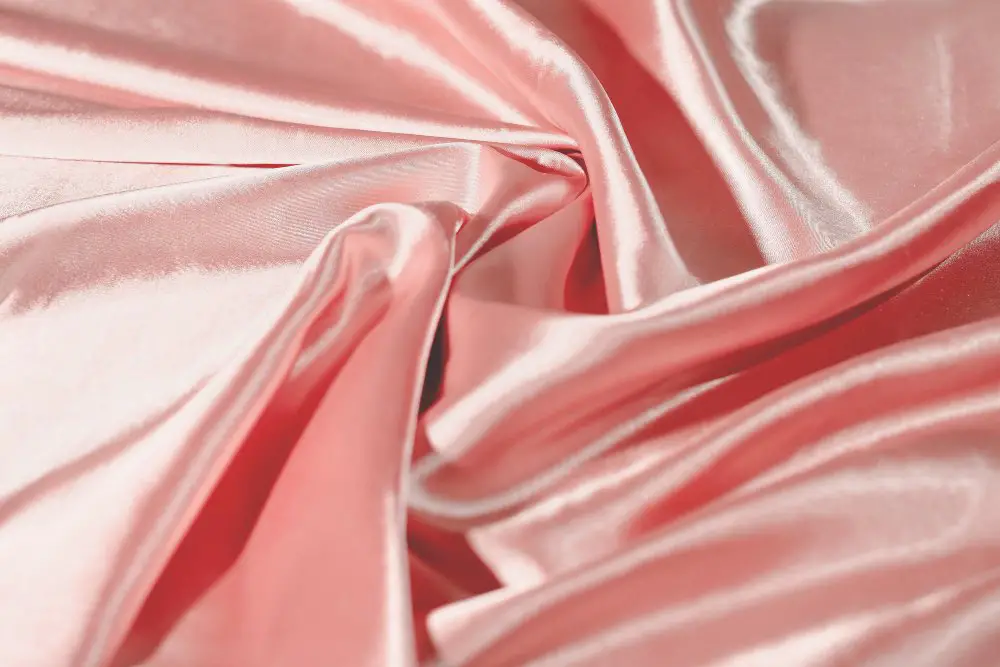

Everything you need to know about satin fabric types, care, sustainability, and uses
Satin fabric has been a symbol of luxury and elegance for over two thousand years. From royal garments in medieval China to modern bridal gowns and lingerie, this lustrous material continues to captivate fashion enthusiasts and textile professionals alike. But what exactly makes satin so special? And how do you choose the right type for your needs?
This guide covers everything about satin fabric, from its ancient origins to sustainable alternatives, care instructions, and practical uses. Whether you’re a designer, eco-conscious consumer, or simply curious about this beautiful textile, you’ll find the answers you need right here.
Table of Contents
- What Is Satin Fabric?
- The Rich History of Satin
- Types of Satin Fabric
- Satin vs. Silk: Understanding the Difference
- Properties and Characteristics
- How Satin Is Made
- Uses and Applications
- Sustainable Satin Alternatives
- How to Care for Satin Fabric
- Sewing with Satin
- Buying Guide
- Frequently Asked Questions
- Conclusion
What Is Satin Fabric?
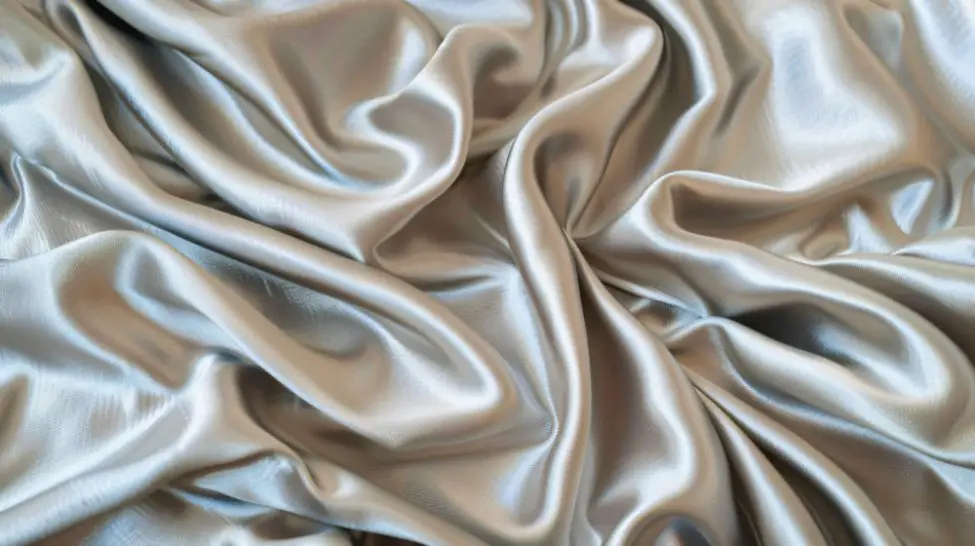
Here’s something that surprises most people: satin is not actually a type of fabric. It’s a weaving technique. This is one of the most common misunderstandings about satin.
Satin refers to the way threads are woven together to create a smooth, glossy surface on one side and a dull finish on the other. Think of it as a recipe rather than an ingredient. You can use different materials (silk, polyester, nylon, rayon) and still create satin, as long as you follow the same weaving pattern.
What Kind of Fabric Is Satin?
Satin is created using a specific weave structure where warp threads (vertical) float over multiple weft threads (horizontal) before going under one. This creates long, smooth stretches of thread on the surface that reflect light beautifully. The result is that signature glossy sheen we all recognize.
The satin weave is one of three basic textile weaves, alongside plain weave and twill weave. What sets it apart is how the threads interact with light.
Is Satin 100% Cotton?
No, true satin is not made from cotton. However, there’s a cotton fabric called sateen that uses the same weaving technique. Sateen is made from short cotton fibers woven in a satin pattern, while true satin uses long filament fibers like silk, polyester, or nylon.
The Rich History of Satin
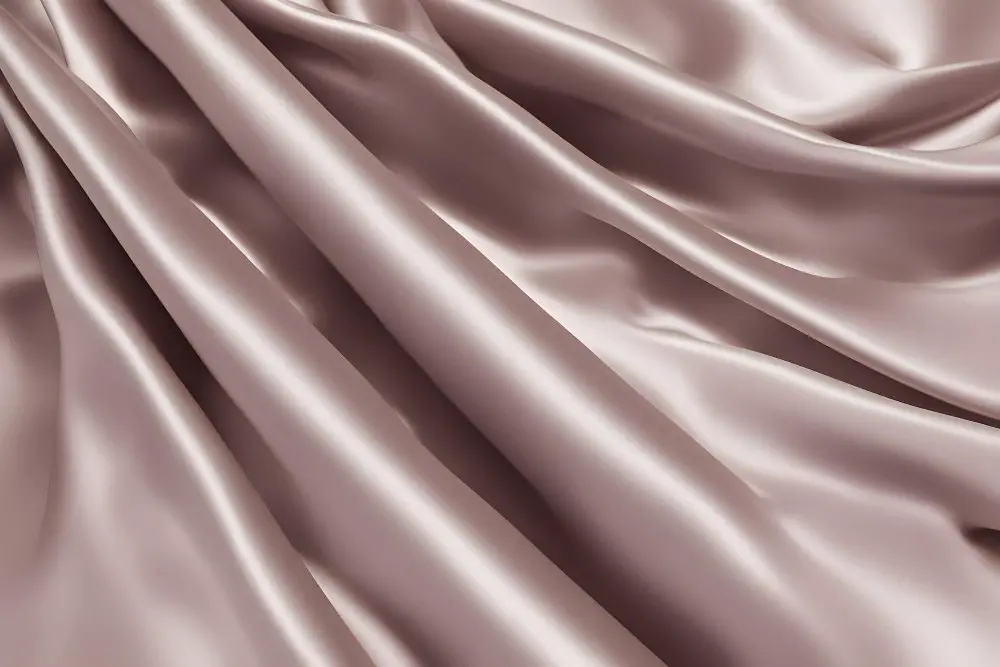
Satin’s story begins in medieval China, over 2,000 years ago. The weaving technique was developed in Quanzhou, a port city in Fujian province. In medieval Arabic, this city was called “Zayton,” which is where the word “satin” comes from.
The Silk Road Connection
During the Han dynasty (206 BCE to 220 CE), Chinese silk satin traveled west along the famous Silk Road. Traders carried this luxurious fabric through Central Asia to the Middle East and eventually to Europe. The fabric was so prized that it became a major trading commodity, second only to silk itself.
China guarded the secrets of silk and satin production closely. Anyone caught trying to smuggle silkworms or share production techniques faced the death penalty. This monopoly lasted for over a thousand years until around 550 AD, when two Byzantine monks successfully smuggled silkworm eggs out of China hidden in their bamboo walking sticks.
Satin in Medieval Europe
Italy became the first Western country to produce satin in the 12th century. By the 14th century, satin had become extremely popular across Europe, though it remained a luxury item reserved for nobility and royalty. The fabric was used for royal garments, church vestments, and elaborate curtains in palaces.
Queen Victoria brought satin into the spotlight of bridal fashion when she wore a white satin wedding dress to marry Prince Albert in 1840. This started a tradition that continues today, with brides worldwide choosing satin for their wedding gowns.
Types of Satin Fabric
Not all satins are created equal. There are several distinct types, each with unique characteristics that make them suitable for different purposes.
Charmeuse Satin
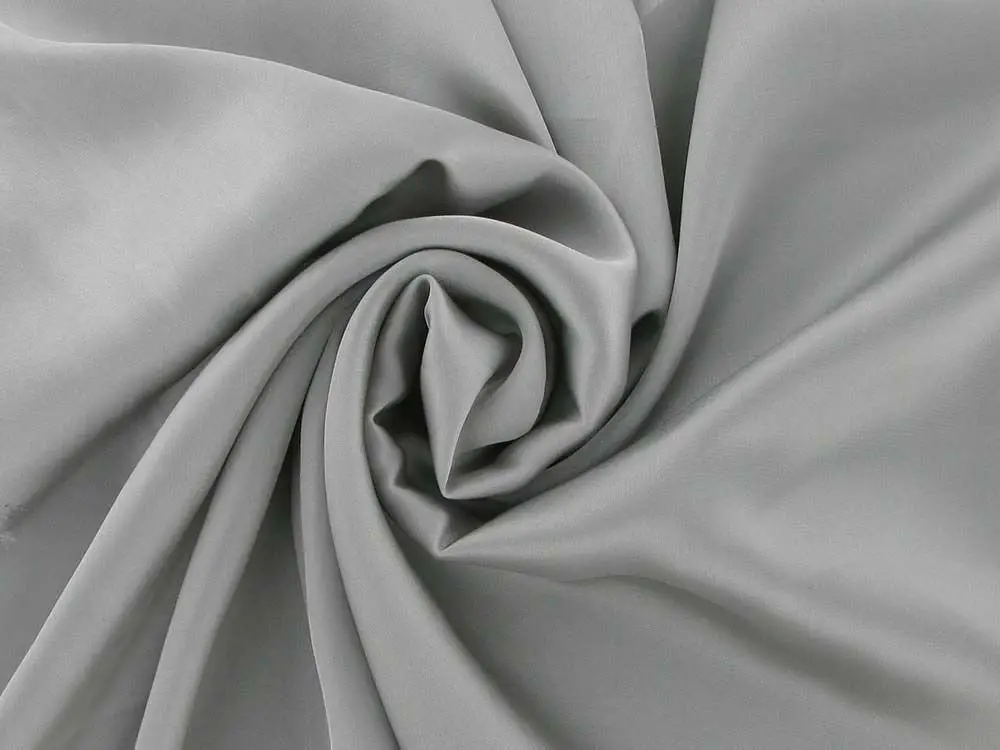
Charmeuse, which means “female charmer” in French, is a lightweight satin with exceptional drape. It’s softer and more fluid than other satin types, making it perfect for garments that need to flow and cling to the body.
The fabric has a beautiful liquid quality that makes it popular for lingerie, slip dresses, and evening blouses. When made from silk, charmeuse is incredibly soft and breathable. Polyester charmeuse is more affordable but doesn’t breathe as well.
Duchess Satin
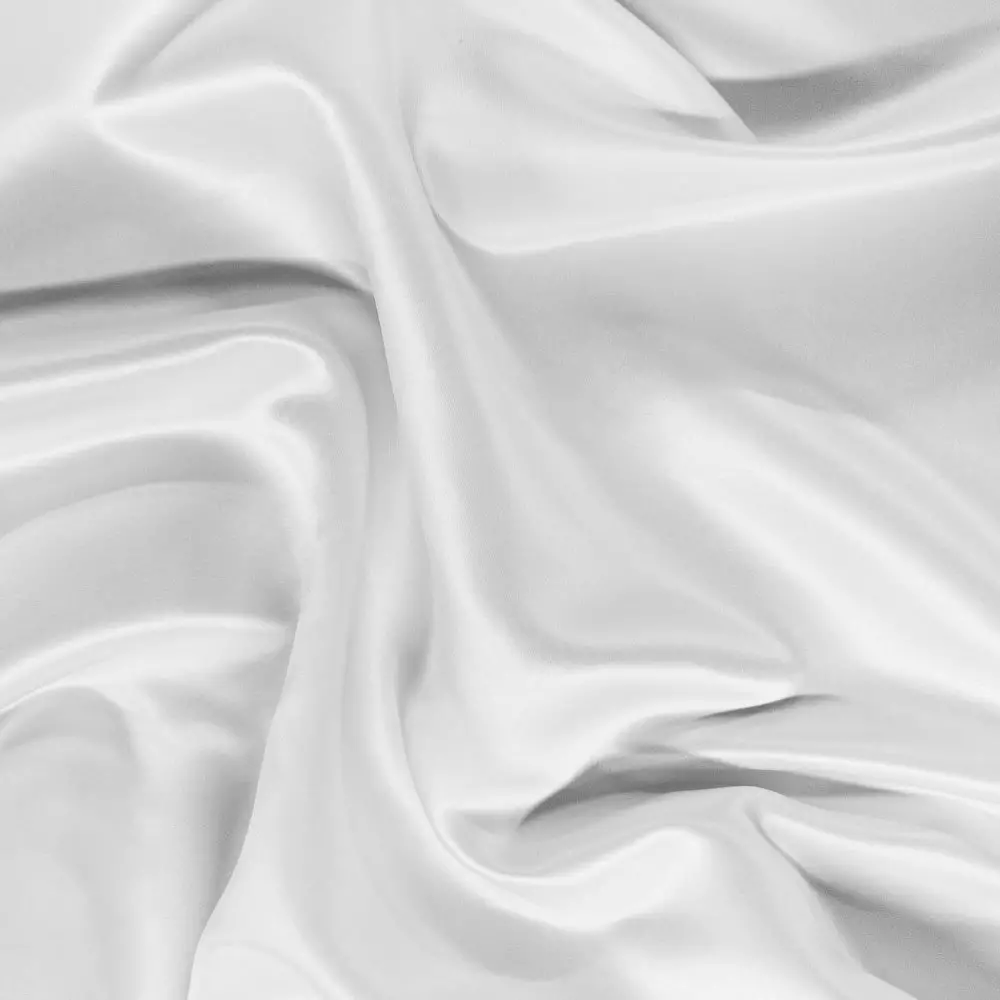
Duchess satin sits at the opposite end of the spectrum from charmeuse. It’s a heavy, crisp fabric with good body and structure. The weight and stiffness make it hold its shape beautifully without needing extra support or interfacing.
This type is the top choice for structured wedding gowns, especially ball gowns and princess-style dresses. The fabric can handle pleats, architectural draping, and sculptural details while maintaining a luxurious appearance. It photographs exceptionally well, which is why bridal designers love it.
Crepe-Back Satin

This versatile fabric offers the best of both worlds. One side has the classic satin sheen, while the reverse has a textured crepe finish. Designers can use either side as the face of the garment, giving them creative flexibility.
The reversible nature makes it popular for garments where both sides might show, like scarves or reversible jackets.
Messaline
Messaline is lightweight and loosely woven with an extremely high shine. It’s typically made from rayon or silk and has a more delicate hand than other satin types. The fabric drapes beautifully but requires careful handling.
Polysatin

This is simply satin made from polyester fibers. It’s the most affordable and widely available type of satin today. Polysatin is more durable and easier to care for than silk satin, though it doesn’t breathe as well and can feel less luxurious.
Slipper Satin

Tightly woven and medium-weight, slipper satin is sturdy enough for accessories, shoes, and structured clothing. The tight weave gives it good durability, which is why it’s named after its use in ballet slippers and formal shoes.
| Satin Type | Weight | Best Uses | Price Range |
|---|---|---|---|
| Charmeuse | Lightweight | Lingerie, slip dresses, blouses | $8-15/yard |
| Duchess Satin | Heavy | Bridal gowns, structured dresses | $12-25/yard |
| Crepe-Back Satin | Medium | Reversible garments, scarves | $10-18/yard |
| Messaline | Very Light | Linings, delicate evening wear | $6-12/yard |
| Polysatin | Varies | Budget projects, costume wear | $2-8/yard |
| Slipper Satin | Medium | Shoes, accessories, structured items | $8-15/yard |
🎯 Find Your Perfect Satin Type
Not sure which satin type is right for your project? Our interactive fabric type selector asks about your intended use, budget, and preferences to recommend the ideal satin for your needs.
Choose Your Satin Type →Satin vs. Silk: Understanding the Difference

This is probably the most confusing aspect of satin for most people. Let’s clear it up once and for all.
Is Satin the Same as Silk?
No, satin and silk are completely different things. Silk is a natural fiber produced by silkworms. Satin is a weaving technique that can be used with many different fibers, including silk.
You can have silk satin (silk fibers woven in a satin pattern) or polyester satin (polyester fibers woven in a satin pattern). Both are types of satin, but only one contains silk.
Which Is Better, Satin or Silk?
This question doesn’t have a straightforward answer because you’re comparing two different things. It’s like asking “which is better, chocolate or birthday cake?” Silk satin combines the best qualities of both: the natural properties of silk with the beautiful drape and sheen of satin weaving.
However, if you’re comparing silk satin to polyester satin:
Silk Satin Advantages
- Natural, breathable fiber
- Temperature regulating
- Softer, more luxurious feel
- Better for sensitive skin
- Natural sheen is more subtle
Polyester Satin Advantages
- Much more affordable
- More durable and resistant
- Easier to care for
- Machine washable
- Less prone to water spots
How to Know If It’s Satin or Silk
Here are simple tests to determine what you’re dealing with:
- Read the label: Check the fiber content. If it says “100% polyester” or “polyester satin,” it’s not silk.
- Feel test: Real silk feels cool to the touch and warms up quickly when held. Polyester stays at a constant temperature.
- Shine test: Silk has a softer, more natural sheen. Polyester satin often has a brighter, sometimes plasticky shine.
- Price test: If it’s very inexpensive, it’s almost certainly polyester. Silk satin typically costs $15-40 per yard.
- Burn test: (Only do this if you own the fabric) Silk smells like burning hair and leaves a crushable ash. Polyester melts and smells like plastic.
🔍 Interactive Tool: Compare Satin and Silk
Still confused about the differences? Our interactive comparison tool lets you explore satin vs silk side-by-side with detailed property comparisons, care requirements, and cost analysis.
Compare Satin vs Silk →Properties and Characteristics
Is Satin Soft or Rough?
Satin is characteristically soft and smooth on one side. The glossy face of satin feels silky to the touch, while the back has a dull, slightly rougher texture. The softness level varies depending on the fiber used. Silk satin is the softest, while some polyester satins can feel less smooth, especially lower-quality versions.
Is Satin Light or Heavy?
Satin weight varies significantly by type. Charmeuse and messaline are lightweight and flowing, perfect for draped garments. Duchess satin and slipper satin are heavier and more structured. The fiber content also affects weight. Generally, satin is considered a medium to lightweight fabric, though specific types can be quite heavy.
Why Does Satin Feel So Good?
The smooth surface of satin comes from the long floats of thread on the fabric face. These unbroken stretches of fiber create a friction-free surface that glides against skin. The tight weave also gives satin a cool, silky hand that many people find pleasant. When made from natural silk, satin has additional temperature-regulating properties that add to the comfort.
Key Properties of Satin
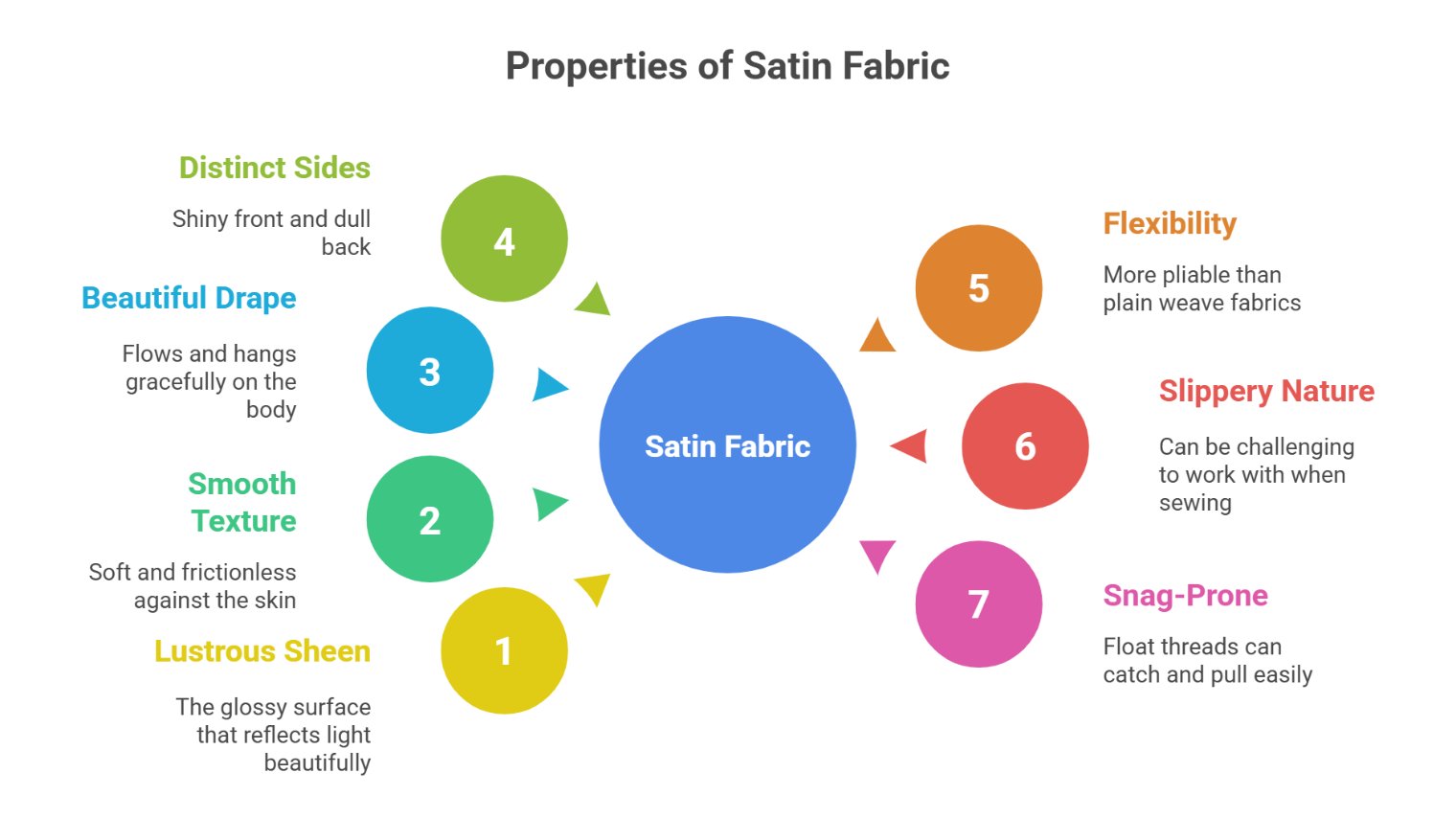
- Lustrous sheen: The signature glossy surface reflects light beautifully
- Smooth texture: Soft against skin with minimal friction
- Beautiful drape: Flows and hangs gracefully on the body
- Two distinct sides: Shiny front, dull back
- Flexible: More pliable than plain weave fabrics
- Slippery: Can be challenging to work with when sewing
- Snag-prone: The float threads can catch and pull easily
Does Satin Wrinkle Easily?
Yes and no, depending on the fiber content. Silk satin wrinkles quite easily and requires careful storage and handling. Polyester satin is much more wrinkle-resistant, which is one reason it’s popular for travel and costume wear. If your satin does wrinkle, steaming from a distance works better than direct ironing, which can damage the fabric.
Is Satin Good for Winter? Is Satin a Summer or Winter Fabric?
Satin’s seasonal suitability depends on the fiber. Silk satin works year-round because silk naturally regulates temperature, keeping you cool in summer and warm in winter. Polyester satin doesn’t breathe well, making it less comfortable in hot weather. The smooth surface can feel cool against skin, but without breathability, you might feel clammy.
For winter clothing, satin works better as a lining or for special occasions rather than everyday wear. For summer garments, choose silk satin or stick with more breathable fabrics like cotton or linen.
How Satin Is Made
The Satin Weave Structure
Satin uses what’s called a “float” weave. In technical terms, the warp yarn passes over multiple weft yarns before interlacing under one. This creates long, uninterrupted stretches of thread on the fabric surface.
There are three main types of satin weaves:
- 4-harness satin weave: The weft thread goes over three warp threads, then under one. This creates moderate shine and flexibility.
- 5-harness satin weave: The pattern is over four, under one. This is the most common type and offers a good balance of durability and luster.
- 8-harness satin weave: Over seven, under one. This produces the highest shine and most flexibility but is less durable because the floats are longer.
From Fiber to Fabric
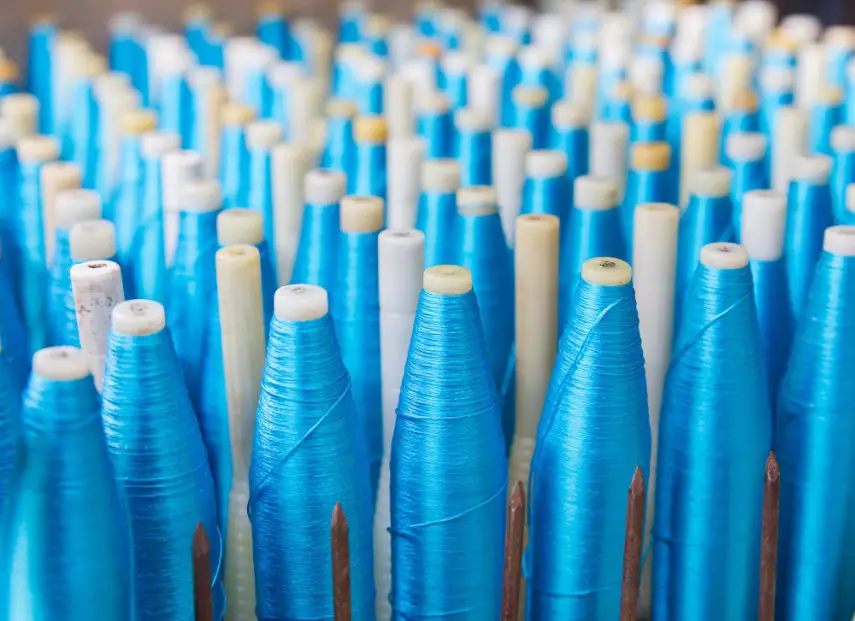
The manufacturing process starts with choosing the right fiber. Traditional satin uses silk, but modern production mostly uses polyester, nylon, or rayon. The fibers must be long and continuous (filament fibers) rather than short staple fibers.
These filaments are spun into yarn, then loaded onto industrial looms. The loom is programmed with the specific satin weave pattern, and the fabric is woven. After weaving, the fabric may be treated with various finishes to enhance its properties or add special effects like water resistance.
Is Satin a Natural or Fake Material?
Satin itself is neither natural nor synthetic. It’s a weaving technique. The fabric can be natural (silk satin), synthetic (polyester or nylon satin), or semi-synthetic (rayon satin). Most satin you’ll find today is made from synthetic polyester, making it a manufactured rather than natural material in most cases.
Is Satin Really Polyester? Is Satin Actually Polyester?
Not always, but often. Today’s mass-market satin is usually polyester because it’s affordable and durable. However, luxury satin is still made from silk. You can also find satin made from nylon, rayon, acetate, or fiber blends. Always check the fabric label to know what you’re getting.
Is Satin Acrylic or Polyester?
Satin is typically polyester rather than acrylic. While acrylic can technically be woven in a satin pattern, it’s uncommon. Polyester has properties that work better with the satin weave, creating a more attractive sheen and better drape.
Uses and Applications
Fashion and Apparel
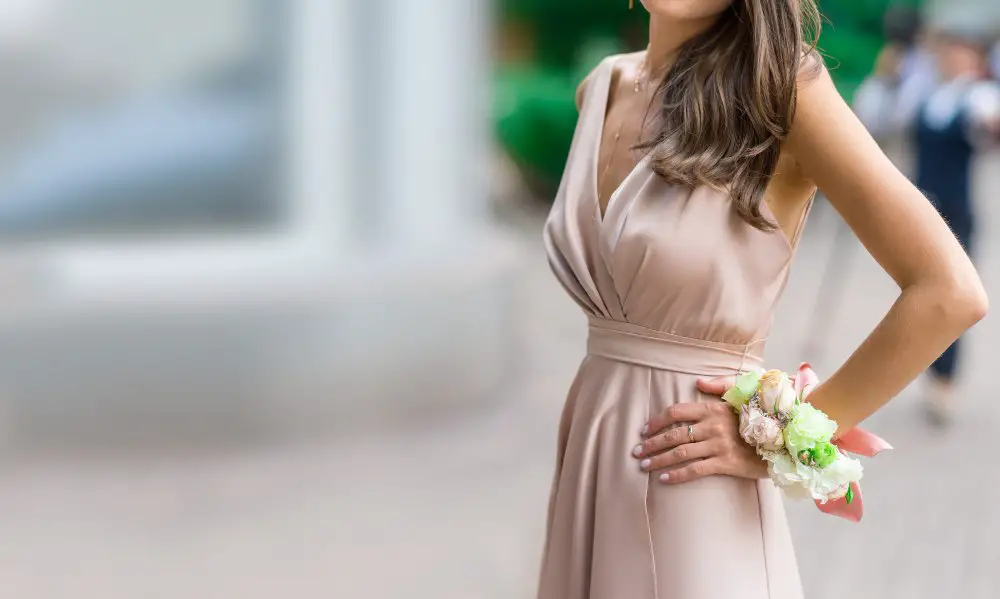
Satin’s primary use is in clothing. The fabric’s luxurious appearance and smooth texture make it perfect for:
- Evening gowns and formal dresses: The elegant drape and sheen are ideal for special occasions
- Bridal wear: From wedding gowns to bridesmaid dresses
- Lingerie: Smooth against skin and visually appealing
- Blouses and shirts: Adds a dressy touch to professional wear
- Sleepwear: Satin pajamas and robes feel luxurious
- Linings: Used inside jackets and coats for easy wear
Home Textiles
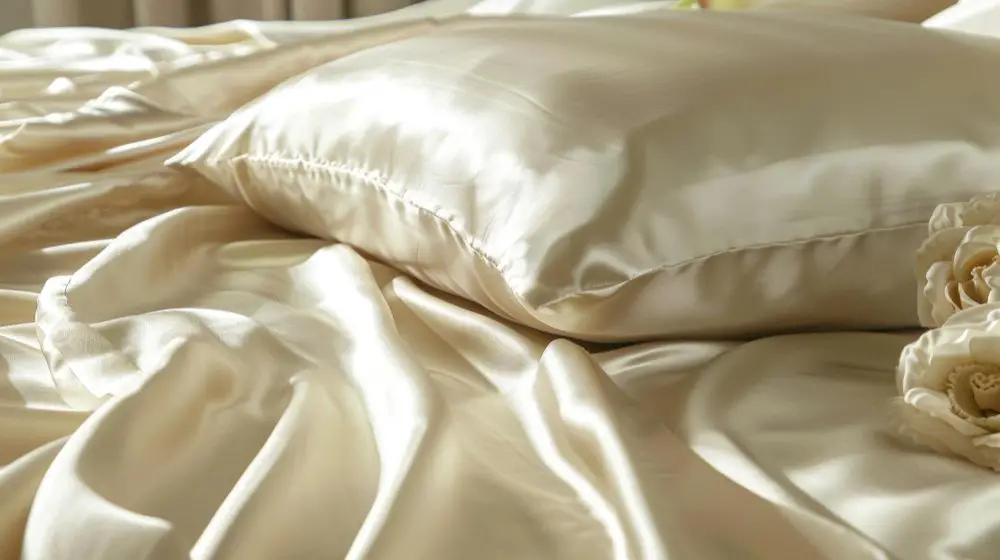
Satin isn’t just for clothing. It’s widely used in home decor:
- Bed linens: Satin sheets and pillowcases are popular for their smooth texture
- Curtains and drapes: The fabric hangs beautifully and blocks light well
- Upholstery: Used on decorative cushions and accent furniture
- Table linens: Adds elegance to formal dining
Accessories
The fabric’s durability in structured forms makes it suitable for:
- Formal shoes and ballet slippers
- Evening bags and clutches
- Hair accessories like scrunchies and bonnets
- Ribbons and decorative trim
- Neckties and pocket squares
Are Satin Sheets Good for Your Skin?
Satin pillowcases and sheets have become popular for skin and hair care. The smooth surface creates less friction than cotton, which can help prevent sleep wrinkles and reduce hair breakage. However, silk satin works better than polyester for this purpose because silk is naturally hypoallergenic and breathable. Polyester doesn’t breathe, which can lead to moisture buildup and clogged pores for some people.
Sustainable Satin Alternatives
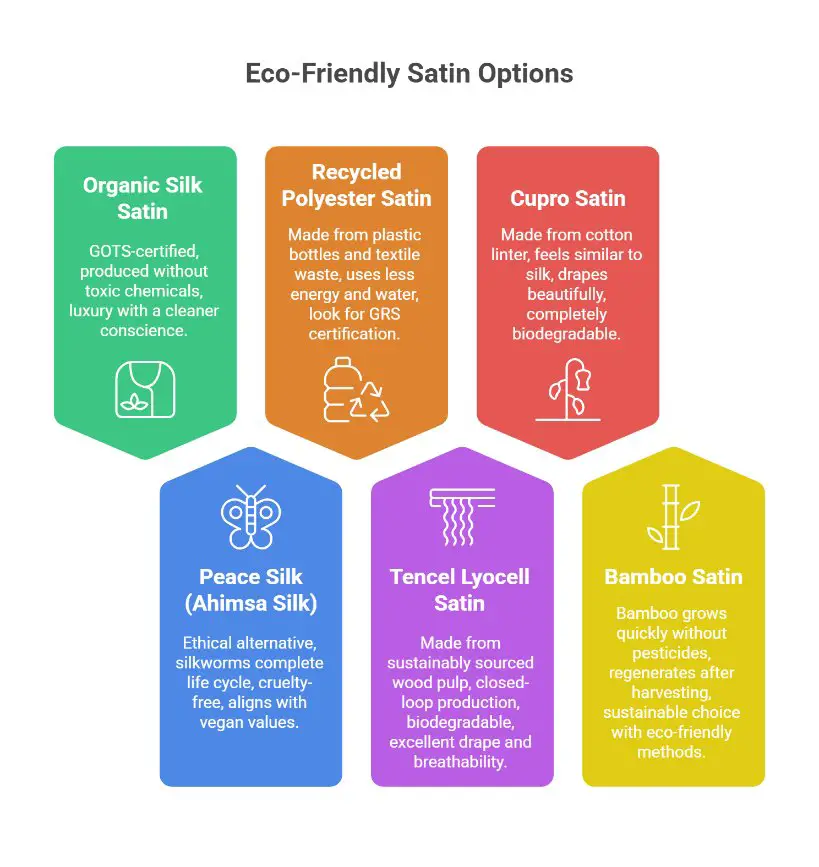
Traditional satin production has environmental impacts that eco-conscious consumers should know about. The good news is that sustainable alternatives are becoming more available.
Environmental Concerns with Conventional Satin
Most modern satin is made from polyester, which comes from petroleum. The production process uses significant water and energy, releases harmful chemicals into waterways, and creates plastic waste that won’t biodegrade. Even washing polyester satin releases microplastics into water systems, harming marine life.
Conventional silk production also has issues. Silkworms are typically killed during the harvesting process, and silk farming uses pesticides and large amounts of water.
Eco-Friendly Satin Options
Organic Silk Satin
GOTS-certified organic silk satin is produced without toxic pesticides or harmful chemicals. The certification ensures that at least 70% of fibers are certified organic, with production following strict environmental and social standards. While more expensive, organic silk satin offers luxury with a cleaner conscience.
Peace Silk (Ahimsa Silk)
This ethical alternative allows silkworms to complete their life cycle and emerge from cocoons before the silk is harvested. The process is more labor-intensive and produces slightly less smooth silk, but it’s cruelty-free. Peace silk satin costs more but aligns with vegan and cruelty-free values.
Recycled Polyester Satin
Recycled polyester (rPET) is made from post-consumer plastic bottles and textile waste. The process uses less energy and water than producing virgin polyester. Recycled satin offers similar properties to new polyester satin but with a smaller environmental footprint. Look for GRS (Global Recycled Standard) certification.
Tencel Lyocell Satin
Tencel is made from sustainably sourced wood pulp using a closed-loop production process that recycles 99% of water and solvents. When woven in a satin pattern, it creates a smooth, lustrous fabric that’s biodegradable and eco-friendly. Tencel satin has excellent drape and breathability.
Cupro Satin
Made from cotton linter (the fuzz around cotton seeds that’s usually discarded), cupro is a regenerated cellulose fiber. It feels similar to silk, drapes beautifully, and is completely biodegradable. The production process is more sustainable than viscose, though it does use some chemicals.
Bamboo Satin
Bamboo grows quickly without pesticides and regenerates after harvesting. When processed using eco-friendly methods (look for closed-loop lyocell production), bamboo satin is a sustainable choice. However, avoid bamboo viscose made with harsh chemicals.
| Alternative | Sustainability Factor | Cost vs. Regular Satin | Best For |
|---|---|---|---|
| Organic Silk Satin | No pesticides, ethical production | 3-4x higher | Luxury items, sensitive skin |
| Peace Silk | Cruelty-free, biodegradable | 4-5x higher | Vegan fashion, ethical products |
| Recycled Polyester | Reduces plastic waste | 10-30% higher | Budget-conscious sustainability |
| Tencel Lyocell | Sustainable forestry, closed-loop | 2-3x higher | Breathable garments, bedding |
| Cupro | Uses cotton waste | 2x higher | Linings, lightweight garments |
| Bamboo Lyocell | Fast-growing plant, biodegradable | 1.5-2x higher | Activewear, casual clothing |
What to Look for When Buying Sustainable Satin
- GOTS certification: For organic silk and other natural fibers
- GRS certification: For recycled polyester content
- OEKO-TEX Standard 100: Ensures no harmful chemicals
- FSC or PEFC: For wood-based fibers like Tencel
- Clear fiber content: Know exactly what you’re buying
- Transparent supply chain: Brands that share manufacturing details
How to Care for Satin Fabric
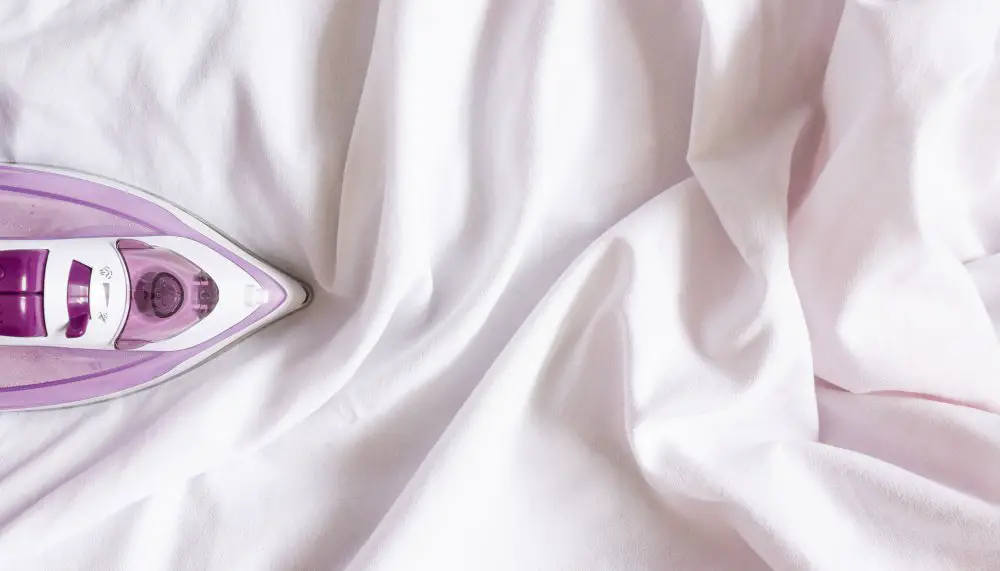
Proper care extends the life of satin garments and maintains their beautiful appearance. The exact care method depends on the fiber content, so always check the care label first.
🧺 Get Personalized Care Instructions
Take the guesswork out of caring for your satin. Our satin fabric care calculator provides customized washing, drying, and ironing instructions based on your specific satin type and garment.
Calculate Care Instructions →Can You Put Satin in the Washing Machine?
Some satin can be machine washed, but not all. Polyester and nylon satin can usually handle gentle machine washing. Silk satin should typically be hand-washed or dry-cleaned. Never assume satin is machine-washable without checking the label. If you’re unsure about the best washing method for your specific satin item, try our satin care calculator for personalized recommendations.
Is Satin Fabric Washable?
Yes, most satin is washable, but the method matters. Hand washing is safest for all types of satin. Machine washing works for synthetic satin if you use the right settings. Silk satin often requires professional cleaning to maintain its quality.
General Washing Guidelines
Hand Washing Satin (Recommended Method)
- Fill a basin with lukewarm water (not exceeding 77°F or 25°C). Hot water can damage satin fibers and cause shrinkage.
- Add a small amount of gentle detergent made for delicates. For silk satin, use silk-specific detergent. Avoid regular laundry detergent, which is too harsh.
- Submerge the garment completely and let it soak for 3-5 minutes. This loosens dirt without aggressive action.
- Gently agitate the fabric with your hands. Don’t wring, twist, or scrub. The motion should be soft and careful.
- Drain the soapy water and rinse under cool running water until all soap is removed. Soap residue can stiffen the fabric.
- Press out excess water gently. Never wring or twist satin, as this damages the weave structure.
- Lay the garment flat on a clean, dry towel. Roll the towel up (like sushi) and press gently to absorb moisture.
- Unroll and transfer to a fresh, dry towel. Lay flat to air dry away from direct sunlight and heat sources.
Machine Washing Satin
Only attempt this with polyester or nylon satin, and only if the care label permits it:
- Sort carefully. Wash satin only with other delicate items of similar color and weight. Don’t overload the machine.
- Turn the garment inside out to protect the glossy surface from friction and rubbing.
- Place in a mesh laundry bag. This protects satin from snagging on zippers or other items.
- Use cold water and select the delicate or hand-wash cycle. These settings use slower agitation and gentler spinning.
- Add detergent for delicates. Use the recommended amount, not more. Excess detergent is hard to rinse out completely.
- Skip the fabric softener. It can leave residue and damage satin fibers.
- Use the shortest spin cycle or skip spinning entirely. Strong spinning can damage the fabric.
- Remove immediately when the cycle ends. Don’t let wet satin sit in the machine, where it can develop creases.
Does Satin Shrink When Washed? Does Satin Shrink in the Dryer?
Yes, satin can shrink, especially if exposed to hot water or high heat. Silk satin shrinks more easily than polyester. The combination of heat and agitation causes the most shrinkage. This is why cold water and air drying are recommended. If you must use a dryer, use the lowest heat setting and remove the garment while still slightly damp.
Does Hot Water Damage Satin?
Absolutely. Hot water can cause satin to shrink, lose its sheen, and become misshapen. The heat breaks down fibers and causes them to contract. Stick with lukewarm or cold water for all satin care.
Why Can’t Satin Go in the Dryer?
Tumble dryers use heat and tumbling action that can damage satin’s delicate weave. The heat can cause shrinkage and dull the fabric’s sheen. The tumbling creates friction that can snag the float threads. Additionally, the dryer can cause permanent wrinkles that are difficult to remove. Air drying is always safer for satin.
What Washing Machine Setting for Satin? Should I Wash Satin on Delicate?
Yes, always use the delicate or hand-wash cycle when machine washing satin. This setting uses slower agitation, gentler water movement, and reduced spinning. Cold water is required. The shortest available cycle time works best to minimize exposure to agitation.
Should You Wash Satin in Hot or Cold Water?
Always use cold or lukewarm water for satin. Hot water causes shrinkage, color fading, and fiber damage. Cold water is safest. If you must use warm water, keep it below 77°F (25°C).
Removing Stains from Satin
Act quickly when stains happen. The longer a stain sits, the harder it is to remove.
Oil Stains
- Blot immediately with a clean cloth or paper towel. Don’t rub, which pushes oil deeper into fibers.
- Sprinkle cornstarch, flour, or talcum powder over the stain. Let it sit for an hour to absorb the oil.
- Brush away the powder gently with a soft brush.
- Apply a small amount of dish soap directly to the stain (it cuts grease well).
- Gently work it in with your fingers, then rinse with cool water.
- If the stain persists, repeat or seek professional cleaning.
Blood Stains
- Soak the stained area in cold water immediately. Never use hot water on blood, which sets the stain.
- After an hour, turn the garment inside out.
- Apply gentle detergent to the back of the stain.
- Rinse with cold water, pushing the stain out through the front.
- Repeat until the stain is gone.
General Dirt and Debris
- Use a soft-bristled brush to remove loose dirt without rubbing it into the fabric.
- Apply a tiny amount of gentle soap to the area.
- Work into a light lather with a soft cloth.
- Rinse thoroughly with cool water.
Drying Satin
Air drying is the only safe method for most satin:
- Lay garments flat on a clean, dry towel
- Keep away from direct sunlight, which can fade colors
- Avoid heat sources like radiators
- Never hang wet satin, as the weight of water can stretch it
- Allow plenty of time for complete drying
Can You Steam Satin Fabric? Can Satin Fabric Be Ironed?
Steaming is preferred over ironing for satin. Hold the steamer several inches away from the fabric and let the steam relax wrinkles. Never place a steamer directly on satin.
If you must iron:
- Set the iron to the lowest heat setting
- Place a pressing cloth (thin cotton fabric) between the iron and satin
- Never iron directly on the satin surface
- Iron on the dull side if possible
- Move quickly, don’t let the iron sit in one spot
- Check frequently to avoid heat damage
Does Heat Ruin Satin?
Yes, excessive heat can permanently damage satin. High temperatures can melt synthetic fibers, scorch natural fibers, dull the sheen, and cause the fabric to become stiff or brittle. Always use the lowest heat settings for any heat-based care.
Is Satin Dry Clean Only?
Not always. Many satin garments, especially those made from polyester, can be washed at home. However, silk satin, structured garments, and items with embellishments often require professional dry cleaning. The care label will tell you if dry cleaning is mandatory.
Can Satin Fabric Get Wet?
Yes, satin can get wet. However, water can leave spots on some types of satin, particularly silk. If satin gets wet, blot (don’t rub) immediately with a clean cloth. Allow it to air dry completely. Some water-based stains are permanent on satin, so protect garments from spills.
Does Rain Ruin Satin?
Rain can damage satin in several ways. Water spots may form, especially on silk satin. The fabric can lose its sheen. Silk satin may shrink or become stiff. If your satin garment gets caught in rain, blot excess water immediately and have it professionally cleaned as soon as possible.
Storage Tips
- Store satin in a cool, dry place
- Fold carefully to avoid permanent creases
- If hanging, use padded hangers
- Keep in breathable garment bags, not plastic
- Avoid direct sunlight during storage
- Don’t store with moth balls, which can discolor fabric
For more detailed care instructions, check out this helpful guide on how to care for satin clothing.
Sewing with Satin
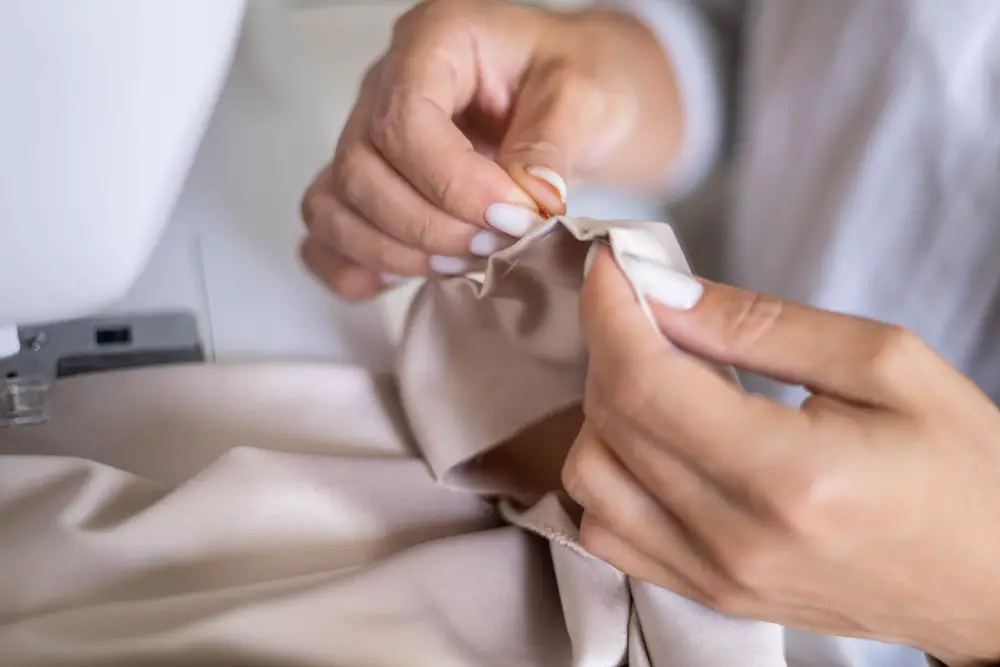
Satin has a reputation for being difficult to sew, but with the right techniques, you can achieve professional results.

Video: Expert tips for sewing with silk and satin fabrics
Why Is Satin Difficult to Sew?
Several factors make satin challenging:
- The slippery surface causes layers to shift while sewing
- The fabric frays easily at cut edges
- Pins can leave permanent holes
- The weave structure shows every mistake
- The fabric can pucker or gather if tension is wrong
How to Sew Satin Fabric for Beginners
Preparation
- Prewash the fabric if it’s washable. This prevents shrinkage in the finished garment. Follow the same care instructions you’ll use for the completed item.
- Cut with sharp fabric scissors or a rotary cutter. Dull blades snag and damage satin. Make clean, confident cuts.
- Use pattern weights instead of pins when cutting. If you must pin, do so only in seam allowances that will be hidden.
- Mark with tailor’s chalk or disappearing ink on the wrong side. Test markers on a scrap first.
Can You Sew Satin with a Regular Sewing Machine?
Yes, you don’t need a special machine for satin. A regular sewing machine works fine with the right needle, thread, and settings. The key is preparation and technique, not equipment.
Needle Selection
Use a sharp, fine needle (size 60/8 to 70/10 for lightweight satin, 80/12 for heavier types). Microtex or sharp needles work best because they pierce cleanly without snagging. Replace the needle if it becomes even slightly dull.
Thread Choice
Use fine, high-quality polyester thread that matches your fabric weight. Cotton thread can be too thick and create visible seams. Silk thread is ideal for silk satin but more expensive.
What Setting Do You Set a Sewing Machine for Satin Stitch? What Tension to Use When Sewing Satin?
For sewing satin fabric (not a satin stitch, which is different):
- Stitch length: 2.0-2.5mm. Shorter stitches prevent puckering.
- Tension: Slightly reduced (around 3-4 on most machines). Too much tension causes puckering.
- Presser foot pressure: Light to medium. Too much pressure stretches the fabric.
- Speed: Sew slowly for better control.
What Presser Foot to Use for Satin?
A walking foot or Teflon foot works best for satin. These help the fabric feed evenly through the machine. If you don’t have these, a standard presser foot can work if you reduce the pressure. Some sewers place tissue paper under the fabric while sewing, then tear it away afterward.
How to Sew Satin Without Puckering
- Reduce tension slightly
- Use a shorter stitch length
- Don’t pull or push the fabric, let the machine feed it
- Hold fabric taut (but not stretched) in front and behind the needle
- Use a stabilizer under seams if puckering persists
- Test on scraps first to adjust settings
What Is the Best Stitch for Satin Fabric?
A straight stitch works for most seams. Use a narrow zigzag (1mm wide) on curved seams for flexibility. French seams or flat-felled seams create clean finishes that won’t fray. Avoid heavy decorative stitches that can distort the fabric.
Handling Tips While Sewing
- Cut all pieces in the same direction to keep consistent sheen
- Sew in the direction of the grain when possible
- Use clips instead of pins to hold seams together
- Support the fabric’s weight so it doesn’t pull as it feeds
- Press seams with a pressing cloth and low heat
- Finish raw edges immediately to prevent fraying
Finishing Techniques
Satin edges fray quickly, so finishing is important:
- French seams: Enclose raw edges completely, perfect for transparent or lightweight satin
- Serging/overlocking: Fast and secure for most satin types
- Zigzag stitch: Simple edge finish that works in a pinch
- Bias binding: Adds a decorative finish while securing edges
- Hong Kong finish: Professional-looking enclosed edges
Buying Guide
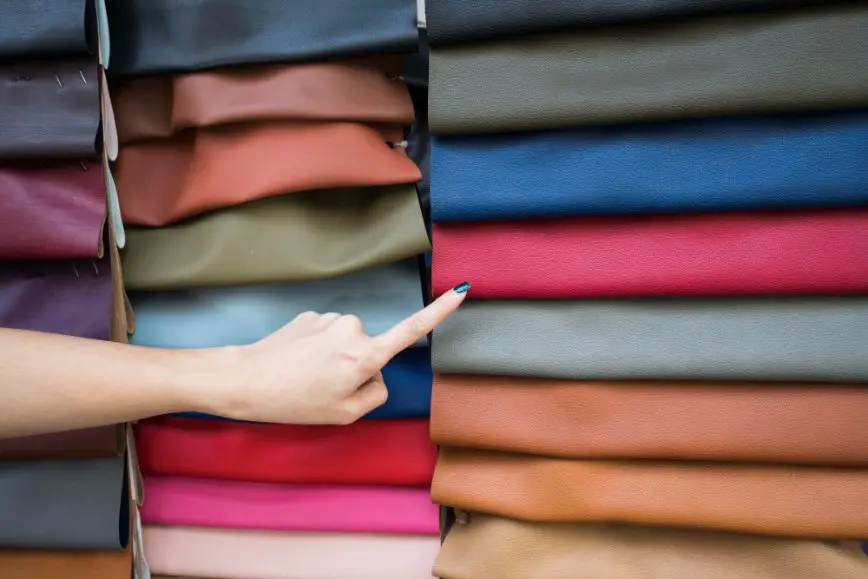
Is Satin a High-End Fabric?
It depends on the fiber content. Silk satin is definitely high-end, with prices ranging from $15 to $50+ per yard. Polyester satin is budget-friendly, often costing $2 to $10 per yard. The weaving technique itself doesn’t determine quality. The fiber and manufacturing standards do.
Is Satin Good Quality Fabric?
Quality varies widely in satin. High-quality satin (usually silk or quality polyester) has even sheen, tight weave, good drape, and durability. Low-quality satin may have uneven shine, visible weaving flaws, and poor durability. Price often (but not always) indicates quality.
What Is the Best Kind of Satin?
The “best” satin depends on your needs:
- For luxury and comfort: Silk satin (especially mulberry silk)
- For budget: Good-quality polyester satin
- For sustainability: Organic silk, recycled polyester, or Tencel
- For structure: Duchess satin
- For drape: Charmeuse
- For durability: Polyester or nylon satin
Still not sure which type fits your project? Use our satin fabric type selector tool to get personalized recommendations based on your specific requirements.
How to Identify Quality Satin
Quality Check Flowchart
Is it even and not overly shiny? Good quality has a soft luster, not plastic-like shine.
Is it smooth and soft? Quality satin shouldn’t feel stiff or scratchy.
Hold it up to light. Can you see obvious gaps or irregular weaving? Tight, even weave indicates quality.
Does it hang smoothly? Quality satin should flow gracefully without stiffness.
Look for snags, pulls, or thin spots. Quality fabric should be consistent throughout.
What Fabric Feels Like Satin? What Is the Closest Fabric to Satin?
Several fabrics offer similar properties to satin:
- Sateen: Cotton woven in a satin pattern. Similar feel, less shine, more breathable.
- Charmeuse: A type of satin with lighter weight and softer drape.
- Taffeta: Has similar shine but is crisper with more body.
- Polyester chiffon: Lighter and sheerer but with some shine.
- Silk habotai: Smooth and shiny but in a plain weave.
Is Satin as Nice as Silk?
Silk satin combines both silk and satin qualities, making it the most luxurious option. Polyester satin can look similar but doesn’t match silk’s breathability, temperature regulation, or natural softness. For pure luxury, silk satin is hard to beat. For practical use and budget, polyester satin works well.
Price Guidelines
| Type | Price per Yard | When to Choose |
|---|---|---|
| Budget Polyester | $2-5 | Costumes, craft projects, lining |
| Quality Polyester | $6-12 | Everyday clothing, home decor |
| Rayon Satin | $8-15 | Draping projects, semi-formal wear |
| Basic Silk Satin | $15-25 | Special occasion wear |
| Premium Silk Satin | $30-50 | Luxury garments, bridal wear |
| Organic/Sustainable | $25-60+ | Eco-conscious high-end projects |
Where to Buy Satin
- Local fabric stores: See and feel before buying
- Online fabric retailers: Wider selection, competitive prices
- Specialty silk suppliers: Best for high-quality silk satin
- Sustainable fabric shops: For eco-friendly options
- Wholesale suppliers: Best prices for bulk purchases
Frequently Asked Questions
Advantages: Beautiful sheen and luster, smooth texture, excellent drape, comfortable against skin, versatile for many uses, available in various weights, and relatively affordable (polyester versions).
Disadvantages: Wrinkles easily (silk versions), snags and pulls easily, slippery to work with, not very breathable (synthetic versions), shows water spots, requires gentle care, can be expensive (silk versions), and may have environmental impact (polyester versions).
Yes. Both use the same weaving technique, but sateen is made from short staple fibers (usually cotton) while satin uses long filament fibers (silk, polyester, nylon). Sateen has a more subtle sheen, is more breathable, and feels different from satin. The names refer to the same weave pattern applied to different fiber types.
Yes, silk satin is typically expensive, ranging from $15 to $50+ per yard depending on quality. The price reflects silk’s natural properties, labor-intensive production, and luxury status. However, polyester satin is much more affordable at $2-10 per yard, making it accessible for budget-conscious buyers.
Satin is a weave type while cotton is a fiber. Cotton fabric uses plain or twill weave and has a matte finish. Satin has a glossy surface and different draping properties. Cotton breathes better and is more durable for everyday use. Satin has a luxurious appearance better suited for special occasions. They serve different purposes in fashion and textiles. Use our fabric comparison tool to explore how satin compares to other materials.
Pros: Luxurious appearance, smooth feel, beautiful drape, versatile uses, available in many colors, works for formal and casual items, and relatively easy to dye.
Cons: Requires special care, snags easily, can be difficult to sew, synthetic versions don’t breathe well, shows wrinkles (silk), prone to water spots, not very durable for everyday rough use, and environmental concerns with synthetic production.
Neither is universally “better” as they serve different purposes. Cotton is better for everyday wear, breathability, durability, and easy care. Satin is better for formal occasions, luxurious appearance, smooth feel against skin, and elegant drape. Choose based on your specific needs: cotton for daily life, satin for special occasions or when appearance is the priority.
For durability and everyday use, cotton wins. It’s breathable, machine washable, long-lasting, and comfortable in all conditions. For appearance and formal wear, satin is better with its elegant sheen and smooth drape. Consider your needs: cotton for practicality, satin for luxury and special occasions.
Conclusion
Satin fabric has earned its place as one of the most beloved textiles in fashion and home decor. From its ancient origins in medieval China to modern sustainable alternatives, satin continues to evolve while maintaining its signature luxurious appeal.
For more information on the history and science of silk production, visit the Encyclopedia Britannica’s article on silk, explore the Victoria and Albert Museum’s history of silk, or read about the Silk Road’s impact on global trade at the Smithsonian Magazine.
Understanding that satin is a weaving technique rather than a specific fiber helps you make informed choices. Whether you choose silk satin for its natural properties and luxury, polyester satin for affordability and durability, or sustainable alternatives like organic silk or recycled polyester, each option has its place.
Key Takeaways
- Satin is a weave, not a fiber. It can be made from silk, polyester, nylon, or other materials. The fiber determines the fabric’s properties, care requirements, and price.
- Different types serve different purposes. Charmeuse for flowing garments, duchess satin for structured pieces, polysatin for budget projects. Match the type to your needs.
- Care requirements vary by fiber content. Always check labels. Silk satin needs gentle care or professional cleaning. Polyester satin is more forgiving but still requires delicate handling.
- Sustainable options exist. Look for GOTS-certified organic silk, GRS-certified recycled polyester, or alternative fibers like Tencel and cupro. Certifications guarantee environmental and social standards.
- Quality matters more than price. A well-made polyester satin can perform better than cheap silk satin. Check weave tightness, sheen consistency, and drape quality.
- Sewing satin requires patience and preparation. Use proper needles, adjust tension, work slowly, and test on scraps. The slippery nature challenges beginners but becomes manageable with practice.
- Proper care extends fabric life. Hand washing or gentle machine cycles, air drying, low-heat pressing, and careful storage keep satin looking beautiful for years.
Making the Right Choice
When selecting satin for your next project, consider these factors:
- Purpose: Is this for everyday wear, special occasions, home decor, or sewing projects?
- Budget: How much can you spend per yard? Factor in care costs too.
- Care commitment: Are you willing to hand wash or dry clean? Can you handle delicate fabrics?
- Environmental values: Do you prioritize sustainability? Are you willing to pay more for eco-friendly options?
- Comfort needs: Do you have sensitive skin? Need breathability? Natural fibers work better.
- Skill level: If sewing, are you comfortable working with slippery fabric?
Final Recommendations
For fashion enthusiasts seeking luxury items, invest in quality silk satin from reputable suppliers. The feel and performance justify the higher cost for special pieces.
Eco-conscious consumers should look for certified sustainable alternatives. The market is growing, making it easier to find beautiful satin that aligns with your values.
Textile professionals and manufacturers can benefit from exploring innovative options like recycled polyester and Tencel that meet both quality and sustainability standards without the premium price of silk.
For general readers interested in incorporating satin into their wardrobe or home, start with quality polyester satin for accessible luxury. Learn proper care techniques to make pieces last. As you become more comfortable with the fabric, you can explore premium options.
Satin’s two-thousand-year history proves its lasting appeal. Whether you choose traditional silk satin or modern sustainable alternatives, this beautiful fabric will continue to add elegance and sophistication to fashion and interiors for generations to come. By understanding its properties, caring for it properly, and choosing the right type for your needs, you can fully enjoy everything satin has to offer.