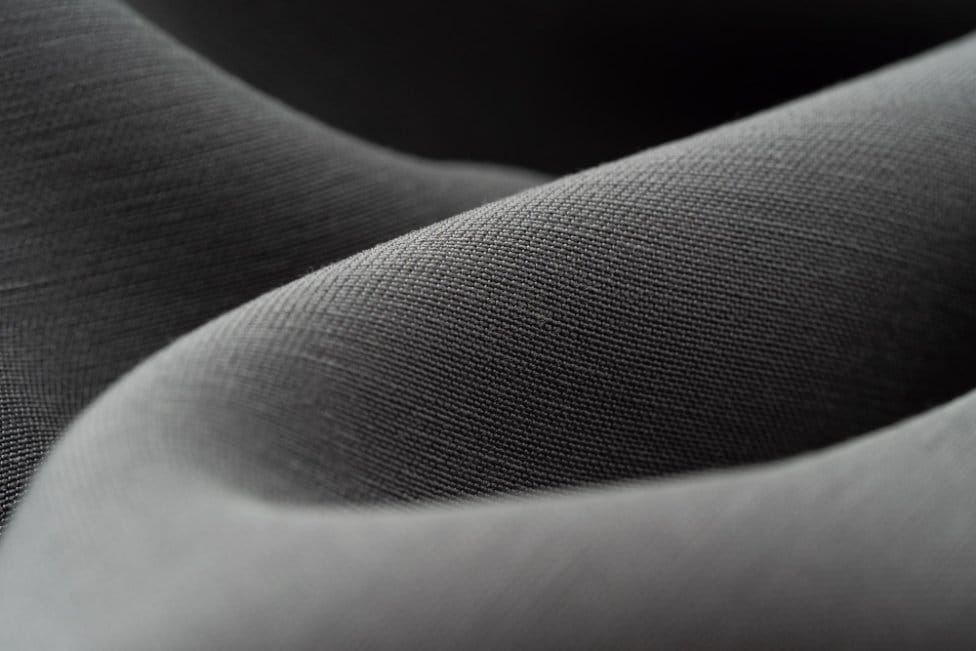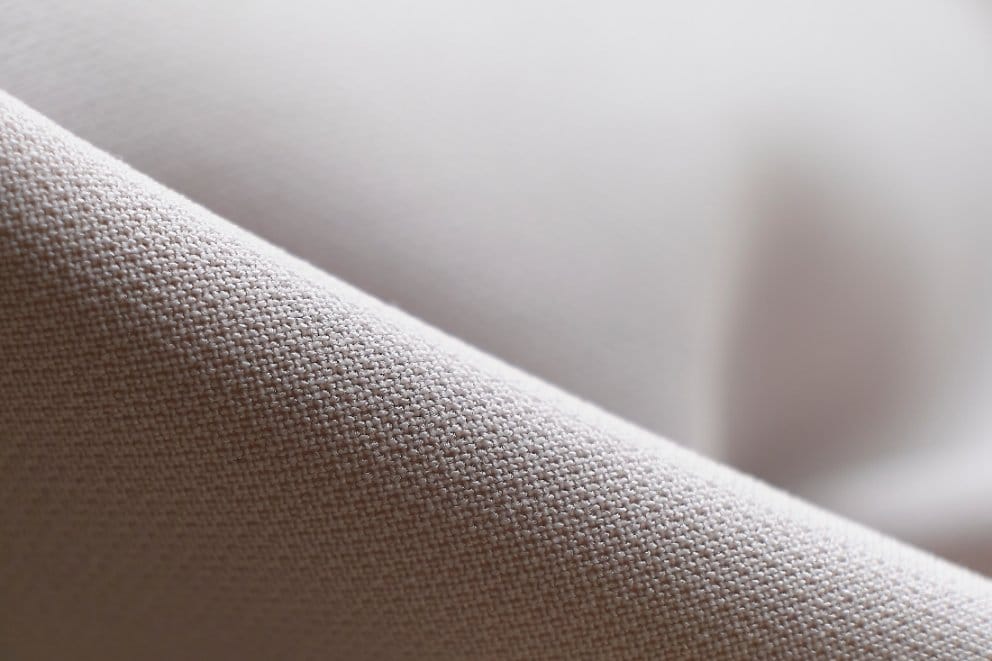

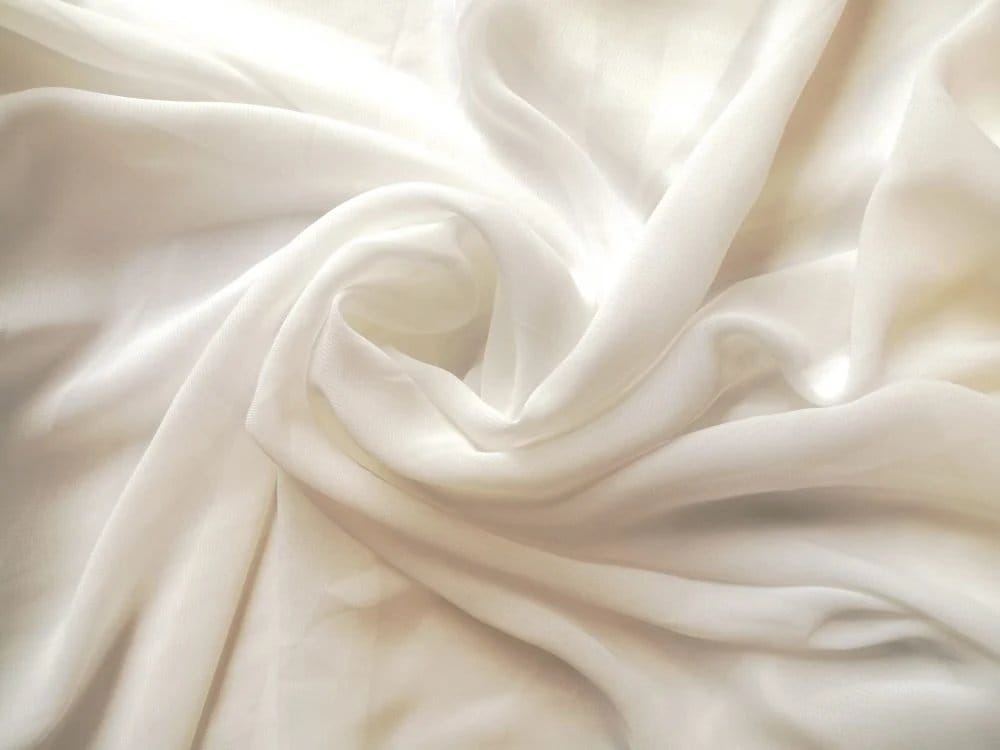
Everything you need to know about choosing, using, and caring for polyester chiffon
What Is Polyester Chiffon Fabric?
Polyester chiffon is a lightweight, sheer fabric made entirely from synthetic polyester fibers. It’s the modern, practical cousin of the traditional silk chiffon, offering many of the same beautiful qualities at a fraction of the price.
Think of polyester chiffon as that friend who’s always ready for anything. It drapes beautifully like silk, but you can toss it in the washing machine without worry. It creates that same floaty, romantic look in dresses and blouses, but it won’t break the bank or require constant pampering.
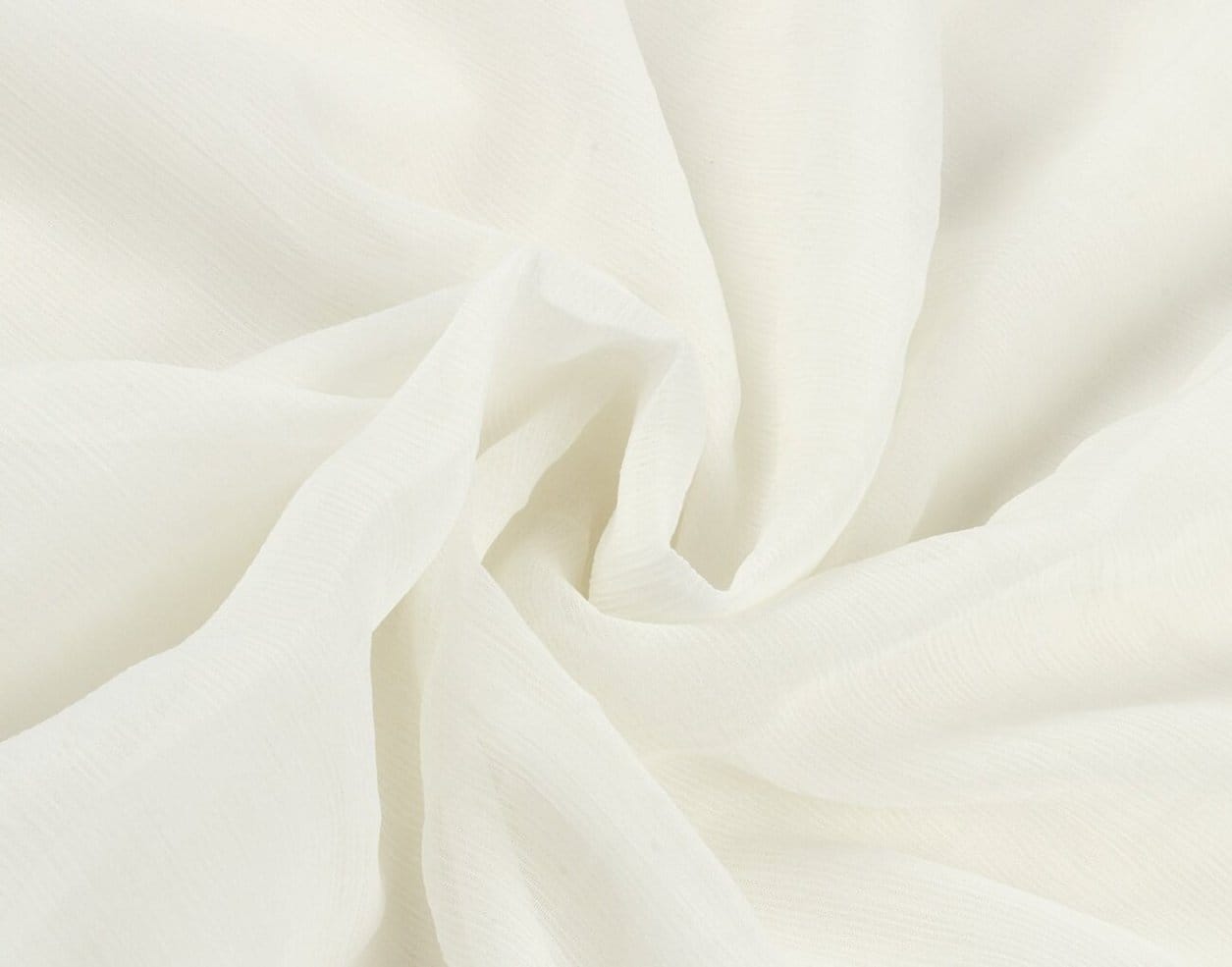
Polyester chiffon is a lightweight sheer fabric known for softness, durability, and easy care.
Technical Specifications
Understanding the technical details helps you make better buying decisions. Here’s what you should know:
| Specification | Typical Range |
|---|---|
| Fabric Width | 60 inches (standard) |
| Weight (GSM) | 60-100 grams per square meter |
| Thickness | 0.15-0.25 millimeters |
| Weave Type | Plain weave with S-twist and Z-twist yarns |
| Composition | 100% polyester (synthetic) |
GSM (grams per square meter) is the key to understanding fabric weight. A 70 GSM polyester chiffon is perfect for summer blouses, while 90-100 GSM works better for dresses that need a bit more body.
How It’s Made
Polyester chiffon starts its life as petroleum-based chemicals that are melted and spun into fine fibers. These fibers are then twisted in alternating directions (S-twist and Z-twist) and woven together in a loose, plain weave pattern. This special twisting technique is what gives chiffon fabric its characteristic slightly rough texture and beautiful drape.
The result? A fabric that’s sheer, lightweight, and has that subtle puckered texture that catches the light beautifully. According to Sewport’s comprehensive fabric directory, this weaving technique is what distinguishes chiffon from other sheer fabrics.
A Brief History
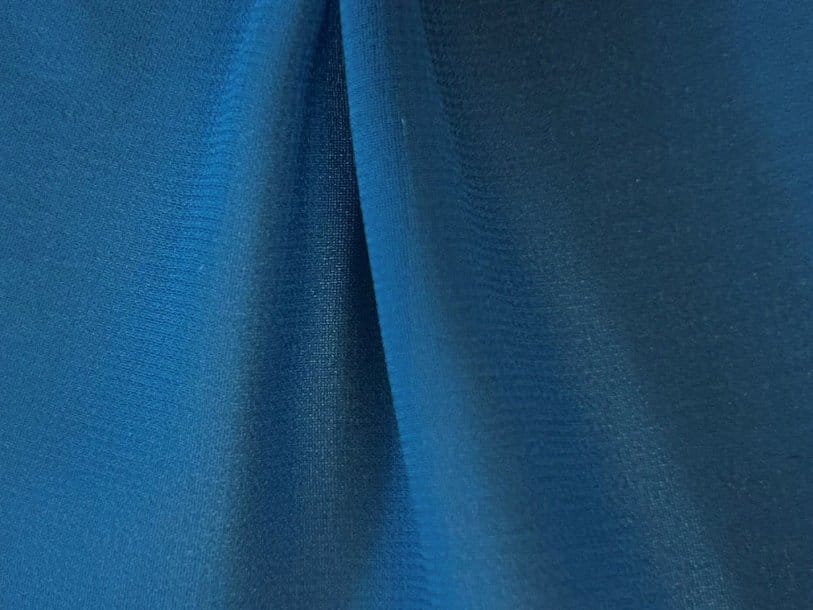
Polyester chiffon combines classic chiffon elegance with modern synthetic durability.
Chiffon’s story starts in 18th century France, where the word “chiffon” comes from the French word “chiffe,” meaning cloth or rag. (Funny how something so elegant has such humble origins, right?)
For over 200 years, chiffon was made exclusively from silk and was expensive enough that only wealthy people could afford it. It was a status symbol, a luxury fabric that screamed elegance and refinement.
Then came 1958, a game-changing year for fashion. That’s when polyester chiffon was developed, and suddenly, this dreamy fabric became available to everyone. It was like going from caviar to really good comfort food. Sure, silk chiffon is still the “luxury” option, but polyester chiffon brought the beauty and flow of chiffon to everyday wardrobes.
Today, polyester accounts for over 70% of all chiffon production worldwide. It’s the people’s chiffon, and there’s no shame in that game.
Properties and Characteristics
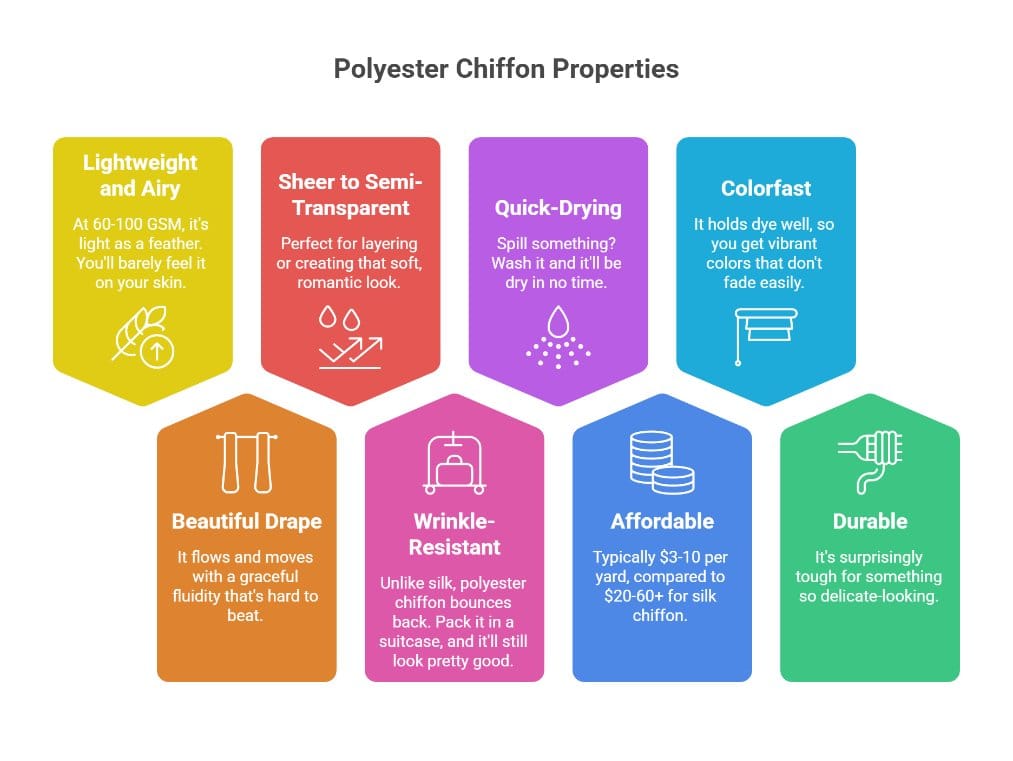
Key properties of polyester chiffon explained for easy fabric comparison.
Let’s talk about what makes polyester chiffon special. It’s not just about being cheap (though that’s definitely a plus). This fabric has some genuinely great qualities.
The Good Stuff
- Lightweight and airy: At 60-100 GSM, it’s light as a feather. You’ll barely feel it on your skin.
- Beautiful drape: It flows and moves with a graceful fluidity that’s hard to beat.
- Sheer to semi-transparent: Perfect for layering or creating that soft, romantic look.
- Wrinkle-resistant: Unlike silk, polyester chiffon bounces back. Pack it in a suitcase, and it’ll still look pretty good.
- Quick-drying: Spill something? Wash it and it’ll be dry in no time.
- Affordable: Typically $3-10 per yard, compared to $20-60+ for silk chiffon.
- Colorfast: It holds dye well, so you get vibrant colors that don’t fade easily.
- Durable: It’s surprisingly tough for something so delicate-looking.
The Not-So-Good Stuff
Nothing’s perfect, and polyester chiffon has its drawbacks:
- Less breathable: It’s synthetic, so it doesn’t breathe as well as silk. You might feel a bit warmer in hot weather.
- Prone to snagging: Catch it on something sharp, and you’ll have a pull.
- Heat-sensitive: Too much heat and it can melt. Seriously.
- Static-prone: Winter and polyester chiffon can be a shocking combination (literally).
- Slightly rougher texture: It doesn’t have silk’s buttery softness.
- Environmental concerns: Being petroleum-based, it’s not the most eco-friendly option (more on this later).
Is Polyester Chiffon Good for Summer?
This is a common question, and the answer is: it depends. Polyester chiffon is lightweight and creates airflow through its loose weave, which is great for hot weather. However, because it’s synthetic, it’s not as breathable as natural fibers like silk or cotton.
The verdict? It works fine for summer, especially for special occasions like weddings or evening events. For everyday summer wear, you might prefer natural fiber alternatives if you run hot.
Choose lighter colors and lower GSM (60-70) polyester chiffon for summer. Darker colors absorb more heat, and heavier weights can feel stuffy.
Does Polyester Chiffon Wrinkle Easily?
Good news here. One of polyester chiffon’s best features is its wrinkle resistance. Unlike silk fabric or cotton, polyester has shape memory. Pull a polyester chiffon dress out of your suitcase, give it a good shake, and most wrinkles will fall out on their own.
If you do get stubborn wrinkles, a quick steam or very low iron (with a pressing cloth) will sort them out. This makes polyester chiffon perfect for travel.
Is Polyester Chiffon See Through?
Yes, polyester chiffon is sheer to semi-transparent. That’s part of its charm. The level of transparency depends on the weight (GSM) and color. Lighter colors and lower GSM fabrics are more see-through, while darker colors and higher GSM offer more coverage.
Most people line polyester chiffon garments or wear them over a camisole. Some projects, like scarves or decorative overlays, take advantage of the sheerness.
Types of Polyester Chiffon
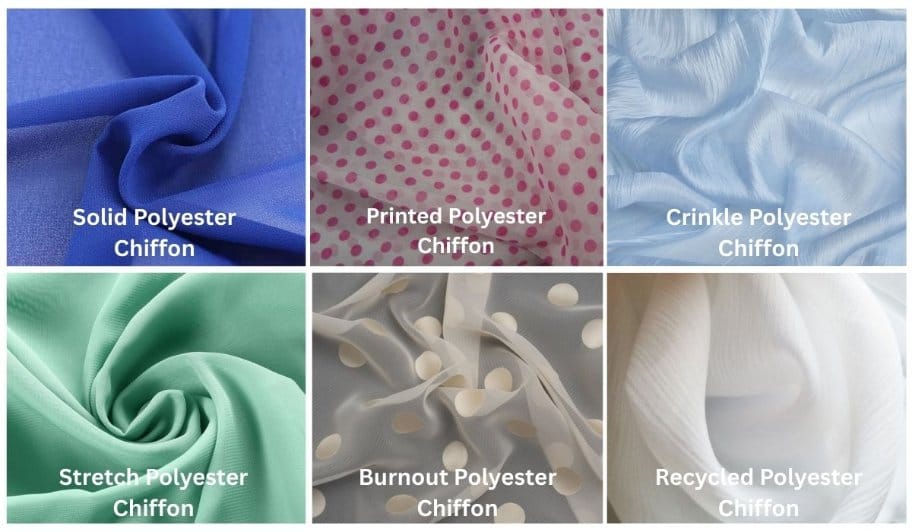
Polyester chiffon comes in many styles from solid colors to textured and recycled options.
Not all polyester chiffon is created equal. Here’s what you’ll find in the fabric store:
Solid Polyester Chiffon
This is your classic, versatile option. Available in every color imaginable, solid polyester chiffon is perfect for everything from bridesmaid dresses to flowy summer tops. It’s the workhorse of the chiffon family.
Printed Polyester Chiffon
From bold florals to abstract patterns, printed polyester chiffon adds instant personality to any project. These are great for statement pieces or when you want your fabric to do the talking.
Crinkle (or Pleated) Polyester Chiffon
This variety has a permanent crinkled or pleated texture that adds body and visual interest. It holds its shape beautifully and is perfect for voluminous sleeves or skirts with movement.
Stretch Polyester Chiffon
Blended with a small amount of spandex (usually 3-5%), stretch polyester chiffon offers flexibility and comfort. It’s ideal for performance wear, dance costumes, or fitted eveningwear.
Burnout Polyester Chiffon
This has semi-transparent patterns created through a chemical process that removes parts of the fabric. It creates a beautiful, textured look perfect for special occasions.
Recycled Polyester Chiffon
Made from post-consumer plastic bottles, recycled polyester (rPET) chiffon is the eco-conscious choice. Look for Global Recycle Standard (GRS) certification to ensure you’re getting the real deal.
Recycled polyester chiffon reduces petroleum dependence by 59% and lowers carbon emissions by 32% compared to virgin polyester. It’s a better choice for the planet without sacrificing quality.
Is Poly Chiffon Stretchy?
Regular polyester chiffon has minimal stretch (maybe 2-3% from the weave itself). However, if you need stretch, look for stretch polyester chiffon that’s blended with spandex. This will give you 10-20% stretch in both directions.
Polyester Chiffon vs. Other Fabrics
Polyester Chiffon vs. Silk Chiffon: The Big Showdown
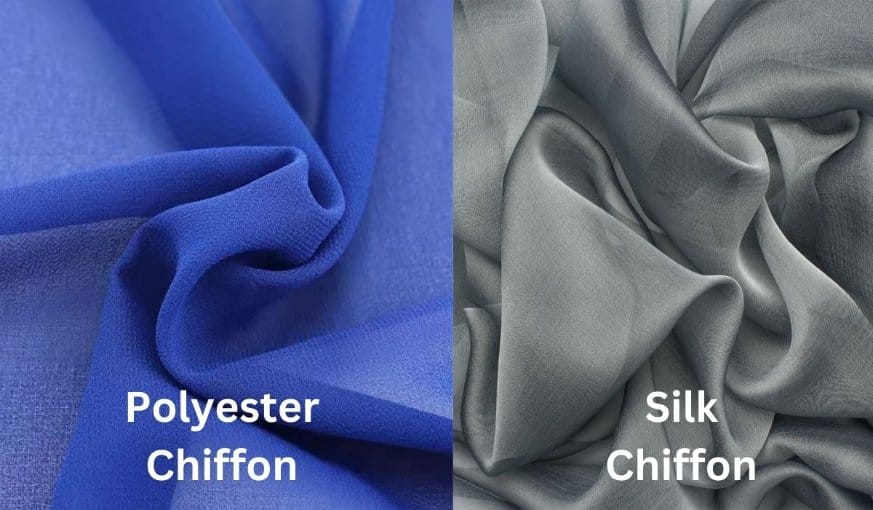
Polyester chiffon offers durability and affordability while silk chiffon provides natural luxury and softness.
This is the comparison everyone wants to know about. Let’s break it down:
| Feature | Polyester Chiffon | Silk Chiffon |
|---|---|---|
| Feel & Texture | Slightly rougher, more textured | Incredibly soft, smooth, buttery |
| Appearance | Shinier, more lustrous | Natural subtle sheen, elegant glow |
| Durability | Very durable, wrinkle-resistant | Delicate, requires careful handling |
| Care | Machine washable, easy care | Dry clean only, high maintenance |
| Price | $3-10 per yard | $20-60+ per yard |
| Breathability | Less breathable | Highly breathable, temperature-regulating |
| Drape | Excellent fluid drape | Superior elegant drape |
| Environmental Impact | Petroleum-based, non-biodegradable | Natural, biodegradable (if sustainably sourced) |
| Best For | Everyday wear, budget-friendly projects, active use | Special occasions, heirloom pieces, luxury garments |
What Is the Difference Between Silk Chiffon and Polyester Chiffon?
Beyond the price tag, the main differences come down to feel and care. Silk chiffon feels like a dream against your skin with its natural smoothness, while polyester has a slightly more textured, crisp feel. Silk breathes better and regulates temperature, making it more comfortable in extreme weather. But polyester wins on practicality. You can actually wear it, wash it, and not stress about every little thing.
Think of it this way: silk chiffon is the designer handbag, polyester chiffon is the really good quality high-street version. Both look great, but one requires a lot more care and investment.
Comparison with Other Chiffon Types
Polyester vs. Nylon Chiffon
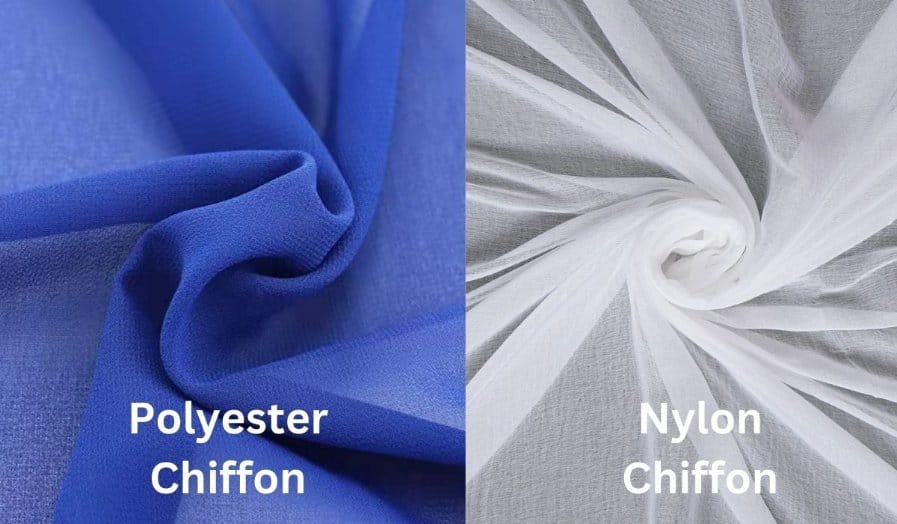
Both polyester and nylon chiffon are lightweight synthetics with different strength and feel.
Nylon chiffon is polyester’s closest cousin. Both are synthetic, but nylon is slightly shinier and has more of a “synthetic” feel. Nylon is stronger and more elastic, but polyester is more colorfast and heat-resistant (to a point). For most projects, they’re pretty interchangeable.
Polyester vs. Cotton Chiffon
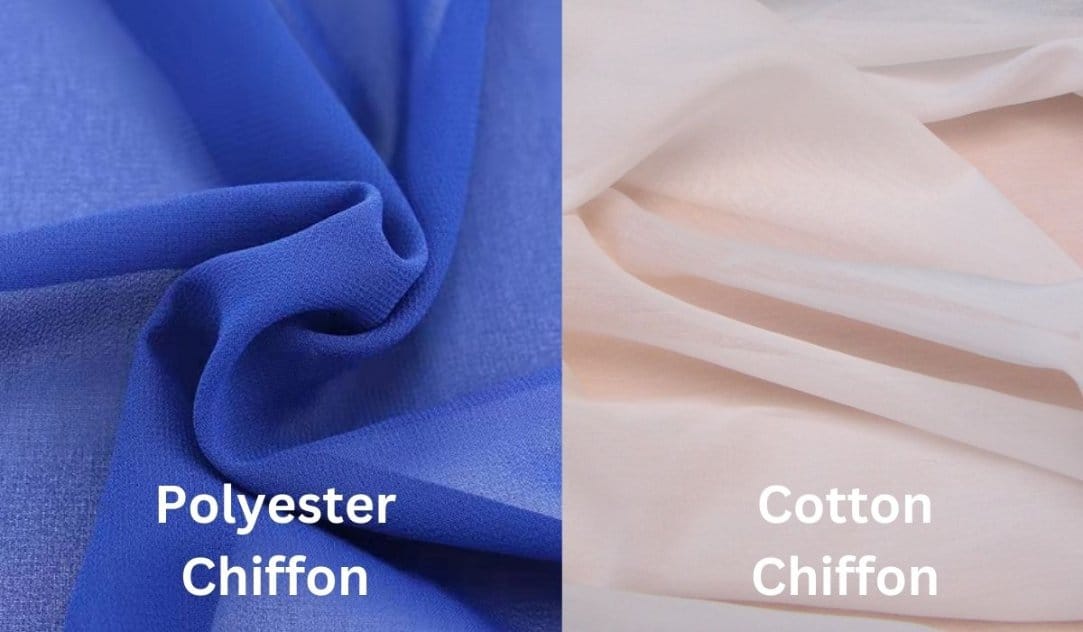
Polyester chiffon is lighter and wrinkle resistant while cotton chiffon offers natural breathability.
Cotton chiffon is less common and has a matte finish compared to polyester’s sheen. It’s more breathable and feels softer, but it wrinkles more easily and doesn’t have the same floaty quality. Cotton chiffon is better for casual, everyday wear.
Polyester vs. Rayon Chiffon
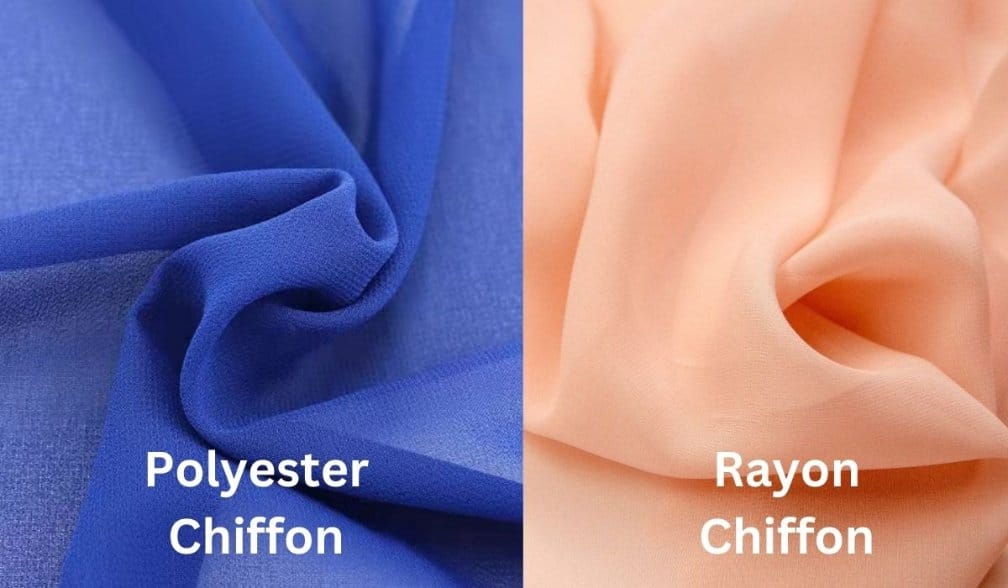
Rayon chiffon provides a softer feel while polyester chiffon offers easier care and durability.
Rayon splits the difference between synthetic and natural. It’s made from wood pulp (natural source) but chemically processed (synthetic method). Rayon chiffon has a softer hand than polyester and drapes beautifully, but it’s less durable and more prone to shrinking.
What Is the Difference Between Poly Chiffon and Pure Chiffon?
“Pure chiffon” typically refers to silk chiffon (100% silk). So poly chiffon vs. pure chiffon is essentially the same as polyester vs. silk. The term “pure” emphasizes the natural fiber composition of silk, as opposed to the synthetic nature of polyester.
Related Fabrics: The Chiffon Family
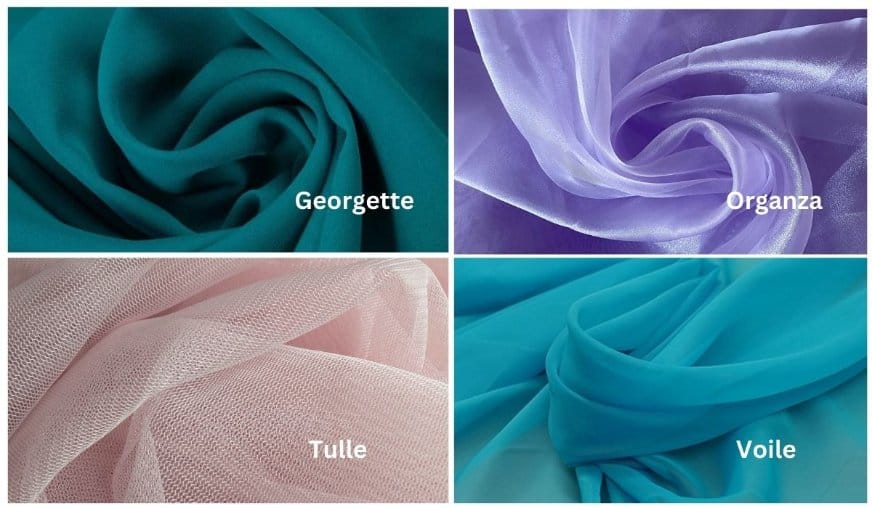
Georgette, organza, tulle, and voile are popular lightweight fabrics often compared to chiffon.
If you like chiffon, you might also like these similar fabrics:
Georgette
Slightly heavier and more opaque than chiffon, with a crinkled texture. Better for garments that need more body. Learn more about georgette fabric.
Organza
Crisper and more structured than chiffon. Perfect for pieces that need to hold a shape, like full skirts or bows. Check out organza fabric.
Tulle
Net-like structure, very stiff. Great for adding volume but not as soft as chiffon. Often used in children’s clothing for party dresses.
Voile
Similar sheerness but softer and less crisp than chiffon. Made from tightly twisted yarns for a smooth finish.
Sustainability and Environmental Impact
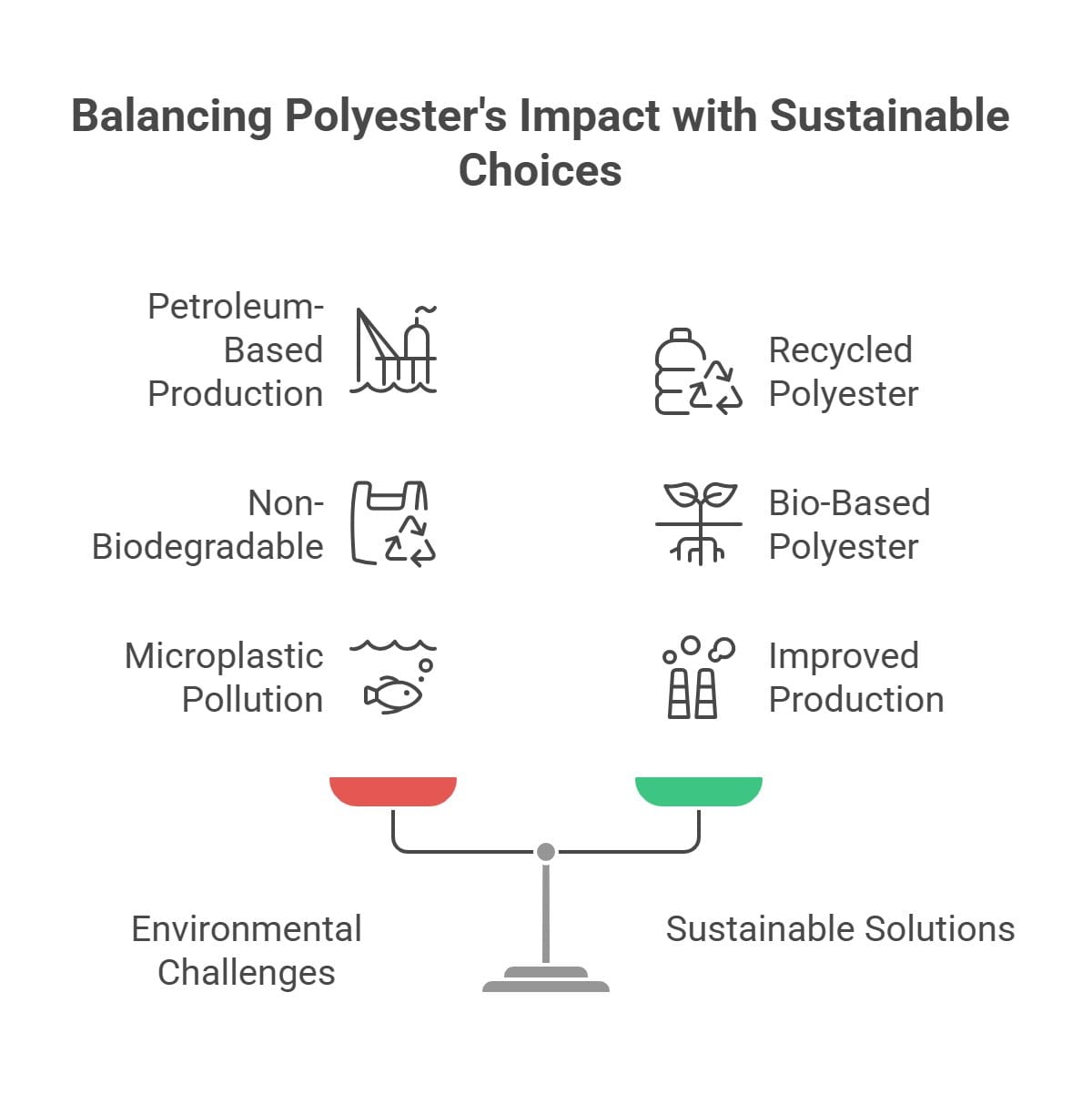
Understanding polyester’s environmental impact helps makers choose more sustainable options.
Let’s talk about the elephant in the room. Polyester chiffon, like all polyester fabrics, has environmental baggage. But it’s not all bad news, and there are ways to make better choices.
The Environmental Challenges
Petroleum-Based Production: Polyester starts as crude oil, a non-renewable resource. The extraction and processing of petroleum is energy-intensive and harmful to ecosystems.
Non-Biodegradable: Drop a polyester chiffon scarf in a landfill, and it’ll still be there 200+ years from now. It doesn’t break down like natural fibers.
Microplastic Pollution: Every time you wash polyester chiffon, tiny plastic fibers break off and enter waterways. These microplastics end up in oceans where marine life can ingest them. Studies by the International Union for Conservation of Nature show that up to 35% of ocean microplastics come from washing synthetic textiles.
Carbon Footprint: Manufacturing polyester produces significant greenhouse gas emissions, contributing to climate change.
The Sustainable Solutions
Before you swear off polyester chiffon completely, here are the positive developments:
Recycled Polyester Chiffon (rPET)
This is the game-changer. Made from post-consumer plastic bottles, recycled polyester chiffon offers real benefits:
- Reduces petroleum dependence by 59%
- Lowers carbon emissions by 32%
- Diverts plastic waste from landfills and oceans
- Uses less water and energy in production
- Performs just as well as virgin polyester
Research from Textile Exchange’s Preferred Fiber Report confirms these environmental benefits of recycled polyester materials.
Look for fabrics with Global Recycle Standard (GRS) certification. This ensures the fabric actually contains recycled materials and was produced responsibly.
Bio-Based Polyester
Scientists are developing polyester made from plant materials instead of petroleum. While still in early stages, bio-based polyester could reduce the carbon footprint significantly.
Improved Production Methods
New dyeing technologies, like supercritical fluid dyeing, use less water and fewer chemicals. Some manufacturers are investing in cleaner production processes.
What You Can Do
As a consumer, you have power to make a difference:
- Choose recycled polyester when possible: Even though it costs slightly more, you’re voting with your wallet for better practices.
- Wash less frequently: Studies show that reducing washing frequency by 25% can lower environmental impact by 37%.
- Use a microfiber-catching wash bag: Products like Guppyfriend catch microplastics before they enter waterways.
- Buy quality over quantity: One well-made polyester chiffon garment that lasts years is better than three cheap ones that fall apart.
- Reuse and repurpose: Extending a garment’s life by just 9 months reduces its environmental impact by 20-30%.
- Proper disposal: Don’t just throw old polyester in the trash. Look for textile recycling programs.
The Bottom Line on Sustainability
Is polyester chiffon the most eco-friendly fabric? No. But it’s also not the villain it’s sometimes made out to be. With recycled options and responsible use, you can enjoy polyester chiffon while minimizing your environmental impact. The perfect sustainable fabric doesn’t exist yet, so it’s about making the best choices available right now.
Uses and Applications
Polyester chiffon is wonderfully versatile. Here’s where it shines:
Fashion and Apparel
Wedding and Bridal Wear
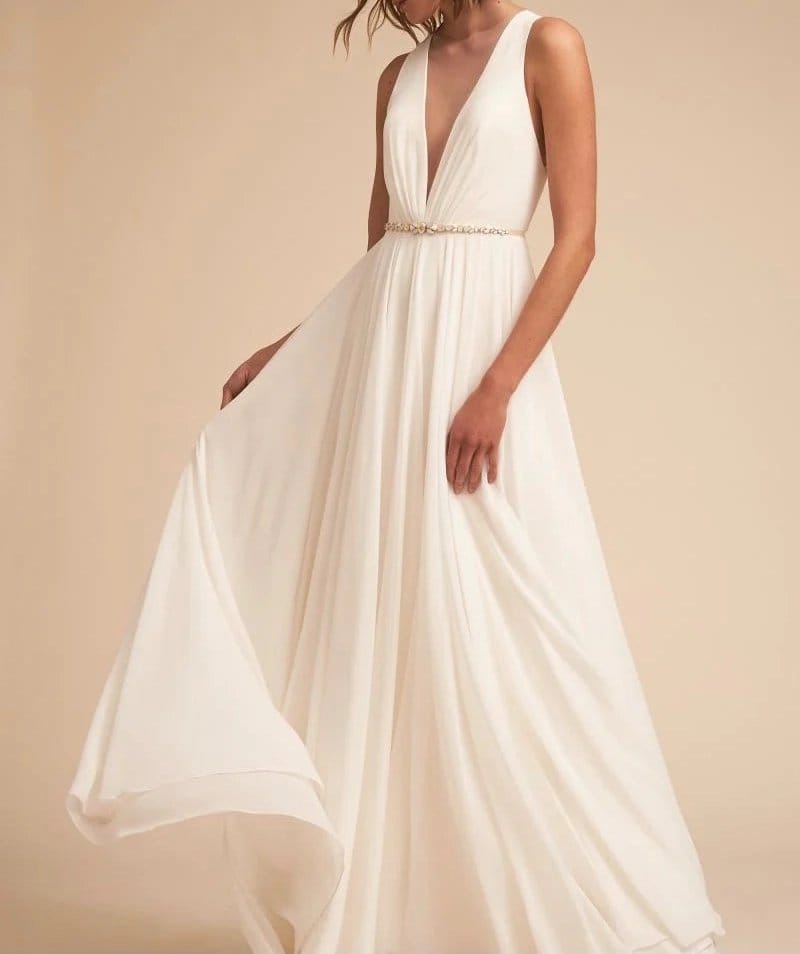
Polyester chiffon creates romantic bridal gowns with graceful flow and comfortable wear.
This is polyester chiffon’s bread and butter. It’s perfect for:
- Bridesmaid dresses: The go-to choice for most bridesmaid dresses because it’s affordable for buying multiples, photographs beautifully, and comes in every color.
- Wedding gown overlays: Creates that dreamy, romantic layer without the silk price tag.
- Veils: Though not as common as tulle, chiffon veils offer a softer, more flowing alternative.
Evening and Formal Wear
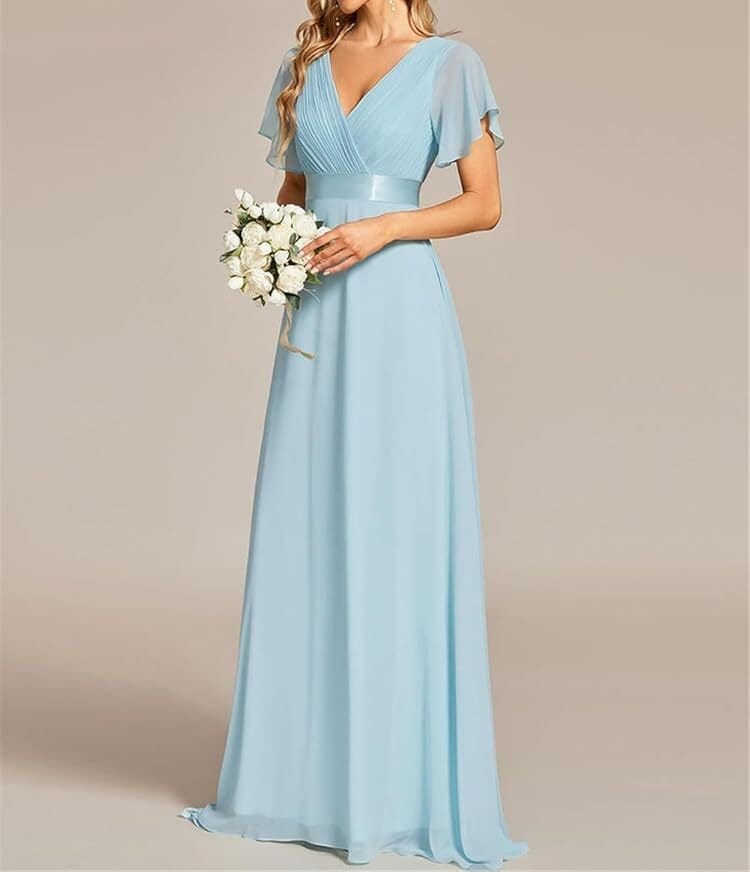
Polyester chiffon is ideal for evening dresses thanks to its fluid drape and elegant movement.
- Elegant gowns and maxi dresses
- Cocktail dresses
- Formal blouses and tops
- Flowing palazzo pants
Everyday Clothing
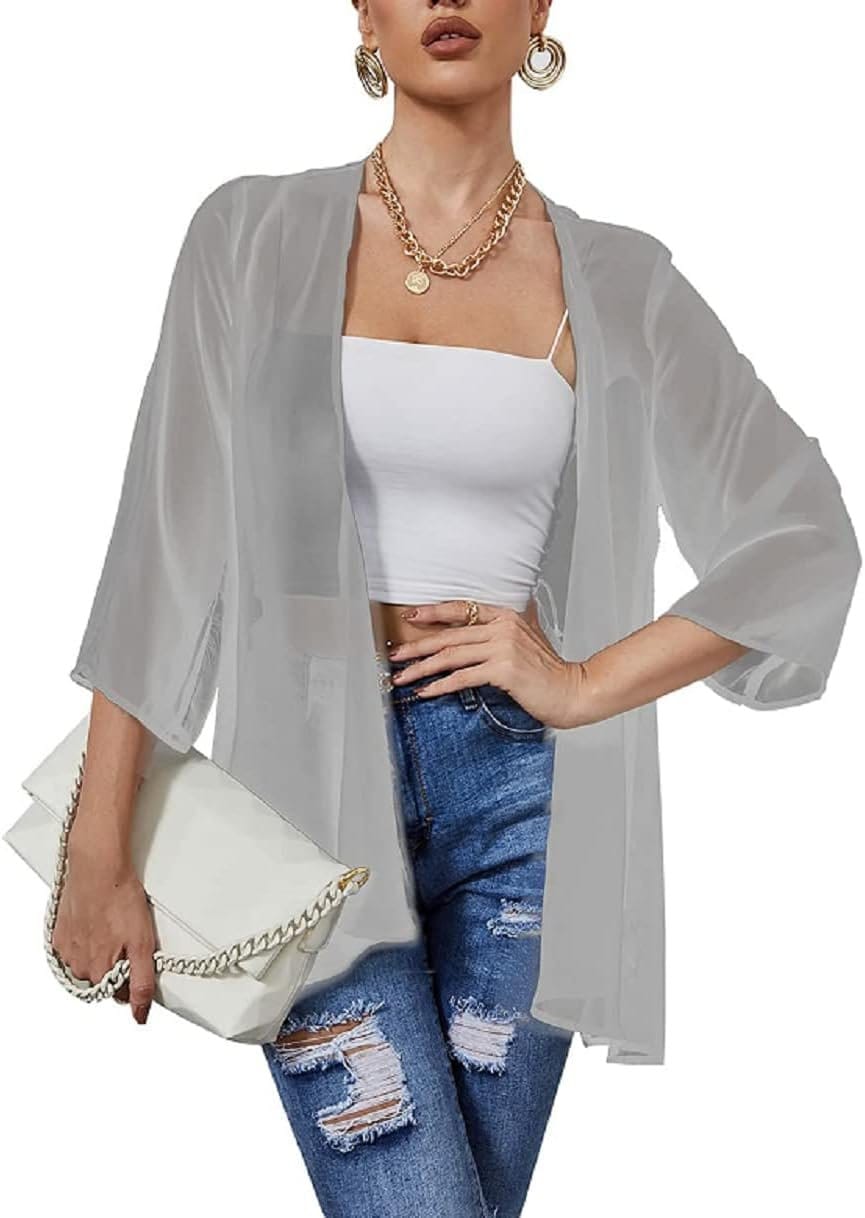
Chiffon cardigans add a light, airy layer perfect for warm weather outfits.
- Summer blouses and shirts
- Skirts with beautiful movement
- Lightweight cardigans and kimonos
- Scarves and wraps
Special Purpose
- Dance and performance costumes: Moves beautifully and stands up to repeated wear
- Lingerie and delicates: Soft and romantic
- Resort and vacation wear: Packs easily and dries quickly
Home Decor
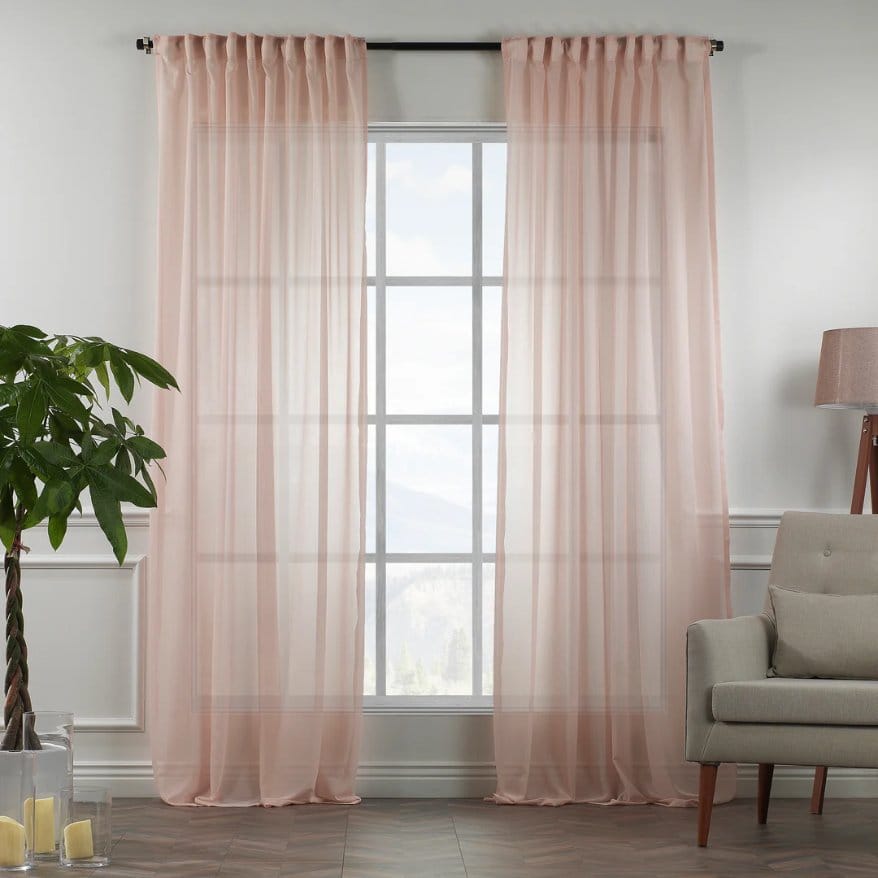
Sheer polyester chiffon curtains gently diffuse light while adding elegance to interiors.
Don’t limit polyester chiffon to your wardrobe:
- Sheer curtains: Filters light beautifully while maintaining privacy
- Table overlays: Adds elegance to wedding receptions and events
- Event draping: Creates romantic atmosphere for weddings and parties (look for IFR – Inherently Flame Retardant – chiffon for event use)
- Canopy and ceiling decor: Transforms spaces with flowing fabric
- Decorative pillows: As an overlay for texture
For professional event decorators, IFR polyester chiffon is a must. It’s naturally flame retardant, making it safer for venues with strict fire codes, and it’s available in 60-inch widths by the bolt (70 yards).
How to Sew with Polyester Chiffon
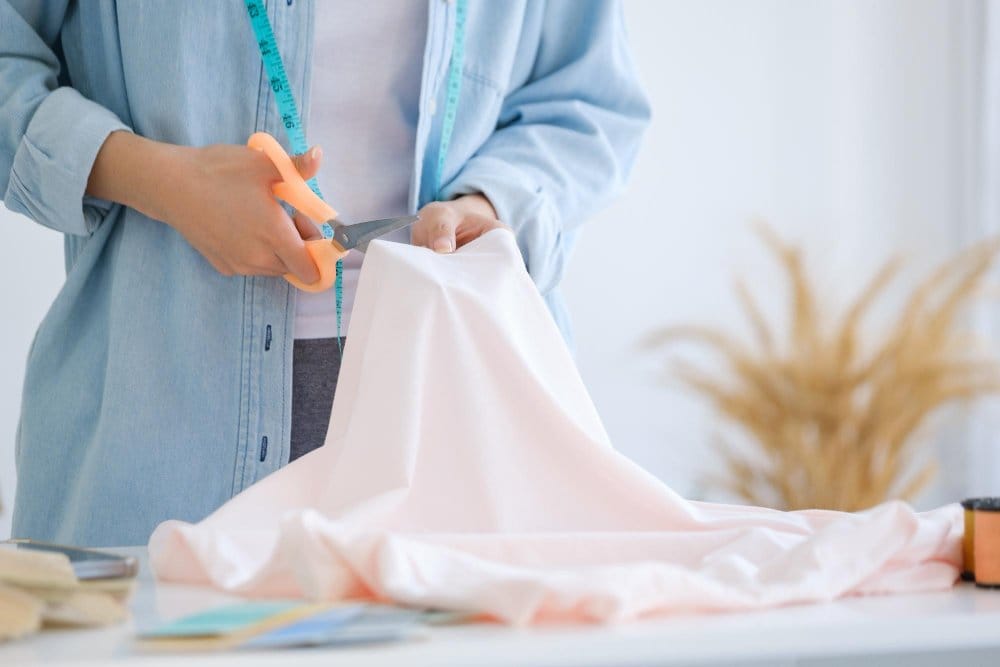
Careful cutting and handling are essential when sewing slippery polyester chiffon.
Okay, real talk. Sewing with chiffon can be frustrating if you don’t know what you’re doing. But with the right techniques, it’s totally doable.

Is Polyester Chiffon Hard to Sew?
Yes and no. Chiffon is slippery and sheer, which makes it trickier than working with cotton or denim. However, polyester chiffon is actually easier to sew than silk chiffon because it’s slightly less slippery and more forgiving. It’s not a great choice for absolute beginners, but if you’ve sewn a few projects, you can handle it with patience.
If this is your first time sewing chiffon, start with a simple project like a scarf or basic skirt. Don’t jump straight into a complicated dress with darts and zippers. Learn more in our beginner’s guide to sewing.
Essential Tools and Supplies
Having the right tools makes all the difference. Here’s what you need:
Needles
- Type: Microtex sharp or fine universal needles
- Size: 60/8 to 70/10 (smaller is better for chiffon)
- Why: Sharp, fine needles glide through chiffon without snagging or leaving visible holes
- Important: Use a brand new needle. Dull needles will snag your fabric.
Thread
- Type: Fine polyester or cotton thread (60-100 weight)
- Why: Thin thread blends better with sheer fabric
- Color matching: If you can’t find an exact match, go darker rather than lighter (lighter thread shows more on sheer fabric)
Cutting Tools
- Sharp fabric scissors or rotary cutter: Blunt blades create ragged edges
- Self-healing cutting mat: Essential if using a rotary cutter
Pins and Weights
- Fine silk pins: Regular pins can leave permanent holes
- Pattern weights: Often better than pins for chiffon
Additional Supplies
- Tissue paper: Your secret weapon for stabilizing chiffon
- Walking foot or straight stitch foot: Helps feed fabric evenly
- Spray starch (optional): Can add body to make cutting easier
- Seam ripper: Hope you don’t need it, but have it ready
Pre-Sewing Preparation
Should You Pre-Wash?
Unlike natural fibers, polyester chiffon doesn’t shrink much. Pre-washing is optional, but it can help if:
- You want to remove any chemical finishes
- You’re mixing it with other fabrics that might shrink
- You want to see how the fabric behaves when washed
If you do pre-wash, use cold water, gentle cycle, and air dry flat.
Pressing vs. Hanging
Before cutting, your fabric needs to be smooth. You have two options:
Option 1: Hang overnight – Often, hanging the fabric for 12-24 hours lets wrinkles fall out naturally.
Option 2: Iron carefully – Use the lowest heat setting (polyester/silk) and a pressing cloth. Never iron directly on polyester chiffon or you risk melting it.
Cutting Techniques
This is where most people struggle. Here’s how to cut chiffon successfully:
Step 1: Prepare Your Workspace
Cover your cutting table with tissue paper or a non-slip surface. Shiny tables make chiffon slide around.
Step 2: Cut Single Layers
Never fold chiffon to cut multiple layers. Cut one layer at a time. Yes, this takes longer, but it ensures accuracy.
Step 3: Use the Tissue Paper Method
Sandwich your chiffon between layers of tissue paper. Pin or weight your pattern on top. Cut through all layers. The tissue paper keeps the fabric from shifting and you can leave it pinned to the fabric pieces until you’re ready to sew.
Step 4: Use Weights, Not Pins (When Possible)
Pattern weights hold fabric in place without leaving holes. If you must pin, pin within the seam allowance only.
Step 5: Mark Carefully
Use tailor’s tacks (thread marking) instead of chalk or pens. To make tailor’s tacks: thread a needle with doubled thread, make loose running stitches along your mark, snip the tops to create loops, then remove the pattern.
Step 6: Increase Seam Allowances
Chiffon frays like crazy. If your pattern calls for 5/8″ seam allowances, consider adding an extra 1/4″ for safety.
Machine Settings
Set up your machine correctly before you start:
- Stitch length: 1.5-2.5mm (shorter stitches prevent puckering)
- Tension: Slightly lower than normal (test on scraps first)
- Presser foot pressure: Reduce if your machine allows it
- Throat plate: Switch to a straight stitch plate if you have one (prevents fabric from being sucked into the needle hole)
Sewing Techniques
Starting and Stopping
When starting a seam: Hold both the top and bobbin threads as you begin sewing. This prevents the fabric from being pulled into the machine.
When ending a seam: Don’t backstitch (it can cause puckering). Instead, leave long thread tails and tie them in a knot, or reduce your stitch length to 1.0 for the last half inch.
The Tissue Paper Trick
For smooth, even seams, place strips of tissue paper under your chiffon as you sew. The paper stabilizes the fabric and prevents it from being pulled into the feed dogs. Tear away the paper carefully when you’re done.
Sewing Speed
Slow and steady wins the race with chiffon. Sewing too fast causes puckering and bunching. Take your time.
Don’t Pull
Let the machine do the work. Don’t pull the fabric through. This stretches the fabric and creates wavy seams.
Does Polyester Chiffon Fray?
Oh yes, it frays. A lot. That’s why seam finishing is so important. Here are your options:
French seams: The gold standard for chiffon. French seams encase the raw edges inside the seam itself, giving you clean, professional-looking insides. Perfect for sheer garments where seams are visible. Check our French seam tutorial.
Narrow zigzag: A narrow zigzag stitch (width 1-2mm) sewn along the edge prevents fraying.
Serger/overlocker: If you have a serger, use it. A narrow 3-thread overlock works beautifully.
Hong Kong finish: Binding raw edges with bias tape. More time-consuming but looks very professional.
Hemming Methods
Hemming chiffon is its own special challenge. Here are three methods:
Narrow Hem
This is the most common method:
- Press the hem edge up 1/4 inch
- Stitch 1/8 inch from the folded edge
- Trim the fabric close to the stitching line
- Press and fold another 1/4 inch
- Stitch 1/8 inch from the edge again
Result: A neat double-fold hem that’s strong and looks good on both sides.
Rolled Hem
This creates a tiny, elegant hem perfect for scarves:
- By hand: Roll the edge between your fingers and hand-stitch with tiny stitches
- By machine: Use a rolled hem foot on your sewing machine or serger
Serged Edge
Quick and easy:
- Serge the raw edge with a narrow 3-thread stitch
- Press the serged edge to the wrong side
- Hand stitch or carefully machine stitch to secure
Common Problems and Solutions
| Problem | Solution |
|---|---|
| Fabric puckering | Loosen upper tension, use tissue paper under seams, sew slower |
| Fabric getting sucked into machine | Use straight stitch plate, hold threads when starting, place tissue paper under fabric |
| Wavy, stretched seams | Don’t pull fabric, reduce presser foot pressure, use walking foot |
| Visible needle holes | Use finer needles (60/8), change to a new sharp needle |
| Excessive fraying | Increase seam allowances, finish seams immediately after sewing, use fray check on cut edges |
| Thread showing through sheer fabric | Use finer thread, match thread color closely (or go darker) |
Special Considerations
Lining and Underlining
Because polyester chiffon is sheer, most garments need lining or underlining:
Lining: A separate layer sewn into the garment. Choose lightweight fabrics like silk, polyester charmeuse, or cotton batiste.
Underlining: A layer of fabric attached to the chiffon and treated as one piece. This is great for adding opacity and structure.
Choosing the Right Pattern
Set yourself up for success by choosing appropriate patterns:
Good choices:
- Simple designs with few seams
- Flowing, gathered styles
- Patterns specifically designed for chiffon or “sheer fabrics”
Avoid:
- Tailored, structured garments with lots of darts
- Patterns with buttonholes (very difficult in chiffon)
- Anything with top stitching (hard to do neatly on sheer fabric)
Look for patterns labeled “Easy” or “Beginner Friendly” for your first chiffon project. Simple elastic-waist skirts, basic blouses, or scarves are great starting points. Explore our beginner-friendly sewing patterns.
Care and Maintenance
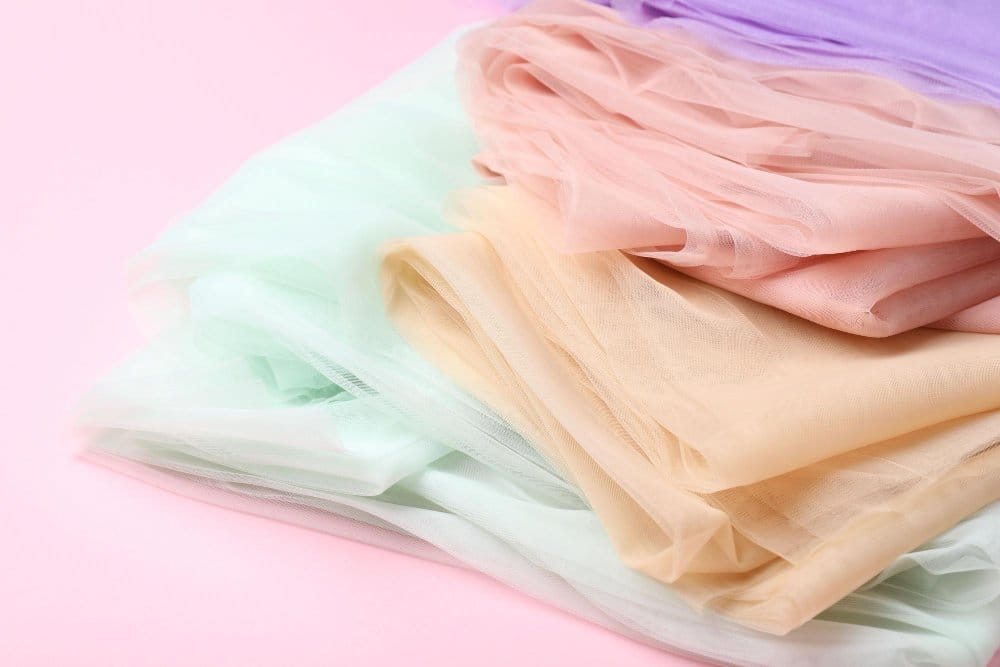
Proper care keeps polyester chiffon soft, wrinkle free, and long lasting.
The great thing about polyester chiffon? It’s way easier to care for than silk. But it still needs some attention.
Can You Wash Polyester Chiffon?
Yes! Unlike silk chiffon, which usually requires dry cleaning, most polyester chiffon can be washed at home. Here’s how to do it right:
Washing Instructions
Machine Washing
Follow these steps for best results:
- Use a mesh laundry bag: This protects the fabric from snags and tangling
- Cold water only: Hot water can damage polyester
- Gentle cycle: The delicate or hand wash cycle is perfect
- Mild detergent: Use a gentle liquid detergent. Avoid powder (it can leave residue)
- No fabric softener: It can leave a coating on the fabric
- Consider a Guppyfriend bag: These special wash bags catch microplastics before they enter waterways
Hand Washing
This is the gentler option and extends fabric life:
- Fill a clean basin with cold water
- Add a small amount of mild detergent
- Submerge the garment and gently swish it around
- Let soak for 10-15 minutes
- Gently squeeze (don’t wring!) to remove dirt
- Rinse thoroughly in cold water until no soap remains
- Gently press out excess water (don’t twist or wring)
Polyester can handle warm water, but cold is better for maintaining color and preventing any potential shrinkage. Stick with cold unless you have a specific reason not to.
Drying
Air Drying (Recommended)
Lay flat method: The best option. Lay the garment flat on a clean towel, reshape it gently, and let it dry naturally. This prevents stretching.
Hang dry method: You can hang polyester chiffon on a padded hanger, but be aware that very wet fabric can stretch under its own weight. Let it drip dry over a tub first, then hang.
Tips:
- Avoid direct sunlight (can fade colors)
- Good air circulation speeds drying
- Never leave wet chiffon in a pile
Machine Drying (Not Recommended)
Technically, polyester can go in the dryer on the lowest heat setting, but this is risky. High heat will melt polyester chiffon. If you absolutely must use a dryer:
- Use the lowest heat or air dry setting only
- Put the garment in a mesh bag
- Check frequently
- Remove while still slightly damp
Honestly? Just skip the dryer. Polyester chiffon dries quickly on its own.
Can You Iron 100% Polyester Chiffon?
Yes, but carefully. Polyester can melt, so heat control is everything.
Ironing Method
- Set iron to lowest heat: Use the polyester or silk setting
- Always use a pressing cloth: Place a thin cotton cloth between the iron and your fabric. This is non-negotiable.
- Iron on the wrong side: Protect the right side of your garment
- Keep the iron moving: Don’t let it sit in one spot
- No steam: Steam can cause water spots on some polyester
- Test first: Try a small, hidden area before ironing the whole garment
If your iron is too hot, you’ll smell it before you see damage (you’ll notice a chemical smell). If this happens, turn off the iron immediately. It’s better to have wrinkles than melted fabric.
Can Polyester Chiffon Be Steamed?
Absolutely, and steaming is actually the safer option. A handheld garment steamer or hanging your chiffon in a steamy bathroom while you shower works great for releasing wrinkles.
Steaming Tips:
- Hold the steamer a few inches away from the fabric
- Let gravity help by hanging the garment
- Gently pull on the fabric as you steam to release wrinkles
- This method is perfect for delicate embellishments that can’t be ironed
Stain Removal
Act fast when stains happen:
- Blot immediately: Don’t rub (it pushes the stain deeper)
- Flush with cold water: Run cold water through the fabric from the back of the stain
- Apply gentle stain remover: Use a product safe for delicates
- Let it sit: Give the stain remover 5-10 minutes to work
- Wash as usual: Follow normal washing instructions
- Check before drying: Heat sets stains, so make sure it’s gone before air drying
For stubborn stains: Take it to a professional cleaner rather than risking damage with harsh chemicals. For more stain solutions, see our fabric care guide.
Storage
Proper storage keeps polyester chiffon looking good:
Short-Term Storage (Daily/Weekly)
- Hang on padded hangers: Prevents shoulder bumps and maintains shape
- Give it space: Don’t cram garments together (causes wrinkles)
- Avoid wire hangers: They leave dents and can snag delicate fabric
Long-Term Storage (Seasonal)
- Clean first: Always wash before storing (dirt and oils attract insects)
- Use breathable garment bags: Cotton or muslin bags are perfect. Avoid plastic (traps moisture)
- Store in a cool, dry place: Away from direct sunlight
- Keep away from sharp objects: Polyester chiffon snags easily
- Check periodically: Make sure no moisture or pests have gotten in
Special Care for Embellished Chiffon
If your polyester chiffon has beading, sequins, or embroidery:
- Hand wash only
- Turn inside out
- Never wring or twist
- Steam instead of iron (embellishments can melt or get damaged)
- Store flat or on padded hangers
Quality Indicators and Buying Guide
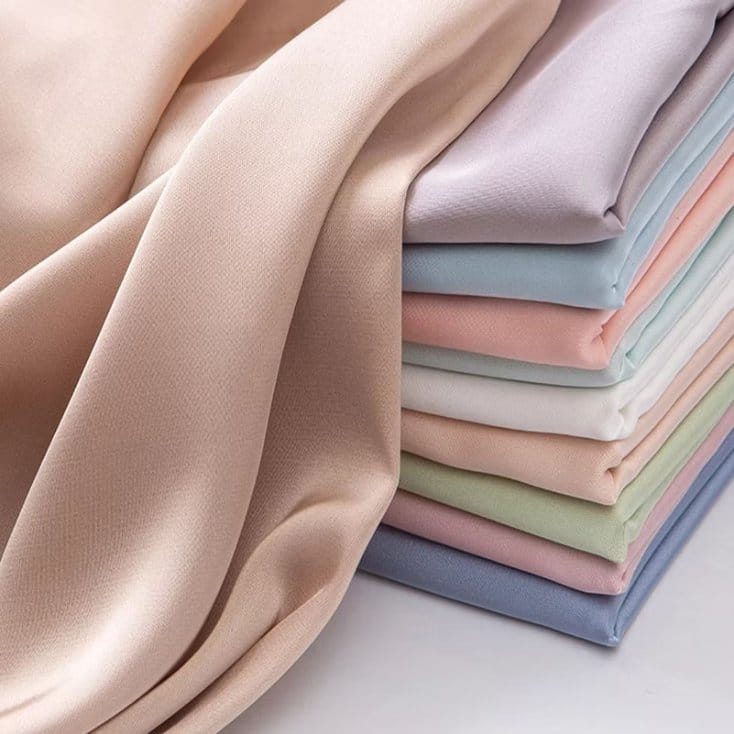
A variety of polyester chiffon colors helps shoppers choose the perfect shade and weight.
Not all polyester chiffon is created equal. Here’s how to spot good quality fabric:
What to Look For
Weight and Density
GSM (Grams per Square Meter): This tells you fabric weight. For polyester chiffon:
- 60-70 GSM: Very lightweight, perfect for scarves and summer tops
- 70-85 GSM: Medium weight, good for blouses and skirts
- 85-100 GSM: Heavier, better for dresses that need body
Higher GSM doesn’t always mean better quality, but it does mean more fabric and more coverage.
Weave Consistency
Hold the fabric up to the light. You should see:
- Even, consistent weave pattern
- No thick or thin spots
- Uniform transparency throughout
Irregular weaving suggests poor quality control.
Hand Feel
Touch the fabric. Quality polyester chiffon should feel:
- Soft (not scratchy or stiff)
- Smooth with slight texture
- Fluid and drapey (not paper-like)
Color Consistency
Check the color across the entire piece:
- No streaks or color variations
- Even dye saturation
- No chemical smell (indicates poor quality dyes or finishes)
Red Flags
Avoid fabrics that have:
- Excessive pilling: Rub the fabric between your fingers. Good chiffon shouldn’t pill immediately
- Strong chemical odor: High-quality fabric should smell neutral
- Slubs or thick spots: Indicates inconsistent manufacturing
- Obvious sheen differences: Quality should be consistent
- Price that’s too good to be true: Really cheap chiffon is usually poor quality
Price Points and What They Mean
| Price Range (per yard) | What to Expect | Best For |
|---|---|---|
| $3-5 | Basic quality, may have slight inconsistencies, acceptable for practice projects | Learning, temporary decorations, mock-ups |
| $6-8 | Good quality, consistent weave, nice drape, available in many colors | Most projects, everyday garments, bridesmaids dresses |
| $9-15 | Premium quality, excellent drape, superior color fastness, may include special features (recycled, printed, embellished) | Special occasion garments, professional sewing, heirloom pieces |
Where to Buy
Online Fabric Stores
Pros: Wider selection, often better prices, convenient
Cons: Can’t feel the fabric, colors may vary from screen to real life
Tip: Order swatches first for important projects
Local Fabric Stores
Pros: See and feel before buying, get expert advice, support local business
Cons: Limited selection, may be more expensive
Tip: Build relationships with staff for getting alerts on new arrivals and sales
Specialty Bridal/Event Fabric Suppliers
Pros: High quality, consistent colors, buy by the bolt for events
Cons: May require minimum orders, more expensive
Best for: Weddings, professional events, matching multiple pieces
How Much to Buy
Polyester chiffon typically comes in 60-inch widths. To calculate how much you need:
- Check your pattern requirements
- Add 10-15% extra for mistakes, shrinkage, and pattern matching (if printed)
- If making multiples (like bridesmaid dresses), buy all fabric from the same dye lot
For wedding or event projects where you need multiple yards in the same color, buy everything at once. Dye lots vary, and getting a perfect color match later is nearly impossible.
Frequently Asked Questions
Conclusion
Polyester chiffon is one of those fabrics that democratized fashion. Before 1958, chiffon’s beautiful drape and romantic look was reserved for people who could afford expensive silk. Then polyester chiffon came along and changed everything. Suddenly, everyone could have that floaty, elegant look without breaking the bank.
Is it perfect? No. It has environmental challenges we can’t ignore, and it doesn’t have silk’s luxurious softness or natural breathability. But here’s what it does have: accessibility, durability, versatility, and ease of care that makes it practical for real life.
You can wear a polyester chiffon dress to a summer wedding, wash it at home afterwards, pack it in a suitcase without worry, and pull it out next year looking just as good. Try that with silk chiffon and you’ll be making multiple trips to the dry cleaner and stressing about every wrinkle.
The key is being smart about your choices. When you need something special that will last, consider recycled polyester chiffon. Take care of what you buy so it lasts longer. Wash thoughtfully to reduce microplastic pollution. And don’t buy more than you need just because it’s affordable.
Key Takeaways
What is polyester chiffon? A lightweight, sheer synthetic fabric that offers beautiful drape at an affordable price. It’s the practical alternative to silk chiffon.
Best uses: Bridesmaid dresses, evening wear, summer blouses, scarves, event decor, and any project where you want elegance without the silk price tag or high-maintenance care.
Care is easy: Machine wash cold on gentle, air dry, steam or low-heat iron with a pressing cloth. Unlike silk, you don’t need professional cleaning.
Sewing requires patience: It’s slippery and frays easily, but with sharp needles, tissue paper tricks, and French seams, you can create beautiful garments. Not ideal for beginners, but doable for intermediate sewers.
Environmental impact: Being petroleum-based, it’s not the greenest choice. But recycled polyester chiffon offers a better alternative, and thoughtful use (buy quality, wear longer, wash less) makes a difference.
Quality matters: Check GSM, weave consistency, and hand feel before buying. Expect to pay $6-8 per yard for good quality fabric that will sew and wear well.
Versatility is its strength: From weddings to everyday wear, from curtains to costumes, polyester chiffon adapts to almost any need. Its wrinkle resistance and quick-dry properties make it especially good for travel.
Final Recommendations
For beginners: Start with a simple project like a scarf or basic skirt. Don’t try a complicated dress with darts and zippers for your first chiffon project. Build your confidence first.
For the environmentally conscious: Look for GRS-certified recycled polyester chiffon. Use a Guppyfriend wash bag to catch microplastics. Buy quality pieces that last rather than fast fashion that falls apart.
For budget shoppers: Polyester chiffon gives you luxury looks at budget prices. Take advantage of this for special occasions, but invest in good linings and proper construction so your garments look expensive even if the fabric wasn’t.
For fashion lovers: Keep both polyester and silk chiffon in your wardrobe. Use polyester for practical pieces and save silk for truly special items. There’s room for both.
For professional sewers: Stock various weights of polyester chiffon. The 60-70 GSM works for lightweight summer pieces, 70-85 GSM for everyday blouses and skirts, and 90-100 GSM for dresses that need body. Having options means you can tackle any project.
Polyester chiffon isn’t trying to be silk. It’s its own thing, with its own strengths and place in the fabric world. Understanding what it offers and how to work with it means you can create beautiful things without the silk price tag or constant worry. And in today’s world, that’s pretty valuable.
Whether you’re planning a wedding on a budget, want a flowing summer wardrobe, need costumes for a performance, or just love the way chiffon moves, polyester chiffon has you covered. Literally.