
Everything You Need to Know About History, Sustainability, Care, and Uses
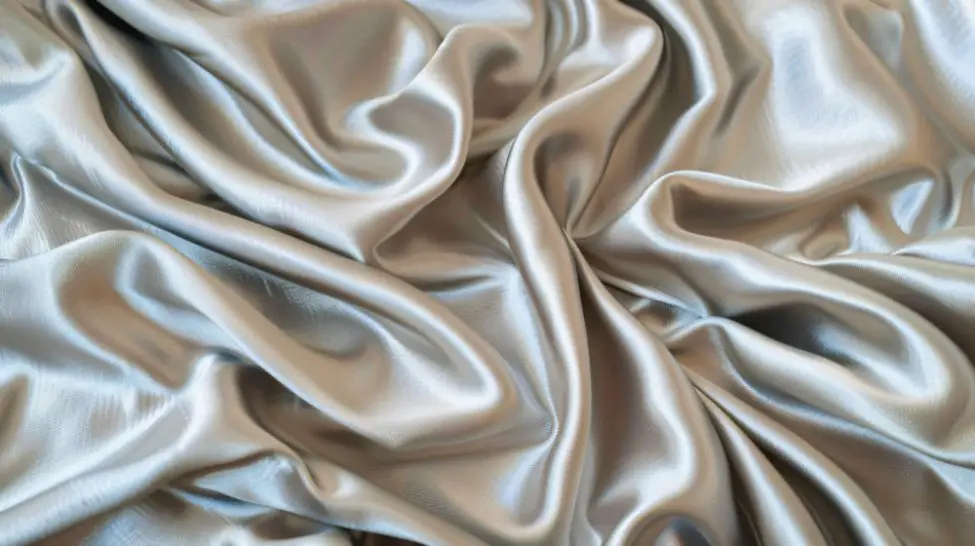
Picture a fabric so light it seems to float, with a shine that catches every ray of sunlight. That’s messaline satin. This special type of satin fabric has been turning heads since the 1890s, and it’s making a comeback in today’s fashion world.
Whether you’re a designer searching for the perfect drape, an eco-conscious shopper wanting to make better choices, or someone who simply loves beautiful textiles, this guide will tell you everything about messaline satin. We’ll explore its French origins, compare it to other satins like charmeuse and duchess satin, and help you understand if it’s the right choice for your next project.
Table of Contents
- What Is Messaline Satin Fabric?
- The Fascinating History of Messaline
- Technical Deep Dive: How It’s Made
- Types and Variations
- Sustainability and Environmental Impact
- Comparing Messaline to Other Satins
- Fashion and Design Applications
- Complete Care Guide
- Buying Guide: What to Look For
- Working with Messaline Satin
- Frequently Asked Questions
- The Future of Messaline Satin
What Is Messaline Satin Fabric?
Messaline satin is one of the lightest types of satin fabric you can find. It features an extremely high shine and a loose weave that makes it perfect for garments that need to flow and drape beautifully. The name comes from French, and the fabric first appeared around 1890 in France’s textile industry.
Unlike heavier satins such as duchess satin, messaline feels almost weightless in your hands. It’s made using a 5-shaft satin weave, which creates that signature glossy surface on one side while the back remains dull and matte.
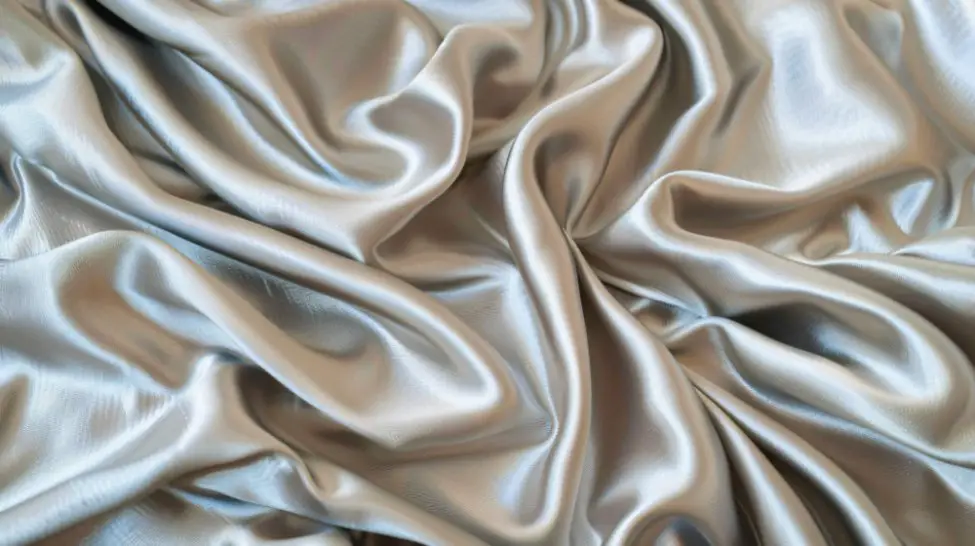
Quick Definition: Messaline is a lightweight, loosely woven satin with an extremely high shine, typically made from silk or rayon fibers. It drapes beautifully but requires careful handling due to its delicate nature.
Key Characteristics
- Weight: Very lightweight, one of the lightest satin types available
- Shine: Exceptionally high gloss finish that reflects light intensely
- Drape: Fluid and flowing, perfect for garments that need movement
- Texture: Smooth and silky to the touch
- Structure: Loose weave compared to tightly-woven satins
- Typical Width: 36-45 inches when sold by the yard
The fabric sits somewhere between charmeuse (slightly heavier with more drape) and organza (lighter but stiffer). This makes it perfect for summer dresses, flowing blouses, and delicate scarves where you want shine without weight.
The Fascinating History of Messaline
The story of messaline satin begins in the late 1800s in France, during a time when textile innovation was at its peak. The word “messaline” entered the English language around 1890, borrowed from French textile terminology.
Belle Époque Origins
During the Belle Époque period (roughly 1871-1914), French fashion dominated the Western world. This era saw Paris become the undisputed capital of fashion, and new fabrics were being developed constantly to meet the demands of fashionable society.
Messaline satin was originally made exclusively from silk, making it an expensive luxury fabric worn only by wealthy women. The fabric’s name may have been inspired by Valeria Messalina, a Roman empress known for her extravagant lifestyle, though the exact etymology remains somewhat unclear.
The Golden Age: 1890-1920
Between 1890 and the 1920s, messaline satin enjoyed its peak popularity. Fashion magazines from this period frequently mentioned messaline dresses, especially for evening wear and special occasions. The Smithsonian’s National Museum of American History holds several samples of silk messaline from 1915, showcasing the fabric in colors like gold, blue, and changeable red-green.
During this time, the fabric was primarily used for:
- Evening gowns and cocktail dresses
- Dress linings that added luxury
- Decorative sashes and ribbons
- Delicate undergarments
The Decline and Near Disappearance
By the mid-20th century, messaline became less common. Several factors contributed to this decline:
- Changing fashion preferences: The slim silhouettes of the 1960s and 1970s favored stiffer fabrics that held their shape
- Synthetic alternatives: Cheaper polyester satins became widely available
- Care requirements: Messaline’s delicate nature made it impractical for everyday wear
- Economic factors: Two world wars and the Great Depression reduced demand for luxury textiles
Today, messaline is sometimes considered a “nearly obsolete” fabric. You won’t find it in most regular fabric stores, and many modern sewers have never worked with it. However, this rarity has also made it something of a treasure for vintage fashion enthusiasts and high-end designers.
Modern Revival
Recently, there’s been renewed interest in messaline satin, driven by:
- The slow fashion movement’s appreciation for historic textiles
- Designers seeking unique fabrics with authentic vintage appeal
- The development of more sustainable rayon versions
- Growing demand for lightweight fabrics suitable for warm climates
Technical Deep Dive: How It’s Made
Understanding how messaline satin is made helps explain why it behaves the way it does. Let’s break down the technical details that set this fabric apart.
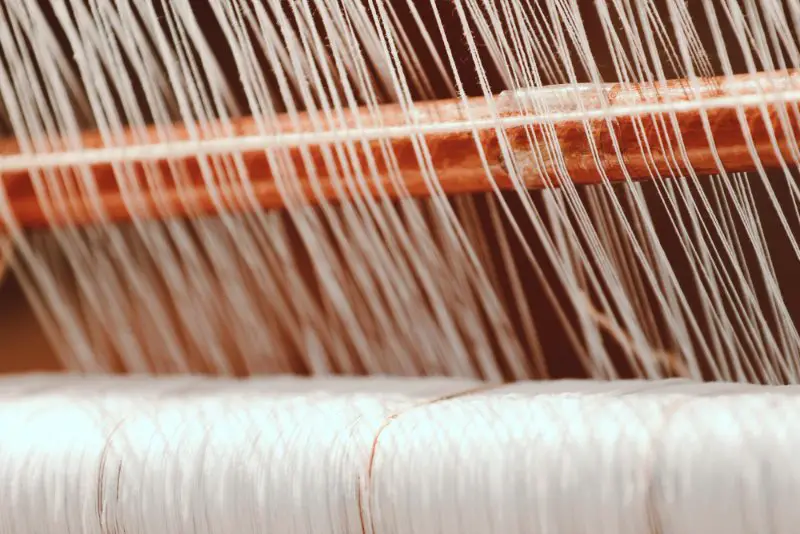
The 5-Shaft Satin Weave
Messaline uses a specific weaving pattern called a 5-shaft (or 5-harness) satin weave. In this weave:
- The weft thread passes over four warp threads
- Then it goes under one warp thread
- This pattern repeats across the entire fabric
This creates long “floats” where threads lie on the surface without crossing over each other. These uninterrupted stretches of thread reflect light directly, creating that signature satin shine.
Why the shine matters: Unlike fabrics with frequent intersections (like plain weave), satin’s long floats don’t scatter light. Instead, light bounces off in one direction, creating a mirror-like finish.
Fiber Requirements
To create true messaline satin, you need filament fibers (long, continuous threads) rather than staple fibers (short pieces). The two main options are:
Silk Messaline
Traditional messaline uses silk fibers pulled directly from silkworm cocoons. Each silk filament can be up to 1,000 meters long. Benefits include:
- Natural protein fiber that’s gentle on skin
- Excellent temperature regulation (cool in summer, warm in winter)
- Natural moisture-wicking properties
- Biodegradable and natural
- Hypoallergenic for most people
However, silk messaline comes with drawbacks:
- Expensive (typically $25-60 per yard)
- Requires careful care (often dry clean only)
- Weakens when wet
- Can be damaged by perspiration
- Raises ethical concerns about silkworm welfare
Rayon Messaline
Modern messaline is often made from rayon, a semi-synthetic fiber created from wood pulp. The manufacturing process involves:
- Harvesting wood (usually pine, beech, or eucalyptus)
- Breaking down the cellulose with chemicals
- Dissolving the cellulose to create a viscous solution
- Extruding the solution through fine holes (spinnerets)
- Solidifying the solution into long filaments
- Washing and finishing the fibers
Rayon messaline offers different advantages:
- More affordable ($8-20 per yard)
- Machine washable (with care)
- Better color retention
- More consistent quality
- Available in a wider range of colors
Thread Count and Weight
Messaline typically has:
- Thread count: 150-200 threads per inch
- Weight: 60-100 GSM (grams per square meter)
- Thickness: Approximately 0.15-0.25mm
For comparison, duchess satin weighs 200-300 GSM, making it roughly three times heavier than messaline.
Quality Indicators
When examining messaline satin, textile professionals look for:
| Quality Factor | High Quality | Lower Quality |
|---|---|---|
| Shine uniformity | Even, consistent luster | Patchy or irregular shine |
| Weave tightness | Loosely woven but even | Too loose (snagging) or too tight (stiff) |
| Drape | Flows smoothly without bunching | Falls awkwardly or creates odd folds |
| Hand feel | Smooth, cool, silky | Rough spots or inconsistent texture |
| Edges | Clean cut that frays minimally | Excessive fraying or unraveling |
Types and Variations
Not all messaline satin is created equal. Let’s explore the main types you’ll encounter and what makes each unique.
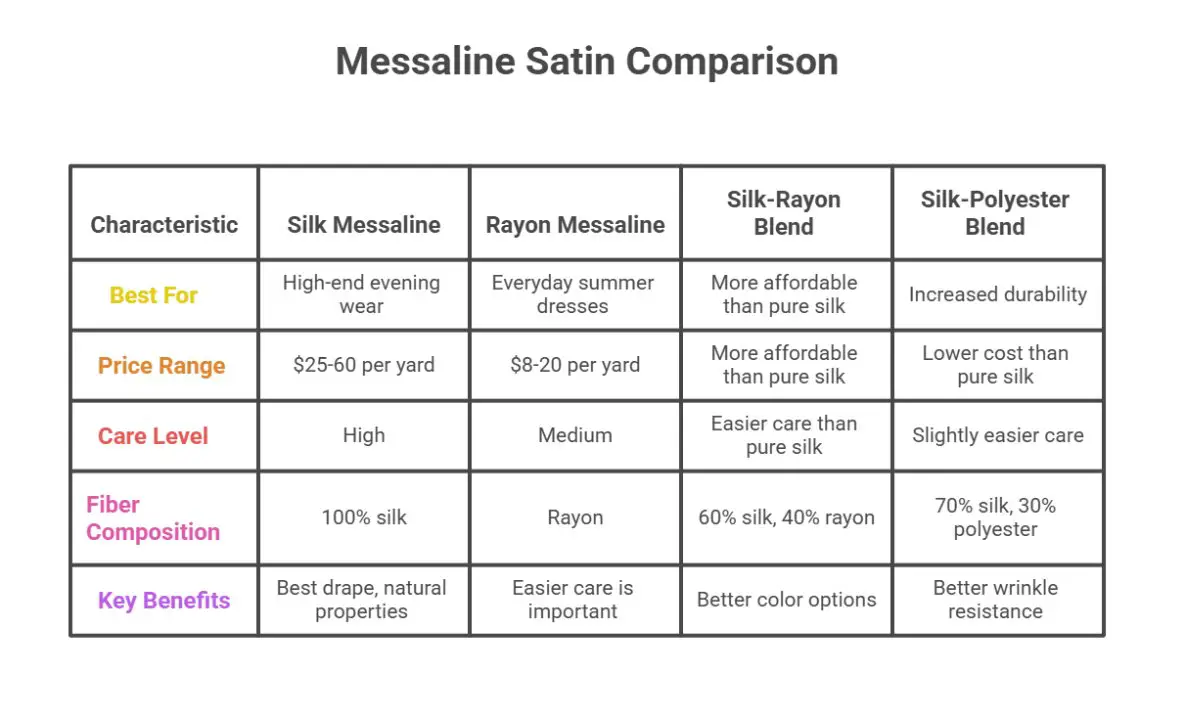
Silk Messaline
This is the original, traditional messaline that set the standard. Made from 100% silk fibers, it represents the luxury end of the spectrum.
Best for:
- High-end evening wear
- Wedding dresses for summer weddings
- Luxury lingerie
- Special occasion scarves and accessories
- When you need the best drape and natural properties
Price range: $25-60 per yard, depending on quality and origin
Care level: High (usually requires dry cleaning or very careful hand washing)
When to Choose Silk Messaline
Pick silk messaline when:
- Budget isn’t your primary concern
- You want a garment that breathes naturally
- The piece will be worn in varying temperatures
- You’re creating a luxury item or heirloom piece
- Natural fibers align with your values
Rayon Messaline
The more accessible modern version, rayon messaline brings many of the same visual qualities at a lower price point.
Best for:
- Everyday summer dresses
- Practice garments (if learning to sew with slippery fabrics)
- Costume design and theatrical productions
- Budget-conscious special occasion wear
- When easier care is important
Price range: $8-20 per yard
Care level: Medium (machine washable on gentle cycle, but still needs attention)
Blended Messaline
Some manufacturers create messaline blends to combine the best properties of different fibers:
Silk-Rayon Blend
Typically 60% silk, 40% rayon. This combination offers:
- More affordable than pure silk
- Better color options than pure silk
- Easier care than pure silk
- Still maintains much of silk’s natural feel
Silk-Polyester Blend
Usually 70% silk, 30% polyester. Benefits include:
- Increased durability
- Better wrinkle resistance
- Slightly easier care
- Lower cost than pure silk
Vintage vs. Modern Messaline
If you come across vintage messaline (pre-1950), you’ll notice some differences from modern versions:
| Aspect | Vintage Messaline | Modern Messaline |
|---|---|---|
| Fiber | Almost always silk | Often rayon or blends |
| Weave quality | Hand-loomed, slight variations | Machine-made, very consistent |
| Width | Usually 36 inches | Typically 45 inches or more |
| Colors | More muted, natural dyes | Brighter, synthetic dyes |
| Condition | May show age (yellowing, brittleness) | Fresh, consistent quality |
| Price | Variable (depends on condition) | More standardized pricing |
Sustainability and Environmental Impact
This is where things get complicated. Messaline satin’s environmental story depends entirely on which type you choose. Let’s be honest about both the good and the bad.
Silk Messaline: The Environmental Reality
Silk seems natural and therefore “green,” but the reality is more complex. Research shows that silk production has a surprisingly high environmental footprint.
The Problems
Resource intensive: Producing just one kilogram of silk requires 187 kilograms of mulberry leaves. That’s a lot of land and resources for a small amount of fabric.
Animal welfare concerns: Traditional silk production kills approximately 5,500 silkworms per kilogram of silk. The cocoons are boiled or steamed with the pupae still inside to prevent them from breaking the silk threads.
High carbon footprint: According to the Higg Index (the textile industry’s sustainability measurement tool), silk actually has a worse environmental impact than many synthetic fabrics. This is due to:
- Large amounts of manure and fertilizer needed for mulberry trees
- Coal-powered sericulture facilities in many regions
- Transportation of raw materials and finished products
- Water usage in processing
Chemical use: Even though silk is natural, conventional silk production often involves pesticides on mulberry trees and chemical treatments during processing.
Better Silk Options
If you want silk messaline but care about sustainability, look for:
GOTS-Certified Organic Silk: The Global Organic Textile Standard ensures:
- No toxic chemicals in production
- Better treatment of silkworms (though they’re still killed in the drying process)
- Sustainable farming practices
- Fair labor conditions
- For every pound of GOTS silk, approximately 160 pounds of CO2 emissions are prevented
Peace Silk (Ahimsa Silk): This allows silkworms to complete their life cycle and emerge as moths before harvesting the cocoons. However:
- The silk quality is slightly lower (broken threads)
- It’s more expensive
- Some “peace silk” producers aren’t truly cruelty-free
- Always verify certifications
Some producers now offer Organic Peace Silk that combines both benefits. One innovative example uses renewable energy and consumes 75% less water than conventional silk production.
Rayon Messaline: A Different Set of Issues
Rayon (viscose) messaline raises completely different environmental concerns. Let’s not sugarcoat it: conventional rayon production is problematic.
The Major Problems
Deforestation: Rayon production is a leading cause of forest loss worldwide. In 2010, China imported dissolving pulp from:
- Canada (ancient forests)
- Indonesia (endangered rainforests)
- Brazil (Amazon region)
These three countries with endangered forests provided about two-thirds of China’s pulp, which was then turned into rayon fabric.
Toxic chemicals: Traditional viscose rayon production uses seriously nasty chemicals:
- Carbon disulfide: A highly toxic chemical that can cause nerve damage, heart disease, and stroke in factory workers
- Sulfuric acid: Corrosive and dangerous
- Sodium hydroxide: Also known as caustic soda, it’s harmful to aquatic life
Factory workers face higher risks of health problems. Communities near rayon factories have reported:
- Contaminated water supplies
- Air pollution
- Soil degradation
- Health problems in children, including developmental issues
Water pollution: Without proper treatment, chemical-laden wastewater flows into rivers, lakes, and oceans, affecting ecosystems and communities downstream.
The Good News: Better Rayon Options
Not all rayon is created equal. Two alternatives offer much better sustainability:
Tencel Lyocell Messaline:
Tencel (a brand name for lyocell) represents a major improvement. Made by Austrian company Lenzing, it features:
- Closed-loop production: Over 99% of water and solvents are recycled and reused
- Non-toxic solvents: Uses N-Methylmorpholine N-oxide (NMMO) instead of carbon disulfide
- 75% less water than conventional rayon production
- FSC-certified wood sources: Ensures wood comes from sustainably managed forests
- Renewable energy: Some facilities use solar power
- Biodegradable: Breaks down completely at end of life
The production process recovers bark and thick liquor from pulp production and uses them as energy sources. Municipal solid waste provides additional heat.
Modal Messaline:
Modal (another type of rayon) made by responsible manufacturers like Lenzing offers:
- Made from beech trees (fast-growing and requiring less water)
- More durable than standard rayon
- Softer hand feel
- Better color retention
However, not all modal is sustainable. Always check for certifications like FSC (Forest Stewardship Council) to ensure the trees come from responsibly managed forests.
Watch out for greenwashing: Some brands market rayon as “eco-friendly” simply because it comes from trees. Don’t be fooled. Unless it’s specifically Tencel lyocell or certified sustainable modal with a closed-loop process, standard rayon has serious environmental problems.
Making the Most Sustainable Choice
Here’s your sustainability decision flowchart for messaline satin:
Consider if another fabric might work
Yes → Look for silk options
No → Consider Tencel lyocell
GOTS organic? Peace silk? Both?
Verify with third-party certification
Look for Tencel™ brand
Check for FSC wood certification
Avoid conventional viscose rayon
Vintage messaline skips new production entirely
Check quality carefully
The Bottom Line on Sustainability
The most sustainable messaline satin is the kind you don’t buy new. If you’re truly committed to reducing environmental impact:
- Buy secondhand: Vintage messaline or previously owned garments
- Choose Tencel lyocell: If buying new, this is your best bet
- Look for GOTS organic peace silk: If silk is non-negotiable
- Avoid conventional rayon: The environmental and health costs are too high
- Care for what you own: Making garments last longer is always sustainable
Use our Satin Fabric Care Calculator to get personalized washing instructions that will help your messaline pieces last longer.
Comparing Messaline to Other Satins
Confused about which satin to choose? You’re not alone. The satin family includes many types, each with distinct properties. Let’s compare messaline to its closest relatives so you can make the right choice.
Messaline vs. Charmeuse Satin
Charmeuse is probably messaline’s nearest cousin. Both are lightweight and drapey, but they have key differences:
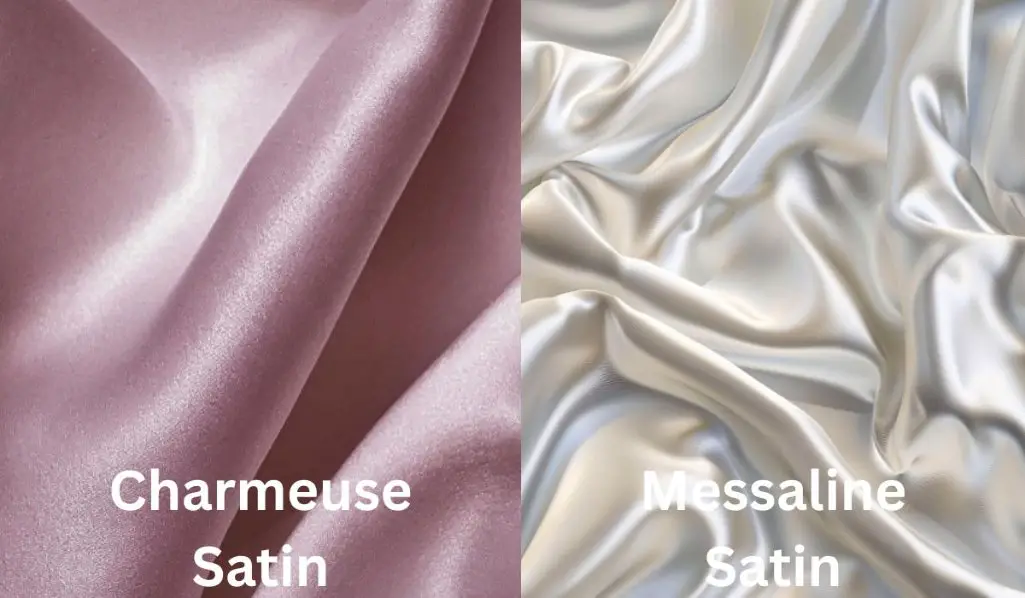
| Feature | Messaline | Charmeuse |
|---|---|---|
| Weight | Lighter (60-100 GSM) | Slightly heavier (100-140 GSM) |
| Shine level | Extremely high, almost mirror-like | High but more subtle |
| Drape | Fluid but can be too limp | Perfect drape with body |
| Weave structure | Loose 5-shaft satin | Tighter 4-shaft satin |
| Best for | Summer wear, flowing garments | Lingerie, evening wear, pillowcases |
| Ease of sewing | Challenging (very slippery) | Difficult but manageable |
| Price range | $8-60 per yard | $10-70 per yard |
Choose messaline when: You need the absolute lightest weight with maximum shine, and the garment will be worn in warm weather.
Choose charmeuse when: You want easier handling, better durability, and a fabric that works well for both clothing and accessories.
Messaline vs. Duchess Satin
These two couldn’t be more different. Duchess satin is messaline’s opposite in almost every way:
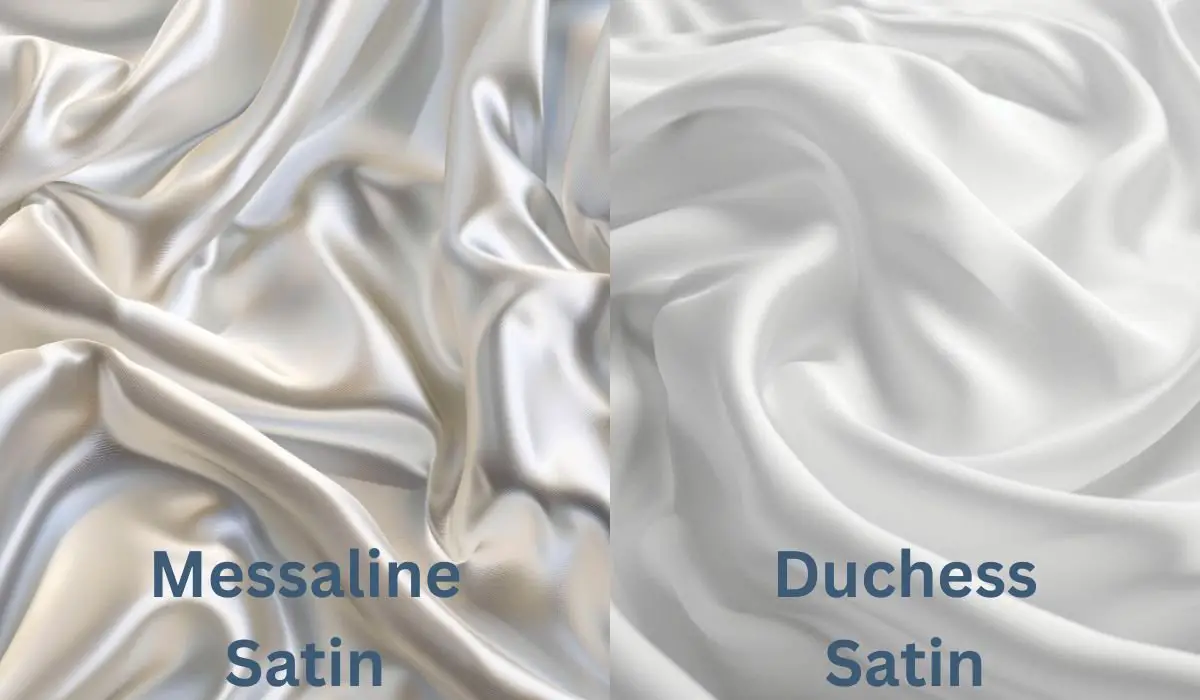
| Feature | Messaline | Duchess Satin |
|---|---|---|
| Weight | Very light | Heavy and substantial |
| Structure | Fluid and flowing | Stiff and structured |
| Shine | Extremely high gloss | Moderate luster |
| Body | Almost no body | Holds its shape firmly |
| Best for | Summer dresses, scarves | Ball gowns, structured dresses |
| Season | Warm weather | All seasons, especially formal events |
| Support needed | No lining usually needed | Can support heavy embellishments |
Choose messaline when: You want a garment that moves with you and feels almost weightless.
Choose duchess satin when: You need structure, formality, and a fabric that can support beading or embroidery.
Messaline vs. Crepe Back Satin
Crepe back satin offers versatility that messaline doesn’t. This reversible fabric has satin on one side and a crepe texture on the other.
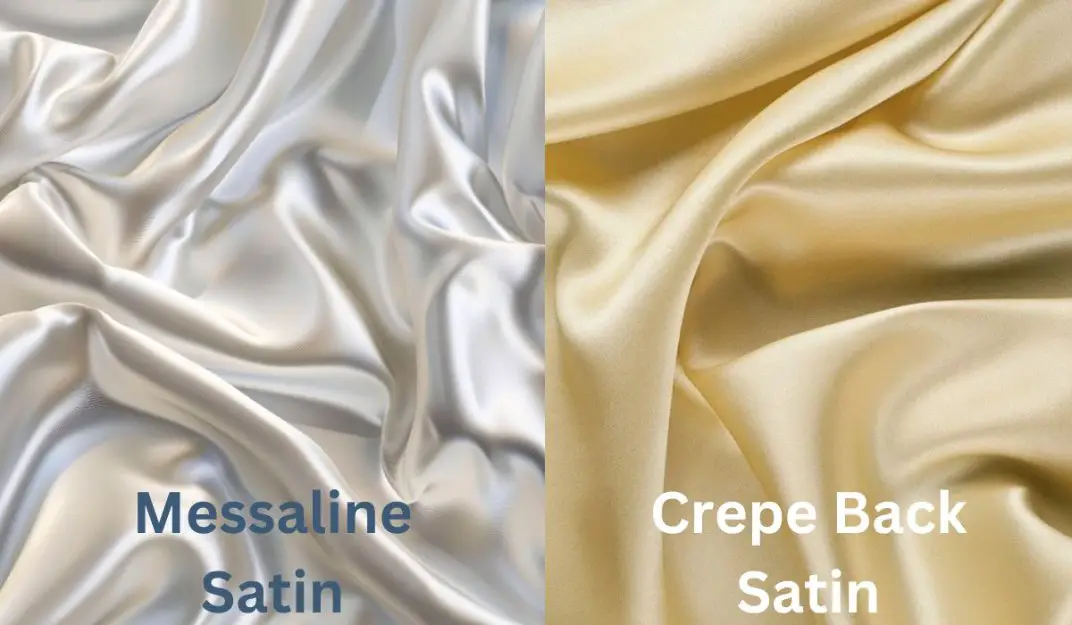
Key differences:
- Reversibility: Crepe back satin gives you two fabric options in one; messaline is single-sided
- Texture variation: Crepe back offers both smooth and textured surfaces; messaline is uniformly smooth
- Weight: Crepe back satin is medium-weight; messaline is lightweight
- Design flexibility: You can show both sides in one garment with crepe back satin
- Price: Crepe back satin typically costs $15-50 per yard
Choose messaline when: You want that specific lightweight shine and don’t need reversibility.
Choose crepe back satin when: Design flexibility matters and you might want to play with contrasting textures.
Messaline vs. Slipper Satin
Slipper satin sits in the middle range of satin weights, making it more practical for everyday items.
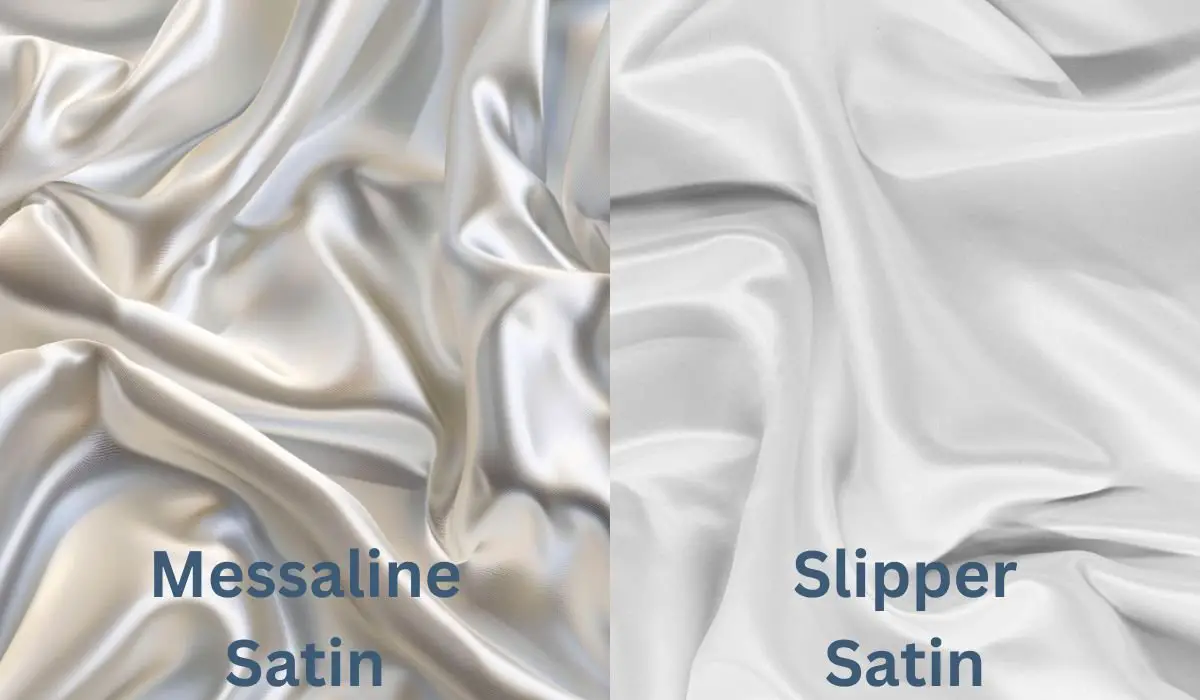
| Feature | Messaline | Slipper Satin |
|---|---|---|
| Weight | Lightweight | Medium-weight |
| Durability | Delicate | More durable |
| Common uses | Dresses, blouses | Shoes, accessories, structured clothing |
| Tightness of weave | Loose | Tight |
| Suitable for beginners | No | More manageable |
Messaline vs. Sateen
Here’s where people get confused. Sateen uses the same satin weave structure but with different fibers:
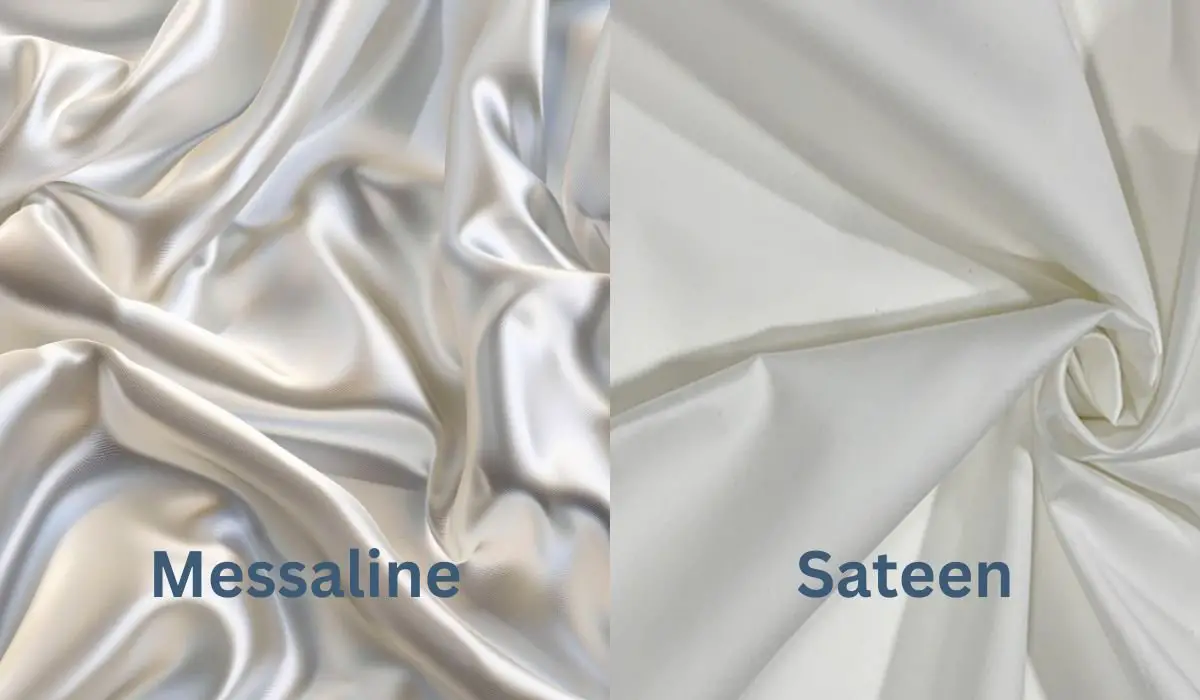
The critical difference:
- Messaline: Made from filament fibers (silk, rayon, or synthetic)
- Sateen: Made from short-staple cotton fibers
This fiber difference creates distinct properties:
- Sateen has less shine than messaline
- Sateen is more durable and washable
- Sateen feels more substantial
- Sateen is better for home goods (sheets, pillowcases)
- Messaline is better for flowing garments
Quick Reference: Which Satin When?
For summer dresses that flow: Messaline or charmeuse
For structured evening gowns: Duchess satin
For lingerie: Charmeuse
For reversible garments: Crepe back satin
For shoes and accessories: Slipper satin
For bed sheets: Sateen (cotton)
For scarves and lightweight layers: Messaline
For beginners learning to sew: Start with slipper satin, not messaline
Fashion and Design Applications
Now for the fun part. What can you actually make with messaline satin? Let’s explore the best uses for this beautiful fabric.
Wedding and Bridal Wear
Messaline has found a special place in warm-weather wedding fashion. Its lightweight nature makes it perfect for:
Summer Wedding Dresses
Imagine a bride in an outdoor garden ceremony in July. A heavy silk gown would be torture. Messaline offers that bridal elegance without the weight. Best applications:
- Flowing A-line gowns with minimal structure
- Bias-cut dresses that highlight the drape
- Destination wedding dresses (easier to pack and travel with)
- Beach wedding styles
- Second wedding or elopement dresses
Bridesmaid Dresses
Bridesmaids appreciate messaline in warmer months. The fabric photographs beautifully and won’t leave your wedding party sweating through the ceremony. It works especially well for:
- Coordinated bridesmaid dresses in different styles
- Slip dress styles
- Convertible infinity dresses
Bridal Accessories
- Lightweight shawls or wraps
- Sashes and belts
- Ring bearer pillows
- Delicate veils (with proper support)
Evening Wear and Special Occasions
This is where messaline truly shines (literally). The fabric was made for moments when you want to make an entrance.
Cocktail Dresses
The high shine of messaline makes it perfect for cocktail hour. Consider these styles:
- Slip dresses with thin straps
- Bias-cut designs that move with your body
- Wrap dresses that flatter multiple body types
- Simple sheaths that let the fabric be the star
Evening Gowns
For formal events where you’ll be indoors with climate control, messaline creates stunning gowns:
- Grecian-style draping
- Cowl necklines that showcase the fabric’s flow
- Asymmetric hemlines
- Minimalist designs where fabric quality matters most
Important note: Messaline’s loose weave and extreme drape make it unsuitable for structured evening gowns. If your design needs boning, heavy structure, or has to support beading, choose duchess satin instead.
Everyday Fashion
Don’t save messaline only for special occasions. When properly cared for, it can work in everyday wardrobes.
Blouses and Tops
Messaline makes beautiful tops for warm weather:
- Camisoles and tank tops
- Button-front blouses (though buttonholes require skill)
- Draped tops with soft gathers
- Kimono-style jackets for light layering
Summer Dresses
Perfect for hot climates and summer vacations:
- Maxi dresses with simple cuts
- Sundresses with spaghetti straps
- Shift dresses (though the fabric won’t hold a boxy shape)
- Wrap dresses
Skirts
Messaline skirts work beautifully when the style suits the drape:
- Bias-cut midi skirts
- Flowing maxi skirts
- Circle skirts (though they’ll be very fluid)
- Slip skirts
Accessories
Sometimes the best use of messaline is in smaller pieces where you can enjoy the luxury without committing to a full garment.
Scarves
Messaline makes exceptional scarves because:
- The weight is perfect (not too heavy, not too light)
- It drapes beautifully around the neck
- The shine adds visual interest to simple outfits
- Square scarves (36″ x 36″) are especially popular
- Long rectangular scarves work well as shawls
Other Accessories
- Hair accessories (scrunchies, headbands)
- Evening bags (lined with sturdier fabric)
- Sashes and belts
- Decorative ribbons
Lingerie and Sleepwear
The sensual drape and smooth feel make messaline a natural choice for intimate apparel.
Best Uses
- Chemises and nightgowns
- Robes (though you’ll need a simple pattern)
- Tap pants and shorts
- Camisoles
Important Considerations
For lingerie, silk messaline is often preferred over rayon because:
- Silk is naturally antibacterial
- It regulates temperature better
- It’s less likely to cause irritation
- It absorbs moisture while staying dry to the touch
Costume and Theater Design
Costume designers love messaline for specific applications:
Period Costumes
For historical accuracy, messaline works well for:
- Late Victorian and Edwardian era gowns (1890-1914)
- 1920s flapper-style dresses
- 1930s bias-cut evening wear
- Fantasy and historical film costumes requiring flowing fabric
Stage Performance
The high shine catches stage lights beautifully, making it perfect for:
- Dance costumes where movement is important
- Musical theater costumes
- Opera and ballet productions
Home Decor (Limited Applications)
Messaline has limited home decor uses due to its delicate nature, but it can work for:
- Decorative pillow covers (with backing fabric)
- Lightweight curtains (more decorative than functional)
- Table runners for special occasions
- Decorative throws
Not recommended for: Upholstery (too delicate), heavy-duty curtains (won’t block light effectively), or tablecloths (stains easily and is hard to clean).
What NOT to Make with Messaline
Being realistic about messaline’s limitations saves you frustration and wasted fabric. Avoid using messaline for:
- Tailored jackets or coats: Needs a fabric with more body
- Pants or trousers: Won’t hold shape; will bag out at knees
- Fitted bodices: Doesn’t provide enough structure
- Children’s clothing: Too delicate for active play
- Activewear: Won’t perform under stress
- Outdoor gear: Not weather-resistant
- Workwear: Too delicate for office or manual work environments
- Garments with many seams: Each seam is a potential weak point
Complete Care Guide
Messaline’s beauty comes with responsibility. Proper care will keep your garments looking gorgeous for years. Neglect them, and you’ll have a sad pile of damaged fabric. Let’s make sure that doesn’t happen.
General Rules for All Messaline
Before we get into specific care by fiber type, here are universal truths:
- Handle gently: Messaline snags easily on rough surfaces, jewelry, and even dry skin
- Store properly: Never on wire hangers; use padded hangers or fold with tissue paper
- Avoid direct sunlight: Can fade and weaken fibers over time
- Keep away from deodorant: Aluminum in antiperspirants can damage and stain both silk and rayon
- Don’t spray perfume directly: The alcohol can stain and damage the fabric
- Act quickly on stains: The longer they sit, the harder they are to remove
Caring for Silk Messaline
Silk messaline requires the most careful attention. Here’s how to keep it beautiful.
Washing Silk Messaline
Professional dry cleaning: The safest option for valuable silk pieces
- Find a dry cleaner experienced with delicate silks
- Mention the fabric is messaline (loose weave)
- Point out any stains before cleaning
- Expected cost: $15-30 per garment
Hand washing (for brave souls):
- Fill a clean basin with cool water (not cold, not warm – about 30°C/85°F)
- Add pH-neutral silk detergent: Use about 1 teaspoon for a sink full of water
- Submerge the garment: Gently press down; don’t agitate or rub
- Soak for 3-5 minutes: No longer, as water weakens silk fibers
- Gently swish: Move the garment slowly through the water
- Rinse thoroughly: Use cool water until no soap remains
- Remove excess water: Never wring. Instead, lay flat on a clean towel, roll up gently, and press
- Air dry flat: On a clean, dry towel away from direct sunlight
Never do this with silk messaline:
- Machine wash (even on gentle cycle)
- Use hot water (destroys silk proteins)
- Use regular laundry detergent (too harsh)
- Wring or twist (breaks fibers)
- Put in the dryer (disaster guaranteed)
- Use chlorine bleach (permanently damages silk)
Drying Silk Messaline
- Method: Air dry only, laid flat
- Location: Indoors, away from direct sunlight and heat sources
- Time: Allow 24-48 hours for complete drying
- When nearly dry: Iron while still slightly damp for best results
Ironing Silk Messaline
- Set iron to silk/low setting: Usually 110-120°C (230-250°F)
- Use a press cloth: Place a thin cotton cloth between iron and fabric
- Iron on the wrong side: Protects the shine
- Keep moving: Don’t let iron sit in one spot
- No steam: Water spots can form on silk
- For stubborn wrinkles: Hang in a steamy bathroom (don’t let water touch fabric)
Caring for Rayon Messaline
Rayon messaline is more forgiving than silk, but it still needs gentle care.
Washing Rayon Messaline
Hand washing (recommended):
- Use cool water: About 30°C (85°F) or cooler
- Add gentle detergent: Regular laundry detergent is fine, but use sparingly
- Soak for 5-10 minutes
- Gently agitate: Swish through the water
- Rinse well: Until water runs clear
- Remove excess water: Roll in a towel
- Dry flat or hang: Both work for rayon
Machine washing (if you must):
- Use a mesh laundry bag: Protects the delicate fabric
- Select delicate/hand wash cycle
- Cold water only
- Use gentle detergent
- Skip the spin cycle if possible: Or use lowest setting
- Remove immediately when done
Drying Rayon Messaline
- Air dry preferred: Hang or lay flat
- Can tumble dry on lowest heat IF NECESSARY: But expect some shrinkage (3-5%)
- Remove while slightly damp: Finish drying flat
- Never use high heat: Will damage fibers permanently
Ironing Rayon Messaline
- Set iron to rayon/medium-low: About 120-150°C (250-300°F)
- Iron while damp is best
- Use wrong side or press cloth
- Steam is okay: Unlike silk, rayon tolerates steam
- Don’t press too hard: Can leave shine marks
Stain Removal for Messaline
Act fast with stains. The longer they set, the harder they are to remove.
For Fresh Stains
Water-based stains (juice, wine, food):
- Blot immediately with clean white cloth (don’t rub)
- For silk: Dab with cool water
- For rayon: Can use club soda
- Blot dry
- Take to dry cleaner ASAP
Oil-based stains (makeup, grease):
- Blot excess with paper towel
- Sprinkle with cornstarch or talcum powder
- Let sit 30 minutes to absorb oil
- Brush off gently
- Take to dry cleaner
For perspiration:
- Silk messaline: Vulnerable to perspiration damage; dry clean after each wear
- Rayon messaline: More resistant; can hand wash
Emergency Stain Treatment
What to NEVER use on messaline:
- Rubbing alcohol (can damage both silk and rayon)
- Chlorine bleach (destroys fibers)
- Acetone/nail polish remover (dissolves some fibers)
- Hot water (sets stains, damages silk)
- Aggressive scrubbing (damages weave)
Storage Tips
Proper storage prevents damage when garments aren’t being worn.
Short-term Storage (Between Wears)
- Hang on padded hangers: Never wire hangers
- Use garment bags: Breathable fabric, not plastic
- Allow to air out: Before storing after wearing
- Keep in cool, dark closet: Away from direct light
- Give garments space: Don’t pack closet too tight
Long-term Storage (Seasonal)
- Clean before storing: Even if it looks clean (body oils attract insects)
- Fold with acid-free tissue paper: Prevents creasing
- Use breathable storage containers: Cotton garment bags or acid-free boxes
- Add cedar blocks or lavender: Natural moth deterrents
- Store in cool, dry place: Not basement (too damp) or attic (too hot)
- Check every 3-4 months: Refold in different places to prevent permanent creases
Care by Season
Messaline’s care needs change with the seasons.
Summer Care
- More frequent washing needed (perspiration)
- Be extra careful with sunscreen and lotions
- Store winter messaline properly with moth protection
- Consider using dress shields to protect underarms
Winter Care
- Watch for static cling (especially with rayon)
- Protect from dry indoor heat
- Be careful around fireplaces (sparks)
- Store summer pieces in climate-controlled space
For personalized care instructions based on your specific garment, try our Satin Fabric Care Calculator. You can also find detailed guidance at How to Care for Satin Clothing.
Buying Guide: What to Look For
Shopping for messaline satin can be tricky, especially if you’re not familiar with fabric quality markers. Here’s how to buy smart and avoid disappointment.
Where to Buy Messaline Satin
Online Fabric Retailers
The internet has made specialty fabrics more accessible:
Pros:
- Wider selection than local stores
- Can find authentic vintage messaline
- Often better prices
- Can order samples first
- Reviews from other buyers
Cons:
- Can’t feel the fabric before buying
- Color may vary from screen to reality
- Shipping costs add up
- Returns can be complicated
Recommended online sources:
- Mood Fabrics (high-end selection)
- Dharma Trading Company (for dyeable silk)
- Fabric.com (variety of satins)
- Thai Silk (excellent silk options)
- Etsy (vintage and artisan-dyed messaline)
Local Fabric Stores
If you have a good fabric store nearby, start there:
Pros:
- Can touch and see fabric in person
- No shipping wait time
- Staff can offer advice
- Easy returns if needed
- Support local business
Cons:
- Limited selection
- May not carry messaline specifically
- Often higher prices
- May only have synthetic versions
Specialty Silk Importers
For the highest quality silk messaline, consider importers who work directly with silk manufacturers:
- Often have better prices than retail
- Higher quality standards
- May require minimum orders
- Best for serious dressmakers
Price Guide
Budget Range
$8-15/yard
Rayon messaline
Basic quality
Limited color range
Online retailers
Mid-Range
$15-30/yard
Better rayon
Silk blends
Good color selection
Most fabric stores
Premium
$30-60/yard
Pure silk messaline
High quality
Wide color range
Specialty retailers
Luxury
$60+/yard
Designer silk
GOTS certified
Peace silk options
Exclusive suppliers
Quality Checklist
Before buying, evaluate these factors:
The Touch Test
- Smooth and cool: Should feel pleasant against skin
- No rough spots: Quality should be consistent across the entire bolt
- Slight slipperiness: Should glide between fingers
- Soft without being mushy: Should have some body despite being lightweight
The Drape Test
- Hold up a yard and let it hang
- Should fall in smooth, fluid folds
- No stiffness or resistance
- Shouldn’t look limp or lifeless
The Shine Test
- Shine should be uniform across fabric
- No dull patches or variations
- Should reflect light consistently
- Shouldn’t look “plastic-y” (sign of poor quality synthetic)
The Weave Inspection
- Hold up to light and examine
- Weave should be even (though loose)
- No thick or thin sections
- Consistent throughout the fabric
Questions to Ask Suppliers
Don’t be shy about asking these questions:
- What is the fiber content? (Silk, rayon, blend, percentage)
- What is the weight in GSM? (Should be 60-100 for messaline)
- What is the width? (Usually 36-45 inches)
- Is it pre-shrunk? (Important for rayon)
- What is the country of origin?
- Are there any certifications? (GOTS, OEKO-TEX, FSC for rayon)
- What is the return policy?
- Can I order a sample first?
- What is the recommended care method?
- Is there color variation between dye lots?
Red Flags to Avoid
Walk away if you notice:
- Price too good to be true: If “silk” messaline is $5 per yard, it’s probably not silk
- Vague fiber content: “Silk-like” or “satin blend” without specifics
- No return policy: Reputable sellers stand behind their products
- Inconsistent fabric: Variations in thickness or shine
- Chemical smell: Indicates poor processing or excess chemicals
- Excessive wrinkling in the bolt: Suggests poor handling or low quality
- Seller can’t answer basic questions: About fiber content or care
How Much to Buy
Messaline’s fluid drape affects yardage calculations. General guidelines:
| Project Type | 45″ Width Fabric | Notes |
|---|---|---|
| Simple scarf (36″ square) | 1.25 yards | Includes hem allowance |
| Camisole top | 1-1.5 yards | Depends on size and style |
| Slip dress | 2-3 yards | More for longer lengths |
| Blouse | 2-2.5 yards | Depends on sleeve style |
| Maxi dress | 4-5 yards | Add extra for tall heights |
| Robe or kimono | 3-4 yards | Depends on length |
Pro tip: Always buy an extra half yard for messaline projects. The slippery fabric is prone to cutting mistakes, and matching dye lots later can be impossible.
Ordering Samples
For expensive messaline, always order samples first:
- Typical sample size: 4″ x 4″ to 8″ x 8″
- Cost: Usually $1-3 per sample
- What to check: Color accuracy, drape, hand feel, weight
- Bring to window for true color evaluation
- Wash sample to test shrinkage and color fastness
Working with Messaline Satin
Messaline satin fights back when you try to sew it. That extreme slipperiness that makes it beautiful also makes it one of the most challenging fabrics for home sewers. But don’t let that scare you off. With the right techniques, you can absolutely work with this fabric successfully.

Before You Start: Honest Skill Assessment
Let’s be real: messaline isn’t a beginner fabric. You should have experience with:
- Sewing woven fabrics (not just knits)
- Working with slippery fabrics like charmeuse or silk
- Following complex patterns accurately
- Using a sewing machine confidently
If messaline is your first satin project, practice first with slipper satin or cotton sateen. They use similar techniques but are more forgiving.
Pre-Sewing Preparation
Pre-washing
For rayon messaline:
- Hand wash or gentle machine wash before cutting
- Expect 3-5% shrinkage
- Air dry flat
- Iron while slightly damp
For silk messaline:
- Many sewers skip pre-washing silk
- If you wash the finished garment, it will shrink slightly
- Some prefer to dry clean the fabric before cutting
- Press well before cutting
Pattern Selection
Choose patterns designed for fluid fabrics:
- Look for: Bias-cut designs, slip dresses, draped styles, minimal seams, simple shapes
- Avoid: Tailored jackets, fitted bodices with darts, anything requiring structure, designs with lots of seams
- Best pattern features: French seams, bias binding, faced necklines (no separate facings)
Cutting Messaline
This is where most mistakes happen. Take your time.
Setup
- Use a large, flat surface: Dining table or clean floor
- Cover surface with sheet or muslin: Prevents slipping
- Ensure good lighting: You need to see clearly
- Have weights ready: Not pins for holding pattern
Cutting Process
- Lay fabric in single layer: Never cut messaline folded (too slippery)
- Allow fabric to relax: Let it sit flat for 30 minutes before cutting
- Use pattern weights: Place every 6-8 inches around pattern pieces
- Mark carefully: Use chalk or washable fabric pen (test first)
- Use sharp scissors or rotary cutter: Dull blades will snag the weave
- Cut with long, smooth strokes: Don’t hack at the fabric
- Cut one layer at a time: Yes, this takes longer. Do it anyway.
Marking
- Tailor’s chalk: Test on scrap first (some leave permanent marks)
- Thread tracing: Most reliable for messaline
- Tailor’s tacks: Work well for marking darts
- Avoid: Tracing wheels (can damage fabric), disappearing ink pens (can stain permanently)
Sewing Techniques
Machine Setup
Needle:
- Use fine/sharp needle: Size 60/8 or 70/10
- Replace needle after every project (dull needles snag)
- Microtex or sharp point needles work best
Thread:
- Fine silk or polyester thread
- Size 50 or 60 weight
- Match fiber when possible (silk thread for silk fabric)
Machine settings:
- Stitch length: 2.0-2.5mm (slightly shorter than normal)
- Tension: Slightly looser than normal (test on scrap)
- Presser foot pressure: Reduce if possible
- Speed: Slow and steady wins the race
Preventing Slipping
The fabric will try to slide away from you. Fight back:
- Use tissue paper: Place tissue between fabric layers and machine; tear away after sewing
- Pin parallel to seam line: If you must pin, place within seam allowance
- Use clips instead of pins: Fabric clips work well for holding without damaging
- Hand baste first: For important seams, hand baste before machine sewing
- Use walking foot: If your machine has one, this helps feed fabric evenly
Seam Techniques
French seams (best choice):
- Sew wrong sides together (5/8″ from edge)
- Trim to 1/8″
- Press seam open
- Fold right sides together along seam line
- Sew again, enclosing raw edges
- Result: Clean, professional finish with no raveling
Narrow hem (for edges):
- Press under 1/4″
- Press under another 1/4″
- Edge stitch close to fold
- Keep tension even for smooth hem
Bias binding (for necklines, armholes):
- Cut bias strips 1.5″ wide
- Fold in half lengthwise, wrong sides together
- Sew to garment edge, then fold over and stitch
- Creates clean, professional finish
Common Problems and Solutions
| Problem | Cause | Solution |
|---|---|---|
| Puckered seams | Tension too tight or fabric pulled | Loosen tension; don’t pull fabric as you sew |
| Skipped stitches | Wrong needle type or dull needle | Use sharp needle; replace regularly |
| Fabric slipping | Natural property of messaline | Use tissue paper method; baste first |
| Snagged threads | Rough hands or jewelry | Moisturize hands; remove jewelry |
| Uneven hems | Fabric stretching on bias | Let garment hang 24 hours before hemming |
| Needle holes visible | Needle too large or multiple stitching | Use finer needle; avoid ripping out seams |
Finishing Techniques
Pressing
- Press each seam as you sew (don’t wait until end)
- Use pressing cloth always
- Press from wrong side
- Use silk setting (low temperature)
- Don’t slide iron; lift and press down
- For silk: No steam (can water spot)
- For rayon: Light steam okay
Interfacing
Messaline rarely needs interfacing, but if you must:
- Use only the lightest fusible interfacing
- Test on scrap first (can damage some satins)
- Sew-in interfacing may be safer
- Use silk organza as sew-in interfacing for silk messaline
Closures
Zippers:
- Hand-picked zippers look best
- Use fine zipper (size 2 or 3)
- Stabilize zipper area with silk organza
- Install carefully to avoid puckering
Buttons:
- Use interfacing behind buttonholes
- Make test buttonhole on scrap first
- Consider hidden snap closures instead
- Fabric-covered buttons look elegant
Alternative closures:
- Hooks and eyes work well
- Ties or sashes avoid buttonholes entirely
- Slip-on styles eliminate closures
Final Tips for Success
- Work slowly: Rushing causes mistakes with this fabric
- Test everything on scraps: Stitches, tension, pressing temperature
- Keep workspace clean: Messaline picks up lint and threads easily
- Take breaks: Fatigue leads to errors
- Plan for mistakes: That extra half yard comes in handy
- Read pattern instructions completely: Before cutting or sewing
- Watch video tutorials: Seeing techniques helps more than reading
For more sewing guidance, check out our complete dress sewing tutorial.
Frequently Asked Questions
Messaline satin is typically made from either silk or rayon fibers. Traditional messaline (from the 1890s-1920s) was made exclusively from silk. Modern messaline is more commonly made from rayon, which is a semi-synthetic fiber created from wood pulp. Some manufacturers also create blended versions combining silk with rayon or polyester.
Yes, messaline satin is excellent for summer wear. It’s one of the lightest weight satins available (60-100 GSM), which makes it comfortable in warm weather. Silk messaline is particularly good because it naturally regulates temperature and wicks moisture. The loose weave allows for some breathability, though it’s still less breathable than plain weave fabrics.
Messaline is lighter and has more shine than charmeuse. While both are lightweight satins with beautiful drape, messaline weighs 60-100 GSM compared to charmeuse’s 100-140 GSM. Messaline has an extremely high, almost mirror-like shine, while charmeuse has a more subtle luster. Charmeuse is easier to sew with and more durable, making it better for beginners.
It depends on the fiber content. Silk messaline usually requires dry cleaning or very careful hand washing in cool water with silk-specific detergent. Rayon messaline can be hand washed or machine washed on the gentle cycle with cold water, though hand washing is safer. Both types should be air dried flat and never put in the dryer.
Messaline is relatively wrinkle-resistant compared to other fabrics, though it’s not wrinkle-proof. The satin weave structure helps resist wrinkles. However, if messaline does wrinkle, the creases can be stubborn to remove. Store messaline garments on padded hangers or folded with tissue paper to prevent creasing.
The sustainability of messaline depends entirely on its fiber source. Conventional silk and rayon messaline both have significant environmental impacts. However, sustainable options exist: GOTS-certified organic peace silk, Tencel lyocell (made through a closed-loop process that recycles 99% of solvents and water), and FSC-certified rayon from sustainably managed forests. The most sustainable choice is buying secondhand or vintage messaline.
Silk messaline is expensive ($25-60 per yard) because silk is a luxury fiber that requires labor-intensive production. Each kilogram of silk needs 187 kilograms of mulberry leaves to feed the silkworms. The loose weave and delicate nature of messaline also require more careful handling during production. However, rayon messaline is more affordable at $8-20 per yard.
Messaline is not recommended for beginners. The extreme slipperiness and loose weave make it one of the most challenging fabrics to work with. Beginners should gain experience with easier satins like slipper satin or cotton sateen first. If you’re determined to try messaline, practice with inexpensive rayon messaline before attempting silk, and choose simple pattern designs.
The main difference is fiber content. Messaline is made from filament fibers (long continuous threads) like silk or rayon. Sateen is made from short-staple cotton fibers. Both use the satin weave structure. Messaline has much more shine and a more fluid drape than sateen. Sateen is more durable and easier to care for, making it better for bed sheets and everyday items.
Store messaline on padded hangers (never wire) in breathable garment bags, or fold with acid-free tissue paper. Keep in a cool, dark closet away from direct sunlight. For long-term storage, clean the garment first, fold with tissue paper, and store in breathable containers with natural moth deterrents like cedar or lavender. Check and refold every 3-4 months to prevent permanent creases.
Messaline can be found at specialty fabric retailers online (Mood Fabrics, Thai Silk, Dharma Trading Company), some local high-end fabric stores, and vintage textile dealers on Etsy. Because messaline is less common than other satins, you may need to search specifically for it or ask retailers if they can special order it. Always order samples before buying large quantities.
Messaline satin works best for flowing garments like summer dresses, lightweight blouses, scarves, evening wear, lingerie, and slip dresses. It’s perfect for designs that showcase drape and movement. Messaline is not suitable for structured garments, tailored pieces, activewear, or anything requiring body and shape retention.
The Future of Messaline Satin
What’s next for this nearly-forgotten fabric? The future of messaline satin looks surprisingly bright, driven by several converging trends.
The Slow Fashion Movement
As consumers push back against fast fashion, there’s growing appreciation for historic textiles with authentic heritage. Messaline’s French Belle Époque origins give it the kind of story that resonates with people seeking meaningful, quality pieces.
Fashion historians and vintage enthusiasts are rediscovering messaline’s unique properties, creating demand among independent designers and small-batch producers who value distinctiveness over mass-market appeal.
Innovation in Sustainable Production
The biggest barrier to messaline’s comeback has been its environmental impact. But that’s changing:
Next-Generation Fibers
Companies are developing new sustainable options:
- Tencel messaline: Already available from specialty suppliers, combining traditional drape with eco-friendly production
- Recycled silk messaline: Using reclaimed silk from textile waste
- Lab-grown silk: Companies like Bolt Threads are creating spider silk proteins through fermentation, which could eventually be woven into messaline-style fabrics
- Bio-based alternatives: Orange Fiber (from citrus waste) and Piñatex (from pineapple leaves) show that plant-based luxury fabrics are possible
Improved Manufacturing
Textile mills are adopting:
- Waterless dyeing technologies
- Renewable energy in production
- Zero-waste weaving techniques
- Blockchain tracking for transparency
Climate-Appropriate Fashion
As global temperatures rise, demand for lightweight, breathable fabrics is growing. Messaline’s extremely low weight makes it ideal for hot climates and indoor spaces with minimal air conditioning.
Fashion designers in warm-climate regions (Southeast Asia, Middle East, Mediterranean) are showing increased interest in messaline for both traditional and contemporary designs.
Digital Fashion and Physical Garments
Interestingly, the digital fashion movement might help physical messaline. As people buy fewer physical garments but want those pieces to be special, there’s room for distinctive fabrics like messaline that offer unique visual and tactile properties you can’t replicate digitally.
What Designers Are Saying
Some independent fashion designers are already incorporating messaline into their collections:
“Messaline has a movement that’s different from any modern fabric. When you see it on a runway under lights, it creates an effect you just can’t get with regular satin.” – Designer interview from Textile Monthly, 2024
Challenges Ahead
Despite the positive trends, messaline faces hurdles:
- Education gap: Most sewers and designers have never worked with it
- Supply chain: Limited production means higher prices
- Care requirements: Modern consumers want machine-washable everything
- Competition: Modern performance fabrics offer easier care with similar drape
- Name recognition: Most shoppers have never heard of messaline
Predictions for the Next Decade
Based on current trends, here’s what we’re likely to see:
- Niche luxury market: Messaline will remain a specialty fabric for discerning customers willing to pay premium prices
- Sustainable versions grow: Tencel and recycled options will become more available
- Designer interest increases: Independent designers will rediscover messaline for unique collections
- Limited mainstream adoption: Fast fashion won’t embrace messaline (too delicate, too expensive)
- Regional popularity: Stronger demand in warm climates and among eco-conscious consumers
- Educational resources expand: More tutorials and guides for working with messaline
How You Can Support Better Messaline
If you love messaline and want to see sustainable options thrive:
- Choose Tencel lyocell or GOTS-certified organic silk
- Buy from transparent suppliers who share production details
- Support independent designers using sustainable messaline
- Care for your messaline garments so they last decades
- Share knowledge about this fabric with other sewers and fashion enthusiasts
- Seek out vintage messaline to give it new life
Key Takeaways
What is messaline satin? It’s a lightweight, loosely woven satin with extremely high shine, typically made from silk or rayon. It originated in France around 1890 and was popular through the 1920s.
Why choose messaline? When you need the lightest weight satin with maximum shine and fluid drape. Perfect for summer dresses, flowing blouses, scarves, and evening wear.
Sustainability matters: Conventional silk and rayon both have serious environmental problems. Choose GOTS-certified organic peace silk or Tencel lyocell for eco-friendly options. Better yet, buy secondhand.
It’s not for beginners: Messaline’s extreme slipperiness makes it one of the most challenging fabrics to sew. Practice with easier satins first.
Care makes the difference: Proper care extends the life of messaline garments dramatically. Silk usually needs dry cleaning; rayon can be hand washed. Both should be stored carefully.
Know the alternatives: Charmeuse is easier to work with, duchess satin is more structured, crepe back satin is more versatile. Choose messaline only when its specific properties are what you need.
The future is mixed: Messaline will likely remain a niche luxury fabric rather than achieving mainstream popularity. But growing interest in sustainable textiles and historic fabrics may give it new life.
Final Thoughts
Messaline satin isn’t for everyone, and that’s okay. It’s a specialty fabric that demands respect, careful handling, and thoughtful use. But for those moments when you want to create something truly special, when you need a fabric that moves like water and catches light like diamonds, messaline delivers something no other fabric can match.
Whether you choose silk for its natural properties or rayon for practical reasons, whether you buy vintage pieces or invest in sustainable modern production, messaline satin offers a connection to textile history and a commitment to quality that stands apart from mass-produced alternatives.
The key is making informed choices. Understand what you’re buying, where it comes from, how it was made, and how to care for it. Use the right techniques when working with it. And most importantly, appreciate it for what it is: a beautiful, delicate fabric with over a century of history.
As you start your messaline journey, remember that every expert was once a beginner who didn’t give up. Take your time, practice on scraps, and don’t be discouraged by mistakes. The reward is garments that flow, shine, and feel unlike anything else in your wardrobe.
Happy sewing, and may your messaline always drape beautifully.