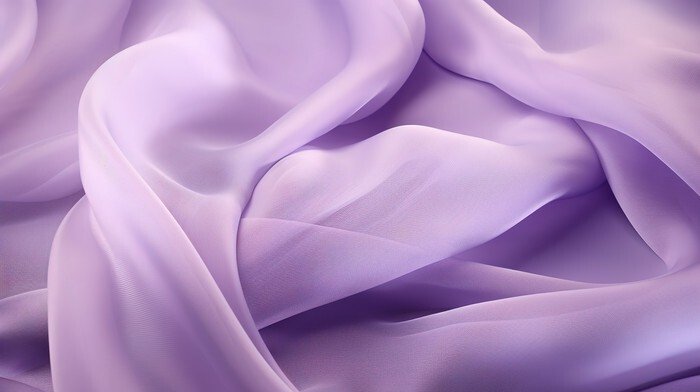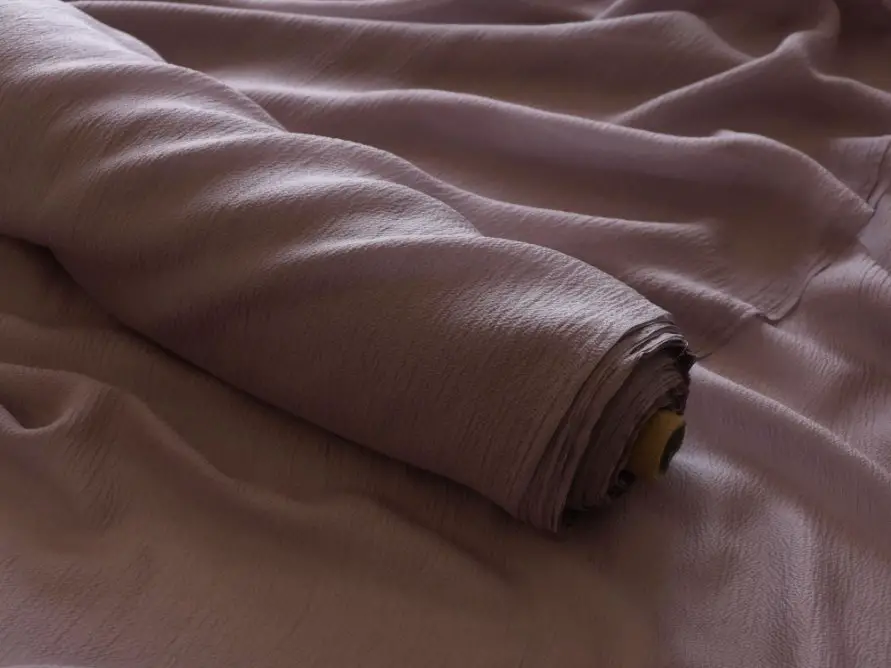

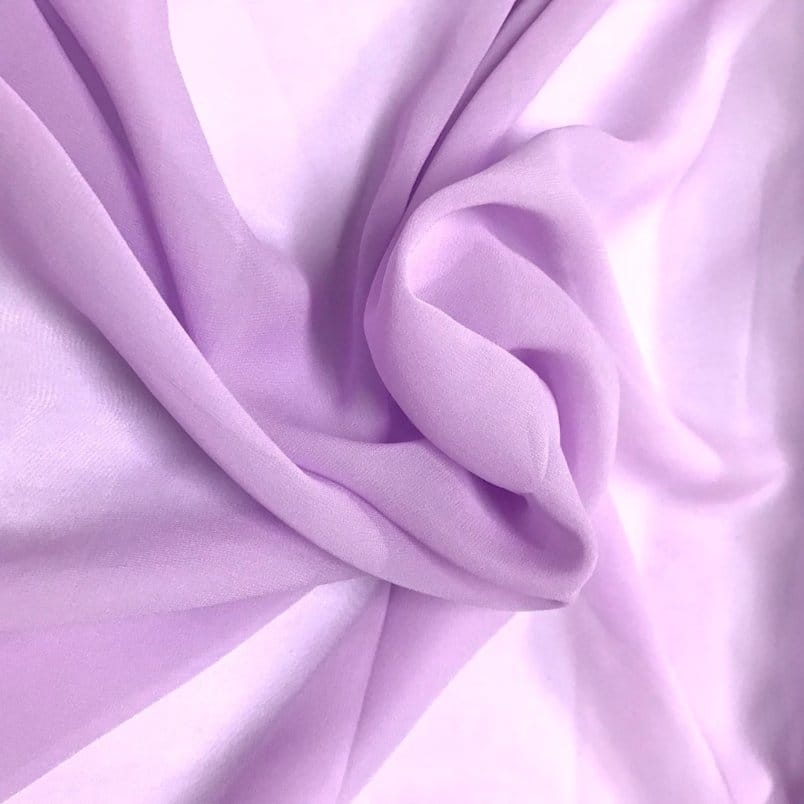
The lightweight, elegant variety of georgette that combines the best of both worlds
Table of Contents
- Introduction
- What is Georgette Chiffon Fabric?
- Georgette Chiffon vs Regular Georgette
- The History of Georgette Fabric
- Types of Georgette Fabric
- Georgette vs Other Fabrics
- Properties and Characteristics
- Luxury and Quality Indicators
- Sustainability and Environmental Impact
- Fashion and Design Uses
- Home Décor Applications
- How to Sew with Georgette
- Complete Care Guide
- Buying Guide
- Frequently Asked Questions
- Conclusion
Introduction
If you love the ethereal quality of chiffon fabric but need something with more structure and durability, georgette chiffon might be exactly what you’re looking for. This beautiful textile combines the lightweight, flowing nature of chiffon with the strength and body of georgette fabric, creating a versatile material that’s perfect for elegant garments that need to move beautifully while holding their shape.
Georgette chiffon (also called chiffon georgette) is a specific variety of georgette that’s thinner and softer than standard georgette. It bridges the gap between delicate chiffon and traditional crepe georgette, offering designers and home sewers a fabric that drapes like chiffon but won’t tear as easily. This makes it particularly popular for summer wedding dresses, flowing evening gowns, and lightweight sarees where you need both elegance and practicality.
Whether you’re a home sewer planning your first georgette chiffon project, a bride searching for the perfect lightweight wedding dress fabric, or a fashion enthusiast wanting to understand this specialized textile, this guide covers everything you need to know. We’ll explore what makes georgette chiffon unique, how it differs from both regular chiffon and standard georgette, proper care techniques, sewing tips, and sustainable options.
What is Georgette Chiffon Fabric?
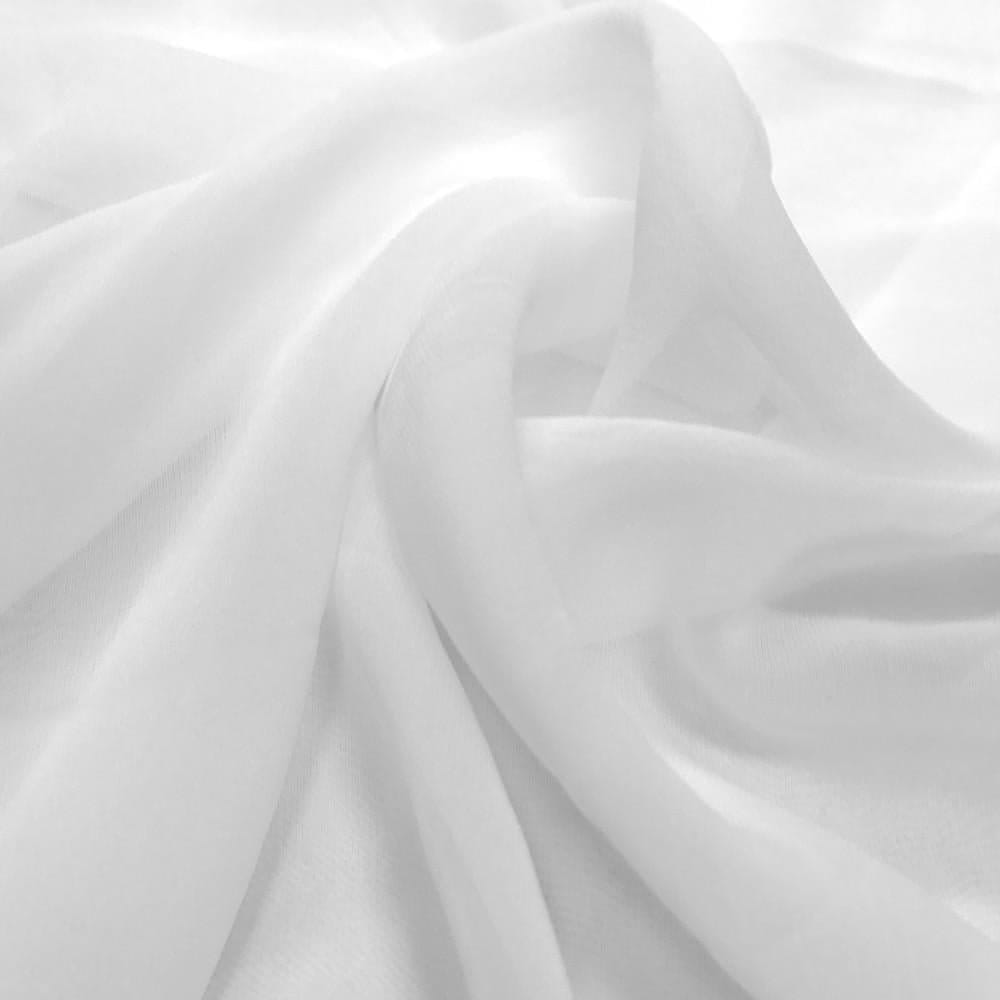
Georgette chiffon (sometimes called chiffon georgette) is a lightweight variety of georgette fabric that’s thinner and softer than traditional crepe georgette. Think of it as the delicate cousin in the georgette family – it maintains georgette’s signature crinkled texture and strength but with a weight and hand feel closer to silk chiffon.
Like all georgette fabrics, georgette chiffon gets its characteristic pebbled surface from a special weaving technique using tightly twisted yarns in both the warp (lengthwise) and weft (crosswise) directions. These yarns are twisted in opposite directions – S-twist and Z-twist – which creates the fabric’s slight crinkle and bouncy texture. However, georgette chiffon uses finer yarns and a slightly looser weave than standard georgette, resulting in a more delicate, flowing fabric.
After weaving with these highly twisted yarns, the fabric undergoes special finishing treatments that give it the thin, elegant transparency and bouncy texture that sets it apart from heavier georgette varieties. The result is a fabric that offers more coverage and durability than regular polyester chiffon while remaining lighter and more fluid than standard georgette.
Key Identifying Features of Georgette Chiffon
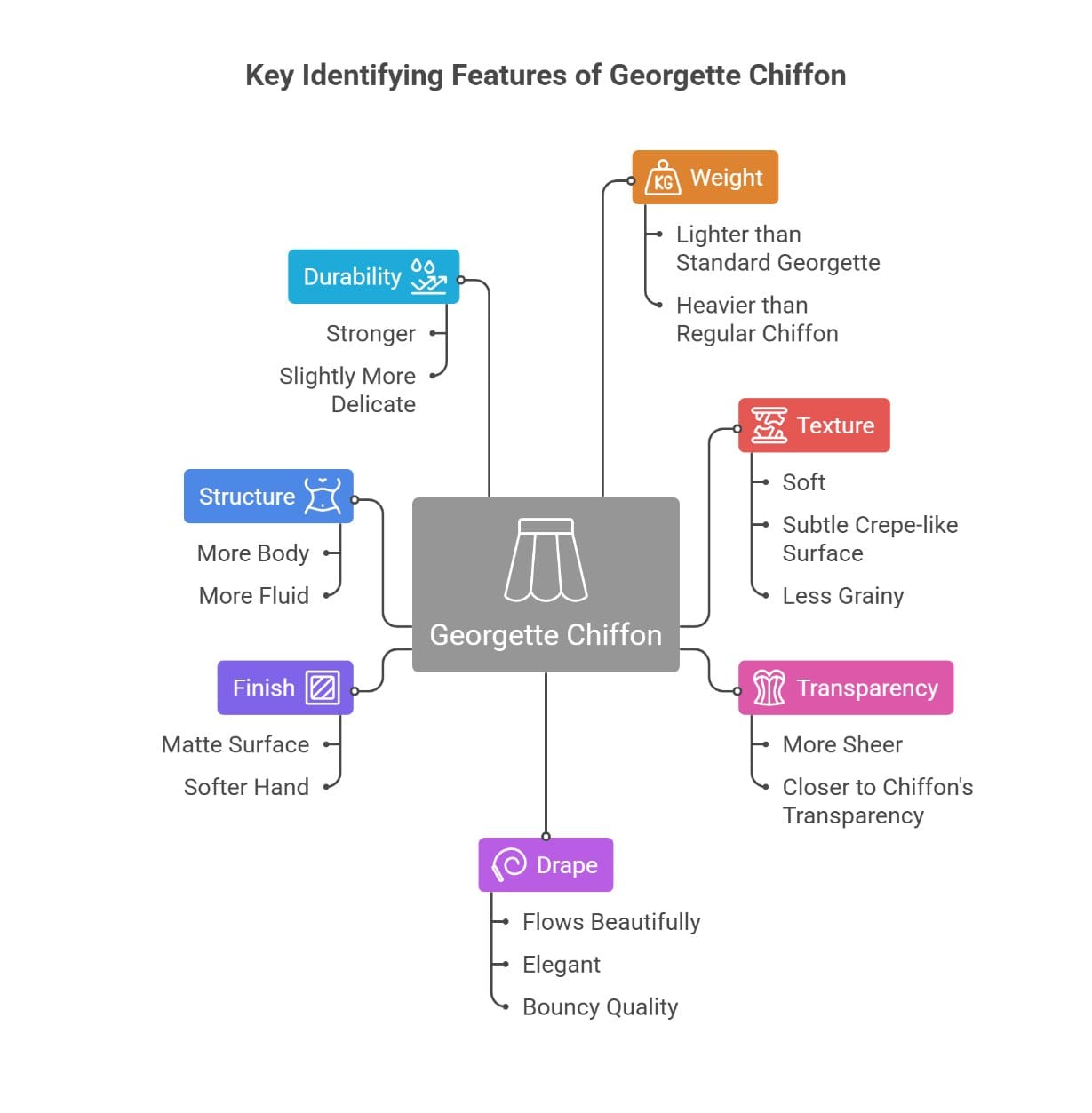
You can recognize georgette chiffon by these characteristics:
- Weight: Lighter than standard georgette but slightly heavier than regular chiffon
- Texture: Soft with a subtle crepe-like surface, less grainy than traditional georgette
- Transparency: More sheer than regular georgette, closer to chiffon’s transparency
- Drape: Flows beautifully with an elegant, bouncy quality
- Finish: Matte surface without shine, softer hand than crepe georgette
- Structure: More body than chiffon but more fluid than standard georgette
- Durability: Stronger than chiffon, slightly more delicate than regular georgette
For silk versions, quality is often measured in momme (mm). High-quality silk georgette chiffon typically ranges from 6mm to 10mm, with 8mm being common for garment-weight fabric – this is lighter than the 10-12mm typical for standard georgette.
Georgette Chiffon vs Regular Georgette
Understanding the difference between georgette chiffon and regular georgette fabric helps you choose the right material for your project. While they’re part of the same fabric family, they serve different purposes.
Side-by-Side Comparison
| Feature | Georgette Chiffon | Regular Georgette |
|---|---|---|
| Weight | Very lightweight (6-10mm for silk) | Lightweight to medium (10-12mm for silk) |
| Texture | Soft, subtle crepe texture | More pronounced grainy, pebbled surface |
| Transparency | More sheer, similar to chiffon | Semi-sheer to more opaque |
| Drape | Flows more softly, very fluid | Bouncy with more structure |
| Hand Feel | Softer, more delicate | Slightly rougher, more body |
| Durability | Moderately strong | Stronger, more durable |
| Best For | Flowing gowns, summer dresses, lightweight overlays | Structured blouses, sarees needing body, garments with embroidery |
| Lining Needs | Usually requires lining due to sheerness | May not need lining in darker colors or double georgette |
When to Choose Georgette Chiffon
Choose georgette chiffon when you want:
- A lightweight summer dress or gown
- Flowing, romantic bridal wear
- Delicate scarves and shawls
- Soft overlays that add dimension without weight
- A fabric that photographs with ethereal movement
- Something easier to drape than standard georgette
When to Choose Regular Georgette
Choose regular georgette when you need:
- More structure in blouses and tailored pieces
- Support for heavy embroidery or beadwork
- A fabric that’s less transparent
- Greater durability for frequently worn items
- Traditional sarees that need to hold their drape
- Garments where you want more body and bounce
Pro Tip: If you’re unsure which to choose, order swatches of both. Georgette chiffon feels noticeably softer and lighter when you handle it compared to regular georgette’s more substantial hand.
Quick Decision Flowchart
Which Georgette Should I Choose?
YES → Choose Georgette Chiffon
NO → Continue
YES → Choose Georgette Chiffon
NO → Choose Regular Georgette
The History of Georgette Fabric
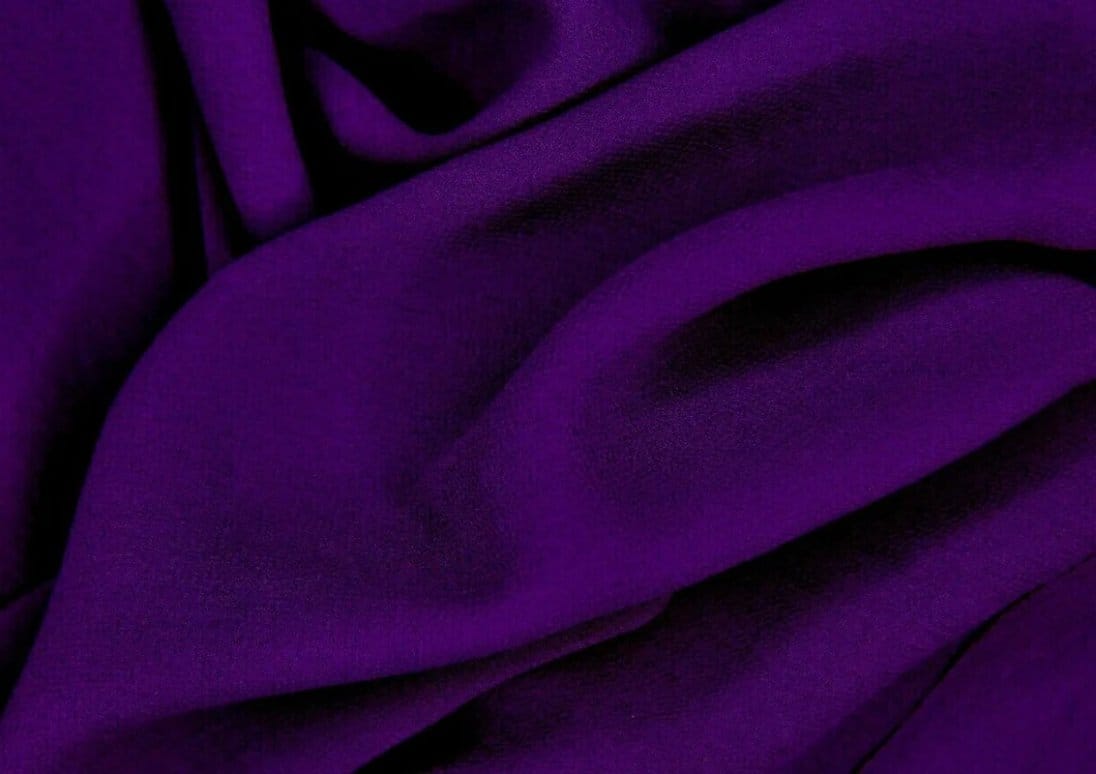
The story of all georgette fabrics, including georgette chiffon, begins in early 20th century France with dressmaker Georgette de la Plante. She created this fabric around 1910 as fashion was shifting away from rigid, structured Victorian silhouettes toward more flowing, comfortable styles.
De la Plante wanted a fabric that had silk’s elegance but with more durability than delicate chiffon. Her innovation was the twisted yarn technique that gave georgette its signature texture and strength. The original fabric quickly caught on among Parisian designers.
Georgette chiffon emerged as a variation when designers wanted something lighter than standard crepe georgette but stronger than regular chiffon. This thinner, softer variety became particularly popular for summer eveningwear and lightweight bridal designs. The Japanese textile industry, known for excellence in fine fabrics, perfected the production of georgette chiffon through careful treatment with finishing processes that enhanced its transparency and bounce.
Evolution and Modern Use
While heavier georgette varieties experienced waves of popularity in Western fashion during the 1910s-1920s and again in the 1930s, georgette chiffon found its strongest market in warm-weather and destination wedding attire. The fabric’s lightweight nature made it perfect for:
- Summer and tropical wedding dresses
- Lightweight evening gowns for warm climates
- Flowing sarees in South Asian fashion
- Resort wear and vacation clothing
Today, georgette chiffon remains popular globally, with production centers in India, China, and Japan. It’s especially loved in South Asian fashion for summer sarees where you want the elegant drape of georgette without the weight.
Types of Georgette Chiffon Fabric
Georgette chiffon comes in several variations based on fiber content and special treatments. Understanding these types helps you choose the right fabric for your specific project. All of these maintain the lightweight, flowing character that defines georgette chiffon, but with different properties.
Note on Georgette Varieties
This section covers variations of georgette chiffon specifically. For information about heavier georgette types like double georgette, satin georgette, or jacquard georgette, see our main georgette fabric guide.
Pure Silk Georgette
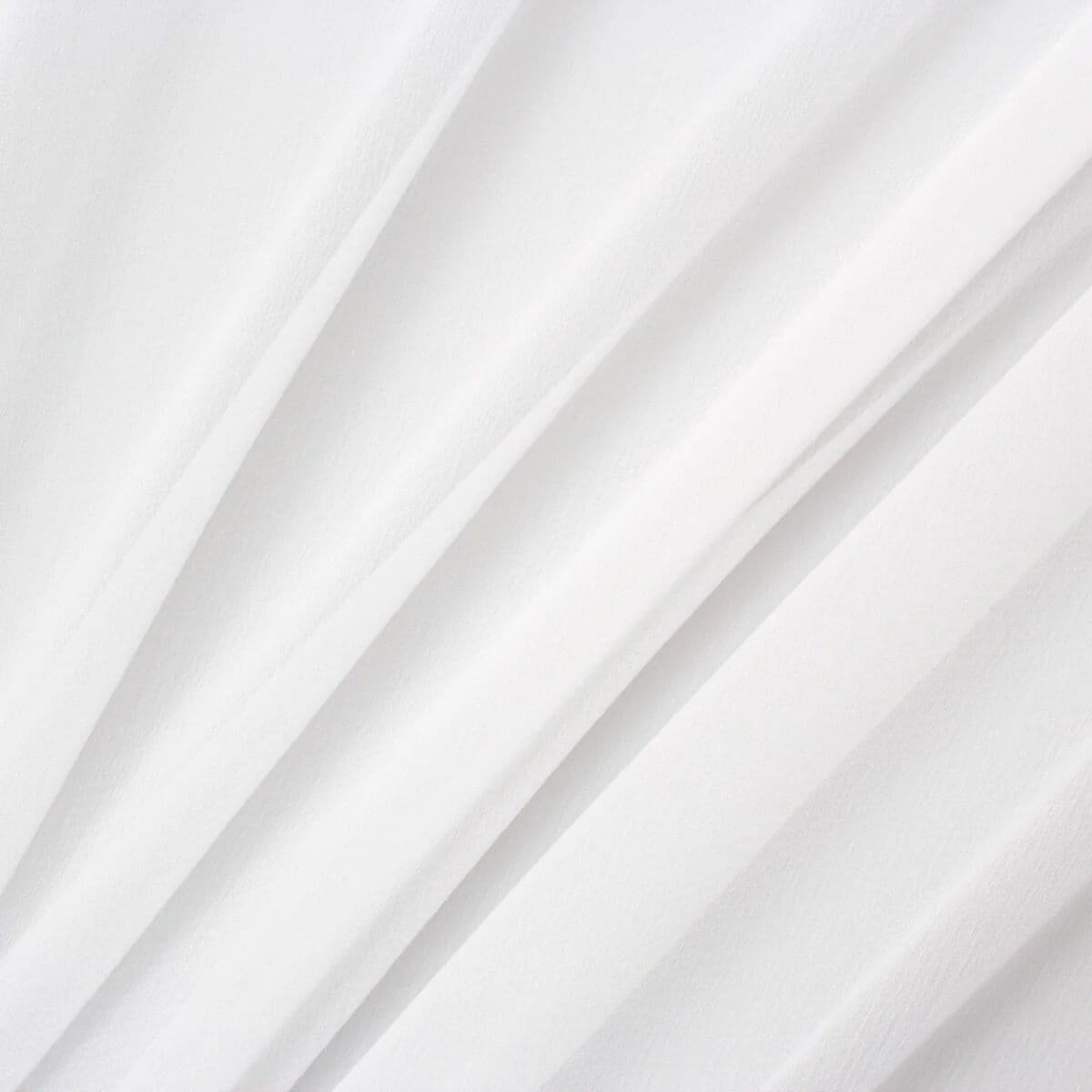
This is the original and most luxurious form of georgette, made from 100% silk fibers. Pure silk georgette offers the best of everything: breathability, natural sheen, excellent drape, and superior color retention. It feels incredibly soft against the skin and has natural temperature-regulating properties.
Pure silk georgette is the most expensive option, but it delivers unmatched quality. The fabric holds dye exceptionally well, resulting in rich, vibrant colors that resist fading. It’s also naturally hypoallergenic, making it an excellent choice for people with sensitive skin.
Quality silk georgette typically weighs between 8-12mm (momme). For comparison, 10mm silk georgette is considered high-quality for garments, while 6mm would be quite lightweight and delicate.
Pro Tip: When buying silk georgette, look for certifications like OEKO-TEX Standard 100 or the Silk Mark to ensure you’re getting genuine, safe, high-quality silk.
Polyester Georgette Chiffon (Poly Georgette)
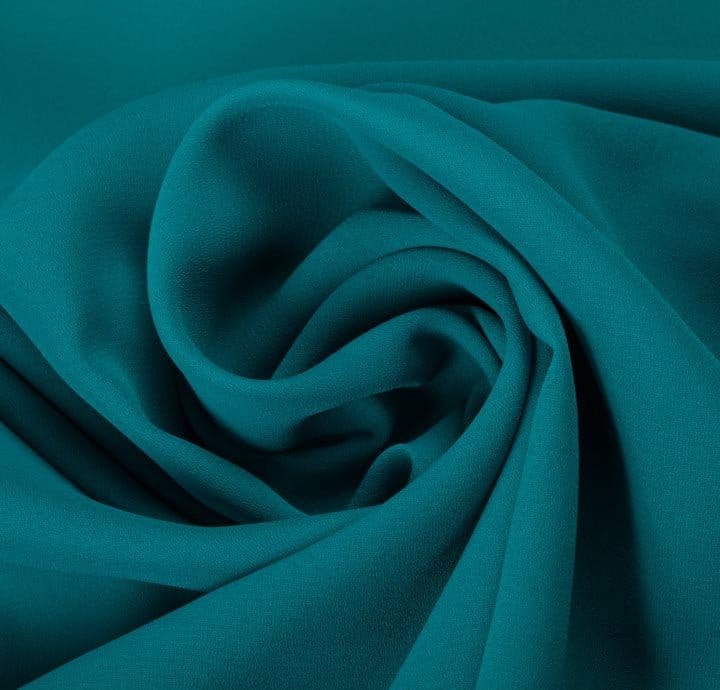
Polyester georgette chiffon offers similar visual and draping qualities to silk at a much lower price point. It’s more durable, wrinkle-resistant, and easier to care for than silk versions. You can machine wash polyester georgette chiffon, and it dries quickly.
While polyester versions don’t have the same breathability as silk, they’re practical for everyday wear and maintain their shape well. Modern polyester georgette chiffon can be quite sophisticated and often appears in ready-to-wear fashion collections.
The main drawbacks are less breathability and an environmental footprint associated with petroleum-based production. However, some manufacturers now offer recycled polyester options that reduce environmental impact.
Other Georgette Chiffon Variations
Silk Georgette Chiffon Blends
Some manufacturers create blends that combine silk with synthetic fibers. A common blend is silk-rayon in approximately 50/50 proportions, delivering balanced softness, drape, and cost-effectiveness. These offer better affordability than pure silk while maintaining much of its luxurious feel.
Viscose/Rayon Georgette Chiffon
Made from regenerated plant materials like wood pulp, viscose georgette chiffon offers a middle ground between natural and synthetic fibers. It has a soft feel similar to silk and costs less than pure silk versions, though it requires more care than polyester. The fabric drapes beautifully and photographs well.
Stretch Georgette Chiffon
This variation incorporates a small amount of spandex or lycra (typically 2-5%) into the weave, adding flexibility and comfort to the already lightweight fabric. Stretch georgette chiffon is perfect for fitted bodices on flowing gowns or garments that need to move with the body while maintaining an elegant drape.
Printed and Embellished Varieties
Georgette chiffon takes dye and printing beautifully. You’ll find it in:
- Digital prints: Vibrant, detailed patterns perfect for modern designs
- Floral prints: Classic choice for summer dresses and sarees
- Geometric patterns: Contemporary looks for fashion-forward pieces
- Light embroidery: Delicate embellishments that don’t weigh down the fabric
For heavily embroidered or beaded work, regular (heavier) georgette fabric is usually a better choice as it can support more weight without distorting.
Georgette Chiffon vs Other Similar Fabrics
Understanding how georgette chiffon compares to similar lightweight fabrics helps you choose the right material for your project. Since georgette chiffon sits between regular chiffon and standard georgette, it’s helpful to see how it stacks up against related fabrics.
Quick Reference
For a detailed comparison between georgette chiffon and regular georgette, see the comparison table above. For more about standard georgette types, visit our complete georgette fabric guide.
Georgette Chiffon vs Chiffon
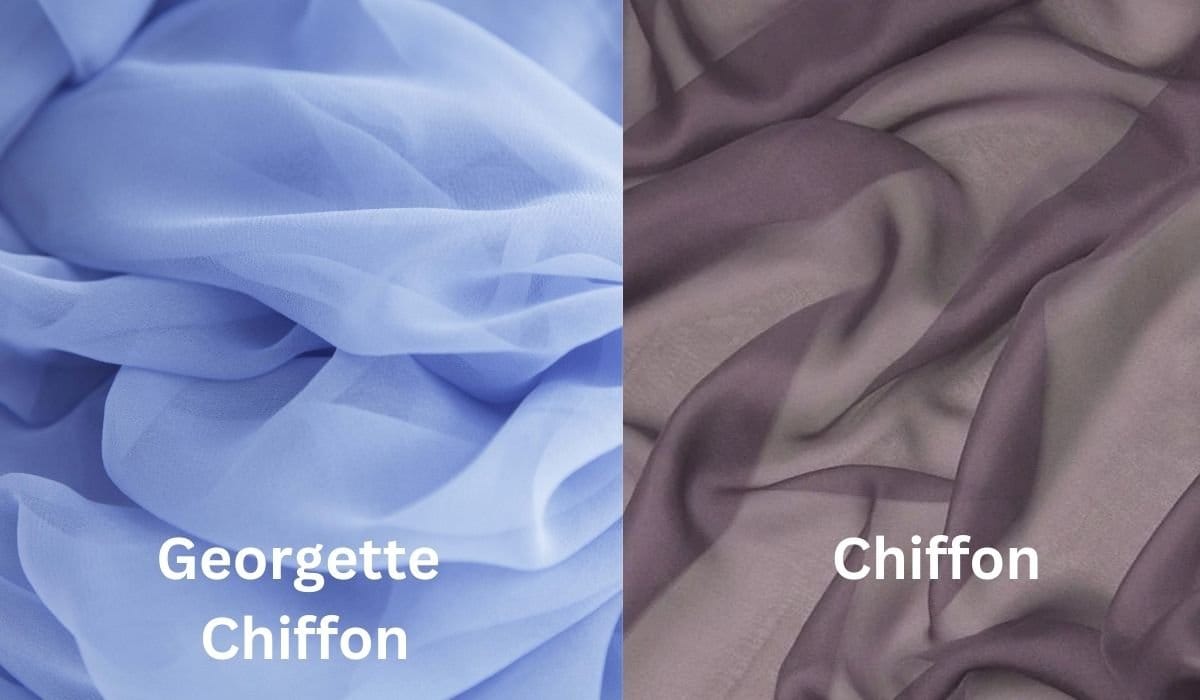
These two fabrics are often confused because they’re both lightweight and semi-sheer, but georgette chiffon has distinct advantages:
| Feature | Georgette Chiffon | Regular Chiffon |
|---|---|---|
| Weight | Lightweight with slight substance | Very lightweight, almost floats |
| Texture | Soft with subtle crepe texture, slight grain | Smooth, slippery, very slight sheen |
| Transparency | Sheer but provides more coverage | Very sheer, requires multiple layers |
| Drape | Bouncy with gentle structure | Soft, flowing, clings delicately |
| Durability | Moderately strong, handles well | Very delicate and fragile |
| Sewing Difficulty | Moderate – requires care but manageable | Challenging – very slippery and delicate |
| Best For | Summer dresses, lightweight gowns, flowing sarees | Ethereal overlays, scarves, multi-layered designs |
Choose georgette chiffon when you want something that looks as light as chiffon but won’t tear as easily. It’s perfect for garments that need to be practical while maintaining an elegant, flowing appearance. Regular silk chiffon or polyester chiffon works better when you specifically want that ultra-sheer, floaty quality and plan to layer multiple pieces.
Georgette Chiffon vs Silk Charmeuse
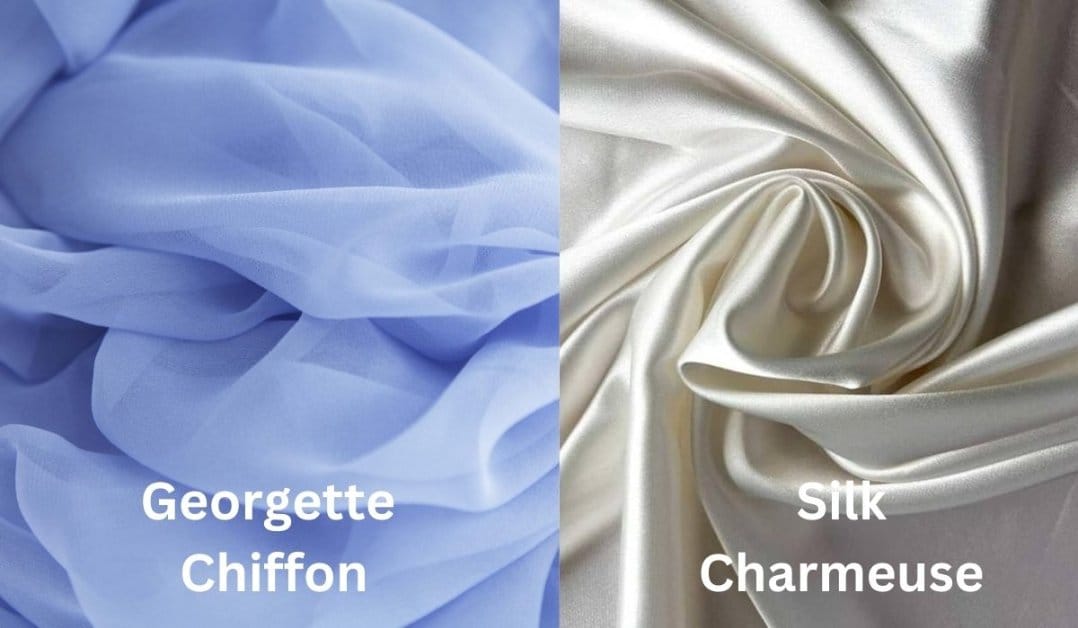
While both can be made from silk, charmeuse and georgette chiffon serve very different purposes:
- Charmeuse has a glossy, shiny front and matte back created by a satin weave. It’s smooth, slippery, and has a luxurious drape with a heavier feel
- Georgette Chiffon has a matte, textured surface on both sides with a lightweight, airy quality
- Charmeuse is easier to sew than georgette chiffon because its weight provides stability
- Georgette chiffon has a casual, romantic look while charmeuse appears more formal and sophisticated
Choose charmeuse satin fabric when you want shine and elegance, georgette chiffon when you prefer lightweight texture and an ethereal, matte finish.
Georgette Chiffon vs Crepe de Chine
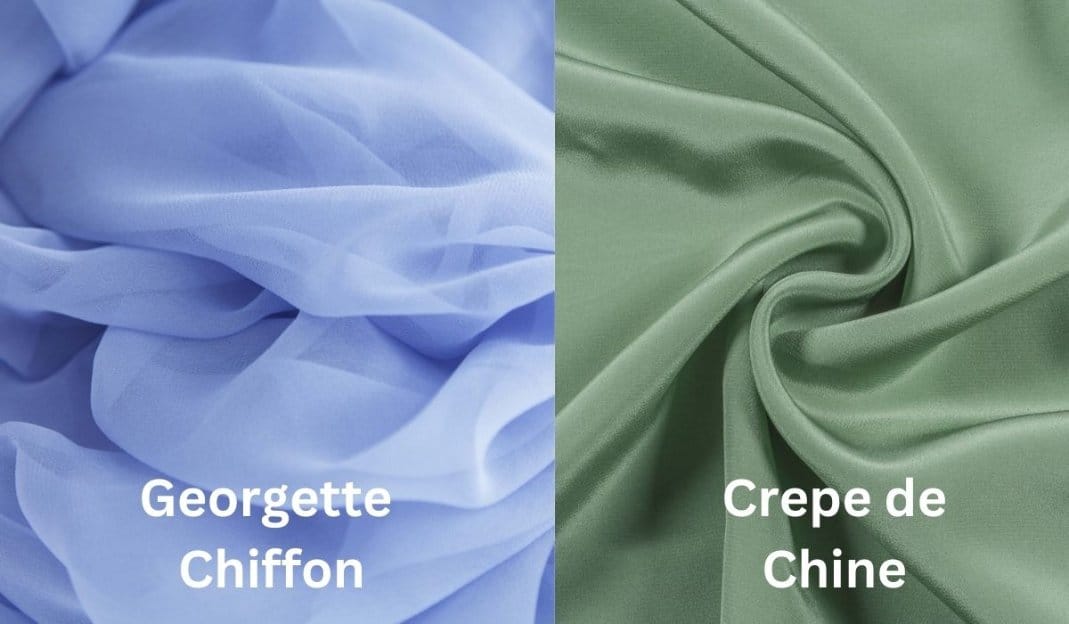
Both are crepe-style silk fabrics, but crepe de chine is considerably different:
- Much thicker and heavier than georgette chiffon
- Completely opaque, offering full coverage
- Softer with a smoother hand feel
- Significantly more wrinkle-resistant
- Much easier to work with for beginners
If you love the look of georgette chiffon but want something less sheer and easier to sew, crepe de chine is worth considering, though you’ll lose the lightweight, flowing quality.
Georgette Chiffon vs Organza
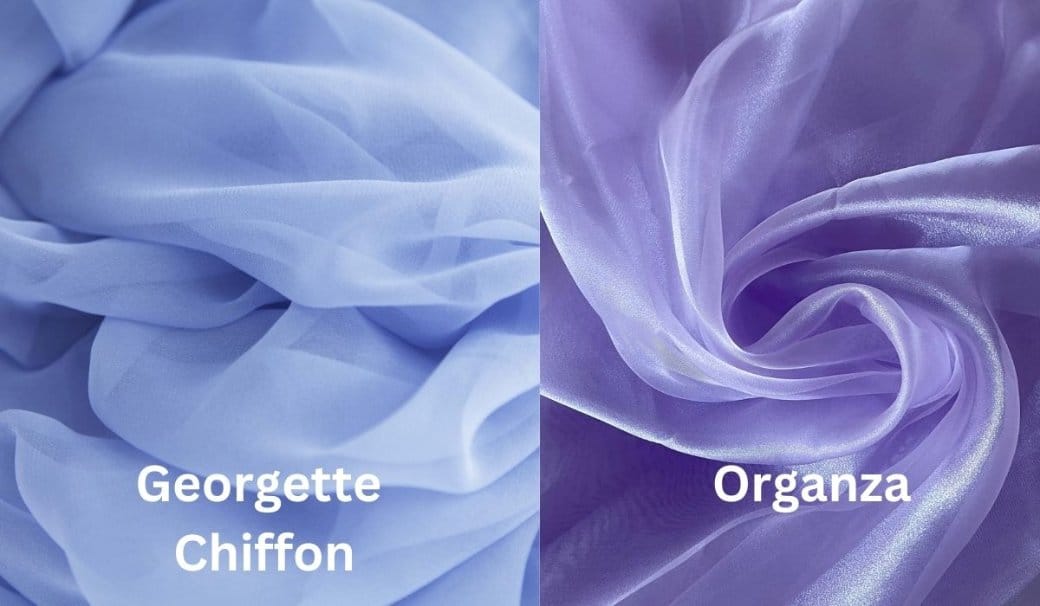
Organza is the opposite of georgette chiffon in many ways. While both are sheer, organza is crisp and stiff with a paper-like quality that holds its shape. Georgette chiffon is soft and flowing. Think of organza for structured ball gown layers and crisp details, georgette chiffon for soft, romantic drapes and flowing designs.
Properties and Characteristics of Georgette Chiffon
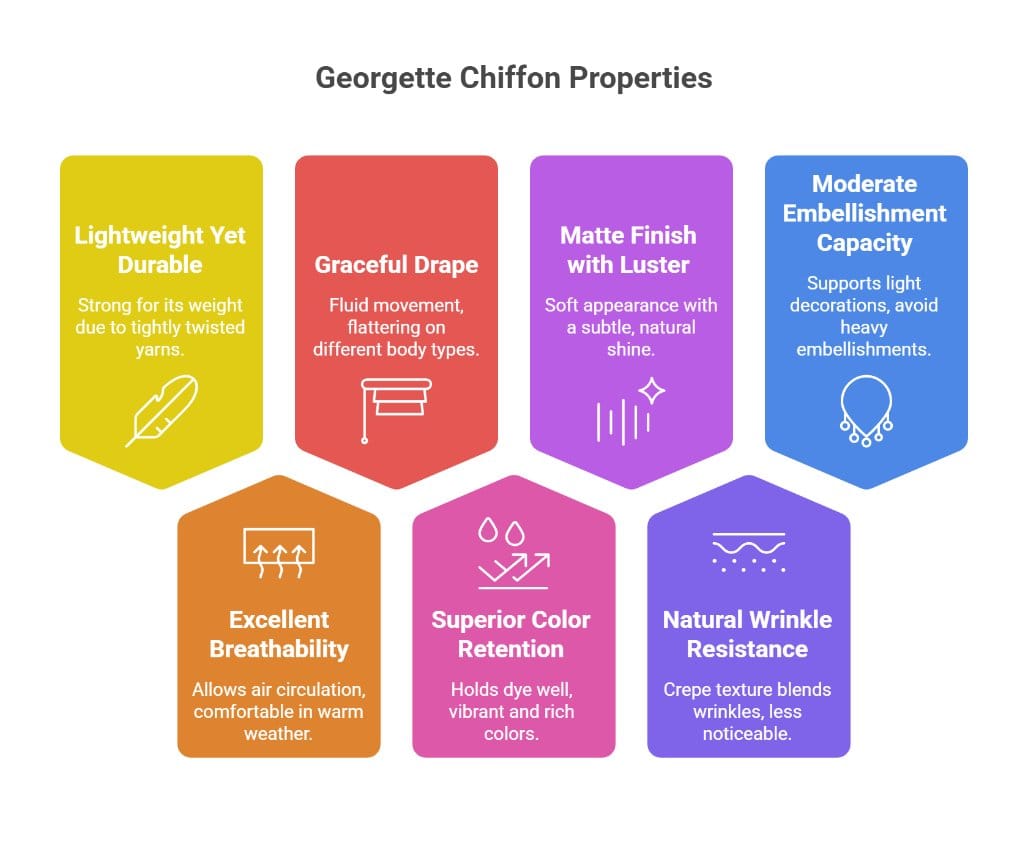
Understanding georgette chiffon’s unique properties helps you work with it effectively and know what to expect from garments made with this fabric.
Lightweight Yet Surprisingly Durable
Despite being thinner and lighter than standard georgette, georgette chiffon is surprisingly strong for its weight. The tightly twisted yarns provide good tensile strength, meaning it won’t tear as easily as regular chiffon. This makes it more practical for garments that will be worn and washed multiple times, though it’s still more delicate than heavier georgette fabric varieties.
Excellent Breathability
Silk georgette chiffon is highly breathable, making it exceptionally comfortable in warm weather. The loose, lightweight weave allows air circulation better than regular georgette, helping regulate body temperature. This breathability makes it a top choice for summer wedding dresses, vacation wear, and warm-climate clothing.
Polyester georgette chiffon is less breathable than silk but still works well for layering and moderate temperatures. It’s more breathable than many other synthetic fabrics.
This superior breathability makes georgette chiffon one of the best summer fabrics, particularly for dresses, blouses, and flowing garments worn in hot weather.
Graceful, Fluid Drape
The fabric’s soft, bouncy quality creates a unique drape that’s more fluid than regular georgette but with more body than regular chiffon. Georgette chiffon moves beautifully – it seems to float without being so lightweight that it clings uncomfortably. This property makes it flattering on different body types and perfect for designs that need movement.
Superior Color Retention
Silk georgette chiffon holds dye exceptionally well. The natural absorbency of silk fibers combined with the fabric’s structure allows for vibrant, rich colors that stay true even after washing. This is why georgette chiffon sarees and evening gowns often feature brilliant, saturated hues. Polyester versions also hold color well with good colorfastness.
Matte Finish with Subtle Luster
Unlike satin fabric or other glossy materials, georgette chiffon has a soft matte appearance. However, silk georgette chiffon has a subtle, natural luster that catches light gently without looking shiny. This gives garments a sophisticated, understated elegance rather than flashy glamour – perfect for romantic, ethereal designs.
Natural Wrinkle Resistance
The crepe texture of georgette chiffon means small wrinkles blend into the fabric’s surface. While it can wrinkle if folded tightly, these wrinkles are less noticeable than on smooth fabrics and often fall out when the garment is hung. Silk georgette chiffon is naturally more wrinkle-resistant than polyester versions.
Moderate Embellishment Capacity
While georgette chiffon is stronger than regular chiffon, it’s still a delicate fabric. It can support light beading, sequins, or embroidery, but heavy embellishments work better on regular georgette. For georgette chiffon, stick to delicate decorations that complement the fabric’s lightweight nature rather than weighing it down.
Luxury and Quality Indicators for Georgette Chiffon
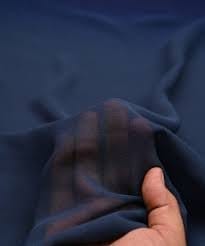
Not all georgette chiffon is created equal. Understanding quality markers helps you make smart purchases and avoid disappointment.
What Makes High-Quality Georgette Chiffon
For Silk Georgette Chiffon:
- Momme weight: Look for 6mm-10mm for garment-weight fabric. 8mm is ideal for most clothing, lighter than the 10-12mm typical for standard georgette
- Fiber quality: Mulberry silk is the highest quality. The fabric should feel soft and smooth despite its subtle texture
- Even texture: The crepe effect should be consistent and subtle across the entire fabric, not patchy or overly rough
- Color depth: High-quality silk georgette chiffon shows rich, deep colors with natural luster
- Drape test: Good georgette chiffon flows smoothly and springs back gently when gathered
- Transparency: Should be sheer but not so thin it tears easily – quality georgette chiffon balances sheerness with strength
For Polyester Georgette:
- Thread count: Higher counts indicate better quality
- Finish quality: Should have a consistent texture without rough spots
- Color fastness: Quality polyester won’t bleed or fade easily
- Drape: Should flow smoothly, not feel stiff or plasticky
Identifying Real Silk Georgette
To verify you’re buying genuine silk georgette:
- Burn test: Real silk burns slowly, smells like burning hair, and leaves a dark, crushable ash. Synthetics melt and smell like plastic
- Touch test: Silk feels warm and adapts to your body temperature. Synthetics feel cool and don’t warm up as quickly
- Look for certifications: OEKO-TEX Standard 100, GOTS (for organic), or Silk Mark certification
- Price check: Pure silk georgette typically costs $15-$30 per yard (and up), while polyester runs $5-$15 per yard
Quality Certifications to Look For
Important Certifications
- OEKO-TEX Standard 100: Ensures the fabric is free from harmful chemicals like lead, arsenic, formaldehyde, and pesticides
- OEKO-TEX Made in Green: Certifies safe materials plus ethical working conditions and environmental standards
- GOTS (Global Organic Textile Standard): The highest award for organic fabrics. Requires minimum 70% organic content for “made with organic” or 95% for “organic”
- Silk Mark: Indicates genuine silk, though it’s not legally regulated and can sometimes be faked
Price Ranges and What to Expect
| Type | Price Per Yard | Quality Level |
|---|---|---|
| Polyester Georgette (basic) | $5-$10 | Good for practice and everyday wear |
| Polyester Georgette (high-end) | $10-$20 | Better drape and finish |
| Viscose Georgette | $8-$15 | Mid-range option |
| Silk Georgette (standard) | $15-$25 | Good quality silk |
| Silk Georgette (premium) | $25-$50+ | Luxury quality, often certified organic |
| Embellished Georgette | $30-$100+ | Depends on embellishment work |
Sustainability and Environmental Impact
As consumers become more aware of fashion’s environmental impact, understanding the sustainability of georgette becomes important for making responsible choices.
Silk Georgette Environmental Concerns
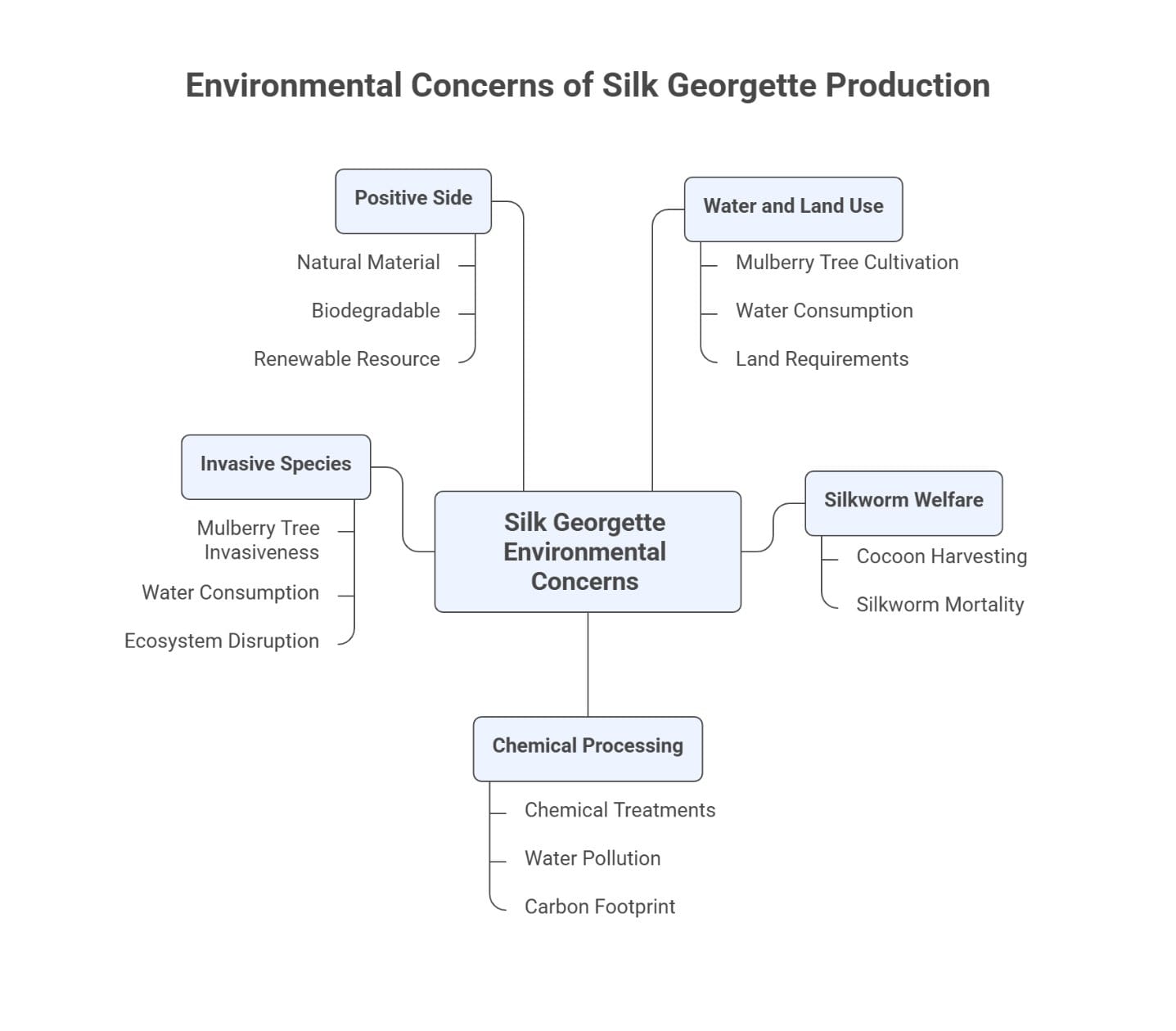
Water and Land Use: Silk production requires significant resources. Growing mulberry trees for silkworms demands substantial water and land. Estimates suggest one hectare of mulberry trees can produce about 111kg of raw silk, but this varies widely.
Silkworm Welfare: Traditional silk production kills silkworms during cocoon harvesting, raising ethical questions for some consumers. Most silkworms die before reaching adulthood in conventional silk production.
Chemical Processing: The silk production process can involve chemical treatments that may pollute waterways if not properly managed. Transportation of silk from production centers also adds to the carbon footprint.
Invasive Species: Mulberry trees are highly invasive in some regions, consuming excessive water and potentially disrupting native ecosystems.
The Positive Side: Silk is natural, biodegradable, and breaks down in about 4 years. It’s a renewable resource when produced responsibly.
Polyester Georgette Environmental Issues
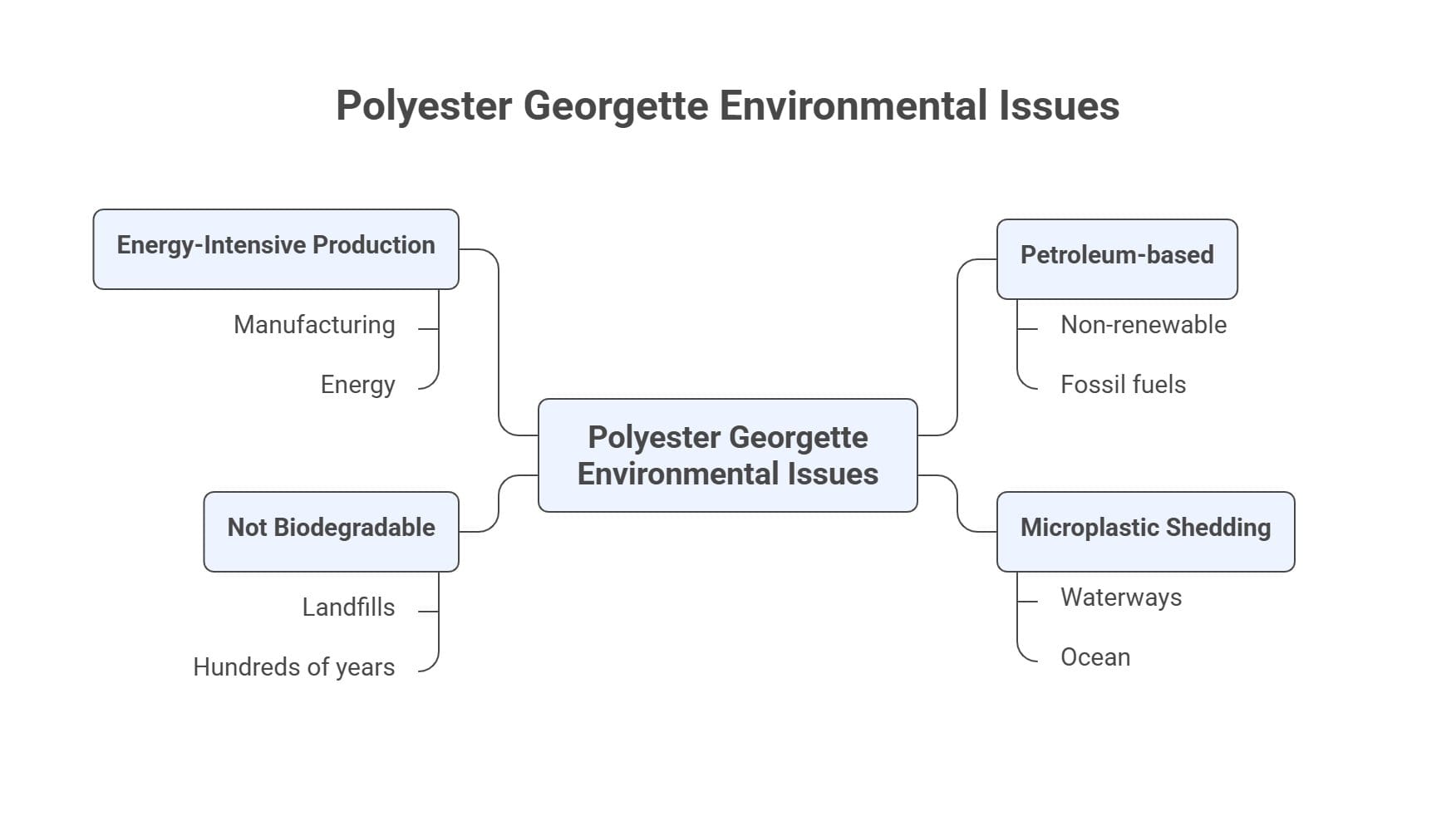
Polyester production creates different environmental challenges:
- Petroleum-based: Made from non-renewable fossil fuels
- Microplastic shedding: Washing polyester releases tiny plastic fibers into waterways and eventually the ocean
- Not biodegradable: Takes hundreds of years to break down in landfills
- Energy-intensive production: Manufacturing polyester requires significant energy
Sustainable Georgette Alternatives
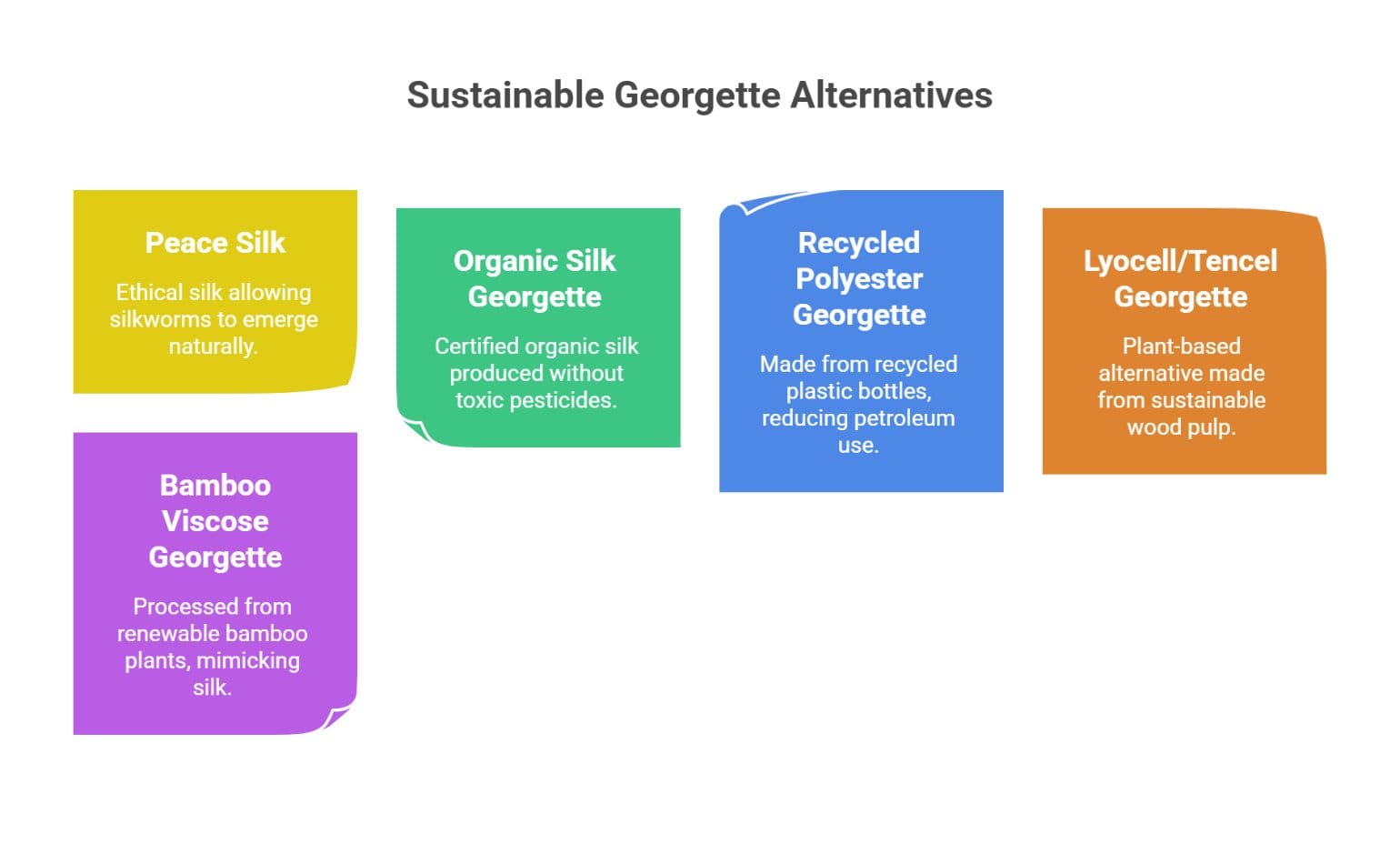
Several eco-friendly options are emerging:
Peace Silk (Ahimsa Silk)
This ethical alternative allows silkworms to emerge from their cocoons naturally before the silk is harvested. Types include Tussar silk, Eri silk, Muga silk, and Noil silk. Peace silk georgette costs more but addresses animal welfare concerns.
Organic Silk Georgette
Certified organic silk is produced without toxic pesticides or chemicals. Look for GOTS certification, which requires traceable, sustainable sourcing from mulberry cultivation through weaving and dyeing. Production processes use minimal water and eco-friendly dyes.
Recycled Polyester Georgette
Made from recycled plastic bottles or post-consumer polyester waste, this option reduces new petroleum use while maintaining the properties of virgin polyester. It still sheds microplastics but has a lower overall environmental impact.
Lyocell/Tencel Georgette
This plant-based alternative is made from sustainable wood pulp using a closed-loop process that recycles 99% of solvents. Lyocell georgette offers enhanced moisture management, reduced environmental impact compared to traditional rayon, and biodegradability. It’s appealing for sustainable fashion initiatives.
Bamboo Viscose Georgette
Processed from renewable bamboo plants, this option mimics silk qualities with reduced ecological impact. However, be aware that bamboo processing can still involve chemicals unless it’s certified closed-loop production.
Making Sustainable Choices
To reduce environmental impact when buying georgette:
- Choose certified organic or peace silk when possible
- Look for GOTS, OEKO-TEX, or similar certifications
- Consider recycled polyester options
- Buy quality over quantity – one well-made silk georgette garment that lasts years is better than multiple cheap synthetic versions
- Care for garments properly to extend their life
- Support brands transparent about their supply chains
- Consider deadstock fabric (surplus from manufacturers) to reduce waste
For those interested in sustainable fashion more broadly, understanding the difference between fast fashion vs slow fashion helps make better purchasing decisions.
Fashion and Design Uses
Georgette’s versatility makes it suitable for a wide range of garments and styles. Understanding fabric properties and how they influence garment design helps you make the most of this elegant material.
Bridal and Formalwear
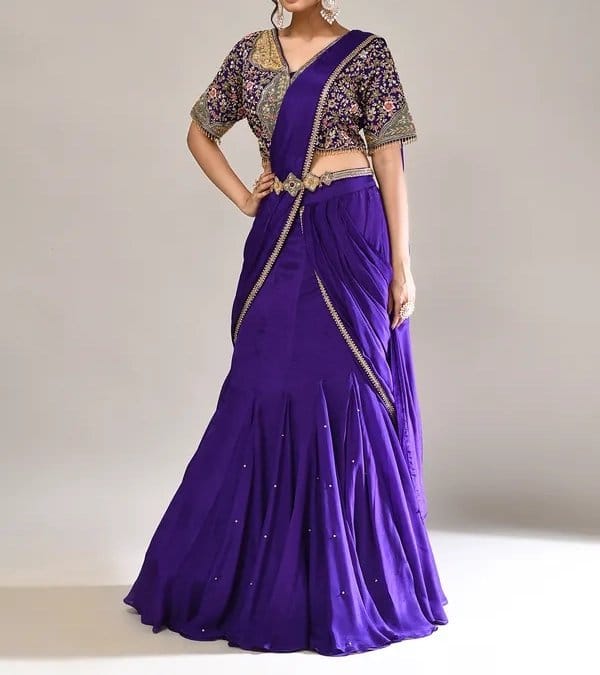
Georgette is a top choice for wedding dresses and formal gowns. Its lightweight drape creates romantic, flowing silhouettes while maintaining enough structure to support the design. Stretch georgette is particularly popular for wedding dresses because it flatters different body types and provides comfort for all-day wear.
The fabric works beautifully for:
- A-line wedding gowns
- Empire waist dresses
- Flowing evening gowns
- Ball gown overlays
- Wrap dresses for bridesmaids
Georgette layers well, making it perfect for creating dimension in wedding dresses. You can use it as an overlay on duchess satin or other base fabrics for a soft, romantic look.
Bridesmaid Dresses
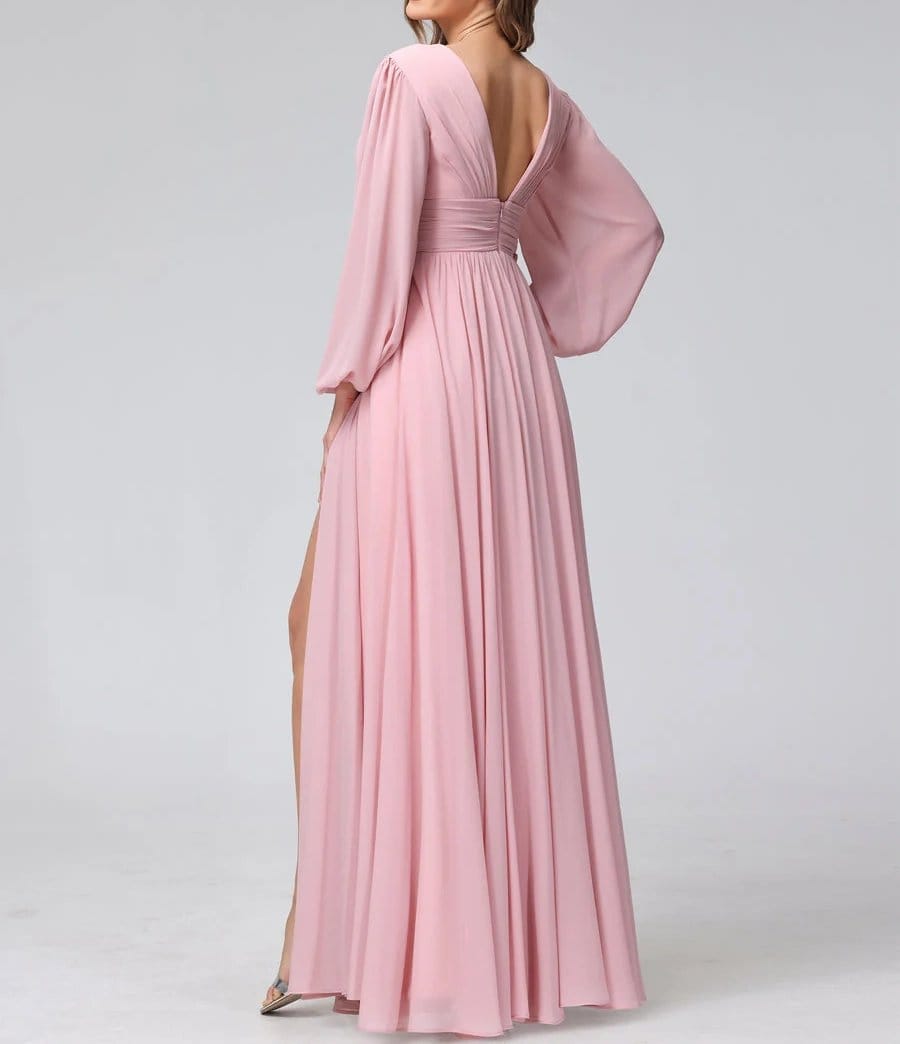
For summer and garden weddings, georgette bridesmaid dresses offer breathability and elegant movement. The fabric photographs beautifully and comes in countless colors to match wedding themes. It’s lightweight enough for outdoor ceremonies but sophisticated enough for formal receptions.
Georgette’s texture helps hide wrinkles better than smooth fabrics, making it practical for wedding parties where dresses may be worn all day. For parents looking for similar styles, chiffon clothing for children offers lightweight comfort for young wedding guests.
Summer Dresses and Separates

The breathability of silk georgette makes it an excellent choice for warm-weather clothing. Short summer dresses, flowing maxi dresses, and lightweight tunics all benefit from georgette’s cool comfort and beautiful drape.
Popular summer styles include:
- Sundresses with gathered skirts
- Loose-fitting blouses and tops
- Tiered dresses
- Beach cover-ups
- Flowing wide-leg pants
Blouses and Tops
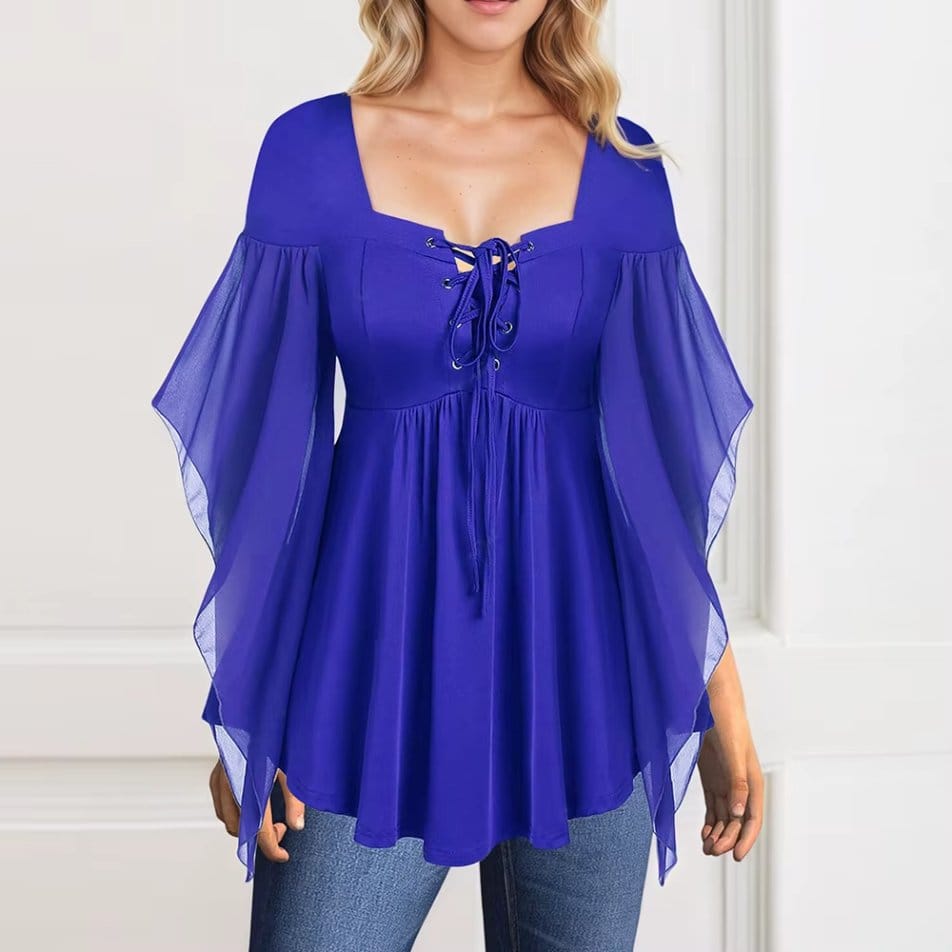
Georgette blouses work for both casual and professional settings. The fabric’s slight opacity (especially in double georgette or moss georgette) means you don’t always need a camisole underneath. Three-quarter, long, and short sleeves all look beautiful in georgette, and the fabric’s bounce creates flattering movement.
South Asian Fashion
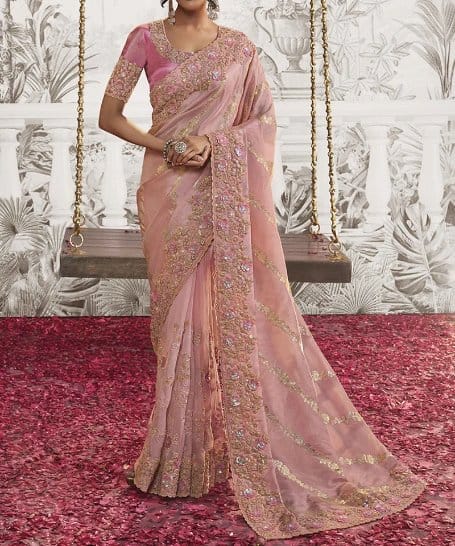
In Indian and South Asian fashion, georgette is incredibly popular for:
- Sarees: The fabric layers beautifully and drapes perfectly when wrapped, making it ideal for traditional sarees
- Salwar Kameez: The lightweight nature works well for the tunic and pants combination
- Dupattas: Georgette scarves add elegance to outfits
- Lehengas: Bridal and festive skirts often use embellished georgette
The fabric’s ability to hold vibrant colors and support heavy embroidery makes it perfect for colorful, decorated traditional clothing.
Accessories
Beyond garments, georgette works wonderfully for:
- Scarves and shawls
- Headbands
- Evening wraps
- Decorative sashes and belts
Styling Tips
Pro Tip: Because georgette is semi-sheer, consider the right undergarments or linings. Nude-colored slips work well under most colors. For very sheer georgette, you can line the garment or wear it as a layering piece over a camisole or fitted top.
Home Décor Applications
While primarily known for fashion, georgette also finds uses in home decorating where its lightweight, flowing qualities add softness and elegance.
Window Treatments
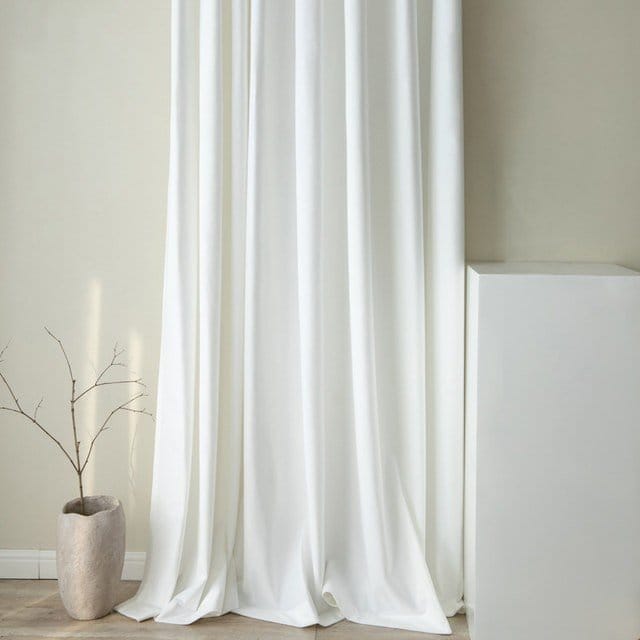
Georgette creates beautiful sheer curtains that filter light softly while maintaining privacy during the day. The fabric’s natural drape creates elegant folds, and its texture adds visual interest beyond plain sheers. Georgette curtains work particularly well in:
- Bedrooms where soft light filtering is desired
- Living rooms for a romantic, airy feel
- Dining areas to create ambiance
Table Décor
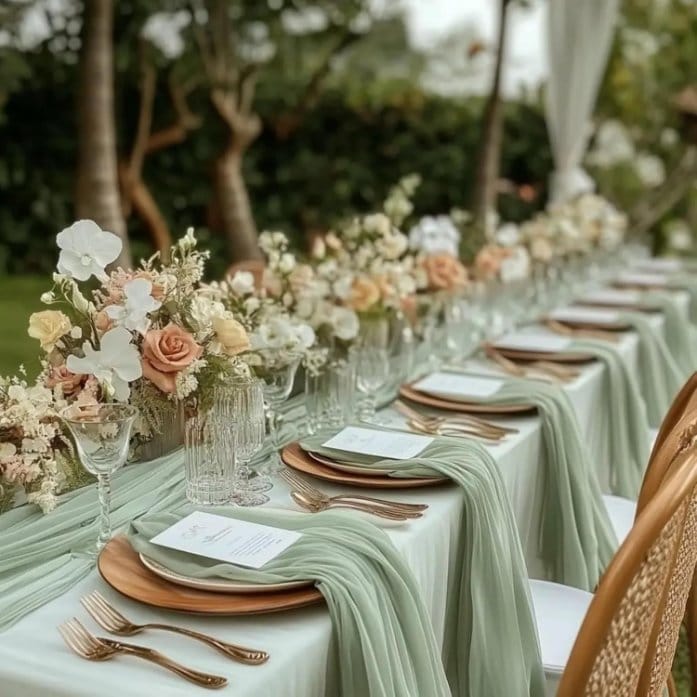
Lightweight georgette overlays add a soft, luxurious touch to table settings. The fabric drapes beautifully over tablecloths for special occasions like weddings, parties, or formal dinners. It creates an ethereal effect without feeling heavy.
Decorative Accents
Other home décor uses include:
- Pillow covers: Adds texture and elegance to throw pillows
- Lampshades: Diffuses light beautifully with its translucent quality
- Wall draping: Creates soft, romantic backdrops for events
- Canopy treatments: Adds a dreamy touch to bedroom canopies
How to Sew with Georgette
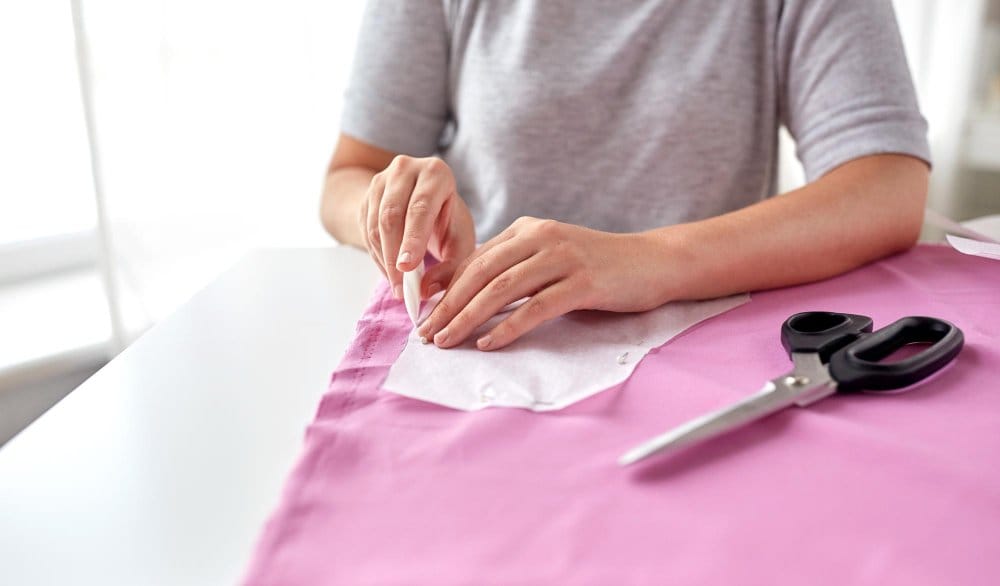
Sewing with georgette requires patience and the right techniques, but the results are worth the effort. Here’s everything you need to know to work successfully with this fabric.
Before You Start
Pattern Selection
Choose simple patterns without too many seams, darts, or complex construction. Georgette works best with:
- Loose, flowing designs
- Minimal seams and darts (seams show through sheer fabric)
- Designs without many facings
- Patterns with details like pintucks, ruffles, or ruching
- Generous ease – georgette should not be fitted tightly
For tops and blouses, choose patterns that are one-quarter to one-third larger than your bust measurement. For pants, go one-third to one-half larger than hip measurements. The loose fit suits georgette’s drape.
If you’re new to sewing, check out our guide on how to sew a dress for basic techniques before tackling georgette.
Tools and Supplies Needed
Needles: Use Microtex Sharp or Universal needles in size 60/8, 65/9, or 70/10. Fresh, sharp needles prevent snagging.
Thread: Use fine machine embroidery thread in silk or cotton. Avoid polyester thread, which can cause puckering in georgette.
Cutting tools: Sharp scissors or a rotary cutter are essential. Dull blades will snag and damage the fabric.
Pins: Fine silk pins or glass-head pins. Be careful as pin holes can show in georgette.
Presser feet: A straight-stitch foot and single-hole throat plate are ideal. If you don’t have these, move the needle to the far left position to support the fabric better.
Stabilizer: Water-soluble stabilizer for buttonholes, tissue paper or medical exam table paper for cutting.
Preparing the Fabric
Pre-shrinking
For quality silk georgette: Hand-wash in warm water with 1 tablespoon of shampoo. Dry flat, then lightly press with steam. This may cause poor-quality georgette to lose its body – test a sample first. If the sample gets limp, skip pre-shrinking and plan to dry-clean the finished garment.
For polyester georgette: Generally doesn’t need pre-shrinking, but you can gently wash if desired.
Cutting Techniques
Cutting is one of the trickiest parts of working with georgette. The fabric is slippery and can shift easily:
- Prepare your surface: Cover your cutting table with an old sheet or non-slip fabric. This “grabs” the georgette and keeps it from sliding
- Add a paper layer: Pin tissue paper, medical exam table paper, or alpha-numeric sewing paper underneath the georgette. This stabilizes the fabric during cutting
- Use pattern weights or careful pinning: If using pins, pin only in seam allowances to avoid visible holes in the fabric body
- Cut single layer: While it takes more time, cutting single layers gives better accuracy with slippery georgette
- Use sharp tools: Dull scissors or rotary blades will catch and pull the fabric
Some sewers prefer cutting rectangles for each pattern piece first, then cutting the actual shape. This makes handling easier.
Pro Tip: After cutting, hand-baste along seam lines while pieces are still flat on the table. Georgette loses its shape once picked up, so basting helps you remember where seams go during construction.
Sewing Techniques
Machine Settings
- Stitch length: Slightly longer than normal, about 2.5-3mm
- Tension: May need to be reduced slightly – test on scraps
- Presser foot pressure: Consider tightening slightly if fabric isn’t feeding properly
- Speed: Sew slowly for better control
Starting and Stopping
Hold both top and bobbin threads when you begin sewing to prevent the fabric from pulling into the throat plate. Lift the presser foot periodically (leaving the needle down) to release any “bubble” buildup in the fabric.
Seam Finishes
French seams are ideal for georgette because they enclose raw edges and look beautiful on sheer fabric. Learn more about professional seam finishing techniques for delicate fabrics:
- Sew seam wrong sides together with a 3/8″ seam allowance
- Trim seam allowance to 1/8″
- Press seam to one side
- Fold fabric right sides together along the seam line
- Sew again with 1/4″ seam allowance, enclosing raw edges
Flat-fell seams also work well if appropriate for the design. Learn more in our flat fell seam guide.
Narrow serged seams with a rolled edge can work for some projects, but test the fit first as serged seams are difficult to undo.
Pressing
Use a dry iron on the silk setting. Lightly mist distilled water on stubborn wrinkles before pressing. Always test on a scrap first. Press from the wrong side when possible.
Special Construction Details
Interfacing
Never use fusible interfacing on georgette – it will show through and may damage the fabric. Instead:
- Use silk organza for structure in collars, cuffs, and facings
- Use self-fabric (georgette itself) for a softer effect
- Hand-baste interfacing in place during construction
Hems
Several hemming options work for georgette:
Rolled hem:
- Machine baste 1/4″ from the lower edge
- Press up along basting
- Stitch close to the fold
- Trim excess above stitching
- Fold and press another 1/4″
- Stitch again
Narrow hem: Serge the raw edge, press up 1/2″, and straight stitch.
Hand-rolled hem: The most elegant option for sheer georgette, but time-consuming.
Closures
Buttonholes: Use fine embroidery thread and place water-soluble stabilizer between the presser foot and fabric. Stitch slowly.
Zippers: Interface the seam allowances with silk organza, or install a hand-picked zipper for an invisible, elegant finish.
Self-fabric button loops: Beautiful but time-consuming. Machine buttonholes with stabilizer are faster.
Common Challenges and Solutions
| Problem | Solution |
|---|---|
| Fabric puckering | Use cotton or silk thread (not polyester), reduce tension, use sharp needle |
| Fabric sliding while sewing | Use tissue paper under fabric while sewing, slow down, use walking foot if available |
| Pin holes showing | Pin only in seam allowances, use very fine pins, or use pattern weights instead |
| Seams showing through | Use French seams or flat-fell seams to enclose raw edges |
| Fabric gets stuck in machine | Hold threads when starting, use straight-stitch plate, move needle left |
| Uneven gathering | Hand-baste gathering lines first, gather gradually in sections |
Practice Makes Perfect
Before starting your main project, practice on scraps to test your machine settings, seam techniques, and comfort level with the fabric. Making a small test garment (like a simple top) helps build confidence before tackling a complex wedding dress or formal gown.
For more sewing guidance, explore our collection of easy sewing projects for beginners to build your skills.
Complete Care Guide
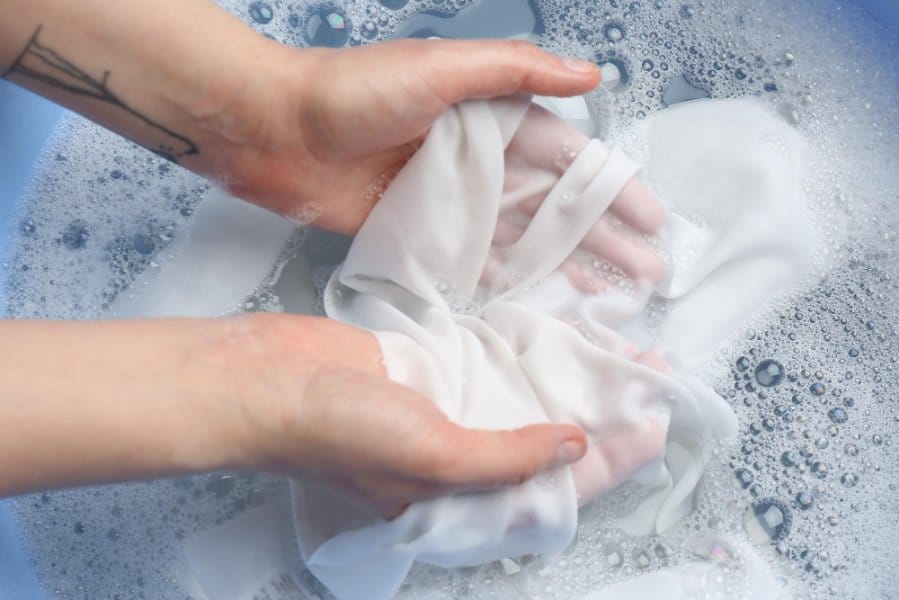
Proper care extends the life of georgette garments and keeps them looking beautiful. Care requirements differ based on the fiber content.
Washing Georgette
Silk Georgette
Best method: Hand washing or dry cleaning
Hand washing steps:
- Fill a tub with cool or lukewarm water (never hot)
- Add a small amount of mild detergent designed for delicates or 1 tablespoon of gentle shampoo
- Gently swish the garment in the water – don’t rub, scrub, or wring
- Let soak for 20-30 minutes
- Rinse thoroughly in cool, clear water until all soap is gone
- Gently press out excess water between clean towels – never wring or twist
What to avoid:
- Hot water (can damage silk fibers)
- Harsh detergents or bleach
- Machine washing (may damage delicate fabric)
- Aggressive handling
Pro Tip: For embellished or heavily beaded georgette, dry cleaning is the safest option to preserve decorations.
Polyester Georgette
Machine washing: Polyester georgette can usually be machine washed on a gentle cycle
- Place in a mesh laundry bag to prevent snagging
- Use cold water and mild detergent
- Select gentle or delicate cycle
- Wash similar colors together
Hand washing: Same method as silk georgette
Viscose/Rayon Georgette
Hand wash or dry clean. Viscose can shrink or become limp if machine washed, so hand washing is safer.
Drying Georgette
Never use a tumble dryer (except polyester on cool setting, but air drying is still better). High heat can shrink, melt, or damage georgette fibers.
Proper drying method:
- Gently press out excess water with clean towels
- Lay the garment flat on a dry towel on a clean surface
- Reshape the garment gently while damp
- Dry away from direct sunlight (sunlight can fade colors)
- Dry in a well-ventilated area
- Avoid hanging wet georgette as the weight can stretch it
Drying time varies by thickness and humidity but usually takes several hours.
Ironing and Steaming
Silk Georgette
Iron settings: Low to medium heat (silk setting)
Method:
- Always iron on the wrong side (inside) of the garment
- Use a pressing cloth (thin cotton or muslin) between the iron and fabric
- Iron while fabric is slightly damp for best results
- Don’t leave the iron in one spot – keep it moving
- For stubborn wrinkles, lightly mist with distilled water
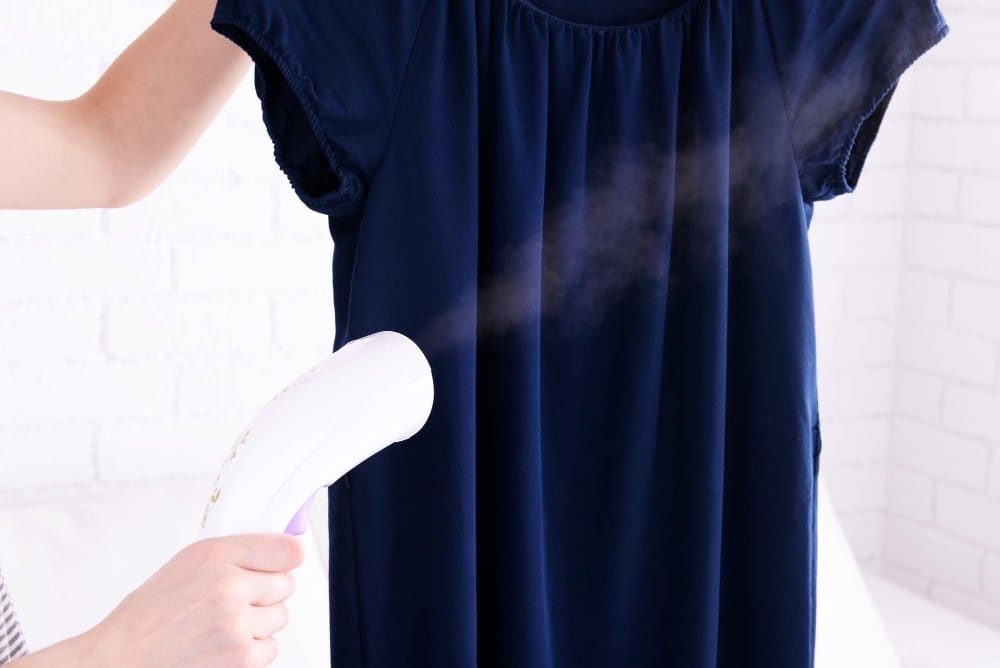
Steaming: The safest option for silk georgette. Hang the garment and use a handheld steamer, keeping it a few inches from the fabric.
Polyester Georgette
Use the lowest heat setting. Polyester can melt at high temperatures. A pressing cloth is recommended. Steaming works well for polyester georgette.
General Ironing Tips
- Test on a hidden seam or scrap first
- Don’t press too hard – light pressure is sufficient
- Poor quality georgette may lose crispness when ironed; steaming is safer
- Never use steam directly on silk unless testing showed it’s safe
Stain Removal
Act quickly when spills happen:
- Blot (don’t rub) the stain gently with a clean, white cloth
- Avoid spreading the stain by working from the outside in
- For silk georgette, take to a professional cleaner for stubborn stains
- For polyester, you can try gentle spot treatment with mild soap
- Never use harsh chemicals or bleach
For specific stain types, consult our guide to washing and caring for different fabrics.
Storage
Short-term storage:
- Hang on padded hangers to prevent creasing
- Use skirt/pants hangers with clips for bottoms
- Avoid wire hangers that can create shoulder bumps
- Store in a cool, dry place away from direct sunlight
Long-term storage:
- Clean garments before storing (dirt and oils can set during storage)
- Fold carefully for very delicate items, changing fold lines every few months
- Use breathable garment bags (cotton or muslin) – never plastic
- Add silica gel packets to absorb moisture
- Keep away from direct sunlight, which fades colors
- Store in a cool, dry environment
- Check periodically for signs of moths or mildew
For silk georgette specifically: Silk naturally repels mold, mildew, and dust, making it easier to store than some other fabrics. However, moths are attracted to silk, so use cedar blocks or lavender sachets (not mothballs, which can damage silk).
Care Based on Garment Type
| Garment Type | Special Care Notes |
|---|---|
| Wedding dress | Professional cleaning recommended; preserve in acid-free box |
| Embellished evening wear | Dry clean only; store flat or on padded hanger |
| Sarees | Fold carefully after each wear; air out before storing |
| Blouses/everyday wear | Can hand wash more frequently; hang dry |
| Scarves | Hand wash, roll in towel to dry, hang or fold |
Buying Guide
Knowing where and how to buy georgette ensures you get quality fabric at fair prices.
Where to Buy
Local Fabric Stores
Advantages:
- See and touch fabric before buying
- Get immediate expert advice
- Support local businesses
- No shipping costs or waiting
Tips: Visit stores that specialize in apparel fabrics or bridal/formalwear materials. Staff can help you select the right type for your project.
Online Fabric Retailers
Advantages:
- Wider selection
- Often better prices
- Convenient shopping
- Customer reviews help gauge quality
Tips:
- Order swatches before buying yards
- Read detailed descriptions about weight, transparency, and fiber content
- Check return policies
- Read reviews about color accuracy and quality
Wholesale Suppliers
If you need large quantities or run a business, wholesale fabric suppliers offer better per-yard prices. Many have minimum order requirements.
Deadstock and Surplus Fabric
Buying deadstock (surplus from manufacturers) reduces waste and often provides high-quality fabric at lower prices. This supports sustainable fashion by using materials that would otherwise go to waste.
How to Evaluate Quality Before Buying
In person:
- Feel the fabric – it should be smooth despite texture
- Hold it up to light to check transparency and evenness
- Drape it over your hand to see how it falls
- Check for consistent texture across the entire piece
- Look for even color without variations or spots
- Gently crumple a corner to see if it springs back
Online:
- Read fiber content carefully (100% silk, polyester, blends)
- Check weight specifications (momme for silk, GSM for others)
- Look at close-up photos of texture
- Read customer reviews about quality and accuracy
- Order swatches when possible
Red Flags to Avoid
- Extremely low prices for “silk” georgette (likely not real silk)
- No fiber content information provided
- Poor or blurry photos
- No return policy
- Sellers unwilling to provide swatches
- Reviews mentioning quality issues
How Much Fabric to Buy
Always buy more than the pattern requires for georgette:
- Add 1/2 yard extra for testing and mistakes
- If the fabric has a print, buy extra for pattern matching
- Consider making a muslin first to perfect fit before cutting expensive fabric
- Account for pre-shrinking if you plan to wash the fabric first
Seasonal Considerations
Fabric prices and availability can vary:
- Bridal georgette is often more expensive in spring wedding season
- End-of-season sales can offer excellent deals
- Holiday seasons may have sales but also higher demand
Frequently Asked Questions
Is georgette good for summer?
Yes, especially silk georgette. The fabric is lightweight and breathable, making it comfortable in warm weather. The loose weave allows air circulation, helping you stay cool. Silk georgette naturally regulates temperature, while polyester georgette is less breathable but still works for layering. Georgette is an excellent choice for summer dresses, blouses, and scarves.
Can georgette be washed?
It depends on the fiber content. Silk georgette should be hand-washed in cool water with mild detergent or dry-cleaned. Polyester georgette can usually be machine-washed on a gentle cycle. Always check the care label and test a small hidden area first. Never use hot water or harsh detergents on any type of georgette.
Is georgette see-through?
Georgette ranges from semi-sheer to opaque depending on the type. Standard georgette is semi-sheer and may require lining or a slip. Double georgette and moss georgette are more opaque. The transparency also depends on color – darker colors show through less than light colors. You can test by holding the fabric up to light.
What’s the difference between georgette and chiffon?
Georgette is heavier, has a rougher texture, and is more durable than chiffon. Chiffon is very sheer and has a smooth, slippery feel with slight sheen. Georgette has a matte, crepe-like surface and more body. Both are lightweight, but georgette offers more structure for garments. Chiffon is better for flowing overlays, while georgette works for structured pieces like blouses and fitted dresses.
How much does georgette cost?
Prices vary by type. Polyester georgette costs $5-$20 per yard, with basic versions around $5-$10 and high-end polyester $10-$20. Silk georgette ranges from $15-$50+ per yard, depending on quality and whether it’s organic or conventional. Embellished georgette can cost $30-$100+ per yard. Always compare quality, not just price.
Is georgette vegan?
Not always. Silk georgette is made from silkworm cocoons, so it’s not vegan. Polyester, rayon, and viscose georgette are vegan but made from synthetic or semi-synthetic materials. For vegan options, choose polyester or look for plant-based alternatives like lyocell or bamboo viscose georgette. Always check fiber content labels.
Can you embroider on georgette?
Yes, but it requires skill. Georgette’s strength supports embroidery better than more delicate fabrics like chiffon. However, heavy embroidery can distort the fabric. Use a water-soluble stabilizer, embroider slowly, and avoid dense designs. Pre-embroidered georgette is available if you want decorated fabric without doing the work yourself.
Does georgette wrinkle?
Silk georgette is naturally wrinkle-resistant because its crepe texture hides small wrinkles. Polyester georgette can wrinkle but is generally forgiving. If wrinkles do occur, steam or iron on low heat with a pressing cloth. The textured surface of georgette makes wrinkles less noticeable than on smooth fabrics.
How do you prevent georgette from fraying?
Georgette does fray, especially at cut edges. Prevent fraying by using French seams or serged edges to enclose raw fabric edges. When cutting, use sharp scissors and handle carefully. During sewing, finish seams as you go. For storage, keep garments folded or hung to prevent edges from rubbing and fraying.
Is georgette stretchy?
Standard georgette doesn’t stretch. However, stretch georgette contains spandex or lycra and offers flexibility. This type is popular for fitted garments and bridal wear where comfort and movement are important. If you need stretch, specifically look for “stretch georgette” rather than assuming regular georgette will have give.
Conclusion
Georgette chiffon fabric stands out as one of the most versatile and beautiful textiles available. From its creation by French dressmaker Georgette de la Plante in the early 1900s to its modern applications in wedding dresses, summer fashion, and traditional South Asian clothing, this fabric has proven its enduring appeal.
Whether you choose luxurious pure silk georgette or practical polyester versions, understanding the fabric’s characteristics helps you make smart decisions. The distinctive crepe texture, beautiful drape, and ability to hold vibrant colors make georgette suitable for everything from elegant bridal gowns to everyday blouses and flowing summer dresses.
Key Takeaways
Remember these important points:
- Choose the right type: Silk georgette offers luxury and breathability, polyester provides durability and easy care, and specialty types like stretch or double georgette serve specific purposes
- Consider sustainability: Look for organic silk, peace silk, or recycled polyester options to reduce environmental impact. Quality over quantity means buying less but buying better
- Master sewing techniques: Success with georgette requires patience, the right tools (sharp needles, fine thread), and techniques like French seams and careful cutting
- Care properly: Hand wash silk georgette, avoid high heat, and store correctly to extend garment life. Proper care can make georgette pieces last for years
- Shop smart: Compare prices, check certifications, order swatches, and understand quality markers before making purchases
Final Recommendations
If you’re new to georgette, start with polyester versions for practice. They’re affordable, forgiving, and help you learn sewing techniques before investing in expensive silk. Once comfortable, try silk georgette for special projects like wedding attire or heirloom pieces.
For sustainable fashion choices, prioritize certified organic or peace silk when budget allows. Even choosing one quality georgette garment that lasts years over multiple cheap synthetic options makes a difference.
When planning projects, take time to select the right georgette type for your needs. A flowing summer dress works beautifully in lightweight silk georgette, while a structured blouse might benefit from double or moss georgette. Wedding dresses often use stretch georgette for comfort and fit.
Most importantly, don’t be intimidated by this fabric. Yes, georgette requires care and attention during sewing, but the results are worth the effort. The soft drape, elegant texture, and professional finish of georgette garments make them special additions to any wardrobe.
Whether you’re creating a dream wedding dress, adding elegant pieces to your summer wardrobe, or exploring traditional garment-making, georgette offers endless possibilities. With the knowledge from this guide, you’re equipped to choose, sew, and care for this beautiful fabric successfully.
Ready to start your georgette project? Remember to prepare your workspace, gather the right tools, practice on scraps, and take your time. The gorgeous garment you create will be a testament to both the fabric’s beauty and your growing skills.