
Everything you need to know about quality, care, sustainability, and working with this luxurious looped fabric
If you’ve been keeping up with interior design or fashion trends lately, you’ve probably noticed bouclé wool everywhere. From curved sofas that fill your Instagram feed to those classic Chanel-style jackets, this textured fabric has made a major comeback. But here’s what most people don’t realize: bouclé isn’t just one thing, and understanding the difference between bouclé wool and other bouclé fabrics can save you from expensive mistakes.
This guide will walk you through everything about bouclé wool fabric. Whether you’re planning to reupholster your grandmother’s chair, sew a winter coat, or just want to know if that expensive sofa is worth the investment, you’ll find clear answers here. We’ll cover the good stuff (warmth, durability, that gorgeous texture) and the challenges (yes, it does attract pet hair).
Table of Contents
- What Is Bouclé Wool Fabric?
- Bouclé Wool vs. Bouclé Fabric: The Key Difference
- The Rich History of Bouclé Wool
- Types of Bouclé Wool
- Identifying Quality Bouclé Wool
- Sustainability and Ethics
- Uses and Applications
- Comprehensive Fabric Comparisons
- Complete Care and Maintenance Guide
- DIY Sewing Guide
- Buying Guide
- Common Problems and Solutions
- Frequently Asked Questions
- Conclusion
What Is Bouclé Wool Fabric?
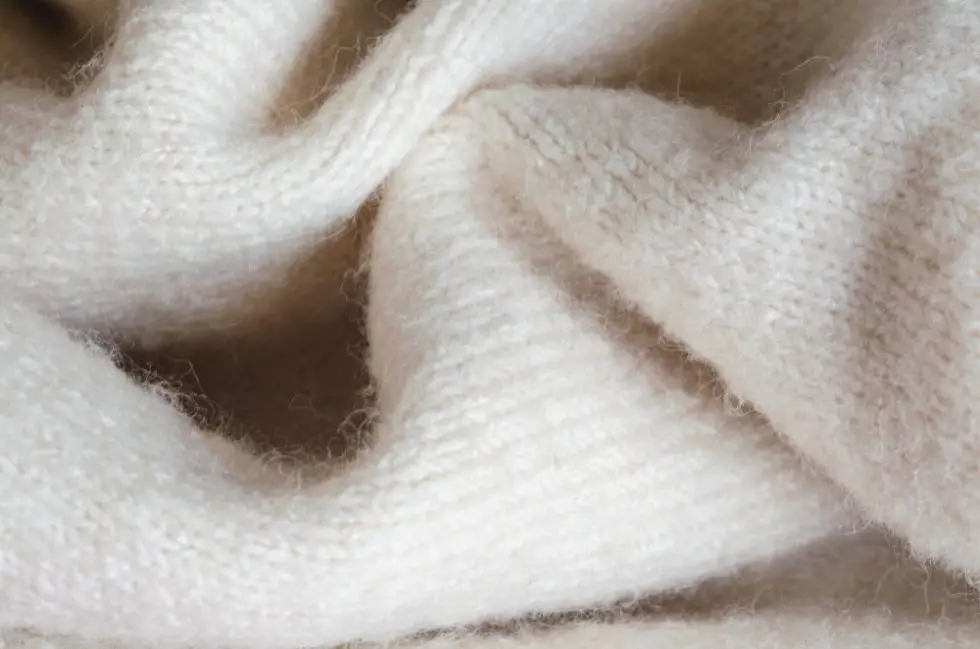
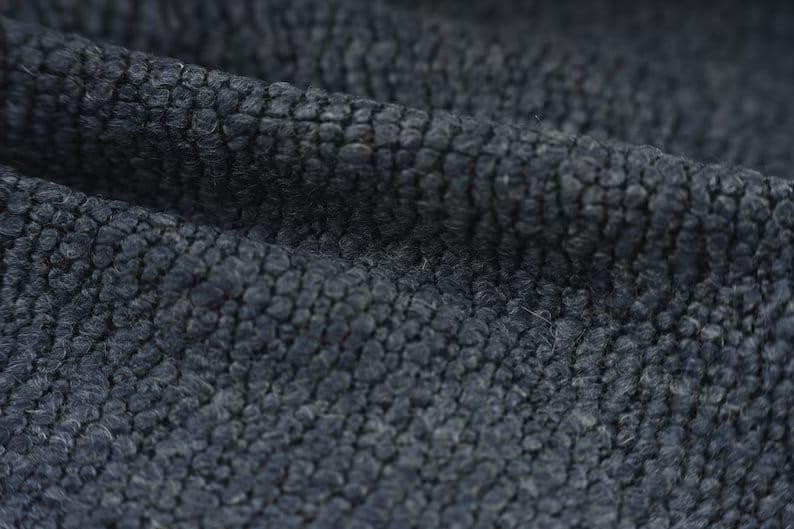
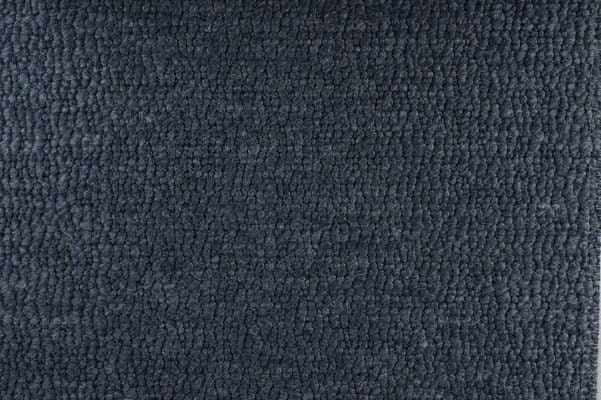
Bouclé wool is a fabric made from wool fibers using a special looped yarn construction technique. The word “bouclé” comes from the French verb “boucler,” which means “to curl” or “to loop.” When you run your fingers over bouclé wool, you’ll immediately feel what makes it special: those distinctive bumps and loops create a three-dimensional texture that’s completely different from smooth fabrics.
Here’s how it works: makers create bouclé yarn by twisting together at least two strands of wool, with one strand held much looser than the other. The loose strand forms loops while the tight strand acts as an anchor. Think of it like making a spiral staircase out of yarn. When this special yarn gets woven or knitted into fabric, you get that characteristic nubby, textured surface that bouclé is famous for.
Quick Answer: Is Bouclé Wool Real Wool?
Yes! Bouclé wool is made from real wool fabric fibers, typically from sheep but sometimes from other wool-producing animals like goats (mohair), alpacas, or even cashmere goats. The term “bouclé” describes how the yarn is made, not what it’s made from. So when you see “bouclé wool,” you’re getting genuine wool that’s been processed using the bouclé technique.
The Texture That Sets It Apart
What makes bouclé wool different from other wool fabrics like tweed or flannel? It all comes down to that looped texture. The loops can range from tiny, tight circles to larger, looser curls. This three-dimensional surface catches light differently than flat fabrics, giving bouclé wool a rich, dynamic appearance that changes as you move around it.
The texture also affects how the fabric performs. Those loops trap air, making bouclé wool naturally insulating. They also give the fabric a bit of stretch and springiness that helps it hold its shape over time.
Bouclé Wool vs. Bouclé Fabric: The Key Difference
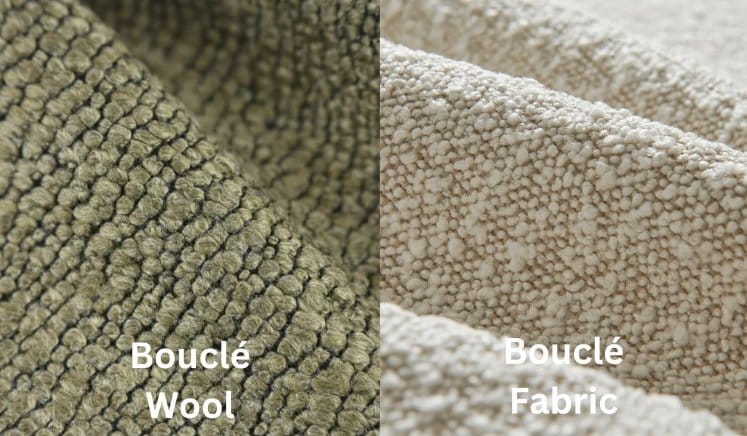
This is where things get confusing for most people, and it’s really important to understand before you buy anything labeled “bouclé.”
Critical Distinction
Bouclé Fabric = Any fabric made using the looped yarn technique, regardless of fiber content
Bouclé Wool = Bouclé fabric specifically made from wool fibers
The confusion happens because “bouclé” describes the construction method, not the material. It’s like how “denim” refers to a specific weave pattern that can technically be made from different fibers, though cotton denim is the classic version.
Why This Matters
Understanding this difference affects:
- Price: Wool bouclé typically costs $30-70 per yard for quality fabric, while synthetic bouclé might be $15-30 per yard
- Care requirements: Wool bouclé usually needs dry cleaning, while cotton or synthetic bouclé can often be machine washed
- Performance: Wool bouclé provides better insulation and breathability than synthetic versions
- Allergies: If you’re allergic to wool, you can still enjoy bouclé made from cotton, linen, or synthetic fibers
- Sustainability: The environmental impact varies significantly depending on whether you’re buying wool or synthetic bouclé
Other Types of Bouclé Fabric
Besides wool, bouclé can be made from:
- Cotton bouclé: Lighter weight, breathable, often machine washable
- Silk bouclé: Luxury option with a subtle sheen and smooth feel
- Linen bouclé: Perfect for spring and summer, very breathable
- Synthetic bouclé: Usually polyester or acrylic, most affordable and easy care
- Blended bouclé: Combines fibers (like wool/silk or wool/polyester) for specific properties
For the rest of this guide, we’ll focus specifically on bouclé wool, though many care and sewing tips apply to other bouclé fabrics as well.
The Rich History of Bouclé Wool
Bouclé wool has been around for longer than you might think. The technique of creating looped yarn dates back to 19th century Europe, where textile artisans in France perfected the method. Originally, bouclé was made from rough, coarse wool and used primarily for practical purposes like blankets and heavy outerwear.
The Mid-Century Modern Boom
The fabric really took off in the 1940s when Finnish-American architect and designer Eero Saarinen was asked to create a chair people could curl up in. He designed the famous Womb Chair in 1948, upholstered in soft bouclé wool. That chair became an icon of mid-century modern design, and suddenly bouclé wool was everywhere in furniture design.
The Chanel Effect
But the real game-changer came in the 1950s when Gabrielle “Coco” Chanel introduced her famous bouclé wool suits. She loved the fabric because it had structure but also moved beautifully. The classic Chanel jacket, with its boxy cut and trimmed edges in bouclé wool, became a symbol of sophisticated, modern elegance. Women who wore Chanel bouclé weren’t just following fashion; they were making a statement about their style and status.
What made Chanel’s use of bouclé wool so special was how she worked with it. She chose softer, lighter-weight bouclé wool than what was typical at the time, and she had it woven with metallic threads for subtle sparkle. The fabric was expensive, but it lasted forever, fitting Chanel’s philosophy that quality was worth the investment.
The 2024-2025 Revival
Fast forward to today, and bouclé wool is having another major moment. Interior designers love it for furniture because it adds texture without pattern, fitting perfectly with the current trend toward cozy, lived-in spaces. In fashion, we’re seeing updated takes on the classic bouclé wool jacket, often in unexpected colors or oversized silhouettes.
What’s driving this comeback? Part of it is nostalgia for mid-century design. Part of it is the texture trend, where people are moving away from smooth, sleek surfaces toward fabrics you want to touch. And part of it is quality: in a world of fast fashion and disposable furniture, bouclé wool represents something that lasts.
Types of Bouclé Wool
Not all bouclé wool is created equal. The type of wool used, how it’s processed, and what it’s blended with all affect how the final fabric looks, feels, and performs.
Pure Wool Bouclé
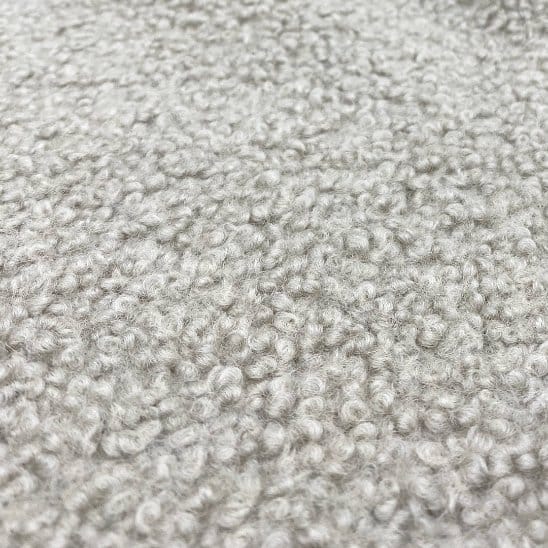
Sheep Wool Bouclé: This is the most common type. Sheep wool bouclé offers great warmth, durability, and that classic nubby texture. The quality varies depending on the breed of sheep and how the wool is processed.
Merino Wool Bouclé: Made from Merino sheep, this is softer and finer than regular sheep wool. It’s less likely to feel itchy against skin, making it perfect for clothing. Expect to pay more for Merino bouclé wool.
Lambswool Bouclé: Taken from a lamb’s first shearing, this wool is incredibly soft and fine. Lambswool bouclé drapes beautifully and feels luxurious, but it’s not as durable as wool from adult sheep.
Luxury Wool Bouclé
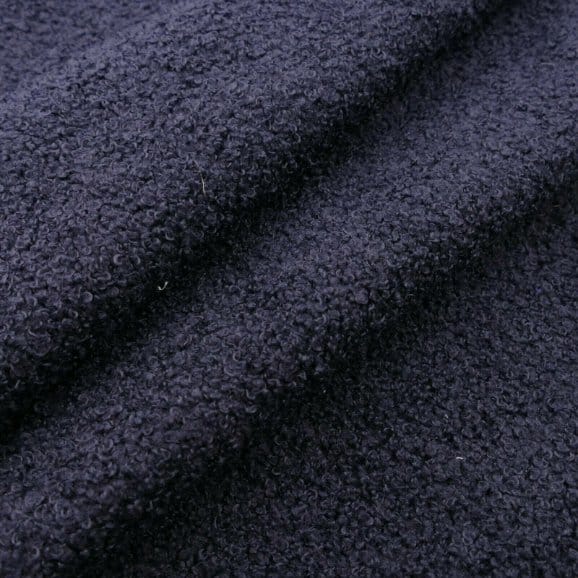
Cashmere Bouclé: The ultimate luxury. Cashmere bouclé is unbelievably soft, lightweight, and warm. It’s also expensive and requires very careful handling. You’ll mostly see this in high-end fashion rather than upholstery.
Alpaca Bouclé: Softer than sheep wool, warmer than cashmere, and naturally hypoallergenic. Alpaca bouclé has a silky sheen and comes in natural colors from white to brown to black. It’s also more sustainable than cashmere.
Mohair Bouclé: Made from Angora goat hair, mohair bouclé has a distinctive fuzzy appearance and beautiful luster. It’s durable, takes dye well, and has natural elasticity. You’ll often see mohair blended with wool for both fashion and upholstery.
Wool Blend Bouclé
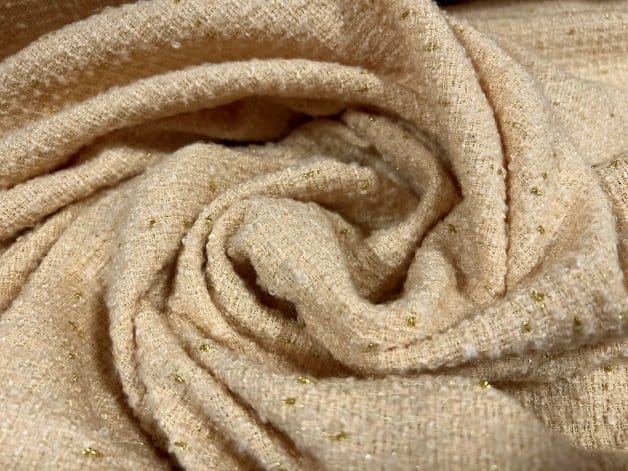
Many bouclé fabrics blend wool with other fibers to balance properties like softness, durability, and cost:
| Blend Type | Typical Ratio | Benefits | Best For |
|---|---|---|---|
| Wool/Silk | 70/30 or 80/20 | Adds sheen and drape, smoother feel | High-end fashion, special occasion wear |
| Wool/Cotton | 50/50 to 70/30 | More breathable, easier care, lighter weight | Spring jackets, transitional pieces |
| Wool/Polyester | 60/40 or 70/30 | More durable, wrinkle-resistant, lower cost | Upholstery, everyday wear |
| Wool/Mohair | 70/30 | Enhanced luster, better resilience | Suits, structured jackets |
| Wool/Nylon | 80/20 | Stronger, more durable, resists pilling | High-traffic upholstery |
Understanding Ply
What Ply Is Bouclé Wool?
Bouclé wool doesn’t have a standard ply like regular knitting yarn. “Ply” refers to how many strands are twisted together. Bouclé yarn is typically made from 2-4 ply base yarns, with one strand left loose to create the loops. However, the final fabric’s thickness depends more on the weight of the wool used and how tightly it’s woven rather than the ply count.
For upholstery, you’ll usually see heavier bouclé wool made from thicker yarns. For clothing, lighter-weight options work better. When shopping, focus on the fabric weight (measured in grams per square meter) rather than ply.
Identifying Quality Bouclé Wool
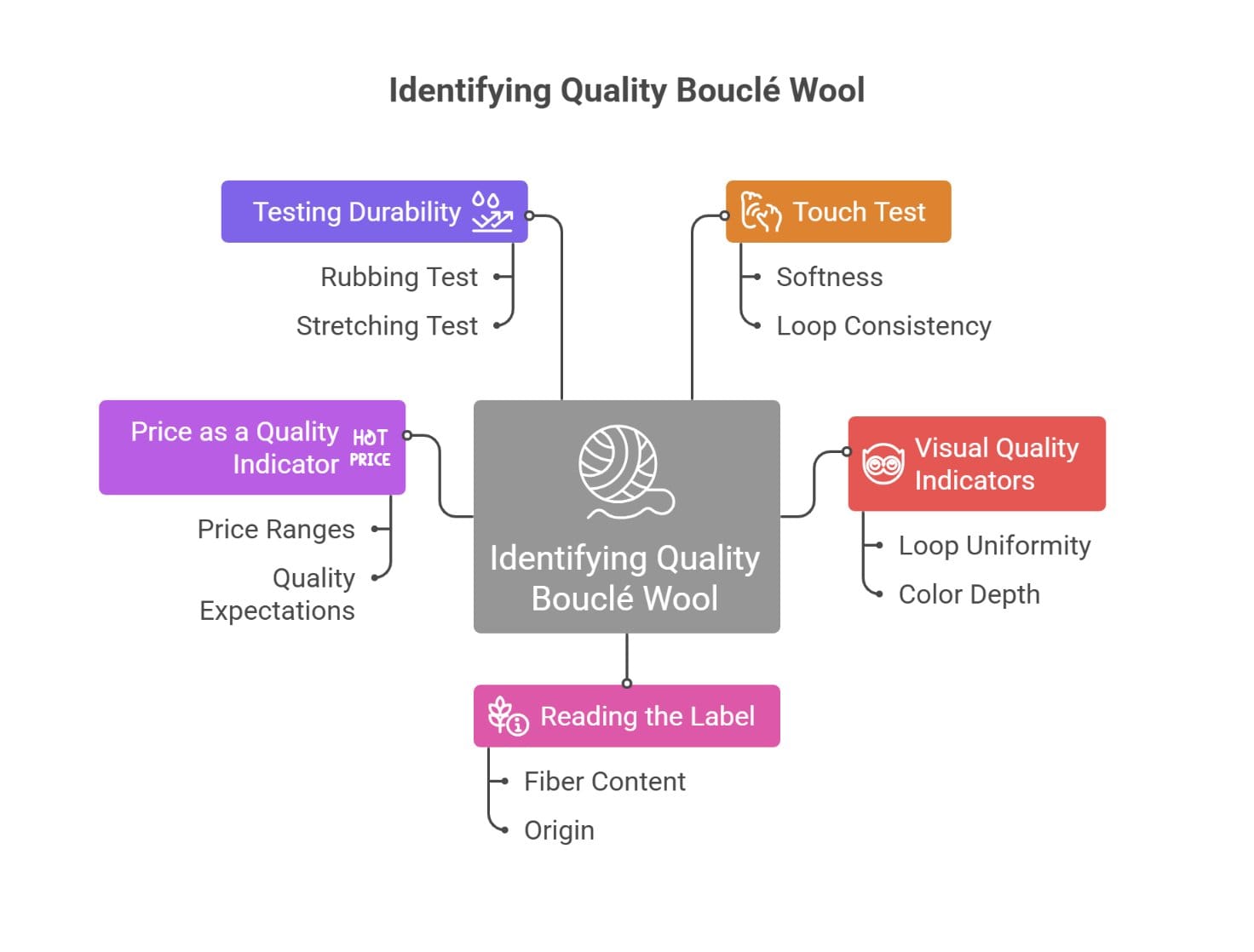
Knowing how to spot quality bouclé wool can save you from expensive mistakes. Here’s what to look for when you’re shopping, whether online or in person.
The Touch Test
Is Bouclé Wool Itchy? Not if it’s good quality. Run your hand across the fabric. Quality bouclé wool should feel soft and pleasant, not scratchy or rough. If it irritates your skin immediately, it’s either low-quality wool or the fibers are too coarse for your sensitivity.
The loops should feel consistent, not loose or weak. Gently tug on a loop (if you can). It shouldn’t pull out easily. The base weave should feel tight and secure, not loose or flimsy.
Is Bouclé Soft or Scratchy?
Quality bouclé wool is soft, not scratchy. The scratchiness you sometimes feel comes from three factors:
- Wool quality: Coarser wool fibers (measured in microns) feel scratchier. Merino and other fine wools are softer.
- Processing: Well-processed wool has been cleaned and treated to remove rough edges from the fibers.
- Blend composition: Blending wool with silk or cashmere makes it softer; blending with coarser fibers makes it scratchier.
If bouclé wool feels scratchy, it’s either poor quality or simply not the right choice for direct skin contact. Consider using a lining for garments.
Visual Quality Indicators
Look closely at the fabric:
- Loop consistency: The loops should be relatively uniform in size and spacing. Some variation is normal and adds character, but wildly different loop sizes suggest lower quality
- Color depth: Quality bouclé wool has rich, even color. Check for lighter or darker patches that might indicate uneven dyeing
- Base weave: Look at the back of the fabric. You should see a tight, consistent weave. Loose threads or gaps suggest poor construction
- No loose threads: A few stray fibers are normal with natural fibers, but you shouldn’t see lots of loose threads or loops coming apart
Reading the Label
Always check the fabric composition label. For bouclé wool:
- “100% Wool” or “100% Virgin Wool” means pure, new wool (not recycled)
- “Pure New Wool” indicates first-time shearing, never previously used
- Specific wool types listed (Merino, Lambswool, etc.) usually signal higher quality
- Percentage breakdowns for blends tell you exactly what you’re getting
- Made in Italy, France, or the UK often (but not always) indicates traditional craftsmanship
Watch Out For
Be cautious of labels that say “Bouclé” without specifying the fiber content. Some cheaper furniture and clothing uses synthetic bouclé and markets it as if it were wool. If it’s not labeled as wool, it probably isn’t.
Price as a Quality Indicator
While price isn’t everything, it does tell you something about bouclé wool:
| Price Range (per yard) | What to Expect |
|---|---|
| $15-25 | Likely synthetic or very low-quality wool blend, basic construction |
| $30-45 | Good quality wool blend or standard wool bouclé, suitable for most projects |
| $50-70 | High-quality pure wool or luxury blend, excellent for fashion or fine furniture |
| $80+ | Luxury fibers (cashmere, fine Merino), designer quality, artisan-made |
Testing Durability
Is Bouclé Wool Durable? Yes, quality bouclé wool is very durable. The looped construction actually helps it resist wear because it distributes stress across the loops rather than concentrating it on flat fibers. Quality wool and cashmere fabrics can last for decades with proper care.
To test durability before buying:
- Rub the fabric firmly between your fingers for 10 seconds. Quality bouclé won’t pill or shed excessively
- Stretch it gently. It should spring back without losing shape
- Check the backing (for upholstery). A reinforced backing adds durability
Sustainability and Ethics: The Full Picture
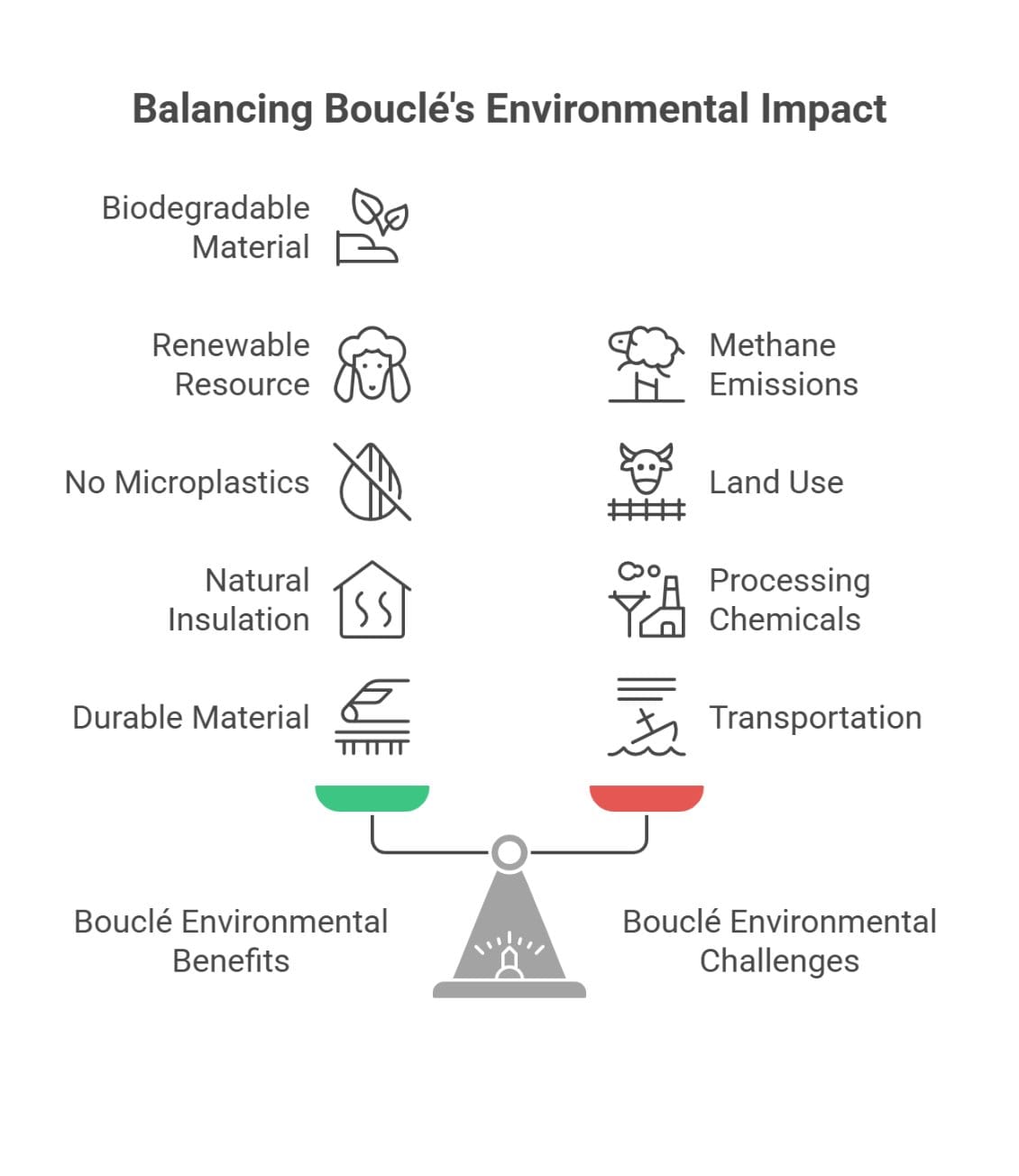
If you care about where your materials come from, bouclé wool presents both opportunities and challenges. Let’s look at the honest truth about wool sustainability.
The Environmental Impact
The Good News:
- Biodegradable: Unlike synthetic fabrics, pure wool bouclé will decompose naturally. Put it in compost, and it’ll break down in months
- Renewable: Sheep grow new fleece every year, making wool a renewable resource
- No microplastics: Wool doesn’t shed plastic microfibers into waterways like synthetic fabrics do
- Natural insulation: The energy-saving properties of wool mean less heating needed in winter
- Durable: Quality bouclé wool lasts 20+ years, reducing the need for replacements
The Challenges:
- Methane emissions: About 50% of wool’s carbon footprint comes from sheep themselves. Ruminant animals produce methane, a potent greenhouse gas
- Land use: Sheep farming requires significant grazing land. In fragile ecosystems, overgrazing can cause erosion and desertification
- Processing chemicals: Conventional wool processing uses harsh chemicals for cleaning (scouring) and sometimes dyeing. These can pollute waterways if not managed properly
- Transportation: Most wool comes from Australia, New Zealand, or China, meaning it travels far to reach consumers in other countries
Animal Welfare Concerns
This is where things get complicated. Wool production involves animals, and practices vary widely. According to Good On You’s wool sustainability guide, the reality of wool production is far more complex than the idyllic image many people have.
Practices to Be Aware Of
Mulesing: A painful procedure where strips of skin are removed from a lamb’s hindquarters without pain relief. Done to prevent flystrike, but controversial. Banned in New Zealand, still practiced in Australia.
Tail docking: Cutting off lambs’ tails, often without anesthesia. Common practice but painful.
Live export: Sheep raised for wool are often sold for meat when wool production declines. Some countries allow live export in conditions that raise welfare concerns.
Looking for Ethical Bouclé Wool
If you want to buy bouclé wool that’s more sustainably and ethically produced, look for these certifications:
| Certification | What It Means | What It Covers |
|---|---|---|
| Responsible Wool Standard (RWS) | Most comprehensive mainstream certification | Animal welfare, land management, social standards, full supply chain tracing |
| ZQ Merino | Specifically for Merino wool | No mulesing, animal welfare, environmental care, traceability |
| GOTS (Organic) | Organic farming standards | No synthetic chemicals, higher animal welfare standards, environmental protection |
| Woolmark | Quality and purity standard | Ensures wool is genuine and meets quality standards (but not specifically about animal welfare) |
Regenerative Wool: The Future?
Some farmers are practicing regenerative agriculture with sheep. This approach actually improves the land:
- Rotational grazing prevents overgrazing
- Sheep help build topsoil through natural fertilization
- Properly managed grazing can increase carbon sequestration in soil
- Mixed farming creates more biodiversity than monoculture crops
Organizations like Fibershed work to connect consumers with regeneratively-produced wool. While regenerative wool bouclé is rare and expensive right now, it represents a more sustainable direction for the industry.
The Most Sustainable Choice: Recycled and Secondhand
The absolute lowest-impact option? Buy recycled or secondhand bouclé wool:
- Recycled wool bouclé: Made from reclaimed wool fibers from old garments or factory scraps
- Vintage bouclé wool: High-quality vintage fabric or clothing, especially from the 1950s-1970s, can be incredible quality
- Upcycled pieces: Furniture reupholstered with reclaimed bouclé wool, or clothing remade from old pieces
These options avoid new production entirely while keeping quality materials in use.
For more information on ethical wool production, check out Sustainably Chic’s comprehensive wool sustainability guide and Sustainable Jungle’s analysis of ethical wool.
Uses and Applications: Fashion and Beyond
What Is Bouclé Good For?
Bouclé wool excels in applications where you want texture, warmth, durability, and a sophisticated look. Its unique properties make it perfect for structured garments, upholstery, and accessories that need to hold their shape while staying comfortable. The looped texture adds visual interest without pattern, making it versatile for both traditional and modern designs.
Fashion Applications
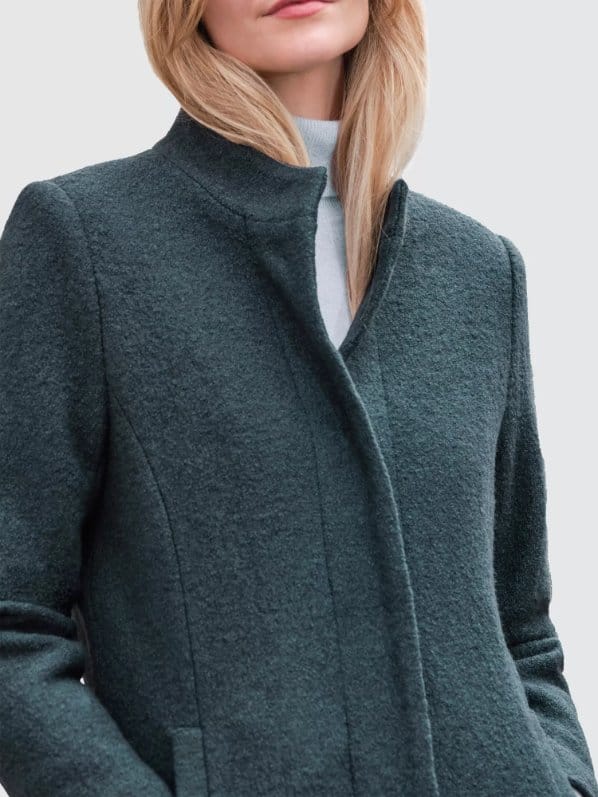
Jackets and Coats: This is where bouclé wool really shines. The fabric has enough body to create structure without needing heavy interfacing, yet it moves beautifully. Classic bouclé wool jackets, inspired by Chanel, remain timeless pieces. For winter coats, bouclé wool provides excellent insulation while looking polished.
Suits: Bouclé wool suits offer a sophisticated alternative to smooth wool suiting. The texture catches light interestingly and photographs well, making bouclé wool suits popular for special occasions. Pair a bouclé wool jacket with smooth trousers for a balanced look.
Skirts and Dresses: The fabric’s weight and texture work beautifully for A-line skirts and structured dresses. The loops add dimension that makes even simple silhouettes interesting. However, avoid very fitted designs as bouclé wool’s bulk can add visual weight.
Accessories: Scarves, hats, bags, and even shoes can all feature bouclé wool. The texture makes accessories stand out without needing embellishment. A bouclé wool scarf adds instant polish to any outfit.
Home Décor Applications
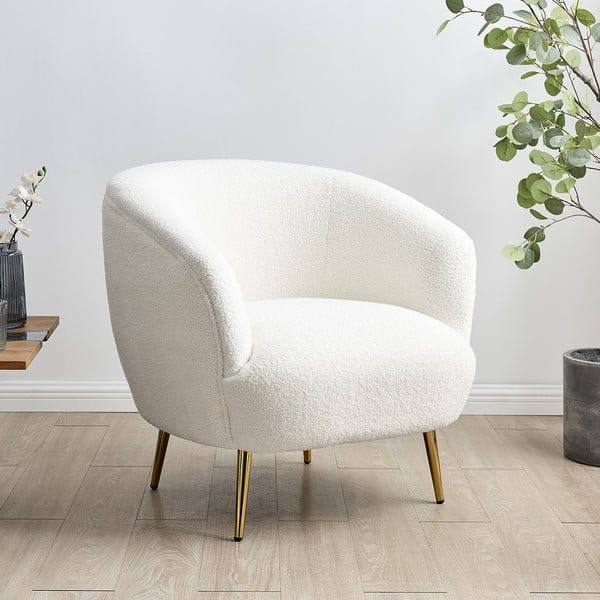
Upholstery: Bouclé wool is having a major moment in furniture. It’s perfect for:
- Sofas: The fabric’s durability makes it suitable for seating that gets daily use. The loops hide minor wear better than smooth fabrics
- Accent chairs: A bouclé wool chair instantly becomes a statement piece, especially in curved or sculptural shapes
- Dining chairs: Less exposed to spills than sofas, making them a safer choice for bouclé wool
- Ottomans and benches: Perfect for adding texture to a room without major commitment
Pillows and Throws: Smaller items let you try the bouclé wool trend without major investment. Mix bouclé wool pillows with smooth fabrics for textural contrast.
Curtains: Less common but stunning. Bouclé wool curtains add texture and excellent insulation. However, they’re heavy and need strong rods.
Seasonal Considerations
Is Bouclé a Summer or Winter Fabric?
Bouclé wool is primarily a fall and winter fabric. The wool content provides excellent insulation, and the looped texture traps warm air close to the body. However, lighter-weight bouclé wool can work for spring if the temperature fluctuates. For true summer wear, cotton or linen bouclé would be better choices than wool.
Is Bouclé Warm or Cool?
Bouclé wool is warm. The combination of wool’s natural insulating properties and the air-trapping loops makes it one of the warmer fabrics available. This is exactly why it’s popular for winter coats and cold-weather upholstery. If you want the bouclé look but need something cooler, look for cotton or linen bouclé instead of wool.
Comprehensive Fabric Comparisons
Understanding how bouclé wool compares to other fabrics helps you make the right choice for your project.
Bouclé Wool vs. Other Wool Fabrics
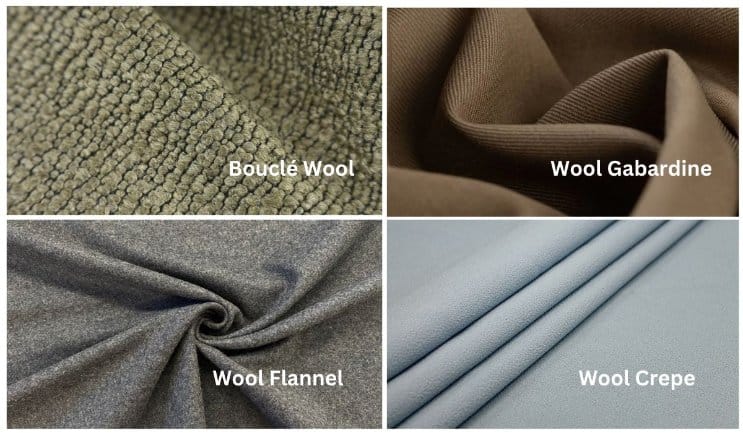
| Fabric | Texture | Best For | Key Difference |
|---|---|---|---|
| Bouclé Wool | Looped, nubby, 3D | Structured jackets, upholstery | Distinctive loops create unique texture |
| Tweed | Rough, speckled, flat | Country jackets, sport coats | Woven pattern, not looped construction |
| Flannel | Soft, brushed, fuzzy | Shirts, casual trousers, bedding | Smooth surface, no loops, softer drape |
| Gabardine | Smooth, tightly woven | Dress trousers, professional wear | Sleek finish, water-resistant, more formal |
| Wool Crepe | Pebbly, crinkled | Dresses, flowing garments | Much lighter, better drape, less structure |
Want to explore more wool types? Use our Wool Type Selector Quiz to find the perfect wool fabric match for your project.
Is Bouclé the Same as Tweed?
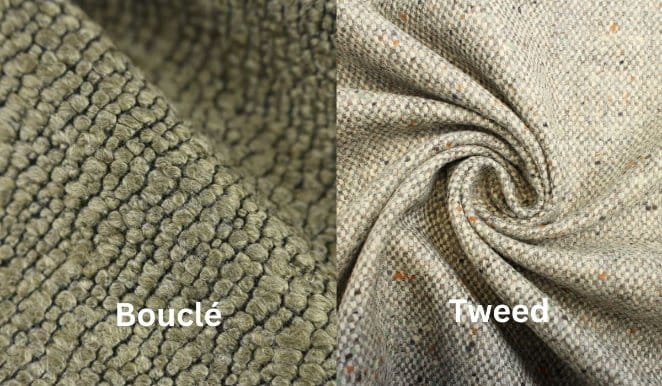
No, bouclé wool and tweed are different fabrics. While both are textured wool fabrics popular for jackets and coats, they achieve their texture in completely different ways:
Tweed gets its texture from using different colored yarns woven together in patterns like herringbone or houndstooth. The surface is relatively flat, with color variation creating visual texture.
Bouclé wool creates texture through the looped yarn construction. The surface is physically bumpy and three-dimensional, regardless of color.
Think of it this way: tweed is like a painting with different colors creating depth, while bouclé wool is like a sculpture with actual physical dimension.
Bouclé Wool vs. Textured Fabrics
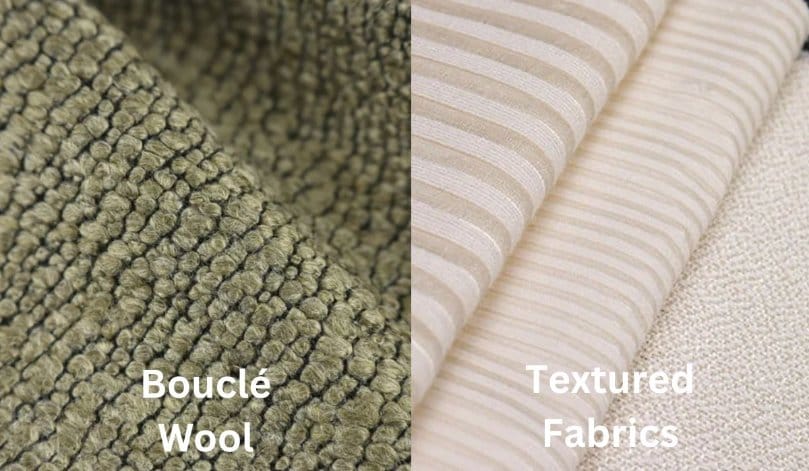
| Comparison | Bouclé Wool | Alternative Fabric | Better Choice For |
|---|---|---|---|
| vs. Sherpa | Looped texture, holds shape well, sophisticated look | Fuzzy, very soft, casual appearance | Bouclé: structured pieces, formal settings Sherpa: loungewear, casual blankets |
| vs. Teddy Fabric | Tighter loops, more durable, less fuzzy | Very plush, teddy bear-like, warmer | Bouclé: upholstery, jackets Teddy: cozy coats, children’s items |
| vs. Chenille | Bumpy loops, more structured, wool warmth | Soft pile, smoother, very drapey | Bouclé: structured furniture, jackets Chenille: flowing throws, soft pillows |
| vs. Velvet | Matte finish, casual elegance, very durable | Lustrous pile, formal, shows marks easily | Bouclé: everyday furniture, casual wear Velvet: special occasion, formal rooms |
Is Bouclé Better Than Velvet?
Neither is objectively “better” – they serve different purposes:
Choose bouclé wool if you want:
- A fabric that hides marks, vacuum lines, and wear patterns
- Something casual and approachable rather than formal
- Better durability for high-traffic areas
- Easier maintenance (spot cleaning works better)
- A more textured, dimensional look
Choose velvet if you want:
- A more formal, luxurious appearance
- Smooth texture and lustrous sheen
- Classic elegance and drama
- Something that photographs beautifully for special rooms
Wool Bouclé vs. Other Bouclé Types
| Type | Pros | Cons | Price |
|---|---|---|---|
| Wool Bouclé | Warm, durable, natural, breathable, ages beautifully | Dry clean only, can be scratchy, expensive, attracts moths | $$$-$$$$ |
| Cotton Bouclé | Machine washable, breathable, softer than wool, hypoallergenic | Less insulating, wrinkles more, less structure | $$-$$$ |
| Synthetic Bouclé | Most affordable, easy care, stain resistant, consistent quality | Not breathable, sheds microplastics, less natural feel | $-$$ |
| Silk Bouclé | Luxurious sheen, beautiful drape, very soft | Very expensive, delicate, requires professional care | $$$$+ |
Complete Care and Maintenance Guide
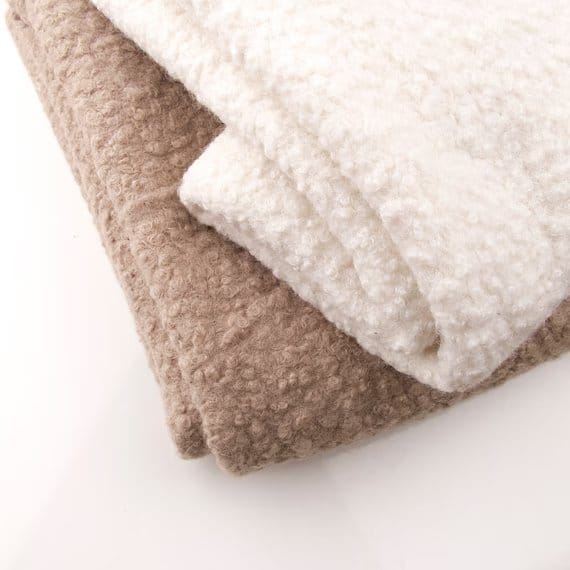
Is Bouclé High Maintenance?
Bouclé wool is moderately high maintenance compared to synthetic fabrics, but less fussy than you might think. The main challenges are dry cleaning requirements and the tendency to snag or catch pet hair. However, the textured surface actually hides minor soiling better than smooth fabrics, so you won’t need to clean it as often. With proper care, bouclé wool can last 20+ years.
General Cleaning Guidelines
For Clothing:
- Primary method: Professional dry cleaning is best for most bouclé wool garments
- Frequency: Clean at the end of each season, or when visibly soiled
- Between cleanings: Air out garments after wearing. Hang in a well-ventilated area for 24 hours before storing
- Spot treatment: Blot (never rub) spills immediately with a clean, damp cloth
For Upholstery:
- Weekly: Vacuum using the upholstery attachment with low suction. Use gentle back-and-forth motions
- Monthly: Use a soft brush to fluff up the loops and remove embedded dust
- Deep cleaning: Professional upholstery cleaning once a year, or as needed
- Spot cleaning: Use a clean, white cloth dampened with water and a tiny amount of wool-safe detergent
Step-by-Step Spot Cleaning
Dealing with Common Stains
| Stain Type | Treatment | What to Avoid |
|---|---|---|
| Coffee/Tea | Blot immediately, then treat with cool water and wool detergent. Rinse thoroughly. | Hot water (sets the stain), rubbing |
| Red Wine | Blot, then apply club soda or cold water. For stubborn stains, use white wine to neutralize red wine tannins, then rinse. | Salt (can damage wool fibers) |
| Grease/Oil | Sprinkle cornstarch or talcum powder to absorb oil. Let sit 30 minutes, brush off, then clean with wool detergent. | Water alone (won’t remove oil) |
| Ink | Dab with rubbing alcohol on a cotton swab. Work from outside edges in. Professional cleaning recommended. | Excessive rubbing (spreads ink) |
| Food | Scrape off solids gently with a dull knife. Clean with cool water and wool detergent. Rinse well. | Hot water (can set protein stains) |
Storage Tips
Clothing:
- Clean before storing to remove any food particles or oils that attract moths
- Store in breathable garment bags, never plastic (which traps moisture)
- Use cedar blocks or lavender sachets to deter moths naturally
- Fold heavy items like coats to prevent shoulder stretching; hang lighter items on padded hangers
- Keep in a cool, dry place away from direct sunlight
Upholstery:
- Rotate cushions regularly to ensure even wear
- Keep furniture away from direct sunlight to prevent fading
- Use throws or covers on frequently-used pieces
- Vacuum underneath cushions monthly to prevent dust buildup
Preventing Pilling
Bouclé wool can develop pills (small balls of fiber) in high-friction areas. Here’s how to minimize pilling:
- Avoid sitting in the same spot repeatedly on upholstered pieces
- Don’t wear bags or purses that rub against bouclé wool clothing
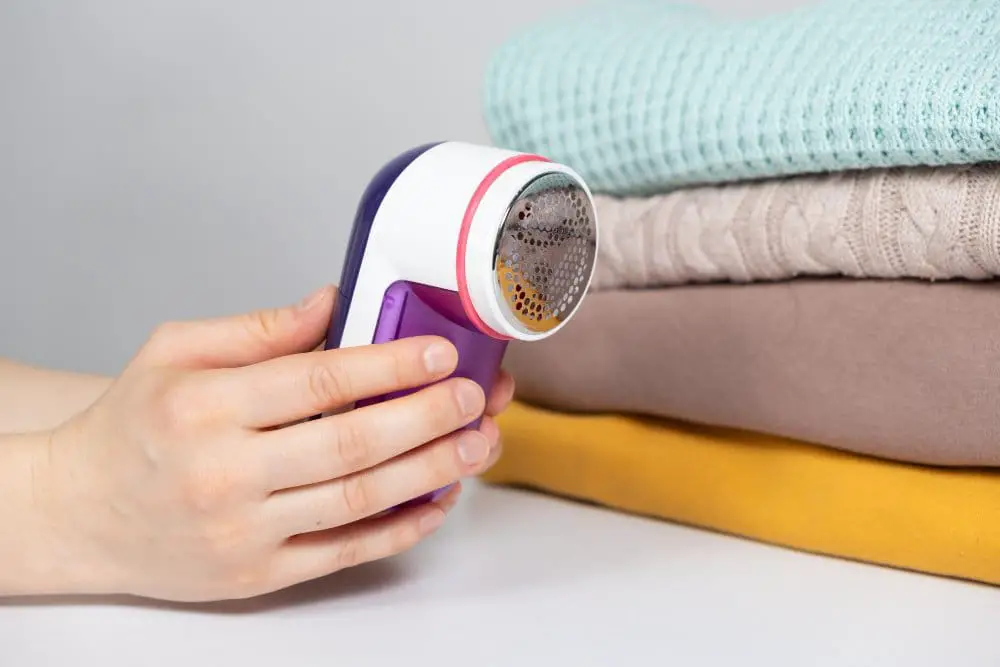
- Remove pills carefully with a fabric shaver or sweater comb – don’t pull them off
- Quality bouclé wool pills less than cheaper versions
Dealing with Snagging
The loops in bouclé wool can catch on jewelry, pet claws, or rough surfaces:
Pet Hair Management
Bouclé wool is notorious for attracting and holding pet hair. Here’s how to deal with it:
- Prevention: Keep pet blankets on furniture, establish pet-free zones
- Daily maintenance: Use a lint roller or rubber glove (put on hand and rub in circular motions)
- Deep removal: Vacuum with upholstery brush, then use a dampened rubber squeegee to gather stubborn hairs
- Commercial options: Pet hair removal tools designed for textured fabrics work better than standard lint rollers
What Never to Do
- Never machine wash unless the label specifically says it’s safe
- Never use hot water – it can cause severe shrinkage and felting
- Never wring or twist wet bouclé wool
- Never iron directly on the right side – if you must iron, use low heat on the wrong side with a pressing cloth
- Never use bleach or harsh chemicals
- Never tumble dry unless label permits it
Helpful Care Tools
For personalized care instructions based on your specific bouclé wool item, try these interactive tools:
- Wool Care Calculator – Get customized washing and care recommendations
- Wool Stain Treatment Guide – Quick stain removal solutions for wool fabrics
DIY Sewing Guide: Working with Bouclé Wool
Is Bouclé Hard to Sew?
Bouclé wool is moderately challenging to sew. The main difficulty comes from the loose loops catching on your sewing machine needle and presser foot. However, with the right tools and techniques, even intermediate sewers can work with it successfully. The key is patience, proper equipment, and accepting that bouclé wool hides small imperfections better than smooth fabrics.

Watch this detailed tutorial on sewing with bouclé fabric
Essential Tools and Supplies
Needles:
- Universal needles size 80/12 or 90/14 for regular bouclé wool
- Ballpoint needles if your bouclé wool has any stretch
- Replace your needle after every garment – wool is harder on needles than cotton
Presser Feet:
- Walking foot or even-feed foot is essential for preventing fabric from shifting
- Teflon foot can help fabric glide smoothly
- Avoid using a free-motion or darning foot
Other Supplies:
- Sharp fabric scissors or rotary cutter
- Pinking shears for finishing raw edges
- Fabric glue or fray check for securing edges
- Longer pins (1.5-2 inches) that won’t get lost in the loops
- Thread that matches your fabric (polyester or cotton-wrapped polyester works well)
- Pattern weights instead of pins for cutting (less damage to fabric)
Pre-Sewing Preparation
Cutting Bouclé Wool
This step is critical and challenging:
- Use a single layer: Don’t try to cut two layers at once. The bulk makes accurate cutting nearly impossible
- Lay fabric on a large, flat surface: Make sure it’s not hanging off the edge anywhere
- Pin sparingly: Use pattern weights instead of pins when possible to avoid distorting the fabric
- Cut in one direction: This prevents the fabric from stretching or fraying unevenly
- Use very sharp tools: Dull scissors snag on the loops
- Don’t lift fabric while cutting: Keep it flat on the table to maintain accuracy
- Mark on the wrong side: Use tailor’s chalk or thread marking on the back to avoid visible marks
Preventing Fraying
Bouclé wool frays readily because of its loose construction:
- Immediately after cutting: Run pinking shears along raw edges or apply a thin line of fabric glue
- For seam allowances: Finish edges with a zigzag stitch or serger before sewing seams
- At fabric store: Ask them to cut you an extra inch on all sides to account for potential fraying
Sewing Techniques
Machine Settings:
- Stitch length: 2.5-3.0mm (longer than normal to prevent puckering)
- Tension: Slightly looser than normal
- Speed: Slow to moderate – rushing increases mistakes
- Pressure: Reduce presser foot pressure if your machine allows it
Sewing Seams:
Best Patterns for Bouclé Wool
Choose patterns that work with bouclé wool’s properties:
Good Choices:
- Boxy, structured jackets with minimal darts
- A-line skirts with simple construction
- Straight or slightly flared coats
- Vest patterns with clean lines
- Patterns labeled “suitable for tweeds”
Avoid:
- Very fitted patterns requiring precise seaming
- Designs with lots of darts, tucks, or gathers
- Patterns with bias-cut pieces
- Delicate, drapey designs
- Anything requiring topstitching (the loops make this difficult)
Finishing Touches
Hems:
- Face hems with ribbon or bias binding rather than folding the bulky fabric
- Hand-stitch hems with a catch stitch for the most invisible finish
- Keep hems simple – no decorative stitching
Buttonholes:
- Use bound buttonholes or faced buttonholes rather than machine buttonholes
- If you must use machine buttonholes, interface the area heavily and test on scraps
- Consider using button loops or frogs instead
Lining:
- Always line bouclé wool garments for comfort and to prevent the texture from catching on undergarments
- Use smooth, slippery lining like acetate or polyester
- Attach lining at facings and hems only, allowing it to move independently
Common Sewing Problems and Solutions
| Problem | Solution |
|---|---|
| Loops getting caught in machine | Cover fabric with tissue paper while sewing, then tear away. Replace needle more frequently. |
| Fabric stretching while sewing | Use walking foot, reduce presser foot pressure, don’t pull fabric through machine. |
| Seams puckering | Lengthen stitch, loosen tension slightly, sew slower. |
| Difficulty seeing seam lines | Use thread marking or tailor tacks instead of chalk. Mark on wrong side generously. |
| Edges fraying during construction | Apply fray check immediately after cutting. Handle fabric minimally. |
Sewing Help Tools
Need more guidance? Check out these helpful resources:
- Needle & Fabric Compatibility Chart – Find the perfect needle for your bouclé wool
- Fabric Cutting Troubleshooting Guide – Solve cutting problems step-by-step
Smart Buying Guide
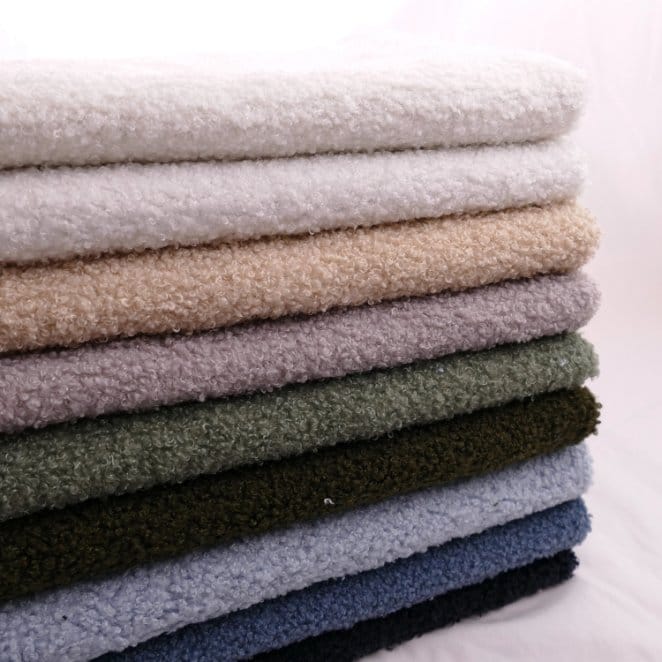
Whether you’re shopping for bouclé wool fabric by the yard or finished pieces, knowing what to look for saves money and disappointment.
Where to Buy Bouclé Wool Fabric
Online Retailers:
- Mood Fabrics – extensive selection of designer bouclé wool
- Britex Fabrics – high-end options with detailed descriptions
- Fabric.com – good mid-range selection
- Etsy – vintage and specialty bouclé wool, often from European sellers
- Local fabric stores – you can touch and see the fabric in person
What to Ask Before Buying:
- What’s the exact fiber content? (Don’t accept “bouclé” as an answer – you need percentages)
- What’s the fabric weight in grams per square meter (GSM)?
- What’s the width? (Can range from 45-60 inches)
- Is there a directional nap?
- What are the care requirements?
- Can I order a sample? (Always do this for expensive fabrics)
- What’s the return policy?
Calculating Yardage
Bouclé wool’s bulk means you might need more fabric than your pattern calls for:
- Add 10-20% extra to pattern requirements for matching loops and potential mistakes
- If the fabric has obvious directional texture, buy as if it has a one-way design
- For upholstery, consult with a professional about yardage – it varies by furniture piece and whether you’re DIYing or hiring out
- Use our Fabric Yardage Calculator to determine exactly how much fabric you need for your project
Price Expectations
By the Yard (Fabric):
- Budget: $15-25 (likely synthetic or poor quality)
- Mid-range: $30-50 (good quality wool blend or standard wool)
- High-end: $60-100+ (luxury fibers, Italian or French weaving)
Finished Pieces:
- Bouclé wool throw pillows: $40-100 each
- Accent chair: $400-1,500
- Sofa: $1,500-5,000+
- Jacket (ready-made): $200-2,000+
Red Flags When Shopping
- No fiber content listed
- “Bouclé-style” or “faux bouclé” (means it’s imitating the look with different construction)
- Extremely low prices for “wool” bouclé (likely synthetic)
- Very stiff or plasticky feel (over-finished or synthetic)
- Inconsistent loop sizes with visible gaps in base fabric
- Strong chemical smell (poor quality processing)
- Seller can’t answer basic questions about fiber content or care
Sample Ordering Tips
Always order samples before committing to expensive yardage:
- Order samples from 2-3 options to compare
- Look at samples in the actual lighting where you’ll use the fabric
- Test samples by rubbing firmly – quality won’t shed excessively
- Check how samples feel against your skin if making clothing
- Put samples next to other fabrics, furniture, or clothing you’ll pair them with
Common Problems and Solutions
Problem: Excessive Shedding
Normal or Not? Some shedding is normal with new bouclé wool as loose fibers work their way out. It should decrease significantly after the first few weeks.
Solutions:
- Vacuum or brush regularly for the first month
- For furniture, vacuum in all directions to catch fibers from every angle
- For clothing, hang outdoors and brush gently
- If shedding continues after a month, it’s likely poor quality – contact the retailer
Problem: Color Fading
Prevention:
- Keep bouclé wool furniture away from direct sunlight
- Use UV-protective window film on south-facing windows
- Rotate cushions regularly
- Store clothing in dark closets, not near windows
If It Happens:
- Professional dye restoration can sometimes help furniture
- For clothing, accept the vintage patina or re-dye professionally
- Uneven fading usually can’t be fixed – prevention is key
Problem: Stretching or Sagging
For Upholstery:
- Rotate and flip cushions weekly
- Avoid sitting in the exact same spot every time
- Re-stuff cushions if they’ve compressed (this is a cushion issue, not a fabric issue)
- Professional reupholstery can tighten fabric if it’s severely stretched
For Clothing:
- Always hang heavy items like coats on padded hangers
- Fold knit bouclé wool items rather than hanging
- Minor sagging can be steamed back into shape – hold steamer 6 inches away and gently reshape
Problem: Odor Absorption
Wool naturally absorbs odors, which is both good (it neutralizes body odor in clothing) and bad (it can pick up environmental smells):
Solutions:
- Air out pieces regularly – fresh air is the best odor neutralizer
- For furniture, sprinkle with baking soda, let sit 30 minutes, vacuum thoroughly
- For clothing, hang in bathroom while showering (steam helps release odors)
- Store with cedar or lavender to keep fresh between uses
- Never use Febreze or similar products on wool – they can leave residue
Problem: Pet Damage
Cats especially love scratching the looped texture:
Prevention:
- Provide attractive scratching alternatives nearby
- Use deterrent sprays formulated for furniture
- Cover furniture when you’re not home
- Keep pets’ nails trimmed
Repair:
- Minor snags: Pull loops through to back with blunt needle
- Major damage: May require professional reweaving or patching
- Consider this before investing in expensive bouclé wool furniture if you have active pets
Problem: Static Electricity
Wool naturally builds up static, especially in dry conditions:
Solutions:
- Use a humidifier in rooms with bouclé wool furniture
- For clothing, lightly mist with water and let dry before wearing
- Use an anti-static spray designed for wool (test in hidden area first)
- Run a dryer sheet over upholstery (very lightly – don’t leave residue)
Frequently Asked Questions
In most cases, no. Traditional bouclé wool should be dry cleaned to prevent shrinking, felting, and damage to the loops. However, some modern bouclé wool blends (especially those with synthetic fibers) may be machine washable on a gentle cycle with cold water. Always check the care label first and test on a small hidden area if you’re unsure.
Quality bouclé wool is relatively resistant to pilling compared to other textures. The looped construction actually helps prevent pilling because the fibers are secured in place. However, lower-quality bouclé wool or blends with cotton may pill in high-friction areas like seat cushions or under arms. Using a fabric shaver removes pills without damaging the loops.
Bouclé wool has mixed results with pets. The textured surface hides pet hair better than smooth fabrics, and quality wool is durable enough to withstand regular use. However, the loops can catch on pet claws, and cats may find the texture irresistible for scratching. Dogs that dig or scratch furniture may pull loops. If you have pets, consider darker colors to hide hair and provide plenty of scratching alternatives for cats.
Quality bouclé wool can last 20-30 years or more with proper care. Vintage Chanel jackets from the 1950s still look good today. For upholstery, expect 10-15 years in high-traffic areas, longer for occasional-use furniture. The durability depends on the quality of wool, construction quality, and how well you maintain it. Cheap bouclé or synthetic versions may only last 3-5 years.
Yes, but carefully. Hold the steamer at least 6 inches away from the fabric and never let it touch directly. Steam helps refresh the fabric, remove wrinkles, and fluff up compressed loops. For clothing, hang items in a steamy bathroom rather than using direct steam if possible. Never use a hot iron directly on bouclé wool – always use a pressing cloth and low heat.
Bouclé wool is currently very much in style (2024-2025) but it’s also a classic that transcends trends. Like the Chanel jacket it’s famous for, bouclé wool has staying power because of its texture and quality rather than being trendy. Even when it’s not at peak popularity, quality bouclé wool pieces remain stylish. The current trend focuses more on furniture than fashion, but both markets are strong.
Bouclé is pronounced “boo-CLAY” (rhymes with “bouquet”). The accent is on the second syllable. It’s a French word, so the “é” has a sharp “ay” sound rather than “ee.” You might also hear “BOO-clay” with equal emphasis on both syllables, which is also acceptable.
Minor damage like pulled loops can be repaired at home by carefully pulling the loop back through to the wrong side with a blunt needle or crochet hook. For serious damage, holes, or extensive wear, professional reweaving is possible but expensive. Prevention through proper care is always better than repair. Small snags should be addressed immediately before they become larger problems.
For clothing, yes. The textured surface can catch on undergarments and be uncomfortable against skin. Lining also helps garments hold their shape and makes them easier to put on and take off. Use smooth lining fabrics like silk, polyester, or acetate. For upholstery, bouclé wool doesn’t need additional lining beyond the standard backing fabric.
Yes, but it’s challenging and best left to professionals. The looped texture makes even dye absorption difficult. If you must dye it yourself, use acid dyes formulated for wool and expect some color variation. Pre-dyed bouclé wool has been dyed before weaving for more even results. Overdyeing to darken a color is easier than changing colors completely.
Wool is naturally flame retardant and won’t easily catch fire or melt like synthetic fabrics. When exposed to flame, wool smolders and self-extinguishes when the flame source is removed. This makes bouclé wool a safer choice for upholstery and children’s clothing compared to synthetic alternatives. However, it’s not completely fireproof – treat it with appropriate caution around open flames.
Yes, but it requires experience. The textured surface makes matching seams difficult, and the bulk can be challenging to work with. Simple alterations like hemming or taking in side seams are manageable. Complex alterations involving the neckline, shoulders, or multiple seam adjustments should be done by an experienced tailor familiar with textured fabrics. Always ask to see examples of their previous work with similar fabrics.
Conclusion
Key Takeaways
Understanding the Basics
Bouclé wool is a specific type of bouclé fabric made from wool fibers using a looped yarn technique. The term “bouclé” describes the construction method, not the material itself. This distinction matters for price, care, and performance. True bouclé wool offers warmth, durability, and that signature textured luxury that synthetic alternatives can’t quite match.
Quality Matters
Not all bouclé wool is created equal. Quality indicators include consistent loop sizes, soft touch (not scratchy), tight base weave, and proper fiber content labeling. Expect to pay $30-70 per yard for good quality fabric, more for luxury fibers like cashmere or fine Merino. The investment pays off in durability – quality pieces can last 20+ years.
Care Is Manageable
While bouclé wool requires more care than synthetic fabrics, it’s not as high-maintenance as you might fear. Most items need professional dry cleaning, but the textured surface actually hides minor soiling better than smooth fabrics. Regular vacuuming, prompt stain treatment, and proper storage keep bouclé wool looking good for decades.
Consider Your Lifestyle
Bouclé wool works best for specific situations. It’s excellent for structured jackets, winter coats, and upholstered furniture in adult-only or low-traffic areas. It’s less ideal for homes with cats who scratch, young children prone to spills, or people seeking low-maintenance options. The loops do attract and hold pet hair, though darker colors hide this better.
Sustainability Requires Research
Bouclé wool can be sustainable, but not all wool production is created equal. Look for certifications like Responsible Wool Standard (RWS), ZQ Merino, or GOTS organic to ensure better animal welfare and environmental practices. The most sustainable choice is often secondhand or vintage bouclé wool, which avoids new production entirely while offering incredible quality.
Making Your Decision
Bouclé wool deserves its comeback. There’s a reason this fabric has remained popular since the 1950s – it combines practical durability with that sought-after textured luxury. When you run your hand over quality bouclé wool, you understand immediately why people love it. The three-dimensional surface catches light beautifully, the loops provide natural cushioning, and the overall effect is sophisticated without being stuffy.
Choose bouclé wool if you:
- Want a fabric that gets better with age and lasts for decades
- Appreciate natural fibers and their environmental advantages over synthetics
- Love textured fabrics that add visual interest without pattern
- Are willing to invest in quality and follow proper care requirements
- Need excellent insulation for cold climates
- Want to create something with structure that holds its shape
Look for alternatives if you:
- Have active cats that scratch furniture
- Need machine-washable fabrics for convenience
- Live in a very hot climate and need lightweight, cool fabrics
- Are on a tight budget (consider cotton or synthetic bouclé instead)
- Prefer smooth, sleek textures
- Have severe wool allergies
Final Recommendations
For Fashion: Start with a bouclé wool jacket or coat if you’re new to the fabric. The structure works perfectly for these pieces, and you’ll get years of wear. Choose classic colors like cream, black, or navy for maximum versatility. Always line garments for comfort and longevity.
For Home Décor: Test the waters with accent pieces like throw pillows before committing to a full sofa. This lets you experience the fabric’s maintenance needs and see how it works with your lifestyle. If you have pets, darker colors are your friend. Consider performance-treated bouclé wool if available, which resists stains while maintaining the natural fiber benefits.
For DIY Sewers: If you’re planning to sew with bouclé wool, invest in proper tools (walking foot, sharp needles) and practice on scrap fabric first. Choose patterns designed for textured fabrics or those labeled “suitable for tweeds.” Don’t attempt bouclé wool as your first sewing project – make sure you’re comfortable with your machine first.
Looking Ahead
The current bouclé wool trend shows no signs of slowing down. As people increasingly value quality over quantity and natural materials over synthetics, bouclé wool’s appeal continues to grow. The fabric’s ability to work in both traditional and modern spaces, combined with its durability and timeless texture, means investments made now will likely stay stylish for decades.
Whether you’re drawn to the Chanel-inspired fashion possibilities or the cozy furniture trend, bouclé wool offers something special that fast fashion and synthetic alternatives can’t replicate. That tactile, textured quality – the loops you can feel under your fingers, the way light plays across the uneven surface – creates an experience that goes beyond just looking good.
So is bouclé wool worth it? If you value quality, appreciate natural materials, and want something that will last, absolutely. Just go in with realistic expectations about care requirements and lifestyle compatibility. Order samples, feel the fabric in person if possible, and choose quality over bargains. A well-made bouclé wool piece isn’t just a purchase – it’s an investment in something that could still be serving you beautifully twenty years from now.
Ready to explore more about quality fabrics? Check out our complete guide to wool fabrics or dive into specific wool types like Merino, cashmere, or alpaca to find the perfect fiber for your next project.