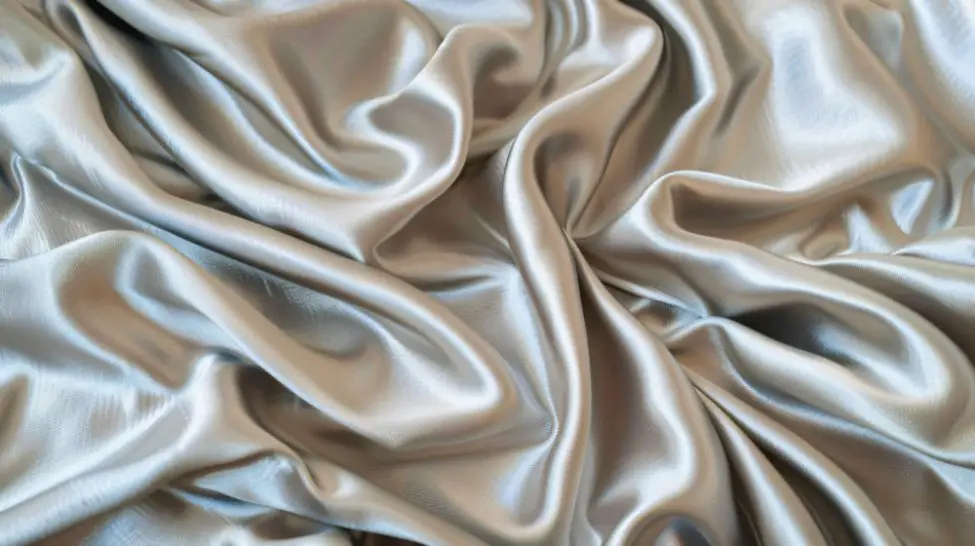

Everything you need to know about baronet satin’s unique composition, uses, care, and sustainability for fashion and home décor projects
Table of Contents
- What is Baronet Satin?
- The History of Baronet Satin
- Properties and Characteristics
- Baronet Satin vs. Other Satin Types
- Environmental Impact and Sustainability
- Uses and Applications
- Complete Care and Maintenance Guide
- Working with Baronet Satin: A Sewing Guide
- Buying Guide
- Frequently Asked Questions
- Conclusion
If you’ve ever admired the gleaming elegance of a wedding gown, felt the smooth surface of luxurious curtains, or watched a ballerina glide across the stage in perfectly crafted pointe shoes, you’ve likely encountered baronet satin. This special fabric combines beauty with durability in a way that few other materials can match.
Baronet satin stands out in the world of textiles for its unique construction and stunning appearance. Unlike many other satin fabrics, baronet satin brings together two different fibers to create something truly special. Whether you’re a fashion designer, home decorator, textile professional, or someone who cares about making smart, sustainable choices, understanding this fabric will help you make better decisions for your projects.
What is Baronet Satin?
Baronet satin is a type of satin fabric with a specific construction that sets it apart from other satins. The fabric uses rayon threads for the warp (the vertical threads on a loom) and cotton threads for the weft (the horizontal threads). This blend of materials creates a fabric that’s both beautiful and strong.
The Unique Composition
What makes baronet satin different from other satins is its two-fiber approach. The rayon warp threads give the fabric its signature shine and smooth surface, while the cotton weft threads provide strength and stability. This combination results in a material that looks luxurious but can handle real-world use.
Think of it like building a house: the rayon provides the beautiful exterior that everyone sees and admires, while the cotton acts as the sturdy framework that holds everything together. Both parts work together to create something better than either material could produce alone.
How the Weaving Works
Baronet satin uses the satin weave technique, which is one of the three basic ways to weave fabric (the others being plain weave and twill). In a satin weave, the warp threads float over multiple weft threads before going under one. This creates a smooth surface with very few visible interlacings.
For baronet satin specifically, this weaving pattern allows the shiny rayon threads to dominate the front surface, while the cotton threads remain mostly hidden on the back. This is why baronet satin has a glossy front and a duller back. It’s not a coating or treatment, but rather the natural result of how the fabric is woven.
Quick Fact
Baronet satin is sometimes called “baronette” satin, and you might see it described as having a “cotton back and rayon front” or being similar to georgette fabric in appearance, though the two fabrics feel quite different.
The History of Baronet Satin
Understanding where baronet satin comes from helps us appreciate why it became so popular in fashion and design. The fabric doesn’t have as ancient a history as silk satin, but its story is no less interesting.
The Early 20th Century Emergence
Baronet satin gained popularity in the early 1900s, during a time when fashion was changing rapidly. Women’s clothing was becoming less restrictive, and new fabrics were being developed to meet changing tastes. The early 20th century saw baronet satin catch the attention of both designers and the public.
The fabric became especially popular because it offered something new: the look of expensive silk satin with better durability and a more affordable price point. When women started wearing the glossy gowns made from baronet satin, the fabric’s reputation quickly spread from high-end fashion houses to everyday wardrobes.
Evolution Through the Decades
As manufacturing techniques improved throughout the 20th century, baronet satin became easier to produce and more widely available. The fabric found its way into various applications beyond evening wear. By mid-century, interior designers were using it for home décor, and it became a standard material for ballet pointe shoes due to its combination of beauty and durability.
Today, baronet satin remains popular in bridal fashion, formal wear, and upholstery. Modern production methods have made it more consistent in quality, though the basic composition of rayon and cotton has stayed the same.
Properties and Characteristics
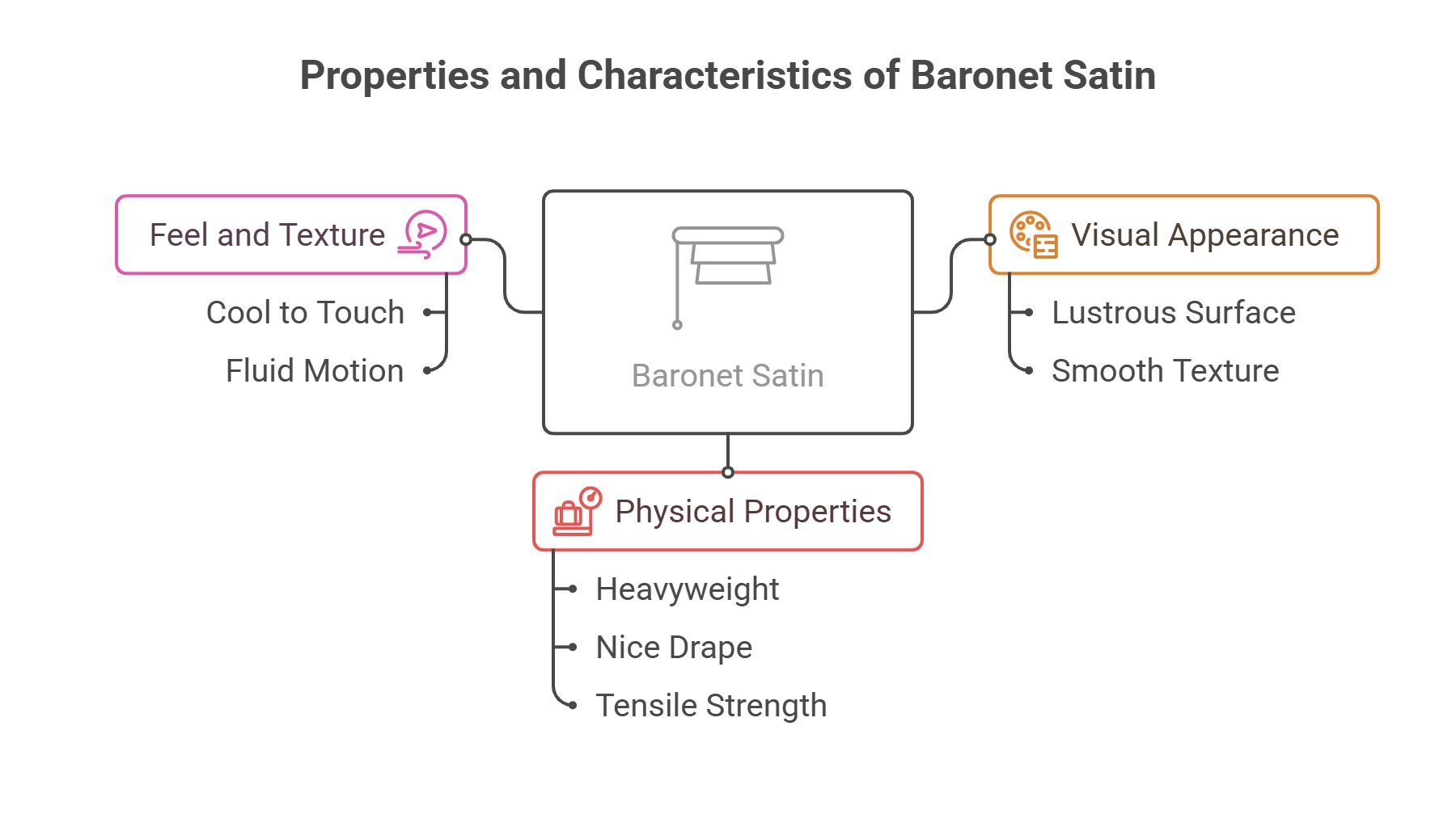
Baronet satin has several distinctive features that make it suitable for certain projects while presenting challenges for others. Let’s look at what makes this fabric unique.
Visual Appearance
The most striking feature of baronet satin is its lustrous surface. The fabric has a high-gloss shine that catches light beautifully. Unlike some other satins, baronet satin’s sheen is bright and eye-catching without looking artificial or plastic-like.
The surface of baronet satin is extremely smooth, with no visible texture or bumps. When you run your hand over it, the fabric feels silky and cool. The back side of the fabric looks completely different. It’s dull and shows the cotton texture more clearly.
Physical Properties
Baronet satin is considered a heavyweight satin, which means it has more substance than lighter varieties like charmeuse. This weight gives the fabric a nice drape, it flows and hangs well without being too stiff or too limp.
The fabric’s structure comes from the tight weaving of its fibers. The cotton weft provides tensile strength, making baronet satin more resistant to tearing than pure rayon satins. However, the rayon warp threads can still snag or pull if you’re not careful.
Strengths
- Beautiful, high-gloss shine
- Excellent drape and flow
- More durable than pure rayon satin
- Holds shape well in structured garments
- Photographs beautifully
- Suitable for both clothing and home décor
Challenges
- Can snag or pull easily
- Slippery and difficult to sew
- Requires careful handling during washing
- Shows water stains if not dried properly
- Can lose shine with rough handling
- Not suitable for everyday, heavy-wear items
Feel and Texture
When you touch baronet satin, it feels cool and smooth against your skin. The fabric is soft, but not as delicate-feeling as silk. There’s a slight weight to it that gives you confidence it won’t tear easily with normal use.
The fabric moves well, when you shake it out, it responds with a fluid motion rather than staying stiff. This quality makes it perfect for garments that need to move with the body, like flowing gowns or draped curtains.
Baronet Satin vs. Other Satin Types
The world of satin fabrics includes many different types, each with its own characteristics. Let’s compare baronet satin to other popular varieties so you can understand which might work best for your needs.
| Fabric Type | Composition | Weight | Shine Level | Best Uses |
|---|---|---|---|---|
| Baronet Satin | Rayon warp, cotton weft | Heavyweight | High gloss | Wedding dresses, formal wear, ballet shoes, upholstery |
| Charmeuse | Silk or polyester | Lightweight | Very high gloss | Lingerie, slip dresses, blouses, linings |
| Duchess Satin | Silk or polyester | Heavy | Moderate gloss | Bridal gowns, structured evening wear |
| Crepe-Back Satin | Silk or polyester | Medium | One side glossy, one side matte | Reversible garments, blouses, dresses |
| Polyester Satin | 100% polyester | Varies | High gloss | Costumes, budget formal wear, linings |
Compare Fabrics Side by Side
Still not sure which satin type is right for your project? Use our Fabric Comparison Tool to compare baronet satin with other fabric types based on your specific needs. You can also try our Satin vs Silk Comparison Guide for more details on fabric differences.
Baronet Satin vs. Charmeuse
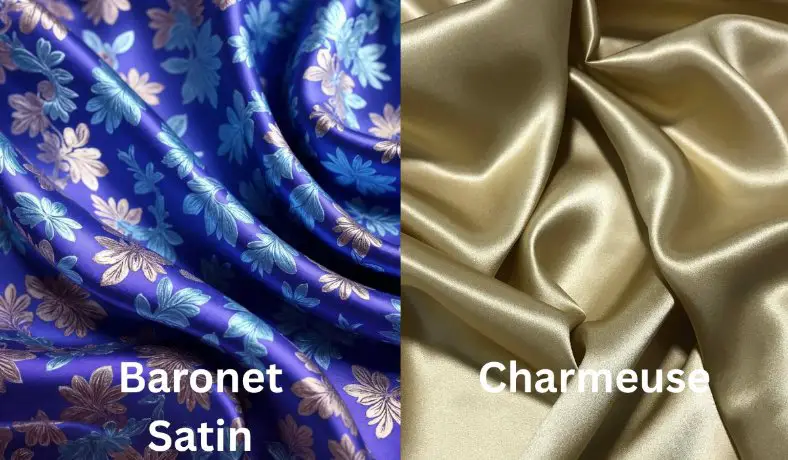
Charmeuse is a lightweight satin that drapes like liquid and has an extremely glossy finish. While both fabrics shine beautifully, charmeuse is much lighter and more delicate. Charmeuse clings to the body and works best for bias-cut gowns and lingerie. Baronet satin, being heavier, holds structure better and is more suitable for garments that need to maintain a specific shape.
If you’re making a flowing slip dress that needs to move with every step, charmeuse is your best choice. But if you’re creating a structured ball gown with a full skirt that needs to hold its shape all night, baronet satin will serve you better.
Baronet Satin vs. Duchess Satin
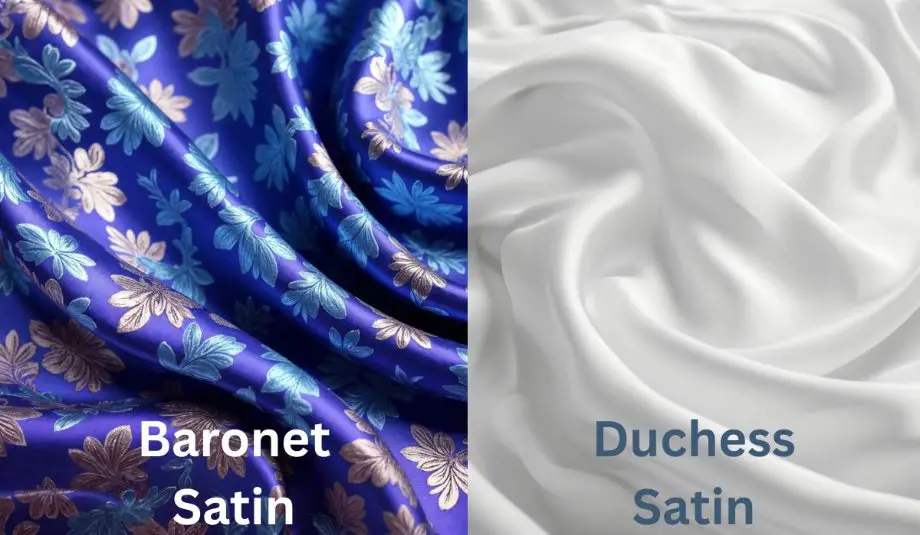
Duchess satin is another heavyweight satin, but it typically has a more subtle, refined shine compared to baronet satin’s bright gloss. Duchess satin is usually made from silk or high-quality polyester and costs more than baronet satin.
Both fabrics work well for bridal gowns and formal wear, but duchess satin offers a more muted elegance while baronet satin delivers a bolder, more dramatic shine. Duchess satin is also generally more durable and easier to work with than baronet satin.
Baronet Satin vs. Crepe-Back Satin
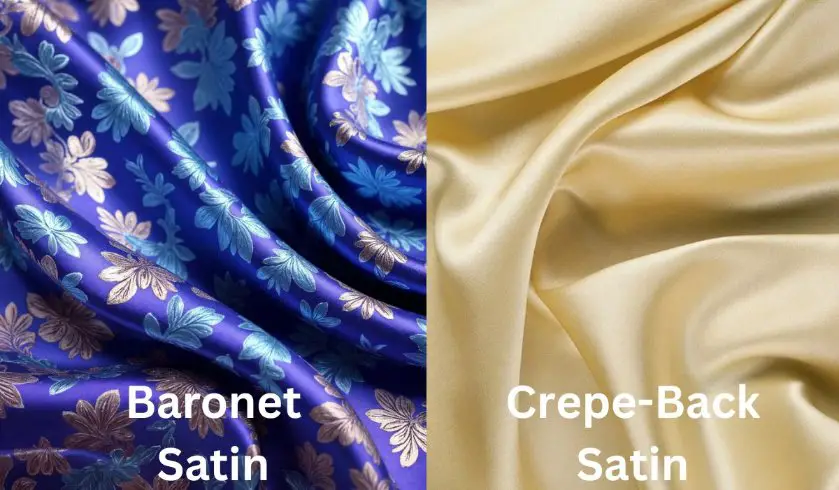
Crepe-back satin offers versatility that baronet satin doesn’t. It has a shiny satin face and a matte crepe reverse, both of which can be used as the right side of a garment. This makes it popular for designers who want textural variety in a single piece.
Baronet satin only has one usable side (the glossy front), though the cotton back does provide better grip when sewing. If you need a reversible fabric or want to play with contrasting textures, crepe-back satin is better. But if you want maximum shine and don’t need reversibility, baronet satin delivers.
Environmental Impact and Sustainability
When choosing fabrics today, we need to think about more than just how they look and perform. The environmental impact of textile production matters, especially as we become more aware of fashion’s effect on our planet. Let’s look honestly at baronet satin’s sustainability profile.
The Rayon Component: Understanding the Concerns
Baronet satin’s rayon component presents the most significant environmental concerns. Rayon is a semi-synthetic fiber made from cellulose (usually wood pulp), but the process to turn that natural material into usable fiber involves intense chemical treatment.
The traditional viscose rayon process uses chemicals like carbon disulfide, sulfuric acid, and sodium hydroxide. These chemicals are toxic and can harm both factory workers and the environment if not handled properly. Many rayon production facilities are located in countries with less strict environmental regulations, which can lead to chemical pollution of air and water sources.
The wood pulp used for rayon also raises concerns. Some rayon production contributes to deforestation, particularly when wood is sourced from endangered or ancient forests. Around 200 million trees are logged each year for fabric production, and Indonesia has faced the world’s highest deforestation rate partly due to this demand.
The Cotton Component: A Mixed Picture
The cotton weft in baronet satin has its own environmental considerations. Conventional cotton farming uses significant amounts of water, pesticides, and fertilizers. Cotton cultivation accounts for 11% of all freshwater use in agriculture, despite covering only 2.5% of cultivated land.
Conventional cotton farming also relies heavily on chemical pesticides and insecticides, which can harm soil health, water supplies, and farmer health. However, the cotton in baronet satin does offer some advantages over fully synthetic fabrics, it’s biodegradable and comes from a renewable source.
Making More Sustainable Choices
If you want to use baronet satin but care about environmental impact, here are some ways to make better choices:
Look for Better Rayon Types: Some manufacturers now use lyocell or modal rayon, which are produced through cleaner, closed-loop processes that recover and reuse most chemicals. These rayons have a much smaller environmental footprint than traditional viscose rayon.
Seek Organic Cotton: Organic cotton uses far fewer pesticides and chemicals than conventional cotton. It also tends to use less water because organic farming relies more on rain and groundwater. Look for certifications like GOTS (Global Organic Textile Standard) when shopping.
Buy Quality Over Quantity: One high-quality baronet satin garment that lasts for years is better for the environment than multiple cheap pieces that fall apart quickly. The longer you can use something, the less environmental impact it has per wear.
Care for Your Items Properly: Following proper care instructions for satin clothing helps your baronet satin items last longer, which reduces the need to replace them and lessens your overall environmental impact.
Certification to Look For
When shopping for more sustainable baronet satin, look for these certifications: OEKO-TEX Standard 100 (tests for harmful substances), GOTS (for organic cotton content), FSC certification (for responsibly sourced wood pulp), and mentions of closed-loop production for the rayon component.
The Bigger Picture
Baronet satin isn’t the most eco-friendly fabric option available, but it’s also not the worst. It sits somewhere in the middle of the sustainability spectrum. Pure polyester satins have a larger carbon footprint, while natural silk satin (from responsibly raised silkworms) or organic cotton fabrics are generally more sustainable choices.
The key is being informed about what you’re buying and making choices that balance your needs with environmental concerns. For special occasion items like wedding dresses or important home décor pieces that will last for years, baronet satin can be a reasonable choice, especially if you choose versions with better certifications and care for them properly.
Uses and Applications
Baronet satin’s unique combination of shine, durability, and drape makes it suitable for various applications. Let’s explore where this fabric shines brightest.
Fashion and Apparel
Wedding Dresses and Bridal Wear
Baronet satin is a popular choice for wedding gowns, especially for structured styles with full skirts. The fabric’s weight helps ball gown silhouettes maintain their dramatic shape throughout a long wedding day, while its shine ensures the bride looks radiant in photos.
The fabric also works well for bridesmaids’ dresses, particularly when you want all the attendants to have a cohesive, elegant look. Its durability means the dresses can be worn again or passed down without losing their beauty.
Evening Wear and Formal Attire
Evening gowns, cocktail dresses, and formal suits often feature baronet satin. The fabric elevates any design with its luxurious appearance. For structured evening wear pieces that need to hold their shape while looking glamorous, baronet satin delivers exactly what designers need.
The fabric’s ability to photograph well makes it especially popular for red carpet events and formal occasions where pictures matter.
Ballet Pointe Shoes
One of baronet satin’s most specialized uses is in ballet pointe shoes. These shoes allow ballerinas to dance on their toes, and they need to be both beautiful and functional.
Pointe shoes are traditionally covered in satin, and many manufacturers choose baronet satin specifically. The fabric provides the smooth, elegant appearance that ballet audiences expect, while its durability helps the shoes withstand the intense physical demands of pointe work.
The construction of pointe shoes involves multiple layers of fabric, cardboard, and special glue that create the reinforced “box” at the toe. Baronet satin forms the outer covering, artfully pleated around the shoe’s sole and box. The fabric must be strong enough to hold up during performances where dancers might go through multiple pairs of shoes.
Professional ballet companies order thousands of pairs of pointe shoes each year. For example, New York City Ballet orders around 8,500 pairs annually for 180 dancers, while the Royal Ballet uses approximately 12,000 pairs. The baronet satin covering these shoes needs to look pristine under stage lights while handling the friction and stress of performance.
Home Décor and Interior Design
Curtains and Draperies
Baronet satin makes stunning curtains and drapes. The fabric’s weight allows it to hang beautifully, creating elegant folds and pleats. The shine adds visual interest and helps reflect light around a room, making spaces feel larger and more luxurious.
The fabric works particularly well for formal living spaces, dining rooms, and bedrooms where you want to create a sense of elegance. Its durability is an advantage here, well-made baronet satin curtains can last for many years with proper care.
Decorative Pillows and Cushions
Throw pillows covered in baronet satin add a touch of luxury to any furniture piece. The fabric’s smooth surface and shine create an appealing contrast with other textures like velvet, linen, or bouclé.
For formal furniture or pieces that won’t see heavy daily use, baronet satin cushion covers work beautifully. The fabric is substantial enough to maintain the pillow’s shape without wrinkling excessively.
Bedding and Bed Linens
Some manufacturers use baronet satin for decorative bedding elements like duvet covers, pillow shams, and bed skirts. The fabric adds elegance to a bedroom and feels smooth and cool against skin.
However, baronet satin isn’t ideal for everyday bed sheets if you’re looking for practicality. The fabric requires more careful handling than standard cotton bedding, and its slippery surface might not be to everyone’s taste. It’s better suited for decorative purposes or special occasions.
Accessories and Fashion Details
Beyond major garments and home décor items, baronet satin appears in various fashion accessories:
- Evening Bags and Clutches: The fabric’s elegance makes it perfect for formal handbags and clutch purses
- Designer Heels: Some high-end shoe manufacturers use baronet satin to cover dress shoes and heels
- Sashes and Belts: The fabric works well for decorative waist treatments on formal gowns
- Hair Accessories: Scrunchies, headbands, and hair wraps made from baronet satin look sophisticated while being gentle on hair
Complete Care and Maintenance Guide
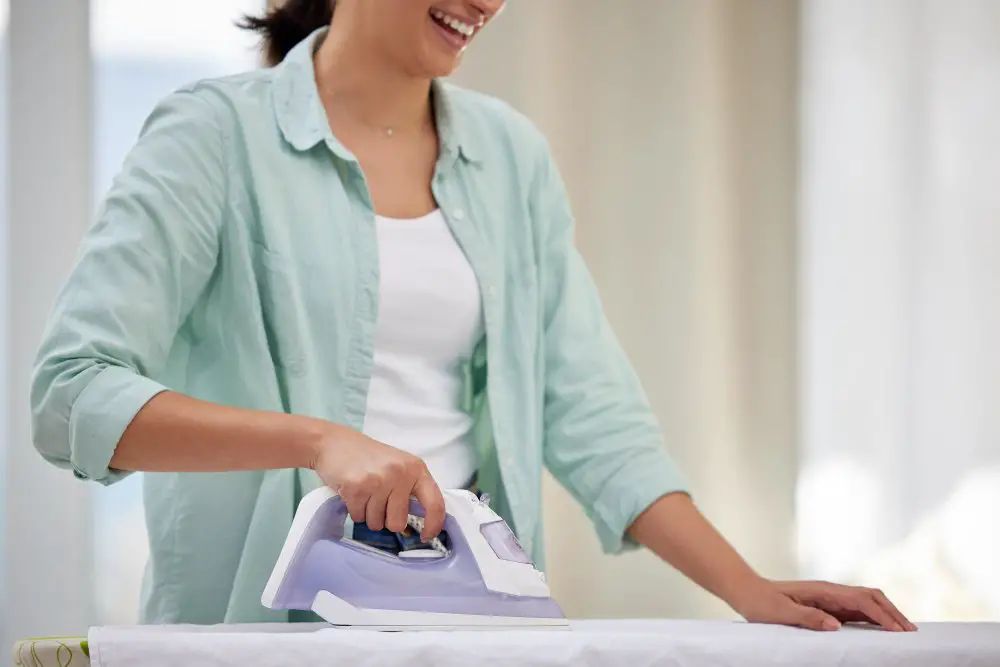
Baronet satin requires more careful handling than everyday fabrics, but with the right approach, you can keep your items looking beautiful for years. Let’s walk through exactly how to care for this special fabric.
General Handling Guidelines
Before we get into specific cleaning methods, here are some important rules for handling baronet satin:
Always Check the Label First: Your item came with care instructions for a reason. Different manufacturers might use slightly different baronet satin blends or finishing treatments, so always read and follow the label.
Handle Gently: Avoid pulling, stretching, or snagging the fabric. The rayon threads can pull away from the weave if you’re too rough, creating runs or holes.
Protect from Sharp Objects: Remove jewelry that might catch on the fabric. Watch out for rough walls, furniture edges, and other hazards.
Keep Away from Water When Not Washing: Random splashes or spills should be blotted immediately, don’t let water sit on baronet satin, as it can leave permanent water marks.
Cleaning Methods
Dry Cleaning (Recommended)
The safest way to clean baronet satin is through professional dry cleaning. This method avoids water damage and ensures your item keeps its shape and shine. For special occasion garments like wedding dresses or formal gowns, dry cleaning is worth the cost.
When taking baronet satin items to the dry cleaner, point out any specific stains or problem areas. Tell them the fabric is baronet satin so they can use appropriate techniques.
Hand Washing (If You Must)
If you need to wash baronet satin at home and the label permits it, use this careful approach:
- Fill a clean basin with cool water: Use cold or cool water only, never hot or warm water, which can damage the rayon fibers and set stains.
- Add a mild detergent: Use a gentle, pH-neutral detergent designed for delicate fabrics. Skip harsh chemicals, bleach, or fabric softeners completely.
- Submerge the fabric gently: Place your item in the water and let it soak for just a few minutes. Don’t twist, wring, or scrub the fabric.
- Swish gently: Move the fabric around in the water with soft, gentle motions. If there are stains, you can very lightly pat them with your fingers, but don’t rub.
- Rinse thoroughly: Drain the soapy water and refill with clean, cool water. Repeat until all soap is gone. Never squeeze or wring the fabric.
- Remove excess water carefully: Lay the item flat on a clean, dry towel. Roll the towel up with the item inside to absorb water, then unroll. Never twist or wring.
Important Warning
Never put baronet satin in a washing machine, even on the gentlest cycle. The agitation will damage the fabric, potentially causing tears, pulls, or permanent water marks. The tumbling action can also distort the fabric’s shape.
Drying Your Baronet Satin
Air Drying Only: Never use a dryer with baronet satin. The heat will damage the rayon fibers and can cause permanent shrinkage or distortion.
Lay Flat to Dry: The best method is laying the item flat on a clean, dry towel on a flat surface. Reshape it gently to its original dimensions and let it air dry away from direct sunlight and heat sources.
Hang with Care: If you must hang the item (for example, a long dress that’s hard to lay flat), use a padded hanger and hang it in a well-ventilated area. Make sure the weight of the wet fabric won’t distort the shape.
Ironing and Steaming
Baronet satin often needs pressing to look its best, but you must be careful about how you do it.
Ironing Guidelines
- Use low heat only: Set your iron to the lowest heat setting, typically marked for silk or synthetics
- Iron on the wrong side: Always iron on the dull cotton back, never on the shiny rayon side
- Use a pressing cloth: Place a thin cotton cloth between the iron and fabric for extra protection
- Never use steam or water sprays: Moisture from the iron can leave permanent water marks on baronet satin
- Keep the iron moving: Don’t let the iron sit in one spot, even for a second
- Test first: Try a small, hidden area before ironing the visible parts
Steaming as an Alternative
A garment steamer works well for baronet satin and is actually safer than ironing. Hold the steamer a few inches away from the fabric and work in sections. The gentle steam removes wrinkles without direct heat contact that could damage the fabric.
Stain Removal
Act quickly when baronet satin gets stained, the longer a stain sits, the harder it becomes to remove.
For Fresh Stains: Blot (don’t rub) immediately with a clean, white cloth. Start from the outside of the stain and work inward to prevent spreading.
For Difficult Stains: Don’t try home remedies, take the item to a professional dry cleaner as soon as possible. Tell them what caused the stain so they can use the right treatment.
Never Use: Bleach, harsh stain removers, or hot water on baronet satin. These will permanently damage the fabric.
Storage Tips
Proper storage keeps your baronet satin items beautiful between uses:
Clean Before Storing: Never store baronet satin items that are dirty or have been worn. Stains and body oils can set during storage, becoming impossible to remove later.
Use Padded Hangers: For garments, use wide, padded hangers to prevent shoulder bumps and fabric stress. Cover with a breathable garment bag, avoid plastic, which can trap moisture.
Fold Carefully for Long-Term Storage: If you need to fold items (like wedding dresses), place acid-free tissue paper between folds to prevent creasing. Store in a cool, dry place away from direct sunlight.
Avoid Cedar and Mothballs: These can transfer odors to the fabric that are hard to remove. Use lavender sachets instead if you’re concerned about moths.
Troubleshooting Common Problems
Water Marks: These are difficult to remove from baronet satin. If you get water marks, try lightly misting the entire garment with water (not just the marked area) and letting it dry flat. This sometimes redistributes the water marks so they’re less visible.
Snags and Pulls: Small snags can sometimes be worked back into the fabric using a fine needle. Gently push the snagged thread back to the wrong side of the fabric. For serious damage, consult a professional tailor.
Loss of Shine: Rough handling or improper washing can dull baronet satin’s shine. Unfortunately, once the shine is gone, it’s difficult to restore. This is why proper care from the beginning is so important.
Looking for more detailed fabric care information? Check out our guides on washing and caring for different fabrics and silk care, which offer tips that also apply to delicate fabrics like baronet satin.
Try Our Interactive Tools
Get personalized care recommendations for your baronet satin items with our Fabric Care Calculator. You can also use our Interactive Stain Removal Guide for step-by-step help with specific stains.
Working with Baronet Satin: A Sewing Guide

Sewing with baronet satin presents some challenges, but with the right techniques and preparation, you can create beautiful projects. Here’s what you need to know.
Before You Start: Preparation is Key
Pre-Washing Considerations
Many sewers debate whether to pre-wash baronet satin before cutting. Here’s the deal: baronet satin can shrink when washed, and the fabric can lose some of its shine with washing. For formal garments that will be dry cleaned, you generally don’t need to pre-wash.
However, if you’re making something that will be washed at home, test a small piece first. Cut a square, mark its dimensions, wash it using your planned care method, and measure again to see how much it shrinks.
Cutting the Fabric
Baronet satin’s slippery nature makes cutting tricky. Use these strategies:
- Pin to tissue paper or non-slip material: Place the fabric between layers of tissue paper before pinning your pattern pieces
- Use pattern weights instead of pins: Weights hold the fabric down without creating pin holes
- Use sharp scissors or a rotary cutter: Dull blades will snag the fabric instead of cutting cleanly
- Cut one layer at a time: Don’t try to cut through folded fabric, it will shift
- Work on a large, flat surface: Make sure your entire piece of fabric can lie flat without hanging off the table edge
For more guidance on fabric cutting techniques, see our comprehensive guide to fabric cutting.
Choosing the Right Tools and Materials
Needles
Use fine needles specifically designed for delicate fabrics. A size 70/10 or 75/11 universal needle works well, or try a microtex/sharp needle. These create small holes that don’t damage the fabric.
Change your needle frequently, a dull needle will snag and pull baronet satin’s threads.
Thread
Choose high-quality polyester thread or silk thread that matches your fabric color. The thread should be fine and strong. Test your thread on a scrap piece of fabric first to make sure it doesn’t cause puckering.
Need help choosing? Our article on how to choose the right thread for your project goes into more detail.
Sewing Machine Settings
- Stitch length: Use a shorter stitch length (2.0-2.5mm) for most seams
- Tension: You may need to reduce the tension slightly to prevent puckering
- Presser foot pressure: Lighten the pressure if possible to avoid stretching the fabric
- Speed: Sew slowly to maintain control
For more on sewing machine settings, check out our guides on sewing machine stitches and presser feet.
Sewing Techniques for Success
Seam Finishing
Baronet satin frays easily, so proper seam finishing is important. Try these methods:
- French seams: These enclose raw edges completely and look professional. They work well for garments. See our French seam tutorial for step-by-step instructions.
- Flat-felled seams: Another option that creates strong, enclosed seams. Learn more in our flat-felled seam guide.
- Serging: If you have a serger, use it to finish seam allowances
- Bias binding: Binding edges with bias tape creates a neat finish
Preventing Puckering and Slippage
The slippery surface of baronet satin makes it want to slide around while sewing. Combat this with:
- Stabilizers: Place tissue paper or water-soluble stabilizer under the fabric while sewing, then tear it away
- Walking foot: This presser foot helps feed layers evenly
- Hand basting: For important seams, hand-baste first, then machine sew over the basting
- Pins perpendicular to the seam: Pin across the seam line, not along it, and remove pins as you sew
Handling Hems
Hemming baronet satin requires care. Options include:
- Narrow rolled hem: Creates a delicate finish for flowing garments
- Hand-stitched hem: The most invisible method, though time-consuming
- Double-fold hem: Provides more weight at the bottom of the garment
For detailed hemming instructions, see our guide on sewing perfect hems.
Common Problems and Solutions
| Problem | Cause | Solution |
|---|---|---|
| Fabric slipping while sewing | Smooth, slippery surface | Use tissue paper underneath, reduce presser foot pressure, sew slowly |
| Puckered seams | Tension too tight, thread too heavy | Reduce tension, use finer thread, ensure fabric isn’t being pulled |
| Snags from needle | Needle too large or dull | Use size 70/10 or 75/11 needle, replace regularly |
| Uneven stitches | Fabric feeding unevenly | Use walking foot, support fabric weight, don’t pull fabric |
| Fraying edges | Rayon loosely woven | Finish seams immediately after cutting, use French seams or binding |
Practice Makes Perfect
Before starting your main project, practice on scraps. Test your machine settings, seam techniques, and any special methods you plan to use. This saves frustration and fabric waste on your actual project.
If you’re new to sewing, consider starting with a simpler fabric before tackling baronet satin. Check out our easy sewing projects for beginners to build your skills first.
Buying Guide
When shopping for baronet satin, knowing what to look for ensures you get quality fabric that will work well for your project and last for years.
Quality Indicators
Visual Inspection
When examining baronet satin, look for these signs of quality:
- Even shine: The fabric should have consistent luster across its surface without dull spots or variations
- Smooth surface: Run your hand over the fabric. High-quality baronet satin feels uniformly smooth without bumps, slubs, or thick areas
- No loose threads or pulls: Check carefully for any snags, pulls, or loose threads in the weave
- Consistent color: The color should be uniform throughout the fabric with no streaking or fading
- Neat selvedge: The finished edges of the fabric should be clean and even
Weight and Drape
Hold up a corner of the fabric and watch how it falls. Good baronet satin should drape smoothly and flow naturally. It should have enough weight to feel substantial but not be stiff or board-like.
The fabric should recover well when you scrunch it, it might wrinkle temporarily, but shouldn’t stay deeply creased.
Understanding Price Ranges
Baronet satin typically costs between $8 and $20 per yard, depending on several factors:
- Fiber quality: Better quality rayon and cotton cost more but perform better
- Weave density: Tighter weaves with higher thread counts are more expensive but more durable
- Width: Standard width is usually 54-60 inches. Wider fabric costs more per yard but might save money overall
- Special finishes: Fabrics with wrinkle resistance or other treatments cost more
- Brand reputation: Well-known manufacturers typically charge more but offer consistent quality
For special occasion projects like wedding dresses, investing in higher-quality baronet satin makes sense. For practice projects or items that won’t be heavily used, mid-range options work fine.
Where to Buy
Online Retailers
Many online fabric stores carry baronet satin. Look for retailers that provide:
- Detailed fabric descriptions including fiber content and weight
- Color accuracy guarantees or free swatches
- Clear return policies
- Customer reviews with photos
- Information about any certifications (OEKO-TEX, etc.)
Local Fabric Stores
Buying in person lets you see and feel the fabric before purchasing. Visit stores that specialize in bridal or formal wear fabrics, they’re more likely to carry quality baronet satin and can offer expert advice.
Direct from Manufacturers
For large projects or bulk purchases, buying directly from manufacturers can save money. This works especially well if you’re making multiple garments or commercial projects.
What to Ask When Shopping
Don’t be shy about asking questions. Good retailers should be able to tell you:
- Exact fiber content (percentage of rayon vs. cotton)
- Fabric weight (in GSM – grams per square meter)
- Whether it’s been pre-treated or finished
- Recommended care methods
- Colorfastness ratings
- Whether the fabric is suitable for your specific project
Red Flags to Watch For
Avoid fabrics that show these warning signs:
- Extremely low prices: If it’s much cheaper than similar fabrics, quality probably suffers
- Vague descriptions: If the seller can’t or won’t tell you the fiber content, walk away
- No return policy: Reputable sellers stand behind their products
- Poor reviews: Check what other customers say about quality and accuracy
- Visible defects: Don’t buy fabric with obvious flaws unless you’re getting a significant discount and can work around them
How Much to Buy
Always buy more fabric than your pattern calls for. Add at least 10-15% extra to account for:
- Mistakes or cutting errors
- Pattern matching if your fabric has a directional sheen
- Shrinkage if you need to pre-wash
- Future repairs or alterations
- Testing techniques on scraps
It’s much harder to find an exact color match later if you run short, so buy everything you need (plus extra) at once.
Calculate Your Fabric Needs
Not sure how much fabric to buy? Try our Fabric Yardage Calculator to determine exactly how much baronet satin you need for your project. You can also use our Satin Fabric Type Selector to compare different types of satin for your specific needs.
Requesting Swatches
If buying online, order swatches before committing to yards of fabric. Swatches let you:
- See the actual color (monitor displays aren’t always accurate)
- Feel the weight and drape
- Test care methods
- Compare with other fabrics or colors
- Avoid expensive mistakes
The small cost of swatches can save you from wasting money on fabric that doesn’t meet your needs.
Frequently Asked Questions
Conclusion
Baronet satin holds a special place in the world of fabrics. Its unique blend of rayon and cotton creates something truly distinctive, a material that shines like luxury but stands up to real use better than many purely synthetic options. From the glamour of wedding gowns to the precision of ballet pointe shoes, from elegant curtains to stylish accessories, baronet satin brings beauty and function together in ways few other fabrics can match.
Throughout this guide, we’ve explored what makes baronet satin special: its specific composition with rayon warp and cotton weft threads, the traditional satin weave that creates its signature shine, and the properties that make it both gorgeous and challenging to work with. We’ve traced its history from early 20th-century fashion to its modern applications, and we’ve looked honestly at both its strengths and its environmental considerations.
Key Takeaways
Understanding the Fabric: Baronet satin isn’t just another pretty fabric, it’s a specific construction that combines different fibers for specific benefits. The rayon gives it shine while the cotton provides structure. This combination makes it heavier and more stable than lighter satins like charmeuse, but with more dramatic shine than duchess satin.
Care Matters: If there’s one thing to remember about baronet satin, it’s this: the fabric demands respect. Dry cleaning is your safest bet, but if you must wash at home, use only cool water and gentle handling. Never use machines, heat, or water spray when ironing. The effort you put into proper care directly affects how long your items will look beautiful.
Choose Wisely: Not every project needs baronet satin. Save this special fabric for special purposes, wedding dresses, formal gowns, important home décor pieces, or other items where beauty and drama matter more than everyday practicality. For everyday items, consider more practical options like cotton or linen.
Sustainability Considerations: Be honest about the environmental impact. Traditional baronet satin production involves chemical processes and resource-intensive farming. If sustainability matters to you, look for versions made with better types of rayon (like lyocell or modal) and organic cotton. Buy quality pieces that will last rather than cheap items you’ll need to replace quickly.
Working with the Challenges: If you plan to sew with baronet satin, prepare for the learning curve. The fabric’s slippery nature and tendency to snag require specific techniques and patience. Use the right needles, sew slowly, practice on scraps, and don’t rush. The beautiful results are worth the extra effort.
Making Smart Decisions
When deciding whether to use baronet satin for a project, ask yourself these questions:
- Is this a special occasion item that justifies the extra care requirements?
- Am I prepared to dry clean or hand wash this item carefully?
- Do I have the sewing skills (or professional help) to work with challenging fabric?
- Does my budget allow for quality fabric that will last?
- Have I considered more sustainable options, or am I choosing a version with better certifications?
If you answered yes to most of these questions, baronet satin might be perfect for your needs. If you’re unsure, consider alternatives that offer similar beauty with more practical properties.
Final Thoughts
Baronet satin represents what happens when traditional craftsmanship meets modern manufacturing, a fabric that honors the elegance of historical textiles while offering improved durability for contemporary use. Whether you’re designing a once-in-a-lifetime wedding gown, creating a stunning home décor piece, or simply learning about different fabric types, understanding baronet satin helps you make better choices about what you wear and use.
The fabric won’t work for everything, and that’s okay. Not every situation calls for high-gloss shine and formal elegance. But when you need that combination of beauty and structure, when appearance matters as much as function, baronet satin delivers in ways that few other fabrics can.
As you move forward with your projects, remember that every fabric has its place. Baronet satin’s place is in those special moments and special spaces where beauty truly matters, where the extra care, the higher cost, and the careful handling all make sense because the result is something truly memorable.
Whether you’re a fashion designer creating couture pieces, a home decorator crafting elegant spaces, a textile professional exploring options for clients, or someone who simply appreciates beautiful fabrics, baronet satin offers something worth considering. Just approach it with knowledge, respect its requirements, and it will reward you with lasting beauty.
For more information about fabric types and textile care, explore our comprehensive guides on common fabric types and their uses, natural vs. synthetic fabrics, and understanding textiles. These resources will help you make informed decisions for all your fabric needs.