
Discover the surprising summer fabric that combines wool’s luxury with breathable comfort
Table of Contents
- What is Wool Voile?
- History and Heritage
- Fabric Construction and Technical Properties
- Advantages of Wool Voile
- Disadvantages of Wool Voile
- Wool Voile vs Other Fabrics
- Luxury and Quality Factors
- Sustainability and Environmental Impact
- Uses and Applications
- Care Instructions
- Sewing with Wool Voile
- Buying Guide
- Seasonal Styling
- Frequently Asked Questions
- Conclusion
What is Wool Voile?
Wool voile is a lightweight, semi-transparent fabric made from fine wool fibers that have been tightly twisted and woven in a plain weave pattern. The name “voile” comes from the French word for “veil,” which perfectly describes this fabric’s delicate, sheer quality.
What makes wool voile special is that it takes a fiber most people think of as heavy and warm and transforms it into something light and breathable. This happens through careful yarn preparation where wool fibers are combed, highly twisted, and then woven with an open structure that allows air to flow through.
Unlike cotton voile, which is more common and widely available, wool voile occupies a luxury niche in the textile world. It typically weighs between 180-250 grams per square meter (GSM), making it substantially lighter than regular suiting wool while maintaining wool’s natural benefits like temperature regulation and wrinkle resistance.
Key Characteristics of Wool Voile
- Weight: Lightweight (180-250 GSM)
- Texture: Smooth with a subtle crisp hand
- Transparency: Semi-sheer to opaque depending on weight
- Drape: Excellent fluid movement
- Season: Ideal for spring and summer
- Origin: Natural fiber from sheep wool
Is voile natural or synthetic? Wool voile is a natural fabric made from animal fibers. While voile can be made from various materials including cotton, silk, or synthetic polyester, true wool voile uses only natural sheep wool or specialty wool like merino.
History and Heritage
The story of wool voile is tied to the evolution of tropical and summer suiting fabrics. Before the 20th century, wool was considered strictly a winter fiber. However, as international trade expanded and British colonials needed proper business attire for warm climates, textile mills began experimenting with lighter wool constructions.
European mills, particularly in England and Italy, developed wool voile as part of this tropical wool revolution. The fabric gained popularity in the late 1800s and early 1900s when improved wool grading systems allowed spinners to create finer, more refined yarns. These advancements meant wool could finally be worn comfortably in summer heat.
The Italian textile region of Biella became famous for producing exceptional wool voile, with historic mills like Tollegno 1900 (founded in 1900) pioneering production techniques that are still used today. British mills in Huddersfield also contributed to the fabric’s development, creating high-quality worsted voiles for tropical suiting.
By the mid-20th century, wool voile had established itself as the go-to fabric for warm-weather business wear, destination weddings, and summer formal occasions. While it lost some popularity during the synthetic fabric boom of the 1960s-1980s, wool voile has experienced a comeback in recent years as consumers seek natural, breathable, and sustainable alternatives to polyester.
Fabric Construction and Technical Properties
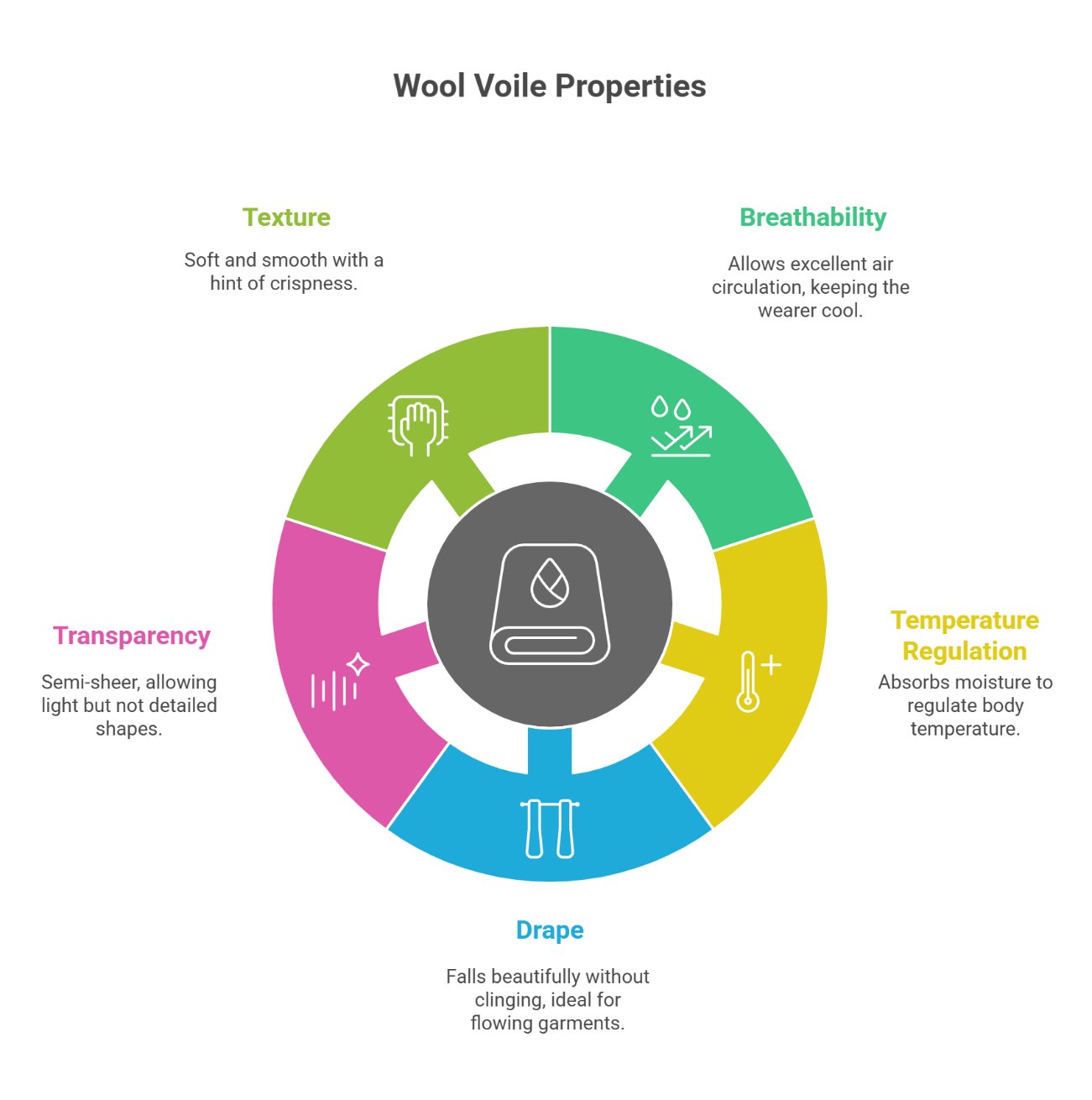
Visual overview of wool voile fabric construction and its key technical properties.
Understanding how wool voile is made helps explain why it performs so differently from regular wool fabric. The construction process involves several steps that transform thick wool fibers into an airy, lightweight textile.
Watch: Types of Wool Fabric

Learn about different wool fabric types including voile, their properties, and best uses in sewing projects.
The Weaving Process
Wool voile starts with long-staple wool fibers that are combed to remove short fibers and align the remaining ones in parallel. This creates what’s called “worsted” wool. The fibers are then twisted much more tightly than regular yarn, typically in a process called “hard twist” or “high twist.”
This tight twisting is what gives voile its characteristic crisp hand and helps create space in the weave. Two of these twisted single yarns are then plied together in the same direction to create a strong, round yarn.
The weaving uses a simple plain weave (also called tabby weave) where warp and weft threads alternate over and under each other in a one-over-one pattern. Despite this simple structure, the high thread count and quality of the yarns create a smooth, refined surface.
Technical Properties
Breathability: The open weave structure allows excellent air circulation. Unlike tightly woven wool that traps heat, wool voile’s construction lets air pass through while still providing wool’s natural insulation properties.
Temperature Regulation: Wool fibers can absorb up to 30% of their weight in moisture without feeling damp. This moisture-wicking property, combined with the breathable weave, helps regulate body temperature in warm weather.
Drape: The fluid movement of wool voile comes from the combination of fine yarns and the fabric’s weight. It falls beautifully without clinging, making it perfect for flowing garments.
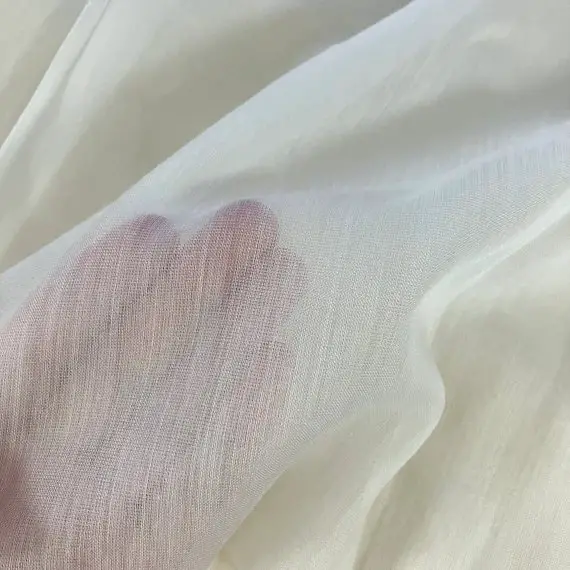
Transparency: Is voile see through? Wool voile is typically semi-sheer, meaning you can see light through it but not detailed shapes. The level of transparency depends on the fabric weight and color (darker colors are less sheer than light ones).
Texture: Is voile fabric stiff? No, wool voile has a soft, smooth hand with just a hint of crispness from the twisted yarns. It’s not stiff like organza or as soft as jersey, sitting somewhere in between with a pleasant tactile quality.
Want to compare different wool types? Try our Wool Type Selector Quiz to find the perfect wool fabric for your project.
The Difference Between Sheer and Voile
What is the difference between sheer and voile? “Sheer” is a general term describing any semi-transparent fabric, while “voile” is a specific type of fabric construction. All voile is sheer to some degree, but not all sheer fabrics are voile. The term “voile” refers specifically to the plain-weave construction using highly twisted yarns, whereas “sheer” simply describes transparency level and could apply to chiffon, organza, gauze, or any lightweight see-through fabric.
Advantages of Wool Voile
Key Benefits
- Natural temperature control: Keeps you cool in summer heat
- Moisture-wicking: Draws sweat away from skin
- Wrinkle resistant: Bounces back better than cotton or linen
- Odor resistant: Wool naturally resists bacteria and odors
- Lightweight comfort: Barely feels like you’re wearing anything
- Elegant drape: Creates beautiful flowing silhouettes
- Durable: Lasts years with proper care
- Biodegradable: 100% natural and compostable
- Luxurious feel: Soft against skin with refined appearance
- Holds shape well: Doesn’t sag or stretch out easily
Performance Features
- UV protection: Natural SPF 30-50
- Fire resistant: Won’t melt or stick to skin
- Less washing needed: Naturally dirt and stain resistant
- Quick drying: Air dries faster than heavier wool
- Season flexible: Works for layering in transitional weather
- Professional appearance: Maintains crisp look all day
- Versatile styling: Dresses up or down easily
- Color retention: Holds dye well without fading
- Breathable: More than cotton or synthetic voiles
- Hypoallergenic: Quality wool rarely causes reactions
What are the benefits of voiles? Beyond these practical advantages, wool voile offers a unique combination that’s hard to find in other fabrics. You get the dressy, refined appearance of wool suiting with the comfort and breathability of summer fabrics. This makes it perfect for occasions where you need to look polished but the weather isn’t cooperating.
Is voile good for summer? Absolutely. Despite being made from wool, voile is one of the best summer fabrics available. The open weave and moisture-wicking properties actually make it cooler than many cotton fabrics in hot, humid conditions.
Disadvantages of Wool Voile
While wool voile has many strengths, it’s important to understand its limitations before investing in this luxury fabric.
What are the disadvantages of voile fabric?
Cost: Wool voile is expensive compared to cotton voile or synthetic alternatives. Expect to pay $30-60+ per yard for quality wool voile, making it a significant investment for most sewing projects.
Availability: Unlike cotton voile which you can find at most fabric stores, wool voile is specialty fabric. You’ll likely need to order online from high-end fabric suppliers or specialty shops.
Semi-transparent: Can you see through a voile? Yes, the sheer quality that makes wool voile beautiful also means many garments need lining or layering. This adds time, cost, and complexity to sewing projects.
Delicate care: While more forgiving than silk, wool voile still requires gentle handling. It needs cool water washing, careful drying, and low-heat ironing, which can be inconvenient for busy lifestyles.
Shrinkage potential: Does voile fabric shrink? Yes, wool voile can shrink if exposed to hot water or high heat in the dryer. Always pre-wash fabric before sewing and follow care instructions carefully.
Seasonal limitation: While perfect for warm weather, wool voile isn’t warm enough for cold winter months. You’ll only wear it comfortably from late spring through early fall in most climates.
Wrinkle concerns: Does voile wrinkle easily? Wool voile wrinkles less than cotton or linen, but it’s not wrinkle-free. It will develop some creasing with wear, especially behind the knees or at the elbows, though these often fall out quickly.
Limited color range: Because it’s a specialty fabric, you won’t find the wide variety of colors and prints available in cotton voile. Most wool voile comes in solid colors, with neutrals being most common.
Professional cleaning costs: While you can hand wash wool voile at home, many people prefer professional cleaning for tailored garments, adding to the long-term ownership cost.
Who Should Avoid Wool Voile?
Wool voile might not be the best choice if you:
- Have a tight budget for fabric projects
- Need machine-washable, toss-in-the-dryer convenience
- Want completely opaque fabric without layering
- Prefer bright, bold prints over solids
- Live in a climate with very short summers
- Are new to sewing with delicate fabrics
Wool Voile vs Other Fabrics
To truly understand wool voile, it helps to compare it with similar fabrics. Here’s how it stacks up against other popular lightweight options.
Wool Voile vs Cotton Voile
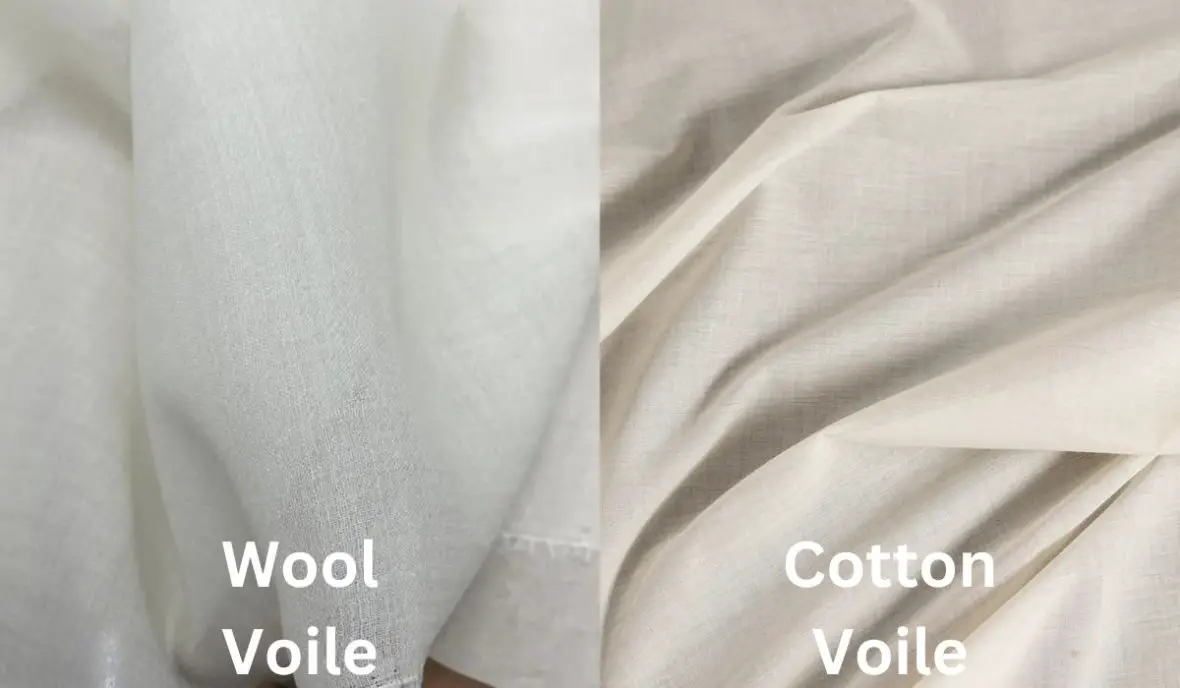
Side by side comparison of wool voile and cotton voile fabrics.
| Feature | Wool Voile | Cotton Voile |
|---|---|---|
| Price per yard | $30-60+ | $10-20 |
| Wrinkle resistance | Good | Poor |
| Moisture wicking | Excellent | Fair |
| Drying time | Fast | Moderate |
| Care difficulty | Moderate | Easy |
| Durability | Excellent | Good |
| Temperature regulation | Excellent | Good |
| Print availability | Limited | Extensive |
| Sustainability | Biodegradable, renewable | Biodegradable, renewable |
| Best for | Professional wear, special occasions | Casual wear, children’s clothing |
Learn more about cotton voile fabric and how it compares to wool varieties.
Wool Voile vs Tropical Wool
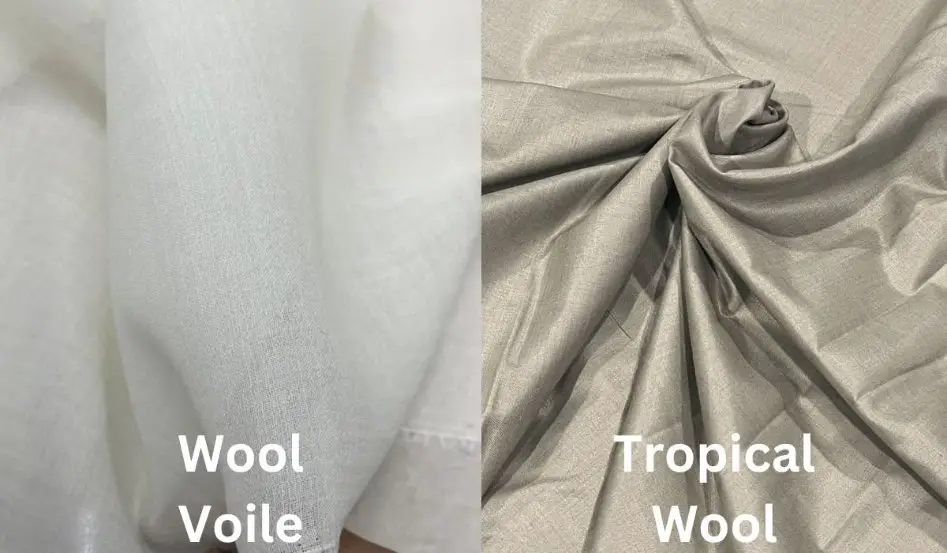
Comparison of wool voile and tropical wool fabrics for warm weather clothing and tailoring.
Both are summer-weight wools, but they have different constructions. Tropical wool uses a tighter weave with slightly heavier weight (typically 250-300 GSM), making it more opaque and structured. Wool voile’s open weave makes it sheerer and more fluid. Think of tropical wool for tailored suits and wool voile for flowing shirts and dresses.
Wool Voile vs Linen
| Feature | Wool Voile | Linen |
|---|---|---|
| Wrinkle resistance | Better | Poor (wrinkles constantly) |
| Softness | Soft from start | Softens with washing |
| Drape | Fluid, flowing | Slightly stiff, structured |
| Moisture absorption | Up to 30% | Up to 20% |
| Care | Gentle wash, cool iron | Machine washable, hot iron |
| Transparency | Semi-sheer | Usually opaque |
Wool Voile vs Silk Voile

Side by side comparison of wool voile and silk voile highlighting softness, sheen, and draping behavior.
Silk voile offers similar luxury and drape but at an even higher price point. Wool voile is more durable and easier to care for than silk, while silk voile has a smoother, more lustrous appearance. Both require gentle handling, but wool is more forgiving of minor care mistakes.
What is the difference between voile and tulle?
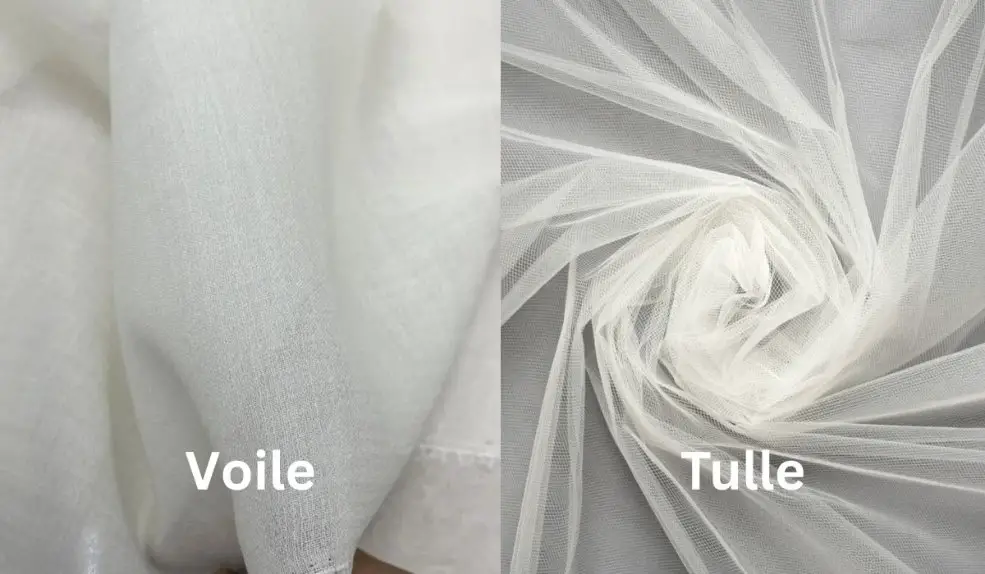
Visual comparison of voile and tulle fabrics highlighting weave density and flexibility.
While both are sheer fabrics, they’re completely different in construction and use. Tulle is a stiff, net-like fabric made with hexagonal holes, commonly used in tutus and veils. Voile is a woven fabric with a plain weave that creates subtle transparency. Tulle stands away from the body and is very stiff, while voile drapes softly and flows.
What is the difference between voile and muslin?
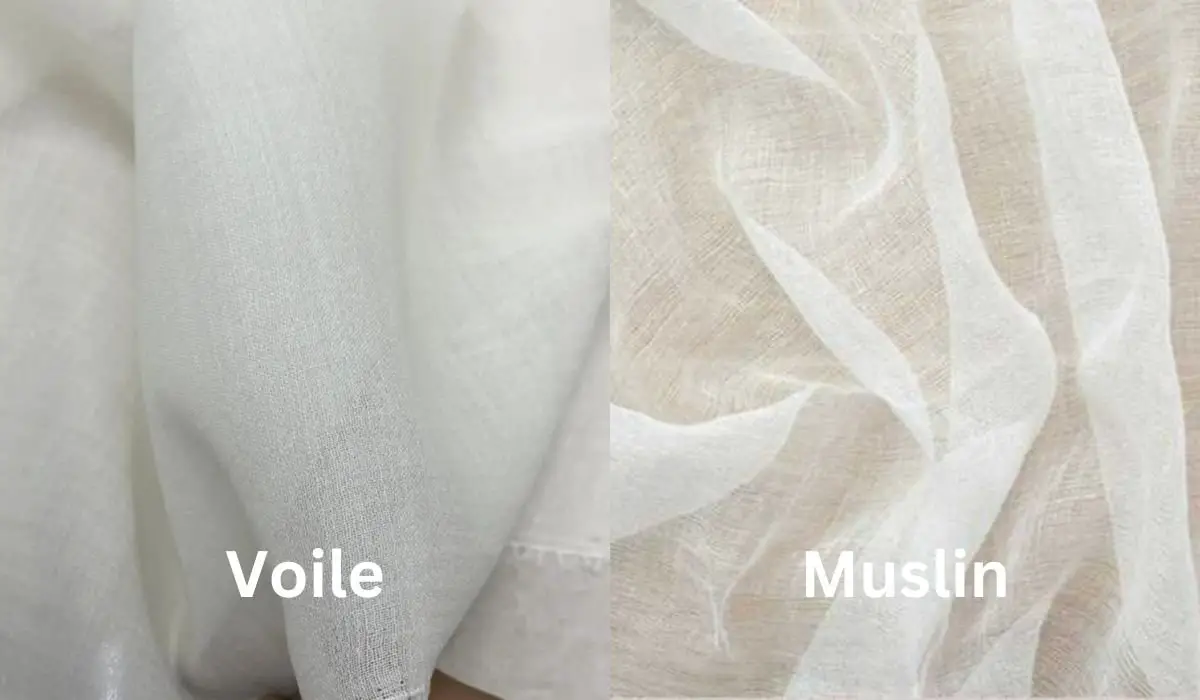
Side by side comparison illustrating how voile fabric differs from muslin in texture and sheerness.
Muslin is a plain-weave cotton fabric that’s typically opaque and used for test garments in sewing. While both use plain weave, muslin has a much looser, coarser weave and is not sheer. Voile uses highly twisted, fine yarns creating a crisp, semi-transparent fabric, while muslin uses regular yarns resulting in a soft, opaque material. They serve completely different purposes in sewing and fashion.
Is voile better than net?
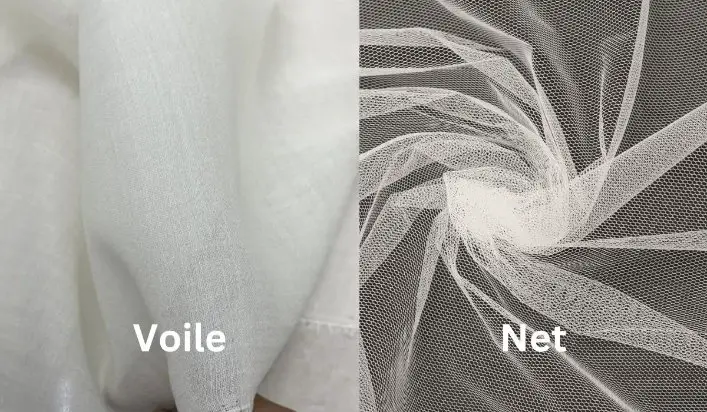
A clear comparison showing why voile is often softer and more wearable than net fabric.
They serve different purposes. Net (or netting) is a stiff, open-mesh fabric used for structure and support, like in petticoats or as curtain backing. Voile is a soft, woven fabric used for clothing and decor where drape and elegance matter. Neither is “better” – they’re simply designed for different applications.
Compare fabrics side by side with our Fabric Comparison Tool to find the perfect material for your project.
Luxury and Quality Factors
Not all wool voile is created equal. Understanding quality markers helps you invest wisely in this premium fabric.
Super Numbers
Like other fine wools, wool voile quality is often indicated by “Super” numbers (S100s, S120s, S130s, etc.). These numbers refer to the fineness of the wool fiber measured in microns. Higher numbers mean finer, softer fibers:
- S100s (18-19 microns): Good quality, comfortable
- S120s (17-18 microns): Very fine, luxury quality
- S130s+ (16-17 microns): Exceptional, ultra-luxury
For wool voile, S120s and higher offers the best combination of softness and durability. Lower super numbers may feel slightly coarser, while extremely high numbers (S150s+) can be delicate for the price.
Virgin Wool vs Recycled Wool
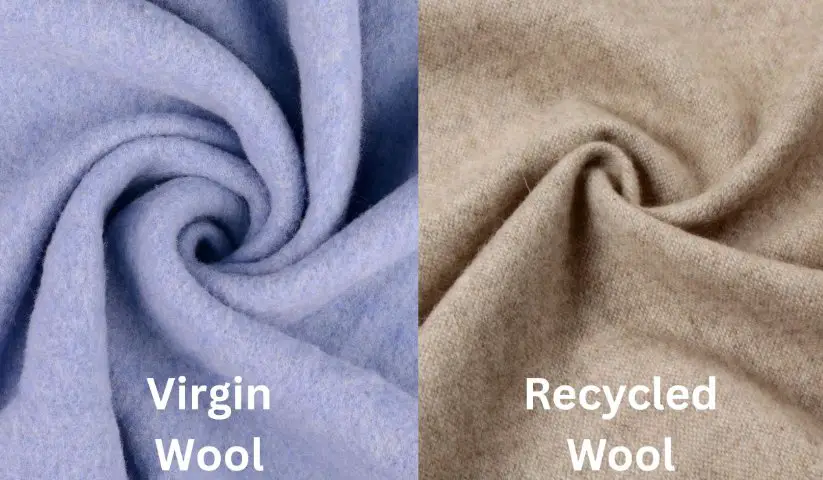
Side by side comparison of virgin wool and recycled wool highlighting visual and texture variations.
Premium wool voile always uses virgin wool (new wool that’s never been processed before). Recycled wool, while more sustainable, doesn’t have the strength and smoothness needed for voile’s delicate construction. Check labels for “100% virgin wool” or “pure new wool” as quality indicators.
Origin and Mills
The most respected wool voile comes from:
Italian mills: The Biella region produces exceptional wool voile with perfect hand and drape. Brands like Drago, Tollegno 1900, and Loro Piana set the standard.
English mills: Huddersfield mills create beautiful worsted voiles with traditional quality. These often cost less than Italian options while maintaining excellent standards.
Japanese mills: Known for innovative lightweight wools with excellent washability and modern performance features.
Hand and Drape Test
When evaluating wool voile in person:
- Touch test: Rub between fingers. Quality voile feels smooth, not scratchy, with slight crispness
- Drape test: Hold up a length. It should fall in soft waves, not stiffly
- Light test: Hold to light. You should see light filtering through but not clear shapes
- Resilience test: Crumple in hand and release. It should smooth out quickly, not stay wrinkled
- Stretch test: Gentle pull on bias (diagonal). Some give is good, but it should snap back
Sustainability and Environmental Impact
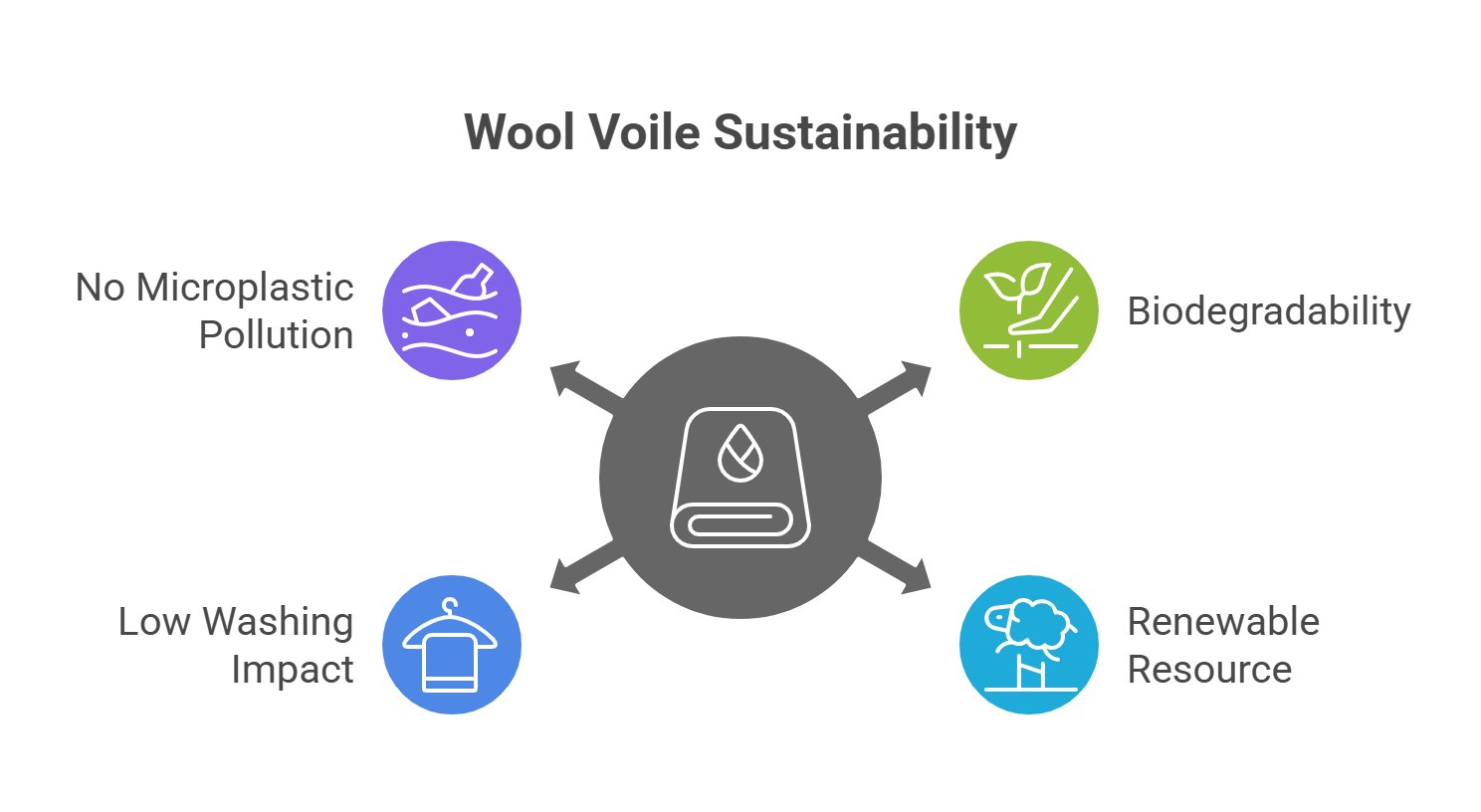
Visual summary of the sustainability benefits of wool voile fabric.
In an age where fabric choices have environmental consequences, wool voile stands out as a genuinely sustainable option.
Natural and Biodegradable
Wool voile is 100% biodegradable. When a wool garment reaches the end of its life, it decomposes naturally in soil in just 3-4 months, returning nutrients to the earth. Compare this to polyester or nylon voile, which can take 20-200 years to break down and shed microplastics throughout their lifetime.
Renewable Resource
Sheep produce new fleece every year through natural growth. This makes wool an infinitely renewable fiber source, unlike petroleum-based synthetics. A single sheep can produce 4-6 pounds of wool annually for 10+ years.
Low Washing Impact
Wool’s natural properties mean you need to wash it far less frequently than cotton or synthetics. The fiber resists odors and dirt, so garments stay fresh longer. Less washing means:
- Reduced water consumption
- Less energy for heating water
- Fewer detergents entering waterways
- Extended garment lifespan
- Lower carbon footprint per wear
No Microplastic Pollution
Every time you wash synthetic voile (polyester, nylon), it sheds thousands of microplastic fibers that flow into waterways and eventually oceans. These particles harm marine life and enter the food chain. Wool voile sheds only natural fibers that biodegrade harmlessly.
Long Lifespan Reduces Waste
Quality wool voile garments can last 10-20 years with proper care. This durability means fewer replacements and less textile waste in landfills. While the upfront cost is higher, the cost-per-wear over a decade makes it economically and environmentally smart.
Sustainable Certifications to Look For
- RWS (Responsible Wool Standard): Ensures ethical treatment of sheep and environmental stewardship
- ZQ Merino: Third-party certification for sustainable practices
- GOTS (Global Organic Textile Standard): For organic wool processing
- Oeko-Tex: Certifies fabrics are free from harmful chemicals
Ethical Considerations
When buying wool voile, look for suppliers who source from farms practicing humane treatment of animals. The best mills work directly with farmers who meet high welfare standards and avoid controversial practices like mulesing.
Learn more about sustainable wool practices at The International Wool Textile Organisation, the global authority for standards in the wool textile industry.
Uses and Applications
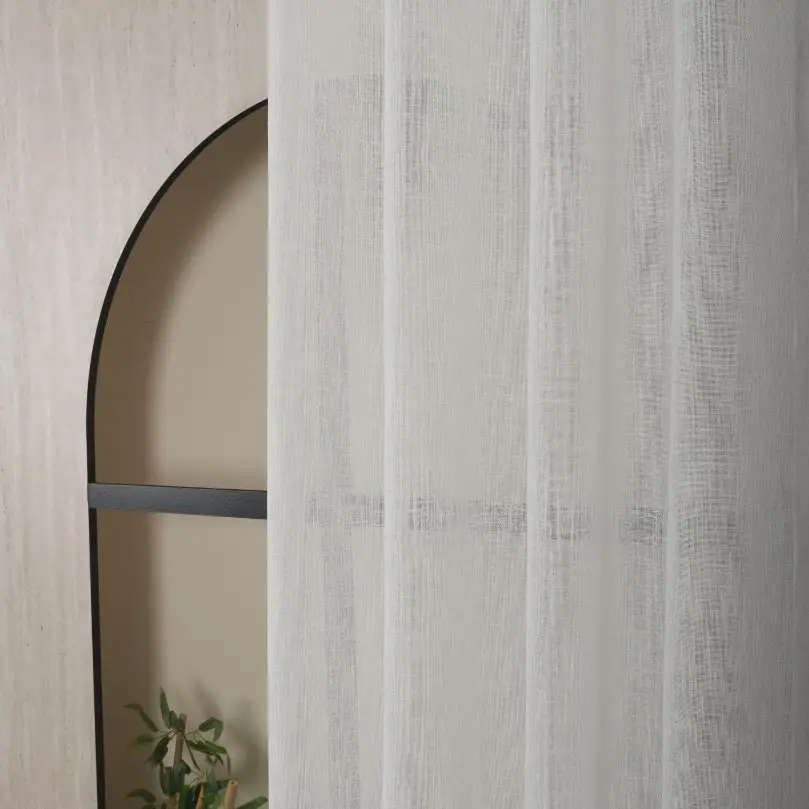
Wool voile curtains gently filtering light while maintaining privacy and airflow.
Wool voile’s unique properties make it perfect for specific applications where other fabrics fall short.
Warm-Weather Suiting
This is where wool voile truly shines. Men’s and women’s summer suits made from wool voile offer professional polish without the sweat. The fabric’s breathability and moisture-wicking keep you comfortable in business meetings, outdoor weddings, or any situation where you need to look sharp in the heat.
Wool voile works particularly well for:
- Unstructured blazers and soft-shoulder jackets
- Summer weight trousers and pants
- Professional skirts for office environments
- Destination wedding attire for guests and wedding parties
Shirts and Blouses
The flowing drape of wool voile creates beautiful shirts that move with you. Both men’s dress shirts and women’s blouses benefit from the fabric’s ability to hold shape while remaining comfortable. The slight transparency adds visual interest without being inappropriate when layered properly.
Dresses
Summer dresses in wool voile offer elegance and comfort. The fabric works wonderfully for:
- Maxi dresses that float in the breeze
- A-line dresses with beautiful drape
- Shirt dresses for professional casual settings
- Wrap dresses that flatter many body types
For dress-making inspiration, check out how to sew a dress with guidance for working with delicate fabrics.
Scarves and Accessories
Lightweight wool voile makes exceptional scarves. They provide just enough warmth for cool summer evenings or air-conditioned spaces without bulk. The fabric drapes beautifully around the neck and comes in sophisticated solid colors that work with any wardrobe.
Layering Pieces
Tunics, kimonos, and lightweight cardigans in wool voile create perfect transitional pieces for spring and fall. They add coverage and interest to outfits without weight.
Home Decor
While less common than cotton voile for home use, wool voile can create stunning:
- Lightweight curtains that filter light beautifully
- Decorative throws with sophisticated drape
- Pillow covers with subtle texture
Are voiles old fashioned?
Not at all. While voile has historic roots, it’s very much a modern fabric. Contemporary designers regularly use wool voile in current collections, appreciating its sustainability and performance. The clean, minimal aesthetic of modern voile garments looks fresh and current, not dated.
Are voiles in fashion?
Yes, especially as consumers increasingly value natural fibers and timeless pieces over fast fashion. The move toward “quiet luxury” and investment dressing has brought renewed attention to quality fabrics like wool voile. Fashion magazines regularly feature voile garments in spring and summer editorials.
Planning a summer wardrobe? Use our Summer Wardrobe Calculator to budget for quality pieces.
Care Instructions for Wool Voile
Proper care extends the life of your wool voile garments and keeps them looking beautiful. While it requires more attention than synthetic fabrics, the process isn’t complicated once you know the steps.
How to Wash Wool Voile
- Check the label first: Always read care instructions as some wool voile may be dry clean only
- Hand washing method: Fill a basin with cool water (65-85°F / 18-30°C) and add a small amount of wool-safe detergent
- Submerge gently: Place garment in water and swish gently for 2-3 minutes. Never scrub, wring, or twist
- Soak briefly: Let soak for 5-10 minutes, no longer to prevent fiber damage
- Rinse thoroughly: Drain dirty water and refill with cool, clean water. Swish to remove detergent. Repeat until water runs clear
- Remove water: Never wring. Instead, lay flat on a clean towel, roll up gently to press out water
- Dry flat: Reshape garment on a dry towel away from direct sunlight and heat. Turn over halfway through drying
- Machine washing (if label allows): Use delicate cycle, cool water, and place garment in mesh bag. Use wool-specific detergent
Drying Guidelines
Never use a dryer: High heat will shrink and damage wool voile. Always air dry flat.
Avoid direct sunlight: UV rays can fade colors and weaken fibers. Dry in a shaded, well-ventilated area.
Support the garment: Don’t hang wet wool voile as the weight of water can stretch it out of shape.
Typical drying time: 6-12 hours depending on humidity and air circulation.
Ironing and Steaming
Steam is best: Use a garment steamer to remove wrinkles without direct heat contact. Hold steamer 6 inches from fabric and let steam penetrate.
If ironing is necessary:
- Use the “wool” or low heat setting (250-300°F / 120-150°C)
- Always use a press cloth between iron and fabric
- Iron on the wrong side of the fabric when possible
- Use pressing motion rather than sliding iron back and forth
- Fabric should be slightly damp for best results
Storage
Clean before storing: Always wash or dry clean before putting away for the season. Stains and body oils attract moths.
Fold, don’t hang: Hanging can stretch wool voile over time. Fold garments and store flat or on shelves.
Moth prevention: Store with cedar blocks or lavender sachets. Avoid mothballs which leave harsh chemical odors.
Breathable storage: Use cotton garment bags, not plastic, which can trap moisture and cause mildew.
Cool, dry location: Avoid attics or basements with temperature/humidity fluctuations.
Stain Treatment
Act quickly: Blot (never rub) liquid spills immediately with clean cloth.
Water-based stains: Dab with cool water and wool-safe detergent. Rinse and air dry.
Oil-based stains: Sprinkle with cornstarch or talcum powder to absorb oil. Let sit 30 minutes, brush off, then spot clean.
Never use: Bleach, harsh detergents, or hot water on wool voile. These will damage fibers permanently.
Get personalized care instructions with our Wool Care Calculator based on your specific garment type.
For comprehensive information on caring for wool garments, visit our wool care guide.
Sewing and Working with Wool Voile
Sewing with wool voile requires patience and the right techniques, but the results are worth the effort. Here’s what you need to know.
Pre-Treatment is Essential
Pre-wash before cutting: Wool voile can shrink 3-5% when first washed. Always pre-wash fabric before cutting your pattern to avoid garment shrinkage later.
Pre-washing method: Hand wash in cool water with wool detergent, lay flat to dry completely. This can take 12-24 hours, so plan ahead.
Press before cutting: Once dry, press fabric with low heat and steam to remove wrinkles and ensure accurate cutting.
Cutting Techniques
Use pattern weights: Pins can leave permanent holes in wool voile. Pattern weights or smooth objects hold pattern pieces in place without damage.
Sharp tools are critical: Use a sharp rotary cutter or fabric scissors. Dull blades will pull and distort the delicate fabric.
Cut on single layer: While time-consuming, cutting single layers prevents shifting and ensures accurate pieces.
Stabilize curves: Stay-stitch curved edges immediately after cutting to prevent stretching.
Sewing Supplies
Needles: Use size 70/10 or 80/12 sharp or microtex needles. Replace needle after each project as dull needles snag delicate fibers.
Thread: Fine cotton or polyester thread in matching color. 50-60 weight works well.
Pins: If you must pin, use extra-fine silk pins and pin only in seam allowances.
Marking tools: Tailor’s chalk or disappearing fabric markers. Test on scrap first to ensure marks remove easily.
Sewing Techniques
Seam finishes: French seams work beautifully with sheer wool voile, hiding raw edges for professional results. Flat-felled seams also work well.
Stitch length: Use slightly shorter stitch length (2.0-2.5mm) for stable seams that won’t unravel.
Seam allowance: Standard 5/8″ works well. Understand more about seam allowances for different project types.
Pressing matters: Press seams as you sew using low heat and steam. This sets stitches and creates professional-looking results.
Test first: Always make a test garment in muslin or cheap cotton before cutting into expensive wool voile.
Pattern Selection
Choose patterns designed for lightweight, drapey fabrics:
- Flowing tops and blouses with minimal structure
- Dresses with soft gathers or draping
- Unlined jackets with clean lines
- Wide-leg trousers that move with you
Avoid patterns requiring:
- Heavy interfacing or structure
- Tight fitting with little ease
- Multiple buttonholes (delicate fabric may fray)
- Complex details that require excessive handling
Lining Considerations
Due to wool voile’s semi-sheer quality, most garments need lining. Use lightweight lining fabrics like Bemberg rayon or silk habotai. Match the care requirements of your lining to the wool voile so you can wash them together.
Beginner Sewer?
Wool voile isn’t the best first project. Try cotton voile first to practice techniques, then graduate to expensive wool voile once you’re comfortable with the methods.
Calculate exactly how much fabric you need with our Fabric Yardage Calculator before purchasing expensive wool voile.
Buying Guide for Wool Voile
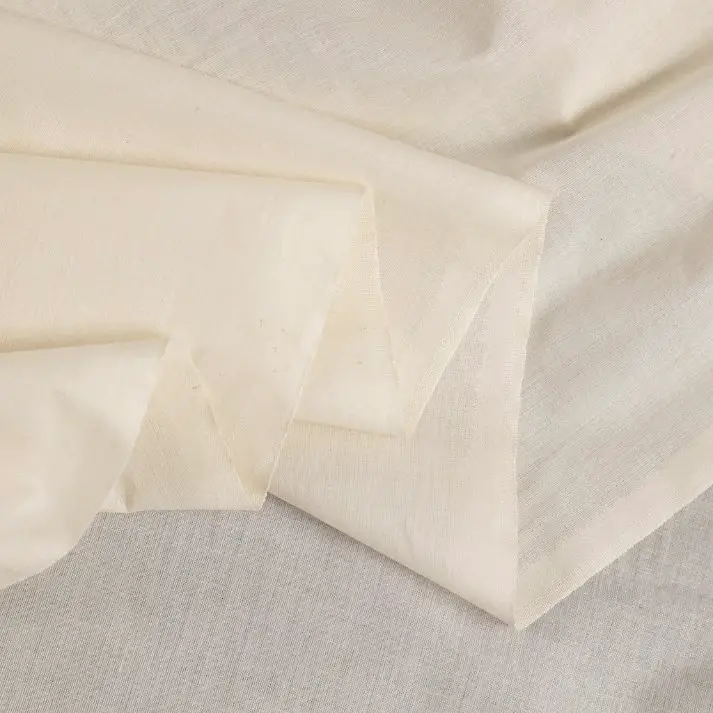
A visual buying guide highlighting the lightweight, breathable, and semi sheer qualities of wool voile fabric.
Investing in wool voile requires knowledge to get the best value. Here’s how to shop smart.
Price Expectations
Entry level: $20-30 per yard. Basic wool voile from standard mills. May be wool blends or lower super numbers.
Mid-range: $35-50 per yard. Quality Italian or English wool voile, 100% wool, S100-S120s. Best value for most buyers.
Luxury: $60-100+ per yard. Exceptional mills, S130s+, designer fabric houses. For special occasion garments or couture sewing.
Where to Buy
Online specialty fabric stores:
- Mood Fabrics (high-end selection)
- B&J Fabrics (New York institution with online ordering)
- Fabric Mart (good sales and variety)
- Emma One Sock (curated selection)
Direct from mills: Some Italian and English mills sell direct to consumers, often at better prices than retail.
Local fabric stores: High-end independent shops may carry wool voile, especially in fashion-forward cities. Call ahead to check inventory.
Avoid: Discount fabric chains rarely carry true wool voile. Products labeled “voile” at budget stores are usually polyester.
Quality Check Before Buying
If ordering online, request swatches when possible. When you receive the fabric:
Visual inspection:
- Weave should be even and tight
- No thick or thin spots
- Color should be consistent across yardage
- No pulls, snags, or flaws
Touch test:
- Smooth hand, not scratchy
- Slight crispness from yarn twist
- Soft drape when held up
- Springs back when crumpled
Burn test (on selvage scrap):
- Real wool smells like burning hair
- Leaves dark, crushable ash
- Self-extinguishes when flame removed
- Synthetic blends melt or smell like plastic
How Much to Buy
Blouse/shirt: 2-2.5 yards (depending on size and pattern)
Dress: 3-5 yards (more for maxi lengths)
Pants: 2-3 yards
Jacket: 2.5-3.5 yards
Scarf: 0.5-1 yard
Always buy 0.25-0.5 yards extra for:
- Pre-wash shrinkage
- Pattern matching (if applicable)
- Test samples
- Future repairs or alterations
Return Policies
Understand the return policy before ordering. Many high-end fabric sellers don’t accept returns on cut fabric. If buying expensive wool voile, order swatches first to confirm color and hand before committing to yardage.
Seasonal Sales
Best times to buy wool voile at discount:
- Late summer (August): End of season clearance
- January: Post-holiday sales
- Black Friday/Cyber Monday: Many fabric retailers offer 20-40% off
For the finest quality wool and cashmere options, explore wool and cashmere fabrics from specialty suppliers.
Seasonal Styling with Wool Voile
Getting the most from wool voile means knowing when and how to wear it throughout the year.
Spring (March-May)
Wool voile works beautifully in spring when temperatures fluctuate. Layer a wool voile shirt under a blazer for cooler mornings, then wear alone when afternoon warms up. The fabric provides just enough warmth for unpredictable spring weather without overheating.
Style ideas:
- Wool voile blouse with jeans and ankle boots
- Light wool voile cardigan over tank top
- Midi dress with tights and leather jacket
Summer (June-August)
This is prime wool voile season. The fabric’s breathability shines in hot weather, making it more comfortable than cotton in humidity. The professional appearance means you can wear it to work or formal events despite the heat.
Style ideas:
- Wool voile suit for summer weddings
- Flowing maxi dress for evening events
- Lightweight shirt for professional settings
- Scarf for over-air-conditioned spaces
Fall (September-November)
Early fall is excellent for wool voile layering. As temperatures drop, wool voile transitions from primary layer to elegant underpinning. Wear under heavier knits or jackets to add polish to outfits.
Style ideas:
- Wool voile shirt under chunky sweater
- Tunic as layering piece with leggings and boots
- Lightweight pants with wool blazer
Winter (December-February)
Wool voile isn’t warm enough for winter as a primary layer in most climates, but it can work as:
- Elegant layer under winter suits
- Indoor clothing in heated spaces
- Base layer for very mild winters
Climate Considerations
Hot, dry climates: Wool voile is perfect. The breathability and moisture-wicking work beautifully in desert heat.
Hot, humid climates: Even better. Wool handles humidity better than cotton, keeping you drier and more comfortable.
Temperate climates: Get maximum use from spring through fall. Limited winter wear.
Cold climates: Use primarily mid-summer. Shorter wearing season but still worthwhile for special occasions.
Frequently Asked Questions
Conclusion
Wool voile stands out as a luxury fabric that delivers genuine performance benefits beyond its premium price tag. This remarkable textile solves the age-old problem of how to look polished and professional in summer heat without sacrificing comfort.
Key Takeaways
Wool voile is worth the investment if you:
- Need professional warm-weather clothing that performs in heat
- Value natural, sustainable fabrics over synthetic alternatives
- Appreciate quality garments that last decades, not seasons
- Live in or travel to hot climates regularly
- Want refined elegance without heaviness
- Can dedicate time to proper care and maintenance
Consider alternatives if you:
- Need machine-washable, low-maintenance fabrics
- Prefer bold prints and extensive color options
- Want completely opaque fabrics without layering
- Have limited summer wardrobe use in cold climates
- Are working with a tight fabric budget
Final Recommendations
Start small: If you’re new to wool voile, begin with a single garment like a shirt or scarf. This lets you experience the fabric without major financial commitment.
Buy quality: With wool voile, quality differences are significant. A well-made S120s fabric from a reputable mill will perform and last better than cheaper alternatives. The cost per wear over a decade makes quality the smart choice.
Learn proper care: The longevity of wool voile depends entirely on care. Take time to learn correct washing, drying, and storage techniques. These habits will extend your garments’ life from years to decades.
Choose the right projects: Wool voile shines in flowing garments like summer suits, dresses, and lightweight shirts. Don’t force it into applications where other fabrics work better.
Consider the season: Invest in wool voile if you have at least 3-4 months of warm weather annually. For shorter summers, the limited wearing season may not justify the cost.
Think long-term: Wool voile is an investment in your wardrobe, not a fast fashion purchase. Choose classic styles in neutral colors that won’t date quickly. A well-cut wool voile garment remains stylish and wearable for years.
The Bottom Line
Is voile a good fabric? Absolutely, when chosen for the right purpose. Wool voile fills a specific need for professional, comfortable warm-weather clothing with environmental credentials and longevity that synthetic alternatives can’t match.
While it requires more care than polyester and costs more than cotton, wool voile delivers genuine value through its performance, durability, and timeless elegance. For anyone who values quality over quantity and natural fibers over synthetics, wool voile represents one of the best warm-weather fabric choices available.
Whether you’re attending summer weddings, navigating tropical business climates, or simply seeking refined comfort in heat, wool voile offers a proven solution that’s been trusted for over a century. The fabric’s resurgence in contemporary fashion speaks to its enduring relevance and unmatched combination of luxury and practicality.
Ready to experience wool voile for yourself? Start by ordering swatches from quality suppliers, test the fabric against your skin, and consider how it fits into your lifestyle and wardrobe needs. With proper selection and care, wool voile can become a cornerstone of your warm-weather wardrobe for years to come.
For more comprehensive information about wool fabric types and their properties, visit Sewport’s complete wool fabric directory.