
Everything you need to know about this durable, time-tested fabric that’s been clothing the world for over 800 years
Walk into any quality menswear shop, and you’ll likely find wool serge blazers hanging alongside wool flannel and wool gabardine suits. But what makes wool serge special? This fabric has dressed everyone from medieval nobility to World War I soldiers to today’s business professionals. It’s durable enough for military uniforms yet refined enough for your most important meetings.
In this guide, you’ll learn everything about wool serge: what it is, how it differs from other wool suiting fabrics, how to care for it, and why it might be the smartest fabric investment you’ll make.
Table of Contents
What is Wool Serge Fabric?
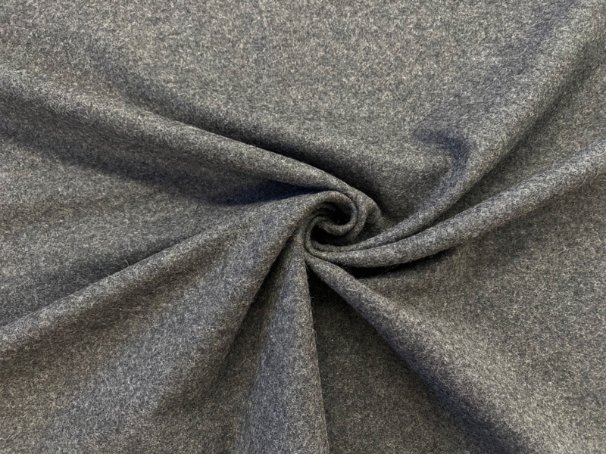
Let’s start with the basics. Wool serge is a type of wool fabric known for its distinctive diagonal rib pattern. When you look closely at wool serge, you’ll see these diagonal lines running across both sides of the fabric, creating a subtle texture that catches the light beautifully.
Understanding the Weave
The secret to wool serge’s character lies in its construction. It uses what’s called a 2/2 twill weave, where two threads pass over and two threads pass under, creating that signature 45-degree diagonal pattern. This isn’t just about looks. This weave makes the fabric stronger and more resistant to wrinkles than plain-weave fabrics.
Key Point: “Serge” actually refers to the weaving pattern, not the fiber itself. While wool serge is the most common and traditional type, you can technically find serge made from cotton, silk, or synthetic fibers. When someone mentions “serge” in the context of suits or blazers, they almost always mean wool serge.
Is Wool Serge and Serge the Same Thing?
Not exactly. Here’s where it gets interesting. “Serge” describes the weave structure (that 2/2 twill pattern we talked about), while “wool serge” specifically means serge made from wool fibers. Think of it like this: all wool serge is serge, but not all serge is wool serge.
Historically, serge has been made primarily from sheep wool, which is why the terms often get used interchangeably in menswear. But you can also find cotton serge (denim is actually a type of cotton serge!), silk serge (often used for linings), and synthetic blends.
What Does the Name Serge Mean?
The word “serge” has a fascinating origin. It comes from the Greek word “serikos,” which means “silken.” This tells us the fabric likely traveled from China to Europe along ancient trade routes. The name stuck even after Europeans began making their own wool versions in the Middle Ages.
Worsted vs Woolen Serge
When shopping for wool serge, you might see terms like “worsted serge” or just “serge.” Here’s what that means:
Worsted wool serge is made from long, combed wool fibers that are spun into smooth, parallel yarns. The result? A fabric with a smooth, clear surface that shows off that diagonal twill pattern beautifully. This is what you’ll find in most quality suits and blazers.
Woolen serge uses shorter, uncarded fibers that create a slightly fuzzier, more textured surface. It’s less common today but was popular historically for coats and military uniforms.
Most modern wool serge combines a worsted warp (the lengthwise threads) with a woolen weft (the crosswise threads), giving you the best of both worlds: smoothness and durability.
The Rich History of Wool Serge
Wool serge has been around longer than most countries. Understanding its history helps explain why it’s still so popular today.
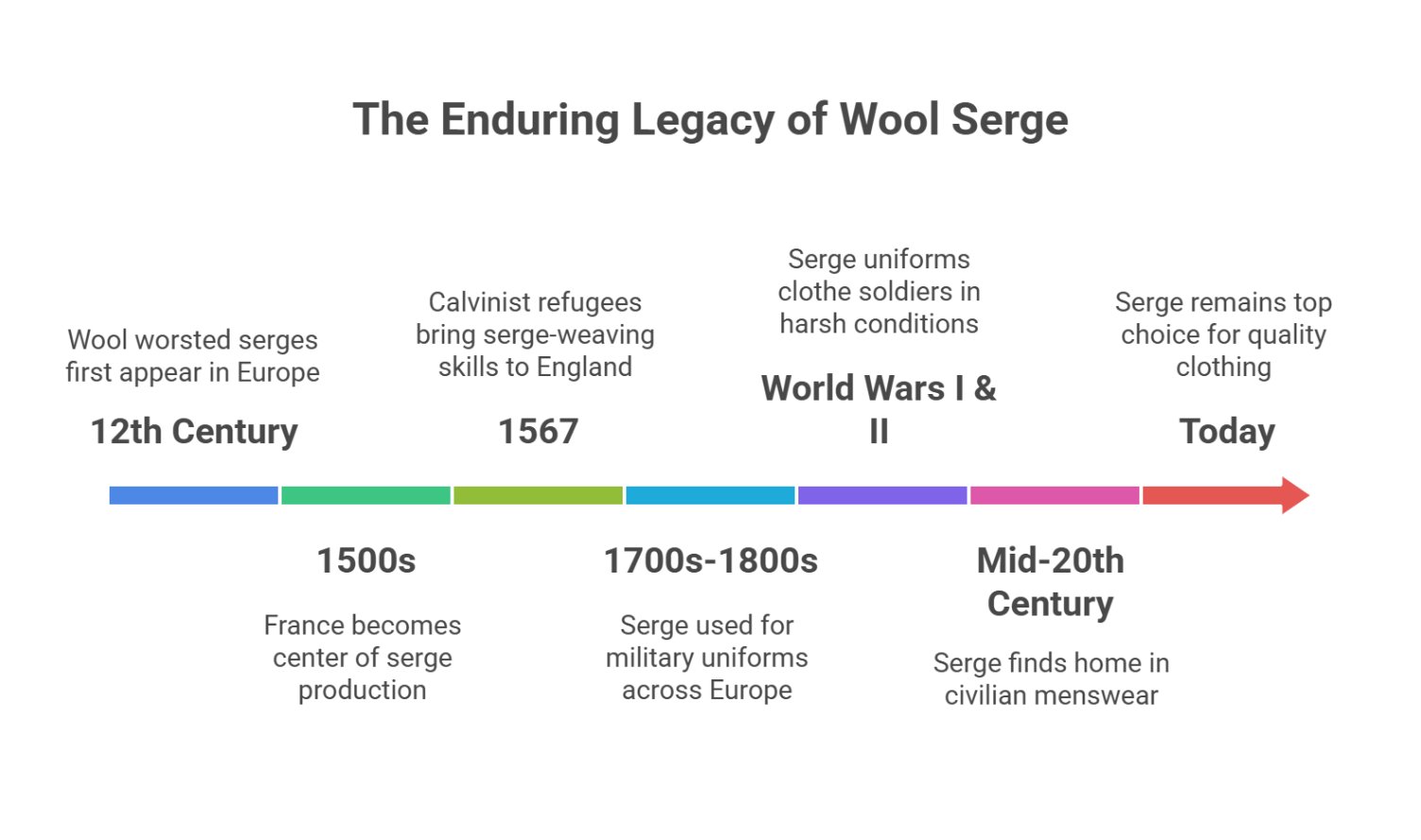
Wool worsted serges first appear in European records. The fabric quickly becomes popular among wealthy merchants and nobility.
France becomes the center of serge production. High-quality English wool gets shipped to French weavers who turn it into prized fabric. The phrase “serge de Nîmes” (serge from Nîmes, France) eventually becomes “denim.”
Calvinist refugees from the Low Countries bring advanced serge-weaving skills to England, helping establish the British textile industry.
Serge becomes the go-to fabric for military uniforms across Europe. Its durability and ability to hold a sharp crease make it perfect for soldiers’ dress uniforms.
Millions of uniforms made from wool serge clothe soldiers on both sides. The fabric proves itself in harsh conditions from the trenches of France to the deserts of North Africa.
As military uniforms shift to cotton and synthetic blends, wool serge finds its home in civilian menswear. The navy serge blazer becomes a wardrobe staple.
Wool serge remains a top choice for quality blazers, suits, and trousers. Modern production combines traditional weaving with sustainable practices.
Properties & Characteristics
What makes wool serge different from other fabrics? Let’s break down its key properties.
The Diagonal Rib Structure
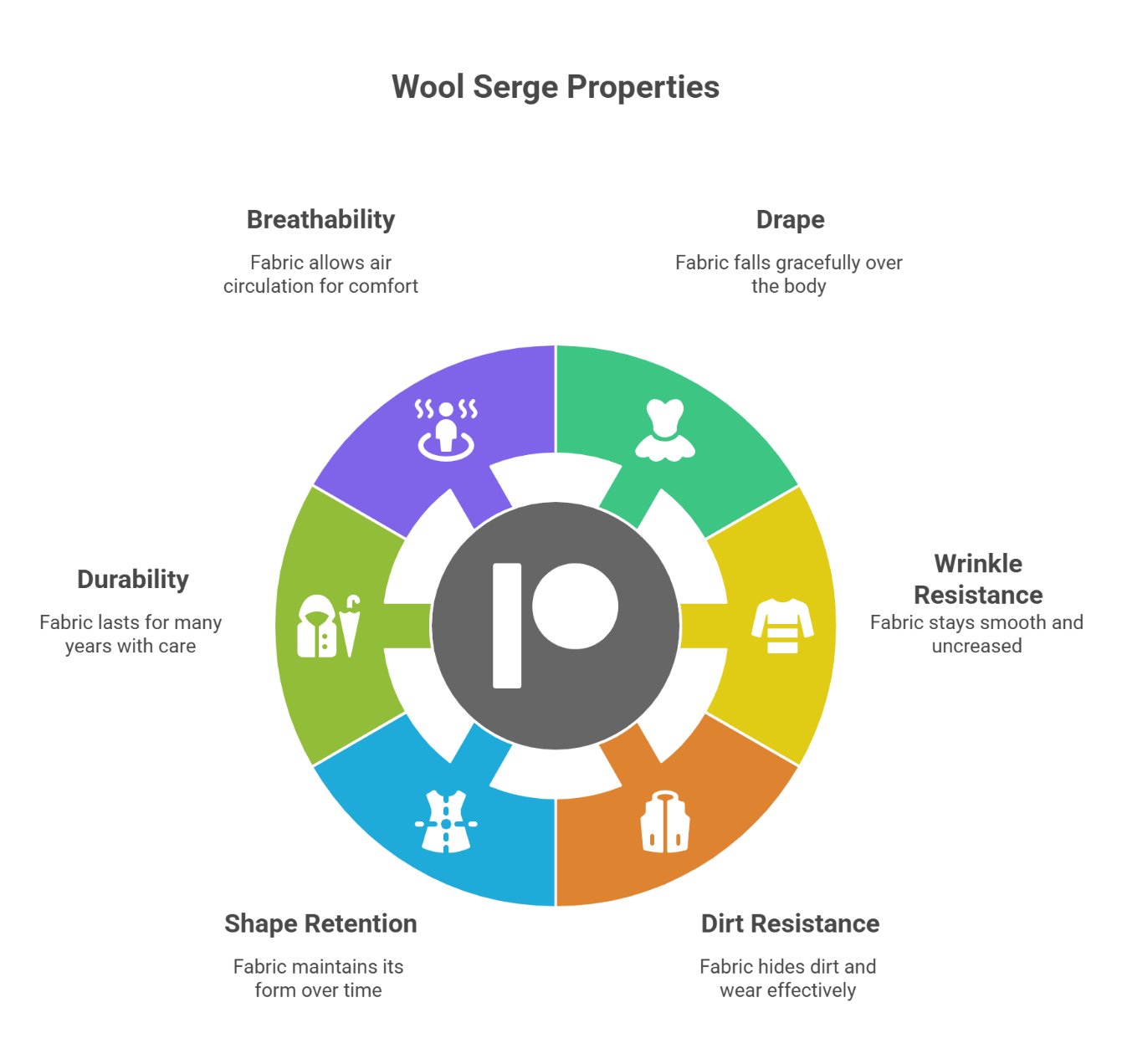
That signature diagonal pattern isn’t just decorative. The twill weave creates a fabric that:
- Drapes beautifully over the body
- Resists wrinkling better than plain weaves
- Shows less dirt and wear
- Holds its shape over time
Weight Classifications
Wool serge comes in different weights, measured in grams per square meter (GSM). Here’s what you need to know:
Lightweight serge (190-210 g/m²) works well for spring and summer garments. It’s breathable enough for warm weather while still maintaining that structured look.
Use our Fabric Weight Calculator to determine which weight is right for your project.
Medium weight serge (240-290 g/m²) is the most common. This is what you’ll find in most year-round suits and blazers. It offers the best balance of comfort, durability, and drape.
Heavyweight serge (310-390 g/m²) is built for coats, winter suits, and heavy-duty uses. This was the weight used in many military uniforms.
Durability and Resilience
Wool fibers can bend over 20,000 times without breaking. When woven into serge, this natural resilience gets amplified. A well-made wool serge garment can last 6 years or more with proper care, and many last decades.
The fabric bounces back after compression, which means:
- Pants don’t bag out at the knees
- Jackets maintain their shape through the shoulders
- Creases from sitting disappear quickly
The Shine Issue
Here’s something you should know: wool serge can develop a shine in areas of frequent friction, like the seat of trousers or the elbows of jackets. This isn’t a defect. It happens because the twill weave flattens under pressure and friction, causing the fibers to reflect light differently.
To minimize shine:
- Use steam, never direct heat, when pressing
- Always use a pressing cloth
- Rotate your garments to reduce wear on any single piece
- Consider a wool-mohair blend for a deliberately lustrous finish
Breathability and Comfort
Wool naturally regulates temperature. The fibers wick moisture away from your skin while the twill weave allows air to circulate. This makes wool serge surprisingly comfortable across different temperatures.
Wool Serge vs Other Fabrics
How does wool serge stack up against other popular suiting fabrics? Let’s compare.
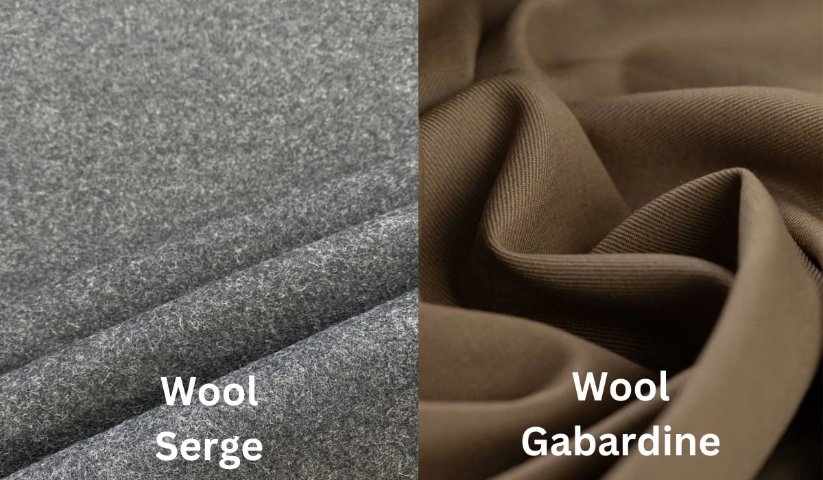
Wool Serge vs Wool Gabardine
People often confuse these two. Both are twill weaves, but there are key differences:
| Feature | Wool Serge | Wool Gabardine |
|---|---|---|
| Twill Angle | 45-degree diagonal (2/2 twill) | Steeper, more pronounced diagonal (often 63-degrees) |
| Texture | Even, balanced on both sides | More pronounced ridges on face side |
| Weight | Medium to heavy | Generally lighter |
| Best For | Blazers, suits, military uniforms | Trousers, lightweight suits, raincoats |
| Water Resistance | Moderate | Better (tighter weave) |
Want a deeper comparison? Check out our detailed wool gabardine guide.
Wool Serge vs Wool Flannel
| Feature | Wool Serge | Wool Flannel |
|---|---|---|
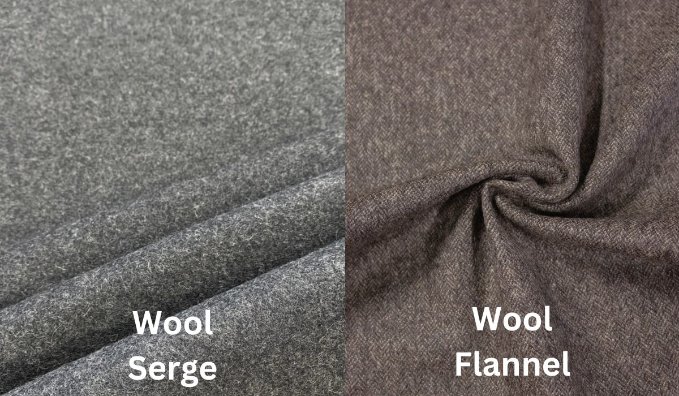
| Surface Finish | Smooth, clear | Brushed, napped, soft |
| Weave Visibility | Diagonal ribs clearly visible | Weave often obscured by nap |
| Formality | More formal | More casual |
| Season | All seasons (weight-dependent) | Fall and winter primarily |
| Texture | Crisp, structured | Soft, fuzzy |
Wool flannel has a completely different character thanks to that brushed surface. It’s softer and more casual, while serge maintains a crisper, more business-appropriate look.
Wool Serge vs Hopsack
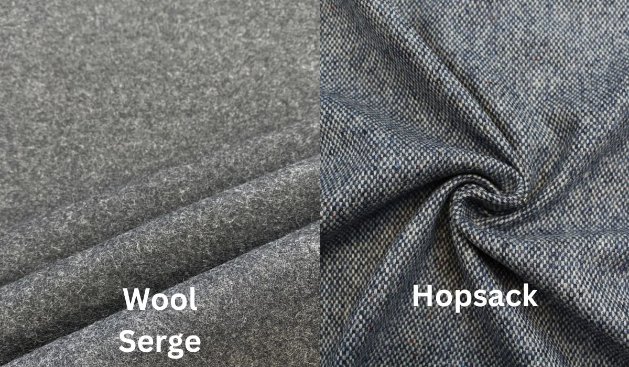
Hopsack uses a basketweave pattern (multiple yarns passing over multiple yarns) instead of a twill. This creates:
- More texture and surface interest
- Better breathability
- A more casual appearance
- Less shine over time
Hopsack is popular for single-breasted blazers, while serge is often preferred for double-breasted styles and more formal occasions.
Wool Serge vs Tropical Wool
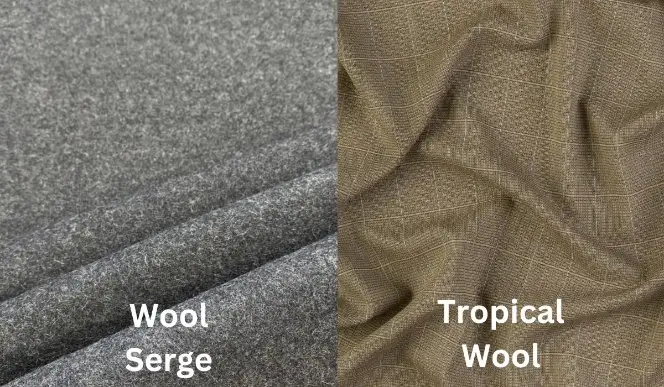
Tropical wool uses an open plain weave designed for maximum breathability. Compared to serge:
- Tropical wool is lighter and more breathable
- Serge drapes better and feels more substantial
- Tropical wool wrinkles more easily
- Serge offers better structure for tailored garments
The Difference Between Twill and Serge
Here’s where terminology gets tricky. Twill is a category of weaves, and serge is a specific type of twill. All serge is twill, but not all twill is serge.
What makes serge different from other twills:
- Serge uses an even 2/2 twill (equal number of threads over and under)
- The diagonal appears on both sides of the fabric
- The angle is typically 45 degrees
- Traditional serge is worsted or worsted/woolen blend
Other twills like wool and cashmere blends might use different ratios (like 3/1) or steeper angles, creating different looks and properties.
Uses & Applications
Wool serge’s combination of durability and refinement makes it remarkably versatile.
Menswear
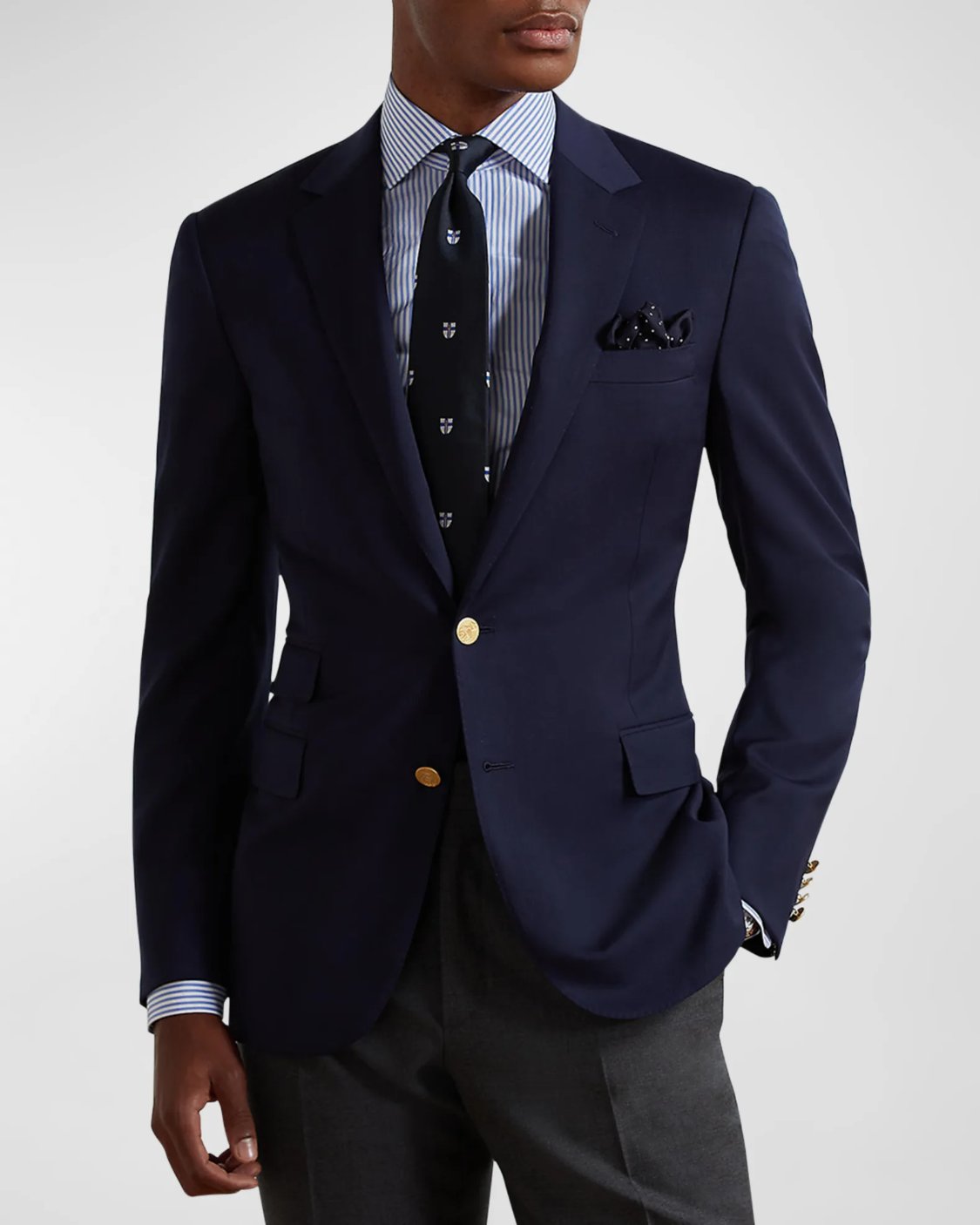
Navy Blazers: This is wool serge’s signature application. The classic navy serge blazer with brass or silver buttons has been a menswear staple since the early 20th century. The fabric’s ability to hold a structured shape while maintaining comfort makes it perfect for this role.
Suits: Wool serge suits offer that crisp, professional look. The fabric’s natural wrinkle resistance means you stay looking sharp throughout the day. Medium weight serge (240-290 g/m²) works for year-round wear in most climates.
Trousers: Serge trousers hold a crease beautifully and resist bagging at the knees. The fabric’s durability means they’ll last through countless wears.
Women’s Tailoring
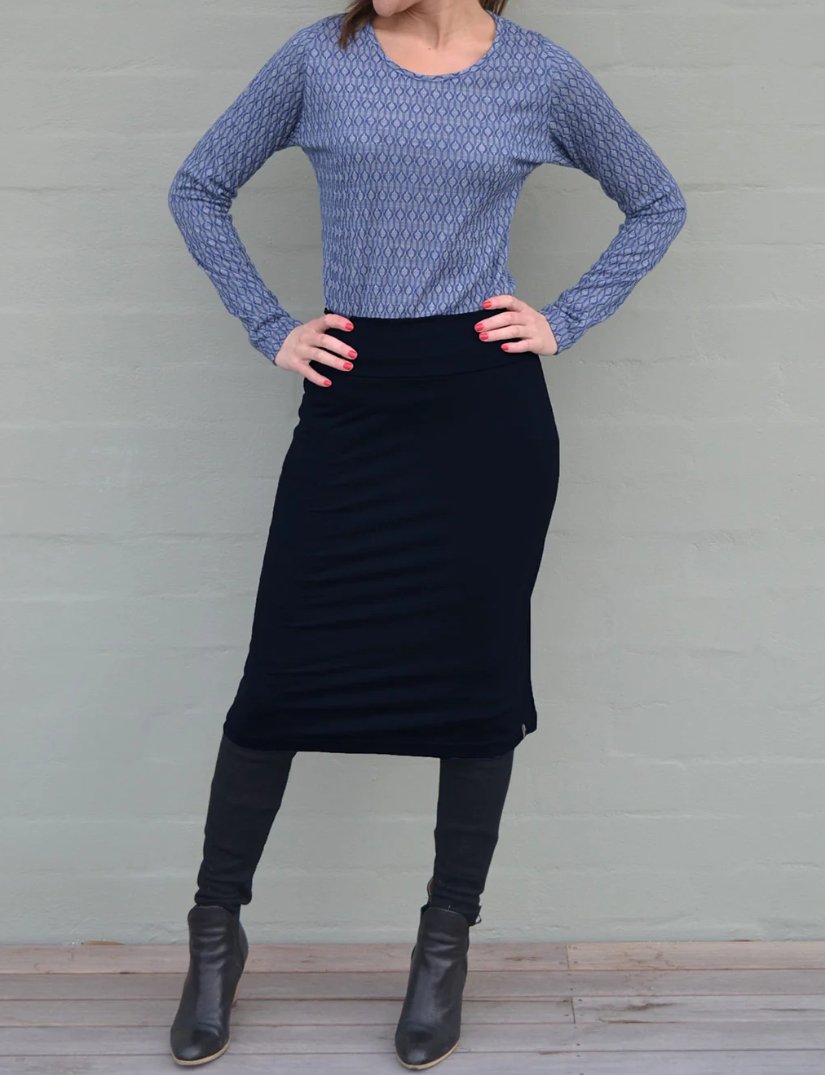
Women’s professional wear has embraced wool serge for:
- Tailored jackets and blazers
- Pencil skirts and A-line skirts
- Dress pants
- Structured dresses
The fabric provides structure without stiffness, creating clean lines that work in professional settings.
Military Uniforms
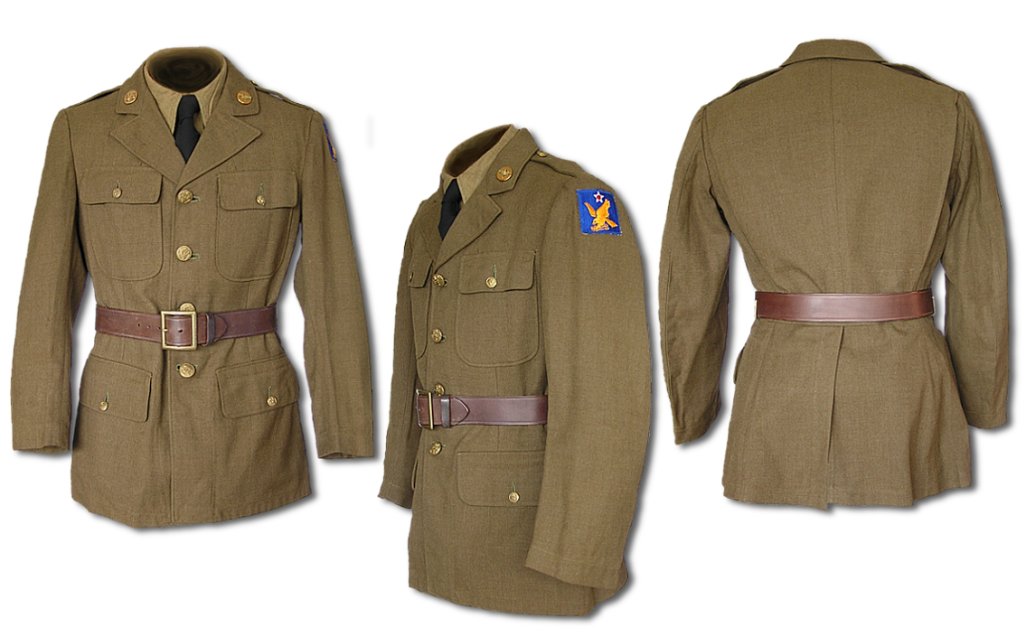
For over two centuries, wool serge was the standard for military dress uniforms. Many countries still use it for ceremonial uniforms because:
- It holds a sharp crease
- It’s durable enough for active wear
- It regulates temperature well
- It maintains a professional appearance
Theatre and Stage Production
Here’s an unexpected use: wool serge is one of the most common fabrics for theatrical curtains and acoustic treatments. Heavy wool serge (30+ oz) offers:
- Excellent sound absorption (Noise Reduction Coefficient of 1.00)
- Natural flame resistance
- Opaque, matte black finish for light control
- Durability for frequent use
Historical Costuming
Period costumers and reenactors prize wool serge for historical accuracy. It’s appropriate for everything from Roman times through the Victorian era and both World Wars.
Home Sewing Projects
If you sew, wool serge works well for:
- Jackets and coats
- Skirts
- Structured pants
- Vests
The fabric is forgiving to work with, holds its shape during construction, and doesn’t require special equipment.
Sustainability Deep Dive
In today’s world, understanding a fabric’s environmental impact matters. Let’s look at wool serge’s sustainability credentials.
The Biodegradability Advantage
When a wool serge garment finally wears out, it won’t sit in a landfill for centuries. Wool is a protein fiber that biodegrades naturally:
- 100% wool fabrics can biodegrade by 95% after just 15 weeks in soil
- The decomposition releases nutrients back into the earth
- Unlike synthetic fabrics, wool doesn’t break down into microplastics
Compare this to polyester, which can take 200+ years to decompose and sheds microplastics with every wash.
No Microplastic Pollution
Every time you wash a synthetic garment, it releases thousands of microplastic fibers into waterways. These microscopic particles end up in oceans, soil, and even the food chain.
Wool serge doesn’t have this problem. It’s a natural protein fiber that biodegrades in marine environments without leaving harmful residue. For people concerned about ocean health, this is a big deal.
Longevity Equals Sustainability
Here’s a simple truth: the most sustainable garment is the one you don’t have to replace. Wool serge excels at longevity:
- Average lifespan: 6+ years with regular wear
- With proper care, can last 20-30 years
- High donation rate (5% vs 1% for most fabrics)
- Strong secondhand market
Extending a garment’s life from 109 wears to 400 wears can reduce its environmental impact by up to 68%.
Carbon Sequestration
Sheep convert grass into wool through a natural process that doesn’t require fossil fuels. The wool itself is 50% organic carbon, sequestered from atmospheric CO2 by the plants sheep eat.
Modern sheep farming, especially when using regenerative practices, can:
- Improve soil health
- Increase biodiversity
- Store carbon in grasslands
- Maintain open landscapes
Water Usage and Chemical Concerns
Wool production isn’t perfect. Here’s the honest picture:
Challenges:
- Sheep require water for drinking and pasture irrigation
- Wool processing uses water for washing and dyeing
- Chemical dips protect sheep from parasites but can impact waterways if mismanaged
- Methane emissions from sheep contribute to greenhouse gases
Improvements:
- Many producers now capture methane for biogas
- Enzyme-based processing reduces chemical use
- Recycled wool reduces need for virgin fiber
- Better grazing management improves environmental outcomes
Wool vs Synthetic: The Full Picture
When comparing wool serge to synthetic alternatives, consider the entire lifecycle:
Wool Serge Advantages
- Renewable resource (sheep grow new fleece annually)
- Biodegradable
- No microplastic pollution
- Longer lifespan
- Requires less frequent washing
- High recycling rate
Considerations
- Higher initial environmental footprint than some plant fibers
- Methane emissions from sheep
- Water use in production
- Animal welfare concerns in some operations
- Chemical treatments in conventional processing
Making Sustainable Choices
Want to minimize your impact? Look for:
- Certified sustainable wool (ZQ Merino, Responsible Wool Standard)
- Recycled wool serge (reduces need for virgin fiber)
- Natural dyes or low-impact dyes
- Local production (reduces transport emissions)
- Quality over quantity (buy less, buy better)
Learn more about sustainable fabric choices with our Fabric Type Selector Quiz.
How to Identify Quality Wool Serge
Not all wool serge is created equal. Here’s how to spot the good stuff.
Weight and Hand Feel
Pick up the fabric. Quality wool serge should feel:
- Substantial without being heavy
- Smooth to the touch
- Slightly cool when first touched
- Springy when compressed (it bounces back)
Avoid fabric that feels papery, overly stiff, or limp.
The Diagonal Rib Test
Look at the diagonal lines closely. In quality serge:
- The diagonal is clear and even
- It appears on both sides of the fabric
- The angle is consistent across the entire piece
- The ribs are fine and closely spaced
Understanding Super Numbers
You’ll often see wool labeled with “Super” numbers like Super 100s, Super 120s, or Super 150s. These indicate the fineness of the wool fibers (measured in microns):
- Super 100s-110s: Good balance of durability and softness. Best for everyday wear.
- Super 120s-130s: Softer and more refined. Suitable for regular business wear.
- Super 140s-150s: Very fine and smooth. More delicate; better for special occasions.
- Super 160s and above: Extremely fine. Beautiful but less practical for frequent wear.
For wool serge specifically, Super 100s-120s offers the best durability-to-refinement ratio.
Color Clarity
Check how the fabric holds color:
- Rich, even color throughout
- No streaking or fading
- Color depth that doesn’t look flat
Navy serge, in particular, should be a deep, rich navy, not purple-tinged or washed out.
Fabric Mill Matters
Reputable mills produce consistently better fabric. Look for:
- British mills: Holland & Sherry, Dugdale Bros, Fox Brothers
- Italian mills: Loro Piana, Ermenegildo Zegna, Vitale Barberis Canonico
- Other quality producers: Scabal (Belgium), Dormeuil (France)
Price Guidelines
Quality has a cost. Expect to pay:
- Budget tier: $15-30 per yard (often poly-wool blends)
- Mid-range: $40-80 per yard (good quality pure wool)
- Premium: $100-200+ per yard (luxury mills, Super 120s+)
For ready-made garments:
- Quality wool serge blazer: $300-800
- Luxury wool serge suit: $1,000-3,000+
Red Flags
Walk away if you see:
- Extremely low prices (real wool serge isn’t cheap)
- Fabric that feels scratchy or rough
- Unclear or missing fiber content labels
- Uneven weave or visible flaws
- Vague descriptions like “wool-type” or “wool feel”
Comprehensive Care Guide
Proper care makes the difference between a wool serge garment lasting a few years or several decades. Here’s everything you need to know.
Why Dry Cleaning is Usually Recommended
Most wool serge garments should be dry cleaned, but not because wool can’t get wet. The reasons are more complex:
- The internal construction (interfacing, linings, shoulder pads) may not tolerate water
- The finishing treatments could be affected by home washing
- Water can cause the fabric to shrink or distort
- Professional pressing maintains the proper shape
That said, not every wool serge item needs dry cleaning after every wear.
Between-Wear Care
Most of the time, you don’t need to clean wool serge at all. Instead:
- Air it out: Hang your garment in a well-ventilated area (not in direct sunlight) for 24 hours. Wool naturally releases odors and moisture.
- Use a clothes brush: Brush your wool serge garments after each wear. Use downward strokes to remove dust, lint, and surface dirt.
- Steam, don’t iron: A handheld steamer removes wrinkles without putting direct heat on the fabric. Hold the steamer a few inches away and let steam do the work.
- Spot clean immediately: For small spills, blot (don’t rub) with a clean, damp cloth. For protein stains (food, blood), use cold water. For oil-based stains, take it to the cleaner.
When to Dry Clean
Take your wool serge to the cleaner when:
- There’s a significant stain you can’t spot clean
- The garment looks dull or feels grimy
- It’s been worn 5-10 times (for suits and blazers)
- You’re putting it away for the season
For everyday blazers, 2-4 times per year is usually sufficient.
Professional Pressing
The way wool serge is pressed matters enormously. Tell your dry cleaner:
- Use steam, not direct heat
- Always use a pressing cloth
- Don’t over-press (creates shine)
- Maintain natural shoulder shape (don’t flatten)
Can You Hand Wash Wool Serge?
For unstructured items like scarves, shawls, or unlined fabric, careful hand washing is possible:
- Use cold water: Fill a basin with cold water and add a small amount of wool-safe detergent.
- Submerge gently: Don’t agitate or wring. Let it soak for 5-10 minutes.
- Rinse thoroughly: Use cold water until all soap is gone.
- Remove water gently: Roll in a towel to absorb excess water. Never wring or twist.
- Dry flat: Lay on a clean towel away from direct heat or sunlight. Reshape while damp.
Warning: Never hand wash structured garments like jackets or lined pants. The construction can be permanently damaged.
Dealing with Shine
If your wool serge develops shine in wear areas:
- Hold a steamer above the shiny area (don’t touch the fabric)
- While the fabric is still damp from steam, gently brush with a clothes brush
- Let air dry completely
- If shine persists, a professional can use special techniques to reduce it
Storage
Short-term (daily):
- Use proper hangers (shaped hangers for jackets, clip hangers for pants)
- Don’t overcrowd your closet (wool needs air circulation)
- Empty pockets to maintain shape
Long-term (seasonal):
- Clean before storing (moths are attracted to body oils)
- Use breathable garment bags (never plastic)
- Add cedar blocks or lavender sachets (natural moth repellent)
- Store in a cool, dry place
- Check periodically for moths
Moth Prevention
Moths love wool. Protect your investment:
- Keep your closet clean (moths prefer dirty wool)
- Use cedar or lavender (natural deterrents)
- Inspect regularly for small holes or larvae
- If you spot moths, freeze affected items for 72 hours to kill eggs
- Vacuum your closet regularly
Check out our comprehensive Wool Care Guide for more detailed instructions, or use our Wool Care Calculator for personalized care recommendations.
Buying Guide
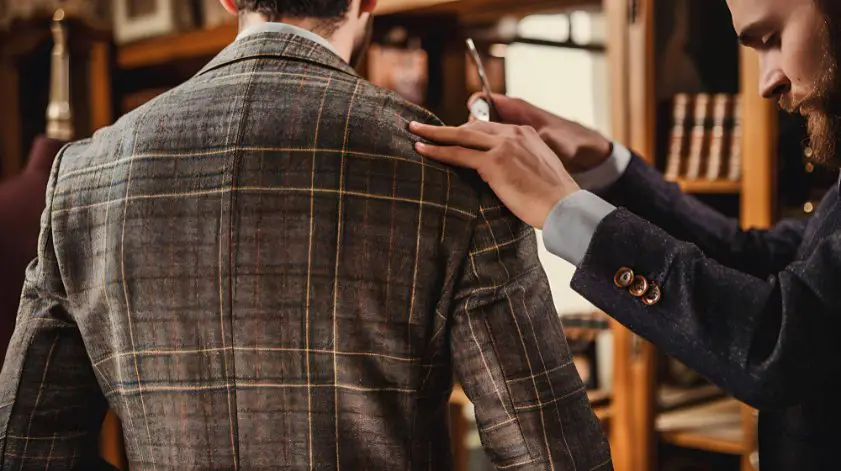
Ready to purchase wool serge fabric or garments? Here’s what you need to know.
Where to Buy Quality Wool Serge
For Fabric by the Yard:
- Specialty fabric stores: Best for seeing and feeling fabric before buying
- Online fabric retailers: Wider selection, but order swatches first
- Mill direct: Sometimes available, best prices but usually requires larger minimums
- Trade shows: Great for seeing multiple mills’ offerings
For Ready-Made Garments:
- Traditional menswear shops: Expert staff can help with fit
- Department stores: Mid-range options
- Made-to-measure services: Custom fit with fabric selection
- Secondhand/vintage: Often excellent quality at lower prices
Questions to Ask Retailers
Whether buying fabric or garments, ask:
- What’s the exact fiber content? (100% wool vs. wool blend)
- What’s the weight in g/m² or oz?
- Which mill produced the fabric?
- What’s the Super number (if applicable)?
- Is it worsted, woolen, or a blend?
- Has it been treated (moth-proofing, water-resistance)?
- What are the care requirements?
- What’s the return policy?
How Much Fabric Do You Need?
For home sewing projects:
- Blazer/jacket: 2.5-3 yards (54″ wide fabric)
- Pants: 2-2.5 yards
- Skirt: 1.5-2 yards
- Vest: 0.75-1 yard
Always add 10-15% extra for pattern matching, mistakes, and alterations.
Online vs In-Person Shopping
In-Person Advantages:
- Feel the fabric quality
- See true color
- Compare multiple options side-by-side
- Expert advice from staff
Online Advantages:
- Much wider selection
- Often better prices
- Access to specialty mills
- Convenience
Best approach: Order swatches online (usually $1-5 each) before committing to large purchases.
Seasonal Buying Tips
Time your purchases strategically:
- End of season sales: Buy summer-weight serge in fall, heavy serge in spring
- Sample sales: Mills and retailers clear out samples at steep discounts
- Remnant bins: Great for smaller projects or testing a fabric
Common Questions About Serge
Let’s address some questions that often come up about serge and wool serge.
Can You Serge on a Regular Sewing Machine?
There’s often confusion here because “serge” in sewing contexts usually refers to an overlock stitch made with a serger machine. This is completely different from serge fabric.
To clarify:
- Serge fabric: The twill-weave fabric we’ve been discussing
- Serging (or overlocking): A stitch technique that finishes seam edges
You can sew wool serge fabric on a regular sewing machine just fine. You don’t need a serger (though having one is helpful for finishing seams).
What Does It Mean to Serge Fabric?
In sewing terminology, “to serge” means to finish a raw edge with an overlock stitch. This prevents fraying and creates a clean, professional finish. It has nothing to do with serge fabric itself.
For more on sewing techniques, check out our Beginner’s Guide to Sewing.
Do You Have to Serge Fabric?
No, serging (overlocking) seams is optional. Other ways to finish seams include:
- Pinked edges (cut with pinking shears)
- Bound seams
- French seams
- Hong Kong finish
Wool serge doesn’t fray as badly as some fabrics, so you have more options for seam finishing.
What is Serge in Sewing?
In a sewing context, “serge” usually refers to the overlocking technique or the machine used (a serger). When discussing fabric, it refers to the twill-weave construction we’ve covered.
Is Wool a Cheap Fabric?
No, quality wool is not cheap, and that’s actually a good thing. The price reflects:
- Natural, renewable fibers
- Labor-intensive processing
- Superior performance properties
- Longevity and durability
When you calculate cost-per-wear over the garment’s lifetime, quality wool serge often costs less than cheaper alternatives that need frequent replacement.
Budget wool serge costs $15-30 per yard, while premium options can exceed $200 per yard. For comparison, quality cotton might be $10-30 per yard, while premium cashmere can cost $300+ per yard.
Frequently Asked Questions
It depends on the garment. Unstructured items like scarves can be carefully hand washed in cold water with wool-safe detergent. However, structured garments like jackets and lined pants should be professionally dry cleaned to preserve their construction and shape. Always check the care label first.
Shine develops in areas of friction (seat, elbows) because the twill weave flattens under pressure, causing fibers to reflect light differently. This is normal, not a defect. You can minimize it by using steam (never direct heat) when pressing and always using a pressing cloth. A professional cleaner can also help reduce existing shine.
Yes, if you choose lightweight wool serge (190-210 g/m²). Wool naturally regulates temperature and wicks moisture, making it surprisingly comfortable in warm weather. However, for very hot climates, you might prefer even lighter fabrics like tropical wool or linen blends.
With proper care, a quality wool serge garment typically lasts 6-10 years of regular wear, though many last 20-30 years or more. The fabric’s durability (wool fibers can bend 20,000+ times without breaking) combined with its resistance to tearing and its ability to maintain shape makes it exceptionally long-lasting compared to most alternatives.
Both are twill weaves, but serge has a 45-degree diagonal that appears evenly on both sides (2/2 twill), while gabardine has a steeper, more pronounced diagonal (often 63 degrees) with more prominent ridges on the face side. Gabardine is generally tighter and more water-resistant, while serge offers better drape and balance.
Yes, moths are attracted to wool, especially when it has body oils on it. Protect your wool serge by cleaning garments before long-term storage, using breathable garment bags, adding cedar blocks or lavender sachets, and inspecting regularly. If you find moths, freeze affected items for 72 hours to kill eggs and larvae.
For most people, yes. Wool serge breathes better, regulates temperature, resists odors, drapes more naturally, and lasts longer. It’s also biodegradable and doesn’t shed microplastics. Polyester is cheaper and easier to care for, but doesn’t offer wool’s performance or sustainability benefits. Quality wool serge provides better value over its lifetime.
Medium weight wool serge (240-290 g/m²) is ideal for year-round wear in most climates. It provides structure and durability without being too heavy for warmer months. For consistently hot climates, go lighter (190-210 g/m²), while cold climates benefit from heavier weights (310+ g/m²).
Conclusion
After diving deep into wool serge’s history, properties, care, and uses, let’s bring it all together.
Wool serge has survived for over 800 years for good reasons. It’s tough enough to outfit armies, refined enough for boardrooms, and versatile enough to work in countless applications. The fabric’s unique 2/2 twill weave creates a material that resists wrinkles, holds its shape, and develops character over time rather than just wearing out.
Key Takeaways
What Makes Wool Serge Special:
- Distinctive diagonal rib pattern from 2/2 twill weave
- Appears evenly on both sides of fabric
- Excellent durability and wrinkle resistance
- Natural temperature regulation and moisture wicking
- Classic appearance that never goes out of style
Best Uses:
- Navy blazers and formal jackets
- Business suits and professional wear
- Trousers and skirts that need structure
- Garments requiring both comfort and formality
Sustainability Benefits:
- Biodegrades in 15 weeks (vs. 200+ years for polyester)
- No microplastic pollution
- Lasts 6-30+ years with proper care
- High recycling rate (6% vs. <1% for most fabrics)
- Made from renewable resource
Care Requirements:
- Professional dry cleaning for structured garments
- Air out between wears (wool naturally releases odors)
- Steam instead of iron to avoid shine
- Store with moth protection
- Minimal cleaning needed compared to other fabrics
Who Should Choose Wool Serge?
Wool serge is ideal if you:
- Want clothing that lasts years, not seasons
- Value natural, sustainable materials
- Need professional-looking garments that stay sharp all day
- Prefer classic style over trendy fashion
- Want to invest in quality over quantity
- Appreciate fabric with history and character
Consider alternatives if you:
- Need machine-washable convenience above all else
- Have a very limited budget (though consider secondhand wool serge)
- Live in extremely hot, humid climates year-round
- Prefer ultra-lightweight, unstructured clothing
Making Your Purchase Decision
When buying wool serge, remember:
For fabric by the yard: Order swatches first, choose medium weight (240-290 g/m²) for versatility, look for reputable mills, and expect to pay $40-80 per yard for quality.
For ready-made garments: Try on multiple options (fit matters more than fabric weight), check the care label, feel the fabric quality, look for clean diagonal rib pattern, and consider having pieces tailored for perfect fit.
For sustainability: Buy the best quality you can afford (it lasts longer), maintain properly to extend life, consider secondhand or vintage options, and donate when you’re done (wool serge has strong resale value).
Your Next Steps
Ready to add wool serge to your wardrobe or sewing projects? Here’s what to do:
- Assess your needs: What weight and style do you need? Use our Wool Type Selector Quiz to find your perfect match.
- Set a budget: Calculate cost-per-wear over the expected lifespan (6-10 years). Quality wool serge often costs less per wear than cheap alternatives.
- Research suppliers: Compare fabric mills, read reviews, and order swatches before buying large quantities.
- Learn proper care: Review our wool care guide or use the Wool Care Calculator for personalized instructions.
- Start with a classic piece: A navy wool serge blazer is the perfect introduction to this fabric. It’s versatile, looks great, and you’ll wear it for years.
Final Thoughts
In a world of fast fashion and disposable clothing, wool serge represents something different. It’s a connection to centuries of textile history, a commitment to quality and sustainability, and a practical choice that gets better with age.
Whether you’re shopping for your first navy blazer, sewing a tailored jacket, or just trying to understand more about quality fabrics, wool serge deserves your attention. It’s not the cheapest option, and it’s not the easiest to care for. But if you value durability, classic style, and environmental responsibility, it might be exactly what you’re looking for.
A well-made wool serge garment isn’t just clothing. It’s an investment in quality that you’ll wear for years, that can be repaired rather than replaced, and that will eventually return to the earth without leaving plastic pollution behind.
That’s the real beauty of wool serge. It’s not just about looking good today. It’s about making choices that last.
Want to learn more about different wool types? Explore our guides on Merino wool, Alpaca wool, and Mohair to understand how different fibers create different fabric properties.