
Everything you need to know about choosing, caring for, and working with authentic Scottish tartan wool
Table of Contents
- What is Tartan Wool Fabric?
- The Rich History of Tartan
- Types of Tartan Wool Fabric
- Sustainability and Ethical Production
- How to Identify Quality Tartan Wool
- Uses and Applications
- Complete Care and Maintenance Guide
- Tartan Wool vs Other Fabrics
- How to Choose the Perfect Tartan Wool
- Buying Guide
- Working with Tartan Wool
- Frequently Asked Questions
Walk into any Scottish mill and you’ll see something remarkable: rows of looms weaving patterns that have existed for centuries. The rhythmic clack of machinery, the rich smell of wool, and the sight of vibrant tartans taking shape create an experience that connects you to hundreds of years of tradition.
Tartan wool fabric is more than just cloth with a checked pattern. It’s a piece of heritage woven into every thread, a story told through color and design. From the rugged Highlands where shepherds once wore these patterns to identify their clans, to modern fashion runways where designers reinterpret these classic designs, tartan has stayed relevant for good reason.
This guide will walk you through everything you need to know about tartan wool fabric. Whether you’re planning to make your first kilt, upholster a favorite chair, or simply want to understand what makes authentic tartan special, you’ll find practical information that helps you make smart choices.
We’ll cover the differences between tartan types, explain why some cost more than others, show you how to care for your tartan properly, and help you pick the right weight and weave for your project. You’ll also learn about the exciting sustainability efforts happening in Scottish mills today, transforming how this traditional fabric is made.
What is Tartan Wool Fabric?
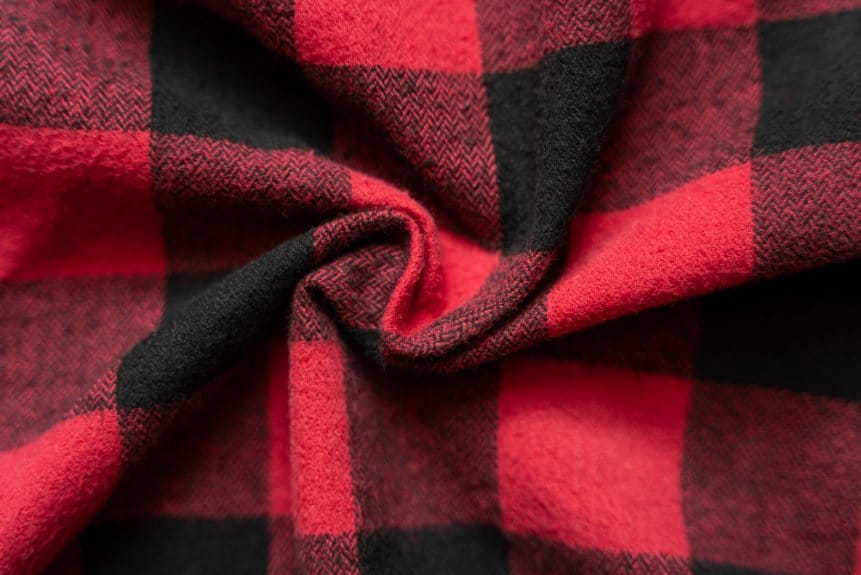
Close up view of tartan wool fabric highlighting weave and color contrast
Tartan wool fabric is a woven textile made from wool that features a distinctive pattern of crisscrossed horizontal and vertical bands in multiple colors. The pattern isn’t random. Each color sequence creates what’s called a “sett,” which repeats both vertically and horizontally to form the recognizable checked design we all know.
The magic happens in how the fabric is woven. Tartan uses a twill weave, where the threads pass over and under each other in an offset pattern. This creates visible diagonal lines across the fabric and gives tartan its durability and distinctive texture. When different colored threads cross, they create new shades where they overlap, adding depth and complexity to the pattern.
Traditional tartan has always been made from wool for practical reasons. Scotland’s sheep provided abundant material, and wool’s natural properties made it perfect for the harsh Highland climate. It keeps you warm when wet, resists wind, and lasts for years with proper care.
Tartan vs Plaid vs Tweed: What’s the Difference?
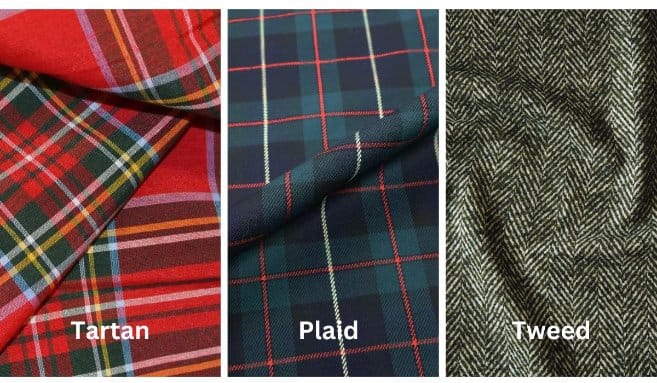
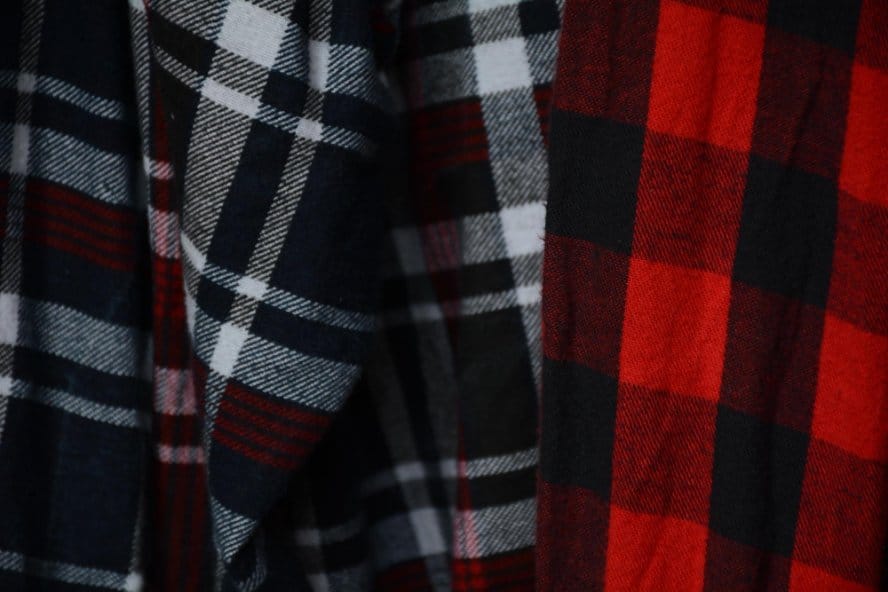
Visual comparison of tartan, plaid, and tweed fabrics highlighting pattern and texture differences
People often use these terms interchangeably, but they mean different things:
Tartan refers to a specific pattern with a formal structure. Each tartan has a recorded threadcount that defines exactly how many threads of each color appear in the sequence. Many tartans are registered and associated with Scottish clans, regions, or organizations. When you see a tartan, you’re looking at a pattern that follows specific rules.
In North America, people commonly call tartan “plaid,” but in Scotland, plaid actually means something different. Originally, a plaid was a large piece of tartan cloth worn over the shoulder as part of traditional Highland dress. Today, Scots might also use “plaid” to mean any regular blanket. The confusion comes from American usage, where “plaid” became the general term for any crisscrossed pattern.
Tweed is different altogether. It’s a rough, textured wool fabric that can be woven in many patterns, including tartan patterns. But tweed typically has a more mottled, speckled appearance created by mixing different colored fibers before spinning. Think of Harris Tweed – you’ll notice the texture and the flecks of color throughout the fabric.
| Feature | Tartan | Plaid (Scottish) | Tweed |
|---|---|---|---|
| Definition | Specific pattern type | Garment or blanket | Fabric type/texture |
| Pattern | Crisscrossed stripes, registered design | Can be any pattern | Various patterns, often mottled |
| Weave | Usually twill (2/2) | Any weave | Plain, twill, or herringbone |
| Texture | Smooth, clean lines | Varies | Rough, textured surface |
| Modern Use | Kilts, formal wear, upholstery | Blankets, shawls | Jackets, outdoor clothing |
Here’s a simple way to remember: Tartan can be woven in tweed fabric, but tweed can’t be tartan. Tartan is the pattern, tweed is the fabric type. You could have a tartan pattern woven in smooth worsted wool or rough Harris Tweed, and both would be authentic tartans.
Why Wool Remains the Best Choice
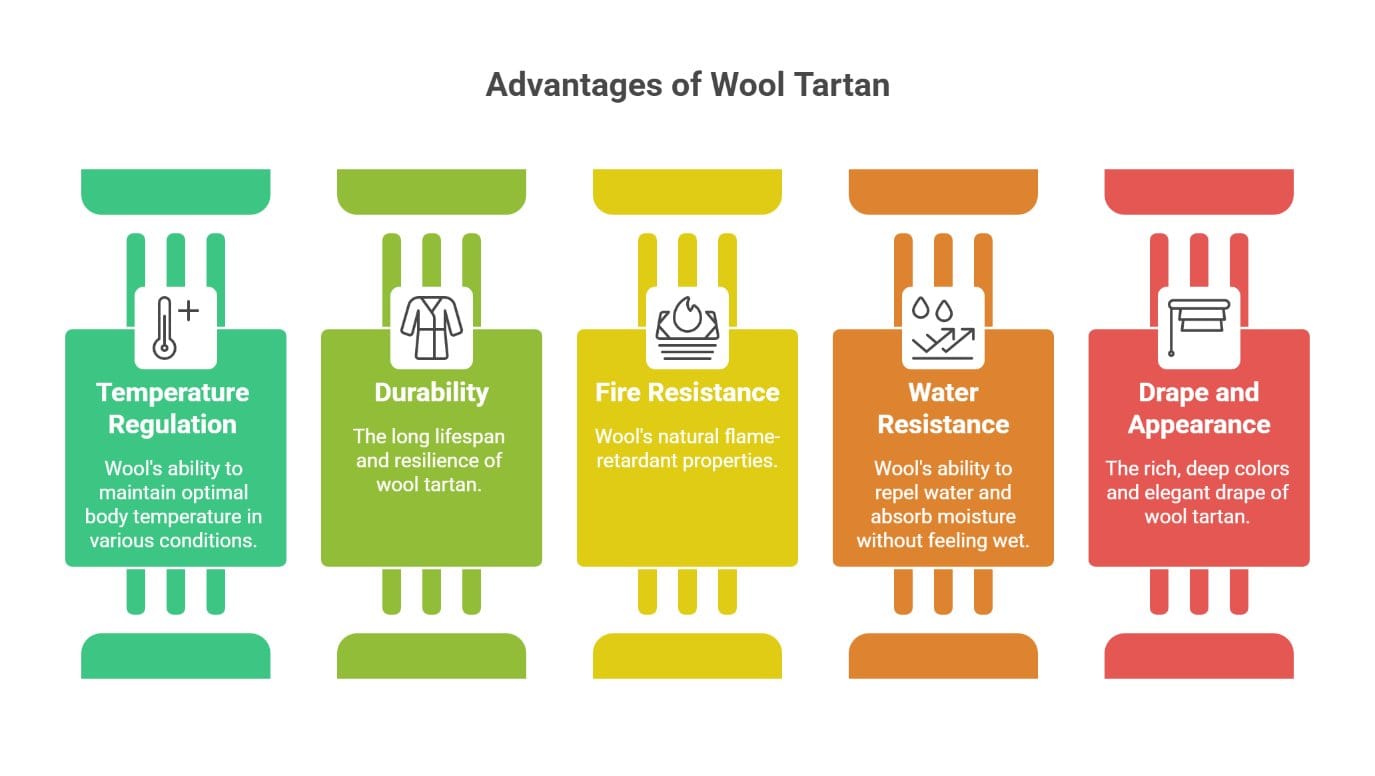
Advantages of wool tartan explained through a clear and colorful visual infographic
While modern tartans can be made from cotton, acrylic, or polyester, traditional wool tartan offers benefits that synthetic materials can’t match:
- Temperature regulation: Wool keeps you warm in cold weather but doesn’t overheat you. The fibers have tiny air pockets that trap heat while still allowing moisture to escape.
- Durability: Properly cared for wool tartan can last 20 to 30 years or more. The natural crimp in wool fibers makes them resistant to tearing and gives the fabric memory, so pleats hold their shape.
- Natural fire resistance: Wool is naturally flame-retardant and self-extinguishing, making it safer than synthetic alternatives for upholstery and clothing.
- Water resistance: Wool’s lanolin coating makes it naturally water-repellent. It can absorb up to 30% of its weight in moisture before feeling wet.
- Drape and appearance: Wool tartans have a rich, full appearance that synthetic versions struggle to replicate. The way light plays off the natural fibers gives depth to the colors.
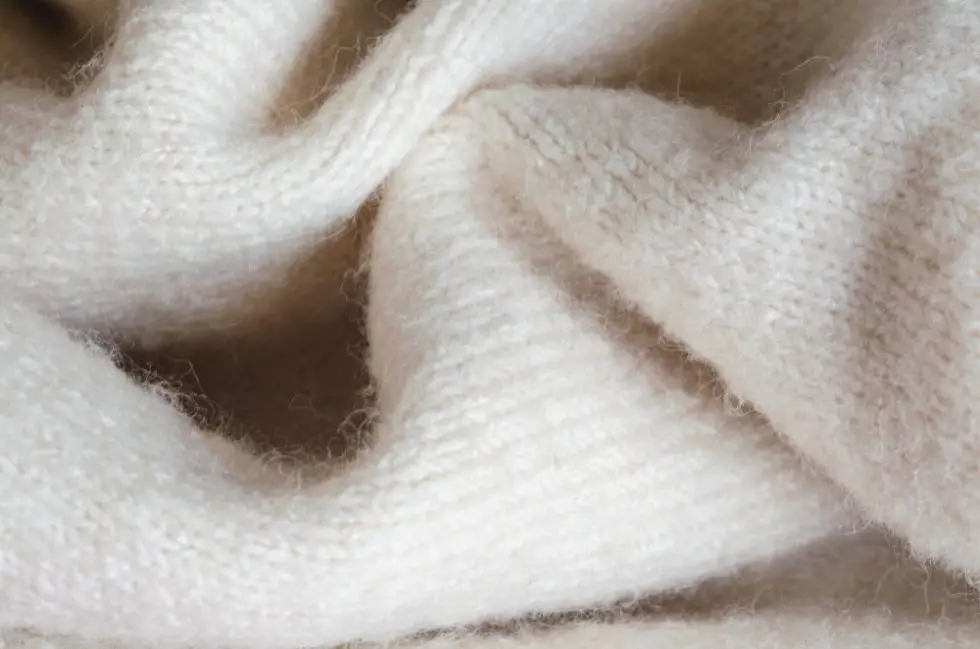
Modern tartan wool is typically made from either worsted or woolen yarn. Worsted wool uses combed fibers that lie parallel, creating a smooth, fine fabric with sharp color definition. This is what you’ll find in most kilts and formal wear today. Woolen wool uses carded fibers that are more jumbled, creating a softer, fuzzier texture. This style is closer to historical tartans and popular for blankets and rustic projects.
Quick Fact: The earliest known tartan in Scotland, called the Falkirk tartan, dates to the 3rd century AD. It was discovered in a pot of Roman coins near the Antonine Wall and shows that the tradition of checkered patterns in Scottish textiles goes back nearly 2,000 years.
The Rich History of Tartan
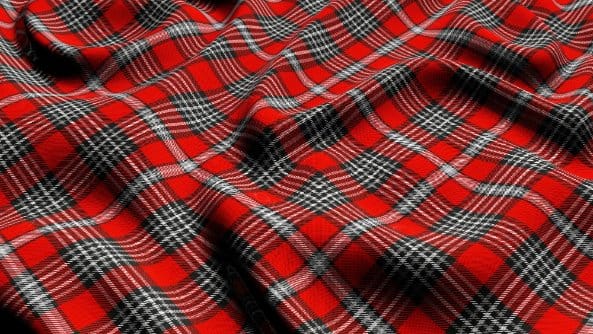
Traditional tartan fabric representing the rich history and heritage of Scottish textiles
Tartan’s story begins in the Scottish Highlands, where the pattern served both practical and social purposes. Early Highlanders wore what they called the “great kilt” or “belted plaid” (a large piece of tartan cloth about 5 yards long that wrapped around the waist and draped over the shoulder. It was clothing, blanket, and shelter all in one.
Originally, tartan patterns weren’t tied to specific clans. Instead, local weavers used whatever natural dyes they could find in their area. A weaver in the Highlands might use lichen for purple, bog myrtle for yellow, and heather for green. This meant that tartans from the same region naturally looked similar because everyone used the same local plants.
The Ban and Revival
After the Jacobite rising ended at the Battle of Culloden in 1746, the British government tried to suppress Highland culture. The Dress Act of 1746 banned wearing “Highland Dress,” which included kilts and tartan, for nearly 40 years. Only soldiers in Highland regiments could wear them. This attempt to erase Scottish identity backfired spectacularly.
When the ban was lifted in 1782, tartan became a powerful symbol of Scottish pride. The romanticizing of Scotland in the 19th century, particularly by Queen Victoria who loved all things Scottish, turned tartan into a fashion statement. This is when clan tartans as we know them today really took shape. Families and regions claimed specific patterns as their own.
Modern Tartan
Today, there are over 7,000 registered tartan designs. Beyond clan tartans, you’ll find tartans for regions, organizations, corporations, and causes. The Scottish Register of Tartans, maintained by the National Records of Scotland, keeps track of all official designs.
Fashion designers continue to reinterpret tartan. Vivienne Westwood famously used it in her punk designs in the 1970s. Luxury brands like Burberry have made their tartan patterns globally recognized. This fabric has managed to stay fresh and relevant across centuries, adapting to each new generation while maintaining its heritage.
Are tartans still banned in Scotland? No, the Dress Act was repealed in 1782. Today, tartan is celebrated as an important part of Scottish culture and worn with pride at weddings, graduations, and formal events.
Types of Tartan Wool Fabric
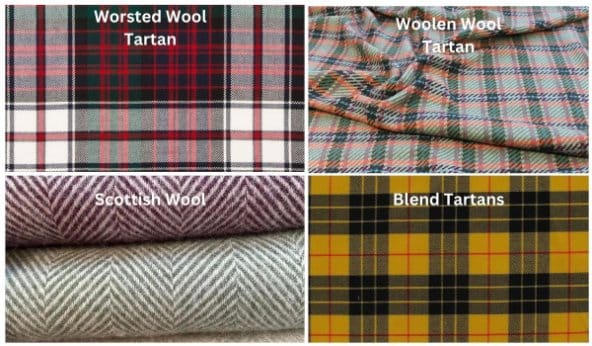
Comparison of various types of tartan wool fabrics with different textures and weaves
Not all tartan wool is created equal. Understanding the different types helps you pick the right fabric for your project and budget.
By Wool Type
Worsted Wool Tartan
This is the smooth, crisp tartan you see in most modern kilts and formal wear. The wool fibers are combed so they all lie in the same direction, then spun into fine yarn. The result is a lightweight, smooth fabric with excellent drape and sharp color definition. The pattern lines are clean and precise.
Worsted tartan is harder wearing than you might think despite feeling refined. The tight weave and parallel fibers create a strong, resilient fabric that resists pilling and keeps its shape. Most tartan fabrics from major Scottish mills today are worsted weight.
Woolen Wool Tartan
Woolen tartan has a softer, fuzzier surface. The fibers are carded rather than combed, leaving them more jumbled. This creates a fabric with more air pockets, making it warmer and lighter per yard. The colors can appear slightly muted because of the fuzzy surface.
This style is closer to historical tartans and popular for blankets, throws, and clothing meant for cold weather. If you’re going for an authentic, rustic look, woolen tartan is your choice.
Scottish Wool
Some mills now offer tartans made from 100% Scottish wool, typically from Cheviot sheep raised in the Borders region. These initiatives support local farmers and dramatically reduce the fabric’s carbon footprint. The wool travels less than 400 miles from shearing to finished cloth, compared to 15,000 miles when using New Zealand wool.
Scottish Cheviot wool is known for its durability and crisp handle. It’s slightly coarser than Merino but perfect for kilts and upholstery that need to withstand heavy use.
Blend Tartans
Modern mills also produce tartan blends:
- Wool-Cashmere: Adds softness and luxury feel, popular for scarves and lighter garments
- Wool-Silk: Creates a beautiful sheen and drape, often used in high-end fashion
- Wool-Polyester: More affordable and easier to care for, but lacks the character of pure wool
By Weight: Choosing the Right Fabric Weight
Fabric weight makes a huge difference in how your tartan performs. Scottish mills measure weight in ounces per yard. Here’s how to decide:
| Weight | Range | Best For | Properties |
|---|---|---|---|
| Lightweight | 8-11oz | Shirts, dresses, scarves, lined jackets, summer kilts, lightweight curtains | Breathable, drapes well, needs more frequent pressing of pleats |
| Medium Weight | 13-14oz | Most kilts, skirts, trousers, unlined jackets, cushions, lighter upholstery | Balanced warmth and drape, holds pleats well, all-purpose weight |
| Heavyweight | 16-18oz | Traditional kilts, pipe band uniforms, heavy upholstery, curtains, outdoor wear | Maximum durability, excellent pleat retention, impressive swing, heavier to wear |
Weight Selection Guide
Clothing → Consider wearability and climate
Home décor → Consider durability needs
Hot climate → Lightweight (8-11oz)
Mixed climate → Medium weight (13-14oz)
Cold climate or high use → Heavyweight (16oz+)
Daily wear → Medium weight for comfort
Occasional/formal → Heavyweight for impact
Decorative → Match to purpose
Heavier = more wool = higher cost
Medium weight offers best value for most uses
For kilts specifically, medium weight (13oz) strikes the best balance for most people. You get good warmth, excellent drape, and pleats that hold their shape without the garment being too heavy. In hot climates, 11oz works well. For pipe bands or those wanting maximum durability, 16oz is traditional.
For upholstery, always go heavier. A 13oz fabric is fine for cushions that get light use, but chairs and sofas need 16oz minimum to withstand the constant friction and pressure.
Special Finishes
Some tartan wool comes with special treatments:
- Hard tartan: Unwashed and stiff, this is how tartan comes straight off the loom. Some people prefer this for historical accuracy in reenactment clothing.
- Soft-finished: The standard today. The fabric is washed and pressed to make it softer and more comfortable.
- Raised/brushed: The surface is brushed to lift fibers, creating a softer, warmer fabric.
- Teflon-coated: Some upholstery-grade tartans can be treated to resist stains.
- Fire-retardant: Although wool is naturally fire-resistant, additional treatment can meet commercial fire safety standards.
Sustainability and Ethical Production
The tartan industry is changing how it operates, with sustainability becoming a real focus rather than just marketing talk. Several Scottish mills are leading efforts that make a genuine difference.
Why Wool is Inherently Sustainable
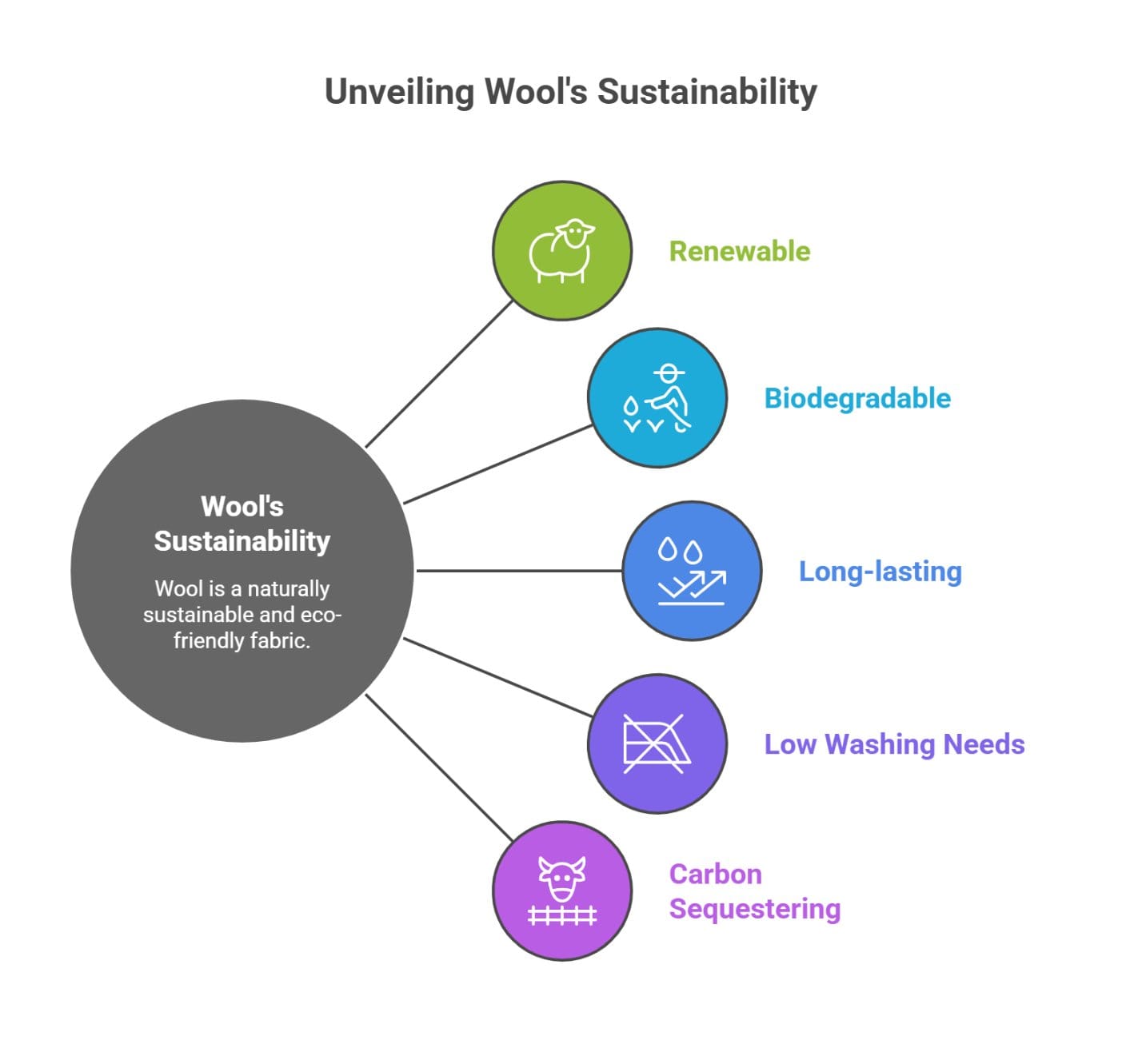
Visual infographic showing why wool is a naturally sustainable and eco friendly fabric
Before looking at modern improvements, it’s worth noting that wool itself is one of the most sustainable fabrics available:
- Renewable: Sheep grow new fleece every year
- Biodegradable: Wool breaks down naturally in soil within months to years, unlike synthetic fibers that persist for decades
- Long-lasting: A quality wool tartan garment can last 20 to 30 years with proper care
- Low washing needs: Wool’s natural antibacterial properties and dirt resistance mean it needs washing less often than cotton or synthetics
- Carbon sequestering: Sheep grazing can help maintain grasslands that capture carbon
According to The Woolmark Company, wool’s natural performance properties make it one of the most sustainable textile fibers available today.
The British Wool Revolution
For decades, most Scottish tartan mills used wool from New Zealand. The fiber quality was excellent and the price competitive, but it meant the wool traveled roughly 15,000 miles before reaching Scotland.
Lochcarron of Scotland, the world’s leading tartan manufacturer, recently changed this. Their 100% British Wool Strome kilt fabric uses 70-80% Scottish Cheviot wool and 20-30% Romney Marsh wool from England. The entire journey from sheep to finished cloth now covers less than 400 miles.
This change dramatically cuts the carbon footprint. More importantly, it supports British sheep farmers who had struggled to find markets for their wool. Scottish Cheviot wool had been undervalued for years, but it’s perfect for kilts – durable, takes dye beautifully, and has the right weight and handle.
Mill Innovations
Leading Scottish mills are investing in sustainability across their operations:
Lochcarron of Scotland installed 356 solar panels at their Selkirk mill, generating up to 45% of their power needs. They’ve also upgraded to more efficient looms that use smaller motors and consume less energy per meter of fabric woven. All their selvedge waste is now recycled or sold rather than discarded.
Prickly Thistle Scotland became the first tartan mill in Scotland to achieve B Corporation certification. This means they meet strict standards for social and environmental performance. They use traditional shuttle looms and a small-batch production model that avoids waste. Every piece of fabric they weave has a purpose before it’s made.
Mills are also improving water management. Dyeing wool requires significant water, but modern systems recycle and filter water through multiple stages. Some mills are working toward using rainwater and spring water rather than drawing from municipal supplies.
What You Can Do
When buying tartan wool, look for:
- 100% British or Scottish wool certifications
- Mills that are B Corp certified or can demonstrate sustainable practices
- Quality over quantity – one well-made piece that lasts 20 years beats five cheap pieces that last 4 years each
- Secondhand tartan garments, especially vintage kilts which were often made with outstanding quality
Investment Perspective: A quality wool and cashmere tartan kilt costs $400-$800 but will last 20+ years with proper care. That’s roughly $20-$40 per year. A fast-fashion tartan skirt might cost $50 but last 2 years at best, making it $25 per year with far worse environmental impact.
How to Identify Quality Tartan Wool
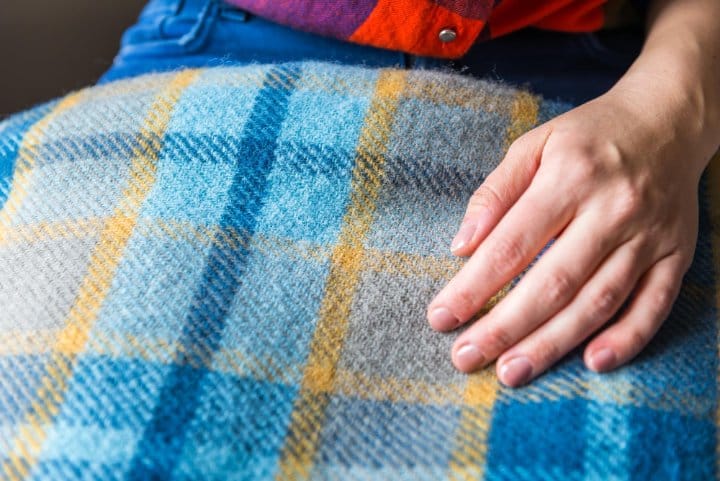
Close up view of quality tartan wool fabric showing softness, thickness, and fine weaving
Not all tartan is created equal. Here’s how to spot the good stuff and avoid disappointment:
Check the Weave
Hold the fabric up to light. Quality tartan wool has a tight, even weave with no gaps between threads. The lines of the pattern should be straight and crisp. If you see the pattern blurring or threads that aren’t aligned, it’s a sign of poor weaving.
Count the threads per inch if you can. Premium tartan typically has 40 or more threads per inch. Higher thread count means better durability and clearer pattern definition.
Woven vs Printed
This is the big one. Authentic tartan is woven – the pattern is created by interlacing different colored threads. Printed tartan has the pattern stamped onto plain fabric.
How to tell the difference:
- Look at the reverse side. Woven tartan looks the same on both sides (maybe slightly fuzzier on one side). Printed tartan has a clearly different back.
- Check where colors cross. In woven tartan, the overlapping threads create new shades naturally. Printed tartan often has flat, uniform color blocks.
- Pull a thread from the edge. If it’s all one color despite coming from a colored stripe, it’s printed.
Printed tartan isn’t always bad for every purpose (it’s fine for craft projects or temporary decorations), but it will never have the depth, durability, or appearance of woven tartan. Don’t pay woven prices for printed fabric.
Test the Wool Content
The label should state the fiber content. Be cautious of vague terms like “wool blend” without percentages. For traditional uses, look for:
- 100% Pure New Wool for kilts and formal wear
- 85%+ wool content minimum for quality results
- Specific wool types mentioned (Cheviot, Merino, Romney) suggests attention to quality
Color Fastness
Quality tartan uses dyes that won’t bleed or fade quickly. Ask if you can get a swatch to test. Dampen it and press between white paper towels. If color transfers, the dye job is poor.
Good tartan wool should be dyed before weaving (yarn-dyed), not after (piece-dyed). Yarn-dyed fabric has better color saturation and durability.
Trust the Source
Reputable Scottish mills have been perfecting their craft for generations:
- Lochcarron of Scotland: The world’s leading tartan manufacturer, operating since 1892
- DC Dalgliesh: Known for exceptionally durable fabrics that pass stringent durability tests
- House of Edgar: Over 1,000 tartans in stock, family-owned since 1946
- Prickly Thistle: Sustainable focus with B Corp certification
Buying from established mills costs more upfront but guarantees you’re getting authentic tartan that will perform as expected.
Official Registration
If you’re buying a clan tartan, you can verify it in the Scottish Register of Tartans. This official database maintained by the National Records of Scotland contains over 7,000 registered designs with their exact threadcounts. If a seller claims to offer a specific clan tartan but the pattern doesn’t match the registry, something is off.
Uses and Applications
Tartan wool’s versatility explains why it has remained popular for centuries. Here’s what you can make with it:
Traditional Kilts
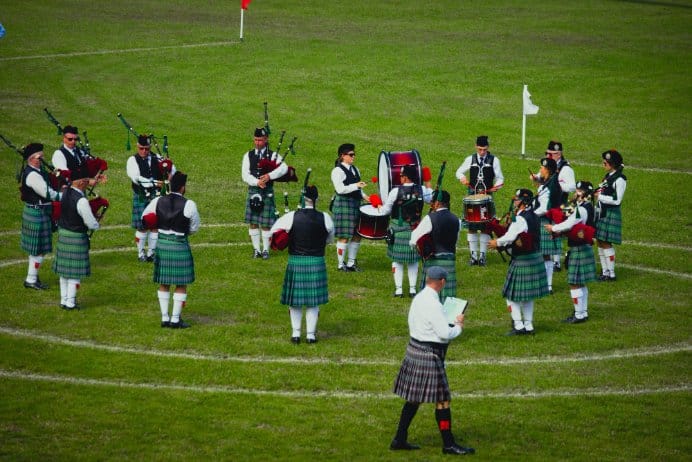
Traditional Scottish kilts made from tartan wool worn during cultural gathering
The kilt remains tartan’s most iconic use. A traditional kilt uses about 6 to 8 yards of fabric, pleated at the back and sides with a flat front apron. The pleats can be “pleated to stripe” (vertical lines) or “pleated to sett” (showing the full pattern repeat).
Why is wool tartan fabric suitable for a kilt? The fabric weight gives kilts their characteristic swing when walking. The natural drape of wool allows pleats to fall properly. And wool’s resilience means those pleats hold their shape even after sitting. A properly made wool kilt can last a lifetime.
Modern kilts have adapted the tradition. You’ll find casual kilts in lighter weights for everyday wear, utility kilts with pockets for practical use, and even mini-kilts for women.
Clothing and Fashion
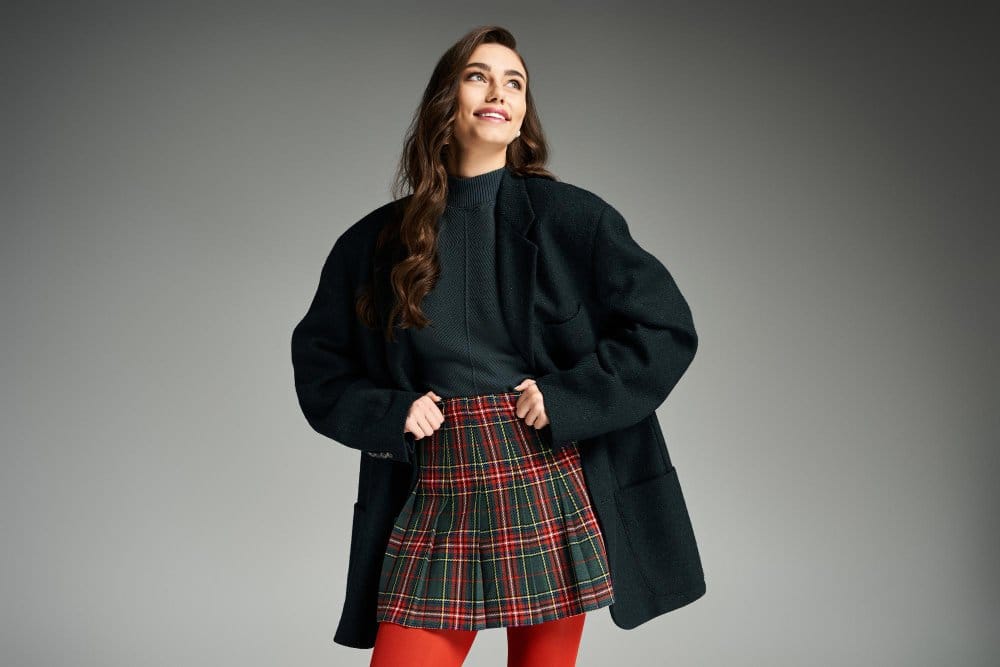
Modern fashion styling using tartan wool skirt for everyday and seasonal wear
Beyond kilts, tartan wool makes excellent:
- Skirts: From mini to maxi length, pleated or straight. Use 11-13oz weight for most styles.
- Trousers: Tartan pants work surprisingly well. Choose medium weight and a subtle color scheme for versatility.
- Jackets and blazers: A tartan blazer makes a statement. Pair with solid colors to let the pattern shine.
- Dresses: Lightweight tartan (8-11oz) drapes beautifully for dresses and jumpers.
- Scarves and shawls: The traditional “plaid” worn over the shoulder. Large squares of tartan make warm, stylish accessories.
Pattern matching is key when sewing tartan clothing. Plan your layout so the pattern lines up at seams, especially at center front and back. This takes extra fabric but creates a professional finish.
Home Décor and Upholstery
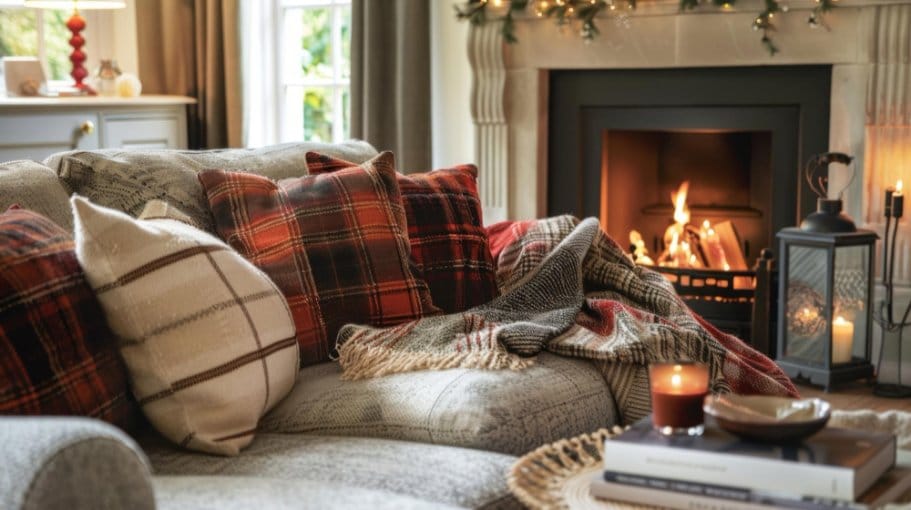
Tartan wool cushions and throws used in home décor for a warm and traditional look
Tartan wool brings warmth and character to interior spaces:
Upholstery
Heavyweight tartan (16oz+) works beautifully for furniture that gets regular use. The fabric’s durability withstands daily wear, and wool’s natural stain resistance is a bonus. Tartan works especially well for:
- Accent chairs in living rooms or studies
- Window seats and bench cushions
- Dining chair seats
- Sofa cushions and bolsters
For commercial settings or very heavy use, specify fabric that’s passed rub tests (look for 30,000+ rubs) and consider Teflon treatment.
Curtains and Drapes
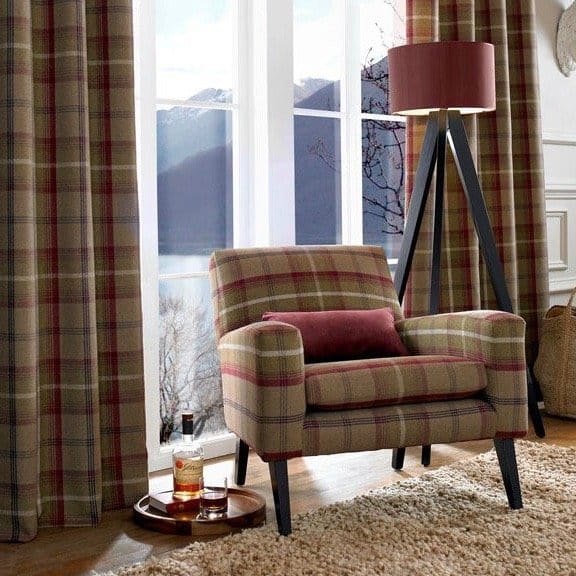
Tartan wool curtains and upholstery creating a coordinated and elegant home interior
Tartan makes stunning window treatments. The weight helps curtains hang properly without extra lining in most cases. Medium to heavyweight (13-16oz) works best. The natural insulating properties of wool help keep rooms warm in winter.
Cushions and Throws
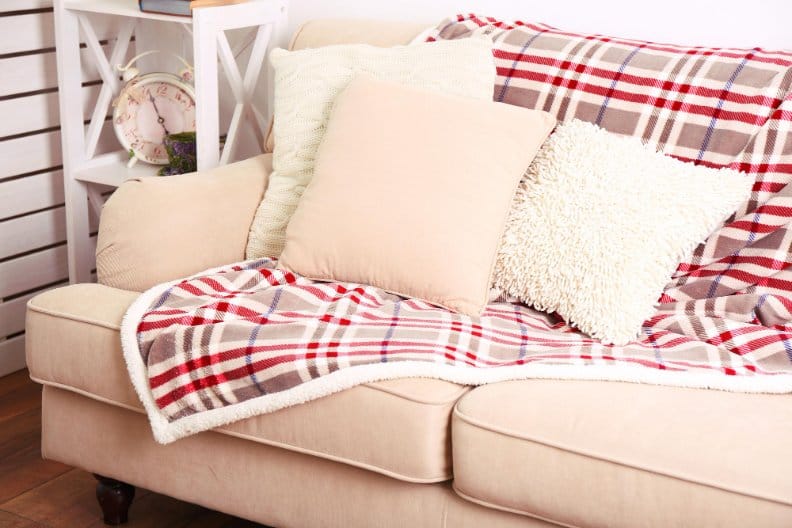
Tartan wool throw and cushions styled on a sofa for a warm and cozy home interior
Tartan cushions add color and pattern without overwhelming a space. Mix different tartans in similar color families for an eclectic look, or use one tartan in different weights (smooth for cushions, brushed for throws). Lightweight to medium weight (10-13oz) is ideal.
Table Linens
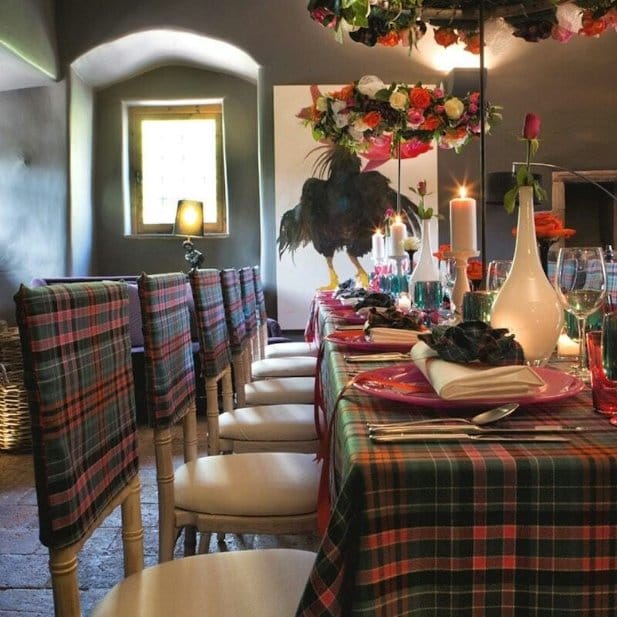
Tartan wool table linens styled for a festive and traditional dining setting
Tartan tablecloths and napkins create a warm, inviting table setting. Lightweight tartan (8-10oz) works best for table runners and napkins. Save this use for special occasions rather than everyday, as frequent washing wears the fabric faster.
Craft and Special Projects
Crafters find endless uses for tartan wool scraps and yardage:
- Quilting (combine with solid wools or flannels)
- Pet accessories (collars, coats, beds)
- Bags and totes
- Holiday decorations (stockings, tree skirts)
- Picture frames and decorative boxes
- Bookbinding covers
Complete Care and Maintenance Guide
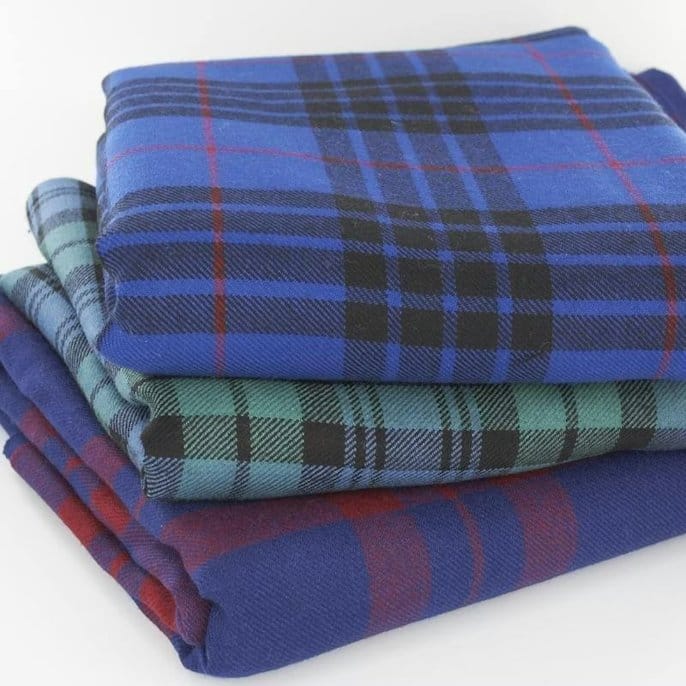
Close up of tartan wool fabric highlighting texture important for proper care and maintenance
Proper care makes the difference between tartan wool lasting 5 years or 25 years. The good news is that wool is easier to care for than most people think.

Daily Care and Prevention
The best care is preventive. After wearing your tartan garment:
- Hang it in fresh air for a few hours before storing. This lets moisture escape and odors dissipate.
- Use a garment brush to remove surface dust and lint. Brush in the direction of the weave.
- Spot clean any marks immediately while they’re fresh. A damp cloth or baby wipe works for most fresh spills.
- Store on proper hangers. Kilts need special kilt hangers with 4 clips to distribute weight evenly.
Wool’s natural properties mean it doesn’t need frequent washing. Unless visibly soiled or actually dirty, airing and brushing keeps tartan fresh.
When to Wash vs. Dry Clean
Check the care label first. Some tartan wool can be hand washed, while heavyweight or fully structured garments (like kilts with leather straps) should be dry cleaned.
General Rules:
- Dry clean: Kilts, lined garments, anything with leather components, heavyweight upholstery fabric
- Hand wash: Scarves, lightweight clothing, unlined garments, medium-weight accessories
- Never machine wash: Unless explicitly labeled as machine washable (rare)
How to Hand Wash Tartan Wool
If the care label allows hand washing, follow these steps:
- Fill a clean tub or sink with cold water. Not lukewarm, not cool – actually cold. Hot water will shrink wool.
- Add wool detergent. Use a product specifically designed for wool. Regular detergent can damage the fibers. Eucalan and Woolite are common brands.
- Submerge the tartan and gently swish. Don’t rub, wring, or twist. Let it soak for 10-15 minutes.
- Drain and rinse. Refill with cold water and gently agitate to rinse. You may need to rinse twice until the water runs clear.
- Remove excess water carefully. Press the fabric between your hands to squeeze out water. Don’t twist or wring. For larger items, lay flat on a towel, roll up the towel to absorb water, then unroll.
- Dry flat. Reshape to original dimensions and lay flat on a dry towel away from direct heat or sunlight. For kilts, you can hang from a kilt hanger once most water is removed, but support the weight to prevent stretching.
Drying takes 24-48 hours depending on fabric weight and humidity. Be patient. Don’t rush it with heat.
Dry Cleaning
Not all dry cleaners understand tartan wool. When choosing a cleaner:
- Ask if they have experience with kilts and tartan wool
- Specify that pleats must be carefully handled
- Request gentle cleaning without harsh solvents
- Make sure they know leather straps (if present) need protection
Good dry cleaners will press pleats individually rather than running the whole garment through a press.
Pressing and Ironing
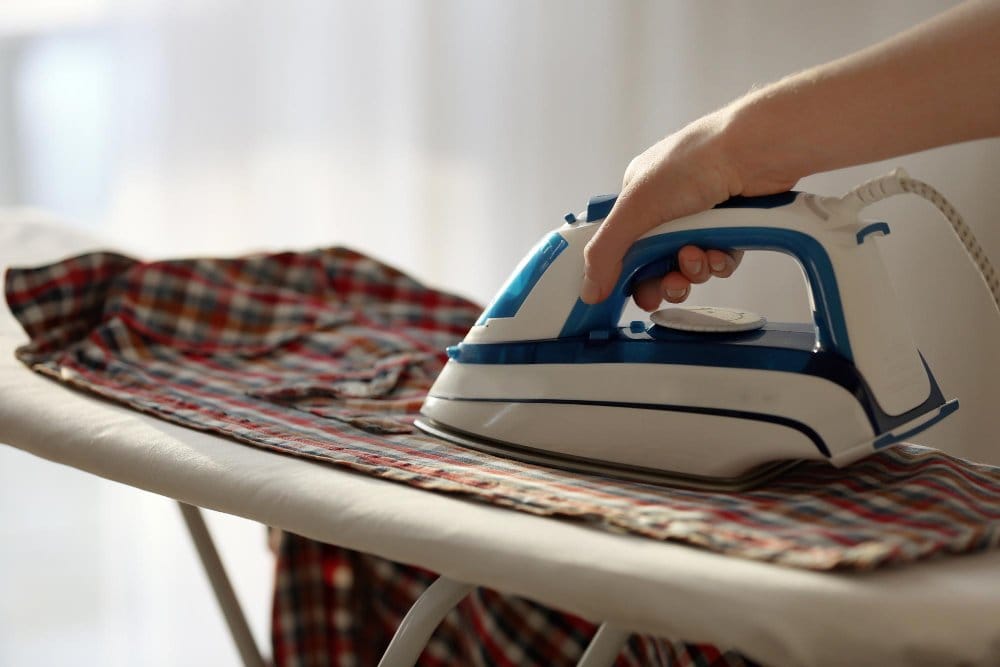
Proper ironing technique for tartan wool fabric to maintain shape and texture
There’s a difference between ironing (sliding back and forth) and pressing (lifting and placing). For tartan wool, you press, not iron.
Equipment needed:
- Steam iron with temperature control
- Pressing cloth (clean cotton sheet or pillowcase)
- Flat surface (ironing board or table)
Steps:
- Set iron to wool/medium heat with steam
- Place pressing cloth over the tartan
- Lower iron onto fabric and hold for 5-10 seconds
- Lift iron and move to next section
- For kilts, press each pleat individually working from inside out
Never press directly on wool without a pressing cloth. The direct heat can cause shine marks that are hard to remove.
Stain Removal
Act fast when spills happen. Here’s what to do for common stains:
| Stain Type | Treatment | What NOT to Do |
|---|---|---|
| Water-based (coffee, juice, wine) | Blot immediately with clean cloth. Dab with cold water. If stubborn, use diluted wool wash. | Don’t rub. Don’t use hot water. |
| Oil-based (butter, salad dressing) | Sprinkle with cornstarch or talc to absorb. Let sit 30 min, brush off. Spot treat with wool wash if needed. | Don’t apply water first – it sets oil stains. |
| Mud | Let dry completely, brush off. If mark remains, dab with cold water. | Don’t touch while wet – you’ll push it deeper. |
| Ink | Blot with rubbing alcohol on cotton swab. Work from outside in. | Don’t let it sit – treat immediately. |
For serious stains on valuable pieces, skip home treatment and go straight to a professional cleaner who specializes in wool.
Storage
Proper storage prevents moth damage and keeps tartan wool in good condition between uses:
- Clean before storing: Moths are attracted to body oils and food particles. Never store dirty tartan.
- Use breathable storage: Cotton garment bags or linen sheets are ideal. Avoid plastic bags which trap moisture and can cause mildew.
- Add moth deterrents: Cedar blocks, lavender sachets, or cedar rings naturally repel moths. Replace them yearly as the scent fades.
- Choose the right location: Cool, dry, dark places are best. Avoid attics (too hot and humid) and basements (too damp).
- Check periodically: Every few months, take tartan items out, air them, and check for signs of damage.
Moths are the enemy of wool. The larvae (not adult moths) eat the fibers, leaving holes. Prevention is much easier than dealing with an infestation.
Tartan Wool vs Other Fabrics
Understanding how tartan wool compares to alternatives helps you make informed choices:
Tartan Wool vs Cotton Tartan
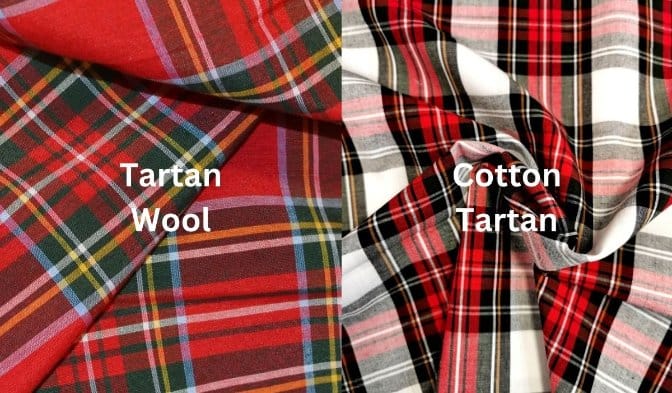
Tartan wool and cotton tartan fabrics compared for texture and appearance
Cotton tartan has become popular for casual clothing, especially in warm climates:
| Feature | Wool Tartan | Cotton Tartan |
|---|---|---|
| Warmth | Excellent insulation | Cooler, more breathable |
| Durability | 20-30+ years with care | 10-15 years |
| Care | Dry clean or careful hand wash | Machine washable |
| Cost | $50-150+ per yard | $15-40 per yard |
| Best Use | Kilts, formal wear, upholstery | Summer clothing, casual items |
Cotton tartan makes sense for children’s clothing (easier to wash frequently), summer garments, and casual pieces that get heavy use. But for traditional applications and longevity, wool is superior.
Tartan Wool vs Acrylic Tartan
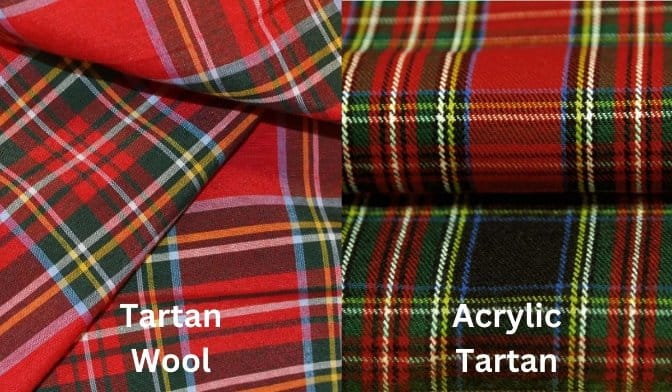
Visual comparison showing differences between tartan wool and acrylic tartan fabrics
Acrylic tartan is the budget option. At $10-20 per yard, it’s tempting, but you get what you pay for:
Acrylic pros: Affordable, machine washable, color-fast, resists moths and mildew
Acrylic cons: Poor drape, pills easily, shiny appearance, not fire-resistant, uncomfortable in heat, short lifespan (3-5 years)
Acrylic works fine for craft projects, temporary decorations, costumes, or children’s dress-up clothes that will be outgrown quickly. But for anything you want to keep or wear regularly, choose wool.
Tartan Wool vs Polyviscose
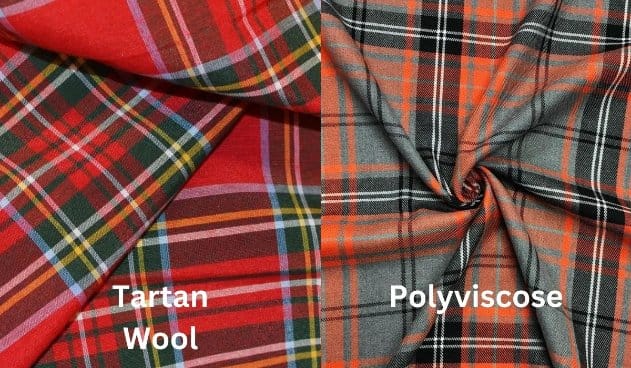
Close up comparison of tartan wool and polyviscose tartan fabrics
Polyviscose is a wool-polyester or wool-viscose blend that offers a middle ground. You’ll find it used for some kilts and household items:
- More affordable than pure wool ($25-40 per yard)
- Easier to care for – some can be machine washed
- More resistant to wrinkles
- Lighter weight for the same warmth
However, polyviscose lacks wool’s natural fire resistance, doesn’t age as gracefully, and the synthetic component isn’t biodegradable. It’s a practical choice for everyday items but not appropriate for traditional or formal use.
Wool Tartan vs Harris Tweed
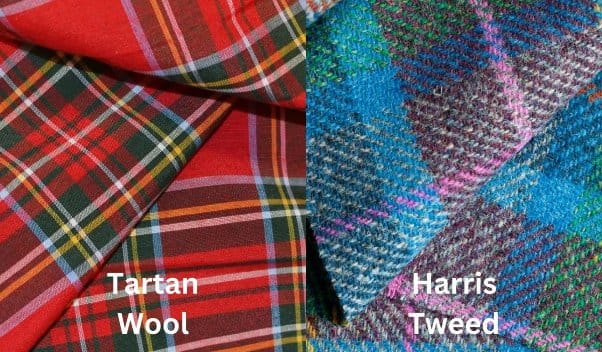
Comparison between tartan wool and Harris Tweed showing differences in weave and appearance
Both are traditional Scottish fabrics, but they serve different purposes. Harris Tweed must be handwoven in the Outer Hebrides by law. It has a rough, textured surface with visible flecks of color throughout.
Harris Tweed is perfect for outdoor clothing like hunting jackets or caps because of its weather-resistant properties. Tartan wool is smoother and more formal. You can get Harris Tweed woven in tartan patterns, combining both traditions.
How to Choose the Perfect Tartan Wool
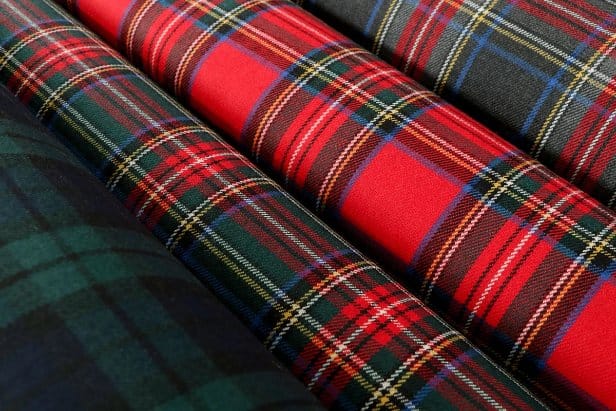
Classic tartan wool fabrics in traditional colors, ideal for choosing the perfect tartan for clothing or home projects
With thousands of tartans available in multiple weights and qualities, the selection process can feel overwhelming. Here’s a systematic approach:
Step 1: Define Your Purpose
Be specific about what you’re making and how it will be used. “I want to make something with tartan” is too vague. “I need fabric for a casual kilt to wear to weddings in summer” gives you clear parameters.
Step 2: Choose Your Pattern
Can anyone wear any tartan?
Yes, mostly. Here’s how it works:
- Clan tartans: If you have Scottish heritage, wearing your family’s clan tartan is traditional. But even without direct lineage, wearing a clan tartan isn’t offensive – it’s seen as showing appreciation for Scottish culture.
- Universal tartans: Many tartans are designated as “universal,” meaning anyone can wear them. Examples include Black Watch, Royal Stewart, Caledonia, and Scottish National.
- District tartans: Tartans representing regions rather than clans. Anyone with a connection to that region can wear them.
- Fashion tartans: Modern designs created for style rather than heritage. No restrictions at all.
What are the rules for wearing tartan? There are no hard rules today. The Royal Stewart tartan was once reserved for the Royal Family, but this restriction isn’t enforced anymore. Military regiment tartans technically remain restricted to those who served, though this is more tradition than law.
Can non-Scots wear tartan? Absolutely. Tartan has become an international symbol. Irish, Welsh, Canadian, and American tartans exist. Many countries and organizations have commissioned their own tartans. Wearing tartan shows appreciation for the tradition.
Step 3: Select Your Weight
Refer back to the weight guide earlier in this article. Match the weight to your project and climate. When in doubt, medium weight (13oz) is the safest choice.
Step 4: Consider Color Palette
Most tartans come in several color variations:
- Modern: Bright, saturated colors created with synthetic dyes. These are the versions most people picture.
- Ancient: Softer, muted tones that replicate colors achieved with natural dyes. More subtle and easier to combine with other colors.
- Weathered: Faded appearance as if exposed to sun and rain for years. Very popular for a vintage look.
- Muted: Somewhere between modern and ancient – clear colors but not overly bright.
Modern colors make bold statements. Ancient and weathered tartans are easier to wear and more versatile.
Step 5: Think About Your Climate
Wool works in all climates because of its temperature-regulating properties, but weight matters. Hot climates call for lightweight (8-11oz). Cold climates can handle heavyweight (16oz+). Mixed climates do best with medium weight.
Step 6: Set Your Budget
Why is tartan fabric so expensive? Several factors affect cost:
- Fiber quality: Pure wool costs more than blends
- Weaving complexity: More colors in the pattern means more complexity
- Weight: Heavier fabric uses more wool
- Origin: Scottish-made costs more than imported
- Production scale: Custom weaving costs significantly more than stock patterns
Expect to pay $40-80 per yard for quality stock tartan from Scottish mills. Custom weaving starts around $200 for a small run. For reference, a man’s kilt needs 6-8 yards, so the fabric alone costs $240-640 before tailoring.
Step 7: Order Swatches First
This is the most important step. Photos online never show true colors accurately. Monitors and printing processes vary too much. Always order swatches before buying yardage.
Good suppliers offer swatches for $2-5 each. You can see the actual color, feel the weight and texture, and test how the fabric drapes. This small investment prevents expensive mistakes.
Can you have your own tartan made?
Yes. Custom tartan weaving is available, though with minimums. Typical requirements:
- Minimum order: 10-25 meters (roughly 10-27 yards)
- Design approval process with the mill
- Optional registration in the Scottish Register of Tartans
- Production time: 8-16 weeks
- Cost: $150-300+ per yard depending on complexity
Many families, businesses, and organizations create custom tartans for special events, anniversaries, or as a lasting legacy.
Buying Guide
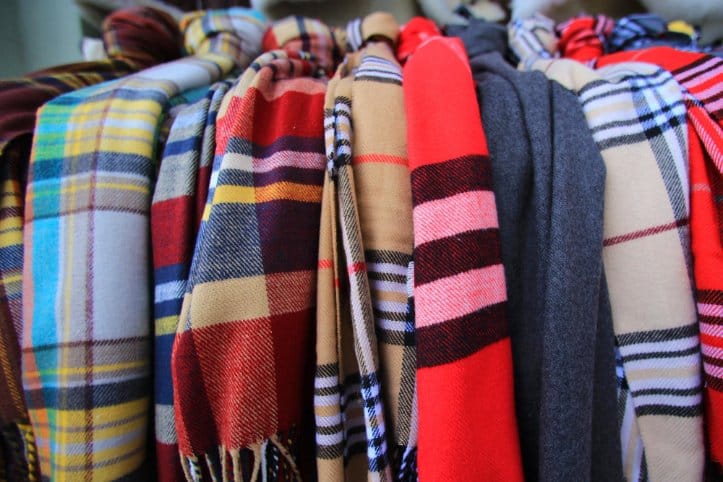
Folded tartan wool fabrics in multiple colors, perfect for understanding buying options
Where to Buy Authentic Tartan Wool
Direct from Scottish Mills:
- Lochcarron of Scotland (lochcarron.com) – The largest selection
- House of Edgar (houseofedgar.com) – Over 1,000 stocked tartans
- DC Dalgliesh (dcdalgliesh.co.uk) – Premium quality, especially durable
Specialty Retailers:
- ScotlandShop – Wide range of weights and patterns
- USA Kilts – Good for North American buyers
- Kinloch Anderson – Traditional Edinburgh supplier
Fabric Stores: Some specialty fabric stores stock tartan, but selection is usually limited to a few popular patterns. Online offers far more choice.
Understanding Product Descriptions
When shopping online, look for these details:
- Fiber content: Should state exact percentages
- Weight: Given in oz per yard or GSM (grams per square meter)
- Width: Single width (about 32″) or double width (54-60″). Double width is standard.
- Weave type: Twill, herringbone, plain weave
- Color designation: Modern, Ancient, Weathered, or Muted
- Tartan name and number: Each registered tartan has an ID number
Single vs Double Width
Most tartan today is woven on double-width looms (54-60″ wide). Some traditional tartans still come in single width (about 32″).
If you order single-width fabric, you typically receive double the length at the same price. For example, order 4 yards of single-width tartan and you’ll get 8 yards. This is because the mill weaves it at double length then cuts it down the middle.
Single width can be trickier for garment sewing but works great for scarves, narrow projects, or authentic historical reproductions.
Minimum Orders and Cutting
Stock tartans usually have no minimum order. You can buy from 0.5 yards up to whatever you need. Some mills charge a cutting fee for small orders (under 2 yards).
Custom weaving has minimums as mentioned earlier. Custom color matching or special finishes may also require minimum quantities.
Shipping Considerations
Fabric from Scotland to other countries typically ships via international mail or courier. Expect:
- Delivery time: 1-3 weeks depending on location and shipping method
- Customs duties: May apply depending on value and destination country
- Proper packaging: Good suppliers roll fabric on tubes to prevent creasing
Working with Tartan Wool
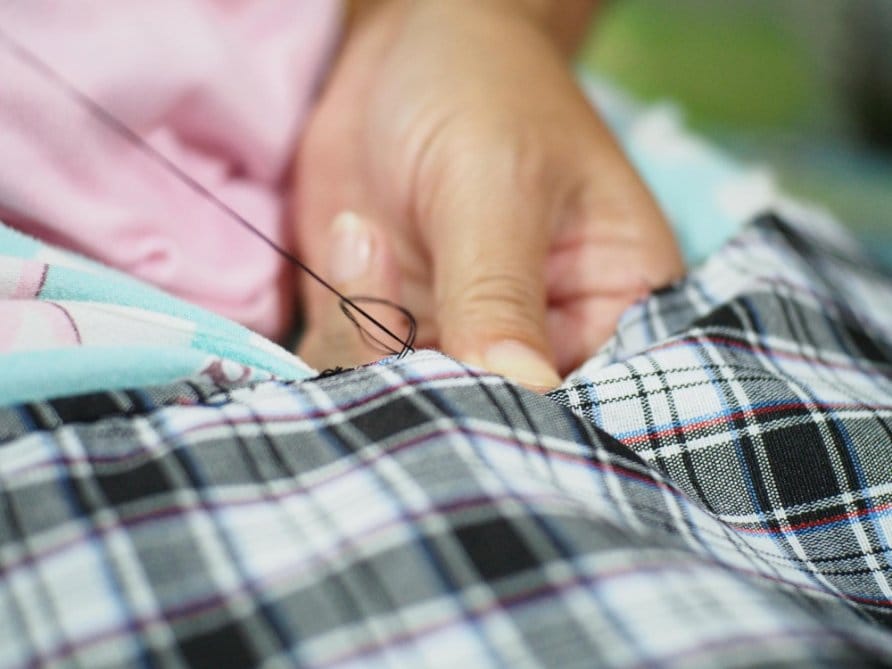
Working with tartan wool fabric during sewing and garment making
Sewing tartan requires a few special considerations, but it’s not as difficult as people think:
Pattern Matching
This is the trickiest part. The pattern should line up at major seams – center front, center back, side seams, and shoulder seams for garments. For home décor, match patterns at cushion edges and pillow seams.
Tips for matching:
- Buy 15-20% extra fabric to allow for matching
- Lay out all pattern pieces before cutting to plan matching
- Mark matchpoints on pattern pieces
- Cut pattern pieces on the grain, aligning with pattern lines
- Pin carefully before sewing, matching lines exactly
For beginners, choose tartans with smaller pattern repeats – they’re easier to match. Large, dramatic tartans require more expertise.
Cutting
Sharp fabric scissors are essential. Tartan wool dulls scissors faster than lighter fabrics. Consider rotary cutters and cutting mats for larger projects.
Always cut tartan on a single layer rather than folding for cutting. This lets you see the pattern and ensures accuracy. Use pattern weights instead of pins which can shift the fabric.
Needles and Thread
Use size 14/90 or 16/100 needles for medium to heavyweight tartan. Sharp needles work better than ballpoint for the tight weave.
Thread should match the dominant color or use a neutral gray that blends with the overall fabric tone. Polyester thread is fine for wool – stronger than cotton and won’t shrink differently than the fabric.
Seam Finishes
Tartan wool frays at cut edges, though less than some fabrics. Finish seams to prevent unraveling:
- Serging/overlocking is fastest and most effective
- Zigzag stitch works if you don’t have a serger
- French seams create a clean finish but add bulk
- Bias binding is nice for special garments
Pressing as You Sew
Press each seam after sewing, before crossing it with another seam. This creates professional results. Use a pressing cloth to protect the fabric surface. Steam helps set wool fibers in place.
Frequently Asked Questions
In North America, tartan is commonly called “plaid,” though in Scotland, a plaid traditionally refers to the garment worn over the shoulder or a plain blanket. Some people also call tartan “clan fabric” or “checked wool,” though these aren’t standard terms. The fabric itself is properly called tartan regardless of where you are.
Scottish wool generally refers to wool from sheep raised in Scotland, particularly Cheviot sheep from the Borders region. Shetland wool (from Shetland Islands) and Harris wool (from the Outer Hebrides) are specific types known for their quality. When people talk about traditional Scottish fabric, they might mean tartan, tweed, or Harris Tweed – all made from Scottish wool.
Most tartan wool should not be machine washed. The agitation and temperature changes cause shrinkage and distortion. Hand washing in cold water is safe for some lightweight items if the care label allows it. Always check the specific care instructions. For kilts, structured garments, or heavyweight tartan, dry cleaning is safest.
Traditional Scottish tartans are made from wool, woven in a twill pattern. Modern tartans can also be made from cotton, silk, polyester, or blends, but wool remains the authentic choice. The best Scottish tartans today use British wool, particularly from Cheviot sheep, woven by mills in Scotland using traditional methods.
Black Watch (also called Government Tartan) and Royal Stewart are consistently the most recognized and widely worn tartans. Black Watch, with its dark blue and green pattern, was originally worn by Highland regiments. Royal Stewart, featuring bold red with green and blue stripes, is technically the personal tartan of Queen Elizabeth II but is now considered universal. Both work well for people without Scottish family connections.
Tartans are originally Scottish, dating back to at least the 3rd century AD in Scotland. However, Ireland has adopted the tradition, especially in the last century. Many Irish families and counties now have their own registered tartans. While tartan originated in Scotland and is most closely associated with Scottish culture, both Scottish and Irish communities proudly use tartans to represent their heritage today.
The best wool for kilts is pure new wool in a medium to heavyweight worsted weave. Scottish Cheviot wool is traditional and offers excellent durability. Look for 13-16oz weight depending on your preference – 13oz for comfort and everyday wear, 16oz for formal occasions and maximum pleat retention. The wool should be woven in a tight twill that creates sharp, clear pattern lines.
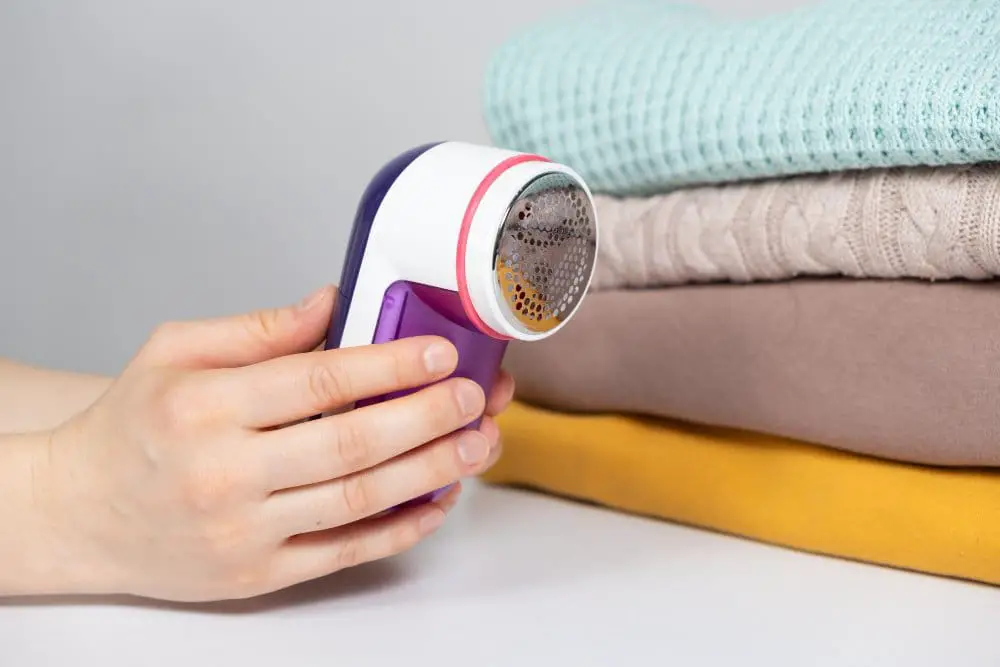
Quality wool tartan resists pilling better than many fabrics because it’s made from long, combed fibers tightly woven. Some pilling may occur with wear, especially under arms or on areas that get friction. This is normal and can be removed with a fabric shaver or sweater stone. Cheap acrylic “tartan” pills heavily and quickly. Pure wool tartans from reputable mills have minimal pilling issues.
Before the modern kilt (developed in the 18th century), Highland Scots wore the “great kilt” or “belted plaid” (féileadh mòr in Gaelic). This was a large piece of tartan cloth about 5 yards long that wrapped around the waist and draped over the shoulder. It served as both clothing and blanket. The lower part formed a kilt-like skirt while the upper part could be arranged as a cloak.
You’re likely thinking of Harris Tweed, which must be handwoven in the Outer Hebrides of Scotland. It’s made from pure virgin wool that’s dyed before spinning, then woven on traditional looms in the weavers’ homes. Harris Tweed has a rough, textured surface with visible flecks of color throughout. It can be woven in various patterns, including tartan designs, but its characteristic feature is the coarse, sturdy weave.
Tartans can be categorized several ways: By association (clan, district, universal, regimental, corporate), by color palette (modern, ancient, weathered, muted), by weight (lightweight 8-11oz, medium 13-14oz, heavyweight 16oz+), by wool type (worsted, woolen, Scottish Cheviot, Merino), or by fiber content (pure wool, wool-cashmere, wool-silk, cotton tartan, acrylic). Each type serves different purposes and has distinct characteristics.
Each tartan pattern is defined by a “threadcount” – a specific sequence of colored threads that repeats to create the pattern. When registering a tartan, you record this threadcount along with the color codes. The pattern must be symmetrical, mirroring around a central “pivot point.” Beyond that, there are no strict rules. Designers are free to create new patterns, combining colors and stripe widths as they wish. Over 7,000 tartans are currently registered.
Conclusion
Tartan wool fabric represents one of the most enduring textile traditions in human history. From its origins as practical Highland dress to its current status as a global fashion icon, tartan has proven its staying power by combining beauty with functionality.
What makes tartan special isn’t just the distinctive checked pattern or the cultural heritage behind it. It’s the practical benefits that come with choosing quality wool fabric. When you invest in authentic tartan wool, you’re getting a material that will keep you warm in cold weather, regulate temperature in changing conditions, resist dirt and odors naturally, hold its shape through years of wear, and eventually biodegrade without harming the environment.
The tartan industry is also moving in positive directions. Mills across Scotland are reducing their carbon footprint by using British wool instead of importing from the other side of the world. They’re installing solar panels, recycling water, and achieving B Corp certifications. When you buy from these producers, you’re supporting both traditional craftsmanship and modern sustainability efforts.
Key Takeaways
On Quality: Always choose woven over printed tartan. Look for pure wool or high wool content (85%+) from reputable Scottish mills. Don’t be fooled by cheap imitations – the difference in longevity and appearance is dramatic.
On Weight: Match the fabric weight to your project. Lightweight (8-11oz) for summer clothing and scarves, medium weight (13-14oz) for most kilts and everyday items, heavyweight (16oz+) for formal kilts and upholstery. When in doubt, medium weight is the safest bet.
On Care: Treat tartan wool with respect and it will last decades. Air and brush regularly, spot clean immediately, and only wash when truly necessary. Use cold water, wool-specific detergent, and gentle handling. Press with a pressing cloth to refresh pleats and remove wrinkles.
On Sustainability: Choose 100% British or Scottish wool when possible. Support mills with transparent sustainability practices. Buy quality over quantity – one well-made piece that lasts 25 years is far better for the environment than five cheap pieces that last 5 years each.
On Authenticity: You don’t need Scottish ancestry to wear tartan, but if you want to connect with heritage, research your family background and find your clan tartan. If you have no Scottish connection, choose from the many universal tartans or modern designs. The Scottish tartan community welcomes appreciation of their tradition.
Moving Forward
Whether you’re making your first kilt, upholstering a chair, sewing a skirt, or wrapping yourself in a tartan scarf, you’re participating in a tradition that spans centuries. Take time to choose the right fabric for your needs. Order swatches before committing to yardage. Learn proper care techniques. And most importantly, enjoy the process.
Tartan wool fabric offers something rare in modern life: a direct connection to history that’s still completely relevant today. The same patterns worn by Highland chiefs 300 years ago appear on contemporary fashion runways. The same mills that supplied Victorian gentlemen now use solar power and sustainable practices. This beautiful intersection of tradition and innovation is what makes tartan wool fabric truly timeless.
You now have the knowledge to make confident choices about tartan wool. Use this information to find fabric that serves your needs, fits your budget, and brings you joy every time you see or wear it. Whether your tartan tells a family story or simply appeals to your sense of style, treat it well and it will serve you for years to come.