
Everything You Need to Know About Silk Satin from History to Care Instructions
Table of Contents
- What is Silk Satin Fabric?
- A Journey Through Time: The History of Silk Satin
- How Silk Satin is Made
- Types of Silk Satin and Fabric Comparisons
- Properties and Characteristics
- Benefits of Silk Satin
- Sustainability: The Full Picture
- Complete Care Guide for Silk Satin
- Common Uses and Applications
- Buying Guide: What to Look For
- How to Tell Real Silk Satin
- Frequently Asked Questions
- Conclusion
What is Silk Satin Fabric?
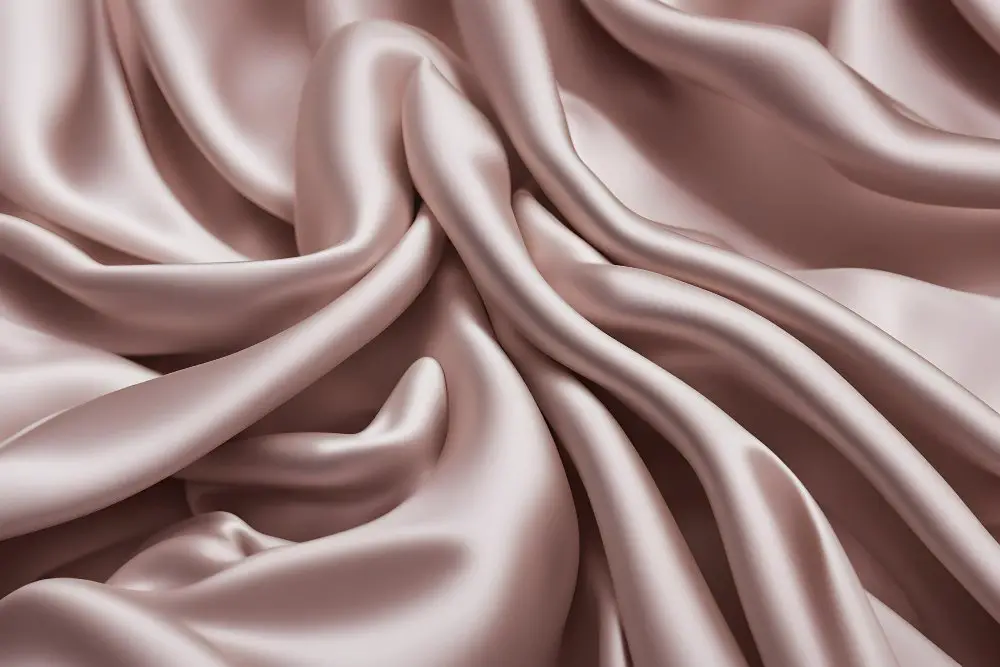
Let’s clear up one of the biggest confusions in the fabric world right away: silk satin is not the same as regular satin, and understanding this difference will save you from buying the wrong fabric.
Silk satin is a silk fabric woven using a specific technique called a satin weave. Here’s what makes it special:
- Silk refers to the natural protein fiber produced by silkworms
- Satin refers to the weaving technique, not the material itself
- Silk satin combines both: silk fibers woven in a satin weave pattern
The Key Difference
Most fabrics labeled just “satin” today are made from polyester or other synthetic fibers using the satin weave. True silk satin must be made from 100% silk fibers. This is like comparing real leather to faux leather – they might look similar at first glance, but the quality, feel, and benefits are completely different.
What is 100% Pure Silk Satin?
When you see “100% pure silk satin,” this means the fabric is made entirely from natural silk fibers (usually from mulberry silkworms) and woven using the satin weave technique. There are no synthetic fibers or blends involved.
The satin weave creates silk satin’s signature characteristics:
- One side has a glossy, reflective surface
- The other side has a matte, dull finish
- The fabric drapes beautifully and feels smooth against skin
- It has a luxurious weight and flow
How the Satin Weave Works
In a satin weave, the warp yarns (vertical threads) “float” over multiple weft yarns (horizontal threads) before going under one. This creates long, smooth surfaces where light reflects evenly instead of scattering. That’s why satin-woven fabrics have such a beautiful shine.
Common satin weave patterns include:
- 4-harness satin (4HS): Warp goes over 3, under 1
- 5-harness satin (5HS): Warp goes over 4, under 1
- 8-harness satin (8HS): Warp goes over 7, under 1 – the most flexible
A Journey Through Time: The History of Silk Satin
Silk satin has a history as rich as the fabric itself. Let’s walk through the major moments that shaped this material.
Legend says Empress Leizu of China discovered silk when a cocoon fell into her tea. While historians debate this story, we know silk production began in Neolithic China during the Yangshao culture around 4000 BCE.
The satin weave technique was invented in China, specifically in the port city of Quanzhou (known as Zayton to Europeans). The word “satin” actually comes from the Arabic “Zaitun,” which referred to this Chinese port city.
Silk satin reached Europe through trade routes. As an imported luxury, only royalty and upper classes could afford it. The fabric was so expensive that wearing silk indicated your social status.
King Louis XIV of France used satin fabrics to upholster furniture in the Palace of Versailles, establishing satin as the ultimate symbol of luxury in European courts.
Queen Victoria wore a white satin wedding dress when she married Prince Albert, forever linking satin with bridal fashion.
Silk satin remains a luxury fabric, though synthetic satins have made the look more accessible. Real silk satin is still prized for its natural benefits and unmatched quality.
For over 1,000 years, China guarded the secrets of silk production. Anyone caught smuggling silkworms or revealing production methods faced death. This monopoly finally broke in 550 CE when two monks smuggled silkworm eggs to the Byzantine Empire hidden in bamboo walking sticks.
How Silk Satin is Made: From Cocoon to Fabric
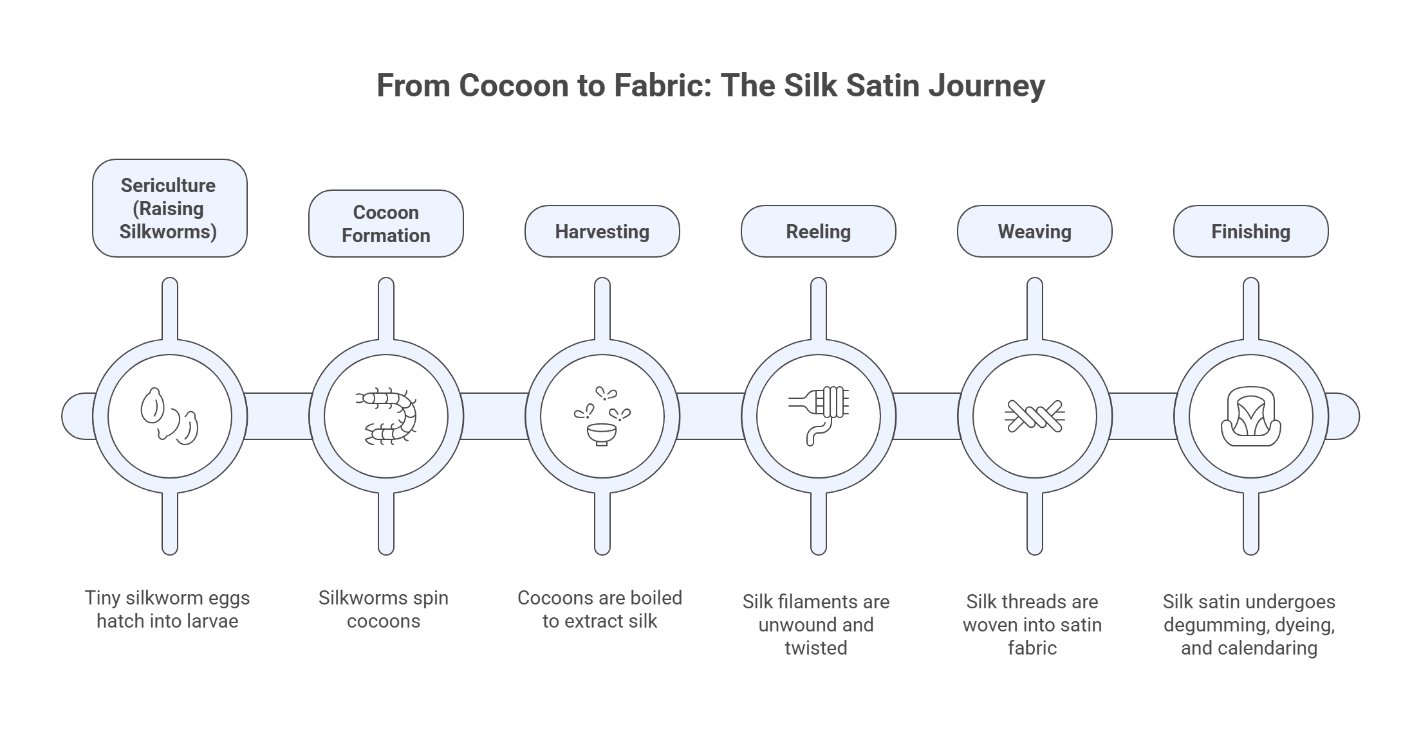
Understanding how silk satin is produced helps you appreciate why it costs more than synthetic alternatives. The process is labor-intensive and requires specific skills passed down through generations.
Step 1: Sericulture (Raising Silkworms)
The journey starts with tiny silkworm eggs. The most common silkworm used is Bombyx mori, which has been domesticated for so long it can no longer survive in the wild.
- Female moths lay 300-500 eggs at once
- Eggs are incubated in controlled temperatures until they hatch into larvae
- Baby silkworms eat mulberry leaves constantly for about 6 weeks
- One silkworm needs approximately 187 kg of mulberry leaves to produce 1 kg of silk
Step 2: Cocoon Formation
When ready to pupate, each silkworm spins a cocoon by rotating its body around 300,000 times over 3-8 days. Each cocoon contains one continuous silk filament up to 1 kilometer long.
Step 3: Harvesting
This is where ethical concerns arise. To get intact silk threads, most producers place cocoons in boiling water, which kills the developing moth inside. About 2,500-3,000 silkworms are needed to produce one pound of raw silk.
Peace Silk Alternative
Some producers now offer “peace silk” (also called Ahimsa silk), where moths are allowed to emerge naturally before the cocoon is processed. This results in shorter silk fibers and slightly different fabric qualities, but addresses animal welfare concerns.
Step 4: Reeling
Silk filaments are carefully unwound from cocoons and twisted together to create threads strong enough for weaving. Multiple filaments combine to form one thread.
Step 5: Weaving
This is where silk becomes silk satin. Skilled weavers use specialized looms to create the satin weave pattern. The process requires precision because any mistakes in the weave pattern will show up as flaws in the finished fabric.
Step 6: Finishing
The raw silk satin undergoes several finishing processes:
- Degumming: Removing sericin (natural gum) to soften the silk
- Dyeing: Adding color (if not left natural)
- Calendaring: Running through hot rollers to enhance shine
- Quality inspection: Checking for flaws or weak spots
Types of Silk Satin and Fabric Comparisons
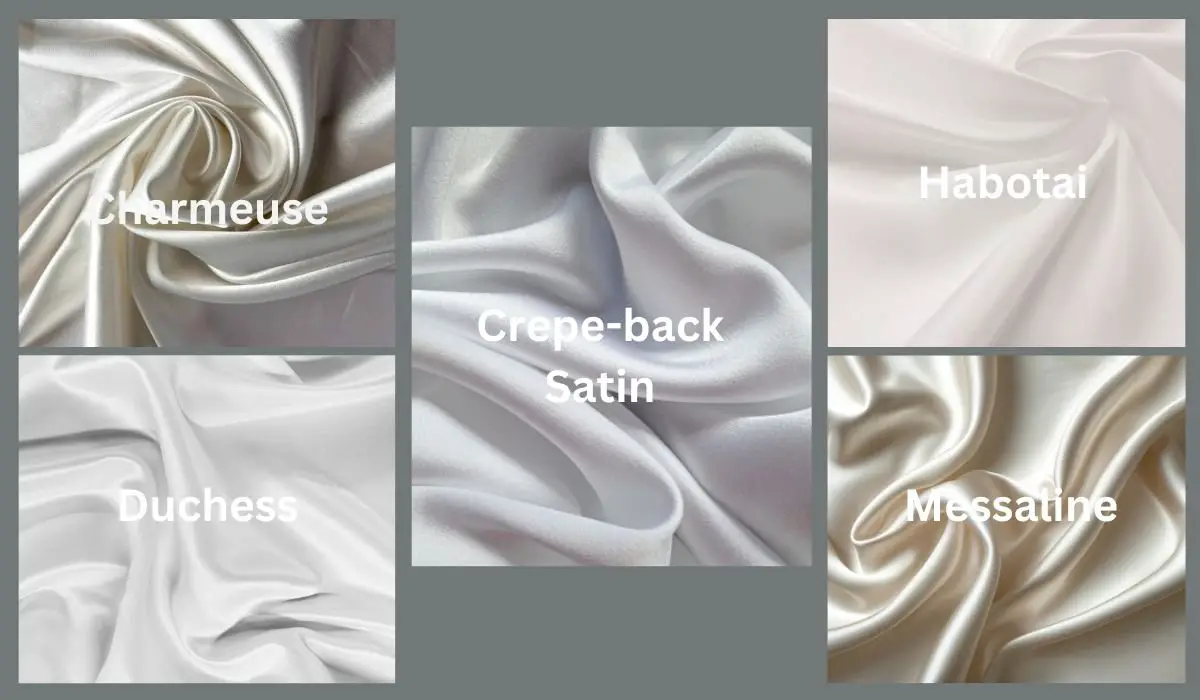
Not all silk satins are created equal. Let’s break down the main types you’ll encounter and how they compare to each other.
Main Types of Silk Satin
| Type | Weight | Characteristics | Best Uses |
|---|---|---|---|
| Charmeuse | Lightweight | High gloss front, matte back, fluid drape | Evening gowns, lingerie, blouses |
| Duchesse | Heavy | Stiff, luxurious, holds shape well | Wedding dresses, structured gowns |
| Habotai | Light to Medium | Plain weave, less shiny, more affordable | Linings, scarves, summer wear |
| Crepe-back Satin | Medium | Reversible: satin on one side, crepe texture on other | Versatile clothing, both sides usable |
| Messaline | Lightweight | Loosely woven, very soft and drapey | Linings, lightweight garments |
Silk Satin vs Other Fabrics: Side-by-Side Comparison
Silk Satin vs Polyester Satin
Material: Natural protein fiber vs synthetic petroleum-based
Breathability: Excellent vs Poor
Temperature: Regulates naturally vs Traps heat
Durability: Strong but delicate vs More resistant to snags
Cost: $20-$50/yard vs $3-$10/yard
Environmental: Biodegradable vs Takes 200+ years to decompose
Silk Satin vs Habotai Silk
Weave: Satin weave vs Plain weave
Shine: High gloss vs Soft, subtle sheen
Drape: Fluid and heavy vs Light and crisp
Price: Higher vs More affordable
Care: Requires more attention vs Easier to maintain
Silk Satin vs Cotton Sateen
Fiber: Silk protein vs Cotton cellulose
Feel: Cool and smooth vs Warm and soft
Moisture: Wicks moisture vs Absorbs moisture
Wrinkles: Prone to creasing vs More wrinkle-resistant
Care: Hand wash preferred vs Machine washable
Is Satin Silk Better Than Silk?
This question reveals a common misunderstanding. Silk satin IS silk – just woven in a specific way. The question should really be: “Is satin-woven silk better than plain-woven silk?”
The answer depends on what you need:
When Silk Satin is Better
- You want that luxurious glossy appearance
- You need fabric that drapes beautifully
- You’re making formal or evening wear
- You want maximum smoothness against skin
When Plain Silk is Better
- You need more durability for everyday wear
- You want a matte, understated look
- Budget is a concern (plain weaves cost less)
- You prefer easier care and maintenance
Properties and Characteristics of Silk Satin
What Does Silk Satin Feel Like?
If you’ve never touched silk satin, here’s what to expect: imagine the smoothest, coolest surface you can think of – cooler than room temperature against your skin, with zero friction when you run your hand across it. The fabric has a liquid-like quality, flowing through your fingers like water.
The glossy side reflects light beautifully and has a slight coolness. The matte back side feels softer and slightly less smooth but still incredibly soft. Many people describe the sensation as “buttery” or compare it to touching a flower petal.
Is Silk Satin Fabric Stretchy?
Pure silk satin has minimal stretch – typically only 2-3% give. This comes from the natural elasticity of silk fibers, not from the weave structure. The satin weave actually makes the fabric less stretchy than a plain weave would be because of how the threads float over each other.
If you need stretch for fitted garments, you have two options:
- Look for silk satin blended with a small percentage of spandex (usually 3-5%)
- Cut the fabric on the bias (diagonal), which provides more stretch than cutting on the straight grain
Key Physical Properties
| Property | Rating | Details |
|---|---|---|
| Strength | Strong for its weight, but can snag easily | |
| Breathability | Excellent air circulation, regulates temperature naturally | |
| Moisture Wicking | Can absorb up to 30% of its weight in moisture | |
| Wrinkle Resistance | Wrinkles fairly easily, needs careful storage | |
| Durability | Long-lasting if cared for properly, but delicate | |
| Colorfastness | Holds dye well, but can fade in direct sunlight |
Momme Weight Explained
Silk quality is measured in “momme” (abbreviated as “mm”), which indicates the weight and thickness of the silk. One momme equals 4.340 grams per square meter.
- 8-11 mm: Very lightweight, used for scarves and linings
- 12-16 mm: Light to medium weight, good for blouses and lightweight dresses
- 16-19 mm: Medium weight, versatile for most clothing
- 19-22 mm: Standard for quality bedding and sleepwear
- 22-30 mm: Heavy weight, used for luxury bedding and durable garments
Higher momme numbers mean thicker, more durable, and more expensive fabric. For silk bedding, 19-22 mm offers the best balance of durability and comfort.
Benefits of Silk Satin: Why Choose This Fabric?
Is Satin Silk Good for You?
Absolutely, and here’s why silk satin stands out from other fabrics, especially for health and wellness benefits.
Health and Beauty Benefits
1. Skin Benefits
Silk satin is naturally hypoallergenic, making it perfect for sensitive skin. The smooth surface reduces friction, which can help prevent:
- Sleep lines and wrinkles on face
- Skin irritation and redness
- Acne breakouts (silk doesn’t absorb skin oils like cotton does)
- Dry skin (maintains skin’s natural moisture better than cotton)
2. Hair Benefits
Many people switch to silk satin pillowcases for hair health. The benefits include:
- Reduced friction means less hair breakage
- Fewer split ends
- Less frizz and tangles in the morning
- Helps maintain hairstyles longer
- Particularly good for curly, textured, or chemically-treated hair
3. Temperature Regulation
Silk satin naturally adjusts to your body temperature:
- Keeps you cool in summer by wicking moisture away
- Provides insulation in winter
- Reduces night sweats
- Comfortable year-round
4. Natural and Chemical-Free
Pure silk satin contains natural proteins and amino acids similar to those in human hair and skin. It’s naturally resistant to:
- Dust mites
- Mold and mildew
- Many allergens
What Are the Advantages of Silk Satin?
Top Advantages
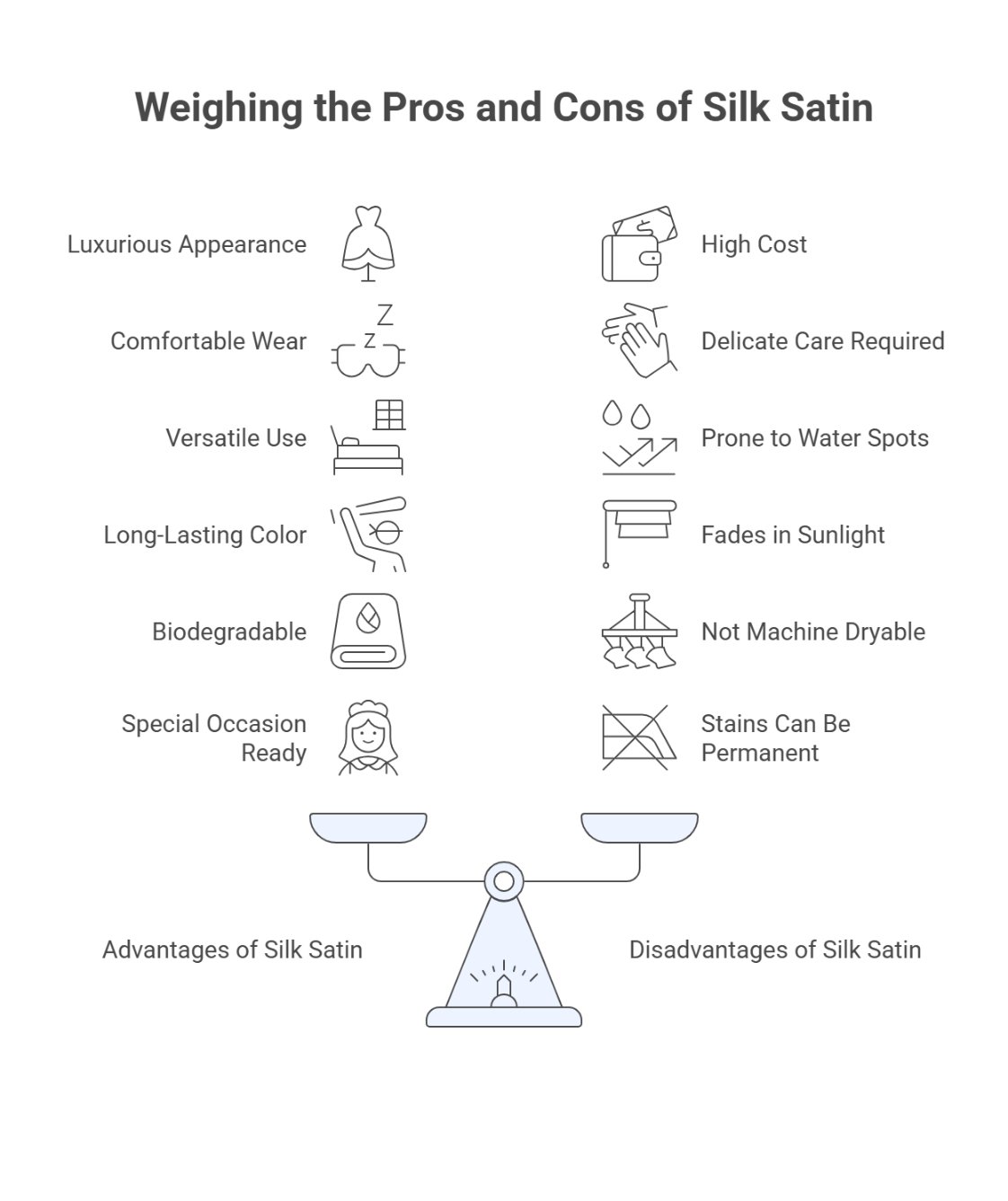
- Luxurious appearance: The glossy finish adds elegance to any garment or room
- Comfortable wear: Smooth against skin with no itching or irritation
- Versatile use: Works for clothing, bedding, and home decor
- Long-lasting color: Dyes bond well with silk proteins
- Biodegradable: Breaks down naturally in 1-4 years
- Special occasion ready: Always looks formal and expensive
- Natural properties: No synthetic chemicals needed in production
What Are the Disadvantages of Satin Silk?
Being honest about drawbacks helps you make informed decisions:
Main Disadvantages
- High cost: Real silk satin is expensive compared to synthetic alternatives
- Delicate care required: Can’t just throw it in the washing machine
- Prone to water spots: Water can leave visible marks on the fabric
- Easily snagged: Rough surfaces, jewelry, or pet claws can pull threads
- Wrinkles easily: Needs careful storage and handling
- Fades in sunlight: Direct UV exposure damages fibers and color
- Not machine dryable: Must air dry to prevent damage
- Stains can be permanent: Some stains are difficult to remove without professional help
Is Satin Silk Expensive?
Yes, genuine silk satin is one of the more expensive fabrics you can buy. Here’s what you can expect to pay:
| Type | Price Per Yard | What Affects Price |
|---|---|---|
| Standard Silk Satin | $15-$30 | Basic quality, lower momme weight (12-16mm) |
| High Quality Silk Satin | $30-$60 | Better quality, medium momme (16-22mm) |
| Premium/Designer Silk Satin | $60-$100+ | Top grade, high momme (22-30mm), special finishes |
| Polyester Satin (comparison) | $3-$10 | Much cheaper but lacks natural silk benefits |
Why the high cost? Several factors contribute:
- Labor-intensive production process
- Large quantities of mulberry leaves needed
- Time required to raise silkworms (6+ weeks)
- Skilled weaving required
- Limited production compared to synthetic fabrics
Sustainability: The Full Picture
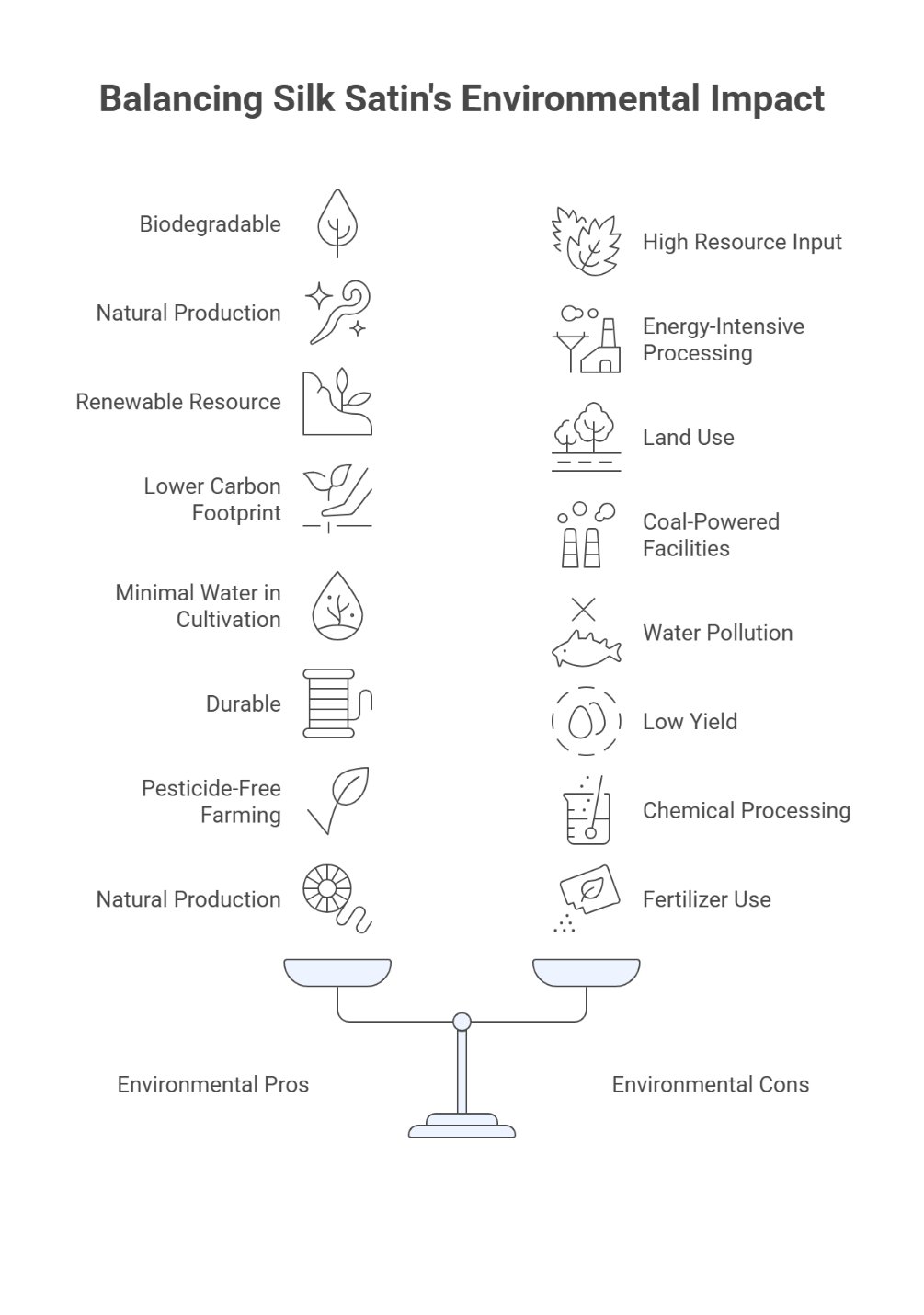
When shopping for eco-friendly fabrics, silk satin presents a complex picture. It’s not purely good or bad for the environment – the reality sits somewhere in between.
The Environmental Pros
Positive Environmental Aspects
- Biodegradable: Silk completely breaks down in 1-4 years, unlike polyester (200+ years)
- Natural production: No petroleum products required
- Renewable resource: As long as mulberry trees grow, silk can be produced
- Lower carbon footprint than cotton: Studies show silk generates fewer greenhouse gas emissions per ton
- Minimal water in cultivation: Mulberry trees don’t require irrigation if grown in suitable climates
- Durable: Long-lasting quality means fewer replacements needed
- Pesticide-free mulberry farming: Mulberry trees naturally resist pests
The Environmental Cons
Environmental Concerns
- High resource input: 187 kg of mulberry leaves needed for 1 kg of silk
- Energy-intensive processing: Boiling cocoons and processing silk requires significant energy
- Land use: Large areas needed for mulberry cultivation
- Chemical processing: Dyeing and finishing often use toxic chemicals
- Water pollution: If untreated wastewater is released, it causes pollution
- Coal-powered facilities: Many production facilities in Asia use coal
- Fertilizer use: Commercial operations often use synthetic fertilizers
- Low yield: Only 35 pounds of silk per acre of mulberry trees
Ethical Considerations
The biggest ethical concern with silk production is that 2,500-3,000 silkworms die to produce one pound of silk. The silkworms (actually caterpillars) are boiled alive inside their cocoons to prevent them from breaking the silk threads when emerging as moths.
Scientists are still researching whether insects feel pain, but this process troubles many consumers. Alternatives include:
- Peace Silk (Ahimsa Silk): Moths allowed to emerge before cocoons are processed
- Wild Silk: Collected from wild moths after they’ve left cocoons naturally
- Eri Silk: Produces shorter fibers but allows moth emergence
Worker Conditions
The silk industry, particularly in major producing countries (China, India, Thailand), has faced criticism for:
- Low wages for silk workers
- Long working hours
- Exposure to chemicals during processing
- Child labor in some regions
How to Choose More Sustainable Silk Satin
Look For These Certifications
- GOTS (Global Organic Textile Standard): Ensures organic production and fair labor
- OEKO-TEX: Certifies no harmful chemicals used
- Fair Trade Certified: Ensures fair wages and working conditions
- Peace Silk/Ahimsa Silk: No silkworms harmed in production
You can also:
- Buy from transparent brands that share their supply chain
- Choose vintage or second-hand silk satin items
- Care for your silk properly to extend its lifespan
- Support brands using renewable energy in production
- Look for silk from regions with better labor laws
Complete Care Guide for Silk Satin
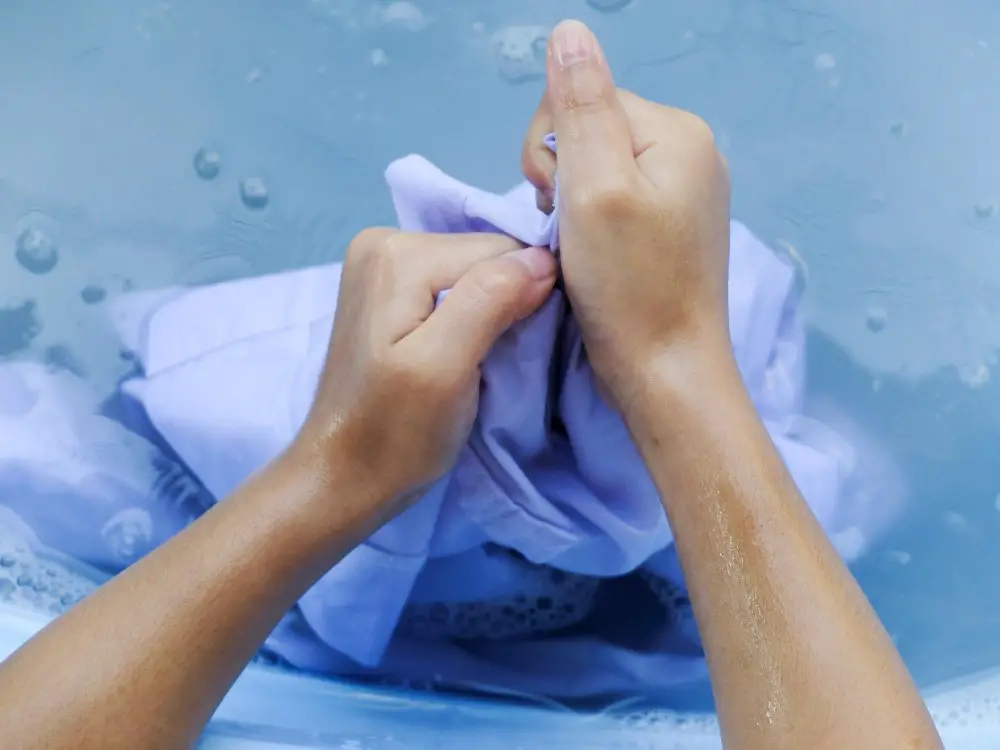
Proper care makes the difference between silk satin that lasts for decades and silk that gets ruined after one washing. Let’s go through everything you need to know. For more comprehensive guidance, check out this detailed guide on caring for satin clothing.
How Do You Properly Care for Silk Satin?
Before You Start
Always check the care label first. Some silk satin items are labeled “dry clean only,” and you should follow that instruction. If the label says you can hand wash or machine wash, continue with these guidelines.
Hand Washing Silk Satin (Best Method)
Prepare Your Washing Area
Fill a clean basin or sink with cool water (never above 30°C/85°F). Add 1-2 tablespoons of mild detergent specifically for delicates or silk. Swirl the water gently to distribute the soap.
Submerge the Silk
Turn your silk satin item inside out to protect the glossy surface. Gently place it in the water and let it soak for 3-5 minutes maximum. Don’t leave it longer – extended soaking can damage the fibers.
Gentle Agitation
Gently move the fabric around in the water with your hands. Don’t scrub, twist, wring, or rub the fabric. If there are stains, gently press on them with your fingertips rather than rubbing.
Rinse Thoroughly
Drain the soapy water and refill with cool, clean water. Gently move the fabric around to rinse. You may need to rinse 2-3 times until the water runs clear. Optional: Add 1/2 cup white vinegar to the final rinse to neutralize odors and soften the fabric.
Remove Excess Water
Lay the silk flat on a clean, dry towel. Roll the towel up like a sushi roll with the silk inside. Gently press (don’t squeeze or wring) to absorb excess water. Unroll and repeat with a dry towel if needed.
Air Dry
Lay the silk flat on a dry towel or hang it on a padded hanger to air dry. Keep it away from direct sunlight and heat sources. Never put silk satin in the dryer.
Machine Washing (Use With Caution)
Some silk satin can be machine washed, but only if the care label specifically allows it:
- Turn the item inside out
- Place in a mesh laundry bag
- Use the delicate/gentle cycle with cold water only
- Add mild detergent for delicates
- Set to the shortest spin cycle possible
- Remove immediately when done and air dry
Never Do These Things
- Don’t use hot water (causes shrinkage and damage)
- Don’t use bleach (weakens fibers)
- Don’t use fabric softener (use vinegar instead)
- Don’t wring or twist the fabric
- Don’t put in the dryer
- Don’t hang in direct sunlight to dry
Stain Removal Guide
| Stain Type | Treatment Method | Important Notes |
|---|---|---|
| Water-based (wine, juice) | Blot immediately, use damp cloth with mild soap | Work from outside of stain toward center |
| Oil-based (grease, makeup) | Apply cornstarch or talcum powder, let sit overnight, brush off | Don’t use water first – it sets oil stains |
| Protein (blood, sweat) | Soak in cold water with enzyme cleaner | Never use hot water on protein stains |
| Ink | Dab with rubbing alcohol on cotton swab | Test on hidden area first |
| Deodorant | Mix equal parts water and white vinegar, dab gently | Act quickly before it sets |
Ironing and De-Wrinkling
Silk satin wrinkles easily, but you need to be careful when ironing:
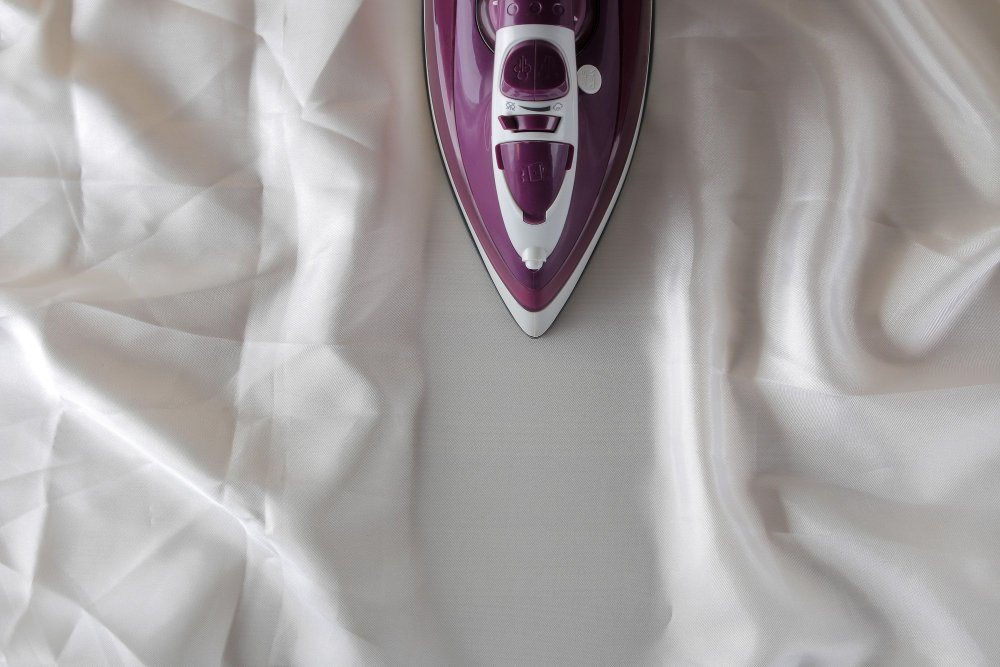
- Always iron on the reverse (matte) side
- Use the lowest heat setting (silk or synthetic setting)
- Never use steam – water drops leave permanent marks
- Place a pressing cloth between iron and silk
- Iron while silk is still slightly damp for best results

Alternative methods:
- Hang in a steamy bathroom to relax wrinkles
- Use a garment steamer from 6+ inches away
- Place between damp towels and gently press with hands
- Hang on padded hangers and let gravity do the work overnight
Storage Tips
Proper Storage Protects Your Investment
- Store in a cool, dark, dry place
- Use padded hangers for garments (never wire hangers)
- Wrap in acid-free tissue paper for long-term storage
- Keep in breathable fabric garment bags (not plastic)
- Avoid cedar chests (oils can stain silk)
- Keep away from direct sunlight
- Store flat if possible to prevent stress on seams
- Check periodically for signs of damage or moths
Professional Cleaning
For expensive or delicate silk satin items, professional dry cleaning is often the safest choice. Find a cleaner experienced with silk and:
- Point out any stains and their source
- Confirm they use gentle, silk-safe solvents
- Ask them not to press with too much heat
- Inspect the item before leaving the cleaners
Common Uses and Applications

Silk satin’s combination of beauty and comfort makes it perfect for many applications. Here’s where you’ll most commonly find this fabric.
Fashion and Clothing
Formal Wear
- Wedding dresses: Silk satin creates that classic bridal look with beautiful drape
- Evening gowns: The glossy finish catches light perfectly for special occasions
- Cocktail dresses: Dressy but not overly formal
- Suits and blazers: Silk satin linings add luxury to tailored pieces
Intimate Apparel
- Lingerie and slips: Smooth against skin, breathable
- Nightgowns and pajamas: Temperature-regulating for comfortable sleep
- Robes and kimonos: Luxurious at-home wear
- Camisoles and chemises: Can be worn as outerwear or undergarments
Everyday Luxury
- Blouses and shirts: Dressy work wear or casual elegance
- Skirts and pants: Comfortable with a polished look
- Scarves: Add a touch of luxury to any outfit
- Ties and pocket squares: Classic men’s accessories
Home and Bedding
Bedroom
- Pillowcases: Beauty benefits for skin and hair
- Sheet sets: Luxurious sleep experience
- Duvet covers: Temperature regulation and comfort
- Sleep masks: Gentle on delicate eye area
Home Decor
- Curtains and drapes: Elegant window treatments
- Throw pillows: Add luxury to any room
- Table runners and placemats: Formal dining settings
- Wall hangings: Decorative art pieces
Specialized Uses
- Ballet shoes: Slipper satin provides the right combination of slip and grip
- Theater costumes: Reflects stage lights beautifully
- Hat linings: Comfortable against head and hair
- Religious garments: Used in ceremonial robes and vestments
- Gift wrapping: Luxury packaging for special items
Buying Guide: What to Look For

Shopping for silk satin can be tricky because many sellers misrepresent their products. Here’s how to make sure you get what you’re paying for.
Quality Indicators
| Factor | What to Look For | Red Flags |
|---|---|---|
| Fiber Content | 100% silk or specified silk percentage | “Satin” without fiber content listed |
| Momme Weight | Clearly stated (12mm-30mm) | No momme weight mentioned |
| Price | $15+ per yard for basic quality | Under $10/yard (likely polyester) |
| Weave Type | Specified (charmeuse, duchesse, etc.) | Just says “silk satin” with no details |
| Origin | Country of origin stated | No origin information |
| Certifications | OEKO-TEX, GOTS, or other legitimate certs | No certifications or vague claims |
Questions to Ask Before Buying
- What is the exact fiber content? Don’t accept vague answers like “silk blend” – ask for specific percentages.
- What is the momme weight? This tells you about durability and quality.
- What type of silk satin is it? Charmeuse, duchesse, habotai? Different types serve different purposes.
- Where was it produced? Some regions have better quality control than others.
- Has it been pre-washed? Silk can shrink 5-10% the first time it’s washed.
- What are the care requirements? Make sure you’re prepared to care for it properly.
- What is the return policy? You should be able to return if it’s not as described.
Where to Buy Quality Silk Satin
Best Places to Shop
- Specialty fabric stores: Staff can answer questions and help you feel the fabric
- Online silk retailers: Often have better selection but can’t touch before buying
- Direct from mills: Best prices if buying in quantity
- High-end fabric stores: More expensive but guaranteed quality
- Estate sales and vintage shops: Can find quality silk at lower prices
Red Flags That Indicate Fake or Low-Quality Silk
- Price is too good to be true (real silk costs money)
- Seller refuses to provide fiber content details
- No return policy or all sales final
- Fabric feels scratchy or rough
- Color looks unnaturally perfect and uniform
- No slight irregularities in the weave (all natural silk has minor variations)
- Seller claims “silk-like” or “silky feel” instead of real silk
- Burning test shows it melts instead of burning (synthetic fiber)
How Can You Tell Real Satin Silk?
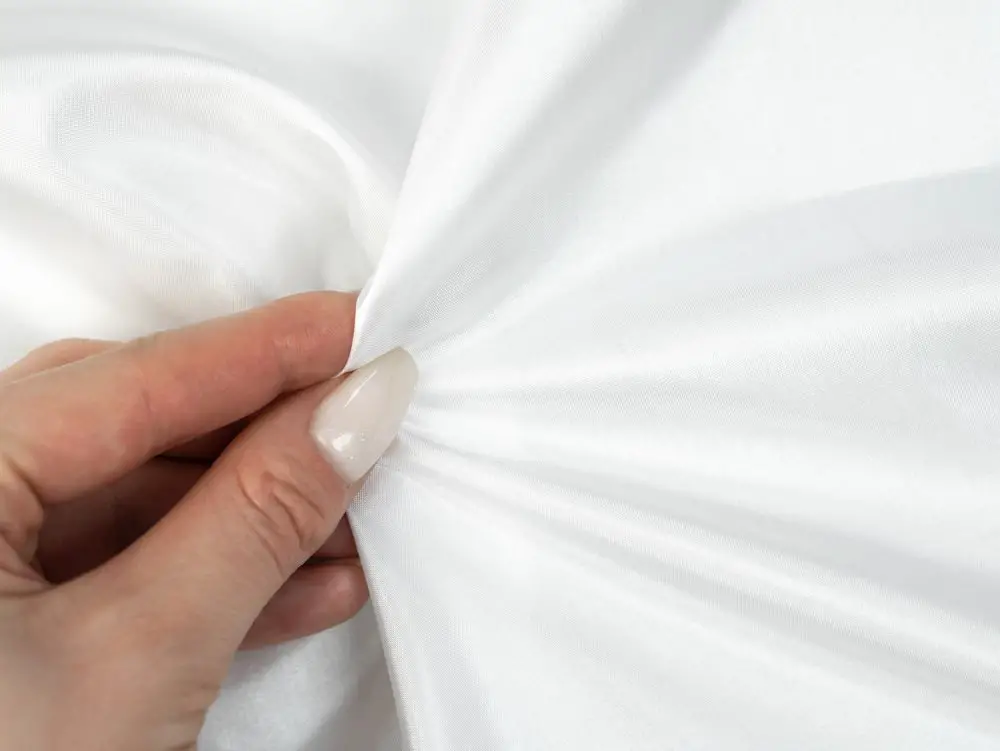
With so many synthetic satins on the market, knowing how to identify real silk satin is important. Here are reliable methods to test if your fabric is genuine silk.
The Touch Test
Real silk satin feels distinctly different from polyester:
- Temperature: Real silk feels cool to the touch and quickly warms to your body temperature. Polyester feels room temperature or slightly warm.
- Smoothness: Silk has a natural, soft smoothness. Polyester feels artificially slippery.
- Weight: Silk has a noticeable weight and drape. Polyester satin feels lighter and more plastic-like.
- Texture variation: Real silk has very slight irregularities. Polyester is perfectly uniform.
The Ring Test
This is a quick, non-destructive test:
- Pull the fabric through a ring (wedding ring works well)
- Real silk compresses and flows through easily
- The fabric should easily pass through and spring back
The Burn Test (Most Reliable)
Safety First
Only perform this test with proper safety precautions. Use tweezers to hold the fabric, do it over a sink or metal container, and have water nearby.
Cut a small thread or corner from the fabric and carefully burn it:
| Fiber Type | How It Burns | Smell | Residue |
|---|---|---|---|
| Real Silk | Burns slowly, curls away from flame, self-extinguishes | Smells like burning hair or feathers | Leaves dark, brittle ash that crumbles easily |
| Polyester | Melts and drips, continues burning | Sweet, chemical smell | Leaves hard, black plastic beads |
| Acetate | Burns quickly with flame | Vinegar-like smell | Leaves hard, brittle residue |
The Shimmer Test
Move the fabric under light and watch how it reflects:
- Real silk: Shimmer changes subtly as you move it, colors appear to have depth
- Polyester: Uniform, consistent shine that looks more “plastic”
The Weave Test
Look closely at the weave with a magnifying glass:
- Real silk: Individual fibers visible, slight variations, triangular cross-section catches light differently
- Polyester: Perfectly uniform, round fibers, no natural variations
Is Silk Satin the Same as Polyester?
No, they’re completely different materials. This confusion happens because:
- Both can be woven in a satin weave (which creates the glossy look)
- Both are sold as “satin”
- They can look similar from a distance
However, they differ in every other way:
Silk Satin
- Natural protein fiber from silkworms
- Biodegradable
- Breathable and temperature-regulating
- Hypoallergenic
- Expensive
- Requires gentle care
- Smells like burning hair when burned
Polyester Satin
- Synthetic fiber from petroleum
- Takes 200+ years to decompose
- Traps heat and moisture
- Can cause allergic reactions
- Inexpensive
- Easy care, machine washable
- Melts when burned
Many items sold as “satin” are actually polyester satin. Always check the fiber content label. If it says “100% polyester” or just “satin” without mentioning silk, it’s not real silk satin.
Frequently Asked Questions
References and Further Reading
- History of Silk – Wikipedia – Comprehensive overview of silk production history and cultural significance
- Silk in Antiquity – World History Encyclopedia – Detailed information about ancient silk production and trade
- Satin – Wikipedia – Technical information about satin weave structure and fabric types
Conclusion
Silk satin represents one of the most beautiful fabrics humans have created, combining natural silk fibers with the elegant satin weave to produce a material that’s been treasured for over 2,000 years. Whether you’re considering silk satin for clothing, bedding, or home decor, understanding what makes this fabric special helps you make smart buying decisions and care for it properly.
Essential Takeaways
1. Know What You’re Buying
Silk satin is silk (the fiber) woven in a satin weave (the technique). Most “satin” sold today is actually polyester. Always check fiber content and don’t assume “satin” means silk. Real silk satin should specify “100% silk” or provide exact fiber percentages.
2. Quality Matters
Look for momme weight between 16-22mm for most uses. Higher momme equals better durability. Pay attention to certifications like GOTS and OEKO-TEX. Real silk satin costs $15-$100 per yard – if the price seems too good to be true, it probably is.
3. Care Determines Longevity
Proper care can make silk satin last decades. Hand wash in cool water with mild detergent, air dry away from direct sunlight, iron on low heat (reverse side only), and store carefully. The extra effort is worth it to protect your investment.
4. Sustainability is Complex
Silk satin has environmental benefits (biodegradable, natural, lower carbon than cotton) and drawbacks (energy-intensive processing, high water use in production, ethical concerns about silkworm treatment). Choose organic or peace silk when possible and buy quality pieces that will last.
5. Real Benefits for Health and Beauty
Unlike synthetic satins, real silk satin offers genuine benefits: it’s hypoallergenic, temperature-regulating, reduces hair breakage and skin wrinkles, and is naturally resistant to dust mites and allergens. These aren’t marketing claims – they’re backed by silk’s natural properties.
Final Recommendations
For Fashion Enthusiasts: Start with one quality silk satin piece like a blouse or slip dress. Learn to care for it properly before investing in more expensive items. Consider vintage or second-hand silk satin for designer quality at lower prices.
For Eco-Conscious Consumers: Look for GOTS-certified organic silk or peace silk. Buy from transparent brands that share their supply chain. Choose quality over quantity – one well-made piece that lasts 20 years is better than five cheap items that need replacing.
For Bedding Buyers: Invest in at least a silk satin pillowcase to experience the hair and skin benefits. If you like it, gradually add sheet sets. Look for 19-22 momme weight for the best balance of durability and comfort. Use our Silk Care Calculator to get personalized washing instructions.
For DIY Sewers: Practice on less expensive silk first before attempting expensive silk satin. Pre-wash all fabric before cutting. Use silk or fine polyester thread, a new fine needle, and take your time. The fabric is unforgiving of mistakes but creates stunning results when done right.
For Gift Givers: Silk satin makes wonderful gifts for anyone who appreciates quality. A silk pillowcase, scarf, or sleep mask shows thoughtfulness and luxury without being overly extravagant.
Moving Forward
Understanding silk satin – its history, production, care requirements, and proper uses – empowers you to make choices that fit your values and needs. Whether you’re drawn to its beauty, its benefits, or its luxury status, silk satin offers something special that synthetic alternatives simply cannot match.
The key is knowing what you’re buying, caring for it properly, and appreciating the craftsmanship that goes into every yard of this remarkable fabric. When you hold real silk satin, you’re touching a material with thousands of years of history, produced through a process that remains largely unchanged because, quite simply, nature got it right the first time.
For more information about silk and other luxury fabrics, explore our guides on mulberry silk, dupioni silk, and brocade fabric.