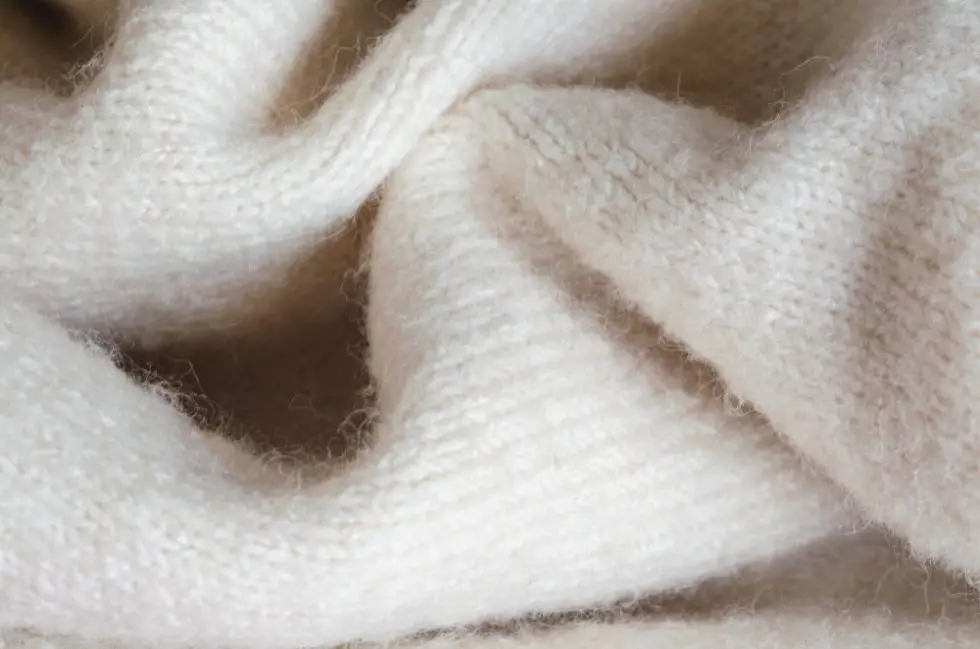

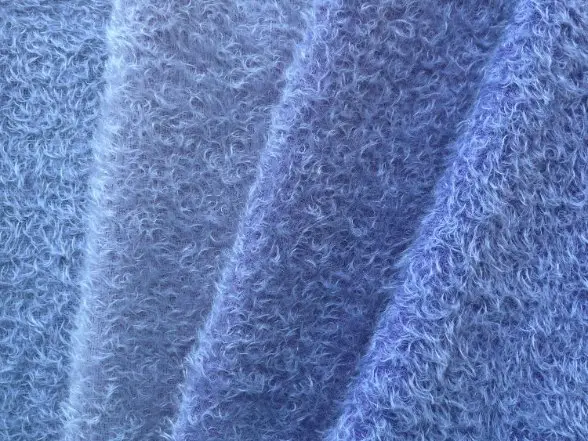
Everything you need to know about mohair’s properties, care, sustainability, and why it’s one of the world’s most prized luxury textiles
Have you ever wondered what makes mohair so special? Often called the “diamond fiber” for its natural shimmer, mohair is one of the most interesting materials in the textile world. Unlike regular wool fabric, mohair comes from a completely different animal and has properties that set it apart from every other fiber you’ll encounter.
Whether you’re considering buying your first mohair sweater, curious about caring for a vintage mohair piece, or trying to decide if mohair is worth the investment, this guide will answer all your questions. We’ll explore everything from its ancient origins in the mountains of Tibet to modern sustainability practices, and we’ll give you practical advice on how to keep your mohair looking beautiful for years to come.
Table of Contents
What Is Mohair? Definition and Origins
Mohair is a luxury fabric made from the hair of the Angora goat. It’s important not to confuse this with Angora wool, which comes from Angora rabbits. Both the goat and the rabbit were named after Ankara, the capital city of Turkey (historically called Angora), but they produce completely different fibers.
What Type of Fabric Is Mohair?
Mohair is a natural protein fiber, similar to sheep wool, but with some important differences. The fiber comes from the thick, lustrous coat of Angora goats, which produces long, smooth strands that measure between 25 and 45 microns in diameter. For comparison, human hair is about 50-70 microns thick, so mohair is actually finer than your own hair.
Quick Fact: The word “mohair” comes from the Arabic word “mukhayyar,” which means “choice” or “preferred.” This tells you a lot about how the fabric was valued even in ancient times.
Is Mohair a Goat or Sheep?
Mohair comes from goats specifically, the Angora goat breed. These goats are quite different from sheep. While sheep grow a double coat with a coarse outer layer and soft undercoat, Angora goats produce a single coat of uniform, silky hair. This single-coat structure is one reason why mohair has such a distinctive feel and appearance compared to regular sheep’s wool.
Is Mohair Natural or Manmade?
Mohair is 100% natural. It’s an animal fiber that has been used for thousands of years. There’s no synthetic version that can truly replicate mohair’s unique combination of softness, luster, and durability. Some manufacturers have tried to create synthetic mohair-like fabrics, but these lack the natural properties that make real mohair special.
Geographic Origins
The Angora goat is believed to have originated in the mountains of Tibet. From there, these goats gradually made their way to Turkey, where they were bred exclusively in the Ankara province for centuries. Turkey maintained a strict monopoly on mohair production until 1838, when the export ban was lifted.
Today, the largest mohair producers are:
- South Africa: Produces more than 50% of the world’s mohair, known for exceptional quality and luster
- United States: Primarily Texas, second-largest producer globally
- Turkey: Still produces high-quality mohair, though in smaller quantities
- Argentina, Australia, and New Zealand: Growing contributors to global supply
The total annual production of mohair worldwide is approximately 4,570 tons, making it a relatively rare fiber compared to regular cotton or polyester.
The Rich History of Mohair
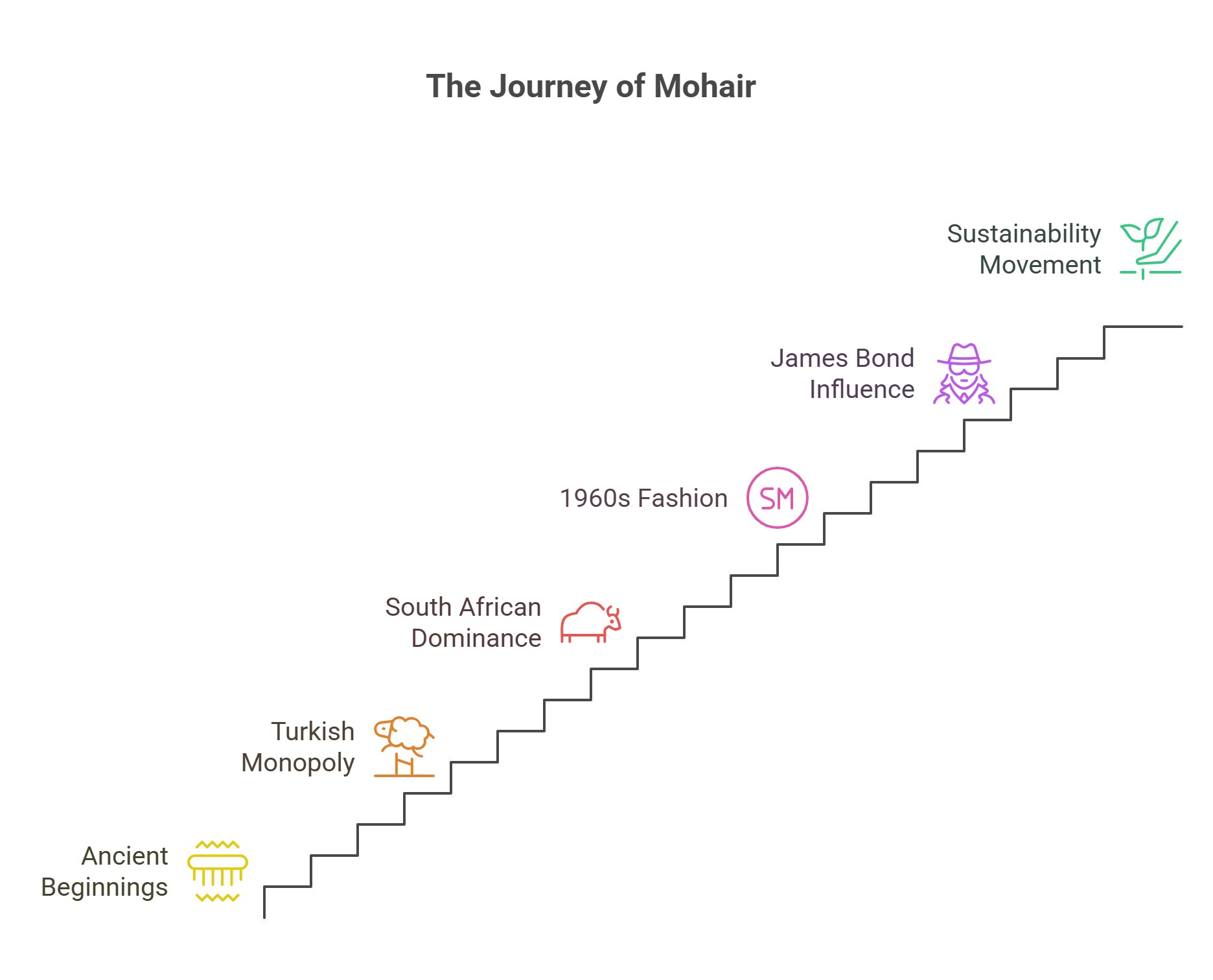
Mohair’s story spans thousands of years and crosses multiple continents. Understanding this history helps explain why mohair commands such respect in the textile world today.
Ancient Beginnings
The earliest records of mohair date back to the 8th century in England, though the fabric was likely in use long before then. Historical evidence suggests that mohair textiles were traded extensively throughout the Middle East, Asia, and Europe for millennia. The fabric was highly prized by royalty and wealthy merchants who could afford its luxury.
The Turkish Monopoly Era
For centuries, Turkey held a complete monopoly on mohair production. The Angora goats were bred exclusively in the province of Ankara, and exporting the animals was strictly forbidden. This made mohair extremely rare and expensive in Europe.
In 1838, everything changed when the Turkish sultan lifted the export ban. This decision transformed the global mohair industry. Angora goats were soon introduced to South Africa, where the climate proved ideal for breeding. The warm, dry conditions of the Eastern Cape region created perfect conditions for these goats, and South Africa quickly became the world’s leading producer.
The 1960s Fashion Revolution
Mohair experienced a major cultural moment in the 1960s with the introduction of Tonik fabric. This three-ply mohair-wool blend had a distinctive color-changing appearance that caught the eye of the Mod subculture in England. The shiny, sharp look of mohair suits became synonymous with youth culture, music, and rebellion.
Mods weren’t the only ones who loved mohair. The fabric appeared in vivid colors like teal, burgundy, and electric blue, making it a favorite for anyone who wanted to stand out. This era cemented mohair’s reputation as a fashion-forward, statement-making material.
James Bond and Luxury Mohair
Mohair suits gained another boost in popularity through their association with James Bond films. The sleek, lustrous appearance of mohair made it perfect for evening wear and tuxedos. Even today, high-end menswear often features mohair blends for formal occasions and smoking jackets.
Modern Sustainability Movement
In 2020, the mohair industry took a major step forward with the launch of the Responsible Mohair Standard (RMS). This came partly in response to animal welfare concerns raised in 2018, when an investigation revealed poor practices on some South African farms. The industry’s response was to create comprehensive certification standards that now govern everything from animal care to environmental protection.
How Mohair Is Produced
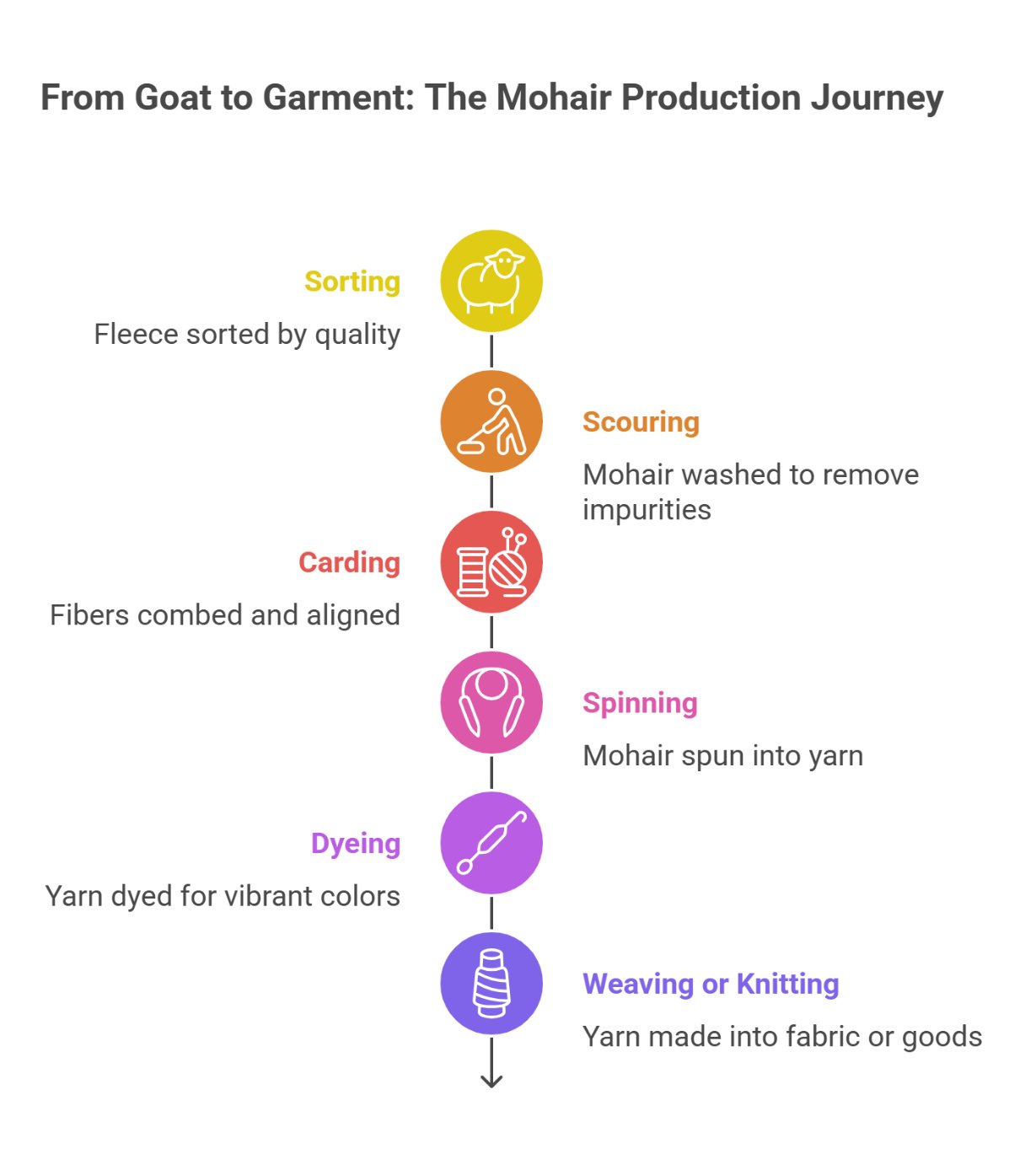
Understanding how mohair goes from goat to garment helps you appreciate the work that goes into every piece.
Angora Goat Characteristics
Angora goats are distinctive animals. They’re covered in long, curly hair that grows in uniform locks and ringlets. While the original Angora goats had white fleeces, selective breeding has now produced goats with naturally black, grey, red, and brown coats.
These goats grow fleece rapidly, about 2 centimeters per month. Because they produce such copious amounts of hair, they actually need to be shorn for their own comfort and health. Unlike some other fiber animals, Angora goats don’t naturally shed their coats, so regular shearing is part of caring for them properly.
The Shearing Process
Most mohair farms shear their goats twice a year, in spring and fall. A few producers, like those in Turkey, shear only once annually in December, which produces the longest mohair fibers in the world.
Each goat typically yields 5 to 7.5 kilograms (11 to 17 pounds) of mohair per year. The shearing must be done carefully to avoid injuring the animals and to keep the fiber clean and free of debris. Professional shearers work on cleanly swept floors and handle the goats gently to minimize stress.
Important Note: The shearing process should be humane and stress-free for the animals. Look for mohair certified under the Responsible Mohair Standard, which requires farms to follow strict animal welfare guidelines including the Five Freedoms of Animal Welfare.
Processing the Fiber
After shearing, mohair goes through several processing steps:
- Sorting: The fleece is sorted by quality, with fiber from different parts of the goat separated based on fineness and length.
- Scouring: The mohair is thoroughly washed to remove natural grease, dirt, and any vegetable matter that may have gotten caught in the fleece.
- Carding: The clean fibers are combed and aligned to prepare them for spinning.
- Spinning: The carded mohair is spun into yarn. This is technically challenging because mohair lacks the barbs that help wool fibers cling together, making it difficult to spin. Only a few mills worldwide have mastered this process.
- Dyeing: Mohair takes dye exceptionally well, producing vibrant, long-lasting colors with a unique glow.
- Weaving or Knitting: The finished yarn is made into fabric or knitted goods.
Quality Factors
Several factors determine mohair quality:
- Age of the goat: Younger goats produce finer, softer fiber
- Nutrition: Well-fed goats produce better quality mohair
- Climate: Certain regions produce mohair with superior luster
- Breeding: Careful breeding programs can improve fiber quality over generations
- Processing skill: Expert handling throughout the production process preserves quality
Mohair’s Unique Properties and Characteristics
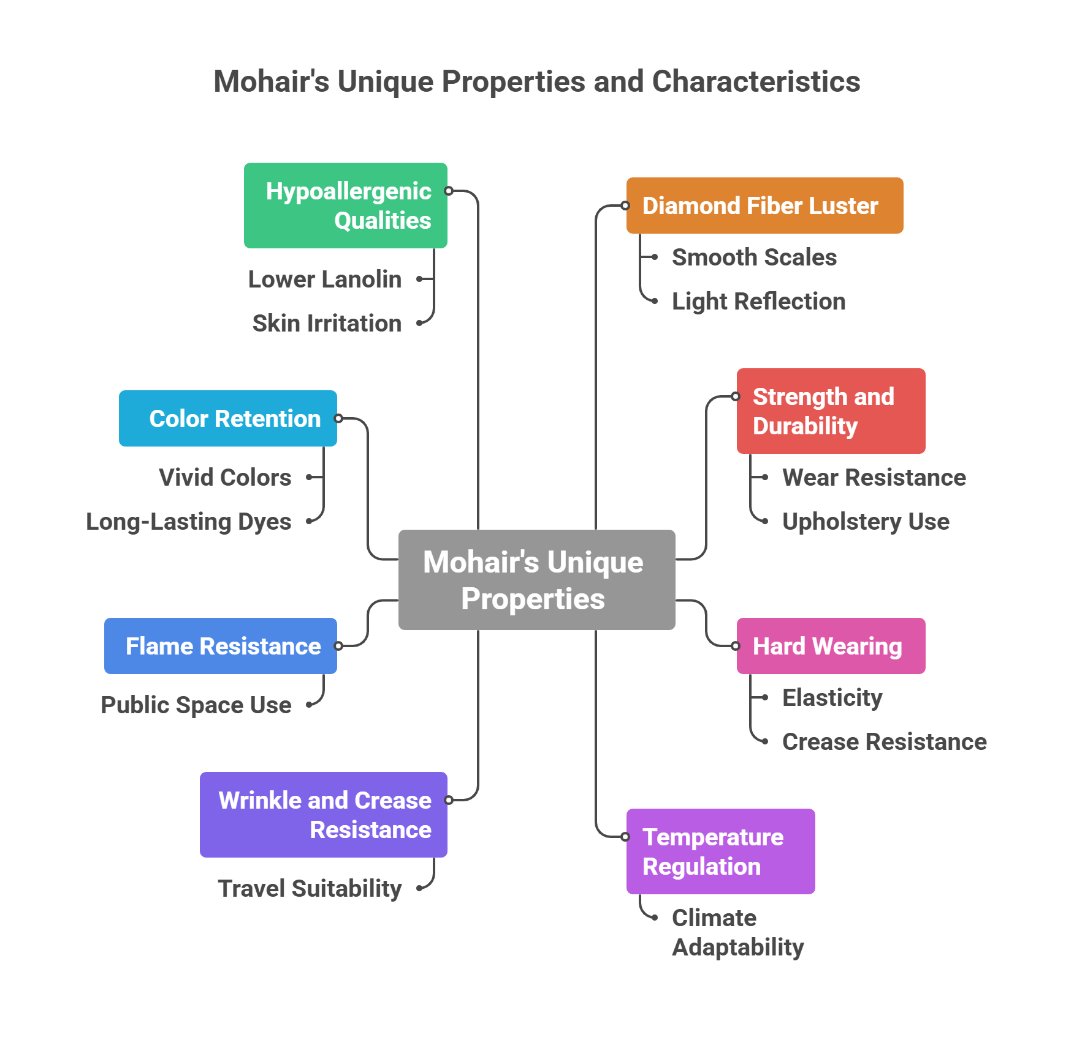
What makes mohair special? Let’s break down the specific properties that set this fiber apart.
The Diamond Fiber Luster
Mohair’s most distinctive feature is its natural shine. Unlike merino wool, which has a matte appearance, mohair reflects light beautifully. This happens because mohair fibers have smoother, less developed scales compared to regular wool. The scales lie flatter against the fiber shaft, allowing more light to reflect and creating that signature glow.
This is why mohair is often called the “diamond fiber.” The luster isn’t just on the surface, it’s an inherent property of the fiber structure itself.
Strength and Durability
Here’s something that might surprise you: pound for pound, mohair is stronger than steel. Seriously. This makes mohair one of the most durable natural fibers available.
In practical terms, this means:
- Mohair garments resist wear and tear exceptionally well
- Mohair upholstery can withstand heavy use (that’s why it was used in theaters and railway seats)
- Quality mohair pieces can last decades with proper care
- The fabric has a Martindale rub count of 80,000, which is outstanding for durability testing
Is Mohair Hard Wearing?
Absolutely. Mohair’s combination of strength and elasticity makes it extremely hard-wearing. The fibers are naturally elastic and resistant to creasing. If you scrunch mohair fabric in your hand and release it, you’ll feel it spring back to shape. This resilience means mohair garments maintain their appearance over time without sagging or losing shape.
Temperature Regulation
One of mohair’s most useful properties is its ability to work in different climates.
Is Mohair Good for Winter?
Yes, mohair is excellent for winter. The fiber structure creates air pockets that trap warmth, making mohair very insulating. But here’s the interesting part: mohair provides this warmth while remaining lightweight. You get the warmth of heavy wool without the bulk.
Is Mohair Good for Warm Weather?
Surprisingly, yes. Mohair is also suitable for warmer weather because it’s breathable and moisture-wicking. The fiber can absorb up to 30% of its weight in moisture without feeling damp. This means mohair draws sweat away from your skin and allows it to evaporate, keeping you cool and comfortable.
This dual-season functionality makes mohair more versatile than many other fabrics. A quality mohair piece can genuinely work year-round.
Wrinkle and Crease Resistance
If you travel frequently, you’ll love this: mohair is naturally resistant to wrinkles. The fiber structure prevents permanent creasing, so mohair garments look fresh even after being packed in a suitcase. This made mohair suits popular with businesspeople who needed to look sharp after long flights.
Flame Resistance
Mohair is naturally flame-resistant. When exposed to fire, mohair will shrivel and char but won’t support combustion. Once removed from the flame source, it immediately stops burning. This property made mohair upholstery popular in public spaces like theaters, hotel lobbies, and offices where fire safety is important.
Color Retention
Mohair has an exceptional affinity for dyes. The fiber structure allows dye molecules to penetrate deeply and bond strongly, resulting in colors that are vivid, long-lasting, and resistant to fading. This is why mohair garments often come in such rich, beautiful colors. The fiber doesn’t just hold color, it seems to make it glow with that characteristic halo effect.
Is Mohair Soft or Itchy?
This depends on the quality and type of mohair. Kid mohair (from young goats) is incredibly soft, comparable to cashmere. It feels silky against the skin and is suitable for people with sensitive skin.
Adult mohair can be coarser and may feel scratchy to some people. However, mohair is generally less itchy than regular sheep’s wool because it contains less lanolin and has smoother fiber scales.
Tip: If you find mohair itchy, try washing it with hair conditioner or wearing a thin layer underneath. Many people find that mohair softens considerably after the first wash.
Is Mohair Like Velvet?
Mohair and velvet are different things. Velvet is a weaving technique that creates a thick pile fabric, while mohair is the fiber itself. However, mohair velvet is a popular upholstery fabric that combines the mohair fiber with the velvet weaving method. This creates an incredibly luxurious, durable fabric with mohair’s natural luster enhanced by the velvet construction.
Water Properties
Can Mohair Get Wet?
Yes, mohair can get wet, and it handles moisture better than many other fibers. Mohair is naturally moisture-wicking and dries relatively quickly. However, like all animal fibers, you should avoid soaking mohair for extended periods or washing it in hot water, as this can damage the fibers.
Is Mohair Waterproof?
No, mohair is not waterproof. It’s water-resistant to a degree because the fiber’s smooth surface doesn’t absorb water quickly, but it will eventually get wet if exposed to enough moisture. Mohair’s moisture-wicking properties actually mean it’s designed to move water away from your body rather than repel it completely.
Hypoallergenic Qualities
Mohair contains less lanolin than sheep’s wool, making it less likely to cause allergic reactions. Many people who can’t tolerate regular wool find that mohair doesn’t bother their skin. The smooth fiber surface is also less irritating than the rougher texture of standard wool.
Sound Absorption
An often-overlooked property: mohair has excellent sound-absorbing qualities. This is another reason it was popular for theater seating and in recording studios. The fiber structure dampens sound effectively.
Types and Grades of Mohair
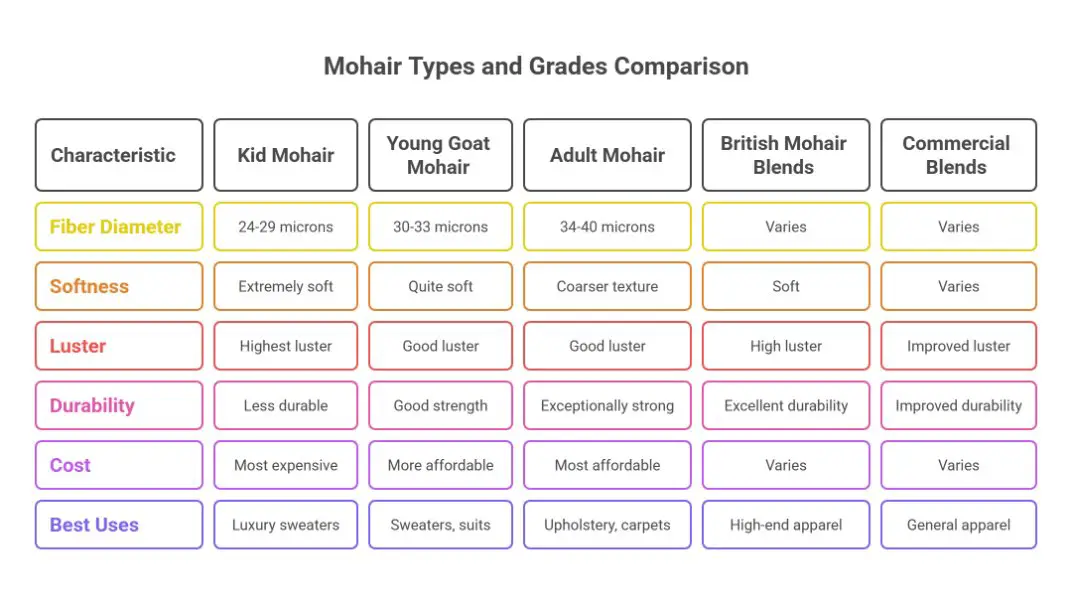
Not all mohair is created equal. The quality and characteristics vary significantly based on the age of the goat and how the fiber is processed.
Kid Mohair (24-29 Microns)
Kid mohair comes from the first or second shearing of young goats (usually under one year old). This is the finest, softest mohair available.
Characteristics:
- Extremely soft and silky
- Very fine fiber diameter (24-29 microns)
- Highest luster and sheen
- Most expensive grade
- Comfortable to wear next to skin
Best uses: Luxury sweaters, scarves, shawls, fine knitwear, baby items
Young Goat Mohair (30-33 Microns)
This comes from goats that are older than kids but not yet fully mature. It’s a middle grade that balances softness with durability.
Characteristics:
- Still quite soft
- Good luster
- More affordable than kid mohair
- Good strength and durability
Best uses: Sweaters, suits, blankets, general apparel
Adult Mohair (34-40 Microns)
Adult mohair comes from fully mature goats. The fibers are thicker and coarser than kid mohair.
Characteristics:
- Coarser texture
- Still has good luster
- Exceptionally strong and durable
- Most affordable grade
- May feel scratchy on sensitive skin
Best uses: Upholstery, carpets, outerwear, drapery, rugs, industrial applications
Mohair Blends
Pure 100% mohair is rare in clothing because the fiber can be quite stiff on its own. Most mohair garments use blends to balance mohair’s unique properties with the softness of other fibers.
British Mohair Blends (50%+ Mohair)
These are high-mohair-content fabrics, traditionally woven with mohair in the weft and wool in the warp. They maintain strong mohair characteristics including high luster, excellent durability, and distinctive appearance.
Common ratios: 87/13 wool/mohair (the old Burberry standard) or 60/40 mohair/wool
Commercial Blends (5-15% Mohair)
Lower mohair content blends add just enough mohair to improve the fabric without dominating it. Even small amounts of mohair can significantly improve a fabric’s luster, durability, and drape.
Common Blend Partners:
- Mohair/Wool: The most traditional blend, balancing mohair’s shine with wool’s softness
- Mohair/Silk: Creates incredibly soft, luxurious fabric with enhanced shine (consider using our Wool Type Selector Quiz to find your perfect fabric match)
- Mohair/Cashmere: Expensive but exceptionally soft and warm
- Mohair/Merino: Adds volume and warmth while keeping softness
Mohair vs Other Luxury Fibers
How does mohair stack up against other premium fibers? Let’s compare.
Mohair vs Cashmere
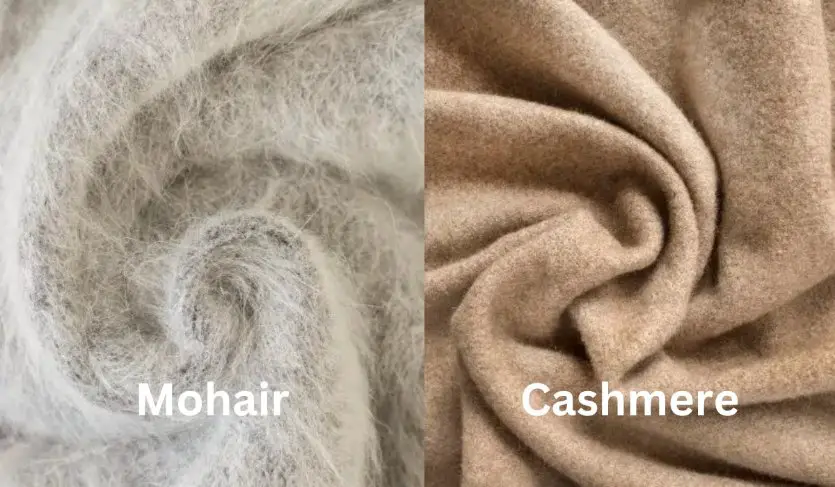
Both are luxury goat fibers, but they’re quite different. For a detailed guide on cashmere, check out our cashmere wool fabric guide.
Is Mohair the Same as Cashmere?
No, mohair and cashmere are completely different fibers from different types of goats.
Is Mohair Like Cashmere?
While both are luxury fibers from goats, they have different properties. Cashmere is generally softer initially, but mohair is more durable and lustrous.
| Property | Mohair | Cashmere |
|---|---|---|
| Source Animal | Angora goat (outer coat) | Cashmere goat (undercoat) |
| Fiber Diameter | 25-45 microns | 14-19 microns |
| Softness | Soft (kid mohair very soft) | Extremely soft |
| Luster | High shine, very lustrous | Matte finish, no shine |
| Durability | Extremely durable, resistant to wear | Delicate, prone to pilling |
| Elasticity | Excellent, very springy | Good but less resilient |
| Warmth | Very warm, good insulation | Exceptionally warm, superior insulation |
| Breathability | Excellent, works in multiple seasons | Good but primarily for cold weather |
| Care Required | Moderate (hand wash or gentle cycle) | High (dry clean or very gentle hand wash) |
| Pilling | Minimal pilling | Pills easily |
| Price Range | $$$$ (expensive) | $$$$$ (very expensive) |
| Best For | Suits, outerwear, upholstery, items needing durability | Sweaters, scarves, lightweight garments |
Which to choose? If you want softness above all else and don’t mind careful maintenance, choose cashmere. If you want a luxurious fabric that can handle regular wear and still look great years later, mohair is the better choice. Our cashmere care guide can help if you’re considering cashmere.
Mohair vs Merino Wool
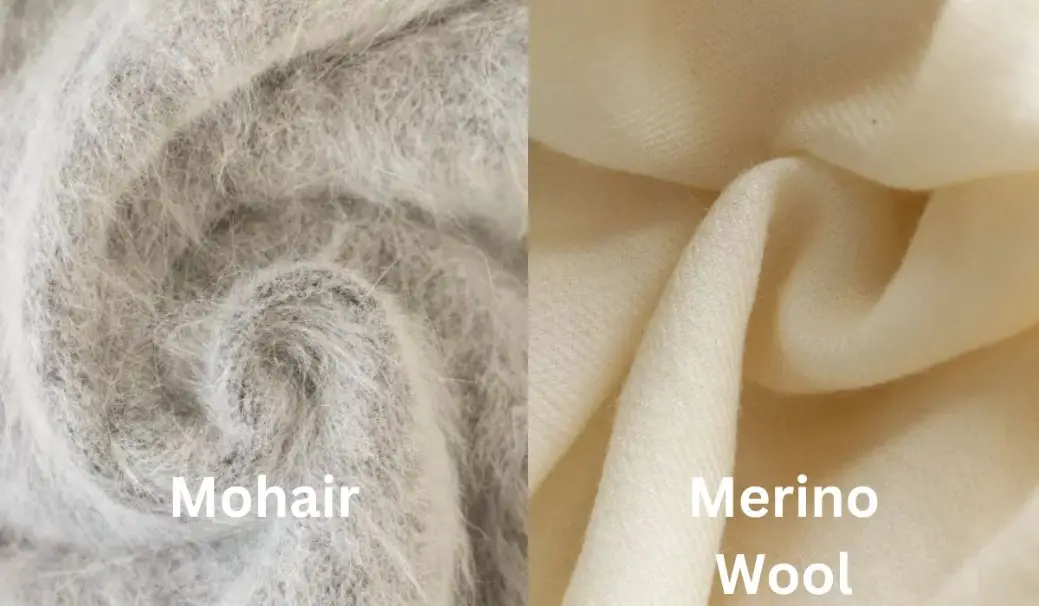
Is Mohair Better Than Wool?
This depends on what you need. Mohair excels in durability and luster, while merino wool offers exceptional softness and temperature regulation. Learn more about merino in our complete merino wool guide.
Which Is Better, Mohair or Wool?
For luxury appearance and long-lasting quality, mohair wins. For everyday comfort and versatility, many people prefer merino wool.
| Property | Mohair | Merino Wool |
|---|---|---|
| Source | Angora goat | Merino sheep |
| Appearance | Lustrous, shiny, distinctive glow | Matte, natural look |
| Texture | Smooth, slippery when fine | Soft, crimped, fluffy |
| Weight | Lightweight for its warmth | Lightweight, can be very fine |
| Strength | Extremely strong | Strong but less than mohair |
| Wrinkle Resistance | Excellent, bounces back | Good, some wrinkling possible |
| Odor Resistance | Good | Excellent (naturally antimicrobial) |
| Moisture Management | Excellent wicking, absorbs 30% of weight | Excellent wicking, absorbs 35% of weight |
| Felting Tendency | Resistant to felting | Felts easily if washed incorrectly |
| Price | $$$$ | $$-$$$ |
| Availability | Less common, specialty item | Widely available |
Mohair vs Regular Wool
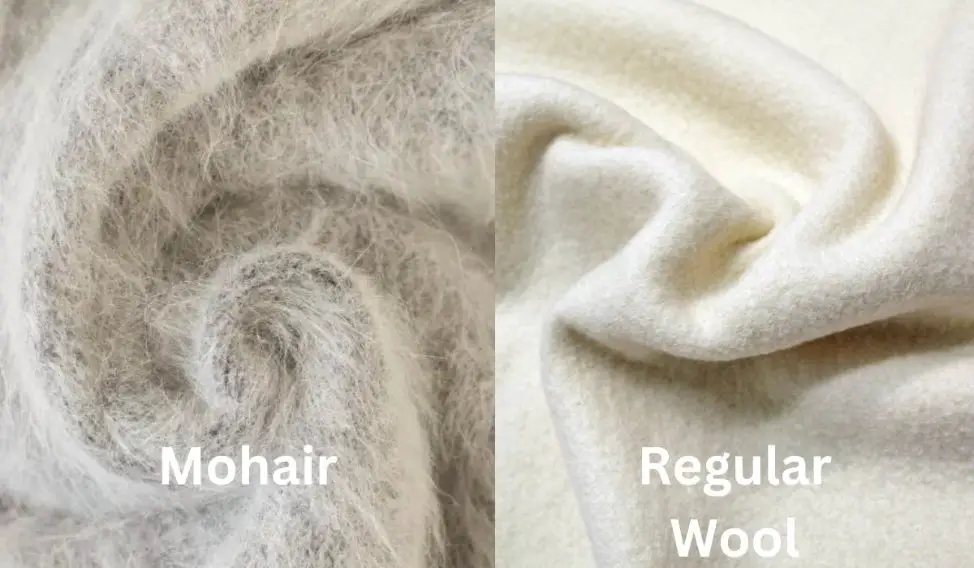
| Aspect | Mohair | Regular Sheep’s Wool |
|---|---|---|
| Softness | Kid mohair: very soft Adult mohair: can be coarse | Varies widely by breed Often itchy |
| Luster | High shine, diamond-like | Usually matte |
| Warmth | Warm but lightweight | Very warm, can be heavy |
| Durability | Exceptionally strong | Durable but less than mohair |
| Ease of Care | Doesn’t felt easily, relatively easy | Can felt and shrink, needs care |
| Dye Uptake | Excellent, vibrant colors | Good but less vibrant |
| Cost | Expensive luxury fiber | Affordable to moderate |
| Availability | Specialty stores, limited | Everywhere |
Mohair vs Alpaca

Both are luxury animal fibers with excellent warmth and softness, but they have different characteristics:
- Mohair: More lustrous, more durable, better for year-round wear
- Alpaca: Softer, warmer, hypoallergenic, but no shine
What’s Another Name for Mohair?
Mohair is sometimes called:
- “Diamond fiber” (due to its luster)
- “Angora” (historically, though this causes confusion with Angora rabbit wool)
- In scientific contexts: “Capra hircus aegagrus fiber”
However, “mohair” is the universally accepted and preferred term.
What Is Mohair Also Known As?
Besides “diamond fiber,” mohair doesn’t have many alternate names. In some historical texts, you might see it referred to simply as “Angora goat hair,” but in the textile industry, “mohair” is the standard term used worldwide.
Sustainability and Ethics: The Complete Picture
This is probably the most important section for many readers. Let’s address the ethics and sustainability of mohair honestly and completely.
The Animal Welfare Concerns
In 2018, PETA released an investigation of South African mohair farms that documented disturbing practices. The investigation showed:
- Rough handling during shearing
- Painful procedures like dehorning and castration without pain relief
- Injuries from shearing that went untreated
- Goats experiencing extreme stress
This was a wake-up call for the industry. Several major fashion brands including H&M, Zara, and Gap immediately stopped using mohair.
The Industry Response
Rather than ignore the problem, responsible parts of the mohair industry took action. In March 2020, the Responsible Mohair Standard (RMS) was officially launched.
What Is the Responsible Mohair Standard?
The RMS is a voluntary certification that ensures mohair comes from farms that meet strict standards for:
- Animal Welfare: Farms must comply with the Five Freedoms of Animal Welfare
- Freedom from hunger and thirst
- Freedom from discomfort
- Freedom from pain, injury, or disease
- Freedom to express normal behavior
- Freedom from fear and distress
- Land Management: Sustainable grazing practices, soil health, biodiversity protection
- Social Responsibility: Fair wages, safe working conditions, no child labor
- Traceability: Complete tracking from farm to final product
Third-party certification bodies conduct regular audits at every stage of the supply chain. This isn’t just a farm certification, every business that handles RMS mohair must be certified, from the farm to the spinner to the fabric mill to the garment manufacturer.
Other Important Certifications
Look for mohair certified by:
- RWS (Responsible Wool Standard): Recognizes best practices in land management and animal welfare
- IWTO Standards: International Wool Textile Organisation sets global quality standards (learn more at IWTO.org)
- GOTS (Global Organic Textile Standard): Ensures organic production and social responsibility
- IVN Best NaturTextil Label: Strict ecological and technical requirements
Environmental Sustainability
Mohair has several environmental advantages:
The Positives:
- Renewable: Goats are sheared twice a year without harm, producing fiber continuously
- Biodegradable: Mohair breaks down naturally, unlike synthetic fibers that persist for centuries
- No Chemicals Required: Mohair doesn’t need chemical treatments for its natural properties
- Long-lasting: Durability means less waste, mohair garments can last decades
- Low Water Use: Angora goats need less water than cotton crops
- Natural Flame Resistance: No chemical flame retardants needed
The Challenges:
- Methane Emissions: Like all ruminant animals, goats produce methane
- Land Degradation: Poor grazing management can lead to overgrazing and soil erosion
- Water Pollution: Scouring (washing) mohair can pollute water if not managed properly
- Predator Conflicts: Protecting goats can lead to conflicts with native wildlife
The RMS addresses these issues by requiring farms to follow sustainable land management practices.
The Goat Lifespan Advantage
Here’s an important ethical point that’s often overlooked: Angora goats kept for mohair production typically live their full natural lifespan of 10-12 years. This is because they’re valuable for their fiber, not their meat.
Compare this to:
- Cashmere goats: Often slaughtered young for meat production
- Sheep: Frequently slaughtered at 6-12 months for lamb meat
- Wool sheep: Usually slaughtered at 5-7 years, well before their natural lifespan
From an animal welfare perspective, mohair goats living full lives represents a more ethical model than many other fiber animals.
Is Mohair Ethical?
The answer isn’t simple. Mohair from RMS-certified farms that follow best practices can be considered relatively ethical. The goats live long lives, shearing is necessary for their comfort, and strict standards protect their welfare.
However, from a strict vegan perspective, any use of animals for human benefit raises ethical questions. Some small-scale farms with excellent animal welfare may represent the best possible scenario, but mohair production still involves breeding animals primarily for profit.
How to Buy Ethical Mohair
If you choose to buy mohair, here’s how to do it responsibly:
- Look for RMS certification on the label or product description
- Research brands to see if they’re transparent about their mohair sourcing
- Choose quality over quantity – one well-made piece that lasts years is more sustainable than cheap items that need replacing
- Consider second-hand – vintage mohair doesn’t support new production
- Ask questions – contact brands and ask where their mohair comes from
- Support small-scale producers who can demonstrate their animal welfare practices
External Resource: For more information on responsible mohair production, visit Textile Exchange’s Responsible Mohair Standard page. You can also learn about South African mohair certification at Mohair South Africa.
The Bottom Line on Sustainability
Mohair from certified sources represents one of the more sustainable luxury fiber options available. It’s renewable, biodegradable, incredibly durable, and when sourced responsibly, produced with good animal welfare standards. However, it’s not perfect, and consumers should make informed choices based on their own values.
Uses of Mohair Fabric

Mohair’s unique properties make it suitable for a wide range of applications. Let’s explore where you’ll find this versatile fiber.
Fashion and Apparel
Luxury Suits and Formalwear
Mohair’s distinctive luster makes it perfect for evening wear. You’ll find mohair in:
- Tuxedos and dinner jackets (like those worn by James Bond)
- Summer suits (lightweight yet wrinkle-resistant)
- Business suits (particularly 87/13 wool-mohair blends)
- Smoking jackets
The fabric’s ability to hold a sharp crease and resist wrinkling makes it ideal for professional wear, especially for people who travel.
Sweaters and Knitwear
Mohair sweaters are incredibly popular, especially those made from kid mohair. The fluffy, soft texture creates a beautiful halo effect around the garment. Mohair is often blended with silk or merino wool in sweaters to add softness while maintaining the characteristic mohair glow.
Scarves and Shawls
The combination of warmth, light weight, and beauty makes mohair perfect for scarves and shawls. Kid mohair scarves are soft enough to wear directly against the neck.
Coats and Outerwear
Mohair’s durability and weather resistance make it excellent for coats. The fiber’s natural water resistance and warmth-to-weight ratio mean you can have a lightweight coat that still provides serious warmth.
Socks
Mohair socks are incredibly durable and comfortable. The fiber wicks moisture, regulates temperature, and resists wear. Hiking socks often contain mohair for these reasons.
Home Furnishings and Decor
Upholstery Fabric
Mohair velvet is one of the most luxurious upholstery fabrics available. It’s used for:
- Sofas and chairs
- Headboards
- Decorative pillows
- Dining chairs
- Theater and cinema seating
The fabric’s durability (Martindale count of 80,000) means it can handle heavy use while still looking beautiful. The natural flame resistance is a bonus for public spaces.
Carpets and Rugs
Adult mohair’s coarser fibers make excellent carpets and rugs. The strength and resilience mean these floor coverings can last for decades. Mohair rugs are particularly valued for their luster and the way they handle traffic without showing wear.
Throws and Blankets
Mohair throws are lightweight, warm, and beautiful. They add a touch of luxury to any room and work year-round due to mohair’s temperature-regulating properties.
Curtains and Drapery
Mohair’s natural drape and luster make it attractive for window treatments. The fabric hangs beautifully and the natural flame resistance is a practical advantage.
Specialty Uses
High-End Doll Wigs
Because mohair resembles fine human hair, it’s the preferred material for making wigs for expensive collector dolls. The fiber takes dye well and can be styled like real hair.
Teddy Bears and Stuffed Animals
Mohair has been used for teddy bears since the early 1900s. The fiber’s softness and durability make it perfect for toys that need to withstand years of love and play.
Craft Yarns
Knitters and crocheters love mohair yarn for its softness, warmth, and the beautiful halo effect it creates. Mohair is often used for lace shawls, where its lightness and drape are perfect.
What Are the Benefits of Mohair?
To summarize why people choose mohair:
- Beautiful natural luster and sheen
- Exceptional durability and longevity
- Lightweight warmth
- Works in multiple seasons
- Wrinkle and crease resistant
- Takes dye beautifully
- Naturally flame resistant
- Less itchy than regular wool
- Resists felting
- Maintains shape over time
Why Do People Like Mohair?
Beyond the technical properties, people are drawn to mohair for emotional reasons too. There’s something special about wearing a fabric that has such a distinctive character. Mohair has personality, it catches the light, it feels luxurious, and it makes people feel special. The fabric has a history and cultural significance that adds to its appeal.
Complete Care Instructions for Mohair

Proper care will keep your mohair looking beautiful for years, possibly decades. Here’s everything you need to know. For personalized washing instructions based on your specific mohair item, try our Wool Care Calculator.
General Care Principles
Most important rule: Mohair doesn’t need frequent washing. The fiber naturally resists odors and dirt, so you can wear mohair garments multiple times before washing. Often, simply airing out a mohair piece overnight is enough to refresh it.
Is Mohair Easy to Care For?
Yes, mohair is relatively easy to care for compared to other luxury fibers. It doesn’t felt like regular wool, it’s resilient, and it dries quickly. The key is being gentle and not overthinking it.
Hand Washing Mohair (Preferred Method)
Hand washing is the safest and best method for cleaning mohair.
- Fill a clean basin or sink with cool to lukewarm water (30°C/90°F maximum). Never use hot water, as this can damage the fibers and cause shrinkage.
- Add a small amount of wool-specific detergent or pH-neutral shampoo. Use about a teaspoon for a sink full of water. You can even use regular hair conditioner, which works wonderfully for mohair. Avoid regular laundry detergent, which is too alkaline.
- Swish the water gently to distribute the detergent. Don’t create too many bubbles.
- Submerge your mohair item completely. Gently press it down into the water to ensure it’s fully saturated.
- Let it soak for 5-10 minutes. No longer than 30 minutes. Don’t leave it soaking for hours, as this can weaken the fibers.
- Gently agitate by hand. Squeeze the garment softly, don’t scrub, twist, or wring. Think of it like washing your hair, gentle movements only.
- Drain the soapy water and refill with clean, cool water. Rinse by gently pressing the garment in the clean water. Repeat until the water runs clear and no soap remains.
- Press out excess water. Never wring or twist. Instead, gently press the garment against the side of the sink to remove water.
Machine Washing Mohair (When Necessary)
If you must use a washing machine, follow these rules carefully:
- Only use if your machine has a wool or delicate cycle
- Place the mohair item in a mesh laundry bag to protect it
- Set temperature to cold or maximum 30°C (90°F)
- Use the lowest spin speed available (400-600 rpm maximum, or no spin)
- Use wool-specific detergent only
- Wash mohair items alone or with similar delicate items only
Warning: Never use fabric softener on mohair. It can leave a residue that dulls the fiber’s natural luster and affects its moisture-wicking properties.
Drying Mohair
Never put mohair in a tumble dryer. The heat and agitation will damage the fibers, cause shrinkage, and could felt the fabric.
Instead:
- Lay a clean, dry towel on a flat surface. Use a light-colored towel to avoid dye transfer.
- Place the wet mohair garment on the towel in its natural shape. Gently reshape it to its original dimensions.
- Roll the towel with the garment inside like a sleeping bag. Press gently to absorb excess water. Don’t twist or wring.
- Unroll and transfer the garment to a fresh, dry towel or a drying rack. Reshape it carefully, smoothing out any wrinkles with your hands.
- Lay flat to dry in a well-ventilated area away from direct sunlight and heat sources. Flip the garment over halfway through drying to ensure even air circulation.
Mohair dries relatively quickly compared to other wools. Your garment should be dry within 24 hours.
Treating Stains on Mohair
Act quickly when stains happen:
- Blot (never rub) fresh stains immediately with a clean, dry cloth
- For stubborn stains, use a wool-safe stain treatment or a tiny amount of wool shampoo applied directly to the spot
- Gently dab the stain from the outside toward the center to prevent spreading
- Rinse the area with cool water by blotting with a damp cloth
- If the stain persists, take the garment to a professional cleaner who specializes in delicate fabrics
For specific stain types and treatments, our Wool Stain Treatment Guide has detailed solutions.
Storing Mohair
Proper storage protects your mohair between seasons:
- Always fold, never hang mohair garments. Hanging can cause stretching and shoulder bumps. If you absolutely must hang a mohair jacket, use a wide, padded hanger.
- Store in a cool, dry place with good air circulation
- Use breathable cotton storage bags, never plastic bags which can trap moisture
- Protect from moths using cedar blocks, lavender sachets, or moth repellent (moths love mohair)
- Make sure items are completely clean before storing, as moths are attracted to soiled clothing
- Air out closets regularly to prevent moisture buildup
Refreshing and Maintaining Mohair
Restoring Fluffiness
If your mohair looks flat or compressed:
- Gently shake the garment
- Brush lightly with a soft hairbrush or fabric brush (brush in one direction, not back and forth)
- Hang in a steamy bathroom for 10 minutes, then lay flat to dry
Dealing with Pilling
Mohair pills less than many other fibers, but some pilling can occur, especially in areas of friction. If you notice pills:
- Cut them off carefully with small scissors, don’t pull them (pulling can damage the fabric)
- Use a fabric shaver on the lowest setting if you have many pills
- Don’t use a pumice stone or razor, which can damage the mohair
Does Mohair Feel Itchy? (Making It Softer)
If your mohair feels scratchy, try these techniques:
- Wash with hair conditioner (leave it on for 5 minutes during the rinse)
- Add a small amount of glycerin to the rinse water
- Wear a thin layer underneath until the mohair softens with wear
- Remember that mohair softens over time with washing and wearing
Managing Shedding
New mohair items often shed a bit during the first few wears. This is normal and will decrease over time. To manage it:
- Run a lint roller over the garment before wearing
- Gentle washing can help remove loose fibers
- Accept that some initial shedding is natural (ignore advice about freezing mohair, it doesn’t work)
Special Care Situations
Mohair Velvet Upholstery
Upholstery requires different care:
- Vacuum regularly using a soft brush attachment
- Brush the pile gently in one direction with a soft fabric brush
- Blot spills immediately, never rub
- For deep cleaning, hire a professional upholstery cleaner experienced with mohair
- Avoid water-based cleaning on gaufrage (embossed) mohair, as it can damage the pattern
Mohair Carpets and Rugs
Larger items need special attention:
- Can be washed outdoors with a hose, mild soap, and soft brush on a warm day
- Rinse thoroughly and allow to dry completely over a railing or table
- Brush the pile once dry to restore texture
- For valuable rugs, professional cleaning is recommended
When to Dry Clean
Some mohair items should be professionally cleaned:
- Mohair suits and structured garments
- Items with complex construction or lining
- Garments labeled “dry clean only”
- Valuable vintage pieces
- Items with difficult stains
Always choose a cleaner experienced with delicate natural fibers. Many dry cleaners can damage mohair if they use harsh chemicals or too much heat.
What NOT to Do with Mohair
- Don’t use hot water (causes shrinkage)
- Don’t use regular laundry detergent (too harsh)
- Don’t wring, twist, or scrub (damages fibers)
- Don’t tumble dry (heat damage and shrinkage)
- Don’t hang wet mohair (causes stretching)
- Don’t iron directly on mohair (can scorch)
- Don’t spray perfume directly on mohair (can stain and stiffen fibers)
- Don’t leave in direct sunlight (can fade colors)
Emergency Ironing
If you must remove wrinkles with an iron:
- Use the lowest steam setting
- Hold the iron at least 2 inches away from the fabric
- Never let the iron touch the mohair directly
- Place a pressing cloth between iron and fabric if you must make contact
- Better option: hang in a steamy bathroom instead
Is Mohair Long Lasting?
Absolutely. With proper care, mohair garments can last 20-30 years or more. Mohair’s exceptional strength and resilience mean it outlasts most other natural fibers. Vintage mohair pieces from the 1960s are still wearable today, which is a testament to the fiber’s durability.
Pro Tip: The best way to care for mohair is to wear it gently and wash it infrequently. Spot clean when possible, air out regularly, and only do a full wash when truly necessary. This approach maintains the fiber’s natural properties and extends the garment’s life significantly.
Buying Guide: How to Choose Quality Mohair
Not all mohair is created equal. Here’s what to look for when shopping.
Is Mohair an Expensive Fabric?
Yes, mohair is expensive compared to regular wool and synthetic fibers. Expect to pay:
- Kid mohair yarn: $30-60+ per 50g skein
- Mohair sweaters: $150-500+
- Mohair suits: $800-3,000+
- Mohair upholstery fabric: $100-300+ per yard
- Mohair throws: $200-600+
Is Mohair Fabric Expensive?
The fabric itself is pricey because:
- Annual global production is limited (only ~4,570 tons)
- Each goat produces only 5-7.5 kg per year
- Kid mohair (the finest) comes only from young goats
- Processing requires specialized skills
- Only a few mills can spin it properly
Why Is Mohair So Expensive?
The high price reflects several factors:
- Scarcity of the raw material
- Specialized breeding programs
- Labor-intensive shearing process
- Complex processing requirements
- High quality control standards
- Luxury market positioning
- Exceptional durability and performance
Is Mohair a Luxury?
Yes, mohair is classified as a luxury fiber, alongside cashmere, silk, and fine alpaca. It’s positioned in the premium segment of the textile market due to its unique properties, limited availability, and high production costs.
Is Mohair High Quality?
Quality mohair is exceptional, but quality varies significantly. Here’s how to identify high-quality mohair:
Visual Inspection
- Luster: Should have a beautiful natural shine, not dull or matte
- Consistency: Uniform thickness and texture throughout
- Color: Rich, even color with that characteristic mohair glow
- Halo effect: Fine mohair has a soft halo around the edges
Touch Test
- Softness: Kid mohair should feel silky, not scratchy
- Smoothness: The fiber should be smooth and slippery
- Spring: When compressed, it should bounce back
- Weight: Should feel light for its warmth
Check the Label
Quality indicators on labels:
- Fiber content percentage (higher mohair content often indicates quality pieces)
- Country of origin (South African and Texas mohair are highly regarded)
- Certifications (RMS, RWS, GOTS, etc.)
- Micron count if listed (24-29 microns = kid mohair, highest quality)
- “Kid mohair” designation (indicates premium softness)
Red Flags to Avoid
- Extremely low prices (real mohair is never cheap)
- “Synthetic mohair” or “mohair-look” (not real mohair)
- No fiber content information
- Dull appearance (lacks the characteristic luster)
- Very scratchy texture (especially if labeled as kid mohair)
- Pilling extensively when new (indicates poor quality)
Questions to Ask Before Buying
- What percentage of mohair is in the garment?
- What type of mohair (kid, young goat, or adult)?
- Where does the mohair come from?
- Is it RMS certified?
- What are the other fibers blended with it?
- What are the care requirements?
- What’s the return policy?
Where to Buy Quality Mohair
For Garments:
- Specialty knitwear boutiques
- High-end department stores
- Ethical fashion brands (look for RMS certification)
- Directly from mohair farms (some sell finished products)
- Quality vintage shops (mohair ages well)
- Luxury wool and cashmere retailers that carry premium natural fibers
For Yarn:
- Specialist yarn shops
- Online yarn retailers with good reputations
- Directly from mills and spinners
For Upholstery:
- High-end fabric showrooms
- Interior design centers
- Specialty upholstery suppliers
Vintage vs. New Mohair
Vintage mohair can be an excellent choice:
Advantages:
- Often made with higher mohair content than modern pieces
- Already “broken in” and softened
- More affordable than new luxury mohair
- More sustainable (no new production)
- Unique styles from different eras
Considerations:
- Check carefully for moth damage
- May need professional cleaning
- Sizing may differ from modern standards
- Some wear is expected
Investment Value
Is mohair worth the price? Consider:
- Cost per wear: A $300 mohair sweater worn 100 times over 10 years costs $3 per wear
- Longevity: Mohair lasts decades, unlike fast fashion
- Versatility: Works across seasons
- Resale value: Quality mohair pieces hold value
- Reduced environmental impact: One piece lasting 20 years vs. 20 cheap pieces
For help determining which type of mohair is right for your needs, try our Wool Type Selector Quiz.
Common Questions About Mohair
What are the disadvantages of mohair?
The main disadvantages are:
- High cost compared to regular wool or synthetic fibers
- Limited availability makes it hard to find
- Some people find adult mohair scratchy
- Can shed initially
- Requires careful washing
- May not be suitable for vegans due to animal sourcing
- Ethical concerns if not sourced from certified farms
However, many of these downsides are outweighed by mohair’s exceptional durability and performance when you buy quality pieces from responsible sources.
Is mohair similar to velvet?
Mohair and velvet are different things. Velvet is a weaving technique that creates a pile fabric, while mohair is the actual fiber. However, “mohair velvet” is a specific upholstery fabric that combines mohair fiber with velvet construction. Mohair velvet is considered one of the most luxurious and durable upholstery fabrics available, combining mohair’s natural shine and strength with velvet’s plush texture.
How can you tell if mohair is real?
Real mohair has several distinctive characteristics:
- Natural luster and shine that synthetic fibers can’t replicate
- Smooth, slippery feel when you run your fingers over it
- A characteristic “halo” or glow around the edges
- Bounces back when compressed
- Doesn’t melt when you do a burn test (it chars and smells like burning hair).
Check the label for fiber content, and if the price seems too good to be true, it probably isn’t real mohair.
Does mohair shrink when washed?
Mohair can shrink if washed incorrectly, but it’s less prone to shrinking than regular wool. The key is using cool water (never hot), gentle agitation, and no tumble drying. If you follow proper care instructions with water at 30°C (90°F) or below, minimal agitation, and flat drying, mohair should not shrink significantly. Unlike regular wool, mohair doesn’t felt easily, which gives it an advantage.
Can you wear mohair in summer?
Yes, you can wear mohair in summer, especially lightweight mohair pieces. Mohair is breathable and moisture-wicking, so it doesn’t trap heat like heavy wool. The fiber pulls sweat away from your skin and allows it to evaporate, keeping you comfortable. However, choose lighter-weight mohair items for hot weather and save the heavier pieces for cooler summer evenings. Mohair’s versatility across seasons is one of its best features.
Is mohair warmer than wool?
Mohair provides excellent warmth-to-weight ratio, meaning it’s very warm for how light it is. Compared to regular sheep’s wool, mohair is warmer relative to its weight but may not be as warm overall as thick, heavy wool. The advantage of mohair is that you get substantial warmth without the bulk. For most purposes, mohair provides more than enough warmth while being more comfortable because it’s lighter and more breathable than equivalent wool.
How do you wash a mohair blanket?
Wash a mohair blanket by hand in cool water with wool-specific detergent. Fill a bathtub with cool water, add a small amount of detergent, submerge the blanket, and gently squeeze (don’t wring) for a few minutes. Drain and rinse with clean cool water until no soap remains. Press out excess water by rolling in towels, then lay flat on a clean surface to dry. For large blankets, professional cleaning might be easier. Never put a mohair blanket in the washing machine or dryer.
Why is my mohair sweater shedding?
New mohair sweaters often shed loose fibers during the first few wears, which is completely normal. This happens because some fibers weren’t fully secured during the spinning process. The shedding will decrease significantly after the first few wears and washings. To minimize it, run a lint roller over the sweater before wearing, and wash it gently to help remove loose fibers. Don’t worry, this shedding doesn’t mean your sweater is poor quality or falling apart.
Can mohair be dyed?
Yes, mohair can be dyed and actually takes dye exceptionally well. The fiber has a high affinity for dyes, resulting in vibrant, long-lasting colors with a unique glow. This is one reason mohair garments often come in such beautiful, rich colors. The smooth fiber surface allows dyes to penetrate evenly, and the natural luster of mohair makes colors appear to shine. However, dyeing should be left to professionals, don’t try to dye mohair at home unless you have experience with protein fiber dyeing.
Is mohair good for people with allergies?
Mohair is often better for people with wool allergies because it contains less lanolin than sheep’s wool and has a smoother fiber structure. Many people who can’t tolerate regular wool find mohair comfortable to wear. However, people with severe animal fiber allergies should test mohair carefully before committing to a purchase. Kid mohair is the best option for sensitive skin, as it’s the finest and softest grade available.
How long does mohair last?
With proper care, mohair garments can last 20-30 years or even longer. Mohair is one of the most durable natural fibers available, stronger than steel pound-for-pound. The fiber’s natural resilience means it doesn’t pill excessively, maintains its shape, and resists wear. Mohair upholstery can last 40-50 years with normal use. The key to longevity is proper care: gentle washing, flat drying, and proper storage. Quality mohair is truly a lifetime investment.
Can you mix mohair with other fibers?
Yes, mohair is commonly blended with other fibers to create fabrics with specific characteristics. Popular blends include mohair/wool (combines luster with softness), mohair/silk (creates extremely soft, shiny fabric), mohair/cashmere (luxurious and warm), and mohair/merino (adds bulk and warmth). Even small amounts of mohair (5-15%) can significantly improve a fabric’s appearance, durability, and drape. Most mohair garments are actually blends rather than 100% mohair.
Conclusion
We’ve covered a lot of ground in this guide, from mohair’s ancient origins in the mountains of Tibet to modern sustainability practices, from the science behind its unique shimmer to practical care instructions. Let’s bring it all together.
Key Takeaways
Mohair is unique. No other fiber combines its distinctive luster, exceptional durability, and versatile performance quite like mohair does. The “diamond fiber” nickname isn’t just marketing, it reflects real, measurable properties that set this material apart.
Quality matters immensely. The difference between kid mohair and adult mohair is significant. The difference between RMS-certified mohair from a responsible farm and mohair from questionable sources is even more important. If you’re going to invest in mohair, invest in quality pieces from transparent sources.
Mohair is an investment, not an expense. Yes, it costs more upfront than regular wool or synthetic fibers. But when you calculate cost-per-wear over a 20-30 year lifespan, mohair becomes one of the most economical choices you can make. One well-made mohair piece that lasts decades is far more valuable than multiple cheaper items that need replacing.
Care is easier than you think. Despite being a luxury fiber, mohair doesn’t require complicated care. The basics are simple: cool water, gentle detergent, no heat, lay flat to dry. Don’t overthink it. Mohair’s resilience means it can handle normal wear and reasonable care without problems.
Sustainability is improving. The mohair industry has made real progress since 2018. The Responsible Mohair Standard provides genuine oversight and accountability. While no animal fiber will satisfy strict vegans, certified mohair represents one of the more ethical animal fiber options available, with goats living their full natural lifespans and producing fiber that’s renewable, biodegradable, and incredibly long-lasting.
Who Should Choose Mohair?
Mohair is ideal for you if:
- You appreciate quality craftsmanship and materials
- You’re willing to invest more upfront for better long-term value
- You want pieces that will last for decades
- You like fabrics with distinctive character and appearance
- You need versatile pieces that work across seasons
- You value sustainability and want to reduce fashion waste
- You’re drawn to that special glow and luster that only mohair provides
Who Might Want to Consider Alternatives?
Mohair might not be your best choice if:
- You’re working with a tight budget (consider vintage mohair or blends)
- You’re strictly vegan (look at plant-based fibers or high-quality synthetics)
- You have severe animal fiber allergies
- You find all animal fibers uncomfortable (even kid mohair)
- You want the absolute softest fiber available (choose cashmere)
- You need machine-washable, no-fuss fabrics
Making Your First Mohair Purchase
If you’re new to mohair, here’s how to start:
- Begin with a small piece. Try a mohair scarf or blend sweater before investing in a pure mohair coat. This lets you experience the fiber without a huge commitment.
- Choose kid mohair for your first piece. It’s softer and more comfortable, giving you the best possible first impression.
- Look for RMS certification. This ensures you’re supporting responsible production.
- Consider vintage. Well-maintained vintage mohair can be an affordable entry point, and the pieces are often beautifully made.
- Test the feel. If possible, touch the fabric before buying. Mohair should feel smooth and pleasant, not scratchy.
- Read care labels carefully. Know what you’re signing up for before you buy.
Looking Forward
The future of mohair looks promising. As consumers become more conscious about fashion’s environmental impact, durable natural fibers like mohair are gaining renewed appreciation. The shift away from fast fashion benefits materials that last, and mohair certainly qualifies.
The industry’s commitment to the Responsible Mohair Standard shows that producers are taking animal welfare and sustainability seriously. This transparency and accountability will likely improve further as consumer demand for ethical products grows.
Final Thoughts
Mohair isn’t just a fabric, it’s a connection to thousands of years of textile history. It’s a natural material that performs better than most synthetics, looks more beautiful than standard wool, and lasts longer than almost any other fiber you can buy.
When you wear mohair, you’re wearing something special. You’re wearing a fiber that has been prized by everyone from ancient traders to James Bond, from 1960s Mods to modern sustainable fashion advocates. You’re wearing a material that, with proper care, could outlast you and be passed down to the next generation.
The question isn’t really whether mohair is “worth it.” The question is whether you’re ready to invest in quality, embrace slow fashion, and experience one of nature’s most remarkable fibers. If the answer is yes, mohair is waiting for you.
Now that you understand everything from mohair’s scientific properties to its care requirements, from its sustainability to its history, you can make an informed decision. Whether you choose to buy mohair, seek alternatives, or simply appreciate it from a distance, you now know what makes this “diamond fiber” so special.
Ready to start your mohair journey? Look for RMS-certified pieces, choose quality over quantity, and remember that proper care will keep your mohair beautiful for decades. Here’s to making choices that last.