
Everything You Need to Know About Lambswool – From Production to Care, Quality, and Sustainability
Table of Contents
- What Is Lambswool Fabric?
- The Story Behind Lambswool
- How Lambswool Is Made
- The Science of Softness
- Lambswool’s Unique Properties
- Regional Quality Differences
- Is Lambswool Itchy?
- Lambswool vs Other Fabrics
- Is Lambswool a Good Fabric?
- Sustainability & Ethics
- Uses & Applications
- How to Choose Quality Lambswool
- Care Instructions
- Common Problems & Solutions
- Frequently Asked Questions
- Conclusion
What Is Lambswool Fabric?
Lambswool is wool taken from a young sheep’s first shearing, usually when the animal is around seven months old. This makes it the softest, finest wool that sheep will ever produce in their lifetime. Think of it like a baby’s first haircut – those early fibers are naturally smoother and gentler than what comes later.
Here’s what makes lambswool special: the fiber tips haven’t been worn down or damaged yet. When you touch regular wool, you’re feeling fibers that have weathered the elements. Lambswool fibers are pristine, which is why they feel so incredibly soft against your skin.
Each sheep can only produce lambswool once. After that first shearing, any subsequent wool is classified as regular sheep’s wool. This one-time-only nature makes lambswool more rare and typically more expensive than standard wool products.
Lambswool vs Virgin Wool: Clearing Up the Confusion
You might have heard the terms “lambswool” and “virgin wool” used together, and there’s a good reason for that. Virgin wool (also called pure new wool) simply means wool that’s being used for the first time – it hasn’t been recycled or reprocessed from old garments.
Here’s the relationship:
- All lambswool is virgin wool – it’s from a first shearing and has never been used before
- Not all virgin wool is lambswool – virgin wool can come from sheep of any age, while lambswool specifically comes from young sheep under 12 months
So when you see “100% lambswool” on a label, you know you’re getting the finest, softest option available.
The Story Behind Lambswool
Humans have been using sheep wool since the Stone Age – archaeologists have found evidence of wool textiles dating back thousands of years. Early humans in places like ancient Iran began domesticating wool-producing sheep around 6000 BCE, making wool one of humanity’s oldest textiles.
But lambswool, specifically, became prized in medieval Europe. Shepherds noticed that the first shearing from young lambs produced exceptionally soft fiber perfect for clothing that touched the skin directly. Before the industrial revolution, this wool was plucked by hand or carefully combed out – a time-consuming process that made it a luxury item. The traditional wool processing methods used in Wales and other regions show how labor-intensive this craft was for centuries.
The invention of mechanical shearing in the 1800s changed everything. Frederick York Wolseley’s shearing machines, introduced after 1888, made it possible to harvest wool faster while keeping the fibers intact. By 1915, most large sheep operations had installed these machines, making lambswool more widely available.
Today, countries like Australia, New Zealand, and the United Kingdom are known for producing the highest-quality lambswool. The tradition continues, but with modern animal welfare standards and sustainable farming practices that earlier generations couldn’t have imagined.
How Lambswool Is Made
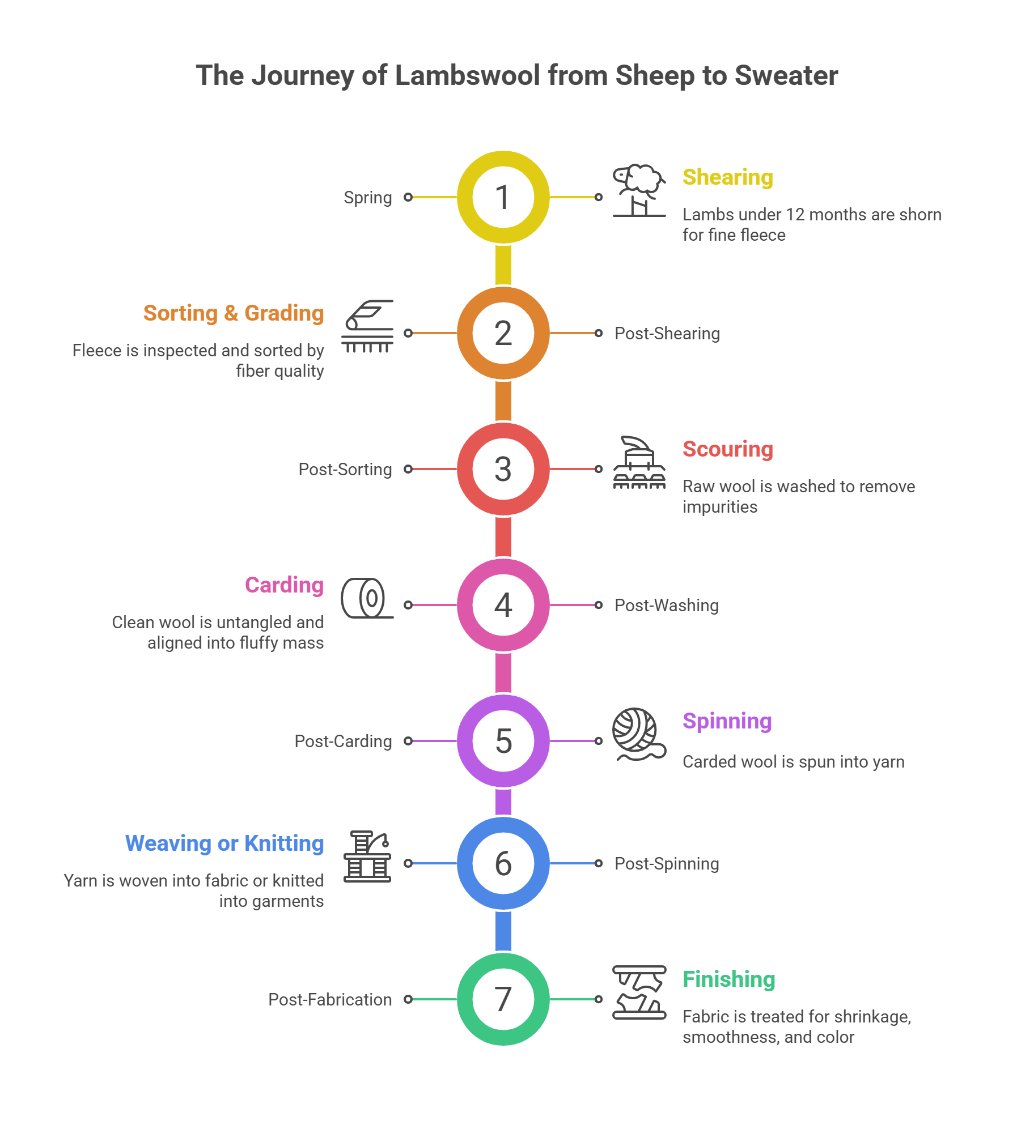
Understanding how lambswool goes from sheep to sweater helps you appreciate the care that goes into every garment. Here’s the journey:
1. Shearing (Spring)
Shearing typically happens in spring when sheep no longer need their heavy winter coats. Professional shearers use electric clippers to remove the fleece in one continuous piece – similar to taking off a jacket. A skilled shearer can complete this in about 5-10 minutes without harming the animal.
For lambswool specifically, the sheep must be under 12 months old, and the fibers can be no longer than 50mm (about 2 inches). This timing and fiber length requirement is what makes lambswool so special.
2. Sorting and Grading
Once shorn, the fleece is laid out flat and inspected. Not all parts of a sheep’s fleece are equal – the wool from the shoulders and sides is typically the finest, while belly wool and wool near the tail is coarser and removed.
Wool classers examine each fleece and sort them into categories based on:
- Fiber diameter (measured in microns)
- Fiber length
- Color and cleanliness
- Overall quality
This grading process is similar across the industry, with specific standards for different types of wool and processing methods.
3. Scouring (Washing)
Raw wool contains natural oils (lanolin), dirt, and other impurities. The wool is washed in a process called scouring, which gently cleans the fibers without damaging them. Modern facilities use controlled temperatures around 140°F (60°C) to wash the wool thoroughly.
4. Carding
Clean, dry wool passes through a series of wire rollers that untangle and align the fibers. This creates a soft, fluffy mass of fibers all pointing in the same direction, ready for spinning.
5. Spinning
The carded wool is spun into yarn. There are two main methods:
- Woolen spinning – Creates fluffier, bulkier yarn (like what you’d find in chunky sweaters)
- Worsted spinning – Creates smoother, finer yarn (used for suits and dress clothes)
Quality lambswool yarn might be 2-ply or 3-ply, meaning multiple strands are twisted together for strength. For more details on the wool processing methods, the Woolmark Company provides technical information on industry standards.
6. Weaving or Knitting
The yarn is either woven into fabric on looms or knitted into garments. Weaving creates flatter fabrics for suiting and upholstery, while knitting creates the stretchy sweaters and scarves we’re familiar with.
7. Finishing
Final treatments might include:
- Fulling – Controlled shrinkage to lock fibers together
- Pressing – Smoothing the fabric
- Dyeing – Adding color (wool absorbs dye beautifully at any stage)
The Science of Softness
What makes lambswool so much softer than regular wool? It all comes down to fiber structure and diameter.
Understanding Micron Count
Wool softness is measured in microns – that’s one millionth of a meter. The smaller the micron count, the finer and softer the fiber feels against your skin.
This chart shows why lambswool sits in a sweet spot – it’s significantly softer than regular wool, though not quite as fine as premium cashmere and specialty wools.
Natural Crimp and Air Pockets
Lambswool fibers have a natural wave or “crimp” to them. This crimp creates millions of tiny air pockets when the fibers are spun together. These air pockets do two amazing things:
- Trap warm air to insulate you in cold weather
- Allow air circulation to keep you cool when it’s warm
This is why you can comfortably wear a lambswool sweater in different seasons – the fabric naturally regulates temperature.
Unworn Fiber Tips
Unlike wool from older sheep, lambswool fibers haven’t been exposed to weather, grass, and movement for years. The fiber tips are smooth and intact, not roughened or damaged. This is a big part of why lambswool feels so gentle on your skin.
Lambswool’s Unique Properties
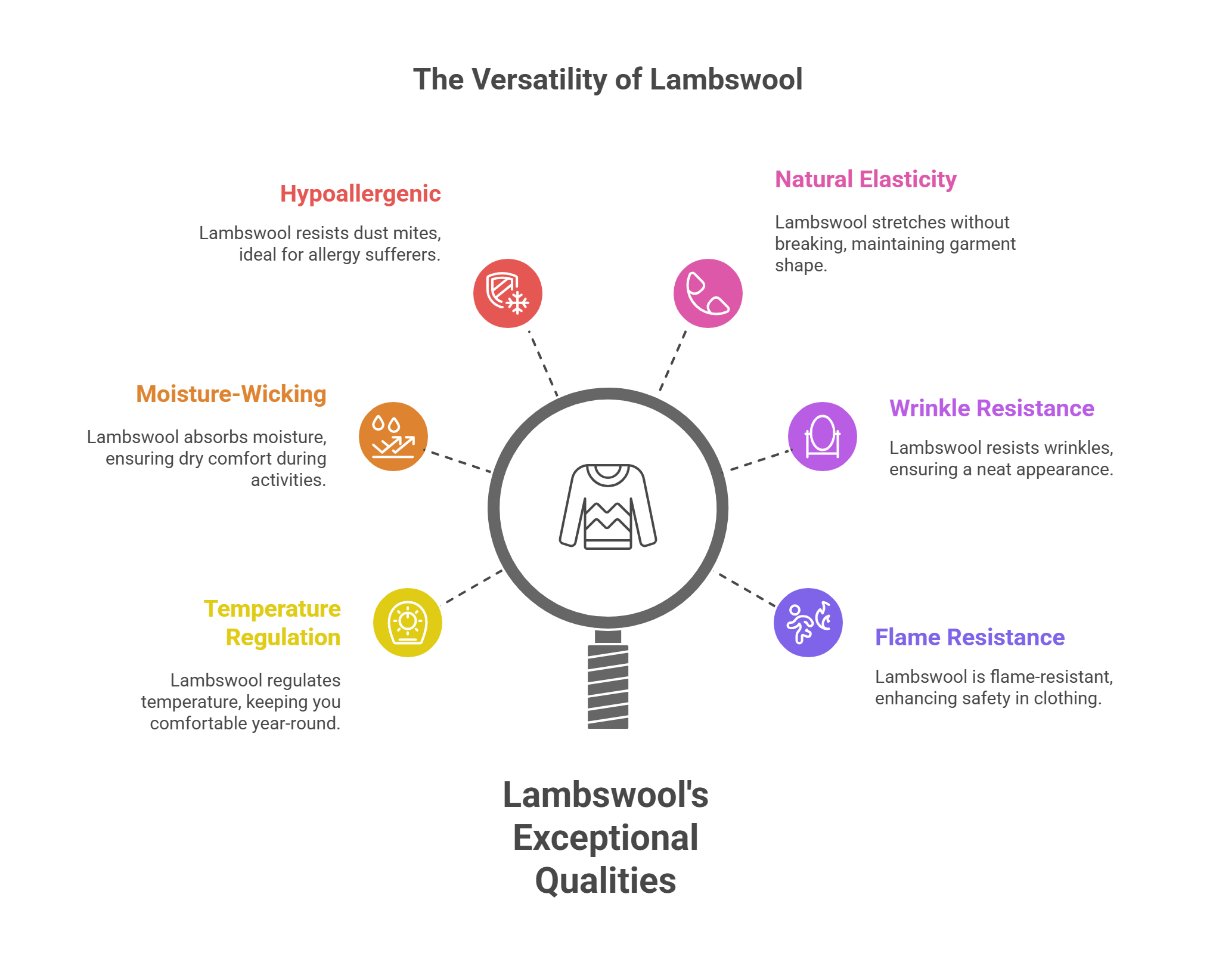
Beyond softness, lambswool has some remarkable natural properties that make it stand out from other fabrics:
Temperature Regulation
Lambswool is like having built-in climate control. Those natural air pockets we mentioned earlier work both ways – they keep you warm in winter by trapping body heat, and cool in summer by allowing excess heat to escape. This is why lambswool garments can be worn year-round.
Moisture-Wicking
Here’s something surprising: lambswool can absorb up to 30% of its own weight in moisture before it starts to feel damp. The fibers wick sweat away from your skin, keeping you comfortable during activity. Unlike synthetic fabrics that get clammy, lambswool stays dry-feeling.
Hypoallergenic
Lambswool naturally resists dust mites and mold, making it a good choice for people with allergies. While some people have sensitivity to lanolin (the natural oil in wool), true wool allergies are quite rare.
Natural Elasticity
Lambswool fibers can stretch up to 30% when dry and 50% when wet without breaking. This means your sweater bounces back to its original shape instead of sagging or stretching out over time.
Wrinkle Resistance
Thanks to that natural crimp and elasticity, lambswool resists wrinkling. Hang up your lambswool garment overnight, and wrinkles often fall out on their own.
Flame Resistance
Lambswool is naturally flame-resistant. It won’t melt like synthetic fabrics, and it needs sustained contact with flame to burn. Once you remove the flame source, it stops burning. This is one reason wool has been used in protective clothing for centuries.
Odor Resistance
Lambswool doesn’t hold onto smells the way synthetic fabrics do. The fibers naturally resist absorbing odors, which means you can wear lambswool items multiple times between washes – an added sustainability bonus.
Durability
Each wool fiber can be bent back on itself up to 20,000 times without breaking. Compare that to cotton (3,000 times) or silk (2,000 times), and you can see why properly cared-for lambswool garments last for decades.
Regional Quality Differences

Not all lambswool is created equal. Where the sheep are raised makes a real difference in fiber quality.
Geelong Lambswool (Australia)
Geelong lambswool is often called the “cashmere alternative.” Named after the Geelong region south of Melbourne, this is some of the finest lambswool in the world.
What makes it special:
- Ultra-fine micron count (15-19.5 microns – comparable to cashmere)
- Bred from specially selected Merino sheep
- Mild Australian climate produces exceptionally soft fleece
- Often labeled as “Super Geelong” or “Superfine Geelong”
- More durable than cashmere but similarly soft
Only a tiny percentage of Merino wool is fine enough to be classified as Geelong. This exclusivity means higher prices, but many consider it worth the investment for the luxury feel combined with lambswool’s durability.
Scottish Lambswool
Scotland has a centuries-old tradition of wool production. Scottish lambswool tends to be:
- Slightly coarser than Australian Geelong (around 21-23 microns)
- Very durable and long-lasting
- Known for rich, deep colors when dyed
- Often used in traditional knitwear and tartans
The cooler Scottish climate means sheep develop thicker, hardier fleece, which translates to particularly warm and weather-resistant garments.
New Zealand Lambswool
New Zealand produces high-quality lambswool with characteristics similar to Australian wool:
- Fine micron counts
- Clean, bright white color (takes dye beautifully)
- Sustainable farming practices
- Strong focus on animal welfare standards
South American Lambswool
Countries like Argentina and Uruguay produce quality lambswool, often at more affordable price points. The quality can vary more widely depending on the specific farm and sheep breed.
Is Lambswool Itchy?
This is probably the most common question people have about lambswool, and the answer is: it depends.
Why Some Lambswool Feels Itchy
Several factors can make lambswool feel scratchy:
Fiber Diameter: Thicker lambswool fibers (closer to 27 microns) can feel itchy on sensitive skin. Fibers over 25 microns are more likely to cause irritation because they’re stiff enough to poke into skin rather than bending.
Lanolin Sensitivity: Some people react to lanolin, the natural waxy coating on wool fibers. This isn’t a true allergy for most people, but it can cause mild irritation.
Quality of Processing: Poorly processed lambswool that hasn’t been properly cleaned and finished can feel rougher than it should.
Breed Variation: Remember, “lambswool” just means first shearing from a young sheep. A lamb from a breed that naturally has coarser wool will produce coarser lambswool.
How Lambswool Compares on the Itch Scale
From least to most likely to feel itchy:
- Cashmere (almost never itchy)
- Superfine Merino (very rarely itchy)
- Geelong Lambswool (rarely itchy)
- Standard Merino (occasionally itchy for sensitive skin)
- Quality Lambswool (sometimes itchy depending on brand)
- Regular Wool (often itchy)
- Coarse Wool (usually itchy)
Lambswool typically falls somewhere in the middle – softer than regular wool but potentially itchier than premium cashmere or merino.
Solutions If Your Lambswool Feels Itchy
If you have a lambswool item that’s a bit scratchy, try these fixes:
The Freezer Method: Fold the garment tightly, seal it in a plastic bag, and freeze it overnight. The cold temperature forces the fibers to lie flat. Let it warm up to room temperature before wearing. Many people swear this reduces itchiness.
Vinegar Rinse: Hand wash in cool water, then soak for 30 minutes in water with 2-3 tablespoons of white vinegar. This can soften the fibers. Rinse thoroughly and dry flat.
Hair Conditioner Method: After washing, massage a small amount of natural hair conditioner into the garment. Leave for 30 minutes, then rinse in cold water. This coats the fibers, making them smoother.
Layering: Wear a thin cotton or silk layer underneath. This creates a barrier while still allowing you to enjoy the warmth and style of lambswool.
Wash It: Sometimes new lambswool feels itchier before it’s been washed. The washing process can soften the fibers significantly.
Is Lambswool Good for Sensitive Skin?
If you have very sensitive skin, look specifically for superfine or Geelong lambswool with a micron count under 21. These finer fibers are much less likely to cause irritation. You can also check if the brand pre-washes their lambswool, which removes potential irritants.
Lambswool vs Other Fabrics
Understanding how lambswool compares to other materials helps you make the right choice for your needs.
Lambswool vs Merino Wool
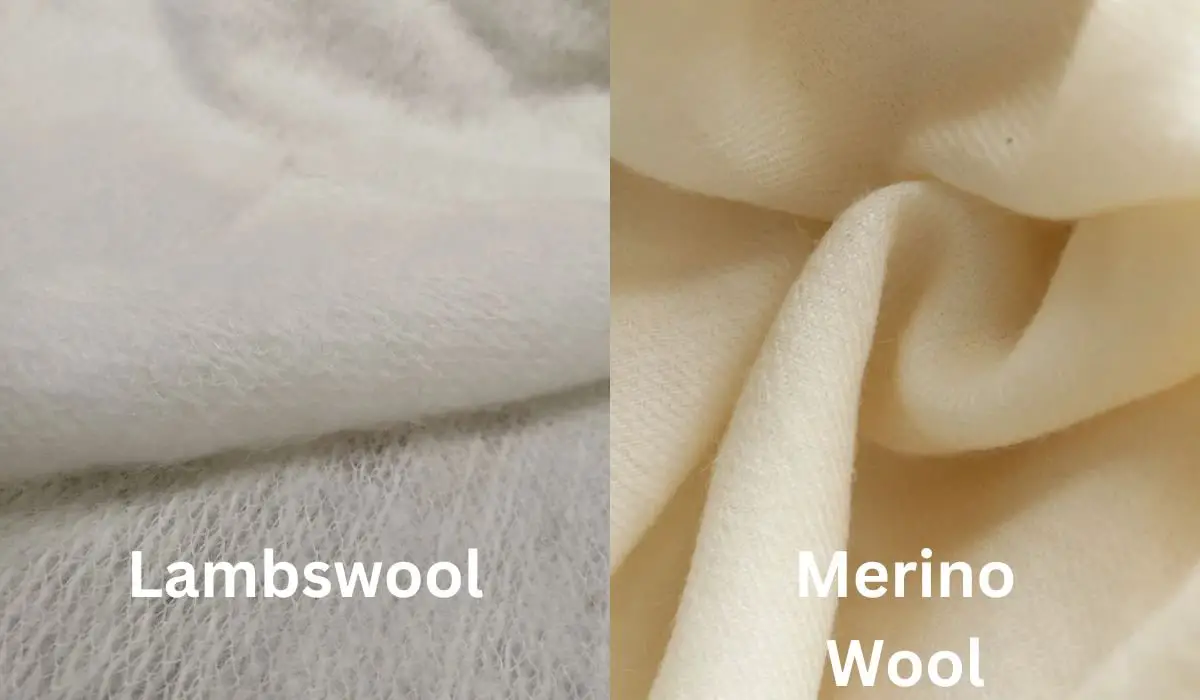
| Feature | Lambswool | Merino Wool |
|---|---|---|
| Source | First shearing from any young sheep under 12 months | Any shearing from Merino breed sheep (any age) |
| Micron Count | 20-27 microns (varies by breed) | 15-21.5 microns (consistent) |
| Softness | Very soft, some variation | Extremely soft, very consistent |
| Warmth | Warmer (higher micron = more insulation) | Warm but lighter weight |
| Durability | Very durable | Excellent durability |
| Itch Factor | Low to moderate (depends on quality) | Very low |
| Price | Moderate to high | Moderate to high |
| Best For | Sweaters, scarves, outerwear | Base layers, activewear, next-to-skin items |
Which is better? Merino is often softer and better for items worn directly against skin, but lambswool can be warmer and is sometimes more affordable. If you can find lambswool from a Merino breed (like Geelong), you get the best of both worlds.
Lambswool vs Cashmere
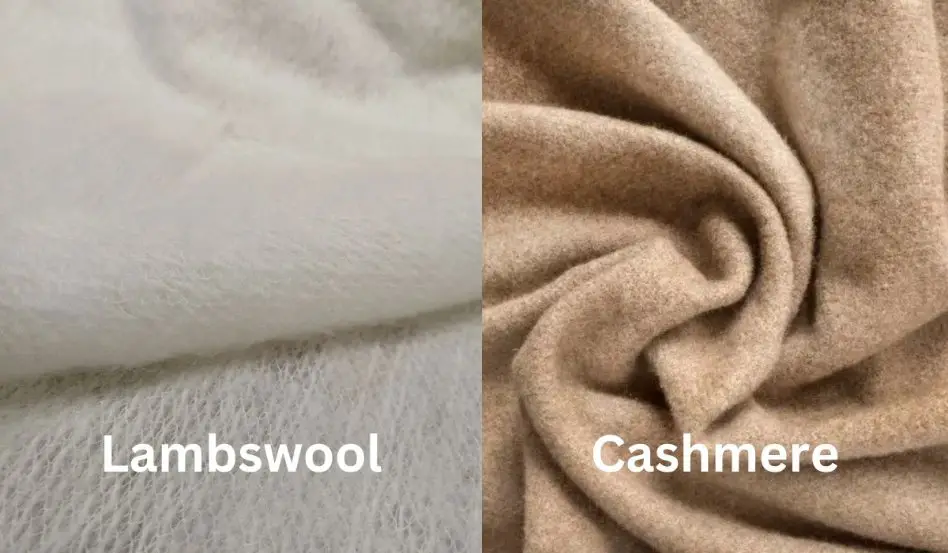
| Feature | Lambswool | Cashmere |
|---|---|---|
| Source | Young sheep (first shearing) | Cashmere goat undercoat (combed, not sheared) |
| Micron Count | 20-27 microns | 15-19 microns |
| Softness | Very soft | Luxuriously soft |
| Warmth | Very warm | Exceptionally warm (despite being lightweight) |
| Durability | Excellent – lasts decades | Good but more delicate – pills more easily |
| Price | $50-150 for quality sweaters | $200-500+ for sweaters |
| Maintenance | Relatively easy care | Requires very gentle care |
| Pilling | Minimal with quality lambswool | Pills more readily |
Is lambswool better than cashmere? It depends on your priorities. Cashmere is softer and lighter, but lambswool is more durable and much more affordable. For everyday wear, many people prefer lambswool because it holds up better to regular use and washing.
Lambswool vs Regular Wool
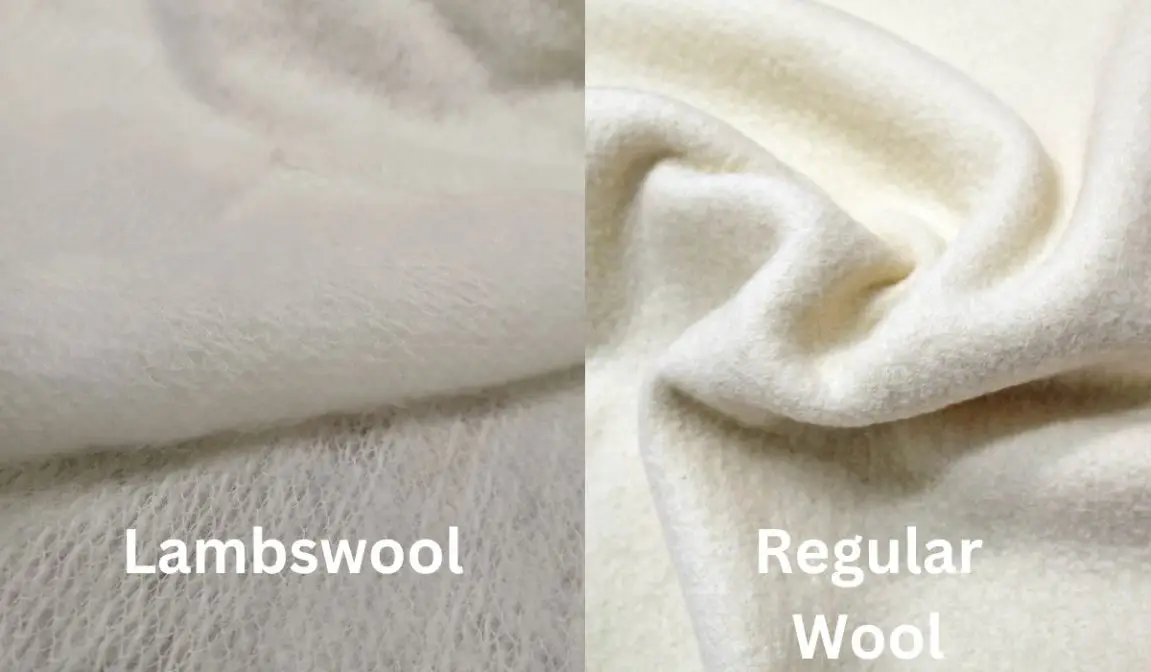
The main difference is simple: lambswool comes from the first shearing of young sheep, while regular wool comes from subsequent shearings of mature sheep.
Lambswool advantages:
- Softer (finer fibers with smoother tips)
- Less likely to itch
- More elastic (better shape retention)
- Lighter weight for the same warmth
Regular wool advantages:
- More affordable
- More widely available
- Can be very durable depending on quality
Which is better? If you can afford it, lambswool is worth the upgrade for items that touch your skin like sweaters and scarves. For items like blankets or outerwear linings where you won’t feel the fiber directly, regular quality wool works fine.
Lambswool vs Cotton
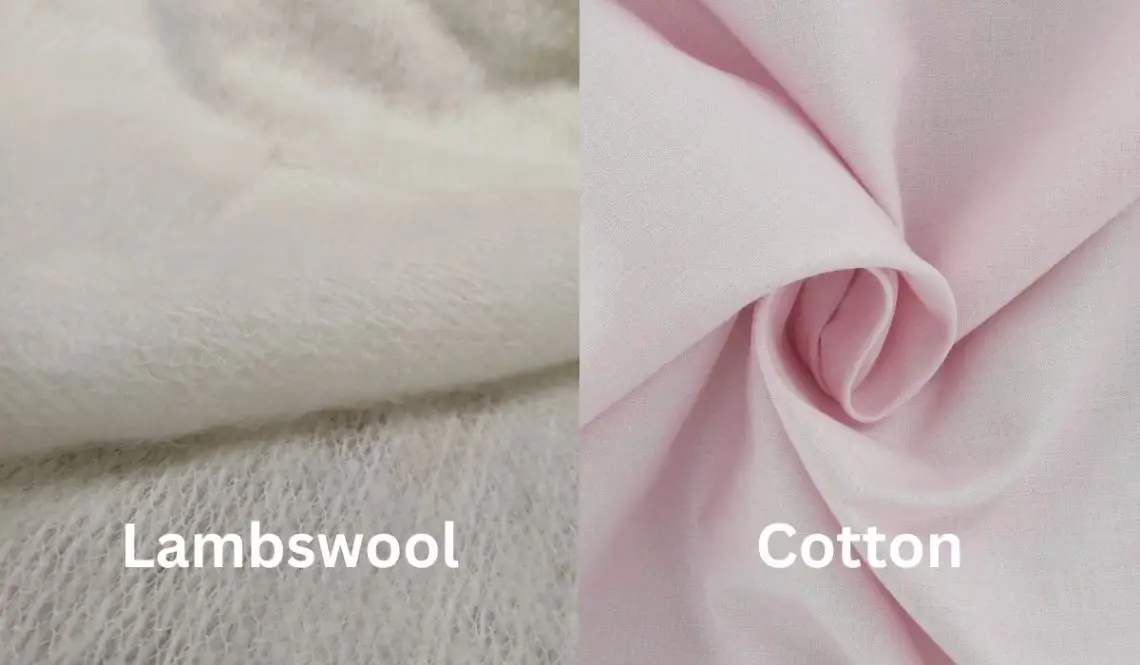
| Feature | Lambswool | Cotton |
|---|---|---|
| Warmth | Excellent insulation | Moderate warmth |
| Moisture Management | Wicks moisture, stays dry-feeling | Absorbs moisture, can feel damp |
| Temperature Regulation | Excellent – works in all seasons | Good for warm weather, less effective in cold |
| Durability | Very durable (20,000 bend cycles) | Durable but less than wool (3,000 bend cycles) |
| Wrinkle Resistance | Naturally wrinkle-resistant | Wrinkles easily |
| Care | Hand wash or gentle cycle | Machine washable, can use dryer |
| Environmental Impact | Renewable, biodegradable, low water use | Renewable, biodegradable, high water use |
| Price | Higher | Lower to moderate |
Is lamb’s wool better than cotton? For cold weather clothing, lambswool wins on warmth, moisture management, and temperature regulation. Cotton is easier to care for and better for hot, humid weather. Many people keep both in their wardrobe for different seasons.
Lambswool vs Fleece
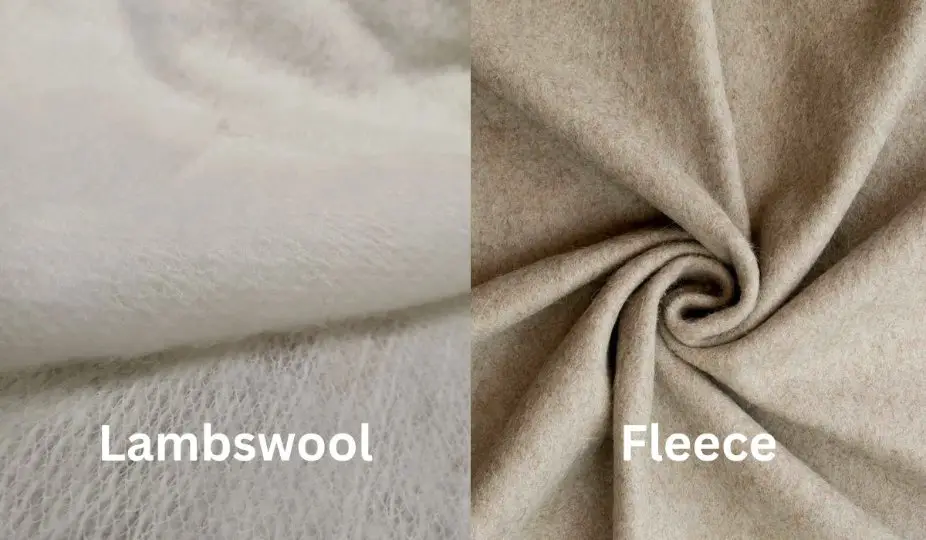
Is lambswool warmer than fleece? Lambswool and fleece offer similar warmth levels, but they work differently. Lambswool regulates temperature better and doesn’t trap odors like synthetic fleece can. Fleece is lighter weight and dries faster, making it popular for activewear. Lambswool is more sustainable and lasts longer, while fleece is typically more affordable upfront.
Sheepskin vs Lambswool

Is sheepskin the same as lambswool? No, they’re completely different. Sheepskin is leather with the wool still attached – the entire hide of the animal. Lambswool is just the wool fiber that’s been sheared, processed, and spun into fabric. Sheepskin is used for boots, coats, and rugs. Lambswool is used for sweaters, scarves, and knitted items.
Similarly, lambskin refers to leather from young sheep, not the wool. Lambskin is prized for its soft, supple texture in leather goods.
Lambswool vs Pure New Wool
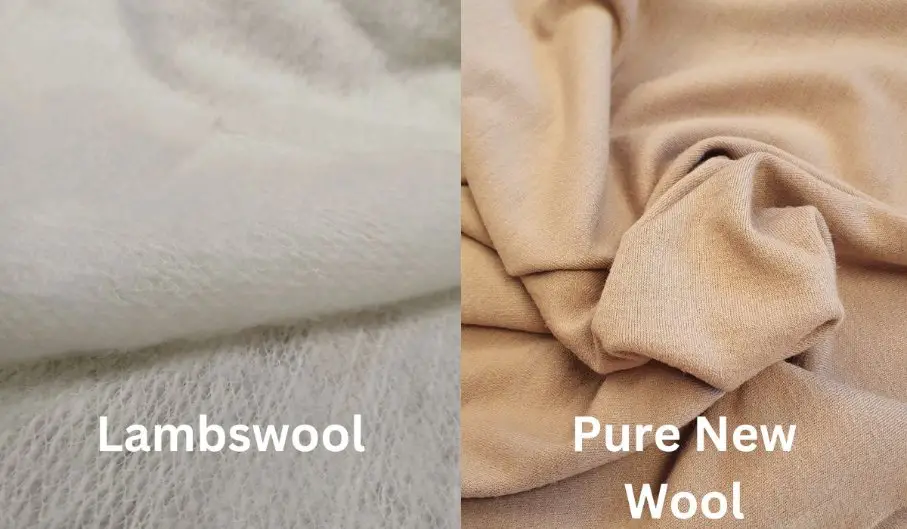
Is lambswool better than pure new wool? “Pure new wool” (or virgin wool) means wool that hasn’t been recycled – but it can come from sheep of any age. Lambswool is more specific – it’s pure new wool from young sheep’s first shearing. So lambswool is a premium category within pure new wool, typically softer and finer.
Is Lambswool a Good Fabric?
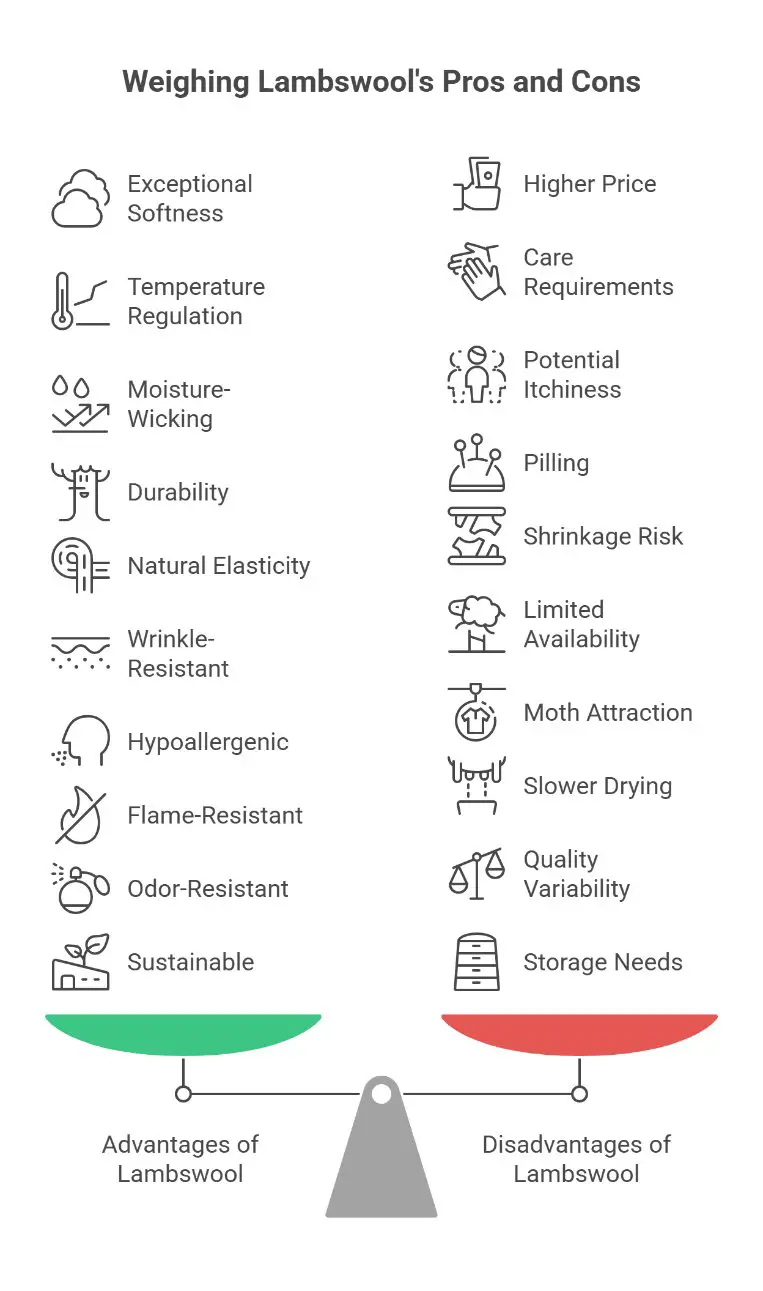
After all this information, let’s answer the big question directly: yes, lambswool is an excellent fabric for most people. Here’s a balanced look at the advantages and disadvantages.
Advantages of Lambswool
- Exceptional Softness: Much softer than regular wool, with smooth fiber tips
- Temperature Regulation: Keeps you warm in winter, cool in summer
- Moisture-Wicking: Absorbs sweat while feeling dry
- Durability: Properly cared for lambswool lasts 20+ years
- Natural Elasticity: Resists stretching and keeps its shape
- Wrinkle-Resistant: Springs back naturally
- Hypoallergenic: Resists dust mites and mold
- Flame-Resistant: Won’t melt like synthetics
- Odor-Resistant: Requires less frequent washing
- Sustainable: Renewable, biodegradable, natural fiber
- Versatile: Works for clothing, accessories, and home goods
Disadvantages of Lambswool
- Price: More expensive than cotton or synthetic fabrics
- Care Requirements: Needs gentle washing, can’t go in the dryer
- Potential Itchiness: Some people with sensitive skin may find it scratchy
- Pilling: Can develop small pills with wear (though less than cashmere)
- Shrinkage Risk: Will shrink if washed in hot water or machine dried
- Limited Availability: Each sheep produces lambswool only once
- Moth Attraction: Requires proper storage with moth protection
- Slower Drying: Takes longer to dry than synthetic fabrics
- Variability: Quality varies widely depending on breed and processing
Is 100% Lambswool Warm?
Yes, 100% lambswool is very warm. Those natural air pockets we talked about trap body heat effectively, making lambswool one of the warmest natural fibers available. A quality lambswool sweater can keep you comfortable in temperatures down to freezing, especially when layered.
The warmth-to-weight ratio is particularly good – you get excellent insulation without the bulk of heavier fabrics.
Does Lambswool Last Long?
High-quality lambswool garments can last 20-30 years or more with proper care. The key is following care instructions carefully – hand washing, drying flat, and storing properly. Many people have lambswool sweaters passed down through generations that are still in excellent condition.
Lambswool is actually more durable than cashmere, which is why it’s often recommended for items you’ll wear frequently rather than save for special occasions.
Is Lambswool a Natural Fiber?
Yes, lambswool is 100% natural. It’s an animal fiber made of keratin protein, the same protein that forms human hair and nails. Unlike synthetic fibers made from petroleum, lambswool is renewable (sheep grow new fleece every year) and fully biodegradable at the end of its life.
Sustainability & Ethics
The environmental impact of lambswool depends largely on how the sheep are raised and the wool is processed.
Environmental Benefits
Renewable Resource: Sheep grow new fleece every year. When managed sustainably, wool production can continue indefinitely without depleting resources.
Biodegradable: At the end of its life, lambswool breaks down naturally. Buried in soil, wool decomposes in 3-4 months, returning nutrients to the earth. Compare this to polyester, which can take 200+ years to break down.
Low Water Usage: Compared to cotton farming, raising sheep uses significantly less water. Sheep mainly drink rainwater and graze on grass that grows naturally.
Carbon Neutral or Negative: Well-managed pastures where sheep graze can actually sequester carbon from the atmosphere. Some studies show wool production can be carbon-negative when farming practices are optimized.
Long Lifespan: Because lambswool garments last decades, you buy fewer items over your lifetime, reducing overall consumption and waste.
Environmental Concerns
Methane Emissions: Sheep, like all ruminants, produce methane (a greenhouse gas) during digestion. However, improved farming practices and feed management are reducing these emissions.
Land Use: Large-scale sheep farming can contribute to overgrazing and land degradation if not managed properly. Sustainable farms practice rotational grazing to prevent this.
Processing Chemicals: The scouring and dyeing processes can use chemicals. Look for brands that use eco-friendly processing methods and non-toxic dyes.
Animal Welfare Considerations
Mulesing: This is a controversial practice used primarily on Australian Merino sheep where skin folds are removed to prevent parasitic infection. Many consider it inhumane. Look for “mulesing-free” certifications if this concerns you.
Ethical Shearing: Professional shearing itself doesn’t hurt sheep – in fact, sheep must be sheared for their health and comfort. However, rushed or careless shearing can cause nicks and cuts. Reputable farms train shearers properly and prioritize animal welfare.
Living Conditions: Sheep should have access to pasture, clean water, and shelter. Factory farming of sheep is less common than with other livestock, but conditions still vary widely.
What to Look For
If sustainability and ethics matter to you, look for these certifications:
- Responsible Wool Standard (RWS): Ensures sheep welfare and land management practices
- ZQ Merino: New Zealand certification for ethical and sustainable wool
- Organic Wool: Sheep raised without synthetic pesticides or fertilizers
- Mulesing-Free: Confirms no mulesing practices used
Conventional vs Organic Lambswool
Organic lambswool comes from sheep raised on organic pastures without synthetic chemicals. While it’s more expensive, it ensures minimal environmental impact and often better animal welfare. Conventional lambswool can still be sustainably produced, but you’ll need to research individual brands.
Recycled Lambswool
Some companies now offer recycled lambswool, made from reclaimed wool garments that are shredded and re-spun. This reduces waste and is even more sustainable than new wool, though the quality may vary.
Uses & Applications
Lambswool’s unique properties make it suitable for a surprising range of products.
Fashion & Clothing
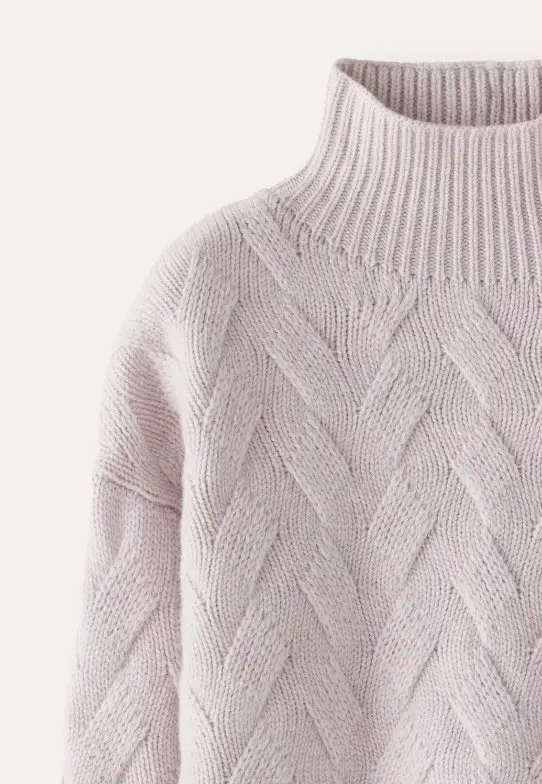
Sweaters and Cardigans: This is what lambswool is famous for. The softness and warmth make it perfect for knitwear that touches your skin. Quality lambswool sweaters become wardrobe staples that last for decades.
Scarves, Hats, and Gloves: Accessories benefit from lambswool’s lightweight warmth and softness. A lambswool scarf provides serious warmth without the bulk or weight of heavier materials.
Suits and Tailoring: Finer lambswool fabrics are woven into suiting cloth. Some manufacturers, like England’s Anglo collection, make 100% lambswool suiting that works for trousers, jackets, and waistcoats – not just outerwear.
Base Layers: While not as common as merino for base layers, superfine lambswool (like Geelong) works well for thermal underwear and undershirts.
Luxury Brand Items: Speaking of high-end brands – are Burberry scarves lambswool or cashmere? Burberry makes both, but many of their classic check scarves are actually lambswool or lambswool-cashmere blends, not pure cashmere. This choice reflects lambswool’s durability for items that get regular wear.
Home Textiles
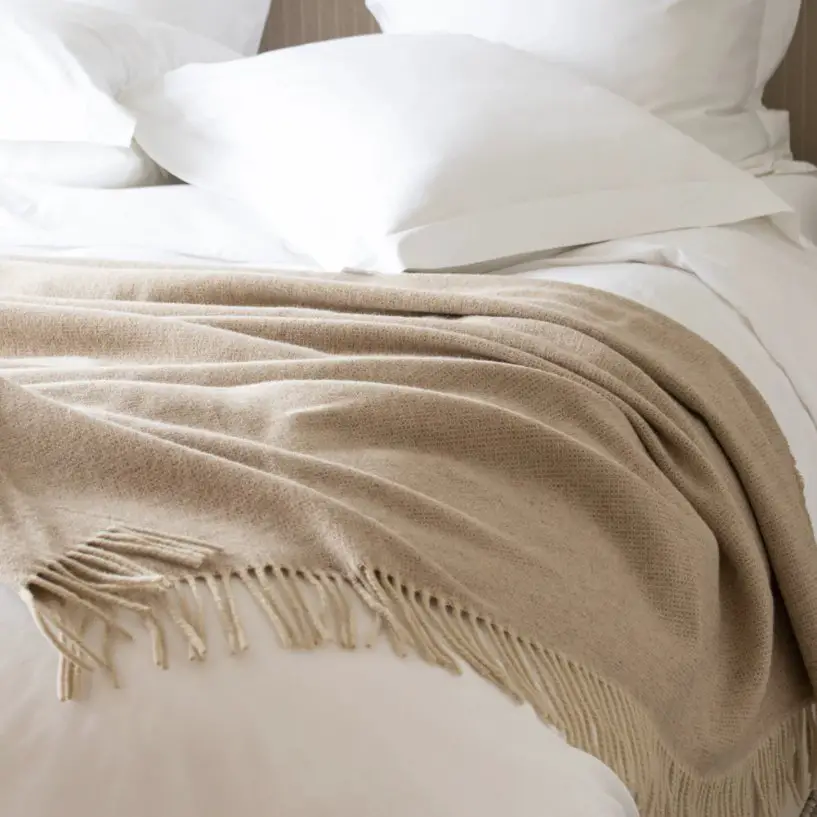
Blankets and Throws: Lambswool blankets provide warmth without excessive weight. They’re breathable enough for year-round use and naturally hypoallergenic for bedding.
Upholstery: You might be surprised to learn lambswool is used for furniture upholstery. Quality lambswool fabric can withstand 100,000 double rubs (a measure of durability), making it suitable for sofas and chairs that get regular use.
Pillows and Cushions: Both as covers and filling, lambswool provides softness and temperature regulation.
Carpets and Rugs: While most lambswool is used for clothing, some goes into carpeting. It’s naturally soil-resistant and durable.
Specialty Uses
Ballet and Dance: Here’s a lesser-known use – lambswool is commonly used for padding in ballet dancers’ pointe shoes. The combination of softness, moisture-wicking, and resilience makes it perfect for protecting dancers’ feet during intense training and performances.
Baby Clothing: Because it’s hypoallergenic and gentle, superfine lambswool is sometimes used for baby items like blankets and sweaters. However, many parents prefer cotton for very young babies due to easier care.
How to Choose Quality Lambswool
Not all lambswool products are created equal. Here’s how to spot the good stuff:
Reading Labels
“100% Lambswool”: This is what you want to see. In some countries, products labeled simply “lambswool” may contain as little as 25% lambswool, with the rest being other fibers. Always look for “100%” or “Pure Lambswool.”
“Super Geelong” or “Superfine”: These terms indicate premium-quality lambswool with a lower micron count (finer, softer fibers).
Ply Information: 2-ply or 3-ply means multiple strands are twisted together. Higher ply often indicates better quality and durability, though it also means slightly heavier fabric.
Micron Count: If listed, look for counts under 23 microns for the softest feel. Anything under 21 microns rivals premium materials.
Touch Test
If you can, feel the fabric before buying:
- It should feel soft and slightly springy, not stiff or coarse
- High-quality lambswool has a slight sheen, not a dull appearance
- The fabric should bounce back when gently stretched
Price Indicators
Quality lambswool isn’t cheap, but you do get what you pay for:
- Budget: $40-80 (lambswool blends or lower-quality lambswool)
- Mid-Range: $80-150 (good quality 100% lambswool)
- Premium: $150-300+ (Geelong, superfine, or luxury brand lambswool)
If a “lambswool” sweater costs $20, it’s almost certainly a blend with mostly synthetic fibers.
Reputable Brands and Origins
Look for products from:
- Scottish manufacturers (long wool tradition)
- Australian brands (especially Geelong region)
- New Zealand producers (high welfare standards)
- Established British knitwear companies
Certifications to Look For
- Woolmark certification (quality standard)
- RWS (Responsible Wool Standard)
- Mulesing-free certification
- Organic certification
Care Instructions
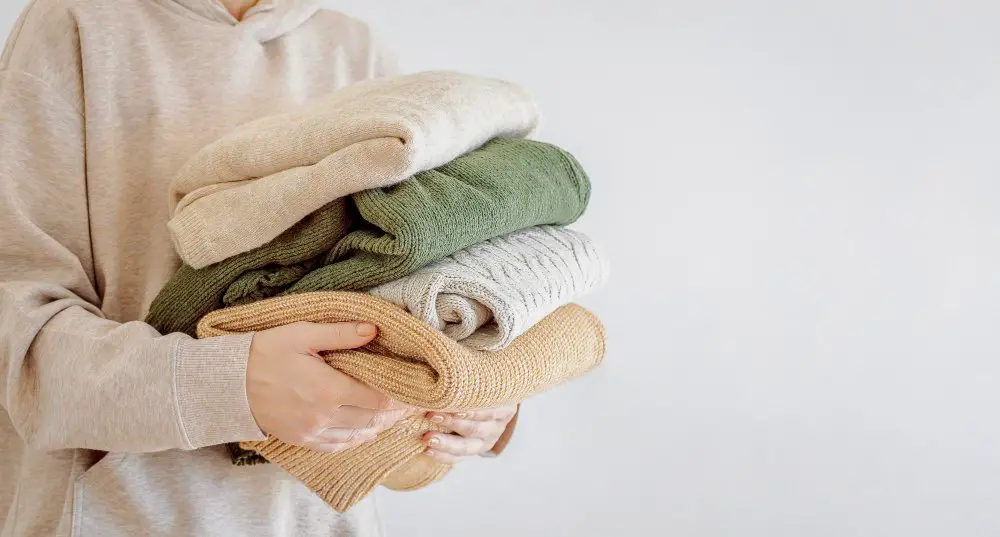
Proper care is what makes the difference between a lambswool sweater that lasts 6 months and one that lasts 20 years.
How Do You Wash Lambswool?
The best way to care for lambswool is hand washing. Here’s exactly how to do it:
- Fill a Basin with Cool Water: Use water that’s lukewarm to cool – never hot. Hot water causes wool fibers to shrink and felt together.
- Add Wool-Specific Detergent: Use a gentle wool wash like Woolite or Eucalan. Never use regular laundry detergent, which is too harsh for wool fibers. Avoid fabric softener, which can coat the fibers.
- Submerge and Soak: Turn your garment inside out and gently press it into the water. Let it soak for 10-15 minutes. Don’t agitate or rub the fabric – just let it sit.
- Gently Squeeze: Press the water through the fabric with gentle squeezing motions. Never wring or twist, which can stretch the fibers.
- Rinse Thoroughly: Drain the basin and refill with clean cool water. Gently press the garment to remove soap. Repeat until water runs clear and there are no suds.
- Remove Excess Water: Press the garment against the side of the basin to squeeze out water. Then lay it flat on a clean, dry towel, roll up the towel, and press to absorb more water.
- Dry Flat: Reshape the garment to its original dimensions and lay it flat on a fresh, dry towel or drying rack. Never hang lambswool to dry – it will stretch. Keep it away from direct heat or sunlight.
Can You Put Lambswool in the Washing Machine?
Some lambswool items can be machine washed, but only if:
- The care label specifically says “machine washable”
- You use a mesh laundry bag to protect the garment
- You select the gentlest cycle (usually labeled “hand wash” or “delicate”)
- You use cold water only
- You use wool-specific detergent
Even then, hand washing is gentler and will help your lambswool last longer.
Can You Put Lambswool in the Dryer?
No, never put lambswool in the dryer. The heat will cause it to shrink significantly and may felt the fibers together, ruining the garment. Always air dry flat.
Does Lamb Wool Shrink in the Wash?
Yes, lambswool will shrink if exposed to:
- Hot water
- Agitation (like a regular wash cycle)
- Heat drying
- Sudden temperature changes
If you accidentally shrink a lambswool item, you might be able to gently stretch it back while it’s still damp. Soak it in cool water with hair conditioner for 30 minutes, then gently stretch and reshape while drying flat. This doesn’t always work, but it’s worth trying.
How Often Should You Wash Lambswool?
Here’s the good news: lambswool doesn’t need frequent washing. Thanks to its natural odor resistance, you can typically wear lambswool items 5-7 times before washing. For items like scarves or sweaters worn over other clothing, washing 2-3 times per season is often enough.
Between wears, simply air out your lambswool garments by hanging them in a well-ventilated area for a few hours.
Storage Tips
Moths are Enemy #1: Wool-eating moths love lambswool. Prevent problems by:
- Storing clean garments only (moths are attracted to food stains and body oils)
- Using cedar blocks or lavender sachets in your closet
- Keeping lambswool in breathable cotton storage bags (not plastic, which can trap moisture)
- Storing in airtight containers for long-term storage
Fold, Don’t Hang: Store lambswool sweaters folded in drawers or on shelves. Hanging stretches the shoulders out of shape.
Cool, Dry Location: Keep lambswool in a cool, dry place away from direct sunlight, which can fade colors.
Ironing Lambswool
If you must iron lambswool:
- Use the lowest heat setting (wool setting if your iron has one)
- Iron while the garment is still slightly damp, or use a pressing cloth
- Never press directly on the wool – always use a cloth barrier
- Use gentle pressure – don’t press hard
Usually, laying flat or hanging in a steamy bathroom is enough to remove wrinkles naturally.
Common Problems & Solutions
Pilling

Does lambswool pill easily? Lambswool can develop pills (small balls of fiber on the surface), but high-quality lambswool pills less than cashmere or lower-quality wools. Pilling happens when short fibers work their way to the surface during wear.
How to stop lambswool from pilling:
- Wash garments inside out to reduce friction
- Avoid wearing the same piece multiple days in a row – give fibers time to rest
- Don’t wear under bags or backpacks, which create friction
- Choose higher-ply lambswool (2-ply or 3-ply pills less than 1-ply)
- Hand wash rather than machine wash
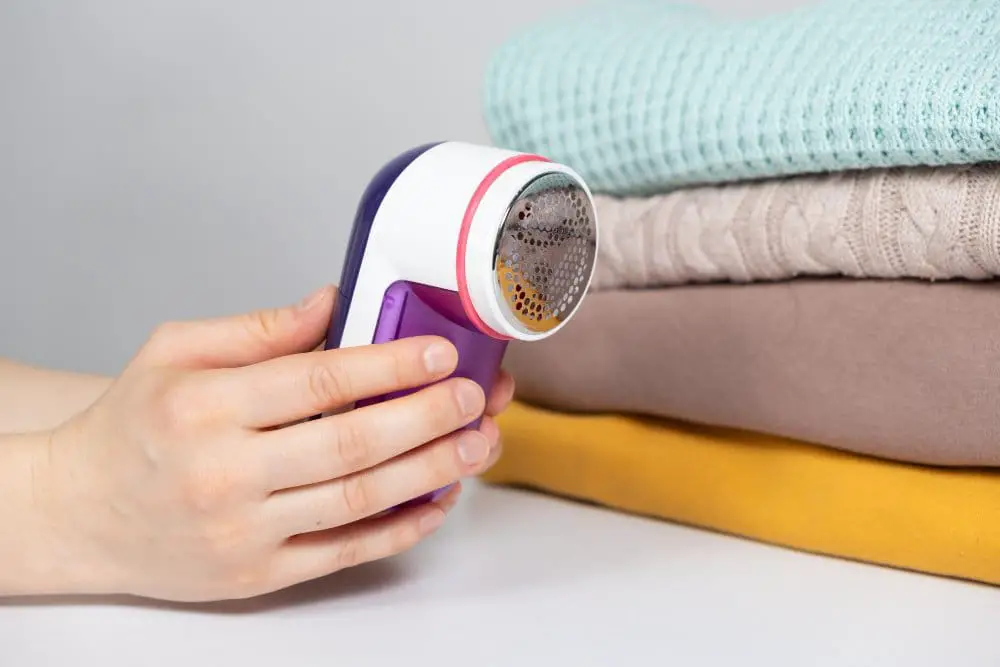
Removing pills: Use a fabric shaver or sweater comb to gently remove pills. Never pull them off with your fingers, which can create more pilling.
Stretching
Prevention:
- Always dry flat, never hang wet lambswool
- Store folded, not hung
- Don’t wring or twist when washing
Fix: If a garment has stretched, hand wash it and carefully reshape it to its original dimensions while drying flat. The fibers often contract slightly during washing.
Fading
Prevention:
- Store away from direct sunlight
- Use cold water and wool-safe detergent
- Turn inside out before washing
- Don’t over-wash
Moth Damage
Prevention is key:
- Always wash before storing for the season
- Use cedar or lavender
- Check stored items every few months
- Vacuum closets and drawers regularly
If you find moths: Immediately wash or freeze all wool items for 72 hours to kill eggs and larvae. Clean your storage area thoroughly before returning items.
Frequently Asked Questions
Conclusion
After covering everything from production to care, let’s answer the ultimate question: is lambswool worth the investment?
For most people, the answer is yes – especially for items you’ll wear frequently like sweaters, scarves, and winter accessories. Here’s why:
Lambswool offers a rare combination of softness, warmth, durability, and sustainability that’s hard to match. While it costs more upfront than cotton or synthetic alternatives, a quality lambswool sweater can last 20-30 years with proper care. When you calculate the cost per wear, it often works out cheaper than buying multiple fast-fashion pieces that wear out after a season or two.
The natural properties – temperature regulation, moisture-wicking, odor resistance – mean your lambswool pieces work harder for you. You’ll stay comfortable across a wider temperature range, and you can wear items multiple times between washes. This isn’t just convenient; it’s better for the environment too.
From a sustainability standpoint, lambswool checks most of the right boxes. It’s renewable, biodegradable, and has a lower environmental impact than many synthetic alternatives. While there are valid animal welfare concerns to consider, choosing certified ethical lambswool from responsible producers addresses many of these issues.
Key Takeaways
What makes lambswool special: It’s the softest wool a sheep ever produces, taken from the first shearing of young animals under 12 months old. Those pristine, unworn fiber tips create exceptional softness.
Quality matters significantly: Not all lambswool is the same. Superfine options like Geelong lambswool rival cashmere in softness but offer better durability. Look for micron counts under 23 for the softest feel, and always choose “100% lambswool” over blends.
Care is non-negotiable: The difference between lambswool that lasts decades and lambswool that shrinks after one wash is simple: following care instructions. Hand wash in cool water, dry flat, and store properly with moth protection.
Know what you’re comparing: Lambswool sits in a sweet spot – softer and finer than regular wool, more durable and affordable than cashmere, warmer than cotton, and more sustainable than synthetics. Each fabric has its place, but for everyday luxury that lasts, lambswool is hard to beat.
The itch factor is manageable: While some lambswool can feel scratchy to sensitive skin, choosing high-quality options and using simple softening techniques (like the freezer method or vinegar rinse) solves this for most people.
Final Recommendations
Invest in quality over quantity: One excellent lambswool sweater from a reputable brand will serve you better than three cheaper alternatives. Look for established manufacturers from wool-producing regions like Scotland, Australia, or New Zealand.
Start with accessories: If you’re new to lambswool, start with a scarf or hat. These items are more affordable than sweaters and let you test how the fabric feels against your skin without a major investment.
Learn proper care from day one: Don’t wait until you’ve ruined a favorite sweater to learn how to wash lambswool correctly. Take 20 minutes to hand wash properly, and your lambswool will reward you with decades of wear.
Support ethical production: When possible, choose lambswool with certifications like RWS (Responsible Wool Standard) or mulesing-free labels. Your purchasing decisions support better farming practices.
Mix and match in your wardrobe: You don’t need to replace all your clothes with lambswool. Use it strategically for cold-weather items that touch your skin, and complement it with other fabrics for different situations.
Lambswool represents one of nature’s finest textile achievements – a fiber that keeps you warm without overheating, stays fresh between washes, lasts for decades, and returns harmlessly to the earth at the end of its life. While it requires more care than cotton and costs more than synthetics, the combination of comfort, performance, and longevity makes it a smart choice for anyone building a quality wardrobe.
Whether you’re shopping for your first lambswool piece or looking to expand your collection, understanding the differences in quality, knowing how to care for it properly, and choosing ethical sources ensures you’ll get the full benefit of this remarkable natural fiber.