
Everything you need to know about herringbone wool – from ancient history to modern sustainability, quality buying tips, care instructions, and style inspiration
Table of Contents
- What Is Herringbone Wool Fabric?
- The Rich History of Herringbone Wool
- Types of Wool Used in Herringbone Fabric
- Herringbone Wool vs Other Fabrics
- Properties and Characteristics
- Sustainability and Environmental Impact
- Uses and Applications
- How to Choose Quality Herringbone Wool
- Working with Herringbone Wool
- Care and Maintenance
- Cultural Impact and Famous Pieces
- The Future of Herringbone Wool
- Frequently Asked Questions
What Is Herringbone Wool Fabric?
Picture a fabric so beautiful that it’s been treasured for over 2,600 years. That’s herringbone wool. This isn’t just another textile – it’s a piece of history you can wear, touch, and pass down through generations.
Herringbone wool fabric (also known as wool herringbone) combines two powerful elements: the natural wonder of wool fiber with a weaving pattern so distinctive that once you spot it, you’ll see it everywhere. From classic business suits to cozy blankets, this fabric has stood the test of time for good reason.
Understanding the Pattern vs. the Material
Important Distinction: While “herringbone fabric” can refer to ANY material woven in this pattern (cotton, linen, silk, polyester), “herringbone wool fabric” specifically means wool material with this weave pattern. Think of it like this: all herringbone wool is herringbone fabric, but not all herringbone fabric is wool.
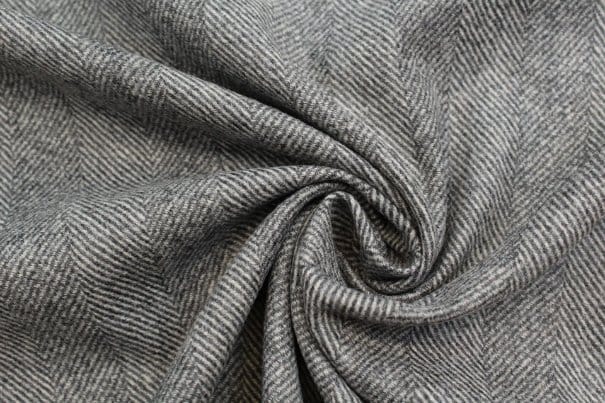
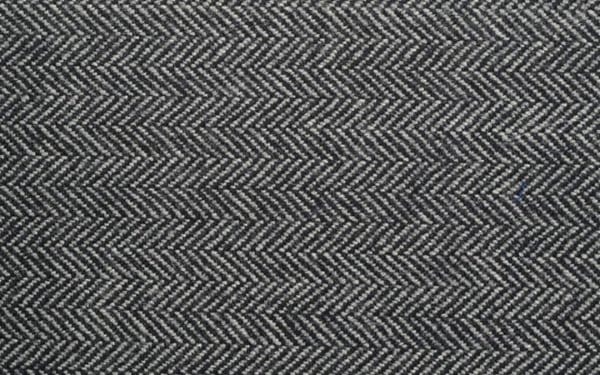
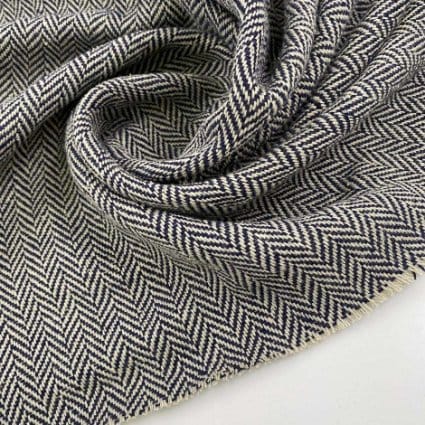
The herringbone pattern gets its name from the skeleton of a herring fish. When you look closely at the fabric, you’ll see rows of diagonal lines that reverse direction at regular intervals, creating a V-shaped zigzag that looks remarkably like fish bones. This pattern is also called “broken twill weave” because it breaks the standard diagonal line of regular tweed fabric.
What Is Herringbone Fabric Called?
Herringbone goes by several names depending on where you are and what context you’re in. In technical textile terms, it’s called “broken twill weave.” The Romans knew it as “opus spicatum” when they used the pattern for road construction. In French, you might hear “chevron brisé.” Some people mistakenly call it chevron, but that’s not quite right – chevron has continuous V shapes, while herringbone has a break where the pattern reverses, creating that distinctive broken zigzag.
How It’s Made: The Weaving Magic
Creating herringbone wool involves a specific weaving technique that’s more complex than plain weaves but produces a much stronger, more interesting fabric.
The Herringbone Weaving Process
The weaving process uses two sets of threads. The warp threads run vertically on the loom, while the weft threads weave horizontally over and under them. In herringbone, the weft creates a diagonal pattern by going over two (or more) warp threads, then under two, creating that distinctive slant. After a certain number of rows, the direction flips, and the slant goes the opposite way. This reversal creates the V-shape that defines herringbone.
Technical Specifications
Herringbone wool typically comes in weights ranging from 280 GSM (grams per square meter) for lightweight suiting to 450+ GSM for heavy coats. The most common weights are:
- 280-320 GSM: Lightweight, perfect for suits and dress trousers
- 320-380 GSM: Medium weight, ideal for blazers and sport coats
- 380-450 GSM: Heavy weight, excellent for overcoats and winter wear
- 450+ GSM: Extra heavy, used for blankets and upholstery
Want to calculate the perfect weight for your project? Try our Wool Quality Assessment Checklist to make sure you’re choosing the right fabric.
The Rich History of Herringbone Wool
Let’s travel back in time. Way back. We’re talking about 600 BC, long before the internet, before electricity, even before the Roman Empire reached its peak.
Ancient Origins
Archaeologists digging through the permafrost of the Italian-Austrian Alps made a startling discovery: woolen leggings featuring a 2:2 herringbone weave, dating to somewhere between 800 and 500 BC. Think about that for a moment – people were wearing herringbone wool over 2,500 years ago. In Northern Ireland, researchers found horsehair fabric with herringbone patterns from around 750-600 BC. According to historical textile research, herringbone weaves have been discovered in multiple ancient sites across Europe and the Mediterranean.
But the Romans took this pattern to a whole new level. They used herringbone brick patterns (opus spicatum) to build their famous roads. These weren’t just pretty patterns – the crisscross design helped distribute weight and absorb shocks from heavy traffic. If it worked for roads that carried entire armies, imagine how durable it would be for clothing.
Scottish and Irish Heritage
Fast forward to Scotland and Ireland in the 18th and 19th centuries. This is where herringbone wool really came into its own. Scottish weavers in the Outer Hebrides, particularly on the Isle of Harris, began producing herringbone tweed that would become legendary. Tartan wool patterns were all the rage, but herringbone offered something different – sophisticated texture without loud colors.
Irish weavers in County Donegal developed their own distinctive herringbone tweeds, often with colorful flecks woven throughout. These weren’t just fabrics – they were status symbols. Different estates had their own herringbone patterns, designed to match the local landscape. Gamekeepers wore these “estate tweeds” for camouflage while hunting.
Victorian Era and Royal Endorsement
When Prince Albert purchased Balmoral Castle in Scotland in 1848, he commissioned a unique Balmoral tweed featuring a herringbone pattern. Suddenly, every Highland estate wanted their own signature herringbone design. What started as practical outdoor wear for farmers and hunters became the height of upper-class fashion.
The Victorian era saw herringbone wool suits become standard business attire. The pattern was formal enough for city offices but still had that rugged, outdoor heritage. It was the perfect balance.
20th Century Military and Fashion
During World War I and II, herringbone took on a military role. The French military adopted herringbone cotton (not wool, but the same pattern) for uniforms. American forces called these “HBTs” – Herringbone Twills. The pattern’s ability to hide dirt and wear made it practical for combat conditions.
Post-war fashion exploded with herringbone. The 1920s and 1930s saw men’s suits featuring subtle herringbone patterns becoming a staple of professional wardrobes. Women’s fashion caught on too, with herringbone coats and tailored jackets becoming symbols of sophisticated style.
Modern Revival
Today, herringbone wool is experiencing a renaissance. The slow fashion movement has brought renewed interest in quality, long-lasting fabrics. People want clothes that tell stories, that have heritage. Herringbone delivers on both counts. Modern designers are reinterpreting classic herringbone in new colors and weights, proving that some patterns really are timeless.
Types of Wool Used in Herringbone Fabric
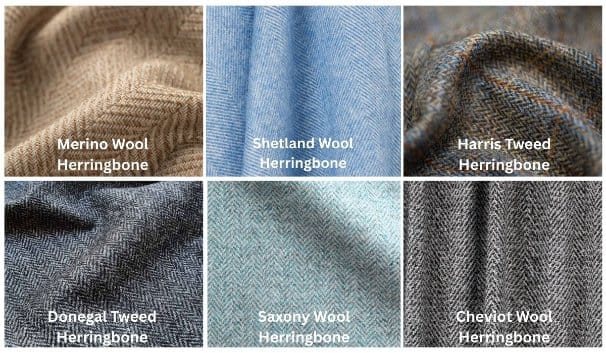
Not all herringbone wool is created equal. The type of wool fiber used dramatically changes the fabric’s character, feel, price, and best uses. Let’s break down your options.
Merino Wool Herringbone
Merino wool comes from Merino sheep, primarily raised in Australia and New Zealand. When woven into herringbone, it creates the softest, most luxurious version of this fabric.
- Feel: Incredibly soft, not itchy at all – you can wear it next to skin
- Weight: Usually lighter (280-350 GSM)
- Best for: Business suits, dress trousers, lightweight blazers
- Price range: High to very high
- Micron count: 15-24 microns (thinner fibers = softer feel)
Merino herringbone drapes beautifully and resists wrinkles better than other wool types. It’s the go-to choice when you want that executive look without the scratch.
Shetland Wool Herringbone
From the remote Shetland Islands off Scotland’s coast comes a lighter, more casual herringbone option. Shetland sheep produce a unique wool that’s perfect for everyday wear.
- Feel: Softer than regular wool but not as fine as Merino
- Weight: Light to medium (300-380 GSM)
- Best for: Casual sport coats, weekend blazers
- Price range: Mid-range
- Unique quality: Slightly hairy texture adds character
Shetland herringbone has a more rustic, relaxed vibe. It’s less formal than Merino but still polished enough for most occasions.
Harris Tweed Herringbone
Here’s where things get special. Harris Tweed is legally protected – it can only be called Harris Tweed if it’s handwoven by islanders in the Outer Hebrides of Scotland using local virgin wool.
- Feel: Rough, textured, authentic
- Weight: Heavy (400-500 GSM)
- Best for: Outdoor jackets, rugged sport coats, heritage pieces
- Price range: High (you’re paying for authenticity and tradition)
- Unique quality: Every piece is hand-woven, slightly irregular
Harris Tweed herringbone isn’t trying to be smooth or refined. It celebrates its rough edges. This is fabric with a story, protected by law since 1993.
Donegal Tweed Herringbone
From Ireland’s County Donegal comes a herringbone known for its colorful character. Traditional Donegal herringbone includes small flecks of contrasting colored wool throughout the fabric.
- Feel: Rough texture with visible colored flecks
- Weight: Medium to heavy (350-450 GSM)
- Best for: Casual sport coats, country wear
- Price range: Mid to high
- Unique quality: Colorful flecks add visual interest
Donegal herringbone might feature a grey base with flecks of yellow, red, and blue throughout. It’s rustic but in a colorful, playful way.
Saxony Wool Herringbone
Originally from Saxony, Germany, this herringbone uses Merino wool processed in a specific way that creates an incredibly smooth, refined fabric.
- Feel: Silky smooth, luxurious
- Weight: Light to medium (280-350 GSM)
- Best for: Formal suits, dress trousers, elegant coats
- Price range: High
- Unique quality: Refined processing creates silky finish
Cheviot Wool Herringbone
From the Cheviot Hills along the Scottish-English border, this wool is all about durability and weather resistance.
- Feel: Coarser, more robust
- Weight: Medium to heavy (380-450 GSM)
- Best for: Outdoor jackets, work coats, country wear
- Price range: Mid-range
- Unique quality: Naturally water-resistant
Cashmere-Wool Blends
When you blend cashmere with wool in a herringbone weave, you get the best of both worlds.
- Common blend: 90% wool / 10% cashmere or 80/20
- Feel: Incredibly soft, luxurious
- Best for: Luxury overcoats, scarves, special occasion wear
- Price range: Very high
- Care note: Requires gentle handling
Wool-Polyester Blends
Modern herringbone often includes synthetic fibers for practical reasons.
| Blend Ratio | Benefits | Best Use |
|---|---|---|
| 80% Wool / 20% Polyester | Wrinkle resistance, easier care | Travel suits, work wear |
| 70% Wool / 30% Polyester | More durable, shrink-resistant | School uniforms, hard-wearing jackets |
| 50/50 Blend | Machine washable, budget-friendly | Casual wear, everyday use |
Not sure which wool type is right for your needs? Use our Wool Type Selector Quiz to find your perfect match.
Herringbone Wool vs Other Fabrics
Let’s clear up some confusion and help you understand where herringbone wool fits in the bigger picture of textiles.
Is Tweed the Same as Herringbone?
This is one of the most common questions, and it trips people up because the answer is both yes and no. Here’s the deal:
Tweed = A type of rough, woolen fabric
Herringbone = A weaving pattern
Herringbone Tweed = Tweed fabric woven in a herringbone pattern
Think of it this way: tweed is like saying “pizza,” while herringbone is like saying “pepperoni.” You can have herringbone tweed (pepperoni pizza), but you can also have plain tweed (cheese pizza) or herringbone in other fabrics like cotton or silk (pepperoni on flatbread). Tweed fabric refers to the rough, woolen material itself, usually made from carded wool. Herringbone describes how that tweed (or any fabric) is woven.
Here’s what makes them different:
- Tweed can be woven in many patterns: plain, herringbone, houndstooth, plaid
- Herringbone can be made from many materials: wool, cotton, linen, silk
- Herringbone tweed specifically means rough woolen tweed woven in a herringbone pattern
Herringbone Wool vs Plain Wool
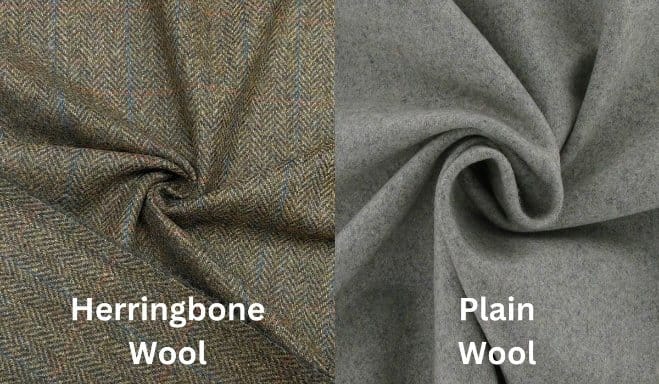
| Feature | Herringbone Wool | Plain Wool |
|---|---|---|
| Visual Interest | Distinctive V-shaped texture | Smooth, uniform surface |
| Durability | More durable, resists sagging | Standard durability |
| Hides Wear | Pattern conceals minor damage | Shows wear more easily |
| Formality | Semi-formal to casual | Can be very formal |
| Price | Usually more expensive (complex weave) | Generally less expensive |
Herringbone vs Houndstooth
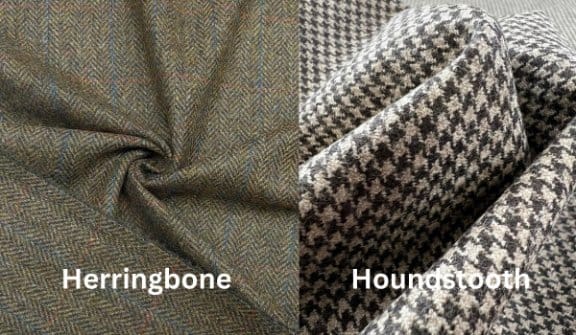
Both are classic patterns, but they’re completely different:
- Herringbone: Creates V-shaped, zigzag lines – subtle and sophisticated
- Houndstooth: Creates broken checks that look like dog teeth – bold and eye-catching
- Visual impact: Herringbone is understated; houndstooth makes a statement
- Formality: Herringbone works for business; houndstooth is more casual
Herringbone Wool vs Cotton Herringbone
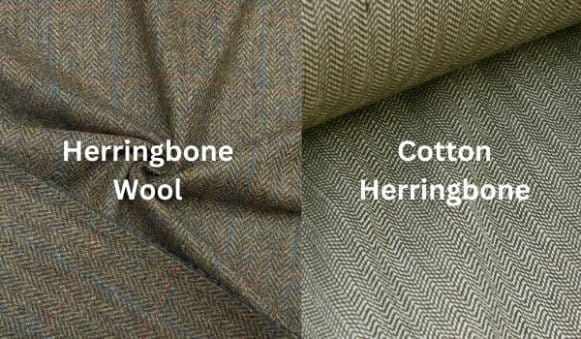
| Property | Wool Herringbone | Cotton Herringbone |
|---|---|---|
| Warmth | Excellent insulation | Moderate warmth |
| Season | Fall/Winter | Spring/Summer |
| Care | Dry clean or careful hand wash | Machine washable |
| Feel | Can be scratchy | Soft, comfortable |
| Drape | Structured, holds shape | More relaxed drape |
Herringbone Wool vs Linen Herringbone
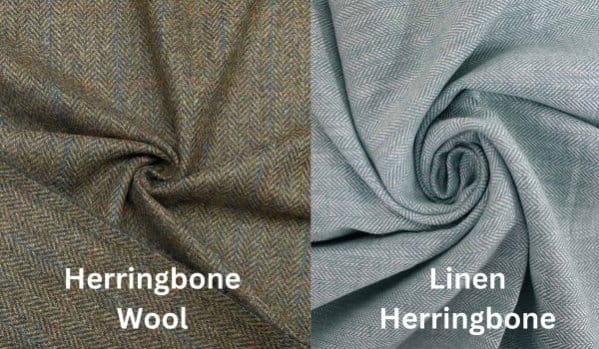
Same pattern, totally different experience:
- Temperature: Wool keeps you warm; linen keeps you cool
- Wrinkles: Wool resists wrinkling; linen wrinkles easily (but that’s part of its charm)
- Weight: Wool herringbone is heavier; linen is lightweight and breathable
- Use case: Wool for winter suits; linen for summer blazers
Herringbone Wool vs Other Wool Weaves
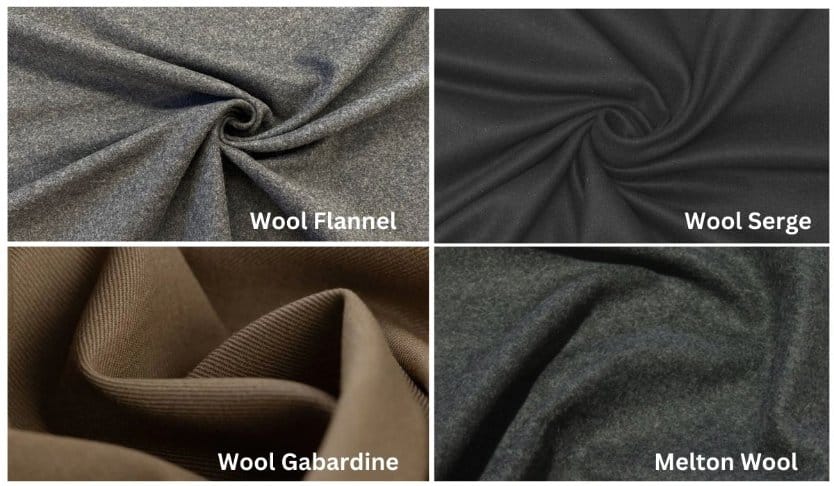
Let’s compare herringbone to other popular wool weaves:
- vs Gabardine: Gabardine has a tight, diagonal twill that’s smoother and more formal. Herringbone has more texture and is less formal.
- vs Flannel: Flannel is brushed for softness, has no visible pattern. Herringbone is more structured with clear pattern definition.
- vs Serge: Serge has a simple diagonal rib. Herringbone’s reversing pattern is more interesting visually.
- vs Melton: Melton is heavily fulled, very dense, no visible weave. Herringbone keeps the weave pattern visible.
Want to explore more wool types? Check out our guide to different wool fabrics to understand all your options.
Properties and Characteristics
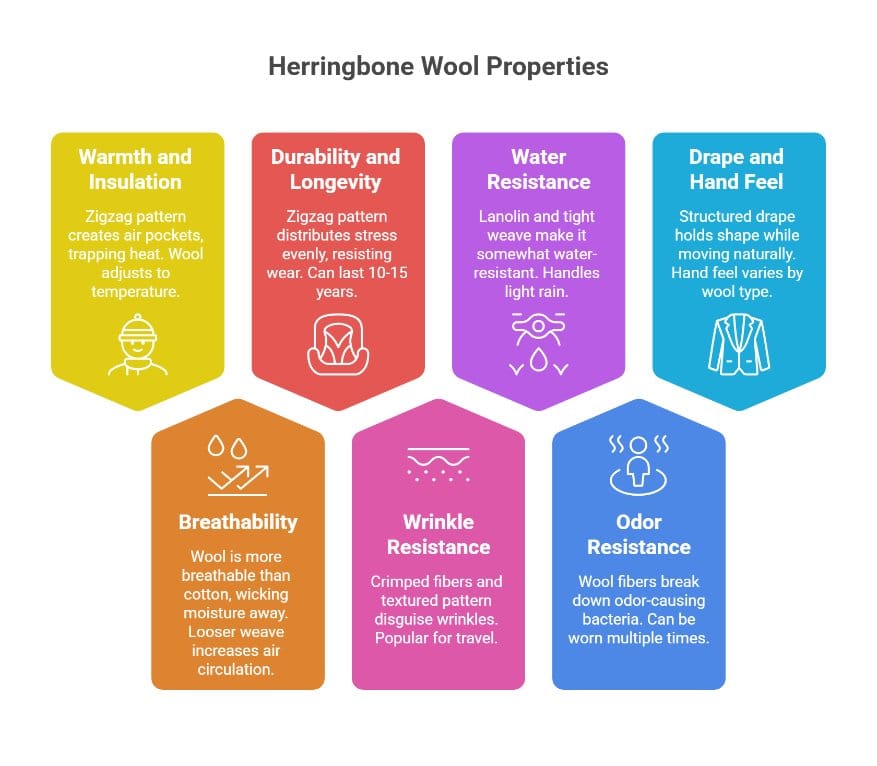
What makes herringbone wool perform the way it does? Let’s break down its superpowers (and a few limitations).
Warmth and Insulation
Wool is naturally one of the best insulators in the textile world, and herringbone weaving makes it even better. The zigzag pattern creates small air pockets throughout the fabric. These pockets trap warm air close to your body, creating a natural insulation layer.
Think of it like double-pane windows – the air space between the panes insulates better than single-pane glass. Herringbone wool works the same way. The broken twill weave creates more texture and depth than plain weaves, meaning more air pockets, meaning more warmth.
Temperature regulation is where wool really shines. Unlike synthetic fabrics that either trap heat or let it all escape, wool adjusts. When you’re warm, wool wicks moisture away from your skin and releases heat. When you’re cold, those air pockets kick in to keep you insulated. This is why you can wear a herringbone wool blazer from a chilly morning through a heated office without feeling like you’re cooking or freezing.
Breathability
Here’s something that surprises people: wool is more breathable than cotton. Wool fibers can absorb up to 30% of their weight in moisture without feeling damp. Cotton? About 8%. This matters because when you sweat (and we all do), wool pulls that moisture away from your skin and releases it into the air.
The herringbone weave structure is slightly looser than a plain weave, which increases breathability. Air can circulate through the fabric more easily. This is why herringbone wool suits don’t leave you feeling clammy during a long day at the office.
Durability and Longevity
This is where herringbone really outperforms plain weaves. The zigzag pattern distributes stress more evenly across the fabric. When you sit, bend, or move, the strain spreads out instead of concentrating in one area.
Remember those Roman roads built with herringbone brick patterns? Same principle. The pattern absorbs shocks and wear better than straight lines. A well-made herringbone wool suit can last 10-15 years with proper care. Plain wool? Maybe 5-7 years before it starts showing significant wear.
The fabric resists sagging at elbows and knees better than plain weaves. After repeated wear, you’ll notice plain wool developing that “worn” look first. Herringbone keeps its shape longer.
Wrinkle Resistance
Wool naturally resists wrinkles thanks to its crimped fiber structure. Each wool fiber has natural kinks (crimp) that want to spring back to their original shape. When you crumple wool, it bounces back. Add the herringbone pattern, and you’ve got extra wrinkle resistance.
The textured pattern disguises whatever wrinkles do form. On plain wool, a crease stands out. On herringbone, it blends into the pattern. This is why herringbone suits are popular for travel – pack them in a suitcase, hang them up when you arrive, and within an hour or two, they look fresh.
Water Resistance
Wool contains lanolin, a natural wax that makes it somewhat water-resistant. Rain beads up on the surface instead of immediately soaking through. This doesn’t mean herringbone wool is waterproof – it’s not. But it can handle light rain or snow without turning into a soggy mess.
The tight herringbone weave adds another layer of water resistance. Water has to work harder to penetrate the dense, interlocking pattern. A herringbone wool coat will keep you dry longer than a loosely woven fabric.
Odor Resistance
Here’s a weird but useful property: wool resists odors. Wool fibers have a natural ability to break down odor-causing bacteria. You can wear a herringbone wool suit multiple times between cleanings without it starting to smell. (Please still practice good hygiene – we’re not saying wear it for weeks straight!)
This is especially useful for outerwear like coats. You can’t wash a wool coat after every wear, but you don’t need to. The natural properties of herringbone wool keep it fresh longer than synthetic fabrics.
Drape and Hand Feel
Herringbone wool has a structured drape. It doesn’t flow like silk or hang limply like cotton. Instead, it holds its shape while still moving naturally with your body. This structured drape is why it’s perfect for tailored clothing – jackets and coats that need to maintain sharp lines.
The “hand feel” (how it feels when you touch it) varies widely depending on the type of wool. Merino herringbone feels soft and smooth. Harris Tweed herringbone feels rough and textured. Shetland herringbone has a slight hairiness. All are genuine herringbone wool, just different personalities.
Important Note: Many herringbone wool fabrics feel scratchy against bare skin, especially coarser varieties. This isn’t a defect – it’s the nature of the fiber. If you have sensitive skin, look for finer micron counts (18 or below) or consider wearing a layer underneath.
Weight Range
Herringbone wool comes in a spectrum of weights, each suited for different purposes:
- Super lightweight (250-280 GSM): Summer suits, tropical climates
- Lightweight (280-320 GSM): Year-round suits, dress trousers
- Medium weight (320-380 GSM): Sport coats, blazers, transitional pieces
- Heavy weight (380-450 GSM): Winter suits, overcoats
- Extra heavy (450+ GSM): Heavy overcoats, blankets, upholstery
Use our Wool Care Calculator to get personalized recommendations based on your climate and intended use.
Sustainability and Environmental Impact
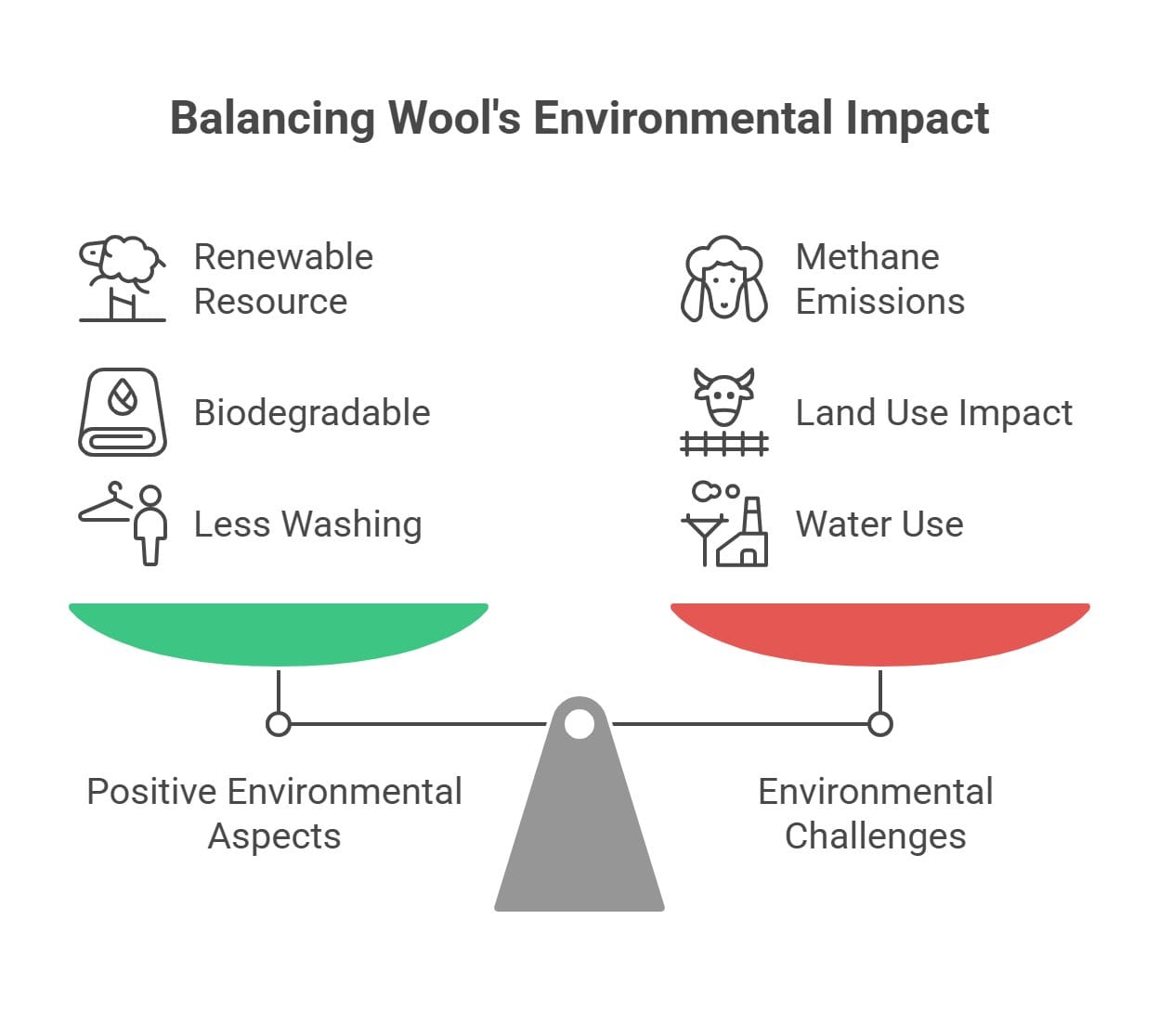
Let’s talk about the elephant in the room – or rather, the sheep in the pasture. Is herringbone wool sustainable? The answer is nuanced and honest.
The Positive Environmental Aspects
1. Natural and Biodegradable
Wool is 100% natural. A wool garment breaks down in soil within a few years, releasing nitrogen back into the earth like a natural fertilizer. Compare that to polyester, which can take 200+ years to decompose and sheds microplastics with every wash.
When you buy herringbone wool, you’re not adding to the plastic problem. No microplastics washing into our oceans. No synthetic fibers floating in the air. Just a natural protein fiber that returns to the earth.
2. Renewable Resource
Sheep grow new fleece every year. As long as we maintain healthy flocks, wool keeps coming. It’s not like petroleum (the source of polyester), which is finite and non-renewable. A well-managed sheep farm can produce wool indefinitely.
3. Long-Lasting Means Less Waste
A quality herringbone wool coat can last 15-20 years or more. That’s not “fast fashion” – that’s an investment. When clothing lasts this long, we buy less, throw away less, and reduce overall consumption. One herringbone wool suit replacing five cheap polyester suits over a decade? That’s sustainability in action.
4. No Microplastic Pollution
Every time you wash synthetic fabric, thousands of microplastic fibers wash down the drain and into waterways. Wool sheds fibers too, but they biodegrade. Marine life eating wool fibers? Not ideal, but way better than plastic particles that never break down.
5. Natural Carbon Cycle
Sheep eat grass, which absorbed CO2 from the atmosphere. That carbon becomes part of the wool fiber. When wool biodegrades, it releases that carbon back into the soil. It’s a natural cycle that doesn’t add new carbon to the atmosphere like producing synthetic fibers from petroleum does.
6. Less Washing Required
Herringbone wool naturally resists odors and dirt. You wash it far less frequently than synthetic or cotton fabrics. Less washing means less water use, less energy, less detergent, and less wear on the garment. A wool suit might need cleaning a few times a year. A polyester shirt? After every wear.
The Environmental Challenges
Now for the honest part. Wool production isn’t perfect.
1. Methane Emissions
Sheep are ruminants. They burp methane, a greenhouse gas 28-34 times more potent than CO2. A single sheep produces about 30 kg of methane per year. With millions of sheep globally, this adds up. The animal fiber industry produces around 35 million tonnes of CO2-equivalent annually, with sheep wool accounting for 98% of that.
Some sheep farms are working on solutions – better feed management, seaweed supplements that reduce methane production, and regenerative grazing practices that increase carbon sequestration in soil.
2. Land Use and Grazing Impact
Sheep need land to graze. A lot of land. In some regions, overgrazing has led to soil erosion and loss of biodiversity. When pastures are overgrazed, grass doesn’t recover, soil quality degrades, and native plants disappear.
However, properly managed grazing can actually improve soil health. Regenerative farming practices use sheep to naturally fertilize land, control weeds, and even sequester carbon in soil. It’s not the sheep that are the problem – it’s how they’re managed.
3. Water Use in Processing
Raw wool straight off the sheep contains dirt, vegetable matter, and lanolin (natural oils). The scouring process (washing the wool) uses large amounts of water and creates wastewater containing organic matter, detergents, and sometimes chemical treatments.
Modern mills are improving this. Closed-loop water systems recycle wash water. Lanolin is recovered and sold (it’s used in cosmetics and skin care). Enzyme-based scouring uses less water and lower temperatures than traditional methods.
4. Chemical Treatments
Sheep are often treated with pesticides to prevent parasites. These chemicals can contaminate soil and water if not managed properly. The dyeing process for colored herringbone wool can involve heavy metals and toxic chemicals.
Look for wool with certifications like:
- Global Organic Textile Standard (GOTS): Certifies organic processing from fiber to finished fabric
- Responsible Wool Standard (RWS): Ensures animal welfare and land management
- ZQ Merino: New Zealand’s certification for ethical and sustainable Merino production
5. Carbon Footprint Comparison
Studies show wool production emits more greenhouse gases per kilogram than cotton or synthetic fibers. A wool knit jumper can emit 27 times more greenhouse gases than a cotton one, according to some research.
But here’s the catch – those studies often don’t account for:
- How much longer wool garments last
- How much less frequently they need washing
- The biodegradability at end-of-life
- The microplastic pollution from synthetics
When you calculate “cost per wear” over a garment’s lifetime, wool often comes out ahead environmentally.
Ethical Considerations
Animal Welfare
Let’s be clear: sheep have been selectively bred to grow more wool than they naturally would. Wild sheep shed their fleece naturally. Domestic sheep must be shorn or they overheat and can die. We created this dependency.
Shearing, when done properly by experienced professionals, doesn’t hurt sheep. It’s like getting a haircut. But the reality is that some farms prioritize speed over welfare. Rough handling, nicks and cuts, and stress to the animals happen.
The practice of mulesing (removing skin from a sheep’s rear to prevent flystrike) is particularly controversial. It’s painful for the sheep, even when pain relief is used. Many ethical wool brands refuse to source from farms that practice mulesing.
What to Look For in Ethical Herringbone Wool
- Certifications: Look for RWS, ZQ, or GOTS certification
- Mulesing-free: Many brands now proudly state their wool is mulesing-free
- Small-scale producers: Artisan weavers and small mills often have better animal welfare standards
- Transparent supply chains: Companies that can tell you exactly where their wool comes from
- Recycled wool: Herringbone made from recycled wool fibers has zero animal impact
The Recycled Wool Option
Recycled wool herringbone is gaining popularity. Old wool garments and textile scraps are collected, sorted by color, shredded back into fibers, and rewoven into new fabric. This process:
- Uses no new wool (no new animal farming)
- Saves water (no scouring needed)
- Reduces waste going to landfills
- Has minimal chemical use
- Creates lower-cost quality wool
The downside? Recycled wool fibers are shorter and slightly weaker than virgin wool. But for many applications, it’s perfectly suitable and much more sustainable.
Making Sustainable Choices
If you want to buy herringbone wool responsibly:
- Buy quality, not quantity: One expensive, well-made piece beats five cheap ones
- Care for it properly: Make it last as long as possible
- Choose certified sources: Look for RWS, ZQ, GOTS labels
- Consider secondhand: Vintage herringbone wool has zero new environmental impact
- Support transparent brands: Companies that tell you where and how their wool is produced
- Try recycled options: Recycled wool herringbone is getting better quality
According to the Woolmark Company, extending a garment’s life from 109 wears to 400 can reduce its environmental impact by up to 68%. That’s huge.
Bottom Line: Herringbone wool isn’t perfectly sustainable, but it’s significantly better than most alternatives when you factor in durability, biodegradability, and microplastic pollution. The key is choosing certified sources, caring for your pieces, and using them for many years.
Uses and Applications
Where does herringbone wool shine? Pretty much everywhere. This fabric has been proving its worth across fashion, home decor, and practical applications for centuries.
Fashion and Apparel
Men’s Suits
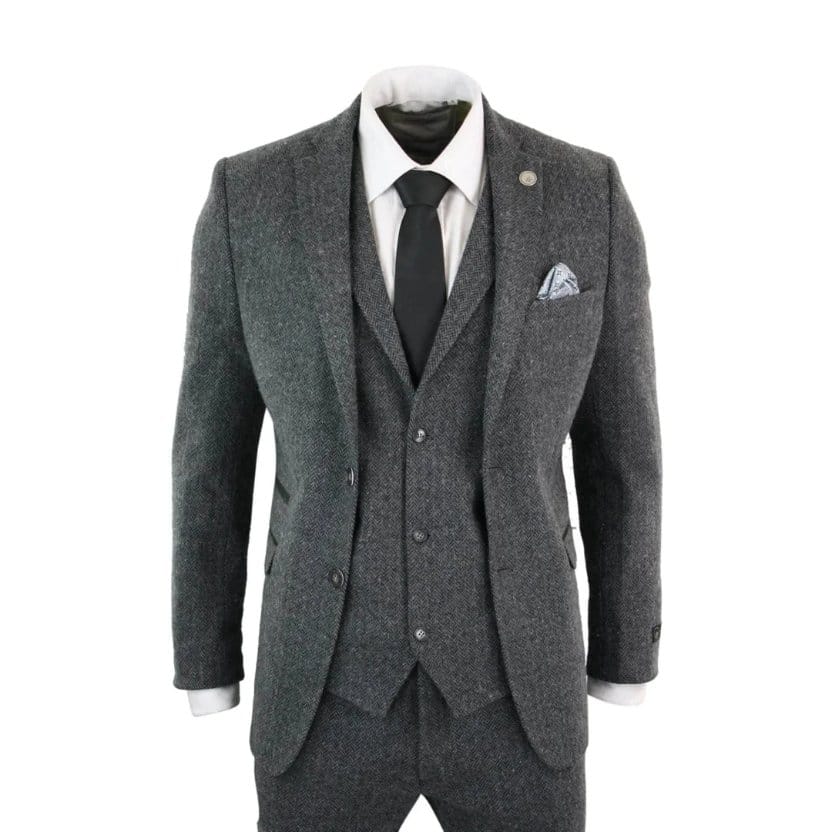
This is herringbone wool’s bread and butter. A herringbone suit walks the perfect line between professional and interesting. It’s formal enough for business meetings but has texture that makes it more approachable than plain worsted wool.
The pattern adds visual interest without being loud. You can wear it to the office every week without people thinking “there’s that guy in the patterned suit again.” It just looks like quality tailoring.
Weight matters here:
- Year-round suits: 300-340 GSM
- Winter suits: 360-400 GSM
- Summer suits: 280-310 GSM (if you must)
Colors for business: charcoal, navy, medium grey, brown. The herringbone pattern works best in subtle color combinations.
Sport Coats and Blazers
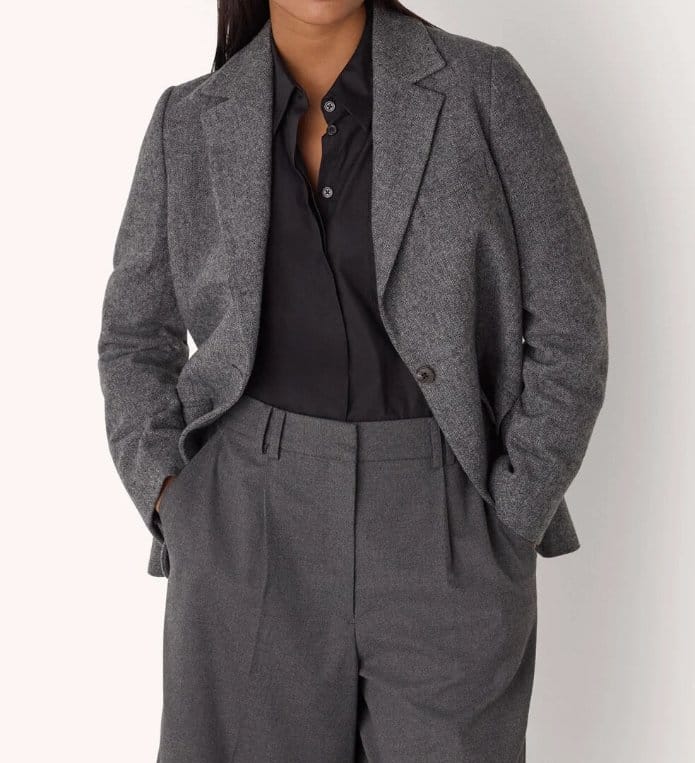
This is where herringbone really gets to show off. A sport coat doesn’t need to be as conservative as a suit. You can go with:
- Larger, more visible herringbone patterns
- Bolder colors like rust, olive, or brown with blue flecks
- Rougher tweeds with character and texture
- Mixed patterns (like herringbone with overcheck)
A herringbone sport coat pairs beautifully with jeans, chinos, or dress trousers. It’s that versatile piece that works for casual Friday at the office or dinner out on the weekend.
Overcoats and Topcoats
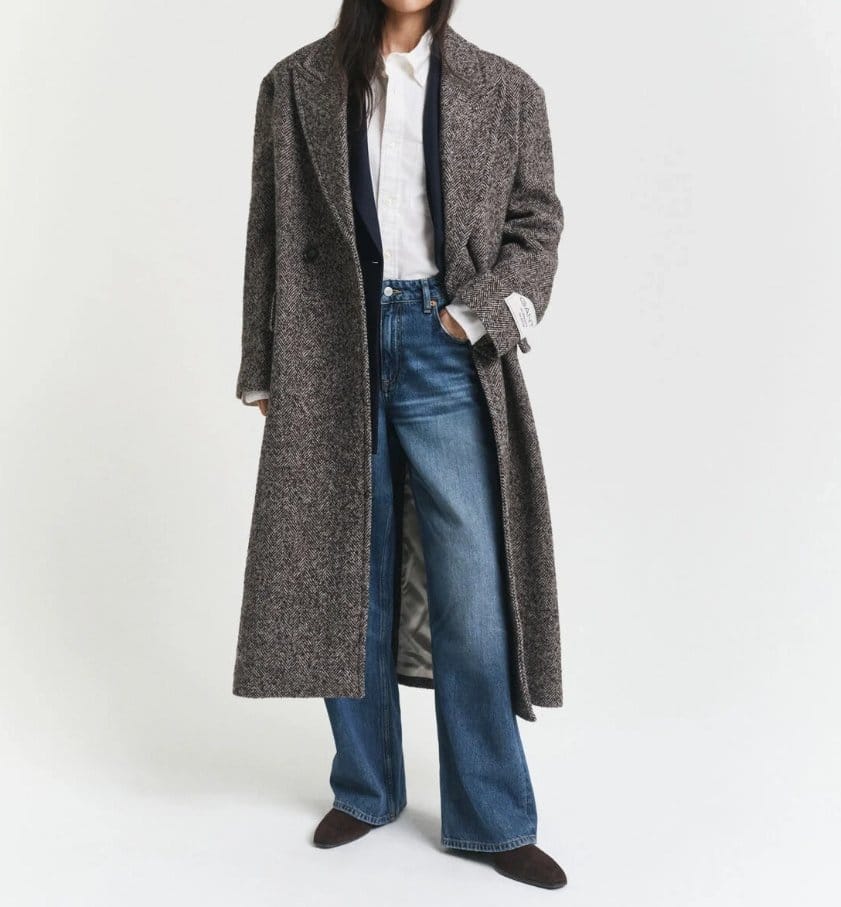
Heavy herringbone wool (400-500 GSM) makes outstanding outerwear. The pattern adds interest to what could otherwise be a plain winter coat. Plus, the tight weave provides good wind resistance.
Classic styles include:
- Chesterfield coats in charcoal herringbone
- British warm coats in brown herringbone tweed
- Car coats in grey herringbone
- Ulster coats for serious cold weather
A quality herringbone wool overcoat can last 20+ years. It’s the kind of investment piece that gets better with age.
Trousers
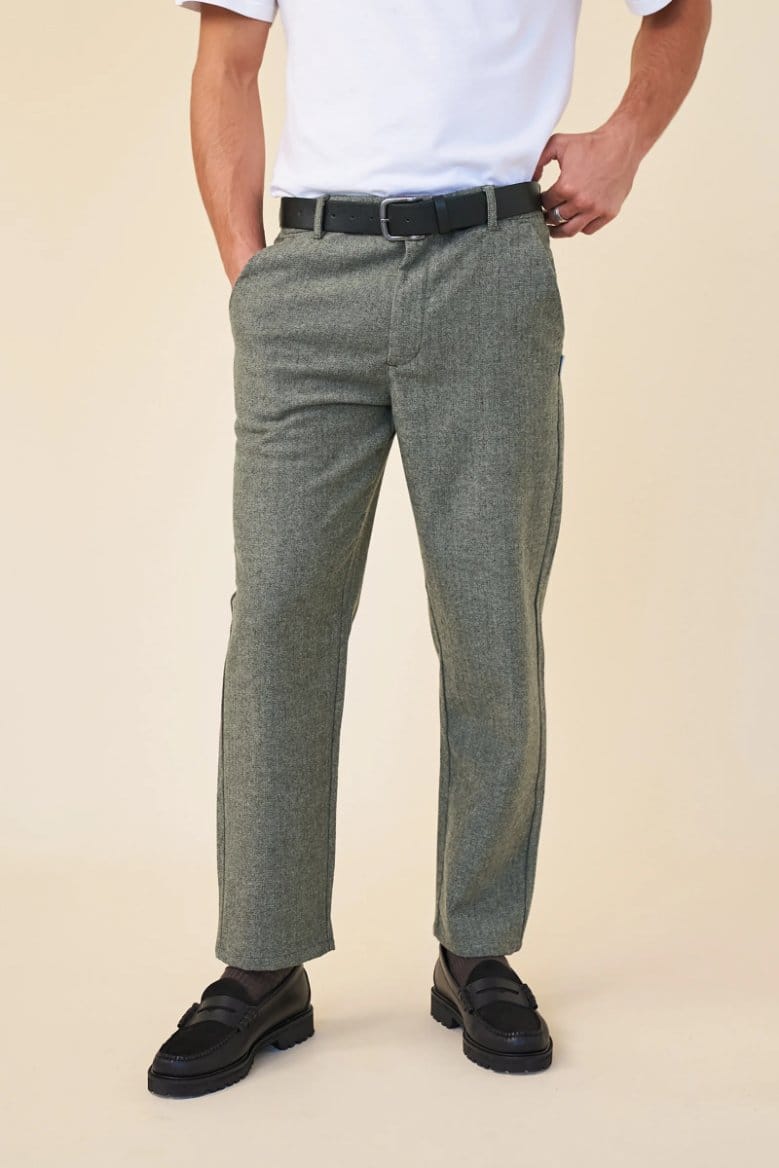
Herringbone wool trousers are less common than jackets, but they’re excellent for building mix-and-match wardrobes. Grey herringbone trousers pair with solid navy blazers. Brown herringbone works with tweed jackets.
The pattern hides wear and wrinkles better than plain wool, making herringbone trousers practical for daily wear.
Women’s Suits and Jackets
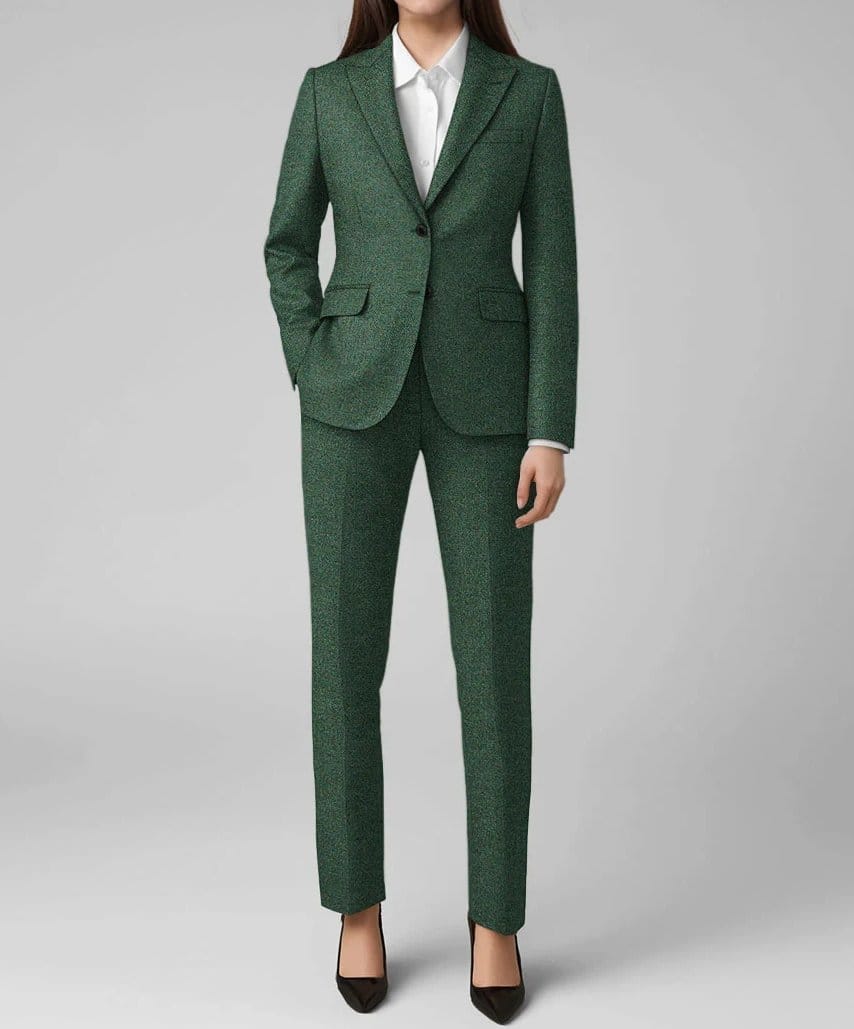
Everything we said about men’s wear applies here, but women’s fashion offers even more options:
- Fitted herringbone blazers over dresses
- Herringbone pencil skirts
- Cape coats in herringbone
- Herringbone vests and waistcoats
The structured drape of herringbone wool works beautifully for tailored women’s wear, holding crisp lines while still allowing movement.
Accessories
Don’t overlook smaller pieces:
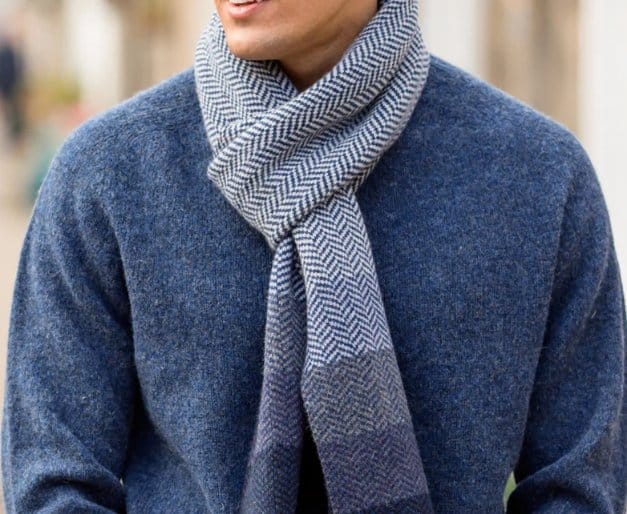
- Scarves: Herringbone wool scarves are classic for a reason
- Hats: Flat caps, newsboy caps, fedoras in herringbone
- Ties: Wool herringbone ties add texture to formal wear
- Bags: Herringbone messenger bags and totes are durable and stylish
Home Decor
Upholstery
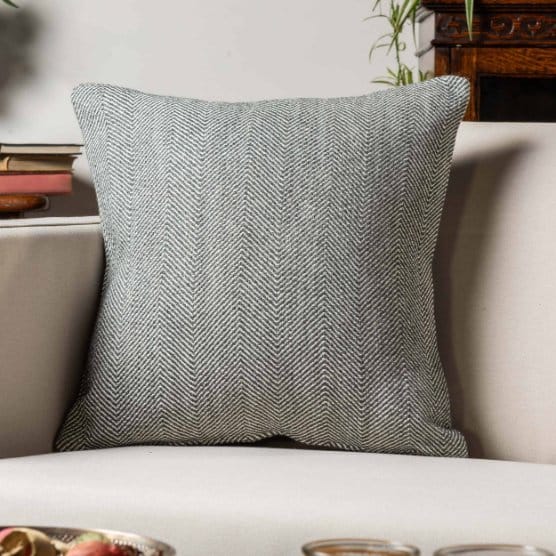
Herringbone wool is outstanding for furniture. The tight weave resists abrasion, making it perfect for sofas, armchairs, and ottomans that get daily use.
Benefits for upholstery:
- Very durable – can handle years of sitting
- Pattern hides minor stains and wear
- Naturally stain-resistant (thanks to lanolin)
- Adds texture and warmth to rooms
- Works with both traditional and modern design
Use 450+ GSM herringbone for upholstery. Lighter weights won’t hold up to the wear.
Curtains and Drapes
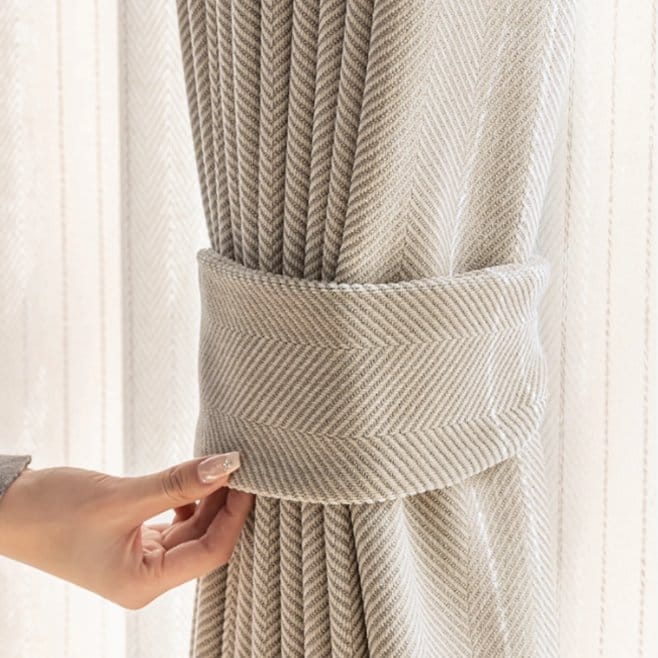
Heavy herringbone wool makes excellent curtains for several reasons:
- Blocks light effectively
- Provides insulation (keeps heat in during winter)
- Reduces outside noise
- Drapes beautifully with weight and body
- Adds texture to windows
Herringbone curtains work especially well in studies, libraries, and bedrooms where you want that cozy, sophisticated feel.
Throw Blankets and Bedding
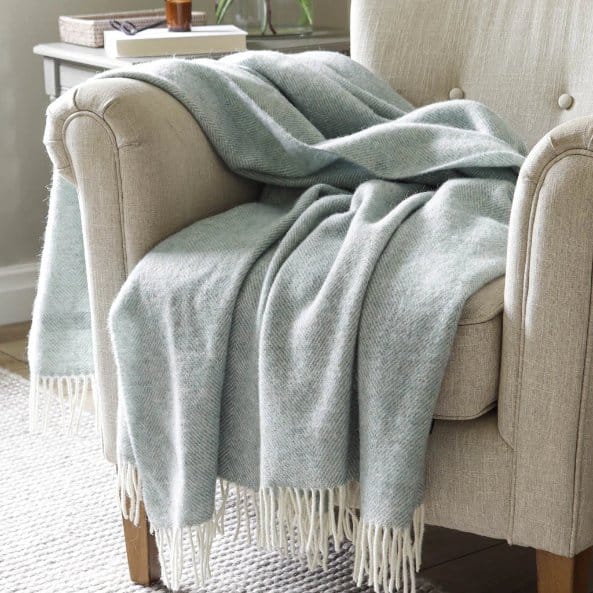
A herringbone wool throw is both practical and beautiful. Drape it over a sofa or the foot of a bed. The pattern adds visual interest, and the wool provides warmth without weight.
Some adventurous people even use herringbone wool for duvet covers or bedspreads, though this requires lighter weight wool (300-350 GSM) to avoid feeling too heavy.
Cushions and Pillows
Herringbone throw pillows are an easy way to add texture and pattern to any room. Mix them with solid colors or other patterns. The neutral tones of most herringbone work with almost any color scheme.
Other Applications
Historical Reenactment and Costume Design
Period-accurate historical clothing often requires herringbone wool. Whether you’re recreating Victorian fashion, World War II uniforms, or medieval garments, herringbone provides authentic texture and appearance.
Theater and film costume departments love herringbone wool because:
- It looks authentic on camera
- The pattern photographs well
- It’s durable enough for repeated performances
- It maintains shape under stage lights
Professional Uniforms
Some professions still favor herringbone wool for uniforms:
- Chauffeurs and drivers
- Doormen and hotel staff
- Traditional British school uniforms
- Some military dress uniforms
Pro Tip: Whatever application you’re considering, match the fabric weight to the intended use. Suits need lighter weights for comfort. Upholstery needs heavy weights for durability. Using the wrong weight is the most common mistake people make with herringbone wool.
How to Choose Quality Herringbone Wool
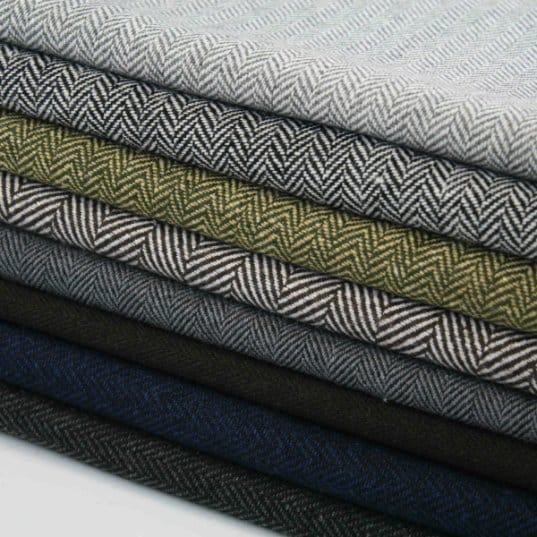
Not all herringbone wool is created equal. The difference between excellent quality and mediocre quality can mean the difference between a garment that lasts 15 years versus one that looks worn out in 3. Here’s your practical buying guide.
Fiber Content Matters
Always check the label. Here’s what to look for:
| Fiber Content | Quality Level | Best For |
|---|---|---|
| 100% Virgin Wool | Highest | Investment pieces, formal wear |
| 100% Merino/Cashmere | Luxury | Special occasion, comfort priority |
| 90% Wool / 10% Cashmere | Premium | Balance of luxury and practicality |
| 80% Wool / 20% Polyester | Good | Travel wear, easy care |
| 70% Wool / 30% Synthetic | Moderate | Budget-conscious, hard-wearing |
| 50/50 or less wool | Entry-level | Casual wear, cost priority |
Virgin wool means new wool that’s never been processed before. Recycled wool has been reprocessed from old garments. Virgin wool is stronger and higher quality, but good recycled wool can still be excellent for many uses.
Check the Weight
Fabric weight tells you a lot about quality and intended use. Look for the GSM (grams per square meter) or oz/yd² on the label or ask the seller.
- Too light for purpose: A 280 GSM coat won’t keep you warm
- Too heavy for purpose: A 450 GSM suit will feel like armor
- Just right: Match weight to intended use
If you’re buying fabric for sewing projects, our Fabric Weight Calculator can help you determine the perfect GSM for your needs.
Examine the Weave
Hold the fabric up to the light and look closely. Signs of quality weaving:
- Consistent pattern: The herringbone should be uniform throughout
- Tight weave: You shouldn’t see much light through it
- No loose threads: Quality manufacturing leaves no stragglers
- Clear definition: The V-pattern should be crisp and clear
- Even tension: No puckering or rippling in the fabric
Pattern Scale
Herringbone patterns come in different sizes:
- Small scale (5-10mm zigzag): More formal, subtle, business appropriate
- Medium scale (10-20mm): Versatile, works for business and casual
- Large scale (20mm+): Bold, casual, statement-making
For business suits, stick with small to medium scale. Save large scale for sport coats and casual wear.
Feel the Hand
Touch the fabric. Quality herringbone wool should feel:
- Substantial: It should have weight and body, not feel flimsy
- Smooth or pleasantly textured: Not overly rough unless it’s meant to be rustic tweed
- Resilient: When you crumple it, it should spring back
- Dry to the touch: Not oily or sticky
The “hand feel” of merino will be softer than Shetland, which will be softer than rough tweed. All can be quality – they’re just different styles. What matters is that the fabric feels good for its type.
Color Considerations
Quality herringbone wool usually features:
- Even dyeing: No blotchy or uneven coloration
- Subtle color variation: The different colored threads should complement each other
- No bleeding: Colors shouldn’t transfer when you rub the fabric
Classic color combinations for herringbone:
- Charcoal with black
- Grey with cream
- Brown with tan
- Navy with light blue
- Mixed earth tones (brown, rust, green)
Check the Selvage
The selvage is the finished edge of fabric. Quality fabric has a clean, tightly woven selvage. If you’re buying fabric by the yard, inspect the selvage edge. It should be:
- Firmly woven with no fraying
- Consistent in width
- Sometimes marked with manufacturer information
Origin and Manufacturing
Where the fabric comes from can indicate quality:
- British wool (UK): Traditional quality, especially Harris Tweed from Scotland
- Italian wool: Known for refinement and soft hand feel
- Irish wool: Donegal tweeds are authentic and characterful
- Australian/NZ Merino: Highest quality Merino production
- Japanese wool mills: Excellent quality control and innovation
This doesn’t mean wool from other countries is bad – just that these regions have strong reputations for specific types of quality.
Price as a Quality Indicator
Let’s talk numbers. Here’s what you can expect to pay (per yard/meter for fabric, or for finished garments):
| Quality Level | Price per Yard (Fabric) | Suit Price |
|---|---|---|
| Budget | $15-30 | $200-400 |
| Mid-range | $30-60 | $400-800 |
| Premium | $60-120 | $800-1,500 |
| Luxury | $120-200+ | $1,500-3,000+ |
If you see “100% wool herringbone” for $10/yard or a suit for $150, be suspicious. Quality wool and quality weaving cost money. Rock-bottom prices usually mean compromises in fiber quality, manufacturing, or both.
Red Flags to Avoid
Watch out for:
- Pilling immediately: Quality wool shouldn’t pill just from trying it on
- See-through areas: Indicates loose, poor weaving
- Chemical smell: Should smell like wool (earthy, slightly animal), not chemicals
- Inconsistent pattern: The herringbone should match up at seams
- Excessive shedding: A little fuzz is normal, but shouldn’t shed constantly
Where to Buy Quality Herringbone Wool
- Specialty fabric stores: Staff can help you understand quality
- Online fabric retailers: Read reviews, order swatches first
- Mill shops: Direct from manufacturers, often best value
- Vintage and deadstock: Old herringbone can be excellent quality
- Reputable tailors: Often sell fabric or can recommend suppliers
Testing Tips
Before buying a lot of fabric or an expensive garment:
- Order swatches: Many online retailers offer small samples
- Do the crumple test: Ball it up, release it, see if it springs back
- Check recovery: Pull it gently, release, it should return to shape
- Burn test (if possible): Real wool smells like burning hair, synthetic smells like plastic
- Water drop test: Water should bead up on quality wool, not immediately soak in
Use our Wool Quality Assessment Checklist to systematically evaluate any herringbone wool before purchasing.
Working with Herringbone Wool (For Sewers and Makers)
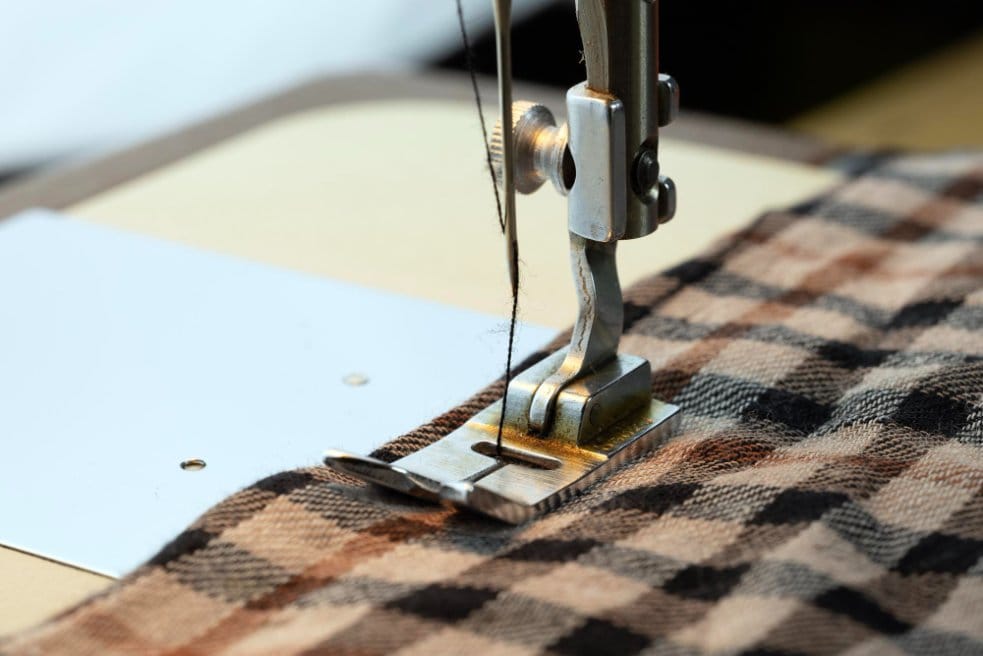
Planning to sew with herringbone wool? Smart choice. But this fabric has personality, and you need to know how to handle it.
Pre-Treatment
Before you cut a single thread, preshrink your fabric if it’s washable wool. Even if you plan to dry clean the finished garment, preshrinking prevents disasters later.
Pre-Treatment Process
For dry-clean-only herringbone, you can steam it thoroughly before cutting, but be aware it might still shrink slightly with the first professional cleaning.
Cutting Considerations
Pattern Matching
Herringbone has a directional pattern. You need to make sure the zigzag runs the same way on all pieces, or your garment will look sloppy.
- Lay out all pattern pieces before cutting: Check that the pattern aligns
- Mark the grain line clearly: Herringbone can be deceiving
- Consider the nap: Some herringbone wool has a slight nap direction
- Buy extra fabric: Pattern matching wastes more fabric – add 10-20% to your estimate
Cutting Tools
Use sharp fabric scissors or a rotary cutter. Herringbone wool is tightly woven, so dull blades will struggle and may fray the edges. Keep your cutting tools sharp – invest in a blade sharpener if you work with wool often.
Sewing Techniques
Needles and Thread
- Needle size: 90/14 or 100/16 for medium weight wool, 110/18 for heavy
- Needle type: Universal or sharp point (not ballpoint)
- Thread: All-purpose polyester or cotton-wrapped polyester
- Thread color: Match the dominant color in the herringbone pattern
For more guidance on thread selection, check out our article on how to choose the right thread for your project.
Stitch Length and Tension
- Stitch length: 2.5-3mm for medium weight, 3-3.5mm for heavy
- Tension: May need to loosen slightly for thick wool
- Test first: Always sew a test seam on scraps
Seam Finishes
Wool doesn’t fray as badly as cotton, but it still needs seam finishing:
- Serging/overlocking: Best for most applications
- Hong Kong finish: For unlined jackets, luxurious finish
- Pinked edges: Acceptable for lighter weight herringbone
- Bound seams: For couture garments
Learn more about professional finishes in our bound seam finishing guide.
Pressing Techniques
Pressing wool correctly makes the difference between amateur and professional results.
- Use a press cloth: Always. Silk organza is ideal
- Steam is your friend: Use plenty of steam
- Press, don’t iron: Lift and lower the iron, don’t slide
- Temperature: Wool setting (medium-high heat)
- Let it cool: Don’t move pressed seams until they’re completely cool
Interfacing and Lining
Interfacing
Most herringbone wool garments need interfacing in certain areas:
- Collar and lapels: Hair canvas for jackets, fusible for shirts
- Button bands: Light fusible interfacing
- Pockets: Stabilize with interfacing
Test fusible interfacing on a scrap first – some wool herringbone doesn’t take fusibles well.
Lining
Many herringbone wool garments benefit from lining:
- Reduces scratchiness: Especially important for coarser wool
- Adds structure: Helps garments hold their shape
- Improves drape: Allows garment to move smoothly
- Extends life: Protects inner seams from wear
Common lining choices: Bemberg rayon, silk habotai, polyester satin.
Common Challenges and Solutions
| Problem | Cause | Solution |
|---|---|---|
| Skipped stitches | Wrong needle or dull needle | Use fresh sharp needle, size 90/14 or larger |
| Puckered seams | Tension too tight | Loosen tension slightly, use longer stitch |
| Fabric shifting | Slippery surface | Use walking foot or even-feed foot |
| Visible needle holes | Needle too large | Size down needle or press well with steam |
| Stretching | Pulling fabric while sewing | Let fabric feed naturally, use stay tape |
Pattern Recommendations
Herringbone wool works best for:
- Structured garments: Blazers, coats, tailored trousers
- A-line or straight styles: Avoid bias cuts with stiff wool
- Classic patterns: Herringbone suits traditional styles best
- Minimal gathers: Wool bulk doesn’t gather well
Avoid using herringbone wool for:
- Flowing, drapey garments
- Knit patterns (unless it’s knitted herringbone)
- Heavily gathered styles
- Very fitted garments (it doesn’t have stretch)
For beginners, our guide on beginner-friendly sewing patterns can help you find suitable projects for your skill level.
Care and Maintenance
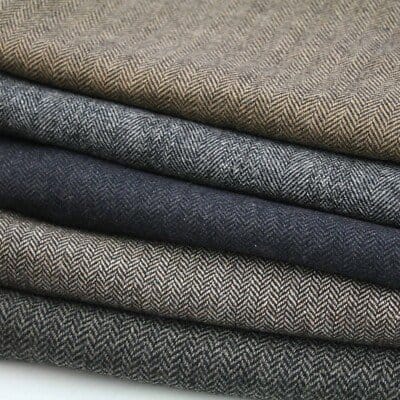
You’ve invested in quality herringbone wool. Now let’s make sure it lasts decades, not years.
Cleaning
Dry Cleaning
Most herringbone wool garments should be dry cleaned. But here’s the thing: you don’t need to dry clean as often as you think.
- Suits: 2-4 times per year (unless stained)
- Sport coats: 1-2 times per year
- Overcoats: Once per year, at end of season
- Trousers: Every 5-6 wears (they touch more dirt)
Over-cleaning breaks down wool fibers and shortens garment life. Spot clean when possible instead.
Important: Tell your dry cleaner if there are any stains and what caused them. Water-based stains need different treatment than oil-based stains. Unknown stains can become permanent with the wrong cleaning method.
Hand Washing
Some herringbone wool can be gently hand washed if the care label allows it. Here’s how:
- Fill a clean basin with cool water (never hot – wool shrinks in heat)
- Add wool-specific detergent (regular detergent can damage wool)
- Submerge the garment and gently squeeze water through
- Soak for 10-15 minutes maximum
- Drain and refill with clean cool water for rinsing
- Press water out gently (never wring or twist)
- Roll in a towel to absorb excess moisture
- Lay flat to dry on a clean, dry towel
Get detailed washing instructions specific to your wool type using our Wool Care Calculator.
Spot Cleaning
This should be your first line of defense:
| Stain Type | Treatment |
|---|---|
| Water-based (coffee, wine, juice) | Blot immediately, dab with cool water and mild soap |
| Oil-based (grease, makeup) | Sprinkle with cornstarch, let sit, brush off |
| Mud | Let dry completely, then brush off |
| Ink | Dab with rubbing alcohol (test on hidden spot first) |
| Blood | Cold water only, never hot |
For stubborn stains, check our Wool Stain Treatment Guide for step-by-step solutions.
Storage
Hanging vs. Folding
- Hang: Jackets, coats, structured pieces (use wooden hangers with shoulder support)
- Fold: Sweaters, soft unstructured pieces (hanging stretches them)
- Never wire hangers: They create shoulder bumps and rust can stain
Moth Prevention
Moths love wool. Protect your investment:
- Cedar blocks or hangers: Natural moth repellent
- Lavender sachets: Moths hate the smell
- Clean before storing: Moths are attracted to body oils and food particles
- Sealed containers: For long-term storage, use airtight plastic bins
- Check regularly: Early detection prevents major damage
Off-Season Storage: When storing winter herringbone items for summer, make sure they’re clean, completely dry, and stored in breathable cotton garment bags. Add cedar and lavender for moth protection. Store in a cool, dry place – not hot attics or damp basements.
Daily Maintenance
Brushing
Brush herringbone wool garments after each wear. Use a soft clothes brush (natural bristles are best). Brush in the direction of the weave to:
- Remove surface dust and dirt
- Restore the nap
- Remove pills before they form
- Keep the herringbone pattern crisp
This takes 30 seconds but extends the time between cleanings dramatically.
Airing Out
After wearing, hang your herringbone wool garment in a well-ventilated area for a few hours or overnight. This allows:
- Moisture to evaporate
- Odors to dissipate
- Wrinkles to fall out naturally
- Fabric to recover its shape
Don’t wear the same wool garment two days in a row – it needs recovery time.
Steaming
For wrinkle removal between cleanings, steam is your friend:
- Hang garment in bathroom during a hot shower
- Use a handheld steamer
- Hold iron just above fabric (don’t touch) and use steam function
Steam refreshes wool and removes odors naturally.
Dealing with Common Issues
Pilling
Even quality herringbone wool can develop small pills (tiny balls of fiber):
- Prevention: Reduce friction (don’t rub against rough surfaces)
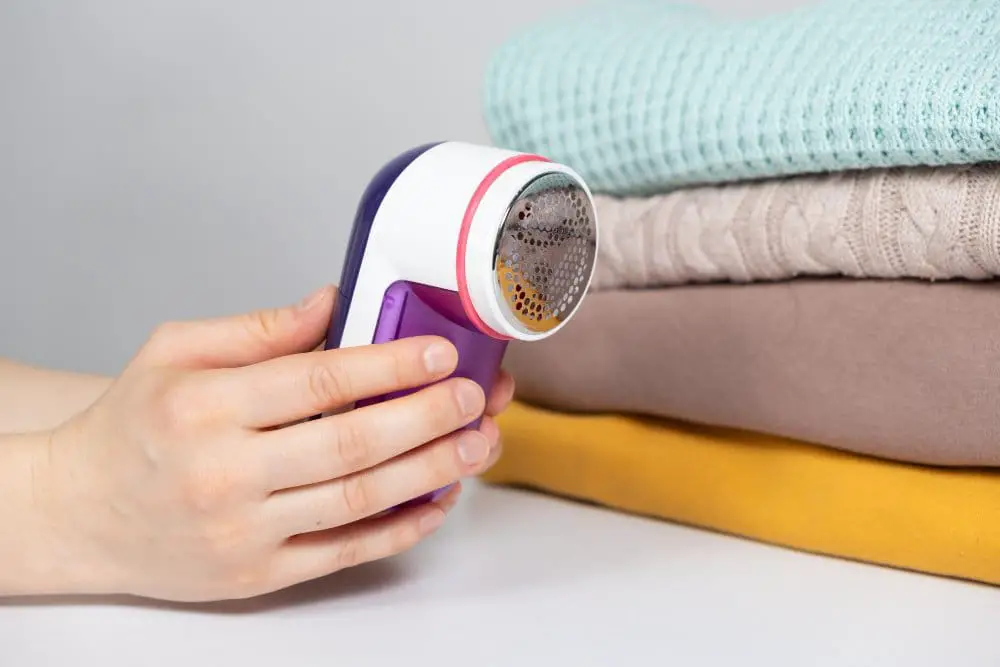
- Removal: Use a wool comb or electric pill remover
- Don’t pull pills: This damages the fabric – cut or shave them
Wrinkles
Herringbone wool resists wrinkles, but when they do form:
- Hang garment in humid bathroom
- Use steam (never direct heat without a press cloth)
- Let gravity do the work – most wrinkles drop out overnight
Odors
Wool naturally resists odors, but if needed:
- Air outside on a dry, breezy day
- Sprinkle with baking soda, let sit, brush off
- Use vodka in a spray bottle (yes, really – it kills bacteria)
- Never use Febreze or similar on wool – chemicals can damage fibers
Shine
Over-pressing or friction can create shiny spots on herringbone wool:
- Hold steam iron just above the area, don’t touch fabric
- While steaming, gently brush with a clothes brush
- Let dry completely before wearing
- For stubborn shine, rub gently with very fine sandpaper
Repairs and Alterations
Herringbone wool can be altered and repaired, extending its life:
- Minor tears: Can be invisibly mended by skilled tailors
- Worn elbows: Can be patched with matching fabric or leather
- Alterations: Can be taken in or let out (if seam allowance exists)
- Relining: Replace worn lining without affecting the outer fabric
A good tailor can make a 20-year-old herringbone coat look like new.
When to Say Goodbye
Eventually, even the best herringbone wool wears out. It’s time to retire a garment when:
- Fabric is visibly thinning
- Multiple holes or tears beyond repair
- Permanent stains that won’t come out
- Moth damage is extensive
- Doesn’t fit and can’t be altered
Even then, consider recycling. Old wool can become:
- Recycled into new fabric
- Garden mulch (wool decomposes and enriches soil)
- Crafting material (felting projects)
- Donation to textile recycling programs
For complete care guidance, see our main wool care guide.
Cultural Impact and Famous Pieces
Herringbone wool isn’t just fabric – it’s a character in fashion history.
In Film and Television
Directors choose herringbone wool deliberately. It photographs beautifully and immediately signals “classic” and “quality” to audiences.
- Mad Men: Don Draper’s herringbone overcoat became iconic
- Sherlock Holmes: The detective’s trademark coat often features herringbone
- Peaky Blinders: The gang’s herringbone tweed caps and suits define the show’s look
- The Crown: Royal family members wear authentic herringbone Scottish tweeds
Royal Connections
British royalty has kept herringbone wool in fashion for over a century. Prince Charles (now King Charles III) famously wore a herringbone tweed jacket so often it became known as “that jacket” – he’s owned it since the 1970s and still wears it.
This royal endorsement keeps herringbone associated with heritage, quality, and timeless style.
Designer Collections
High fashion regularly reinterprets herringbone:
- Ralph Lauren: Made herringbone tweed a staple of American prep style
- Harris Tweed: Collaborations with Vivienne Westwood, Nike, and Apple (yes, watch bands)
- Thom Browne: Modern takes on classic herringbone suiting
- Burberry: Herringbone coats remain collection staples
Military Heritage
Herringbone’s military history gives it an edge of ruggedness. World War II “HBT” (Herringbone Twill) uniforms are now collector’s items. This military connection adds to the fabric’s masculine, practical image.
The Future of Herringbone Wool
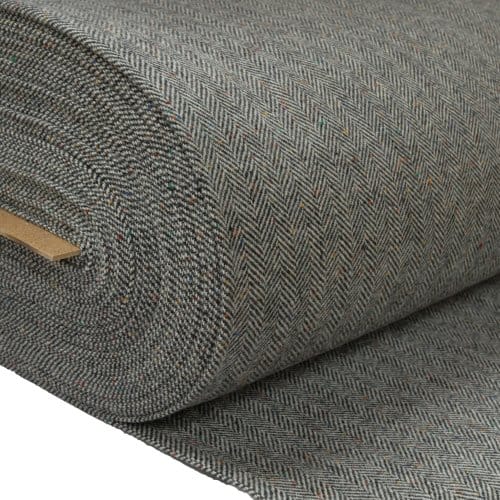
What’s next for this ancient fabric?
Sustainable Innovations
- Regenerative wool farming: Practices that improve soil and sequester carbon
- Improved recycling: Better technology for processing old wool into new fabric
- Blockchain traceability: Know exactly where your wool came from
- Low-impact dyeing: Natural dyes and waterless dyeing technology
Technology Integration
Wool mills are experimenting with:
- Adding performance fibers without losing natural properties
- Smart wool that monitors body temperature
- Moisture-wicking treatments that don’t use harmful chemicals
- Machine-washable wool that maintains quality
Market Trends
As fast fashion faces backlash, herringbone wool benefits:
- Growing interest in buy-once, wear-forever pieces
- Younger generations discovering vintage herringbone
- Sustainable fashion movements driving demand for natural fibers
- Repair and alteration services making old pieces new again
According to industry experts, the wool market is shifting toward quality over quantity – exactly where herringbone wool excels. For more on this trend, visit the International Wool Textile Organisation.
Frequently Asked Questions
Final Thoughts
We’ve covered a lot of ground – from ancient Roman roads to modern sustainability debates, from selecting the right GSM to removing stubborn stains. But let’s bring it all together.
Herringbone wool fabric represents something rare in modern fashion: a textile that has proven its worth over 2,600 years. That’s not marketing hype. That’s genuine staying power.
Key Takeaways
- Herringbone is a pattern, not a material. You can have herringbone in many fabrics, but when made from wool, it creates something special – warm, durable, and sophisticated.
- Quality varies dramatically. A $150 herringbone suit and a $1,500 one are completely different animals. The wool type, weave quality, and construction determine whether you get 3 years or 20 years of wear.
- It’s more sustainable than synthetics when you account for longevity, biodegradability, and lack of microplastic pollution. But it’s not perfect – look for certified sources and care for pieces properly.
- Care matters more than you think. Brush after wearing, air between uses, spot clean instead of washing, and store properly. These simple habits can double a garment’s lifespan.
- Choose the right weight for your purpose. This is crucial. A 280 GSM summer suit and a 450 GSM winter coat are both herringbone wool, but using them interchangeably would be a disaster.
Recommendations for Different Buyers
If You’re Building a Professional Wardrobe:
Start with one quality herringbone suit in charcoal or navy, 320-340 GSM. Choose fine merino or Saxony wool for comfort. This will be your “important meeting” suit that always looks polished. Expect to spend $600-1,200 for off-the-rack quality, more for bespoke.
If You’re a Weekend Warrior:
Get a herringbone sport coat in a more casual style – maybe brown Shetland or Donegal with flecks. You can dress it up with trousers or down with jeans. This is the piece you’ll reach for constantly because it works everywhere.
If You’re Budget-Conscious:
Look for second-hand quality over new cheap stuff. A vintage herringbone coat from a thrift store will outlast and outperform a cheap polyester blend from a fast fashion store. Also consider 80/20 wool-polyester blends from reputable brands – easier care, lower cost, still durable.
If You’re Eco-Focused:
Seek out RWS or GOTS certified wool. Consider recycled wool herringbone. Buy the best quality you can afford and plan to keep it for decades. One excellent piece replacing five mediocre ones is the most sustainable choice you can make.
If You’re a Sewing Enthusiast:
Order swatches before buying fabric. Invest in the right weight for your project. Don’t skimp on interfacing and lining – they make the difference between homemade-looking and professional results. Start with a simple pattern (A-line skirt or basic blazer) before tackling complex tailoring.
The Bottom Line
Herringbone wool fabric isn’t just about keeping warm or looking professional. It’s about participating in a tradition of quality that stretches back millennia. It’s about choosing durability over disposability. It’s about appreciating craftsmanship and natural materials in an increasingly synthetic world.
Yes, it costs more upfront. Yes, it requires some care and attention. But when you’re still wearing that herringbone coat in 15 years, while your colleagues are on their fifth polyester replacement, you’ll understand why this ancient fabric has survived into the 21st century.
Every time you put on a piece of herringbone wool, you’re wearing history. You’re wearing fabric that kept Roman soldiers warm, that Scottish shepherds depended on, that tailors have perfected over centuries. That’s worth something.
Make the investment. Learn to care for it properly. Wear it for years. Pass it down if you want. That’s the herringbone wool way.
Ready to start your herringbone wool journey? Use our Wool Type Selector Quiz to find the perfect wool for your needs, or check out our Wool Care Calculator for personalized care instructions.
For more information about different types of wool fabrics, explore our guides on sheep wool, merino wool, and wool tweed. If you’re interested in fabric care, visit our comprehensive wool care guide.