
Everything You Need to Know About This Versatile, Wrinkle-Resistant Fabric for Suits, Dresses, and Year-Round Wear
Table of Contents
- What is Wool Crepe Fabric?
- What Does Wool Crepe Feel Like?
- History and Heritage
- How Wool Crepe is Made
- Properties and Characteristics
- Wool Crepe vs Other Fabrics
- Sustainability and Environmental Impact
- What is Wool Crepe Used For?
- How to Care for Wool Crepe Fabric
- Does Wool Crepe Shrink?
- Sewing with Wool Crepe
- Quality Indicators and Buying Guide
- Troubleshooting Common Issues
- Frequently Asked Questions
- Conclusion
What is Wool Crepe Fabric?
Wool crepe is a lightweight to medium-weight fabric woven from highly twisted wool yarns that create a distinctive crinkled, pebbled surface. The fabric gets its name from the French word “crêpe,” meaning “curled” or “crinkled,” which perfectly describes its textured appearance.
Unlike smooth wool fabrics, wool crepe has a slightly rough, grainy surface with a subtle bumpy texture that you can both see and feel. This unique texture comes from using yarns that are twisted much more tightly than regular wool yarns. During weaving, the yarns are arranged in alternating S-twist and Z-twist patterns (one direction then the opposite), which creates the signature crepe effect when the fabric relaxes after coming off the loom.
Is wool crepe the same as crepe fabric? Not exactly. While wool crepe is a type of crepe fabric, crepe is a broader category that includes many different materials. You can find crepe de chine made from silk, polyester crepe, rayon crepe, and cotton crepe. What they all share is the characteristic crinkled texture, but wool crepe specifically refers to crepe made from sheep wool or other animal fibers like cashmere or merino.
The fabric can be made from either woolen (shorter staple) or worsted (longer staple) yarns, which affects its final weight and drape. Worsted wool crepe tends to be smoother and lighter, while woolen crepe has more body and warmth. According to Sewport’s fabric directory, crepe fabrics are distinguished by their purposefully wrinkled appearance achieved through various manufacturing methods.
What Does Wool Crepe Feel Like?
When you run your fingers across wool crepe, you’ll immediately notice its distinctive texture. The surface feels slightly rough and pebbly, almost like very fine sandpaper, but still soft to the touch. This grainy texture is what sets it apart from smooth wool fabrics like traditional suiting wool.
Despite the textured surface, quality wool crepe has a surprisingly pleasant hand (the way fabric feels). It’s not scratchy like some wools can be. Instead, it has a dry, crisp feel with a slight spring or bounce when you handle it. If you gently squeeze the fabric and release it, it springs back to its original shape rather than staying compressed.
The fabric drapes beautifully with fluid movement. When you hold it up, it falls in soft folds rather than standing stiff or limp. This combination of body and drape is one of wool crepe’s most appealing qualities. It has enough structure to hold a shape in tailored garments, yet flows gracefully in looser styles.
Temperature-wise, wool crepe feels comfortable against the skin. It’s not as warm as heavy wool fabrics, but it provides more insulation than lightweight cottons. The fabric breathes well, so it doesn’t feel stuffy or sticky even in warmer weather.
History and Heritage
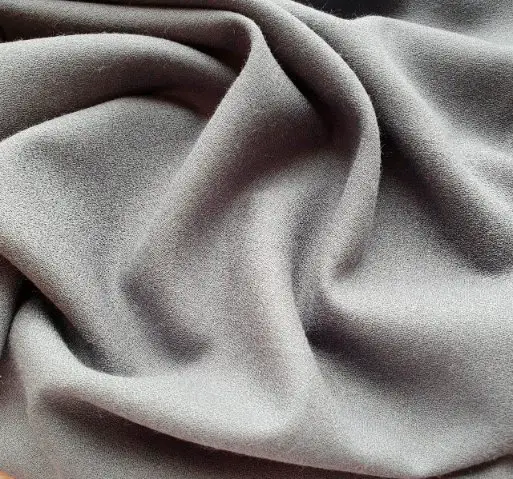
Wool crepe fabric representing historical textile craftsmanship and heritage.
The story of crepe fabric begins in ancient China and Mongolia, where silk crepe was first produced. These early crepe fabrics traveled along the silk routes to the Western world, where they quickly became popular among European royalty and the wealthy elite.
By the 19th century, crepe had become strongly associated with mourning wear in Western culture, particularly in Britain and France. Black crepe was considered proper attire during periods of grief, and its matte, textured surface was seen as appropriately somber. During this era, most crepe was made from silk, making it a luxury item.
Wool crepe developed as a more durable and practical alternative to silk crepe. While silk crepe was delicate and expensive, wool crepe offered similar aesthetic qualities with better durability and warmth. This made it suitable for everyday wear rather than just special occasions.
Throughout the 20th century, wool crepe moved from mourning clothes into mainstream fashion. Designers discovered its perfect balance of structure and drape made it ideal for professional clothing. By mid-century, wool crepe had become a staple for business suits, particularly for women entering the workforce in greater numbers.
High-end fashion houses like Armani, Dolce & Gabbana, and Hugo Boss have long used wool crepe for their tailored collections. The fabric’s ability to create clean lines while still moving gracefully made it perfect for sophisticated designs that needed to look sharp all day long.
Today, wool crepe continues to be prized for both professional wardrobes and elegant occasion wear. Its rich history and proven performance have secured its place as a classic fabric that transcends temporary trends.
How Wool Crepe is Made
The creation of wool crepe starts with the yarn. To produce the characteristic crepe texture, manufacturers twist the wool fibers much more than they would for standard wool yarn. This high-twist process involves twisting the fibers to anywhere from 40 to 80 turns per inch, compared to just 15-25 turns for regular wool yarn.
The yarns are twisted in two different directions: S-twist (clockwise) and Z-twist (counterclockwise). During weaving, these differently twisted yarns are alternated in both the warp (lengthwise) and weft (crosswise) directions. Some wool crepe uses high-twist yarns only in the weft, with regular yarns in the warp.
After weaving, the fabric undergoes finishing processes that allow the tightly twisted yarns to relax and create the pebbled surface. This may involve steaming, washing, or special pressing techniques. The relaxation of the twisted yarns causes them to curl back on themselves slightly, producing the crinkled texture.
Different variations of wool crepe exist based on construction methods:
- Single crepe: Uses high-twist yarns in one direction only, creating a subtle texture
- Double crepe: Uses high-twist yarns in both directions, producing a more pronounced pebbled effect and heavier weight
- Stretch wool crepe: Incorporates a small percentage of elastic fibers (usually 2-5% elastane) for added comfort and recovery
- Double-faced wool crepe: Two layers of crepe woven together, creating a heavier, more structured fabric with excellent drape
Properties and Characteristics
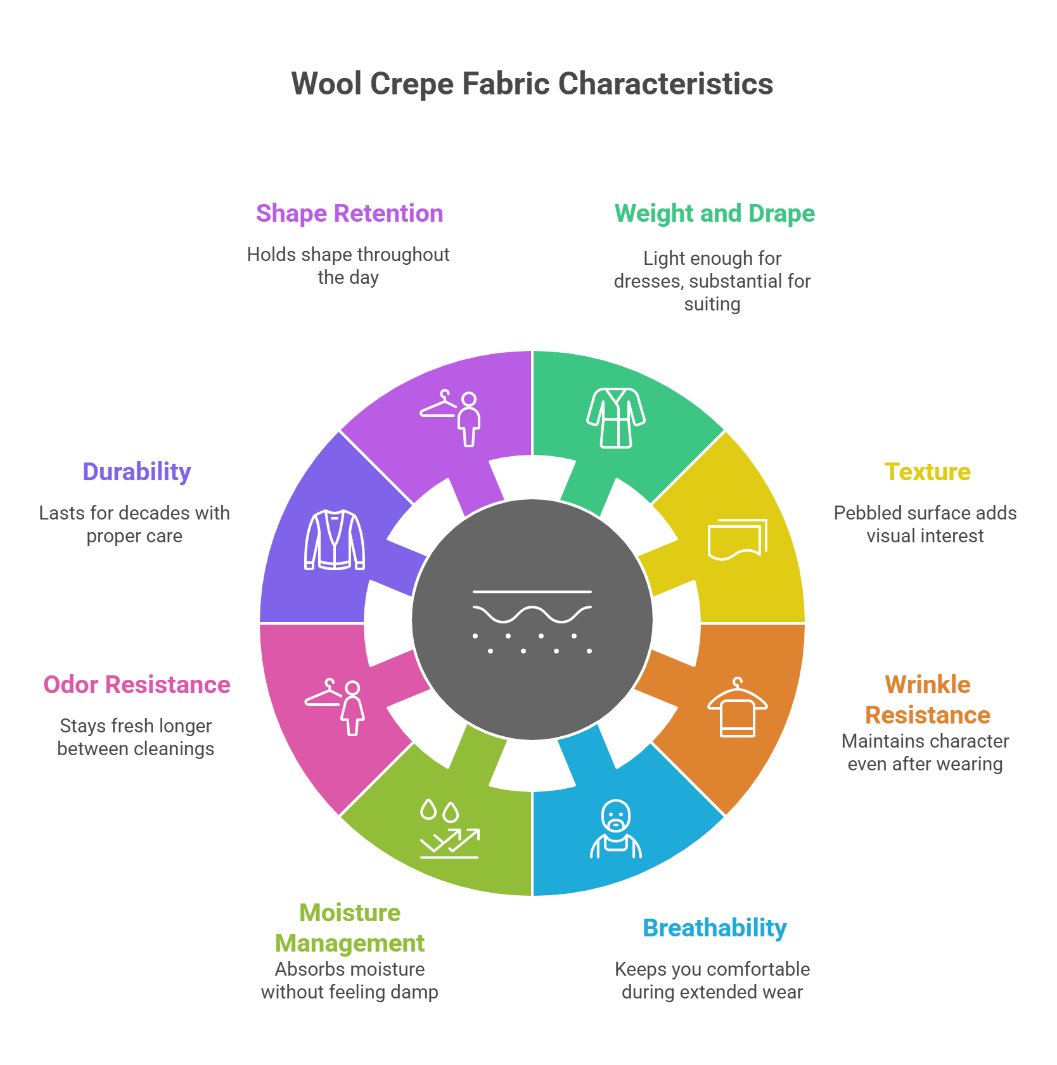
Infographic outlining the key properties and characteristics of wool crepe fabric.
Physical Properties
Wool crepe stands out for its unique combination of characteristics that make it suitable for a wide range of garments:
Weight and Drape: The fabric typically ranges from 5-9 ounces per square yard, making it light enough for dresses and blouses yet substantial enough for suiting. Despite this moderate weight, it drapes fluidly and moves gracefully with the body.
Texture: The pebbled surface gives visual interest and dimension to garments. This texture helps hide minor wrinkles and creates a sophisticated, matte appearance that photographs beautifully.
Wrinkle Resistance: One of wool crepe’s most practical features is its natural resistance to wrinkling. The crinkled texture is permanent, so the fabric maintains its character even after wearing. While it can develop some creases from folding or sitting, these tend to hang out quickly or can be easily steamed away.
Does wool crepe crease? Wool crepe is actually one of the most crease-resistant fabrics you can find. Its textured surface and springy nature mean it bounces back from folding and pressure much better than smooth fabrics. This is why it’s such a popular choice for travel clothing and professional wear where you need to look polished all day long.
Thermal Properties
Is wool crepe warm? Wool crepe offers moderate warmth, making it perfect for year-round wear. It’s warmer than cotton or linen but lighter than heavy wool fabrics like tweed or melton. The loose weave allows air to circulate, which helps regulate temperature.
In cooler weather, wool crepe provides insulation while still breathing well. In warmer conditions, the natural moisture-wicking properties of wool keep you comfortable. This versatility is why you’ll see wool crepe garments worn across seasons.
Performance Features
- Breathability: The loose weave structure allows moisture to evaporate easily, keeping you comfortable during extended wear
- Moisture Management: Wool naturally absorbs up to 30% of its weight in moisture without feeling damp
- Odor Resistance: Wool’s natural antibacterial properties mean wool crepe garments stay fresh longer between cleanings
- Durability: When properly cared for, wool crepe garments can last for decades. The fabric resists pilling and maintains its appearance well
- Shape Retention: The fabric holds its shape throughout the day and doesn’t stretch out at knees or elbows like some materials
Wool Crepe vs Other Fabrics
Wool Crepe vs Silk Crepe
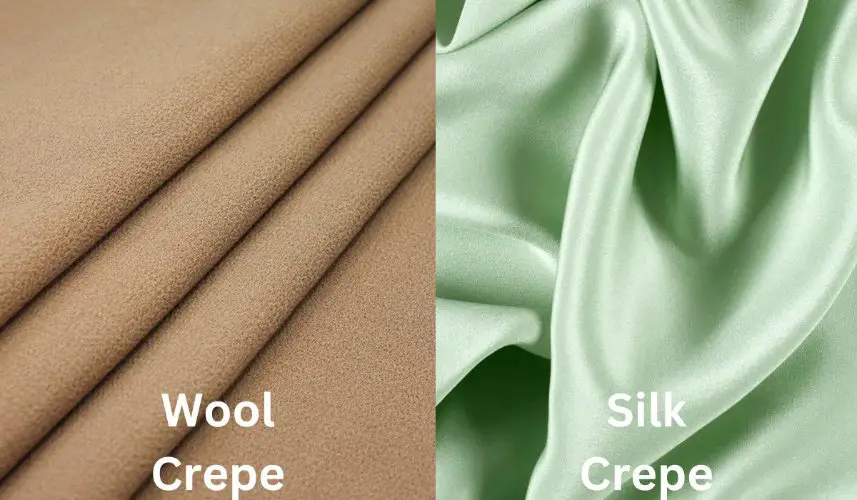
Comparison of wool crepe and silk crepe fabrics based on drape, sheen, and fabric feel.
| Feature | Wool Crepe | Silk Crepe |
|---|---|---|
| Durability | Excellent – resists snagging and wear | Delicate – prone to snagging |
| Texture | Rougher, more pronounced pebble | Smoother, finer texture |
| Warmth | Moderate insulation | Cool, minimal warmth |
| Shine | Matte finish | Subtle luster |
| Care | Dry clean or careful hand wash | Dry clean only, very delicate |
| Price Range | $20-60 per yard | $30-100+ per yard |
| Best For | Suits, winter dresses, professional wear | Evening wear, summer dresses, blouses |
Wool Crepe vs Polyester Crepe
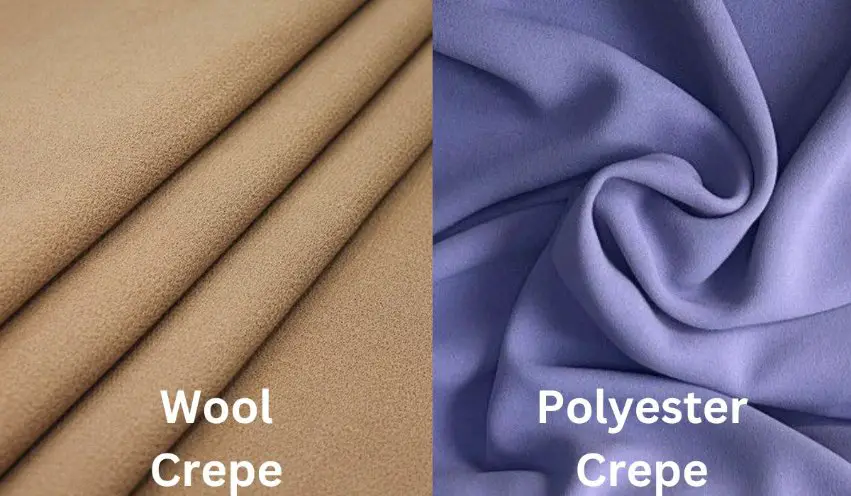
Side by side comparison of wool crepe and polyester crepe fabrics highlighting texture and fabric behavior.
| Feature | Wool Crepe | Polyester Crepe |
|---|---|---|
| Breathability | Excellent – natural fibers breathe | Limited – can feel stuffy |
| Moisture Wicking | Superior natural absorption | Poor – doesn’t absorb moisture |
| Environmental Impact | Biodegradable, renewable | Petroleum-based, non-biodegradable |
| Wrinkle Resistance | Very good | Excellent |
| Care | Dry clean recommended | Machine washable |
| Price Range | $20-60 per yard | $8-20 per yard |
| Feel | Natural, soft, breathable | Smooth but less natural feel |
Wool Crepe vs Other Wool Fabrics
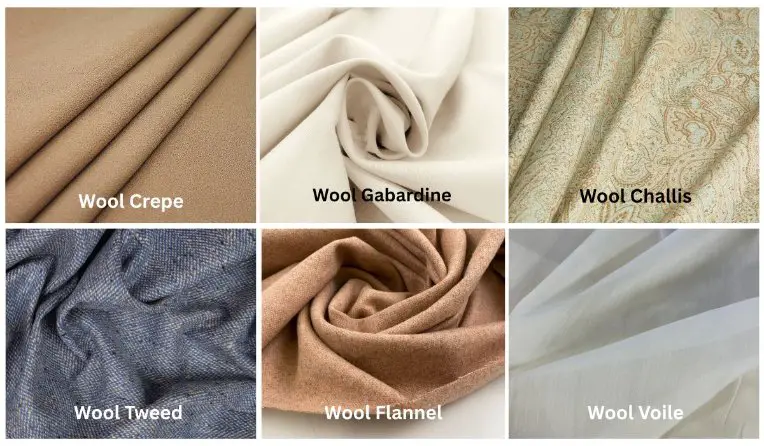
Visual comparison of wool crepe and other common wool fabric types.
| Fabric Type | Weight | Drape | Best Use | Key Difference from Wool Crepe |
|---|---|---|---|---|
| Wool Challis | Lighter | Very fluid | Soft dresses, scarves | Smoother, no crepe texture |
| Wool Gabardine | Similar | Structured | Trousers, uniforms | Diagonal twill weave, more formal |
| Wool Tweed | Heavier | Stiff | Outerwear, jackets | Thicker, textured with nubs |
| Wool Flannel | Heavier | Moderate | Shirts, winter suits | Brushed surface, warmer |
| Wool Voile | Lighter | Very fluid | Summer dresses | Open weave, more sheer |
Sustainability and Environmental Impact
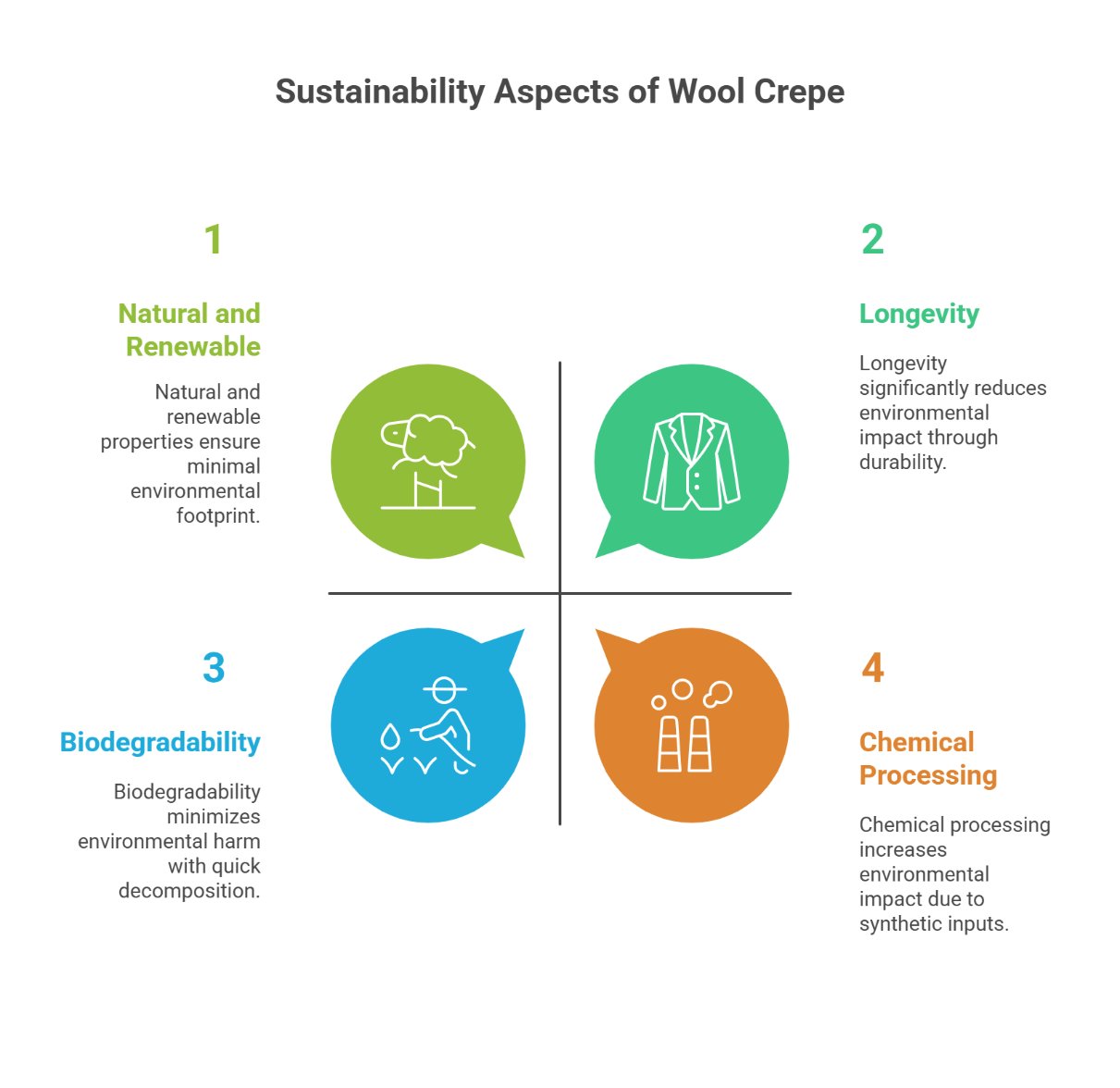
Visual overview of the sustainability and environmental impact of wool crepe fabric.
Wool crepe offers several environmental advantages that make it an attractive choice for sustainable fashion:
Natural and Renewable
Wool is a renewable resource. Sheep grow new fleece annually, and when managed responsibly, sheep farming can be sustainable. Unlike synthetic fibers derived from petroleum, wool comes from a living animal that can produce fiber for many years.
The production of wool crepe requires less chemical processing than many synthetic fabrics. While some finishing treatments are used, the basic fabric relies on the natural properties of wool fibers rather than extensive chemical modification.
Biodegradability
When a wool crepe garment reaches the end of its life, the fabric will naturally decompose. In soil, wool breaks down in just a few months to years, releasing nutrients back into the earth. This stands in stark contrast to polyester crepe, which can take 200+ years to decompose and releases microplastics in the process.
Longevity as Sustainability
Perhaps the most sustainable aspect of wool crepe is its durability. A well-made wool crepe suit or dress can last 10-20 years or more with proper care. This longevity means fewer garments need to be produced and purchased over time, reducing overall environmental impact.
The fabric’s wrinkle resistance also means less ironing, which saves energy. Its natural odor resistance means garments can be worn multiple times between cleanings, extending their life and reducing water and energy use.
Responsible Sourcing
For the most sustainable wool crepe, look for certifications like:
- Responsible Wool Standard (RWS): Ensures animal welfare and land management practices
- ZQ Merino: Certification for ethical wool production
- OEKO-TEX: Tests for harmful substances in the finished fabric
- IWTO (International Wool Textile Organisation): Sets global standards for wool quality and testing – learn more at IWTO.org
Consider purchasing wool crepe from reputable suppliers who can verify their sourcing practices and provide transparency about their supply chain.
What is Wool Crepe Used For?
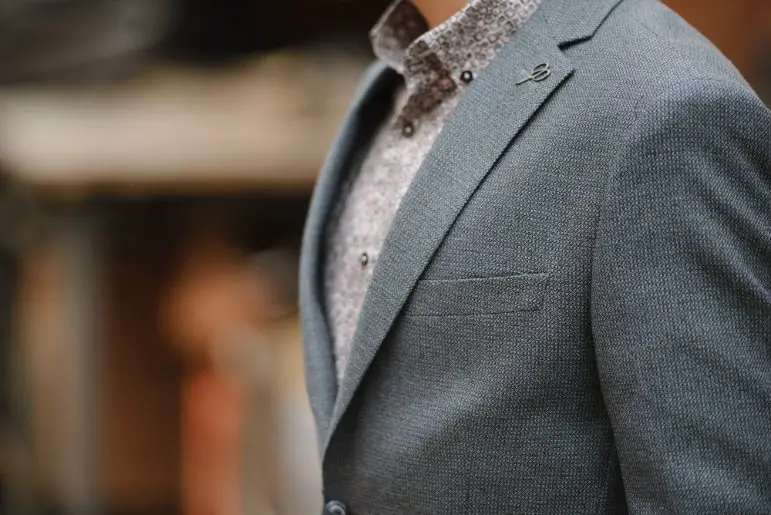
Example of wool crepe fabric used in tailored and structured garments.
What is the end use of wool crepe? Wool crepe is incredibly versatile, making it suitable for both professional and occasion wear. Its combination of structure and drape allows it to perform well across different garment styles.
Professional and Business Wear
Wool crepe’s wrinkle resistance and polished appearance make it perfect for work wardrobes:
- Suits: Both jackets and trousers benefit from wool crepe’s ability to maintain crisp lines while allowing comfortable movement
- Blazers: The fabric provides structure without stiffness, creating professional silhouettes that don’t feel restrictive
- Trousers and Skirts: Excellent shape retention means these pieces look fresh all day without sagging at the knees or seat
- Shift Dresses: The fabric’s body allows simple designs to hold their shape while the drape keeps them comfortable
What to Sew with Wool Crepe
For home sewers, wool crepe is a dream fabric that works well for many projects:
- Tailored Jackets: The fabric’s forgiveness during construction makes it good for learning tailoring techniques
- A-line Skirts: The drape creates beautiful swing and movement
- Wrap Dresses: The fabric holds the wrap securely without adding bulk
- Wide-Leg Pants: Enough body to avoid looking sloppy while still flowing gracefully
- Sheath Dresses: Provides enough structure to skim the body without clinging
Special Occasions and Evening Wear
While often associated with daywear, wool crepe works beautifully for dressier occasions:
- Cocktail Dresses: The matte finish creates sophisticated elegance
- Evening Suits: A chic alternative to traditional evening fabrics
- Mother-of-the-bride Outfits: Timeless and age-appropriate while still being beautiful
Travel Clothing
Wool crepe is excellent for travel wardrobes because it:
- Packs without wrinkling excessively
- Can be worn multiple times without cleaning
- Transitions from day to evening easily
- Works across different climates
- Hangs out creases overnight
How to Care for Wool Crepe Fabric
Demonstration of gentle care techniques for maintaining wool crepe fabric.
Proper care will keep your wool crepe garments looking beautiful for years. While the fabric is durable, it does require some special attention.
Dry Cleaning
Professional dry cleaning is the safest and most recommended method for caring for wool crepe. The Woolmark Company recommends professional cleaning for maintaining the quality of wool garments. The dry cleaning process:
- Preserves the fabric’s texture and body
- Prevents shrinkage
- Maintains the garment’s shape
- Removes stains effectively without damaging fibers
Don’t dry clean too frequently, though. The chemicals can gradually weaken fibers over time. For garments worn regularly but not visibly soiled, air them out between wears and spot clean as needed.
Hand Washing (When Permitted)
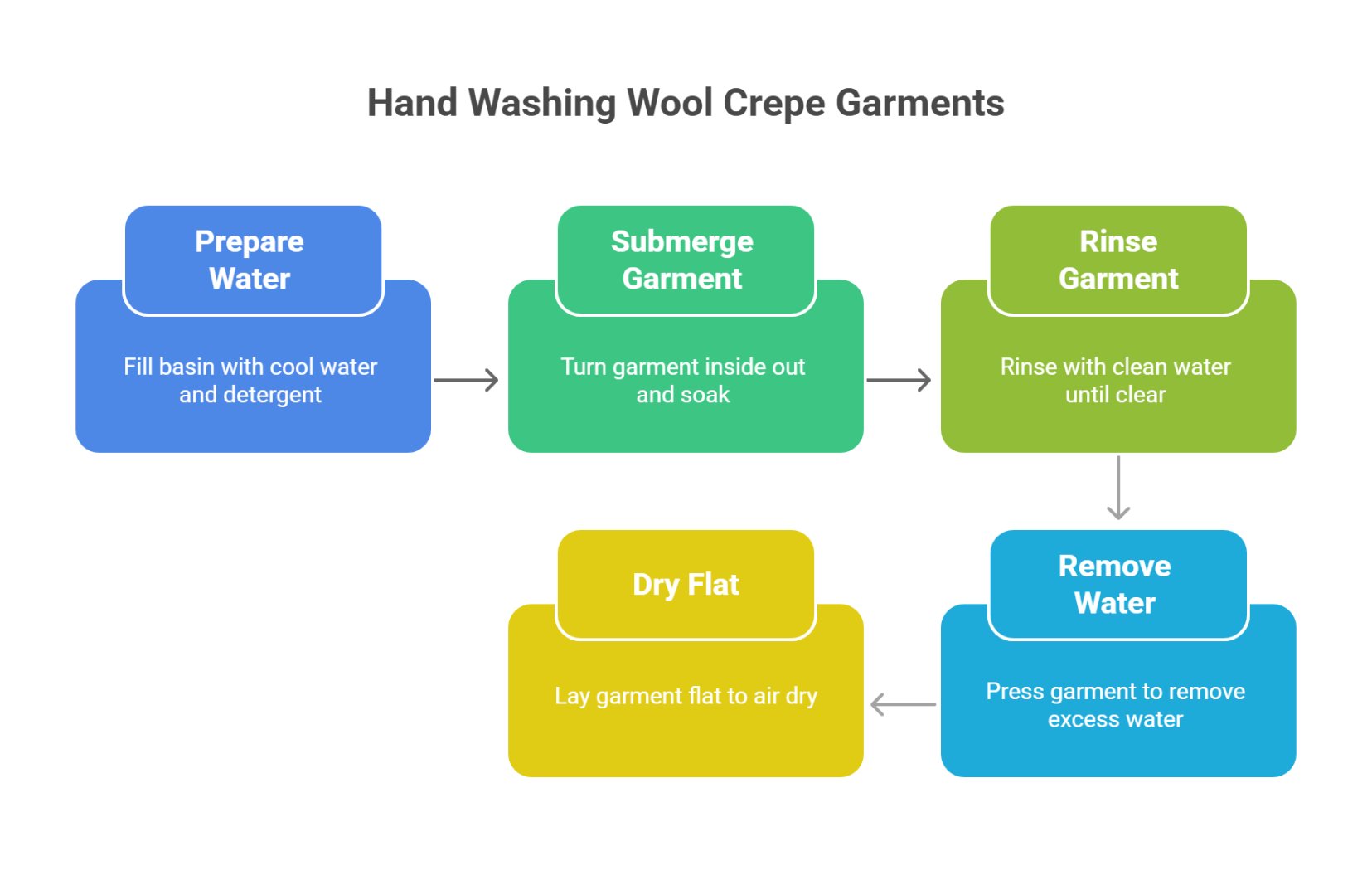
Visual step by step instructions for hand washing wool crepe garments.
Some wool crepe garments may allow careful hand washing. Always check the care label first. If hand washing is permitted:
Step 1: Prepare the Water
Fill a basin with cool to lukewarm water (never hot). Add a gentle wool-specific detergent like Woolite or Eucalan. Mix thoroughly.
Step 2: Submerge and Soak
Turn the garment inside out. Gently submerge it in the water and press down to saturate. Let it soak for 3-5 minutes. Do not agitate, rub, or wring.
Step 3: Rinse Carefully
Drain the soapy water. Refill with cool, clean water. Gently press the garment to rinse out the soap. Repeat until water runs clear.
Step 4: Remove Water
Never wring or twist. Instead, gently press the garment against the side of the basin to remove excess water. Then lay it flat on a clean towel, roll up the towel, and press gently.
Step 5: Dry Flat
Reshape the garment to its original dimensions. Lay flat on a dry towel away from direct heat or sunlight. Allow to air dry completely, which may take 24-48 hours.
Warning: Never put wool crepe in a washing machine, even on gentle cycle. The agitation will felt the fabric, causing permanent damage and severe shrinkage. Never use a dryer, as the heat will also cause felting and shrinkage.
Spot Cleaning
For minor spills and stains:
- Blot (don’t rub) the stain immediately with a clean, white cloth
- Apply a small amount of wool-safe detergent diluted in cool water
- Gently dab the stained area
- Blot with clean water to remove soap
- Air dry flat
Pressing and Ironing
Can you iron wool crepe? Yes, but with extreme caution. Improper pressing is one of the quickest ways to ruin wool crepe.
Best Practice: Steam is your friend. Use a handheld steamer or hold the iron slightly above the fabric and use the steam function. This removes wrinkles without crushing the crepe texture.
If you must press directly:
- Use the lowest heat setting appropriate for wool
- Always use a pressing cloth between the iron and fabric
- Press, don’t slide the iron (sliding can distort the fabric)
- Press on the wrong side of the fabric when possible
- Use a seam roll or rolled towel when pressing seams to avoid creating ridge marks
Never: Place a hot iron directly on wool crepe. This will create permanent shine marks and flatten the texture. Once shine marks appear, they’re very difficult to remove.
Storage
Proper storage protects your wool crepe garments during off-seasons:
- Clean first: Always clean garments before storing. Moths are attracted to body oils and food stains
- Use breathable garment bags: Cotton or muslin bags protect from dust while allowing air circulation. Avoid plastic, which can trap moisture
- Cedar protection: Cedar blocks or balls help repel moths. Replace annually as their effectiveness diminishes
- Fold heavy items: Heavy wool crepe coats may stretch on hangers. Fold these with acid-free tissue
- Hang structured items: Jackets and suits do better on padded hangers to maintain shoulder shape
- Cool, dry location: Avoid damp basements or hot attics
Does Wool Crepe Shrink?
Yes, wool crepe can shrink significantly if not handled properly. In fact, wool crepe is particularly prone to shrinkage compared to other wool fabrics. As one experienced sewer put it, wool crepe “shrinks like the dickens,” so understanding and preventing shrinkage is absolutely critical.
Why Wool Crepe Shrinks
Wool crepe shrinks for several reasons:
- Fiber Structure: Wool fibers have scales that can lock together when exposed to heat, moisture, and agitation, causing the fabric to felt and shrink
- High-Twist Yarns: The tightly twisted yarns in crepe can relax and contract when wet, causing additional shrinkage beyond normal wool
- Loose Weave: The relatively open structure of crepe allows more movement and contraction than tightly woven fabrics
How Much Can It Shrink?
Untreated wool crepe can shrink anywhere from 10-30% in both length and width. This means a dress could potentially shrink an entire size or more. The shrinkage isn’t always uniform either – it may shrink more in one direction than another.
Preventing Shrinkage: Pre-Treatment Before Sewing
If you’re sewing with wool crepe, pre-treating the fabric before cutting is absolutely necessary. Here are the proven methods:
Professional Steam Pressing (Recommended)
Take your fabric to a dry cleaner and specifically request steam pressing with NO CREASES. This is the safest method and well worth the cost (typically $10-20 for several yards). The professional equipment applies controlled steam that pre-shrinks the fabric without the risk of felting.
Home Pre-Shrinking Method
If you must pre-shrink at home:
- Fill a clean bathtub or large basin with cool water
- Submerge the entire piece of fabric
- Let soak for 30 minutes without agitating
- Drain the water and very gently press out excess water (do not wring)
- Roll in clean towels to remove more moisture
- Lay flat on a clean surface to dry, smoothing out wrinkles
- Allow to dry completely (may take 24-48 hours)
- Once dry, steam press carefully
Caution: This method carries risk. Some sewers report unpredictable results with home pre-shrinking, including felting and uneven shrinkage. Test a small swatch first.
What If Your Garment Shrinks?
If you’ve accidentally shrunk a wool crepe garment, recovery is difficult but sometimes possible:
- Fill a basin with cool water and add a capful of hair conditioner or wool wash
- Submerge the garment and let soak for 30 minutes
- Gently stretch the fabric while still wet, working gradually
- Pin to a blocking board or towel at the desired dimensions
- Allow to dry completely while pinned
Success with this method varies. Severe shrinkage or felting usually cannot be fully reversed.
Sewing with Wool Crepe
Wool crepe is actually one of the more pleasant fabrics to sew with, especially compared to slippery materials like silk. Here’s what you need to know:

Video guide: How to sew with wool fabric – techniques and tips.
Pre-Sewing Preparation
Pre-shrink first: As covered in the previous section, this step is non-negotiable. Budget extra yardage (add 1/2 yard for every 3 yards) to account for shrinkage.
Let it relax: After pre-treatment, let the fabric rest flat for 24 hours before cutting. This allows it to fully settle.
Cutting
Wool crepe is actually easier to cut than many fabrics:
- The fabric stays in place well – it doesn’t slip and slide like silk or rayon
- Use sharp fabric scissors or a rotary cutter
- You can cut through two layers without much shifting
- The edges don’t ravel easily, so you have some working time
- Consider using pattern weights instead of pins to avoid marking the fabric
Sewing Techniques
Needles and Thread
- Needle: Universal or microtex needle, size 70/10 or 80/12 for lightweight crepe, 90/14 for heavier weights
- Thread: High-quality all-purpose polyester or cotton-wrapped polyester thread
Stitch Settings
- Stitch length: 2.5-3mm for seams
- Reduce tension slightly if the fabric puckers
- Test on scraps first to perfect your settings
Seam Finishing
Wool crepe doesn’t ravel much, but seams still benefit from finishing:
- Serging/overlocking: Quick and professional-looking
- Pinking: Works well given the fabric’s low-ravel tendency
- Hong Kong finish: Beautiful for unlined garments
- French seams: Avoid these – they create too much bulk in wool crepe
Pressing While Sewing
This is where many sewers run into trouble. Follow these rules strictly:
Golden Rule: Never put the iron directly on the right side of the fabric. Always use a pressing cloth, or better yet, press from the wrong side.
- Use a dry pressing cloth made from cotton or linen
- Press with steam, but don’t let the iron sit in one place
- Use a seam roll or tightly rolled towel inside a sleeve to press seams without creating ridges
- Press as you go – don’t wait until the end to press seams
- For the final press, lay the garment wrong-side up on a thick towel or pressing pad to avoid flattening the texture
Common Sewing Challenges and Solutions
| Challenge | Solution |
|---|---|
| Needle holes visible after unpicking | Holes usually disappear after steaming. Test fit carefully before sewing to minimize unpicking |
| Fabric stretching during sewing | Use a walking foot, especially on bias seams |
| Shine marks from pressing | Prevention is key – always use a pressing cloth. To remove shine, try steaming from several inches away |
| Puckered seams | Reduce thread tension and use a slightly longer stitch length |
Lining Recommendations
Wool crepe should generally be lined for comfort and to extend garment life:
- Best choices: Bemberg (rayon) lining, silk habotai, or lightweight cotton batiste
- Match cleaning requirements: If your wool crepe is dry clean only, choose a lining with the same requirements
- Consider climate: In warm climates, use the lightest lining possible to maintain breathability
Quality Indicators and Buying Guide
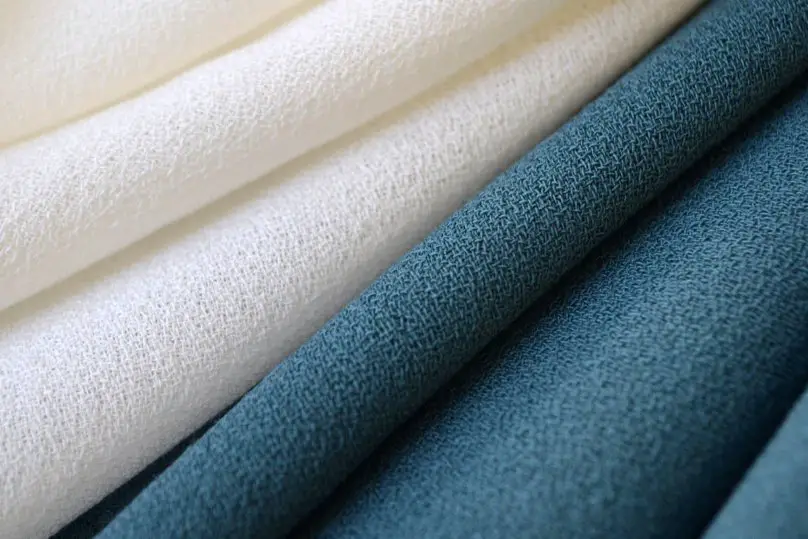
Buying guide visual showing how to identify high quality wool crepe fabric.
How to Identify Quality Wool Crepe
When shopping for wool crepe, look for these quality markers:
Visual Inspection
- Even texture: The crepe texture should be consistent across the entire piece without flat spots or irregularities
- Good color saturation: Quality dyeing creates rich, even color without streaks or variation
- Uniform weight: Hold the fabric up to light – it should be consistent without thin spots
Hand Test
- Spring and recovery: Gently scrunch the fabric and release. Quality crepe should spring back quickly
- Appropriate weight: It should feel substantial but not heavy or limp
- Soft hand: While textured, it shouldn’t feel scratchy or rough
Drape Test
Ask to see several yards unwound. Quality wool crepe should:
- Fall in soft, graceful folds
- Not stand out stiffly or hang limply
- Show some body and structure while still moving fluidly
Understanding Labels and Descriptions
Fiber Content
- 100% wool: Most traditional and breathable
- Wool/nylon blend (typically 95/5): Adds durability and reduces pilling
- Wool/elastane (typically 97/3 to 95/5): Adds stretch and recovery, great for fitted garments
Origin Matters
Italian wool crepe is considered the gold standard, known for superior dyeing and finishing. However, you’ll also find excellent quality from:
- United Kingdom (particularly for traditional suiting weights)
- Australia (known for fine merino crepe)
- Japan (beautiful double crepes with excellent hand)
Price Guidelines
Expect to pay:
- Budget quality: $15-25 per yard – suitable for practice projects
- Good quality: $25-40 per yard – solid choice for most projects
- Premium quality: $40-60 per yard – Italian or Japanese fabrics, special occasion garments
- Luxury: $60+ per yard – designer fabrics, cashmere blends, or superfine wool
Where to Buy
- Local fabric stores: The advantage of seeing and feeling the fabric in person
- Online specialty retailers: Mood Fabrics, Britex, Fabric Mart often carry good selections
- Wholesale suppliers: Can offer better prices for larger quantities
- Estate sales and vintage sources: Sometimes contain high-quality deadstock wool crepe
How Much to Buy
Account for pre-shrinking when calculating yardage:
- Add 1/4 to 1/2 yard extra for every 3 yards needed
- Buy enough for a test swatch to confirm colorfastness and care requirements
- If making a suit, buy all pieces at once to ensure dye lot consistency
Troubleshooting Common Issues
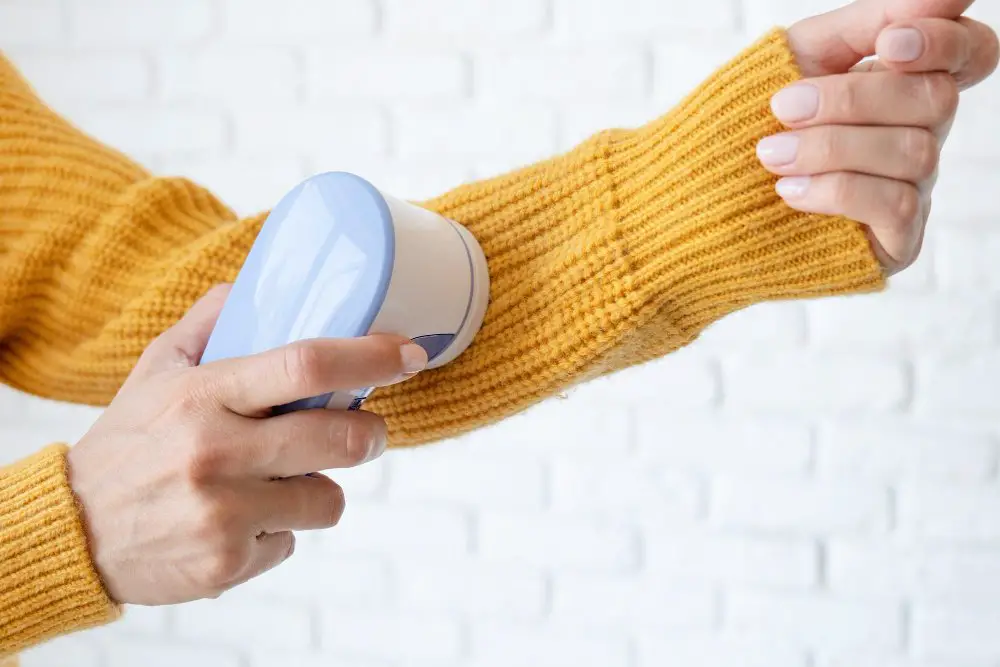
Visual reference for identifying and managing common wool crepe fabric issues.
Shine Marks from Pressing
Prevention: Always use a pressing cloth and press from the wrong side.
Fix attempts:
- Try steaming from 4-6 inches away – sometimes this helps the fibers relax
- Very gently brush the area with a soft clothes brush while steaming
- If severe, professional dry cleaning may help but won’t completely remove all shine
Garment Has Lost Its Shape
For stretched areas (knees, elbows):
- Steam the area while gently pushing the fabric back to its original shape
- Let cool completely before wearing again
- Consider adding stay tape in stress areas for future garments
Pilling
While wool crepe resists pilling better than many fabrics, it can still occur in friction areas:
- Use a fabric shaver or sweater stone to gently remove pills
- Don’t pull pills by hand – this damages surrounding fibers
- Reduce friction by avoiding shoulder bags that rub against garments
Static Cling
More common in dry winter months:
- Use anti-static spray
- Run a metal hanger along the inside of the garment
- Increase humidity in your environment
- Wear natural fiber slips or underlayers
Frequently Asked Questions
Crepe wool is another term for wool crepe. It refers to wool fabric that has been woven using high-twist yarns to create a characteristic crinkled, pebbled texture. The term emphasizes that the fabric is made from wool fibers (rather than silk or synthetic materials) and has the crepe texture.
No, machine washing is not recommended for wool crepe. The agitation, heat, and water movement can cause severe shrinkage and felting. While a few experienced sewers have successfully machine washed pre-shrunk wool crepe on the gentlest cold cycle, this carries significant risk. Dry cleaning or careful hand washing is much safer.
Lightweight wool crepe can work for summer, especially in professional settings with air conditioning. The fabric breathes better than polyester and wicks moisture well. However, it’s warmer than linen or cotton, so it’s best for mild summer days or indoor summer wear rather than hot, humid outdoor conditions.
Steaming is the best method. Hang the garment in a steamy bathroom or use a handheld steamer. For stubborn wrinkles, press from the wrong side using a pressing cloth and moderate heat. Never press directly on the right side as this can create shine marks. Many wrinkles will also hang out naturally if you leave the garment hanging for 24 hours.
While not absolutely necessary, lining is generally recommended for wool crepe garments. Lining improves comfort, prevents the fabric from stretching in stress areas, helps garments slide on easily, and extends the life of the outer fabric by reducing wear and body oils contact.
Single crepe uses high-twist yarns in one direction (usually the weft), creating a subtle texture and lighter weight. Double crepe uses high-twist yarns in both warp and weft directions, producing a more pronounced pebbled effect, heavier weight, and more substantial drape.
Yes, wool crepe is one of the most versatile year-round fabrics. In cooler months, it provides warmth while breathing well. In warmer weather, its moisture-wicking properties keep you comfortable. The key is choosing appropriate weights – lighter crepe for summer, heavier for winter.
Wool crepe ranges from moderate to expensive depending on quality. Expect to pay $20-60 per yard for most wool crepe, with premium Italian or designer fabrics costing more. While more expensive than cotton or polyester, it’s often less costly than silk crepe and offers better durability, making it a good value for the investment.
Conclusion
Wool crepe stands out as one of the most practical and elegant fabrics available for both professional and special occasion wear. Its unique combination of structure and drape, wrinkle resistance, and year-round wearability make it a smart choice for building a quality wardrobe.
Throughout this guide, we’ve covered the distinctive characteristics that make wool crepe special – from its pebbled texture created by high-twist yarns to its natural bounce and recovery. We’ve seen how it compares to other fabrics, understanding that while silk crepe may be more luxurious and polyester crepe more affordable, wool crepe offers the best balance of performance, durability, and natural fiber benefits.
The fabric’s versatility truly shines when you consider its applications. Whether you’re creating a professional suit that needs to look sharp from morning meetings to evening events, or sewing an elegant dress for a special occasion, wool crepe performs beautifully. Its ability to hold shape while draping gracefully makes it suitable for both structured tailoring and flowing designs.
One of the most important takeaways from this guide is understanding care requirements, particularly the shrinkage issue. Wool crepe’s tendency to shrink significantly means you must pre-treat fabric before sewing, and you should follow proper cleaning and pressing techniques to maintain your garments. While these requirements may seem demanding, they’re well worth the effort given how long properly cared-for wool crepe garments can last.
Key Takeaways and Recommendations
For Sewers:
- Always pre-shrink your fabric before cutting – this step is non-negotiable
- Invest in quality wool crepe for projects you want to last years
- Use a pressing cloth religiously to avoid shine marks
- Plan to line your garments for the best results
- Don’t be intimidated – wool crepe is actually easier to sew than many slippery fabrics
For Wardrobes:
- Consider wool crepe for work wardrobes where wrinkle resistance and polish matter
- Choose it for travel clothing that needs to look good straight from the suitcase
- Look for quality construction in ready-to-wear pieces – the fabric will last, so the garment should too
- Build your collection gradually with classic pieces in neutral colors
- Calculate cost-per-wear rather than initial price – quality wool crepe is an investment that pays off
For Care:
- Dry cleaning is safest and recommended for most garments
- Steam wrinkles rather than pressing when possible
- Air garments between wears – wool’s natural properties mean less frequent cleaning
- Store properly with moth protection during off-seasons
- Address stains quickly with spot cleaning to avoid full cleaning needs
For Sustainability:
- Choose wool crepe as a natural, biodegradable alternative to synthetic crepes
- Look for certified responsible wool when possible
- Remember that longevity is the ultimate sustainability – one wool crepe suit that lasts 15 years beats five cheap polyester suits over the same period
- Consider the full lifecycle from production through disposal when making fabric choices
Whether you’re a home sewer looking for your next project fabric, a professional building a work wardrobe, or simply someone interested in understanding quality textiles, wool crepe offers something special. Its rich history, beautiful hand, and practical performance make it a fabric worth knowing well. The slight learning curve in care and handling pays dividends in garments that look polished and professional year after year.
As you work with wool crepe or add pieces to your wardrobe, you’ll likely come to appreciate its quiet sophistication. It doesn’t demand attention like shiny satin or silk, but it commands respect through its impeccable drape and unwavering reliability. That’s the true beauty of wool crepe – it makes you look effortlessly put-together while working hard behind the scenes to maintain that polished appearance all day long.
Now that you understand what makes wool crepe special, how to work with it, and how to care for it, you’re ready to make informed decisions about incorporating this classic fabric into your sewing projects or wardrobe. Whether you choose it for a power suit, an elegant dress, or versatile separates, wool crepe won’t disappoint.
For additional information on working with different fabric types, explore our guides on how to sew a dress and our beginner’s guide to sewing. If you’re interested in comparing different natural fibers, check out our comprehensive natural vs synthetic fabrics guide.