
Everything You Need to Know About Natural Wool Batting for Quilting, Upholstery, and Crafts
Table of Contents
- Introduction to Wool Batting
- What Is Wool Batting Fabric?
- Natural Properties and Benefits
- Types of Wool Used in Batting
- How Wool Batting Is Made
- Wool Batting vs Other Materials
- Sustainability and Environmental Impact
- Uses and Project Types
- Common Problems and Solutions
- Care and Washing Instructions
- Buying Guide
- Expert Tips for Working with Wool Batting
- Historical Context
- Frequently Asked Questions
- Conclusion
Introduction to Wool Batting
When you’re looking for the perfect batting for your next quilt, upholstery project, or craft, wool batting stands out as a top choice. This natural fiber has been keeping people warm for centuries, and today it’s having a big moment in the quilting and crafting world.
Wool batting brings together warmth, breathability, and natural resilience in a way that synthetic materials just can’t match. Whether you’re a seasoned quilter working on your next masterpiece or a beginner trying to choose between cotton and wool, understanding what makes wool batting special will help you make the right choice for your project.
In this guide, we’re going to walk through everything you need to know about wool batting fabric. From how it’s made to how to care for it, we’ll cover the practical stuff that matters when you’re actually working with this material. You’ll learn about different types of wool, how to avoid common problems like bearding, and why wool batting might just be the perfect choice for your winter quilts.
What Is Wool Batting Fabric?
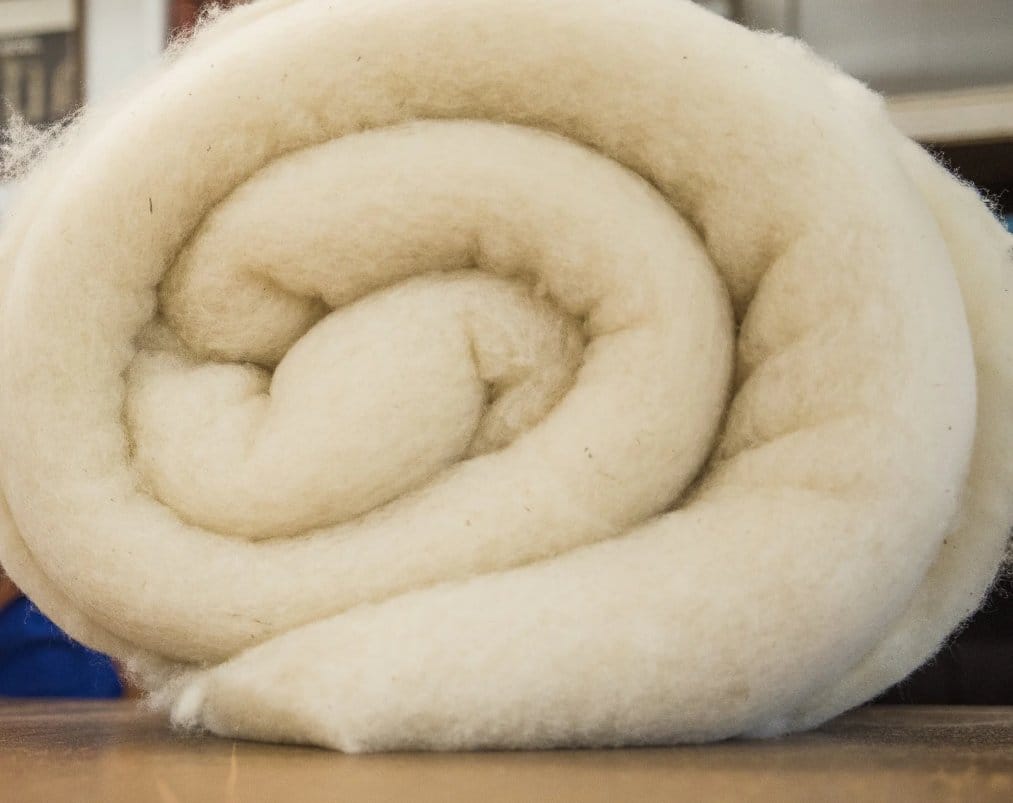
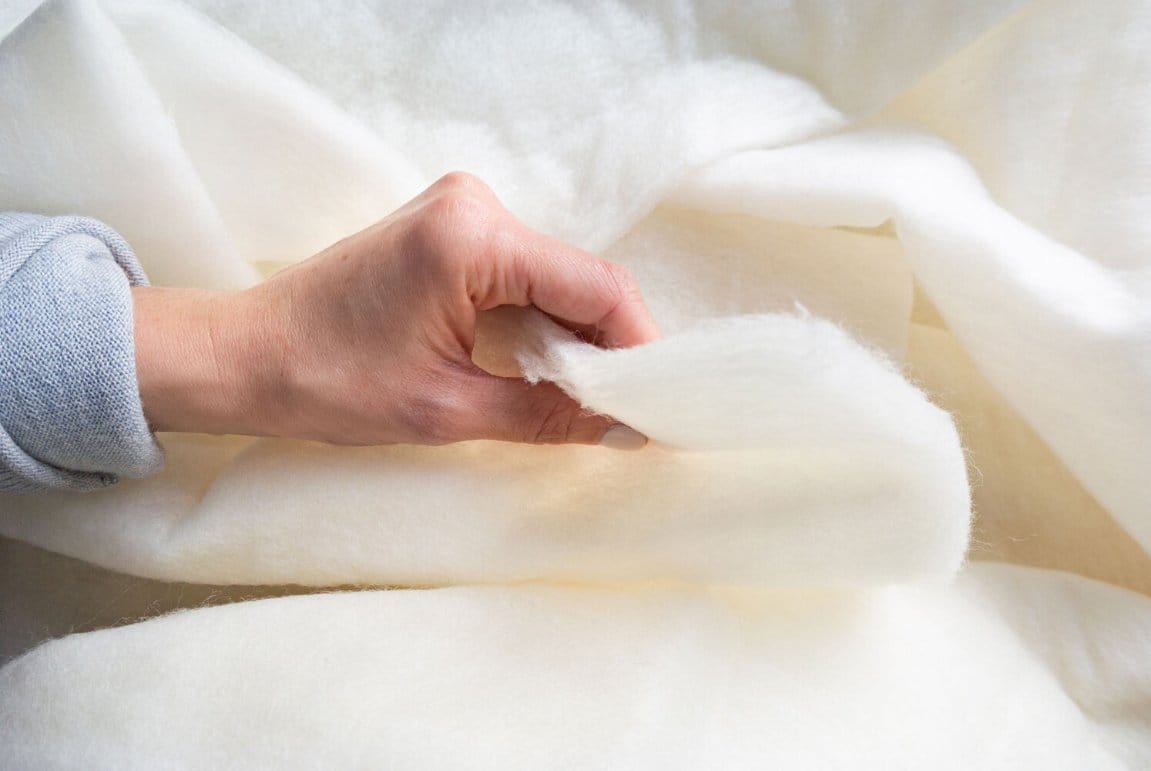
Wool batting is a thick layer of processed wool fibers that are lightly connected together to form sheets or rolls. Think of it as the filling that goes inside quilts, comforters, upholstered furniture, and other fabric projects. Unlike wool felt, which is heavily matted and dense, batting keeps the wool fibers more loosely arranged so air can get trapped between them.
This trapped air is what makes wool batting such a good insulator. The fibers come from sheep wool, and depending on the breed and processing method, you can get batting that ranges from soft and fine to thicker and more rustic.
Wadding vs Batting: Is There a Difference?
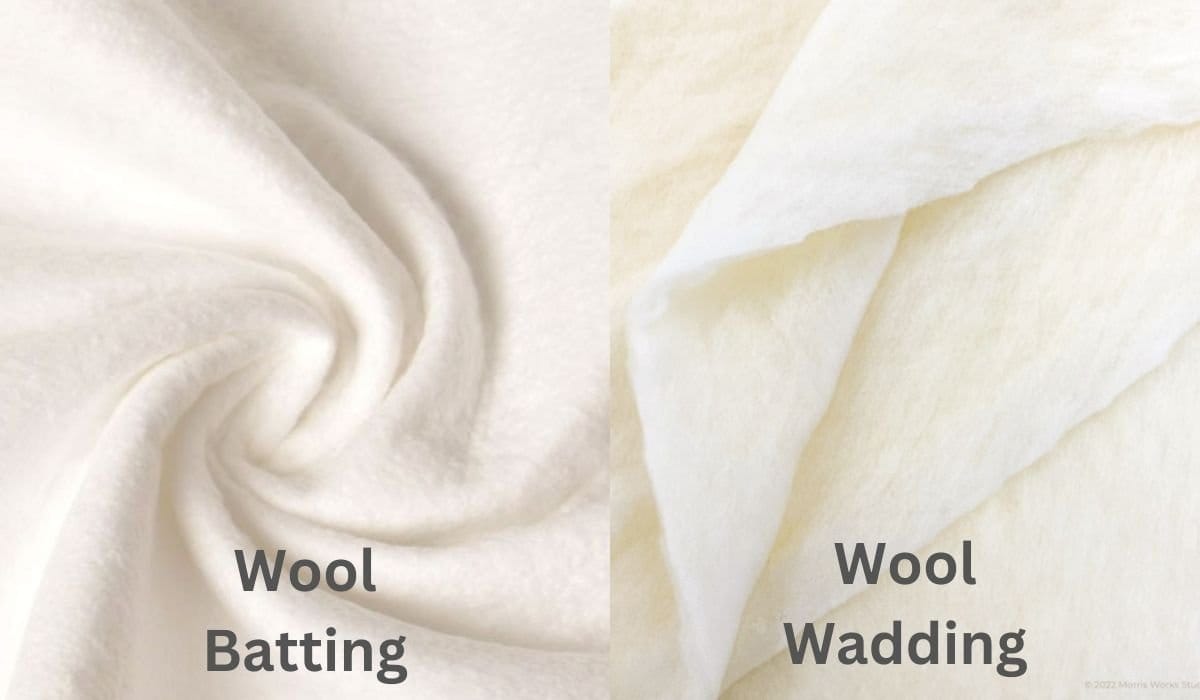
Here’s something that confuses a lot of people: wadding and batting are actually the same thing. In the UK and Australia, people call it wadding. In the United States and Canada, it’s called batting. Both words refer to the same product – that layer of insulating material that goes inside quilts and other textile projects.
So if you see a pattern or tutorial that mentions wadding, don’t worry. They’re talking about the exact same material as batting. It’s just a regional difference in terminology, like how Americans say “elevator” and British people say “lift.”
How Wool Batting Differs From Wool Roving
If you’ve been shopping for wool products, you might have come across wool roving and wondered how it’s different from batting. Here’s the breakdown:
Wool roving is carded wool where all the fibers are combed and aligned in one direction. It comes in long rope-like strands and is mainly used for spinning yarn, needle felting, or wet felting projects. The fibers are loose and can be pulled apart easily.
Wool batting, on the other hand, has fibers that go in multiple directions. It comes in flat sheets or rolls, and the fibers are lightly needle-punched or bonded together so they stay in place. This makes batting much easier to work with for quilts because you can lay it out flat without it falling apart.
Think of it this way: roving is like loose, uncooked spaghetti strands all lined up the same way. Batting is like a thin pancake where the ingredients are mixed together and go in different directions.
Natural Properties and Benefits of Wool Batting
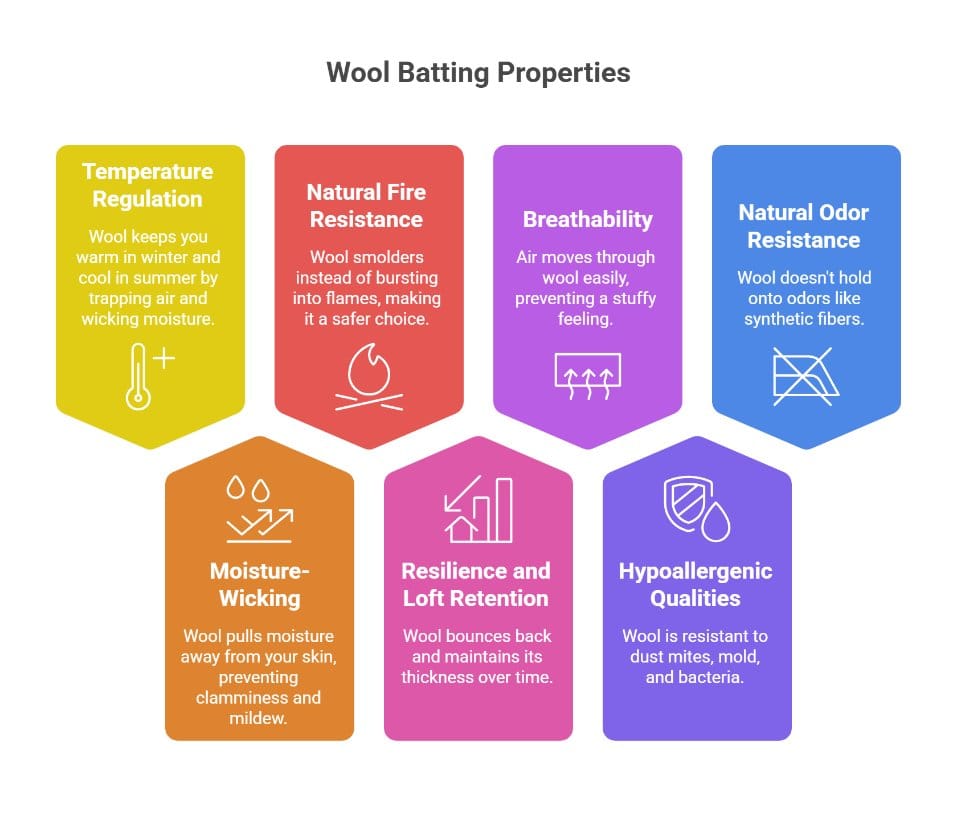
Wool batting has some pretty amazing properties that make it stand out from other batting materials. Let’s talk about what makes it special and why quilters and crafters love working with it.
Temperature Regulation
One of wool’s best tricks is how it manages temperature. Wool batting keeps you warm in winter, but here’s the surprising part – it also helps you stay cool in summer. The fibers can absorb moisture without feeling wet, which helps regulate your body temperature naturally.
This happens because wool fibers have a crimped structure that traps tiny pockets of air. These air pockets act as insulation, keeping heat close to your body when it’s cold. But wool can also absorb up to 30% of its weight in moisture without feeling damp, which pulls heat away from your body when you’re warm.
Moisture-Wicking Properties
Wool batting pulls moisture away from your skin and releases it into the air. This is huge for quilts because it means you won’t wake up feeling clammy or sweaty. The moisture gets absorbed into the wool fibers themselves, not just sitting on the surface like it would with polyester.
This moisture management also helps prevent mold and mildew from growing in your quilts or upholstered furniture. The wool stays dry to the touch even when it’s absorbed quite a bit of moisture.
Natural Fire Resistance
Here’s something that might surprise you: wool is naturally flame-resistant. When exposed to fire, wool smolders instead of bursting into flames like polyester or cotton. The fibers char and self-extinguish rather than melting or spreading fire.
This makes wool batting a safer choice for bedding and upholstery. You don’t need chemical flame retardants added to the fabric, which is especially important if you’re making items for children or people with chemical sensitivities. According to The Woolmark Company, wool requires more oxygen than is available in air to burn, making it naturally safer than many synthetic materials.
Resilience and Loft Retention
Wool batting bounces back. Unlike cotton batting that can flatten over time, wool maintains its loft (thickness) even after years of use. The natural crimp in wool fibers acts like tiny springs, helping the batting keep its shape.
This means your quilts will look puffy and new for longer. Wool doesn’t get permanent creases or fold lines, even if you store your quilts folded for months. This makes it perfect for wall hangings and show quilts that need to hang beautifully without wrinkles.
Breathability
Air can move through wool batting easily, which prevents that stuffy, trapped feeling you sometimes get with synthetic materials. This breathability works together with the moisture-wicking to keep you comfortable all night long.
Hypoallergenic Qualities
Modern superwashed and processed wool batting is naturally resistant to dust mites, mold, and bacteria. The lanolin that remains in the fibers (even after washing) has antimicrobial properties. However, some people are allergic to wool itself, so it’s worth testing if you’ve never used wool products before.
Natural Odor Resistance
Wool doesn’t hold onto odors the way synthetic fibers do. The same properties that wick moisture away also prevent bacteria from building up and causing smells. This means your quilts and upholstered items stay fresher for longer between washings.
Key Benefits at a Glance
Wool batting offers natural temperature regulation, excellent moisture management, fire resistance without chemicals, long-lasting loft, breathability, resistance to odors and microbes, and durability that outlasts many other natural fibers.
Types of Wool Used in Batting
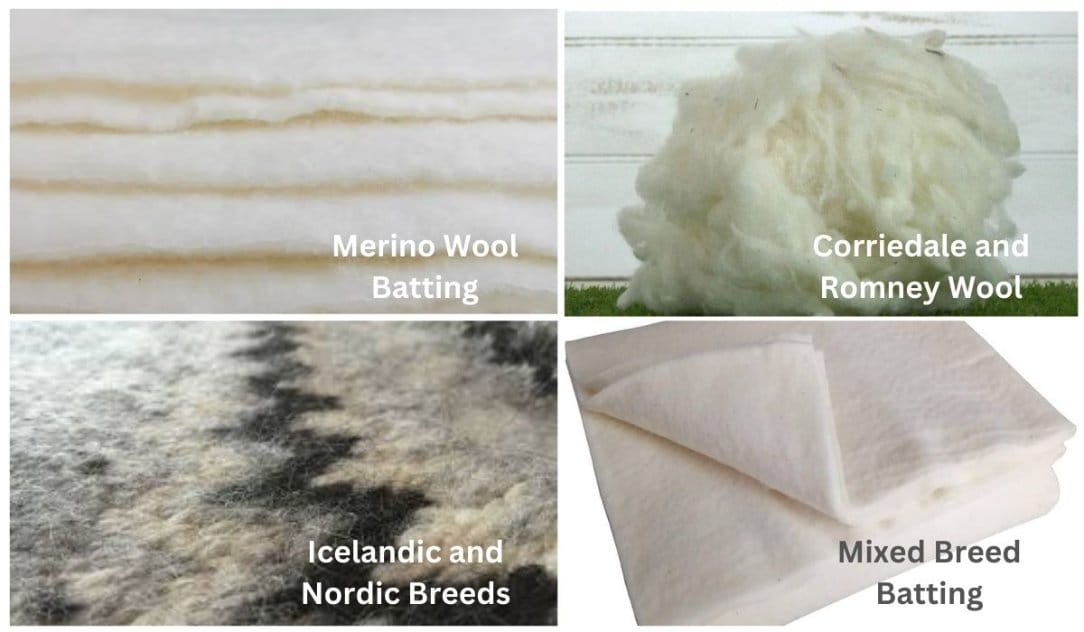
Not all wool batting is created equal. The type of sheep breed, processing method, and fiber quality all affect how the batting performs. Let’s look at the main types you’ll see when shopping for wool batting.
Merino Wool Batting
Merino wool is the gold standard for softness. It comes from Merino sheep and has very fine, ultra-soft fibers. Merino batting feels silky smooth against your skin and won’t be itchy like some other wools.
The fibers are so fine (usually 18-24 microns in diameter) that they’re perfect for quilts that will touch bare skin. Merino batting costs more than regular wool batting, but many quilters think it’s worth the extra money for special projects or baby quilts.
Corriedale and Romney Wool
Corriedale and Romney are medium-grade wools that offer a good balance between softness and durability. The fibers are thicker than Merino but still comfortable. These wools work well for everyday quilts that will get lots of use.
Romney wool has a longer staple length (fiber length), which makes it particularly good for batting because the longer fibers hold together better. Corriedale has excellent crimp, which helps with loft and insulation.
Icelandic and Nordic Breeds
Icelandic and other Nordic breed wools have unique properties. They often have a dual-coat structure – soft inner fibers for insulation and longer, coarser outer fibers for weather protection. Some batting makers blend these coats together for added warmth and durability.
These wools tend to be a bit coarser but extremely warm and resilient. They’re perfect for rustic quilts or projects where you want that natural, less-processed feel.
Mixed Breed Batting
Most affordable wool batting uses a mix of different sheep breeds. This is totally fine for most projects. The manufacturers blend wools to get the right balance of softness, strength, and price.
Mixed breed batting usually performs well and costs less than breed-specific options. Don’t feel like you need to spend extra on pure breed wool unless you’re working on a very special project.
Virgin Wool vs Recycled Wool
Virgin wool comes directly from sheep and hasn’t been used before. Recycled wool comes from old sweaters, blankets, or other wool items that have been processed back into fibers. Both can make good batting, but there are differences.
Virgin wool is typically softer, stronger, and more consistent in quality. Recycled wool is more environmentally friendly and costs less, but the fibers may be shorter from previous use. For batting, virgin wool usually performs better over time.
Organic vs Conventional Wool
Organic wool comes from sheep raised without synthetic pesticides or fertilizers. The wool is processed without harsh chemicals. If you’re concerned about chemical exposure or want to support organic farming, organic wool batting is worth the higher price.
Conventional wool is cheaper and more widely available. Modern processing removes most residues, so both organic and conventional wool batting are safe to use.
| Wool Type | Micron Count | Softness | Best For |
|---|---|---|---|
| Merino | 18-24 | Very Soft | Baby quilts, clothing, luxury items |
| Corriedale | 25-31 | Soft | Everyday quilts, general crafts |
| Romney | 32-39 | Medium | Durable quilts, upholstery |
| Icelandic | 27-32 | Medium-Coarse | Winter blankets, rustic projects |
How Wool Batting Is Made
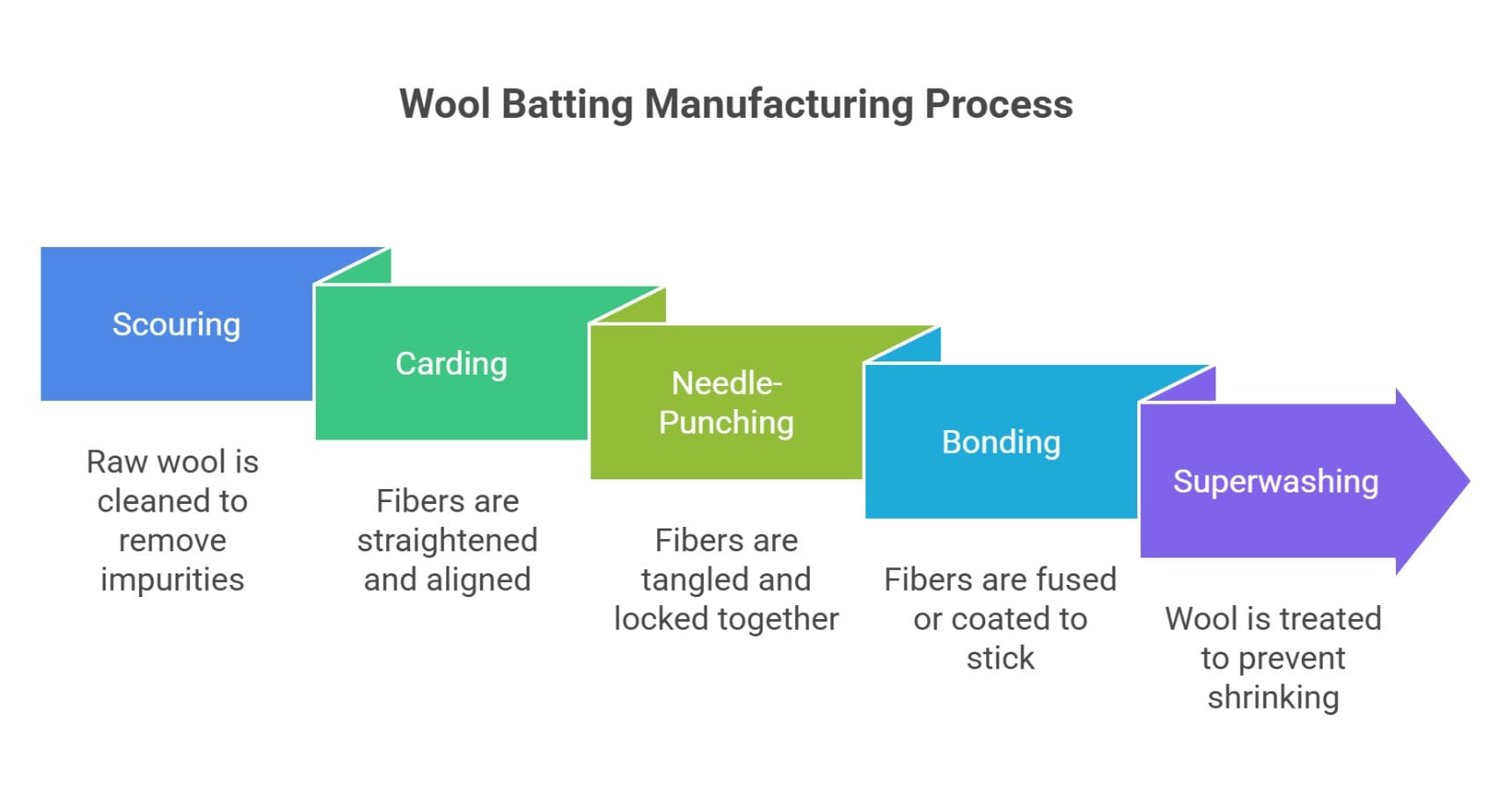
Understanding how wool batting is manufactured helps you make better choices when buying and using it. The process turns raw fleece from sheep into the clean, consistent batting you can use in your projects.
Scouring (Cleaning)
Raw wool straight from the sheep contains lanolin, dirt, and vegetable matter. Scouring is the deep cleaning process that removes these impurities. The wool gets washed in hot water with biodegradable soaps or detergents.
Some manufacturers leave a tiny bit of lanolin in the wool because it helps with water resistance and keeps the fibers soft. Others remove almost all of it for people who are sensitive to lanolin.
Carding
After cleaning, the wool fibers are all tangled up. Carding is where they get straightened out and aligned. Large machines with hundreds of wire teeth comb through the wool, separating the fibers and arranging them into a thin web.
Unlike roving where all fibers go one direction, batting is carded so the fibers go in multiple directions. This creates a stronger, more stable sheet that won’t pull apart easily.
Needle-Punching
This is where wool batting gets its structure. A needle-punching machine has hundreds of barbed needles that punch up and down through the carded wool. These needles tangle and lock the fibers together without using any glue or adhesive.
The amount of needle-punching affects the batting’s characteristics. Light needle-punching leaves the batting loftier and fluffier. Heavy needle-punching makes it flatter and denser. Most wool batting for quilting gets moderate needle-punching on just one side.
Thermal Bonding vs Resin Bonding
Some wool batting manufacturers use bonding methods to help the fibers stick together. Thermal bonding uses heat to slightly melt and fuse the fibers at their contact points. This is common in polyester batting but less common in wool.
Resin bonding applies a light coating of adhesive to hold the fibers in place. Some wool battings use a small amount of acrylic resin. This helps prevent bearding (fibers poking through fabric) but can make the batting feel slightly stiffer.
Many quilters prefer wool batting with no bonding or just light needle-punching. This keeps the batting as natural as possible and maintains that soft, fluffy feel.
Superwashing Treatment
Regular wool will shrink and felt if you wash it in hot water. Superwashed wool has been treated so it can handle machine washing without shrinking. The treatment removes the outer scales on the wool fibers that cause felting.
Superwashed wool batting is more convenient because you can throw your finished quilts in the washing machine. However, the treatment does use chemicals (usually chlorine or enzymes). Some eco-conscious makers prefer untreated wool and accept that they’ll need to hand wash their projects.
Natural vs Bleached Batting
Wool batting comes in natural (off-white or cream) and bleached (white) versions. Natural batting keeps more of the wool’s original characteristics and hasn’t been treated with bleaching agents. It might have tiny dark flecks from the sheep’s colored fibers.
Bleached wool batting is pure white, which looks better through light-colored fabrics. The bleaching process can weaken the fibers slightly and may irritate sensitive skin, so many quilters stick with natural batting.
Quality Tip: Look for batting that’s been needle-punched rather than resin-bonded if you want the softest, most natural feel. Check if it’s been superwashed if you plan to machine wash your finished projects.
Wool Batting vs Other Materials
Choosing between wool and other batting materials can be tough. Let’s compare wool head-to-head with the most popular alternatives so you can decide what works best for your project.
Wool Batting vs Cotton Batting
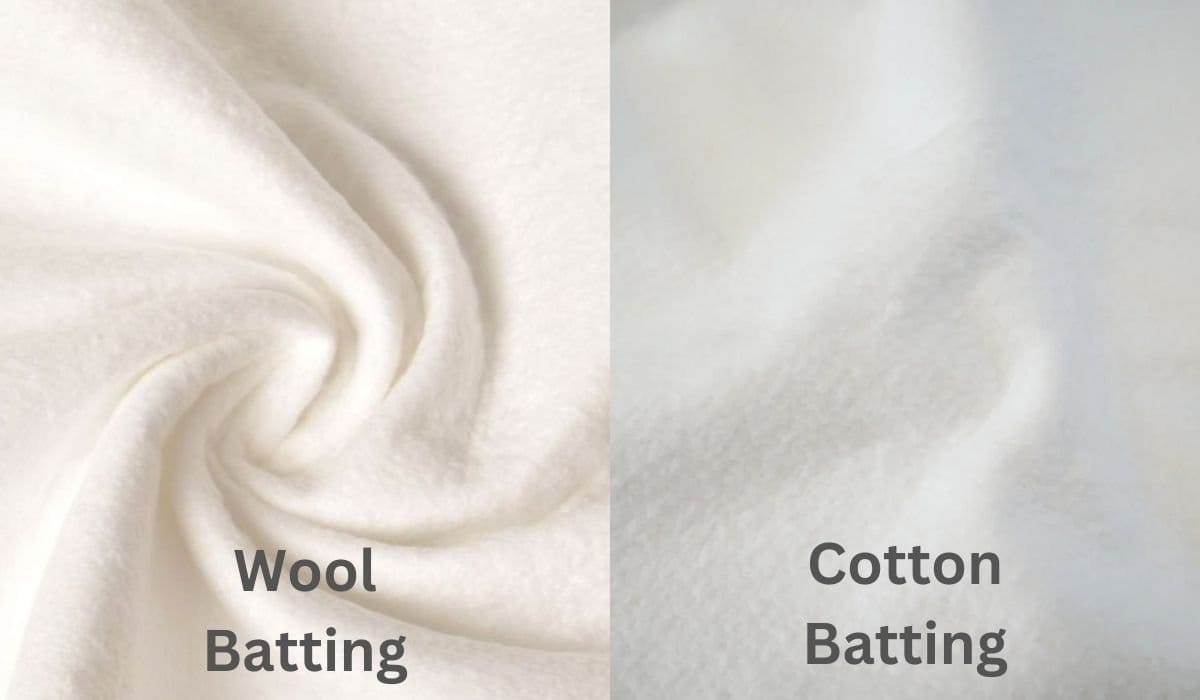
This is probably the most common comparison people make. Both are natural fibers, but they work quite differently.
Is wool batting warmer than cotton? Yes, wool batting is noticeably warmer than cotton for the same thickness. Wool’s crimped fibers trap more air, creating better insulation. A quilt with wool batting will keep you warmer with less weight than a cotton-batted quilt.
Cotton batting shrinks when you wash it (usually 3-5%), which gives quilts that crinkled, vintage look. Wool batting shrinks very little, especially if it’s been superwashed. This means your quilt will keep its smooth appearance.
Cotton batting can get flat and compressed over time, especially in spots that get a lot of use. Wool maintains its loft much better over the years. Your wool-batted quilts will look puffy and new longer than cotton ones.
One advantage cotton has is cost. Cotton batting is usually cheaper and easier to find at big craft stores. Wool batting costs more and you might need to order it online or find a specialty quilting shop.
Cotton breathes well, but wool breathes better while also managing moisture. If you tend to get hot at night, wool’s temperature regulation might work better for you than cotton.
| Feature | Wool Batting | Cotton Batting |
|---|---|---|
| Warmth | Very warm, lightweight | Moderately warm, heavier |
| Weight | Lighter for same warmth | Heavier |
| Shrinkage | Minimal (1-3%) | Moderate (3-5%) |
| Loft Retention | Excellent | Good initially, flattens over time |
| Price Range | $15-30 per yard | $8-15 per yard |
| Moisture Management | Excellent | Good |
| Fire Resistance | Naturally flame-resistant | Flammable |
| Care | Hand wash or gentle machine | Machine washable |
Wool Batting vs Polyester Batting
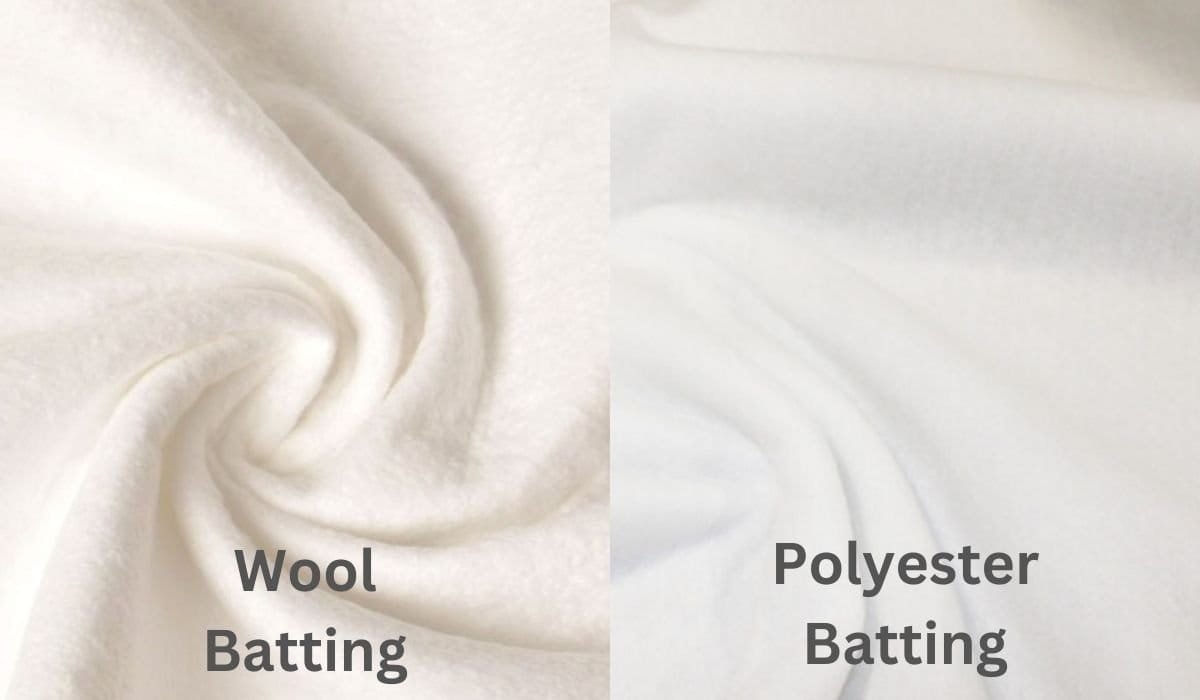
Polyester batting is the most affordable and widely available option. It’s made from synthetic fibers derived from petroleum products.
Polyester batting comes in various lofts, from very thin to super puffy. It’s lightweight, doesn’t shrink, and can go through the washer and dryer without any special care. For craft projects or quilts that will get rough treatment, polyester’s durability is a plus.
However, polyester doesn’t breathe like wool does. It can trap heat and moisture, making you feel sweaty and uncomfortable. Polyester is also flammable and will melt when exposed to heat, unlike wool’s natural fire resistance.
Environmental concerns are another factor. Polyester is made from non-renewable resources and won’t biodegrade. Wool is renewable and natural. If sustainability matters to you, wool is the clear winner.
Polyester batting is notorious for “bearding” – fibers working their way through your quilt top. Wool can beard too, but high-quality wool batting does it less than cheap polyester.
Wool Batting vs Bamboo Batting
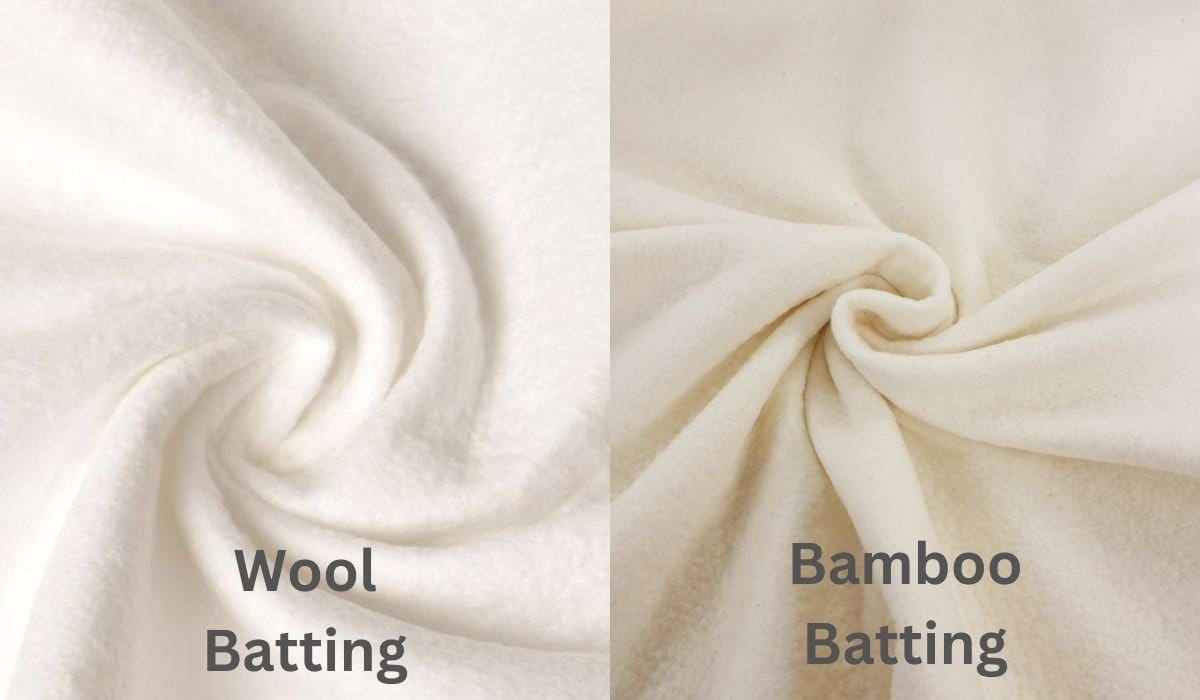
Bamboo batting is the luxury option in the natural fiber world. It’s incredibly soft, drapes beautifully, and has some similar properties to wool like moisture-wicking and temperature regulation.
Bamboo is more expensive than wool and feels silkier and lighter. It’s perfect for summer quilts or in warm climates where wool might be too warm. Bamboo also resists mold and mildew naturally.
However, wool is warmer than bamboo for winter quilts. If you need maximum warmth, wool wins. Bamboo is also less resilient – it won’t bounce back quite as well as wool does after compression.
Wool Batting vs Silk Batting
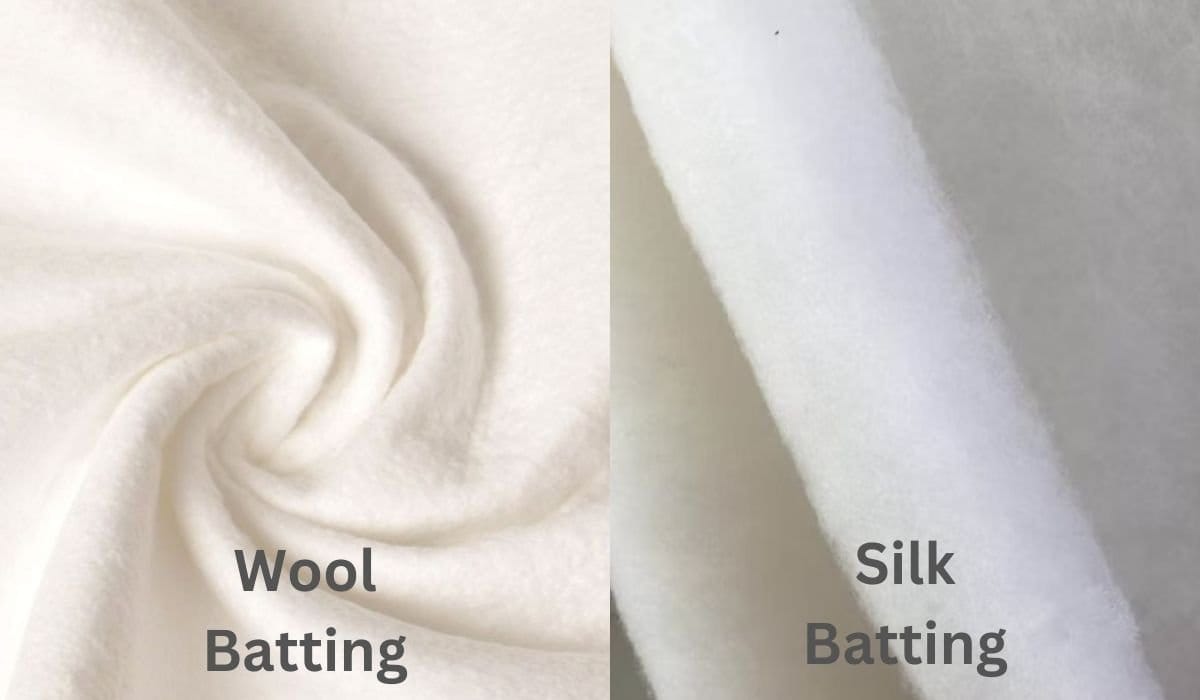
Silk batting is the most expensive option out there. It’s incredibly lightweight, drapes like a dream, and has a luxurious sheen. Silk is stronger than wool fiber-for-fiber and creates beautiful texture in quilted projects.
The price difference is significant though. Silk batting can cost 2-3 times as much as wool. For most projects, wool offers better value.
Wool is also easier to care for than silk. While both need gentle handling, wool is more forgiving if you accidentally use water that’s too warm or agitate it too much.
Wool Blends
Many batting manufacturers offer wool blends – usually 80% cotton and 20% wool, or 80% wool and 20% cotton. These blends try to combine the best features of both fibers.
An 80/20 cotton-poly blend is different – that’s cotton with synthetic fibers added for strength. A wool-cotton blend gives you some of wool’s warmth and loft retention with cotton’s affordability and ease of care.
If you’re unsure about going full wool, a blend might be a good starting point. You’ll get some benefits of wool without the higher price tag or special care requirements.
Why Choose Wool Batting
- Superior warmth-to-weight ratio
- Excellent temperature regulation
- Maintains loft over time
- Naturally fire-resistant
- Good for year-round use
- Resists creasing and wrinkles
- Perfect for hand quilting
Considerations
- Higher cost than cotton or polyester
- Requires careful washing
- Can cause bearding with loose weaves
- Some people have wool allergies
- May darken light fabrics slightly
- Less widely available in stores
Can You Use Wool Batting for Felting?
Yes, but with some conditions. Felting requires wool fibers to lock together permanently through moisture, heat, and agitation. Regular wool batting (not superwashed) will felt if you treat it roughly in hot water. Some felters actually use batting as a shortcut for making felt sheets.
However, superwashed wool batting won’t felt well because the treatment removes the scales that allow fibers to lock together. If you specifically want to use batting for felting projects, buy untreated, non-superwashed wool batting.
For needle felting (using barbed needles to push fibers together), wool roving works better than batting. Roving’s aligned fibers are easier to manipulate and shape. Batting can work in a pinch, but you’ll get better results with proper roving.
Sustainability and Environmental Impact
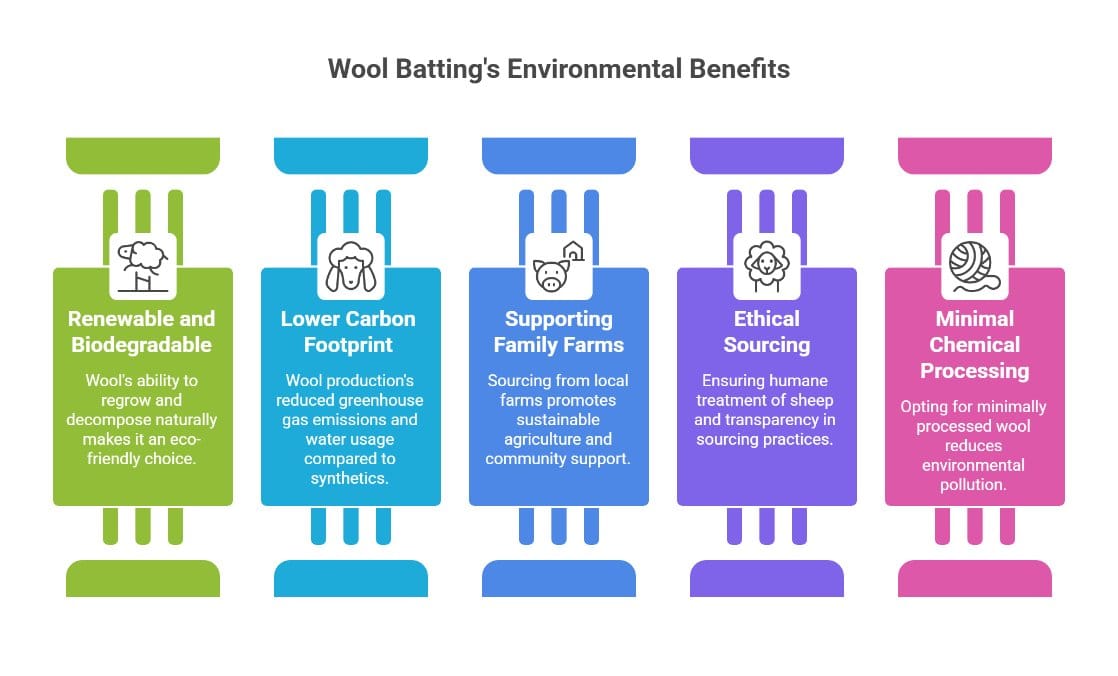
If you care about making eco-friendly choices, wool batting has a lot going for it. Let’s look at the environmental side of this natural fiber.
Renewable and Biodegradable
Wool is renewable – sheep grow new fleeces every year. Unlike petroleum-based polyester that relies on non-renewable resources, wool keeps coming back. Sheep will produce wool throughout their lives with proper care.
At the end of its life, wool batting breaks down naturally. It’s 100% biodegradable and will return to the soil within a few years. Synthetic batting can sit in landfills for centuries without breaking down.
Carbon Footprint and Water Usage
Wool production has a lower carbon footprint than synthetic fiber production. Yes, sheep produce methane (a greenhouse gas), but well-managed grazing can actually help sequester carbon in grasslands. Research from agricultural studies shows that sustainable wool farming practices can contribute to soil health and carbon storage.
Water usage in wool processing is mostly for cleaning the raw fleeces. Modern wool processing facilities often recycle and filter their water. Compare this to cotton, which needs lots of irrigation during growing, and the picture looks pretty good for wool.
Wool’s durability means your quilts and projects last longer. This reduces waste because you’re not replacing items as often. A well-made wool-batted quilt can last 20+ years with proper care.
Supporting Family Farms
Many wool batting companies source their fiber from small family-owned sheep farms. Companies like Sonoma Wool Company and St. Peter Woolen Mill work directly with local ranchers, supporting sustainable farming communities.
When you buy wool batting from these sources, you’re supporting farming families and helping keep sheep breeds that are well-suited to local climates. This kind of localized agriculture is better for the environment than massive industrial farms.
Ethical Sourcing and Animal Welfare
Animal welfare is a real concern in wool production. Good wool batting brands ensure their sheep are treated humanely. Look for these indicators of ethical sourcing:
- Certifications like Responsible Wool Standard (RWS) or ZQ Merino
- Statements about animal welfare practices
- Transparency about where the wool comes from
- No mulesing (a painful practice used in Australia that ethical farms avoid)
Some companies specify that they use wool from sheep raised on family farms with high animal welfare standards. If this matters to you, it’s worth researching brands and asking questions before buying.
Chemical Processing
The most environmentally questionable part of wool batting production is chemical processing, especially for superwashed wool. The chlorination process used to prevent shrinking creates chemical waste that needs proper treatment.
If you want the most eco-friendly option, look for wool batting that’s minimally processed. Some brands wash their wool only with biodegradable soaps and skip the superwash treatment. You’ll need to hand wash your finished projects, but you’ll have the greenest product possible.
Organic wool batting avoids pesticides, synthetic fertilizers, and many processing chemicals. The certification requirements are strict, so organic wool batting is genuinely cleaner for the environment.
Finding Sustainable Wool Batting
Look for brands that list their fiber sources, explain their processing methods, and have third-party certifications. Companies that care about sustainability will be transparent about their practices.
Uses and Project Types
Wool batting isn’t just for quilts. This section covers all the different ways you can use wool batting in your creative projects.

Quilting Applications
Winter quilts are where wool batting really shines. The natural warmth and insulation make wool perfect for heavy bed quilts that need to keep you cozy on cold nights. You can use a high-loft wool batting (around 1/2 inch thick) for maximum warmth.
Summer quilts benefit from wool’s temperature regulation too. A low-loft wool batting (around 1/4 inch) provides just enough weight without overheating. The moisture-wicking keeps you comfortable even on humid nights.
Show quilts and wall hangings look amazing with wool batting. Wool’s resilience means your quilts won’t get creases from hanging. The batting makes quilting stitches pop and gives beautiful definition to your work.
Art quilts often use wool batting because it drapes so nicely and shows off detailed quilting. The batting stays in place without shifting, which is important for complex designs.
Baby quilts made with soft Merino wool batting are gentle on delicate skin. Wool’s natural antimicrobial properties and temperature regulation make it a safe, comfortable choice for little ones. Just make sure the parents know it needs special care when washing.
Upholstery Projects
Wool batting works great for furniture upholstery. It provides cushioning and comfort while breathing better than foam. Traditional upholsterers have used wool batting for centuries because it molds to the furniture shape and maintains its loft.
You can layer wool batting over foam for the best of both worlds – the support of foam with the comfort and breathability of wool on top. This is common in high-end furniture and custom upholstery work.
Bedding and Comforters
Hand-tied comforters use wool batting to create warm, puffy bed coverings. The batting provides insulation while the tied knots keep it from shifting around inside the cover. Traditional comforters often used wool batting before modern polyester fills became popular.
You can also use wool batting in duvet covers or as mattress toppers. A thin layer of wool batting between your mattress and sheet adds softness and helps regulate temperature while you sleep.
Crafts and Specialty Uses
Pet bedding benefits from wool’s natural properties. Dog and cat beds filled with wool batting resist odors, repel moisture, and provide comfortable cushioning. The natural lanolin in wool even helps repel fleas.
Table runners and placemats can use thin wool batting for a subtle padded texture. This works especially well for holiday table decorations that need to look nice but also protect your table.
Clothing insulation is another use. You can add a thin layer of wool batting to coats or vests for warmth without bulk. Some sewers use it in wool flannel jacket linings.
Needle felting bases – while roving is more common, wool batting can serve as a base layer for needle felted pictures or sculptures. You’d felt your detailed work on top of a batting foundation.
What to Do with Old Batting
Got old wool batting from a project that didn’t work out, or salvaged batting from an old quilt? Don’t throw it away. Here are some ways to use it:
- Cut it up for smaller projects like pot holders or coasters
- Use it as stuffing for decorative pillows
- Add it to pet beds for extra cushioning
- Compost it – wool breaks down naturally
- Save scraps for testing washing methods or trying new techniques
If the batting is still in good shape, you can wash it gently and reuse it in a new project. Wool is tough – even used batting often has plenty of life left in it.
Can You Use a Wool Blanket as Batting?
Yes, you absolutely can use an old wool or cashmere blanket as batting in a quilt. In fact, this is a traditional technique that quilters have used for generations. Wool blankets provide excellent warmth and can give your quilt a nice weight.
However, there are some things to consider. Wool blankets are usually thicker and denser than commercial batting, so your quilt will be heavier. The fabric is also more tightly woven, which can make hand quilting difficult. It works better for tied quilts or projects where you’ll machine quilt through it.
Make sure to wash the blanket before using it to preshrink it and remove any dust or odors. Check for moth holes or thin spots that might cause problems later.
Common Problems and Solutions
Even experienced quilters run into issues with wool batting sometimes. Here’s how to handle the most common problems.
Bearding (Fibers Coming Through)
Bearding is when wool fibers work their way through your quilt top or backing, making it look like your quilt is growing a fuzzy beard. This is the most common complaint about wool batting.
What causes it: Bearding happens when the quilt fabric has a loose weave or low thread count. The wool fibers migrate through the gaps in the fabric as you use and wash the quilt. It can also happen if you use a dull needle when quilting, which pulls batting fibers through the fabric.
Solutions:
- Use tightly woven fabrics with high thread counts
- Choose wool batting that’s been resin-bonded or superwashed (these treatments reduce bearding)
- Use a fresh, sharp needle when quilting
- Quilt your project more densely – closer quilting lines hold the batting in place better
- Try batting that’s been needle-punched on both sides
If you notice bearding after your quilt is finished, you can carefully trim the fibers with scissors or use the dull end of a needle to push them back through the fabric. Don’t pull the fibers out – this just encourages more to come through.
Shrinkage Issues
Wool can shrink if it’s not treated properly. Even superwashed wool batting can shrink a little bit if you wash it in water that’s too hot or agitate it too much.
Prevention:
- Buy preshrunk or superwashed wool batting
- Prewash the batting if you’re worried (though most brands recommend against this)
- Use cool or lukewarm water for washing
- Avoid agitation – hand wash or use the gentle cycle
- Never put wool batting in a hot dryer
If your batting does shrink, you can’t really reverse it. The fibers have felted together and won’t stretch back out. This is why it’s so important to follow care instructions carefully.
Lumping or Shifting After Washing
Sometimes wool batting can bunch up or move around inside your quilt after washing, creating lumpy or thin spots.
Causes and fixes:
- Not enough quilting – add more quilting lines to secure the batting. Most wool batting should be quilted at least every 4-8 inches
- Too much agitation in the washer – hand wash or use the most gentle machine cycle
- The batting wasn’t distributed evenly before quilting – make sure to smooth it out carefully before you start quilting
For severe lumping, you might need to carefully unpick some quilting, redistribute the batting by hand, and re-quilt those areas. It’s a pain, but it’s better than living with a lumpy quilt.
Pokies (Batting Fibers Along Stitch Lines)
Pokies are little tufts of batting that stick out along your quilting lines. They’re similar to bearding but only appear at the seams.
Why it happens: Dull needles drag batting fibers through the fabric instead of piercing cleanly. Heavy thread or rough thread can also catch and pull batting fibers.
How to avoid pokies:
- Change your needle frequently – use a new needle for every project
- Use smooth, high-quality thread
- Adjust your tension so stitches aren’t pulling too tight
- Make sure your needle is the right size for your fabric and thread
Uneven Thickness
Natural wool batting can have slight variations in thickness because it’s an organic material. Different parts of the fleece produce different fiber qualities.
This usually isn’t a big problem, but if you notice very thin or thick spots, you can:
- Avoid using those areas in the main part of your project
- Layer batting pieces to even out thin spots
- Save thin areas for smaller projects where consistency matters less
Higher-quality wool batting has more consistent thickness because manufacturers card and blend the fibers more thoroughly.
Stiffness After Washing
Some wool batting can feel stiff or cardboard-like after washing, especially if it’s not superwashed.
Fixes:
- Never use hot water or high heat drying
- Avoid washing wool with regular detergent – use wool-specific cleaners
- Don’t use fabric softener on wool
- Air dry flat and gently fluff the quilt occasionally as it dries
If your quilt is already stiff, you can try soaking it in cool water with a tiny bit of hair conditioner (yes, really). Rinse thoroughly and dry flat. This can help soften the fibers.
Color Darkening on Light Fabrics
Natural wool batting can slightly darken white or very pale fabrics. This is because the batting isn’t pure white – it’s a cream or off-white color.
Solutions:
- Use bleached white wool batting for white or pale-colored quilts
- Test a small piece of your fabric with the batting before committing to the whole project
- Choose batting that matches your fabric color if possible
- Prewash the batting to see if any excess dye comes out (though this is rare with quality batting)
Moth Damage
Moths love natural fibers, and wool is their favorite meal. If you store wool-batted quilts or projects for a long time, moths can be a problem.
Prevention:
- Store quilts in breathable cotton bags, not plastic
- Add cedar blocks or lavender sachets to storage areas
- Clean quilts before storing them – moths are attracted to dirt and body oils
- Check stored quilts every few months
- Keep storage areas cool, dry, and well-ventilated
If you find moth damage, clean the affected items immediately and treat the storage area. Small holes can be carefully mended.
Important: Never use mothballs with wool batting. The chemicals can damage the fibers and leave a smell that’s hard to remove. Natural deterrents like cedar and lavender work just as well without the harsh chemicals.
Care and Washing Instructions
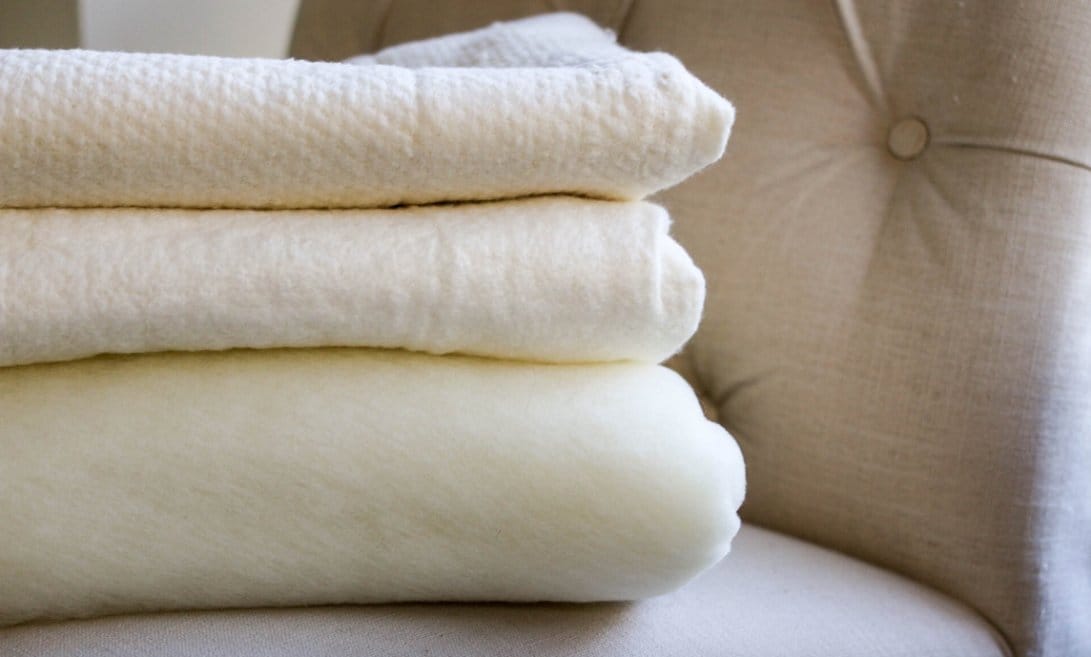
Taking care of wool batting items properly will help them last for years. The good news is that wool naturally resists dirt and odors, so you don’t need to wash it as often as cotton or synthetic materials.
Can Wool Batting Be Washed?
Yes, wool batting can be washed, but you need to be careful about how you do it. The method depends on whether your batting is superwashed or regular (non-superwashed) wool.
Superwashed wool batting can handle machine washing on a gentle cycle with cool water. This is the most common type you’ll find from major brands like Hobbs and Quilters Dream.
Regular wool batting (not superwashed) needs hand washing only. Machine washing will cause it to shrink and felt. Always check the product label to see which type you have.
How to Wash a Quilt with Wool Batting
Here’s the step-by-step process for washing a wool-batted quilt safely:
Hand Washing Method (Best for All Wool Batting)
- Fill a clean bathtub or large basin with cool to lukewarm water (never hot)
- Add a small amount of wool-specific detergent or gentle liquid soap
- Submerge the quilt and gently press down to wet it through
- Let it soak for 10-15 minutes without agitating
- Gently squeeze the quilt (don’t wring or twist)
- Drain the water and refill with clean cool water for rinsing
- Gently press to rinse, repeat if needed
- Press out as much water as possible without wringing
- Lay flat on clean towels to dry, or hang over a rack (never on a line, as this can stretch it)
Machine Washing Method (Only for Superwashed Wool)
- Use the gentle or delicate cycle
- Select cool or cold water temperature
- Use a small amount of wool-safe detergent
- Skip the spin cycle if possible, or use the lowest spin setting
- Front-load washers are gentler than top-loaders
- Remove promptly when done
- Lay flat to dry or use an air-fluff dryer setting for 5-10 minutes, then finish air drying
Drying Methods
The dryer is risky for wool batting. High heat will shrink and damage the fibers. If you must use a dryer:
- Use the air-fluff or no-heat setting only
- Run it for just 5-10 minutes to fluff the quilt
- Finish by air drying flat
Air drying is always safer. Lay the quilt flat on clean towels or a drying rack. Flip it over periodically so both sides dry evenly. This takes longer (sometimes 24-48 hours) but protects your work.
Never hang a wet wool-batted quilt on a clothesline. The weight of the water will stretch and distort the batting.
How Often Should You Wash?
Wool’s natural properties mean you don’t need to wash it as often as other materials. For bed quilts, washing 2-3 times a year is usually enough unless they get obviously dirty.
Between washings, you can:
- Air quilts outside on a dry day to freshen them
- Spot clean small stains
- Shake them out to remove dust
- Use a fabric freshener spray if needed
Spot Cleaning Stains
For small stains, spot cleaning is better than washing the whole quilt. Here’s how:
- Blot the stain gently with a clean, damp cloth
- Don’t rub – this can push the stain deeper or damage the wool
- Use a tiny bit of wool-safe soap if needed
- Rinse by blotting with clean water
- Press with a dry towel to remove moisture
- Air dry completely
Products to Use and Avoid
Safe for wool batting:
- Wool-specific detergents (Wool & Cashmere Shampoo, Eucalan, Soak)
- Gentle liquid soaps
- Baby shampoo in a pinch
Never use on wool batting:
- Regular laundry detergent (too harsh)
- Bleach of any kind
- Fabric softener
- Enzyme cleaners (these break down protein fibers like wool)
- Borax or washing soda
Storage Best Practices
Proper storage protects your wool-batted projects when they’re not in use:
- Clean items before storing (moths are attracted to dirt and body oils)
- Use cotton bags or acid-free tissue paper, not plastic
- Store flat if possible, or fold loosely
- Add cedar blocks or lavender sachets for moth protection
- Keep in a cool, dry place with good air circulation
- Avoid basements or attics with extreme temperature changes
- Check stored items every few months
If you need to fold quilts, refold them differently every few months to prevent permanent creases (though wool resists creasing better than other fibers).
Quick Care Tip: Many wool batting manufacturers include specific care instructions with their product. Save these tags or write down the instructions. Different brands may have slightly different requirements based on their processing methods.
Buying Guide
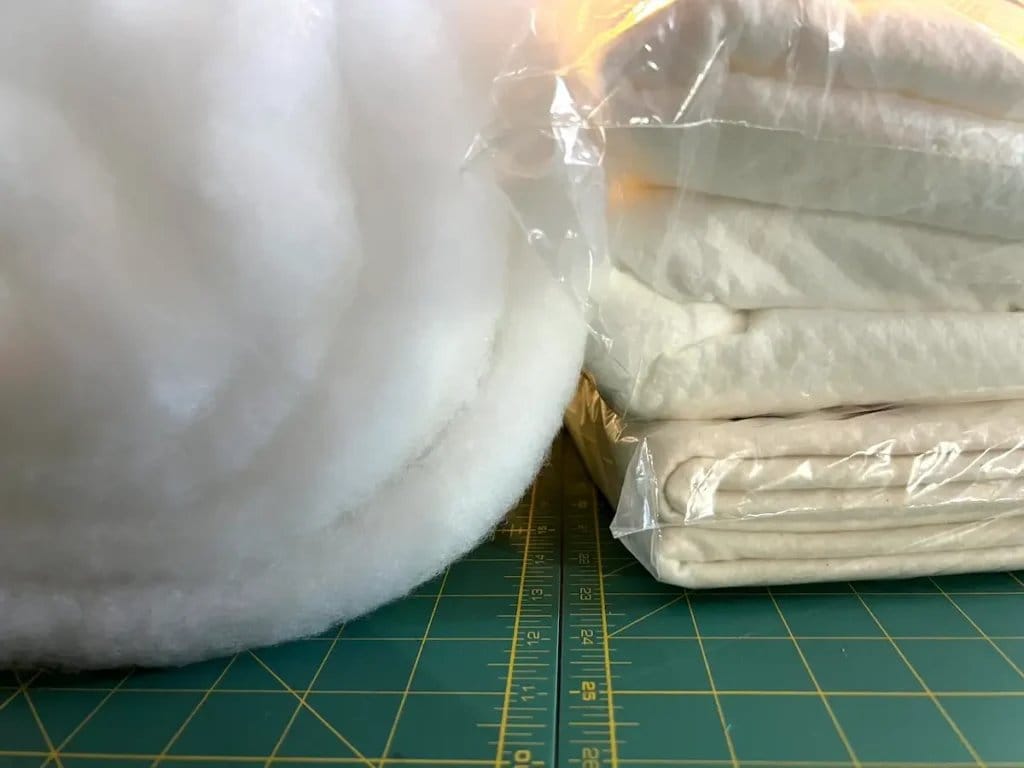
Shopping for wool batting can feel overwhelming with all the options out there. This section will help you make smart choices and get good value for your money.
Top Wool Batting Brands
Hobbs Heirloom Wool is one of the most popular choices. It’s made from superwashed wool so it’s machine washable. Hobbs offers good quality at a mid-range price. Their batting is soft, maintains loft well, and comes in various sizes. It’s needle-punched with a light resin bond to reduce bearding.
Quilters Dream Wool is another top pick. It’s 100% natural wool with no resins or chemicals. This batting is very soft and drapes beautifully. It’s great for hand quilting because needles glide through it easily. The downside is it requires more careful washing since it’s not superwashed.
Sonoma Wool Company produces all-natural batting from California sheep. They use only biodegradable soap in processing and don’t add any chemicals. Their batting is thick (about 1/2 inch) and warm. It’s perfect if you want the most natural option and don’t mind hand washing.
St. Peter Woolen Mill offers two weights: quilting weight and comforter weight. Their batting is made in the USA from domestic wool. The comforter weight is great for hand-tied quilts. They offer good prices for bulk purchases.
Warm Company makes Warm & Natural, though this is actually a cotton batting, not wool. Don’t confuse it with wool options. However, they do make Warm Fleece which is 100% polyester designed to mimic wool’s properties.
Reading Product Labels
Understanding what’s on the label helps you know exactly what you’re buying:
- Fiber content: Look for 100% wool for pure batting, or the percentage if it’s a blend
- Loft: Usually given in inches (1/4″, 1/2″, etc.)
- Quilting distance: How far apart your quilting lines can be
- Shrinkage: Expected shrinkage percentage
- Processing: Superwashed, needle-punched, resin-bonded, etc.
- Care instructions: Hand wash vs machine wash
- Width: Usually 90″, 96″, or 108″ wide
Loft Options Explained
Loft refers to the thickness of the batting. Here’s what different lofts are good for:
Low loft (1/4 inch or less): Best for summer quilts, wall hangings, table runners, and garments. Creates a flatter finish with less puff.
Medium loft (1/4 to 3/8 inch): The most versatile option. Works well for year-round bed quilts and most projects.
High loft (1/2 inch or more): Perfect for winter quilts, comforters, and projects where you want maximum warmth and puffiness.
Size Guide and Calculating Needs
Standard batting sizes:
- Crib: 45″ x 60″
- Twin: 72″ x 90″
- Full: 81″ x 96″
- Queen: 90″ x 108″
- King: 120″ x 120″
Buy batting at least 4-8 inches larger than your quilt top on all sides. This extra room makes it easier to baste and quilt without running out of batting at the edges.
For projects where you need specific sizes, batting sold by the yard (usually 90-108 inches wide) gives you more flexibility than pre-cut packages.
Price Ranges and Value
Expect to pay:
- Budget/Economy wool batting: $10-15 per yard
- Mid-range quality: $15-22 per yard
- Premium/specialty wool (Merino, organic): $25-35+ per yard
Pre-cut packages usually cost $30-60 for queen size, depending on the brand and quality.
Is expensive batting worth it? For heirloom quilts or gifts, premium batting is worth the investment. For everyday projects or practice quilts, mid-range batting performs well and saves money.
Where to Buy
Local quilt shops often carry at least one or two wool batting brands. You can see and feel the batting before buying, plus get advice from knowledgeable staff.
Online retailers:
- Connecting Threads
- Missouri Star Quilt Company
- Fat Quarter Shop
- Directly from manufacturers’ websites
Big box craft stores (Joann’s, Hobby Lobby) sometimes carry wool batting but usually have limited selection. You’re more likely to find cotton or polyester batting there.
Etsy has small-batch wool batting from fiber artisans. Good for finding special colors or supporting small businesses.
Bulk Buying and Sales
If you quilt regularly, buying batting by the roll or in bulk saves money. Many manufacturers sell full rolls (usually 30+ yards) at discounted prices. You can split a roll with quilting friends to save even more.
Watch for sales around Black Friday, after Christmas, and during National Quilting Month (March). Many retailers offer 30-40% off batting during these times.
Red Flags When Buying
Watch out for:
- Batting with no information about fiber content or origin
- Prices that seem too good to be true (probably low quality)
- No care instructions provided
- Vague terms like “wool blend” without percentages
- Reviews mentioning excessive bearding or shrinkage
Testing Before You Commit
If you’re trying a new brand, buy a small piece first to test. Some shops sell sample sizes or you can buy just 1/2 yard. Test how it quilts, wash a small sample, and see if you like working with it before buying enough for a big project.
| Project Type | Recommended Loft | Good Brands |
|---|---|---|
| Winter bed quilt | Medium to High (1/2″) | Hobbs, Quilters Dream, Sonoma |
| Summer quilt | Low to Medium (1/4″) | Quilters Dream, Hobbs |
| Wall hanging | Low (1/4″) | Any quality brand |
| Hand quilting | Low to Medium | Quilters Dream, St. Peter |
| Machine quilting | Any loft | Hobbs, Quilters Dream |
| Baby quilt | Low to Medium | Merino wool from any reputable brand |
Expert Tips for Working with Wool Batting
These tips come from experienced quilters and can save you time and frustration.
Is Wool Batting Good for Hand Quilting?
Yes, wool batting is excellent for hand quilting. The fibers are easy to needle through, and your stitches will glide smoothly without resistance. Wool’s loft makes your quilting stitches stand out beautifully.
Many hand quilters prefer wool over cotton because it’s softer on your hands during long quilting sessions. You can use slightly longer stitches (up to 8 inches apart for most wool batting) compared to cotton, which saves time.
Machine Quilting Adjustments
When machine quilting with wool batting:
- Increase your stitch length to 2.5-3.0mm (normally you’d use 2.0-2.5mm)
- Loosen your tension slightly – wool has more loft than cotton so stitches need more room
- Use a fresh, sharp needle (size 90/14 works well for most projects)
- Go slower than usual to maintain control
How Far Apart Can You Quilt Wool Batting?
Most wool batting can be quilted 4-8 inches apart. Check your specific batting’s label because this varies by brand and processing method. Some high-quality wool batting allows up to 10 inches between quilting lines.
This is much more forgiving than cotton (usually 2-4 inches) or polyester (varies widely). The generous quilting distance makes wool great for beginners or for quilts where you want to show off large blocks of fabric.
Can You Piece Wool Batting Together?
Yes, you can join pieces of wool batting if you need a larger size or want to use up scraps. Here’s how:
Butt and whip stitch method: Place the edges of two batting pieces side by side (don’t overlap). Use a large needle and thread to whip stitch the edges together with loose stitches. The join will be nearly invisible.
Overlap and trim method: Overlap the batting pieces by about 2 inches. Cut through both layers at once, creating a gentle curved or zigzag line. Remove the excess pieces and butt the fresh-cut edges together. Whip stitch as above.
Either way, the seam in your batting won’t show in the finished quilt as long as you stitch it gently without pulling it tight.
Basting Techniques
Wool batting’s loft makes it easy to baste. Pin basting works well – use curved safety pins every 6-8 inches. Wool’s resilience means it won’t get permanently dented where the pins go.
Spray basting works too, but use it sparingly. Too much adhesive can make wool feel stiff. If you do spray baste, use a temporary adhesive made for quilting.
Handling Wool Batting Out of the Package
New wool batting often has creases from being packaged. Don’t worry – these will come out. Unroll or unfold the batting and let it relax for 24 hours before using it. The creases will smooth out on their own.
If you’re in a hurry, you can toss the batting in the dryer on air-fluff (no heat) for 10 minutes. Or lay it flat and gently steam it from a distance with your iron (don’t touch the batting with a hot iron).
Grain Direction
Wool batting has a grain direction even though you can’t always see it. The batting may stretch more in one direction than the other. For wall hangings, orient the batting so the less-stretchy direction goes top to bottom. This prevents sagging.
For bed quilts, grain direction matters less since the quilt will be lying flat.
Prewashing Debate
Most experts say don’t prewash wool batting. The manufacturers have already cleaned it, and prewashing can cause uneven shrinkage or damage. However, some quilters prewash untreated wool batting to preshrink it and remove any lanolin smell.
If you decide to prewash:
- Use cool water only
- Handle it gently without agitation
- Lay flat to dry completely
- Accept that the batting may felt slightly and become thinner
Wool Batting in Show Quilts
Wool batting is popular for show quilts because it makes quilting stitches pop and doesn’t crease when the quilt is transported. The batting maintains perfect flatness when hanging, and the natural loft creates beautiful dimension.
If you’re entering a quilt in competition, wool batting won’t add permanent fold lines even if the quilt is mailed or transported folded.
Pro Tip: Save your wool batting scraps! They’re perfect for testing stitching, practicing new techniques, or stuffing pincushions and small pillows. Wool scraps can also be composted when they’re too small to use.
Historical Context of Wool Batting
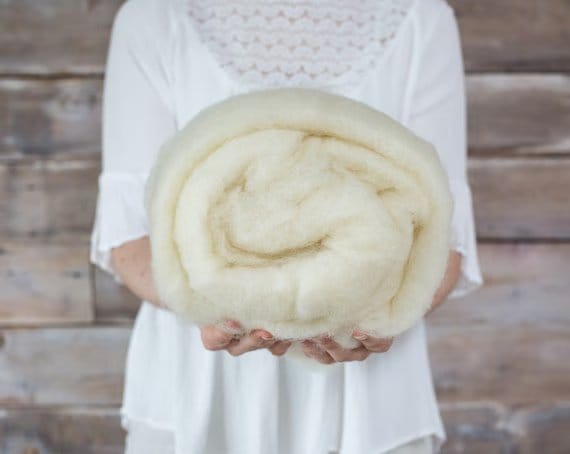
Wool batting has a long and interesting history. Understanding where it comes from helps appreciate why it’s still popular today.
Wool in Antique Quilts
Before the 20th century, wool batting was one of the most common quilt fillings. Women used whatever batting materials were available locally, and in many regions, that meant wool from sheep raised on nearby farms.
Antique wool-batted quilts often have different characteristics than modern ones. The wool wasn’t processed as thoroughly, so older quilts might have bits of vegetation still in the batting. The wool was usually less clean and had more natural lanolin.
Many vintage quilts from the 1800s and early 1900s used wool batting made by hand-carding the fibers. This gave an uneven, rustic texture that’s quite different from today’s uniform commercial batting.
Medieval and Earlier Uses
Wool padding has been used for centuries beyond quilting. Medieval armor often had wool batting as a shock-absorbing layer under metal plates. Soldiers wore quilted wool gambeson (padded jackets) for protection.
Wealthy people in Europe used wool-batted bed covers and hangings for warmth. Wool was one of the few materials that provided good insulation before central heating.
Industrial Revolution Changes
The textile industry’s mechanization in the 1800s made wool batting more affordable and consistent. Carding machines could process wool faster than hand-carding, and the quality became more uniform.
As cotton became cheaper in the late 1800s and early 1900s, cotton batting grew popular for quilts. Wool batting became seen as old-fashioned or too expensive for everyday quilts.
Modern Revival
Interest in natural fibers and traditional crafts brought wool batting back into popularity starting in the 1980s and 1990s. Quilters rediscovered wool’s benefits – warmth, loft, and hand-quilting ease.
Modern processing techniques made wool batting better than ever. Superwashing treatments, consistent quality control, and multiple loft options gave quilters more choices. Today’s wool batting combines traditional benefits with modern convenience.
Cultural Significance
In different cultures, wool batting held various meanings. In Britain and parts of Europe, wool-batted quilts were status symbols showing a family had access to quality materials. In American pioneer times, wool quilts were practical necessities for survival through cold winters.
Traditional quilting communities in places like Amish country still prefer wool batting for its natural properties and connection to heritage crafts.
Frequently Asked Questions
Wool batting is used as the middle insulating layer in quilts, comforters, and other textile projects. It provides warmth, loft (puffiness), and cushioning. You’ll find it in bed quilts, wall hangings, upholstered furniture, table runners, garments, and craft projects. The batting traps air between its fibers, creating insulation that keeps you warm. It’s the material that turns two flat pieces of fabric into a thick, cozy quilt.
Yes, you can use fabric instead of batting, though the results will be different. An old flannel sheet, worn-out blanket, or layers of muslin can substitute for batting in a pinch. However, fabric alternatives won’t have the same loft or insulation properties. They’ll create a flatter, less puffy quilt. This technique was common in antique quilts when batting wasn’t available. Fleece fabric can work as a batting substitute for casual projects.
Batting and fleece are completely different products. Batting is the fluffy filling material that goes inside quilts between the top and backing fabrics. It’s not meant to be seen and comes apart if you don’t contain it between layers. Fleece is a finished fabric with a fuzzy surface that’s meant to be visible. You can sew fleece into blankets, jackets, or hats without any other layers. Fleece is usually polyester and much denser than batting. While you can use fleece as a batting substitute, it won’t have the same loft or drape.
You can technically use felt as batting, but it’s not ideal. Felt is very dense and flat compared to regular batting. It won’t provide much loft or warmth. Felt works better for projects where you want a stiff, flat result – like table toppers or placemats. For actual quilts, regular batting performs much better. If you do use felt as batting, choose wool felt over craft felt (which is usually polyester) for better breathability.
If you don’t have batting, you can use an old blanket, flannel sheets, a worn-out quilt, layers of cotton fabric, fleece fabric, or even an old mattress pad. Multiple layers of thin fabric can mimic batting’s loft. For a more authentic substitute, wool blankets work especially well. The key is using something soft and clean that adds some thickness. Just remember that alternative materials won’t perform exactly like real batting – they may be heavier, flatter, or less warm.
Yes, you can make your own batting if you have raw wool fleece and some basic equipment. You’ll need to clean (scour) the wool, card it to align the fibers, and optionally needle-felt it to hold it together. This is time-consuming but lets you create completely natural, chemical-free batting. Some crafters do this for special projects or to use wool from their own sheep. However, for most people, buying commercial batting is more practical and gives more consistent results.
To turn wool roving into batting, you need to cross-lay the fibers and lightly felt them. Lay roving strips perpendicular to each other in multiple layers (like building a log cabin). Then use a felting needle or run a needle felting tool across the surface to tangle the fibers together gently. Don’t felt it too much or it will become dense like felt instead of fluffy like batting. This technique works for small projects but is impractical for quilt-sized batting. For large projects, it’s easier to buy commercial batting or use roving directly in some crafts.
No, you don’t have to put batting in a quilt, though most quilts do have it. A quilt without batting is called a “summer quilt” or “summer spread.” You’ll have two layers of fabric quilted together without the middle layer. This creates a lightweight blanket good for warm weather or decoration. Without batting, your quilting stitches will be very flat and won’t stand out as much. Some modern quilters make battingless quilts as an intentional design choice, especially for wall art.
The golden rule in quilting is often stated as “measure twice, cut once.” This means you should always double-check your measurements before cutting fabric or batting. Mistakes in cutting can’t be undone. Another common golden rule is “press, don’t iron” – pressing seams down instead of dragging the iron prevents distortion. When it comes to batting specifically, the rule is to buy batting larger than your quilt top to leave room for the quilt to shift during quilting without running out of batting at the edges.
Wool batting is the warmest natural batting available. It provides more warmth per ounce than cotton, bamboo, or silk batting. High-loft wool batting (1/2 inch or thicker) gives maximum warmth for winter quilts. If you want even more warmth, you can layer two batting pieces together or choose Merino wool batting, which has excellent insulation properties. Polyester batting can be made very thick for warmth but doesn’t regulate temperature as well as wool, so you might feel too hot. For the best warmth that breathes, wool batting is unbeatable.
Wool batting is significantly warmer than cotton batting of the same thickness. A wool-batted quilt provides about the same warmth as a cotton-batted quilt that’s 30-40% thicker. Compared to polyester, wool is warmer and regulates temperature better. Wool stays warm even when slightly damp, unlike cotton which loses insulation when wet. For example, a quilt with 1/2 inch wool batting will keep you warmer than a quilt with 1/2 inch cotton batting, but the wool quilt will feel lighter.
No, wool batting is actually lighter than cotton batting when providing the same amount of warmth. Wool’s natural crimp traps more air with less fiber, so you get better insulation without extra weight. A queen-size wool batting typically weighs 4-6 pounds, while a similar cotton batting might weigh 6-8 pounds. This lighter weight makes wool-batted quilts easier to handle while quilting and more comfortable to sleep under. The weight difference becomes more noticeable in larger quilts.
Additional Common Questions
You should quilt wool batting every 4-8 inches depending on the brand. Check your specific batting’s label for recommendations. Some premium wool battings allow up to 10 inches between quilting lines. This is much more forgiving than cotton batting (2-4 inches). The natural resilience of wool fibers keeps the batting in place with less dense quilting.
Superwashed wool batting shrinks very little (usually 1-3% if at all). Untreated wool batting can shrink 5-10% or more if exposed to hot water and agitation. The amount of shrinkage depends on the processing method and how you wash it. Always follow the manufacturer’s care instructions to minimize shrinkage. Washing in cool water and laying flat to dry prevents most shrinkage.
New wool batting sometimes has a mild lanolin smell, which is natural and will fade with airing. If the smell is strong or unpleasant, the batting may need more airing out or a gentle wash. Lay the batting flat in a well-ventilated area for 24-48 hours. Most quality wool batting has very little odor. A musty smell might indicate the batting got damp during storage – air it out thoroughly before using.
You should not iron wool batting directly with a hot iron. The heat can scorch or melt the fibers. If you need to remove wrinkles, use the steam setting held several inches above the batting (not touching), or put a pressing cloth between the iron and batting and use low heat. Better yet, let the batting relax naturally or toss it in the dryer on air-fluff (no heat) for a few minutes.
Conclusion
Wool batting offers a combination of benefits that’s hard to beat if you’re looking for a natural, high-performing material for your quilting and craft projects. Let’s recap what makes wool batting such a strong choice and when you might want to use it.
Main Benefits Summary
Wool batting stands out for its natural temperature regulation – it keeps you warm in winter without causing overheating, and it’s breathable enough for year-round use. The moisture-wicking properties pull sweat away from your body, keeping you dry and comfortable while you sleep.
The resilience of wool fibers means your quilts will maintain their loft and puffiness for years. Unlike cotton batting that flattens over time, wool bounces back. This makes it perfect for heirloom quilts that you want to last through generations.
From a safety standpoint, wool’s natural fire resistance gives you peace of mind without needing chemical treatments. This is especially important if you’re making items for children or people with chemical sensitivities.
For crafters who care about the environment, wool offers a renewable, biodegradable option that supports sustainable farming. It has a lower carbon footprint than synthetic alternatives and will break down naturally at the end of its life.
When Wool Batting Is the Best Choice
Choose wool batting for:
- Winter bed quilts where warmth is the priority
- Hand-quilted projects where ease of needling matters
- Show quilts that need to hang without creases
- Baby quilts where natural, chemical-free materials are important
- Heirloom projects that need to last 20+ years
- Projects where temperature regulation and moisture management are important
- When you want the lightest weight batting for maximum warmth
When to Consider Alternatives
Wool batting might not be the best fit if:
- You have a tight budget (cotton or polyester costs less)
- You want to machine wash and dry with no special care
- You’re working with very loose-weave fabrics prone to bearding
- Someone has a wool allergy
- You prefer the vintage crinkled look that cotton batting provides
- You can’t find wool batting locally and prefer to shop in person
Getting Started with Wool Batting
If you’ve never tried wool batting before, start with a small project like a baby quilt, table runner, or lap quilt. This lets you experience working with wool without committing to a king-size quilt right away.
Choose a mid-range brand like Hobbs or Quilters Dream for your first project. These brands offer good quality at reasonable prices and are available through most online quilt retailers.
Read the care instructions that come with your batting and save them. Different brands process their wool differently, so care requirements can vary.
Final Recommendations
For everyday quilts that will get lots of use and washing, superwashed wool batting makes life easier. You’ll be able to machine wash your finished quilts without worry.
For special occasion quilts or wall hangings where you want the purest, most natural option, consider untreated wool batting from companies that focus on minimal processing. Just remember you’ll need to hand wash these projects.
Don’t be afraid to mix and match batting types for different projects. There’s no rule that says you have to use the same batting for everything. Choose what works best for each specific project.
Looking Forward
As more people become interested in natural, sustainable materials, wool batting is likely to become even more popular and available. Watch for innovations in processing that make wool easier to care for while maintaining its natural benefits.
The quilting community continues to rediscover old techniques and materials, and wool batting fits perfectly into this trend. Whether you’re a traditionalist who loves historic methods or a modern quilter looking for performance and sustainability, wool batting has something to offer.
Your Wool Batting Action Plan
- Decide on your project and determine what loft you need
- Choose a brand based on your budget and care preferences
- Buy batting slightly larger than your project needs
- Let the batting relax and air out before using
- Follow quilting distance guidelines for your specific batting
- Test wash a small piece before washing your finished project
- Store finished wool-batted items properly to prevent moth damage
- Enjoy your warm, cozy, long-lasting creation!
Wool batting brings together centuries of tradition with modern performance. Whether you’re making your first quilt or your hundredth, this natural fiber offers benefits that are hard to match. Give it a try on your next project – you might just fall in love with working with wool.
Remember, quilting is about creating something useful and beautiful with your own hands. The materials you choose matter, but what matters most is the care and skill you put into your work. Wool batting simply gives you one more tool to make your projects even better.