

From luxury fashion to everyday wear – your detailed guide to understanding, using, and caring for acetate fabric
Table of Contents
- What is Acetate Fabric?
- The History of Acetate
- How Acetate Fabric is Made
- Types of Acetate: Diacetate vs Triacetate
- Acetate Fabric Properties and Characteristics
- Advantages and Disadvantages
- Acetate vs Other Fabrics
- What is Acetate Fabric Used For?
- Acetate for Different Seasons
- Is Acetate Fabric Eco-Friendly?
- How to Care for Acetate Fabric
- Working with Acetate: Sewing Tips
- How to Tell if Fabric is Acetate
- Acetate Fabric Pricing
- Frequently Asked Questions
- Conclusion
What is Acetate Fabric?
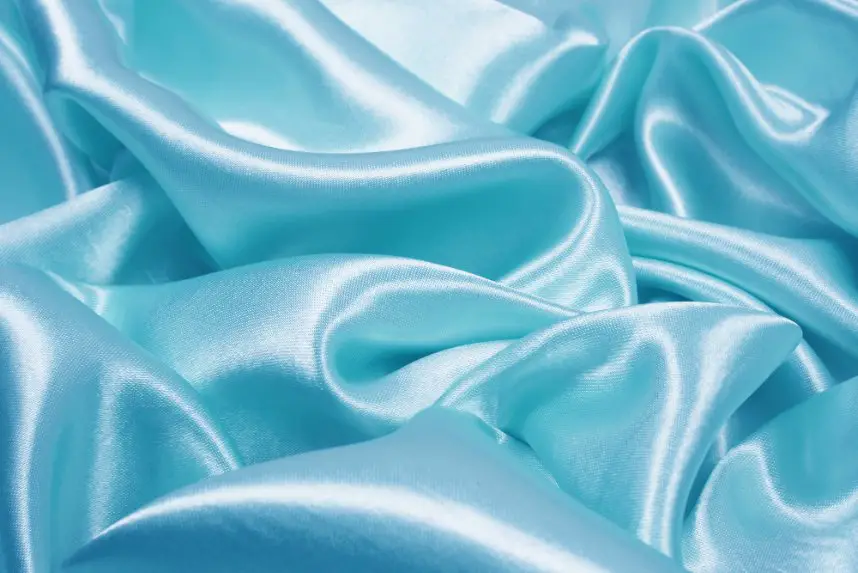
Acetate fabric is a semi-synthetic material made from cellulose derived from wood pulp. Think of it as sitting somewhere between natural and synthetic fabrics. The cellulose comes from natural sources like wood from fast-growing trees (oak or eucalyptus), but it goes through a chemical process to become the smooth, shiny fabric we know as acetate.
What makes acetate special is its ability to mimic the look and feel of silk at a much lower price point. When you touch acetate, you’ll notice it feels smooth and soft with a beautiful sheen that catches the light. This silk-like quality has made it popular in fashion for almost a century.
Unlike fully synthetic fabrics like polyester (which comes from petroleum), acetate starts with renewable plant materials. However, it’s not a natural fiber like cotton or linen because it requires chemical processing to transform wood pulp into wearable fabric. This is why it’s called “semi-synthetic” or “regenerated cellulose fiber.”
The History of Acetate
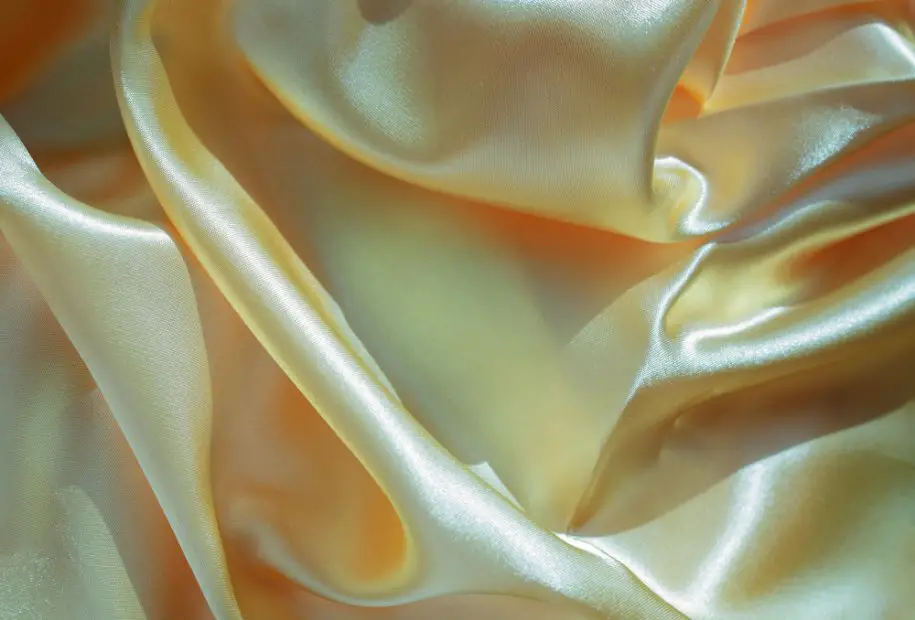
The story of acetate fabric is a journey through innovation and necessity. In 1865, French chemist Paul Schützenberger first discovered cellulose acetate, but it took decades before anyone realized its potential as a fabric.
The real breakthrough came in the early 1900s. British chemists Charles Frederick Cross and Edward John Bevan developed a process that could turn this material into fibers. Initially, acetate wasn’t used for clothing at all – during World War I, it was applied as a coating for airplane wings because of its protective properties.
The Golden Age of Acetate (1920s-1950s)
By the 1920s, textile manufacturers recognized acetate’s fashion potential. The Dreyfus brothers pioneered acetate fiber for textiles, and by 1924, Celanese Corporation began commercial production in the United States. This timing was perfect – silk had become expensive and scarce, and people wanted affordable alternatives for elegant clothing.
During the 1930s through 1950s, acetate became the fabric of glamour. Fashion designers loved it for:
- Evening gowns that needed to drape beautifully
- Wedding dresses that looked luxurious without the silk price tag
- Linings that felt smooth against the skin
- Decorative ribbons and accessories
World War II gave acetate another boost. With silk supplies cut off, acetate stepped in for parachutes and military uniforms. This wartime production improved manufacturing techniques and made acetate even more widely available after the war.
Modern Innovations
In 1954, Eastman Chemical Company introduced triacetate, an improved version with better heat resistance and durability. Japan’s Mitsubishi Rayon Corporation (now Mitsubishi Chemical) licensed this technology and became one of the world’s largest producers of quality triacetate, which they branded as Soalon™.
Today, acetate continues to be used in fashion, though it competes with newer synthetic fabrics. Recent innovations include bio-acetate materials like M49, which are more biodegradable and use fewer petroleum-based chemicals.
How Acetate Fabric is Made
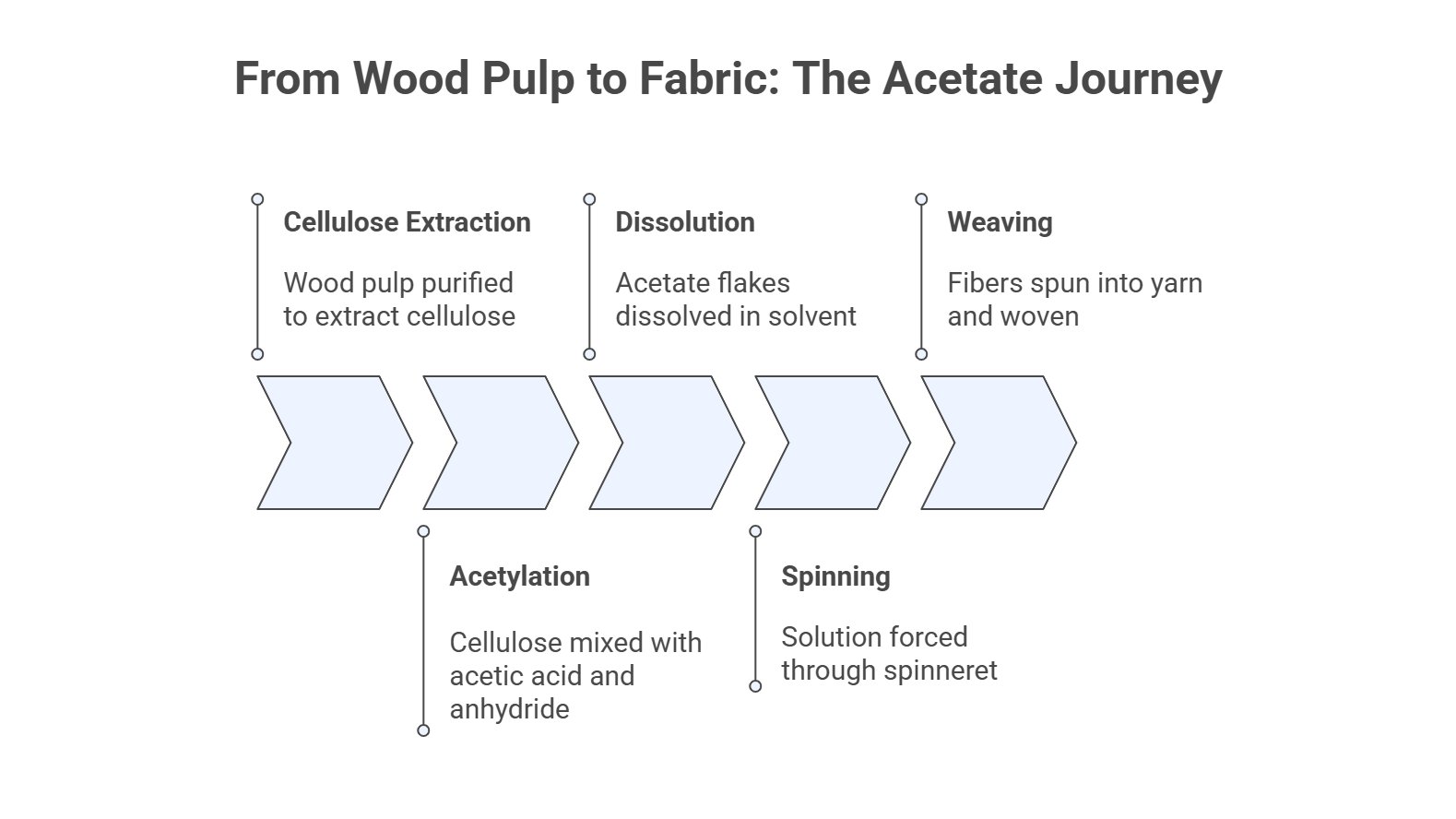
Understanding how acetate is made helps explain both its benefits and limitations. The manufacturing process is complex and involves several chemical steps:
Acetate Manufacturing Process
Wood pulp from trees like eucalyptus or pine is purified to extract cellulose
Cellulose is mixed with acetic acid and acetic anhydride, creating acetate flakes
Acetate flakes are dissolved in a solvent (usually acetone) to form a syrupy solution
The solution is forced through tiny holes (spinneret) and the solvent evaporates, forming fibers
Acetate fibers are spun into yarn and woven into fabric
Raw Materials
Acetate fabric production typically uses:
- Wood pulp: Primarily from fast-growing trees like eucalyptus, pine, or oak
- Cotton linters: Sometimes used as an alternative cellulose source (the short fibers left on cotton seeds after ginning)
- Acetic acid: The same compound found in vinegar, used in the chemical reaction
- Acetic anhydride: A chemical that helps transform cellulose
- Sulfuric acid: Used as a catalyst in the acetylation process
The degree of acetylation determines whether the final product is diacetate (standard acetate) or triacetate (improved version). We’ll discuss the differences between these two types in the next section.
Types of Acetate: Diacetate vs Triacetate
Not all acetate is created equal. There are two main types, and understanding the difference helps you choose the right fabric for your needs.
Diacetate (Standard Acetate)
When you see “acetate fabric” without any special label, it’s usually diacetate. This was the first type commercially produced and remains the most common.
| Characteristic | Details |
|---|---|
| Chemical composition | About 76% of cellulose hydroxyl groups are acetylated |
| Feel and appearance | Soft, smooth, with excellent sheen and drape |
| Dyeing | Takes dye extremely well, producing vibrant colors |
| Strength when wet | Loses about 50% of its strength when wet |
| Wrinkle tendency | More prone to wrinkling |
| Heat sensitivity | Cannot withstand high heat; requires low-temperature care |
| Common uses | Linings, evening wear, special occasion clothing, ribbons |
| Care requirements | Usually dry clean only or very gentle hand washing |
Triacetate (Improved Acetate)
Triacetate is acetate’s stronger, more durable cousin. Developed in the 1950s, it solved many of diacetate’s problems.
| Characteristic | Details |
|---|---|
| Chemical composition | Over 92% of cellulose hydroxyl groups are acetylated |
| Feel and appearance | Similar silk-like feel with slightly more structure |
| Strength when wet | Maintains strength better than diacetate when wet |
| Wrinkle resistance | Highly wrinkle-resistant; holds pleats well |
| Heat tolerance | Can be ironed on medium heat; handles washing better |
| Durability | More durable and longer-lasting than diacetate |
| Common uses | Sportswear, everyday clothing, pleated garments, knitwear |
| Care requirements | Can be machine washed and dried on low settings |
Quick Comparison
Choose Diacetate when: You want the most silk-like appearance and feel, you’re making formal wear or linings, and you can commit to dry cleaning or gentle hand washing.
Choose Triacetate when: You need something more practical for everyday wear, you want pleated garments that hold their shape, and you prefer machine-washable fabrics.
Specialty Acetate Weaves
Beyond the chemical differences, acetate comes in various weave styles:
- Acetate Satin: Uses a satin weave for extra shine and smoothness, popular for evening wear
- Acetate Taffeta: A crisp, stiff fabric with a slight sheen, great for structured garments
- Acetate Jersey: A knit version that’s softer and has some stretch
- Acetate Crepe: A textured weave with a matte finish instead of high shine
Acetate Fabric Properties and Characteristics
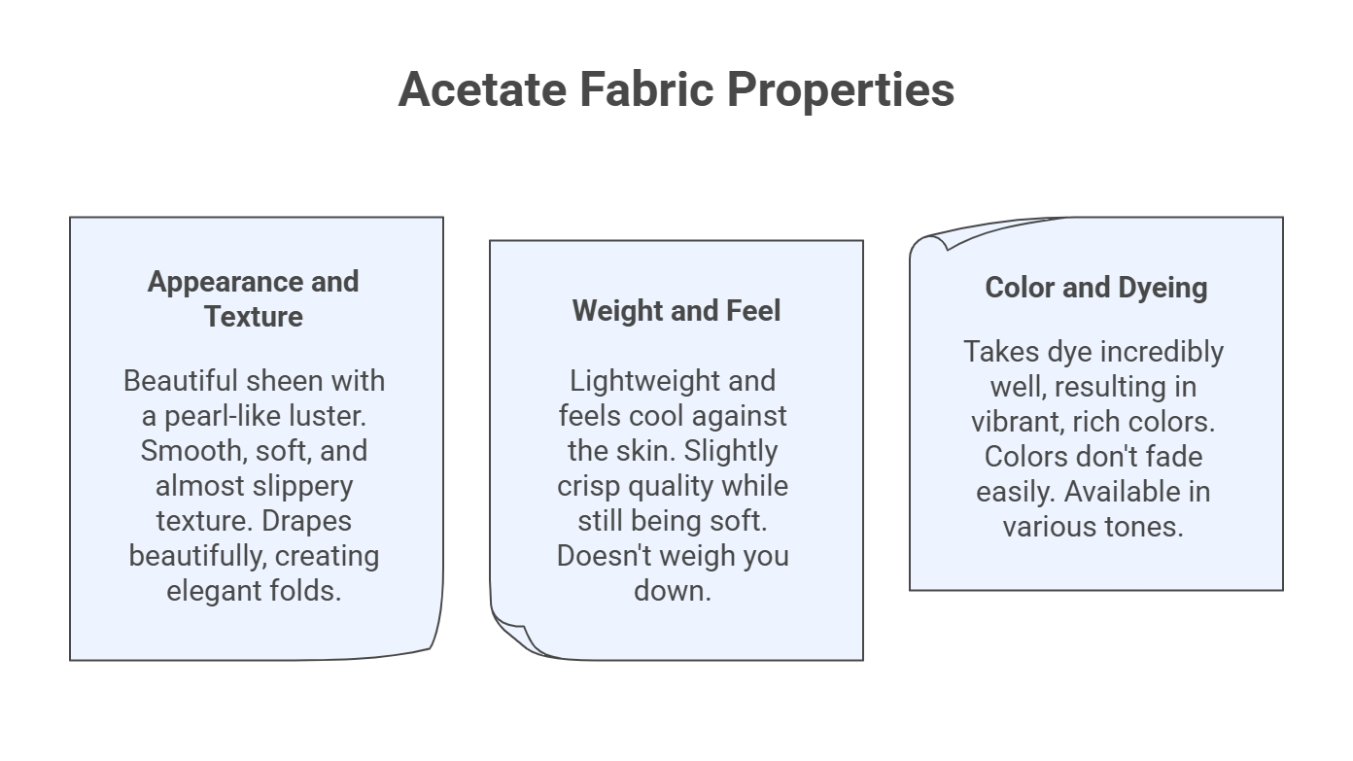
Let’s talk about what acetate actually feels like and how it behaves. Understanding these properties helps you decide if acetate is right for your project.
Appearance and Texture
The first thing you notice about acetate is its beautiful sheen. It has a pearl-like luster that reflects light, giving it that silk-like appearance people love. The surface is smooth to the touch – run your hand across it and you’ll feel a soft, almost slippery texture.
Acetate drapes beautifully. If you hold up a piece of acetate fabric, it flows and moves like silk, creating elegant folds and lines. This draping quality makes it perfect for flowing dresses and skirts.
Weight and Feel
Acetate is lightweight and feels cool against your skin. Unlike heavier fabrics, it doesn’t weigh you down. The fabric has a slightly crisp quality while still being soft – imagine the feel of taffeta but smoother.
Color and Dyeing
One of acetate’s best features is how well it takes dye. The fabric can be dyed in incredibly vibrant, rich colors that don’t fade easily. You can find acetate in everything from deep jewel tones to soft pastels. The sheen of the fabric makes colors appear even more intense and beautiful.
Physical Properties
| Property | Rating | Notes |
|---|---|---|
| Tensile Strength (dry) | Low to Moderate | 1-1.2 g/denier – weaker than most fabrics |
| Tensile Strength (wet) | Low | Loses 50% strength when wet; handle carefully |
| Abrasion Resistance | Poor | Can wear thin in high-friction areas |
| Pilling Resistance | Excellent | Doesn’t form fuzz balls like some fabrics |
| Shrinkage | Minimal | Doesn’t shrink much if cared for properly |
| Elasticity | Minimal | Limited stretch; not as elastic as some fabrics |
| Moisture Absorption | Moderate | Absorbs some moisture but dries quickly |
| Heat Resistance | Poor | Melts at 260°C (500°F); sensitive to heat |
| Static Electricity | Low | Doesn’t generate much static |
Is Acetate Fabric Stretchy?
Standard acetate has minimal stretch – it’s not an elastic fabric. However, it does have some give to it, similar to silk or wool. This slight stretch helps the fabric drape well and resist wrinkles to some degree. If you need stretch fabric, you’d be better off with acetate jersey (a knit version) or choosing stretchy fabrics designed for that purpose.
Temperature Sensitivity
Here’s something important to know: acetate is thermoplastic, meaning it softens when heated and can be molded into shapes. While this property is useful in manufacturing (it’s how acetate sunglasses are made), it’s a concern for care.
Acetate begins to soften around 200-230°C (390-445°F) and melts completely at 260°C (500°F). This is why you must be careful with irons and dryers – high heat can literally melt your acetate garment.
Resistance to Pests and Mold
Good news: acetate resists moths, mildew, and mold. Unlike natural fibers like wool that moths love to eat, acetate won’t attract these pests. This makes it a great choice for storage and for climates with high humidity.
Advantages and Disadvantages of Acetate Fabric
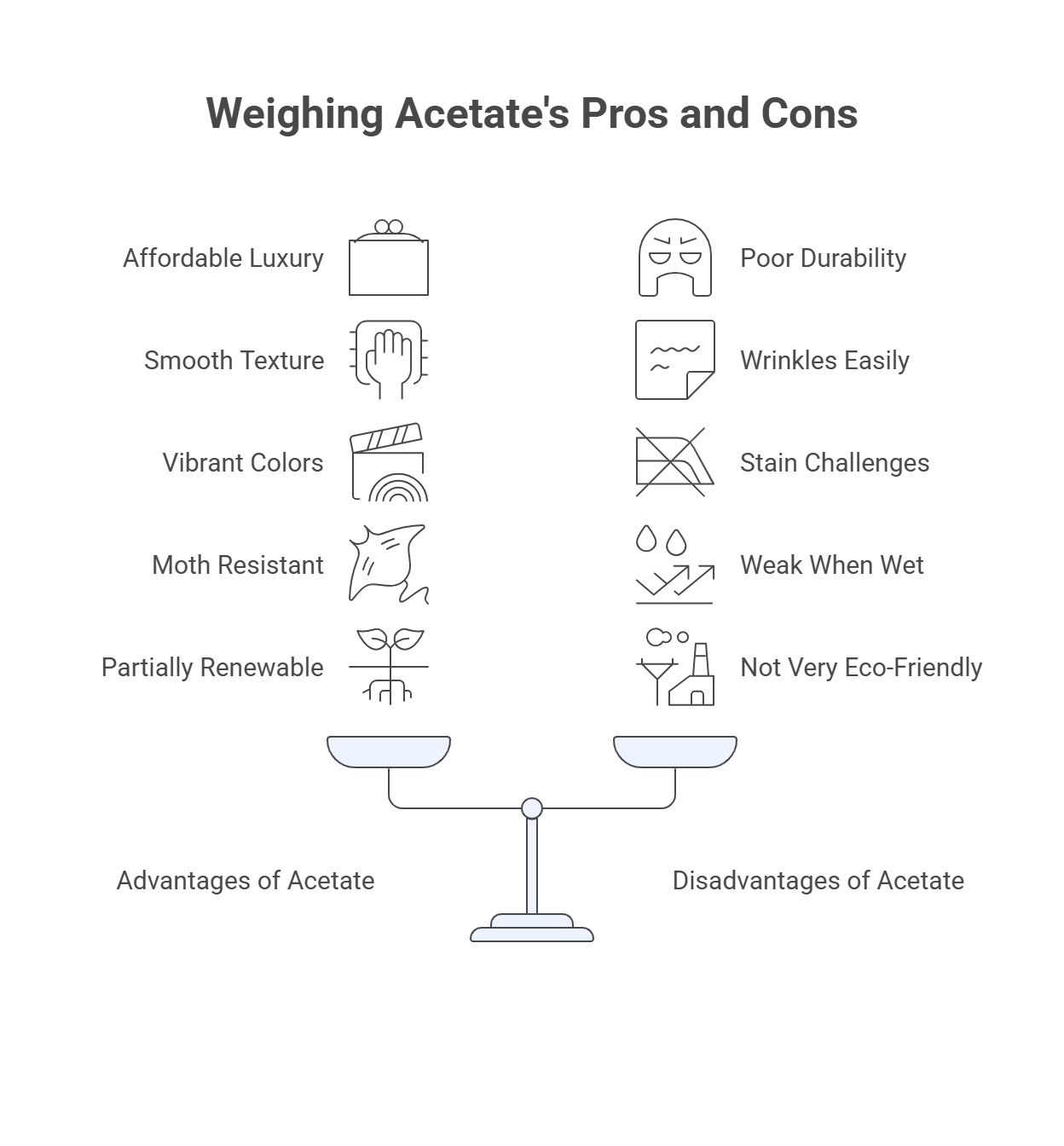
Let’s be honest about what acetate does well and where it falls short.
✓ Advantages
- Affordable luxury: Looks like silk at a fraction of the cost
- Beautiful drape: Flows elegantly, perfect for formal wear
- Vibrant colors: Excellent dye retention produces rich, lasting colors
- Smooth texture: Feels soft and pleasant against skin
- Low static: Doesn’t cling or create static electricity
- Quick drying: Dries faster than many natural fibers
- No pilling: Won’t form those annoying fuzz balls
- Moth resistant: Won’t be eaten by pests
- Mildew resistant: Good choice for humid climates
- Minimal shrinkage: Maintains size if cared for properly
- Partially renewable: Made from plant cellulose, not just petroleum
✗ Disadvantages
- Weak when wet: Loses 50% of strength, tears easily when damp
- Poor durability: Not suitable for heavy use or high-friction areas
- Heat sensitive: Can melt with high-temperature washing or ironing
- Wrinkles easily: Needs careful handling to avoid creases
- Limited breathability: Not as breathable as natural fibers
- Chemical sensitivity: Dissolves in acetone (nail polish remover)
- Stain challenges: Can be difficult to remove certain stains
- Care requirements: Often needs dry cleaning or very gentle washing
- Not very eco-friendly: Chemical-intensive production process
- Fume fading: Some dyes can fade when exposed to air pollutants
- Limited strength: Not suitable for items that need to be durable
- Can discolor over time: May yellow or develop spots with age
Acetate vs Other Fabrics
How does acetate stack up against other popular fabrics? Let’s break down the key differences.
Is Acetate Fabric the Same as Silk?
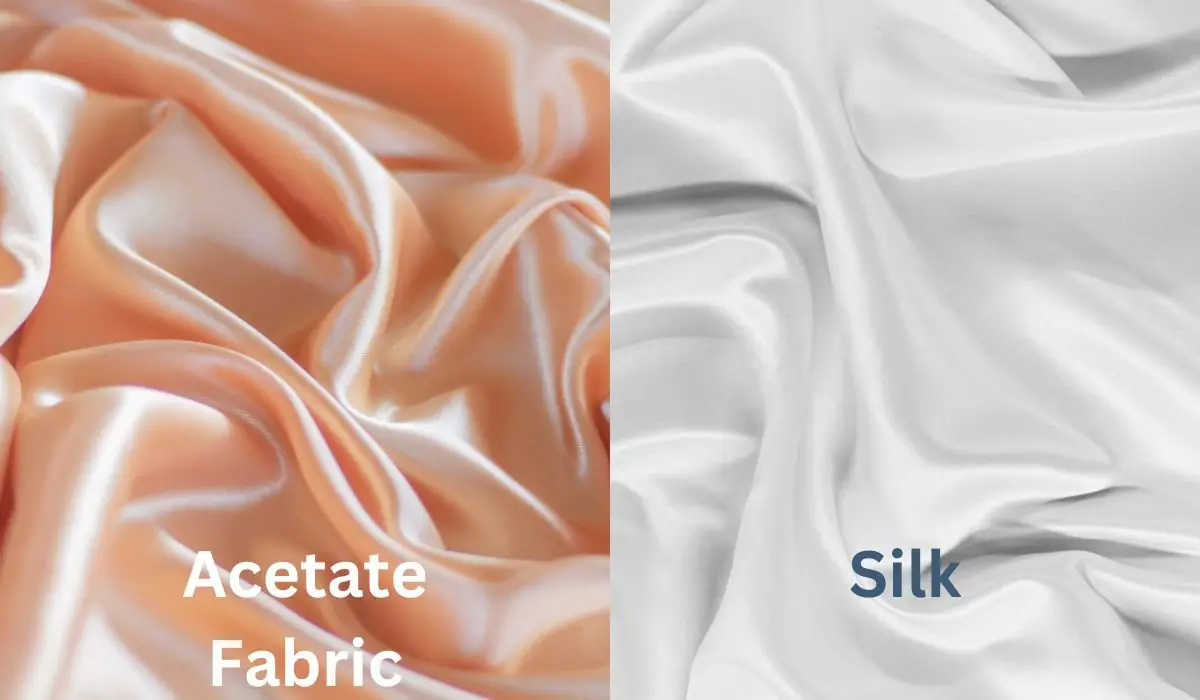
No, acetate and silk are completely different materials, even though acetate is designed to mimic silk’s appearance. Here’s how they compare:
| Feature | Acetate | Silk |
|---|---|---|
| Origin | Semi-synthetic (wood pulp + chemicals) | Natural protein fiber from silkworms |
| Price | $10-15 per yard | $20-100+ per yard |
| Durability | Low to moderate; weak when wet | Strong and durable; gets stronger when wet |
| Breathability | Moderate; less breathable | Excellent; highly breathable |
| Moisture absorption | Moderate | Excellent; wicks moisture well |
| Temperature regulation | Fair | Excellent; keeps you cool in summer, warm in winter |
| Care difficulty | High; usually dry clean only | High; gentle hand wash or dry clean |
| Heat tolerance | Low; can melt | Better; but still needs gentle care |
| Environmental impact | Moderate; chemical-intensive process | Better if ethically sourced |
The verdict: Silk is superior in almost every way except price. Acetate gives you the look of silk for less money, but you sacrifice durability, breathability, and longevity. For special occasions or linings where the fabric won’t be stressed, acetate works well. For luxury items you’ll wear frequently, invest in real silk.
Is Acetate the Same as Polyester?
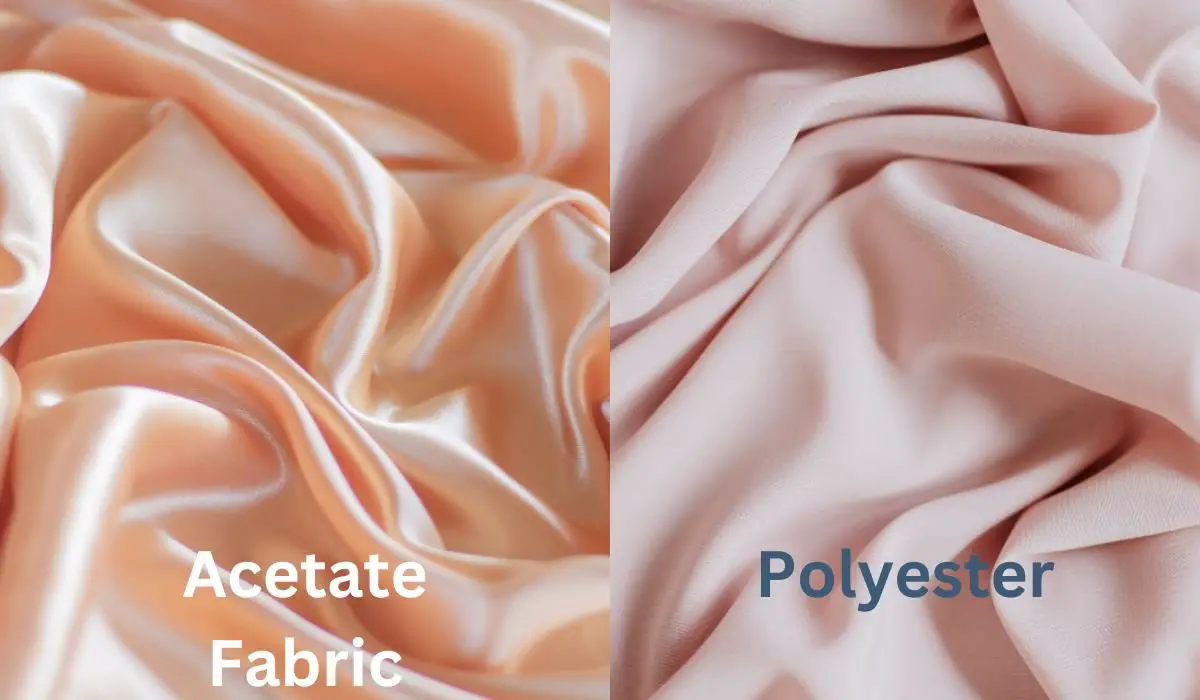
No, acetate and polyester are different fabrics with distinct characteristics:
| Feature | Acetate | Polyester |
|---|---|---|
| Origin | Semi-synthetic from plant cellulose | Fully synthetic from petroleum |
| Feel | Soft, smooth, silk-like | Can feel synthetic or slightly plasticky |
| Drape | Excellent; flows beautifully | Good but less fluid |
| Durability | Low to moderate | Very high; very strong |
| Wrinkle resistance | Poor | Excellent |
| Heat resistance | Poor; melts easily | Better; more heat tolerant |
| Care | Delicate; often dry clean only | Easy; machine washable |
| Breathability | Moderate | Low to moderate |
| Price | $10-15 per yard | $5-10 per yard |
The verdict: Polyester wins for practicality and durability, but acetate wins for appearance and drape. If you need something that looks elegant for special occasions, choose acetate. For everyday wear that needs to last, go with polyester.
Is Acetate Like Viscose (Rayon)?
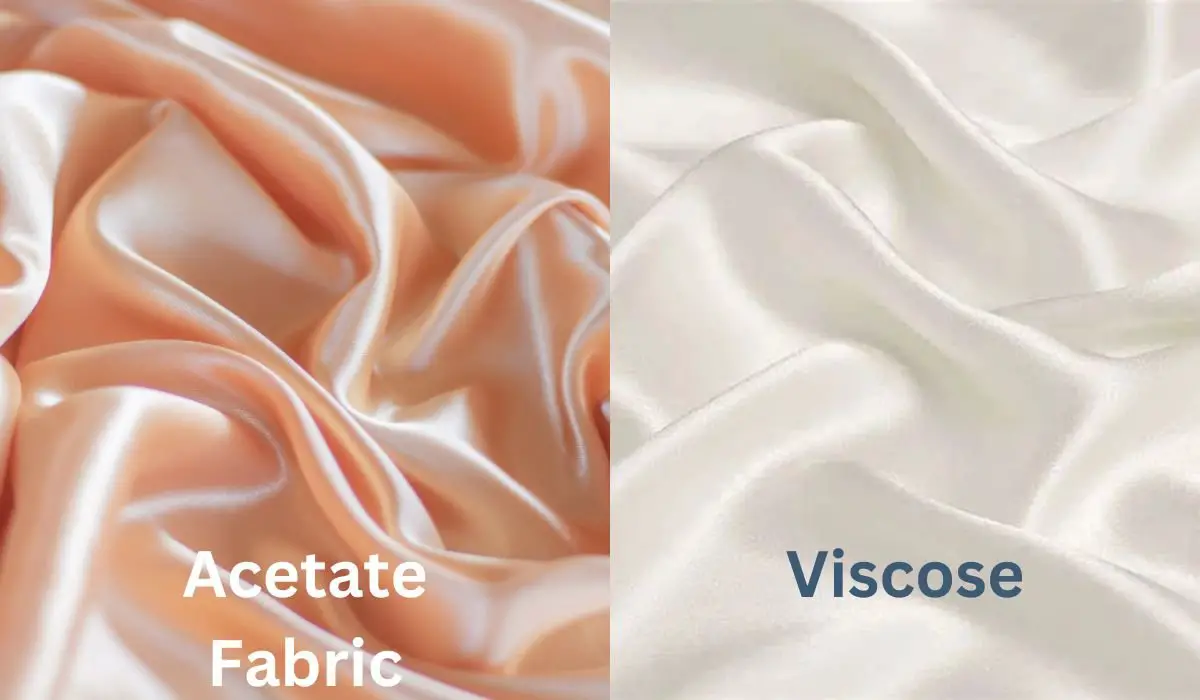
Acetate and viscose (rayon) are both semi-synthetic cellulose fibers, so they’re cousins in the fabric family. However, they’re made through different chemical processes:
| Feature | Acetate | Viscose/Rayon |
|---|---|---|
| Manufacturing process | Acetylation process | Xanthation process |
| Chemical structure | Modified cellulose (ester) | Regenerated cellulose |
| Texture | Smoother, more silk-like | Soft but slightly less sleek |
| Drape | Better drape; more fluid | Good drape but less flowing |
| Strength (dry) | Lower | Higher |
| Strength (wet) | Very low | Low but better than acetate |
| Breathability | Moderate | Better |
| Moisture absorption | Moderate | High |
The verdict: While both are semi-synthetic cellulose fabrics, rayon is generally more breathable and absorbent, making it better for everyday wear. Acetate has a more luxurious appearance and better drape, making it ideal for formal wear.
Is Acetate Like Cotton?
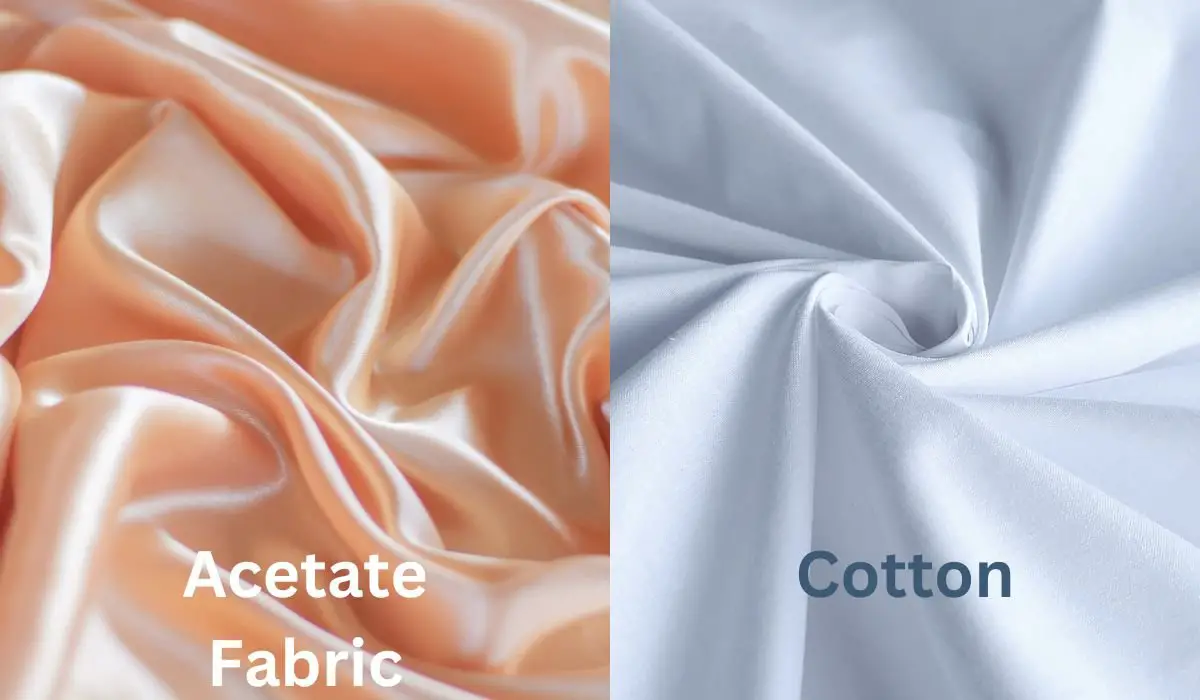
Not really. While both come from plant sources, they’re very different in feel and performance:
| Feature | Acetate | Cotton |
|---|---|---|
| Origin | Semi-synthetic from wood pulp | Natural fiber from cotton plants |
| Feel | Smooth, slippery, cool | Soft, natural, warm |
| Appearance | Shiny, lustrous | Matte, natural look |
| Durability | Low; weak when wet | High; gets stronger when wet |
| Breathability | Moderate | Excellent |
| Moisture absorption | Moderate | Excellent |
| Care | Delicate; dry clean or gentle wash | Easy; machine washable |
| Wrinkle tendency | Moderate to high | High |
The verdict: Cotton is far more practical for everyday wear – it’s breathable, durable, and easy to care for. Acetate is better for occasions when you want a dressier, more formal appearance.
Is Acetate Just Plastic?
This is a common question, and the answer is: sort of, but not really. Acetate is more complex than that.
Acetate starts with natural cellulose from plants, unlike plastics that come entirely from petroleum. However, the chemical processing transforms that cellulose into something that behaves like plastic in some ways – it’s thermoplastic (can be molded with heat) and doesn’t biodegrade as easily as natural fibers.
Think of acetate as sitting on a spectrum: it’s more natural than polyester (pure plastic) but less natural than cotton. The term “semi-synthetic” captures this middle ground.
What is the Difference Between Acrylic and Acetate?
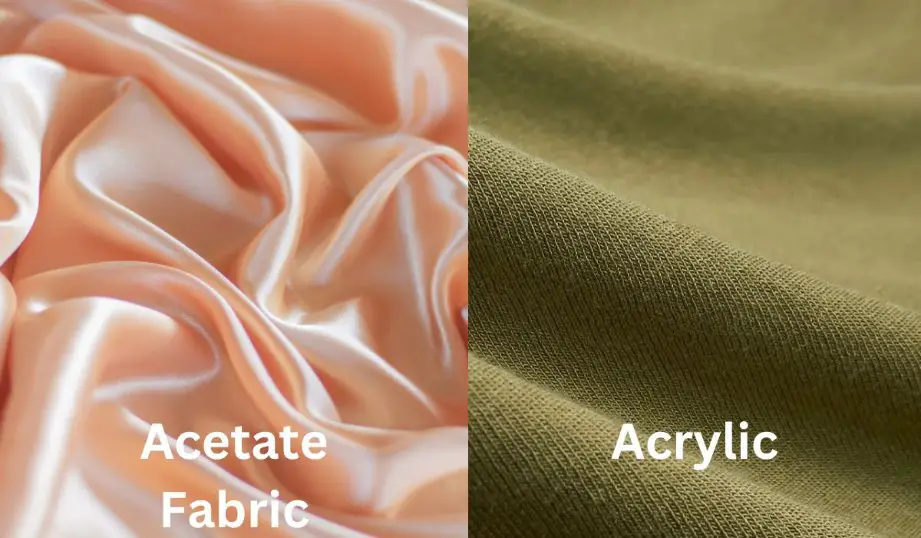
Despite similar names, acrylic and acetate are completely different:
- Acrylic is a fully synthetic fiber made from petroleum-based chemicals (similar to polyester). It’s designed to mimic wool and is commonly used in sweaters and blankets.
- Acetate is a semi-synthetic fiber made from plant cellulose. It’s designed to mimic silk and is used in dressy clothing and linings.
They have different properties, different uses, and require different care methods. Don’t confuse the two!
What is Acetate Fabric Used For?
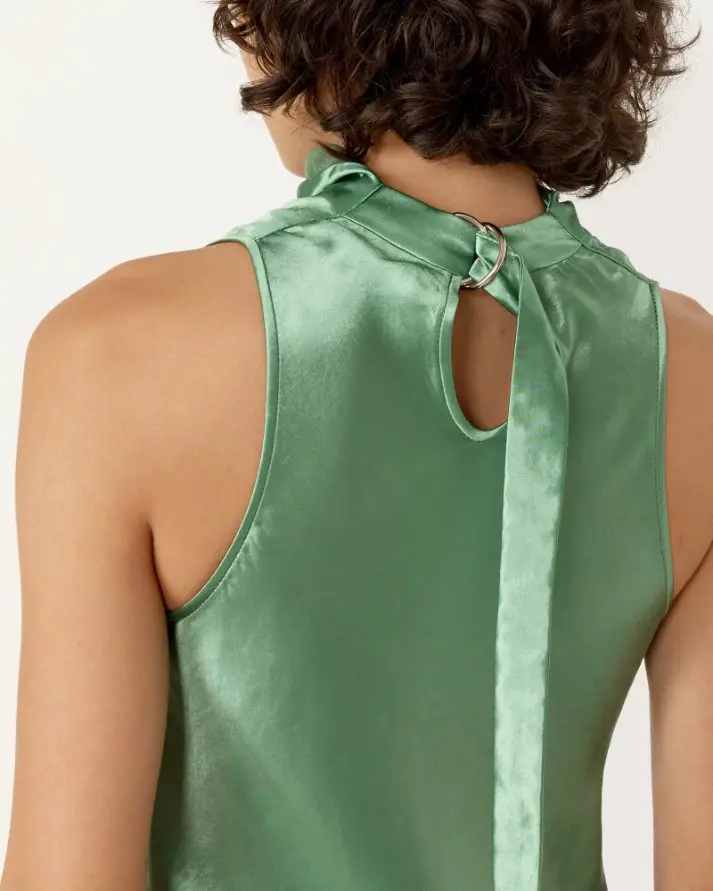
Acetate’s unique combination of silk-like appearance and affordable price makes it popular for specific applications. Here’s where you’ll commonly find acetate:
Fashion and Apparel
- Evening gowns and formal dresses: The beautiful drape and sheen make acetate perfect for elegant evening wear
- Wedding dresses: Many budget-friendly wedding gowns use acetate to achieve a luxurious look
- Graduation gowns: Almost all graduation robes are made from acetate – it photographs well and handles draping nicely
- Linings: This is one of acetate’s most common uses. The smooth texture prevents static and feels comfortable against skin
- Blouses and tops: Dressy blouses often use acetate for its refined appearance
- Lingerie and sleepwear: The soft, smooth feel works well for intimate apparel
- Scarves: Acetate scarves drape beautifully and come in vibrant colors
- Neckties: Men’s ties often use acetate for its sheen and ability to hold knots
Home Décor and Furnishings
- Curtains and drapes: Acetate hangs well and filters light beautifully
- Upholstery: Used for decorative furniture that won’t get heavy wear
- Decorative ribbons: Acetate ribbon is popular for gift wrapping and floral arrangements
- Tablecloths for special occasions: The elegant appearance suits formal table settings
Industrial and Other Uses
Beyond clothing, acetate has some interesting industrial applications:
- Eyeglass frames: Acetate’s thermoplastic properties make it ideal for molding into glasses
- Sunglasses: Many fashion sunglasses use acetate for the same reason
- Cigarette filters: Cellulose acetate is the primary material in cigarette filters
- Photographic film: Historically used as film base (though digital photography has reduced this use)
Acetate for Different Seasons
Is Acetate Fabric Good for Summer?
Acetate has mixed performance in summer weather. Here’s what you need to know:
Advantages for summer:
- Lightweight fabric that doesn’t weigh you down
- Feels cool to the touch when you first put it on
- Dries quickly if you perspire
- Doesn’t generate static in air conditioning
Disadvantages for summer:
- Not as breathable as cotton or linen
- Doesn’t absorb moisture as well as natural fibers
- Can feel clammy if you’re very active
- Heat sensitivity means you need to be careful with washing
Verdict: Acetate can work for summer in air-conditioned environments or for evening events when it’s cooler. For hot, humid days with lots of activity, natural fibers like cotton or linen are better choices. If you’re attending a summer wedding or formal event indoors, an acetate dress would be fine.
Is Acetate Fabric Good for Winter?
Acetate performs better in cooler weather, though it’s not a warm fabric like wool or fleece.
Advantages for winter:
- Works well as a lining under winter coats
- Doesn’t generate static when layered with other fabrics
- The smooth surface slides easily over other clothing
- Good for formal winter events (parties, holiday gatherings)
Limitations for winter:
- Doesn’t provide warmth on its own
- Not suitable as outer wear in cold weather
- Works best as part of a layering system
Verdict: Acetate is excellent as a winter lining fabric but not as a standalone warm fabric. It’s perfect for formal winter occasions when you’ll be indoors most of the time.
Is Acetate Fabric Eco-Friendly?
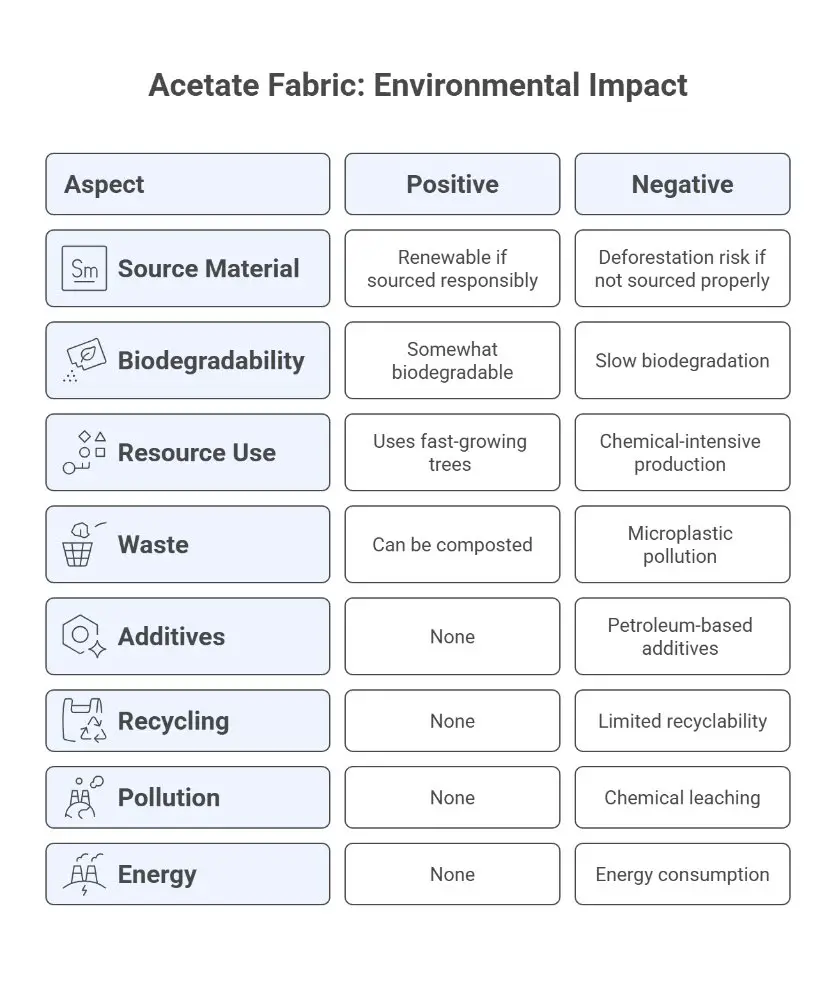
The sustainability of acetate is complicated. It’s not a clear “yes” or “no” answer – there are both positive and negative environmental aspects to consider.
The Positive Environmental Aspects
- Renewable source material: Acetate comes from wood pulp, which is renewable if sourced from responsibly managed forests
- Biodegradable (somewhat): Acetate can eventually break down, unlike purely petroleum-based synthetics
- Uses fast-growing trees: Most acetate production uses eucalyptus and pine, which grow quickly
- Can be composted: Under the right conditions (commercial composting facilities), acetate can decompose
The Negative Environmental Aspects
- Chemical-intensive production: Making acetate requires significant amounts of chemicals like sulfuric acid, acetic anhydride, and acetone
- Energy consumption: The manufacturing process is energy-intensive
- Petroleum-based additives: Many acetate fabrics contain petroleum-based plasticizers, including potentially harmful phthalates
- Slow biodegradation: While technically biodegradable, acetate breaks down much slower than natural fibers
- Microplastic pollution: Research found cellulose acetate is one of seven materials accounting for over half of Arctic microplastics
- Deforestation risk: If not properly sourced, wood pulp harvesting can contribute to deforestation
- Limited recyclability: Acetate is difficult to recycle and rarely recycled in practice
- Chemical leaching: As acetate breaks down, chemicals can leach into soil and water
Understanding Biodegradability
The claim that acetate is “biodegradable” needs context. Standard acetate won’t break down in your backyard compost pile. It requires high heat and specific conditions found only in commercial composting facilities. Even then, it can take 115+ days to decompose 90% – much slower than cotton or wool.
Bio-Acetate: A Greener Alternative
Recent innovations have produced bio-acetate materials that are more environmentally friendly:
- M49 Bio-acetate: Nearly 70% plant-based with improved biodegradability
- Naia™ by Eastman: Uses sustainable wood pulp and eco-friendly production methods
- FSC-certified acetate: Made from wood from responsibly managed forests
These newer versions address some sustainability concerns but are still more expensive and less widely available than standard acetate.
How Acetate Compares to Other Fabrics
| Fabric | Renewable Source | Biodegradable | Production Impact | Overall Sustainability |
|---|---|---|---|---|
| Organic Cotton | Yes | Yes (fast) | Low (if organic) | High |
| Linen | Yes | Yes (fast) | Low | High |
| Acetate | Yes | Yes (slow) | High (chemicals) | Medium |
| Polyester | No | No | Very high | Low |
| Nylon | No | No | Very high | Low |
Making More Sustainable Choices with Acetate
If you choose to use acetate, here’s how to minimize environmental impact:
- Look for bio-acetate or acetate with FSC/PEFC certification
- Buy quality pieces that will last longer rather than cheap items you’ll discard quickly
- Take proper care of acetate garments to extend their life
- Consider secondhand acetate items instead of buying new
- Wash less frequently to reduce microplastic release
- When disposing of acetate, look for textile recycling programs
The Bottom Line on Acetate Sustainability
Acetate sits in a gray area. It’s better than fully synthetic fabrics like polyester because it uses renewable resources and can eventually biodegrade. However, it’s far less sustainable than natural fibers like organic cotton, linen, or hemp due to its chemical-intensive production and slow decomposition.
For eco-conscious shoppers, acetate should be a “sometimes” choice for special occasions rather than a wardrobe staple. When you do buy acetate, look for bio-acetate options and plan to keep the garment for years.
How to Care for Acetate Fabric
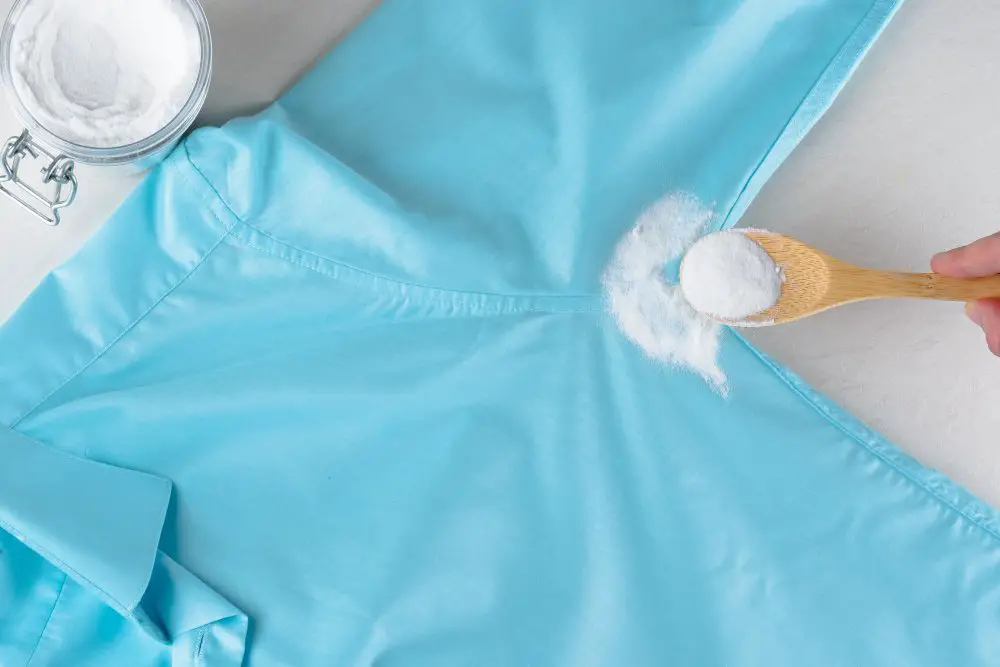
Proper care is the key to making acetate last. Because it’s delicate and heat-sensitive, you need to be more careful than with cotton or polyester. Here’s your complete guide to keeping acetate looking beautiful.
Is Acetate a Safe Material to Wear?
Yes, acetate is generally safe to wear. It’s considered skin-friendly and hypoallergenic for most people. The fabric feels smooth and comfortable against skin, and it doesn’t contain common allergens.
However, a few considerations:
- Some people with chemical sensitivities may react to residual chemicals from manufacturing
- The limited breathability might cause discomfort during heavy activity
- If you have very sensitive skin, wash acetate before first wear
Washing Acetate Fabric
Can Acetate Be Washed?
Yes, but with extreme caution. Many acetate garments are labeled “dry clean only” for good reason – washing carries risks. However, some acetate items can be gently washed at home if you follow the right steps.
What Happens if Acetate Gets Wet?
When acetate gets wet, it loses about 50% of its strength. This means:
- The fabric becomes much easier to tear
- It can stretch out of shape if handled roughly
- Wrinkles set in more easily
- Colors might run if the dye wasn’t properly set
This is why you must be extremely gentle when washing acetate.
Hand Washing Acetate (Recommended Method)
- Check the care label first: Always follow manufacturer instructions. If it says “dry clean only,” don’t risk washing.
- Fill a basin with cold water: Use water that’s 30°C (85°F) or cooler. Hot water can damage acetate.
- Add gentle detergent: Use a mild, liquid detergent designed for delicates. Avoid enzyme detergents, which can break down the fibers.
- Submerge the garment: Gently push it underwater. Don’t soak colored items for more than 2-3 minutes.
- Swish gently: Move the garment around softly. Never twist, wring, or scrub.
- Rinse thoroughly: Use cold water to remove all soap. Again, no wringing.
- Remove excess water: Gently press (don’t squeeze) the garment between your hands, or roll it in a clean towel and press.
Can You Machine Wash Acetate and Polyester Blends?
Acetate-polyester blends are often more durable than pure acetate and may be machine washable. If the care label permits:
- Use the delicate or gentle cycle
- Always use cold water
- Place the garment in a mesh laundry bag
- Turn the garment inside out first
- Use minimal spin to reduce stress on the fabric
What NOT to Do When Washing Acetate
- Never use hot or warm water
- Don’t use bleach – it will damage the fabric
- Avoid fabric softeners with acetate
- Don’t soak for extended periods
- Never wring or twist wet acetate
- Don’t wash with heavy items like jeans
Drying Acetate Fabric
How you dry acetate is just as important as how you wash it.
Air Drying (Recommended)
The safest way to dry acetate:
- Lay the garment flat on a clean towel
- Reshape it gently to its original form
- Keep it away from direct sunlight (can cause fading)
- Keep it away from heat sources (radiators, heaters)
- Allow it to dry naturally – acetate dries relatively quickly
Alternatively, you can hang acetate to dry on a padded hanger, but only if it’s a sturdy garment. Delicate items should be laid flat to prevent stretching.
Can You Use a Dryer?
It’s strongly not recommended. The heat in dryers – even on low settings – can:
- Melt the fabric
- Cause permanent wrinkles
- Shrink the garment
- Damage the finish
If you absolutely must use a dryer, use the “air dry” or “no heat” setting only, and remove the garment while still slightly damp.
Ironing and Steaming Acetate
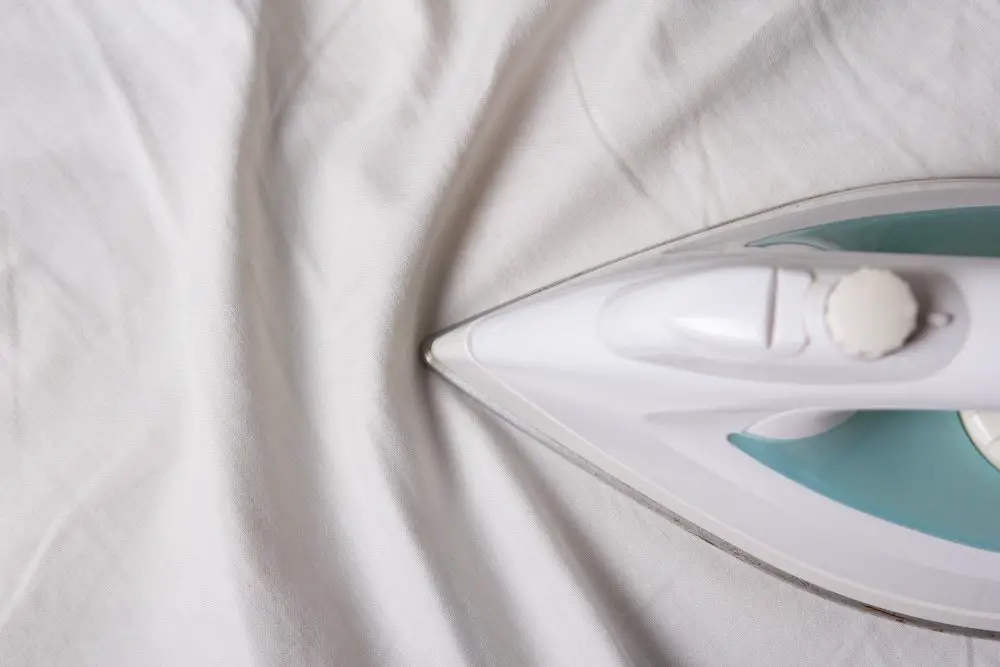
Can You Iron Acetate Clothes?
Yes, but very carefully. Remember, acetate is thermoplastic – it can melt.
What Temperature Do You Iron Acetate At?
Use the lowest heat setting on your iron – typically marked “silk” or “synthetic.” This is usually around 110°C (230°F) or lower. Never use the cotton or linen settings.
Safe Ironing Steps for Acetate
- Turn the garment inside out: This protects the visible surface from iron marks
- Use a pressing cloth: Place a clean cotton cloth between the iron and the acetate
- Keep the iron moving: Don’t let it sit in one spot
- Iron while slightly damp: This is easier than ironing completely dry fabric
- No steam: Avoid using the steam function, as water spots can form
- Test first: Try an inconspicuous area to make sure the temperature is safe
Can You Steam Acetate Fabric?
Steaming can work for acetate and is often safer than ironing:
- Use a handheld garment steamer
- Keep the steamer head at least 6 inches from the fabric
- Work in short bursts rather than prolonged steaming
- Let the garment dry completely before wearing
Is Acetate Wrinkle Resistant?
No, standard diacetate wrinkles fairly easily. Triacetate is more wrinkle-resistant and actually holds pleats well. If you’re concerned about wrinkles, look for triacetate garments or acetate blends.
How to Get Wrinkles Out of Acetate Fabric
If your acetate garment gets wrinkled:
- Hang it in the bathroom while you shower – the steam may help
- Use a handheld steamer (carefully)
- Iron on the lowest setting with a pressing cloth
- For stubborn wrinkles, consider professional pressing
Storing Acetate Fabric
Proper storage protects your acetate garments between wears:
- Use padded hangers: Wire hangers can leave marks
- Cover with garment bags: Protects from dust and light
- Store in a cool, dry place: Avoid humid areas
- Keep away from chemicals: Store away from perfumes, cleaning products, and acetone
- Don’t store damp: Make sure items are completely dry
- Allow air circulation: Don’t pack acetate items too tightly
Stain Removal from Acetate
Getting stains out of acetate is tricky because the fabric is sensitive to many cleaning agents.
For Fresh Stains:
- Blot (don’t rub) immediately with a clean cloth
- Mix a tiny amount of mild detergent with cold water
- Dab the solution on the stain with a soft cloth
- Blot with clean water to rinse
- Let air dry
For Stubborn Stains:
Take it to a professional dry cleaner. Attempting aggressive stain removal at home risks damaging the fabric permanently.
Working with Acetate: Sewing Tips
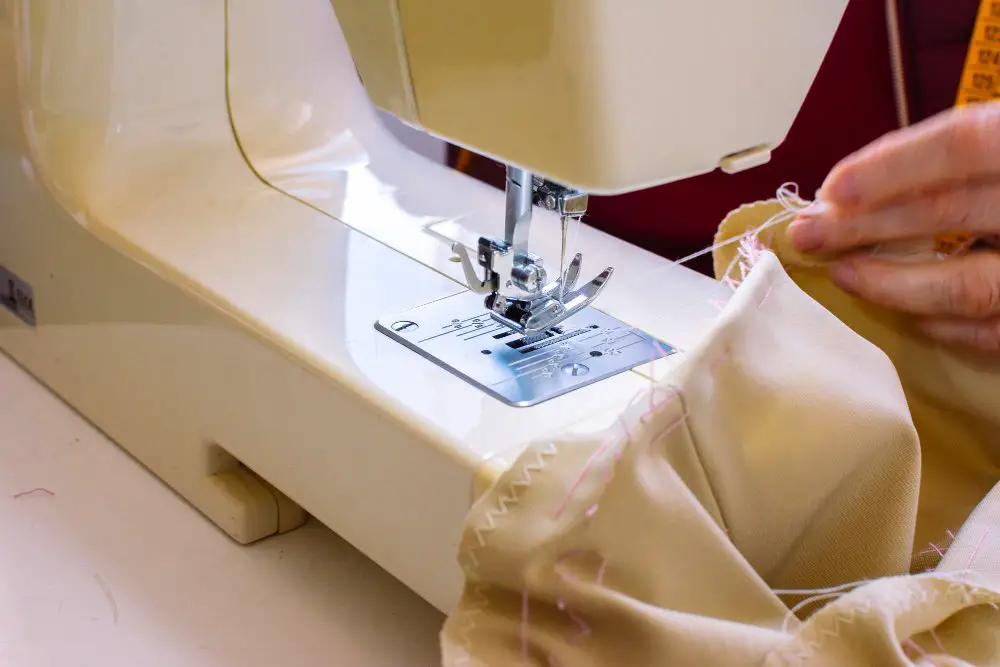
If you’re planning to sew with acetate, it requires some special handling. Here’s what you need to know.
How to Sew Acetate Fabric
Preparation
- Pre-wash if washable: Some acetate shrinks slightly, so pre-washing prevents surprises
- Let fabric relax: Unroll and let it sit flat for a few hours before cutting
- Use sharp scissors: Dull blades can snag the delicate fabric
Cutting
- Cut acetate in a single layer to prevent shifting
- Use pattern weights instead of pins when possible (pins can leave marks)
- Cut with the grain to minimize fraying
- Add slightly larger seam allowances than usual for delicate fabric
Sewing
- Needle: Use a fine, sharp needle (size 9 or 11 for lightweight acetate)
- Thread: Use fine polyester or silk thread
- Stitch length: Use a slightly longer stitch than normal (2.5-3mm)
- Tension: Loosen tension slightly to prevent puckering
- Speed: Sew slowly to maintain control
- Pressing: Press seams as you go, using low heat and a pressing cloth
Finishing
- French seams work beautifully with acetate
- Use a narrow zigzag or serger to finish raw edges
- Be careful with interfacing – test first as heat can damage acetate
Can You Embroider Acetate?
You can embroider on acetate, but it requires care:
- Use lightweight stabilizer to prevent puckering
- Choose simple designs without too many stitches
- Use a sharp embroidery needle
- Work slowly to avoid tearing the fabric
- Test on a scrap piece first
How to Tell if Fabric is Acetate
Sometimes you find a beautiful piece of fabric but aren’t sure what it is. Here’s how to identify acetate:
Visual Inspection
- Appearance: Acetate has a lustrous, silk-like sheen
- Drape: It flows and drapes smoothly, not stiffly
- Surface: The surface looks smooth and slightly shiny, catching light
Touch Test
- Feels smooth and slippery, almost like silk
- Cool to the touch
- Soft but with some body to it
- Slightly crisp compared to silk
Burn Test (Use Extreme Caution)
Warning: Only do this in a safe environment with proper safety measures. Remove a tiny thread from a hidden seam:
- Acetate melts and drips as it burns
- Produces black smoke
- Smells like vinegar or acetic acid
- Leaves hard, dark beads when cooled
Acetone Test (Destructive)
This test will damage the fabric, so only do it on a hidden scrap:
- Place a drop of nail polish remover (acetone) on the fabric
- Acetate will dissolve or soften immediately
- Other fabrics won’t react this way
Label Check
The easiest method – check the fabric content label! It should list “acetate,” “cellulose acetate,” “triacetate,” or brand names like “Soalon.”
Acetate Fabric Pricing
Is Acetate a Cheap Material?
Acetate sits in the mid-range price category – it’s cheaper than silk but more expensive than polyester.
| Fabric Type | Typical Price per Yard |
|---|---|
| Standard Acetate | $10-15 |
| Triacetate | $12-18 |
| Bio-acetate | $15-25 |
| Acetate-Polyester Blend | $8-12 |
| Silk (for comparison) | $20-100+ |
| Polyester (for comparison) | $5-10 |
The labor-intensive process of extracting cellulose and converting it into fibers makes acetate more expensive than fully synthetic fabrics. However, it’s much cheaper than natural silk, which is why it became popular as an affordable alternative.
What Affects Acetate Prices?
- Quality: Higher-quality acetate with better finishes costs more
- Weave type: Specialty weaves like satin or brocade are pricier
- Sustainability: Bio-acetate and certified sustainable options cost more
- Brand: Designer or premium brands charge higher prices
- Weight: Heavier acetate fabrics generally cost more
Frequently Asked Questions
In clothing, acetate refers to a semi-synthetic fabric made from cellulose (wood pulp) that’s been chemically processed to create fibers. It’s designed to mimic the look and feel of silk at a lower cost.
Acetate is also called cellulose acetate. Different types include diacetate (standard acetate) and triacetate (improved version). Brand names include Soalon™ and Naia™.
Yes, acetate is classified as a semi-synthetic or man-made fiber. While it starts with natural cellulose from wood pulp, it requires chemical processing to become usable fabric, so it’s not a natural fiber like cotton or silk.
100% acetate means the fabric is made entirely from cellulose acetate fibers with no blending of other materials like polyester or cotton. This pure acetate will have the most silk-like characteristics but also the most delicate care requirements.
Common examples of acetate products include: evening gown fabrics, wedding dress materials, suit and jacket linings, graduation gowns, decorative ribbons, eyeglass frames, and cigarette filters.
Yes, acetate melts at approximately 260°C (500°F) and begins to soften at much lower temperatures (200-230°C). This is why you must use low heat when ironing or drying acetate and avoid high-temperature washing.
Acetate holds color well and resists fading better than many fabrics. However, some dyes used on acetate can be sensitive to air pollutants (like nitrogen oxide) and may fade or change color when exposed to certain atmospheric contaminants. Prolonged sun exposure can also cause fading.
No, rayon and acetate are different fabrics, though both are semi-synthetic cellulose fibers. Rayon (viscose) is made through the xanthation process, while acetate is made through acetylation. Rayon is generally more breathable and absorbent, while acetate has a more silk-like drape and appearance.
Acetate can be comfortable for short periods and in air-conditioned environments. It feels smooth and cool against skin. However, it’s less breathable than natural fibers, which can make it less comfortable for all-day wear or in hot, humid conditions.
The two main types are diacetate (standard acetate, with about 76% acetylation) and triacetate (improved acetate, with over 92% acetylation). Triacetate is stronger, more heat-resistant, and easier to care for than diacetate.
Key benefits include: silk-like appearance at lower cost, beautiful drape, vibrant color retention, smooth texture, low static, quick drying, no pilling, resistance to moths and mildew, and minimal shrinkage when properly cared for.
Conclusion
After exploring everything about acetate fabric, you can now make informed decisions about when and how to use this material. Let’s recap the most important points.
What We’ve Learned
Acetate is a semi-synthetic fabric that bridges the gap between natural and synthetic materials. Made from wood pulp cellulose through chemical processing, it offers the elegant appearance of silk without the high price tag. This unique position makes it popular for specific applications, particularly formal wear and linings.
The fabric comes in two main types: diacetate (standard) and triacetate (improved). Diacetate gives you the most silk-like feel but requires careful handling, while triacetate offers better durability and easier care at the cost of some luxury appearance.
When Acetate Shines
Choose acetate when you need:
- Formal or special occasion clothing that looks luxurious
- Smooth, comfortable linings for jackets and coats
- Fabrics with beautiful drape for evening gowns or dresses
- Vibrant, rich colors that photograph well
- An affordable alternative to silk for one-time or rare-use garments
When to Choose Something Else
Avoid acetate for:
- Everyday wear that needs frequent washing
- Children’s clothing (too delicate and requires special care)
- Activewear or sportswear (poor breathability and moisture management)
- Items that will experience heavy wear or friction
- Hot, humid climates without air conditioning
- When you prioritize sustainability above all else
Key Takeaways
Care is Critical
The single most important thing to remember: acetate requires gentle, careful handling. Always use cold water, low heat, and gentle movements. One mistake with high heat can permanently damage the fabric. When in doubt, choose professional dry cleaning over home washing.
Understanding Limitations
Acetate’s beauty comes with trade-offs. It’s delicate, loses strength when wet, and can’t withstand rough treatment. Accept these limitations and choose acetate for appropriate applications where its strengths outweigh its weaknesses.
Sustainability Considerations
If environmental impact matters to you, approach acetate thoughtfully. While better than polyester, it’s not as eco-friendly as natural fibers. Consider bio-acetate options, buy quality pieces that last, and care for them properly to extend their life. Better yet, look for secondhand acetate garments to give existing pieces new life.
Smart Shopping Tips
When buying acetate:
- Always check the care label and make sure you can meet those requirements
- Feel the fabric – it should be smooth and have nice drape
- Look for quality construction in seams and finishing
- Consider triacetate if you want easier care
- Ask about bio-acetate or sustainably sourced options
- Factor in dry cleaning costs for the item’s lifetime
Making It Work
If you decide acetate is right for your needs, success comes down to proper care. Set up good habits:
- Always read and follow care labels
- Keep acetate items away from heat sources
- Store properly on padded hangers in garment bags
- Address stains immediately (but gently)
- Consider professional cleaning for important pieces
- Use fabric care tools to get personalized care instructions
The Final Word
Acetate fabric serves a specific purpose in the textile world. It’s not the perfect fabric for every situation, but when used appropriately, it provides an affordable way to achieve elegant, formal looks. Whether you’re choosing fabric for a sewing project, buying a special occasion outfit, or simply curious about the materials in your wardrobe, understanding acetate helps you make smarter choices.
The key is matching the fabric to the use case. Don’t expect acetate to perform like a workhouse fabric – it’s more like the fancy china you save for special dinners. Treat it well, use it for the right occasions, and you’ll appreciate what it offers: affordable elegance with silk-like beauty.
For more information on caring for different fabrics and making sustainable fashion choices, explore our comprehensive guides on fabric care and common fabric types. You can also read more about acetate sustainability from authoritative sources like Good On You’s material guide, Utah State University’s research on acetate, and Impactful Ninja’s life-cycle analysis.
