
Everything you need to know about cotton chiffon fabric – from properties and care to sewing techniques and sustainability
Table of Contents
- What is Cotton Chiffon Fabric?
- Can You Get Cotton Chiffon?
- Unique Properties of Cotton Chiffon
- Quality Indicators: Your Buyer’s Guide
- Sustainability and Environmental Impact
- Cotton Chiffon vs Other Fabrics
- Uses and Applications
- Complete Care Instructions
- How to Sew with Cotton Chiffon
- Styling and Fashion Guide
- History and Cultural Significance
- Cost Analysis and Where to Buy
- Frequently Asked Questions
Picture this: A fabric so light it seems to float on air, yet strong enough to last season after season. Soft against your skin on a hot summer day, with a natural drape that makes everything look effortlessly put together. That’s cotton chiffon – the fabric that brings together the best of natural fibers with the romantic elegance of chiffon.
While most people know about silk or polyester chiffon, cotton chiffon remains one of fashion’s best-kept secrets. It’s the choice for people who want that beautiful, floaty look without synthetic materials or the high price tag of silk. Whether you’re a home sewer planning your next summer dress, a fashion designer looking for breathable fabrics, or someone who simply wants to understand what makes this fabric special, you’re in the right place.
This guide will walk you through everything about cotton chiffon – from how it’s made to how to care for it, plus tips for sewing and styling. Let’s get started.
What is Cotton Chiffon Fabric?
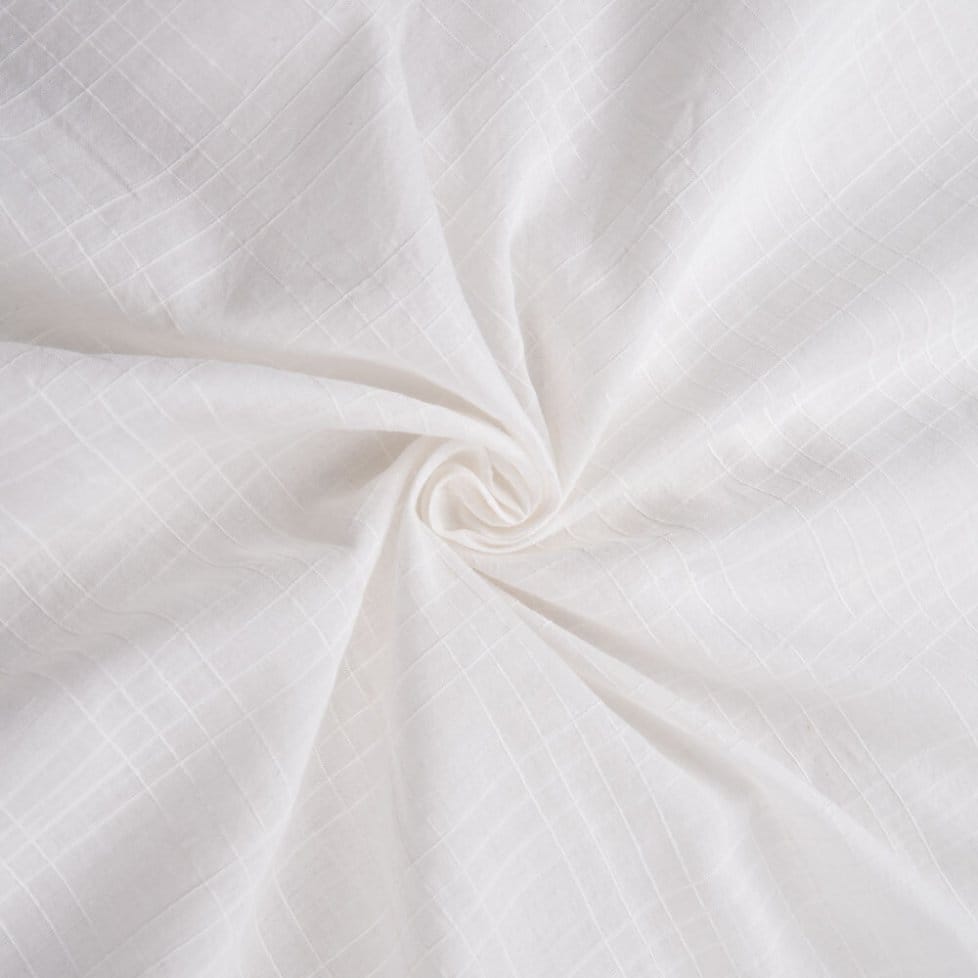
Cotton chiffon is a lightweight, sheer fabric made from 100% cotton fibers using the traditional chiffon weaving technique. Unlike other chiffon types that use silk or synthetic materials, cotton chiffon brings the natural benefits of cotton to this delicate fabric style.
The Making of Cotton Chiffon
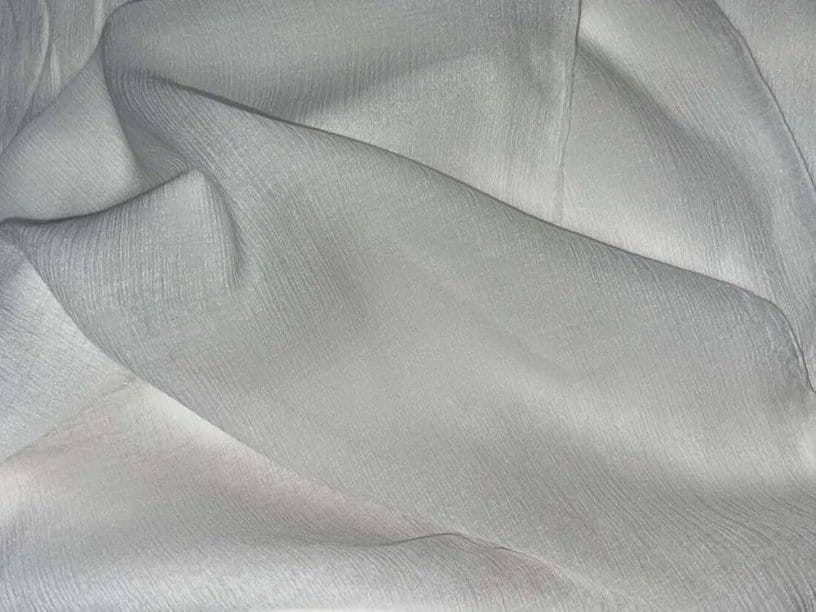
The magic of cotton chiffon starts with how it’s woven. Cotton fibers go through a special twisting process called S-twist and Z-twist. Imagine taking thin cotton threads and twisting them tightly in opposite directions – some clockwise, others counterclockwise. These tightly twisted yarns are then woven together in a simple over-under pattern called a plain weave.
This alternating twist creates the slightly puckered texture that makes chiffon unique. The tight twisting also gives the fabric a bit of stretch and strength, even though it feels incredibly light. When you run your fingers across cotton chiffon, you’ll notice it has a subtle roughness compared to the slippery smoothness of silk chiffon.
What Makes Cotton Chiffon Different
Cotton chiffon stands apart from other chiffon types in several ways:
- Matte finish: While silk chiffon has a natural shimmer, cotton chiffon has a softer, matte appearance that works beautifully for casual and everyday wear
- More opaque: It’s less see-through than silk or polyester versions, which means you can often skip the lining or use lighter underlayers
- Natural breathability: Cotton fibers let air flow through, making this fabric perfect for warm weather
- Stronger tear resistance: Cotton chiffon can handle a bit more wear and tear than its silk cousin
- Machine washable: Unlike silk chiffon that needs dry cleaning, you can toss cotton chiffon in the washing machine (more on that later)
Technical Specifications
For those who like the details, here’s what you need to know:
- Weight range: Typically 30-60 grams per square meter (GSM), making it one of the lighter fabrics available
- Thread count: Higher thread counts mean better quality, with premium cotton chiffon ranging from 200-400 threads per inch
- Fiber length: The best cotton chiffon uses long-staple cotton like Egyptian or Pima cotton, which creates a softer, more durable fabric
- Width: Usually comes in 44-60 inch widths
Can You Get Cotton Chiffon?
Yes, you can definitely get cotton chiffon, though it’s less common than synthetic versions. Here’s what you need to know about finding it.
Availability in the Market
Cotton chiffon makes up a smaller portion of the chiffon market compared to polyester or silk. Most fabric stores stock polyester chiffon because it’s cheaper and easier to care for. However, the growing interest in natural, sustainable fabrics has made cotton chiffon easier to find than it was a few years ago.
You’re more likely to find cotton chiffon at:
- Specialty fabric stores: Shops that focus on natural fibers or high-quality materials usually carry cotton chiffon
- Online fabric retailers: Websites like Mood Fabrics, Fabric.com, and specialty textile suppliers often have cotton chiffon options
- Wholesale suppliers: If you’re buying in bulk, textile wholesalers can source cotton chiffon directly from manufacturers
- Sustainable fabric retailers: Stores specializing in eco-friendly materials almost always stock cotton chiffon
Why It’s Less Common
Several reasons explain why cotton chiffon isn’t as widely available as other types:
- Production costs: Cotton chiffon costs more to make than polyester versions because natural cotton fibers are pricier than synthetic materials
- Manufacturing challenges: The delicate nature of cotton fibers makes them trickier to work with during the tight-twisting process
- Market demand: Since most people don’t specify the fiber content when buying chiffon, manufacturers produce more of the cheaper polyester versions
- Competition from blends: Many manufacturers offer cotton-poly blends instead of 100% cotton, which brings down costs while keeping some natural fiber benefits
What to Look for When Shopping
When searching for cotton chiffon, make sure to:
- Check the fiber content label – it should say 100% cotton
- Ask about the cotton grade (Egyptian, Pima, or Supima cotton are top choices)
- Request fabric samples before buying larger quantities
- Verify the weight (GSM) matches your project needs
- Confirm whether the fabric has been pre-shrunk
Unique Properties of Cotton Chiffon
Cotton chiffon brings together some amazing qualities that make it stand out from both other chiffon types and other cotton fabrics. Let’s break down what makes this fabric special.
Breathability That Beats the Heat
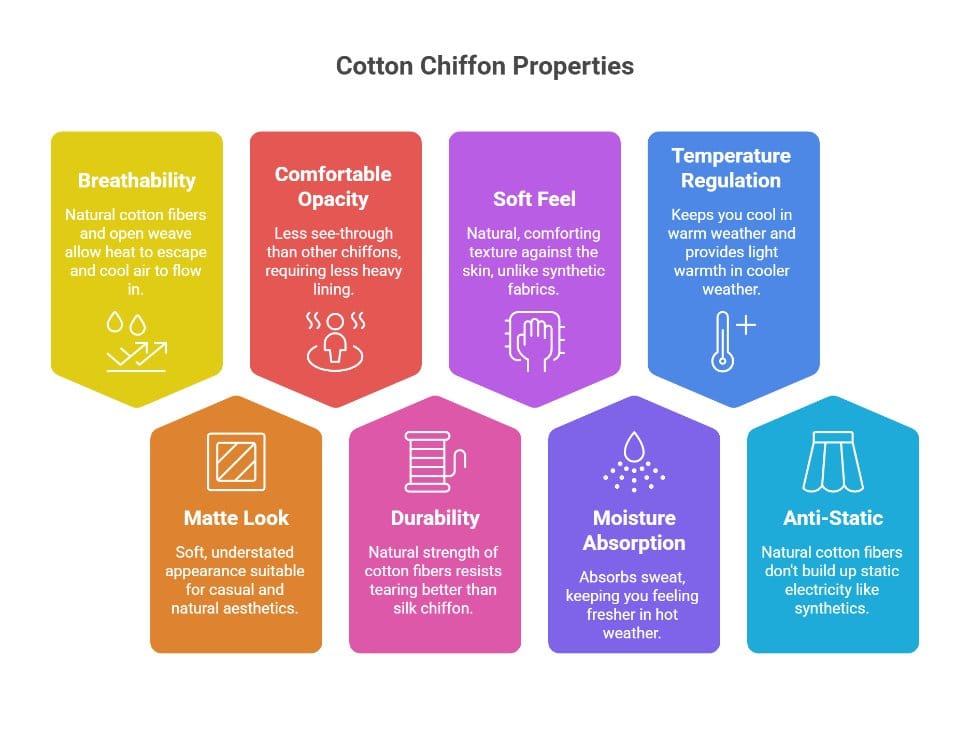
Cotton chiffon wins hands-down when it comes to breathability. The natural cotton fibers combined with the open weave structure create tiny air pockets throughout the fabric. On a hot day, these air channels let heat escape from your body while allowing cool air to flow in. This makes cotton chiffon one of the best choices for summer clothing.
Compare this to polyester chiffon, which traps heat because synthetic fibers don’t breathe. Even silk chiffon, while naturally temperature-regulating, can’t match cotton’s moisture-wicking abilities.
The Matte, Natural Look
If you’re going for a casual, bohemian, or natural aesthetic, cotton chiffon’s matte finish is perfect. Unlike the glossy shine of silk or the slight sheen of polyester, cotton chiffon has a soft, understated appearance. This makes it easier to dress down and more suitable for everyday wear.
The matte finish also means cotton chiffon photographs beautifully without the glare you sometimes get from shinier fabrics. This matters for special events where photos are important but you don’t want that overly formal look.
Comfortable Opacity
One of the best things about cotton chiffon is that it’s less see-through than other chiffon types. While it’s still sheer enough to have that lovely, light quality, you won’t necessarily need heavy linings. Often, a simple slip or lightweight underlayer does the job.
This makes cotton chiffon more practical for everyday clothing. You can wear a cotton chiffon blouse to work without worrying about what shows through, something you can’t always say for silk or polyester versions.
Tear Resistance and Durability
Here’s something that might surprise you: cotton chiffon is actually pretty strong. The natural strength of cotton fibers, combined with the tight twist of the yarns, creates a fabric that resists tearing better than silk chiffon. This doesn’t mean you can be rough with it, but it does mean your cotton chiffon garments will last longer with proper care.
This durability makes cotton chiffon a smart choice for items that see regular wear, like summer blouses or children’s clothing. Compare this to silk chiffon, which can develop snags and tears more easily.
The Soft, Comfortable Feel
Cotton chiffon feels soft and natural against your skin. Unlike polyester, which can feel slightly plastic-like, or silk, which can be slippery, cotton has that familiar, comforting texture you know from your favorite cotton t-shirts and sheets.
The slight roughness from the twisted yarns gives cotton chiffon a gentle texture that doesn’t slide around too much. This makes it easier to work with when sewing and more comfortable to wear, especially for people with sensitive skin.
Moisture Absorption
Cotton naturally absorbs moisture, which is both good and important to understand. On the plus side, cotton chiffon will absorb sweat, keeping you feeling fresher in hot weather. The fabric wicks moisture away from your skin and allows it to evaporate through the open weave.
The flip side? Cotton chiffon takes longer to dry than synthetic versions after washing. It can also show water spots more easily, so be careful around beverages or rain.
Temperature Regulation
Cotton fibers have natural temperature-regulating properties. In warm weather, cotton chiffon keeps you cool. In cooler weather, it provides a light layer of warmth without feeling heavy. This makes it useful for layering in transitional seasons.
Anti-Static Properties
Ever had a polyester skirt cling to your legs with static? Cotton chiffon doesn’t do that. Natural cotton fibers don’t build up static electricity the way synthetics do, so your cotton chiffon clothing will drape naturally without unexpected clinging.
| Property | Cotton Chiffon | Silk Chiffon | Polyester Chiffon |
|---|---|---|---|
| Breathability | Excellent | Very Good | Poor |
| Appearance | Matte, natural | Slight shimmer | Slight sheen |
| Opacity | More opaque | Very sheer | Sheer |
| Durability | Good | Moderate | Very Good |
| Care | Machine washable | Dry clean | Machine washable |
| Cost | Moderate | High | Low |
| Moisture Management | Absorbs well | Moderate | Doesn’t absorb |
| Static | No static | Minimal | Can have static |
Quality Indicators: Your Buyer’s Guide
Not all cotton chiffon is created equal. Here’s how to tell the difference between high-quality fabric and lower-grade options, so you get the best value for your money.
Thread Count Matters
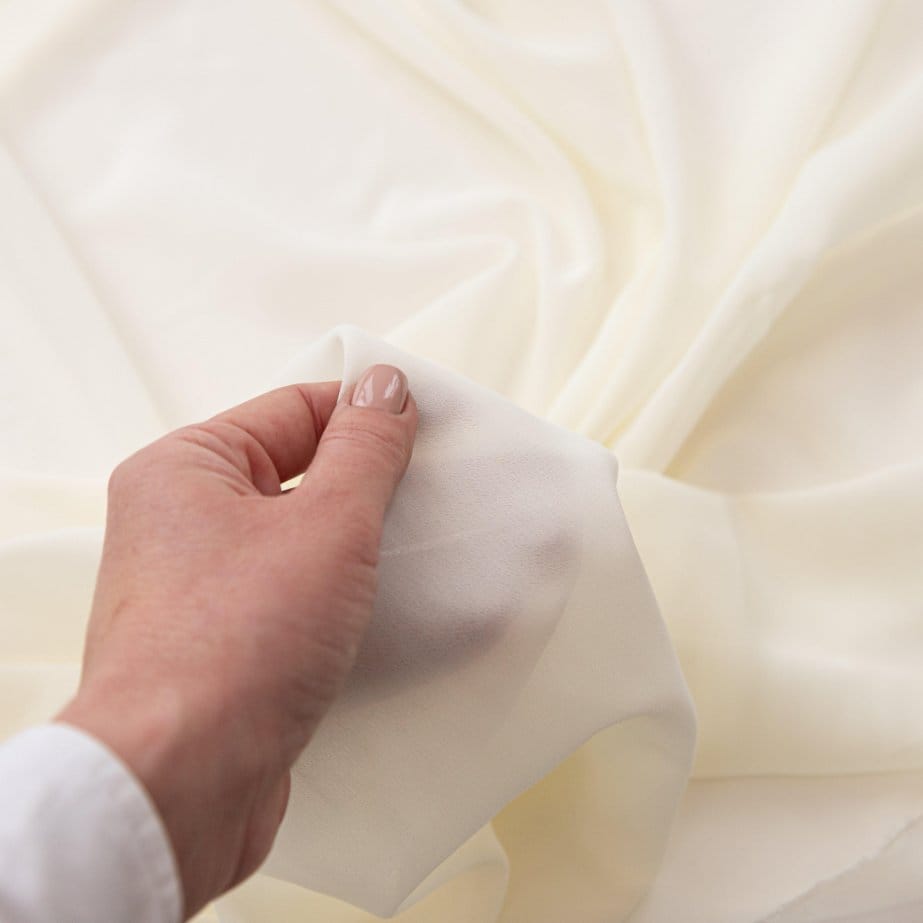
Just like with bed sheets, thread count tells you about the quality of cotton chiffon. Higher thread counts generally mean a softer, more durable fabric. Look for cotton chiffon with at least 200 threads per inch. Premium options range from 300-400 threads per inch.
However, don’t let thread count be your only guide. Some manufacturers use thicker threads to inflate the count, which doesn’t actually improve quality. You need to consider thread count along with other factors.
GSM (Grams Per Square Meter)
The weight of the fabric, measured in GSM, affects both how it looks and how it works for different projects:
- 30-40 GSM: Ultra-light and very sheer. Best for overlays, scarves, or decorative purposes
- 40-50 GSM: The sweet spot for most clothing projects. Light enough to drape beautifully but substantial enough to wear
- 50-60 GSM: Slightly heavier, less sheer. Good for garments where you want more coverage
Ask your supplier for the GSM rating. If they don’t know it, that’s often a red flag about quality.
Cotton Fiber Length
The type of cotton used makes a huge difference:
- Long-staple cotton (Egyptian, Pima, Supima): These premium cottons have fibers that are at least 1.5 inches long. They create softer, stronger, and more lustrous fabric. If your budget allows, always choose these.
- Medium-staple cotton (Upland cotton): This is the most common cotton, with fibers around 1-1.25 inches. It makes decent cotton chiffon at a lower price point.
- Short-staple cotton: Fibers less than 1 inch long. These create rougher, weaker fabrics that pill more easily. Avoid these for chiffon.
Evenness of Weave
Hold the fabric up to the light and look closely at the weave. High-quality cotton chiffon should have an even, consistent pattern throughout. You shouldn’t see thick and thin areas, loose threads, or irregular spacing between the yarns.
Small imperfections are normal in natural fabrics, but major inconsistencies indicate lower quality that might not hold up well over time.
Color Fastness
Good cotton chiffon should hold its color through multiple washes. Before buying yardage, ask if you can test a small sample:
- Wet a corner of the fabric
- Press it between two white paper towels
- If color transfers significantly to the towels, the dye quality is poor
High-quality cotton chiffon uses better dyeing processes that lock color into the fibers. This matters especially for darker colors like navy, black, or deep reds.
Hand Feel Indicators
Trust your hands. High-quality cotton chiffon should feel:
- Soft and smooth (not rough or scratchy)
- Slightly crisp (not limp or overly soft)
- Evenly textured throughout
- Not overly stiff (which can indicate too much sizing or chemical treatment)
Run your fingers across the fabric in different directions. It should feel consistent, not catching or snagging on your skin.
Quick Quality Check Checklist
- ✓ Thread count of 200 or higher
- ✓ GSM between 40-50 for most uses
- ✓ Made from long-staple cotton (ask specifically)
- ✓ Even weave with no major inconsistencies
- ✓ Good color fastness (minimal transfer when wet)
- ✓ Soft, smooth hand feel
- ✓ No chemical smell (slight cotton smell is fine)
- ✓ Drapes nicely when held up
- ✓ Doesn’t immediately pill when rubbed
- ✓ Comes from a reputable supplier
Price as a Quality Indicator
While price isn’t everything, it does give you clues. As of 2025, expect to pay:
- Budget range: $5-8 per yard for basic cotton chiffon
- Mid-range: $8-15 per yard for good quality
- Premium: $15-25+ per yard for high-end cotton chiffon using Egyptian or Pima cotton
If you see cotton chiffon priced at $3-4 per yard, be skeptical. It’s either a great sale or the quality isn’t there.
Questions to Ask Your Supplier
Don’t be shy about asking questions. Good suppliers will know their products. Ask about:
- What type of cotton is used?
- What’s the thread count and GSM?
- Is the fabric pre-shrunk?
- What’s the shrinkage rate after washing?
- What’s the country of origin?
- Does it have any special finishes or treatments?
- Can I get a small sample before ordering?
If a supplier can’t or won’t answer these questions, shop elsewhere.
Sustainability and Environmental Impact
If you care about making eco-friendly choices, cotton chiffon has both good news and things to consider. Let’s look at the real environmental story behind this fabric.
The Natural Advantage
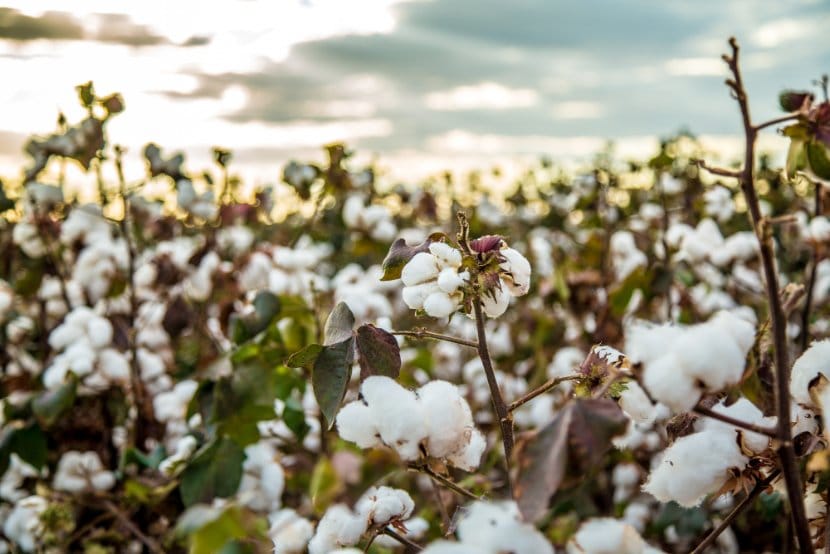
Cotton chiffon wins big on biodegradability. Unlike polyester chiffon, which is essentially plastic and can take hundreds of years to break down, cotton chiffon will decompose naturally. When your cotton chiffon garment finally reaches the end of its life, it will return to the earth within months to a few years, depending on conditions.
This matters more than many people realize. The fashion industry creates enormous amounts of waste, and synthetic fabrics are a huge part of the problem. Choosing natural fibers like cotton is one way to reduce your environmental footprint.
Cotton Production: The Challenges
Here’s where it gets more complicated. While cotton is natural, growing it can have serious environmental impacts:
Water Use
Cotton is a thirsty crop. Growing enough cotton for one t-shirt requires about 2,700 liters of water. For children’s clothing or larger garments, multiply that significantly. In regions where water is scarce, this creates real problems for local communities and ecosystems.
Pesticides and Chemicals
Conventional cotton farming uses a lot of pesticides. In fact, cotton crops use about 16% of the world’s pesticides despite covering only 2.5% of farmland. These chemicals can harm workers, pollute waterways, and damage local ecosystems.
The good news? You have a better option: organic cotton.
Why Organic Cotton Chiffon Changes the Game
Organic cotton chiffon addresses many of the environmental concerns of conventional cotton:
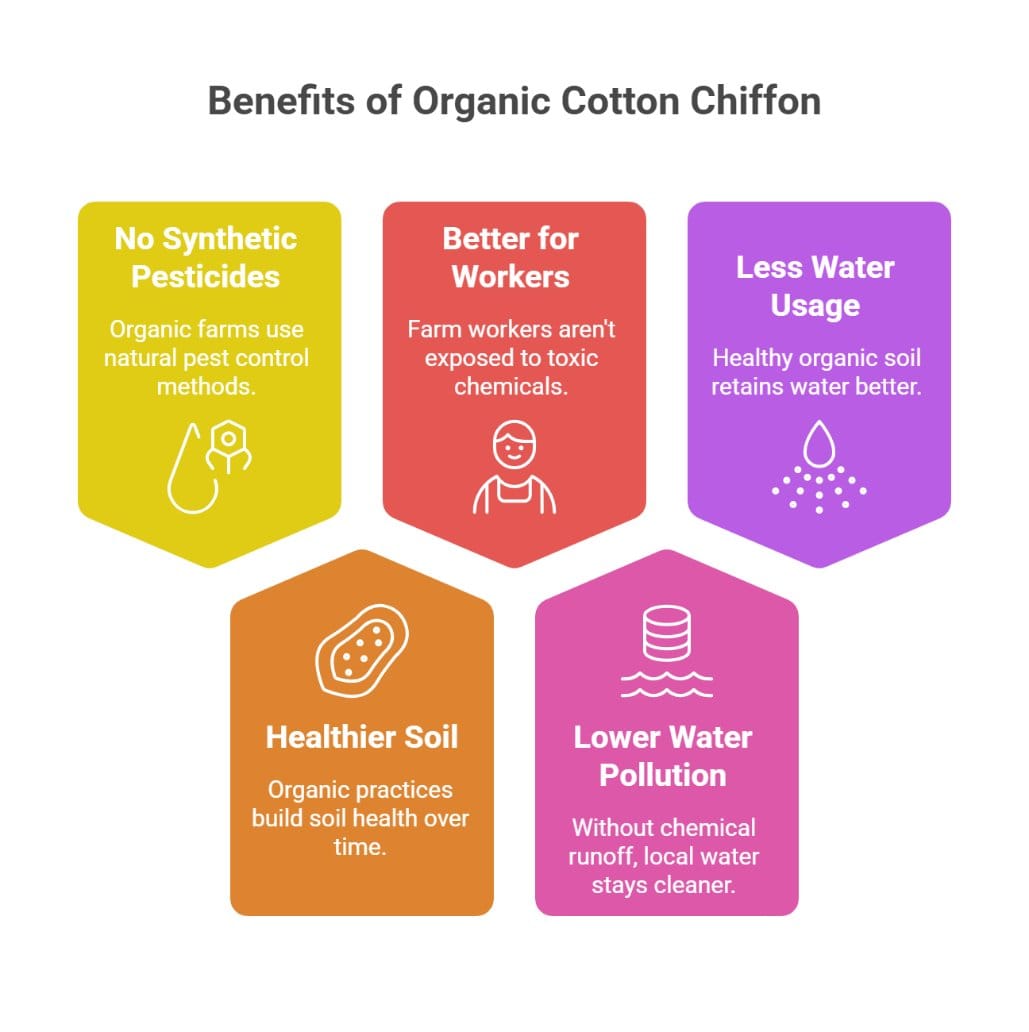
- No synthetic pesticides: Organic farms use natural pest control methods
- Healthier soil: Organic practices build soil health over time instead of depleting it
- Better for workers: Farm workers aren’t exposed to toxic chemicals
- Lower water pollution: Without chemical runoff, local water stays cleaner
- Often uses less water: Healthy organic soil retains water better
Look for certifications like GOTS (Global Organic Textile Standard) or OEKO-TEX when shopping for organic cotton chiffon. These ensure the fabric meets strict environmental and social standards throughout the production process. According to Global Organic Textile Standard, certified organic textiles must meet stringent criteria for both environmental sustainability and social responsibility.
Cotton vs Synthetic: The Full Picture
When you compare cotton chiffon to synthetic alternatives, the math gets interesting:
Carbon Footprint
Producing polyester chiffon releases about twice the carbon dioxide of producing cotton. Polyester comes from petroleum, a non-renewable resource, and its production is energy-intensive.
Microplastic Pollution
Every time you wash polyester chiffon, it sheds tiny plastic fibers called microplastics. These flow into waterways and eventually end up in oceans, where they harm marine life and enter the food chain. Cotton doesn’t create this problem – any fibers that wash off simply biodegrade.
End of Life
A polyester chiffon dress sitting in a landfill will still be there in 200 years. A cotton chiffon dress? Gone in 1-5 years, depending on conditions.
| Environmental Factor | Cotton Chiffon | Organic Cotton Chiffon | Polyester Chiffon |
|---|---|---|---|
| Biodegradable | Yes (1-5 years) | Yes (1-5 years) | No (200+ years) |
| Renewable Resource | Yes | Yes | No |
| Water Use | High | Lower | Low |
| Pesticides | Often high | None | N/A |
| Carbon Footprint | Moderate | Lower | High |
| Microplastic Pollution | No | No | Yes |
| Chemical Processing | Moderate | Minimal | High |
Making the Most Sustainable Choice
If you want to make the most eco-friendly choice with cotton chiffon:
- Choose organic when possible: The environmental benefits are clear
- Buy quality, not quantity: One well-made cotton chiffon garment that lasts years beats five cheap polyester ones that fall apart
- Care for it properly: Making your cotton chiffon last longer is the single best thing you can do for the environment
- Consider secondhand: Buying used cotton chiffon garments has zero additional environmental impact
- Recycle or compost at end of life: When your cotton chiffon finally wears out, cut it up for cleaning rags or compost it
Certifications to Look For
These labels help you find truly sustainable cotton chiffon:
- GOTS (Global Organic Textile Standard): The gold standard for organic textiles, covering both farming and processing
- OEKO-TEX Standard 100: Tests for harmful chemicals in finished fabrics
- Fair Trade Certified: Ensures fair wages and working conditions
- Better Cotton Initiative: Works to improve conventional cotton farming practices
The Bottom Line
Cotton chiffon isn’t perfect from an environmental standpoint, but it’s significantly better than synthetic alternatives. Choose organic when you can, care for your garments to make them last, and you’re making a positive choice for the planet.
Cotton Chiffon vs Other Fabrics
Understanding how cotton chiffon compares to similar fabrics helps you choose the right material for your project. Let’s break down the key differences.
Cotton Chiffon vs Silk Chiffon
Silk chiffon is the traditional luxury version, but cotton chiffon offers some real advantages:
Appearance and Feel
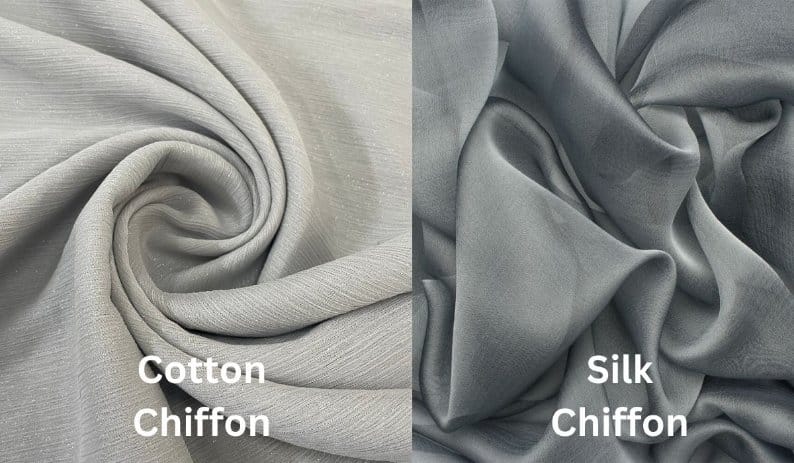
Silk chiffon has a beautiful natural shimmer that catches light. Cotton chiffon has a softer, matte finish that photographs well without glare. Silk feels incredibly smooth and slippery, while cotton has a slightly rougher, more substantial hand.
Cost
Silk chiffon typically costs 2-3 times more than cotton chiffon. A yard of quality silk chiffon might run $30-50, while cotton chiffon costs $8-15 per yard.
Care Requirements
Here’s where cotton wins big. Silk chiffon usually needs dry cleaning or very careful hand washing. Cotton chiffon can go in the washing machine on a gentle cycle. This makes cotton much more practical for everyday clothing and items that need frequent washing.
Durability
Cotton chiffon resists tearing better than silk. While both are delicate fabrics, cotton’s natural fiber strength means your garments will last longer with regular wear.
When to Choose Which
Pick silk chiffon for:
- High-end evening wear and formal occasions
- When you want that luxurious shimmer
- Special garments you’ll rarely wash
- When cost isn’t a concern
Pick cotton chiffon for:
- Everyday summer clothing
- Children’s clothing
- Items that need frequent washing
- Casual or bohemian styles
- When working on a budget
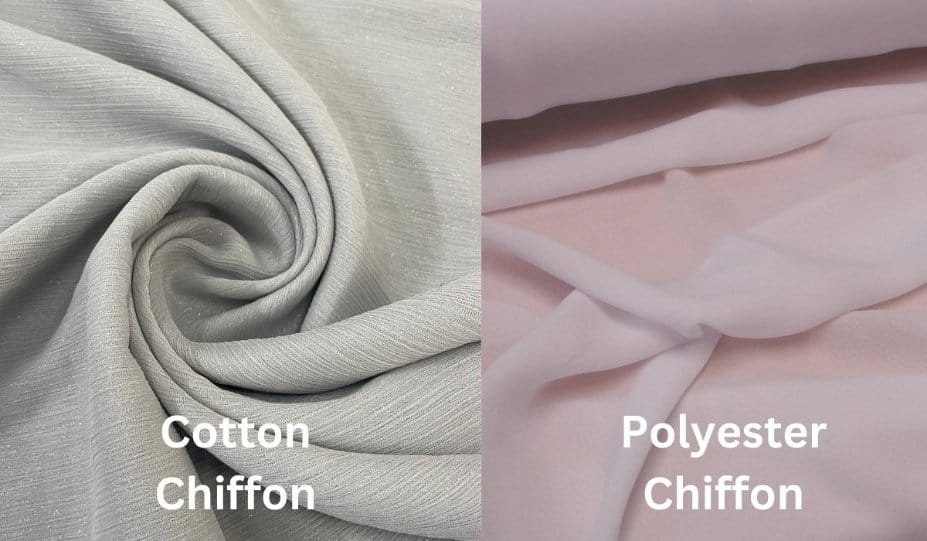
Cotton Chiffon vs Polyester Chiffon
Polyester chiffon is the most common type you’ll find in stores. Here’s how they compare:
Breathability
This is cotton’s biggest win. Polyester doesn’t breathe, period. In hot weather, polyester chiffon can feel clammy and uncomfortable. Cotton keeps you cool and comfortable all day. Research from Textile World consistently shows that natural fibers like cotton provide superior moisture management and temperature regulation compared to synthetic alternatives.
Durability and Care
Polyester wins on wrinkle resistance and durability. It’s harder to damage and bounces back from wrinkles more easily. Both can be machine washed, though polyester dries faster.
Cost
Polyester chiffon is the cheapest option, often $3-8 per yard compared to $8-15 for cotton.
Environmental Impact
Cotton is biodegradable and doesn’t shed microplastics. Polyester is essentially plastic and creates pollution at every stage of its life cycle.
Best Uses
Polyester works well for:
- Costumes or occasional-wear items
- When you need strong, wrinkle-resistant fabric
- Budget projects
Cotton is better for:
- Any garment you’ll wear in warm weather
- Sustainable fashion choices
- Items worn next to skin
- Natural, matte aesthetics
Cotton Chiffon vs Rayon Chiffon
Rayon chiffon sits between natural and synthetic. It’s made from plant cellulose but heavily processed:
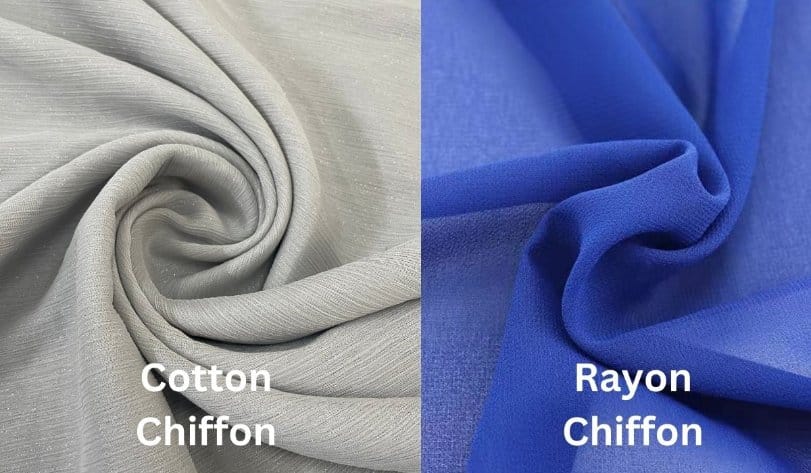
Rayon drapes beautifully like silk but costs less. It’s more breathable than polyester but less so than cotton. However, rayon production uses harsh chemicals that are bad for the environment and workers.
Rayon also wrinkles easily and can shrink significantly when washed. Cotton chiffon is more stable and easier to care for.
Cotton Chiffon vs Cotton Voile
Cotton voile is cotton chiffon’s close cousin. The main differences:
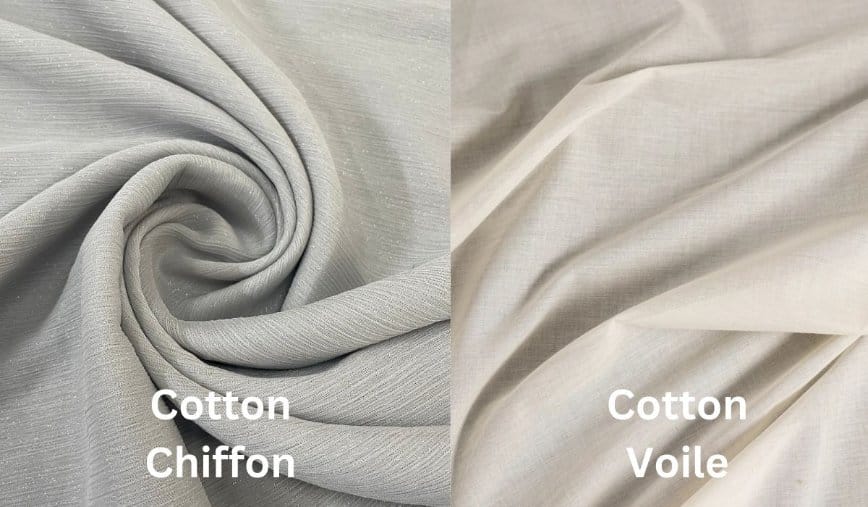
- Weave structure: Voile uses a simpler weave without the tight twist of chiffon yarns
- Texture: Voile is smoother; chiffon has that characteristic slight roughness
- Drape: Chiffon has more body and drapes with more structure
- Sheerness: Voile is typically more sheer and lighter
- Uses: Voile is often used for curtains and lightweight summer clothing; chiffon is more common for dresses and overlays
Both are great natural fabrics. Choose voile for a softer, more fluid drape, and chiffon when you want a bit more structure.
Cotton Chiffon vs Cotton Lawn
Cotton lawn is a plain weave cotton fabric that’s crisp and smooth:
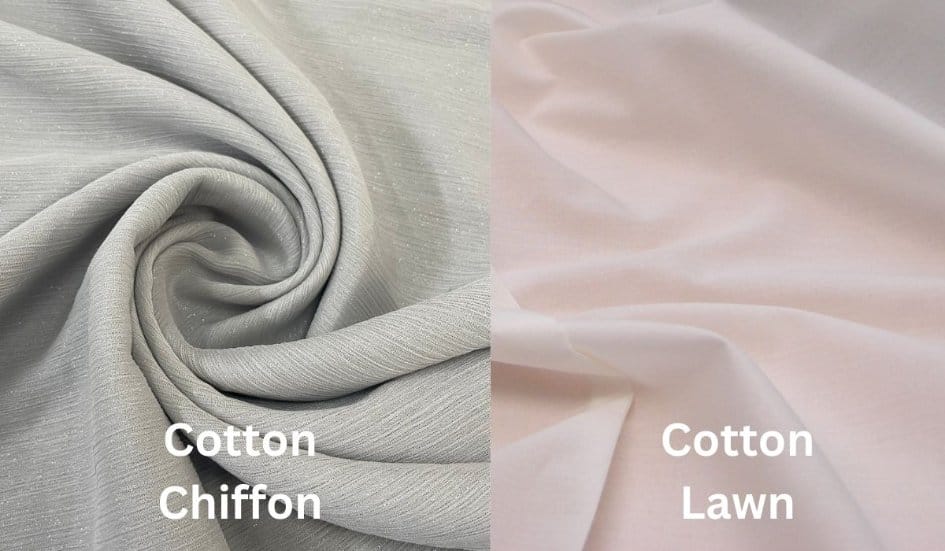
- Weight: Lawn is heavier and more opaque than chiffon
- Hand feel: Lawn has a crisp, smooth texture; chiffon is softer and slightly rough
- Drape: Lawn holds its shape better; chiffon flows more
- Uses: Lawn works for shirts, dresses, and summer clothing that needs more structure
If you want the airiness of chiffon but need more coverage or structure, cotton lawn is a good alternative.
Cotton Chiffon vs Georgette
Georgette is similar to chiffon but slightly heavier and more textured:
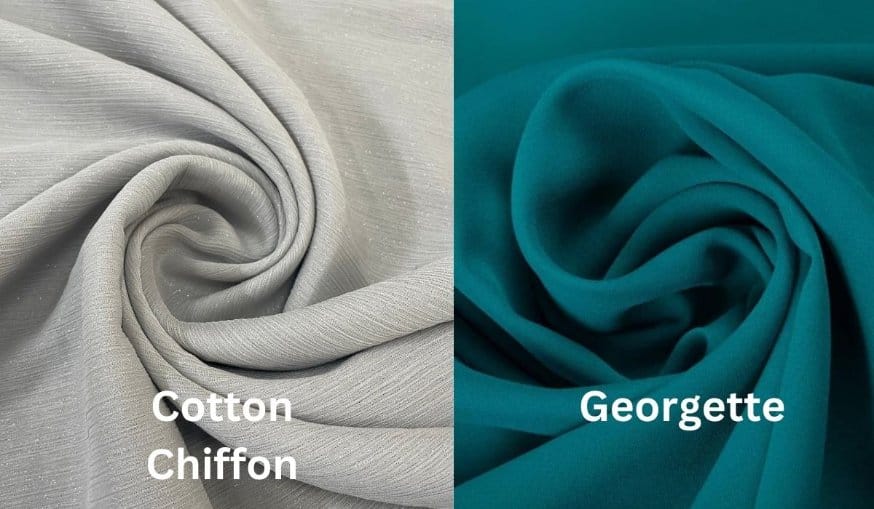
- Texture: Georgette has a more pronounced crinkly texture
- Weight: Georgette is heavier and less sheer
- Drape: Both drape well, but georgette has more body
- Uses: Georgette works better when you want the chiffon aesthetic but with more coverage
According to FabricLink, a leading textile resource, understanding these subtle differences between similar fabrics helps designers and sewers choose the right material for specific project requirements.
| Factor | Cotton Chiffon | Silk Chiffon | Polyester Chiffon | Cotton Voile | Cotton Lawn |
|---|---|---|---|---|---|
| Cost per yard | $8-15 | $30-50 | $3-8 | $6-12 | $8-15 |
| Breathability | Excellent | Very Good | Poor | Excellent | Excellent |
| Care difficulty | Easy | Hard | Easy | Easy | Easy |
| Appearance | Matte | Shimmer | Slight sheen | Matte | Smooth, crisp |
| Opacity | Semi-sheer | Very sheer | Sheer | Very sheer | More opaque |
| Drape | Flowing | Very fluid | Fluid | Very fluid | Structured |
| Best for | Summer wear | Formal wear | Budget projects | Lightweight layers | Structured garments |
Uses and Applications
Cotton chiffon’s unique combination of breathability, natural beauty, and washability makes it perfect for all sorts of projects. Let’s explore the possibilities.
Fashion and Clothing
Summer Dresses and Maxi Dresses
This is where cotton chiffon really shines. A cotton chiffon maxi dress keeps you cool on the hottest days while looking effortlessly elegant. The fabric’s natural drape creates beautiful movement, and unlike polyester, you won’t feel like you’re wearing plastic.

Cotton chiffon works for:
- Tiered maxi dresses
- Sundresses with gathered waists
- Beach cover-up dresses
- Casual daytime dresses
Blouses and Tops
Cotton chiffon blouses bridge the gap between casual and dressy. They’re breathable enough for everyday wear but elegant enough for the office. The matte finish means you can dress them up or down easily.
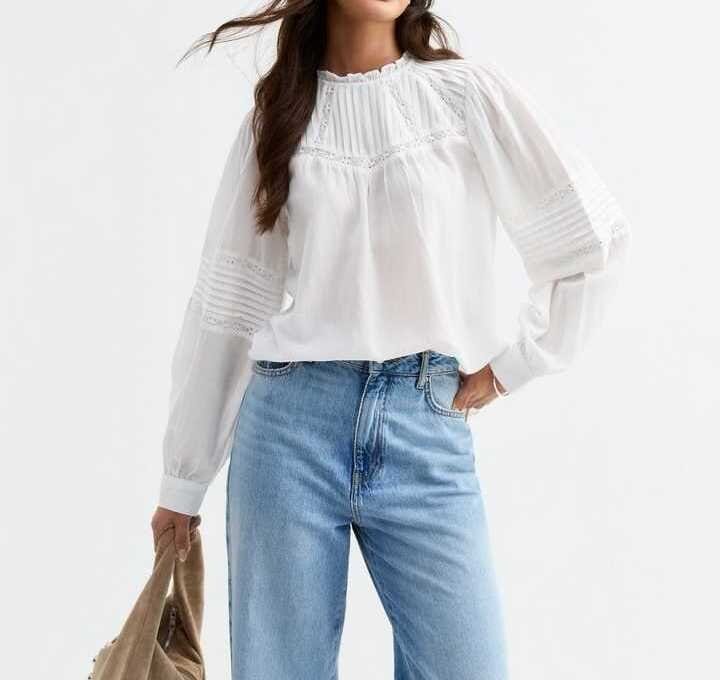
Popular styles include:
- Button-front shirts
- Peasant blouses with elastic necklines
- Flutter-sleeve tops
- Tie-front blouses
Children’s Clothing
Cotton chiffon is perfect for kids’ clothes because it’s machine washable and comfortable. Use it for:
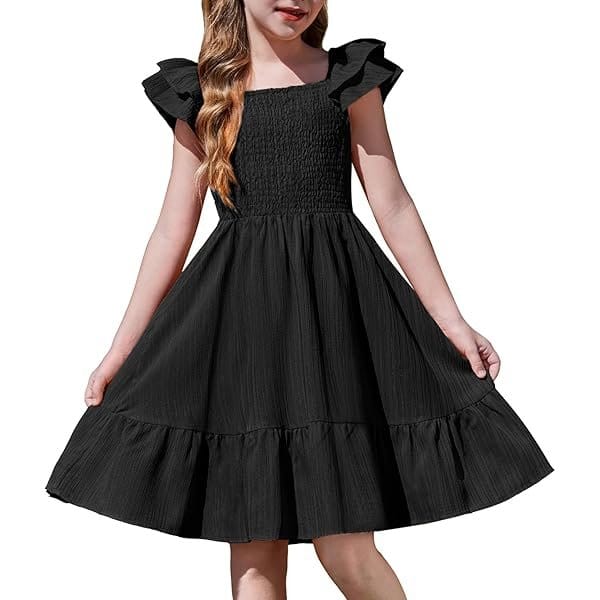
- Girls’ summer dresses
- Layered tutus and party dresses
- Lightweight robes
- Dress-up costumes
The breathability matters even more for children, who tend to run warmer and are more active than adults.
Scarves and Wraps
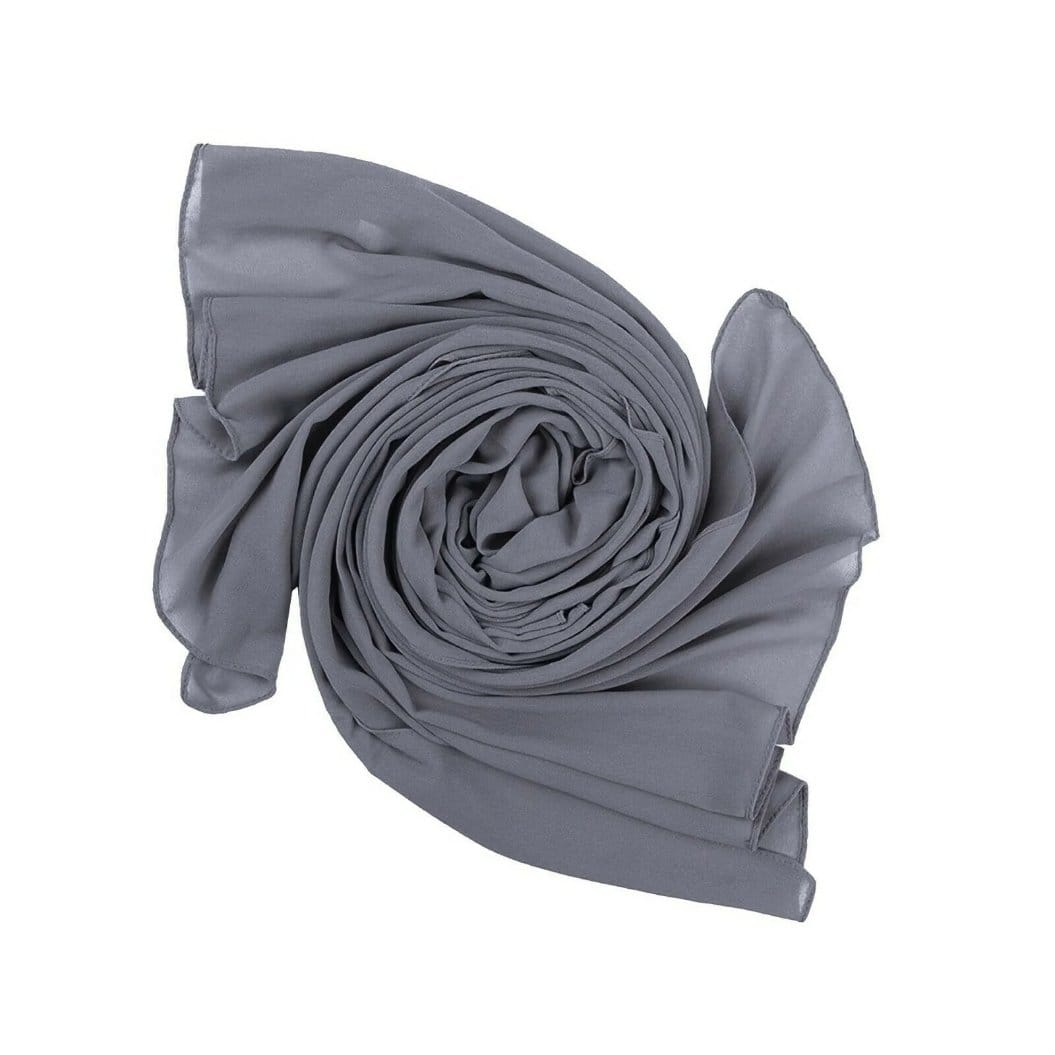
Cotton chiffon makes wonderful scarves. They’re light enough to wear year-round but provide just enough coverage. The matte finish looks sophisticated, and you can throw them in the wash when they get dirty.
Kimonos and Cover-Ups
The flowing drape of cotton chiffon is perfect for kimono-style jackets and beach cover-ups. These pieces work as both functional items and fashion statements.
Special Occasions
While silk might be the traditional choice for formal wear, cotton chiffon offers a beautiful alternative for:
- Casual bridesmaid dresses
- Garden party attire
- Outdoor wedding guest outfits
- Summer evening events
The breathability is especially appreciated for outdoor summer weddings.
Home Décor Applications
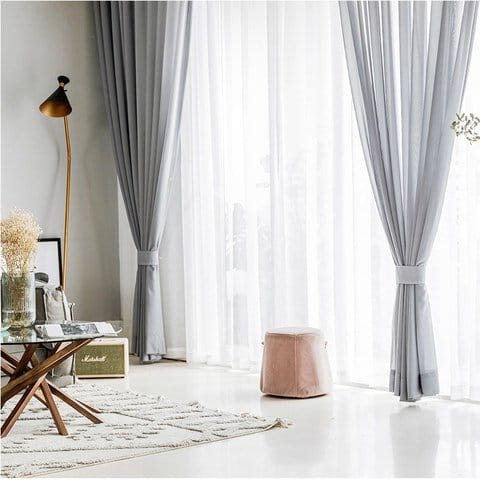
Sheer Curtains
Cotton chiffon makes beautiful window treatments that filter light while maintaining privacy. The best part? You can machine wash them when they get dusty, unlike silk or polyester sheers that need professional cleaning or look dingy after washing.
Canopy Bed Draping
Create a romantic bedroom atmosphere with cotton chiffon canopy draping. The fabric is light enough to drape elegantly but substantial enough to stay in place.
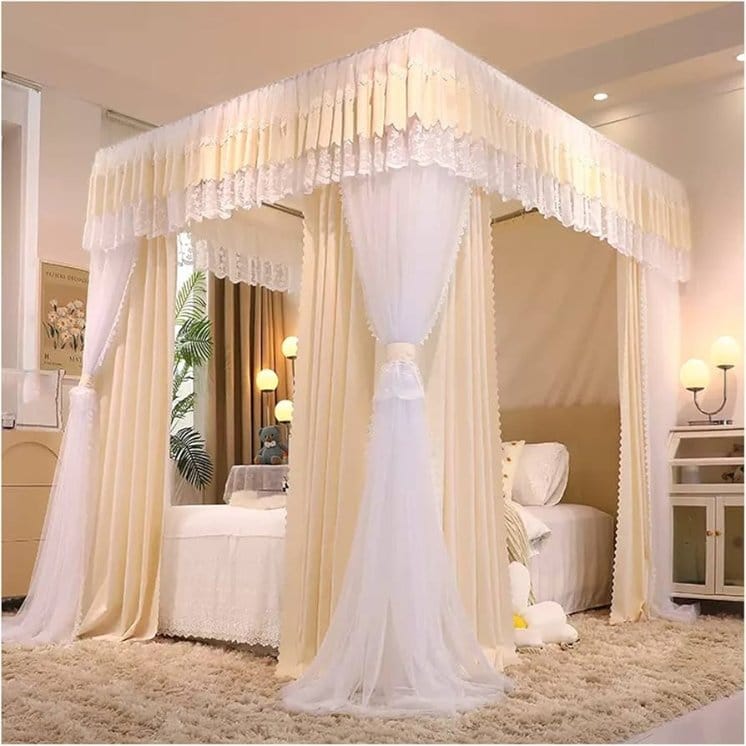
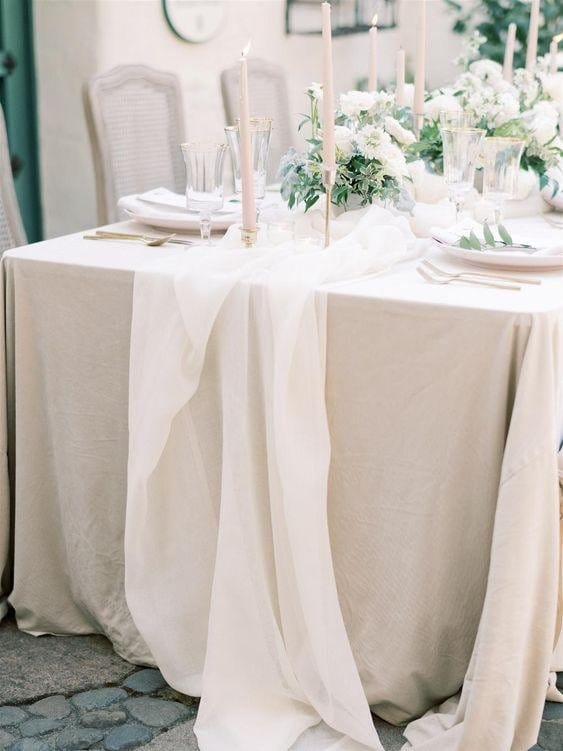
Table Runners and Overlays
For special events or elegant table settings, cotton chiffon table runners add a soft, sophisticated touch. The washability makes them practical for actual use, not just decoration.
Craft and Art Projects
Mixed Media Art
Artists use cotton chiffon for layering in mixed media pieces. The translucency adds depth without obscuring layers beneath.
Photography Backdrops
The matte finish of cotton chiffon makes it ideal for photography backgrounds. It doesn’t create hot spots or glare like shinier fabrics.
Fabric Flowers
Cotton chiffon works beautifully for creating delicate fabric flowers. The fabric holds shape when gathered and doesn’t fray as easily as some alternatives.
Project Ideas by Skill Level

Beginner Projects
- Simple scarf: Beginner Cut a rectangle and hem the edges. Great first project with cotton chiffon.
- Gathered skirt: Beginner Elastic waist, gathered tiers, simple hems.
- Curtain panels: Beginner Straight seams and rod pockets.
Intermediate Projects
- Kimono jacket: Intermediate Straight seams but requires attention to matching and finishing.
- Lined summer dress: Intermediate Working with both chiffon and lining fabric.
- Peasant blouse: Intermediate Elastic casing and gathered sleeves.
Advanced Projects
- Fully lined cocktail dress: Advanced French seams, multiple layers, fitted bodice.
- Pleated maxi skirt: Advanced Creating and maintaining pleats in chiffon.
- Ruffled blouse with multiple tiers: Advanced Precise gathering and layering.
Complete Care Instructions
One of cotton chiffon’s best features is that it’s much easier to care for than silk or even rayon chiffon. Here’s everything you need to know to keep your cotton chiffon looking beautiful.
Washing Cotton Chiffon
Machine Washing (Recommended Method)
Yes, you can machine wash cotton chiffon! This is what makes it so practical for everyday clothing.
- Pre-sort your laundry. Wash cotton chiffon with similar colors and lightweight fabrics. Don’t throw it in with heavy jeans or towels that can snag the delicate fabric.
- Use a mesh laundry bag. This protects the fabric from tangling and reduces friction that can cause pilling or damage.
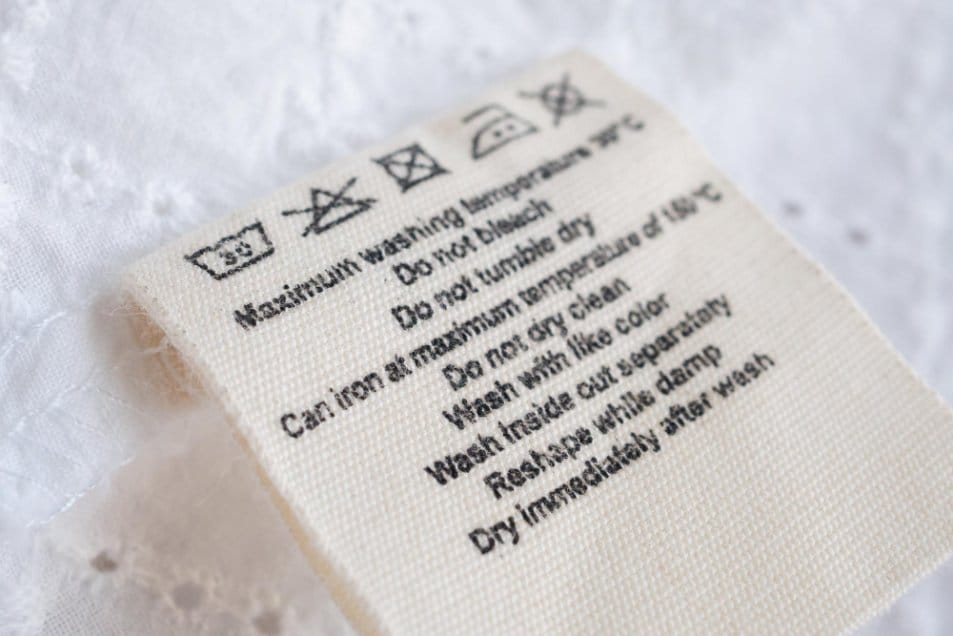
- Select gentle cycle with cold water. Hot water can cause cotton to shrink, so stick with cold or warm water (max 30°C/86°F).
- Add mild detergent. Use a gentle, liquid detergent. Avoid bleach or harsh stain removers unless the care label specifically says it’s okay.
- Skip the fabric softener. It’s unnecessary for cotton and can leave residue that affects the fabric’s drape.
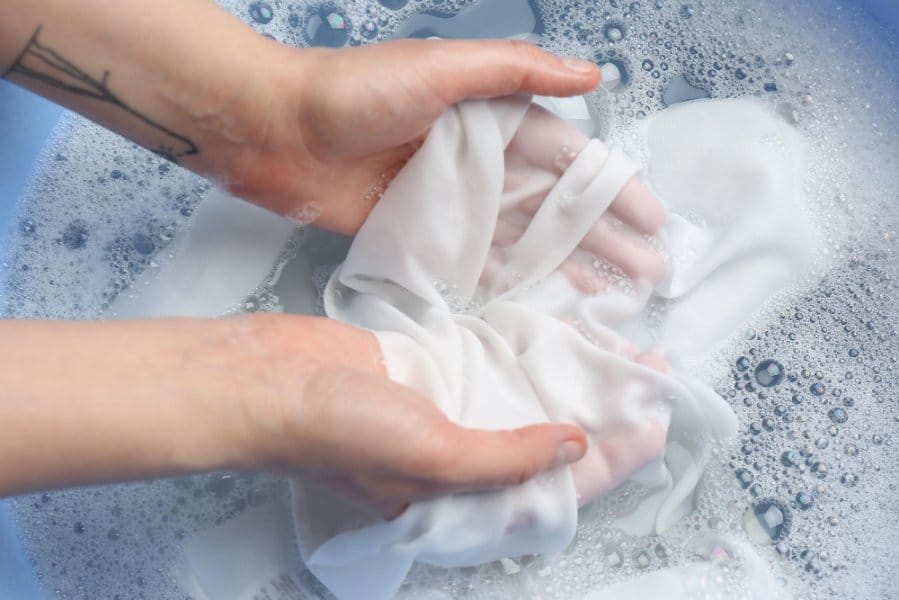
Hand Washing (Gentlest Option)
If you’re working with a special garment or very delicate cotton chiffon, hand washing is safest:
- Fill a clean sink or basin with cool water
- Add a small amount of gentle detergent
- Submerge the item and gently swish it around
- Let it soak for 10-15 minutes
- Gently squeeze the fabric (don’t wring or twist)
- Drain the soapy water and refill with clean water for rinsing
- Repeat the rinse until water runs clear
First Wash Warning
Cotton chiffon may shrink 2-5% on the first wash. Always wash fabric before cutting and sewing, or buy an extra 10% to account for shrinkage if pre-washing isn’t possible.
Drying Cotton Chiffon
Air Drying (Best Method)
Air drying helps cotton chiffon maintain its shape and prevents excessive shrinkage:
- Lay flat to dry on a clean towel for best results
- Hang on a padded hanger if you need to save space (avoid wire hangers that can create marks)
- Keep out of direct sunlight which can fade colors over time
- Allow plenty of time – cotton chiffon can take 4-8 hours to dry completely
Tumble Drying
You can use a dryer, but with caution:
- Use the lowest heat setting (air dry or delicate)
- Remove the item while it’s still slightly damp
- Never use high heat – it will shrink and damage the fabric
- Take it out promptly to avoid wrinkles
That said, air drying really is better for extending the life of your cotton chiffon.
Ironing and Pressing
Cotton chiffon wrinkles more than synthetic chiffon but less than silk. Here’s how to handle it:
Iron Settings
- Use medium heat (cotton setting on most irons)
- Iron while the fabric is still slightly damp, or use a spray bottle
- Always use a pressing cloth or iron on the wrong side
- Never leave the iron sitting in one spot – keep it moving
Steaming Alternative
Steaming works wonderfully for cotton chiffon and is actually easier than ironing:
- Hang the garment in your bathroom while you shower (free steaming!)
- Use a hand steamer, holding it 6-8 inches from the fabric
- Let the garment dry completely before wearing
Stain Removal
Treat stains quickly for best results:
For Fresh Stains
- Blot (don’t rub) the stain immediately
- Run cold water through the back of the stain
- Apply a small amount of mild detergent
- Gently work it in with your fingers
- Rinse thoroughly
- Wash as normal
For Set-In Stains
Try a paste of baking soda and water:
- Mix baking soda with just enough water to make a paste
- Apply to the stain
- Let sit for 30 minutes
- Rinse well
- Wash as usual
Avoid chlorine bleach on cotton chiffon. If you need a bleaching agent, use oxygen bleach (like OxiClean) following package directions carefully.
Storage
Short-Term Storage
- Hang on padded or wooden hangers
- Give items space – don’t cram your closet
- Keep away from direct sunlight
Long-Term Storage
- Clean items before storing (stains worsen over time)
- Fold in acid-free tissue paper
- Store in breathable cotton bags or boxes
- Avoid plastic bags which trap moisture
- Add cedar blocks or lavender sachets (not mothballs) to deter pests
- Store in a cool, dry place
Common Problems and Solutions
Problem: Shrinkage
Prevention: Always pre-wash fabric before sewing. Wash finished garments in cold water and air dry.
Fix: If a garment has shrunk, you can try gently stretching it while damp and letting it air dry. This sometimes works but results vary.
Problem: Pilling
Prevention: Wash inside out in a mesh bag. Don’t wash with rough fabrics.
Fix: Use a fabric shaver or sweater stone to gently remove pills.
Problem: Color Fading
Prevention: Wash in cold water, dry in shade, store away from sunlight.
Fix: Once color has faded, you can try fabric dye, but prevention is really the key.
Problem: Wrinkling
Prevention: Take items out of the dryer promptly. Hang immediately after washing.
Fix: Steam or iron with a pressing cloth.
How to Sew with Cotton Chiffon
Cotton chiffon is easier to sew than silk chiffon but still needs special attention. The good news? With the right techniques, even beginners can create beautiful projects.

Before You Start: Essential Tools
Having the right tools makes all the difference when working with cotton chiffon:
Cutting Tools
- Sharp fabric scissors or rotary cutter: Dull blades create ragged edges that fray more easily
- Self-healing cutting mat: If using a rotary cutter
- Pattern weights: Better than pins for holding pattern pieces in place
- Tissue paper: Place under fabric when cutting to prevent slipping
Sewing Tools
- Sharp microtex needles: Size 60/8 or 70/10 work best
- Fine thread: 50-weight cotton or polyester thread in a matching color
- Fine pins: Silk pins or extra-fine quilting pins won’t leave holes
- Fabric clips: Alternative to pins that won’t damage the fabric
- Walking foot (optional but helpful): Feeds both layers evenly
Preparing Your Fabric
Pre-Washing
Always pre-wash cotton chiffon before cutting. Remember, it can shrink 2-5% on first wash. Machine wash on gentle cycle with cold water, then air dry or tumble dry on low heat.
Pressing
Press your fabric before cutting to remove any wrinkles or creases from storage. Use medium heat with a pressing cloth.
Grain Line
Check that your fabric is on-grain before cutting. The lengthwise and crosswise threads should be perpendicular. If not, gently pull the fabric diagonally to straighten it.
Cutting Cotton Chiffon
Cutting accurately is half the battle with any sheer fabric:
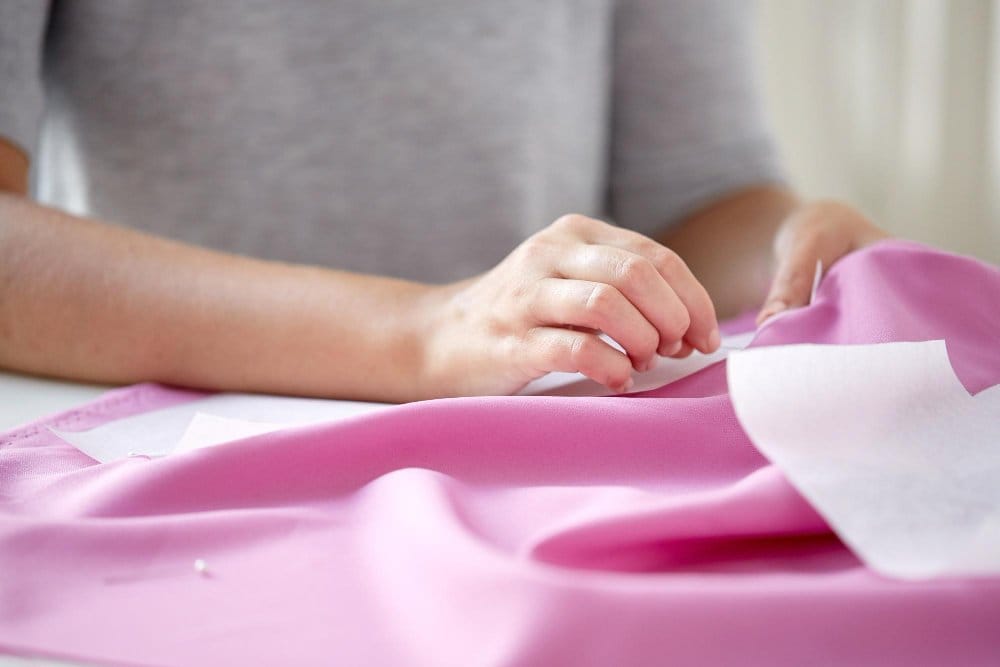
- Use tissue paper underneath. Lay tissue paper on your cutting surface, place the cotton chiffon on top, then position your pattern pieces. Cut through all layers at once.
- Weight, don’t pin. Use pattern weights or small cans to hold pattern pieces in place. If you must pin, pin only within seam allowances.
- Cut single layers. Don’t try to cut two layers at once like you might with heavier fabrics. Cotton chiffon is less slippery than silk, but it can still shift.
- Use sharp tools. Change rotary cutter blades regularly or make sure scissors are sharp.
- Cut slowly and carefully. Take your time. Rushing leads to mistakes.
Marking
Traditional marking methods work on cotton chiffon:
- Tailor’s tacks: The safest method for delicate fabrics
- Water-soluble fabric pens: Test on a scrap first to make sure marks come out
- Chalk: Use lightly and brush off excess
- Avoid: Tracing wheels that can snag or damage the fabric
Sewing Techniques
Machine Settings
- Needle: New size 60/8 or 70/10 microtex or sharp needle
- Stitch length: 1.5-2.0mm (12-20 stitches per inch)
- Thread tension: Slightly looser than normal to prevent puckering
- Presser foot pressure: Reduce if your machine allows it
- Speed: Sew slowly for better control
Preventing Puckering
Puckered seams are the most common problem when sewing chiffon:
- Use tissue paper under the fabric when sewing – tear it away afterward
- Don’t pull or push the fabric through the machine
- Hold the fabric taut (but not stretched) in front of and behind the presser foot
- Test stitch length and tension on scraps first
- Consider using a walking foot
Starting and Stopping
- Don’t backstitch at seam ends (it can cause bunching)
- Instead, leave long thread tails and tie knots by hand
- Or reduce stitch length to 1.0mm for the first and last ½ inch
Seam Finishes
Because cotton chiffon is sheer, seam finishes will show. Choose methods that look neat from both sides.
French Seams (Best Option)
French seams hide raw edges completely and look professional:
- Place fabric pieces wrong sides together
- Sew a ¼ inch seam
- Trim seam allowance to ⅛ inch
- Press seam to one side
- Fold fabric so right sides are together, with seam at the edge
- Sew another seam, ⅜ inch from the folded edge
- Press to one side
The raw edges are now enclosed inside the seam. Check out our detailed French seam tutorial for step-by-step photos.
Rolled Hem Foot
For edges and hems, a rolled hem foot creates a tiny, neat finish:
- Trim your hem allowance to ¼ inch
- Feed the fabric into the rolled hem foot
- Sew slowly, guiding the fabric gently
Narrow Hem (Without Special Foot)
If you don’t have a rolled hem foot:
- Press under ¼ inch
- Stitch close to the fold (⅛ inch from edge)
- Trim close to stitching
- Press under another ¼ inch
- Stitch close to the inner fold
Handling Curves and Gathering
Curved Seams
- Sew slowly around curves
- Clip (but don’t cut through) seam allowances on inside curves
- Notch (remove small triangles) from outside curves
- Press carefully to set the shape
Gathering
Cotton chiffon gathers beautifully:
- Sew two rows of long basting stitches (4-5mm) within the seam allowance
- Leave long thread tails
- Pull both bobbin threads together to gather
- Distribute gathers evenly
- Pin to the corresponding piece
- Stitch between the two gathering rows with normal stitch length
Working with Linings
Many cotton chiffon projects benefit from lining:
- Choose lightweight lining fabrics like cotton batiste or silk
- Treat chiffon and lining as one fabric when sewing
- Or construct them separately and attach at neckline and armholes
Common Sewing Problems and Fixes
Problem: Fabric Getting Sucked Into the Needle Plate
Solution: Use a straight stitch needle plate if available. Or place tissue paper under the fabric when starting a seam.
Problem: Thread Showing Through on Right Side
Solution: Use finer thread and match the color exactly to your fabric. Consider silk thread for nearly invisible seams.
Problem: Edges Fraying While Working
Solution: Increase seam allowances to ⅝ inch instead of the standard ½ inch. Finish seams as you go rather than waiting until the end.
Problem: Needle Marks or Holes
Solution: Change to a newer, sharper needle. Use the smallest size that works. Test on scraps if unsure.
Styling and Fashion Guide
Cotton chiffon’s versatility means you can wear it almost anywhere. Here’s how to style it for different occasions and seasons.
Casual Everyday Wear
Cotton chiffon excels at casual-chic looks that feel effortless:
Summer Day Outfit
- Cotton chiffon peasant blouse
- Paired with denim shorts or jeans
- Sandals or espadrilles
- Straw bag and sunglasses
Beach or Vacation Look
- Cotton chiffon kimono over swimsuit
- Or loose chiffon pants with a tank top
- Flip-flops and a wide-brimmed hat
Weekend Errands
- Cotton chiffon tunic
- Leggings or skinny jeans
- Sneakers or flat sandals
- Crossbody bag
Work and Professional Settings
Cotton chiffon can work in business casual environments:
Office-Appropriate Outfit
- Solid-color cotton chiffon blouse (with a camisole underneath)
- Tailored pants or pencil skirt
- Closed-toe flats or low heels
- Structured blazer if needed
Stick to muted colors and simple patterns for professional settings. The key is ensuring you have enough coverage – always layer with a camisole or slip.
Special Occasions
Garden Party or Outdoor Wedding
- Cotton chiffon maxi dress in a floral print
- Wedge sandals
- Delicate jewelry
- Cotton chiffon wrap or shawl for evening
Casual Evening Out
- Cotton chiffon blouse in a jewel tone
- Black pants or a fitted skirt
- Heels or dressy flats
- Statement earrings
Seasonal Styling
Spring
- Layer cotton chiffon over long sleeves
- Use it for transitional pieces like light scarves
- Pair with boots early in the season, sandals later
Summer
- This is cotton chiffon’s prime season
- Wear alone for maximum breathability
- Choose light colors to reflect heat
- Multiple layers of chiffon create interest without heat
Fall
- Use cotton chiffon as an under-layer beneath cardigans
- Darker colors and richer patterns work well
- Pair with tights and boots
Winter
- Cotton chiffon works as a light layer under sweaters
- Save it for indoor events
- Or use it in climates with mild winters
Color and Pattern Choices
Solid Colors
- Neutrals (white, cream, beige, gray): Versatile, easy to style, can be dressed up or down
- Pastels: Perfect for spring and summer, romantic and feminine
- Jewel tones (emerald, sapphire, ruby): Rich colors for fall and evening wear
- Black or navy: More formal, works well for dressy occasions
Prints and Patterns
- Florals: Classic chiffon choice, best in spring and summer
- Abstract prints: Modern and artistic
- Geometric patterns: Add visual interest
- Tie-dye or ombre: Bohemian and casual
Layering Techniques
Cotton chiffon layers beautifully:
- Under: Wear a camisole or slip for coverage
- Over: Layer cotton chiffon over fitted basics for added interest
- Between: Use as a middle layer between a tank and cardigan
- Multiple chiffon layers: Create depth by layering chiffon pieces in complementary colors
Complementary Fabrics
Cotton chiffon pairs well with:
- Denim: The contrast between structured and flowing creates balance
- Cotton knits: Both are breathable and comfortable
- Linen: Another natural fiber that shares chiffon’s casual elegance
- Leather or faux leather: Adds edge to soft chiffon
Body Type Considerations
Cotton chiffon flatters many body types when styled correctly:
Petite
- Choose chiffon pieces that end at natural breaks (waist, knee) to avoid being overwhelmed
- Fitted underlayers prevent looking shapeless
- Avoid very voluminous styles
Curvy
- Cotton chiffon’s drape is flattering on curves
- Look for styles with defined waists
- Use structured underlayers for support
- Fitted sleeves with flowing body works well
Athletic/Straight
- Gathered or ruffled styles add curves
- Empire waists create the illusion of shape
- Layered looks add dimension
History and Cultural Significance
Understanding where cotton chiffon comes from helps you appreciate this beautiful fabric even more.
The Origins of Chiffon
Chiffon’s story begins in ancient China, where silk weavers developed techniques for creating incredibly fine, sheer fabrics. The word “chiffon” itself comes from the French word “chiffe,” meaning “cloth” or “rag” – an ironic name for such an elegant fabric.
By the 1700s, French silk weavers had perfected the chiffon weaving process. The fabric became a symbol of luxury and high social status in Europe. Only the wealthy could afford garments made from this delicate, expensive material.
Cotton Enters the Picture
For over 200 years, chiffon was made exclusively from silk. Cotton chiffon didn’t come along until textile manufacturers began experimenting with applying traditional chiffon weaving techniques to different fibers.
The development of cotton chiffon served several purposes:
- Accessibility: Cotton cost less than silk, making chiffon-style fabrics available to more people
- Practicality: Cotton’s durability and washability made chiffon suitable for everyday wear
- Climate considerations: In hot, humid regions, cotton’s breathability made it more comfortable than silk
The Synthetic Revolution
When nylon was invented in 1938, manufacturers quickly adapted it for chiffon production. Polyester chiffon followed in 1958. These synthetic versions became incredibly popular because they were cheap, durable, and wrinkle-resistant.
For a while, natural fiber chiffons like cotton and silk became less common. Why buy expensive, delicate cotton chiffon when polyester was easier and cheaper?
The Natural Fiber Renaissance
In the last 20 years, we’ve seen a swing back toward natural fibers. People have become more aware of:
- The environmental problems with synthetic fabrics
- The comfort benefits of natural fibers
- The quality difference between natural and synthetic materials
This shift has brought cotton chiffon back into the spotlight. It represents a middle ground – more affordable than silk but more sustainable than polyester.
Cotton Chiffon Around the World
India
Indian textile traditions have long used lightweight cotton fabrics similar to chiffon. Cotton chiffon works perfectly for the country’s hot climate and fits naturally into traditional garment styles like dupattas and sarees.
Middle East
Cotton chiffon’s breathability and modest coverage make it popular for traditional clothing in hot desert climates.
Western Fashion
In Europe and America, cotton chiffon has found its place in casual fashion. The bohemian and natural fashion movements of the 1970s embraced it, and it has remained popular for relaxed, comfortable style.
Modern Day
Today, cotton chiffon represents several trends coming together:
- The move toward sustainable fashion
- The desire for natural, breathable fabrics
- The popularity of soft, flowing silhouettes
- The DIY and home sewing movement
Fashion designers increasingly specify natural fiber content in their collections. Cotton chiffon allows them to create beautiful, flowing garments while meeting consumer demands for sustainability.
Cost Analysis and Where to Buy
Understanding what you should pay for cotton chiffon helps you make smart buying decisions.
Price Ranges Explained
As of 2025, cotton chiffon typically costs:
Budget Range: $5-8 per yard
- What you get: Basic cotton chiffon, often using medium-staple cotton
- Thread count: 150-200
- Best for: Practice projects, costume pieces, items you’ll wear a few times
- Watch out for: Lower quality may pill more, shrink unevenly, or have weave inconsistencies
Mid-Range: $8-15 per yard
- What you get: Good quality cotton chiffon suitable for most projects
- Thread count: 200-300
- Best for: Everyday clothing, home décor, most sewing projects
- Value: This is the sweet spot for quality vs. cost
Premium: $15-25+ per yard
- What you get: High-end cotton chiffon using long-staple cotton (Egyptian, Pima, Supima)
- Thread count: 300-400+
- Best for: Special occasion garments, heirloom pieces, when you want the absolute best
- Worth it when: The garment is something you’ll wear for years
Cost Comparison: Cotton vs Other Chiffon Types
| Fabric Type | Price Per Yard | Cost Per Wear* | Lifespan |
|---|---|---|---|
| Budget Polyester Chiffon | $3-6 | $0.60-1.20 | 1-2 years |
| Cotton Chiffon | $8-15 | $0.40-0.75 | 3-5 years |
| Silk Chiffon | $30-50 | $1.00-2.00 | 5-7 years (with care) |
*Cost per wear assumes 50 wears for polyester, 100 wears for cotton, 75 wears for silk (less frequent due to dry cleaning)
Where to Buy Cotton Chiffon
Online Retailers
Specialty Fabric Stores:
- Mood Fabrics (moodfabrics.com) – Wide selection, detailed descriptions
- Fabric.com – Good variety at mid-range prices
- Organic Cotton Plus (organiccottonplus.com) – Focus on organic options
Advantages: Wide selection, easy to compare prices, detailed specifications
Disadvantages: Can’t feel the fabric before buying, shipping costs
Tips for online buying:
- Always order swatches first when possible
- Read customer reviews carefully
- Check the return policy
- Factor in shipping costs when comparing prices
Local Fabric Stores
Advantages: Feel the fabric, get advice from staff, no shipping costs, immediate availability
Disadvantages: More limited selection, often higher prices
Call ahead to ask if they carry cotton chiffon. Not all stores stock it regularly.
Wholesale Suppliers
If you’re buying in bulk (usually 20+ yards or for commercial use):
- Direct textile importers
- Wholesale fabric suppliers
- Manufacturer contacts
Advantages: Much lower per-yard cost, ability to request specific specifications
Disadvantages: High minimum orders, longer lead times
How Much Fabric Do You Need?
Cotton chiffon typically comes in 44-60 inch widths. Here are rough estimates:
- Simple scarf: 0.5-1 yard
- Blouse: 2-3 yards
- Simple skirt: 2-3 yards
- Maxi dress: 4-6 yards
- Kimono: 2.5-3.5 yards
- Sheer curtain panel (per panel): Length + 12 inches
Always buy an extra 10-20% for:
- Pattern matching if using prints
- Mistakes or adjustments
- Shrinkage
- Testing seams and techniques
Timing Your Purchase
Save money by shopping strategically:
- End of season sales: Buy cotton chiffon at the end of summer when stores clear inventory
- Holiday sales: Major holidays often bring fabric store discounts
- Remnant bins: Perfect for small projects or testing techniques
- Sign up for newsletters: Online retailers often send discount codes to subscribers
Is It Worth the Cost?
Cotton chiffon costs more than polyester but less than silk. Here’s when it’s worth the investment:
- You’ll wear the garment regularly in warm weather
- You value natural, sustainable materials
- You want the look of chiffon with easy care
- You’re making clothing for children (washability matters)
- You prefer natural fibers against your skin
On the other hand, polyester chiffon might make more sense for:
- Costumes or one-time wear items
- When wrinkle resistance is critical
- Learning to sew with chiffon (practice on cheaper fabric first)
Frequently Asked Questions
Cotton chiffon is semi-sheer, meaning you can see through it to some degree, but it’s more opaque than silk or polyester chiffon. The exact transparency depends on the weight (GSM) and color. Darker colors are less see-through than light colors. For most clothing applications, you’ll want to use a slip, camisole, or lining underneath for appropriate coverage.
Yes! This is one of cotton chiffon’s best features. Use cold water, gentle cycle, and place the item in a mesh laundry bag. Air drying is best, but you can tumble dry on low heat if needed. This makes cotton chiffon much more practical than silk chiffon, which typically requires dry cleaning.
Cotton chiffon does wrinkle, but less than silk chiffon and more than polyester chiffon. Wrinkles usually fall out as you wear the garment, or you can steam them out easily. Hanging items promptly after washing helps prevent deep wrinkles. The slight rumpled look is often part of cotton chiffon’s casual charm.
Cotton chiffon has a slight give due to the twisted yarn structure, but it’s not stretchy like knit fabrics. It has about 2-5% stretch in both directions. This slight stretch helps the fabric drape nicely and allows for some ease of movement, but don’t count on it to stretch around your body like jersey or spandex would.
Both are lightweight cotton fabrics, but cotton chiffon uses highly twisted yarns that create a slightly textured surface and more structured drape. Cotton voile uses regular yarns in a plain weave, resulting in a smoother, softer feel and more fluid drape. Voile is typically lighter and sheerer than chiffon. Chiffon has more body, making it better for garments that need some structure.
Cotton chiffon typically weighs between 30-60 grams per square meter (GSM). The most common and versatile weight for clothing is 40-50 GSM. Lighter weights (30-40 GSM) are very sheer and best for overlays or scarves. Heavier weights (50-60 GSM) provide more coverage and work well for garments where you want less transparency.
High-quality cotton chiffon made from long-staple cotton (Egyptian or Pima) resists pilling well. Lower-quality cotton chiffon using short-staple fibers may develop some pilling over time, especially in high-friction areas. You can reduce pilling by washing in a mesh bag, avoiding washing with rough fabrics, and turning garments inside out. Pills that do form can be removed with a fabric shaver.
Yes, cotton chiffon takes dye very well. You can use fiber reactive dyes (like Procion MX), natural dyes, or all-purpose dyes. Follow the dye manufacturer’s instructions carefully. Pre-wash the fabric to remove any sizing or finishes. The delicate nature of chiffon means you should handle it gently during the dyeing process to avoid stretching or damaging the fabric.
Cotton chiffon is excellent for summer. The natural cotton fibers breathe well and wick moisture away from your skin, keeping you cool. The lightweight, open weave allows air to circulate. This makes cotton chiffon one of the best fabric choices for hot weather clothing. It’s much more comfortable than polyester chiffon in heat and humidity.
Use French seams to enclose raw edges, which both prevents fraying and looks professional. For edges that won’t be seamed, use a narrow rolled hem. You can also treat cut edges with a tiny amount of fray check solution, though test it first on a scrap to make sure it doesn’t show or stiffen the fabric. When cutting, use very sharp scissors or a rotary cutter, and increase seam allowances to ⅝ inch to give yourself more room.
Use fine, high-quality thread in 50 or 60 weight. Cotton or polyester thread both work well – choose cotton for an all-natural garment or polyester for slightly stronger seams. Match the thread color exactly to your fabric. For nearly invisible seams on very delicate projects, consider silk thread. Avoid heavy or thick threads, which will show through the sheer fabric.
You can put cotton chiffon in the dryer, but air drying is better for the fabric’s longevity. If you do use a dryer, choose the lowest heat setting (air dry or delicate) and remove the item while still slightly damp. High heat will cause excessive shrinkage and can damage the delicate fibers over time. Air drying prevents shrinkage and keeps the fabric looking its best longer.
Cotton chiffon typically shrinks 2-5% on the first wash, mostly in length rather than width. This is why pre-washing your fabric before sewing is so important. After the first wash, shrinkage is minimal if you continue washing in cold water. If you can’t pre-wash, buy an extra 10% beyond what your pattern calls for to account for shrinkage.
Use a sharp or microtex needle in size 60/8 or 70/10. The sharp point pierces the tightly twisted fibers cleanly without snagging. Always use a new needle – even slightly dull needles can catch and damage the delicate fabric. Change your needle after every project or every 8 hours of sewing, whichever comes first.
Cotton chiffon is more sustainable than polyester or other synthetic chiffon types because it’s made from a renewable, biodegradable natural fiber. However, conventional cotton farming uses significant water and often pesticides. For the most sustainable choice, look for organic cotton chiffon with GOTS certification. Cotton chiffon’s durability and machine washability also contribute to sustainability – garments last longer and don’t require energy-intensive dry cleaning.
Yes, you can iron cotton chiffon using medium heat (the cotton setting on your iron). Always use a pressing cloth or iron on the wrong side to prevent shine or scorch marks. Iron while the fabric is slightly damp, or use steam. Keep the iron moving – don’t let it sit in one spot. Steaming is often easier and safer than ironing for delicate cotton chiffon items.
The main differences are breathability, sustainability, and care. Cotton chiffon breathes naturally and keeps you cool, while polyester traps heat and can feel clammy. Cotton is biodegradable; polyester is plastic. Cotton chiffon has a matte appearance; polyester has a slight sheen. Both are machine washable, but polyester dries faster and wrinkles less. Cotton feels more natural against skin, while polyester can feel synthetic. Choose cotton for comfort and sustainability, polyester for durability and wrinkle resistance.
Place tissue paper under the cotton chiffon on your cutting mat. Use pattern weights instead of pins to hold pattern pieces in place. Sharp scissors or a rotary cutter work best. Cut single layers rather than trying to cut through two layers at once. Work slowly and keep one hand on the fabric to steady it as you cut. Some sewers spray the fabric lightly with starch or water to add temporary stiffness, though this isn’t necessary for cotton chiffon, which is less slippery than silk.
Cotton chiffon can work in winter as a layering piece, but it’s not warm enough on its own for cold weather. Layer it under cardigans or jackets, or wear it for indoor winter events. In mild winter climates, cotton chiffon with tights and boots works fine. Save your cotton chiffon for spring, summer, and early fall when you’ll appreciate its breathability and light weight most.
Cotton chiffon is semi-sheer, so whether you need lining depends on the weight of your fabric, the color, and where you’re wearing it. Darker colors and heavier weights may not need lining. Light colors and lightweight cotton chiffon usually look better and more appropriate with a lining or slip underneath. For casual wear, a simple camisole often provides enough coverage. For more formal settings, a proper lining is recommended.
Conclusion
Cotton chiffon brings together the best of both worlds – the romantic, flowing elegance of traditional chiffon with the practical, breathable comfort of natural cotton. Throughout this guide, we’ve explored everything from its unique properties to how to care for it and sew with it.
What makes cotton chiffon special isn’t just one thing. It’s the combination of breathability that keeps you cool on hot days, the matte finish that photographs beautifully and works for casual settings, the washability that makes it practical for everyday wear, and the natural sustainability that lets you feel good about your fashion choices.
Yes, cotton chiffon costs more than polyester and needs more careful handling than denim. But the investment pays off in comfort, longevity, and environmental impact. A well-made cotton chiffon garment, properly cared for, will serve you for years while looking effortlessly elegant.
Key Takeaways
If you’re shopping for cotton chiffon:
- Look for fabric in the 40-50 GSM range for the best balance of sheerness and wearability
- Choose long-staple cotton (Egyptian or Pima) if your budget allows
- Order swatches before buying yardage, especially when shopping online
- Consider organic cotton chiffon for the most sustainable choice
- Expect to pay $8-15 per yard for good quality
If you’re sewing with cotton chiffon:
- Always pre-wash your fabric to account for shrinkage
- Use sharp microtex needles (size 60/8 or 70/10) and change them frequently
- Master French seams for professional-looking results
- Work slowly and patiently – rushing leads to mistakes
- Start with simpler projects to build confidence before trying complex patterns
If you’re caring for cotton chiffon:
- Machine wash on gentle cycle with cold water in a mesh bag
- Air dry when possible to extend fabric life
- Iron with medium heat and a pressing cloth, or steam instead
- Store hung or folded with tissue paper for long-term storage
If you’re choosing between fabric types:
- Pick cotton chiffon over polyester for breathability, sustainability, and natural aesthetics
- Choose cotton chiffon over silk when you need washable, everyday-wear elegance at a moderate price
- Consider cotton chiffon your go-to for summer clothing, children’s items, and bohemian styles
The fashion industry is slowly shifting toward more sustainable, natural materials. By choosing cotton chiffon, you’re part of that positive change. You’re supporting natural fiber production, reducing plastic pollution, and choosing quality over disposability.
Whether you’re making your first simple scarf or designing an entire summer wardrobe, cotton chiffon offers possibilities that are hard to match with other fabrics. Its gentle drape, comfortable feel, and natural beauty make it worth the extra care it requires.
Start small if you’re new to this fabric. Make a scarf or simple top. Get comfortable with how it handles. Learn to work with its quirks. Once you do, you’ll find yourself reaching for cotton chiffon again and again.
The best time to start your cotton chiffon journey is now. Summer is coming, and there’s nothing quite like the feeling of wearing something you’ve made yourself from this beautiful, natural fabric. Your wardrobe – and the planet – will thank you.