
Discover why alpaca wool is revolutionizing sustainable fashion with its exceptional warmth, luxury softness, and eco-friendly production
Table of Contents
- What Is Alpaca Wool Fabric?
- The Rich History of Alpaca Wool
- Unique Properties & Benefits
- Sustainability Deep-Dive
- Comprehensive Fabric Comparisons
- Types & Grades of Alpaca Wool
- Uses & Applications
- Complete Care Instructions
- Smart Buying Guide
- How to Tell If Alpaca Wool Is Real
- What Are the Disadvantages?
- Frequently Asked Questions
- Conclusion
Alpaca wool has been treasured for thousands of years, dating back to the ancient Inca civilization where it was reserved exclusively for royalty. Today, this remarkable fabric is experiencing a renaissance as consumers seek sustainable, high-quality alternatives to conventional materials. Whether you’re drawn to its exceptional warmth, buttery softness, or eco-friendly credentials, alpaca wool offers a unique combination of luxury and practicality that’s hard to beat.
In this guide, you’ll learn everything you need to know about alpaca wool fabric, from its unique fiber structure to proper care techniques, sustainability benefits, and how it compares to other luxury fibers like merino wool and cashmere.
What Is Alpaca Wool Fabric?
Alpaca wool is a natural textile made from the soft, silky fleece of alpacas, domesticated members of the camel family native to the high-altitude regions of the Andes Mountains in South America. Peru is home to about 87% of the world’s alpaca population, making it the leading producer of this luxury fiber.
Unlike traditional sheep’s wool, alpaca fiber has a unique structure that sets it apart. The fibers are hollow, containing microscopic air pockets that provide outstanding insulation while remaining remarkably lightweight. This hollow core is what makes alpaca wool so special: it traps warm air close to your body in cold weather and releases excess heat when temperatures rise.
The Two Breeds: Huacaya vs Suri
There are two types of alpacas, and each produces distinct wool:
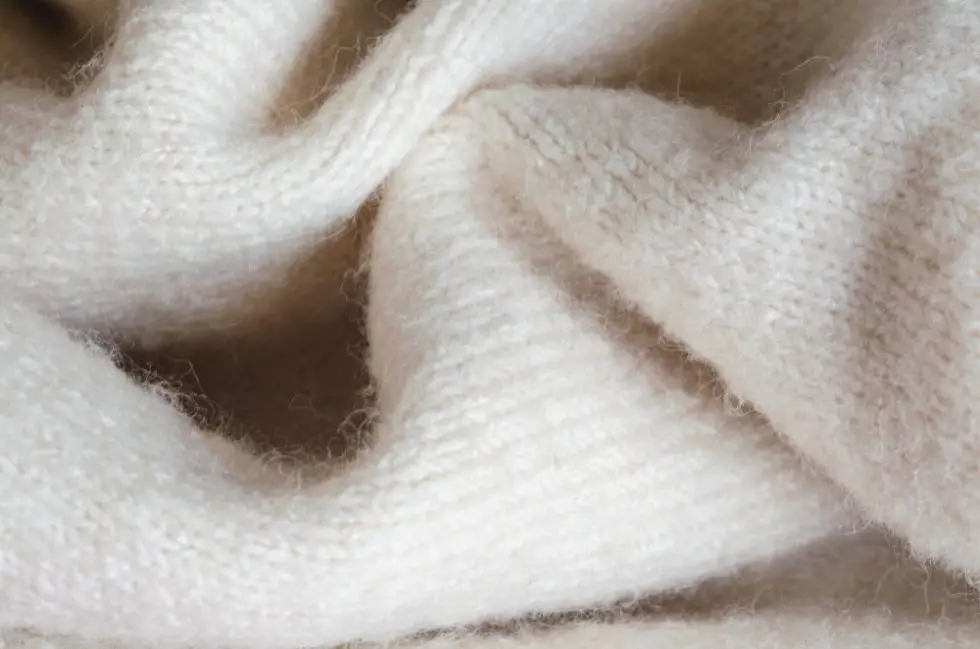
Huacaya Alpacas make up about 90% of the alpaca population. Their fleece has a natural crimp (waviness) that gives it a fluffy, cloud-like appearance. Huacaya fiber is denser and slightly thicker, making it perfect for cozy sweaters, scarves, and blankets.
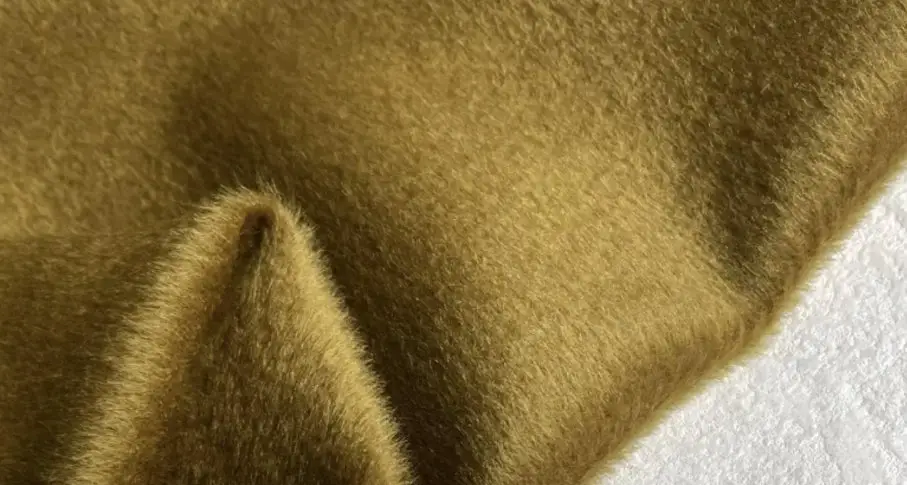
Suri Alpacas are rarer, accounting for only about 10% of alpacas. Their fiber grows in long, silky locks that hang straight down, similar to dreadlocks but without the matting. Suri fiber is incredibly lustrous and smooth, often used for high-end fashion garments, elegant suits, and luxury accessories.
Understanding Alpaca Wool Grades
Not all alpaca wool is created equal. The industry uses a grading system based on fiber diameter, measured in microns (one millionth of a meter):
| Grade | Fiber Diameter | Characteristics | Common Uses |
|---|---|---|---|
| Royal Alpaca | Under 18 microns | Exceptionally soft, finest quality | Luxury garments, high-end scarves |
| Baby Alpaca | 18-22.5 microns | Extremely soft, not from baby alpacas | Premium sweaters, intimate apparel |
| Superfine Alpaca | 22.5-25.5 microns | Very soft, high quality | General apparel, accessories |
| Adult Alpaca | 25.5-32 microns | Slightly coarser, durable | Outerwear, rugs, blankets |
| Coarse Alpaca | Over 32 microns | Thicker, most durable | Heavy blankets, carpets, industrial use |
Important Note: “Baby Alpaca” Doesn’t Mean Baby Alpacas
Despite the name, baby alpaca wool doesn’t come from young alpacas. Instead, it refers to the fiber diameter and softness. This grade comes from the first shearing of an alpaca or from the softest parts of an adult alpaca’s fleece, like the chest and underbelly.
The 22 Natural Colors of Alpaca
One of the most amazing features of alpaca wool is its natural color palette. Alpaca fleece comes in over 22 distinct natural shades, ranging from pure white and cream to various browns, grays, and true black. This natural variety means many alpaca products don’t require dyeing, which significantly reduces the environmental impact of production.
The Rich History of Alpaca Wool
Alpacas were first domesticated over 6,000 years ago by ancient civilizations in the Andean highlands. The Inca Empire, which flourished from the 13th to 16th centuries, recognized alpaca wool as one of their most precious resources. They called it “the fiber of the gods” and reserved the finest alpaca garments exclusively for royalty and nobility.
The Spanish conquest in the 1500s nearly destroyed the alpaca industry. The conquistadors favored merino sheep and slaughtered many alpacas, pushing them to near extinction. The surviving alpacas retreated to remote areas of the Andes, where indigenous communities continued to raise them for subsistence.
The modern revival began in the 1800s when English textile merchants rediscovered alpaca fiber. They recognized its exceptional qualities and began importing it to Europe. Sir Titus Salt, a Bradford manufacturer, successfully developed alpaca fabric production in England, creating a demand that persists to this day.
Today, Peru remains the world’s leading alpaca producer, with the industry supporting thousands of indigenous families in the Andean highlands. The global alpaca fiber market is growing at approximately 3.2% annually, driven by increasing consumer interest in sustainable, natural fibers.
Unique Properties & Benefits

What makes alpaca wool so special? Let’s break down the properties that set this fiber apart from other wool fabrics and luxury textiles.
Exceptional Warmth: 3-7 Times Warmer Than Sheep’s Wool
Alpaca wool is one of the warmest natural fibers on the planet. It’s 3 to 7 times warmer than traditional sheep’s wool, depending on the quality and weave. The secret lies in the fiber’s unique structure.
Each alpaca fiber contains a hollow core filled with microscopic air pockets. These tiny spaces trap body heat and create an insulating layer that keeps you incredibly warm without adding bulk. Think of it like the insulation in your home – air is an excellent insulator, and alpaca wool has it built right into every fiber.
This makes alpaca garments perfect for cold climates and outdoor activities. A lightweight alpaca sweater can keep you warmer than a heavy cotton sweatshirt or even some thick jackets.
Luxury Softness: Comparable to Cashmere
If you’ve ever felt cashmere, you know how incredible truly soft fabric can feel against your skin. Alpaca wool, particularly the finer grades like royal and baby alpaca, rivals cashmere in softness.
The reason? Alpaca fibers are incredibly fine – measuring between 18 and 25 microns in diameter for the highest grades. To put this in perspective, that’s about one-third the diameter of a human hair.
Additionally, alpaca fibers have flatter scales compared to sheep’s wool. While sheep’s wool has raised, overlapping scales that can feel prickly or itchy, alpaca’s smoother surface glides gently against your skin. This is why even people who find traditional wool uncomfortable can often wear alpaca with no issues.
Hypoallergenic: Perfect for Sensitive Skin
Here’s one of the biggest advantages of alpaca wool: it contains no lanolin. Lanolin is a waxy substance secreted by sheep that coats their wool to make it water-resistant. While lanolin has benefits, it’s also a common allergen that causes skin irritation and allergic reactions in many people.
Alpaca wool is naturally lanolin-free, making it hypoallergenic and suitable for people with sensitive skin or wool allergies. If you’ve avoided wool in the past because it made you itchy, alpaca might be the perfect alternative.
Great News for Allergy Sufferers
Studies show that alpaca fiber is one of the most skin-friendly natural textiles available. Its smooth fiber structure and absence of lanolin make it an excellent choice for baby clothing, intimate apparel, and anyone prone to skin sensitivities.
Strength & Durability: Built to Last Decades
Despite its incredible softness, alpaca wool is remarkably strong. Research shows that alpaca fibers can bend up to 20,000 times before breaking – far surpassing other luxury fibers.
This exceptional strength translates to real-world benefits:
- Less pilling: Alpaca garments are less likely to develop those annoying little balls of fiber that plague cheaper fabrics
- Shape retention: Alpaca clothing maintains its original shape wash after wash
- Long lifespan: With proper care, high-quality alpaca garments can last 20-30 years or more
- Abrasion resistance: The fibers hold up well to friction and regular wear
This durability makes alpaca an excellent investment. While you might pay more upfront, the cost per wear over the garment’s lifetime can actually be lower than cheaper alternatives that need frequent replacement.
Other Special Properties
Moisture-Wicking: 85% More Effective Than Merino
Alpaca wool excels at moisture management. It wicks moisture away from your skin 85% more effectively than merino wool, with a water retention rate of only about 10% (compared to 16-20% for most other wools).
This means alpaca pulls sweat away from your body and allows it to evaporate quickly, keeping you dry and comfortable during physical activities. The fiber can absorb up to 30% of its weight in moisture before you even feel dampness.
Natural Water Resistance
While alpaca wool absorbs some moisture, its fibers are naturally water-repellent on the surface. Rain and light moisture bead up and roll off rather than soaking in immediately. This makes alpaca excellent for outdoor wear in damp or drizzly conditions.
Temperature Regulation: Warm in Winter, Cool in Summer
Thanks to those hollow fibers and air pockets, alpaca wool provides excellent temperature regulation. The same properties that trap warmth in cold weather also allow excess heat to escape when temperatures rise. This breathability makes alpaca surprisingly versatile – you can wear it comfortably in multiple seasons, not just winter.
Antimicrobial & Odor-Resistant
Alpaca fiber has a unique cellular structure with overlapping scales that keep dirt and bacteria on the surface rather than allowing them to penetrate deep into the fiber. This natural antimicrobial property means:
- Alpaca garments resist odors, even after multiple wears
- You need to wash them less frequently than other fabrics
- They stay fresh longer between cleanings
- Bacteria have difficulty growing on the fibers
Wrinkle-Resistant
Alpaca wool naturally resists wrinkling and recovers from creases on its own. This means less ironing and easier care compared to materials like cotton or linen. Simply hang your alpaca garment, and minor wrinkles will fall out over time.
Fire-Resistant
Alpaca wool has natural fire-resistant properties. While it’s not completely fireproof, it has a higher ignition temperature than many other textiles and tends to self-extinguish rather than continue burning. This makes it safer than synthetic fabrics, which can melt and stick to skin.
Lightweight
Despite providing exceptional warmth, alpaca wool is surprisingly lightweight. Those hollow fibers that trap heat also reduce the overall weight of the fabric. You get all the insulation benefits without the heavy, bulky feeling of traditional winter wear.
Sustainability Deep-Dive: Why Alpaca Is Eco-Friendly
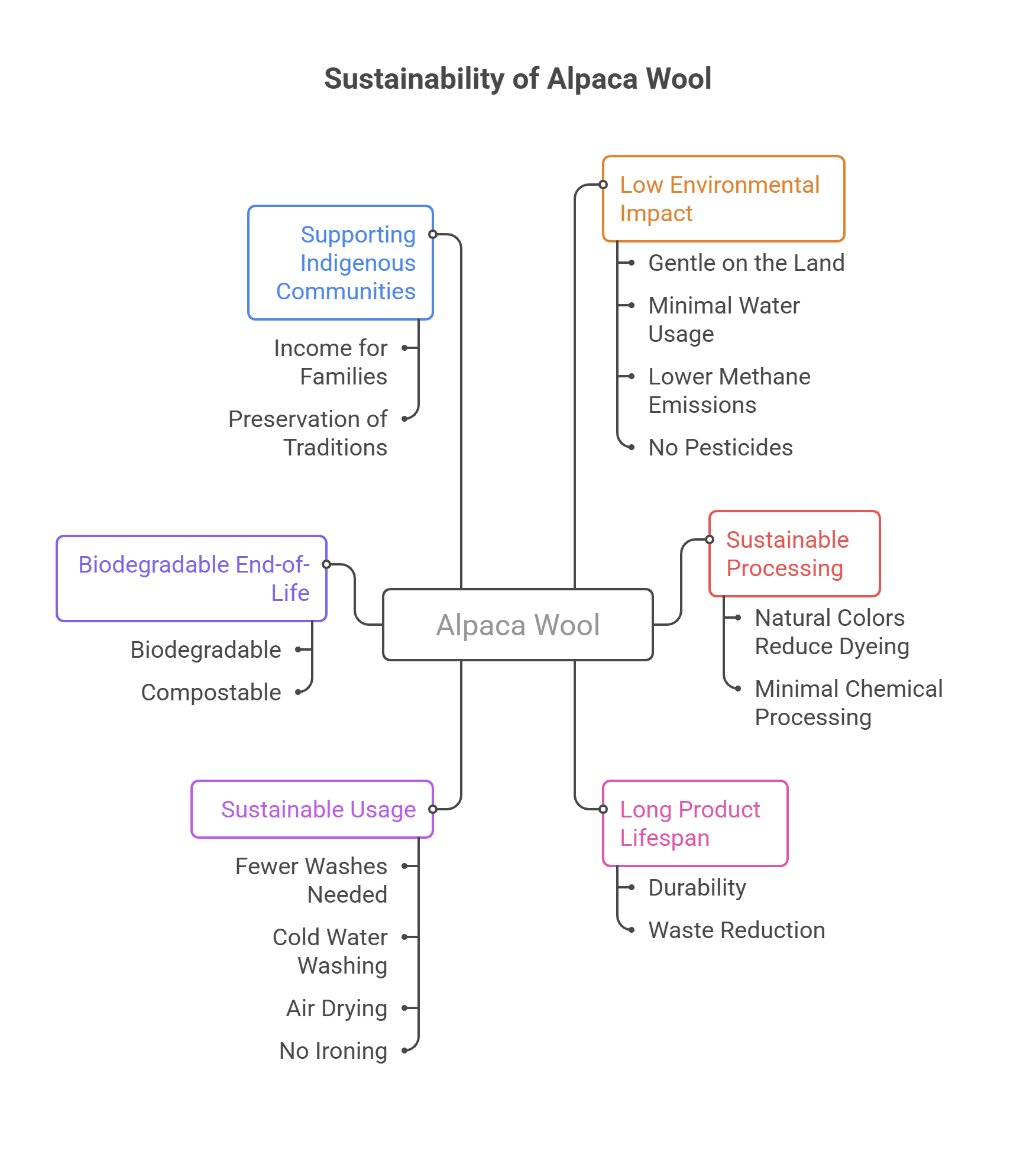
In today’s world, choosing sustainable fabrics matters more than ever. Alpaca wool stands out as one of the most environmentally friendly textiles available. Let’s look at why.
Low Environmental Impact of Alpaca Farming
Gentle on the Land
Unlike sheep and goats, which have hooves that can damage soil and uproot plants, alpacas have soft, padded feet similar to dogs. They walk lightly on pastures without degrading the land or destroying root systems. This allows plants to continue thriving even after alpacas have grazed.
Alpacas are also efficient grazers. They nibble the tops of plants rather than pulling them up by the roots, allowing vegetation to regrow quickly. This sustainable grazing pattern helps maintain healthy grasslands and prevents erosion.
Minimal Water Usage
Alpaca farming requires significantly less water than sheep or goat farming. Alpacas primarily drink from natural water sources like rivers and streams, and they need less water per animal than most other wool-producing livestock.
In contrast, conventional cotton farming is notoriously water-intensive. Producing just one cotton t-shirt can require over 2,700 liters of water. Alpaca wool production uses a fraction of that amount.
Lower Methane Emissions
As members of the camel family (camelids), alpacas have a different digestive system than ruminants like sheep, goats, and cows. They produce significantly less methane gas – a potent greenhouse gas that contributes to climate change.
While sheep and cows are major sources of agricultural methane emissions, alpacas have a much lighter carbon footprint in this regard.
No Pesticides or Harmful Chemicals
Alpacas have a natural resistance to many parasites and pests that affect other livestock. This means alpaca farmers can raise their animals with minimal or no pesticide use, unlike conventional cotton farming which relies heavily on chemical pesticides that can harm ecosystems.
Sustainable Processing & Production
Natural Colors Reduce Dyeing
With over 22 natural colors, many alpaca products can be made without any dyeing process. This eliminates the water pollution and chemical runoff associated with textile dyeing – one of the fashion industry’s most environmentally damaging practices.
Even when dyeing is necessary, alpaca wool’s natural colors provide a beautiful base that requires less dye to achieve desired shades.
Minimal Chemical Processing
Alpaca wool is naturally lanolin-free, so it doesn’t require the harsh chemical washing processes needed to remove lanolin from sheep’s wool. The cleaning process is simpler and uses fewer chemicals, reducing environmental impact.
Long Product Lifespan Reduces Waste
The exceptional durability of alpaca wool means garments last for decades rather than seasons. This longevity is the opposite of fast fashion’s disposable mentality. When you buy an alpaca sweater that lasts 20+ years, you’re not buying (and throwing away) 20+ cheaper sweaters over the same period.
Studies show that extending a garment’s lifespan from 15 wears to 100+ wears can reduce its environmental impact by nearly 600%. Increasing it to 400 wears cuts total emissions by 49-68%.
Sustainable Usage Phase
Alpaca wool’s natural properties make it more sustainable during everyday use:
- Fewer washes needed: Odor-resistance and stain-resistance mean you can wear alpaca garments 2.5-10 times before washing, compared to 1-5 times for cotton
- Cold water washing: When you do wash alpaca, it only needs cold water, saving the energy required to heat water
- Air drying: Alpaca garments air-dry easily, eliminating energy-hungry dryer use
- No ironing: Wrinkle-resistance means no electricity wasted on ironing
Fully Biodegradable End-of-Life
When an alpaca garment finally reaches the end of its long life, it’s 100% biodegradable and compostable (if untreated). As a natural protein fiber, alpaca wool breaks down naturally without releasing harmful toxins into the environment.
This stands in stark contrast to synthetic fabrics like polyester, which can take hundreds of years to decompose and release microplastics into the environment as they break down.
Untreated alpaca fiber begins to biodegrade after about one year in natural conditions. You can even compost old alpaca garments in your garden, where they’ll return nutrients to the soil.
Supporting Indigenous Communities
Sustainability isn’t just environmental – it’s social too. The alpaca industry supports thousands of indigenous families in the Andean highlands of Peru, Bolivia, and Chile. For many of these communities, alpaca farming provides crucial income and helps preserve traditional lifestyles and craftsmanship.
Many ethical alpaca brands work directly with indigenous weavers and herders, ensuring fair wages and supporting local economies. When you buy from these companies, you’re helping to preserve cultural traditions that have existed for thousands of years.
The Verdict: How Sustainable Is Alpaca Wool?
Overall, alpaca wool is one of the most sustainable natural fibers available. While no production process is perfect, alpaca’s combination of low-impact farming, minimal processing, long product lifespan, and biodegradability makes it an excellent choice for environmentally conscious consumers.
The actual environmental impact depends on specific factors like farming practices, processing methods, and how long you use the garment. Choose alpaca from ethical, transparent brands and care for it properly to maximize its sustainability benefits.
Comprehensive Fabric Comparisons
How does alpaca stack up against other popular fibers? Let’s compare.
Alpaca vs Merino Wool
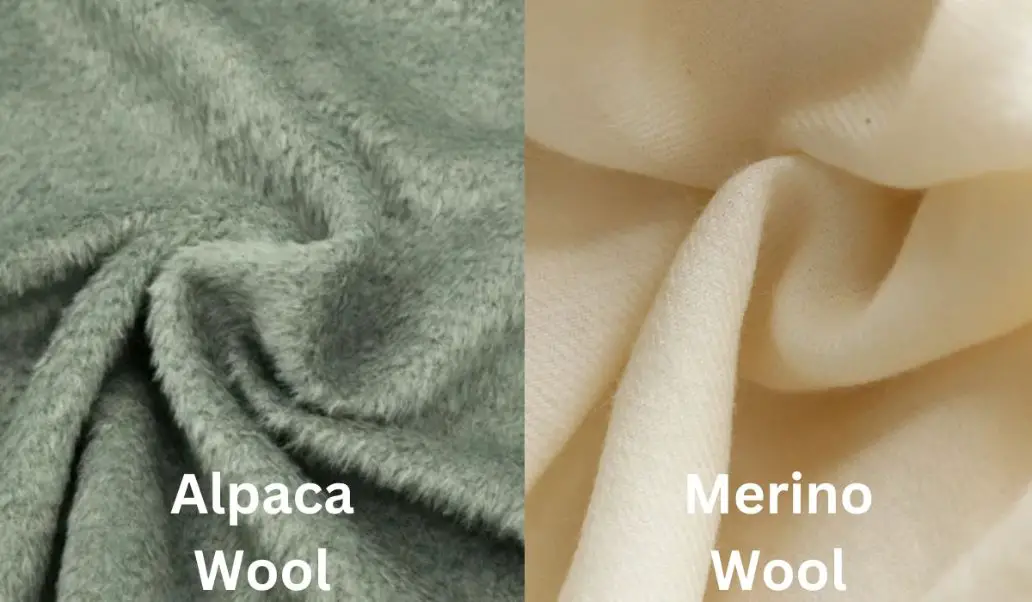
Merino wool is probably alpaca’s closest competitor in the natural fiber world. Both offer excellent performance, but they have different strengths.
| Property | Alpaca Wool | Merino Wool |
|---|---|---|
| Warmth | 3-7x warmer than standard wool | Very warm, but less than alpaca |
| Softness | Comparable to cashmere (18-25 microns) | Soft, but can feel slightly prickly (17-24 microns) |
| Weight | 3x lighter than merino | Lightweight but heavier than alpaca |
| Durability | Can bend 20,000 times; very durable | Durable but not as strong as alpaca |
| Moisture Wicking | 85% more effective; 10% water retention | Good; retains about 1/3 its weight in water |
| Allergen Concerns | No lanolin; hypoallergenic | Contains lanolin; may irritate sensitive skin |
| Elasticity | Less elastic; holds shape well | More elastic; good for fitted garments |
| Price | $80-130 per yard; mid-range luxury | $19-55 per yard; more affordable |
| Environmental Impact | Lower; gentle grazing, less water | Higher; more land/water needed, chemical treatments |
| Best For | Cold weather, luxury feel, sensitive skin | Performance wear, activewear, fitted clothing |
Which Is Better: Merino Wool or Alpaca?
The answer depends on what you need:
Choose alpaca if you want:
- Maximum warmth with minimum weight
- Cashmere-like luxury softness
- Hypoallergenic properties (no lanolin)
- Superior durability and longevity
- Better moisture management
- Lower environmental impact
Choose merino if you want:
- More affordable pricing
- Greater elasticity for fitted garments
- Widely available options
- Performance activewear (though alpaca works great too)
Overall, alpaca offers superior performance in most categories, particularly for warmth, softness, durability, and sustainability. The main advantage of merino is its lower price point and greater availability.
Alpaca vs Cashmere
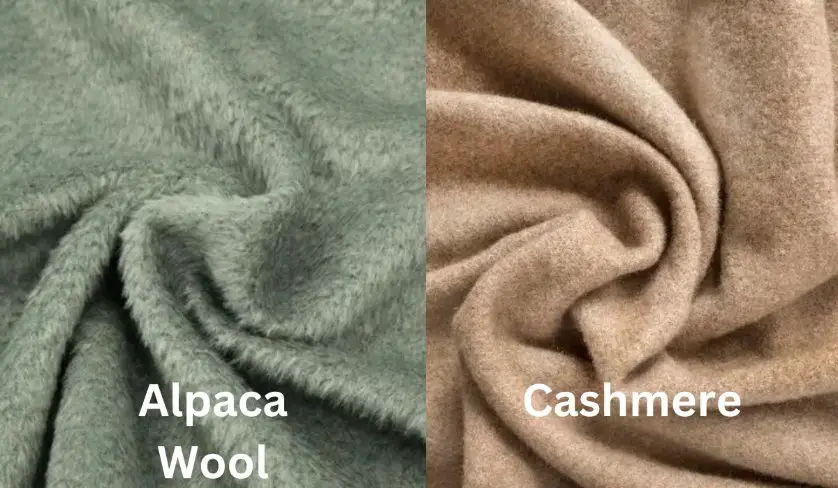
Cashmere has long been considered the ultimate luxury fiber. But how does it compare to alpaca?
| Property | Alpaca Wool | Cashmere |
|---|---|---|
| Softness | Extremely soft (18-25 microns) | Exceptionally soft (14-19 microns) |
| Warmth | Warmer; hollow fibers provide superior insulation | Very warm but less insulating than alpaca |
| Durability | Highly durable; resists pilling | Delicate; prone to pilling and wear |
| Weight | Lightweight | Lightweight |
| Longevity | 20-30+ years with proper care | 5-10 years; requires gentle handling |
| Price | $80-130 per yard | $50-500 per yard (average $150-300) |
| Allergen Concerns | Hypoallergenic; no lanolin | Low lanolin, generally hypoallergenic |
| Environmental Impact | Low impact; sustainable farming | High impact; intensive land/water use |
| Best For | Everyday luxury, outdoor wear, longevity | Special occasions, delicate garments |
Which Is Better: Cashmere or Alpaca?
This is one of the most common questions in the luxury fabric world. Here’s the truth:
Cashmere wins on:
- Ultimate softness (though alpaca is very close)
- Prestige and luxury reputation
- Delicate, refined feel
Alpaca wins on:
- Warmth and insulation
- Durability and longevity
- Better value for money
- Environmental sustainability
- Versatility for daily wear
- Resistance to pilling
While cashmere may have a slight edge in pure softness, alpaca offers better overall performance, especially for practical daily use. Cashmere is more delicate and better suited for special occasions, while alpaca combines luxury with durability – you can actually wear it regularly without worry.
From a sustainability perspective, alpaca is clearly superior. The cashmere industry faces serious environmental concerns, including overgrazing in Mongolia and China, which has led to desertification of grasslands. Alpaca farming, in contrast, maintains healthy ecosystems.
Is Alpaca Itchy Compared to Cashmere?
No, high-quality alpaca (baby alpaca or royal alpaca grades) is not itchy compared to cashmere. In fact, many people find the finest alpaca grades just as soft and comfortable as cashmere. The smooth fiber structure and lack of lanolin make alpaca very gentle on sensitive skin.
If you’ve tried coarser grades of alpaca wool, you might have found them slightly less soft than cashmere. Stick to baby alpaca or royal alpaca grades for the most luxurious, cashmere-like feel.
Important Note: Cashmere Is Not From Alpacas
There’s sometimes confusion about this: cashmere comes from cashmere goats, not alpacas. While both are luxury fibers with similar softness levels, they’re from completely different animals. Alpacas are South American camelids, while cashmere goats are primarily raised in Mongolia, China, and other parts of Asia.
Alpaca vs Other Luxury Fibers
Alpaca vs Mohair
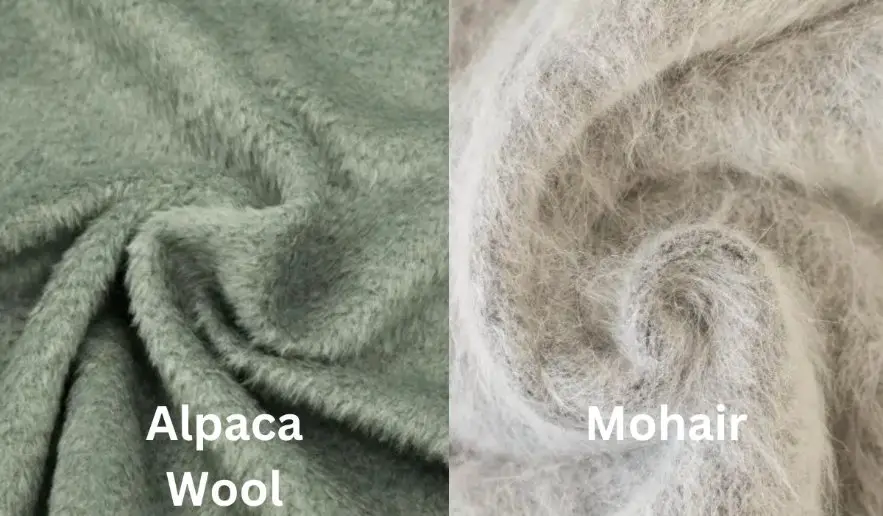
Mohair comes from Angora goats and has its own unique properties:
- Mohair is lustrous and silky with a distinctive sheen that alpaca lacks
- Alpaca is warmer due to its hollow fiber structure
- Mohair is more resilient and elastic, making it great for suits and structured garments
- Alpaca is softer and better for next-to-skin wear
- Both are durable, though alpaca has superior strength
Alpaca vs Llama Wool
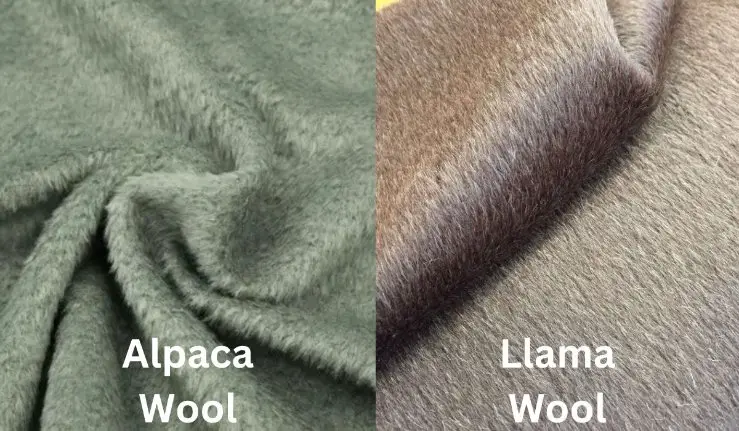
Llamas are alpacas’ close relatives, also native to South America. How does their wool compare?
Alpaca is better than llama wool because:
- Alpaca fibers are finer and softer (llama wool is coarser)
- Alpaca has more consistent fiber quality
- Alpaca contains less guard hair (the coarse outer coat)
- Alpaca is warmer and more insulating
Llama wool is still a good fiber, but it’s generally used for more rugged applications like blankets and outerwear rather than the luxury garments alpaca is known for.
Alpaca vs Vicuña
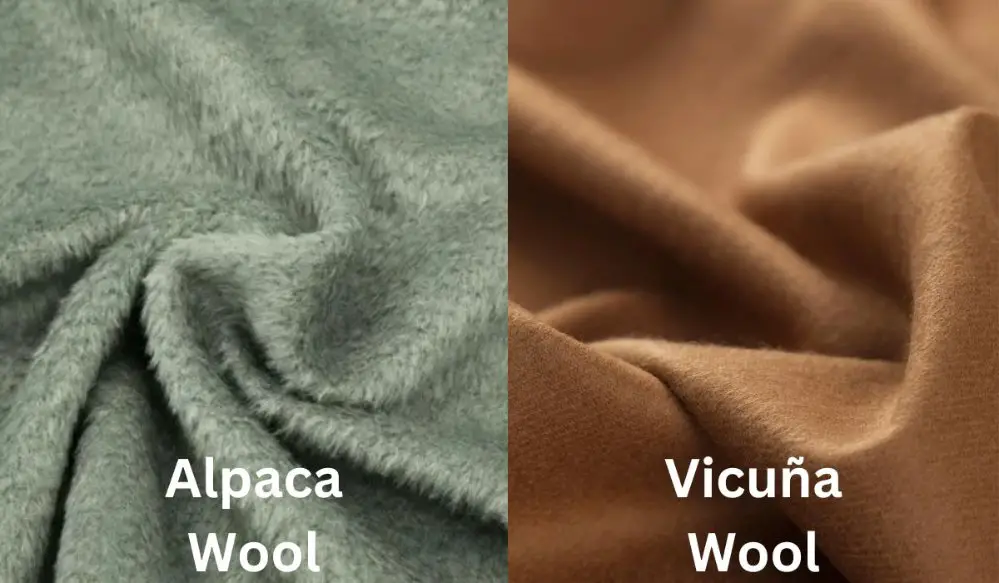
Vicuñas are wild relatives of alpacas and produce what many consider the finest, most expensive wool in the world.
Vicuña wool is softer than alpaca (fibers as fine as 12 microns), but it’s also:
- Extraordinarily expensive ($400-600 per yard or more)
- Very rare and difficult to obtain
- Protected species with strict harvesting limits
For practical purposes, alpaca offers similar luxury at a much more accessible price point. Unless you’re looking for the absolute finest fiber regardless of cost, alpaca provides better value.
What’s Better Than Alpaca Wool?
This is subjective and depends on your priorities, but objectively:
- For pure softness: Vicuña and top-grade cashmere might edge out alpaca slightly
- For overall performance, value, and sustainability: Alpaca is hard to beat
- For specific technical applications: Some synthetic performance fabrics might outperform alpaca in specialized situations
In terms of combining luxury, durability, sustainability, and practical wearability, alpaca wool is one of the best natural fibers available. It’s the “Goldilocks” of luxury textiles – offering cashmere-like softness with merino-level performance and superior durability, all at a reasonable price.
Types & Grades of Alpaca Wool
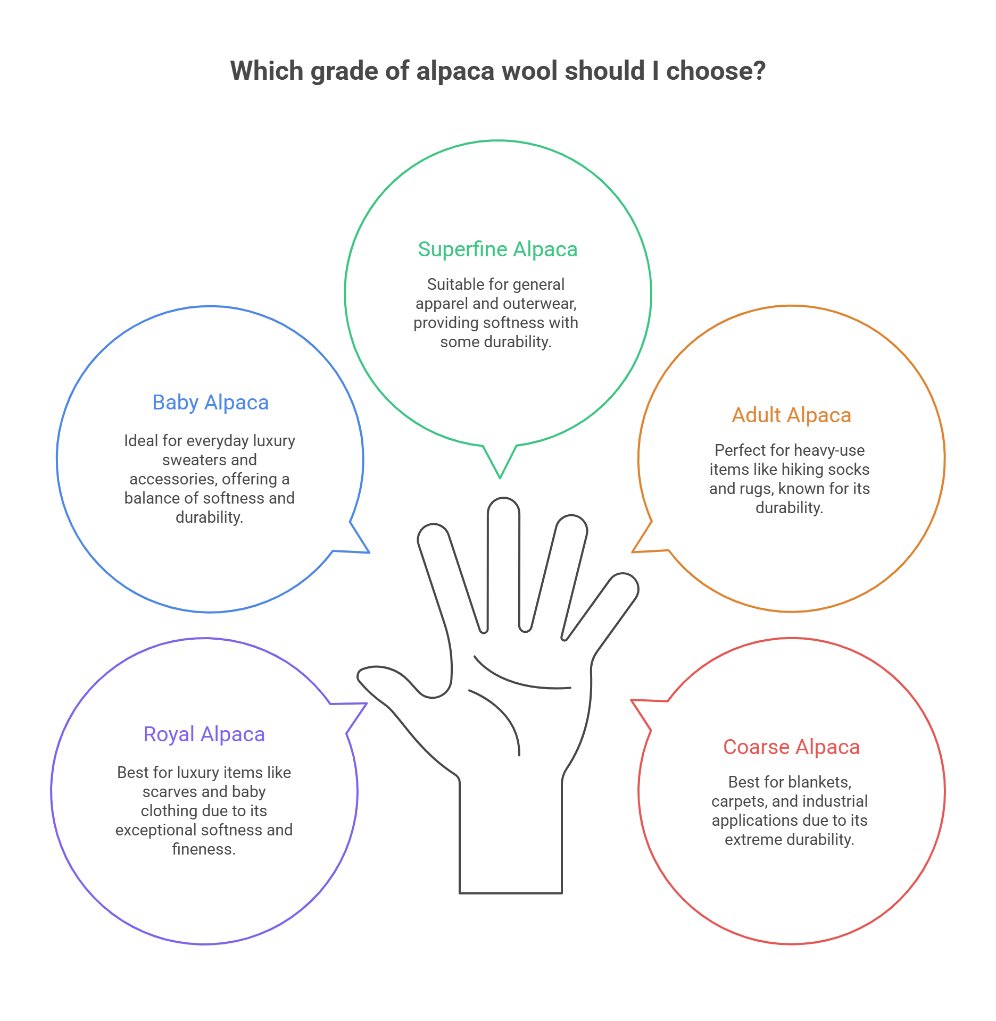
We’ve already covered the grading system based on fiber diameter, but let’s dive deeper into what this means for your buying decisions.
Royal Alpaca: The Finest Grade
At 18 microns or less, royal alpaca represents the absolute finest alpaca fiber available. It’s incredibly rare and commands premium prices. Royal alpaca is so soft it rivals the finest cashmere, making it perfect for:
- Luxury scarves and shawls
- High-end sweaters
- Intimate apparel
- Baby clothing
- Special occasion garments
Baby Alpaca: The Sweet Spot
Baby alpaca (18-22.5 microns) offers an excellent balance of luxury softness and practical durability. This is the most popular grade for high-quality garments. Remember, despite the name, it doesn’t come from baby alpacas – it refers to the fiber fineness.
Baby alpaca is perfect for:
- Everyday luxury sweaters
- Scarves and accessories
- Base layers
- Comfortable daily wear
When to Choose Coarser Grades
The coarser grades (superfine, adult, and coarse alpaca) aren’t inferior – they’re just better suited for different applications:
- Superfine alpaca (22.5-25.5 microns): Still very soft, great for general apparel and outerwear
- Adult alpaca (25.5-32 microns): More durable, perfect for heavy-use items like hiking socks, rugs, and outerwear
- Coarse alpaca (32+ microns): Extremely durable, ideal for blankets, carpets, and industrial applications
For items that will see heavy wear or outdoor use, the coarser grades actually make more sense. You don’t need royal alpaca for a hiking blanket – adult or coarse alpaca will be more durable and cost-effective.
Uses & Applications
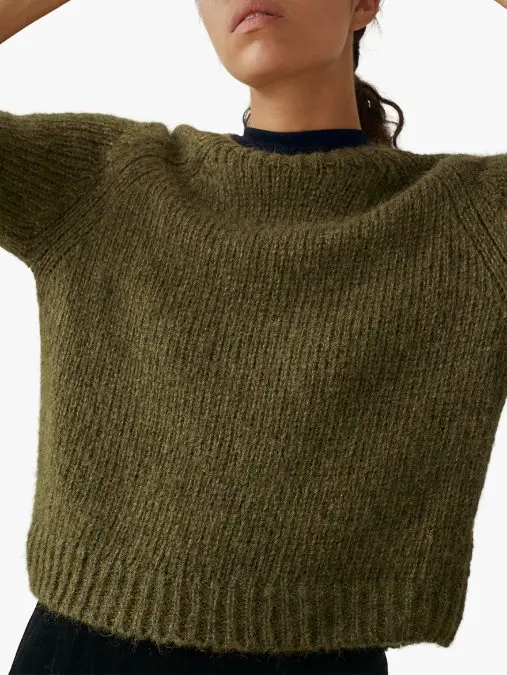
Alpaca wool’s versatility makes it suitable for a wide range of applications.
Fashion & Apparel
Sweaters & Cardigans
Alpaca sweaters are probably the most popular use of this fiber. The combination of warmth, softness, and style makes them perfect for cold weather. An alpaca sweater can be dressed up for the office or worn casually on weekends.
Coats & Jackets
Alpaca’s warmth-to-weight ratio makes it excellent for outerwear. You get the insulation you need without the bulk of heavy winter coats. Alpaca coats are also naturally water-resistant, perfect for damp weather.
Scarves, Shawls & Wraps
The luxury softness of alpaca makes it ideal for items worn next to the face and neck. Alpaca scarves are lightweight yet incredibly warm.
Suits & Business Wear
Suri alpaca, with its silky drape and lustrous appearance, is perfect for business suits. It offers a professional look with unexpected comfort and warmth.
Dresses & Skirts
Finer grades of alpaca make beautiful dresses for fall and winter. The fabric drapes elegantly and provides comfortable warmth.
Outdoor & Performance Gear
Alpaca’s technical properties make it excellent for outdoor activities:
- Hiking socks: Moisture-wicking, antimicrobial, and incredibly warm
- Base layers: Superior insulation with moisture management
- Outdoor sweaters: Lightweight warmth for camping and hiking
- Gloves & hats: Keep extremities warm without bulk
Home Textiles
Blankets & Throws
Alpaca blankets are luxuriously soft and remarkably warm. They’re perfect for cold nights and add a touch of elegance to any room.
Bedding
High-quality alpaca sheets and comforters provide temperature-regulating comfort. They keep you warm in winter but breathe well enough for year-round use.
Rugs
Coarser grades of alpaca make durable, beautiful rugs that can last for decades.
Yarn for Knitting & Crochet
Fiber artists love working with alpaca yarn. It’s available in various weights from fingering (lightweight) to chunky, and it can be 100% pure alpaca or blended with other fibers.
Alpaca yarn advantages for crafters:
- Beautiful natural colors reduce the need for dyeing
- Smooth texture makes it easy to work with
- Finished projects have excellent drape
- Durable enough for garments that will last
Seasonal Versatility
While alpaca is famous for cold weather, its temperature-regulating properties make it surprisingly versatile. Lightweight alpaca garments can be worn comfortably in spring and fall, not just winter. The fiber breathes well and releases excess heat, preventing overheating.
Complete Care Instructions: Making Your Alpaca Last Decades
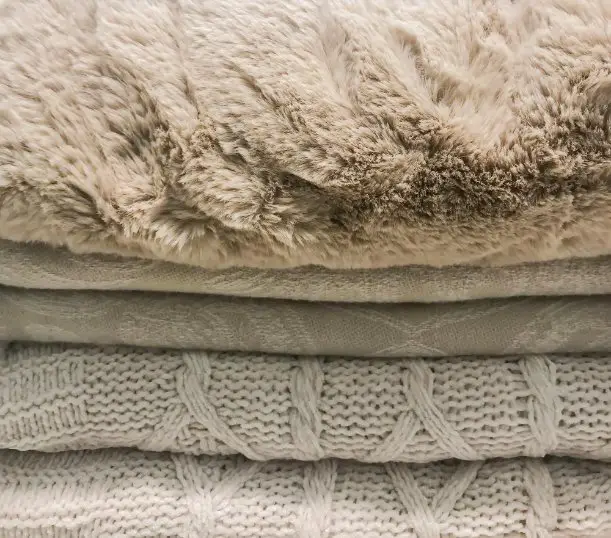
Proper care is what separates alpaca garments that last a few years from those that become family heirlooms. Follow this comprehensive care guide to maximize your investment.
For general wool care principles, see our wool care guide. For alpaca, there are some specific considerations.
How to Wash Alpaca Wool
Can You Wash Alpaca Wool in a Washing Machine?
Yes, but with extreme caution. Hand washing is always safer, but if you must use a machine:
Machine Washing Alpaca (Use Sparingly)
Hand Washing Alpaca (Recommended Method)
Is Woolite Safe for Alpaca Wool?
Yes, Woolite is generally safe for alpaca wool as it’s formulated for delicate fabrics. However, avoid Woolite versions with added enzymes or bleach alternatives. The original Woolite Delicates formula works best. Even better options include:
- Specialized alpaca or wool wash products
- Mild baby shampoo (surprisingly effective)
- Gentle detergent specifically labeled for wool and delicates
Whatever you choose, use a minimal amount – less is more with alpaca.
Drying Alpaca Wool Properly
Can You Put Alpaca Wool in the Dryer?
Never put alpaca wool in the dryer. The heat and tumbling action will damage the fibers and cause severe shrinkage. Even a “no heat” or “air dry” setting isn’t safe due to the mechanical agitation.
The Correct Drying Method
Drying can take 24-48 hours depending on the garment’s thickness and humidity levels. Be patient – rushing the process with heat will ruin your alpaca.
What Happens If Alpaca Wool Gets Wet?
Can Alpaca Wool Get Wet?
Yes, alpaca wool can get wet. In fact, it handles moisture better than many other wools. The fibers are naturally water-resistant on the surface, so light rain will bead up and roll off rather than immediately soaking in.
However, if alpaca does get thoroughly wet:
- It can absorb up to 30% of its weight in water before feeling damp
- The garment will become heavy and may lose its shape if handled roughly when wet
- It needs to be dried properly (flat drying) to prevent stretching or shrinkage
Does Alpaca Wool Smell When Wet?
No, alpaca wool typically doesn’t develop the “wet wool” smell that sheep’s wool often has when wet. This is because alpaca lacks lanolin – the oily substance in sheep’s wool that creates that distinctive wet wool odor.
Alpaca’s natural antimicrobial properties also help prevent the growth of odor-causing bacteria, even when damp.
Does Alpaca Wool Smell After Washing?
If washed properly, alpaca wool should have no smell after washing – it should be completely odor-free. If you notice any odor:
- You may have used too much detergent (rinse more thoroughly)
- The garment wasn’t fully dried before storage
- The detergent itself has a lingering scent (switch to fragrance-free)
How Often to Wash Alpaca
One of alpaca’s best features is that it needs washing much less frequently than other fabrics:
- Alpaca sweaters: After 7-10 wears, or when visibly soiled
- Alpaca socks: After 2-3 wears
- Alpaca scarves/accessories: 2-3 times per season
- Alpaca blankets: Once or twice per year
Between washes, simply air out your alpaca garments. Hang them in a well-ventilated area overnight, and the natural antimicrobial properties will keep them fresh.
Stain Removal for Alpaca
If you get a stain on alpaca wool:
Storage & Maintenance
Proper Storage
- Clean before storing: Always wash alpaca garments before long-term storage to remove any oils or particles that could attract moths
- Use breathable storage: Store in cotton garment bags or acid-free tissue paper – never plastic, which traps moisture
- Fold, don’t hang: Hanging can stretch alpaca out of shape. Fold sweaters and heavy items
- Add moth protection: Use cedar blocks or lavender sachets (not mothballs, which can smell)
- Store in a cool, dry place: Avoid damp basements or hot attics
Dealing with Pilling
While alpaca is less prone to pilling than many fabrics, some pilling can occur with friction:
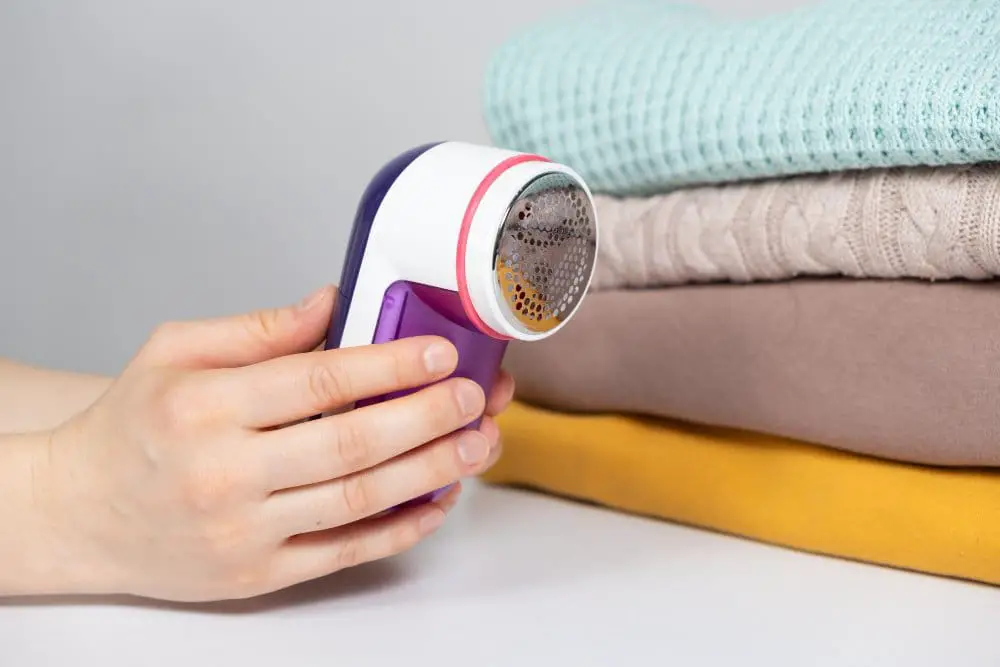
- Use a fabric shaver or sweater comb to gently remove pills
- Never pull pills off by hand – this damages the fabric
- High-quality alpaca pills much less than lower grades
Refreshing Between Washes
- Hang garments in fresh air overnight
- A steamer can refresh wrinkles and odors
- Spot clean small marks rather than washing the entire garment
Professional Cleaning
For expensive or delicate alpaca garments, professional dry cleaning is a safe option. Make sure to:
- Choose a cleaner experienced with alpaca/fine wool
- Point out any stains or problem areas
- Specify “gentle” or “delicate” treatment
- Remove garments from plastic bags immediately after pickup
Common Care Mistakes to Avoid
- Hot water: Will cause severe shrinkage
- Wringing or twisting: Damages fibers and distorts shape
- Machine drying: Heat damages and shrinks the fabric
- Hanging when wet: Gravity will stretch out the garment
- Storing dirty: Attracts moths and sets stains
- Using bleach: Destroys natural fibers
- Ironing dry: Can scorch or flatten the fabric
Smart Buying Guide: Getting Quality Alpaca
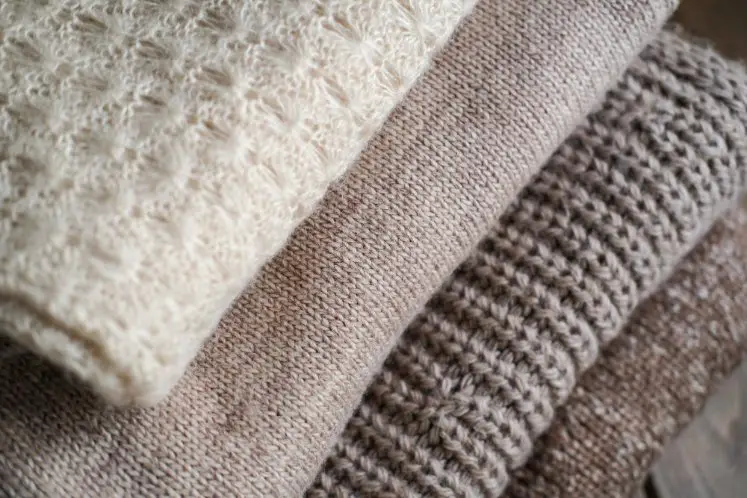
Not all alpaca wool is created equal. Here’s what to look for when shopping.
Understanding Price Points
Alpaca wool prices vary significantly:
- Budget alpaca blends: $30-60 for sweaters (often 20-50% alpaca mixed with other fibers)
- Mid-range pure alpaca: $100-200 for sweaters (adult or superfine grades)
- Premium baby/royal alpaca: $200-500+ for sweaters
- Designer alpaca pieces: $500-2000+ (brand markup)
Remember: with proper care, a $300 baby alpaca sweater that lasts 20 years costs just $15 per year. A $30 synthetic sweater that lasts 2 years costs the same annually but creates more waste.
Quality Indicators
What to Look For
- Fiber content: Check the label for alpaca percentage (100% is best for pure benefits)
- Grade specification: Quality products specify “baby alpaca,” “royal alpaca,” etc.
- Country of origin: Peru, Bolivia, and Chile are primary sources; Peru produces the highest quality
- Construction quality: Even stitching, no loose threads, well-finished seams
- Feel: Should be soft and pleasant against your skin (within the grade)
- Color consistency: Even dyeing or beautiful natural color variation
Red Flags
- Extremely low prices: If it seems too cheap, it probably isn’t pure alpaca
- No grade specified: Could be lower-quality fiber
- Vague descriptions: Terms like “alpaca-feel” or “alpaca-like” mean it’s not real alpaca
- Heavy blending: “Alpaca blend” with more than 50% other fibers loses many benefits
- Poor construction: Even great fiber can be ruined by sloppy manufacturing
Where to Buy Quality Alpaca
- Ethical Peruvian brands: Direct from source often means better prices and fair trade
- Specialty alpaca retailers: Dedicated alpaca stores have expertise
- High-end department stores: Carry quality brands but with retail markup
- Local alpaca farms: In the US and other countries, some farms sell their own products
- Trusted online retailers: Read reviews carefully and check return policies
Questions to Ask Sellers
- What grade of alpaca is this? (baby, royal, superfine, etc.)
- What percentage is pure alpaca vs. blended fibers?
- Where was the alpaca sourced?
- Is it from Huacaya or Suri alpacas?
- What are the care requirements?
- Do you have certifications for ethical sourcing?
Certifications to Look For
- Fair Trade certification: Ensures fair wages for workers
- GOTS (Global Organic Textile Standard): For organic alpaca
- Responsible Alpaca Standard: Ensures animal welfare
- B Corporation certification: Companies meeting high social and environmental standards
How to Tell If Alpaca Wool Is Real
With alpaca’s growing popularity, unfortunately, some sellers try to pass off fake or heavily blended products as pure alpaca. Here’s how to verify authenticity.
Visual Inspection
- Natural sheen: Real alpaca has a subtle, natural luster (especially Suri), not overly shiny like synthetic
- Fiber consistency: Natural alpaca shows some variation in fiber thickness – too uniform might indicate synthetic
- Color depth: Natural colors have depth and richness; synthetic dyes often look flat
Touch Test
- Softness: Real alpaca (especially baby/royal grades) feels silky smooth, not scratchy
- Temperature: Natural alpaca feels cool to the touch initially, then warms up; synthetic often feels warm immediately
- Drape: Real alpaca has excellent drape and doesn’t feel stiff or plastic-like
The Burn Test (Destructive but Definitive)
Warning: Only do this if you can sacrifice a tiny fiber or if the seller provides a sample.
- Real alpaca (protein fiber): Burns slowly, smells like burning hair, leaves dark, crushable ash
- Synthetic (plastic-based): Melts and drips, smells like burning plastic, leaves hard plastic bead
- Cotton/plant fiber: Burns quickly, smells like burning paper, leaves light gray ash
Water Absorption Test
Place a small drop of water on the fabric:
- Real alpaca: Water beads up on the surface initially (water-resistant), then slowly absorbs
- Synthetic: Water either beads permanently or soaks in immediately depending on the type
Check the Label
- Look for specific alpaca grade (baby, royal, etc.)
- Should list “100% Alpaca” or specific blend percentages
- Country of origin (Peru, Bolivia, Chile for authentic)
- Care instructions consistent with natural fibers
Price Reality Check
If a “100% baby alpaca sweater” costs $25, it’s almost certainly not real or not quality alpaca. Genuine baby alpaca sweaters typically start around $100-150 minimum due to the fiber cost and production.
Watch: How to Recognize Real Alpaca Wool

This helpful video provides visual tips and tricks for recognizing authentic alpaca wool products, especially useful if you’re shopping in Peru or other alpaca-producing regions.
What Are the Disadvantages of Alpaca Wool?
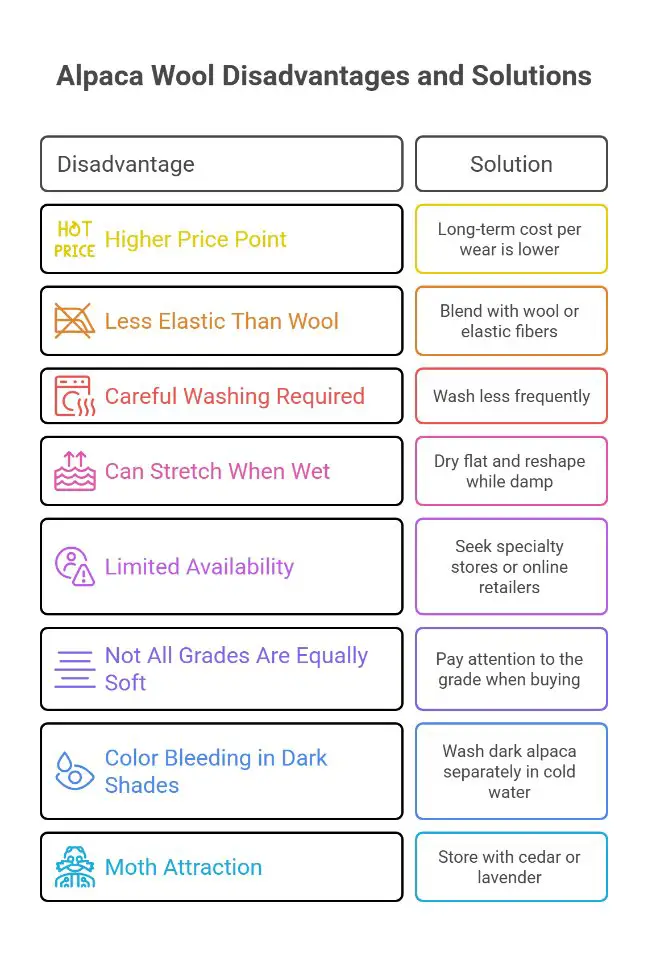
While alpaca wool is exceptional, it’s not perfect. Here are the honest drawbacks to consider:
1. Higher Price Point
Alpaca costs more than conventional fabrics and even more than merino wool. Quality baby alpaca sweaters range from $150-300+, which can be a barrier for budget-conscious shoppers.
Counter-point: The long-term cost per wear is often lower due to exceptional durability. A $200 sweater lasting 20 years costs less annually than cheap alternatives.
2. Less Elastic Than Wool
Alpaca fibers have less natural elasticity than sheep’s wool. This means:
- Alpaca garments may not bounce back to shape as quickly if stretched
- Not ideal for very fitted or form-hugging garments
- Requires more careful handling when wet to prevent stretching
Solution: Many manufacturers blend alpaca with a small amount of wool or elastic fibers to add stretch while maintaining alpaca’s benefits.
3. Careful Washing Required
Alpaca needs more delicate care than everyday fabrics. Machine washing on normal cycles or using a dryer can ruin alpaca garments. This requires more time and attention than tossing clothes in the washer and dryer.
Counter-point: You wash alpaca much less frequently than other fabrics, so the extra care is needed far less often.
4. Can Stretch When Wet
When wet, alpaca can lose its shape if not handled properly. Hanging a wet alpaca sweater will result in a stretched-out garment.
Solution: Always dry flat and reshape while damp. Follow proper care instructions (see our care section above).
5. Limited Availability
Compared to cotton or polyester, alpaca products are harder to find. Most mainstream retailers don’t carry extensive alpaca selections, requiring you to seek out specialty stores or online retailers.
6. Not All Grades Are Equally Soft
Coarser grades of alpaca (adult and coarse) can feel rough compared to baby or royal alpaca. If you buy lower-grade alpaca expecting cashmere-like softness, you’ll be disappointed.
Solution: Pay attention to the grade when buying. Baby alpaca and royal alpaca provide the luxury softness; adult grades are better for durability-focused items.
7. Color Bleeding in Dark Shades
Dark-dyed alpaca can occasionally bleed color during the first few washes, especially if not properly processed.
Solution: Wash dark alpaca separately the first few times and use cold water always.
8. Moth Attraction
Like all natural protein fibers, moths love alpaca. Improper storage can result in moth damage.
Solution: Store clean garments with cedar or lavender, use breathable bags, and check stored items periodically.
Frequently Asked Questions About Alpaca Wool
Yes, alpaca sweaters are worth the investment if you value quality, durability, and sustainability. A well-made alpaca sweater can last 20-30 years with proper care, making the cost per wear quite reasonable. You get exceptional warmth, luxury softness, and hypoallergenic properties that synthetic or cheaper alternatives can’t match. For cold climates or if you have wool allergies, alpaca sweaters are especially worthwhile.
Bacteria have difficulty growing on alpaca wool due to its natural antimicrobial properties. The fiber’s unique structure keeps dirt and bacteria on the surface rather than allowing penetration deep into the fibers. This is why alpaca garments resist odors and stay fresh much longer than cotton or synthetic fabrics. However, bacteria can still grow if the garment is left damp for extended periods or stored dirty, so proper care is still important.
An alpaca is neither a camel nor a sheep – it’s a camelid, which means it’s a member of the camel family (Camelidae). Alpacas are South American relatives of camels, along with llamas, vicuñas, and guanacos. They’re more closely related to camels than to sheep, though they’re much smaller and don’t have humps. This camelid heritage is why alpaca wool has different properties than sheep’s wool, including its hollow fiber structure and lack of lanolin.
Alpaca wool is fire-resistant but not completely fireproof. It has a higher ignition temperature than many other textiles and tends to self-extinguish rather than continue burning like synthetic fabrics. When exposed to flame, alpaca chars and smolders rather than melting (unlike polyester, which melts and can stick to skin). While not suitable for firefighting gear, alpaca’s natural fire resistance makes it safer than many common fabrics for everyday wear.
Alpaca wool is special because it combines multiple rare qualities in one fiber: it’s 3-7 times warmer than sheep’s wool yet lightweight; softer than cashmere in fine grades; hypoallergenic (no lanolin); highly durable; naturally antimicrobial and odor-resistant; water-repellent; and produced sustainably. The hollow fiber structure creates microscopic air pockets that provide exceptional insulation without bulk. Few other natural fibers offer this unique combination of luxury, performance, and eco-friendliness.
With proper care, high-quality alpaca garments can easily last 20-30 years or more. Some alpaca pieces become family heirlooms passed down through generations. The fiber’s exceptional strength (can bend 20,000 times before breaking) and resistance to pilling contribute to this longevity. To maximize lifespan, follow proper washing and storage guidelines, wash infrequently, and address any damage promptly with proper repairs.
Yes, alpaca wool can shrink if exposed to hot water, aggressive washing, or machine drying. Heat causes the fibers to contract and felt together, resulting in a smaller, denser garment. To prevent shrinkage, always wash alpaca in cold or lukewarm water (never hot), handle gently without agitation, and air-dry flat. If your alpaca does shrink slightly, you can sometimes restore it by soaking in lukewarm water with hair conditioner, then gently stretching it back to shape while damp.
Yes, alpaca is significantly warmer than standard sheep’s wool – approximately 3-7 times warmer depending on quality. The hollow fiber structure with microscopic air pockets provides superior insulation. Even compared to merino wool (the finest sheep’s wool), alpaca offers better warmth-to-weight ratio. This makes alpaca ideal for cold weather gear, outdoor activities, and anyone who needs maximum warmth without bulk.
Conclusion
Alpaca wool stands out as one of the finest natural fibers available today, offering a rare combination of luxury, performance, and sustainability that few materials can match. Whether you’re drawn to its cashmere-like softness, exceptional warmth, hypoallergenic properties, or eco-friendly production, alpaca delivers on multiple fronts.
Why Choose Alpaca Wool?
After examining every aspect of this remarkable fiber, here’s what makes alpaca special:
Performance: Alpaca outperforms most other natural fibers in warmth, durability, and moisture management. It’s 3-7 times warmer than sheep’s wool, softer than cashmere in fine grades, and strong enough to last decades. The hollow fiber structure provides exceptional insulation without weight, while natural water-resistance and antimicrobial properties make it perfect for real-world use.
Comfort: The lack of lanolin makes alpaca truly hypoallergenic – perfect for people with sensitive skin or wool allergies. Its smooth fiber structure feels gentle against skin, and temperature-regulating properties keep you comfortable across seasons.
Sustainability: Alpaca farming has a light environmental footprint. Alpacas graze gently without damaging pastures, require minimal water, produce less methane than other livestock, and need no pesticides. With 22 natural colors, many products require no dyeing. The fiber is biodegradable, and garments that last 20-30 years combat wasteful fast fashion.
Value: While alpaca costs more upfront than conventional fabrics, the cost per wear over decades makes it economically smart. A $200 baby alpaca sweater lasting 25 years costs just $8 per year – less than replacing cheap sweaters every few seasons.
Key Takeaways
- Not all alpaca is equal: Pay attention to grades. Baby alpaca and royal alpaca offer the luxury softness; coarser grades suit durability-focused items
- Care matters: Proper washing and storage will make your alpaca last decades. Always wash in cold water, dry flat, and store clean with moth protection
- Compare smart: Alpaca beats merino in warmth, softness, and sustainability. It matches cashmere in luxury while exceeding it in durability and value
- Buy authentic: Verify quality through grades, origin, and price reality checks. If it seems too cheap, it probably isn’t real alpaca
- Think long-term: Invest in quality pieces that will serve you for decades rather than cheap alternatives that need frequent replacement
- Support ethical sources: Choose brands that practice fair trade and sustainable production, especially those working directly with Andean communities
Who Should Choose Alpaca?
Alpaca is perfect for you if you:
- Live in cold climates and need serious warmth without bulk
- Have sensitive skin or allergies to traditional wool
- Value sustainability and want to reduce your fashion footprint
- Prefer quality over quantity and invest in pieces that last
- Enjoy outdoor activities like hiking and need technical performance
- Want luxury fabrics without the environmental cost of cashmere
- Are building a quality wool and cashmere wardrobe
Making the Switch to Alpaca
If you’re new to alpaca, start with one quality piece – perhaps a scarf or sweater in baby alpaca. Experience the difference firsthand. Once you feel how warm, soft, and comfortable alpaca is, you’ll understand why this ancient Incan “fiber of the gods” is experiencing a modern renaissance.
As consumers increasingly demand sustainable, high-quality alternatives to fast fashion and environmentally damaging textiles, alpaca wool is perfectly positioned to lead the way. It proves that we don’t have to choose between luxury and sustainability, between performance and ethics, or between comfort and durability.
Alpaca offers all of these – wrapped in the soft, warm embrace of one of nature’s finest fibers.
Further Reading & Resources
For more information on luxury fibers and sustainable fashion, explore:
- Cradle-to-grave environmental analysis of alpaca fiber sweater production – Scientific study on alpaca sustainability
- Life-cycle assessment of alpaca wool fabrics – Comprehensive sustainability analysis
- Scientific comparison of alpaca, merino, and cashmere fibers – Detailed fiber analysis with research citations
Ready to experience alpaca wool for yourself? Start with our wool care guide to ensure your investment lasts for decades to come.