
Your expert guide to understanding, buying, and caring for one of the world’s finest natural textiles
Table of Contents
- What is Belgian Linen?
- History and Heritage
- Certification and Quality Standards
- Belgian Linen vs Other European Linens
- Understanding Linen Weight (GSM Guide)
- Why is Belgian Linen Expensive?
- What Does Belgian Linen Feel Like?
- Sustainability and Production
- Complete Care Guide
- Applications and Uses
- Buyer’s Guide: How to Spot Authentic Belgian Linen
- Which Brands Use Belgian Linen?
- Common Misconceptions
- Frequently Asked Questions
- Final Thoughts
Coco Chanel once said that luxury must be comfortable, or it’s not luxury at all. Few fabrics capture this philosophy better than linen, especially when it comes from the renowned textile region of Belgium. But what makes Belgian linen different from other linens, and is it worth the investment?
This guide breaks down everything you need to know about Belgian linen, from its unique properties and certification standards to practical care instructions and buying tips. Whether you’re shopping for bedding, clothing, or home textiles, understanding the facts behind Belgian linen helps you make informed decisions.
What is Belgian Linen?
Belgian linen refers to linen fabric that meets specific standards set by the Belgian Flax & Linen Association. To earn the Belgian Linen™ trademark, fabric must contain at least 85% flax grown in the European Union and be woven in Belgian mills.
The fabric comes from the flax plant (Linum usitatissimum), which thrives in Western Europe’s cool, damp climate. The region stretching from northern France through Belgium and into the Netherlands creates perfect growing conditions for flax, producing fibers known for exceptional length and strength.
What’s the Difference Between Belgian Linen and European Linen?
Here’s where things get interesting. Much of what’s called “Belgian linen” actually uses flax grown across Western Europe, not exclusively in Belgium. The Belgian Linen™ certification requires weaving in Belgium, but the flax can come from France, Belgium, or the Netherlands since these countries share the same optimal growing conditions along the English Channel.
“European linen” is a broader term that refers to linen using flax from this same region but potentially woven anywhere in Europe. The flax quality is essentially identical, the difference lies in where the weaving happens and which certification system oversees production.
History and Heritage of Belgian Linen
Belgium’s linen tradition dates back centuries. Julius Caesar mentioned the quality of linen from Belgian Flanders as early as 100 BC. But the modern Belgian linen industry really took shape after World War II.
Post-War Development
During World War II, flax was needed for military supplies, from truck sails to tents. After the war, food crops took priority over flax, creating a scarcity that drove up prices. Belgian weavers formed the Federation of Belgian Linen Weavers to distribute available flax fairly among producers.
In the 1960s, these producers created the Belgian Linen™ trademark to distinguish their fabrics in international markets. By 1995, the Masters of Linen® initiative expanded this vision across Europe, uniting national labels under stricter quality controls.
Today, over 78% of certified Belgian linen mills operate within a 50-mile radius of Flanders, creating a concentrated hub of textile expertise passed down through generations.
Certification and Quality Standards
The Belgian Flax & Linen Association oversees all Belgian Linen™ certifications. Only association members can apply for fabric certification, and each batch receives a unique ID for traceability.
Certification Requirements
To earn the Belgian Linen™ label, fabric must meet these criteria:
- Woven in a Belgium-based mill
- At least 85% of fabric weight consists of flax grown in the EU
- Complete disclosure of material origins to the Association
- Regular quality audits and compliance checks
Members must maintain full documentation from field to finished product. This chain-of-custody approach protects against counterfeit labels, which have become more common as demand grows.
Other Quality Certifications
Beyond Belgian Linen™, look for these certifications:
- Masters of Linen®: Guarantees 100% European production from flax farming through weaving, with zero irrigation, no GMOs, and minimal waste. Learn more from the Alliance for European Flax-Linen & Hemp.
- OEKO-TEX®: Confirms fabric is free from harmful chemicals and safe for human use
- GOTS (Global Organic Textile Standard): Certifies organic flax cultivation and processing with strict social and environmental criteria
Belgian Linen vs Other European Linens
All high-quality European linen comes from similar sources, but there are some differences worth understanding.
| Type | Flax Origin | Weaving Location | Key Features |
|---|---|---|---|
| Belgian Linen™ | EU (mainly France, Belgium, Netherlands) | Belgium | Certified quality, traceable production, heritage weaving techniques |
| French Linen | France, Belgium, Netherlands | France or Italy | Often softer finishing, known for elegance |
| Irish Linen | Primarily European (not local) | Ireland | Dense weave, fewer slubs, excellent finishing, but less traceability |
| Italian Linen | France, Belgium, Netherlands | Italy (often Tuscany) | Family-run mills, refined weaving, high-quality dyeing |
| Belgian Flax Linen | Europe | Often China or India | Good flax, variable weaving quality, lower price point |
The reality is that most premium European linen uses flax from the same growing region. What varies is weaving expertise, finishing methods, quality control, and transparency. Belgian linen offers strong traceability and consistent standards backed by certification.
Understanding Linen Weight: The GSM Guide
Unlike cotton, where thread count matters, linen quality is measured by GSM (grams per square meter). This tells you the fabric’s weight and density, which directly affects how it performs.
Linen fibers are thicker and more irregular than cotton, so thread count doesn’t mean much. GSM gives you a better picture of what to expect from the fabric.
GSM Weight Categories
| Weight Category | GSM Range | Best Uses | Characteristics |
|---|---|---|---|
| Lightweight | 80-150 GSM | Summer clothing, sheer curtains, scarves | Very breathable, floaty drape, cooler feel |
| Medium Weight | 150-200 GSM | Year-round bedding, shirts, table linens | Balanced breathability and durability, most versatile |
| Heavy Weight | 200-320 GSM | Upholstery, winter bedding, structured garments, towels | More substantial feel, excellent durability, better insulation |
| Extra Heavy | 320+ GSM | Tote bags, outdoor furniture, industrial use | Very sturdy, not suitable for regular clothing |
Want help choosing the right weight for your project? Try our Linen Fabric Weight Calculator for personalized recommendations.
Quality Beyond GSM
Two fabrics with the same GSM can feel completely different. Here’s what else affects quality:
- Fiber length: Longer fibers create smoother, stronger fabric with fewer slubs
- Weave density: How tightly the threads are woven affects durability and texture
- Finishing: Processes like stone-washing or sanforizing change how the fabric feels and behaves
- Yarn thickness: Finer yarns at the same GSM feel softer because more threads are used
Why is Belgian Linen Expensive?
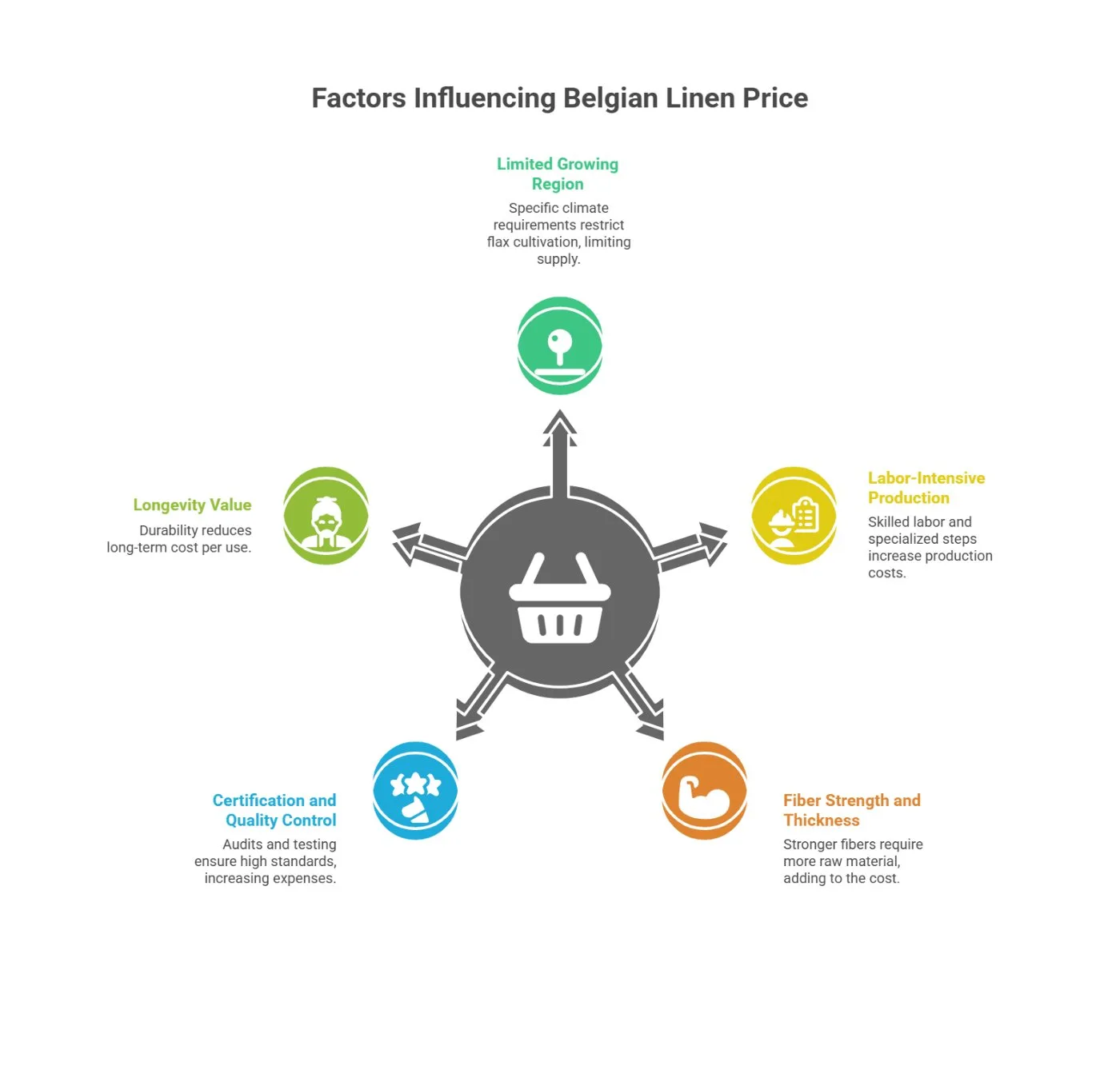
Belgian linen typically costs more than regular linen or cotton. Several factors drive this premium:
Limited Growing Region
High-quality flax only grows well in specific climates. The temperate, humid conditions along the English Channel can’t be replicated everywhere. This geographical limitation restricts supply.
Labor-Intensive Production
From seed to fabric, linen production takes approximately 100 days. The process involves multiple specialized steps:
- Growing and harvesting flax (pulled, not cut, to preserve fiber length)
- Retting (breaking down the plant’s outer layer)
- Scutching (separating fibers from woody parts)
- Spinning fibers into yarn
- Weaving into fabric
- Finishing treatments
Much of this work requires skilled labor, and European labor costs are higher than in Asia.
Fiber Strength and Thickness
Flax fibers are approximately 30% thicker than cotton and up to three times stronger. This strength contributes to linen’s legendary durability but requires more raw material by weight.
Certification and Quality Control
Maintaining Belgian Linen™ certification involves regular audits, testing, and documentation. These quality assurance steps add costs but guarantee consistent standards.
Longevity Value
While the upfront cost is higher, Belgian linen can last 15-20 years with proper care, compared to 5-10 years for cotton. The cost per use becomes quite reasonable over time.
What Does Belgian Linen Feel Like?
If you’ve never touched Belgian linen, here’s what to expect.
Initial Feel
Brand new Belgian linen has a crisp, slightly textured feel. It’s not as soft as satin or as smooth as high-thread-count cotton. The fabric has natural slubs (small knots or irregularities) that give it character and visual texture.
Some people describe unwashed linen as slightly stiff or rough. This is normal, not a quality issue.
After Washing
Here’s where Belgian linen gets interesting. Every wash makes it softer. The fibers relax and the fabric gains a beautiful lived-in feel without losing strength. Many linen lovers say their favorite pieces are the ones they’ve owned longest.
Temperature Regulation
Linen naturally regulates temperature by wicking moisture away from skin and allowing air circulation. In summer, it keeps you cool. In winter, it provides comfortable warmth without overheating. This makes it popular for bedding regardless of climate.
Is Belgian Flax Linen Good for Hot Sleepers?
Absolutely. Belgian linen’s breathability and moisture-wicking properties make it one of the best choices for hot sleepers. The fabric can absorb up to 20% of its weight in moisture before feeling damp, pulling heat and perspiration away from your body throughout the night.
Is Belgian Linen Hypoallergenic?
Yes, linen is naturally hypoallergenic and antibacterial. It resists dust mites, bacteria, and fungal growth better than most textiles. For people with sensitive skin or allergies, Belgian linen offers a safer option than synthetic fabrics or untreated cotton.
Does Belgian Linen Wrinkle?
Yes, linen wrinkles easily. This is due to the fiber structure and is considered part of linen’s natural charm rather than a flaw. The wrinkles soften the fabric’s appearance and many people prefer the relaxed, casual look.
If you want a crisper appearance, you can iron linen while slightly damp, but trying to fight the wrinkles completely works against the fabric’s nature.
Sustainability and Production Practices
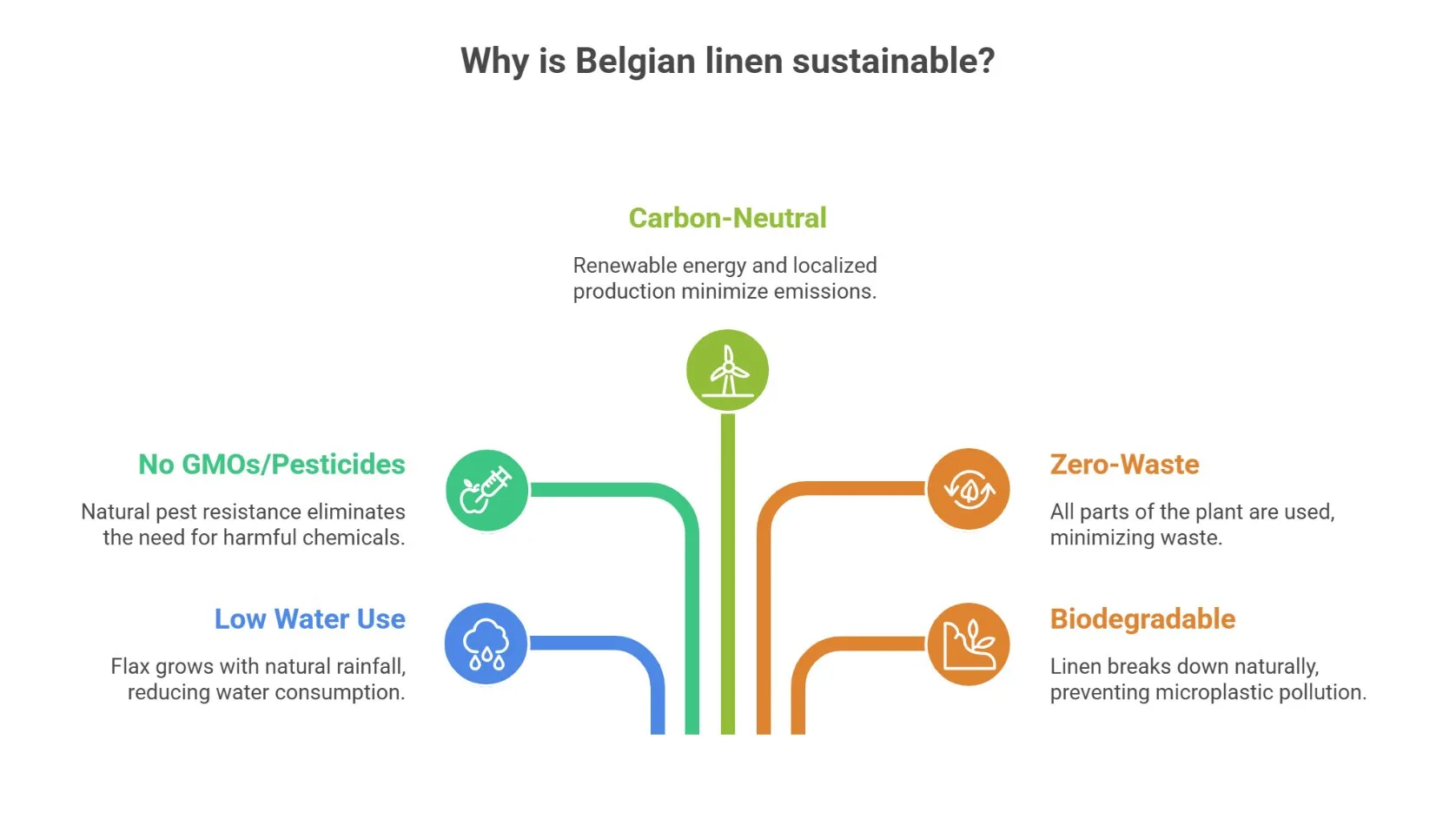
Belgian linen scores high on sustainability compared to many textiles. Here’s why.
Low Water Requirements
Flax thrives in Belgium’s natural rainfall without irrigation. Unlike cotton, which requires massive amounts of water, flax grows well with just what nature provides. This makes it significantly more water-efficient.
No GMOs or Heavy Pesticides
Flax is naturally pest-resistant. Certified European flax, particularly organic varieties, grows without genetically modified organisms or intensive chemical treatments. The plant’s natural oils deter insects, reducing the need for pesticides.
Carbon-Neutral Initiatives
Leading producers like Libeco achieved carbon-neutral certification by combining renewable energy with localized production. Keeping the entire supply chain within a small geographic area reduces transportation emissions.
Zero-Waste Philosophy
Every part of the flax plant gets used. Seeds become linseed oil, leftover fibers go into paper production, and woody parts serve various industrial purposes. This closed-loop system minimizes waste.
Biodegradability
Pure linen is completely biodegradable. Unlike synthetic fabrics that shed microplastics, linen breaks down naturally without harming the environment. This makes it a better long-term choice for the planet.
Complete Care Guide for Belgian Linen
Proper care extends the life of Belgian linen and maintains its beautiful qualities. The good news is that linen is easier to care for than you might think.
How to Wash Belgian Linen
Can You Machine Wash Belgian Linen?
Yes, most Belgian linen can be machine washed. Follow these guidelines for best results:
- Check the label: Always read care instructions first. Some structured items or special finishes may require different treatment.
- Sort by color: Wash dark linens with dark items and light with light to prevent color transfer.
- Use cold or lukewarm water: 30-40°C (85-100°F) works well for most washes. Hot water can cause excessive shrinkage.
- Choose gentle cycle: Select delicate or gentle cycle to reduce fiber stress.
- Use mild detergent: Pick a gentle, natural detergent free from harsh chemicals, bleach, or optical brighteners.
- Don’t overload: Linen needs space to move freely for thorough cleaning and to minimize wrinkles.
- Skip fabric softener: This reduces linen’s natural absorbency. The fabric will soften naturally with each wash.
Hand Washing Belgian Linen
For delicate items or small loads:
- Fill a basin with lukewarm water and mild detergent
- Submerge the linen and gently swish (don’t wring or twist)
- Soak for 15-30 minutes if needed
- Rinse thoroughly with cool water until all soap is gone
- Gently press out excess water without twisting
How to Wash Belgian Linen Sheets
Sheets benefit from these specific tips:
- Wash sheets separately or only with other lightweight linen items
- Use the highest water level available to allow free movement
- Pre-dissolve detergent in water before adding sheets to prevent spotting
- Remove promptly when washing finishes to reduce wrinkles
Get personalized washing instructions with our Linen Care Calculator.
Drying Belgian Linen
Can You Tumble Dry Belgian Linen?
Yes, but with caution. Use low heat only and remove items while still slightly damp. High heat damages fibers and causes excessive shrinkage.
Air Drying (Recommended)
Air drying is gentler and helps maintain fiber integrity:
- Hang on a clothesline or drying rack
- Smooth out wrinkles while fabric is wet
- Allow to dry in a well-ventilated area away from direct sunlight (which can fade colors)
- For flat items like tablecloths, lay flat to dry
Linen dries faster than cotton, so air drying doesn’t take as long as you might expect.
Ironing and Managing Wrinkles
If you prefer a crisp look, iron linen while it’s still slightly damp from washing:
- Set iron to medium-high heat (linen setting if available)
- Iron on the wrong side for dark colors to prevent shine
- Use steam for best results
- If fabric has dried, mist with water from a spray bottle
Many people skip ironing entirely, preferring linen’s natural, relaxed appearance. This is perfectly acceptable and saves time.
Does Belgian Linen Shrink?
Yes, linen typically shrinks 3-10% during the first wash. This is normal and expected. Most quality Belgian linen comes pre-washed during manufacturing to minimize this shrinkage, but some will still occur.
To minimize shrinkage:
- Avoid hot water (stick to cold or lukewarm)
- Skip high-heat drying
- Don’t over-dry in the dryer
- Account for shrinkage when buying yardage for sewing projects
If an item shrinks more than expected, you can try gently stretching it while damp and laying flat to dry.
Stain Treatment
Address stains quickly for best results:
- Fresh stains: Blot (don’t rub) immediately with cold water
- Grease/oil: Apply a small amount of dish soap before washing
- Wine/juice: Rinse with cold water, then use a natural stain remover
- Ink: Try rubbing alcohol on a cotton ball, test on hidden area first
Never put stained linen in the dryer, heat sets stains permanently.
Storage
Store Belgian linen properly to maintain quality:
- Keep in a cool, dry place away from direct sunlight
- Use breathable cotton bags or pillowcases, not plastic (which traps moisture)
- Fold loosely to avoid permanent creases
- For long-term storage, ensure items are completely clean and dry to prevent mildew
Applications and Uses
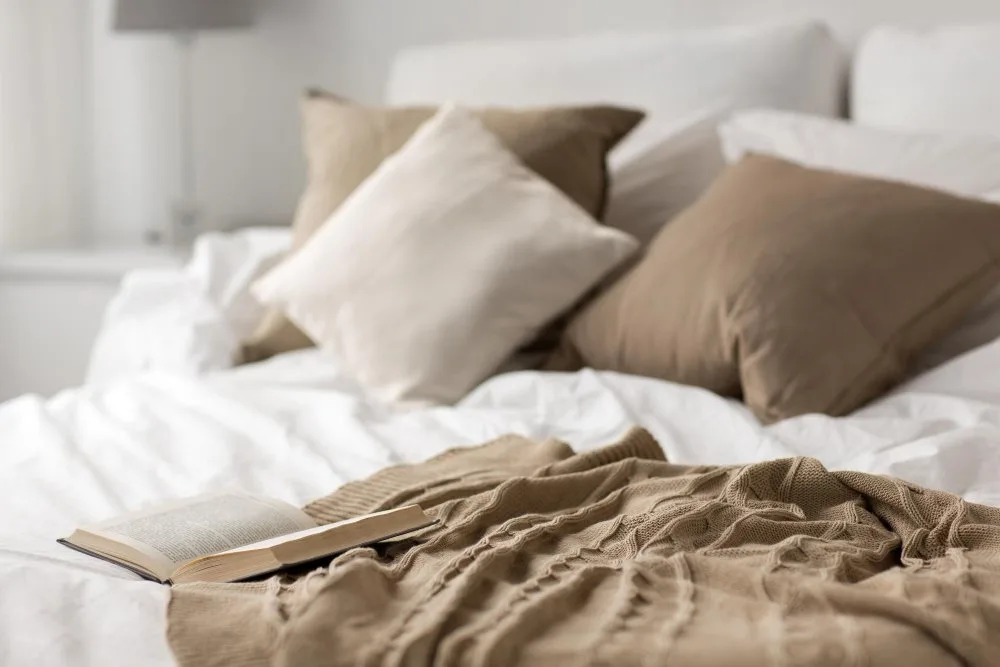
Belgian linen’s versatility makes it suitable for many applications. Here’s how different weights work for various uses.
Home Textiles
Bedding: 160-200 GSM works well for sheets and pillowcases. Stonewashed linen bedding offers softness from day one. Heavier weights (250+ GSM) suit duvet covers and bedspreads.
Table Linens: Medium weight (150-180 GSM) napkins and tablecloths balance elegance with durability. They soften with use while maintaining structure.
Curtains: Lightweight (80-150 GSM) creates beautiful, light-filtering curtains. Heavy weight (250-320 GSM) with blackout lining blocks light effectively. Belgian linen curtains resist fading better than many fabrics.
Upholstery: Use 250+ GSM for furniture that gets regular use. The natural texture adds depth to minimalist designs while resisting pilling.
Clothing
Shirts and Blouses: 120-160 GSM linen shirting fabric provides breathability without being see-through. The fabric drapes well and gets softer with wear.
Dresses and Pants: Medium weight (140-180 GSM) offers structure without stiffness. Linen’s natural drape creates flattering silhouettes.
Jackets and Blazers: Heavy weight (200-250 GSM) suiting linen provides enough structure for tailored garments while remaining breathable.
Special Weaves and Textures
Belgian linen comes in various weave patterns beyond plain weave:
- Damask linen: Reversible patterned weave for elegant table linens
- Birds eye fabric: Textured weave with small diamond patterns
- Huckaback: Highly absorbent weave perfect for towels
- Loose weave: Lighter, more casual texture for summer items
Why is Linen Hard to Sew?
Linen can be challenging for beginners because:
- The fabric frays easily along cut edges
- It shifts during cutting and sewing
- Wrinkles can distort measurements
- Pins leave permanent holes in some weaves
Tips for sewing linen successfully:
- Pre-wash fabric to allow for shrinkage before cutting
- Use sharp scissors or rotary cutters
- Pin within seam allowances only
- Use a slightly longer stitch length than for cotton
- Finish seams promptly to prevent fraying
- Press seams as you go for best results
Buyer’s Guide: How to Spot Authentic Belgian Linen
With counterfeit labels flooding the market, knowing how to verify authentic Belgian linen protects your investment.
What to Look For
Belgian Linen™ Label: Authentic products display the registered trademark. This certification can only be used by association members whose products have been verified.
Masters of Linen® Seal: This European certification indicates the linen was made entirely in Europe, from flax cultivation through weaving.
Certificate of Origin: Reputable sellers provide documentation tracing the fabric’s production. Don’t hesitate to ask for this.
Specific Mill Information: Quality sellers can name the mill and provide production details. Vague descriptions like “European inspired” are red flags.
Physical Quality Checks
When examining linen:
- Weight consistency: The fabric should feel uniform throughout, not thin in some areas
- Even color: Quality dyeing results in consistent, rich color without fading or discoloration
- Natural slubs: Small irregularities are normal and show authentic linen, but excessive lumps suggest poor quality
- Fiber strength: Pull gently on a small section – quality linen resists stretching and bounces back
- Moisture test: Linen absorbs water quickly and shouldn’t feel overly stiff or resistant
Use our Linen Quality Quiz to test your knowledge and learn what to look for.
Red Flags
Be cautious of:
- Prices significantly below market rates (quality linen isn’t cheap)
- Sellers who won’t disclose the GSM weight
- Vague origin descriptions without specific certification
- Claims of “Belgian linen” without the trademark symbol
- Fabric that feels unusually smooth (might be a blend or synthetic)
- No care instructions or generic instructions
Is Belgian Flax Linen Non-Toxic?
Certified Belgian linen is non-toxic when it carries OEKO-TEX certification. This standard tests for over 100 harmful substances and ensures the fabric is safe for human use, including for babies and people with sensitive skin.
Always check for OEKO-TEX or similar certifications if chemical safety is a concern, especially for items that will contact skin directly.
Which Brands Use Belgian Linen?
Several established brands specialize in authentic Belgian linen:
Libeco: A heritage Belgian company operating since 1858, Libeco is one of the most recognized Belgian linen producers. They achieved carbon-neutral status in 2014 and maintain a New York office for North American distribution.
Linoto: Sources from both Belgian and Italian mills, offering certified Belgian eco-linen made by Libeco alongside Italian options.
At300Nelson: Partners with Libeco for their home décor collections, featuring both Belgian Linen™ and OEKO-TEX certifications.
Spoonflower: Offers 100% Belgian Linen™ from the Flanders region, woven by Libeco, available for custom printing.
Ben Soleimani: Features Belgian linen collections for high-end home furnishings.
When shopping from other brands, always verify certification rather than taking marketing claims at face value. Legitimate sellers welcome questions about their sourcing.
Common Misconceptions About Belgian Linen
Misconception 1: “Belgian Linen is Always Made in Belgium”
Reality: While Belgian Linen™ must be woven in Belgium, the flax often comes from France or the Netherlands. “Belgian Flax Linen” may be woven entirely outside Europe.
Misconception 2: “Higher Thread Count Means Better Quality”
Reality: Thread count is irrelevant for linen. GSM (weight per square meter) and fiber length matter much more for quality assessment.
Misconception 3: “All European Linen is the Same Quality”
Reality: While flax may come from the same region, weaving expertise, quality control, and finishing techniques vary significantly between producers. A certified Belgian weaver isn’t automatically better than a certified French or Irish weaver, but the standards and traceability differ.
Misconception 4: “Linen Requires Dry Cleaning”
Reality: Most linen is machine washable. “Dry Clean Only” labels often protect the manufacturer more than the fabric. Structured items like blazers benefit from dry cleaning, but sheets, towels, and casual clothing wash easily at home.
Misconception 5: “Wrinkles Mean Poor Quality”
Reality: Wrinkling is an inherent characteristic of linen’s fiber structure. Quality linen wrinkles easily, it’s not a defect. Many people specifically choose linen for its natural, relaxed appearance.
Frequently Asked Questions
Final Thoughts
Belgian linen stands out in the textile world for good reasons. The combination of quality flax, skilled European weaving, strict certification standards, and exceptional durability creates a fabric that performs well and lasts for decades. Its natural temperature regulation, hypoallergenic properties, and environmental sustainability add to its appeal.
Key Takeaways
On Quality: Belgian Linen™ certification guarantees verified origins and consistent standards. While other European linens can match this quality, the certification provides transparency and traceability that protects buyers from counterfeit products.
On Cost: The higher upfront price reflects limited growing regions, labor-intensive production, and European manufacturing standards. Over a 15-20 year lifespan, the cost per use becomes comparable to cheaper alternatives that need replacing every few years.
On Care: Belgian linen is more forgiving than its reputation suggests. Machine washing in cold water and air drying covers most situations. The fabric gets softer with use, so caring for it becomes easier over time, not harder.
On Versatility: Understanding GSM weights helps you choose the right linen for any project. The fabric works equally well for summer clothing, year-round bedding, and durable upholstery. Different weaves and finishes expand the possibilities even further.
Making Your Decision
Belgian linen makes sense if you:
- Value natural materials and sustainable production
- Want textiles that improve with age rather than wearing out
- Prefer breathable fabrics that work in multiple seasons
- Have allergies or sensitive skin
- Appreciate linen’s natural, relaxed appearance
- Can invest more upfront for long-term value
It might not be the best choice if you:
- Require wrinkle-free fabrics without ironing
- Need textiles for extremely rough use
- Have a very tight budget with no flexibility
- Prefer the smooth feel of cotton or synthetic fabrics
Next Steps
If you’re ready to try Belgian linen:
- Start with one quality piece to test how you like it, bedding or towels offer good starting points
- Verify certification before purchasing, ask for documentation
- Choose the appropriate GSM for your intended use
- Follow proper care instructions from the start
- Give the fabric time, it gets better with each wash
Whether you choose Belgian linen or explore other options like cotton or blended fabrics, understanding the facts behind marketing claims helps you make informed decisions. Belgian linen offers proven quality for those who value natural materials, sustainable production, and textiles that stand the test of time.
For more information on fabric care and selection, explore our guides on linen care, natural versus synthetic fabrics, and washing different fabric types.